
… but preferred it before.

The baker of choice for my daughter and family in Premià de Mar, Catalonia.
For Debbie at Travel with Intent’s One Word Sunday.
… but preferred it before.
The baker of choice for my daughter and family in Premià de Mar, Catalonia.
For Debbie at Travel with Intent’s One Word Sunday.
I had only one reason to visit Caldes d’Estrac. Not because back in the late 19th and early 20th centuries it was noted for its thermal baths. Those glory days are largely gone: and in any case I live near the spa town of Harrogate. I went because of its art gallery, Fundacio Palau Fabre, largely dedicated to Picasso. More about that another day.
This is a small town with big hills. I toiled up, then skittered down slope after slope as I explored. But it had doors to pause by. Most of my shots are in my camera, and not to be seen till I go home. (Tomorrow. How shall I survive? It’s 14 whole degrees colder back in England) So here’s just one that took my fancy.
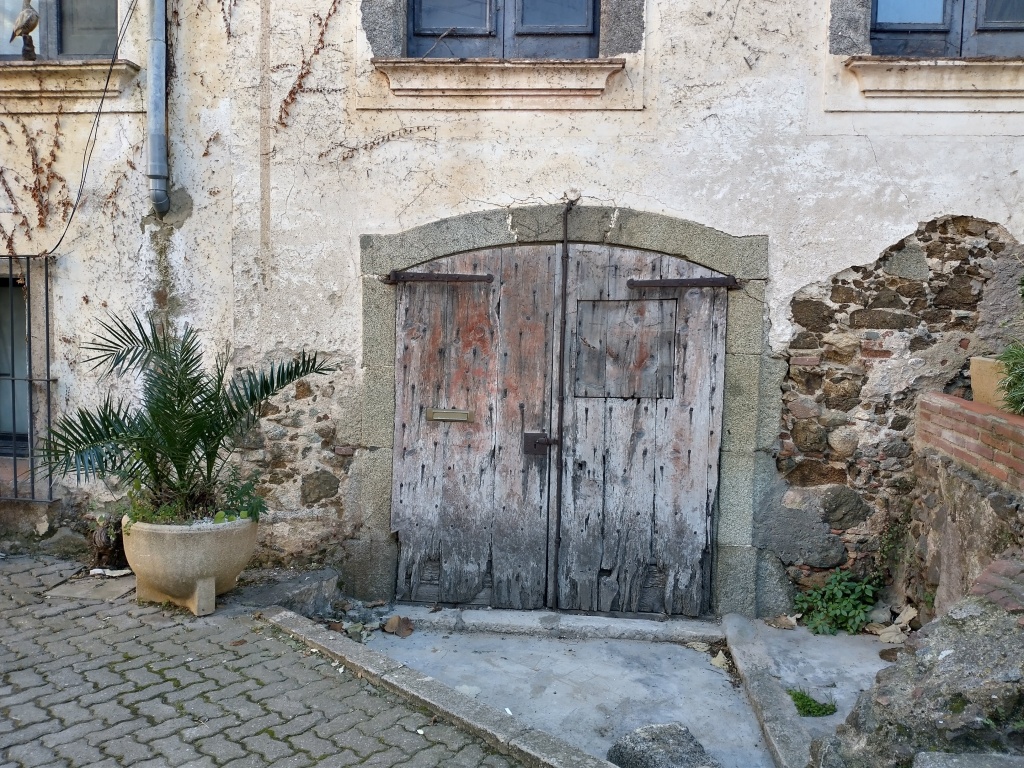
This is my first offering to Dan’s Thursday Doors for a very long time. But I thought this distressed door deserved its fifteen minutes of fame. Or 5 anyway.
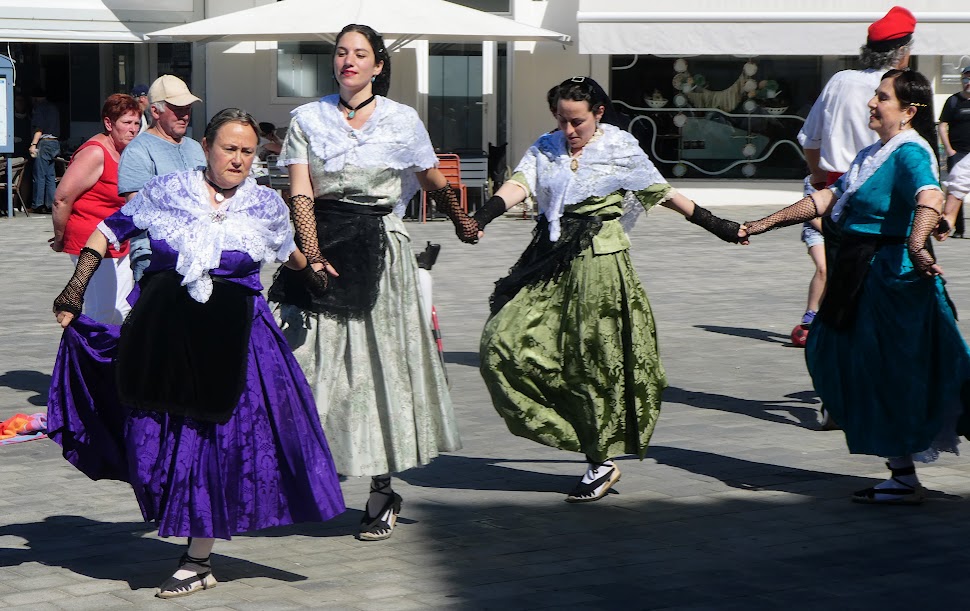
La Sardana is the traditional dance of Catalonia. It’s been around in one way or another since the 1600s, but really came into its own in the 19th century. Back in the fascist era, Franco did his best to ban it, as he tried to ban all forms of regionalism, or worse, independence. He suppressed the distinct languages within Spain: Catalan, Basque, Galician, with the result that they have now sprung back stronger than before.
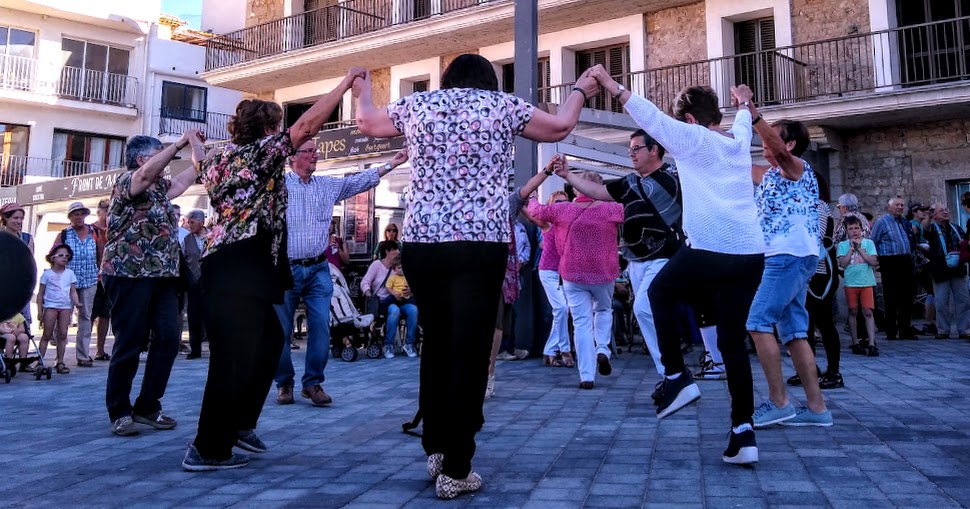
Anyway, la Sardana. It’s a circle dance, with men and women, neighbours, friends, strangers joining hands, moving slowly in a circle following the fairly complex foot moves of the leader. When the circle starts getting too big, a second circle starts, then a third ..

On Sunday morning, we took ourselves down into town to watch the mini-Sardana festival. We immediately noticed that I fitted the age-profile the best. Every single dancer was over 60. Anaïs’ friend’s granny immediately wanted to put that right, and appointed herself Anaïs’ personal Dance Mistress. With not much success.

A few younger citizens took themselves off to practice in a quiet corner …

And after a slow start, the event got going. Not having a single dance gene in my body, I wasn’t tempted to get involved, despite being The Right Age. But it’s rather sad that this seems to be the general view among the young. Would Franco get his wish after all, and see the Sardana vanish a hundred years after he tried to banish it?
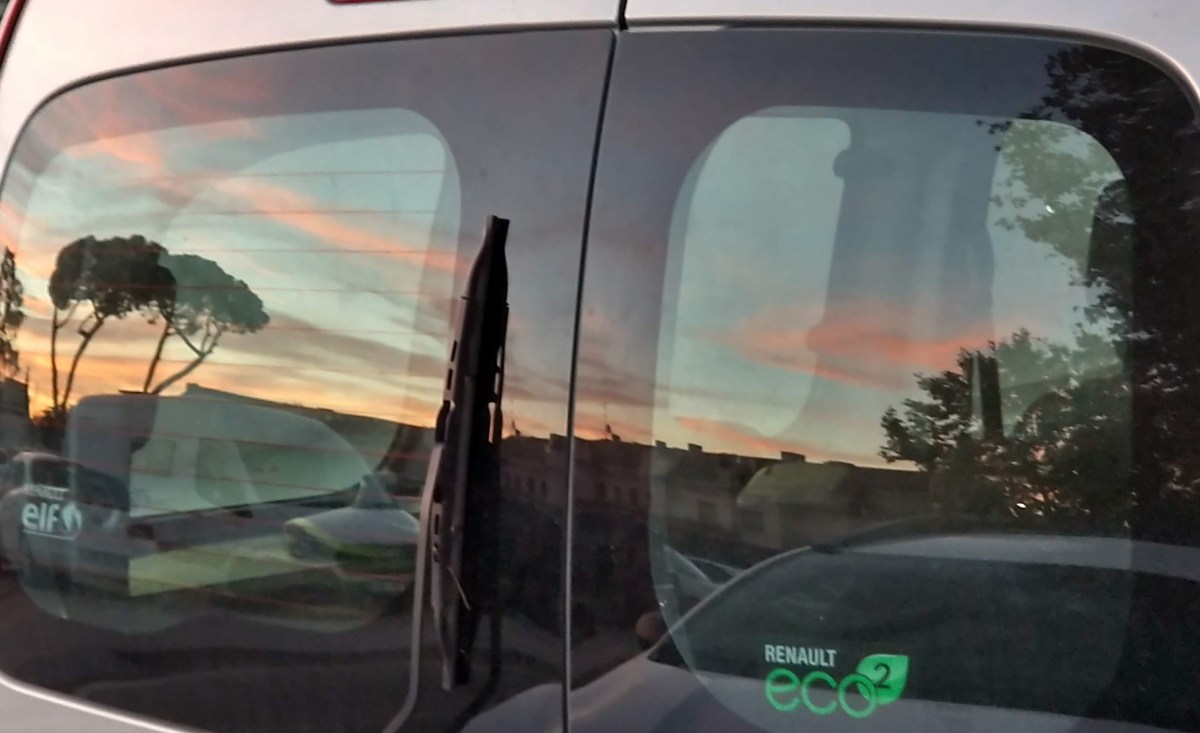
We were just walking back to my daughter’s house in Spain yesterday evening, with a richly dramatic sunset before us, when I noticed it reflected behind this car, in its rear window.
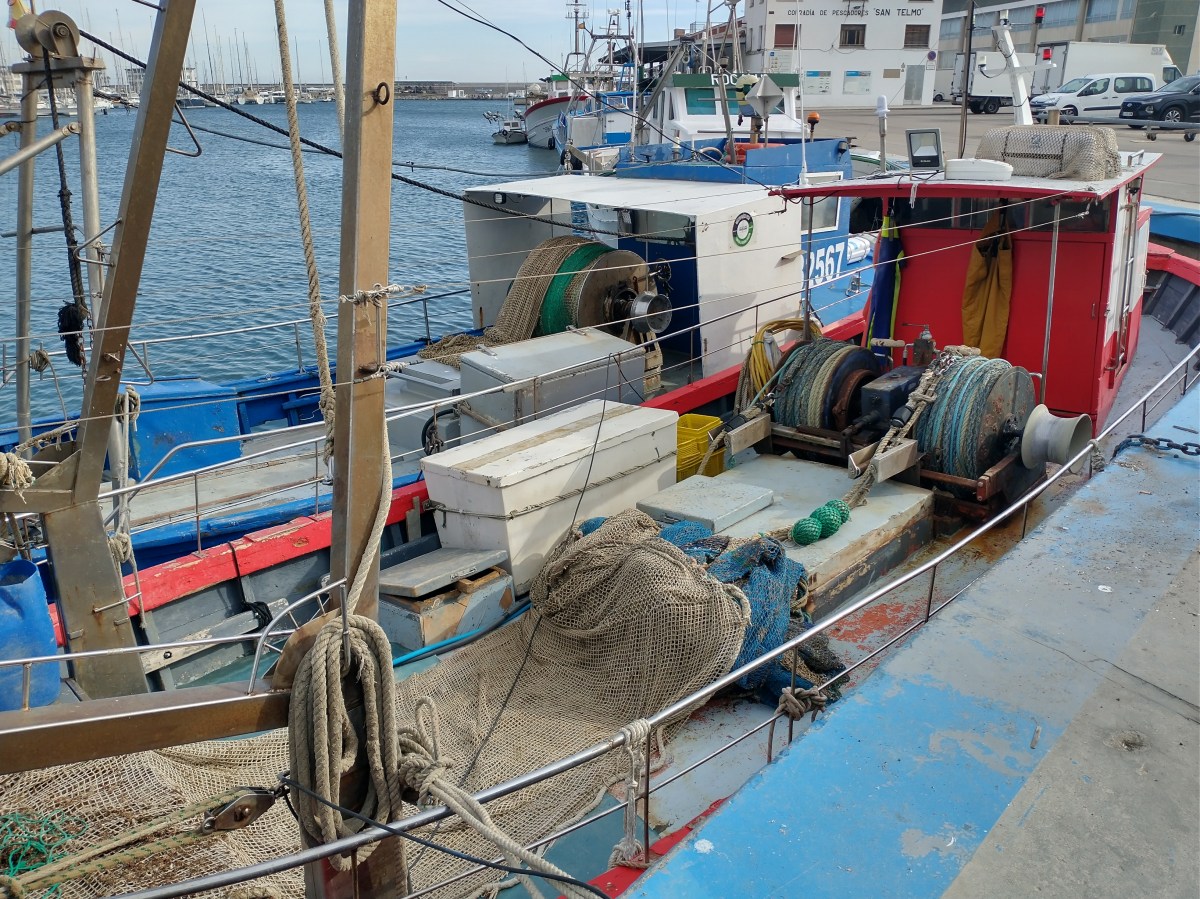
Here I am in Spain on Granny Duty. Today, I’m not needed till 5.00, when I collect Anaïs from nursery. So I took myself off to Arenys de Mar, just up the coast from here. Once upon a time, it was an important ship-building town, and remnants still exist in the form of repairing and restyling yachts and other craft. And it’s still a fishing town, so off I went to the fishing port, where I had long since missed the daily fish auction. Oddly, this starts high and the bidding goes lower till it sticks. I can’t quite get my head round that.
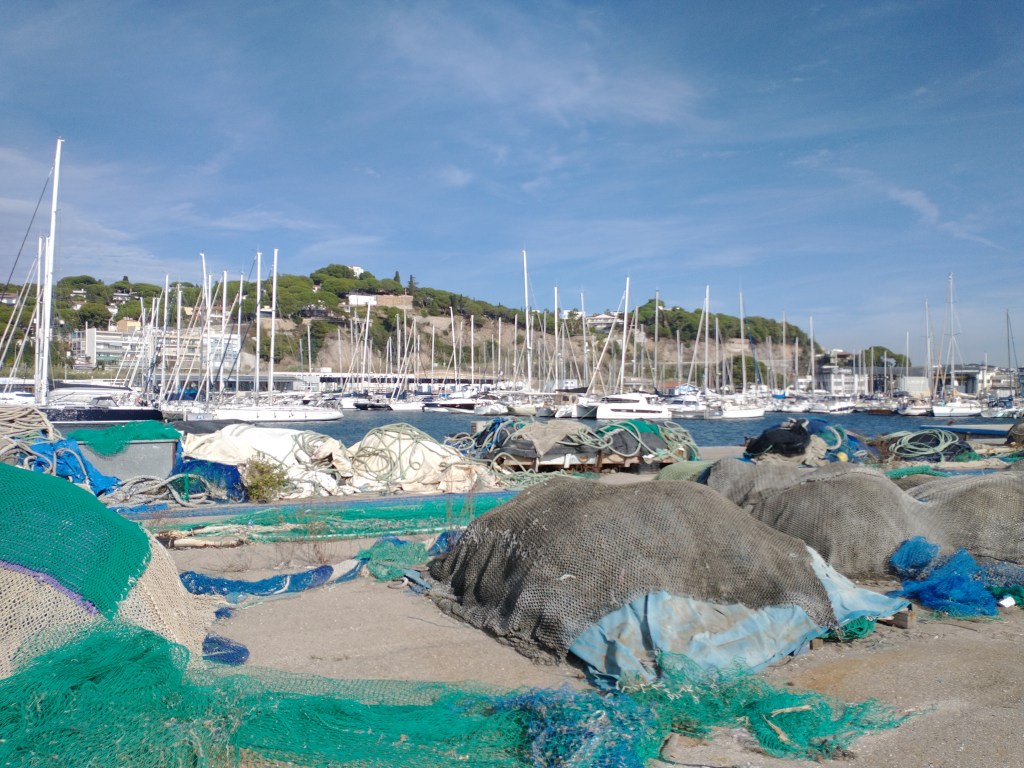
The boats here are small family-run craft. Industrial fishing it ain’t. So fishermen were out and about doing running repairs to their boats, and sitting down checking their nets and mending them. It all seemed time-honored and traditional.
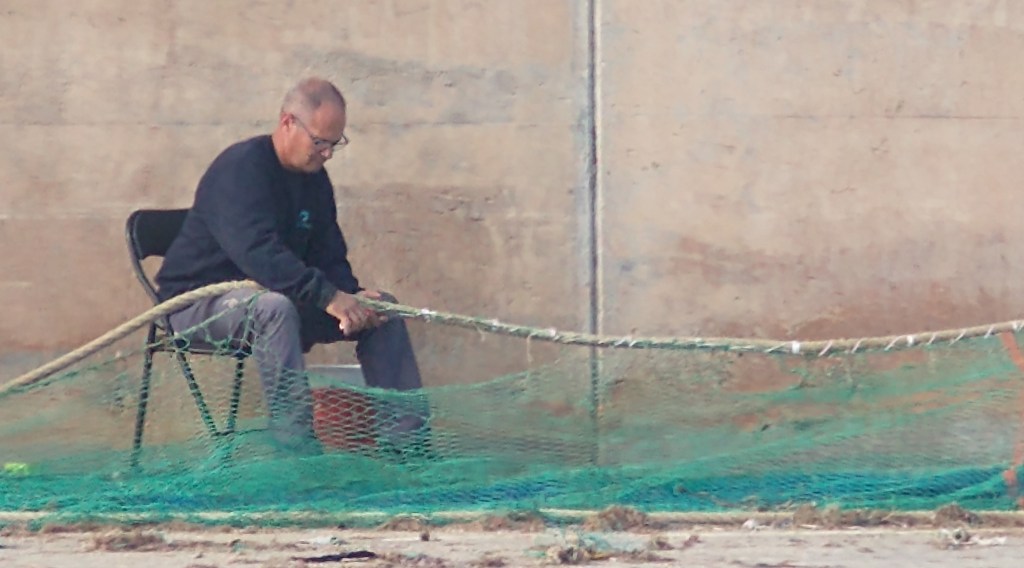
Who knew that fishing nets could all look so different?
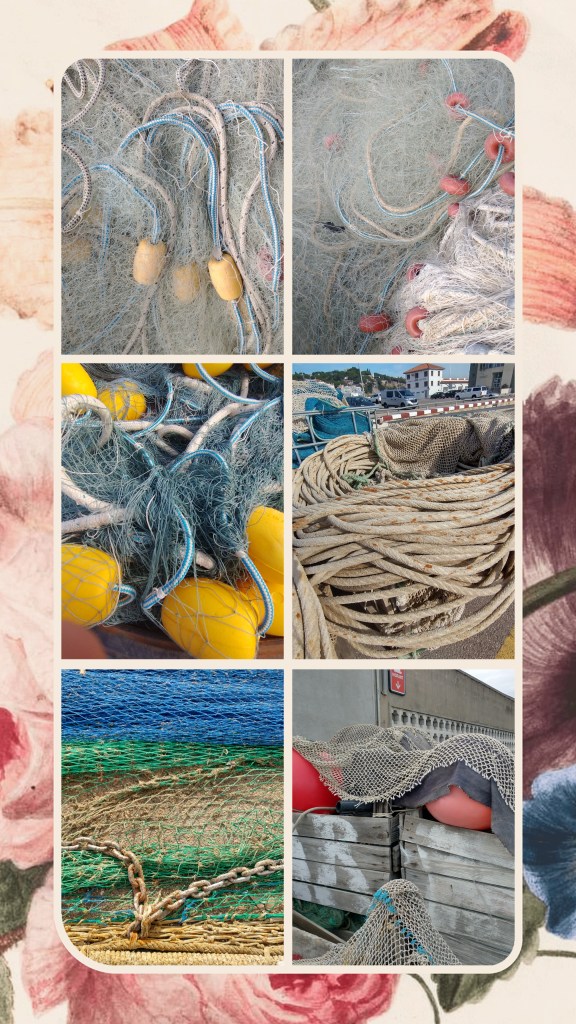
Next time I go, I’ll be in time for the auction. Maybe.
This week’s Lens-Artists Challenge, set by Donna, asks us to look at Time. So … I’ve decided to focus on traditions: traditions about celebration – long enjoyed, long maintained, and still meaningful in the communities where they take place.
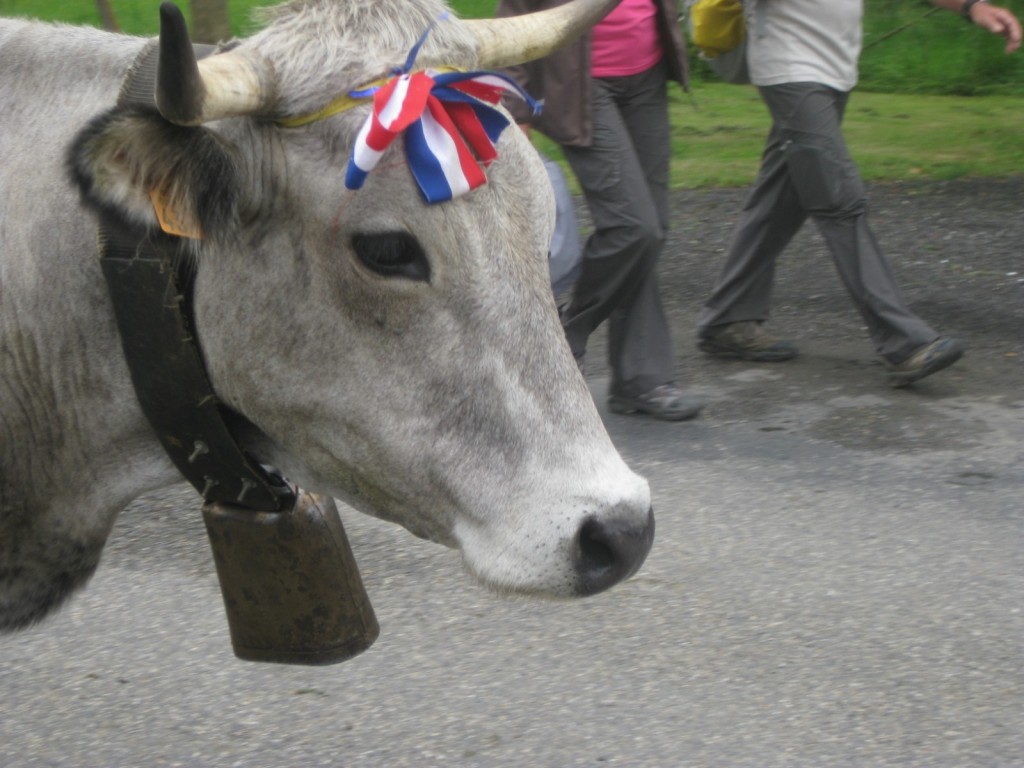
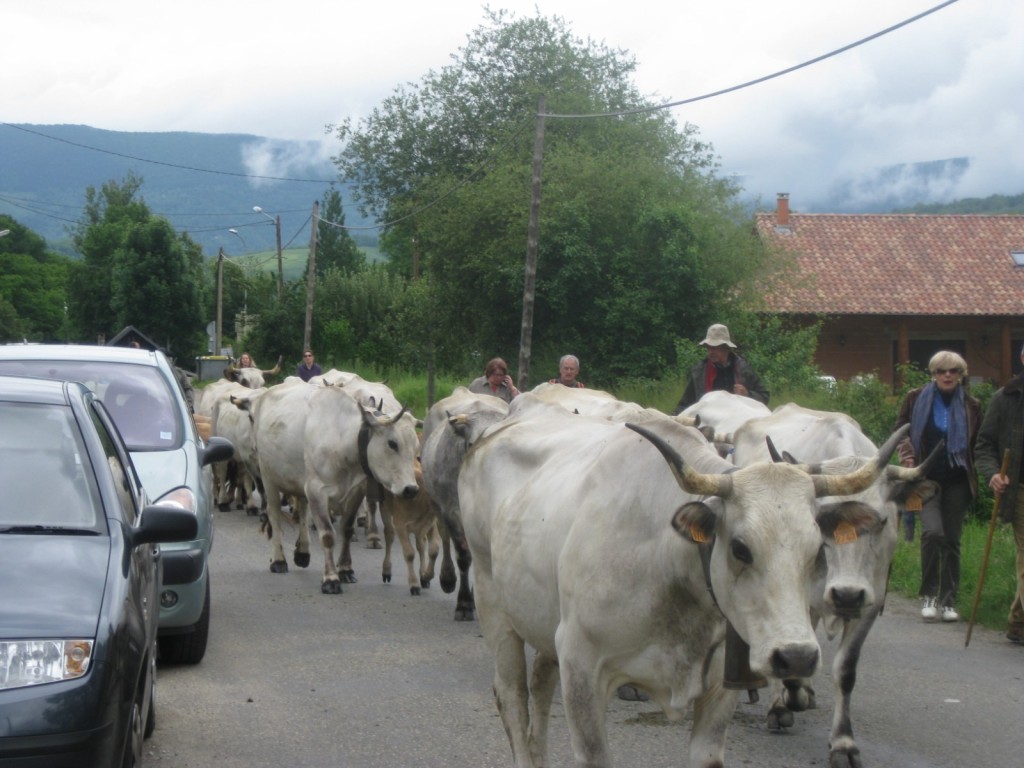
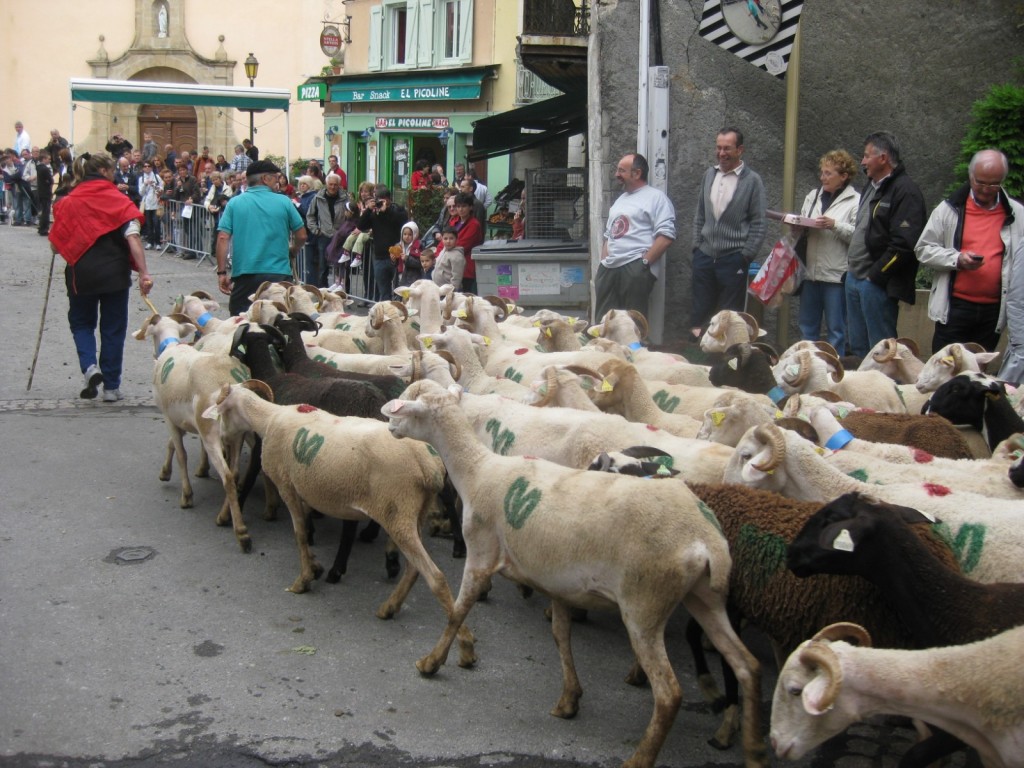
Transhumance for instance. It’s that time of year when in the Pyrénées (and in other mountain regions too), near where we lived in France, the cattle and sheep are moved from the lush summer pastures in the mountains down to their winter quarters down on their lowland(ish) farms . They stay there till spring, and then they’re taken up again. And each time, it’s the excuse for a party. Here are some scenes from Seix a few years ago, of the upward part of the year.
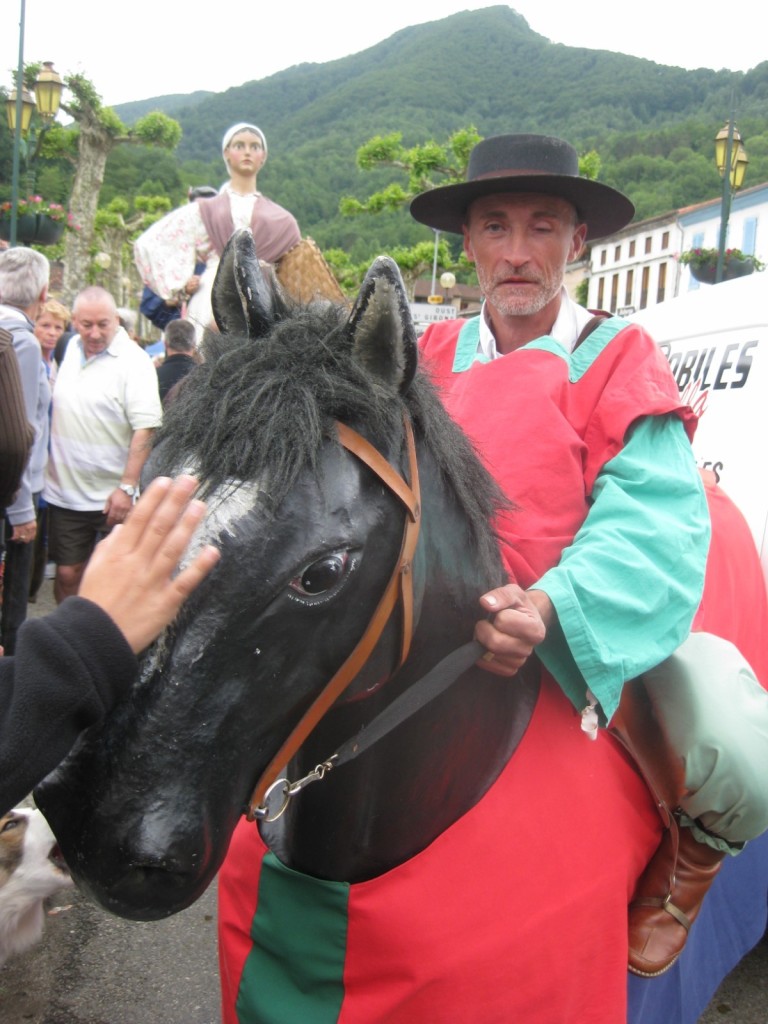
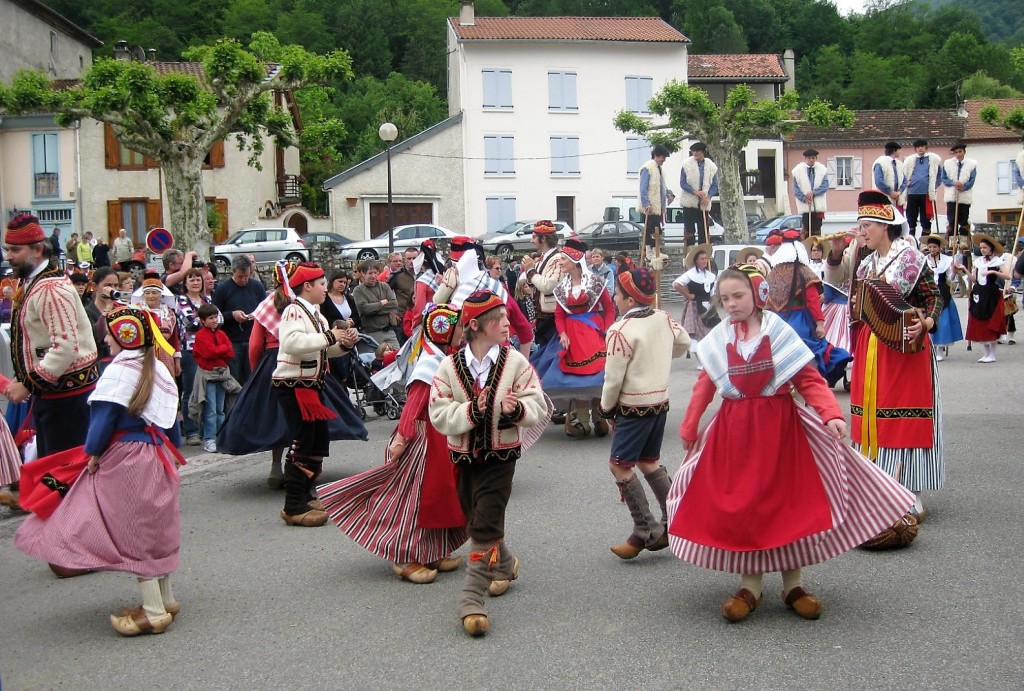
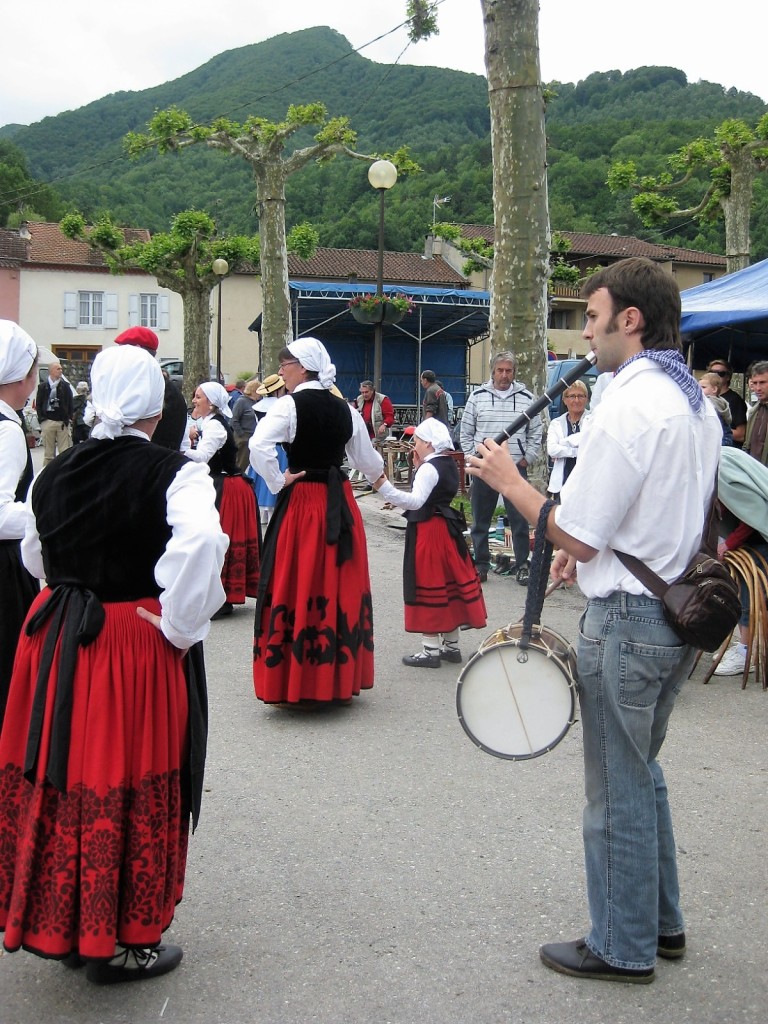
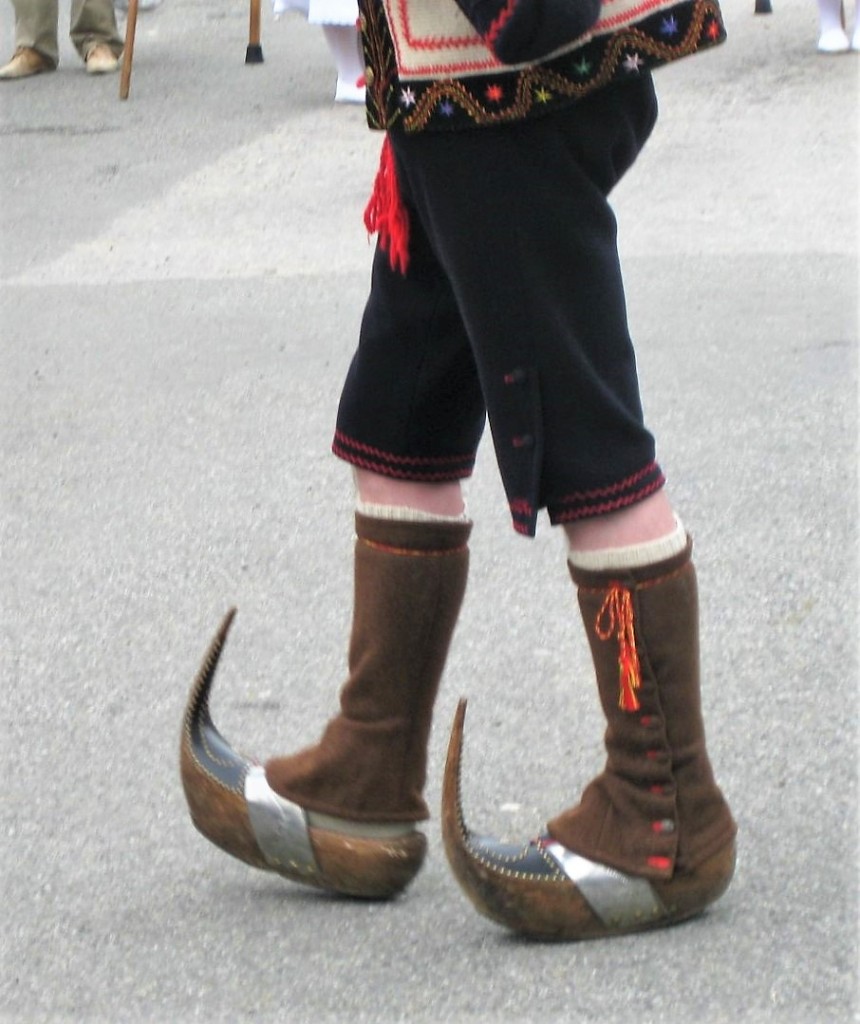
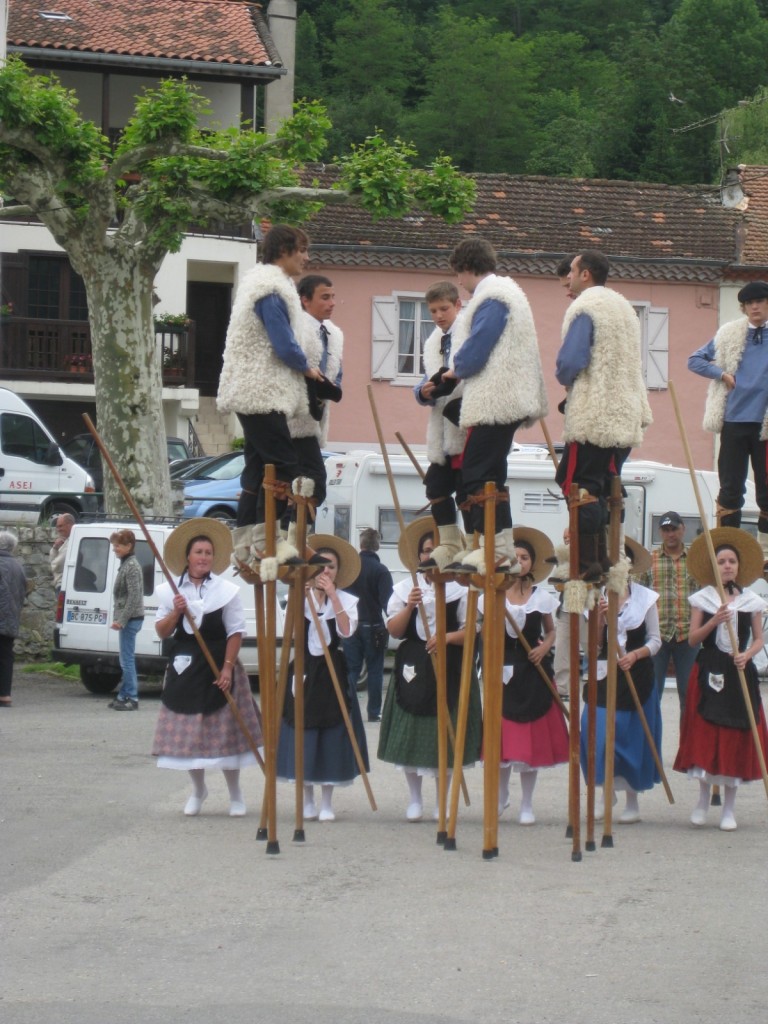
They were dancing in Seix. We dance to celebrate wherever we live – always have. Here are Morris Dancers in England, traditional dancers in Catalonia (and more of them in the featured photo) and dancing for the big Harvest celebration of Chuseok in South Korea.
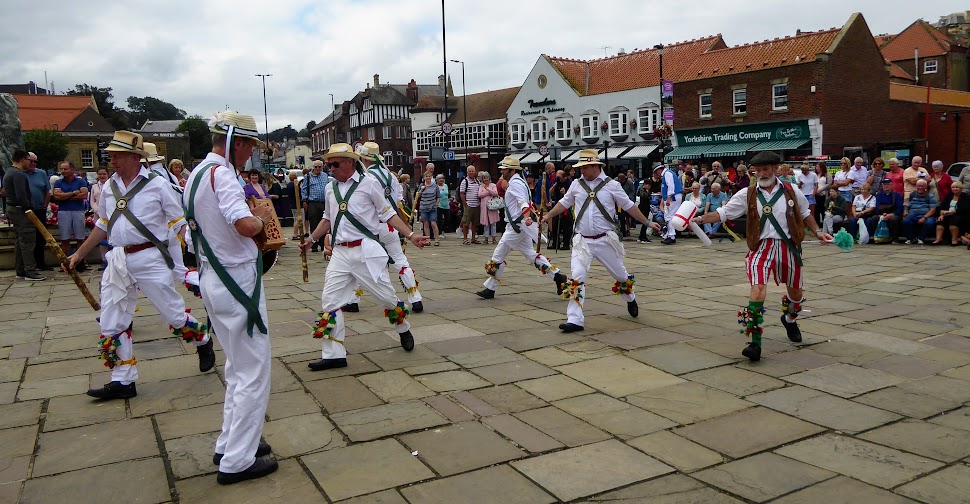
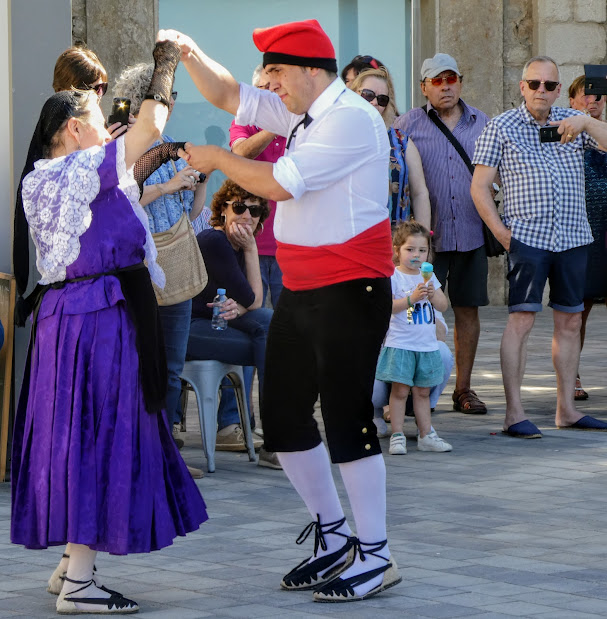
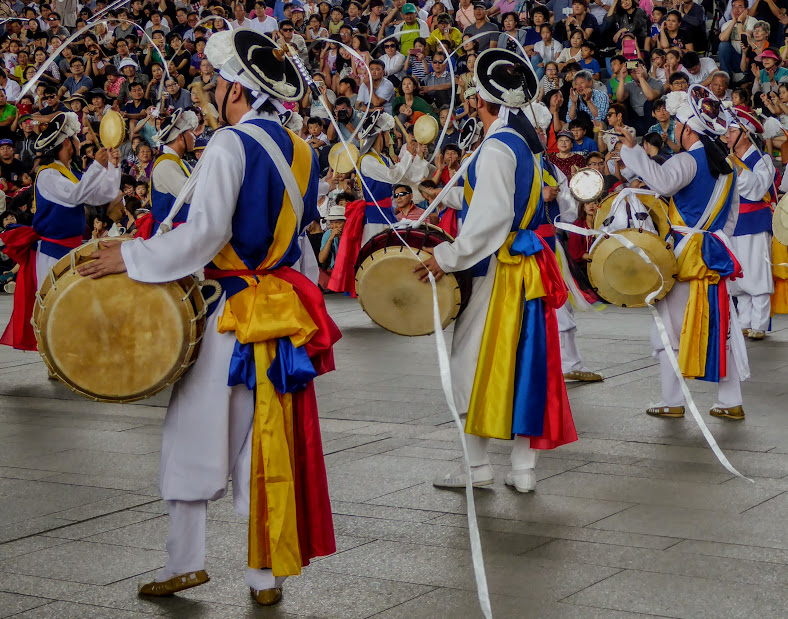
What next? How about Shrove Tuesday, the day when it’s the last excuse to have a bit of fun before the privations of Lent? The day when eggs and butter and other indulgences get used up in the making of pancakes, some of which end up in a race. Participants run the course, pan in hand, tossing their pancakes as they run towards the finishing line. It’s part of every Shrove Tuesday, as it has been for hundreds of years here in Ripon, and in towns and villages throughout the land.
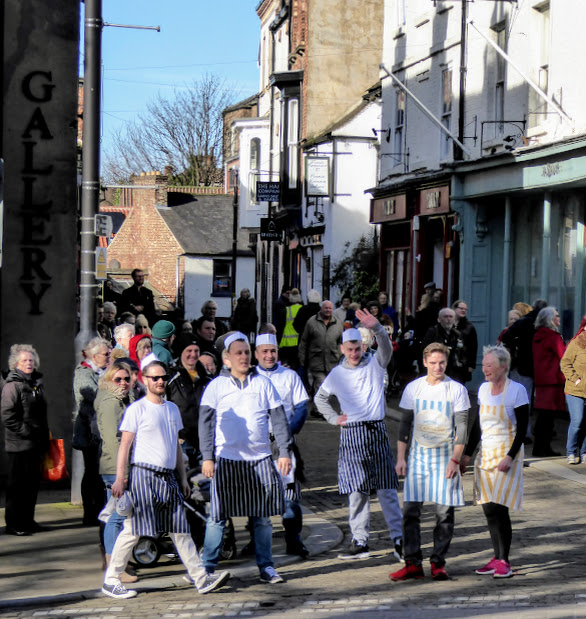
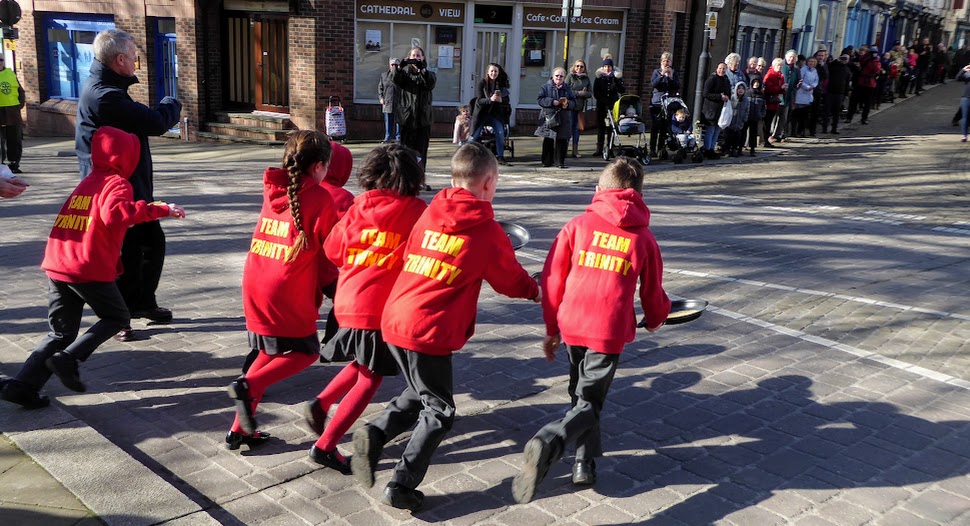
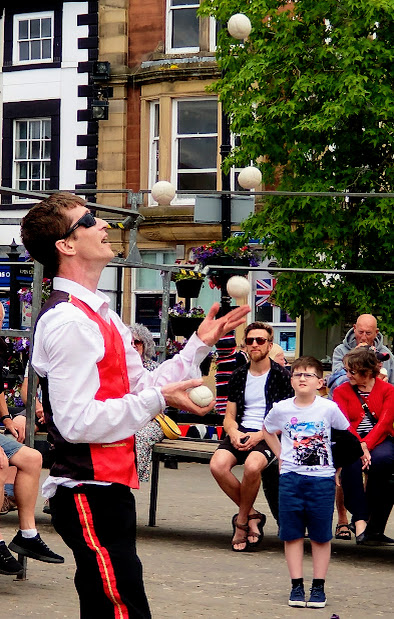
Street entertainers have engaged out attention as long as there have been streets. Jugglers, Punch and Judy shows … anything goes.

Anyway, let’s finish off with a dance, the Sardana, dear to Catalonians for … well, centuries. It’s easy enough – join in the circle and just copy the person opposite you. Come on – you don’t even need a partner!
Take a trip northwards along the coast out of Barcelona, and you’ll enter a different world. You’ll trade Tourist Central for pleasant, ordinary towns where people can just get on with life. You’ll only hear Catalan and Spanish in the streets, and souvenir shops or restaurants with tourist menus and helpful pictures and translations into several languages are unknown.
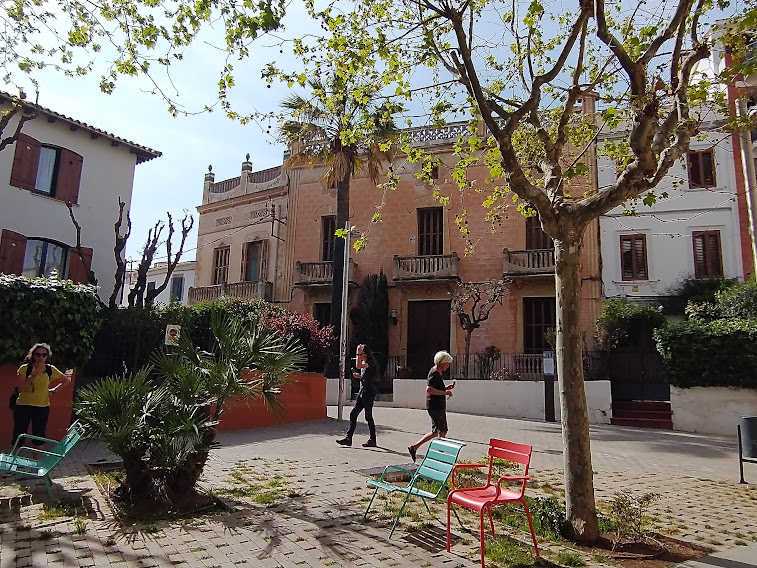
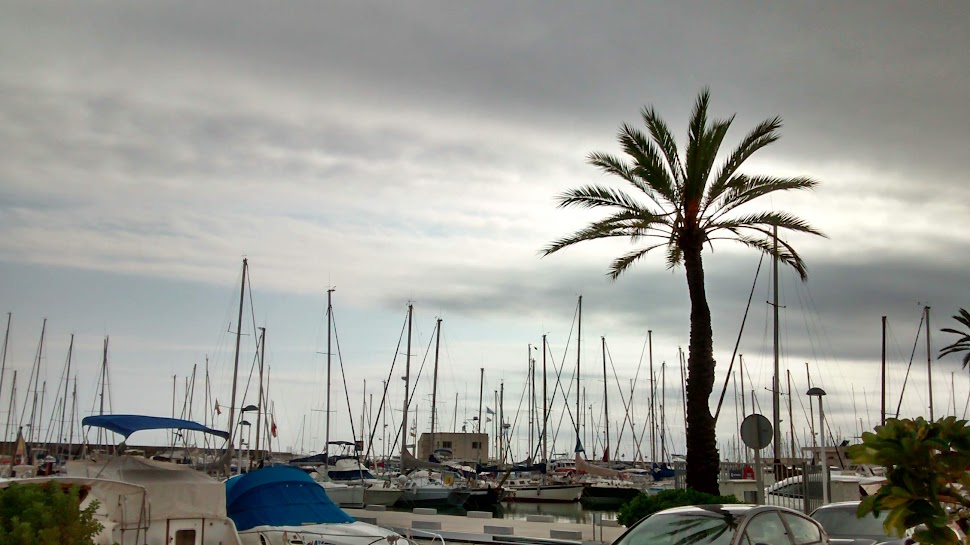
The town just before our daughter-and-family’s is El Masnou, and we recently enjoyed a stroll around after a long lazy lunch there. Old and new, high-rise and low rise all live together in a congenial hotch-potch. There’s a harbour, as shown in the feature photo, and pleasant squares with Modernista villas once built for sea-captains.

And of course there’s street art … such as a series of images of women, whom I ought to recognise, but don’t …
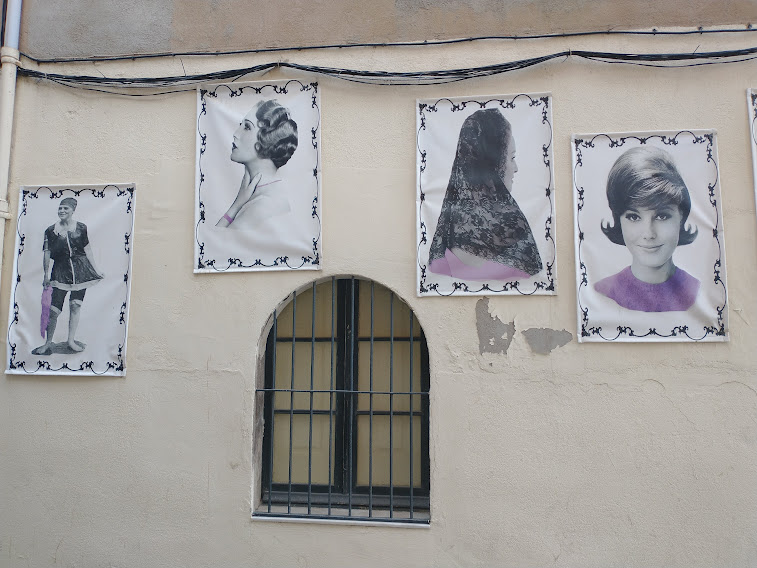
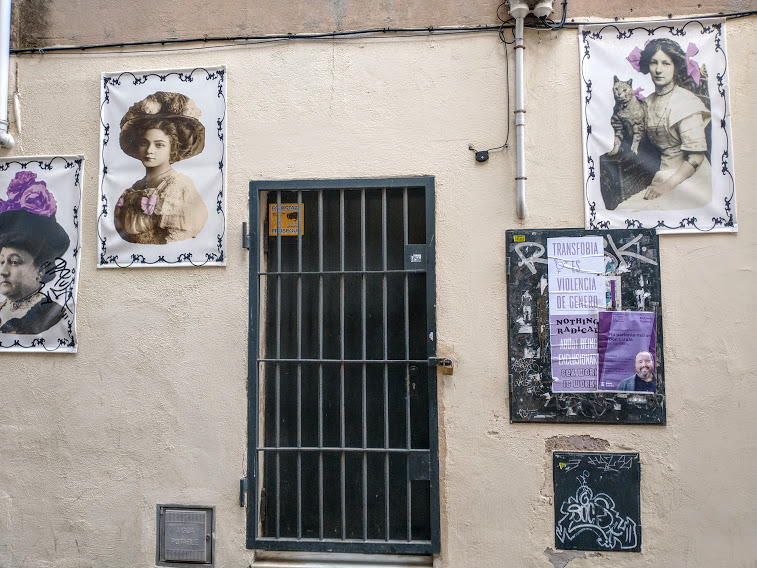
… and any number of images with an axe to grind …
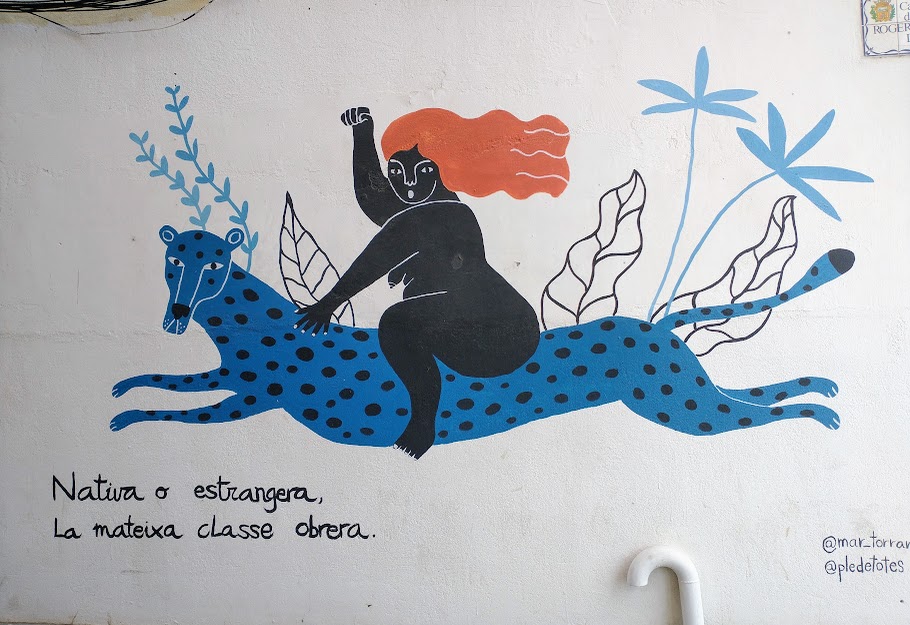
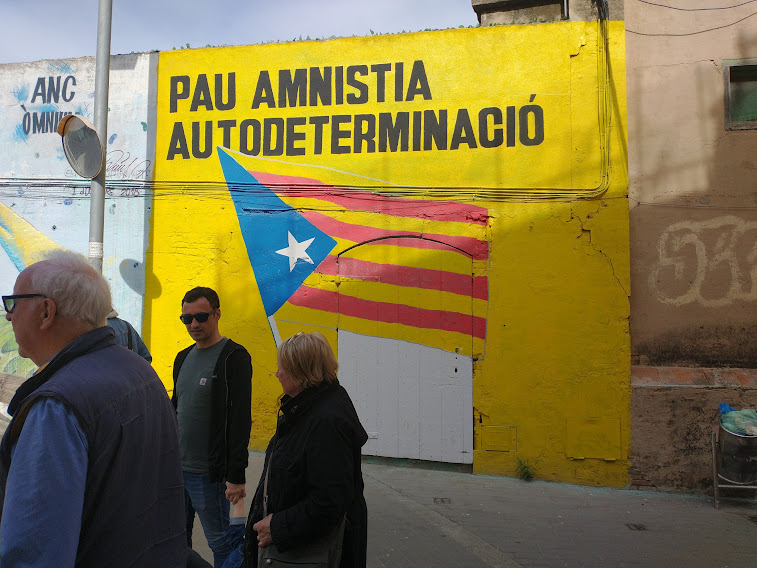
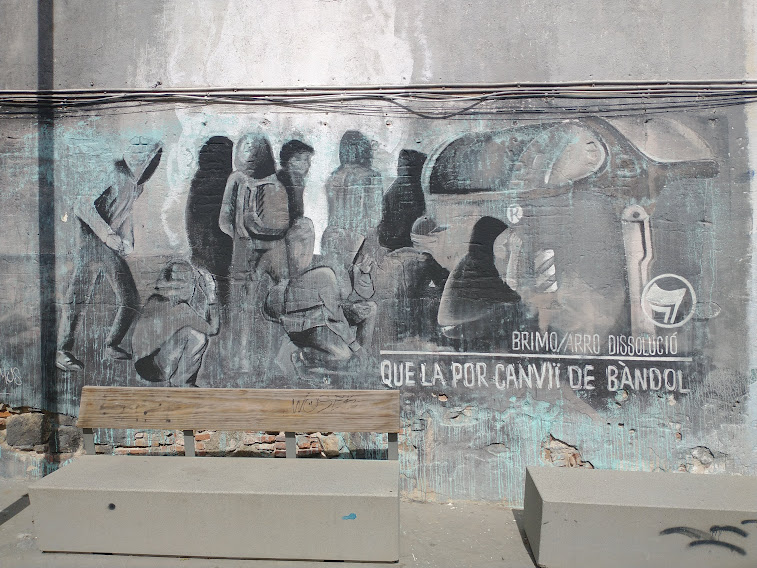
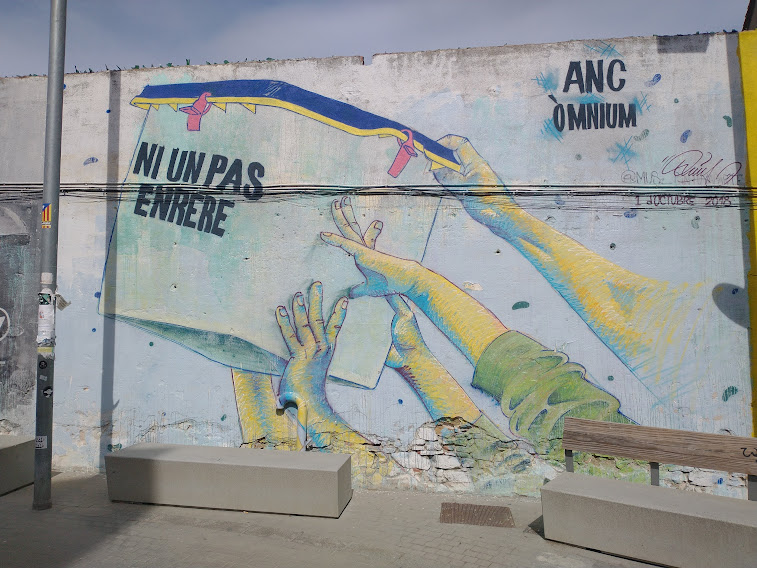
Or not ..
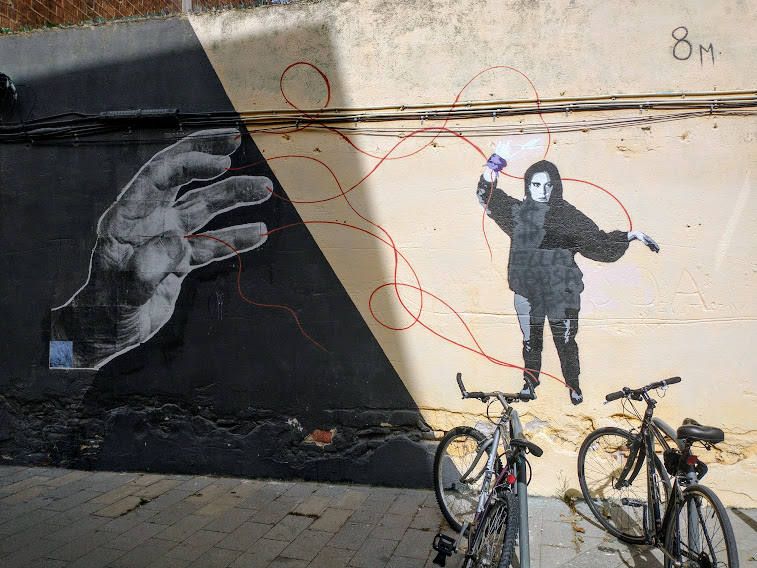
And then just a couple of others, near a disused factory, with a building site beyond …
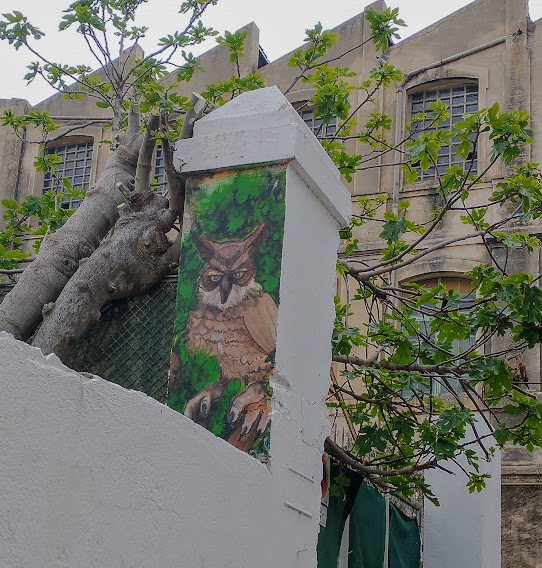
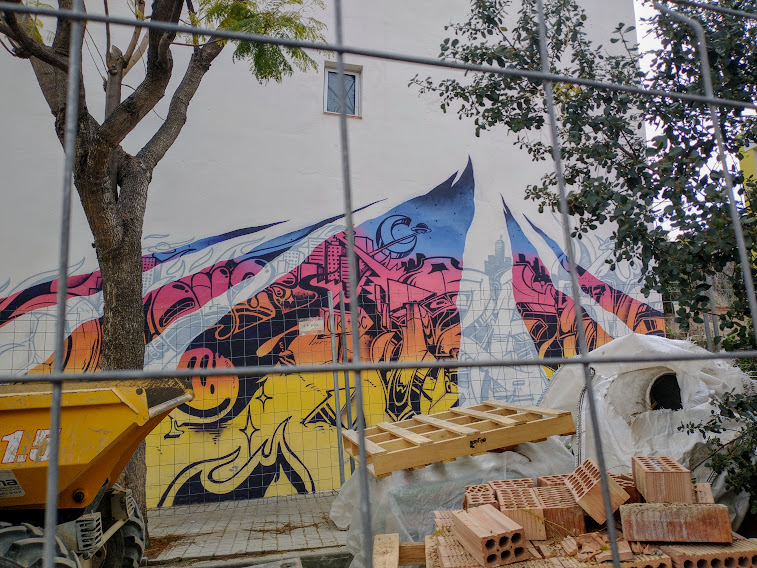
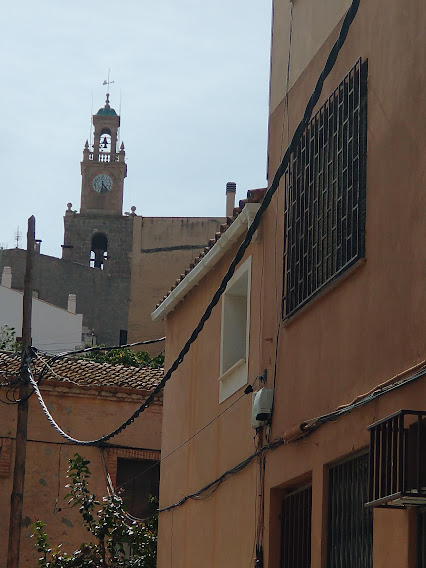
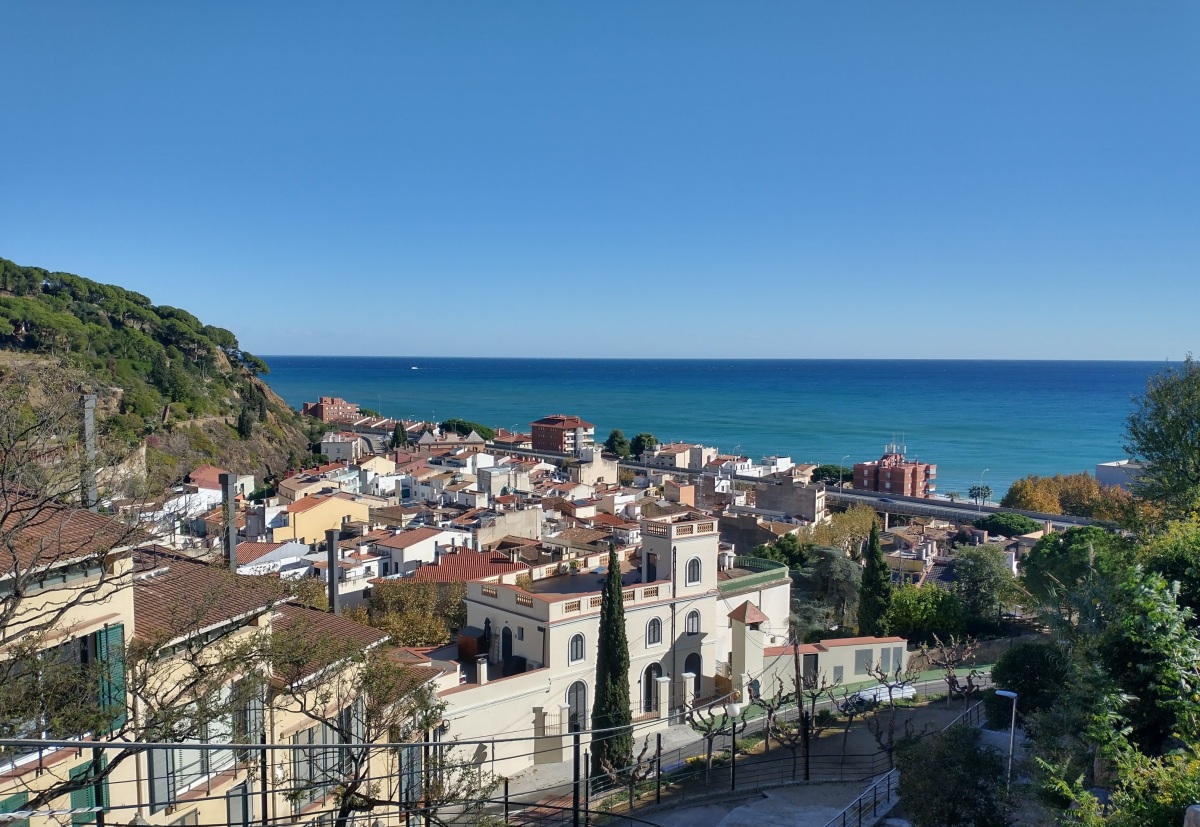
… before finishing up in a square outside the church shown above, looking out at the Mediterranean, with Barcelona on the skyline at the right. And with an image of the winter, summer, autumn and winter painted on one of the walls.
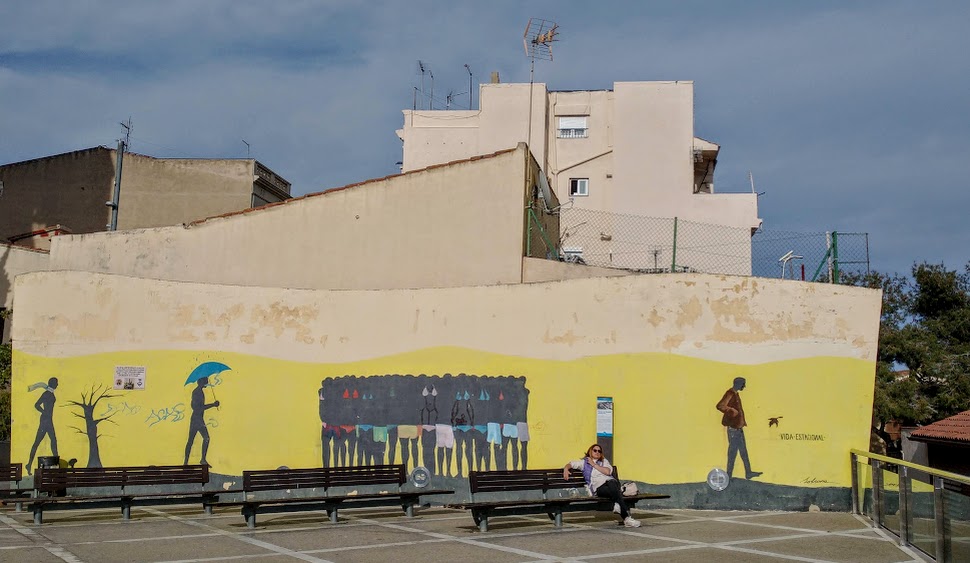
Actually, I’m cheating. The photo at the bottom was taken on a January day when the sun was absent.
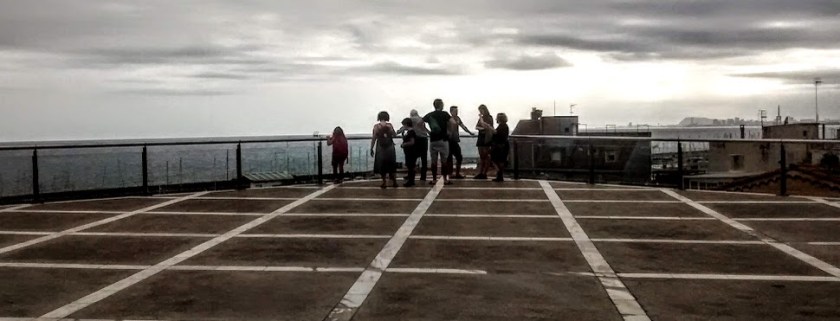
For John’s Lens-Artists Challenge #249
and Natalie’s Photographing Public Art
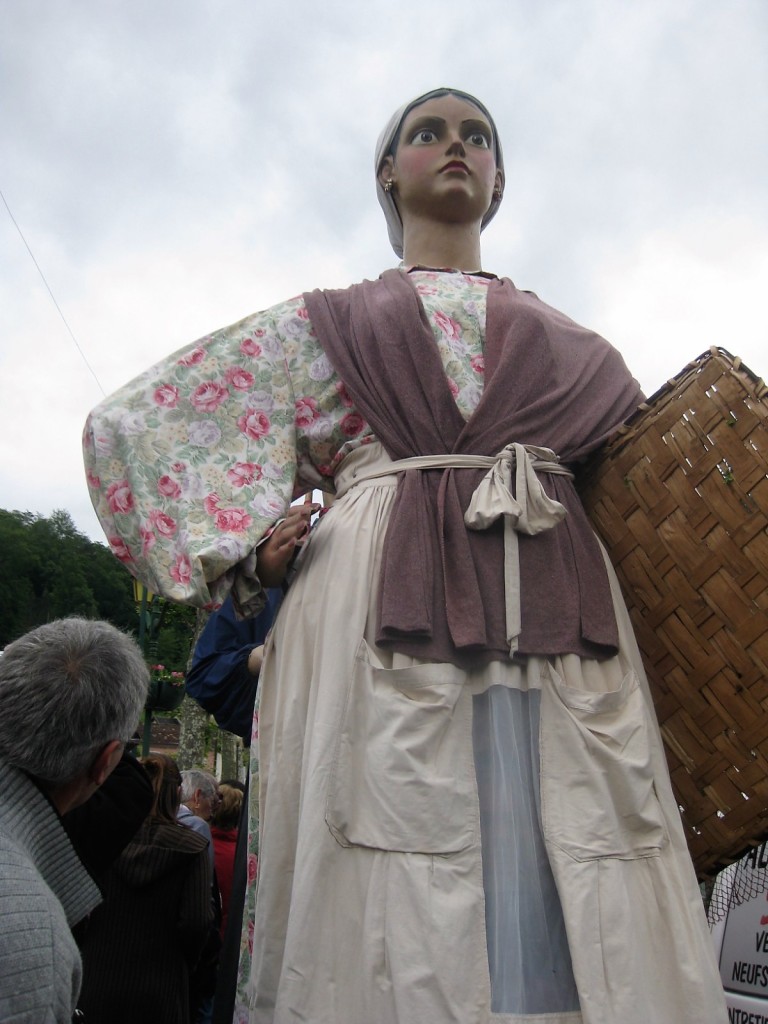
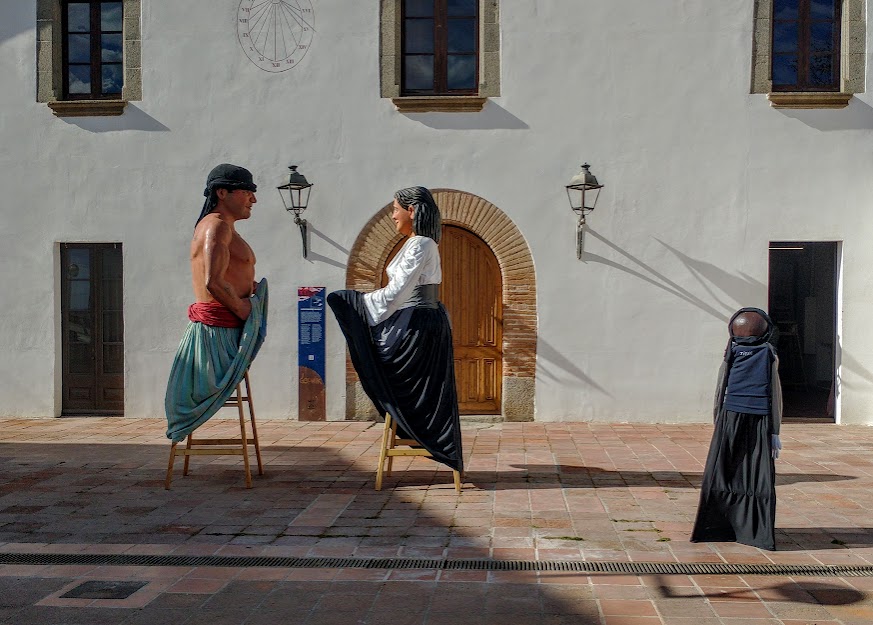
Visit Catalonia while there’s some kind of festival going on, and you might be lucky enough to see Gegants. They’re huge and heavy figures which, during festivals, are carried by some poor – unseen – soul probably sweating and longing for the moment when he (and it’s invariably a ‘he’) can put his burden down and disappear for a drink. They usually represent various traditional characters, though in the early days, way back in the 15th century, they had the job of telling Bible stories.
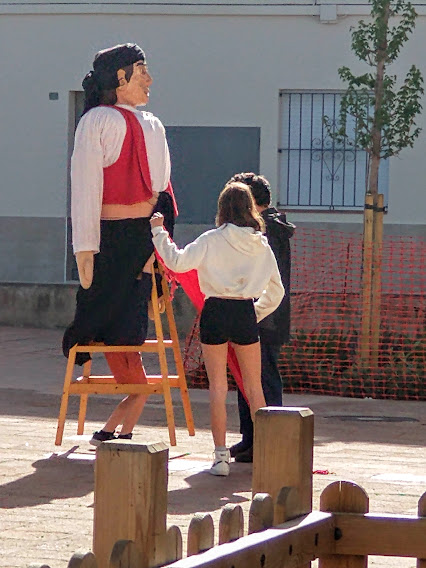
While we were staying with daughter-and-family in Premià de Mar over Easter, Malcolm and I, out with granddaughter Anaïs, had a piece of luck. A small band of people were hauling the local gegants out of store, and generally checking them over . They invited us to look round the store if we wanted, and we did. I find some of these creatures a little on the creepy side: all the same, I was a bit disappointed that we couldn’t be around on the day that these lumbering giants stalked the streets of the town for one day only.
Come and have a look round the store room with us …
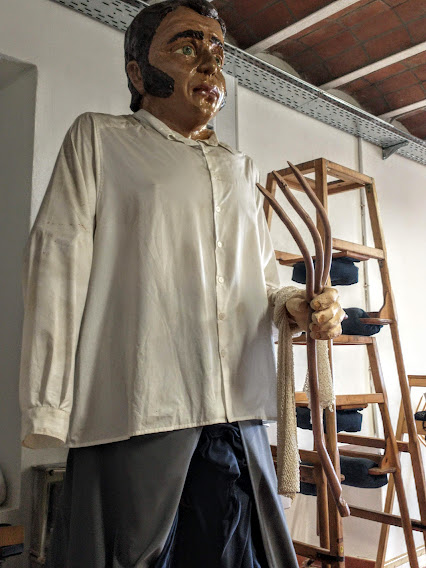
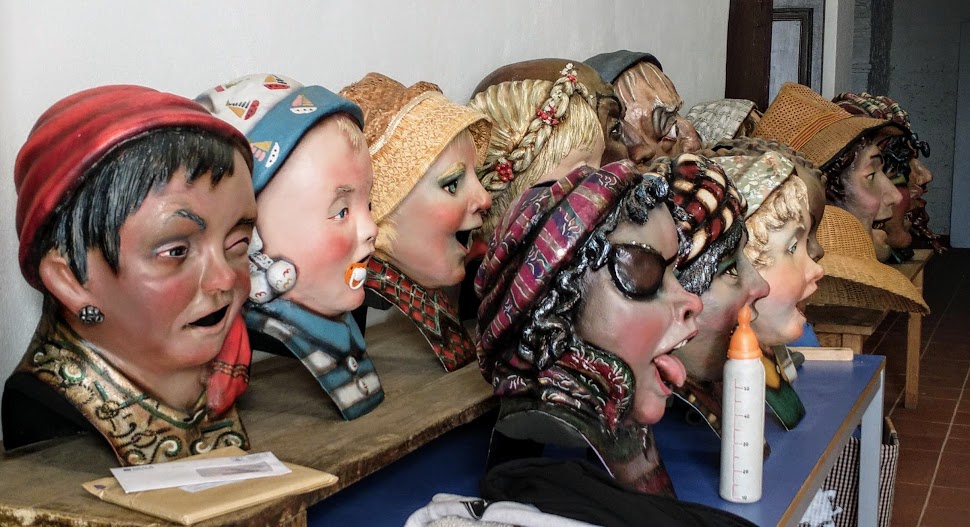
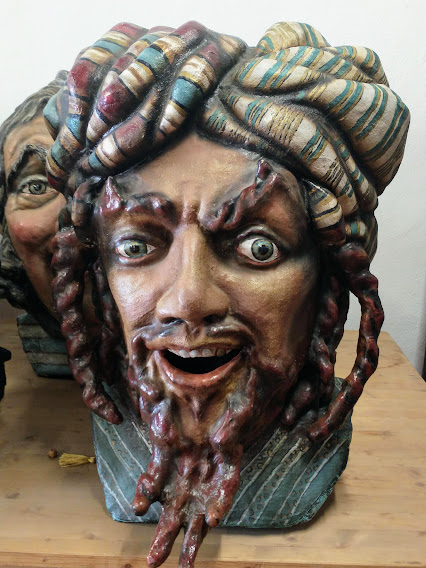
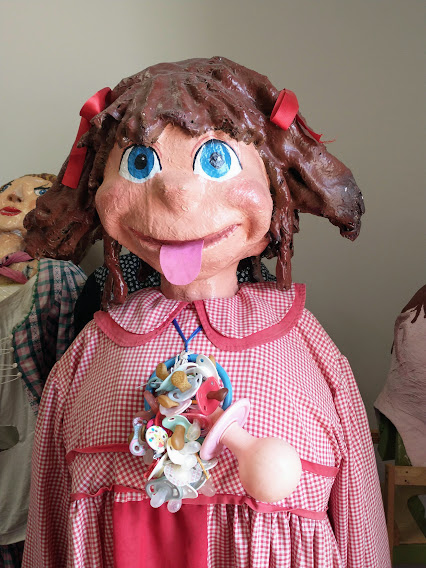
I’ve a feeling that this time, a love story was on the cards. The sort where the Hunk and the Kind and Virtuous Maid live happily ever after.
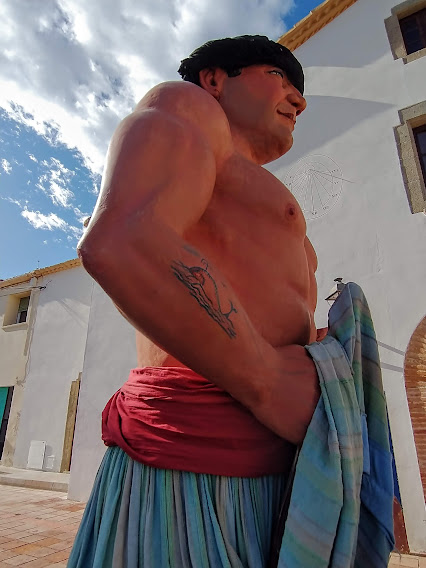
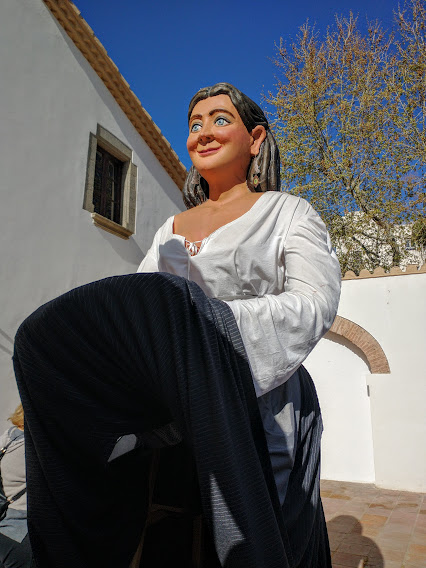
Do you agree?
For Natalie’s Exploring Public Art Challenge – again.
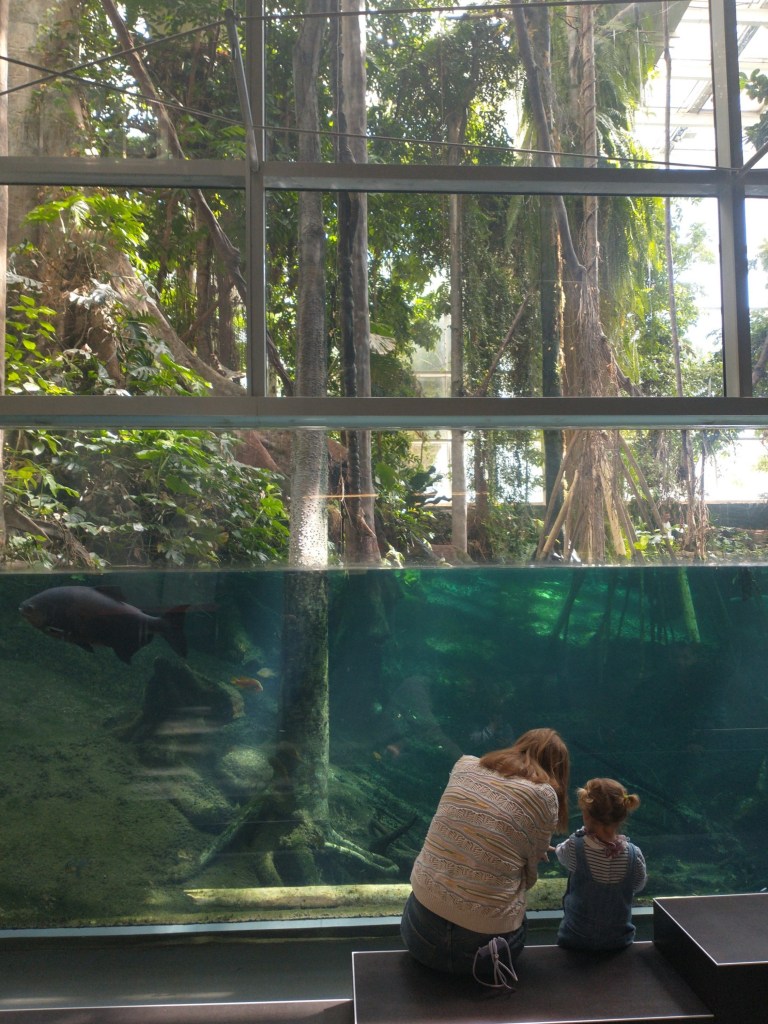
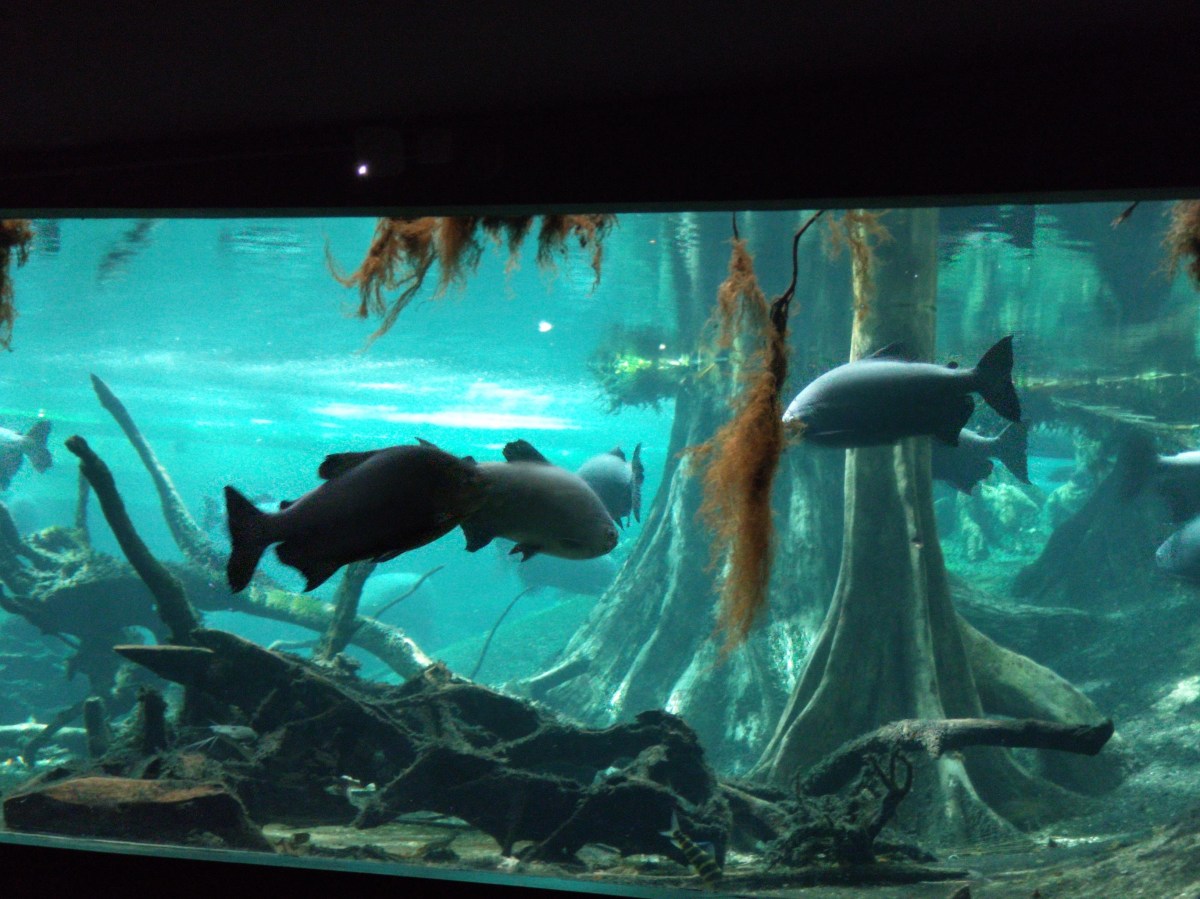
South American freshwater fish at the impressive aquarium and rainforest area of Barcelona’s wonderful Science Museum.

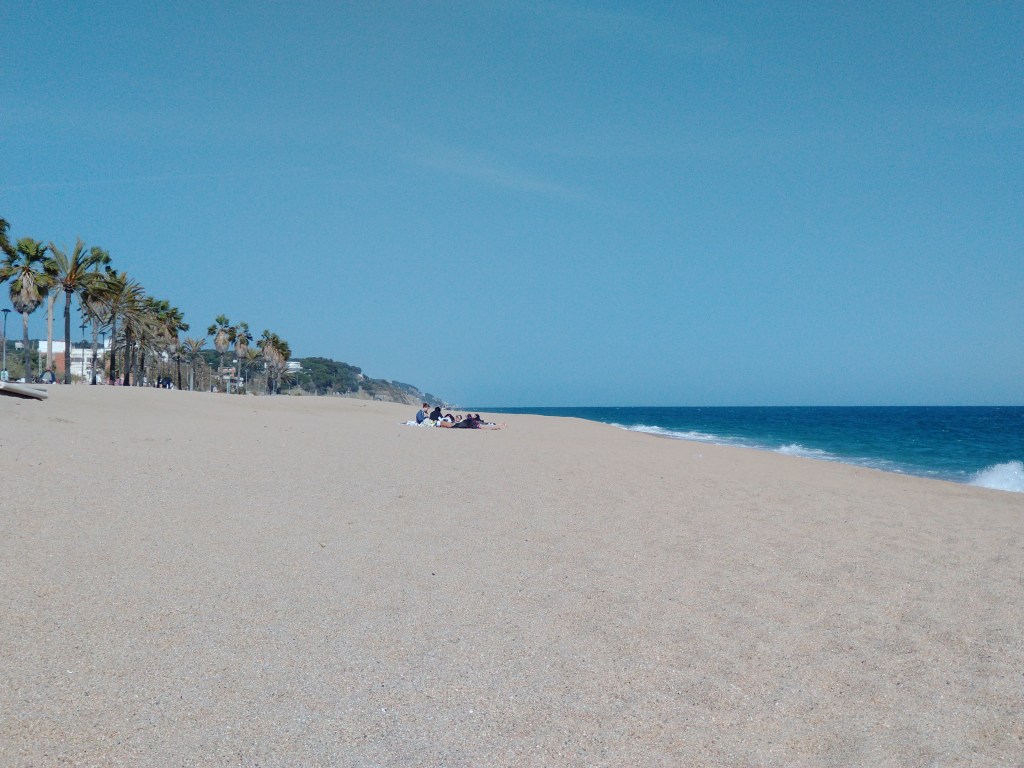
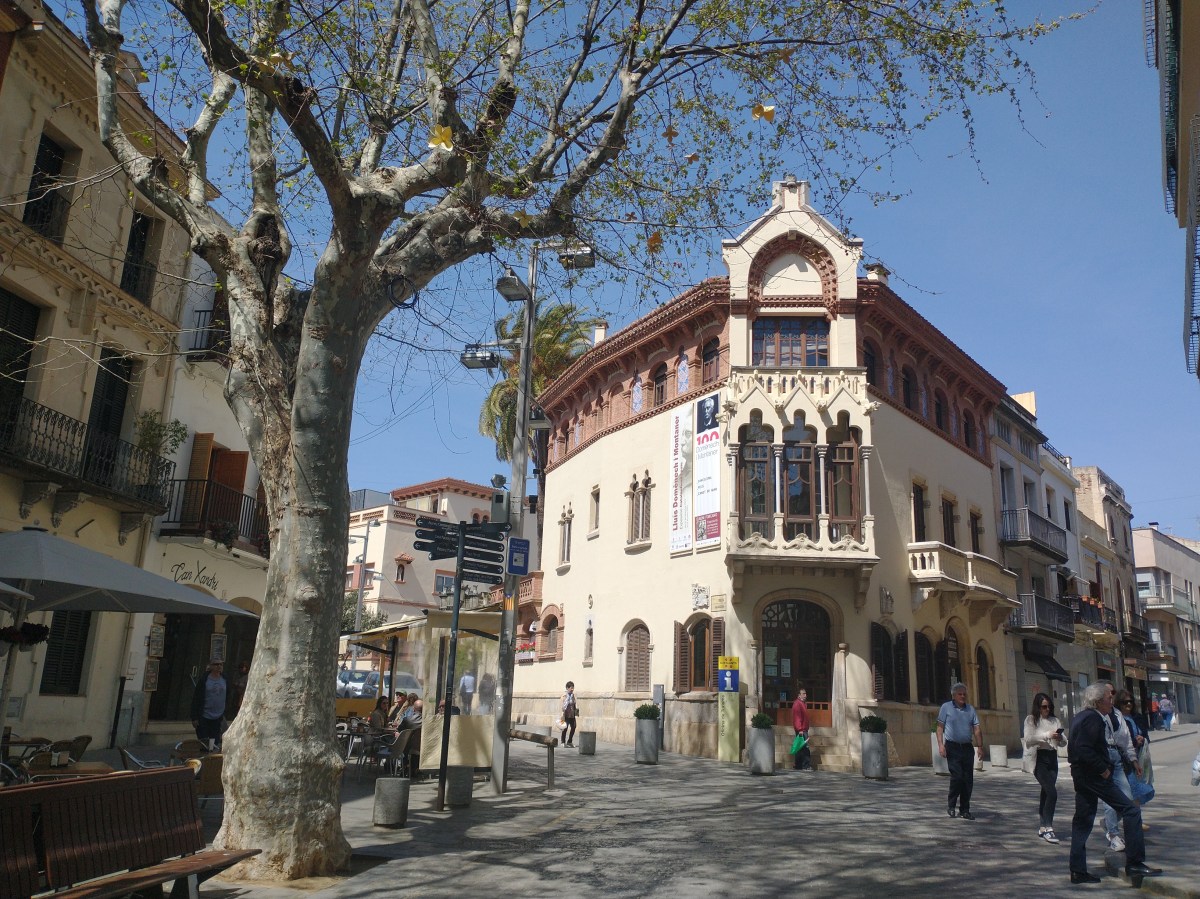
A public holiday. Where to go, when everyone everywhere is looking for an outing? Emily and Miquel chose Canet de Mar, a few miles up the coast. A characterful little town that was the home of Lluís Domènech i Montaner, a Modernist architect whom I hugely admire, and who deserves a post later. A museum visit (the featured photo), a long lazy meal, moments on the beach playing with Anaïs. I call that the perfect day.

 From Pyrenees to Pennines
You must be logged in to post a comment.