Premià de Dalt is Premià de Mar’s slightly posher sister, just up the hill from here. It has an older town centre, with a church dating from the 10th century, and tantalising views of the sea far below. And a population of only 10,000.
I went to explore by myself on Friday. Malcolm wasn’t feeling so good, and that very night, Emily and I were due to fall victim to a thoroughly nasty sickness bug. It’s been that sort of holiday. Weather (i), transport limitations (ii) and ill- health (iii) have all been conspiring against us. (i) is about to hit again, (ii) are still with us, and (iii) is still afflicting Malcolm.
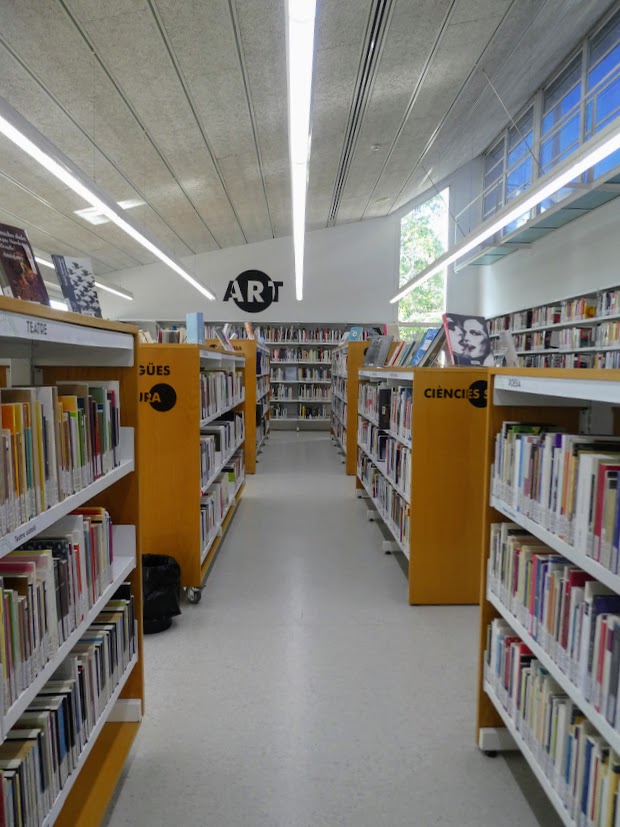
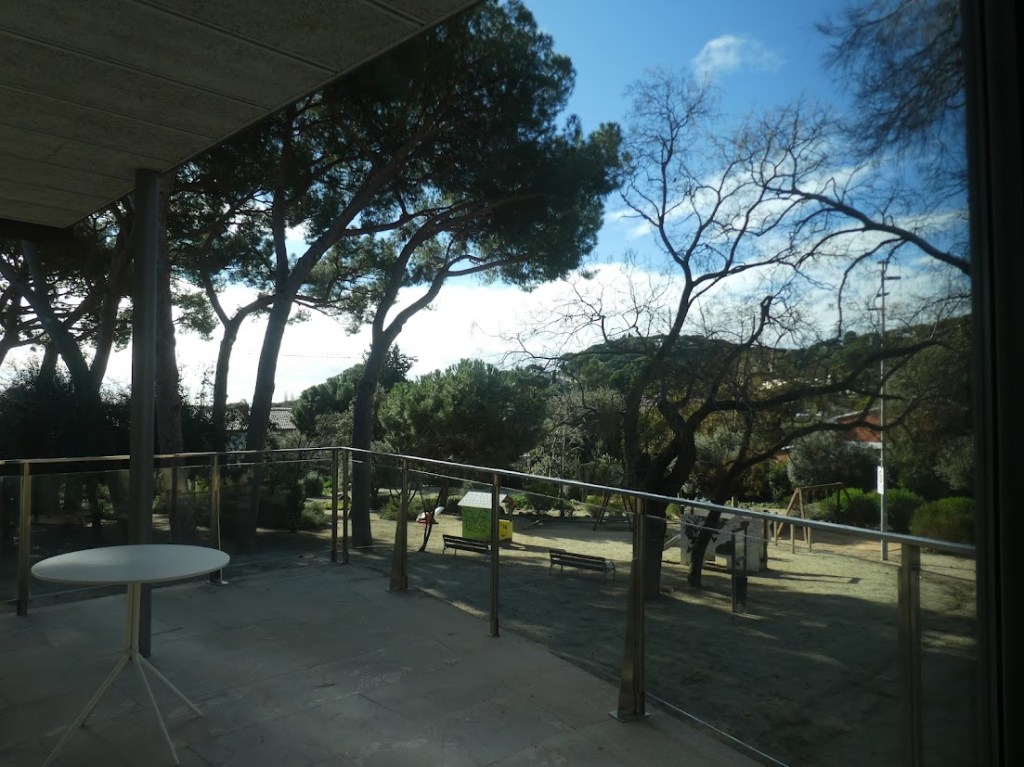
One of my discoveries was the town’s library. I was impressed. It’s situated by a local park, and there’s a large balcony with tables and chairs so you can read or study there in the fresh air.
It’s well-stocked.
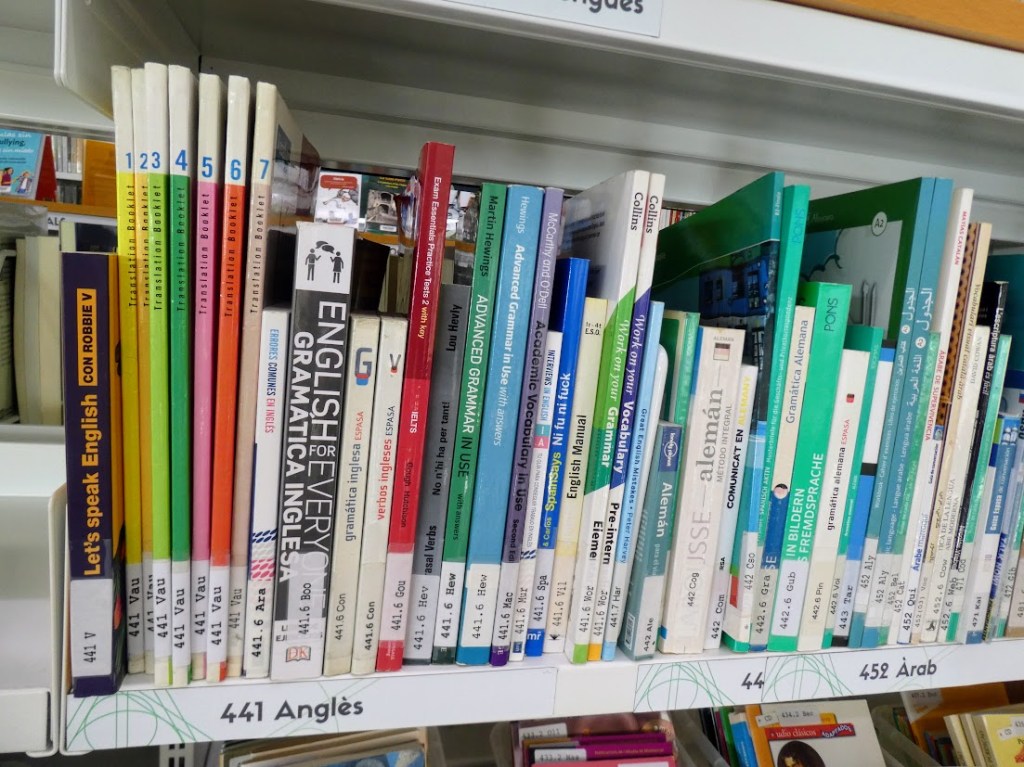
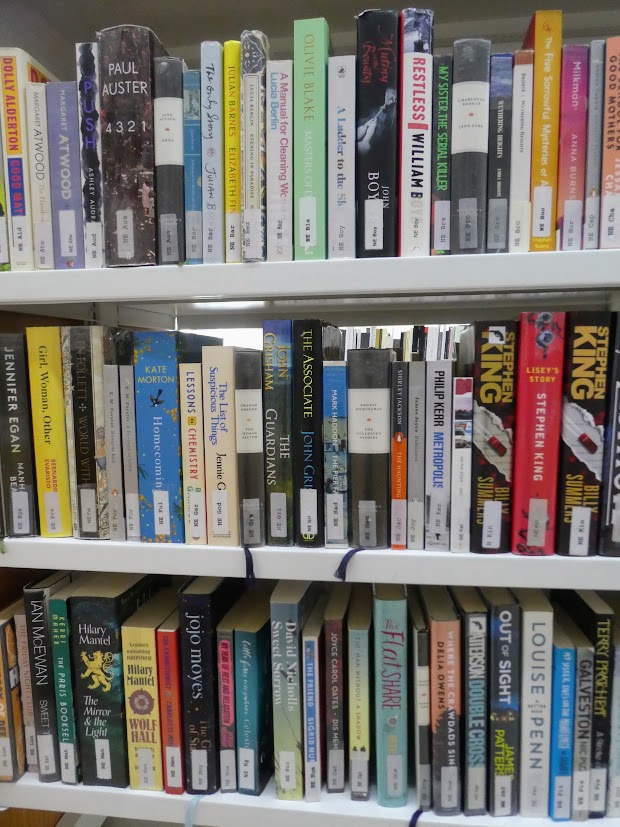
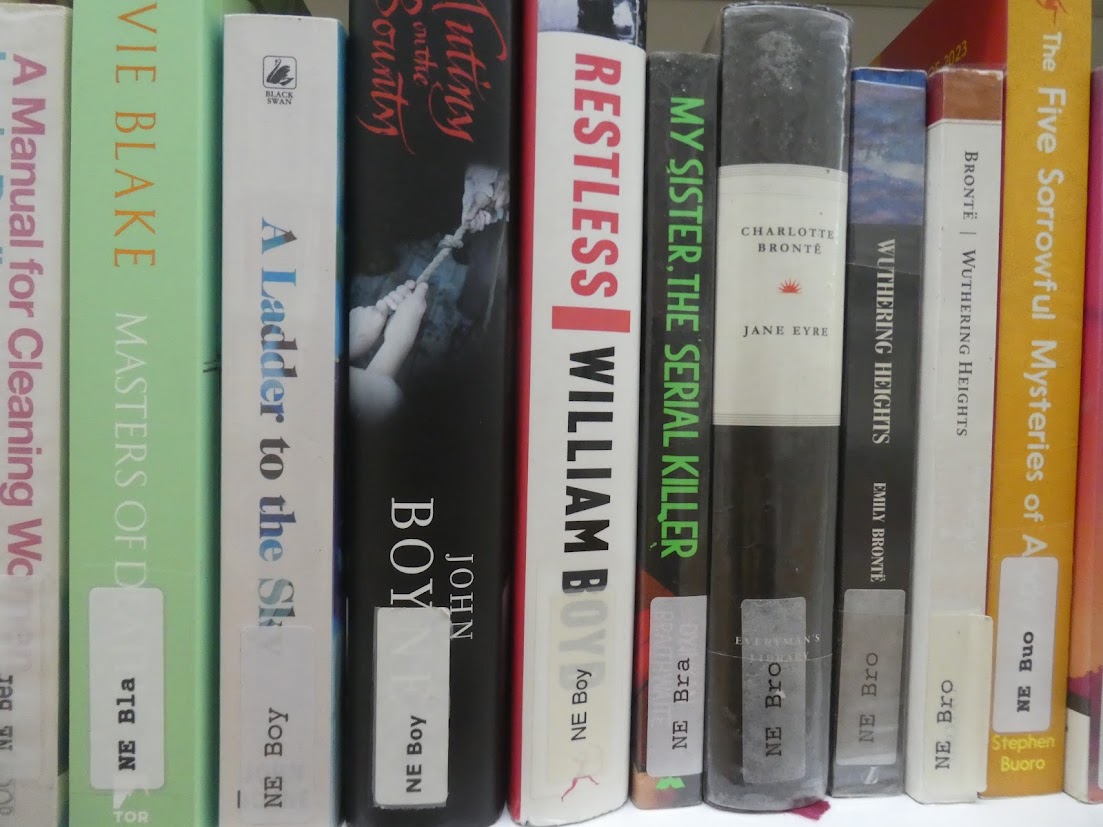
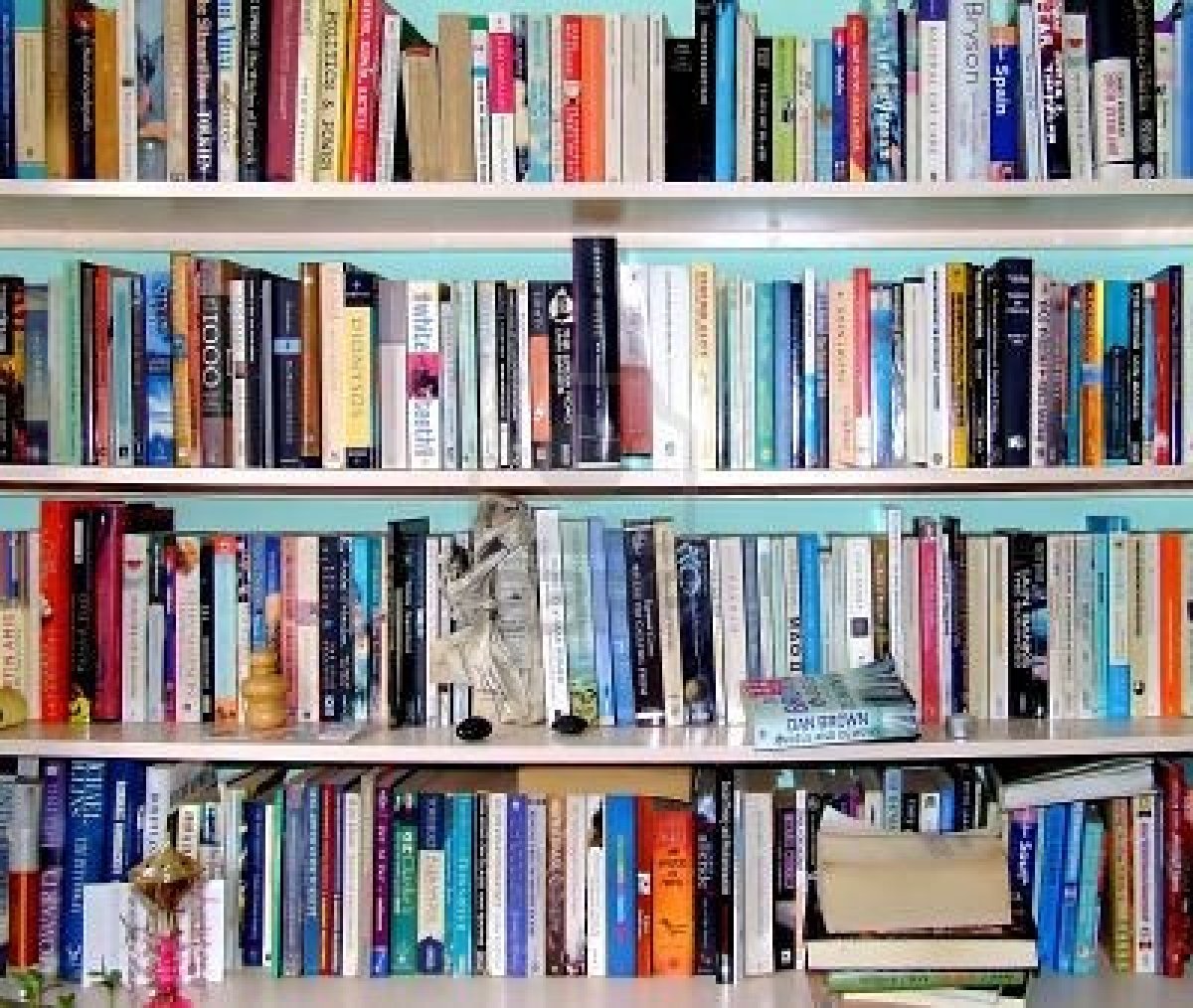
Here are the books available if you’re studying English:
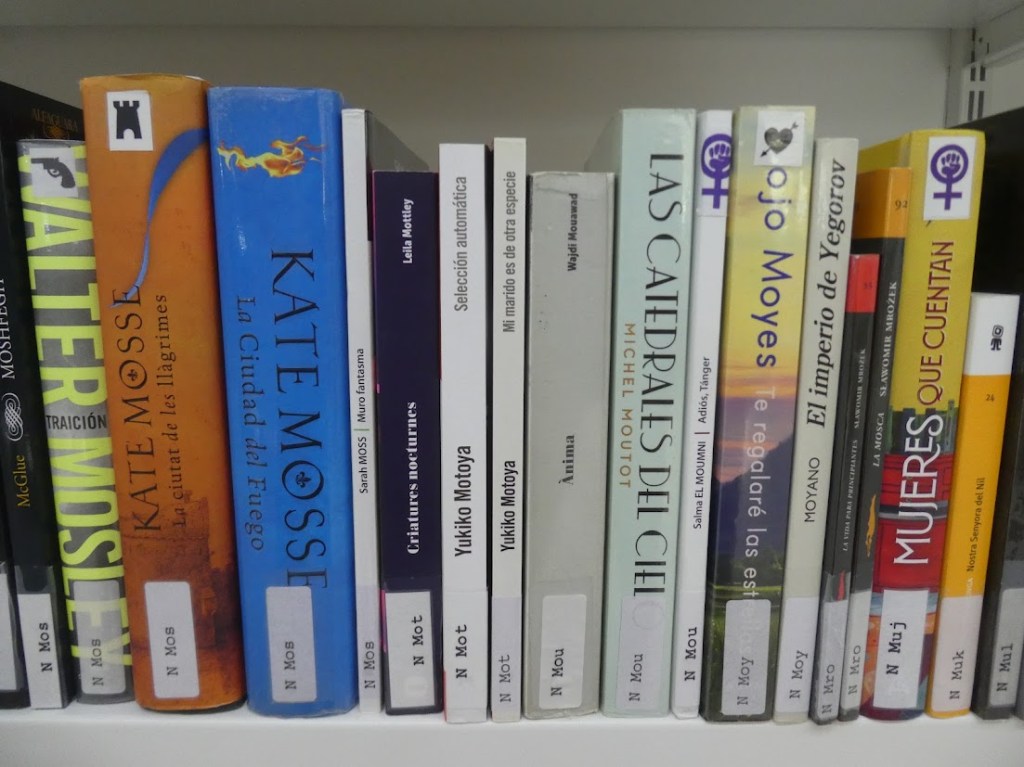
… or just reading in English. There were about 100 books to choose from – the old classics and up-to-the-minute reading choices.
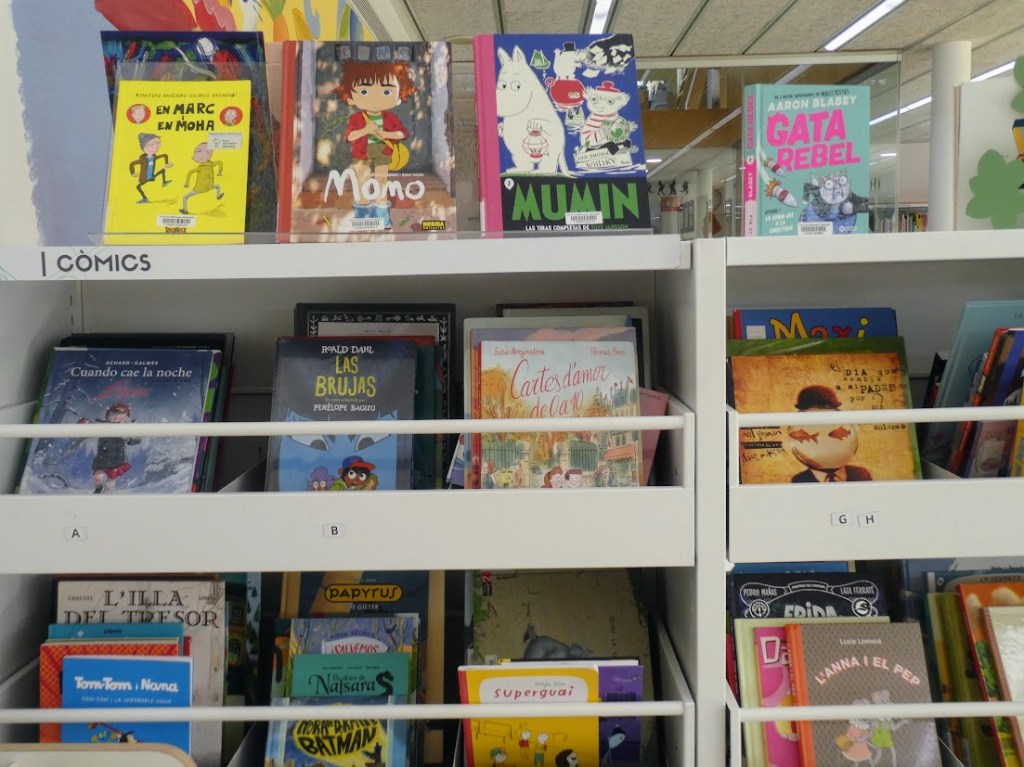
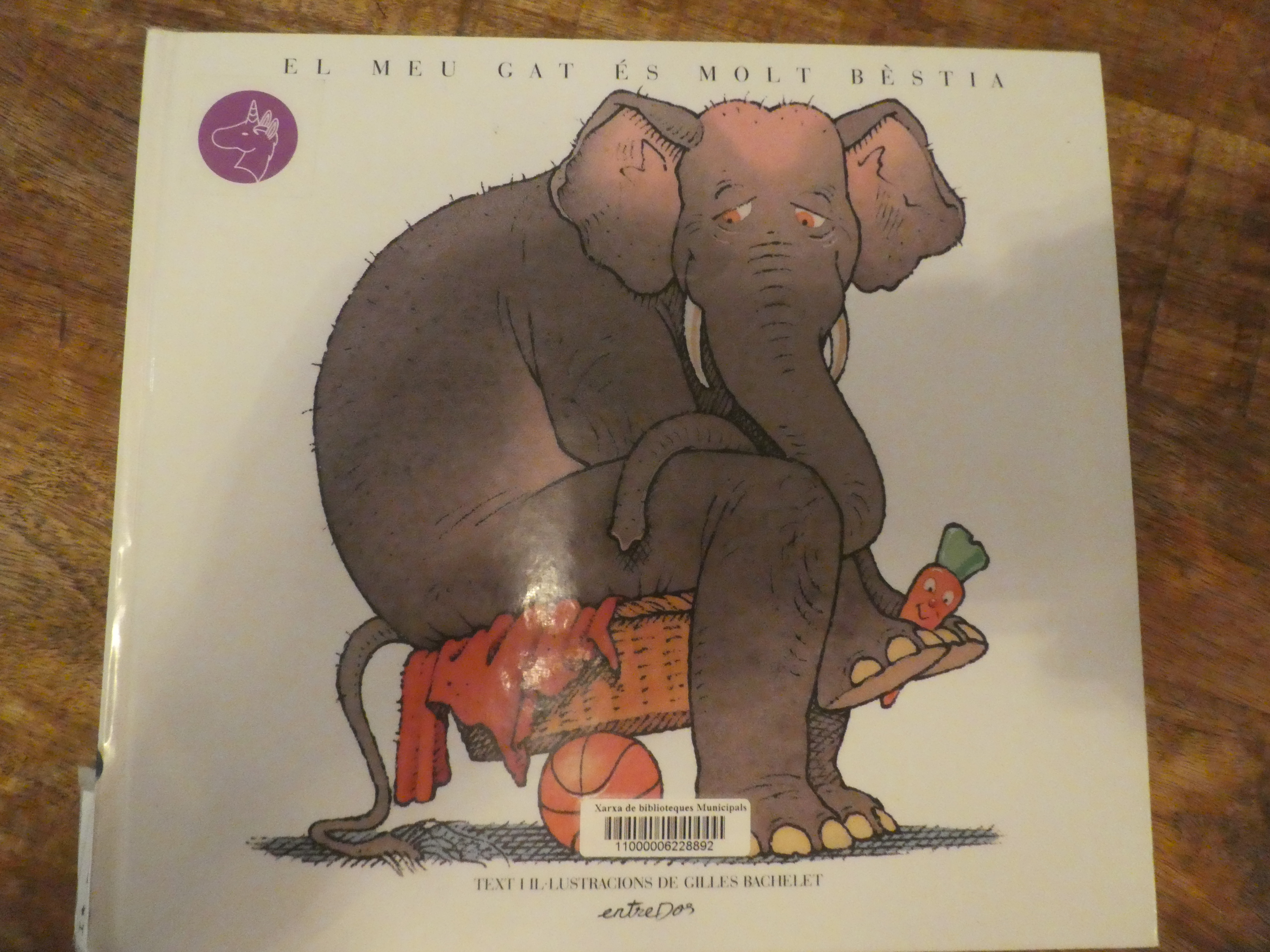
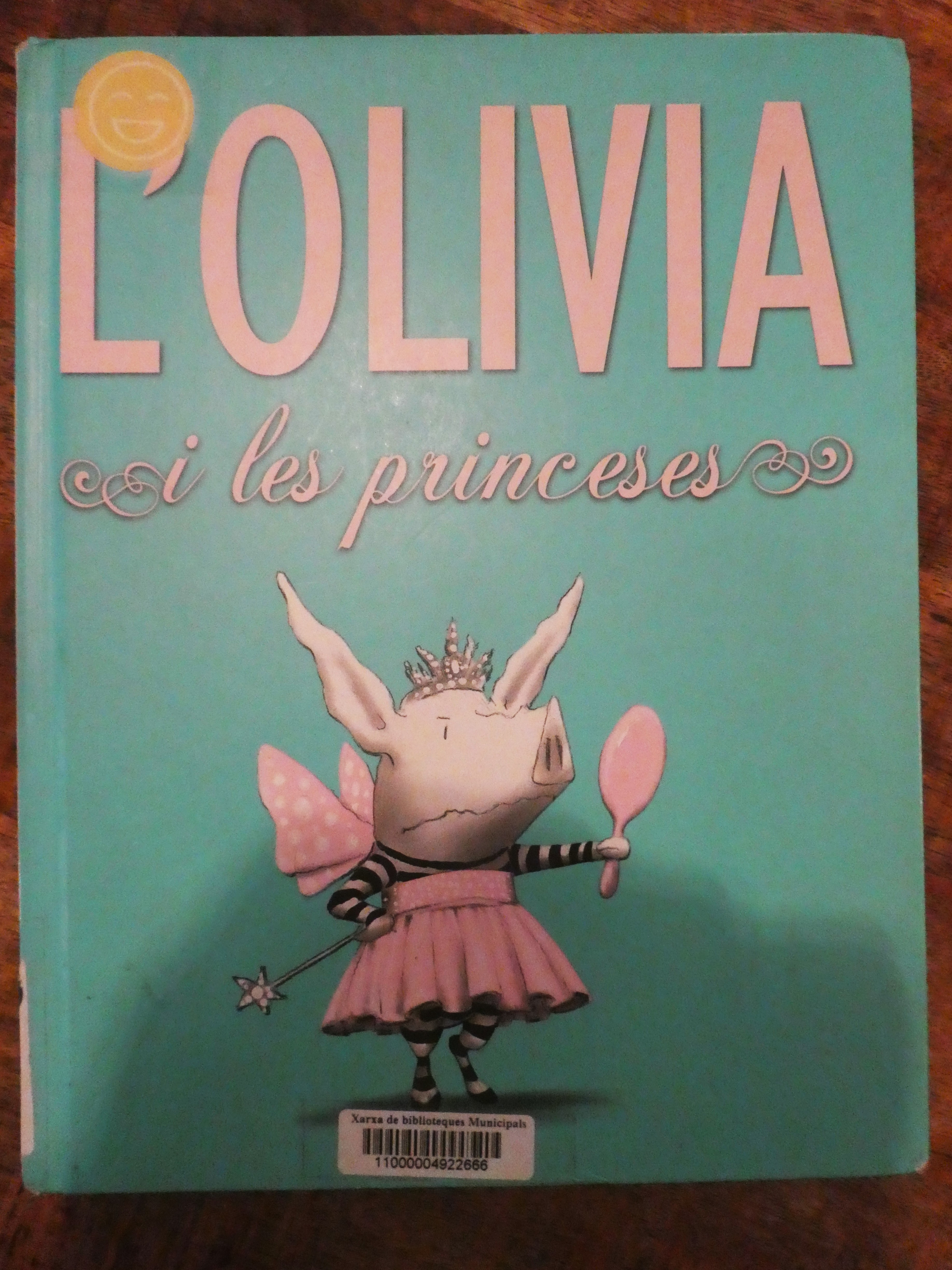
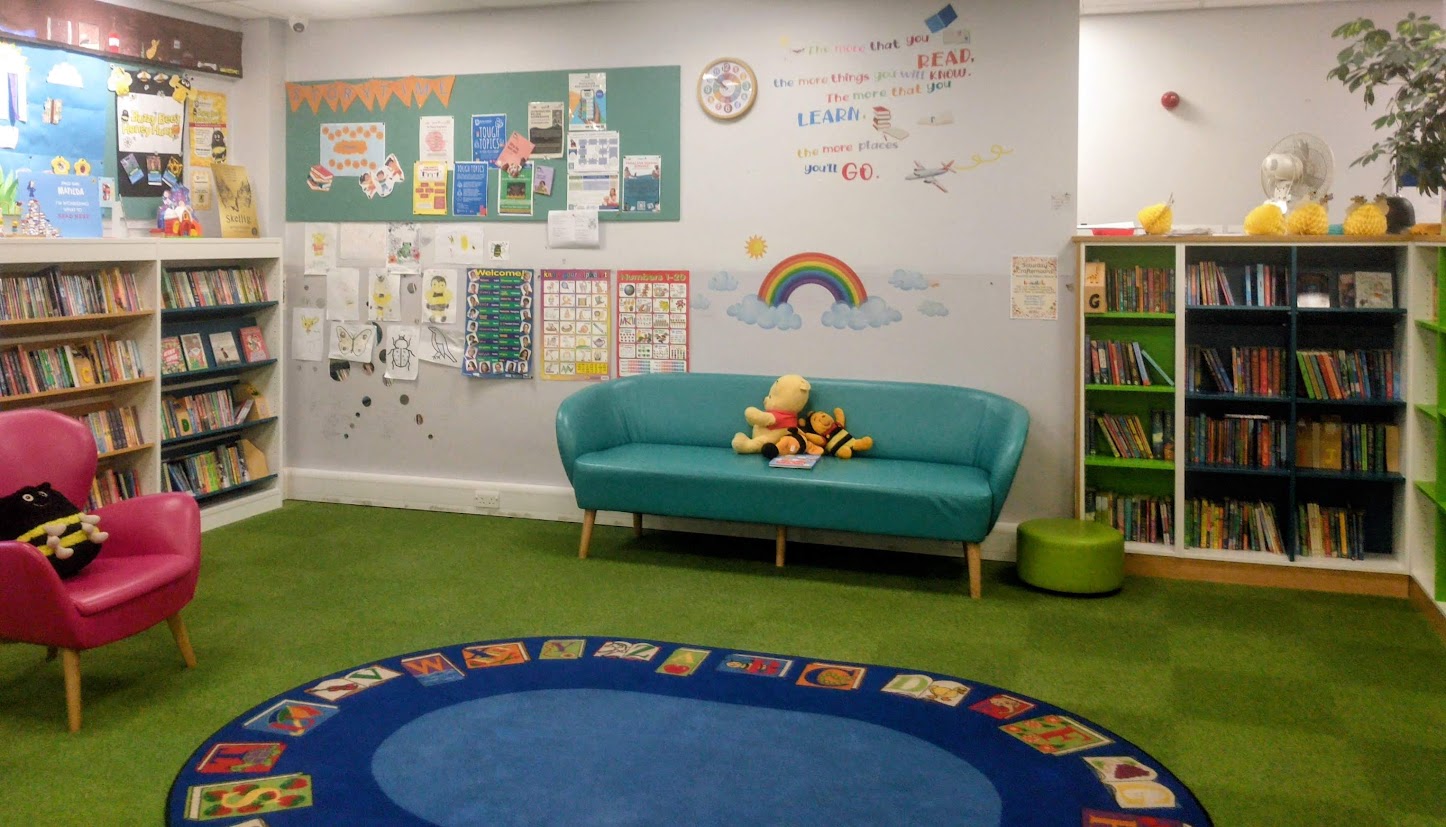
I couldn’t take photos of the study area or the children’s library without expressly seeking permission from those using the spaces. So here’s a display from the chidren’s area.
The feel is very different from a British community library. When I’m ‘on duty’ in our local one, we talk about our tasks together in normal speaking voices, chat with friends who come to exchange their books, and take little notice as the children in the Junior Library enjoy a noisy morning music session or listen to stories on certain mornings of the week. Here in Spain are notices encouraging silence, in the way I remember from my childhood. I’m happy with both.
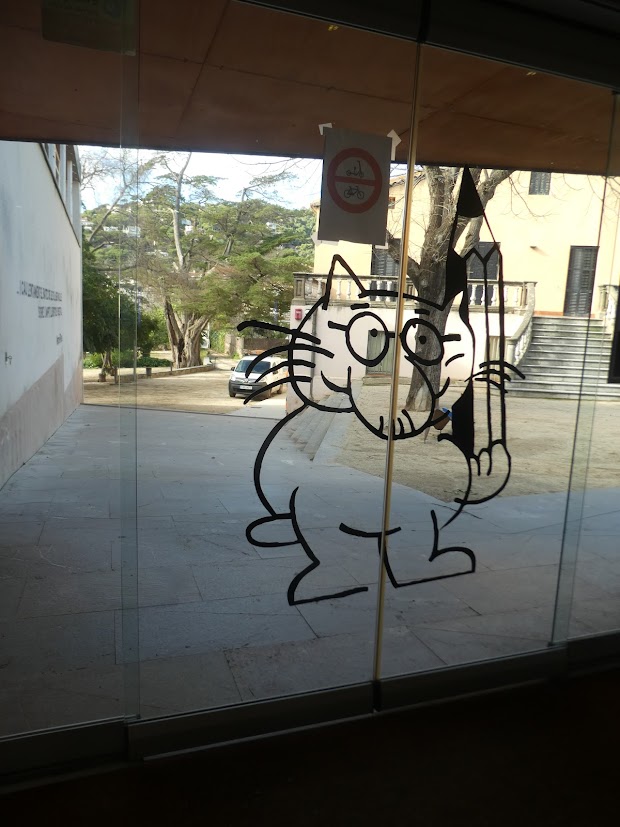
But in case it all sounds a bit serious to you. Here’s the fellow who welcomes you into the library, then shepherds you out.
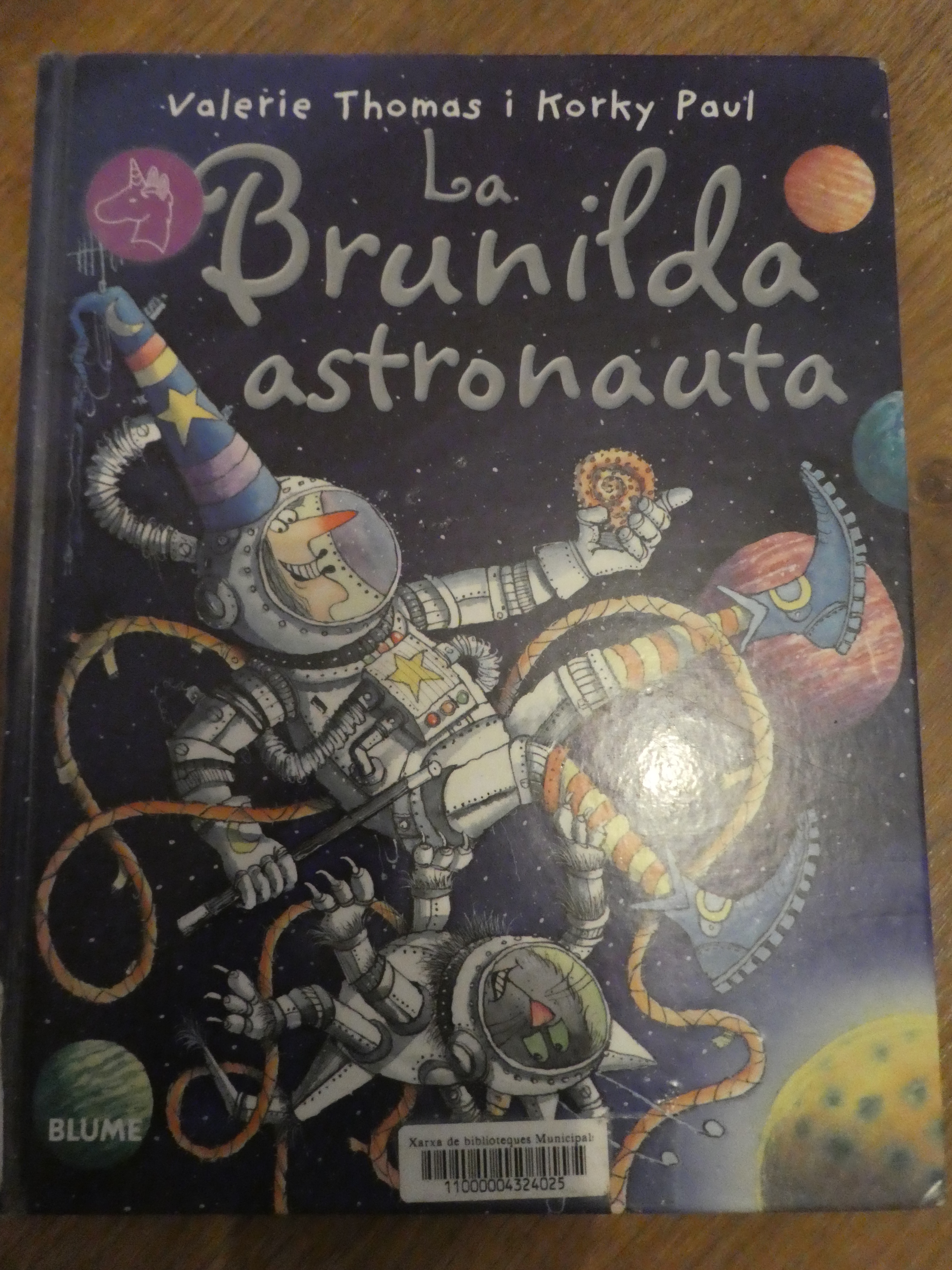
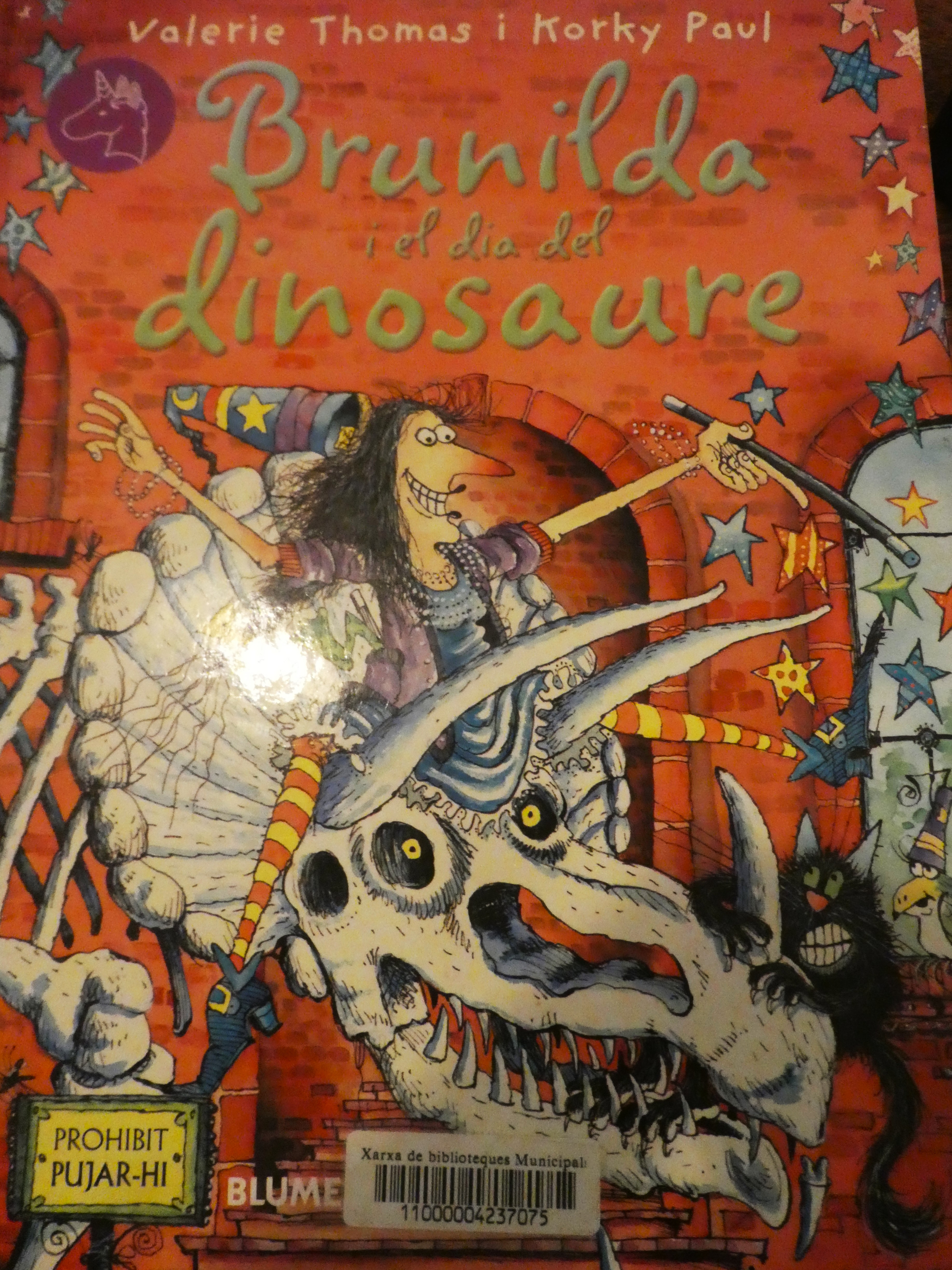
Meanwhile, on her way home from work, Emily had popped into their local library to get books for the children.
Who knew that Winnie the Witch would be called Brunhilda in Catalan? Or that she would be so popular for so long? My children, all parents themselves, enjoyed her books decades ago.
I’ll hold over my own reading choices. They’ll keep.
What a lightweight. A mere seven library books read in December. To be fair, I also read – and almost finished in December – another book, from The Library of a Friend. But that may not count.
But I had some Right Good Reads.
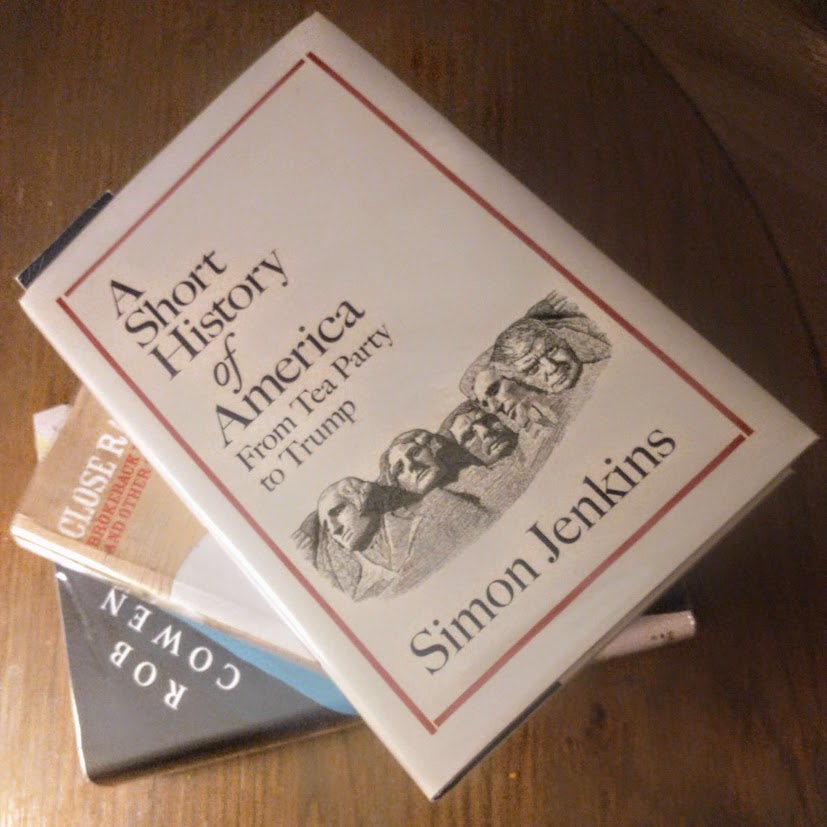
Simon Jenkins‘ A Short History of America: from Tea Party to Trump got a mini- review here and a ⭐⭐⭐⭐⭐rating .
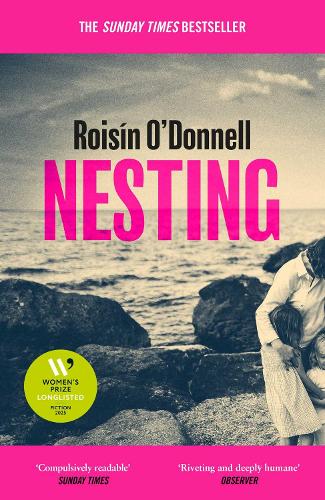
I fairly raced through Roisín O’Donnell‘s Nesting which details the story of Ciara, as she attempts to escape her controlling, domineering husband Ryan with her two small daughters. When she plucks up the courage to go, even finding a bed that first night is a major achievement. This book describes her attempts to move on as she attempts to keep two children fed, clean and entertained from the bedroom of a hotel partly dedicated to the homeless. A difficult subject tackled with verve and compassion by O’Donnell. ⭐⭐⭐⭐
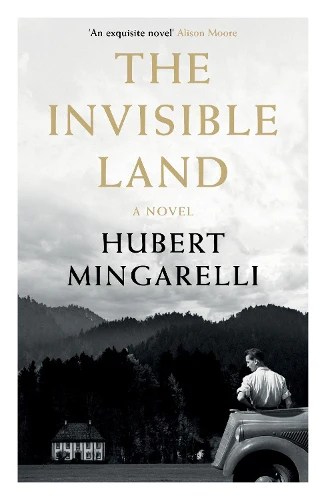
The Invisible Land: Hubert Mingarelli (Translated by Sam Taylor). An unnamed photographer has, just before the book begins, been documenting the liberation of a concentration camp. Now he wants to document ordinary German villagers. What he saw in the camps simmers away, quietly enraging him. We see, as he does, the bucolic calm of the countryside, as an impertinent and shocking contrast. A compassionate exploration of the – often unseen -consequences of war.⭐⭐⭐⭐
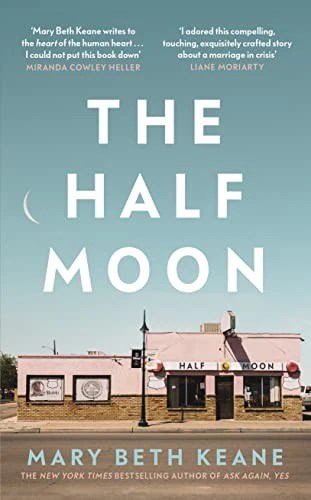
The Half Moon: Mary Beth Keane. Malcolm and Jess are in crisis. She’s just left the marriage for a breather and to take stock. There’s a blizzard in town. Theiy have financial worries. They’ve run through shocking amounts of money spent on unsuccessful IVF treatment – Jess can’t leave aside her dream of having a family. And Malcolm has taken on more financial commitments than he’d let Jess know about when he bought The Half Moon. The bar isn’t now doing well. The books backs and forths through their lives – Jess’s law degree, the community and families that surround them, Jess’s tentative exploration of a new relationship. This is a small town. Everyone knows everybody else’s business. How will things pan out? Only one way to find out. Read the book.⭐⭐⭐⭐
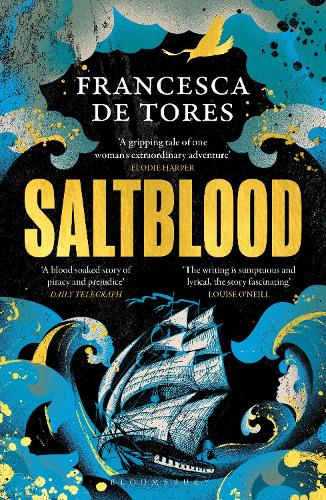
Francesca De Tores’ Saltbloodfollows the life story of an actual historical figure, Mary Read. Little is known of her but the barest of biographical details, but de Tores fleshes out her entire life to tell an engaging and richly atmospheric tale. Raised as a boy (that’s a story in itself) Mary/Mark first works in service. Then she joins the navy, and later the army – always concealing her female identity in these most male of environments. Read, who narrates her own story, is thoughtful and reflective, describing both humdrum days and moments of danger and adventure . There’s her marriage, her return to the sea, finally as a pirate … This is a well-written and realised drama which brought to life seafaring – and indeed day-to-day existence on land both in Europe and the Bahamas. Transatlantic trade and piracy were part of everyday life. I believe it’s historically correct, and it’s certainly a nuanced and compelling story inviting sympathy for anyone joining this remittingly tough way of life: especially if she’s a woman. ⭐⭐⭐⭐⭐
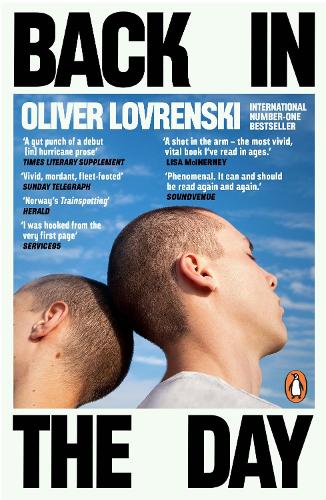
Back in the Day: Oliver Lovrenski. I want to draw attention to the quality of the translation by Nichola Smalley. Largely innocent of capital letters and full stops, this breathlessly episodic story is told in the street argot of the young immigrant who tells this tale. And Smalley has this language, and style of presentation off to a T. The four protagonists have come with their families as immigrants from various parts of the world. Clever and ambitious, they lose interest in school when they overtake their classmates and remain unchallenged. Dreams of becoming lawyers are exchanged for knives and protecting other family members. Drug dealing leads to institutional care for one, and a slippery slope to violence, machetes and guns. Will eventual grief and remorse result in a turning point? This is a tough, intense yet rewarding read by a young Norwegian of Croatian heritage who wrote it when he was just 19. I hope there’s more from him, and from his talented translator. ⭐⭐⭐⭐⭐
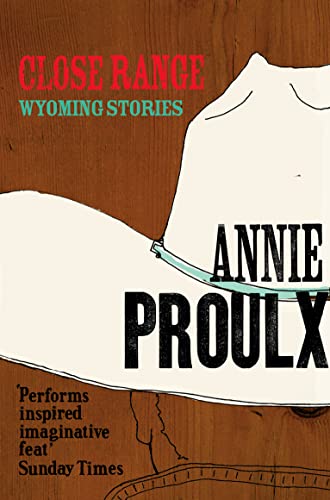
And finally, Annie Proulx’sClose Range. This isn’t so much a review as a place-holder as I haven’t read every story in this collection yet. Mainly because, much as I was enjoying them, I need a break from the colloquial style in which they’re written every now and then, even though it’s precisely this that brings the stories to life and makes them vivid. They’re about insular rugged people living tough lives in an unforgiving landscape – often lonely and contending with daily hardship. This doesn’t make for a bleak read however. The tone and language of the stories brings them vividly to life. More later when I’ve read the lot!
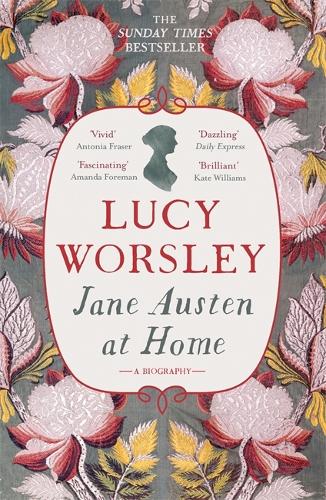
And that other book, lent by a friend? A brilliant evocation of Jane Austen’s life and times, immaculately researched, but immensely readable, by Lucy Worsley: Jane Austen at home. It had to be read, with the airwaves full of Austen memorabilia last year, the 250th year of her birth. ⭐⭐⭐⭐⭐
Unbelievably, I only have two books on loan at the moment. The first, plucked from the shelves on a whim, is proving utterly absorbing: Craft Land – a journey through Britain’s lost arts and vanishing trades, by James Fox. And the next is a doorstopper: Erika Fatland‘s High- A journey across the Himalaya through Pakistan, Indai, Bhutan, Nepal and China. I might need a big dose of fiction after that little lot.
As I turned the last page of one of the very first books I read this year, I knew it would make my 2025 Top Ten. It may even be my Top Read. It’s Lucy Steeds‘s The Artist, set in rural Provence in the years after WWI. Rupert is sent off to France to write about the reclusive and wildly successful artist, once a friend of the deceased Cezanne, Edouard Tartuffe. Here he meets the idiosyncratic and uncommunicative painter, and his timid, almost invisible niece, Ettie, who serves his every need. This is their story – evocative, involving and completely immersive.
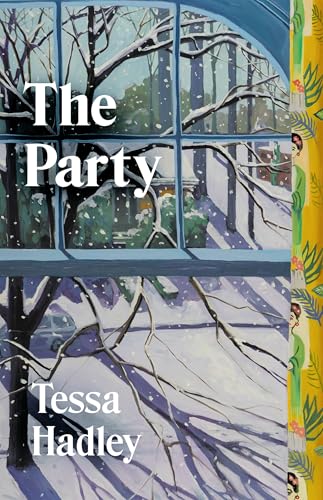
Shortly after this, I read Tessa Hadley‘s The Party. Hadley packs a lot into this novella about two student sisters, Evelyn and Moira, living in Bristol on the cusp of the 1950s. We meet them at a party in an all-but abandoned pub. We’re introduced to their home life, and to their sortie out of this stifling environment. A thoughtful and enjoyable evocation of a period of recent history and its awareness of class, its sexual and societal mores that feels at once so distant, yet so very recognisable.
Douglas Bruton‘s Woman in Blue next. He must have been fascinated by Vermeer’s Woman in Blue Reading a Letter, in the Rijksmuseum: he knows it so well. In his story, an unnamed man visits this picture every day, for several hours, knows it intimately and interrogates it for meaning. The other narrator is the young woman in the picture, who describes how it is she comes to sit for this particular portrait, and her own feelings. This book explores the boundaries between reality and illusion in art, inspecting the portrait and the two protagonists intimately. It’s a captivating novella, with a surprise ending, and beautifully expressed throughout.
Joseph O’Connor‘s The Ghosts of Rome now. A thriller that starts where My Father’s House leaves off: though it can be read independently of the earlier book without difficulty. We’re in Nazi-occupied Rome in 1944. The novel details the activities of a group in the Vatican known as The Choir, daring Escape-Line activists, who have real achievements under their belts despite the disapproval of the Pope, and the efforts of Obersturmbannführer Paul Hauptmann to have them brought down. The writing is immediate, graphic and authentic; and the book is based on a real knowledge and understanding of this particular slice of Rome’s wartime history. It’s a thrilling and involving story that I was captivated by from the very first page.
Georgina Harding‘s Land of the Living has two settings: the Burma campaign towards the end of WWII, set in the beautifully exotic and remote landscape of Nagaland with its rains, forests, waterfalls and exotic birds; and the muted grey, flat Norfolk farmland to which Lt. Charles Ashe returns to farm following his wartime soldiering. Ashe soon marries the woman he was engaged to, Claire, and embarks on the hard day to day life of a Norfolk famer. He can’t – won’t – communicate with her about the horrors he’s encountered. She doesn’t know how to break his protective shell, finds she hardly knows him. Their mutual incomprehension, and Ashe’s two vastly different worlds is well-wrought. A vivid and emotionally charged book.
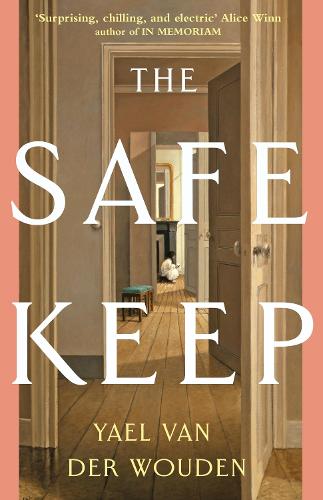
The Safekeep: Yael van der Wouden. We’re in a small Dutch town in the 1960s. WWII has cast a long shadow. Memories of the hardships endured then, and of the fall-out from the defeat of Germany intercede in every day life.This book keeps on delivering surprises. Is it about a lonely – and frankly unpleasant – young woman, Isabel, left living in the family home after her parents had died and her brothers departed? Is it about an astonishingly unexpected lesbian love affair? Or perhaps something else altogether? An absorbing, cleverly plotted book, which made me aware of a part of Dutch history about which I knew little.
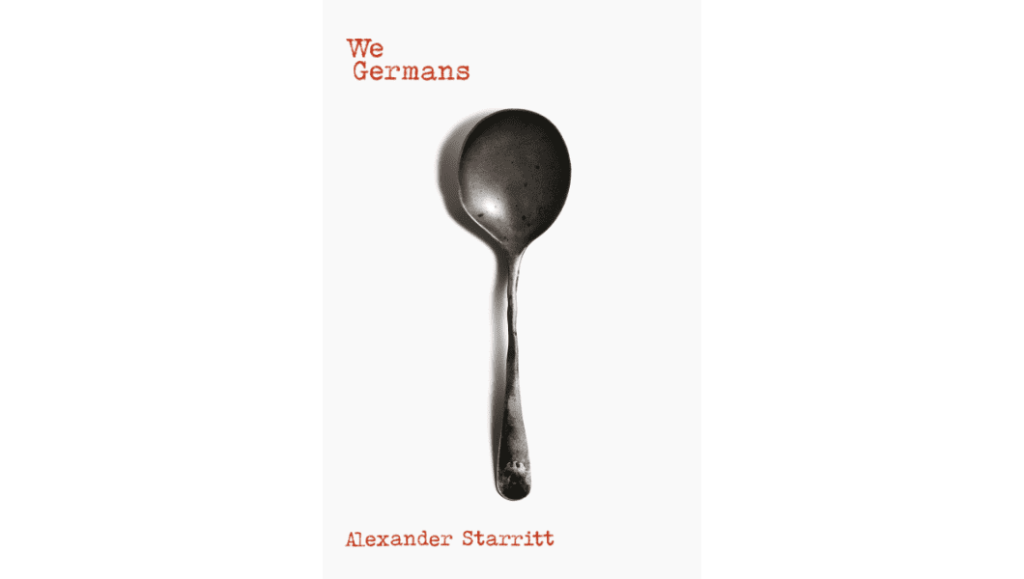
We Germans, by Alexander Starritt, takes the form of a long account written by an elderly German, shortly before his death, to his British grandson, who has, perhaps clumsily, been asking what the old man did back in WWII. In 1944, Meissner, a German artillery soldier, had been fighting with his unit in Russia, in Ukraine. But in Poland, he and a few others somehow got separated when detailed to look for a rumoured food depot. They’re forced to kill as they attempt to muddle their way back to their unit, They witness horror. They steal. They squabble. This is a well-drawn book, a deft exploration of the moral contradictions inherent in saving one’s own life at the cost of the lives of others. Though fiction, it’s clearly deeply rooted in the reality of the helpless, pointless horror of the last period of the war for those often starving people, both army and hapless civilians who found themselves marooned on the Eastern Front.
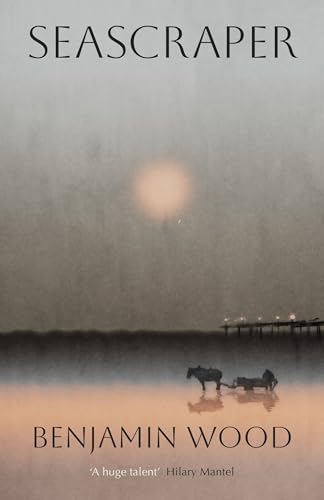
With Benjamin Wood‘s Seascraper, we’re in the 1950s. Thomas is nineteen, and lives in poverty with his mum in a dishevelled house in a depressed Lancashire coastal town , scrabbling a living since his much-loved grandfather’s death by continuing his work as a shankar – prawn collector – using a pony and trap. Though bright, he never completed his schooling. His dream is to become a musician. One day, an American film director who somehow meets his mum involves Thomas in his idea to use a stretch of local beach as the atmospheric backdrop to his latest film. And he’s willing to pay Thomas well. Although he’s sceptical, this is an opportunity perhaps to escape his obligations, the bleak poverty of his situation. Of course, things don’t turn out to be so straightforward, but yet the story ends with a glimmer of hope. This story, unfolding a film-that-might-be is cinematic in its evocation of the bleak seaside landscape and Thomas’ dreary, tough existence. It packs a lot into its 160 pages. Benjamin Wood is someone whose writing is to be savoured.
The Two Roberts by Damian Barr re-imagines two lives: those of Bobby McBride and Robert Colquhoun, two twentieth century painters of whom you may not have heard. Both born in working-class Glasgow just before WWI, they both had a struggle at home to be permitted to attend Glasgow School of Art. Where they met, and soon became inseparable, living and working together, exploring their homosexuality at a time when they risked ostracism and imprisonment by being so much as noticed for this. Early success propelled them to star-status. They worked hard, but played harder, and their tendency to self-destruct sent them on a downward trajectory towards poverty and early death. An immersive, sympathetic imagining of two lives. The first part, where the two men overcome their difficult circumstances to become rising stars is perforce much more enjoyable than the later chapters illustrating their self-destruction. But the book describes well the blossoming of two talents, as well as showing what it meant to be queer in a society which both reviled and punished homosexuality.
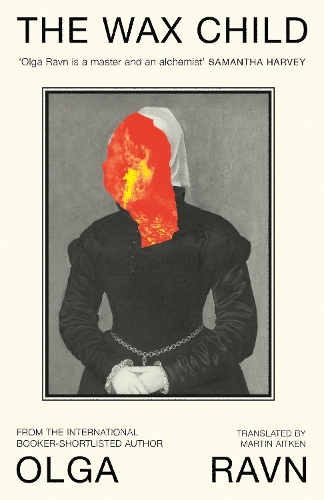
The Wax Child by Olga Ravn is beautifully translated by Martin Aitken. This story takes us to 17th century Denmark, where on average, one ‘witch’ was burned every five days. This kind of event was mirrored all over Europe. Our narrator is a little beeswax doll fashioned by a impoverished noblewoman, Christenze Krukow. Omniscient, she sees and hears all that goes on. How her maker is one of a group of women who work, and sing, and gossip, and practice the folk remedies they learned from their own mothers: who protect one another from violence from husbands or others in their household: who become seen in their communities as practisers of magic and witchcraft. The book is interspersed with spells and incantations which exist not to harm, but to protect; to prevent accident and disease; to bid others be kind; to divine if someone’s life may soon end. Inevitably, most die, found guilty of witchcraft. This book is beautiful, horrifying, visceral, poetic. There is a sense of spells being woven on every page. The women in this story existed. They died as ‘witches’ and now they are remembered in this powerfully atmospheric and evocative re-imagining of their circumstances.
I made this list of Top Ten books a week or so ago. But lo! Since then I have had two further 5 ⭐reads. I’ll review those in my Love your Library round-up next week. They couldn’t be more different from each other. They’re Saltblood: Francesca de Tores and Back in the Day: Oliver Lovrenski (Translated by Nichola Smalley).
It’s been a good year for memorable books. Of the 112 or so books I’ve read, well over half have scored 4⭐and above.
Only one has gained but a single star: Horrible Histories author Terry Deary came and spoke at our local Independent book shop about his venture into crime writing – Actually I’m a Murderer. I thought I should give this book a chance, even though Cosy Crime isn’t my thing. I tried. I have concluded that Cosy Crime definitely isn’t my thing.
I already have a pile of books, mainly from the library – fiction, works in translation, and non-fiction, awaiting my attention in 2026. Not to mention the books that sit on our bookshelves, month after month, wondering why I never get round to them. One day …
It’s that time of year, The endless lists. I’m joining in too. Next week, I’ll write about my favourite fiction. But this week, I’ll instead focus on my 10 favourite non-fiction reads of 2025. I’m not ranking them. I’ll start with my most recent read, and reach back towards January. ‘Are you sitting comfortably? Then I’ll begin’. (who’s old enough and British enough to remember this welcoming formula introducing Listen with Motheron the Home Service at 1.45 every weekday in the early 1950s?)
A Short History of America: from Tea Party to Trump: Simon Jenkins. Jenkins puts right my formerly really rather sketchy grap of American history in a highly readable account of its early days as a barely inhabited continent, through its early discovery by Asiatic peoples on the one coast, and Vikings and similar on the other. Native American; intellectual and economic development; the long history of slavery; the Civil War; and right up to more recent history and the emergence of Trump. It’s lucid, informative and useful.
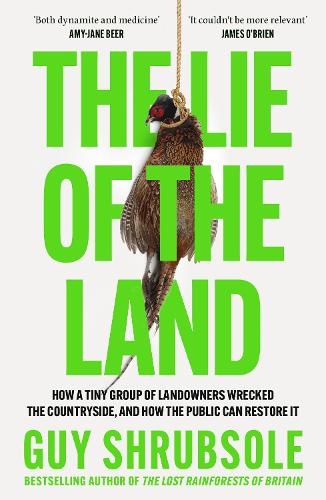
The Lie of the Land: Guy Shrubsole. This is a book that should be read by every sitting MP, particularly those Tory MPs anxious to preserve the status quo as far as our countryside is concerned. It is about our countryside and who gets to decide how it’s used: about the way the countryside has been treated has made the UK so nature-impoverished. It’s about how our history has give much of our countryside over to the landowner. It’s about the shooting industry; the draining of the fens; the Enclosure Acts. And it’s a Call to Action.
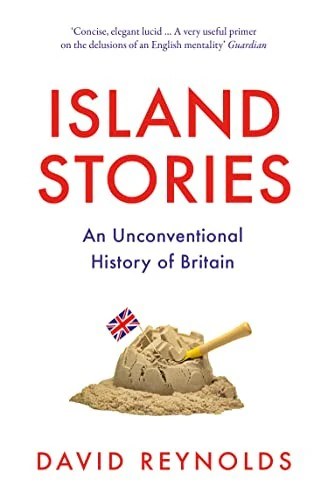
Island Stories – An Unconventional History of Britain: David Reynolds. In this book, Reynolds demonstrates how England (not to be confused with Britain) has, from the earliest years, even before the Roman Empire took this island under its wing, been inextricably bound to mainland Europe and beyond in dozens of ways, both political and social. He shows how our Glorious Past, our days of Empire grew up in conditions that can never be repeated, and how in any case had many aspects – slavery, subjugation of indigenous peoples – of which we cannot be proud. He looks at the Brexit delusion of making a ‘clean break’ from Europe and demonstates its impossibility, especially in the context of the four nations that currently constitute the British Isles. A thought-provoking read.
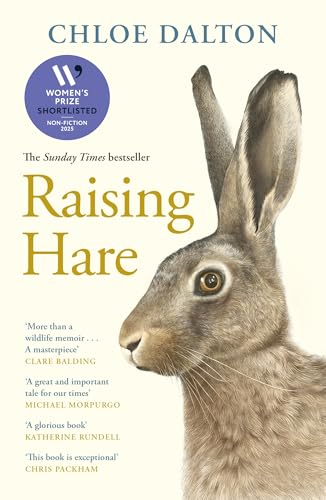
And now for something completely different. Raising Hare: Chloe Dalton. Dalton finds a small, apparently abandoned leveret. This is her story. Of how she treads a difficult path of wishing to help it survive to adulthood, while respecting its wildness. But the creature has a profound effect on Dalton. She strives, as she describes in this book to restore a sense of the sacred and to meet an animal on its own terms. Its part in her life changes her forever.
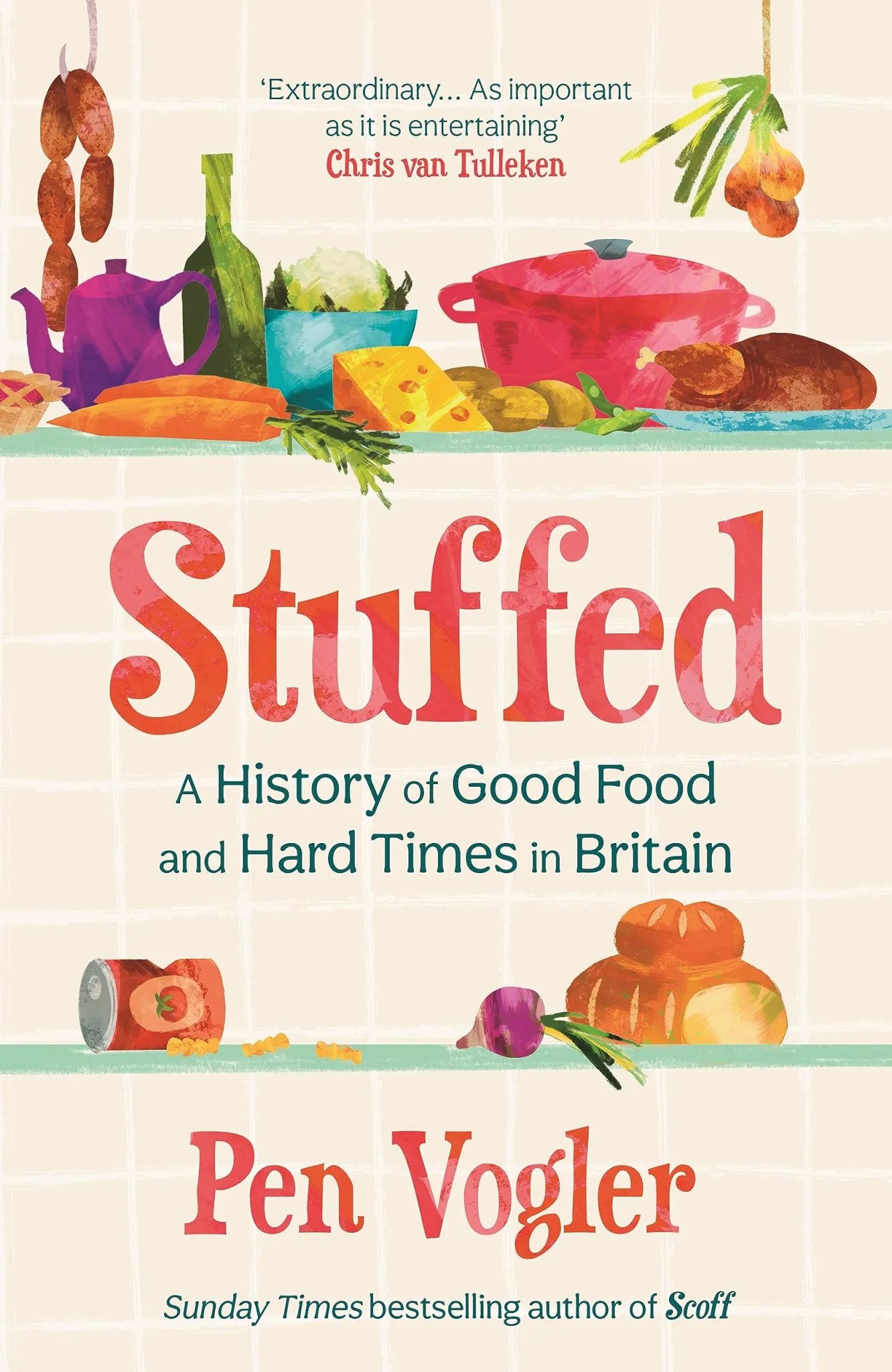
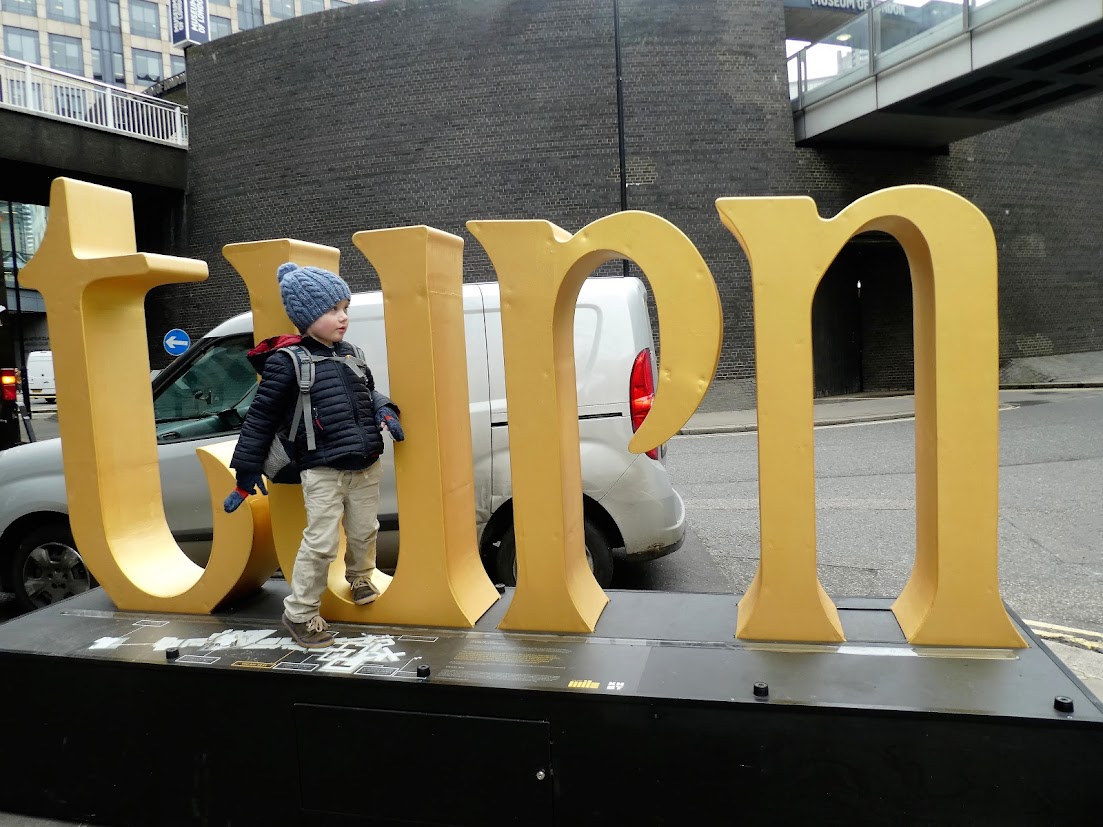
Stuffed: Pen Vogler. This is a book to relish, as it journeys through the history of eating, in good times and in bad, in the British Isles. It doesn’t begin at the beginning, then go on until it comes to the end, and then stop. Instead it works thematically, focussing in turn on some of the foodstuffs that perhaps define us:for instance, bread & ale; turnips (yes, really!); herring; Yorkshire pudding; gruel … and several more. She tells a good story, bringing it right up to date by mentioning the campaigns by Marcus Rashford and Jamie Oliver, and comparing child poverty and malnutrition as it presents now, with Victorian and even earlier times. A well-researched and highly readable book.
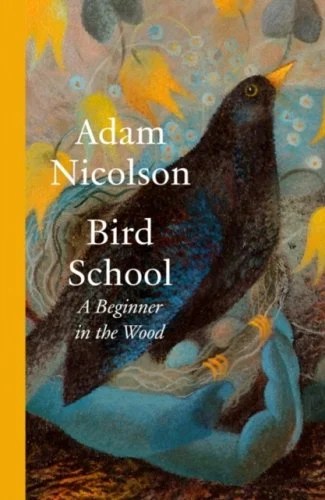
Bird School: Adam Nicolson. Nicolson was not a birder. But he decided to change that, and had a rather superior bird hide built in a wild corner of his Sussex farm. And there, all manner of birds come, and he learns. And teaches us: about surviving; singing;breeding; flying; migrating – every aspect of bird life. The story however, turns somewhat depressing. Birds here are in decline, because the natural world is generally in decline. Nicholson tells us why, so we can join the fight for the natural world in our turn.
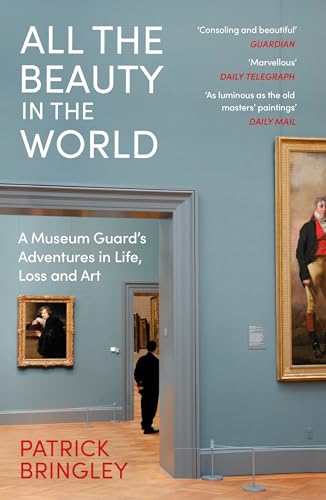
Let’s go indoors now, and off to America: All the Beauty in the World: Patrick Bringley. I loved this book. Here is a highly educated man who left his start-of-a-glittering-career in a period of grief following the death of his 27 year old brother, to become a museum attendant at New York’s Metropolitan Museum of Art. He spent ten fulfilled years there. In his book he talks about the works of art he spent his day with; the collections themselves; his colleagues; the visitors; his personal life. He’s perceptive, likeable and tells a good story. The accompanying illustrations by Maya McMahon tantalisingly suggest the works we can see when we get there.
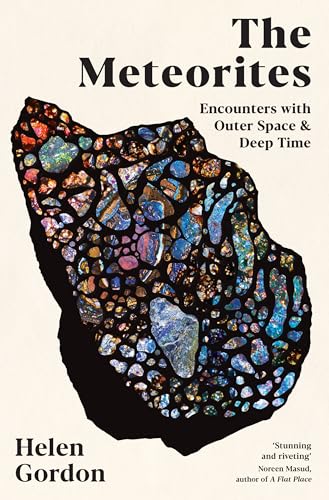
The Meteorites: Helen Gordon. I picked this up in the library on a whim. I knew little about Deep Space, and next to nothing about meteorites. Not only do I now know more about the rich variety of forms they take, how they are formed and where they might come from, but I’ve met the dealers, hunters academics and geologists involved in the meteorite community across the world. I now have a whole new perspective on our planet and outer space,and a hunger to know more, by reading this engaging and enjoyable book.
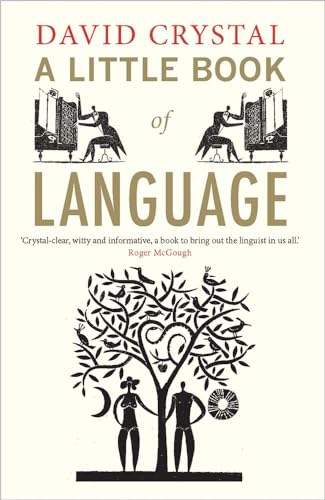
A little Book of Language: David Crystal. Here’s a book which with a broad brush, discusses all kinds of aspects of language: How a baby learns to communicate; how sounds are made; languages and dialects; writing; changing and evolving and disappearing languages; slang and style … and so much more. Not all of this was new to me – this is not the first Crystal book I’ve read – but all of it is told in a lively and engaging way, encouraging thought and discussion.
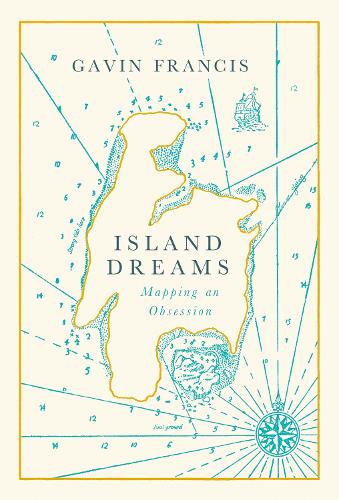
And finally … Island Dreams: Gavin Francis. This is a beautifully produced book. On heavy paper, with blue and black ink, the text is allowed generous space to breathe. As well, the text is interspersed – also generously – with maps old and new illustrating the outlines of islands he visits and discusses. These are the only illustrations. It encompasses myth, psychology, philosophy, literature and straightforward travel writing. So this is a book to savour and linger over, returning several times to the maps on display.
And if you’re going to push me into naming a favourite? Raising Hare, no question. Heartwarming, thoughtful, highlighting the tension between the natural world and our own, beautifully written.
I’m not going to be able to respond to any comments this weekend. Family Official Christmas, ahead of the usual date. But replies will happen.
Rebecca of Bookish Beck fame has a monthly challenge – Love your Library. She uses her own post to tell us what she has read, what she is reading, what she gave up on or never even started, and what she’ll read next. That’s what I’ll do too.
But first. Why do I love my library? Well, I’m lucky. Our County Council still prioritises books. It’s not often that we have a week when no new stock comes into our branch. New releases; books that have won some literary prize; works in translation; books from small indie publishers; old favourites and non-fiction of all kinds all get a look in.
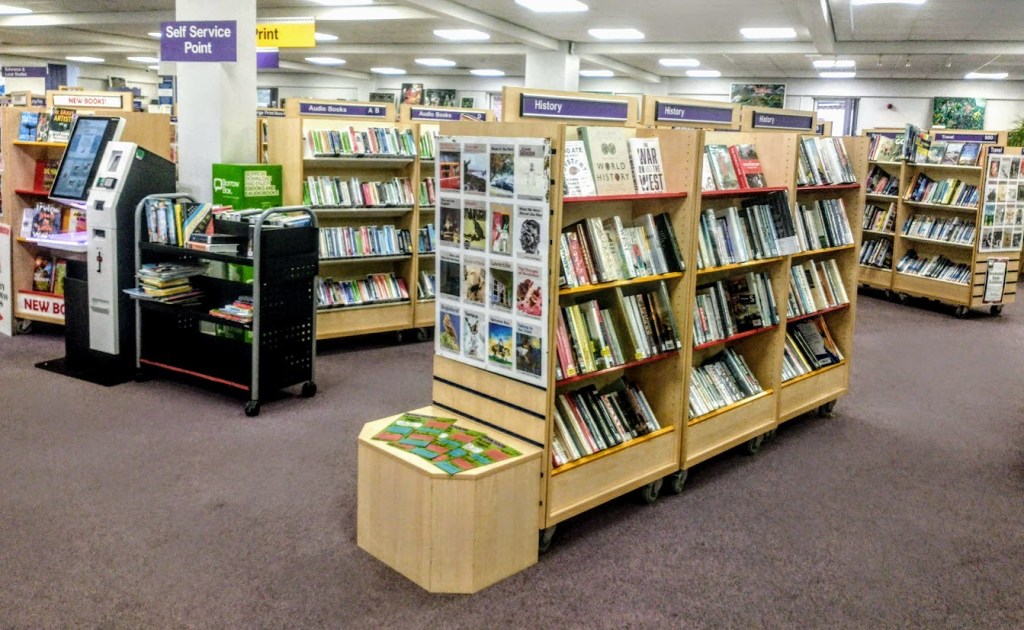
These days, our libraries run on a mixture of professional staff and volunteers: some smaller libraries are entirely volunteer-run. And I’m a volunteer at our local, bigger library. I love it. First of all, it’s easy to get first dibs on new stock. But the tasks are varied. Processing books from other libraries requested by our own readers. Sending copies of books we stock to other libraries who’ve requested them. Helping the public with queries about books; parking; local clubs; photocopying …. And shelving. Always shelving. But that’s OK. Being shallow, I often judge a book by its cover, and I rarely get through a morning without finding something appetising to borrow. To go with the dozen or more I usually have on reserve.
And anyway, on the morning I usually volunteer there’s a pre-school music group in the children’s section, and I’ll find myself singing along (strictly to myself) to ‘Hola! A todos aqui‘, or ‘Row, row, row your boat‘, as I wander round with my book trolley, shelving. Friends turn up to change their books. We have a quick chat. The morning passes quickly.
So. What have I read during November? Normally I’ll do a mini-review, but this post is quite long enough already, so star-ratings will have to do.
Magpie Murders: Anthony Horowitz ⭐⭐
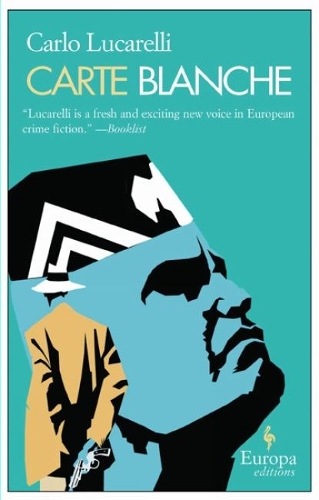
Carte Blanche: Carlo Lucarelli (Translated by Michael Reynolds) ⭐⭐⭐⭐*
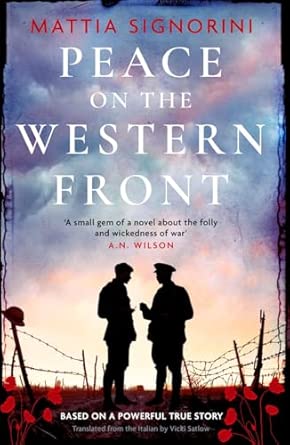
Peace on the Western Front: Mattia Signorini (Translated by Vicki Satlow) ⭐⭐⭐*
A Station on the Path to Somewhere Better:Benjamin Wood ⭐⭐⭐⭐
The Rich People Have Gone Away: Regina Porter ⭐⭐⭐
The Dinner Party: Viola van de Sandt ⭐⭐⭐
The Frozen River: Ariel Lawhon ⭐⭐⭐⭐
Run Me to Earth: Paul Yoon⭐⭐⭐⭐
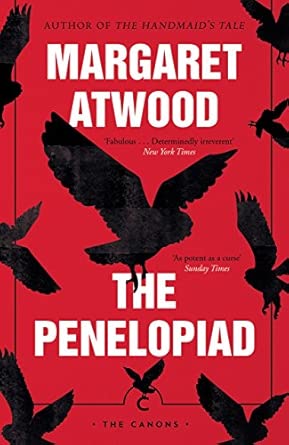
The Penelopiad: Margaret Atwood ⭐⭐⭐⭐⭐*
The Wax Child: Olga Ravn (Translated by Martin Aitken) ⭐⭐⭐⭐⭐*
The Silver Book: Olivia Laing ⭐⭐⭐⭐
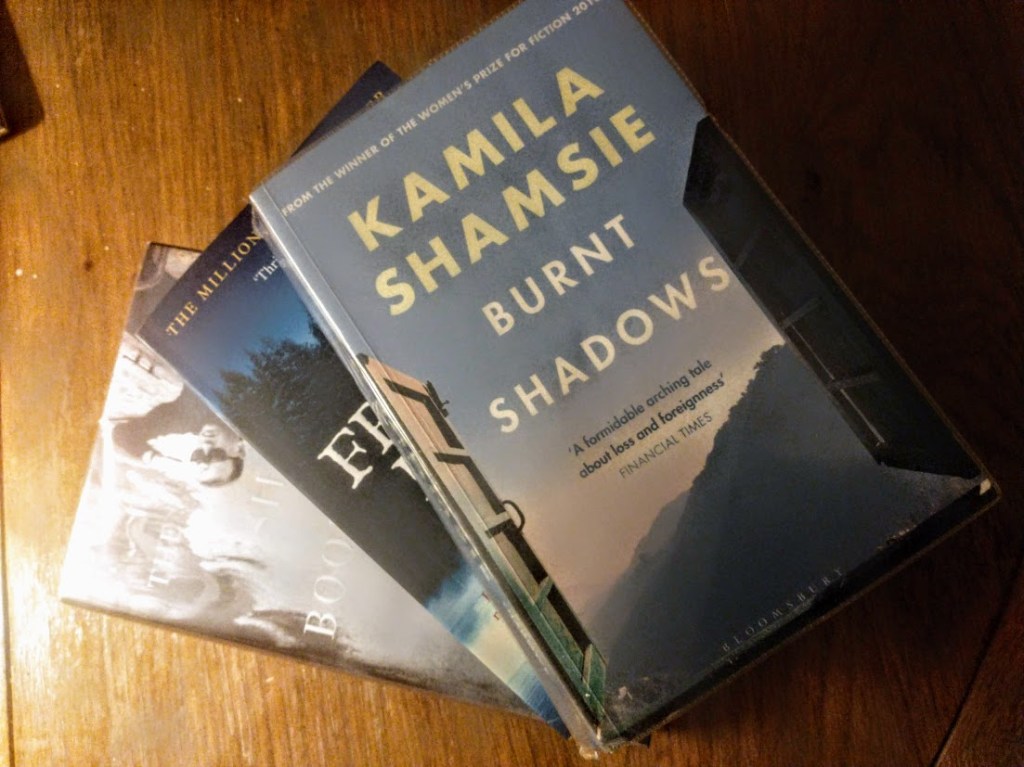
Burnt Shadows: Kamila Shamsie ⭐⭐⭐⭐⭐
Before you say that seems a lot, remember that 4 (marked *) are novellas, and therefore short, reviewed here. But you’re right. This has been a book-heavy month.
Borrowed and yet to be read, or currently being read:
A Short History of America: from Tea Party to Trump: Simon Jenkins
Reward System: Jem Calder
Close Range: Wyoming Stories: Annie Proulx
The North Road: Rob Cowen
As I have nine books on reserve, it’s possible some of the already-borrowed books may end up unread. You can never tell. Some books I reserve come straight away. Some take so long I’d forgotten I’d reserved them. One hasn’t even been published yet!
I DID abandon a couple of books, but I forgot to note them down, and they went out of my head the second they got back to the library.
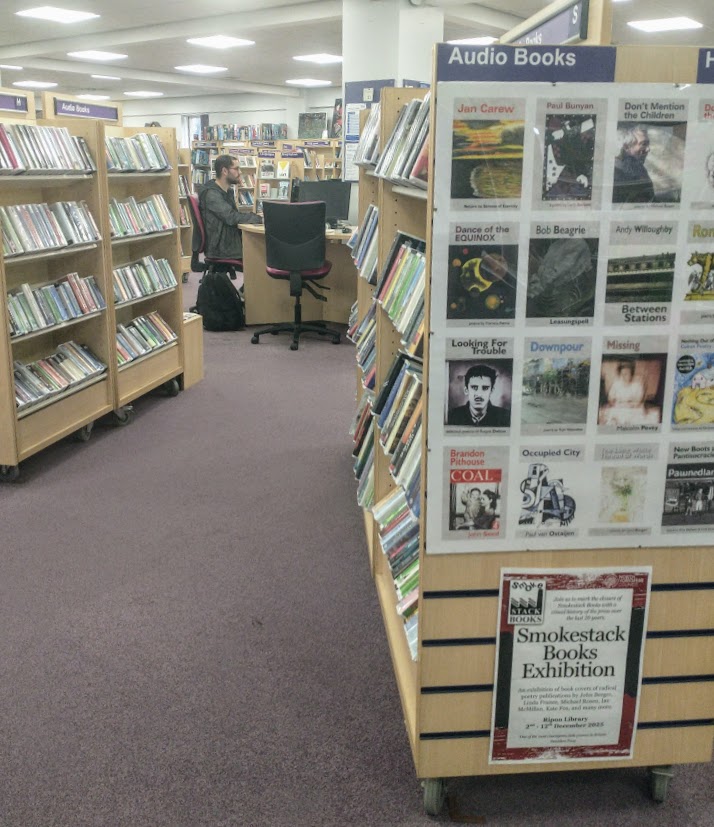
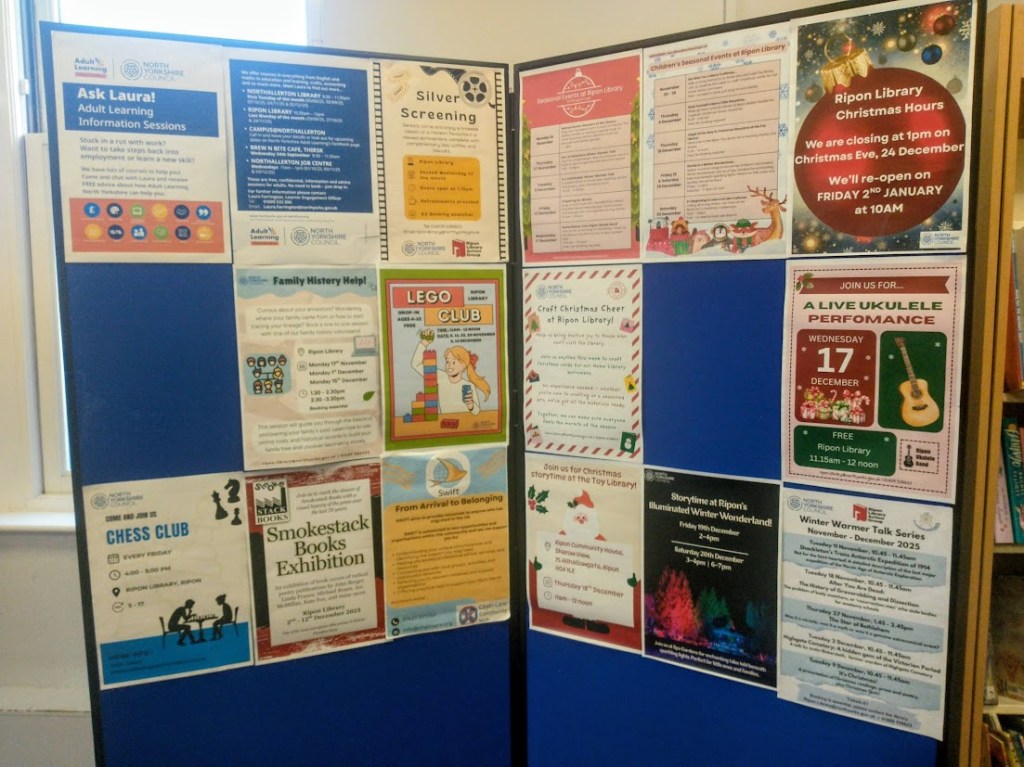
So that’s my month in books … and in my library. I took most of the shots in the minutes before the library opened, in order not to ruffle any feathers. Actually, it’s well-used and should look rather more peopled. But at least nobody’s been upset by being photographed on a bad-hair day.
For a couple of years now, I’ve more or less promised to take part in Novellas In November, a reading challenge celebrating short books – those coming in at under 150, or – stretching it a bit – 200 pages, hosted by Bookish Beck and Cathy of746Books. This is the first year of keeping that promise. And I haven’t over-delivered. I’ve read a mere five this month.
The first wasn’t even on my would-like-to-read list at all. I simply found it on the library shelf, and thought it looked worth a go.
Peace on the Western Front: Mattia Signorini (Translated by Vicki Satlow)
I’m not sure what to make of this book. It re-imagines the now well-known story of the Christmas truce of 1914, when English and German soldiers gathered in No-Mans-Land to share food and play football. For one day only. It’s a tale that could not fail to be moving. And yet I felt the points that were being made were rather over-spelled-out: that Signorini told, not showed what was going on for these two young men. For me it was a slightly flawed giving of the message that war squanders young lives pointlessly, leaving nothing positive in its wake.
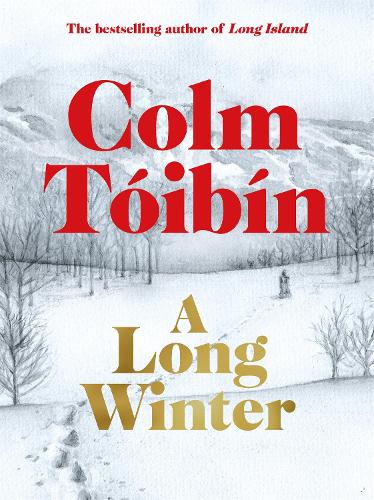
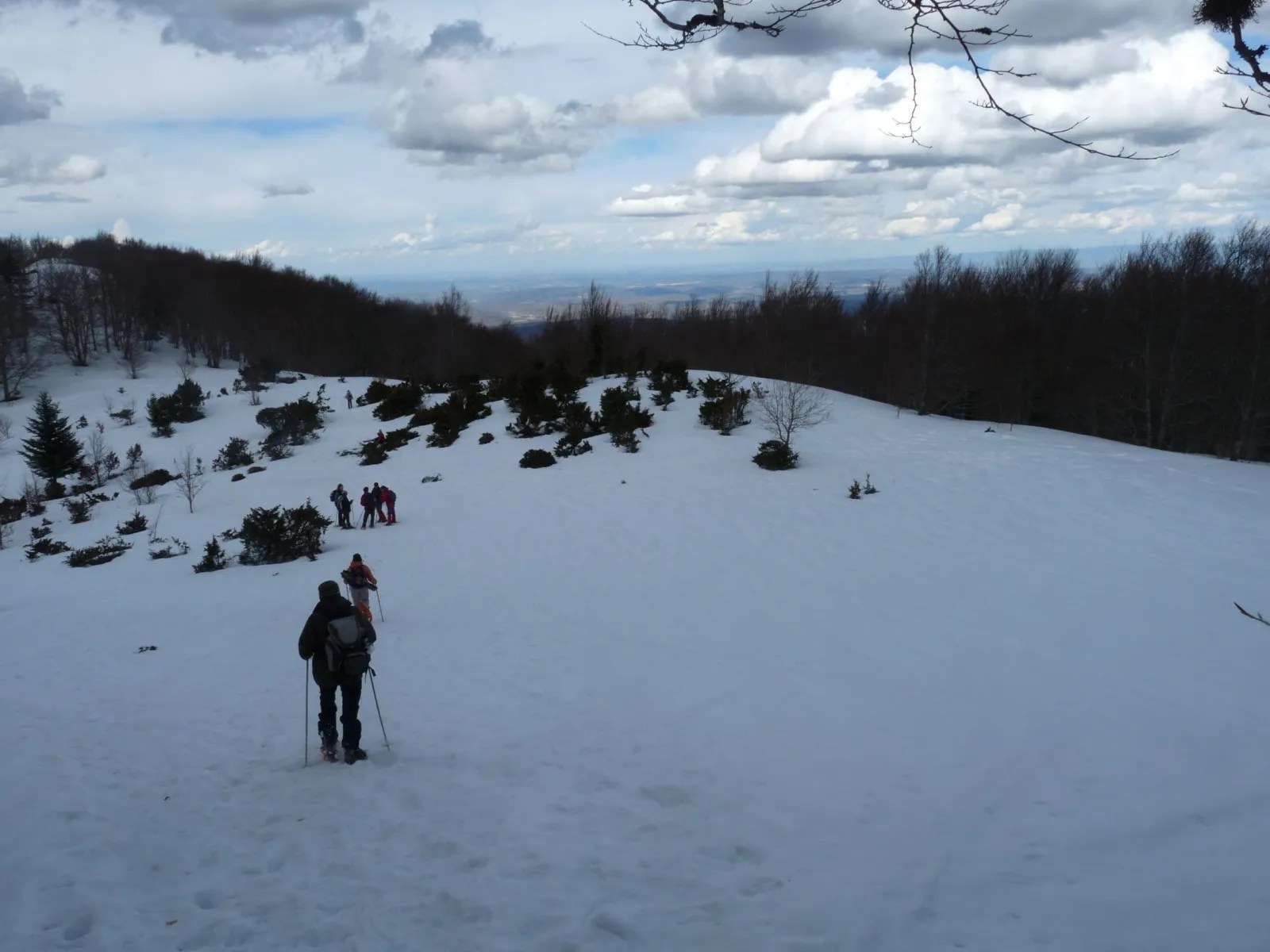
Having lived in the Pyrenees, and being a fan of Colm Tóibín’s writing made my next one a very easy book to pick up.
A Long Winter: Colm Tóibín
Set in an isolated village in the Spanish Pyrenees, this is mainly the story of Miquel. He lives with his mother and father – his younger brother is away on military service. They are largely ostracised because his father largely ignores his neighbours. After his secretly alcoholic mother vanishes in a blizzard, Miguel spends the rest of the winter searching for her body. He eventually has one single friend, the young man Manolo who comes to keep house for this undomesticated father and son, and helps him come to terms with his grief. The story is written in a clipped style, removed from emotional expression. I find though,it’s stayed with me . I explore the unexplained inner life of Miquel: I wonder if his relationship with Manolo becomes sexual – there are hints. A powerful story with much to think about from such a short novella.
Next, a novella translated from the Danish – and another powerful read.
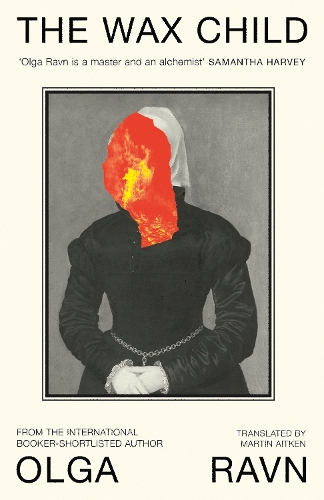
The Wax Child: Olga Ravn (Translated by Martin Aitken)
This story takes us to 17th century Denmark, where on average, one ‘witch’ was burned every five days. This kind of event was mirrored all over Europe. Our narrator is a little beeswax doll, fashioned by a impoverished noblewoman, Christenze Krukow. Omniscient, she sees and hears all that goes on. How her maker is one of a group of women who work, and sing, and gossip, and practice the folk remedies they learned from their own mothers: who protect one another. The book is interspersed with spells and incantations which exist not to harm, but to protect; to prevent accident and disease; to bid others be kind; to divine if someone’s life may soon end. This solidarity among women is looked on askance by men ‘The woman is more easily tempted by Satan, for she is weaker than the man in body and soul … When a woman thinks alone, she thinks evil …’And so it comes to pass that several of these women are tried, found guilty …and die, horrifically. And yet this book is beautiful, horrifying, visceral, poetic. There is a sense of spells being woven on every page. The women in this story existed. They died as ‘witches’ and now they are remembered in this powerfully atmospheric and evocative re-imagining of their circumstances.
⭐⭐⭐⭐⭐
Carte Blanche: Carlo Lucarelli (Translated byMichael Reynolds)
We’re in Italy, April 1945. The Fascist regime is crumbling, but the Germans are still in town. Life is violent, messy, disordered. Nobody knows whom they can trust. Commissario De Luca, who just wants to be a good cop, has just joined the Police ranks having transferred from the Political Police. He doesn’t want to get involved in politics. But how can he not? The latest murder victim is Vittorio Reihnard. He is well-connected, has lots of lady-friends, has a stash of drugs. And De Luca finds he can’t just get on with finding the perpetrator. He has to point the finger at whoever the political high-ups wish. It’s tense, breathless, cleverly revealing right-wing corruption and misdeeds. Here’s a nation seeking new moral bearings, and a cop who’s disillusioned and worn out. There’s a lot packed into just over 100 pages. There are however, two further books in the series.
⭐⭐⭐⭐
And finally…
The Penelopiad: Margaret Atwood
Don’t tell anyone, but I’m not really a fan of Margaret Atwood’s writing, often finding it too dystopian for my taste. Recently, someone (was it you, Rebecca? suggested I try The Penelopiad. I’m glad I did. Most people know the story of king, soldier and adventurer Odysseus. Few people give much thought to his wife Penelope, abandoned during his long years away and forced to keep a constant stream of suitors at bay. This book puts that right. Now dead, Penelope wanders the Underworld, putting her own spin on events. She recounts her snarky relationship with the beautiful Helen of Troy. She details snippets about Odysseus’ doings: some describing the Homeric tales we read about, others giving a far less positive spin on his adventures. The narrative is interspersed with a Greek Chorus line of doomed maids: the ones whom Odysseus had killed on his return for their (unwilling) sexual alliances with Penelope’s suitors. Like Penelope herself, they are saucy, smirky, irreverent. A refreshing take on an extremely well-known legend.
⭐⭐⭐⭐⭐
Any other novellas this year? Well, yes, but only a few:
Seascraper:  Benjamin Wood ⭐⭐⭐⭐⭐
French Windows: Antoine Laurain, translated by Louise Rogers LaLaurie ⭐⭐⭐⭐
Woman in Blue: Douglas Bruton ⭐⭐⭐⭐⭐
Madame Sosostris & the Festival for the Broken-Hearted: Ben Okri ⭐⭐⭐
This last bit’s no novella. Well, it might become one I suppose. I needed a book for Becky’s NovemberShadows, and is was what I found.
On the first Saturday of every month, a book is chosen as a starting point and linked to six other books to form a chain. Readers and bloggers are invited to join in by creating their own ‘chain’ leading from the selected book.
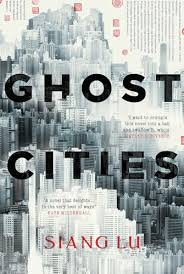
I haven’t read Siang Lu’s Ghost Cities. But I’ve read several reviews, and it seems that this novel is inspired by the vacant, uninhabited megacities of China, and follows multiple narratives many years apart. In the present day, Xiang is fired from his job as a translator at Sydney’s Chinese Consulate after it’s discovered he’s been using Google Translate. This alternates with stories from the past of a dictatorial Imperial Emperor and his escapades.
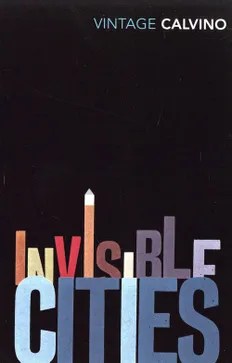
I immediately thought of Italo Calvino’s Invisible Cities, which I read far too long ago to comment on seriously now. But it begins: ’Kublai Khan does not necessarily believe everything Marco Polo says when he describes the cities visited on his expeditions, but the emperor of the Tartars does continue listening to the young Venetian with greater attention and curiosity than he shows any other messenger or explorer of his.’ And here begins Italo Calvino’s compilation of fragmentary urban images.
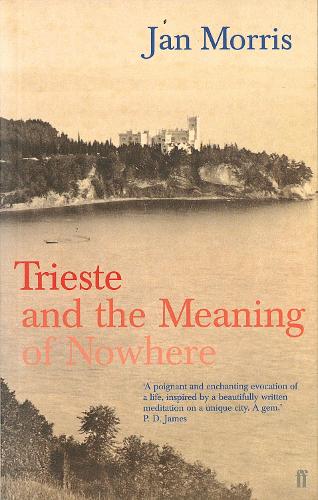
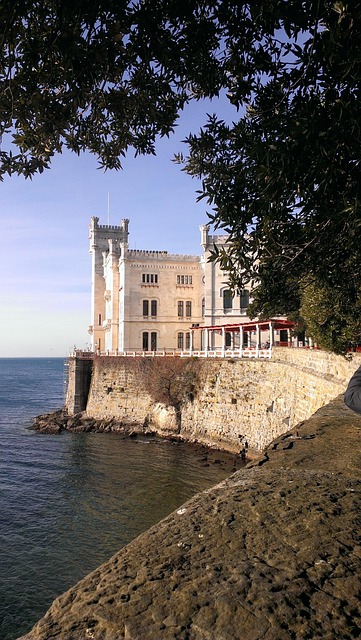
This Italian author made me think of one travel writer’s account of one part of Italy. Jan Morris’ Trieste and The Meaning of Nowhere. I felt a little ambivalent about this book. I wanted to like it more than I actually did. It’s a meditation on, and an exploration of Trieste, a city history has left behind, whose glory days are over, which is top of nobody’s tourist agenda, and which Jan Morris entertains strong feelings for. She discusses its history, its streets, its day-to-day life in a loving, melancholic way, and relates it to her own experience of being outside the mainstream. It’s a book which I’m glad to have read about a part of Italy I don’t know, but which I was happy enough to finish and set aside.
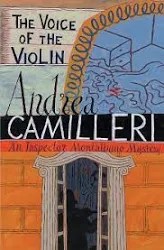
Vigàta in Sicily is another town which time has perhaps forgotten. It’s also imaginary, and the setting for a series of murder mysteries by Andrea Camilleri. Despite the fact that as a detective series, which therefore concerns murder and other crimes, the Inspector Montalbano books are ones I turn to when I need a bit of relief from weightier tomes. I love to meet the people Camilleri describes. I like to accompany Montalbano as he seeks out delicious meals at home or at neighbourhood restaurants. And I like to observe his relationships with his colleagues. The Voice of the Violin doesn’t disappoint. It’s about a murder which might have taken a very long time to have come to light if the police car in which Montalbano was a passenger hadn’t careered into a car parked outside a villa…. And in due course, Montalbano’s curiosity is piqued … He finds a body, of course. And up to five people might be responsible for the gruesome murder. But who? And you’ll need to read this book to find out why the title it’s been given is so apposite.
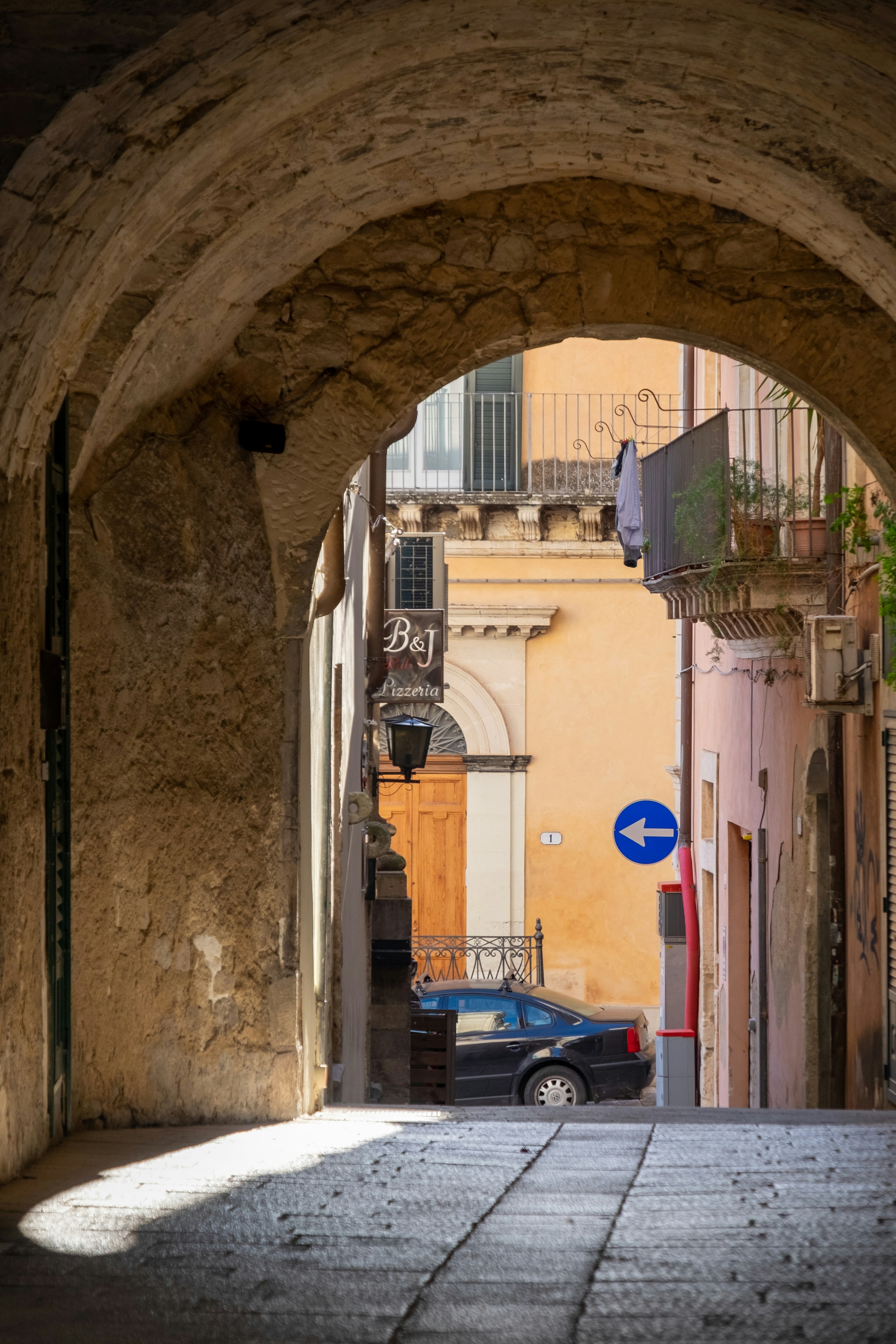
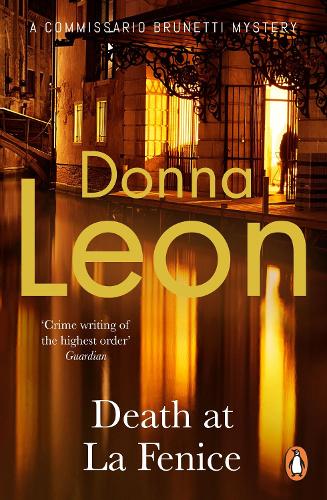
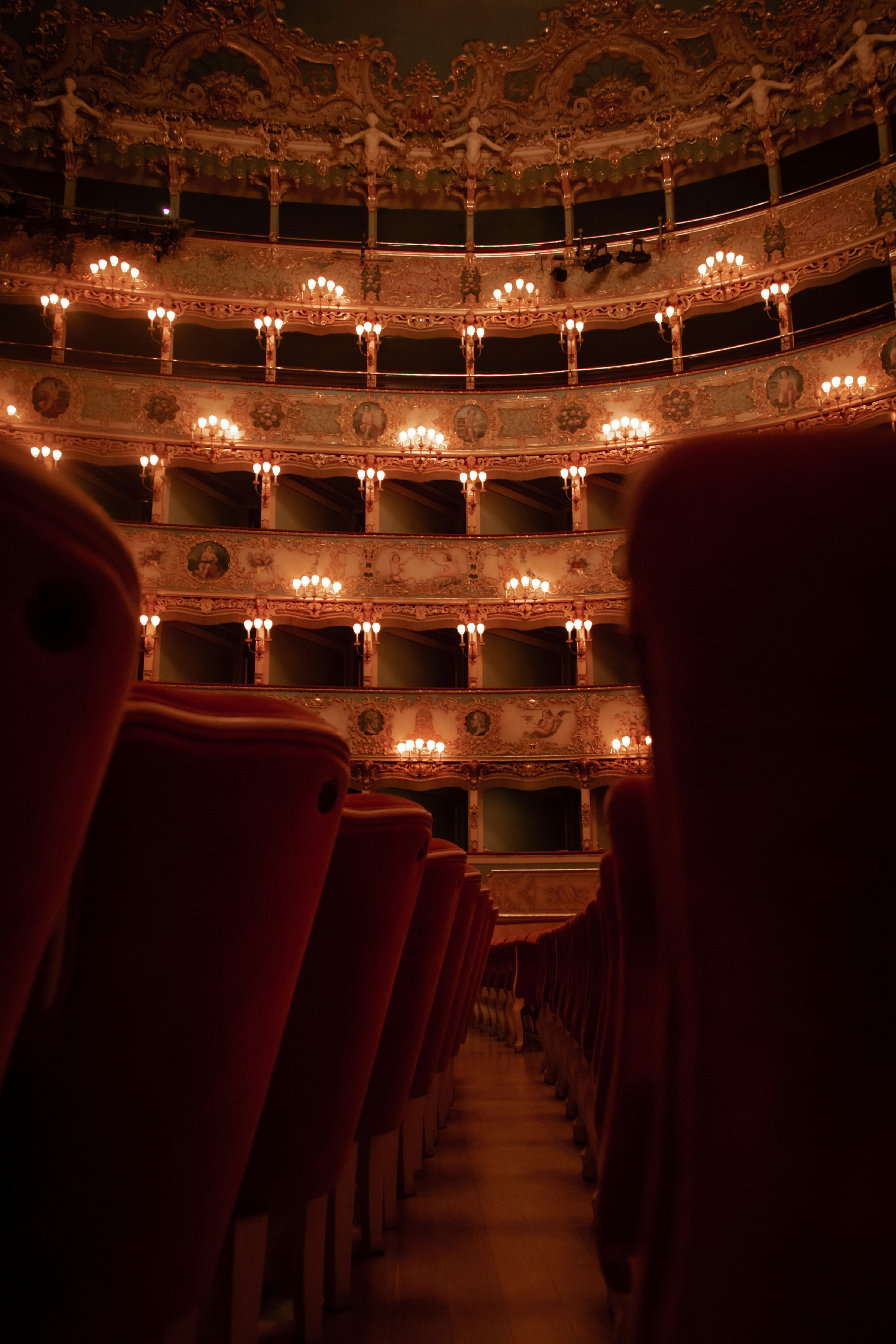
From one Italian detective to another. I love Commissario Brunetti, and I love the picture of Venice that Donna Leon, his creator, always conjures up. The alleys between ancient buildings, those palazzi themselves, the little bars Brunetti frequents…. and so on and so on. So even before I get involved in the plot, I’m absorbed by the ambience she creates. Death at la Fenice is, like all Leon’s tales, a good story. This one features the conductor who’s murdered during the interval at a performance at la Fenice. Whodunnit? His wife? That soprano? Her lover? As ever, the result of Brunetti’s investigation is an unexpected one, and convincing. Read it.
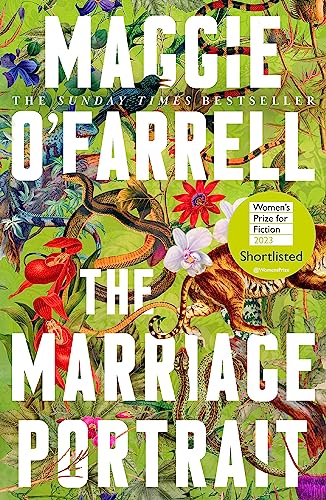
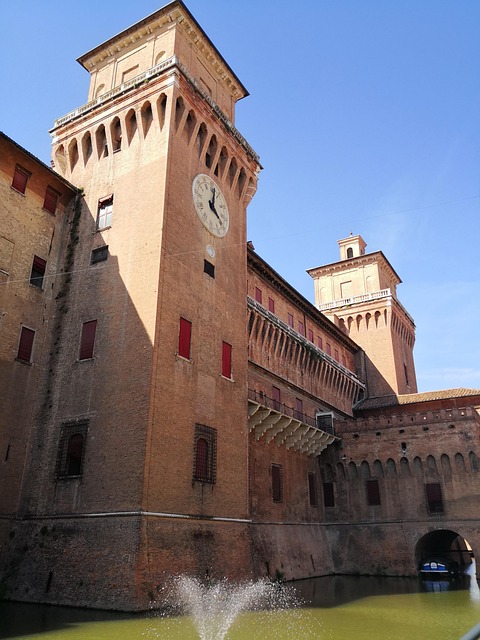
We’re staying in Italy for the rest of this chain. But we’ll leap back several centuries in Maggie O’Farrell’s The Marriage Portrait.. Lucrezia, third daughter Cosimo de’ Medici, finds herself betrothed, then married to Alfonso, heir to the Duke of Ferrara when her older sister, his original choice, dies. The story flits between her early life in Florence and her early married life. Underneath, throughout her marriage, her conviction that she will be killed by her apparently loving husband bubbles away. She’s a Duchess now, her father-in-law having died. She’s only 15, more than 10 years younger than her husband. Although she’s been brought up privileged, her new status brings with it loneliness and challenges. Virtually her only constant friend is her maid.
This book links with the two previous ones by being rich in quotidian detail. O’Farrell paints the pictures of her privileged life in such a way that we can hear, see and smell the scenes that surround her: her father’s exotic menagerie; her husband’s castrati singers; the sumptuous clothing; the simple bowls of fruit which she examines with her painterly eye – she is a talented artist. This rich attention to detail brings an already absorbing story fully to life.
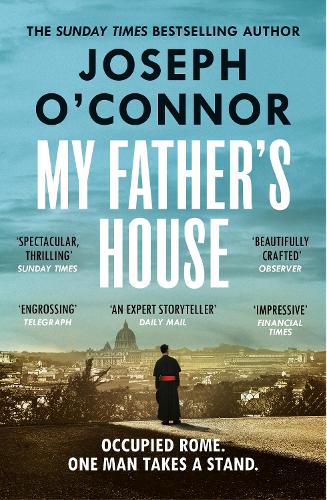
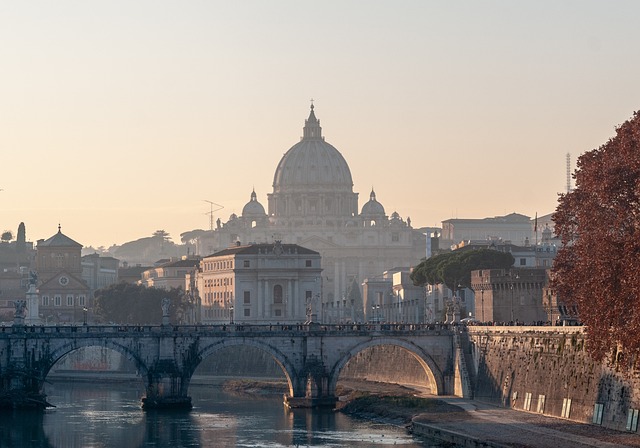
Still Italy, still history, but much more recent in the first volume of Joseph O’Connor‘s Escape Line Trilogy. My Father’s House is an immersive story, taking as its starting point the fact that while Rome was under German occupation in 1942, there was an Irish priest, Hugh O’Flaherty, based at the Vatican who was involved in running an escape line for Jews, escaped POWs and resistance fighters during WWII.
The plan is to evacuate scores of refugees and resistance fighters, all separately hidden, out of Rome on Christmas Eve, when perhaps guard is lowered. Plans take place at the rehearsals of a specially convened Chamber Choir: singing drowns out the mutter of whispered instructions to each singer in turn. Each player in the plot has a role, No one knows what any other individual is required to do. Gestapo leader Paul Hauptmann has his suspicions that a plan is afoot, and O’Flaherty is in his sights.
This is a work of fiction, even though heavily indebted to known facts. It’s told in a series of distinct voices, all characters in the book. Each voice is distinctive, authentic, even funny: Irish, English, Italian, aristocrats and shopkeepers. An often thrilling, always thought-provoking and absorbing story.
My chain seems to owe everything to Italy, and little to the starter book. I won’t do any better next month. I’m unliklely to participate, as we’ll be away, and I don’t like the idea of not responding promptly to comments. But the starter book will be Dominic Amerena’s novel about authors and publishing, I Want Everything. I think I’ll try to read it anyway.
With thanks to the photographers from Pixabay whose photos I have used: LeoLeo (cities); VBosica (Miremare, Trieste); Gianni Cio 10 (Sicily); Filip Filopovic (Ferrara); Davide Cattini (Rome). And from Unsplash, Giusi Borrasi (La Fenice, Venice)
On the first Saturday of every month, a book is chosen as a starting point and linked to six other books to form a chain. Readers and bloggers are invited to join in by creating their own ‘chain’ leading from the selected book.
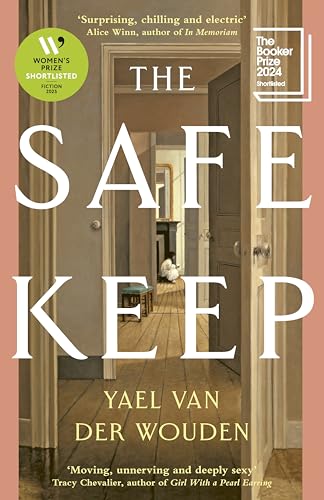
Thank you so much for putting Yael van der Wouden‘s The Safekeep on my reading list Kate. It’s a book which delivered so much, and also invites any number of ways the Six Degrees contributor could go.
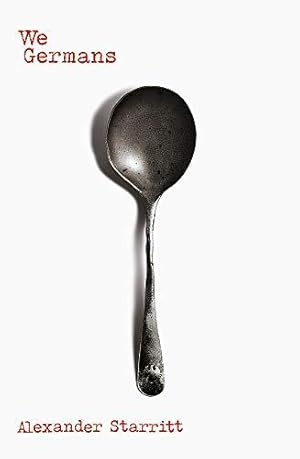
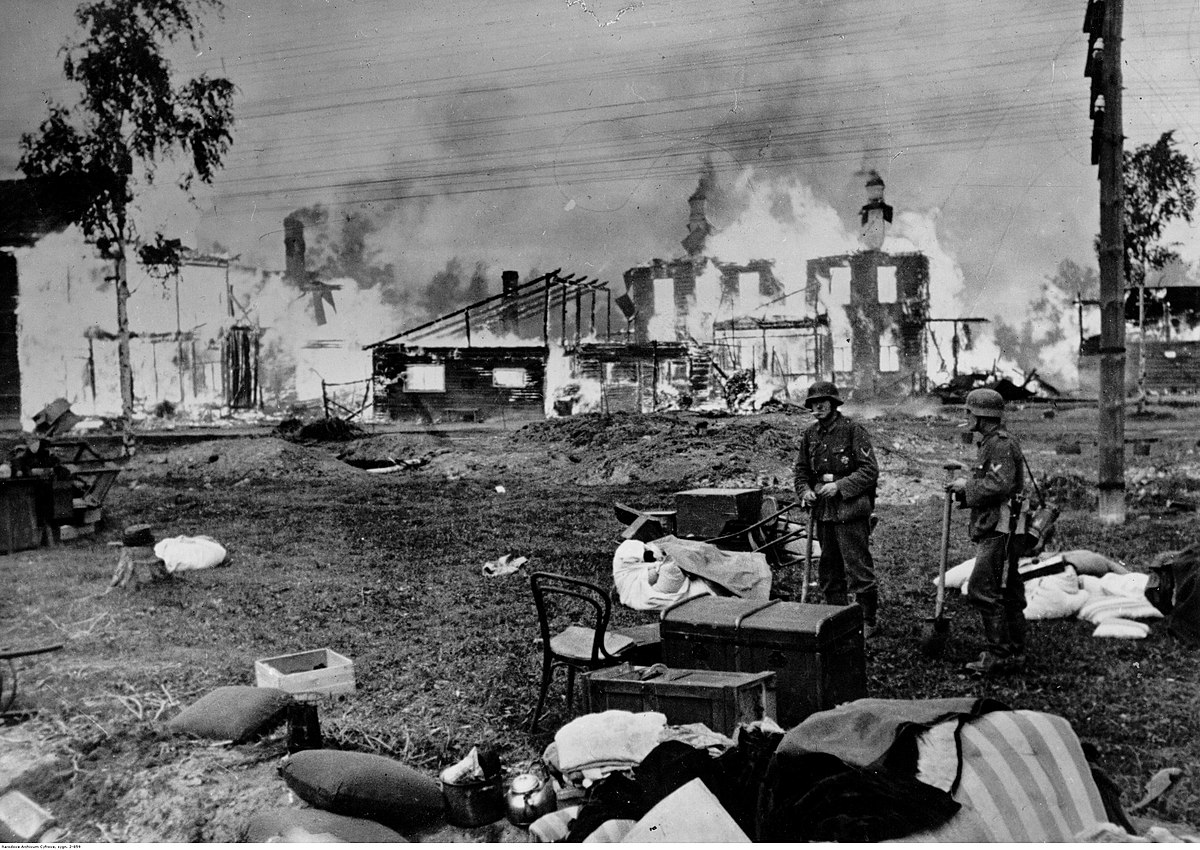
I settled for looking at those parts of WWII little known about here, as far as the German perspective goes. and begin with We Germans, by Alexander Storritt. ‘What did you do in the war?’ a young British man asks his German Grandad. And is told, in the form of a long letter found after his death. In 1944, Meissner, a German artillery soldier, had been fighting with his unit in Russia, in Ukraine. But in Poland, he and a few others somehow got separated when detailed to look for a rumoured food depot. They see Polish villagers hung by unidentified men from a single tree ‘in bunches, like swollen plums.’ They witness rape and crucifixion. They steal a tank and use it against the Russians. They squabble bitterly with each other. They kill enemy soldiers without compunction. This is a well-drawn book, a deft exploration of the moral contradictions inherent in saving one’s own life at the cost of the lives of others. Though fiction, it’s clearly deeply rooted in the reality of the helpless, pointess horror of the last period of the war for those often starving people, both army and hapless civilians who found themselves marooned on the Eastern Front.
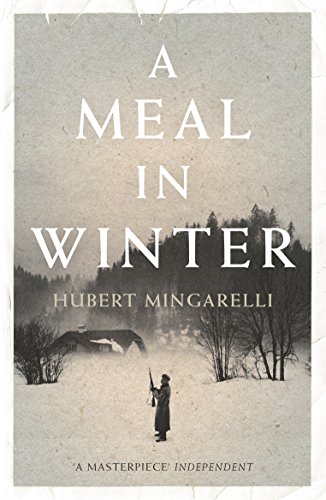
A book in a similar vein is Hubert Mingarelli‘s A Meal in Winter (translated by Sam Taylor). An account of three German soldiers whose task on a bitterly cold winter day is to hunt down Jews in hiding and bring them back to the Polish concentration camp where they are based, for an inevitable end. This unenviable task is better than the alternative: staying in camp to shoot those who were found the previous day. They talk – about the teenage son of one of them – and they find just one Jew. Is he their enemy, deserving his fate, or is he just like them, a young man doing his best to survive? What if they return to camp with nobody to show for their day’s hunting? As the men retreat to an abandoned cottage to prepare a meagre meal, their hatred and fear jostle with their well-submerged more humane feelings to provide the rest of the drama for this short, thought provoking book.
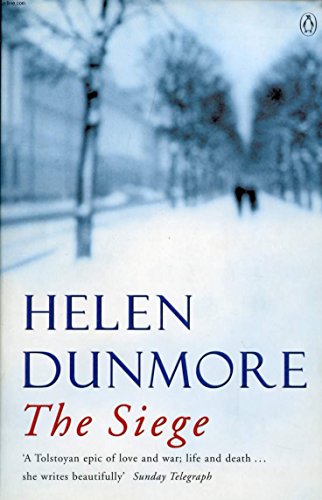
This reminds me of a book about the seige of Leningrad, which I read many years ago, but which made a lasting impression on me: Helen Dunmore‘s The Siege. The novel revolves around five interwoven lives during the war when Leningrad was completely surrounded by the Germans. Winter came and there was no food or coal, it was a brutal winter and one half of the population of the city perished. What energy the citizens had was devoted to the constant struggle to stay alive. Some of the strategies they employed will stay with me forever. Soaking leather bookmarks to get some nourishment from the resulting ‘stock’, for instance.
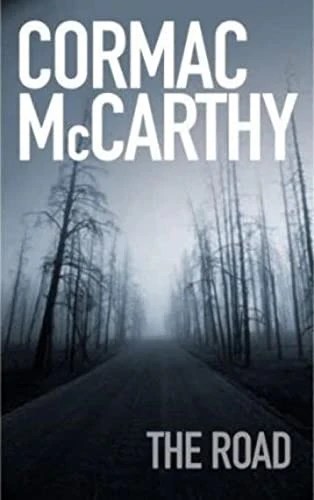
Let’s leave war behind, but looks at another struggle for survival in Cormac McCarthy‘s The Road: another book I read a long time ago. The tale of a father and son trudging through post-Apocalypse America. This is a land where nothing grows, no small animals are there for the hunting: where communities and dwellings are deserted and long-since looted for anything that might sustain life a few more days: where other humans might prove peaceable, but might instead be evil and dangerous. This book is bleakly, sparely written. Conversations between father and son are clipped, necessary. No speech marks. Sometimes little punctuation. Every ounce of energy is needed for the business of staying alive. This book, in which nobody lives happily-ever-after has stayed with me.
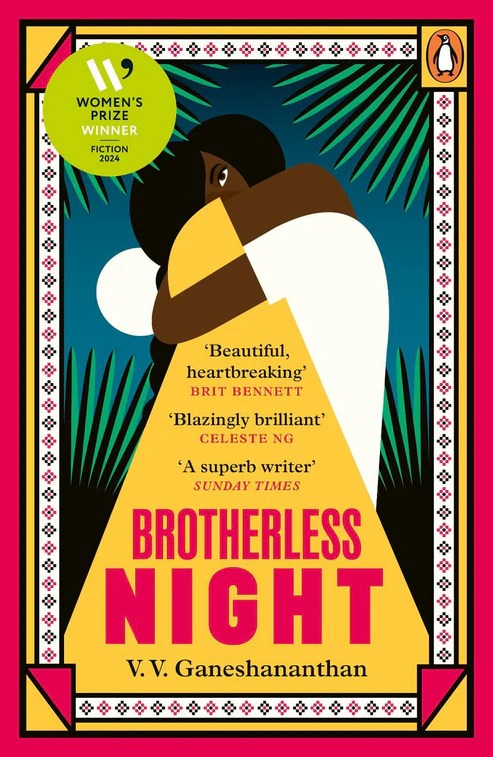
Oh dear, back to war, but staying with relationships within a family. V.V. Ganeshananthan‘s Brotherless Night. This book plunged me right into a war that had previously been an ongoing news item from somewhere very far away. The ethnic conflict in 1980s Sri Lanka between the Sinhalese dominant state and several separatist Tamil separatist groups is brought to life by the Tamil narator, Sashi. She’s 16 when we meet her, and an aspiring doctor. She has 4 brothers, 3 older, one younger. We follow the family’s fortunes as an ethic-inspired war breaks out, and daily life becomes more difficult, disrupting her education and resulting in her older brothers and their friend K joining the fray at the expense of their own education. Loyalty to a movement rather than family is alien to their parents. Tensions arise. Tragedy strikes. Normally conforming Sashi is moved to become a medic at a field hospital for the Tigers, because what is more important than relieving suffering, saving lives, whoever needs that help? As the war becomes ever more destructive, her personal conflicts and the family’s day to day arrangements become ever more complex. Years go by as the story unfolds. This story is impeccably and compassionately researched. It is urgent, intimate, written with striking imagery and immediacy. A distant conflict, several decades old is brought right into our homes and becomes alive once more.
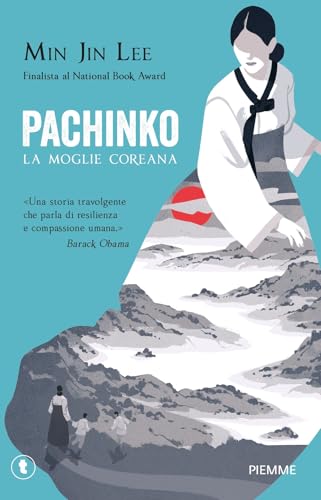
Another book I read ages ago is Min Jin Lee‘s Pachinko. This too is about not civil war, but about two nations – Korea and Japan -who historically have a less than happy relationship, and how this conflict plays out in the life of a single family, throughout the twentieth century. Some stayed in Korea (South Korea in due course), and others tried for a new life in Japan. None found it easy. This is a book about resilience and emotional conflict passing down through the generations. It’s about well-drawn characters making their way in the world, sometimes with great success, but rarely able to escape from the shadow of their past. It’s a real page turner, from which I learnt much about this period of Korea’s history. Highly recommended.
I seem to have wandered rather far from the intimately domestic scale of The Safekeep, and spent a lot of time dwelling on war. I wonder what my next chain will make of August’s book: Ghost Cities, by Siang Lu?
On the first Saturday of every month, a book is chosen as a starting point and linked to six other books to form a chain. Readers and bloggers are invited to join in by creating their own ‘chain’ leading from the selected book.
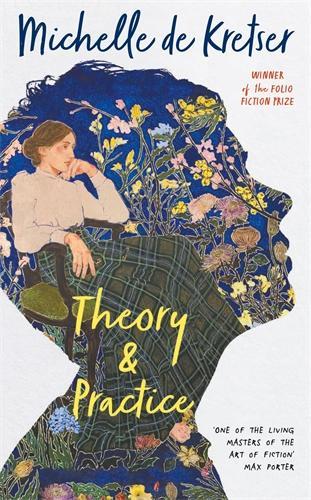
The starter book this month is Michelle de Kretser’s Theory and Practice. I haven’t yet read it, but here’s something from the Guardian review: ‘In Theory & Practice, De Kretser gradually, delicately, picks and plucks at the notion of “truth” in literature…’
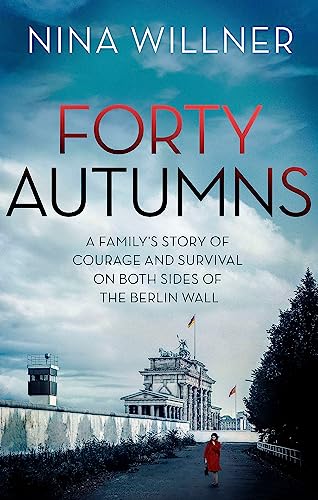
Well, here’s a book that looks at two kinds of truth, in Forty Autumns by Nina Willner. And it’s the story of her mother Hanna’s family she tells here. Her mother, aged 17, escaped from the newly-created and isolated East Germany, as Russia assumed responsibility for this area, while England, the US and France had West Germany. She did well, making a career, then marrying and moving to America. But her family was left behind, their lives increasingly constrained and isolated by the evermore authoritarian government there. She was able to have little contact with them, not even hearing when two brothers died. In the East, propaganda spoke of the degenerate and unsuccessful West, but prevented any contact. Her family – particularly her schoolteacher father – was under the government’s spotlight because they clearly were not uncritical party faithful. The fall of the Berlin Wall enabled them to reunite. The love remained, the contact blossomed, but the differences between their former lives cast a long shadow of bitterness and regret
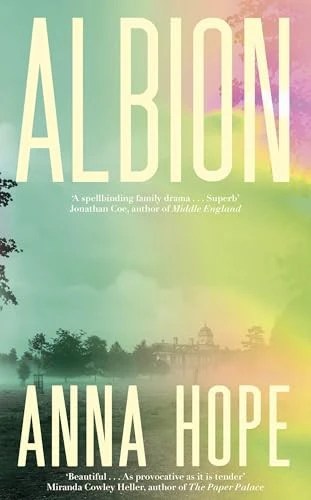
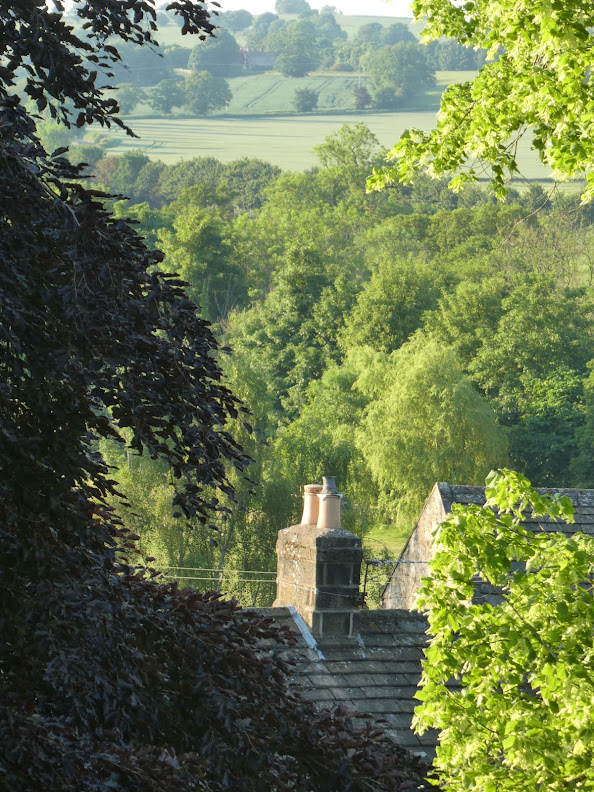
Here’s another family dealing with differences among them, although of course, not the same kind at all. Albion, by Anna Hope.There’s so much to like about this novel: an evocation of a family, fractured in many ways, but coming together because of the death of its oldest member: father, husband and lifelong liar, bully and philanderer,Philip. A picture of an English country house (complete with a Joshua Reynolds family portrait) and countryside: now in the process of being re-wilded by father and eldest daughter in a project named ‘Albion’, – but had he actually wanted to hand the baton over to his son to continue down a different path, for wealthy ageing hippies? A younger daughter, married to a good man, re-kindling adolescent friendships and more with estate workers … or not? A resident ageing hippy … All this is so well painted. Enter Clara, who might have been Philip’s illegitimate daughter and who fetches up for the funeral. What happens from now on – but no spoiler alerts here – when Clara makes a dramatic revelatory speech, which in truth shouldn’t have been such a total surprise, totally changes the tenor of the story. What should have been a fine book is spoilt by this rather facile, bland and unsatisfactory last part.
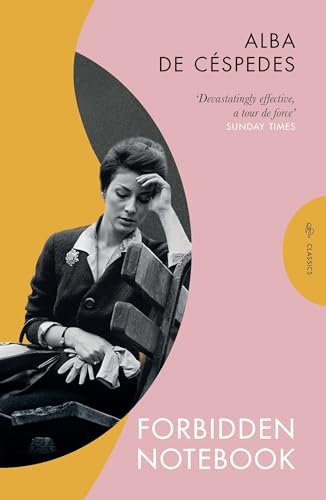
Family difference is the theme in Forbidden Notebook by Alba de Céspedes, translated by Ann Goldstein.In November 1950 forty–three-year-old Valeria Cossati purchases a black notebook from a tobacconist – a ‘forbidden’ item as only tobacco could be sold from there on Sundays. This transgression informs the whole book. Valeria writes in her notebook only in secret: a good Italian wife devotes herself to home and family, without help from her husband or her two older children, both students. But unusually, Valeria also has a job, an office job. Her notebook becomes the place where she records her life, and that of her family. She vacillates between being critical and judgemental, and admiring. Her daughter enjoys freedoms she cannot dream of and in her diary she explores her conflicted feelings about this. Her son is academically lazy. Her husband calls her ‘mamma’. Her boss clearly finds her attractive, and she is not indifferent to him. All her tumult of feelings tumble onto the page of the book she must at all costs hide, because what if it were discovered and read? It’s a fascinating discourse in which we her readers feel as frustrated with her apparent acceptance of the role society has put upon her, as by her tangled ambitions to break out from these expectations. Her dreams are humble: to have space in the house for herself, and just a little time.
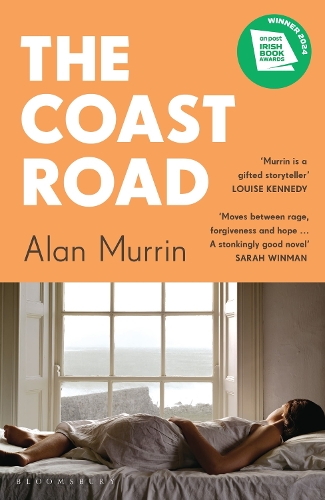
Another book about women and their families: The Coast Road by Alan Murrin. The novel, set in 1990s Ireland where divorce was still illegal, and revolves round three women (and Murrin is particularly skilled in bringing women to life) in different ways trapped by marriage, Colette – a bohemian poet – leaves her husband after her affair, and he won’t give her access to her youngest child. Dolores, married to a philanderer, is pregnant with her fourth child. Izzy has an ambitious and controlling politician as a husband.The lives of the three women become entwined as the plot develops, showing each of the men being unlikeable in different ways. Only Father Brian, the priest, comes out well. Here is a novel describing vulnerable, limited lives held in check by fear of scandal. Characters are all brought convincingly and sympathetically to life. Murrin seems to know well the world about which he writes, and even the ending, highly dramatic as it is, is believable and compelling.
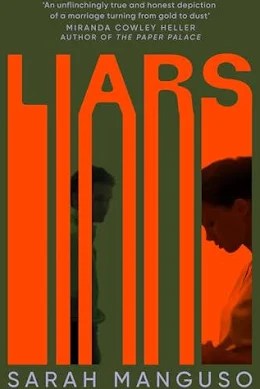
And here we are again. Difficult family life, inLiarsby Sarah Manguso. This is the story of Jane, writer and academic, who as a young woman meets John, a charismatic film-maker. They set out to construct a creative, equal marriage and apply together for artists’ fellowships, only for Jane to succeed and John to fail. At this early stage the warning signs are there. John fails and fails again, but they marry anyway. When they have a child together, Jane is doubly trapped. She and her (unnamed) son are dependent, because of the shrivelling of her career, on John’s income. The reiteration of a pattern, year after year after year is debilitating all round and exhausting to read about. Jane is increasingly a victim, increasingly two-dimensional. Finally – finally – John leaves them. A somewhat depressing book, in which the characters – there are only two really, as The Child only develops some kind of personality towards the end – deny the readers the possibility of liking them, or in my case, caring very much about them.
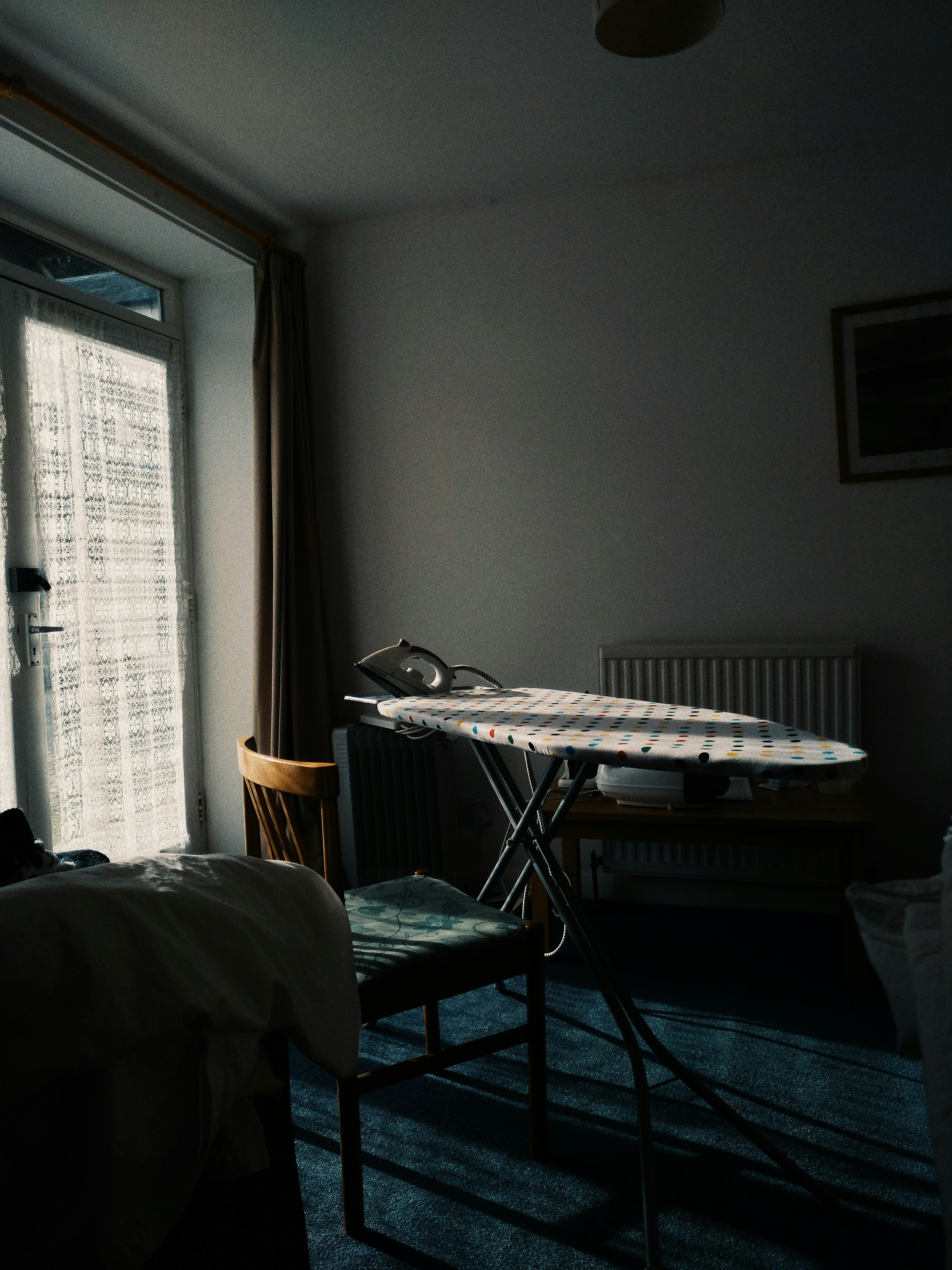
My last book, a series of short pieces, also often focuses on relationships: the mother and child. Jamaica Kincaid’s At the Bottom of the River,also writes about the natural world and achieving independence. The language is beautiful – often hauntingly so. There’s often wry humour: the first essay of all is a list – a long list – of how the daughter should behave in order not to become a slut. The entire piece is one sentence long… ‘This is how you iron your father’s khaki shirt so that it doesn’t have a crease; this is how you iron your father’s khaki pants so that they don’t have a crease; this is how you grow okra – far from the house, because okra tree harbours red ants ….‘This was perhaps my favourite piece. Kincaid is very good at lists, and this one is the first among several that contain them.
Nevertheless, I didn’t find this easy reading, and I often struggled to follow the drift. I hugely enjoyed Kincaid’s use of language, but remained puzzled by the book as a whole.
So there we are. A chain about relationships: which is the theme of most fiction, I guess. And next month’s starter book is The Safekeep by Yael Van Der Wouden.Kate’s review makes it sound an appetising read.
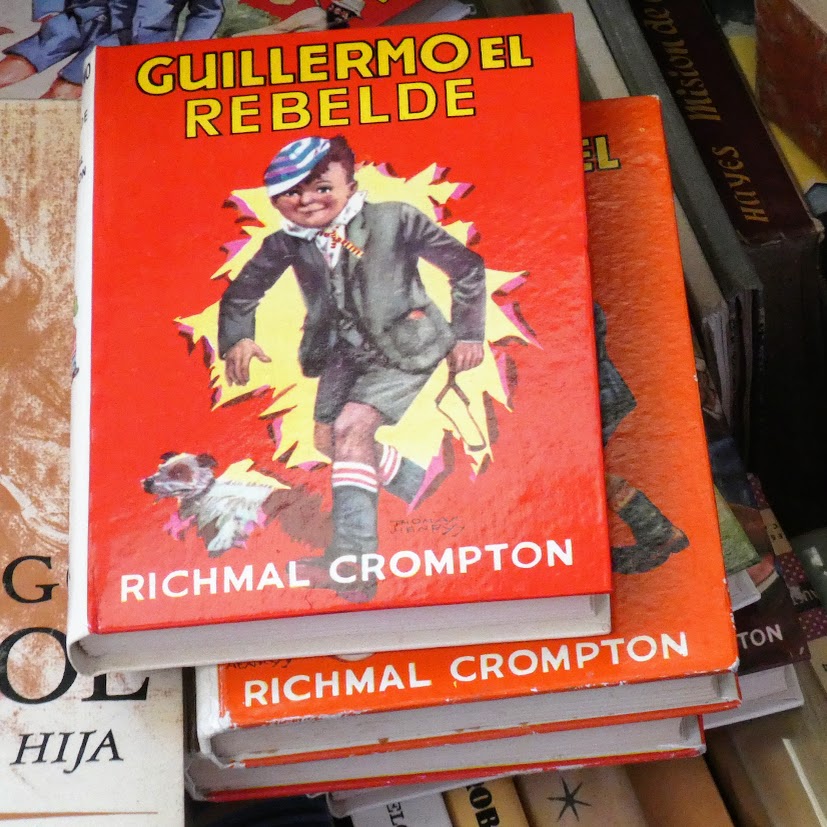
And here, nothing to do with this challenge, but everything to do with Becky’s Squares Challenge, #SimplyRed, is a surprise find in a flea market in Barcelona. Who knew that Just William was popular in Spain too?
Photo Credits:
Own photo
Own photo
Evgeny Matveev: Unsplash
Own photo
Siona das Olkhef: Unsplash
Segi Dolcet Escrig: Unsplash
On the first Saturday of every month, a book is chosen as a starting point and linked to six other books to form a chain. Readers and bloggers are invited to join in by creating their own ‘chain’ leading from the selected book.
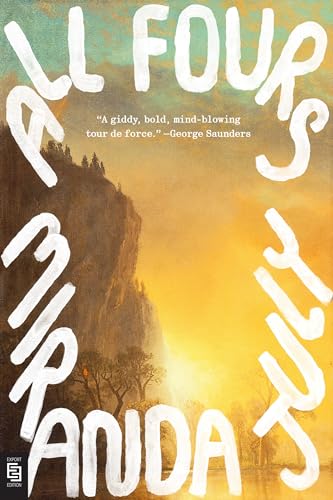
All Fours,by Miranda July and this month’s starter book, is narrated by a 46 year old woman, a wife, a mother, a bisexual, a mixed media artist. I haven’t read it yet, but I think it’s on my TBR list.
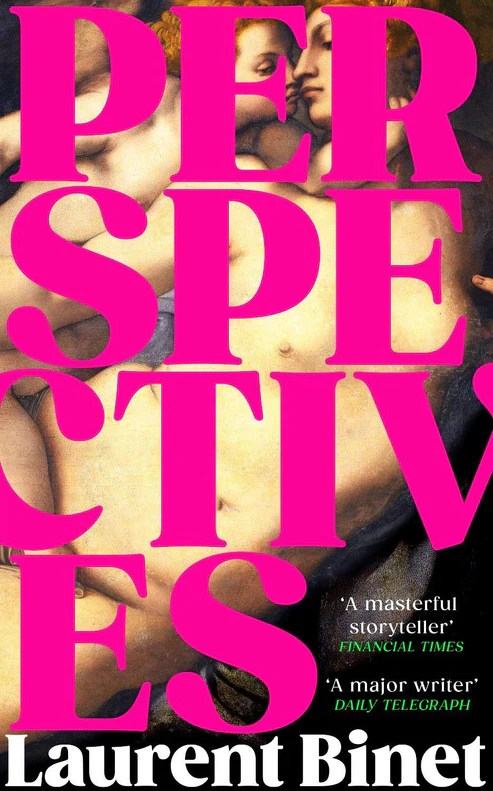
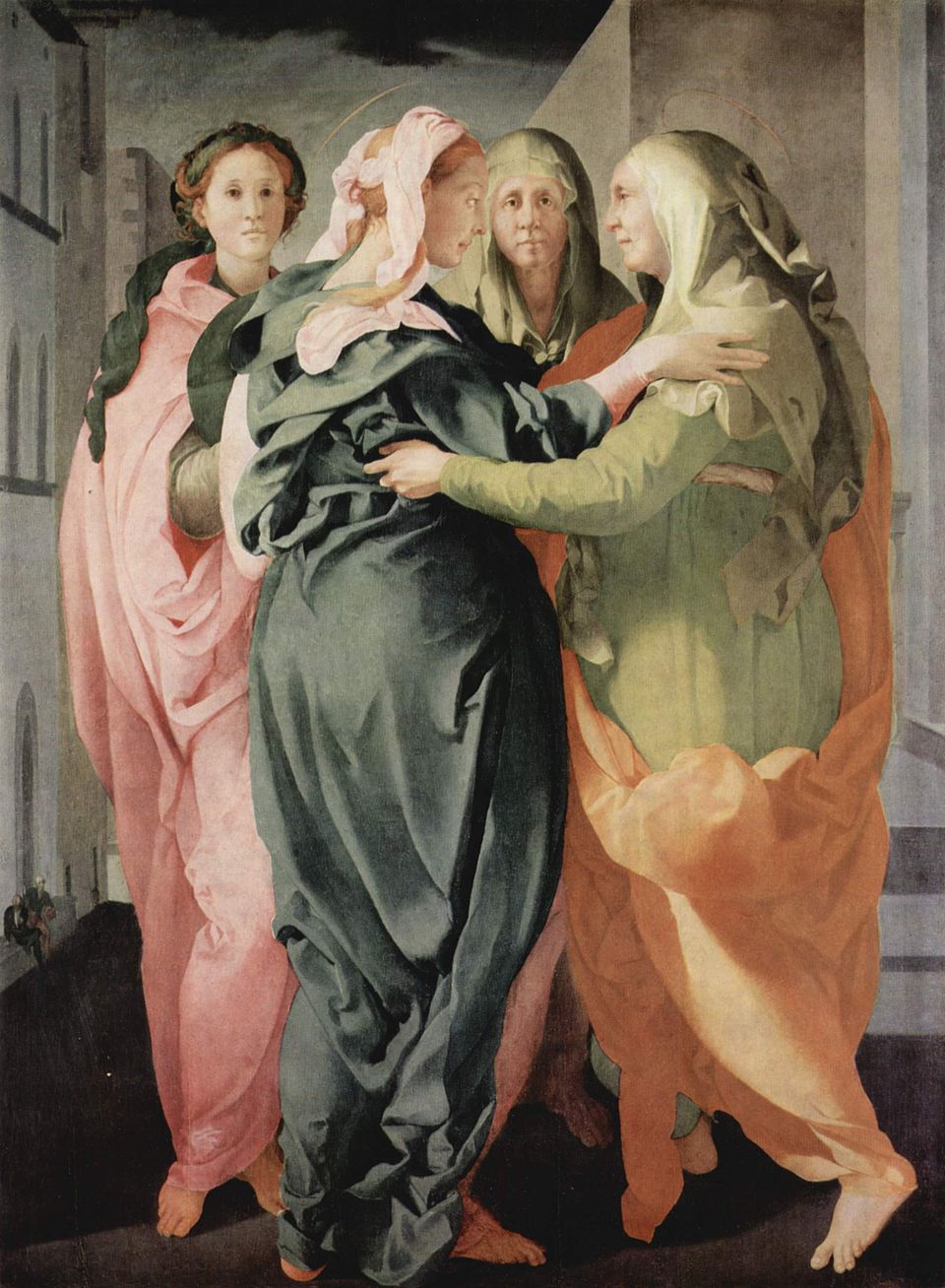
Well, I picked up on the word ‘artist’. Not a woman, not a family man, but a 16th century Florentine painter, probably homosexual: Jacopo Pontormo. He’s the sort-of-star of Laurent Binet’s Perspectives. This story relies on a clever conceit: that the author (who unlike the very much alive actual author) finds, towards the end of the 19th century an interesting packet of letters in a curio shop. His interest piqued, he buys, then translates them. And presents them to us here, in this book. We’re in 16th century Florence. The cast list can be found in any history book dealing with that period of political and art history. Cosimo de’ Medici; Catherine de’ Medici; Giorgio Vasari; Michelangelo; Bronzino; Cellini; Pontormo: the list goes on, but this story is entirely untrue. It revolves around the fact that Pontormo, painting a now-lost group of frescoes, is discovered dead at his work. Suicide? Or murder? And if the latter, who’s the murderer? A series of letters between groups of the characters involved, not all of whom know or have dealings with one another, picks over the evidence, relying on actual investigation – sometimes – but more often hunches, gossip and personal ‘intuition’. There are subplots: There’s for instance, Maria de’ Medici, Cosimo’s 17 year old daughter, who’s to be married against her will for reasons of political alliance. When guards search Pontormo’s quarters, they find an obscene painting of Venus and Cupid—with the face of Venus replaced by that of Maria. What a scandal! This is a cleverly accomplished story, and wonderfully translated. It’s a tight, fast paced whodunnit brimming with subplots, from an author who clearly knows his stuff about the history of the period.
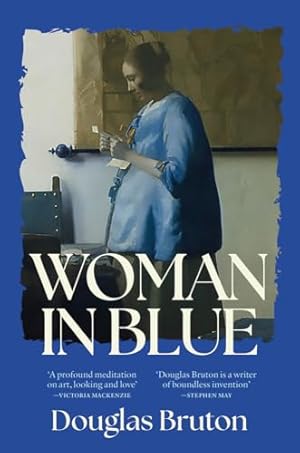
Let’s pass to another artist, Vermeer, in Douglas Bruton’s Woman in Blue. Douglas Bruton must have been fascinated by Vermeer’s Woman in Blue Reading a Letter, in the Rijksmuseum: he knows it so well. He gives this interest – or in this case near-obsession – to one of the two narrators of this book who take alternate chapters throughout. An unnamed man visits this picture every day, for several hours, knows it intimately, interrogates it for meaning. This does not go unnoticed by gallery staff, or by his wife, who does not know where it is her husband disappears to. The other narrator is the young woman in the picture, who describes how it is she comes to sit for this particular portrait, and her own feelings. She is sensitive to the thoughts and feelings of the man who is transfixed by her portrait, amused that he is as in thrall to her as Vermeer himself, though she’s unaware of this man’s musings on previous romantic entanglements and indeed his feelings about his wife.This book explores the boundaries between reality and illusion in art, inspecting the portrait and the two protagonists intimately. It’s a captivating novella, with a surprise ending, and beautifully expressed throughout.
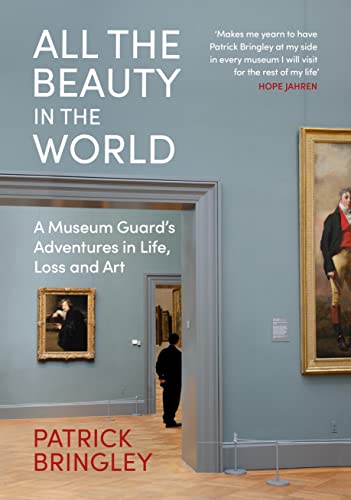
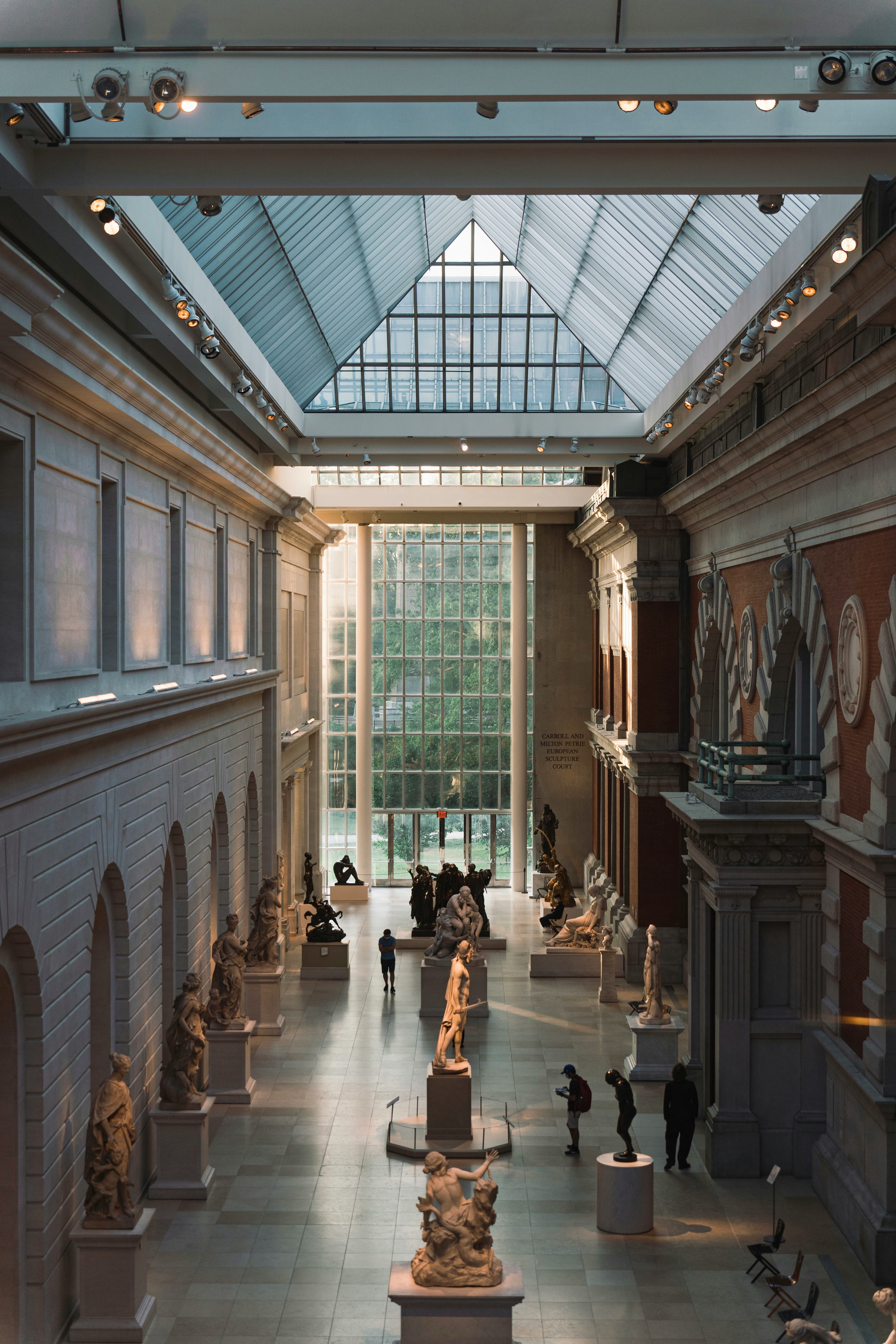
All the Beauty in the World by Patrick Bringley is a book I have only just started. Bringley was for a period of his life a museum attendant Here’s what Google Books has to say about his work: ‘A moving, revelatory portrait of one of the world’s great museums and its treasures by a writer who spent a decade as a museum guard. Millions of people climb the grand marble staircase to visit the Metropolitan Museum of Art every year. But only a select few have unrestricted access to every nook and cranny….’
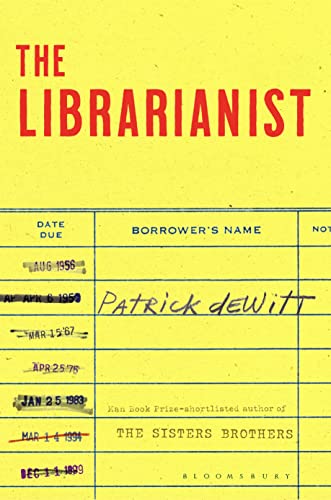
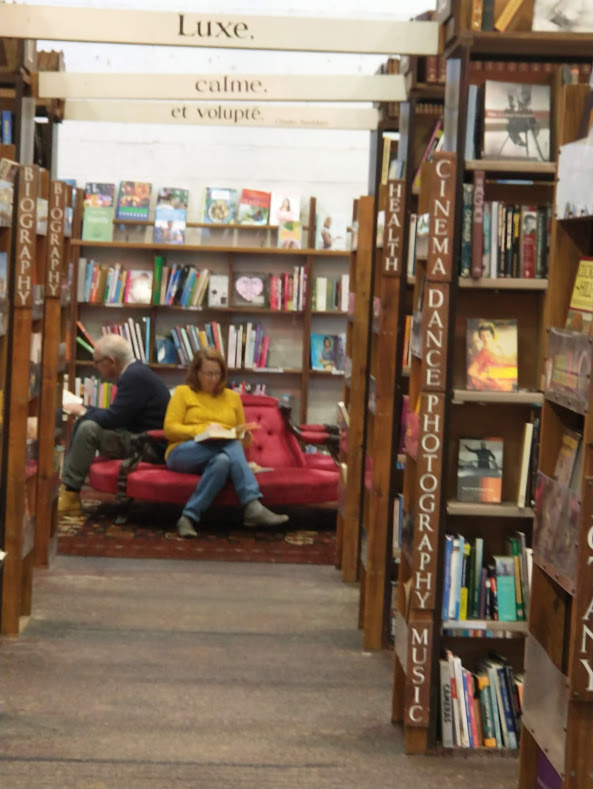
Museum Attendant? It’s not such a big leap from there to librarian perhaps. The Librarianist by Patrick de Witt. At first I was prepared to be charmed by this whimsical account of the life and times of Bob Comet. A misfit at school, he became a librarian – of course he did. Then he continued – quite contentedly – his largely friendless existence, living in the house where he’d been born, now his alone since his mother’s death. He meets a young woman – also a social misfit, completely under her father’s thumb – at the library. Reader, he marries her. At about this time, he also comes across the man who becomes his only male friend, and – no, spoiler alert. We are introduced to Bob at the point when he’s long been separated from his wife. And, so far so good. But we plunge back into his younger life and the book loses its way, especially when we spend far too long in the time when he ran away from home as an eleven year old. It’s not hugely relevant to the story or to the man he became. A bit of a curate’s egg of a book then. Good in parts. But I’m not encouraged to read more work by de Witt.
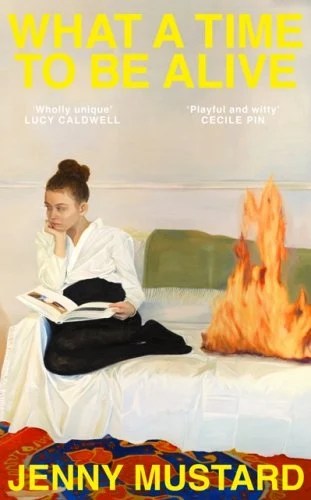
Another book about a misfit. Jenny Mustard’s What a Time to be Alive. Perhaps I’m too old. This book comes with glowing endorsements on the cover from a number of well-regarded authors. But I just can’t share their enthusiasm. Sickan, a 21 year old student at Stockholm University, comes from a small town where she was often lonely, and seemed a bit odd. She’s determined to reinvent herself but is socially awkward. She seems to make progress: finding a flatmate, beginning to join in normal student life, albeit always feeling something of an imposter. She even finds a boyfriend, who’s charming. It’s a story about loneliness, and the well-remembered awkwardness of becoming an adult and wondering which bits of your true self you wish to hang on to. But although it’s well written, I never really engaged with it. My loss, probably.
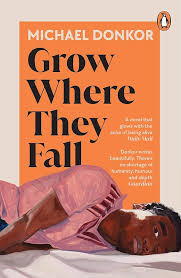
My last book is about a man who isn’t a misfit, because he tries so very hard not to be, in Michael Donkor’s Grow Where They Fall. Here is the story of Kwarme, son of Ghanaian immigrants and living in London. The book is told in alternating chapters: his 10 year old self who attends a multicultural primary school, and his 30 year old self, who teaches in a multicultural high school. Black and queer, Kwame is also a Durham graduate. His flat mate, an upper class white man writing about wine, is very different from his traditionally-minded working class Ghanaian family. Kwame fits in, though never without a conscious struggle. It’s what he always has to do. Conforming is something he’s used to, though his homosexuality is a real challenge to someone of his cultural background. He’s a popular teacher, well liked, but his uncertainties and feelings of being unmoored and a little out of his depth persist. Towards the end of the book, one event, small in itself, assumes huge proportions in his mind and forces him to finally make some big decisions. This is a novel about Kwame finding his place. Finding himself, in fact, and having the courage to live his life. It’s told in the context – often amusingly recounted – of a small boy’s day-to-day struggle to please, and an adult’s wish also to be liked and respected.
I seem to have done quite a bit of travelling this month’s choices (and in real life, as it happens). Next month, Kate starts with the 2025 Stella Prize winner, Michelle de Kretser’s work of autofiction, Theory & Practice. Where will that lead us all, I wonder?
Image Credits
Jacopo Pontormo: Visitation of Carmagnano, Church of San Francesco e Michele (Wikimedia Commons)
Delft: Who's Denilo? (Unsplash)
Metropolitan Museum of Art: Yilei (Jerry) Bao (Unsplash)
Library image (Actually Barter Books in Alnwick): my own image.



















 From Pyrenees to Pennines
You must be logged in to post a comment.