I gave Six Degrees a miss for several months, feeling as though I’d lost my way with it. But it’s rather addictive – so I’m back.
On the first Saturday of every month, a book is chosen as a starting point and linked to six other books to form a chain. Readers and bloggers are invited to join in by creating their own ‘chain’ leading from the selected book.
Kate: Books are my Favourite and Best
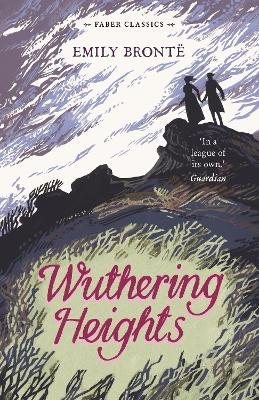
This month starts with Emily Brontë‘s Wuthering Heights. Whether or not you’ve read the book, or seen any of the film adaptations, you’ll know that anti-hero Heathcliff is a vengeful misfit, and a very angry man.
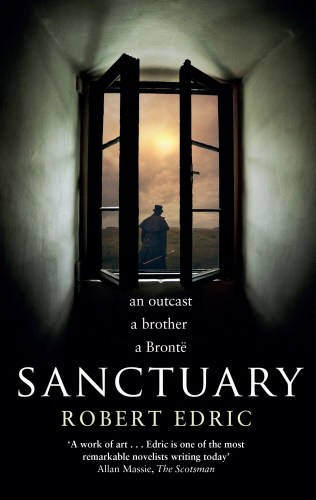
So I’m beginning my chain with another: Emily’ s own brother, who is the subject of Robert Edric‘s book Sanctuary. Bramwell is the family’s black sheep, fighting his failures, his addictions, his inability to find a way to make something of his life. He is in fact the ‘author’ of this book. He paints a sorry picture of his stumbling path, in the final year of his young life, towards illness, addiction and death. Edric has carefully constructed this book in a series of vignettes that barely constitute a narrative, but which leave us feeling bewildered sympathy for an intelligent young man who has utterly lost his way. A beautifully imagined reconstruction of a life ill-lived.
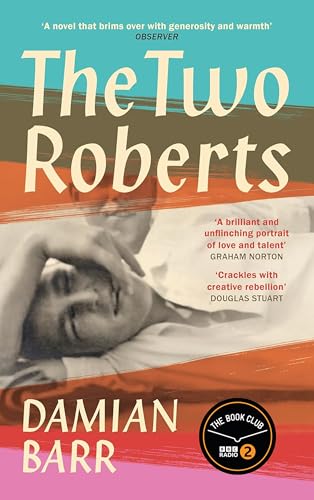
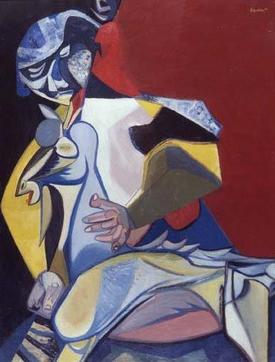
My next choice features not just one, but two self-destructive men. The Two Roberts, by Damian Barr, re-imagines the lives of two now little remembered Scottish painters from the early years of the twentieth century, Bobby McBride and Robert Colquhoun. These working class Glasgow lads, homosexuals at a time when it was still illegal, at first made a success of both their lives and careers with their prodigious talents. They worked hard, but played harder, and their wild parties were awash with hard liquor. And this eventually became a problem. Their self-destruction tumbles them further and further into poverty. An immersive, sympathetic imagining of two lives. The book illustrates well the blossoming of two talents, and their chaotic collapse, as well as showing what it meant to be queer in a society which both reviled and punished homosexuality.
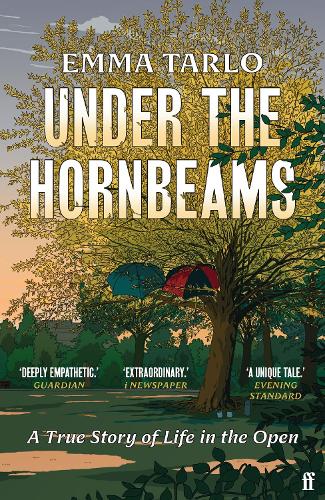
What about a book – a true story – about two men who might also appear to most as failures in life? Under the Hornbeams, by Emma Tarlo . She was a University professor (anthropology) living near Regents Park, and was introduced early in lockdown to two very unusual men. They lived, completely without shelter other than that offered by the hornbeam trees, in a little unfrequented spot in Regents Park, and had done so for some years. They didn’t identify as homeless, and considered their lifestyle a positive choice. Tarlo is intrigued, and their relationship deepens into friendship. Not that of a middle class saviour bringing food and practical gifts to the men, but one of give and take. She appreciates the increasingly deep conversations that take place, grows to love and appreciate the natural world in a different way, and to review with increasing dissatisfaction her own pressured life as a university head of department. Tarlo affords the men dignity as she writes about them, and recognises the dangers and discomfort of many aspects of their chosen life style: not least that the still-in-force 1824 Vagrancy Act still criminalises homelessness.
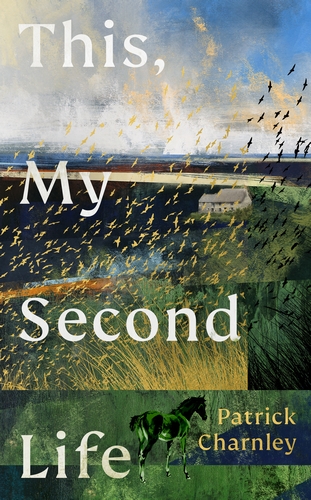
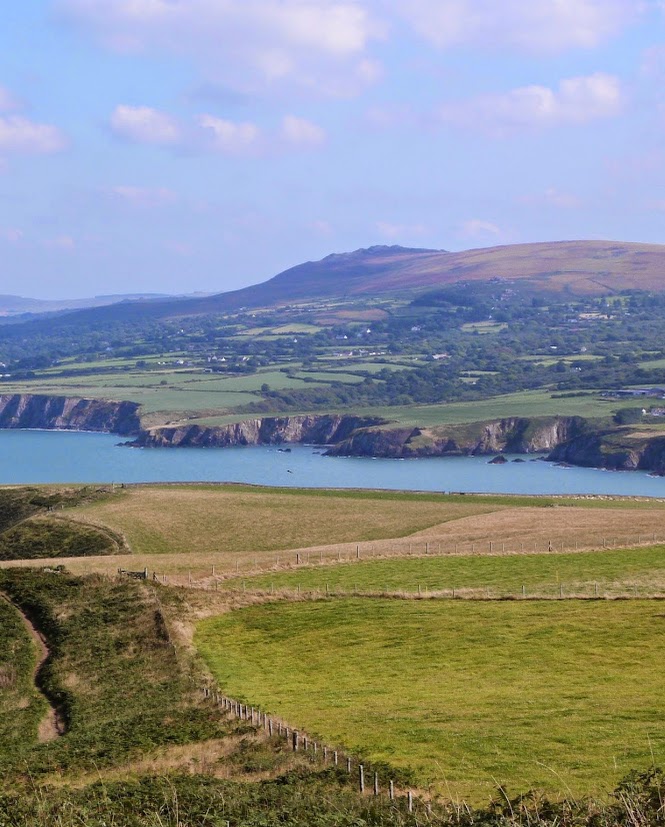
Here’s another unusual life, as recounted in This, My Second Life, by Patrick Charnley. This is a work of fiction. Up to a point. The story that narrator Jago Trevarno tells is his to tell, but it’s entirely informed by Patrick Charnley’s own life experience of his cardiac arrest and brain injury. This transformation from Jago’s high-achieving life lived to a large extent in the fast lane to a much simpler existence lived off-grid on his uncle’s farm is as much the subject of this story as the tale of how he and his uncle contend with a thoroughly villainous neighbour, Bill Sligo who – unaccountably – wants to buy part of Jacob’s farm. Jago’s new life – simple, measured, suits his new circumstances. Sligo’s nefarious plans force Jago into risky courses of action which could all too easily go wrong. Much of the delight of this book is in its spare. almost elegiac writing, bringing Joseph’s farm and Jago’s new circumstances gently yet vividly to life. I hope Charney can find a voice beyond this one, so effective at its sympathetic depiction of his hero’s brain injury. His writing deserves to be more than a one-book-wonder.
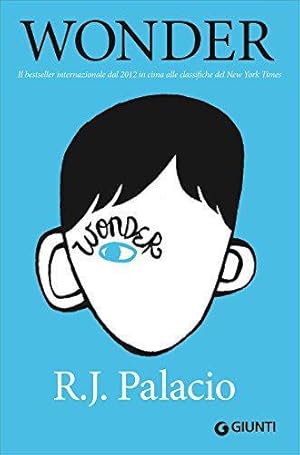
This month seems to be about the outcast. So let’s have an entirely different one, in RJ Palacio’s YA novel Wonder. This is a book about an ordinary 10 year old boy, who isn’t ordinary at all, because in his short life he’s undergone dozens of operations on his face. So abnormal, even frightening is his appearance that it’s impossible to pass him by without staring, or very obviously dropping your gaze. He’s much loved by his family – his parents and older sister Via – but he’s been home-educated till now. But this is the moment to send him out into the ‘normal’ world of school. This is the story of his first year there: a story of bullying, meanness, cruelty even, but also kindness and acceptance. Told by August himself – the boy who lives with his deformity – it’s a moving, thought-provoking roller-coaster of a story showing how even those who love him most can be tested in their acceptance of him, and even those who reject him can – eventually – learn that he is so much more than an exceptionally ugly face.
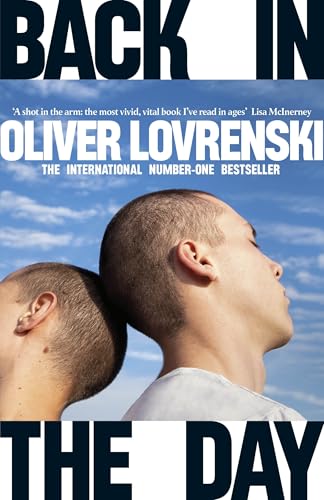
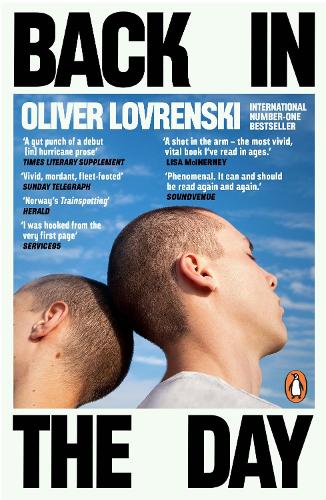
This chain has been entirely about men and boys living out their lives – with greater or lesser degrees of success – outside the mainstream. So we’ll finish in the same way,with Back in the Day: Oliver Lovrenski (Translated with astonishing bravura by Nichola Smalley) The four protagonists have come with their families as immigrants from various parts of the world – narrator Ivor is from Croatia and Marco from Somalia for instance. Clever and ambitious, they lose interest in school when they overtake their classmates and remain unchallenged. Dreams of becoming lawyers are exchanged for knives and protecting other family members. Drug dealing leads to institutional care for one, and a slippery slope to violence, machetes and guns. Will eventual grief and remorse result in a turning point? This is a tough, intense yet rewarding read by a young Norwegian of Croatian heritage who wrote it when he was just 19. I hope there’s more from him, and from his talented translator.
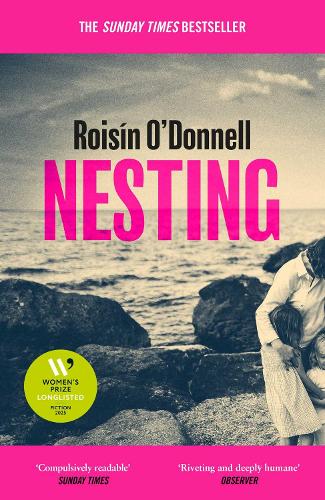
However did I come to make this chain exclusively male (albeit with two female authors)? It’s International Women’s Day tomorrow after all. Ah well, next month’s book is by a woman, Virginia Evans: her epistolary novel The Correspondent. Next month, why not join in Six Degrees … if you don’t already?

 From Pyrenees to Pennines
You must be logged in to post a comment.