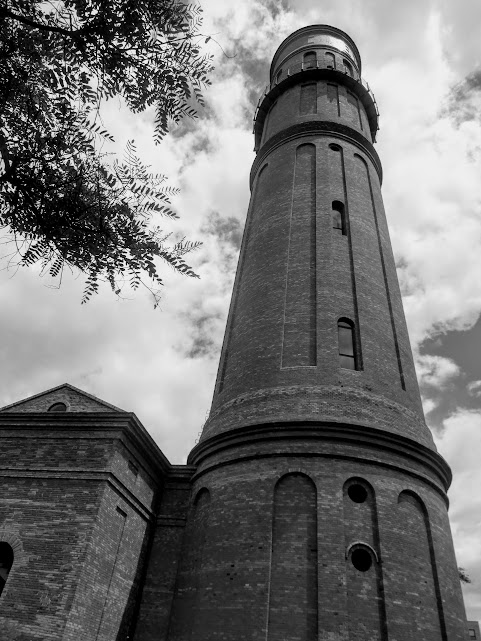
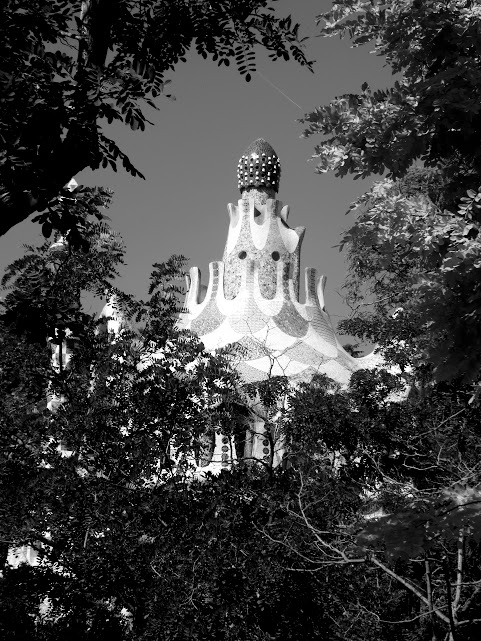
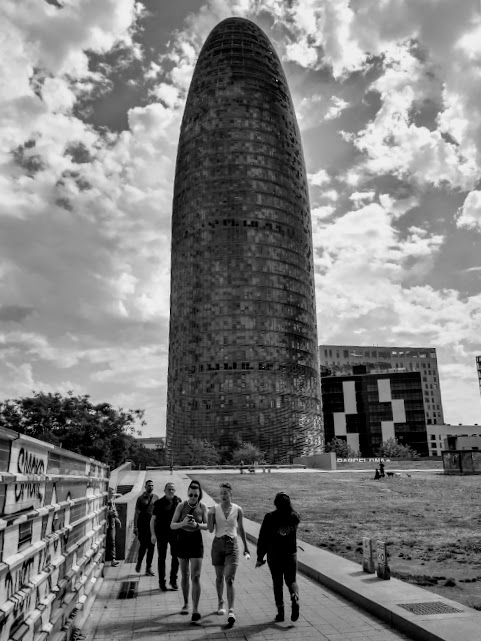
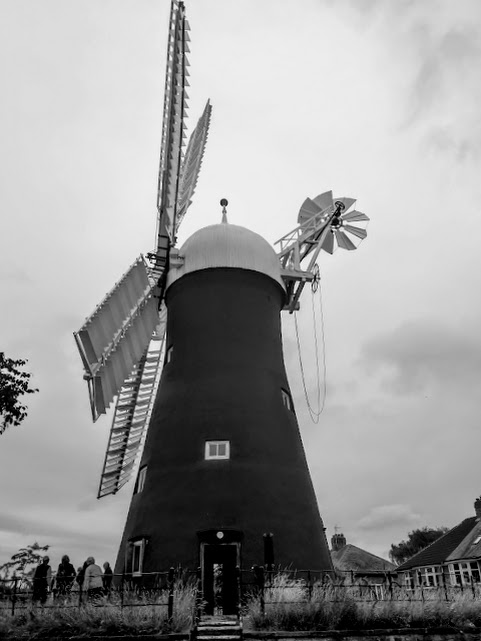
This week, Leanne’s Monochrome Madness has no theme. She has chosen to showcase lighthouses. We’re rather thin on lighthouses round here, so I won’t join her. Instead, I’ll show just a few towers I’ve seen this year.
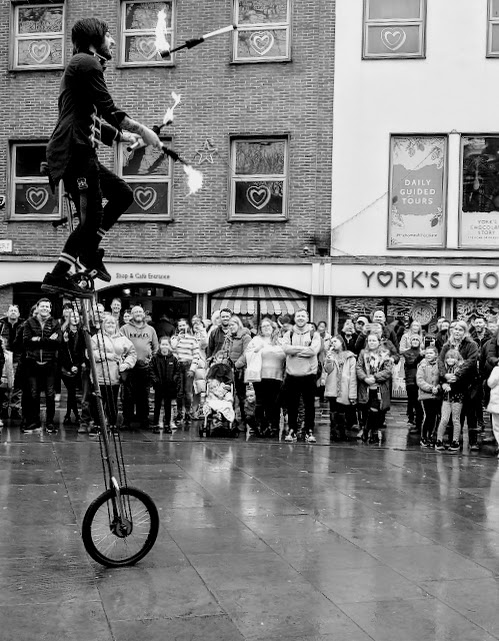
My first tower of the year was a human one, seen in York.
Then we went to Spain to meet our new granddaughter. And do a spot of discovering too.
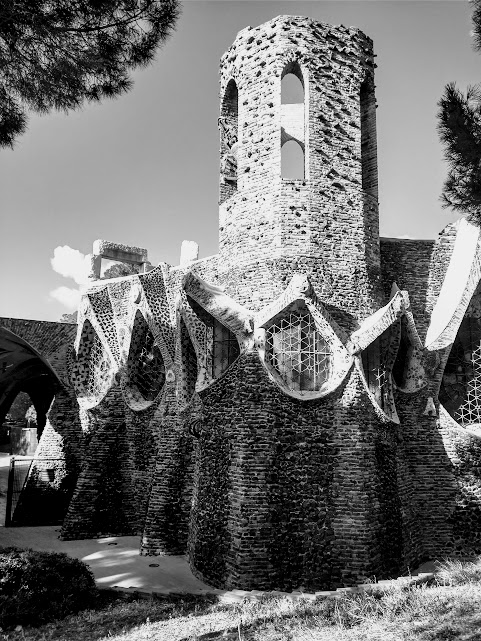
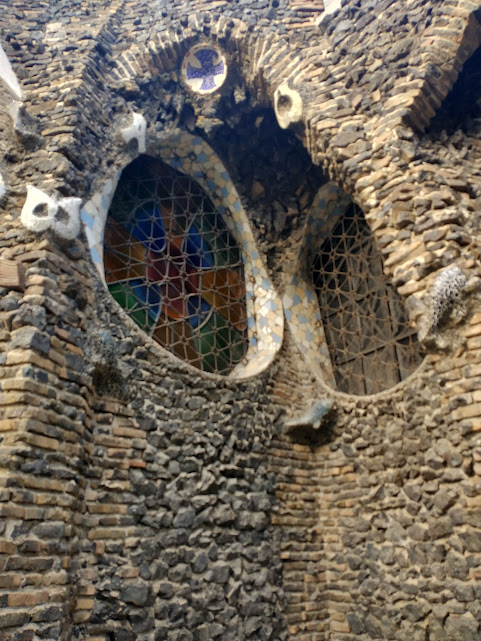
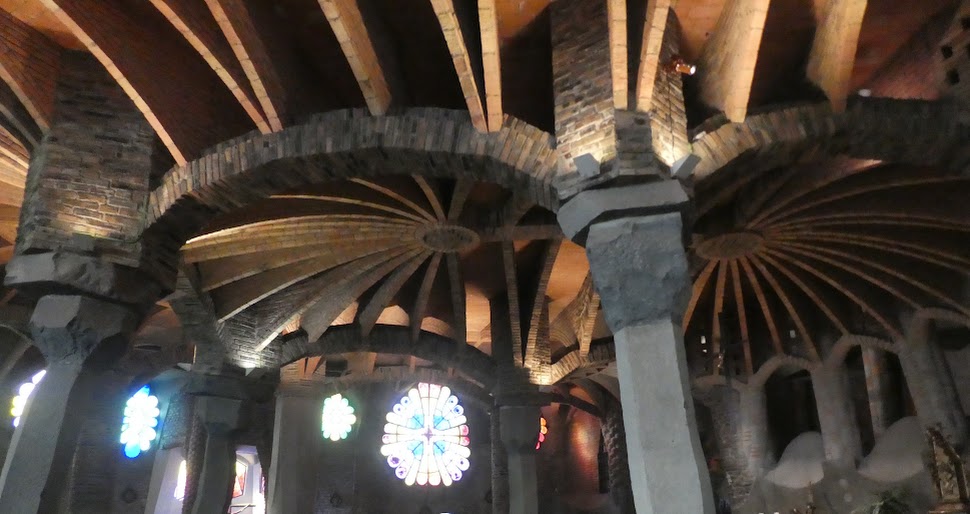
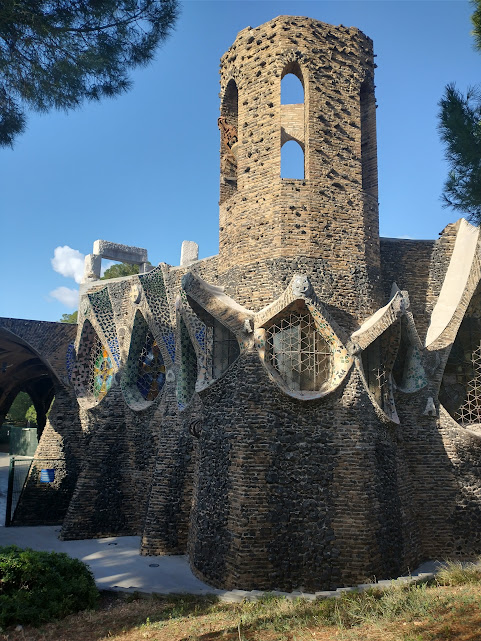
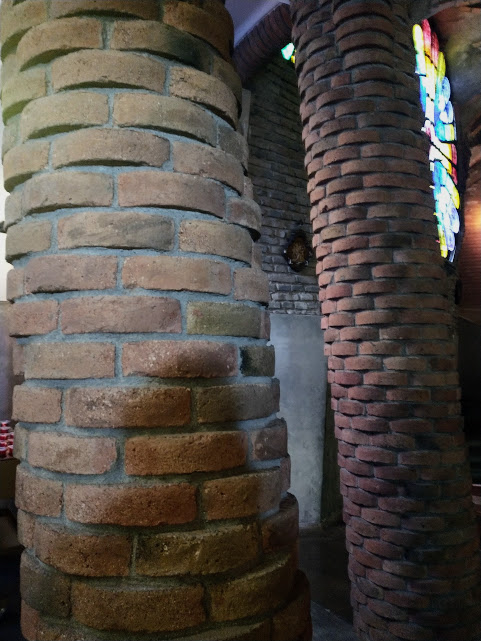
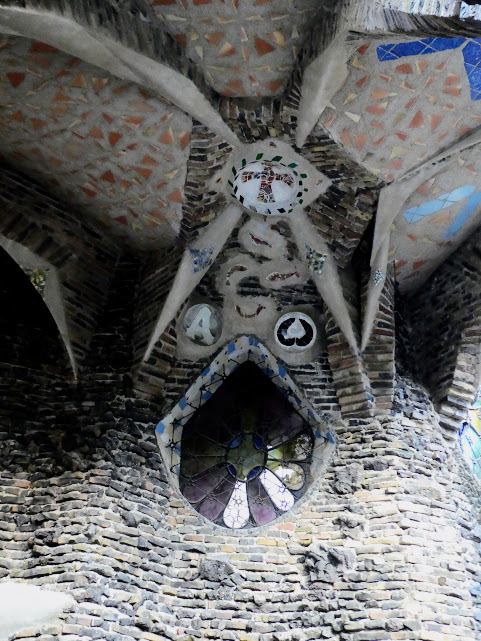
Gaudi’s church in Colònia Güell
And later, I went back to Spain again, to lend a hand as my daughter’s maternity leave ran out. I still had moments of sightseeing.
And most recently, it was off to Holgate Mill, a fully functioning windmill slap in the middle of a housing estate in York. I must introduce it properly soon.
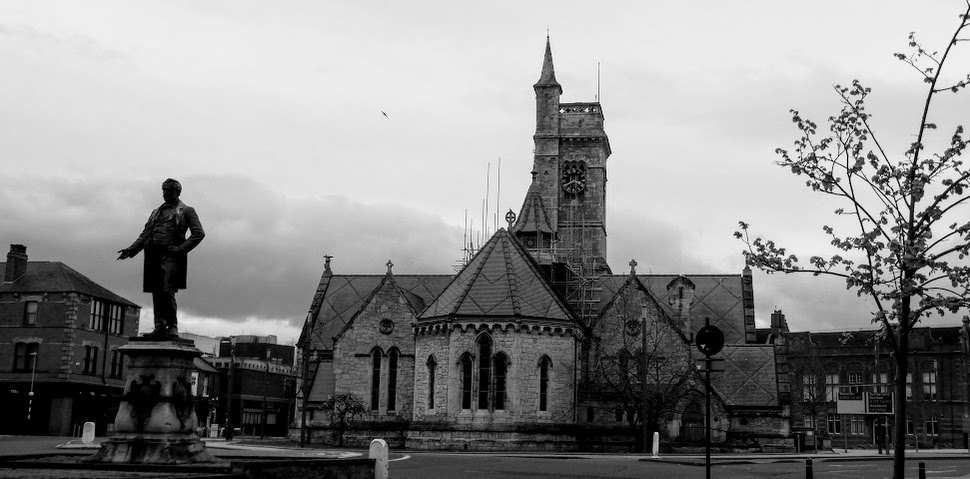
My featured photo is of Christ Church Hartlepool, now an Arts Centre. I was going to add in an AI generated photo too. Just for fun. But they were no fun, so I abandoned the idea.
Monochrome Madness this week asks us to feature statues. I could show you Michelangelo’s David. I could feature statues of The Great and The Good, as featured in all big cities everywhere. Or Nymphs and Greek Gods from set-piece fountains everywhere. But I’ve decided to go low-brow and show you pieces destined to appeal to children, or adults in search of their inner child.
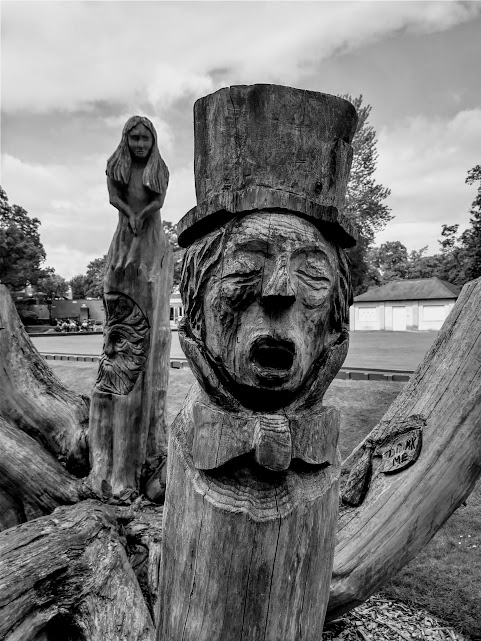
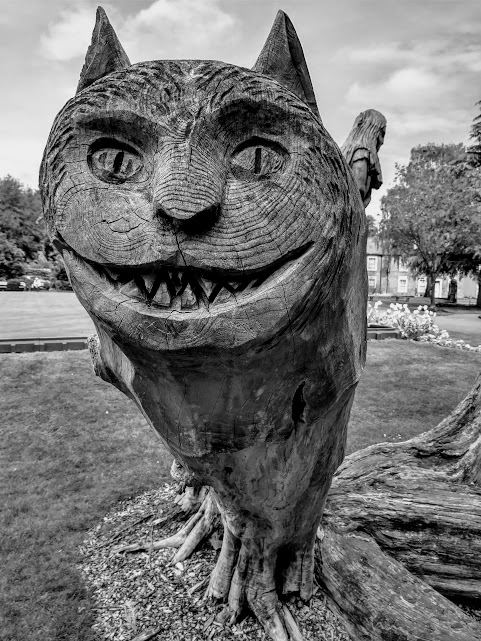
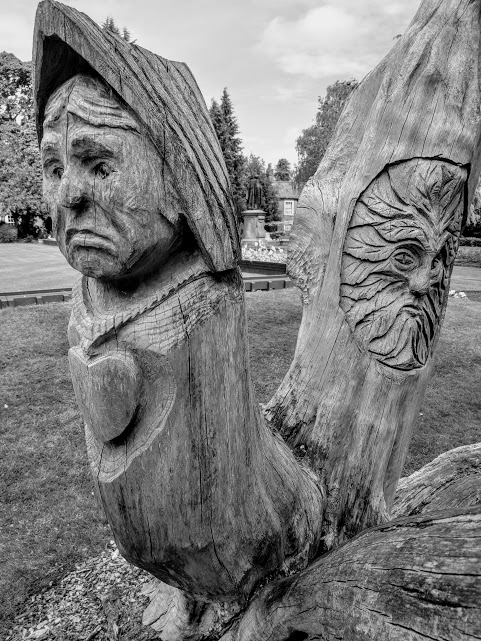
Then we’ll stay local and inspect the Alice in Wonderland characters you’ll find in Ripon Spa Gardens. Lewis Carroll spent part of his childhood in Ripon, because his father was a canon at the cathedral here.
I hope you recognise the Mad Hatter, the Cheshire Cat and the Queen of Hearts.
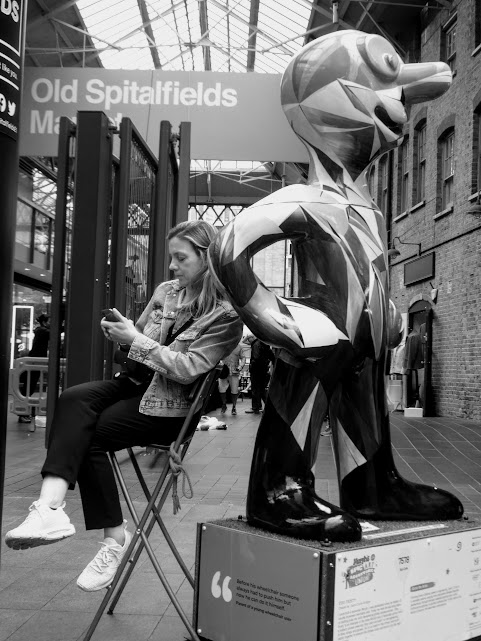
Then there’s this fellow, part of a sculpture trail promoted recently in London by the children’s charity Whizz Kidz.
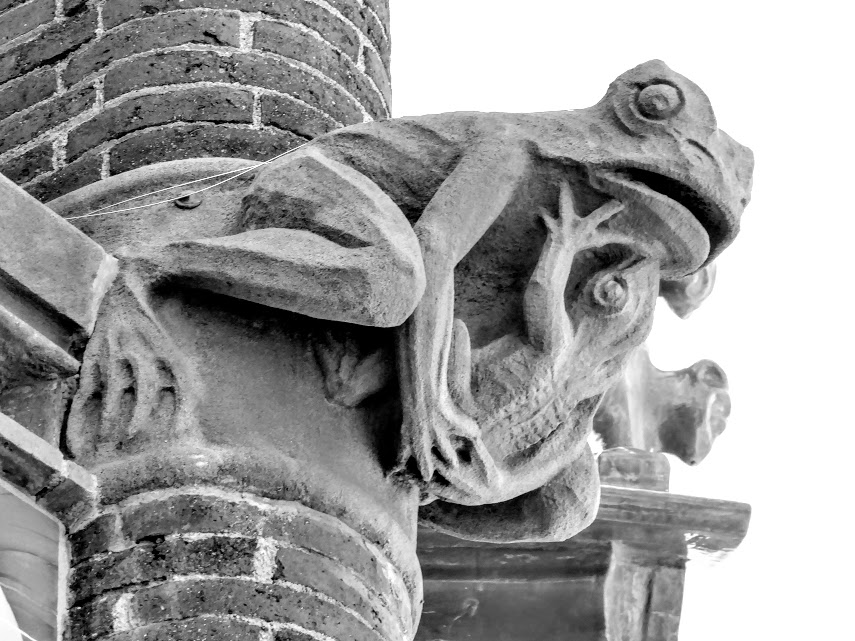
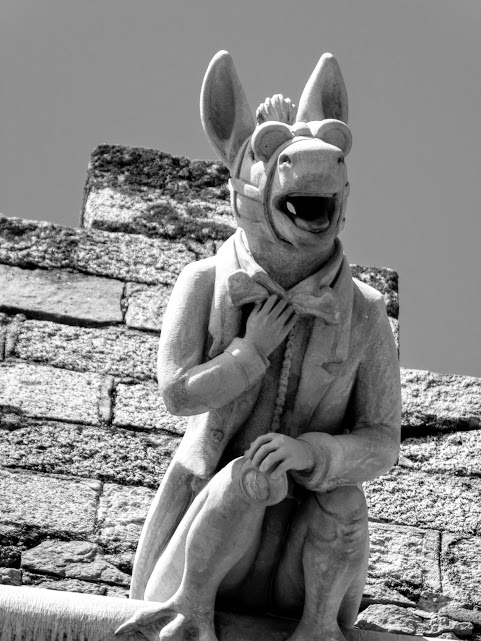
Here are some gargoyles, not necessarily designed for children, but certainly appealing to them: from the Hospital de Sant Pau, Barcelona, and the Església de Sant Julià in Argentona.
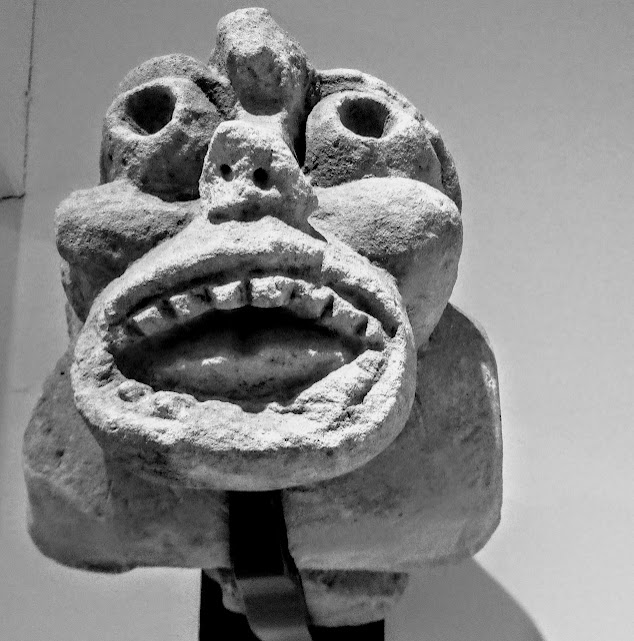
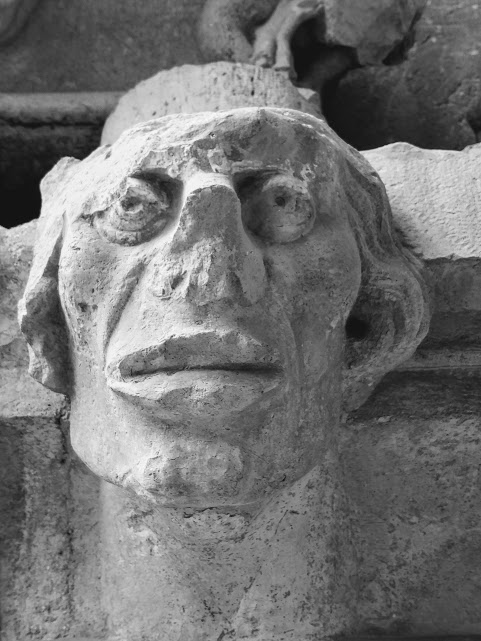
Monks and the Christian faithful – or certainly the masons working for them – generally weren’t above fashioning satisfyingly scary pieces. Here are two battered relics: one from Rievaulx Abbey, and the other from Rheims Cathedral.
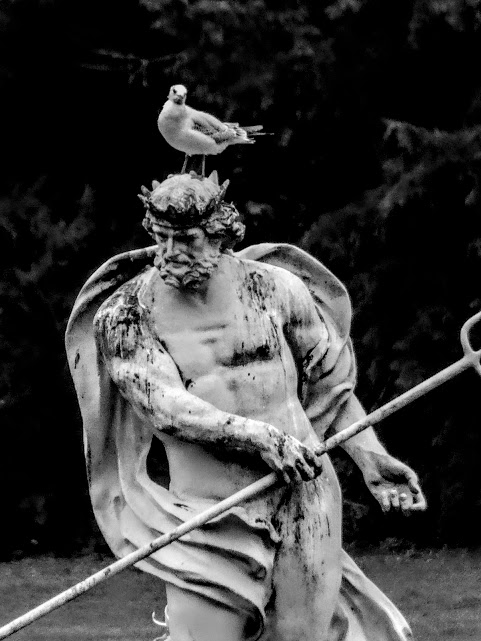
My last image isn’t of a statue designed to be amusing. But Neptune at Studley Royal always makes me and any children I happen to be with laugh when the poor fellow is sporting a seagull headpiece.
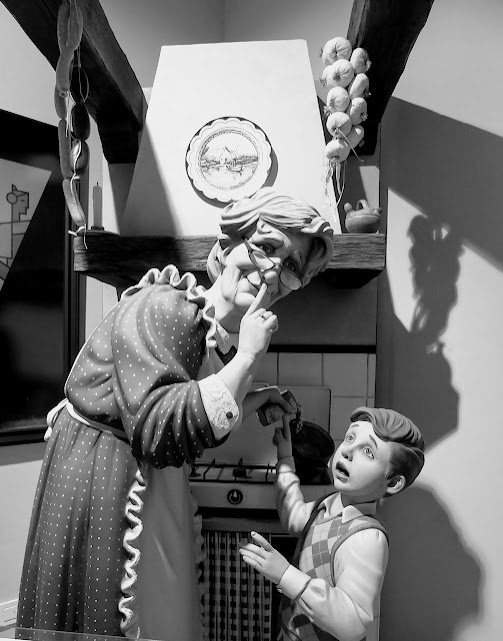
And my feature photo? Are they even statues? Well, I don’t know what else to call these two. They’re from Valencia’s annual Fallas Festival, where humorous figures, originally made of wood, are toted round town in March each year to celebrate the arrival of spring.
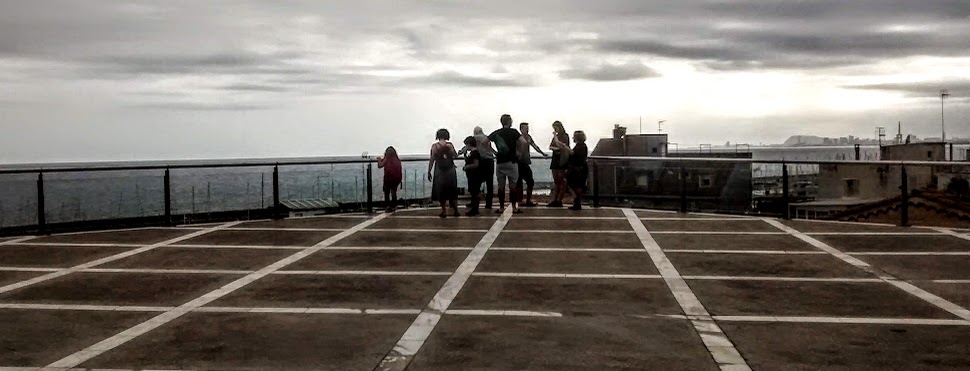
For this week’s Lens-Artists Challenge, Egidio asks us to consider compositions relying on two rectangles for their success. So I thought I’d offer a featured photo with lots of rectangles: the basic two, with sky at the top and earth at the bottom, and then, confusingly, a town square entirely tricked out in … squares. Emily and her Catalan family are looking out to sea.
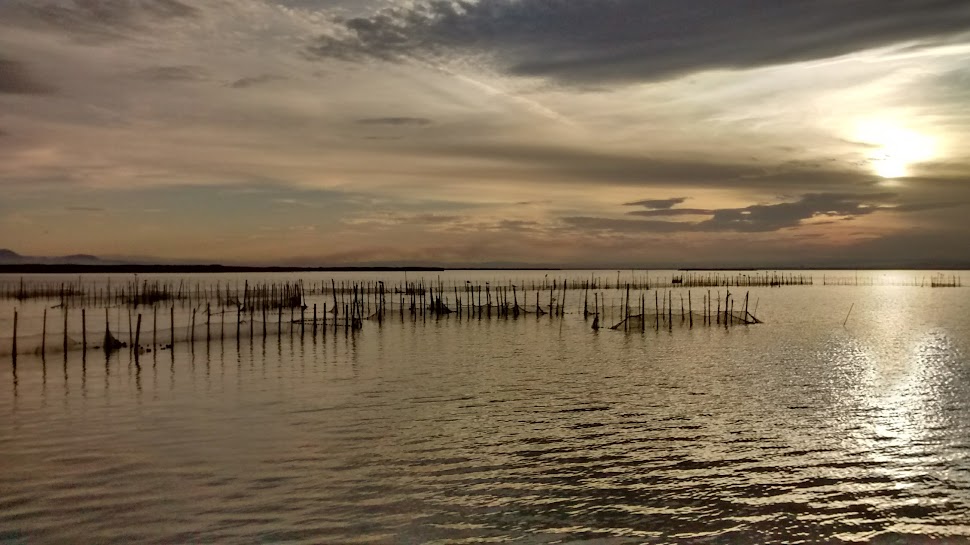
I thought I’d include a couple more using this simplest of devices. The first from my beloved l’Albufera, which I’ve written about before – here (among several others).
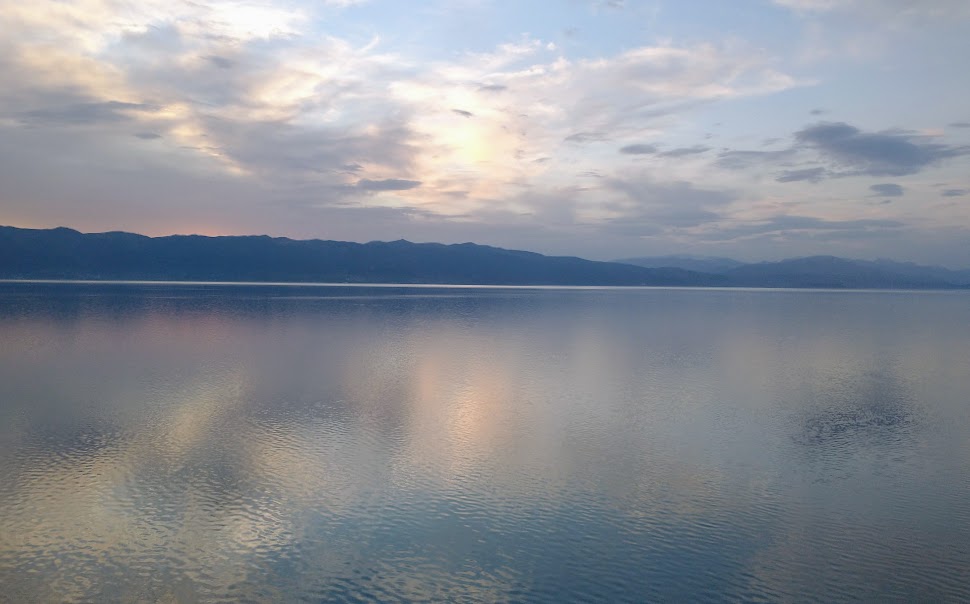
And here’s another, from Lake Prespa in Greece, where the water reflects the sky above: the lower rectangle a pleasing echo of the upper.
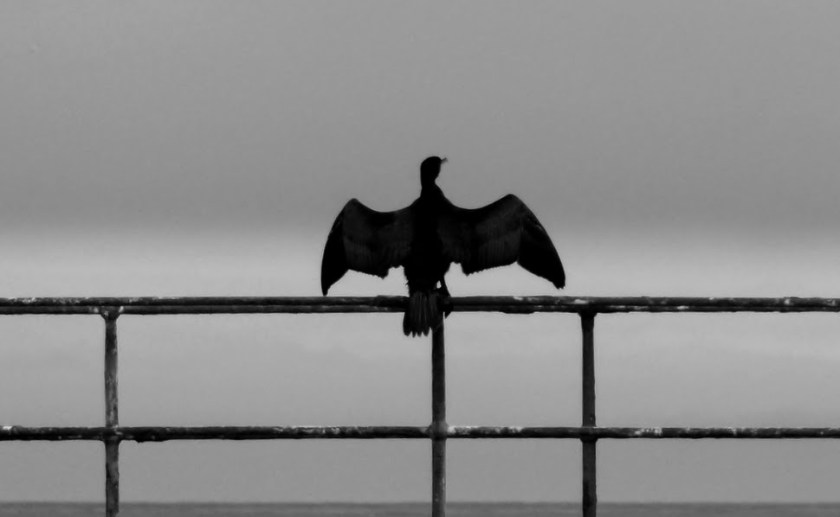
And here’s one closer to home, in Whitby, a cormorant posing at the end of the pier.
A cormorant on railings at the end of the pier, Whitby, North Yorkshire.
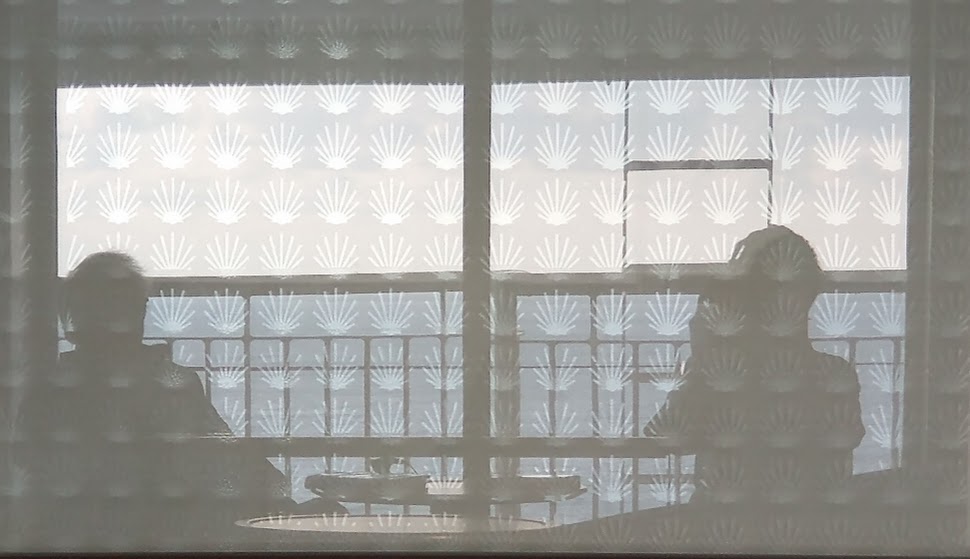
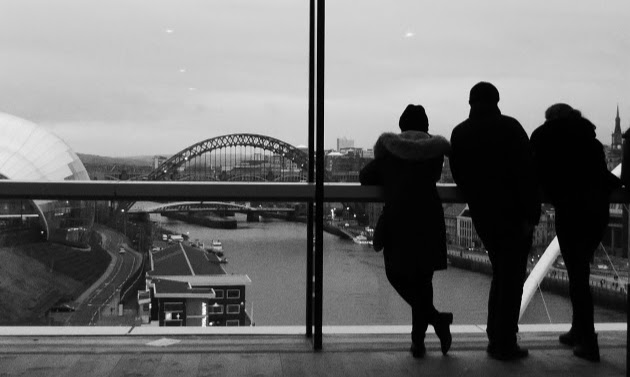
Let’s stay beside the water: one a ferry across to Spain, spying on my fellow-passengers. At the Baltic Gateshead, spying on my fellow River Tyne enthusiasts, and in London, over looking the South Bank.
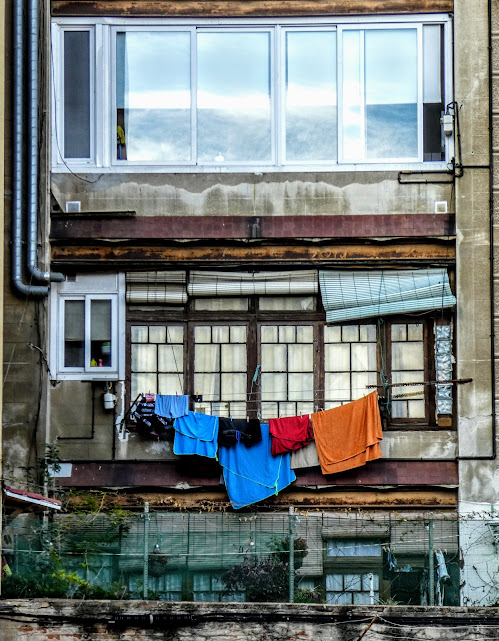
And finally we’ll whizz over to Barcelona, and wander round El Clot, and then Gràcia, where this view has two rectangles and includes any number of smaller ones, and the daily washing line.
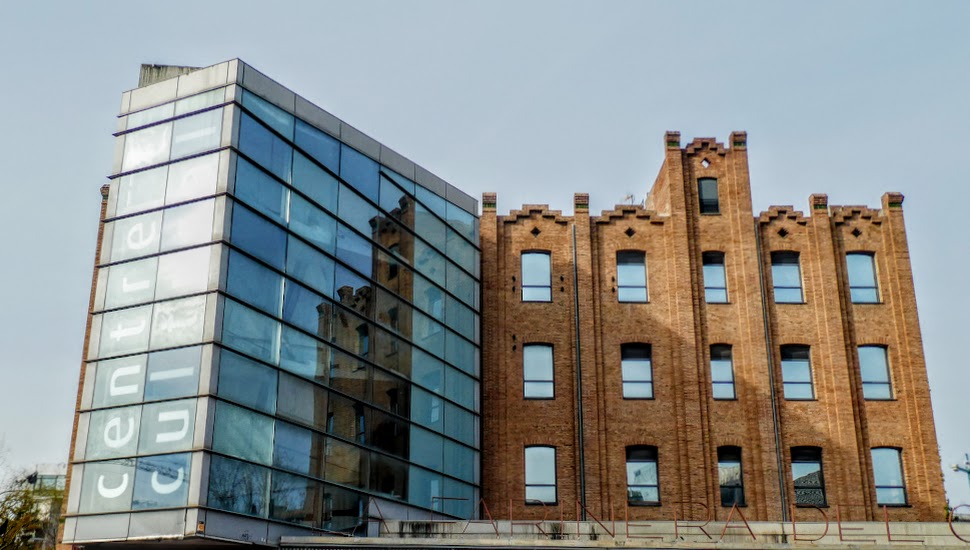
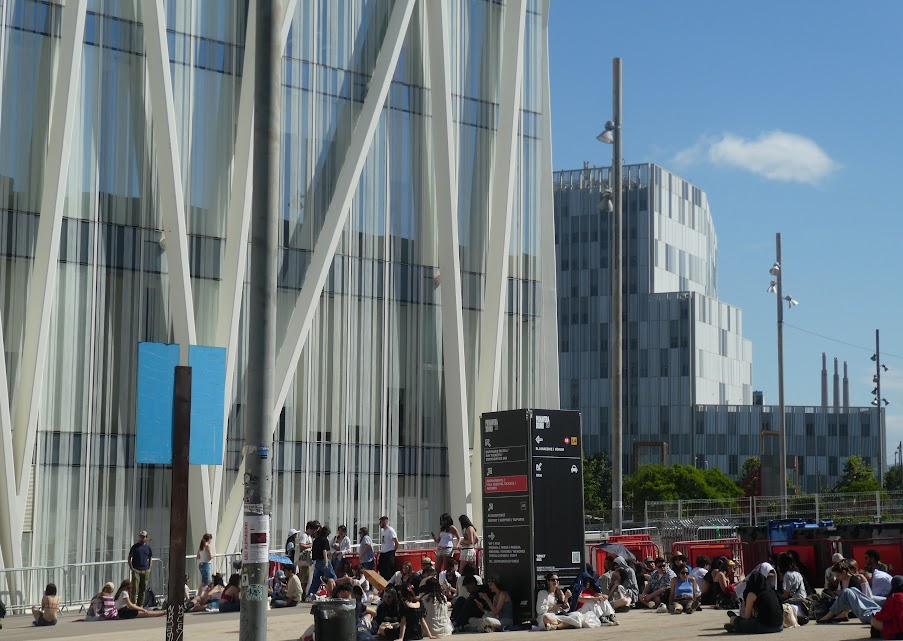
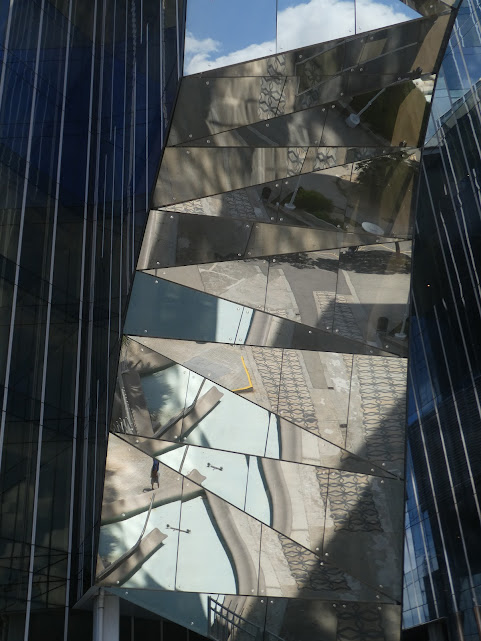
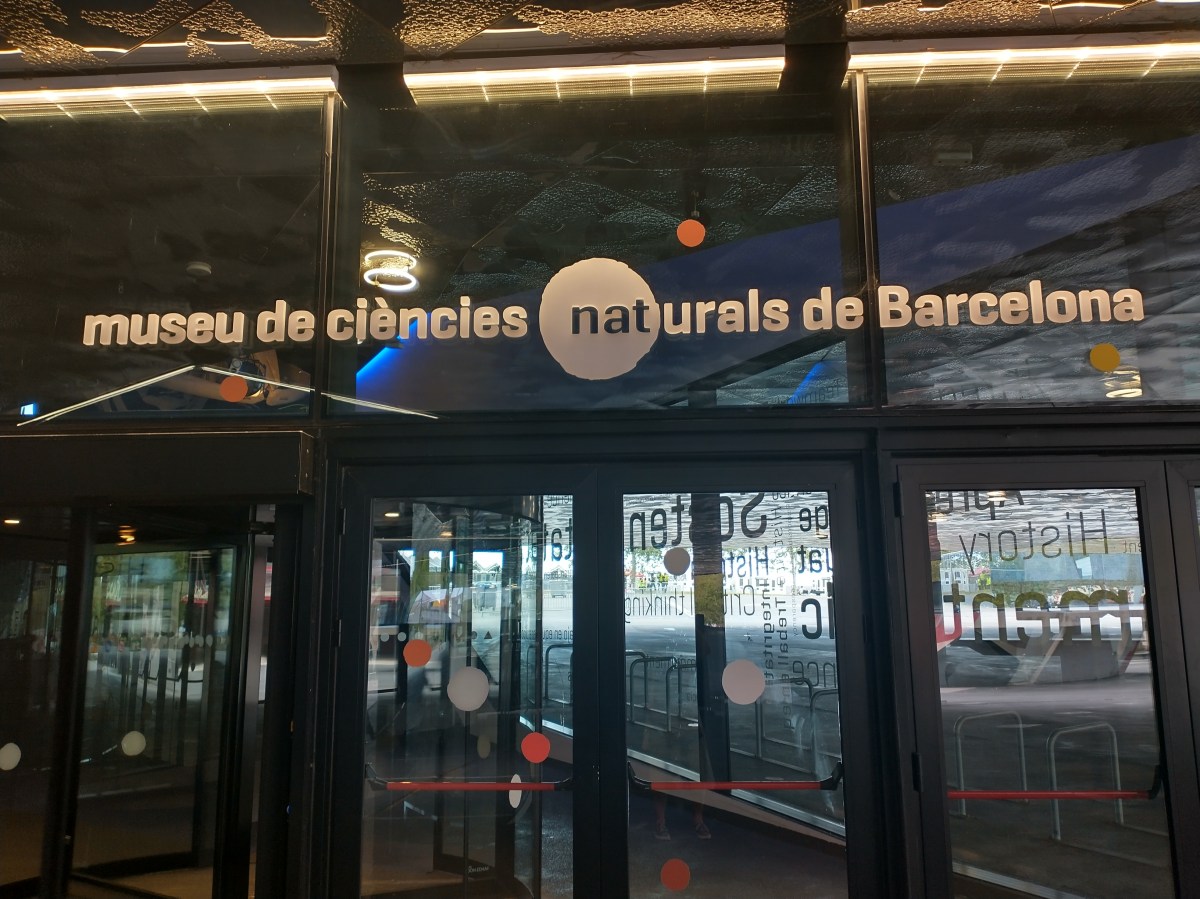
This post is just an excuse to share a few photos from the outside of Museu de Ciències Naturals de Barcelona and the modern buildings round and about. When I went, the music festival Primavera Sound was in full swing in the evenings – Emily and Miquel had been the night before – so whole swathes of the area were out of bounds. My plans to explore were curtailed.
So after I’d ‘done’ the museum (maybe worth a post later?) I caught a tram to the Port Olímpic.
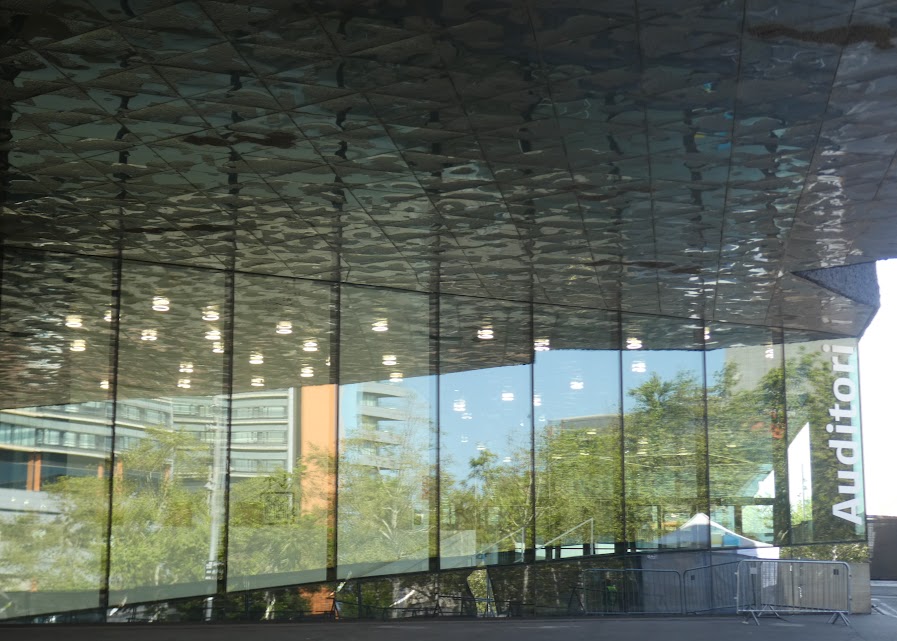
Both areas are full of glass-clad buildings reflecting images of the space in which they stood. Connecting with them, just too late for me to pop them into Donna’s Lens-Artists Challenge: Connections. You can connect with me too – two and a half times – there I am in the last photo of all, snapping away.
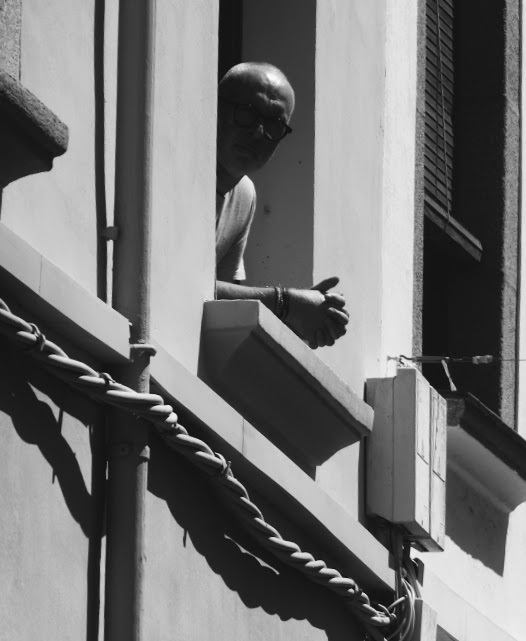
There were times during my recent trip to Spain when I was part of a street-side audience. But there were those who had a prime viewing spot. They lived in an apartment immediately above the action. I have a few shots of them peering down at the events below.
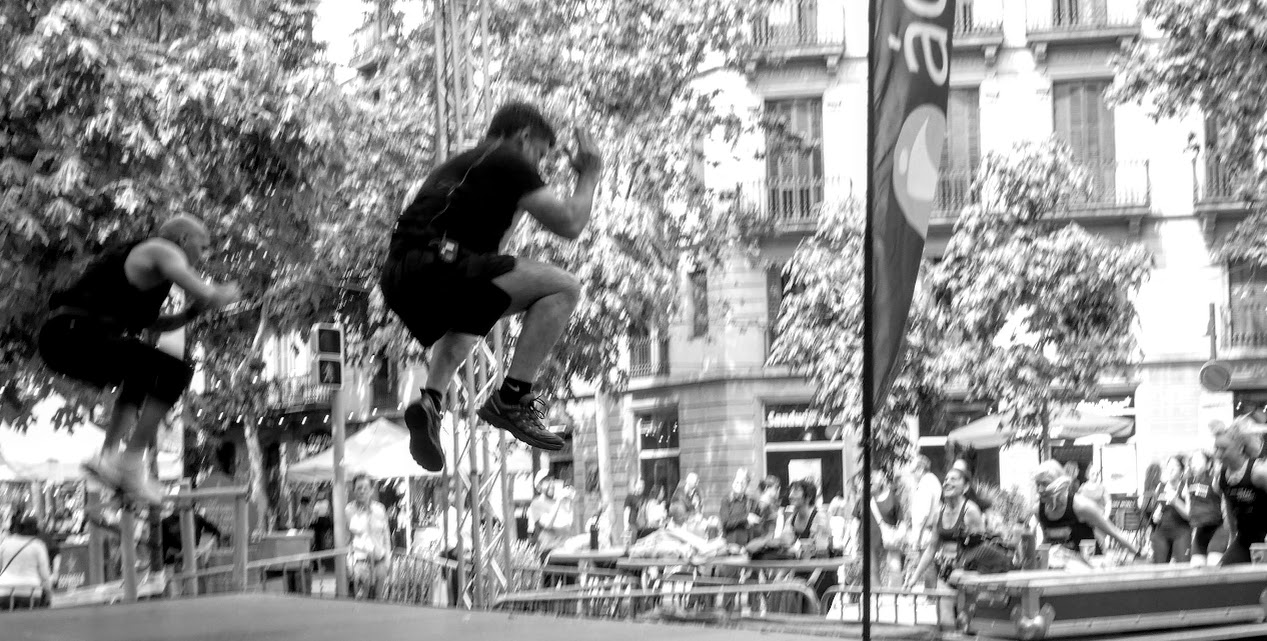
On my first Saturday, we popped over to Barcelona, for a neighbourhood festival: La Festa Major de la Esquerra de l’Exeimple. Early in the morning (well, early for Spain) we happened upon a communal keep-fit session. So did this older inhabitant, who chose to maintain her distance.
This is what she was missing:
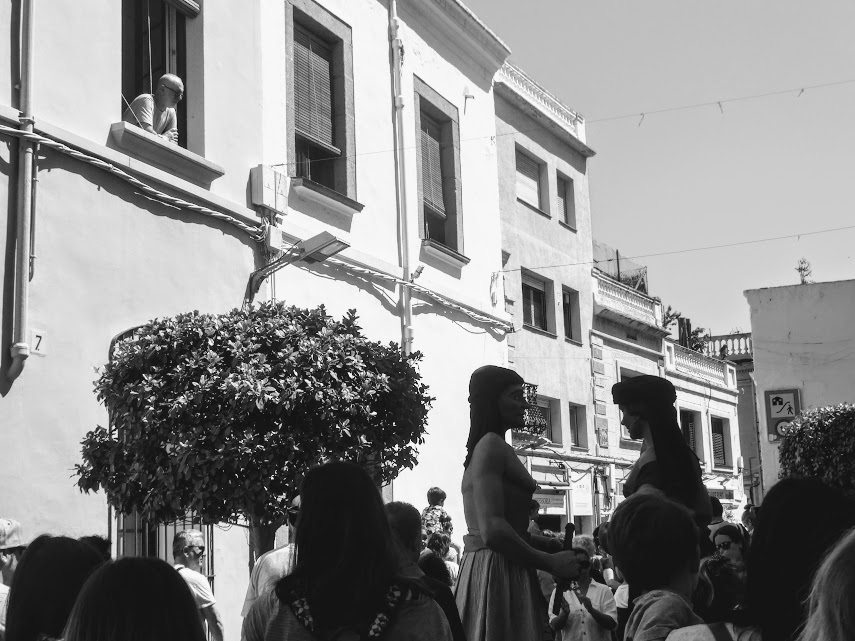
Then the next weekend, nearer home, was Rebombori, which I reported on here. As the gegants plodded through the streets, at least one chap had a ringside view.
And when they arrived in the town square, one set of young people had the best view of all:
My header photo is another from the Festa Major, when we were all ‘just looking’ at the Gegants de la Pedrera, the neighbourhood’s very own gegants, celebrating Antoni Gaudí, whose buildings are generously scattered throughout the area. And indeed at the locals who were adding a bit of colour (if not in this photo) by dressing up quite splendidly in Edwardian costume.
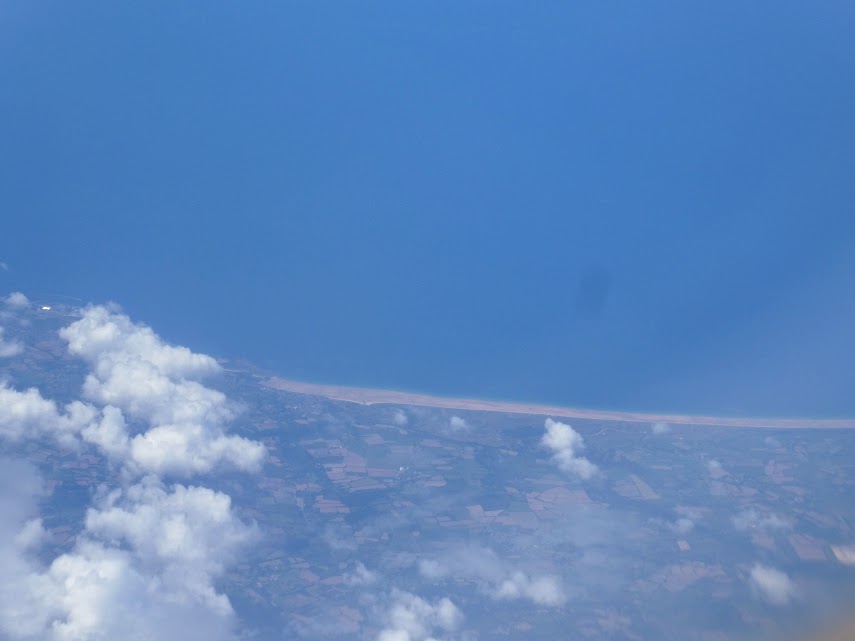
My flight home from Barcelona the other day was remarkable for two reasons. For one, I had a window seat; and for two, the earth below was visible almost every mile of the way. Here’s the story of a journey.
A small port just south of Barcelona.Arid fields.The foothills of the Pyrenees.The Pyrenees, still snow-capped in places.Rural France.We hugged the coast throughout almost all the French part of our flight.Reaching England …… and cloud cover.Manchester almost in sight.
Oh, and here’s an eleventh photo, from terra firma: alongside the (static) travelator at Manchester Airport.
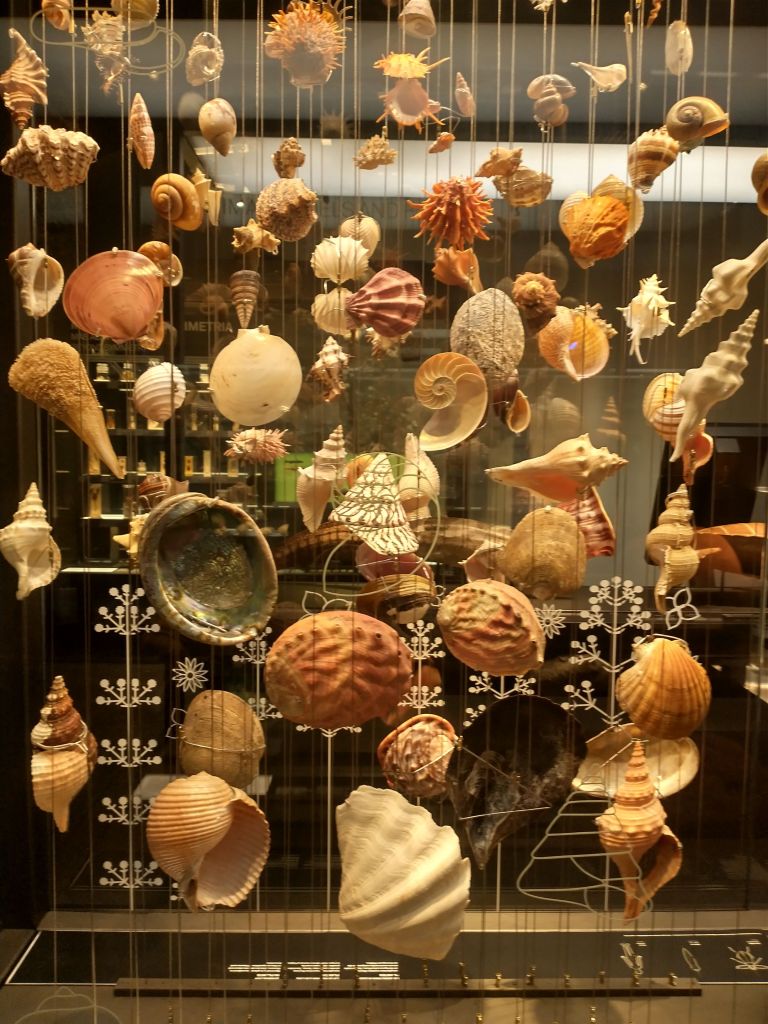
… comes from the Museu Blau – the Museu de Ciènces Naturals de Barcelona. It’s not on the tourist trail, so it was blissfully empty. I took lots of photos with my camera, but I can’t download them till I get back to England, so here is the last from my phone: a selection of shells.
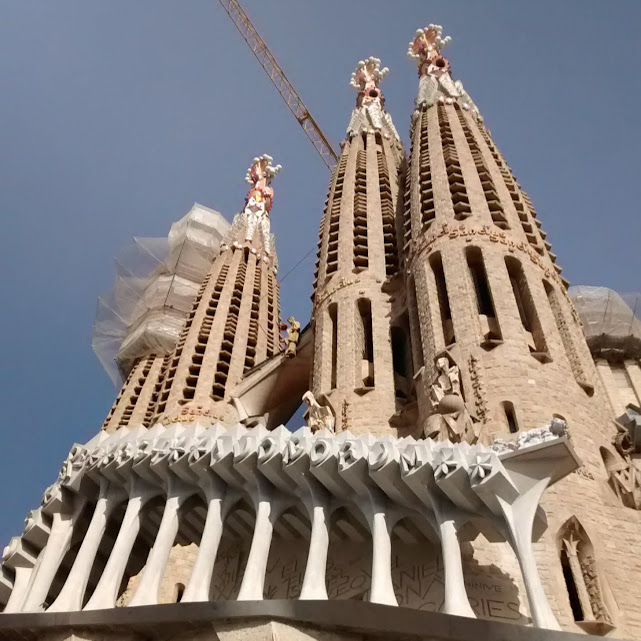
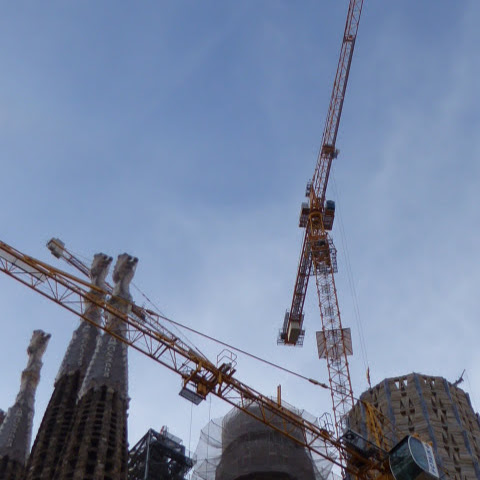
Everybody knows that Antoni Gaudí’s La Sagrada Familia is the oldest new church in (probably) the world. Begun in 1882, it may finally be finished in 2026. Promises, promises. It’s certainly been burgeoning for years.
The header photo, taken from the flat where Emily’s partner Miquel once lived shows how this monumental edifice dominates the skyline in a city where so many modern buildings scrape the sky.
Most of us living in Britain know something about the model villages built by philanthropic industrialists in the 19th century. With the advent of the Industrial Revolution, workers poured in from the countryside to a filthy urban environment. They found, alongside work for long hours in the newly-established factories, hastily built, crowded, poor quality housing with no facilities.
Some philanthropic factory owners decided to do things differently. Robert Owen built New Lanark for his miners. Titus Salt built Saltaire near Bradford for his textile workers. William Lever, 1st Viscount Leverhulme built Port Sunlight for his soap workers. And so on. All these communities offered decent, usually terraced housing with a small amount of outside space. There was a shop, a school, an institute for adult learners, a health-care facility of some kind, certainly a church. There was not however, a pub, or anywhere where alcohol was sold. Workers at the time often drowned out the reality of their miserable lives by drinking, and those philanthropists wanted a different life for their workers, whether they liked it or not.
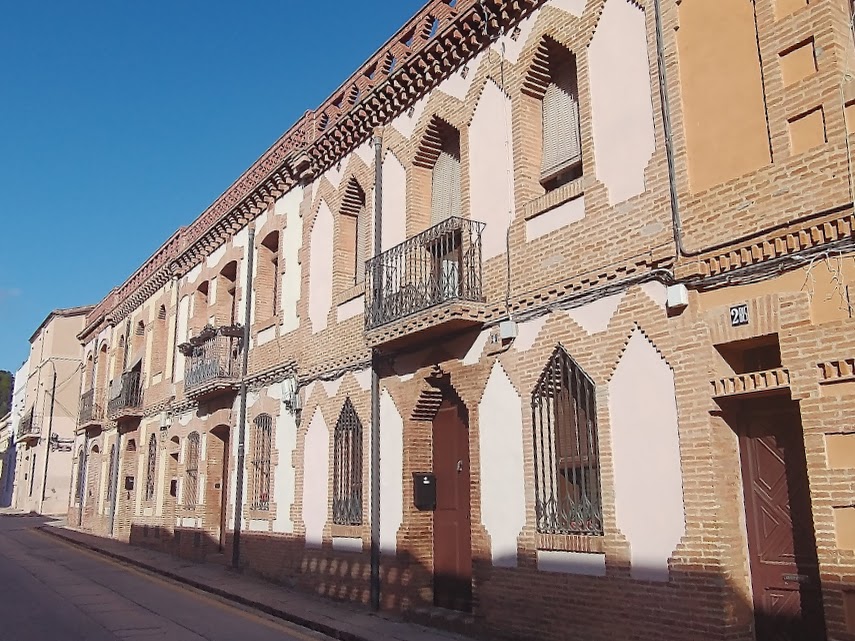
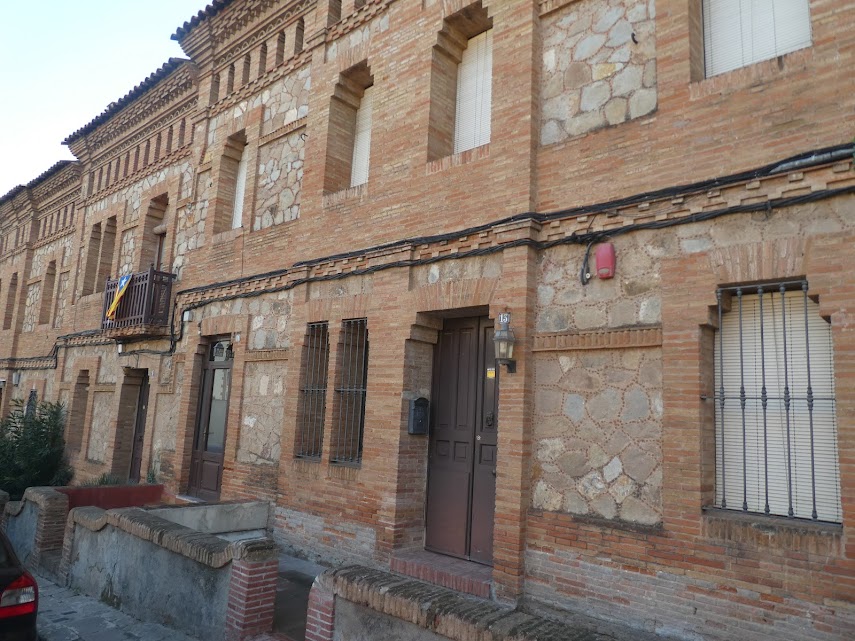
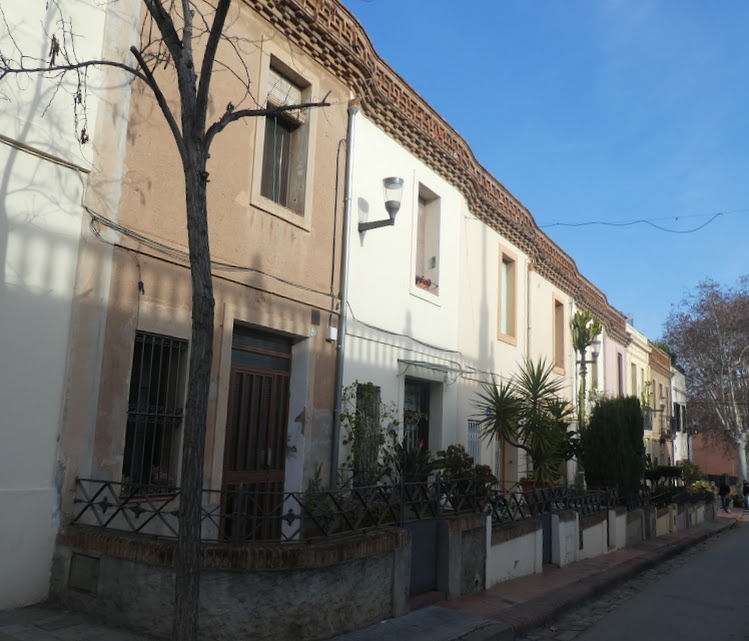
So we were interested to visit Colonia Güell when we found out about it. It’s a similar set up in a manufacturing area, Santa Coloma de Cervelló, just outside Barcelona. Spain’s industrial revolution came later than ours: but in 1890, industrialist Eusebio Güell realised that if he wanted to attract workers from Barcelona to the factory he was building on his country estate – an essentially rural area – he would have to provide housing. And like his British counterparts, he wanted to do The Right Thing.
Eusebio Güell didn’t just want to have any old housing. He sought out the best architects of the day, disciples of the Modernista movement: the ideas behind Art Nouveau found particularly vibrant expression in Catalonia. More details here.
He provided decent housing for both workers and professionals in spacious streets, the factory itself of course, a theatre, a doctor’s surgery, a school. The school however was for boys only. In many ways it was progressive, teaching foreign languages as well as the three Rs. But girls had to make do with being taught embroidery and other manual skills that would make them dextrous with machinery when they went to work later on. Nuns at the convent taught them, and also provided a nursery so that mothers could return to work soon after they had given birth.
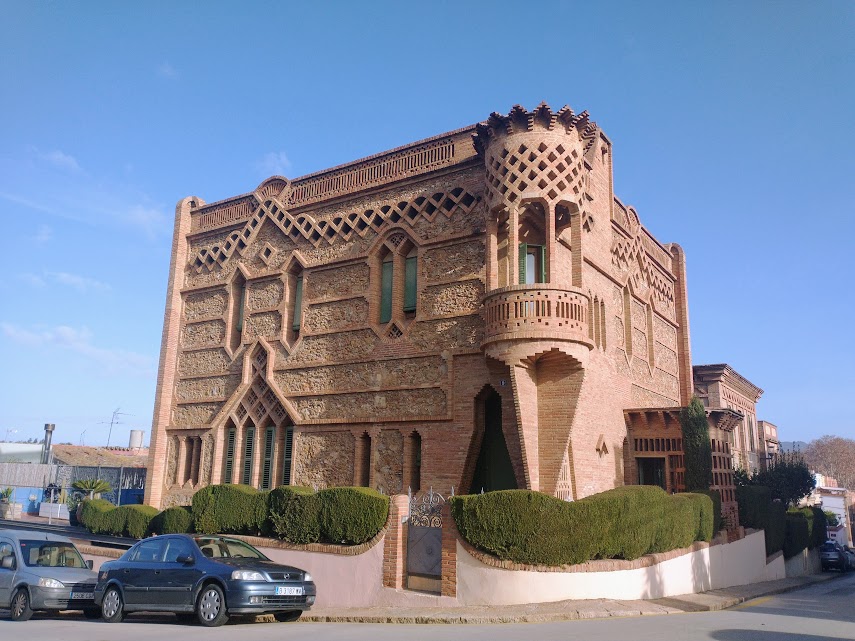
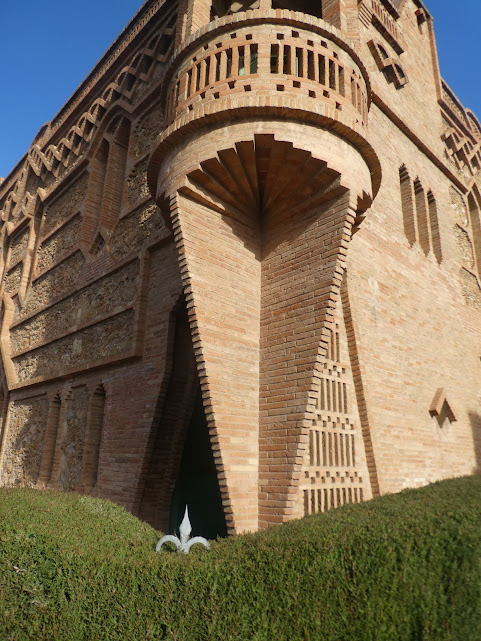
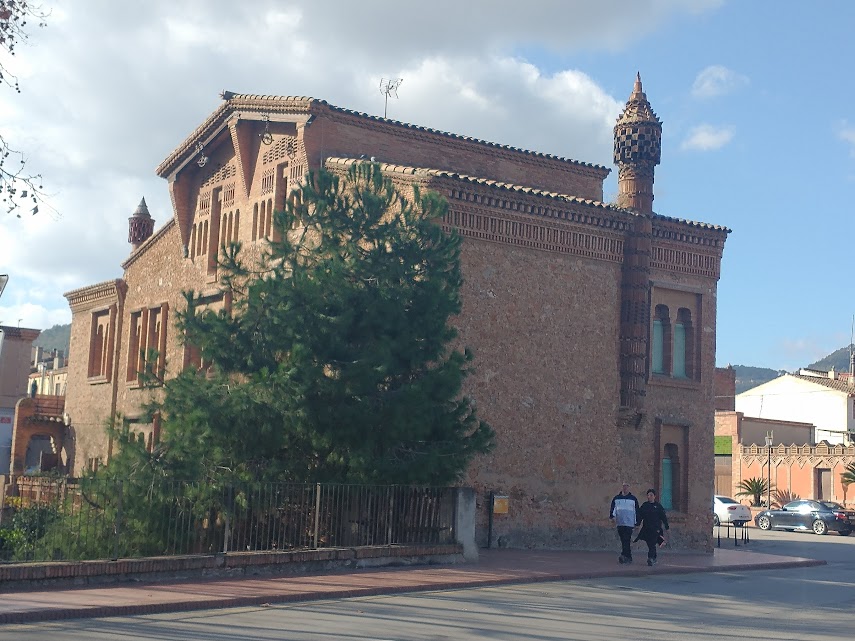
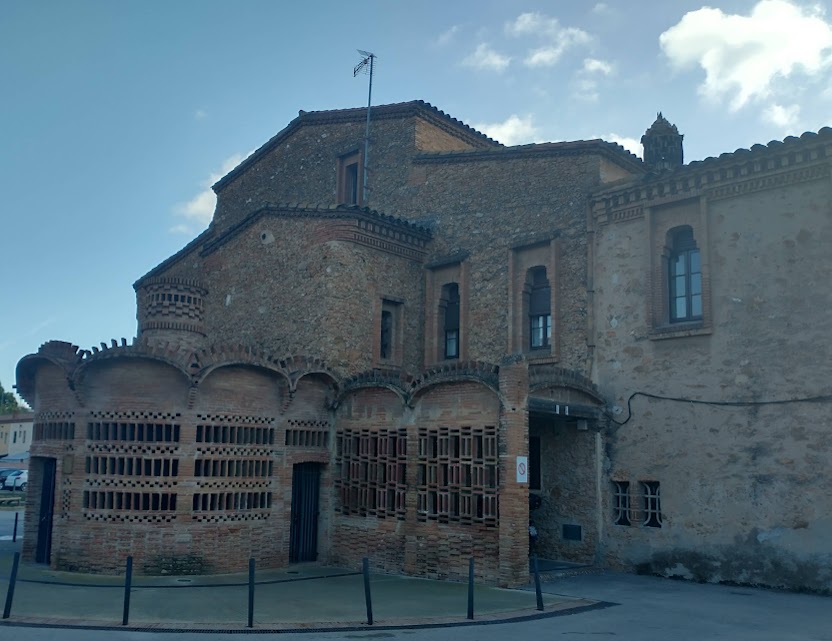
Ca l’Espinal, the Factory Manager’s HouseA detail from Ca l’EspinalThe schoolhouse, linked by an aerial tunnel to the schoolmaster’s quartersCa Ordal: three farming families lived here, supplying much of the fresh food needed in the community
Of course there was a church. And in 1898 Eusebio Güell commissioned the young Antonio Gaudí to design and build it. Had it been finished, this church would have been as ambitious a project as Gaudí ‘s still not quite finished Sagrada Familia. Two naves, lower and upper! Towers! A central 40 foot dome!
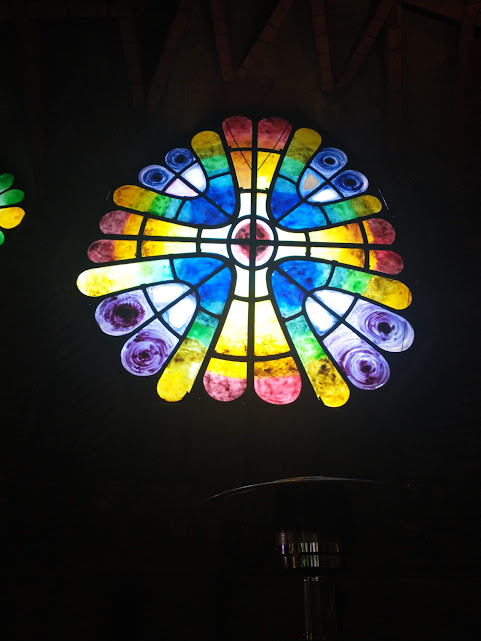
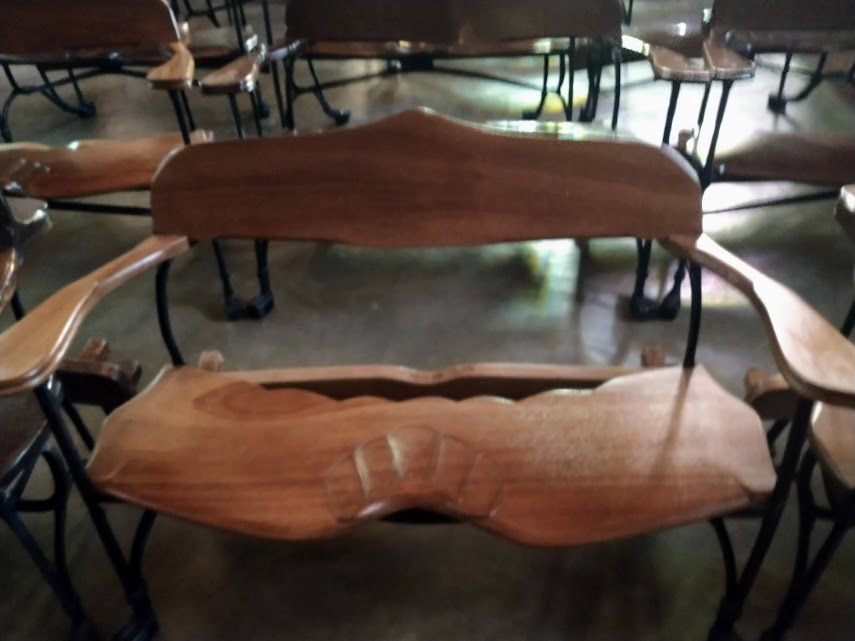
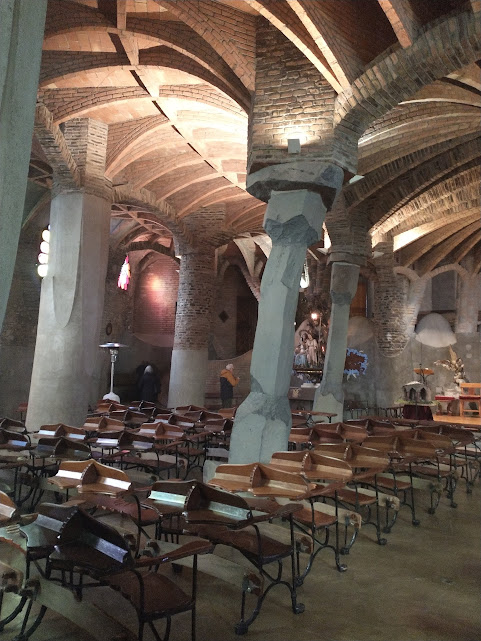
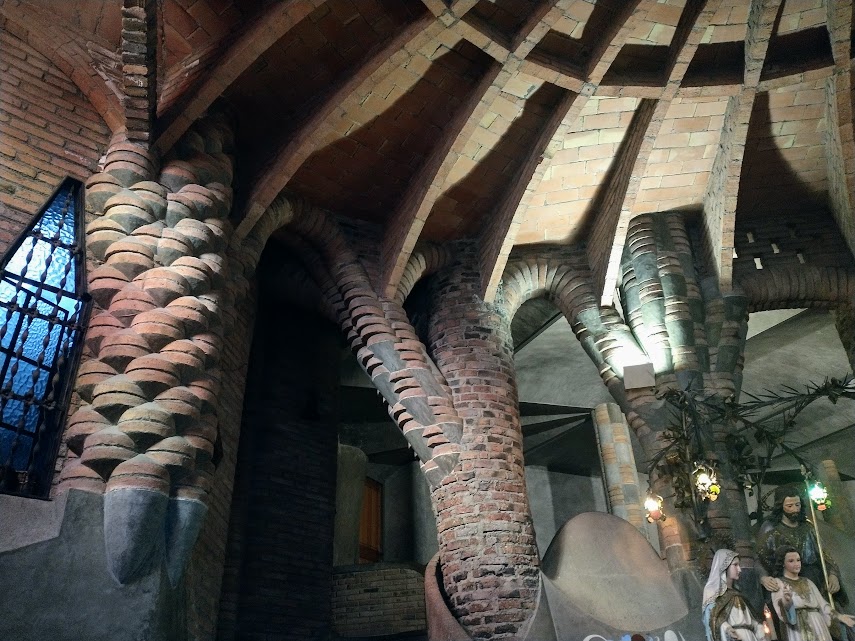
The building was begun, but in 1914 the Güell family decided to stop funding the project and Gaudí turned his back on it with only the lower nave completed, now known as the crypt. It was consecrated in 1915. I found it difficult to photograph, but here is a miscellany of shots from the inside and outside of an astonishing building.
During the Spanish Civil War, the mill was collectivised and run by its workers. After the war it was sold back to the Güell family, who sold it on again. Its days were numbered. The textile industry in Europe was collapsing and the factory ceased production in 1973. The factory itself was sold off piecemeal, and the houses to their residents. The settlement was in danger of losing its identity. But in 1990 the Colonia Güell was declared a ‘Heritage of Cultural Interest’ by the Spanish government and the protection of some of its most relevant buildings was established. Nowadays it’s an ordinary working community with an extraordinary history.
We enjoyed walking round and exploring. Sadly, we couldn’t see the factory. On Sunday its current many and various component businesses are shut, the gate to the site barred.
It’s not the easiest place to reach from Barcelona without a car, and as these things are apt to change, I won’t include public transport options. But we’re so glad to have visited, and will go again.






















 From Pyrenees to Pennines
You must be logged in to post a comment.