The cops and robbers of Barcelona

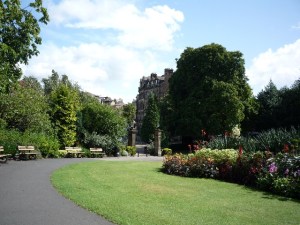
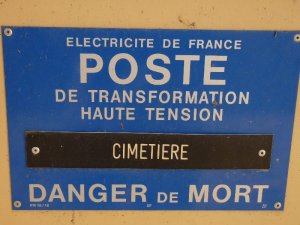
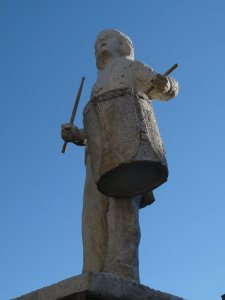
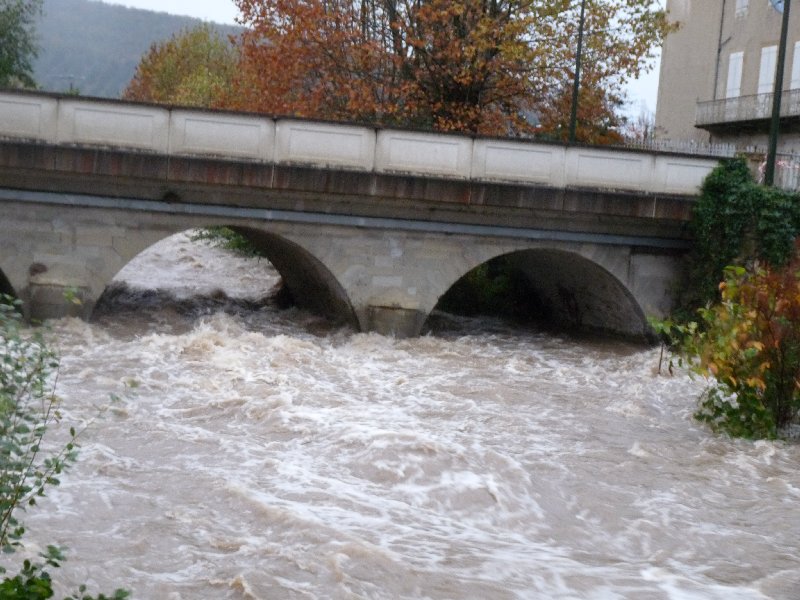
Christmas in Barcelona.  A perfect way to celebrate.  Son and daughter-in-law were there too, and we all stayed in Emily’s flat, since her flatmates had gone away.  Perfect times for us don’t make for interesting reading for others: the balmy weather, meandering round the endlessly fascinating streets as desultory sight-seers, coffee stops at the outside tables of bars in picturesque squares, shopping at temptingly- stocked shops and market stalls in the cosmopolitan quarter which is Emily’s home, eating out or sharing tapas at simple neighbourhood restaurants….  Here’s the story in pictures.

So something had to come along and spoil it.

The car and Barcelona don’t go well together. Even driving in and out of the ill-signposted city is something we always dread.  With a superb and cheap public transport system, we’d have liked to have left the car at home, but it was stuffed with extra bedding, presents, bits and bobs Emily needed from home, so when we arrived, we unloaded and then took it off to park elsewhere for the duration, since she lives on a square with little parking.  She’d taken advice, and suggested a quiet nearby corner of town where a Spanish friend said it would be safe and out of the way.  Once there, we checked, and checked again that there were no restrictions.  One morning, we popped up and checked yet again.  All was well, so we left it until we were packing to go….. walked to the street where we’d left it…… No car.

Stolen!  Panic! What to do next?  Contact our insurers, see if we could sort out one-way car hire between Spain and France?  Would insurance pay? What about replacing the car, which we’d newly and expensively fitted out with snow tyres?  How could we possibly afford that? Emily rang the police, who promised to call back once they’d made enquiries.  After a couple of hours to-ing and fro-ing, we learnt that the car wasn’t stolen, but had been towed away because of parking infringements.  There should have been a notice stuck on the road where the car had been, telling us what had happened: but there was nothing there. We’d need to go in person to the Police.  There are three sorts here: those belonging to Barcelona itself, local Spanish police, and the national service.  We went to see the Barcelona lot, a 20 minute walk away.  Eventually they tracked our car down – thank goodness for Emily’s command of Spanish – to the Spanish police’s car pound at the last stop on the metro line.  If we went with ID and 239 Euros, we could have out car back……

Walk to metro.  Impatiently sit out long journey.  Emily spends time texting Spanish friends.  They’ve all had similar experiences: ‘It’s to try to fill the city’s empty coffers’, they explain. Track down car pound.  Join disgruntled queue of fellow-sufferers. Pay up.  No choice.  Receive form on which to write our grounds for appeal. Try to make our way back to Emily’s from a completely unknown part of town – we get good at buying time by circling roundabouts twice.  All the time fuming at the loss of precious hours with Tom and Sarah on our last day together.

Heigh ho.  Even run-ins with the Police however, can’t take away our memories of a wonderful Christmas break.

Bugarach: ‘Doomsday Destination’

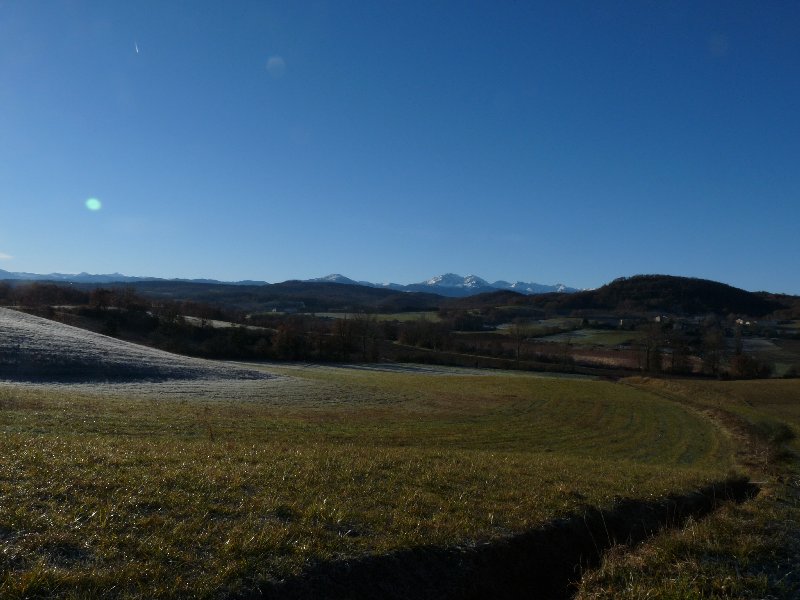
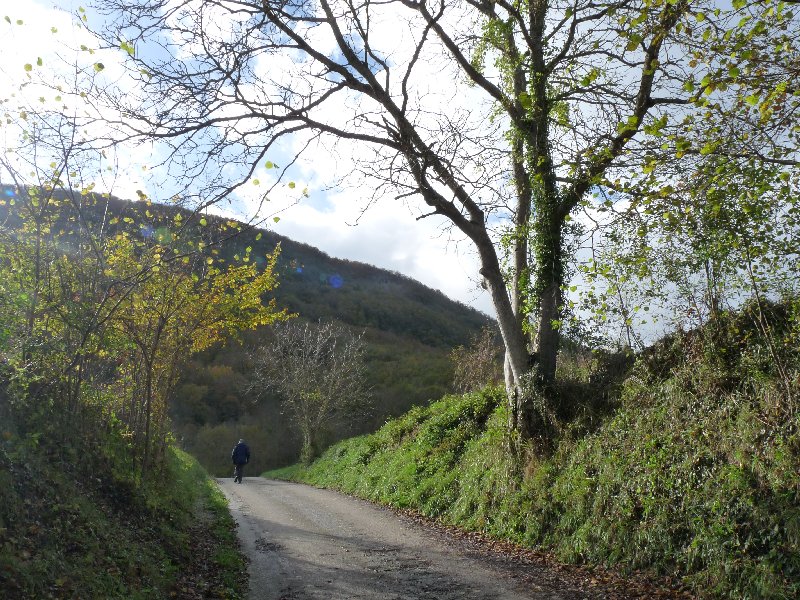
Cold.  Pale thin fog baffles the contours of the hillsides, and those of the distant castle at Coustassa.  Glimmering frost bristles the short maquis grass beneath our feet.  A watered lemony sun high above us attempts to burn winter away, and eventually does so.

That’s when we have our first view of Bugarach, the imposing thick-set mountain which dominates this part of the Aude, because it stands alone, rather than as part of a range, and today is pretty much thatched in snow.

Bugarach has been in the news for a while.  Here’s BBC’s ‘From our Own correspondent’ back in July 2011:

‘According to an ancient Mayan calendar, at some point towards the end of 2012, the world will come to an end.

It is not clear how that will happen, but apparently humanity does not stand a chance – except for those who seek shelter in the area surrounding Bugarach.

Just 200 people live there all year round, but doomsday believers and spiritual groups are convinced the village has magical powers, thanks to the local mountain – the Pic de Bugarach.

For years, rumours have circulated on the internet that extra-terrestrials live in the mountain, and come the apocalypse, the top will open and they will emerge with spaceships, and rescue the local inhabitants.’

Although it’s quite hard to entertain the idea that the mountain might be some sort of underground UFO car park, there are plenty of people who have done so, and with great fervour.  Here’s today’s Daily Mail, which has been talking to Jean-Pierre Delord, Mayor of the tiny village of Bugarach (pop. 176).

‘On Wednesday, he will close the village for five days to anyone who doesn’t live here or isn’t already booked to stay, and draft in hundreds of police, military, firemen and Red Cross to ban any gatherings, shut off the mountain and arrest anyone silly enough to try flying over it.

‘What if tens of thousands of people turn up?’ he says, throwing his arms up in the air. ‘I have no way of knowing what will happen. I have no crystal ball! I don’t care if people want to chant naked or talk to the trees, but I have to protect my villagers. I am responsible for them.’’

He’s not over-reacting.  Local house-owners have been able to rent out their homes for the period in question for astronomical prices, and even camping spots are going for 400 euros a night.  For most locals though, the whole thing is at best a nuisance, at worst a real headache.  The nearer we get to December 21st, the more people descend on the area, and the police and army are already involved in keeping order.

We enjoyed our views of Bugarach, as ever.  We spent time pretending to look for UFOs and generally mocking the New-Agers who are so convinced by the end of the world as we know it.  Then we got on with the business of enjoying our walk in the here-and-now.  Here are some photos of our day.

Christmas on the High Street

Verzeille&decoDec2012 033It was 5 years ago when we were first in Laroque round about Christmas time.  There were no signs of its coming until well into December, and we thought it wonderful: no decorations, no adverts, merchandise or muzak,  just a bustle of festive activity from about two or three weeks beforehand.

The first signs, as in England, were in the shops.  Unlike England however, most shopkeepers didn’t usually buy tinsel, baubles, and several packs of cotton wool to introduce a Christmas theme into their window display.  Instead they had a seasonal design applied directly to the window.  We once saw a scene-painter busily decorating a local window, and wondered what he did the rest of the year.  Shops in small town high streets like Laroque’s would all be unified by being the same but different.  The same folksy interpretations of Christmas motifs, the same limited palettes of white, red, greens and yellows.  Some would choose scenes of reindeer amongst the Christmas tree forests, others Father Christmas,  snowmen, or radiant candles.

Garage in Laroque
Garage in Laroque

Five years on, hardly any shopkeepers are keeping up this tradition.  They’re decorating their shops, but in their own way: dressing up their window display with baubles, snowflakes and Santa Claus figures.  They’re nicely done too, but I miss the particularly French idea, which I’ve seen nowhere else.

Here are the few traditional window scenes I’ve been able to find this year.  Maybe next year even these will be part of the past.

A baker's shop in Laroque
A baker’s shop in Laroque

Bodge-it-yourself

We’ve been up in the atelier today, making the workshop part of it frost-free for winter.  Because the roof will HAVE to come off next year – it really leaks quite seriously – there is no point in doing a tremendously fine job at the moment.  Cobbling something together from odds and ends is the order of the day.

Now this is fine by me, less fine by Malcolm.  In the DIY department, we are an extremely ill-assorted couple.  Malcolm has a fine selection of tools,which he keeps neatly organised, clean, sharp and  ready for action.  I have only the haziest notion of DIY skills, and am prone to use broken knives as screwdrivers.  The only time I went in for any serious sawing, more than 18 months ago now, I made such a bad job of it that I permanently damaged my shoulder.  I’m as keen on DIY as Malcolm is on cooking.

This leads to conflict.  Increasingly, I feel obliged to help – well, it’s my house as much as Malcolm’s.  The poor man is up against someone who simply has no instinct for the task in hand.  Holding steady something to be sawed, I’ll grip the wrong end of the plank.  Asked for a hammer, I’ll produce a mallet.  I yawn.  I clock-watch. I fidget.  I don’t notice when I could be fetching and carrying, and that is indeed as much as I’m fit for.  I make a mess of the simplest tasks: I confuse screws with nails and can’t remember where I put the drill bits.

Poor man.  He enjoys what he does on the whole, and is usually entitled to feel real satisfaction in a job well done.  If only he had a keen apprentice, rather then the moody and reluctant Work Experience type he ended up with, he’d get on so much faster, and we could all knock off in time for tea.

Don't even ask what's going on here.  You get the picture.  There's A LOT to do in the atelier
Don’t even ask what’s going on here. You get the picture. There’s A LOT to do in the atelier

If Heath Robinson* only knew

Over in a tiny village in the Couserans today for a huge lunch – Azinat – with friends, we came across this sight:

It’s an alambic – well two alambics actually.  We knew that, because we’ve seen plenty of these historic pieces of machinery on display in villages throughout the area.  We even know what they’re for: every autumn, villagers still look forward to the annual visit of the alambic man whom they pay to transform the juices from their apples, plums or whatever into the most potent hooch you can imagine: up to 50% proof.  These alambics  showed signs of having been recently used: the tractor next to them still had its engine running.

We retired to our restaurant for lunch.

Three and a half hours later, the meal over, we sauntered over to where we’d spotted the alambics: huge copper contraptions encased in a battered wooden frame.  They were functioning!  Three large rubicund men, the types you can meet in the countryside anywhere, any country, were supervising hooch production, and were very happy to explain everything.

Checking everything’s fine

Well, I can’t be sure I’ve got this right.  It’s something like this though.

A fire under the first cylinder heats the juices that are poured into it.

The all-important fire. Note the wheels on which the machine originally travelled

The resultant steam is forced up through pipes, which are cooled by water.  The vapour condenses into alcoholic liquid.  That doesn’t sound quite right to me: I never was any good at science.

Copper lid – parked for the moment.

Anyway, it’s the result that counts.  We met a Dutch couple who’d brought along their plum juice to be processed.  135 litres of juice.  And their eau de vie was now almost ready for them to pay for and take away.  Their 135 litres had become …. 10 litres.

Here’s the hooch

They didn’t yet know what they were going to be charged.  But they had been told they’d have to fill in a lengthy document for the tax office, and pay a suitable levy for this astonishingly potent product.  We know for a fact it’s strong stuff.  There were the dregs in a large plastic container.  They invited us all to dip a finger in and taste it.  We did.  And I promise you – just licking a fingerful probably put us over the limit.

We felt as if we’d witnessed a real piece of history.  When these men retire, are there young people around who will follow in their footsteps?

This alambic’s probably good for very many more years

* And if you don’t know Heath Robinson, click the link

‘Let them eat cake’

Back in the UK, I hear everyone’s gone baking mad, that the entire nation was glued to its screens to watch the final of  ‘The Great British Bake-off’.  Here in France, it’s the one branch of cookery in which the average French person will allow the average Brit some supremacy.

The French are rightly proud of their high-end patisserie, the delectable tarts and gâteaux which traditionally come to the table at the end of a family celebration or Sunday lunch: from the baker’s naturally, no shame in that.

More day-to-day baking is a different matter, however.  Plainish cakes, loaf-shaped and known in France as ‘cake’, are a big disappointment, especially if they’re from the supermarket.  I find them over-dry, over-sugared, too strongly flavoured with something, such as vanilla, that should be a subtle undertone.  I never thought I’d find myself saying this, but even cakes available in any old British supermarket can be quite a treat in comparison.

McVitie’s Jamaican ginger cake, for example, dark and sticky, is just the thing with a hot cuppa after a brisk country walk in winter: it even has its own website.  And while I’m not sure that Mr. Kipling makes exceedingly good cakes, they’re – well – not too bad.

No wonder then, that when we run our cookery workshops at Découvertes Terres Lointaines, and announce that we’ll be turning our hands to British tea-time treats, the group is immediately oversubscribed .  Scones, coffee and walnut cake and a nice of cup of tea anyone?

Supermarket scene in France

The Orange Man

Winter has arrived.  How do I know?  Although the nights are cold, the afternoons are still for going walking or tidying up the garden wearing a tee-shirt, beneath a duck-egg blue sky. So until the other day, I thought we were clinging on to autumn.

But on Thursday, the Orange Man arrived.  This is exciting enough news for it to be worth phoning a friend.  Every year, once winter kicks in and the orange harvest is well under way in southern Spain, a huge container lorry arrives in Lavelanet. It parks up at a disused petrol station on the main road into town and becomes an impromptu shop.

The man with the lorry, the Orange Man,  speaks only Spanish, and sells only oranges.  Not singly or by the half-dozen, but in large 10 kilo boxes.  10 kilos, 10 euros.  What a bargain.  These oranges, though sometimes a little knobbly and in irregular sizes, are the juiciest and tastiest you’ll ever eat, and it’s no wonder that whenever you pass, you’ll see someone pulling up their car and opening the boot for a case or two.  Our Spanish friend won’t have to stay long.  In a few days the entire container-load will be sold, he’ll return to Spain …. only to return when he’s loaded up again.

When he departs for the last time at the end of the season, we’ll know for sure that spring has arrived.

PS.  Very topically, Hugh Fearnley-Whittingstall takes oranges as his subject in today’s cookery column in the Guardian

Our day out with John Rylands

Before we came back to France at the weekend, I wanted a day in Manchester, where I was at University more than 40 years ago.  It was a city people at that time seemed to love or hate.  I loved it then, and I still do.  It’s buzzy and busy, with galleries, music, shops, and a bravura display of civic Victorian architecture down every city centre street.

Outside John Rylands library

I had a particular memory I wanted to share with Malcolm.  The John Rylands Library.  I used to go there to write an essay or prepare for a seminar on those days when I wanted to pretend to some kind of scholarship that in truth was never part of my make-up.  The building was a celebration of Victorian Gothic architecture at its finest, with wonderful plaster tracery on the walls, splendid fan-vaulted ceilings, and shelf after shelf of ancient leather-bound books.  Seated in some darkened alcove, surrounded by the particular smell of the place – beeswax polish mixed with dusty books, I would work away for an hour or two, convincing myself, if nobody else, that I was getting down to the serious matter of studying in an industrious and creative manner.  Few other people would be there: there were no distractions other than the quiet beauty of the building itself.  The place was built for scholarship.

The reading room where I pretended to write essays.

It was built in the 1890’s by Enriqueta Rylands in memory of her husband John.  Although his origins were humble, he became Manchester’s first multi-millionaire, making his fortune in the textile industry as a cotton manufacturer.  At first, the library collection was modest, but over the years, has come to hold works of world-class importance: everything from the earliest known New Testament text, on papyrus, to medieval illustrated manuscripts, a Gutenberg bible, and the personal papers of the likes of Elizabeth Gaskell.

One of dozens of different fantastical creatures forming the roof bosses

I’m not qualified to comment on the early air conditioning systems, or the electricity originally generated on site.  I simply enjoy the richly patterned stained glass, the sumptuous woodwork, the dragons encircling ceiling bosses, and the sandstones in which the building is constructed, which range from soft pink to a rich dull red.

An upward glance whilst on a staircase

Back in the ‘60’s, I’d work till I got hungry, thirsty, or both.  Last week, we discovered that these days I’d have no excuse to leave, because there’s a modern extension sensitively joined to the side of the building.  This houses Café Rylands, where we had our lunch, made from locally sourced produce; a bookshop which, though small, presented us with fascinating choices, from architecture and design books to children’s stories; and an almost irresistible gift-shop.  It has an energetic and exciting programme of educational events, and I wished we could have signed up for some of them.

Café Rylands and the book shop

When I was a student in Manchester, the library was little known outside academic circles.  Now it’s a different story.  John Rylands Library has been made  Manchester’s ‘Large Visitor Attraction of the Year’ at the city’s annual tourism awards.  You could spend happy hours here, exploring the building itself, the exhibits, and making frequent sorties to the coffee shop for a relaxing break and browse through the papers.  And apart from your spending money, it’s all free.

Drop a coin or two into the donation box, and the automaton will go through its paces

The page three ‘Beastie Boys’

The blog I was going to post has been pretty much written for me.  Here’s what we found on page 3 of the Bolton News this morning.

Page three boys

‘THE Beast is back — in a show that promises to be a real family affair.

Twins Alex and Ben Clift, aged seven, and mum Elinor, of Hardcastle Gardens, Bradshaw, are all appearing in a stage version of Disney favourite Beauty And The Beast, which begins its run tonight at the Albert Halls

The budding actors even went up against each other for the same role — Chip Potts the teacup — with Alex landing the part.

Ben will be part of the ensemble, gracing the stage in various roles including a villager and Sugar Lump.

Bolton Premier Productions first performed Beauty And The Beast in 2010.

Mrs Clift, aged 33, who is playing Babette the feather duster, said: “It was hard because they both wanted to go for it.

They were both really good and Ben was so nearly there. At first he was very sad.”

But now both boys, who are pupils at St Maxentius Primary School, are excited about their roles in the classic fairytale which tells the story of Belle and an enchanted prince.

Alex, who is the older than Ben by one minute, said: “I can’t wait to say all my lines correctly and be pushed around the stage in a trolley. I was so sad we couldn’t both be Chip — I know that Ben would have been just as good.”

Ben said: “I’m enjoying the dancing and the singing and can’t wait to get up on stage in front of my friends and family.

“I was disappointed I narrowly missed out on being Chip, but I’m really glad they still wanted me to be in the show.”

Both the boys, who are keen footballers and play for Turton Tigers, decided to audition after their mum appeared in the same show in 2010.

Mrs Clift, who runs a voiceover company with husband, Phil, said: “I was in it last time. They both loved coming to rehearsals with me, and they were only five then. This time, when the auditions came up again they were both really keen to get involved.” ‘

Thanks, Bolton News and reporter Melanie Wallwork.

Well, tonight we’re off to see the show – with all four of them: even Phil, Ellie’s husband, has his part to play.  He voices the ‘Ealth and Safety announcement at the beginning.  No wonder we had to come to England to be part of the audience.