‘Mind the Gap’

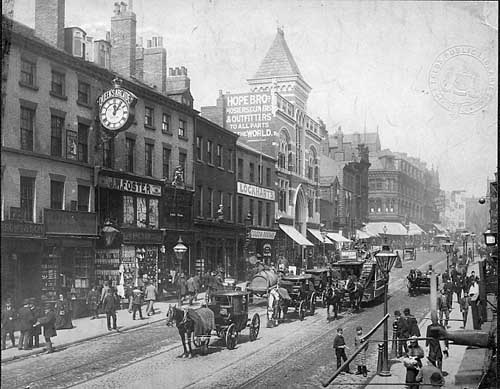
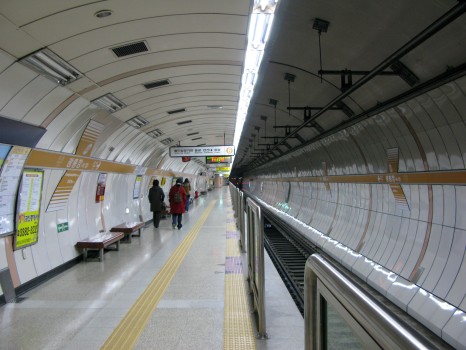
'Mind the gap' (Wikimedia Commons)
‘Mind the gap’ (Wikimedia Commons)

Many of you know already that Phil died on Thursday.  Though the news couldn’t be surprising, somehow the reality is shocking.  We mourned the man we knew and enjoyed spending time with: the family man, a husband, father, grandfather and uncle.  We remembered his wit, his generosity, his Sunday roasts, his techie skills and strongly-held opinions.  We wept.

Knowing that he’d been on regional radio and TV back in the ’70s and ’80s – before we knew him, Malcolm and I thought he’d qualify for a mention in the local press.

I first heard he’d made the national news when fellow-blogger Agnes Ashe told me.  I googled him. Over the next hours, articles from the Guardian, the Independent, the Daily Mail, the Daily Star tumbled into the search engine.  Then Spanish media.  Then sites in Germany, the Netherlands, Italy, even the USA.

And all because this was the man whose voice any visitor to London will know.  The voice that admonishes you to ‘Mind the gap’ as you step from the platform onto the London Underground.

Ten years ago, just as Ellie was giving birth to their twin boys, the couple’s voice-over business won the contract to do a huge number of station announcements for the London Tube, with Phil’s deeper, masculine tones being required for the all-important ‘Mind the Gap’.

Phil followed this up by winning contracts to do similar announcements for South West Trains, the Southern Network and Northern Rail.  As we take the train on journeys through the UK, and in London, we’ll listen out for Ellie’s voice, or Phil’s, and excitedly text our friends when we hear them.  In the early days, when it was all very new, I accosted a porter on Wimbledon Station on hearing Phil’s voice announcing the arrival of the next train. ‘That’s my son-in-law, that is’.

So though he was never spotted in any visits to London or as he travelled round the country, his voice was known by millions.  That’s why he made the cut in the BBC Radio 4 and TV national news, and on BBC One’s North West programme yesterday, as well as further afield.

And just for a while, I found that my pride in his achievements, and the knowledge that his work would live on as a memorial for Ellie and the boys cut through the grief and brought a smile to my face.

Finally, for a bit of fun, here’s why Ellie and Phil are sometimes dubbed ‘Britain’s most apologetic couple

You’ve seen a picture of Phil in a previous post.  And as he’s known for being in a certain sense unknown, I thought this image of Ellie and Phil, take from their website, would be appropriate.sayer hamilton


Irritatingly, both German and Dutch reports use video of the only station in London, Embankment, that does not use Phil’s voice to advise people to ‘Mind the gap’.  This is in deference to the widow of the previous ‘voice’ who regularly uses this station.

Brian and Betsy

Even though these last few days have left us feeling bleak and helpless, with time passing so quickly, yet so slowly, there have been good moments.  You might expect two dogs to be behind one or two of them.

Here’s Ellie, Phil and the twins’ dog Brian letting off steam with his best friend Betsy. Luckily for them, Betsy’s owners are among Phil and Ellie’s best friends too.  So there are lots of playtimes for these two energetic dogs to look forward to.

Phil is still being cared for at home during his final days.

The one and only Phil Sayer

Phil, Ellie, Ben and Alex - a recent photo.
Phil, Ellie, Ben and Alex – a recent photo.

This seems the time to come clean about what’s really happening in our lives.

My son-in-law Phil – the husband of my daughter, and father of those twin boys – has been given only days – at most a week or two, to live.  He’s never had much of a mention on this blog and it’s tough that this is how he’s introduced to you.

We hadn’t been back in England long when he was diagnosed with cancer.  With a mixture of surgery, treatment, chemotherapy and sheer bloody-mindedness he kept it more or less at bay, though never defeated it.  Suddenly last week, cancer took over, irrevocably.

He and my daughter have – or had till yesterday – a respected and successful voice-over business, which they’ve temporarily closed with immediate effect, though my daughter will relaunch it.

There’s plenty to say about Phil and his life and times.  But not today.  Ellie has said it all so much better than me, on Facebook.Capture.JPGB

Capture.JPGC

Project Exhaust-a-twin at Easter

Easter holidays.  Time to have those ten-years-old grandsons over.  Time to keep them so busy they don’t have a chance to realise that ours is not a home stuffed with devices.  Not a smart phone in sight.

Let’s get them back to the past straight away, even before we get them back to our house.  Are they too old for an Easter Bunny hunt at Fountains Abbey?  Apparently not.  Not when there’s a chocolate bunny to eat at the end.  Are they too cool for egg and spoon races and egg-rolling down the hill?  Apparently not.


Would they like to visit ‘Forbidden Corner’?  They agreed they would, even though we failed to provide a description of what to expect.  We couldn’t.  It’s been described as ‘The Strangest Place in the World’.  Perhaps it is.  It’s a folly.  It’s a fantastical collection of follies.  It’s woodlands, walled gardens, mazes, tunnels, grottoes, built in the manner of a topsy-turvy collection of fairy tale castles in enchanted grounds.   Every stone putto is liable to pee on you as you walk past.  Every passage is too narrow, too low, too dark, and may lead nowhere.  You just want to try to get along it anyway, because at the end there may be another secret door, with halls of mirrors, or ever-changing fountains, or grotesque stone gremlins, or stepping-stones ….  And beyond, in every direction, the glorious countryside of North Yorkshire.


Next day, off to Brimham Rocks.  No child can resist the opportunity to climb and jump among these extraordinary tottering towers of balanced rock formations.  A visit there is a regular fixture for Alex and Ben.


And finally – yet more rocks.  Underground this time.  Stump Cross Caverns: limestone caves set about with stalactites and stalagmites, tinted in all kinds of shades from the iron and lead seams that also penetrate the area.  Gloomy, dark and mysterious, and guaranteed to fire the imagination.  Photographs courtesy of Ben.


In the evenings we sat round the kitchen table and played board games.  The London Game brought out everybody’s inner mean streak as we blocked other players in, or despatched them to the end of the line at Wembley Central.  Stone Soup gave us the opportunity to lie and lie again in an effort to get rid of all our cards.  All very satisfactory. A good time was had by all.

But Granny and Grandad would quite like a rest now.  Please.


Weaving for pleasure

Last Thursday, I learnt to weave.  Not a splendid rug with intricate and richly coloured motifs.  Not a cosy scarf in soft heathery colours in subtle, muted stripes.  Not even a simple table mat, plain but serviceable.

No, I wove a ….. er, thing.  A ‘thing’ I have yet to find a use for (Mobile phone mat? Drugget for a pet mouse?). But I thoroughly enjoyed myself.  I rather resented the fact that because I was on a course, I was time-limited, and had to finish and tidy up just as I was getting into my stride.

weave

This course, you might guess, was at Fountains Abbey, where I’ve volunteered to be part of a new project.  The idea is to open up Swanley Grange, once an abbey farm (since 1358 in fact) but in more recent years the Education building.

The aim is to create the ‘feel’ of a monastic farm space as visitors enter the sheep-field/grange area and to help them make connections between the grange network and the abbey. Until now, there’s been little to highlight the importance of the wool trade to the expansion of the abbey.

Over winter, the building has been redeveloped inside, and outside there have been very exciting happenings.  There’s a ‘mediaeval style’ vegetable garden, just waiting to be planted up with mediaeval-style vegetables (kale, beans, leeks, that sort of thing.  Potatoes, courgettes and tomatoes need not apply).  Traditional cleft fencing will enclose a flock of sheep, just like the old days, and there’ll be chickens, and bees in mediaeval-style skeps.

Beekeeping, tacuinum sanitatis casanatensis (14th century) (Wikimedia commons)
Beekeeping, tacuinum sanitatis casanatensis (14th century) (Wikimedia Commons)

The volunteers will be keeping an eye on the animals, and with the help of the gardeners, maintaining the vegetable plots.  Most of us who’ve volunteered feel quite comfortable with that.  But most of us who’ve volunteered are less comfortable with mediaeval crafts.

Spinning with a distaff....
Spinning with a distaff….

So the other day we learnt to spin wool, first of all using a distaff, then a spinning wheel.  I don’t think I’ve found a new hobby.  Teasing out the raw, though washed wool, keeping the distaff turning, turning, to twist the wool into a useable fine thread seemed frustrating and, frankly, dull.  It was work that women did constantly, even when minding the children, walking, talking, working.  But you can find blogs written by those who enjoy it, even now it’s no longer an economic necessity.  The greater mechanisation of spinning seemed less tedious, but quite tricky, all the same.

... and with a spinning wheel.
… and with a spinning wheel.
A spot of carding.
A spot of carding.

We did a spot of carding, combing out wool into parallel, useable fibres ready for that all important spinning.  Even that was hard going, and we were glad to break for lunch.

And after lunch, there they were.  A collection of small table looms, the warp already prepared so we could get busy with the weft.  If you don’t know what I’m talking about, look here.

And we got busy. We learnt to like the rhythmic back-and-forth as we pushed our wool-laden shuttles through the warp threads.  I felt the need to get above myself, and try something just a little more complex.  Here it is.

A mini-masterpiece? Or an adequate first attempt ?

But if I could produce that in not much more than half an hour, who knows what weaving genius is within me, trying to get out?

This post is dedicated to blogging friend Kerry, writer of Love those ‘Hands at Home’, who inspires me with her love of textiles, of learning new things, and of life.


A history mystery

Acting the facts (Pad Dawson)

When teachers bring parties of children to Fountains Abbey, we often tog them all up in monastic robes, and explore the site with them .We want them to get a feel of the day-to-day life of a mediaeval monk. What? Prayers eight times a day? No underclothes? No talking? No heating? They’re impressed, in a horrified kind of way.

Then they go away, with only brief notions of the story the Abbey itself has to tell. Or why the place is a roofless ruin.

Until this year. Now they can come with their teachers and ‘Act the Facts’. They’re given props – perhaps a simple cape, a feathered cap, a woollen robe, a crown . These turn them into an early monk, a master mason, an Italian wool merchant, a dastardly baron, or even Henry VIII.

They have a script. It’s a melodramatic pastiche telling the Abbey’s turbulent history. Simple God-fearing beginnings, then powerful prosperity, then war, plague and corruption all leading to the final action. Henry VIII dissolves the monasteries.

The question at the beginning of the play is –

Who destroyed the Abbey?’

Acting it out, the children lose their places, stumble over words like ‘Cistercian’ and ‘lavatorium’, and forget which character they’re playing.

Honestly, what’s the point? It’s too complicated. They’re learning nothing.

Then they reach the end. We ask them to line themselves up. Twelfth century characters first, then thirteenth… and so on, through to those who bring the story to an end in 1540. We ask them which century was best.

And that’s when we realise how much they’ve learnt. They talk passionately about the simple piety of the early days set against the laxity of later centuries. They discuss austerity versus comfort. They talk feelingly about the plague, and the reasons for the Dissolution of the Monasteries.

And in telling the story of the Dissolution, they’ve solved the mystery of why Fountains Abbey is a roofless ruin.

Back at school, there’s so much for their teachers to build on. The ruin has brought history to life.

Come and see it for yourselves.  We can’t promise you a feathered cap, or a cardboard crown, but you could join one of the regular tours.  You’ll get a real taste of history as you soak up the special atmosphere of this special site.

(Pad Dawson)
(Pad Dawson)


Finding my Feet

Look, I promise I won’t just reblog my daughter’s blogs from South Korea every time she publishes one. You’re quite capable of ‘following’ her yourselves after all. But I ‘m so excited that her first month there has been such a positive experience. And if everyday life includes ballet yoga on Wednesdays, and kimchi jjigae on any day of the week, it’s worth reading about, I think.

savagearts's avatarSpeaking Konglish

I can’t believe it’s almost been a month since I arrived in South Korea. I expected to be wailing under the covers by this time, sniffling and puffy-eyed because I missed home. Not true in the slightest. These few weeks have been very strange for me…mostly because I don’t feel strange here.

I imagined complete culture shock, foodshock, and oh-God-what-am-I-doing-with-my-life shock. Aside from the latter, which is felt by most people on a regular basis, I have yet to really experience any kind of shock. The language barrier is certainly very real, but it hasn’t been a cause for any kind of trauma (yet), apart from a shouty taxi driver who pretended not to know where I was going. 5 minutes later, we pulled up outside my local metro station – I get the feeling he only pretended not to know so he could drive around the block for that extra 200…

View original post 886 more words

Planning my planting for 2017

AllotmentsBoroughbridgeMarch2016 013

I love allotments.  I love those productive shanty towns that you often see at the side of housing estates, edging railway lines, or just beyond the local sewage works.  I relish the make-do-and-mend of gardeners’ huts fashioned from lengths-of-wood-and-bits-and-bobs, set alongside neat little cabins bought from B&Q.  I enjoy contrasting planting styles.  Here – neat meticulous rows of cabbages, beets, carrots and potatoes: there – less organised plots with discarded tyres serving as planters for courgettes and beans set among a hotchpotch of gooseberry and redcurrant bushes.  I love the camaraderie of the allotment community – the willingness to share hard-earned knowledge, tips, seeds, cuttings, and even muscle-power.  So much more fun that a solitary afternoon battling with weeds.

In Harrogate, I had an allotment.  I was the disorganised type, always running from behind, because work and family life got in the way.  In France, our vegetable garden was too far away to get the attention it deserved.  Here in North Stainley, there are no allotments …..

….. until now.

A few years ago, some villagers decided to initiate an allotment project.  They worked hard, but progress was slow.  Surrounded by countryside, even identifying a suitable site proved difficult.

I heard about the plans and asked to become involved just as the group reached a turning point.  The local landowner has offered to rent out a plot large enough for ten full-sized allotments.  An allotment is ten poles (or rods or perches) large.  That’s the size of a doubles tennis court.  We reckon most people will be happy with a half plot.  Twenty allotments then.

Our allotments-to-be.

So last Saturday we went to look at the land.  It’s a large chunk at the end of a productive field, and it’s currently rather wet, like just about every other field in England.  Promising though.

AllotmentsBoroughbridgeMarch2016 011

Then we went along to neighbouring Boroughbridge, where they’ve had an Allotments Society for the last 6 years or so.  They were friendly and generous with their time.  So much to think about though.  Paying for water to be piped to the site.  Thinking about car-parking and access to individual plots.  Keeping pesky rabbits at bay.  What to do with allotment tenants who grow only weeds.  Establishing a fair rent and knowing what that rent has to pay for.  We’ll be lucky to be up and running for next winter.  There’ll certainly be no planting before 2017…

Six years ago, this was a field as unpromising as ours. There's hope, then.
Six years ago, this was a field as unpromising as ours. There’s hope, then.


The non-newsworthy walk

The story is – there is no story to tell about our walk near East Witton.

EastWitton28Feb2016 006

It was cold, frosty but bright so we stepped out energetically.  The day went on to be warm, breezy and sunny.  There was only one stile to climb over.  The ground was firm and frosty, but neither icy nor muddy.  Nobody slipped or fell over or got injured.

EastWitton28Feb2016 015

The landscape was just right.  The gently undulating farmland of the Yorkshire Dales gave way to moorland whose picturesque bleakness was enhanced by the occasional lonely tree. We’d pause to take in the long-distance views across the Dales.  And as we returned through woodland to East Witton once more, there was a proper English parish church just asking to be photographed.  Nobody was displeased by the views.

EastWitton28Feb2016 032

Our two pauses were ideal.  Mid morning, we had picture-postcard moorland views in front of us, and  the solid protection of a sturdy drystone wall behind.  We ate our lunchtime sandwiches in sheltered bosky woodland, with convenient benches in the form of tree trunks.  Nobody got cold, or wet, or lost their sandwiches.

EastWitton28Feb2016 028

The energetic uphill stretches were all before lunch.  Our path afterwards returned us gently to the valley floor. So we got back to base after a gently-challenging workout.  Nobody was exhausted or fed up.

EastWitton28Feb2016 018

So there’s nothing at all to tell you.

Oh hang on.  This will have to serve as our banner news headline.  ‘Hiker loses gloves on Wensleydale walk’.  That was me.  First one glove vanished, then the other.  But as anyone who knows me will tell you, this is not news at all.  It’s what I do most weeks during the winter.

EastWitton28Feb2016 014