On our way home on the train, this fellow passenger dodged the twilight in favour of a little sleep.
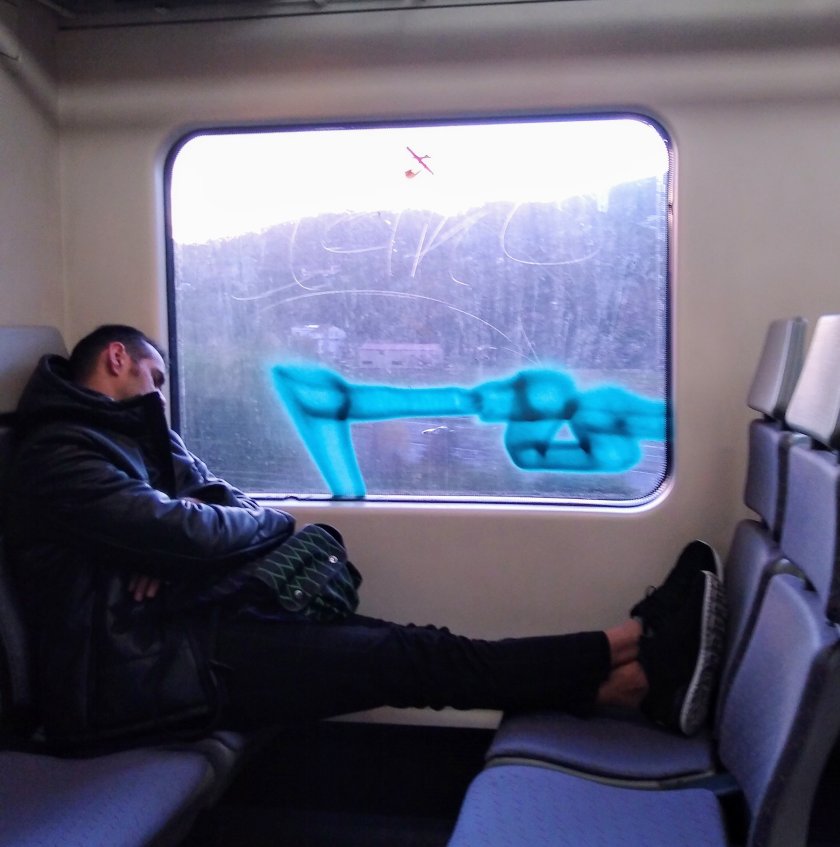
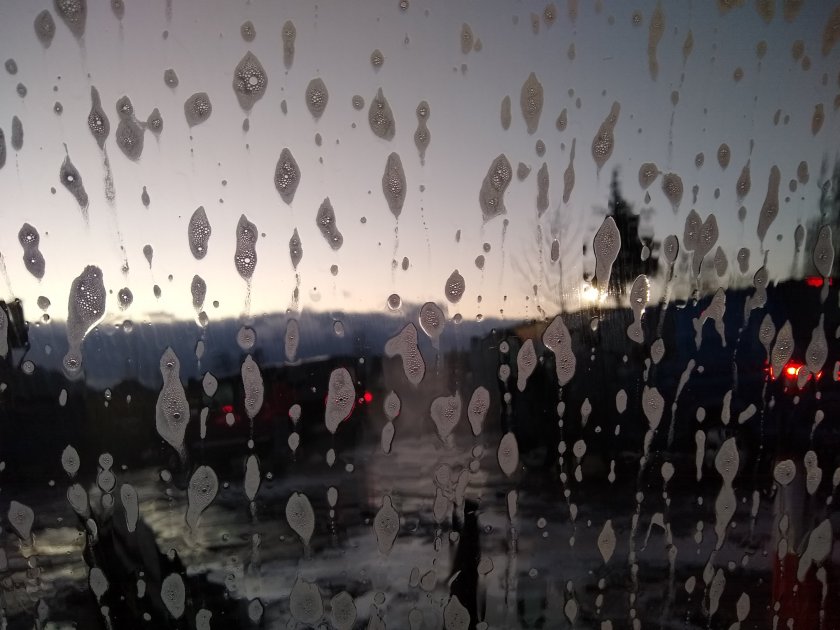
But those windows! What a sight!
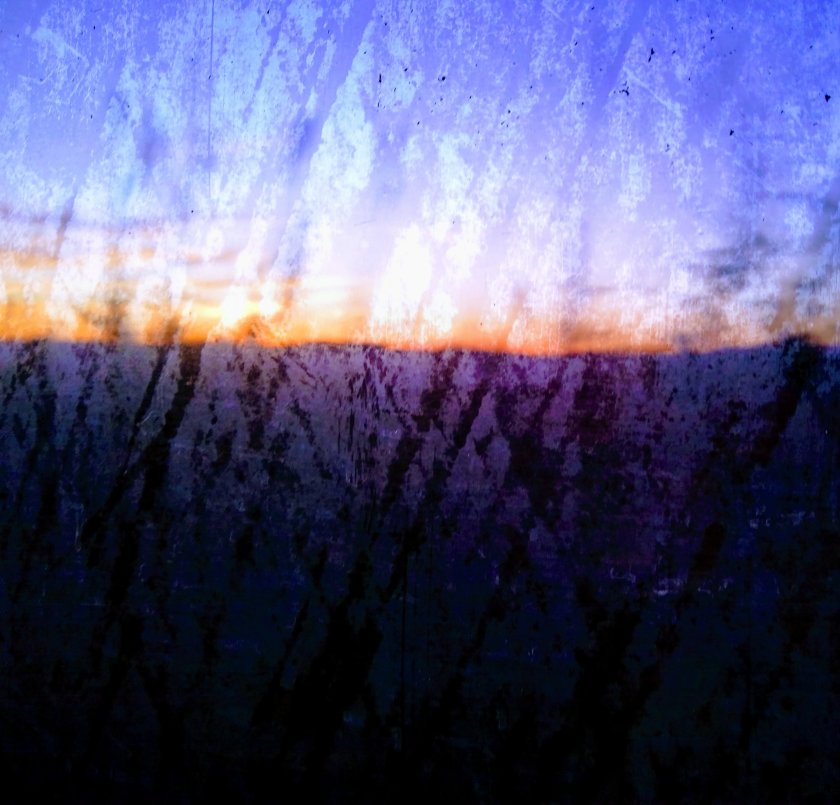
And where were we off to on the train? Watch this space!
On our way home on the train, this fellow passenger dodged the twilight in favour of a little sleep.
But those windows! What a sight!
And where were we off to on the train? Watch this space!
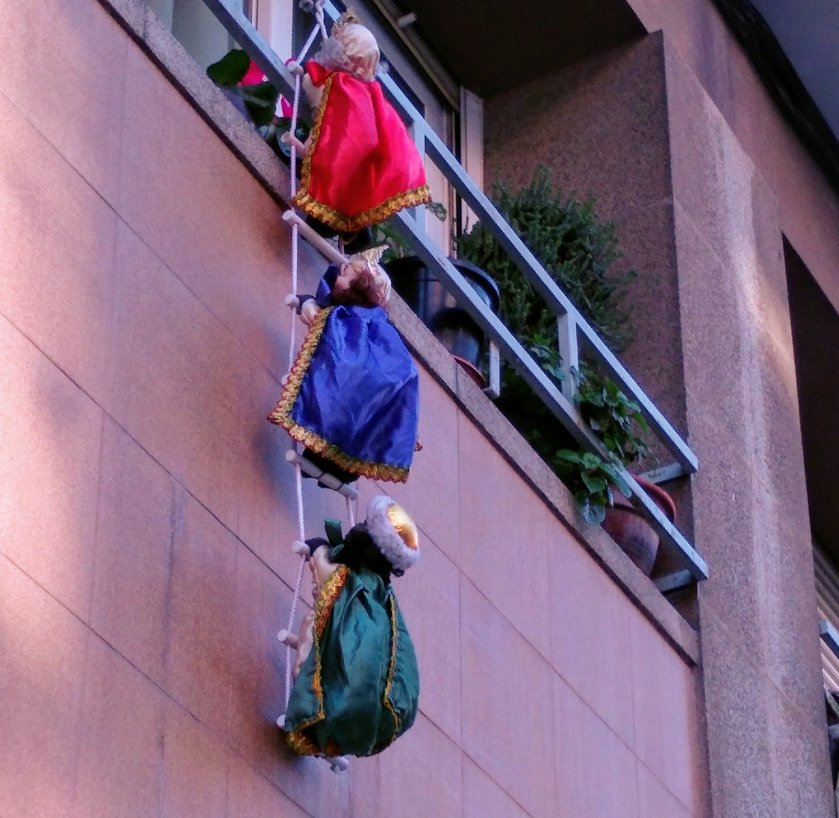
… are out delivering presents to all good children in Barcelona. They’re bringing light and joy. Has to be done by Epiphany, 6th January.
Father Christmas need not apply.
Let’s begin 2020 with positivity, take Becky’s challenge and fill the blogosphere with Light.
I posted some pictures last week of bubbles catching and reflecting the light on the South Bank in London. Here are a few more…..


Oh it’s hard, summing up my year in a few photos. Are these good ones? Or good memories? Or both?
Here’s a miscellany of memories. Yet the high point of my year, the Belated Birthday Celebration hatched by my entire family in Spain in June isn’t recorded here. Those personal snapshots don’t qualify here.


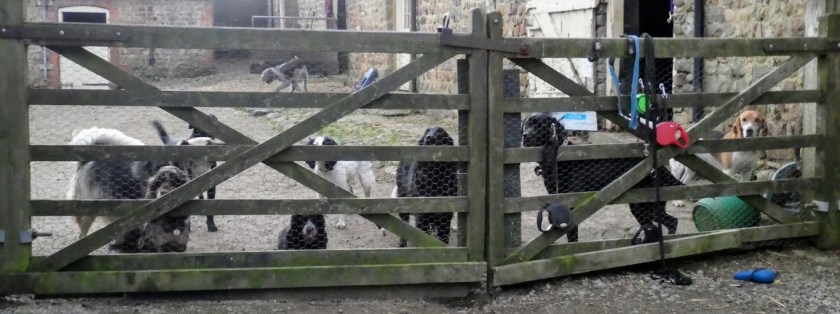
Our good friends Gill and Dave host a mid-winter walk for all their friends after Christmas every year. We’re invited, and we’re never sure why. We’re not known for showing much interest in horses, and we don’t own a dog. As you can see from this shot taken just as we set forth, fortified by bacon sandwiches and coffee, having a dog in tow is pretty much expected.
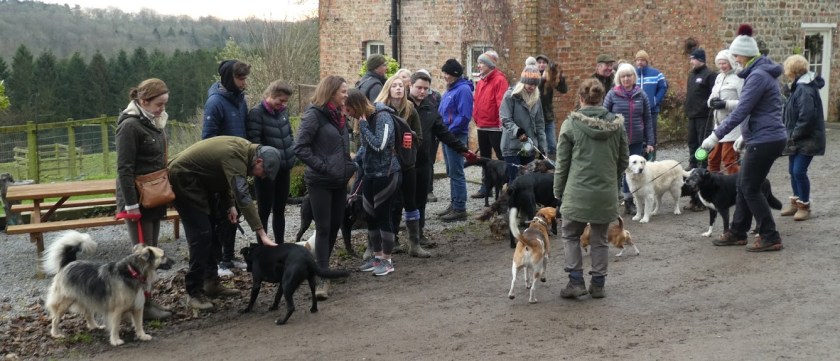
We love this post-Christmas event, and this year I was especially keen. I’ve not been able to go on a decent hike for six months now because of a knee condition, but today was the day to begin to put all that behind me.
So here we all are. Here are the dogs, here is the mud, here are the woods and the local views – understated, pleasant good old rolling English countryside. I’ve deliberately overstated the mud for dramatic effect – it really wasn’t bad at all, and with enjoyable company we didn’t notice it anyway.


Back home with Gill and Dave, we ate and drank, laughed and talked for most of the afternoon.
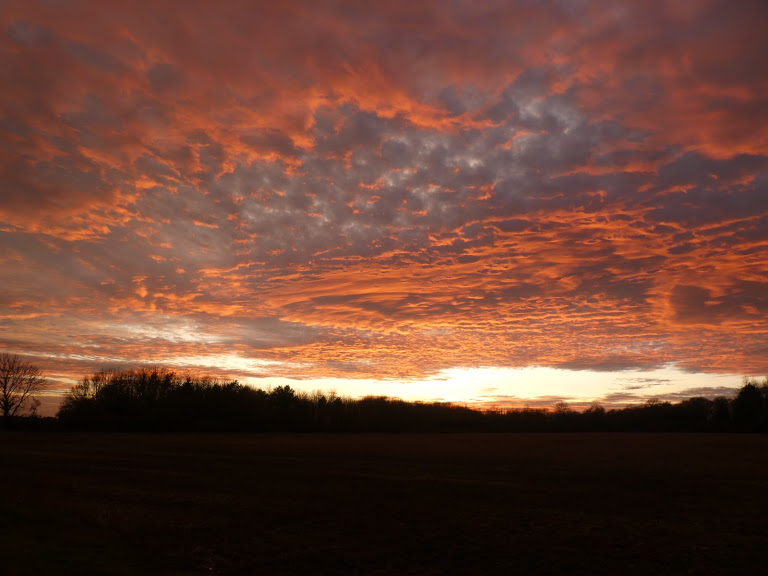
And on the way home, this was the sunset.
Another entry for Jo’s Monday Walk. It’s been such a long time since I’ve had the chance…
We love a walk along the South Bank in London. It reminds us of happier times, when during the 2012 Olympic Games, London was for a time the capital of the world: inclusive, happy, welcoming, proud. The South Bank was full of festivity, fun, food, friendliness and foreigners – all welcome.
For a bleaker view of the legacy of that time, turn to Stuart Heritage in Boxing Day’s Guardian:‘ … a moment of optimism that destroyed the decade’.
But it’s still Christmas-tide. Let’s stay happy.
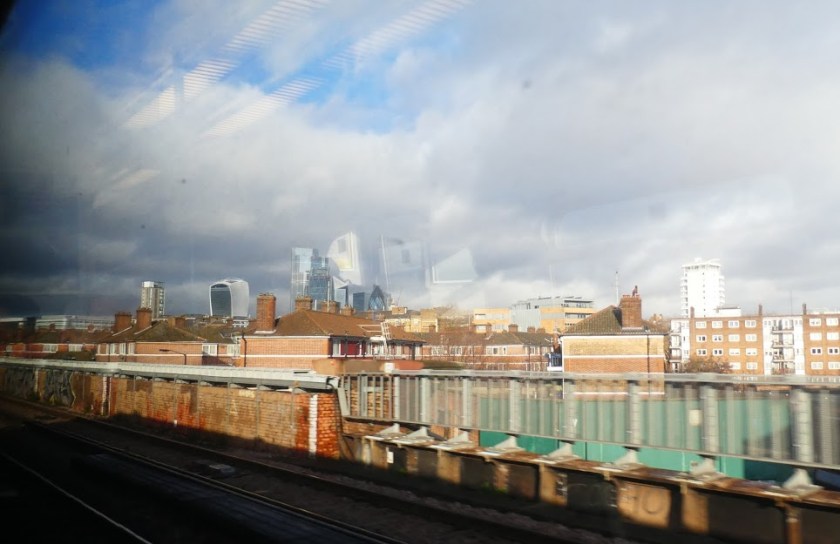
We’ll begin our ‘walk’ on the train into town. Now then. Baffled by the window, it’s hard to pick out which are the city-centre monoliths, and which their reflections.
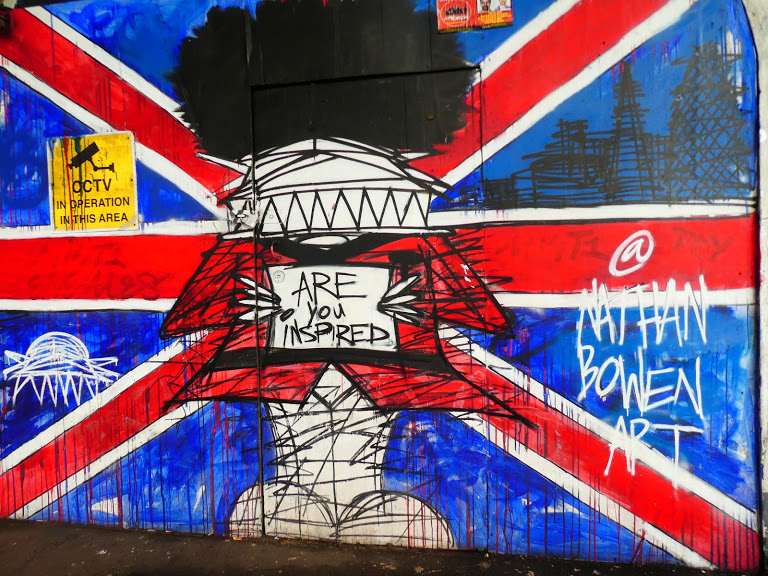
We arrive at London Bridge. Here’s street art under the bridge by Nathan Bowen.
Long-established buildings reflected on new facades.
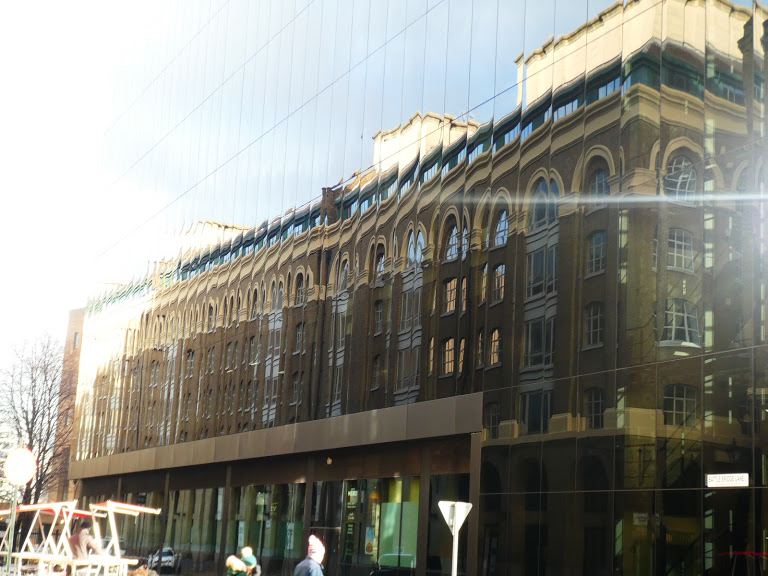
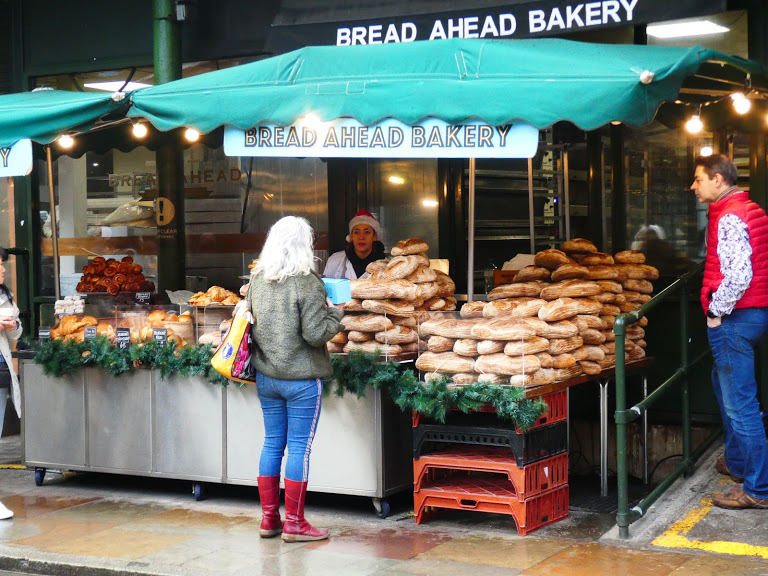
Borough Market. Is it too early for lunch? Sadly, yes. Just looking, then.
And all those buildings, new and old juxtaposed, on the opposite side of the Thames.


Ah! This is fun. This is Zoë’s moment. A Bubble Man, providing unalloyed joy to dozens of children. And to Zoë.


Time for a coffee-stop (no cake, Jo). We dive into a narrow alley, which opens up to this: we’re not so far from Shakespeare’s Globe here.
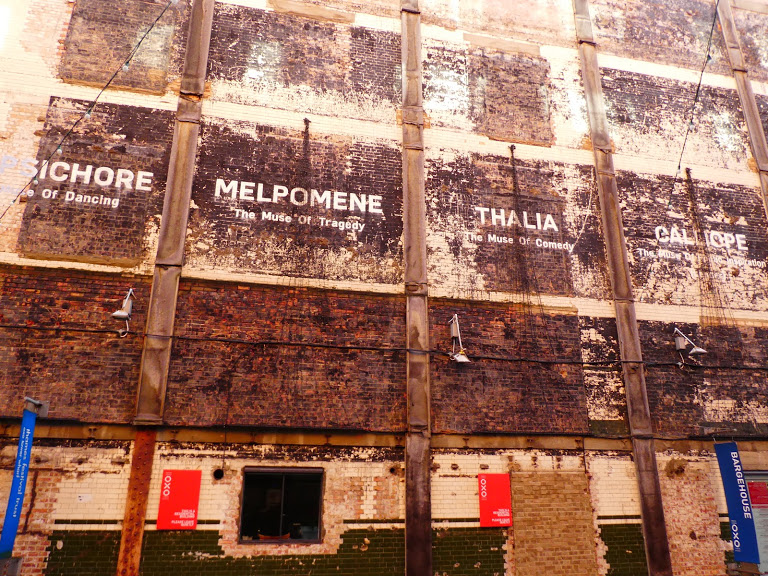 But just as we’re getting a little tired of walking, the rain starts. The team divides. The younger members head off for a spot of retail therapy at South Bank’s Winter Market. The oldest and the youngest join forces and return to London Bridge on the river bus. For us, our winter walk of sights is at an end.


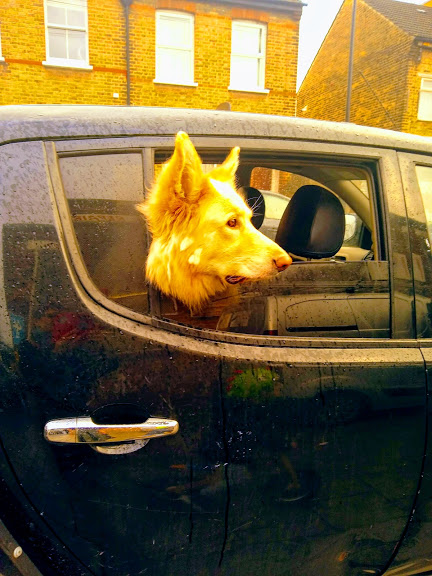
Not quite. Back at Hither Green, this is what awaited us just outside the station.
For Six Word Saturday, and Jo’s Monday Walk.
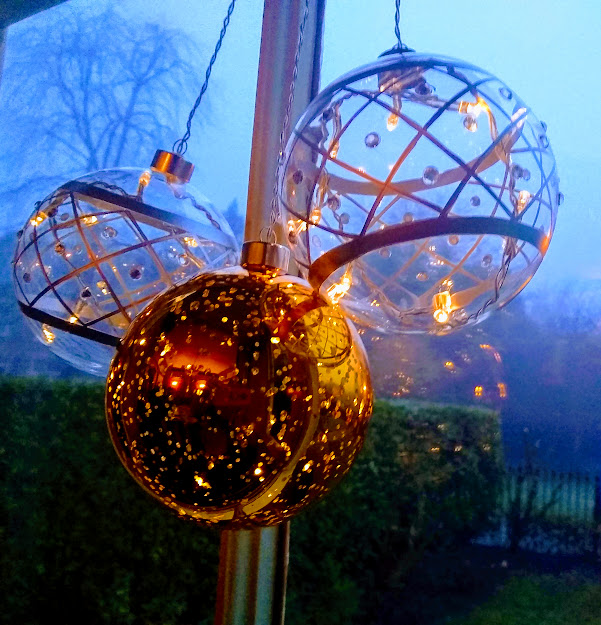 … and then, let’s hope for good things in 2020.
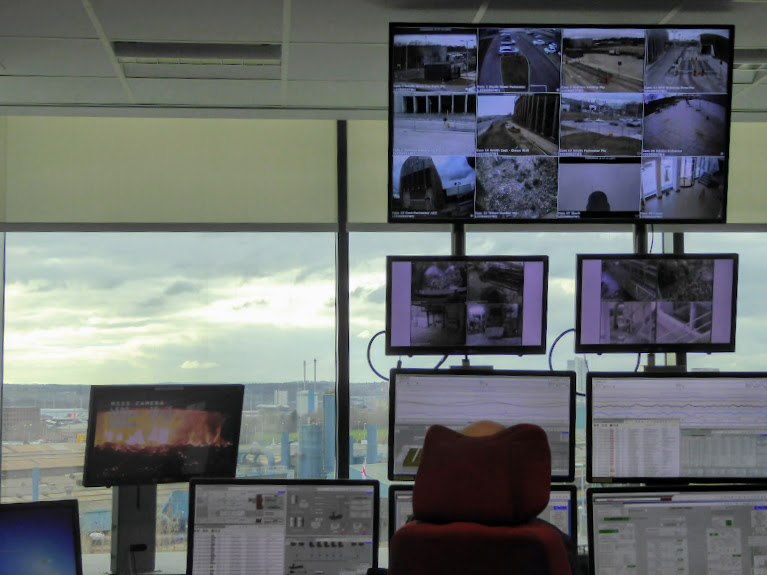
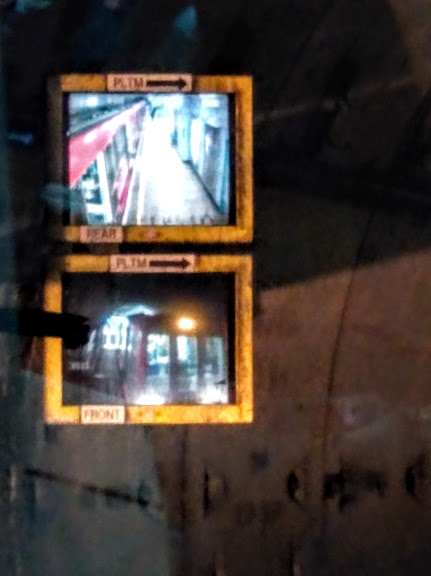
This week’s Lens-Artists challenge invites us to look at what’s On Display. At this time of year, there are Christmas lights, tempting displays of food and ideas-for-presents in the shops. But I decided to go down several different paths: the workaday world of the security camera:
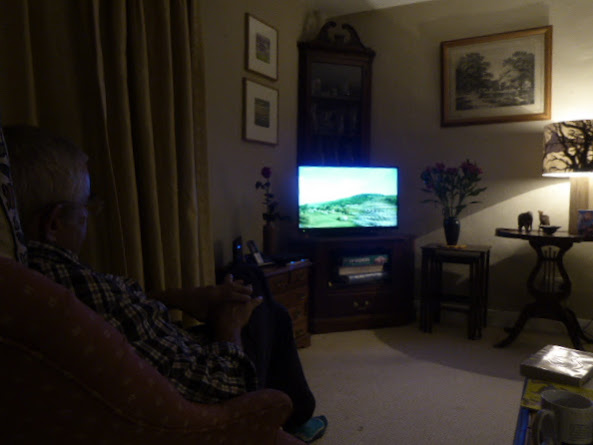
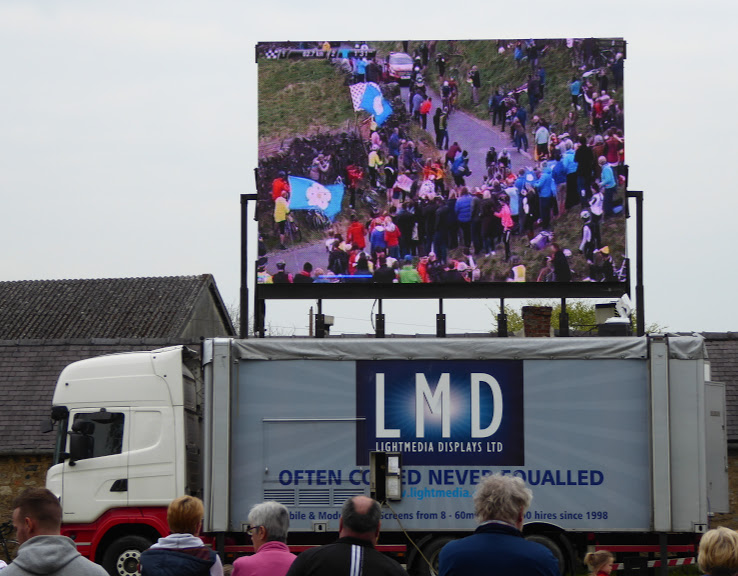
Public service broadcasting in the form of a domestic tv, and a public screening of the Tour de Yorkshire in the village next door, in 2017.
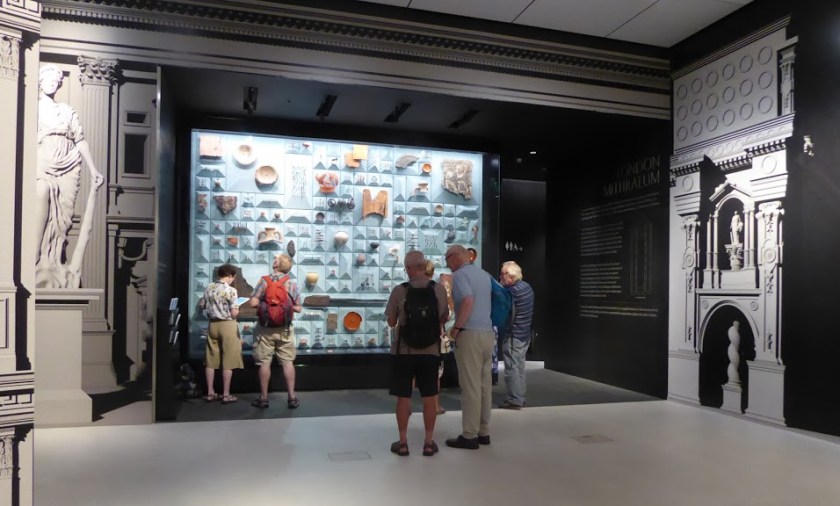
And finally – works displayed in an art gallery. Let’s start at the London Mithraeum,
…then pop over to Tate Liverpool.


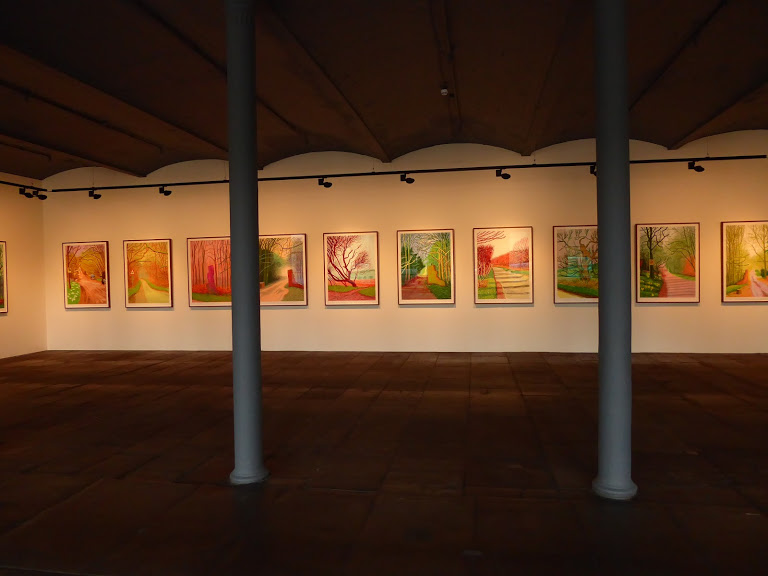
Before ending up at Salt’s Mill, Saltaire, to see the David Hockney exhibition, ‘Arrival of Spring‘.
It’s time for a visit to my French archive once more – any excuse to get out of post-election UK. Come and enjoy a traditional British Christmas, as explained to the residents of the small town next to ours when we lived in France.
December 6th, 2011
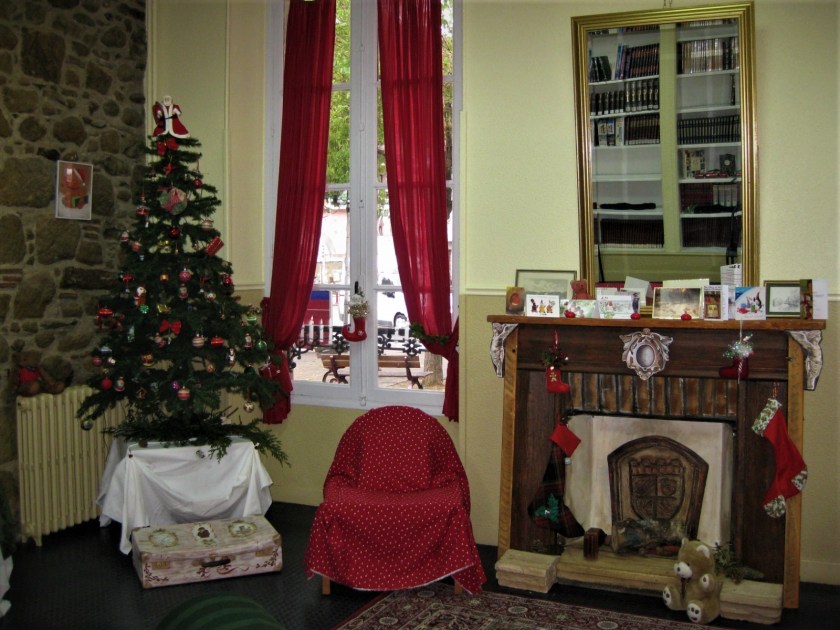 A good old-fashioned English Christmas has come early to Lavelanet. To the library (oops, mediathèque) to be exact. The librarian there enjoys children’s literature, and is a bit of an Anglophile. So she’s mounting a small festival of English Children’s literature featuring everyone from John Burningham and Quentin Blake to – of course – Charles Dickens and Beatrix Potter.
What a disappointment I am to her. I can’t produce a pretty tea set awash with rosebuds, and she can’t believe I really don’t like tea very much: and that when I do drink it, I decline to add milk.
She’s wheeled in Découverte des Terres Lointaines to help with all the activities for schools, retirement homes, and the general public. And DTL have wheeled me in as Consultant on All Matters English. Together we’ve chosen recipes and we’re baking biscuits and cakes and we’ve planned craft activities round, for instance, our ‘so British’ Christmas cards. But said cards must contain no bible-story references. No stables, cribs, angels or Three Wise Men. French schools are strictly laïque – secular – and our friends were astonished to learn that even the mantelpieces of committed atheists are likely to feature Christmas cards from friends, showing church stained glass windows or the Star of Bethlehem.
From tomorrow, I’ll be reading stories in English, helping pull crackers (an unknown treat), and unpacking – many times – a stocking which dear old Father Christmas has delivered to me early.

My other job is to correct the misapprehensions learnt from French websites and children’s books about England. Who knew that the English enjoy tucking in to a huge plate of oysters at the beginning of Christmas dinner? Or that all British schoolchildren have a free bottle of milk every morning? Margaret Thatcher abolished that back in the early 70’s. And Sylvia misunderstood me, and thought we served stewed cherries, not sherry sauce, with our Christmas pudding (cherries – sherry: easy to confuse when you speak no English). And so on.
But it’s been fun transforming the community room in the library into an impossibly cosy snug, full of Christmas cheer. Let’s see what ‘le tout public’ think, when we open the doors tomorrow.






You must be logged in to post a comment.