On the first Saturday of every month, a book is chosen as a starting point and linked to six other books to form a chain. Readers and bloggers are invited to join in by creating their own ‘chain’ leading from the selected book.
Kate: Books are my Favourite and Best

I am currently 108th in the queue at the library to borrow Maggie O’Farrell‘s Land, this month’s starter book, so obviously I haven’t read it yet. Here’s a hint of the earlier part of the story, disclosed by Google’s little AI pal. ‘Tomás and his reluctant son, Liam, are working for the great Ordnance Survey project to map the whole of Ireland. The year is 1865, and in a country not long since ravaged and emptied by the Great Hunger, the task is not an easy one. Tomás, however, is determined that his maps will be a record of the disaster. ‘

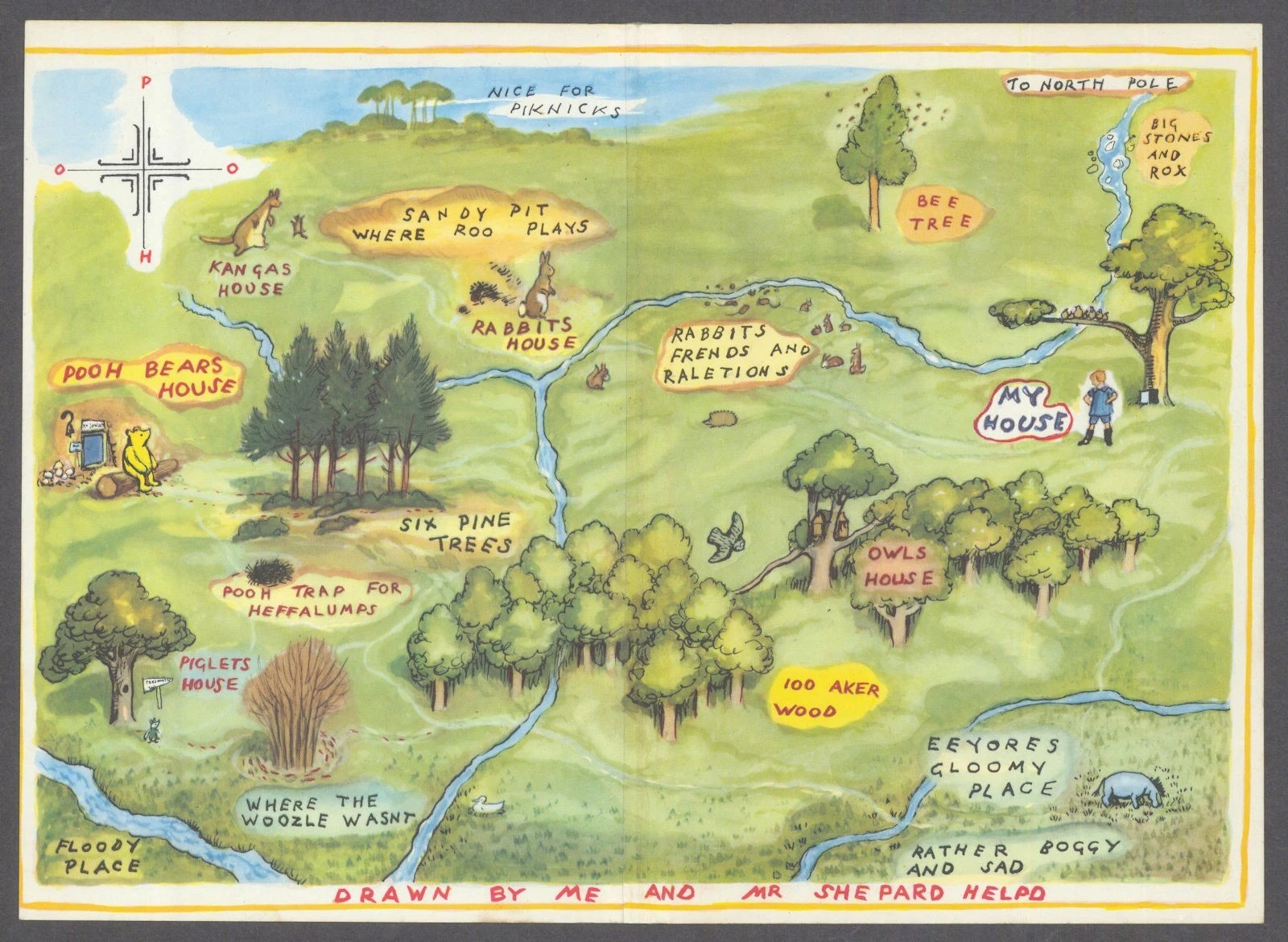
Maps then. I love a map within a book, and one of my favourites is that of the Hundred Acre Wood, included in AA Milne’s Winnie the Pooh. Drawn by Christopher Robin himself, the map includes a number of spelling and grammatical errors, such as – ‘Rabbits frends and raletions’ all of which only serve to endear Christopher Robin and his woodland pals to us even more.

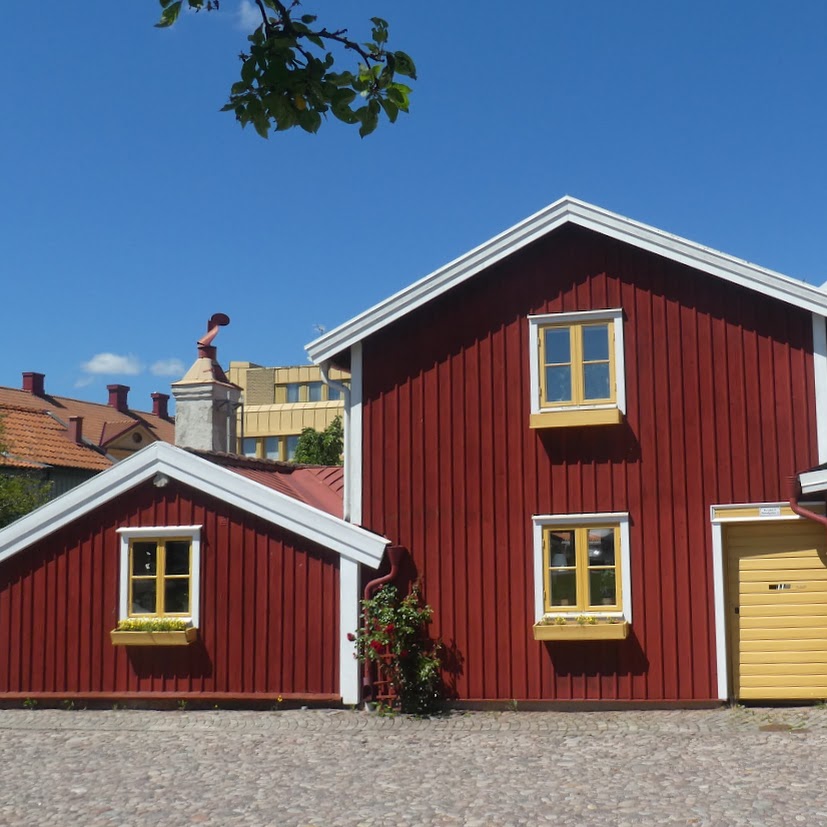
Christopher Robin’s best ‘frend’ is Winnie the Pooh. So let’s go for Beartown by Frederick Backman, set in Sweden, my new obsession. But it took me fully 200 pages to get into this book. I was uninterested in this shabby little town out in the wilds of northern Sweden, and its love of hockey And then, just under half way through, I became more involved. I began to understand how the town’s position on the ice-hockey stage could make or break this community. And a drama takes place which splits, and nearly sinks it. This is an engaging story embracing the tribe mentality, and others who are outsiders not only in the hockey world, but life generally. Because life is ice-hockey in Beartown, and a single incident has the power to change the fortunes of an entire community.
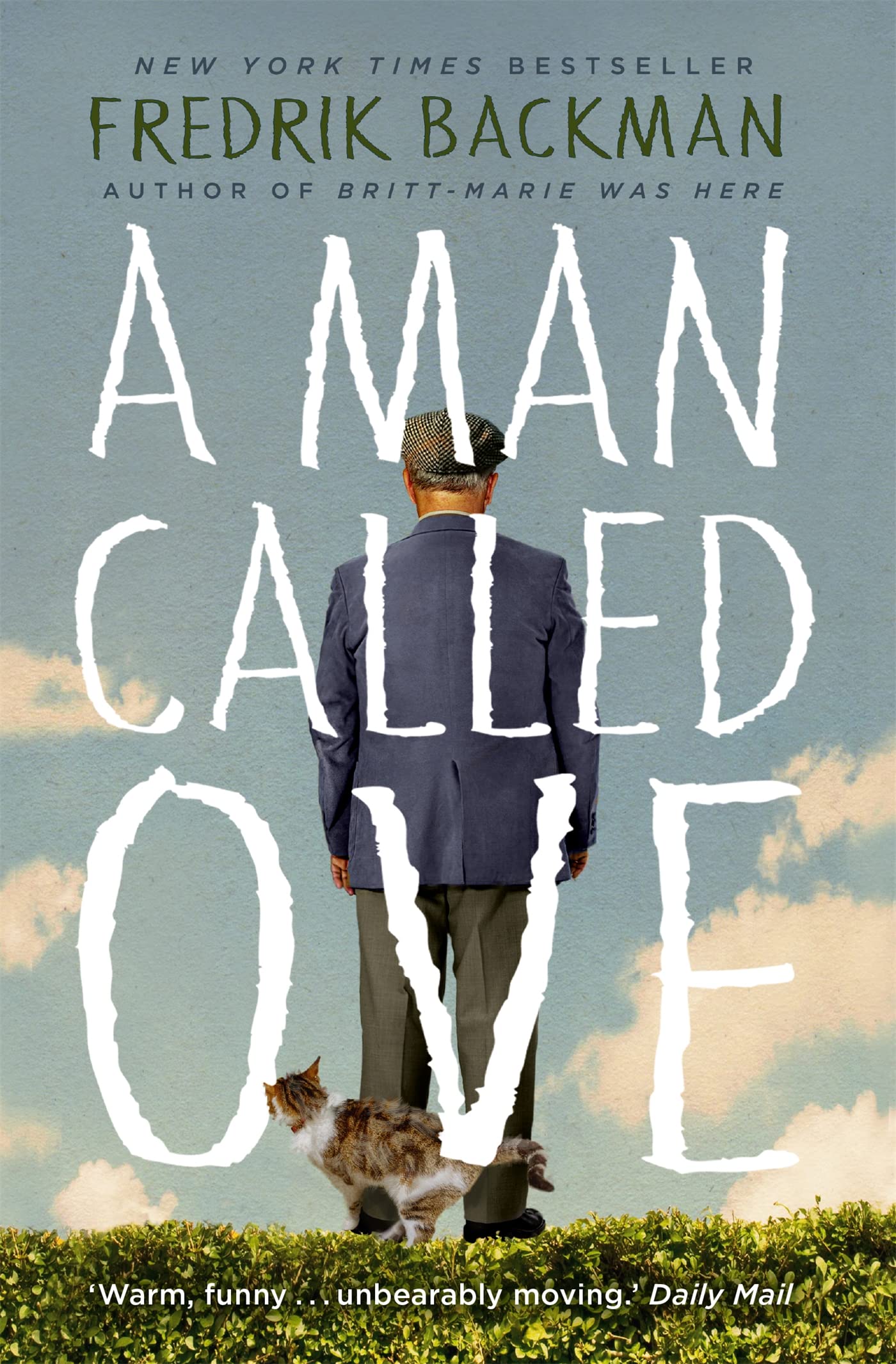

Another Frederick Backman: A Man called Ove. I took against this book in the first few pages. It was obvious that the story line was going to be ‘curmudgeonly old man, widely disliked, is revealed to have a heart of gold, and after about 250 pages, everyone lives happily ever after‘. This is exactly what happened. I turned the pages readily enough, but was unconvinced by almost everyone but the cat. I didn’t believe in the friendly new neighbour. I didn’t quite believe in Ove’s wife Sonja. I wasn’t sure about his on-off (mainly off) relationship with his neighbour Rune either. But most of all, I didn’t believe that Ove would turn from irritable and irritating to everyone’s favourite grandfather in only three weeks. A decent enough beach read, but this whimsical tale was far too fey to appeal to me.
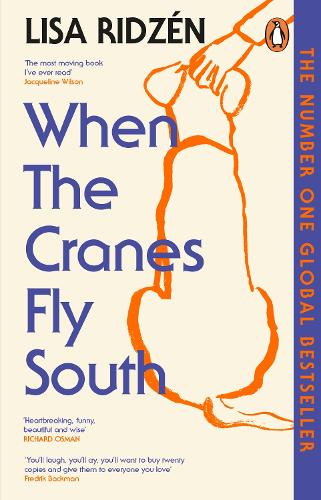
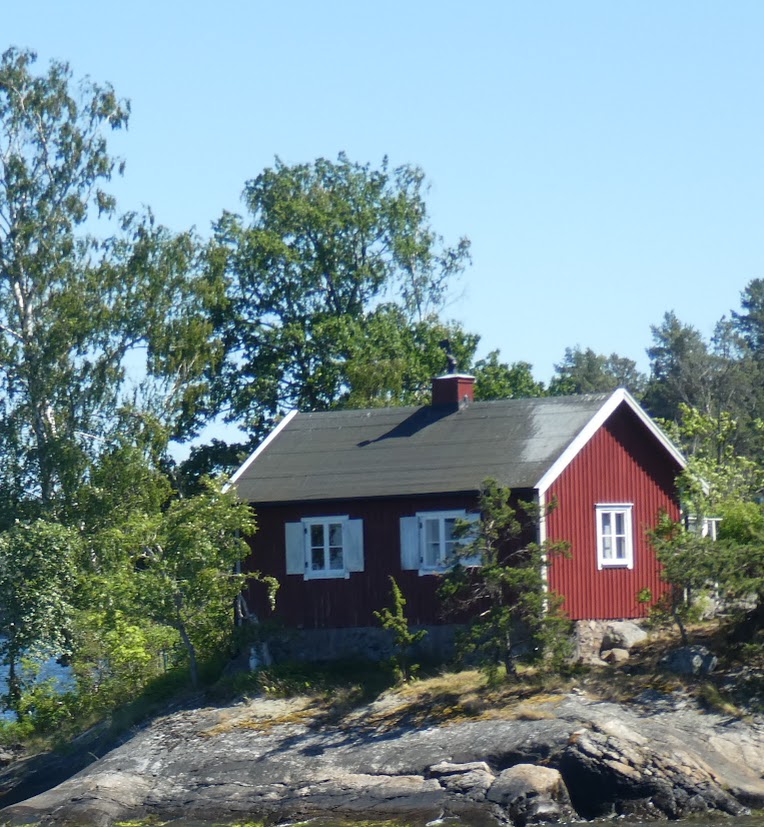
We’ll stay in Sweden. And why not? When the Cranes Fly South: Lisa Ridzén (translated by Alice Menzies) is far better value than my previous choice, though it too has as its main protagonist an elderly man. This quiet book is the story of the latter days of Bo, who sees out his days in a small village in northern Sweden. His only visitors are his four-times-a-day calls from care-workers who sum up their visits in short notes that intersperse each chapter. His busy son Hans calls sometimes too, substituting stuffing his fridge with unwanted food for time spent sitting chatting. Beyond that he has telephone contact with his only friend Ture. And contact, through conversations in his head, with his much-loved wife who is now in a care home suffering from dementia. Though his best friend of all is his elkhound Sixten, whom he can no longer take on long energetic walks. And Hans, for the dog’s wellbeing, wants Sixten re-homed. This book is about Bo’s battle, after a lifetime of sitting on feelings and never talking about them, to make himself and his own wishes known. It’s an extraordinarily moving book, bringing up feelings about our own mortality, and that of people for whom we care.
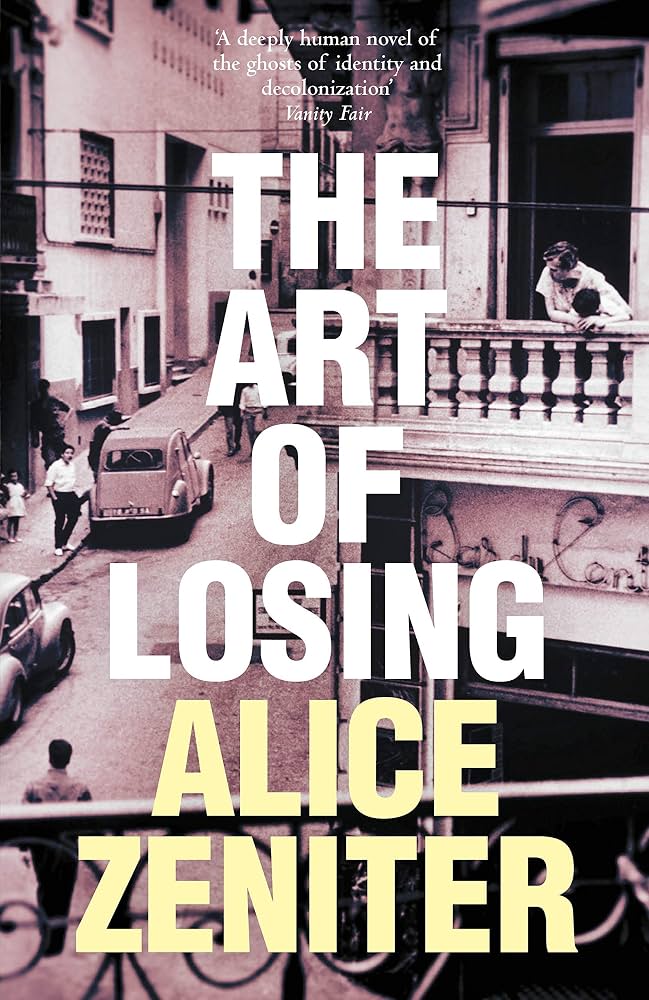
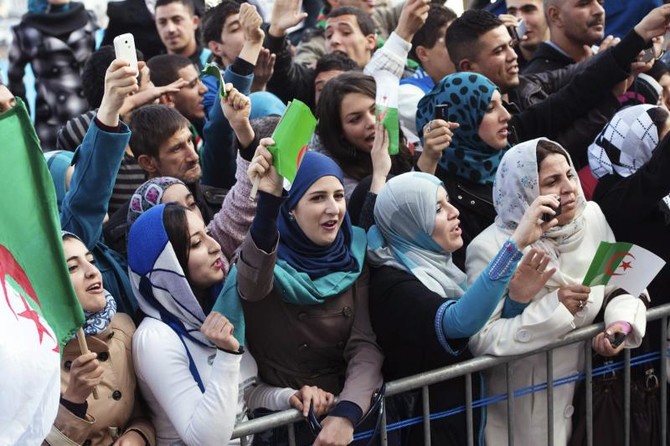
Another story about loss, a very different one is Alice Zeniter’s The Art of Losing (Translated by Frank Wynne). I was engaged in this book from start to finish. It’s the 70 year story of a family, and begins in a village in Algeria, where Ali has made good and become a figure of some importance in his family and community. The Algerian War of Independence changes all that, and forced to flee to France, they become harkis (French Algerians), despised alike by the French and Algerians who remained in the home country who remained. A life of camps and sub-standard accommodation and work awaits them. It falls to university educated Naima, Ali’s granddaughter finally to visit Algeria again. This is a story about colonisation, immigration, and how to carry on in the face of the loss of your country and cultural identity, and is both a powerful history lesson and a meditation on the difficult questions posed by the cultural upheaval of being forced to leave your home country.
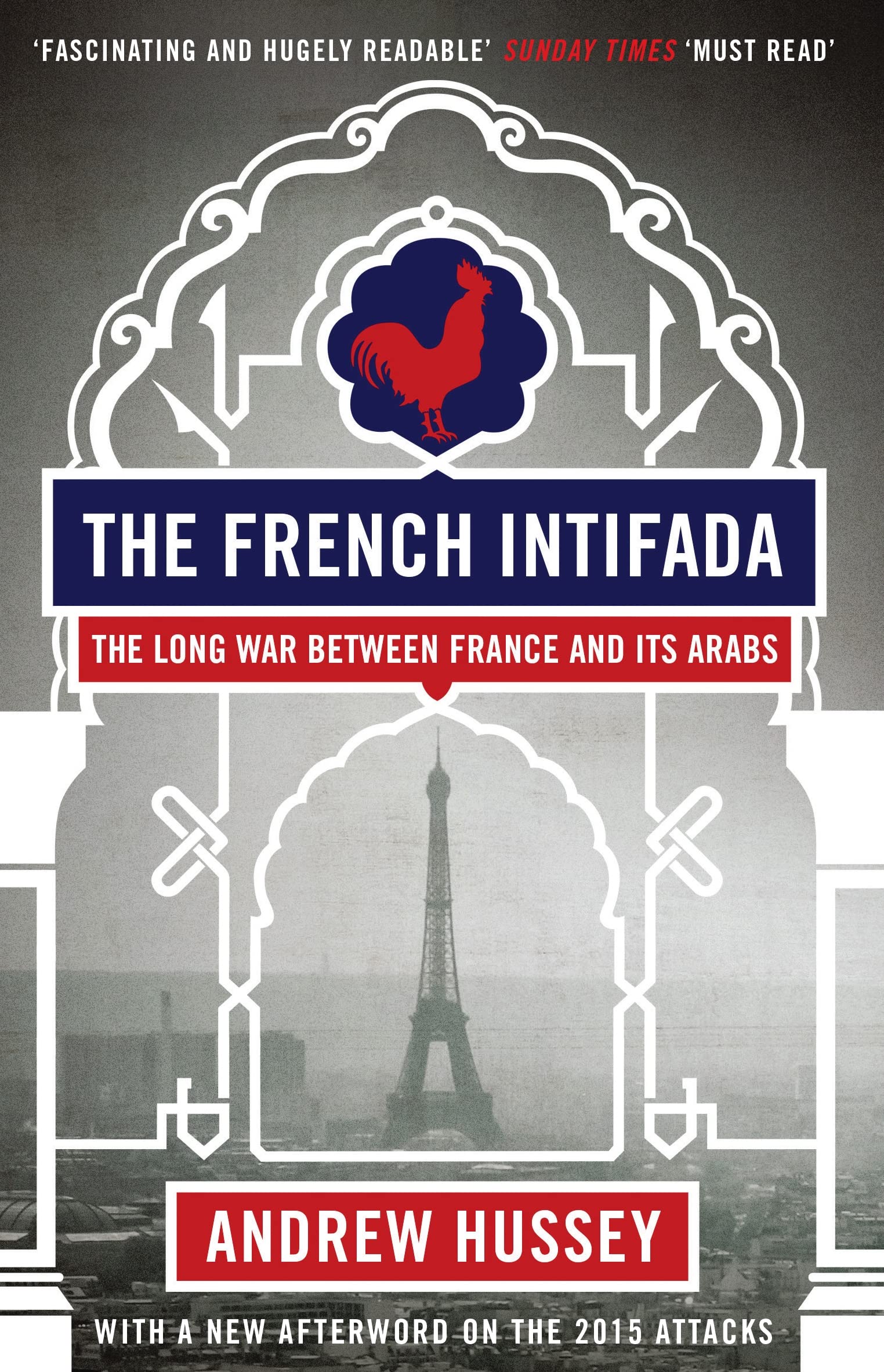
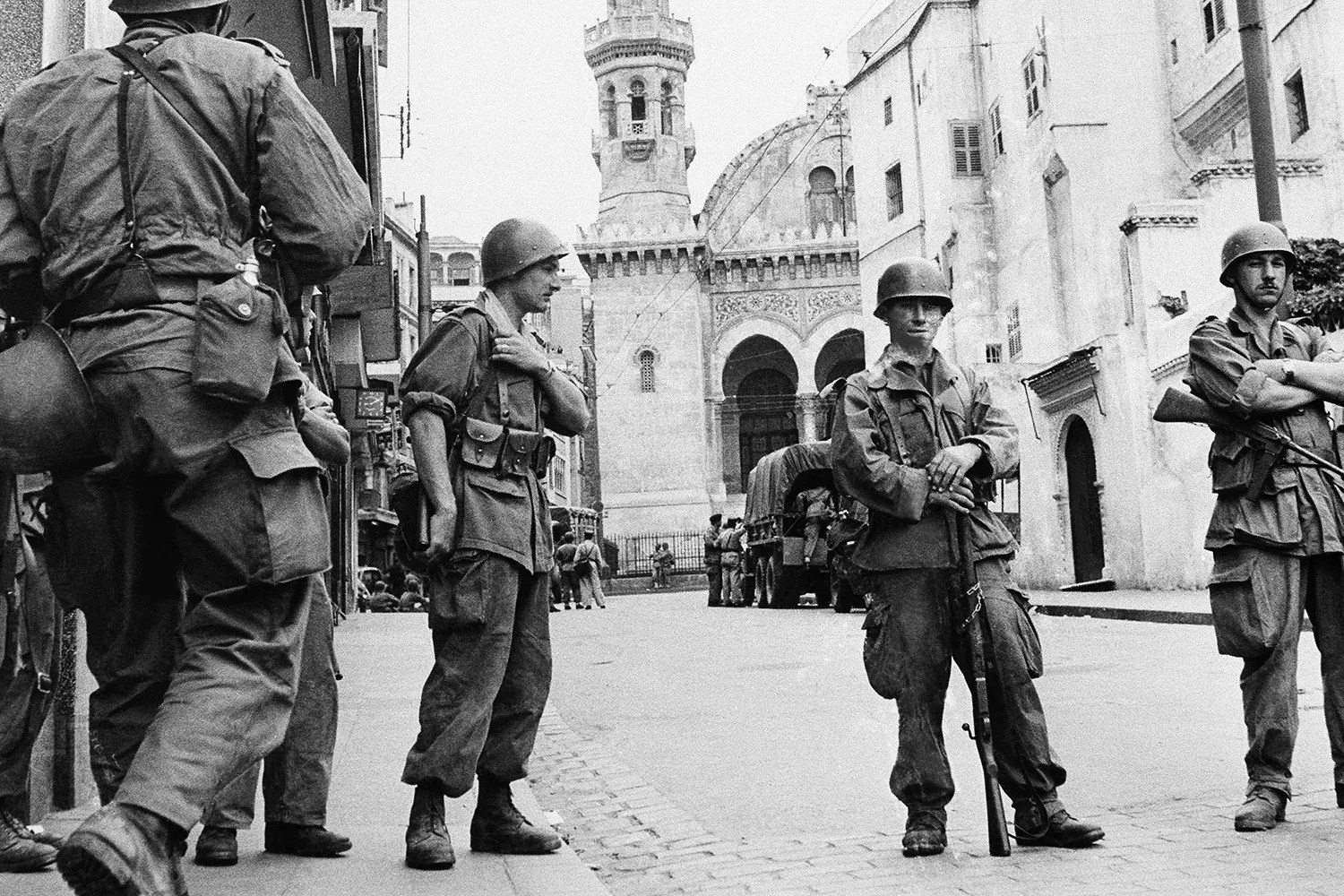
Reading Zeniter’s book prompted me to read The French Intifada by Andrew Hussey. It takes a long look at the inhabitants of France who come from the former French territories of Algeria, Morocco, and Tunisia. Much of the book is devoted to France’s possession of these nations, and to the troubles leading to their final independence. It’s a horrifying and illuminating story, and one that does much to explain the disaffection of many of the Maghrebin population in France. Hussey touches on the history of those North Africans who chose to emigrate to France, and examines the very recent past, looking at recent riots and at Muslims in the French prison system. Despite the seriousness of the subject matter, this is a book that is easy to read and complex issues are dealt with clearly. A compelling and disturbing read.
Goodness. That’s ending on a serious note. But perhaps it was our starting point too? The first: the aftermath of the Great Famine. The last: the aftermath of war. Next month (September 5, 2026), we’re invited to start with our book group’s current selection, or if not in a book group, to start with the book that we’re currently reading. Well, I AM in a book group, so let’s see where I’ll start. Why not join in too?

 From Pyrenees to Pennines
Of your books, the Zeniter most jumps out at me as something I would find interesting.
I enjoyed your chain. I nearly went with maps myself, but the book I really wanted to start with is one I’ve only just read, and haven’t posted on yet, and my “rule” is I link to books I have posts for. I kept trying to find another map book but couldn’t find a relevant one. Oh, I love the cover of When the cranes fly south though the connection between the dog on the cover and the idea of cranes would mystify anyone coming across the book?
LikeLiked by 1 person
You set yourself exacting standards when it comes to Degrees! You’re right, the cover of WtCFS is a little intriguing. It just made me want to read it even more to see what the story was.
LikeLiked by 1 person
All of life, as they say, Margaret. We have quite a lot of immigrants from the colonies too, and I don’t really know how they feel about life here. It’s so scary how everything you’ve worked for can just be swept away and you have to start rebuilding your life, if you can. I can’t help contrasting my own situation as a voluntary immigrant. It’s a loaded subject these days. Perhaps I’ll stick with Winnie the Pooh xx
LikeLiked by 1 person
Yes, even voluntary immigration has difficult issues, so how much more so for those forced to leave their country of origin. I remember a French woman saying to me once ‘Oh, we like people like YOU’ (white, she meant). It’s just ‘les Arabes’ – (people from the former French colonies in North Africa, she meant). The ones stuck doing all the menial jobs then …
LikeLike
Some things don’t change… xx
LikeLiked by 1 person
Yeah, that did take a dark turn. No matter. Sorry you didn’t like Ove (but by the way, the story takes place over much more than a few weeks, more like a few years).
LikeLiked by 1 person
Ooops, I’d forgotten that. I think I was too irritated to notice! I remember the book divided our book group in a quite extreme way.
LikeLiked by 1 person
Understandable.
LikeLiked by 1 person
I loved your first link! The Zenter/Hussey links seem particularly appropriate today given the news over the past couple of days.
LikeLiked by 1 person
Indeed. Both book, in their different ways, discuss compassionately aspects of migration issues and show us what those who leave their country of birth may have to grapple with.
LikeLiked by 1 person
Land is on my list too, but I’m waiting for the paperback.
LikeLiked by 1 person
That’s usually my plan too. I rarely buy hard back novels.
LikeLike
Oh never – and rarely hard copy at all unless second hand. Once a novel is in pbk though it’s much cheaper to download.
LikeLike
Nah, don’t do downloading books. I have to have the Real Thing in my hands!
LikeLike
I like an ebook because if I forget something or want to read it again I can search it instead of randomly flicking. Also,space saving!
LikeLiked by 1 person
Still not fo me though. I ike a book in my hands.
LikeLiked by 1 person
I thought The Art of Losing was an excellent book too.
I also like maps, and I think some books really need them. I have some lovely books about them: Literary Wonderlands by Laura Miller, and The Writer’s Map by Huw Lewis Jones.
One of the activities I used to do with little kids in my classes was to get them to ‘map’ their weekend. They really enjoyed this as a break from the usual writing exercise about ‘my weekend’!
LikeLiked by 1 person
You sound an inspiring teacher! Both the books you mentio have been vaguely on my radar. Time to budge them up into more obvious view perhaps. Thanks.
LikeLiked by 1 person
Your Winnie the Pooh looks rather posh with that map…mine is a 1920 very plain publlication! when the Cranes fly south and the art of losing look the most likely for me to Read.
LikeLiked by 1 person
Both are highly recommended. The WtP is not mine. My copy has sadly long disappeared.
LikeLiked by 1 person
I am a sentimental soul, and still have my mother’s 21st edition hardback WTP!
LikeLiked by 1 person
I’m a sentimental soul too, and can’t imagine how my copy went AWOL.
LikeLiked by 1 person
Stuff happens, alas
LikeLike
😕
LikeLiked by 1 person
🫤
LikeLiked by 1 person
Those last two books look very interesting
LikeLiked by 1 person
I think that our French Connection makes them doubly interesting.
LikeLiked by 1 person
Absolutely!
LikeLiked by 1 person
I love the Winnie the Pooh map – that’s a great first link! I haven’t read any of the other books in your chain, although I’ve at least heard of the two Frederick Backman books.
LikeLiked by 1 person
That’s the trouble with 6 Degrees. It puts so very many books in front of us!
LikeLike
I’d forgotten about the maps in Winnie the Pooh. Today has been a A.A. Milne Day, as I bought a copy of When We Were Very Young at a second hand book sale this morning for fifty cents. Someone in the past 60 years has coloured in all of the book’s illustrations bright blue, which adds to the charm!
The photos you’ve paired with your books are wonderful, as usual. The house in the rocks looking down to the sea is lovely.
LikeLiked by 1 person
Thnaks Rose. What a lucky book-find! The house you refer to was spotted on our recent trip to Sweden. It looks idyllic, doesn’t it?
LikeLiked by 1 person
I haven’t read A Man Called Ove but I enjoyed the film adaptation. The Tom Hanks remake was less convincing. I was poised to recommend When The Cranes Fly South and then it was your next link!
I’ve added The Art of Losing to my wishlist.
LikeLiked by 1 person
I didn’t realise that there’d been a Film of the Book. I’m never a fan of Tom Hanks though. The Art of Losing I think will appeal to you.
LikeLiked by 1 person
I don’t mind Hanks, but I thought he was unconvincing in A Man Called Otto (as it was renamed for Anglophone audiences). The original Swedish adaptation is better. Both are films to stumble on while channel surfing, I’d say.
LikeLike
Ah. We’re pretty rubbish at channel surfing tbh.
LikeLike
When the Cranes Fly South keeps appearing on my radar and the title appeals. But now I know what it’s about I really have to read it. A thought-provoking chain, Margaret.
LikeLiked by 1 person
Thnks Sandra. I’d be surprised if you didn’t like WtCFS.
LikeLiked by 1 person
What fun to start with the Winnie-the-Pooh map. Christopher Robin has been on my mind, recently, because we’re coming up on the 100th anniversary of the publication of the book (14 October 1926) and I want to re-read it for the occasion.
LikeLiked by 1 person
What an excellent idea! I’ll join you! Thanks.
LikeLike
What an eclectic list from Pooh to Algerian immigrants. When the Cranes Fly South interests me the most, after Pooh of course. 😊
LikeLiked by 1 person
It’s definitely worth reading. And WtP of course!
LikeLike
Apart from Winnie the Pooh they all sound a bit too serious and sad for me.
LikeLike
Hmm. Yes, perhaps. Stick with WtP this month!
LikeLike
Beartown reminded me so much of the very heated rivalries here in the USA between high schools in football and basketball–and in a few places, hockey. My kids were newly done wtih high school when I read it and it was very vivid to me. I loved Ove and both the Sweedish and the American film versions. But I have read plenty of books that everyone on Earth seemed to love and i didn’t so I’m fine with you not liking it. The book with the Elkhound I couldn’t have read. Very interesting selections!
LikeLiked by 1 person
Thanks for forgiving me for not liking favourites of yours. Book group can be revealing that way. There are a couple of people there who generally feel as I do – for good or bad – about our monthly book. It’s quite discombobulating if they have quite a different opinion..
LikeLiked by 1 person
Oh I understand!
LikeLiked by 1 person
What a thought-provoking list, Margaret. Now I’m especially interested in When the Cranes Fly South because it reminds me of some of the themes in Ove (which I liked).
LikeLiked by 1 person
I found this book really thought-provoking as I near the age of its subject, the elderly Bo.
LikeLike
oh wow, Winnie the Pooh‘s map is so cute.
Algeria: yes, not the most glorious page of French history, ashamed to say. And there are still many issues related to it today!!
LikeLiked by 1 person
That map is very cute. And yes, France’s history with North Africa is not its most glorious chapter. Colonialism rarely is.
LikeLike
I still need to read the third book in the Beartown trilogy. I have loved the first two books, but they are books that I had to really concentrate on them!
LikeLiked by 1 person
I had no idea there were sequels. Interesting – thanks.
LikeLike
Now I am all nostalgic – Winnie The Pooh was a childhood favourite. I even listened to a couple of Pooh stories on audio as an adult and surprisingly still really enjoyed them.
LikeLiked by 1 person
I wonder who read them? It must have been a pleasurable job.
LikeLiked by 1 person
I like your sneak peek of the Land book as you wait in line as #108! That book sounds very interesting. I hope a movie is made from it. We’ll see what number I’ll take at our library. I know what you mean about a Man Called Ove. I couldn’t seem to dive in. Book passed to us from a relative. (possibly autobiographical?) Still on our shelf unread.
LikeLiked by 1 person
Oh, thanks for agreeing about Ove. I seem to have lots of people disagreeing. And sorry for not keeping up with your – or any -posts just now. Grandchildren very 24/7!
LikeLiked by 1 person
My pleasure, yes the march to the inevitable conclusion was too much for me. I’m afraid I didn’t find Ove worth saving as a character. I quit after the first chapter.
LikeLiked by 1 person
A good dose of reading time saved.
LikeLiked by 1 person
Interesting link. I liked your last book, might be one for me.
Here is my link.
I’m sorry I had to go back to disallowing anonymous comments. See here.
LikeLiked by 1 person
I’m pretty sure you’d find that last book interesting. And yes, of course I liked yor post too, but your site doesn’t like me! I comment less and less on Blogger blogs because it’s just so darned difficult, and I’m sure it’s the same for WP
LikeLike
What a fascinating set of books
LikeLiked by 1 person
There was a lot to enjoy, or provoke a reaction in several of these. Thanks.
LikeLiked by 1 person