Well, a month in Yorkshire really. It must have been one of the best Mays on record: blossom, flowers, lush greenness everywhere. Here are some pictures to convince anyone who doesn’t yet know, that Yorkshire really is ‘God’s own county’.
Tag: Walking
A Walk with the Pine Processionary Caterpillars
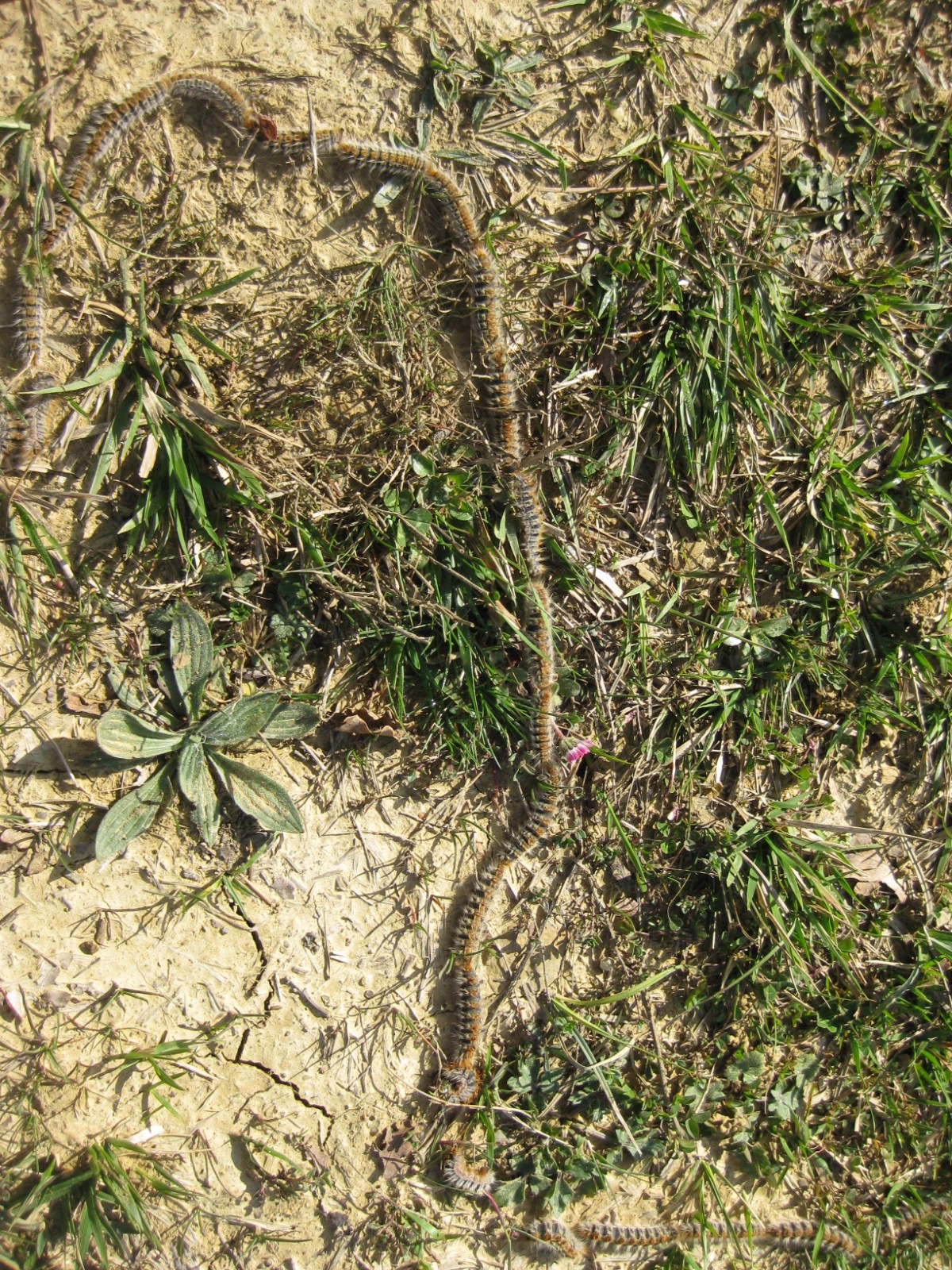 Out for a walk yesterday, we met about 600 caterpillars, also out for a walk. Pine processionary caterpillars. They’re extraordinary creatures, brown and hairy, that travel in long undulating lines, head to tail, looking for sandy earth to burrow into. We saw 2 processions in as many minutes, each more than 6 metres long. It’s quite an impressive sight, and at first glance, looks exactly like a long, thin, sinuous snake.
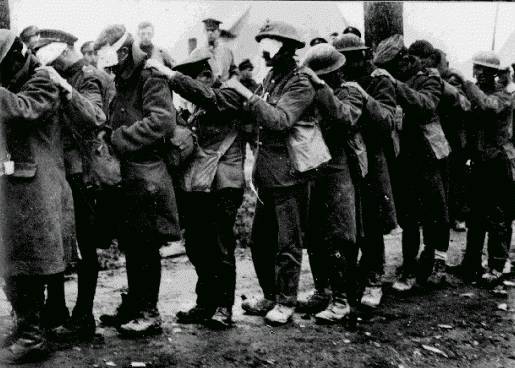 A caterpillar that somehow becomes isolated from the one in front writhes about in agitation until it manages to absorb itself into the group again. Something about these dependent creatures reminds me of those tragic World War One pictures of blinded soldiers advancing unsurely forward by hanging onto the shoulders of the man in front.
Don’t be seduced into thinking they’re rather sweet though. They’re a real danger, especially if you’re a curious small child or dog. When humans and our pets come into contact with the barbed and easily shed hairs, they can suffer reactions ranging from mild inflammation and irritation to severe anaphylactic shock. Some victims have even died.
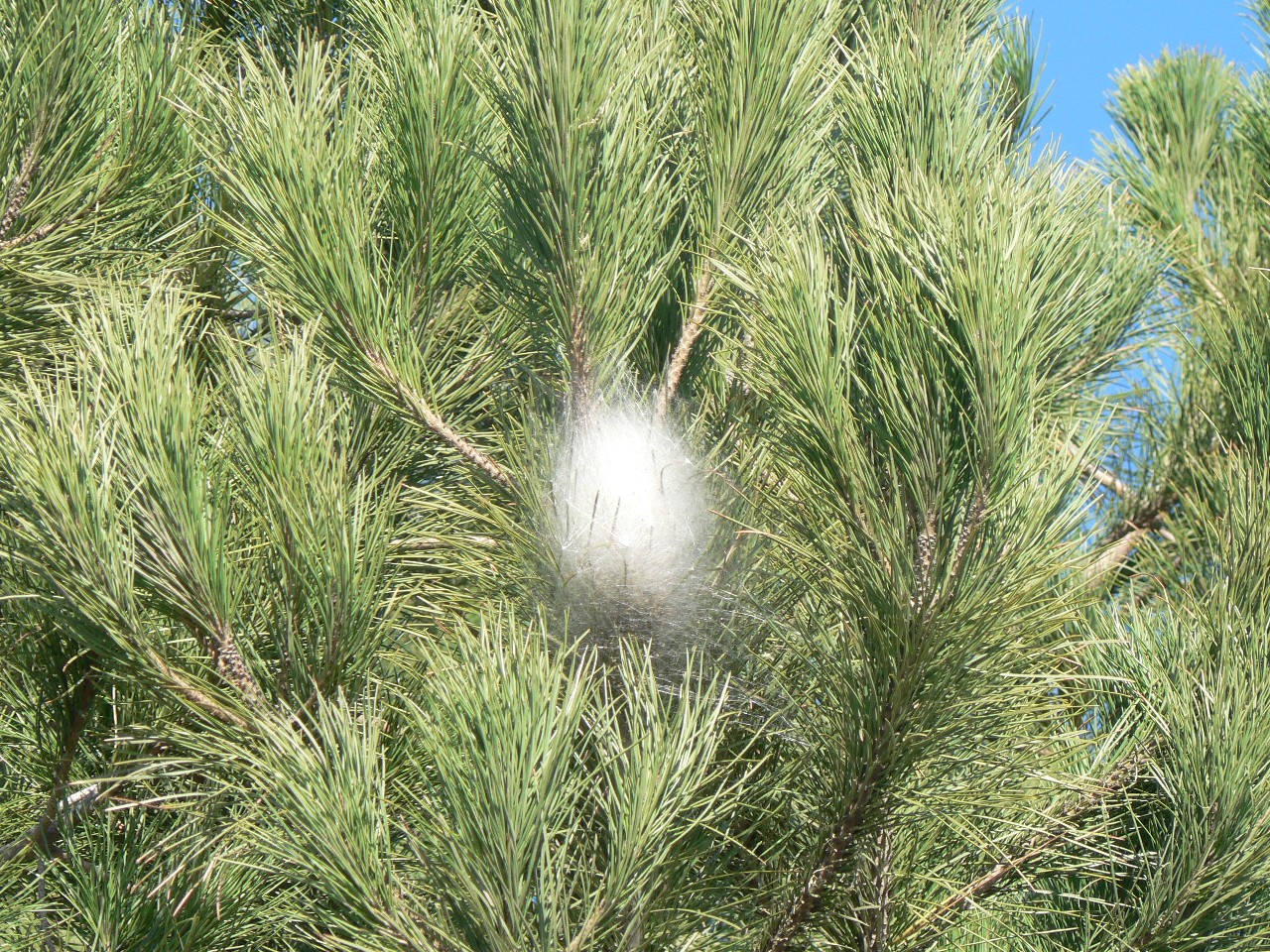 If you’ve ever walked in the countryside here, you’ve almost certainly seen them, even if you’ve never come across a procession. Those candy-floss balls of delicate spun silk in so many pine trees round here are their nests and their original home as they developed from eggs to caterpillars.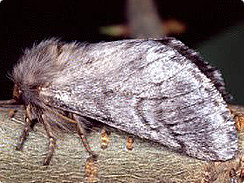
When they grow up, they’ll be harmless and rather dull moths. You probably won’t even notice them.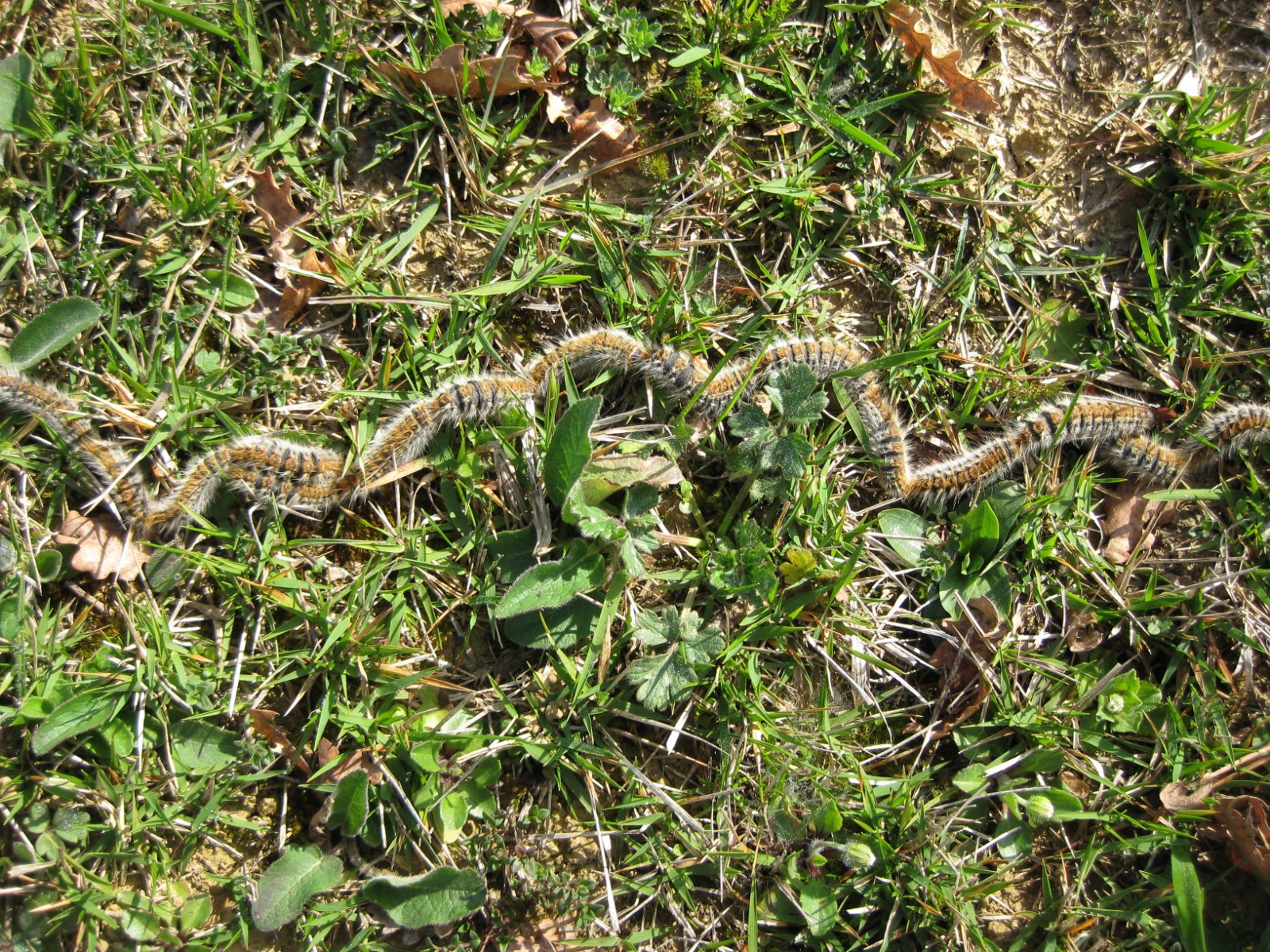
SOS Air Ambulance
 Poor Micheline. Her pain, her distress was our Sunday Soap Opera.
We’d gone walking with our Rando del’Aubo friends, near Nébias again. We’d yomped up a mountainside, 2 hours of it, and were looking forward to lunch in – oooh, maybe 10 minutes. That’s when Micheline fell over a tree root.
It was bad. Very bad. Broken ankle? Knee? We still don’t know. Anny, who has GPS, ran off to find some kind of reception for her mobile, so she could ring emergency services, and give them our exact reference.
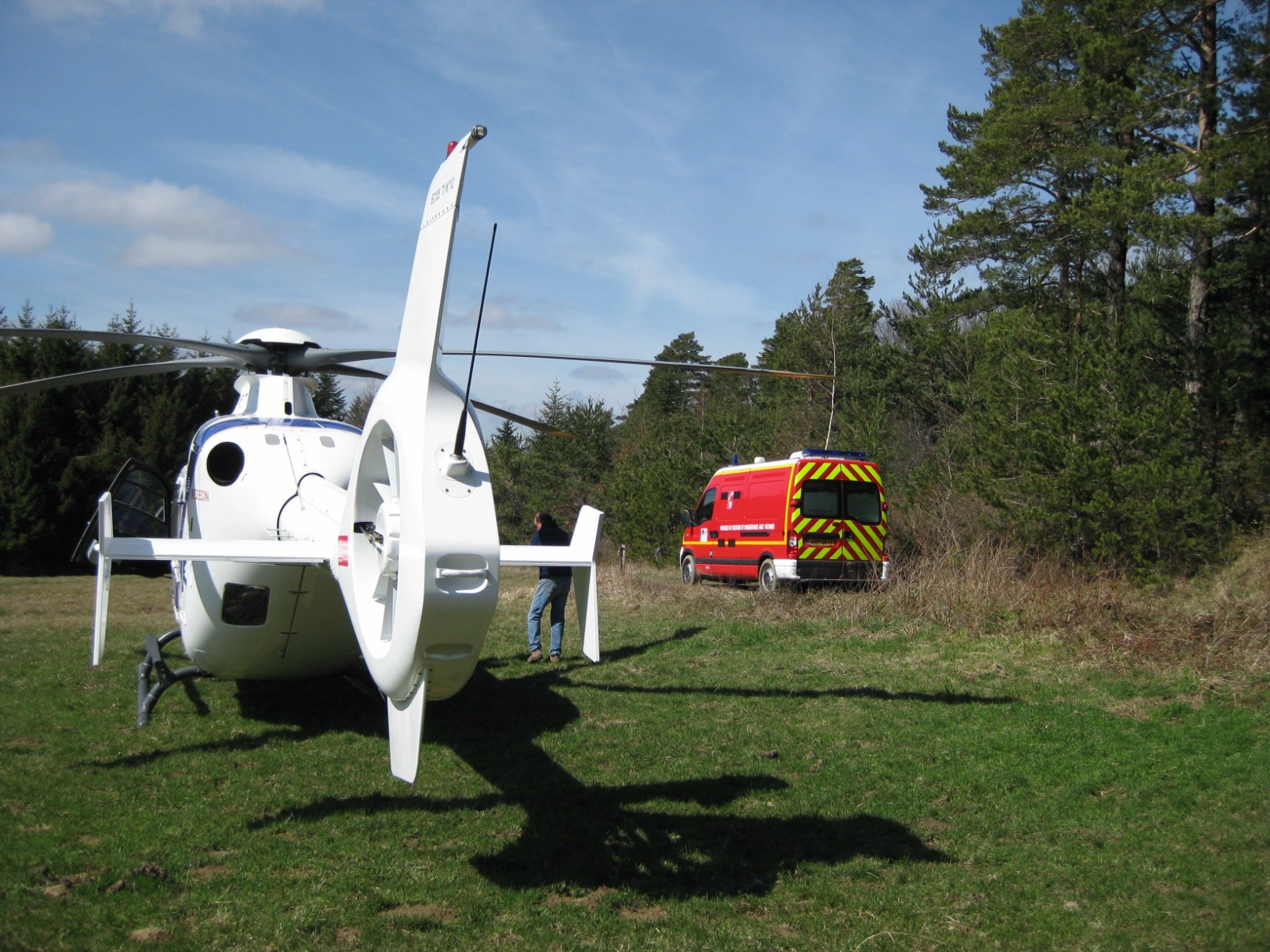
Pretty quickly, it became exciting. We were fairly inaccessible, though not as badly so as we might have been, considering we were almost at the top of a (smallish) mountain, because there was, for the first time that morning, open land nearby. A bright red ambulance service 4×4 came into view, then an ambulance, tossing about on the rutted track. The sapeurs pompiers had to walk down into the woods, carrying all their equipment and a stretcher, to see Micheline, who was now in quite a lot of pain. Then – wow! A helicopter air ambulance hovered overhead, looking for a landing spot.
The pictures show the efficient and organised crew (11 of them, sapeurs pompiers, nurses, pilot) doing what they had to do in muddy, dirty conditions to get Micheline sedated and sorted and ready to be air-lifted to Carcassonne Hospital. They don’t show the 4×4 being ignominiously towed out of the mud by a local farmer.
Despite our compassion for Micheline and the acute pain and discomfort she was in, we were quietly excited to be part of such a drama, the first apparently, in Rando del’Aubo’s long history of weekend walks. No news from Micheline yet: but she won’t be at work tomorrow.

The sapeurs pompiers 4×4

…followed by the ambulance

The nurses arrive

They came in this hélico

And here it is

Micheline, saline drips, medical attention and fellow-walkers

Stretcher case

Preparing for a helicopter ride

Lift off

‘Bye Micheline!

Some flowers for Jean-Paul to offer the patient

Finally, we got lunch. This was our view

The Principality of the Brothers Grimm. And Stone Soup.
Sunday. We went to Nébias in the Aude. Just outside the village, you’ll find The Labyrinthe Verte, a natural maze, with winding pathways through a forest, where rocks and plants have created a bewildering array of natural passageways which are both beautiful and fun to explore. These paths are cut deep through limestone, often shoulder height. Somehow, we’ve never visited. But today, thanks to the Rando del’Aubo, our walking group, we did.
It’s been a lovely bright spring day today, but the forested labyrinth is never really sunny. Trees, their trunks and branches bearded with feathery fronds of moss and lichen, crowd the limestone crags and fissured passageways. Deprived of light and space, they assume crippled and fanciful shapes, or else aim straight for the sun, their thin trunks competing with each other for a place to establish their roots. It’s not eerie however. On this warm March day, we wouldn’t have been surprised to meet an ethereal band of fairies whirling through the dampened glades: on a bad night in November, perhaps a gnarled and wicked hag from the tales of the Brothers Grimm.
Every time of year has its own magic apparently. On the coldest days of winter, the mosses and lichens are white and crisp with frost, making the forest fit for a Snow Queen
At lunch time, since we were in France and eating’s important, the darkened passages unexpectedly cleared. Suddenly, beneath blue skies and bright sunshine there was a fissured limestone pavement, providing surfaces and seating for our lunchtime picnic. Which Malcolm didn’t have with him. The members of the group magicked their very own version of Stone Soup for him. A mustardy ham baguette, some home cured sausage, a chunk of bread, a chocolate pudding, and apple….within half a minute, Malcolm had more food then the rest of the group put together.
The afternoon was different. Walking away from the enchanting and enchanted labyrinth, we came to more open country, where we passed first farmland, then the edges of forest with tracks showing where wildboar and deer had recently passed. Finally, we climbed, and had views across to the mountains and the walks we’ve enjoyed there on other Sunday rambles, finishing up listening to the lively splashing of a waterfall.
Rando commando: or….training for the TA?
Yesterday, we randonneurs headed for the Aude, for a pleasant easy 18 km. walk round a man made lake, la Ganguise. Not too much climbing, just open views across the lake itself, and to the Pyrénées beyond. François pointed out that the lake got bigger some three years ago, when more land was flooded to increase its capacity. Drowned footpaths had not yet been replaced, so we’d simply be walking at the edge of the lake. A healthy, but not too hearty day out. Or so we thought…… Here’s our day, in pictures
No snow yesterday: mountain views and a Benedictine abbey
I gather that the last thing anyone in England needs right now is someone chirruping about how beautiful the snow is. Well, here in the foothills of the Pyrénées, we’ve been almost alone in France in being a snow-free zone. But please note: ‘the foothills’. The mountain tops have been covered for some weeks, and over the last week, the snow levels have crept down..and down…and ever nearer. And it’s quite simply beautiful.
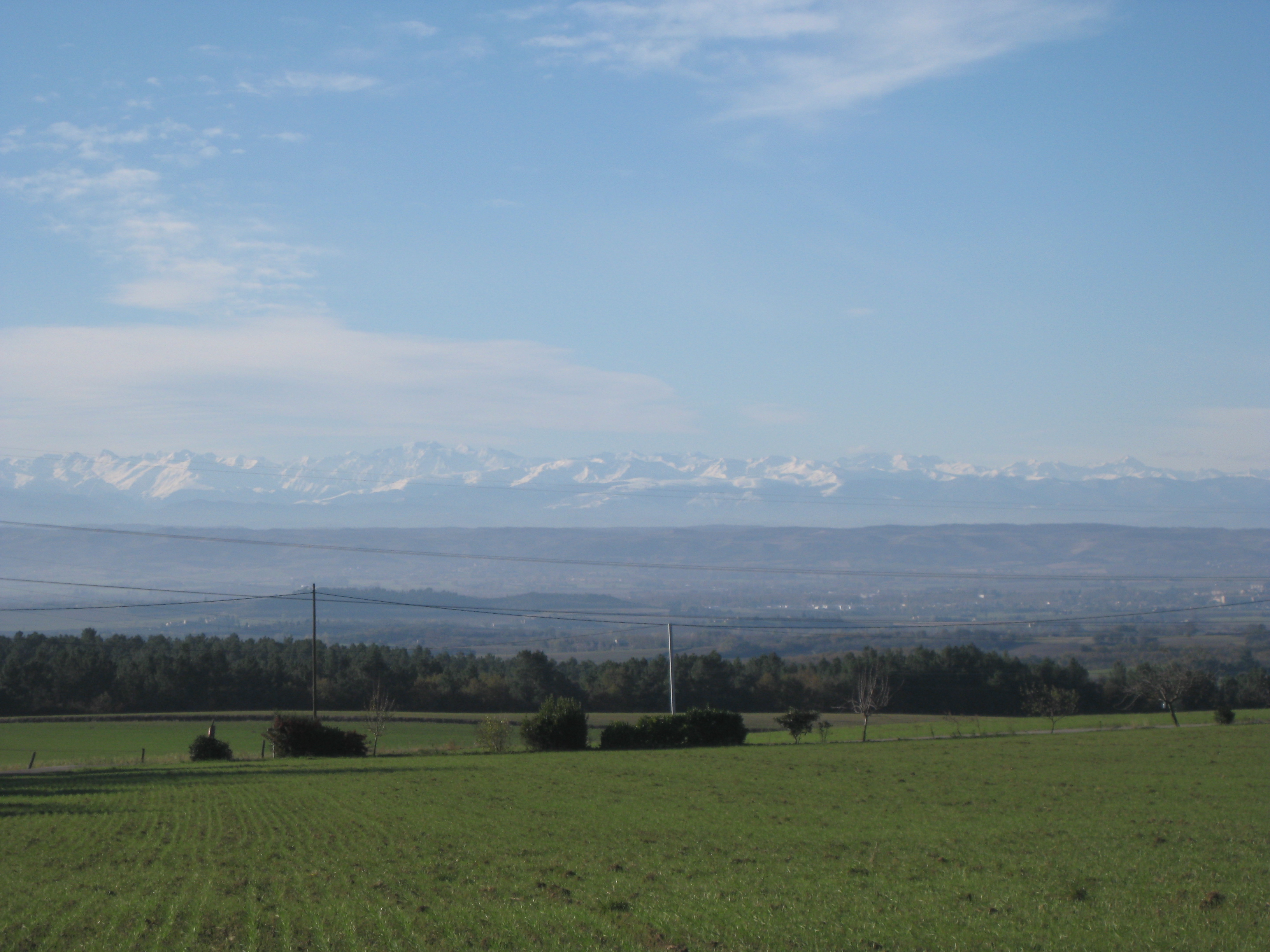
Yesterday we went walking in the Lauragais. That’s a gentle, verdant region north of here on the edge of la Montagne Noir. Perhaps the most wonderful thing about the walk we had here, through sandy woodland paths, crunchy with fallen leaves, were the views across to the Pyrénées: mile after mile of distant peaks blanketed in blue-white snow beneath a bluer sky. If only my camera began to do justice to this impressive sight.

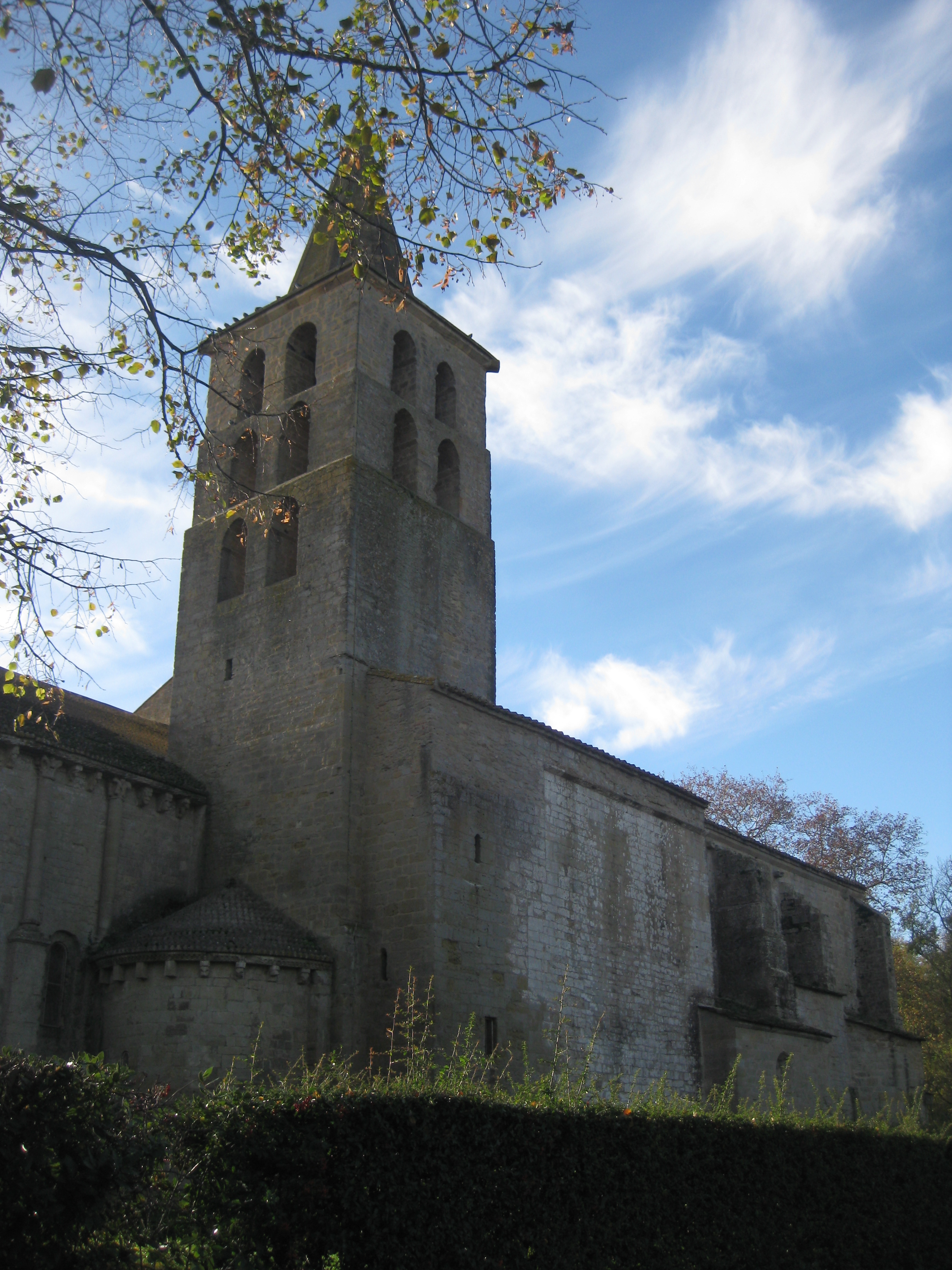
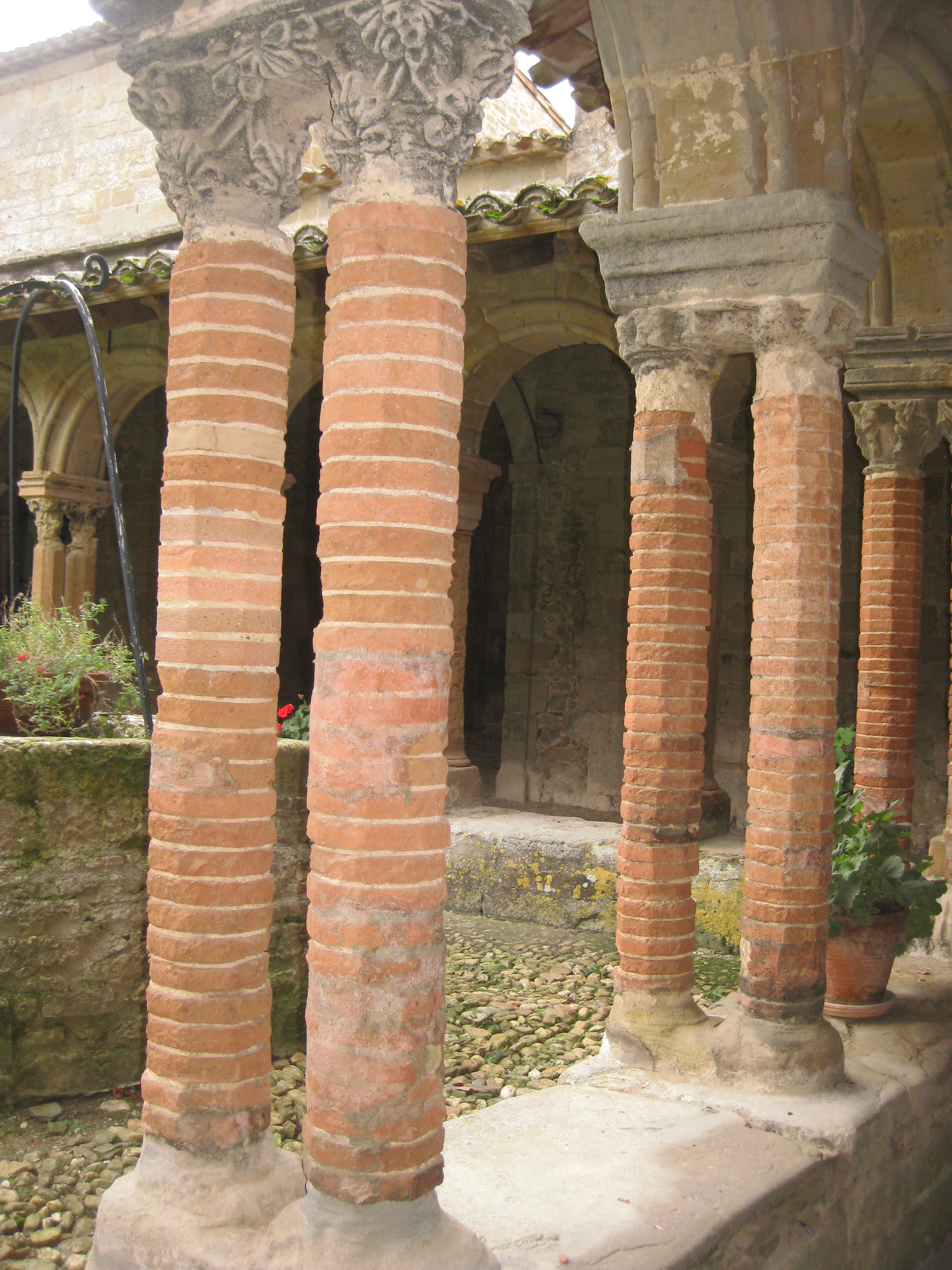
Healthily exercised, we came down to the village of Saint Papoul, and looked round the Benedictine Abbey of the same name. I found myself lingering in the 14th century cloisters and in the abbey itself, inspecting the misericords, the small decorated wooden shelves hidden under the seats to provide a bit of support for the poor monks as they stood for long hours during their religious devotions.
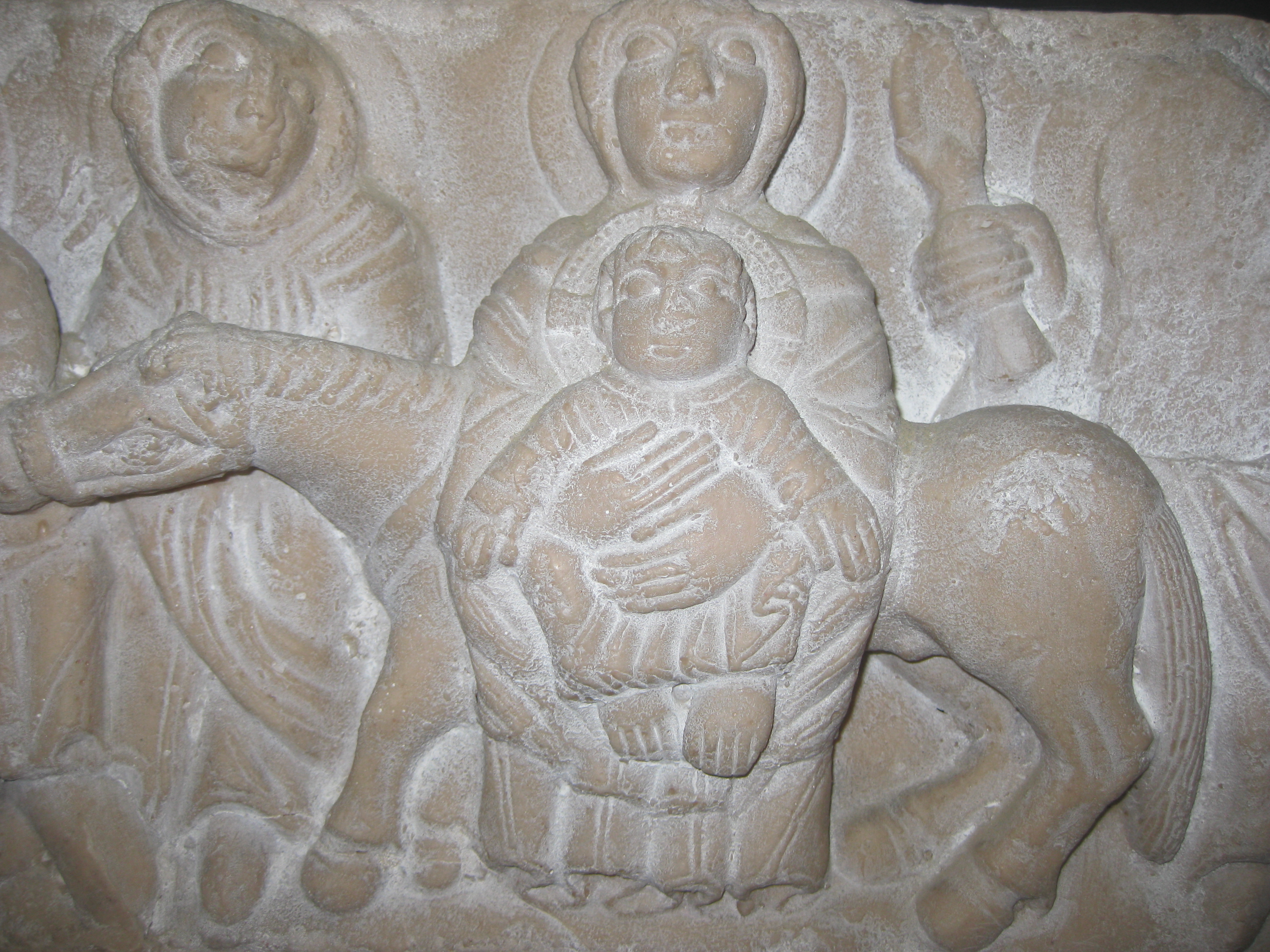
Perhaps the most enjoyable bit of our visit was a chance to look at the special exhibition devoted to le Maître de Cabestany, a Romanesque sculptor who seems to have left his mark on many of the pilgrimage churches on the route from Rome to Compostella.
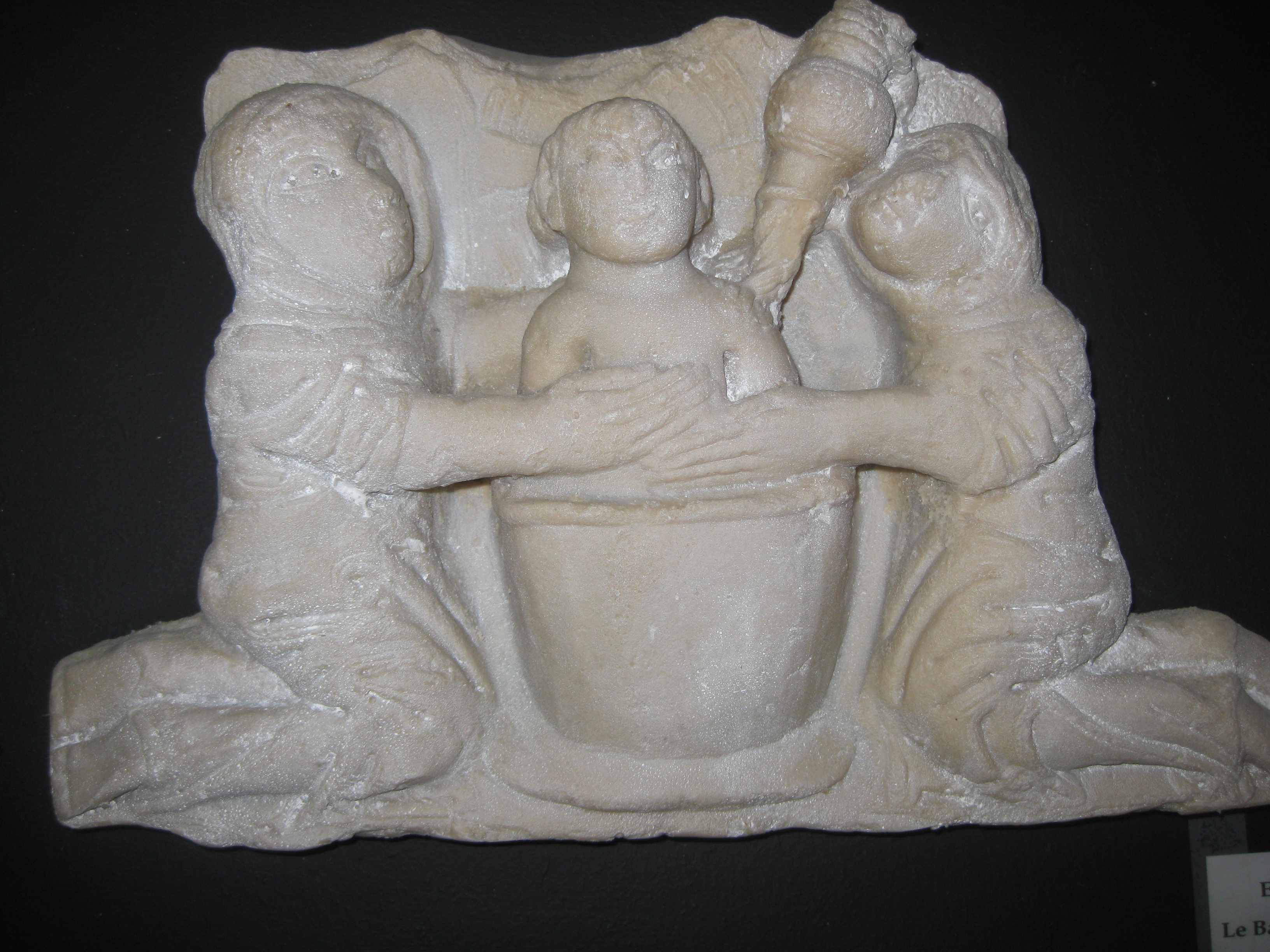
His figures, despite their realism, their chunky hands and elongated eyes, seem to have a slightly supernatural feel to them and they were fun to explore and enjoy.
It was cold though. Snow threatened, but didn’t fall in the end. We decided against a mooch round the village: probably something to do in the future, and scurried back home to toast our toes and fingers
Walking for the Masses

The French love walking – as in hiking. The Fédération Française de la Randonnée Pédestre is an immensely popular organisation with all age groups, and with a somewhat younger image than the Ramblers’ Association. The French walk alone, with friends, in groups such as ours, Les Rando del’Aubo, and …..on mega-rambles.
We first came upon the mega-ramble when our own group went along, a couple of years ago now, on a walk organised by the FF Randonnée Midi- Pyrénées group. We and about 800 others. It’s something of a military operation. Breakfast is offered, refreshments along the route, which has to be signposted beforehand and cleared afterwards. Photocopied maps are handed out, and when it’s all over, there are exhibits to mooch round, apéros to drink, trophies to award (the oldest walker, the person who’s travelled furthest to participate, that sort of thing). There’s often a sit down meal on offer too, though not that day.

Interesting, but walking with dozens – hundreds – of others isn’t really our thing. This means we quite often sit out the Sunday walk, because these occasions happen pretty often.
Today, I made an exception. In France, basic health care is free, but most people chose to top up by insuring themselves with a Mutuelle, which covers all the bits the system doesn’t pay for. To publicise themselves, and various health charities, the Mutuelles of the Ariège organised a walk near Mirepoix today, and they needed our help.
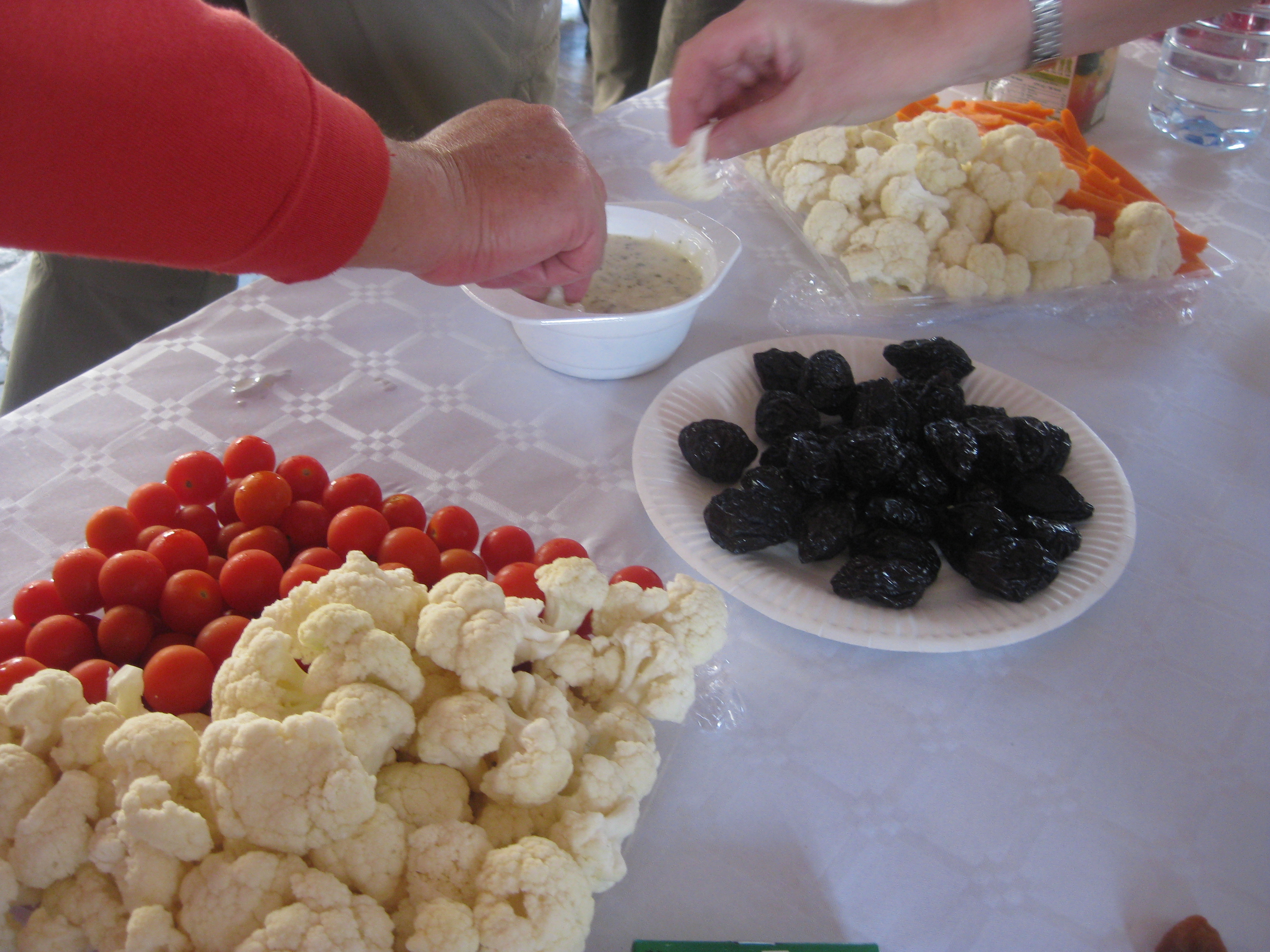
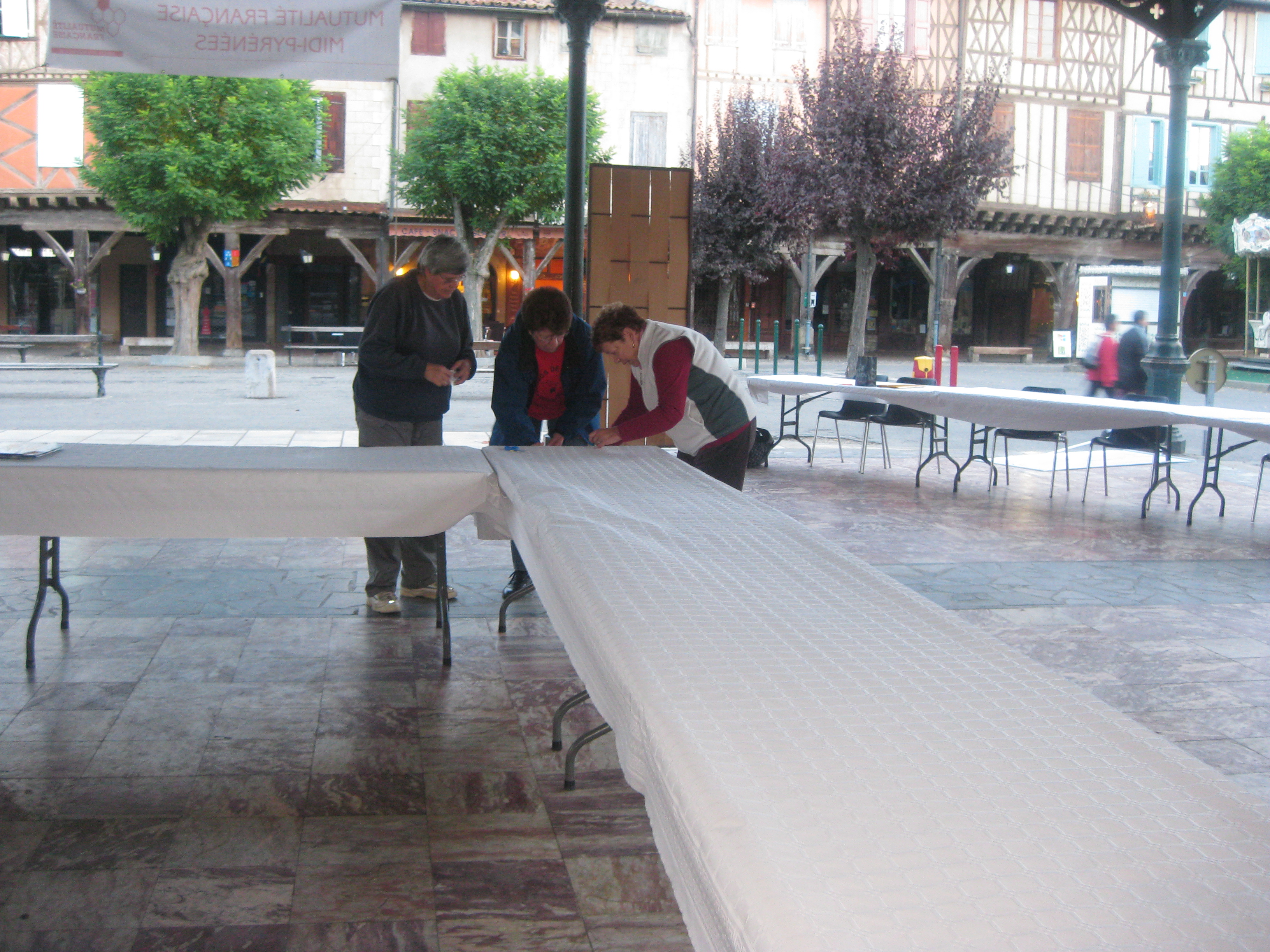
Early this morning, under the covered market hall in Mirepoix we set up tables, prepared healthy breakfasts (breads, cheese, fruit juices, dried prunes) and registered walkers. Some people waymarked the route, others acted as marshals, and lots of us got to walk as well. 171 walkers today. Why would we be so public-spirited? Perhaps this picture tells you why.
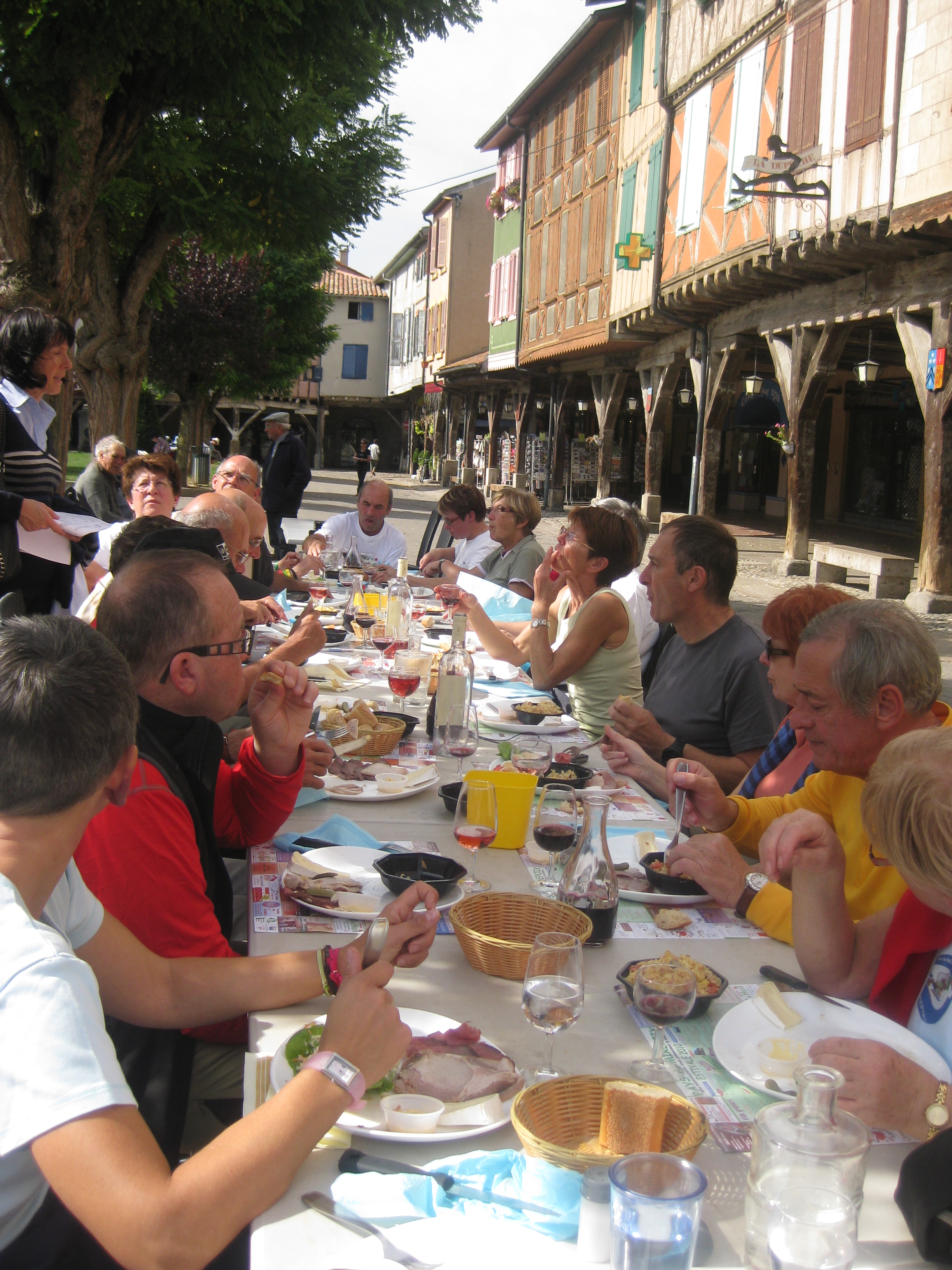
Something else though. Sitting down with everyone after it was all over, I reflected how far we’ve come. This week, Malcolm’s been in England, so apart from exchanging English/French conversation on Tuesday for an hour, and enjoying lunch with an English friend on Friday, I’ve spent the rest of my time walking or eating with friends, shopping, singing, going to the gym and all the rest, entirely in French (well, I’ve done some hard labour at home too. But I only had myself to talk to). Over two years ago, when we first sat down for a communal meal, we could see people’s eyes glaze with fear as they thought they were going to be stuck with that English couple. Could we speak French? Well, yes actually, but both easy chit-chat, and more serious discussion were difficult for us in a noisy group situation. Today I was happy to be the only foreigner in the group: instead of fearing me, it was ‘Is that chair next to you free? May I sit with you?’
Andorra
Tell most Ariegeois that you’re going to Andorra, and they’ll assume you’re popping over to stock up on hooch, cigarettes, cosmetics and cleaning products, then fill the car with as much petrol or diesel as it’ll hold.
The Principat de les Valles de Andorra is a little historical oddity. It’s a Catalan speaking independent country, only 468 square km., slap in the midst of the Pyrénées between France and Spain. It was, since 1278, co-ruled by the President of France (as the Count of Foix is no more) and the Bishop of La Seu d’Urgell in Cataluña. In odd numbered years, France receives tribute money, and in even-numbered years, the Spanish bishop calls in 900 pesetas (or the euro equivalent, I suppose), 12 chickens, 6 hams and 12 cheeses. 1n 1993, the Andorrans voted for democracy and a constitution- but those tributes still get paid.
What makes Andorra popular, here in the Ariège as elsewhere in France, is its lack of taxes. Petrol therefore costs something like 40 cents a litre less than in neighbouring France, and you can buy 3 new car tyres for the cost of two here. And so on. So Andorra’s border towns are nothing more than huge unpleasant shopping malls, blighting the slopes of the wilderness Pyrénées on which they’re situated. The capital city, Andorra le Velle, and the surrounding towns which have become its suburbs, are given over to little other than retail therapy.
In other words, not really our cup of tea.
Andorra, though, offers so much more. Zig-zag up the narrow mountain roads only a few kilometres away from the capital, and you’ll be alone amongst grand peaks, dense forest and craggy paths. Apparently, the further you travel from the capital, the wilder and more spectacular the scenery becomes. Tiny villages remain undefended by castles: the circumstances of its past government meant castles were forbidden. But charming Romanesque churches, often with original frescoes, are common throughout the country.
Henri and Brigitte invited his cousin and wife and us, to join them on a mid-week break at an Andorran hotel they’d chanced upon a few months ago. Henri doesn’t do bargain basement, so we were surprised when he told us that full board at this 3 star hotel was 51 euros each.
Hostal La Font is in a tiny village, Os de Civis, clinging to the mountain side not, as it turned out, in Andorra at all. It’s in Spain. But it might as well not be. The one road serving the community connects the village to Andorra la Velle and to nowhere whatsoever in Spain. Out of season, 20 people live there.
It was busy when we checked in to the hotel though, just in time for lunch. Vegetarians need not apply. Before the meal, tomatoes, garlic, olive oil, dried sausage, olives all appeared on the table. Then a hearty meatball-cabbage-chickpea-potato soup arrived. Then a selection of salads and charcuterie. Full yet? I hope not. There’s grilled lamb and 3 different sorts of grilled sausage with baked potato, and a large choice of puddings to come. The secret of course is to help yourself to tiny portions of everything offered: that’s what I did anyway, because I knew there would be a 3 course meal in the evening, and Henri has a way of making sure that nobody does their own thing by skipping dinner – or even a course.
Anyway, after lunch, we all chose to stride forth into the mountains. Henri’s cousin, Jean-Claude, has been a lifelong farmer, and made a great walking companion. We learnt from him the grasses that any discerning sheep chooses, given half a chance. He showed us how the local cows, a Swiss grey breed, have narrow agile hooves and legs to enable them to cope with climbing up and down the steep slopes of their summer pasture. And he told us tales of transhumance: the days in spring and autumn when cows and sheep are taken up to high pastures for the summer, and down again in winter: for his sheep, each journey took three days.
Later, we explored the village. Just as well the streets are equipped with handrails. Steepest village I’ve met. The dark local stone is the picturesque material both houses and streets are built from. It might look pretty in the September sun, but life looks tough here, and I’m not surprised the village all but closes once the tourists go.
We’ll be back. A walking week or so in these wild and empty mountains is a must, and hotels are affordable. Anyway, the car needed 2 new tyres, and the money we saved by buying in Andorra all but paid for the holiday.
The High Life at Lanoux
We’ve just had a wonderful weekend at Lanoux. Well on the way to Andorra and Spain, the reservoir at Lanoux is high up (7261 feet) in the Pyrénées Orientales. It’s a natural lake, enlarged by the creation of an immense barrage that enables it to produce quantities of electricity for the area and for industry in the Ariège. Building this barrage must have been quite an undertaking – it took 20 years from 1940-1960: up there, it’s a good 2 ½ hour walk down to the nearest road (though they did have a cable car, since removed), and the winter months are given over to deep snow. And of course there was a world war on in the 1940’s. We stayed in the refuge used by the construction workers at the time, a simple structure with a dormitory of three storey bunk beds, a large kitchen-living room, two hole-in-the-floor toilets, and … one washbasin just inside the entrance. Everything we ate, everything we needed, we had to carry up – and bring any rubbish down again. But our two days there were memorable. Why?
Was it the landscape? Our walk from the valley floor began with wooded green meadows, and as we climbed, we saw lakes, crossed 20 or more streams, and followed the course of a dozen others. Higher, the landscape became starker with slatey outcrops that reminded us of the Lake District or North Wales, though on a much bigger scale. Even though it’s June and the weather was warm, we soon reached what was left of the snowfields. We were surrounded by peaks higher still than we were, such as le Carlit, over 9 ½ thousand feet high
The flowers? Early June is a wonderful time to do this walk. The azaleas aren’t quite out, but we saw Alpine & spring gentians, both a brilliant royal blue, orchids, sempervivum (joubarbe), vividly yellow gorse, creamy rock roses and saxifrage, tiny pink and white moss campion, delicate mauve violets, bilberry flowers, even a few late daffodils
The animals? Lower down, we spotted a herd of isards (Pyrenéan chamois) bounding across a meadow where semi-wild black Merens horses grazed. Near our refuge, there were chestnut horses too, with their leggy young foals. We spotted distant mouflons, and on the way down from Lanoux, marmots chasing and playing on the rocky grass.
The water? The lake itself is sternly beautiful, set among the slatey mountains of le Carlit, and the area is criss-crossed by deltas of streams and rivers, with splashing cascades as the water tumbles down the mountain sides. There are ponds and lakes at every turn, and in every distant view.
Friendship? Weekends like this are the chance to nourish existing relationships, as this weekend with our Laroquais friends showed. Up at the refuge though, we were joined by a group from Toulouse, who’d come, like us, to enjoy the empty countryside and to spend time together. They all knew each other very well, and could have resented our intrusion: but instead, we shared some very special moments. We pooled our food and drink, ate their homemade pâtés, and drank their homemade apéros. We talked, laughed, played silly card games, and the next morning, went walking together. So now we have some new friends too.
Terre Rouge – Ciel Bleu
Whenever we think we’re beginning to know the areas near home quite well, something comes along to surprise us.
Take Couiza, for instance, a town in the Aude that has been the centre point for quite a few of our walks. It can offer, within easy reach of the town, a typical Audois landscape which is almost Tuscan, with rolling hills vineyards and cypresses. Or craggy, scrubby garrigue, almost Spanish looking. Or there’s le Domaine de l’Eau Salee, which I blogged about previously, where the streams are pink with salt washed from the earth, and have been exploited by man for centuries.
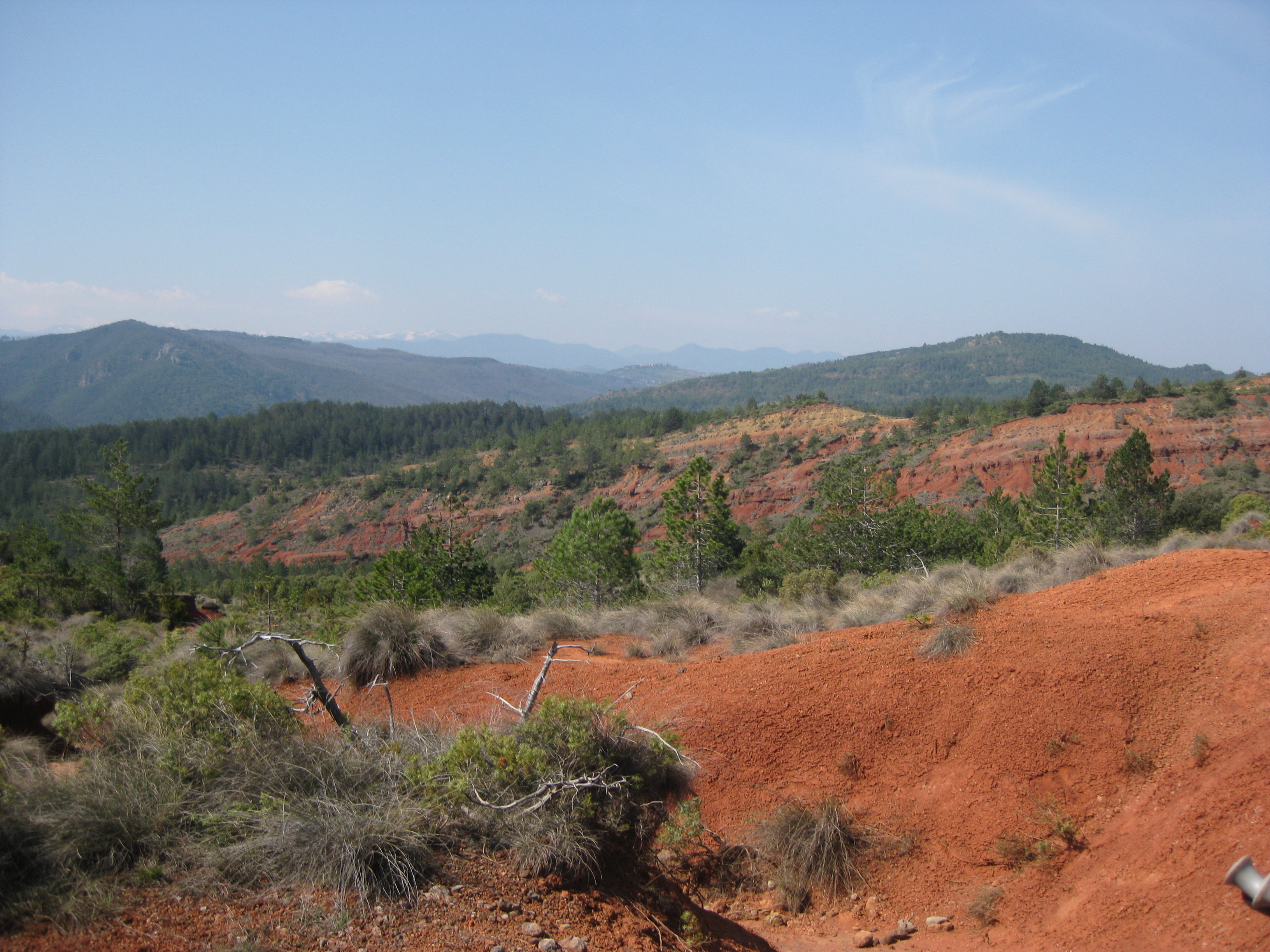
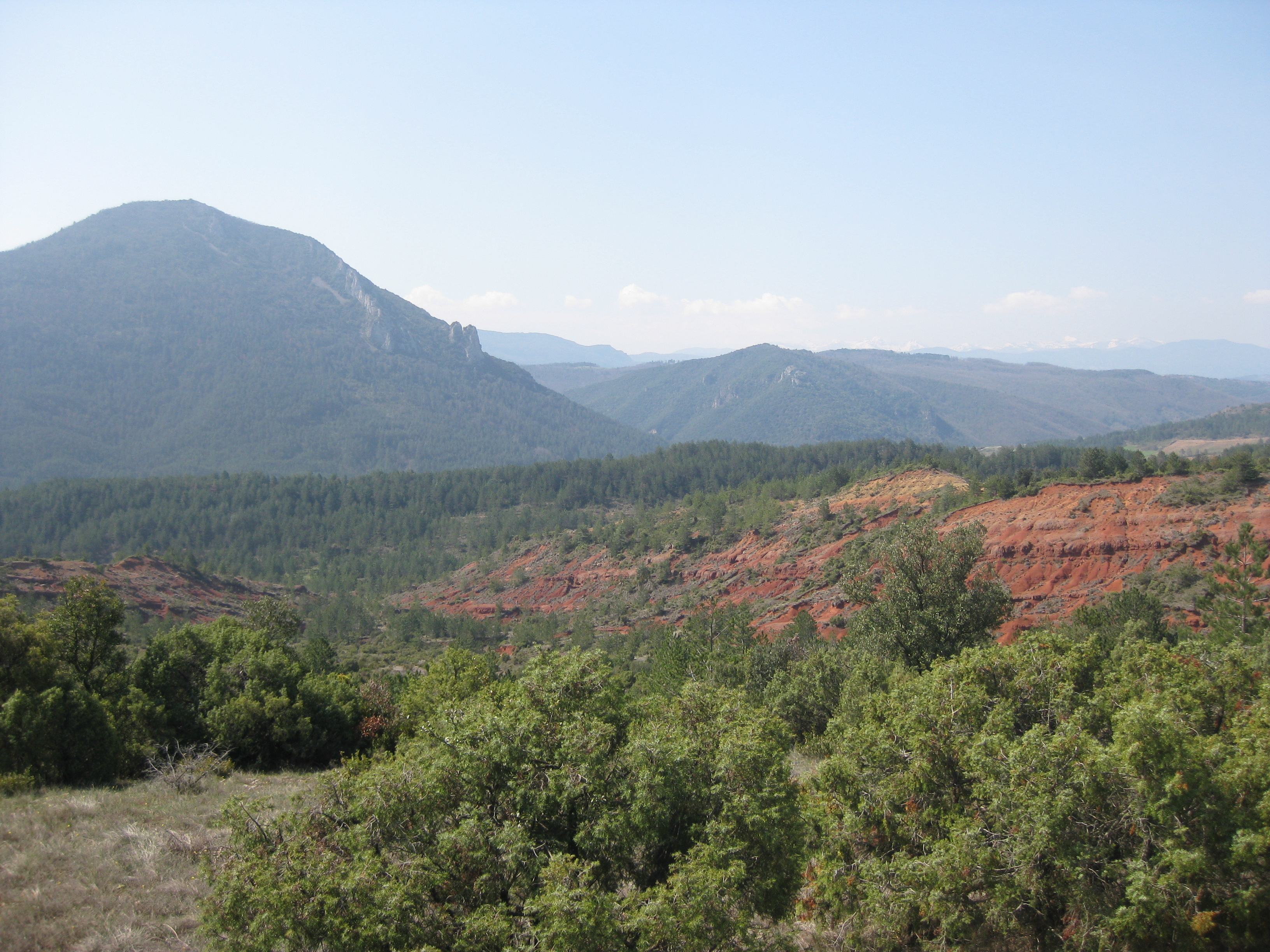 Yesterday, however, we went with le Rando del’Aubo to Terre Rouge, an area near Couiza which astonished us with the rich red colour of the earth which dominated the landscape.
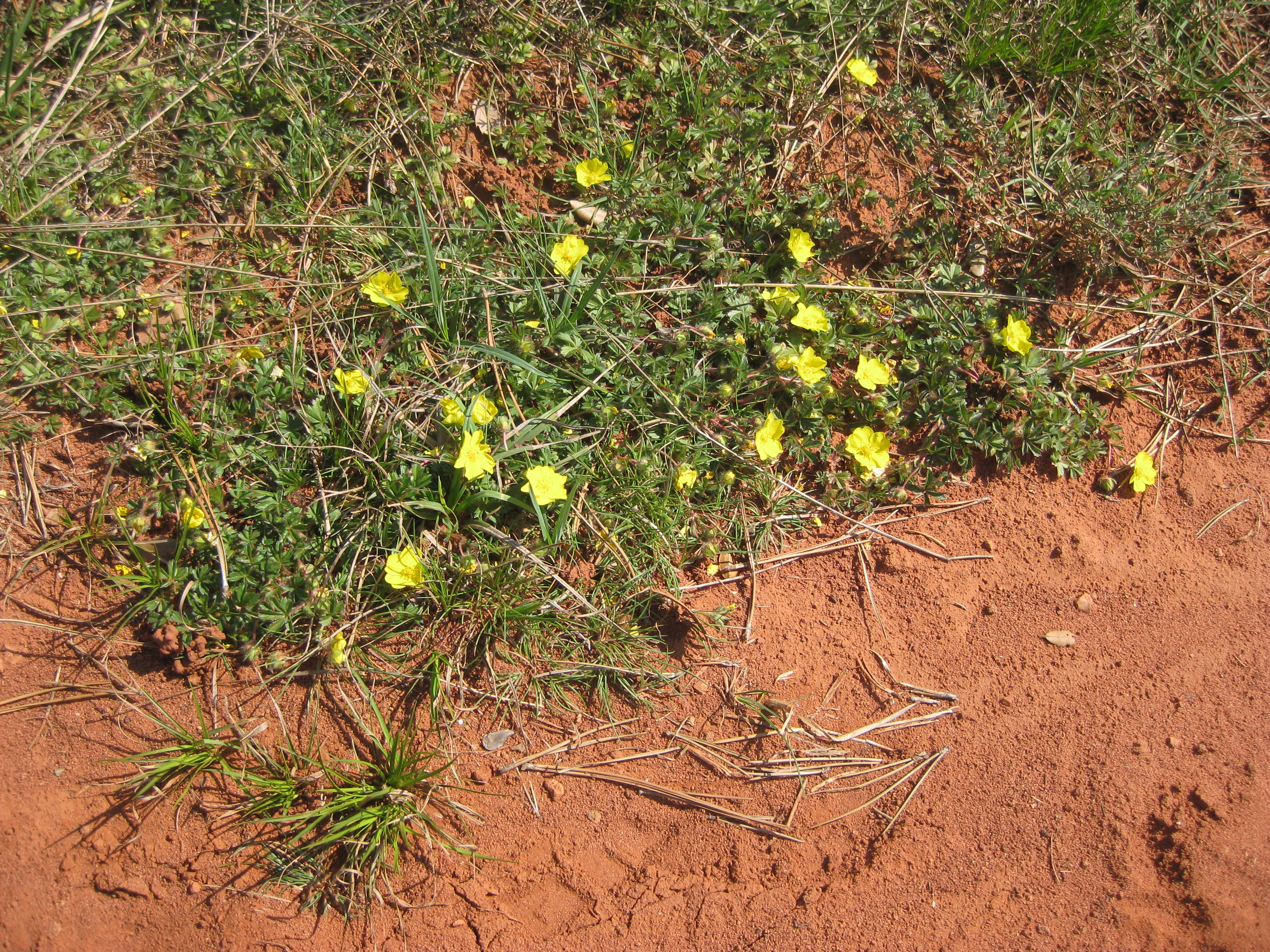 It supports a rich variety of plant life which is just springing into flower: Tiny daffodils, less than 3 inches high, bright yellow potentilla, grape hyacinths. Bluish grasses bind the dry and sometimes sandy earth, and the air is rich with the strong scent of various wild thymes and lavender.
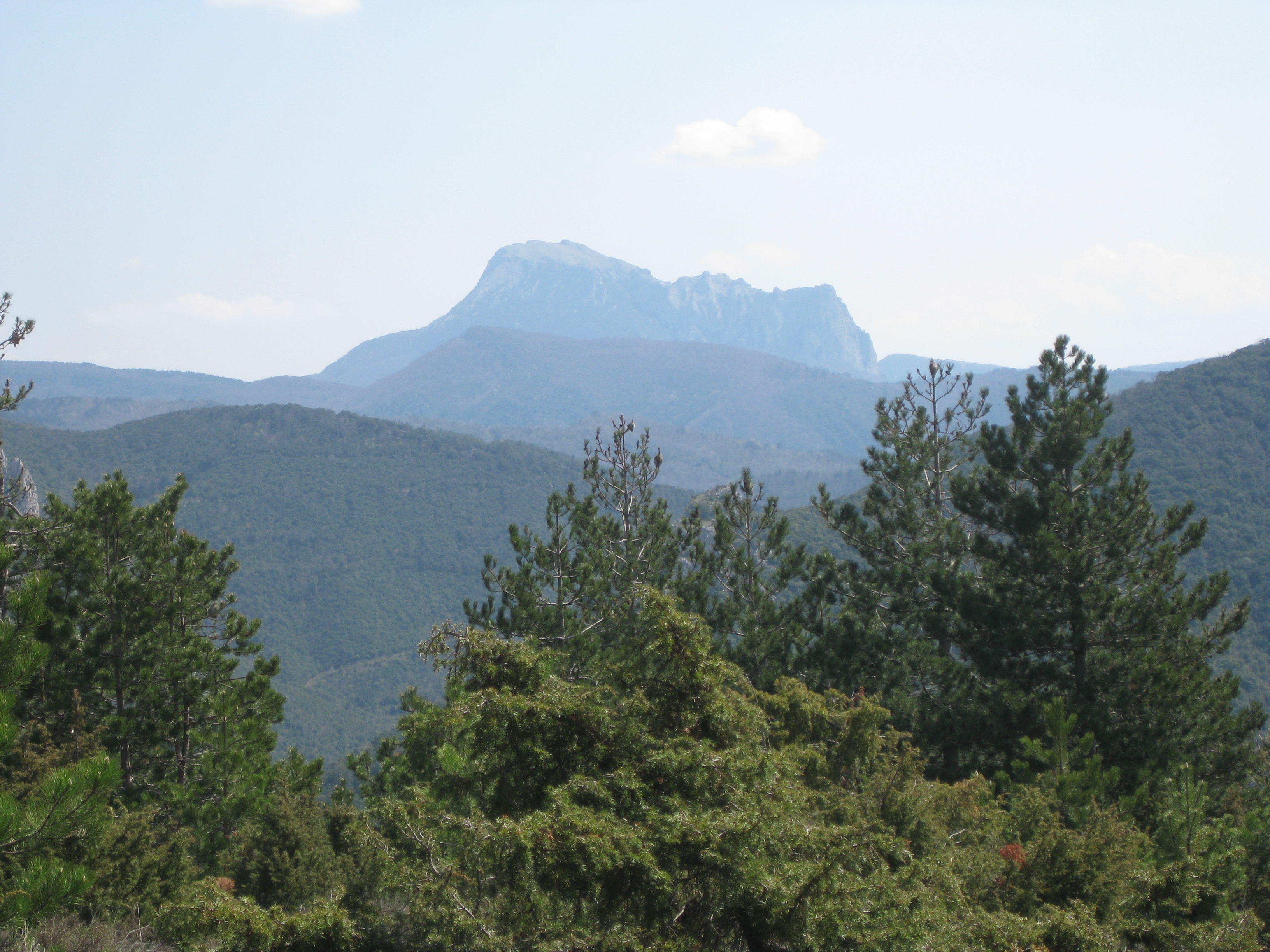
This red earth is all-encompassing. And then suddenly, it stops. And we’re back again among more pallid yellowish soils, enjoying views of the distant Pyrenees, and the mountain which dominates this part of the world, Bugarach.
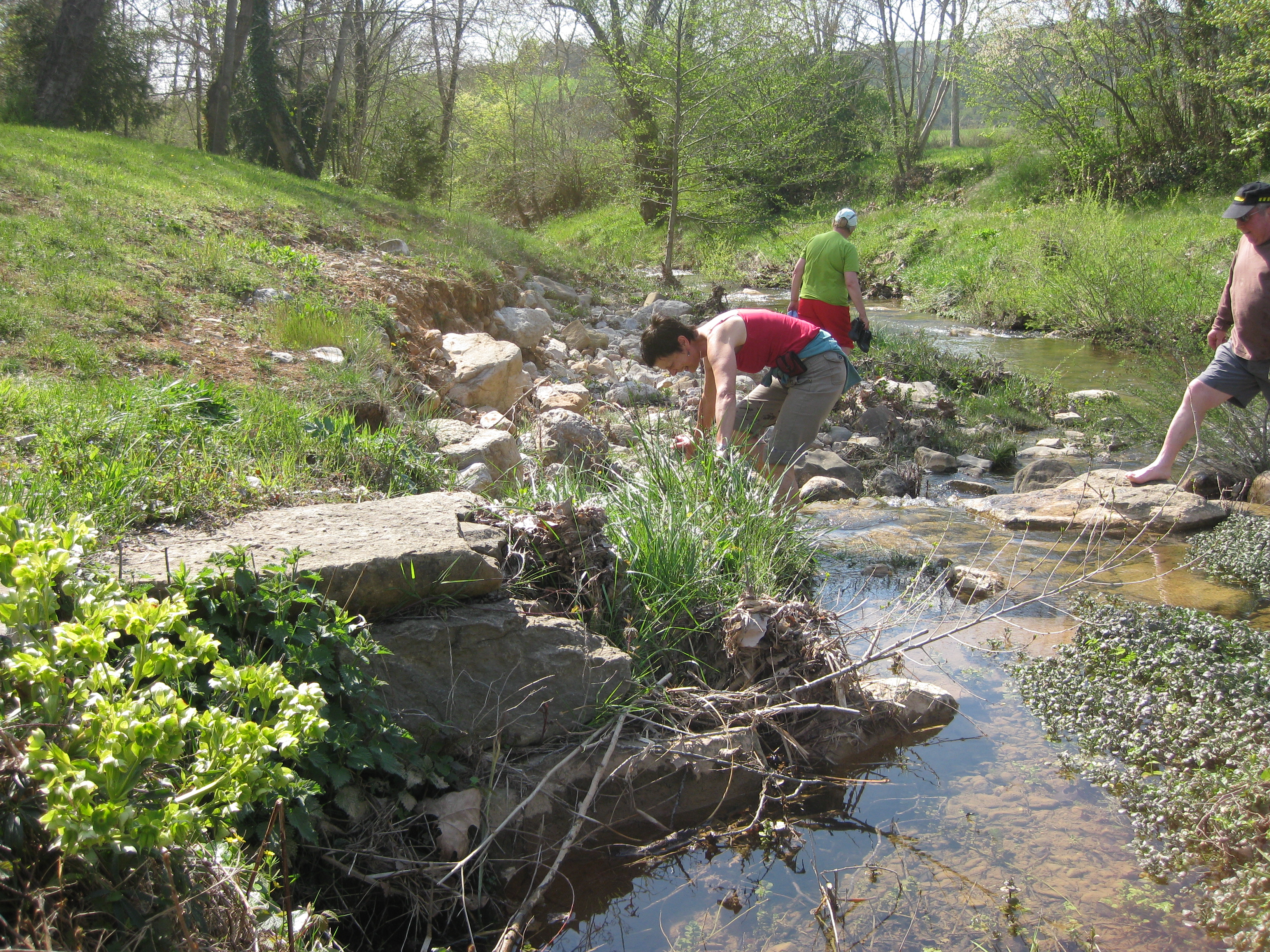
The walk was on the hottest day of the year so far, with clear, vivid blue sky. We shed jumpers, long trousers, and our pasty winter skin turned the colour of that red earth. There was a wide shallow stream at the village where our walk began and ended, and a few of us enjoyed a paddle. I greatly contributed to the end-of-day bonhomie by falling in…….
 From Pyrenees to Pennines
You must be logged in to post a comment.