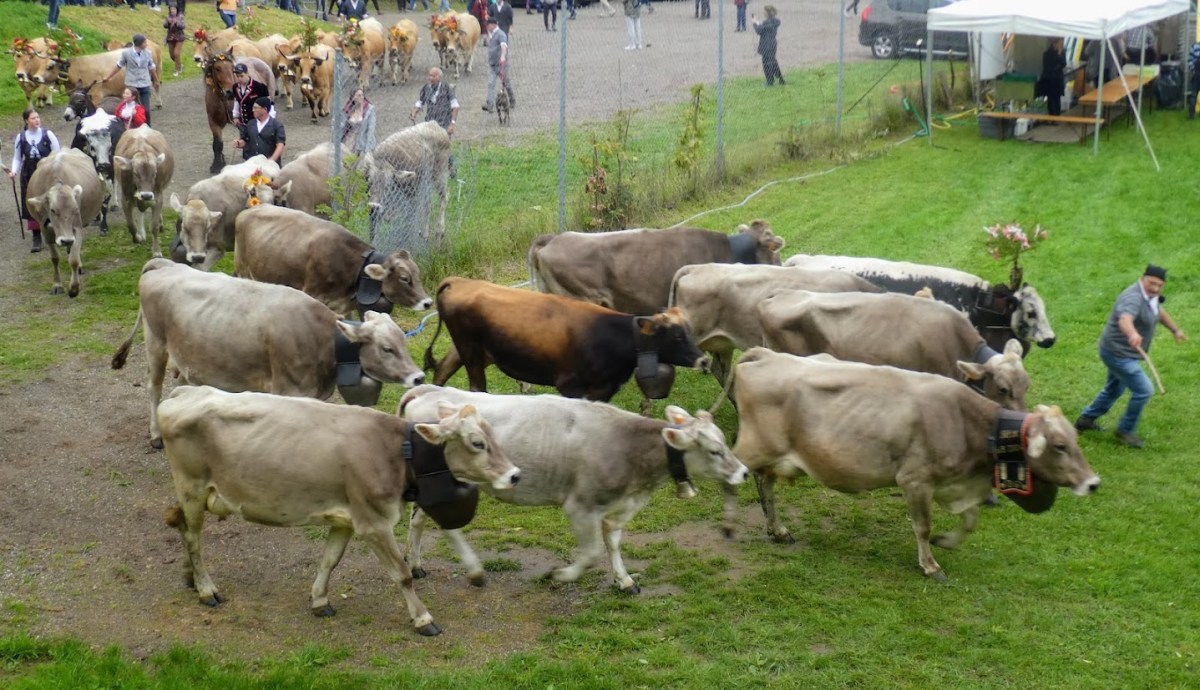
We know that over in the UK you are battling with Storm Amy, so I’ll keep quiet about the fact that though it is raining here, it’s the only expected poor-weather-episode in our holiday. So we’ve decided to have an afternoon off, allowing me to send lots of postcards from the Fête de la Transhumance in nearby Muhlbach which we visited this morning, ahead of the deluge we’re currently experiencing.
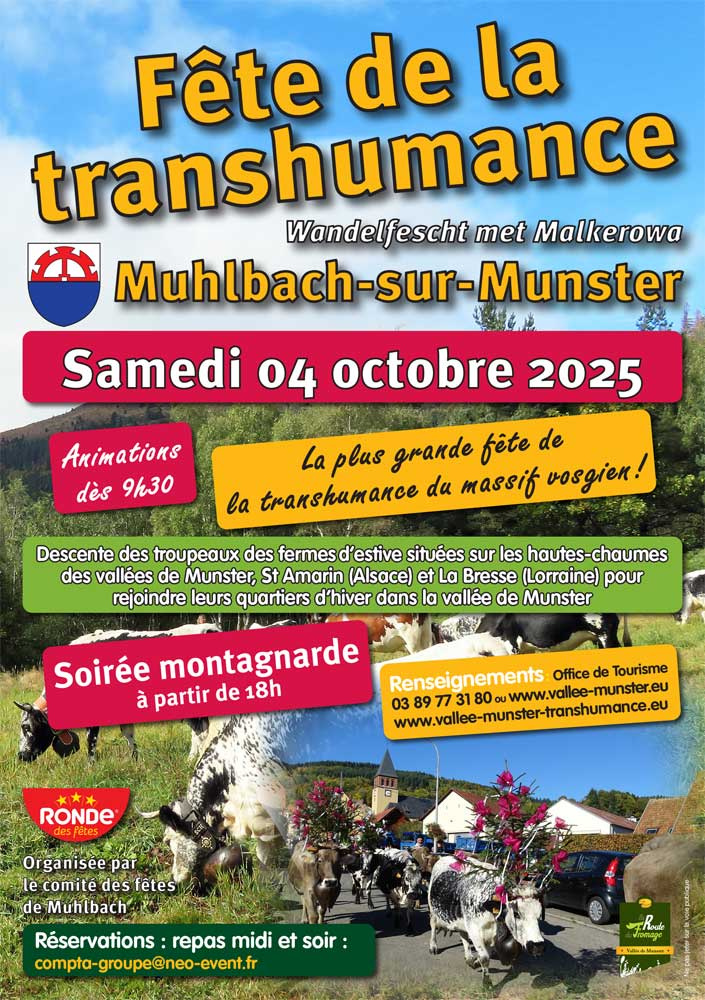
Transhumance is the practice of taking cattle to spend the summer grazing in the lush upland pasture, before bringing them back down to spend the winter in their home community, Both ends of the season are times of celebration, and here’s transhumance in Seix, from our days in the Pyrenees.
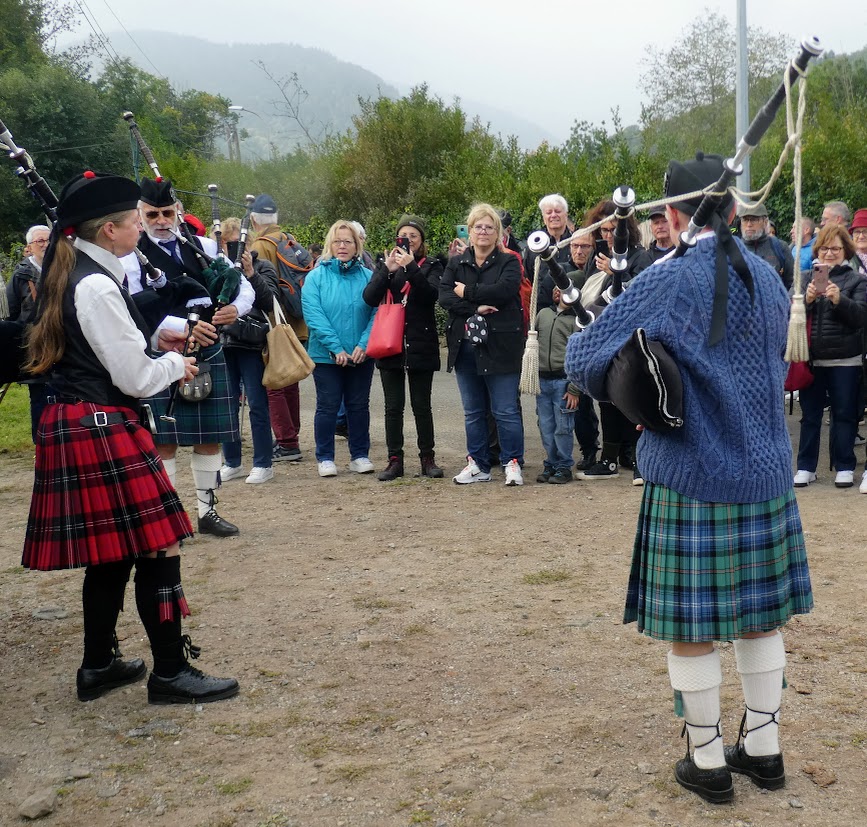
The first people we met after we’d arrived were a group of three people in kilts tuning up their bagpipes. We greeted them in French, then reverted to English, assuming they were Scottish. But no! They come from Strasbourg, speak not a word of English, but are Passionate about Bagpipes, and here they were, ready to play their cornemuses for everyone’s bemusement and delight.
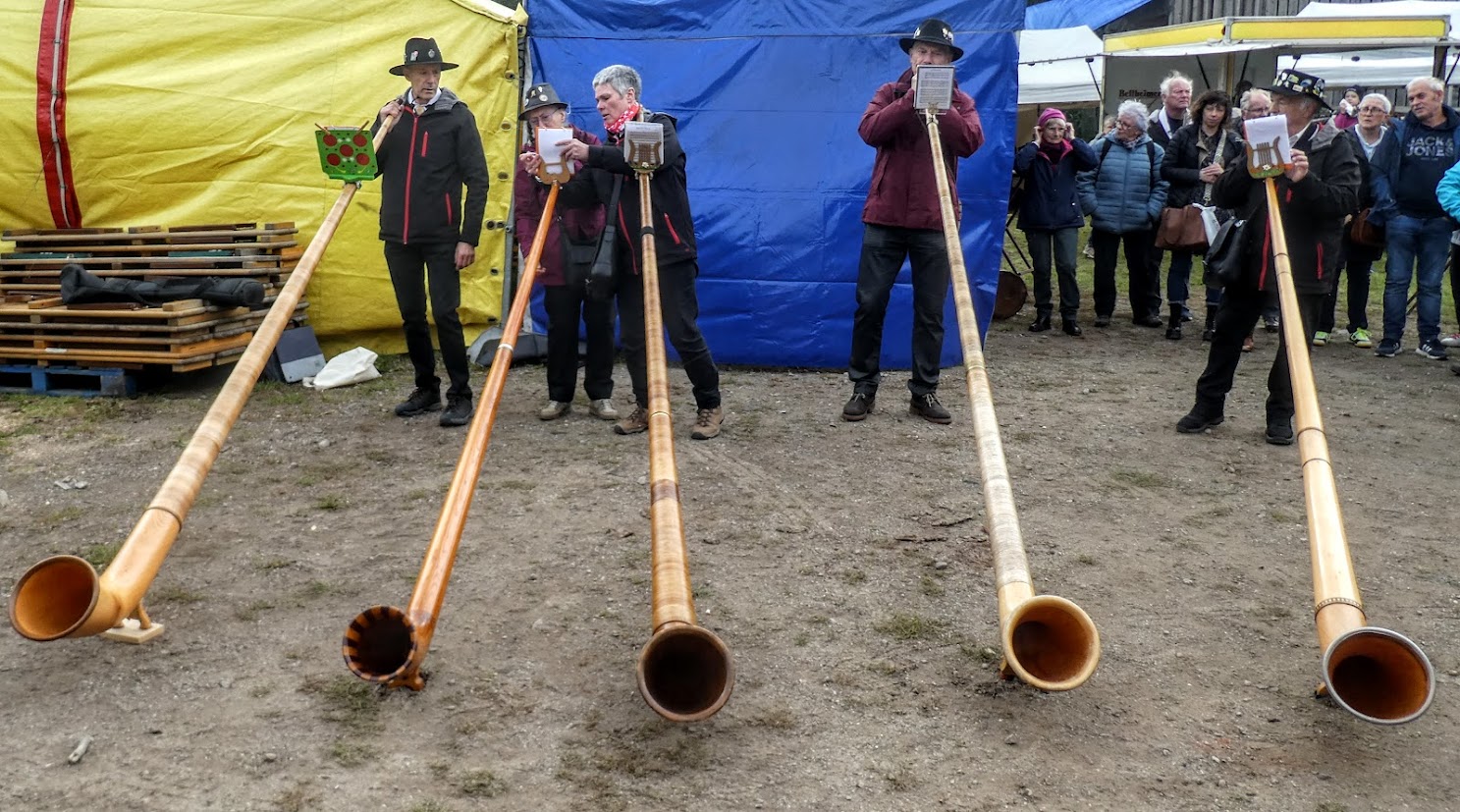
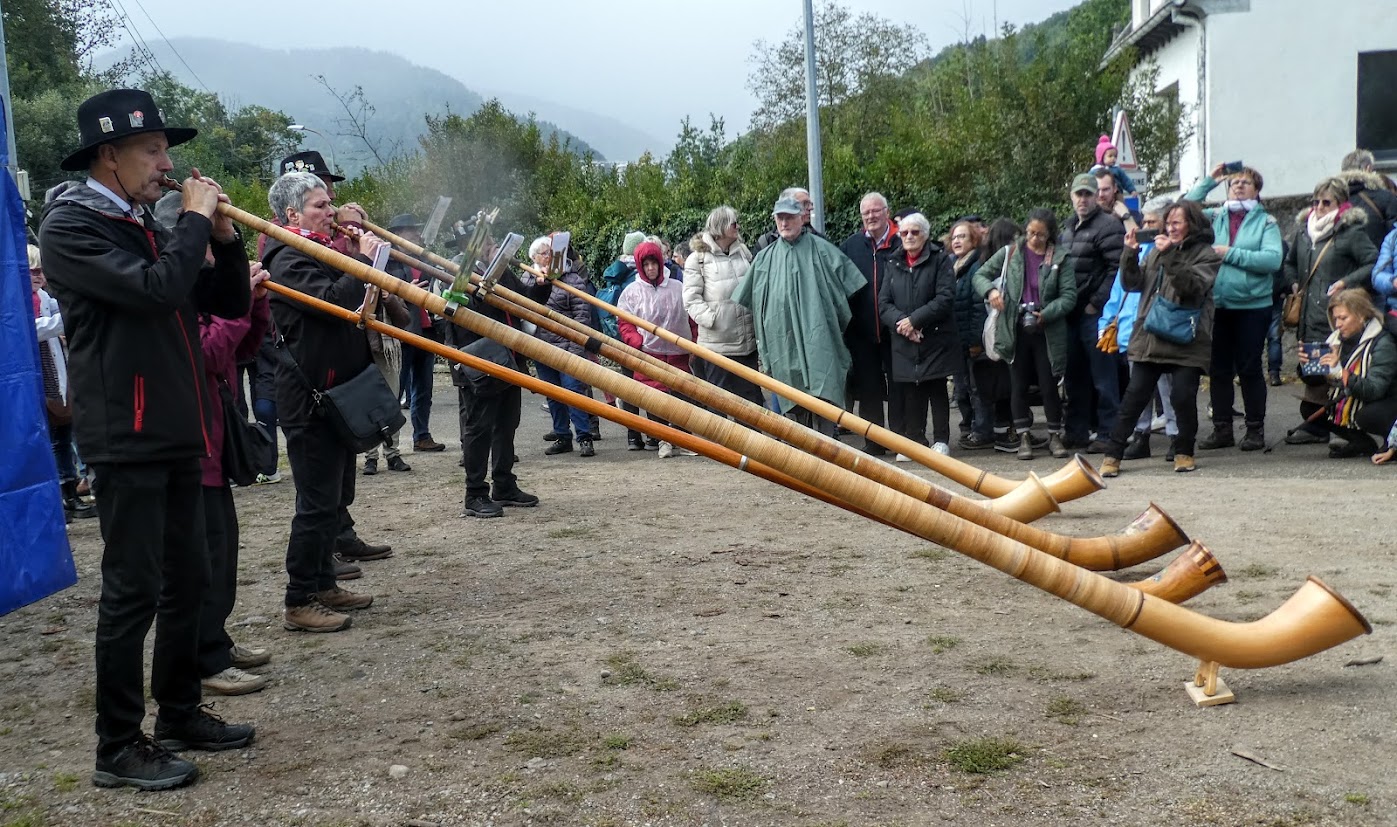
The Alphorn was originally used to call cattle. These days it’s the province of musical folklore enthusiasts and there were several bands of them playing today.
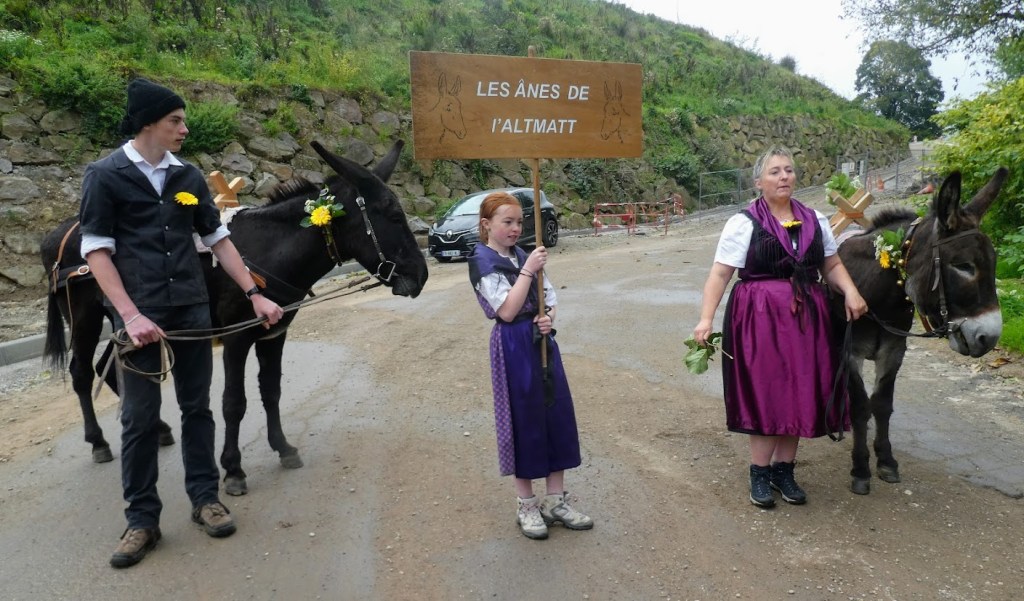
Then it was off to visit the donkeys who would be part of the procession of cattle (Don’t ask. No idea why).
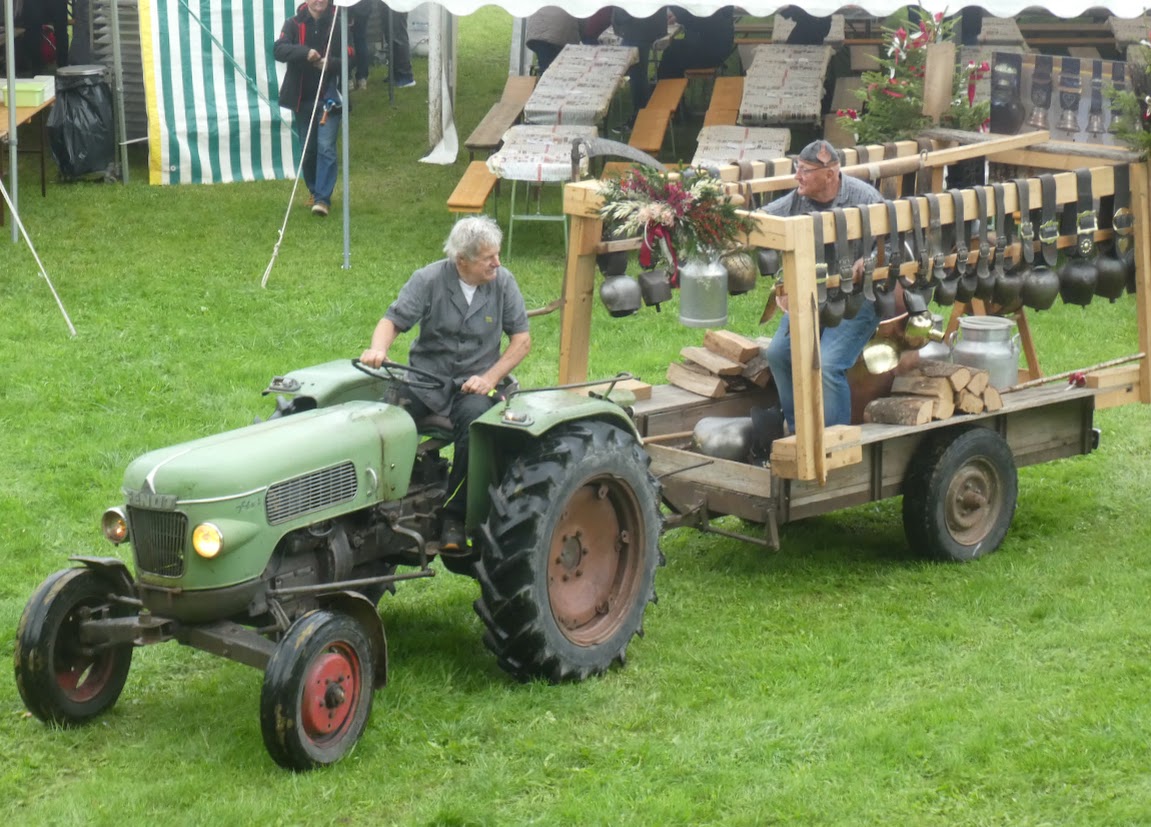
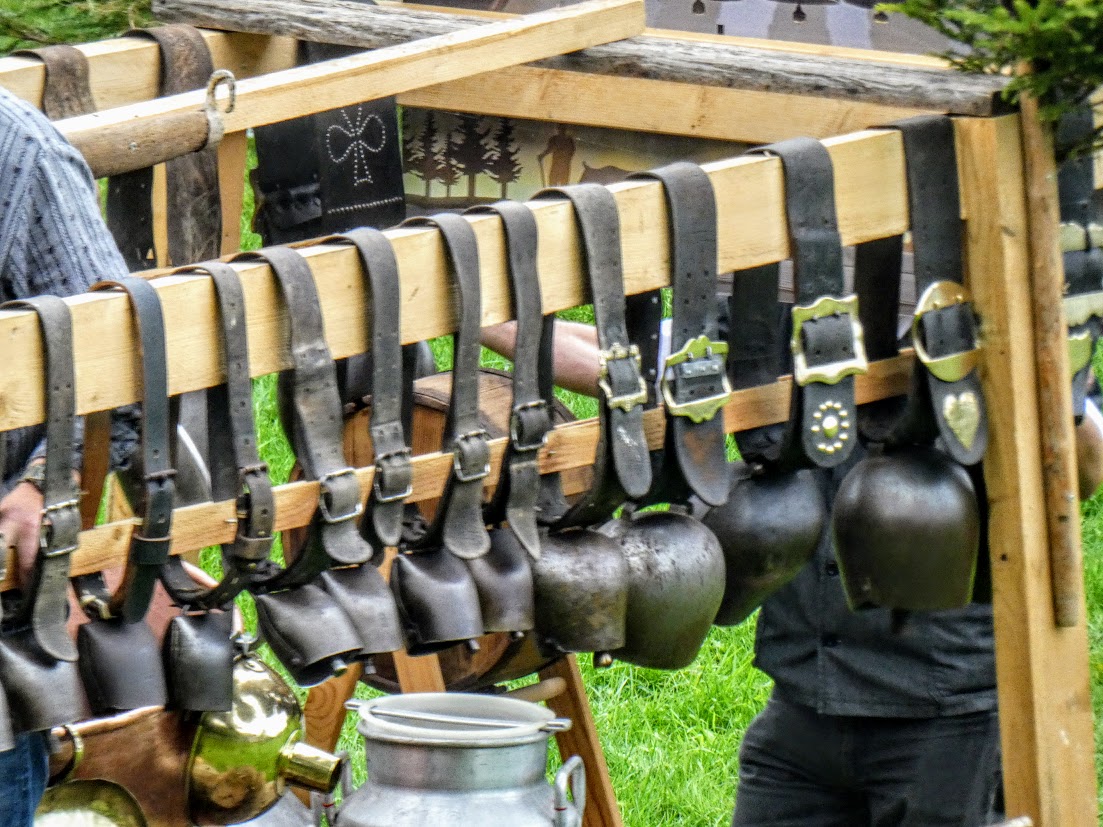
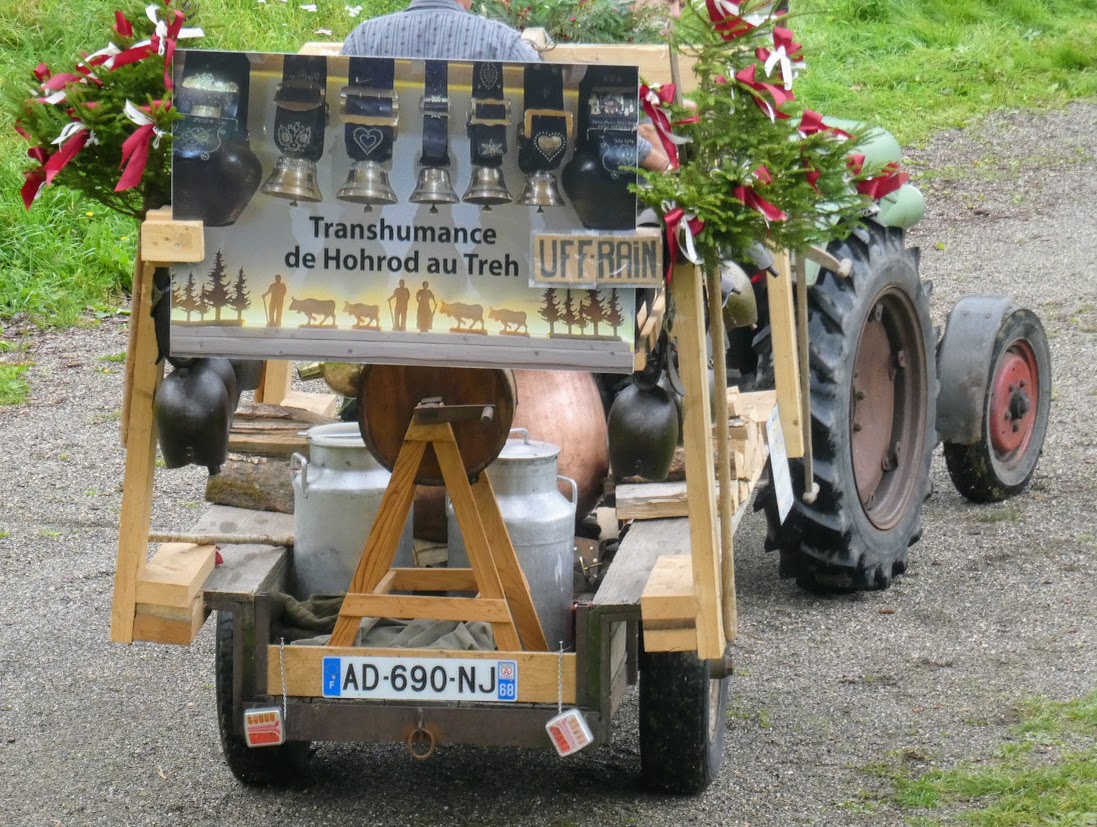
On our way up to view the procession we found the tractor that carried so many of the cowbells the animals wear when in their summer pasture, to keep tabs on them.
Then finally, we could hear all those cowbells clanging away, announcing that the cows were on their way. In truth the cows weren’t happy, and many of them skittered nervously about. I don’t know how much the leading cows enjoyed their fancy headdresses either: but they didn’t complain. By now it’ll be over, and they can forget all about it till next spring, when they’ll be off up the mountain again.
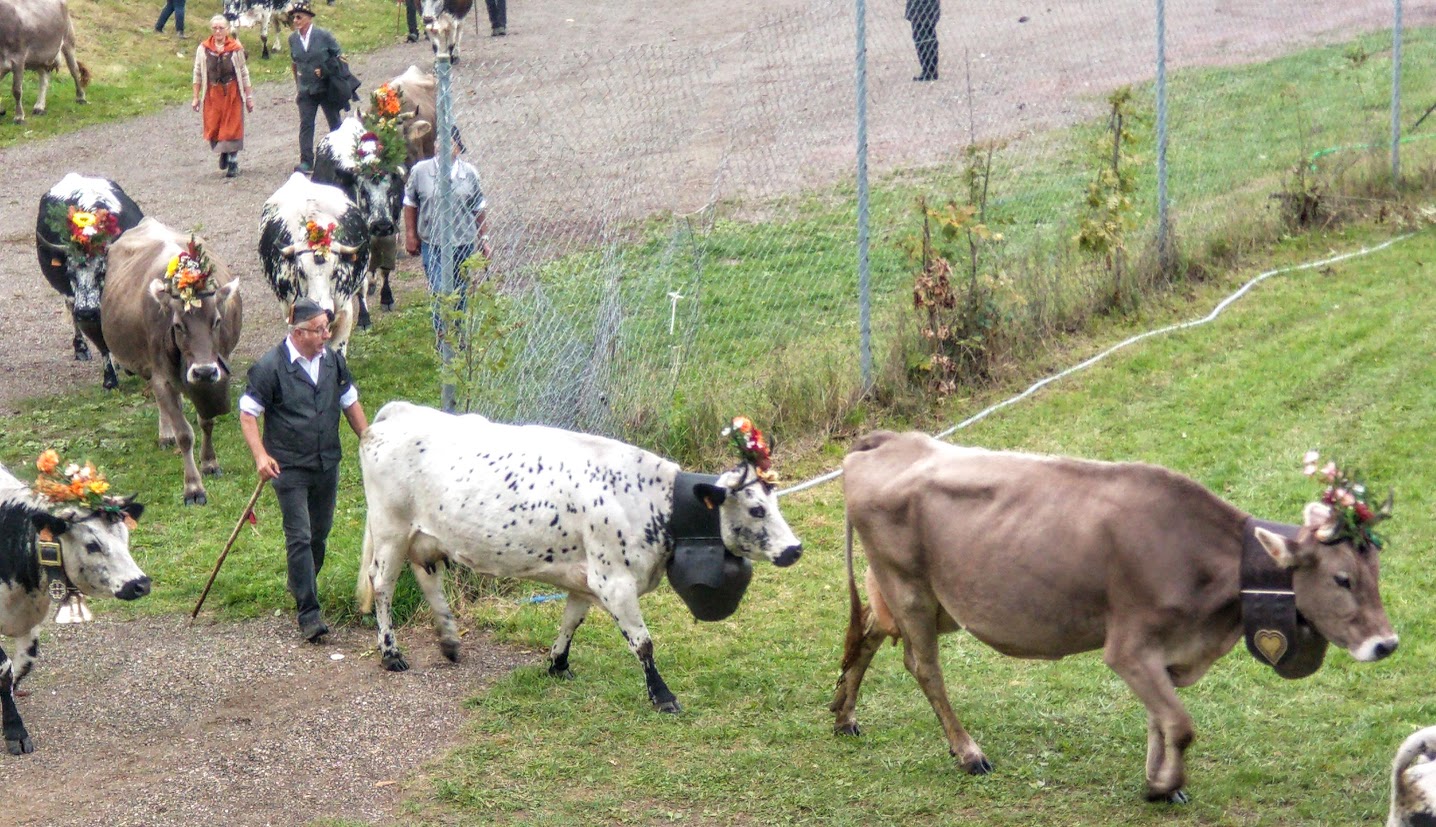
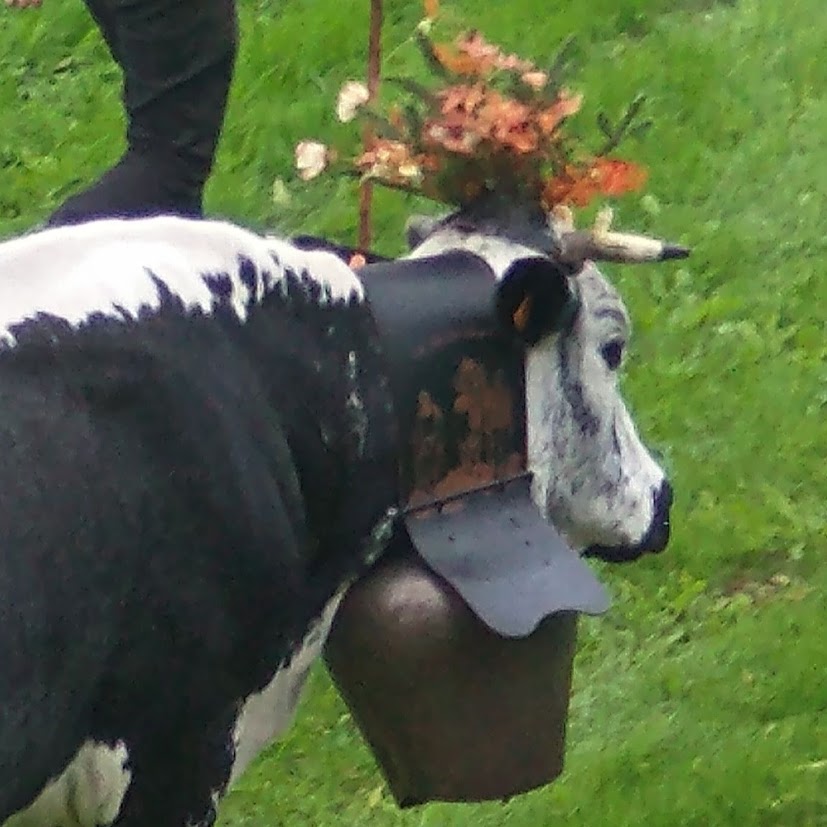
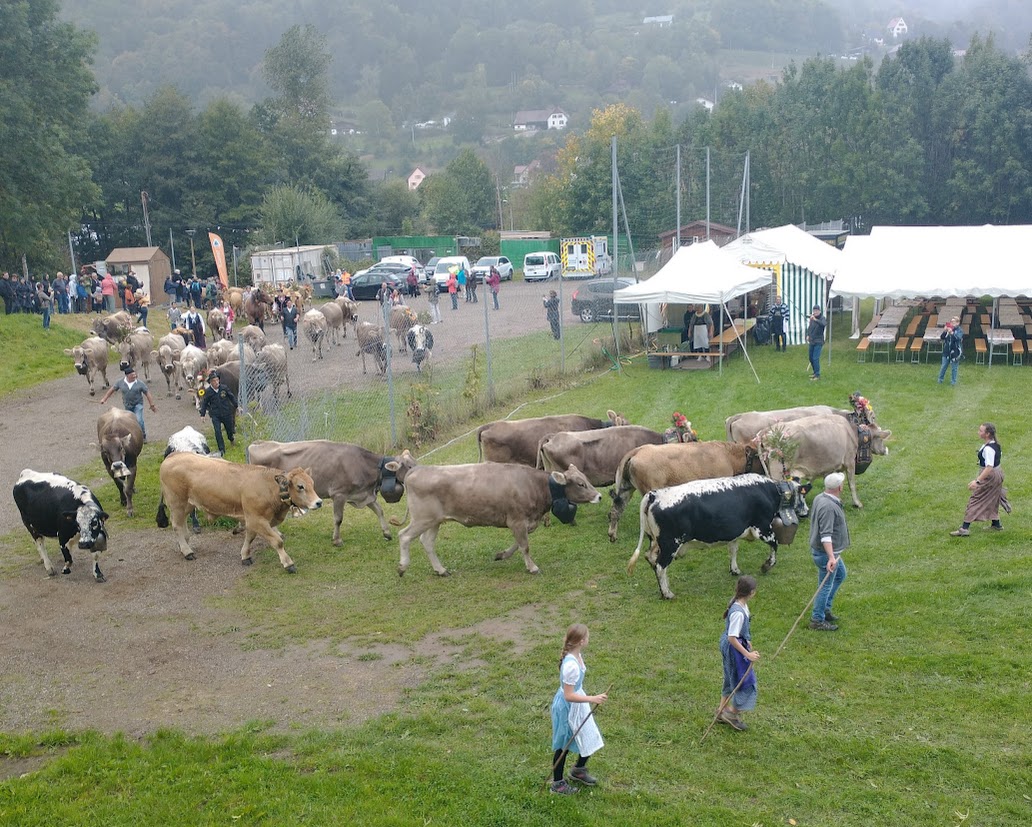
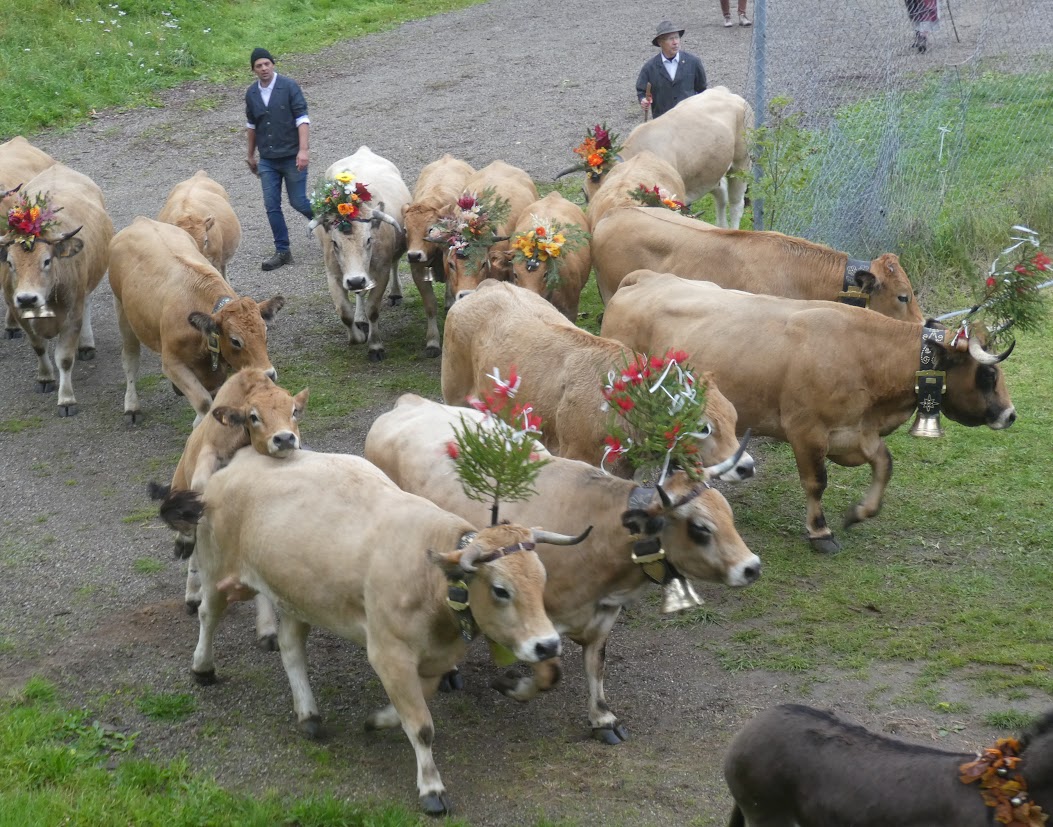
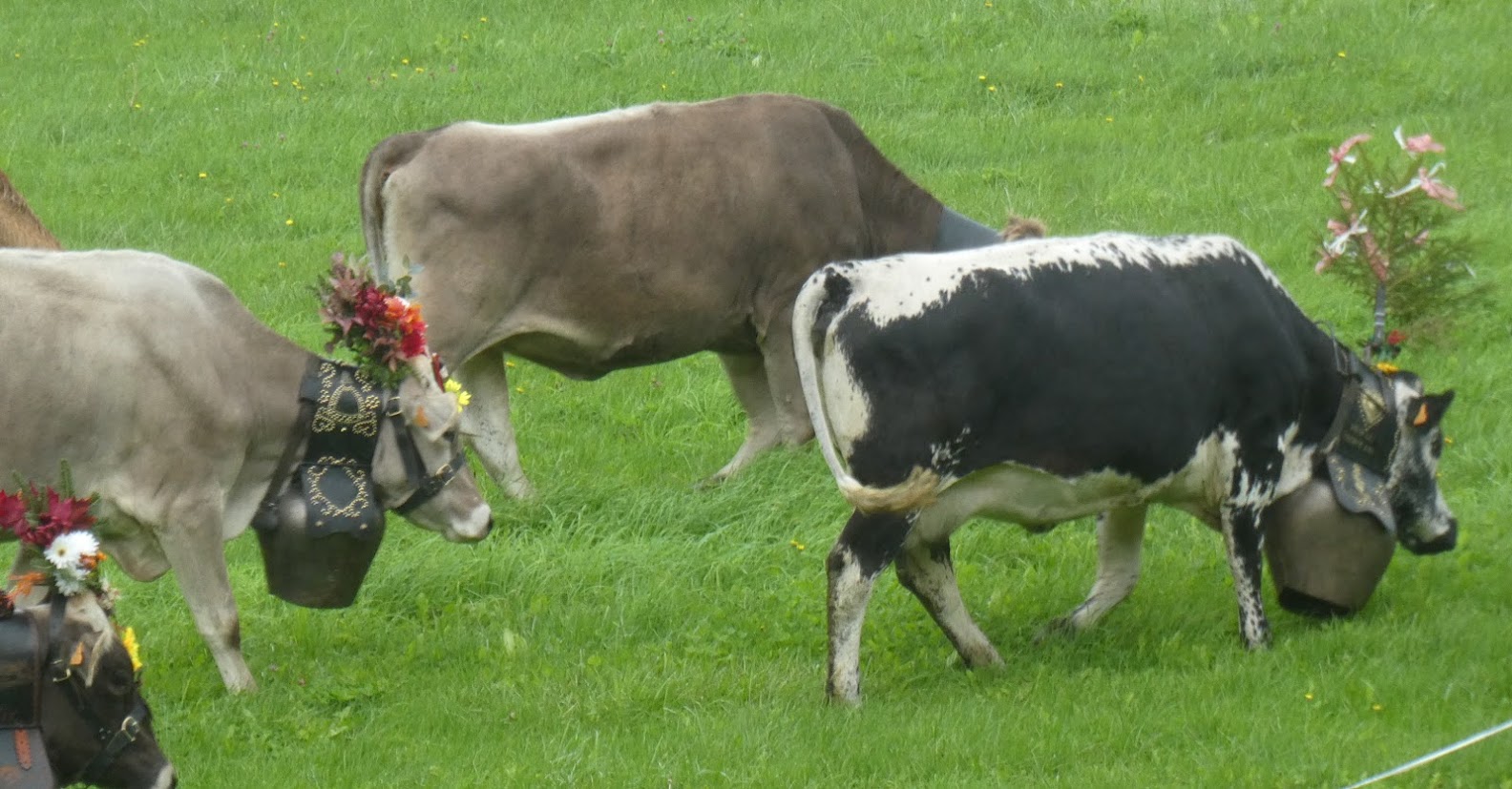
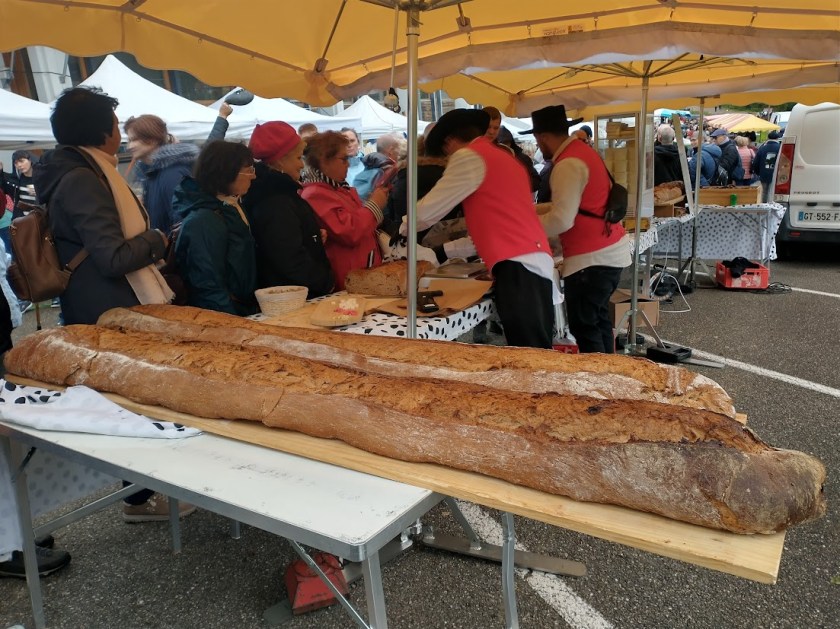
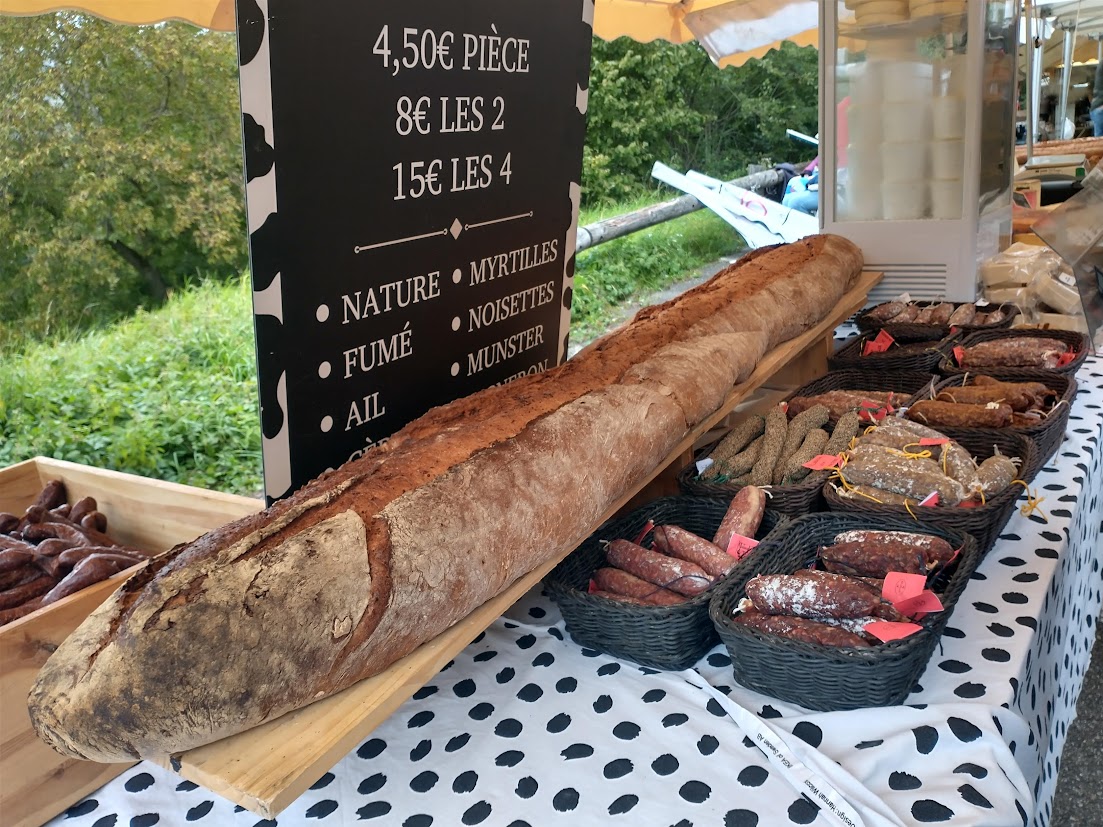
We didn’t stay for the highpoint of the event for many of the locals, the large communal meal, thankfully under canvas. But before we went, we looked round the market: local cheeses, sausage, sweetmeats – cowbells too.
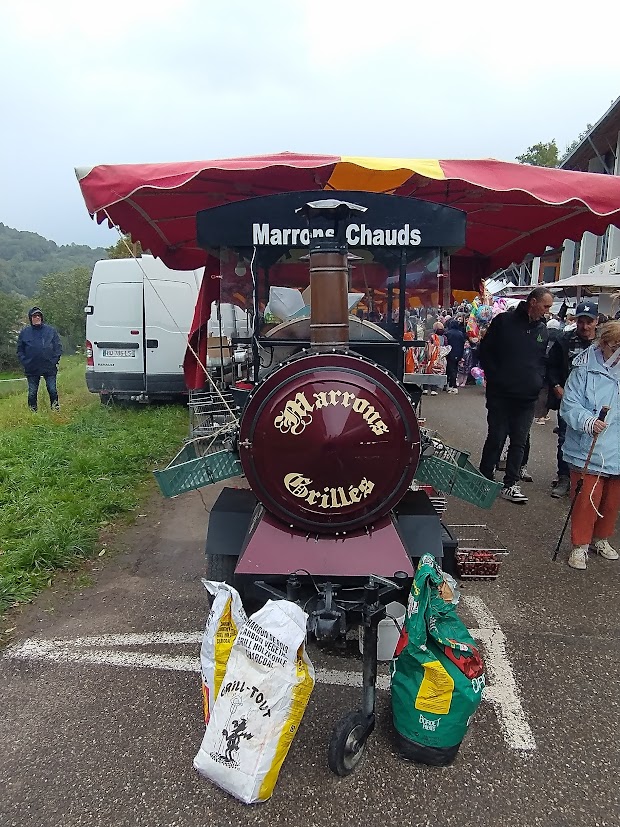
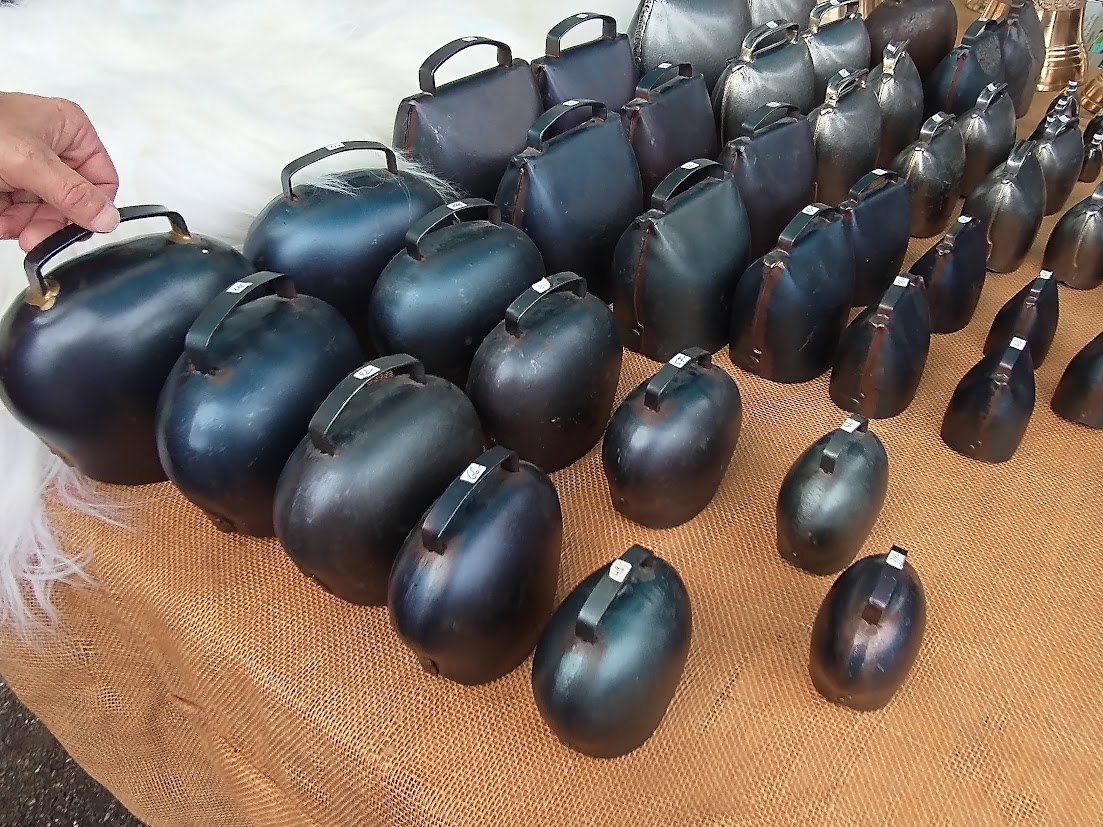
And as we were leaving, something else extraordinary. A procession of people, each holding a large cowbell, which they knocked on each knee alternately as they walked forward, producing a rhythmical cow-bell-dirge. Ouch! Poor knees!
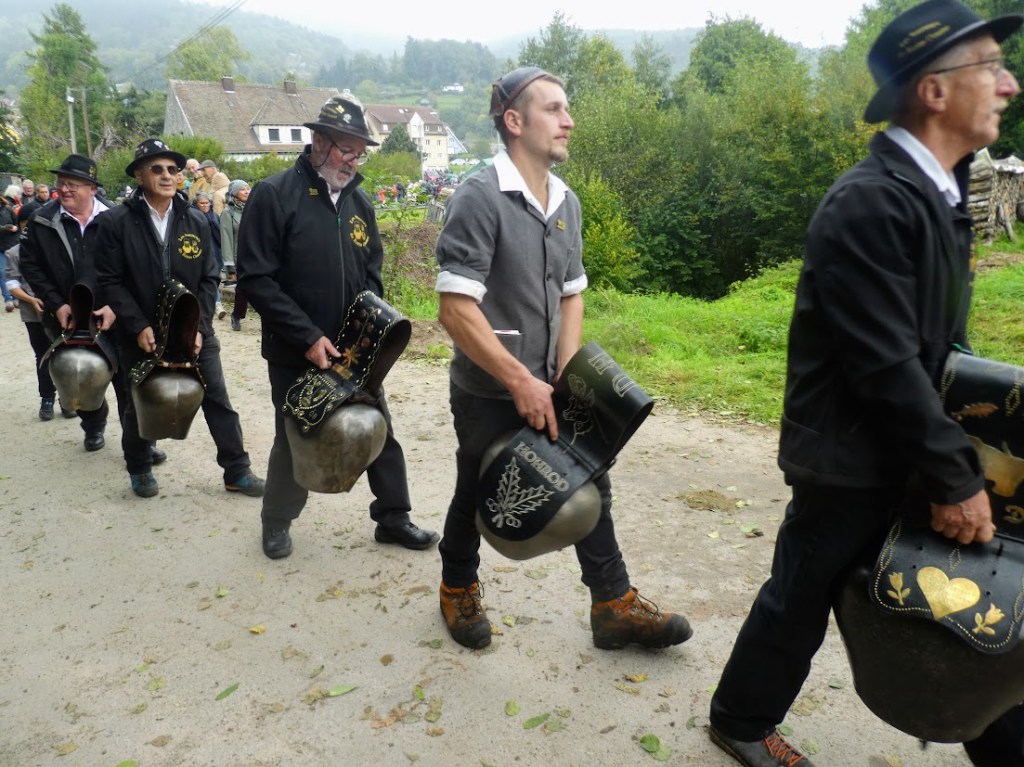
After yesterday’s experience at Colmar, which was Tourist Central, jammed with visitors (like us …) it was good to be at a local celebration: crowded to be sure, but almost exclusively with locals, many of them chatting away in Alsatian, which is widely spoken here, particularly among the older generation.
We feel as if we’ve properly arrived here now.
P.S. WP’s AI suggests the following tags: technology; art; cats.


 From Pyrenees to Pennines
You must be logged in to post a comment.