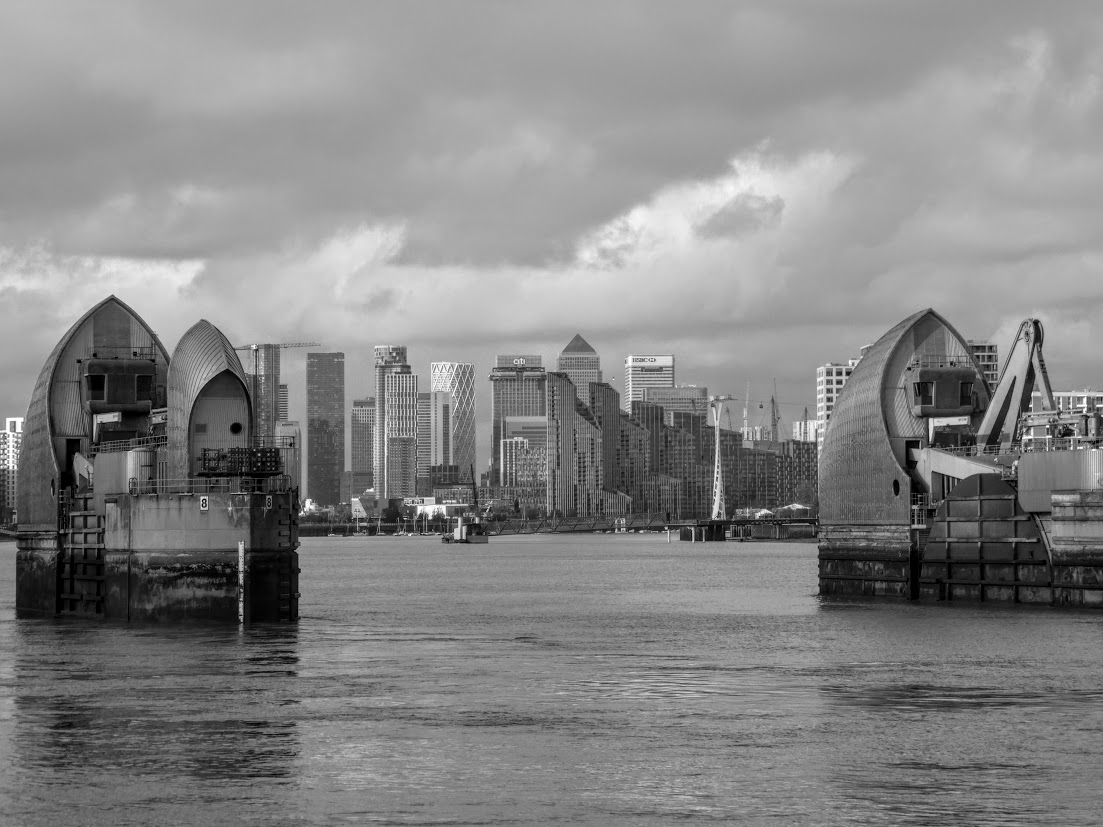
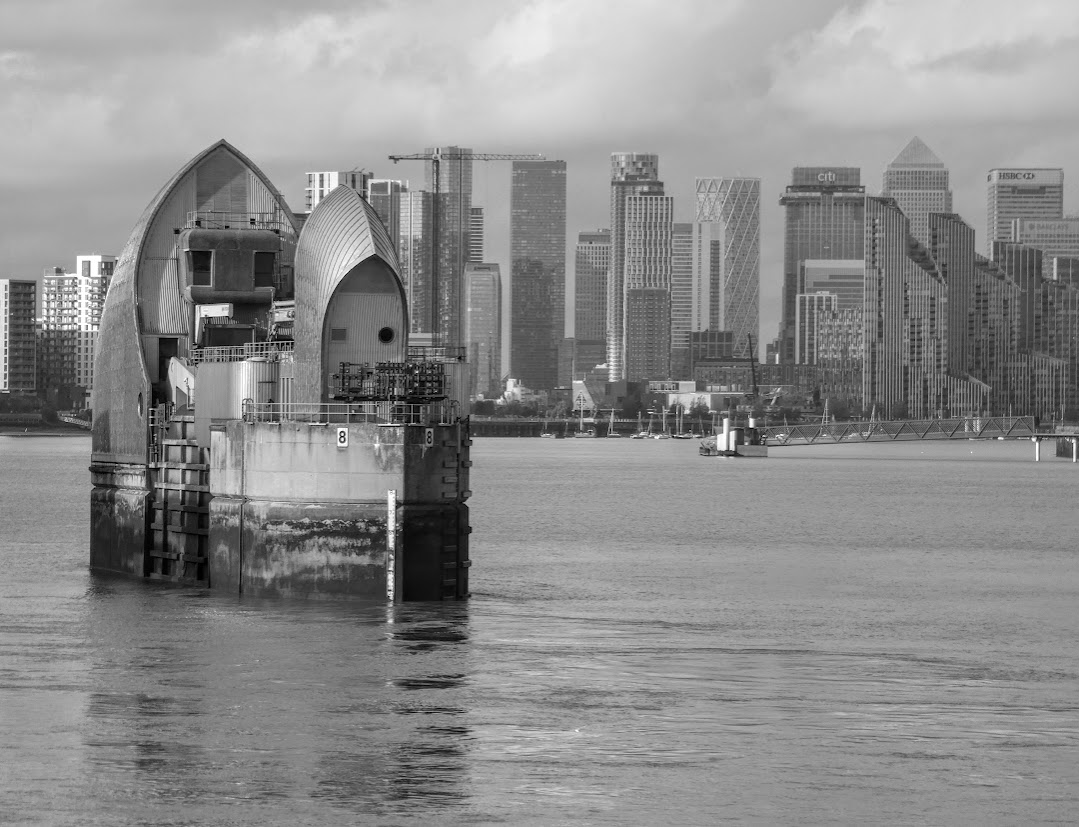
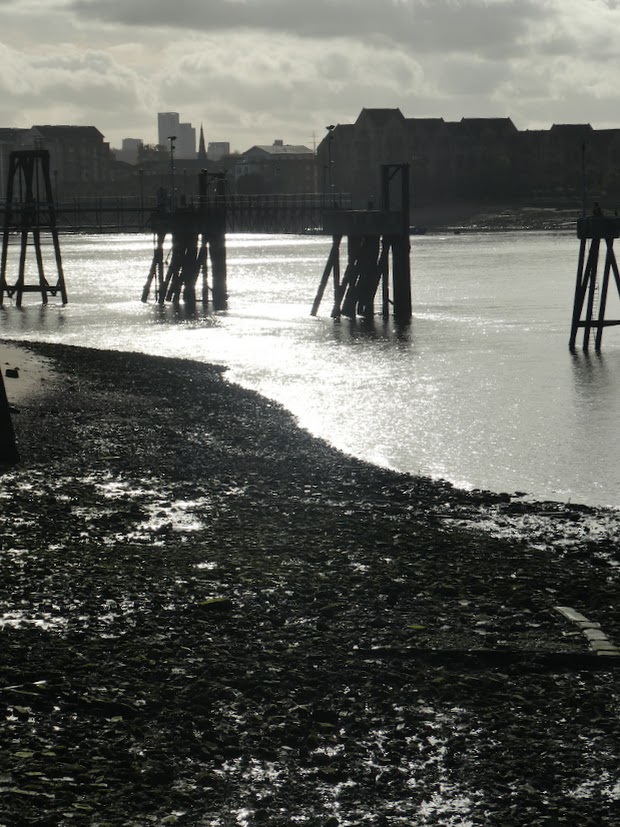
The London Team is with us this week, so all my shots are family ones, and in Glorious Techicolor. So here are a few shots from my last visit to London itself, taken along the Thames Path near Woolwich.
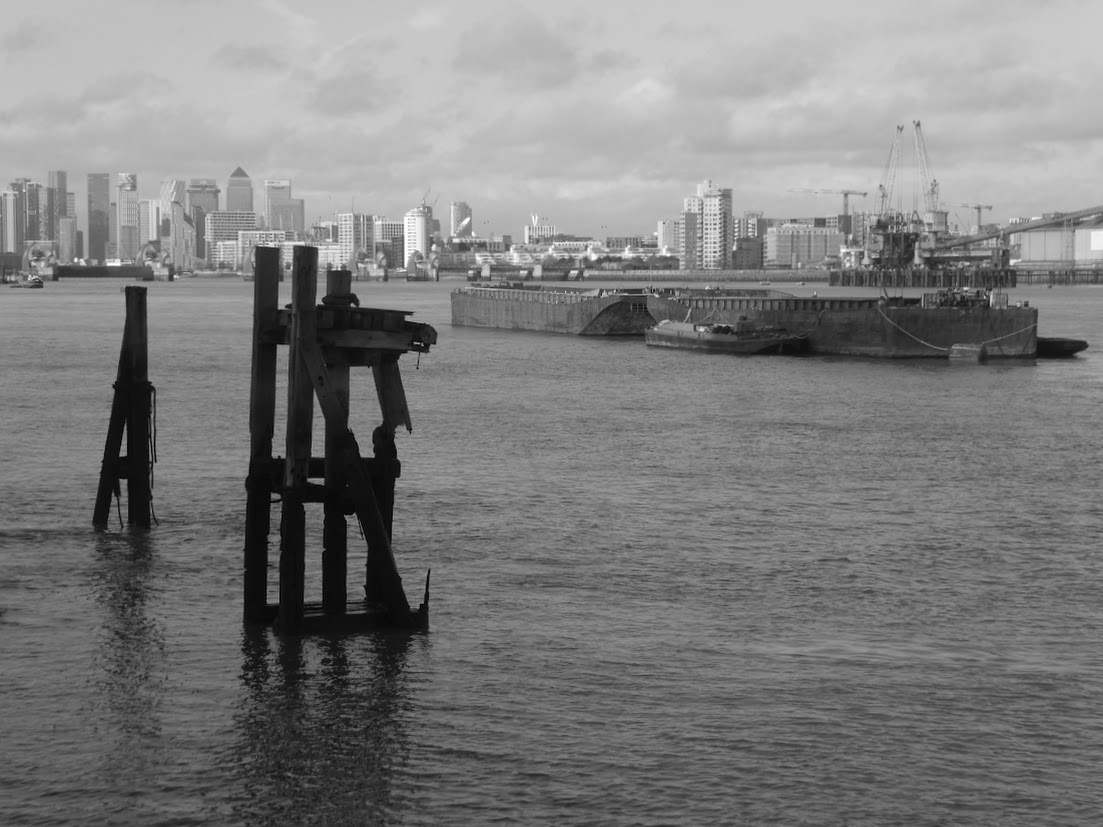
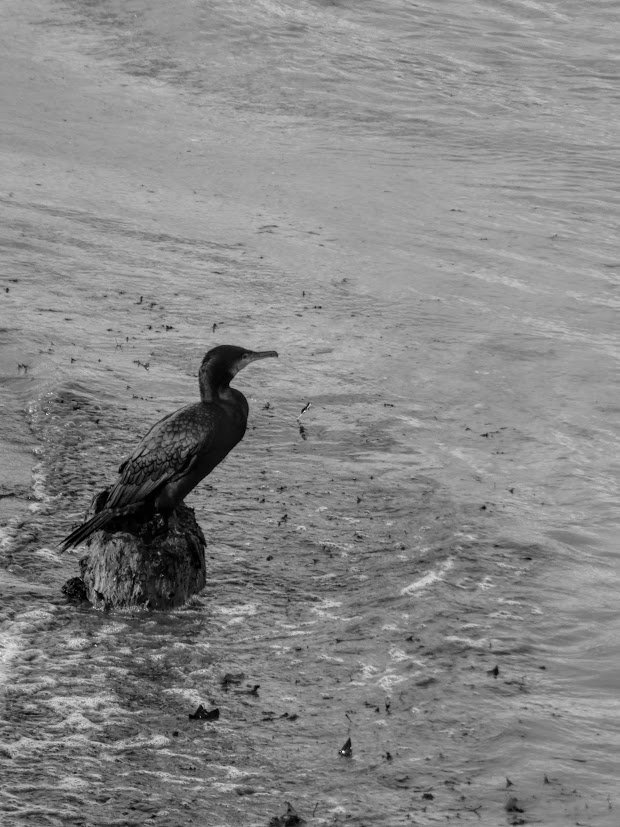
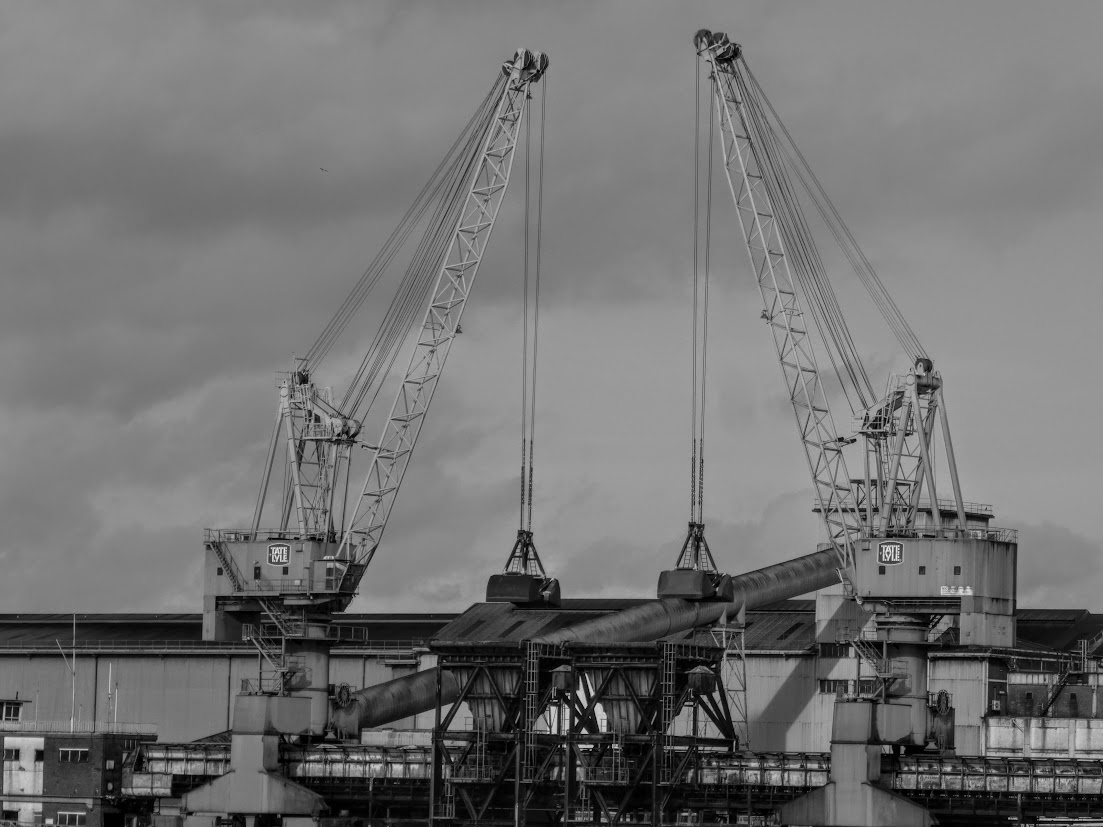
For Leanne’s Monochrome Madness
The London Team is with us this week, so all my shots are family ones, and in Glorious Techicolor. So here are a few shots from my last visit to London itself, taken along the Thames Path near Woolwich.
For Leanne’s Monochrome Madness
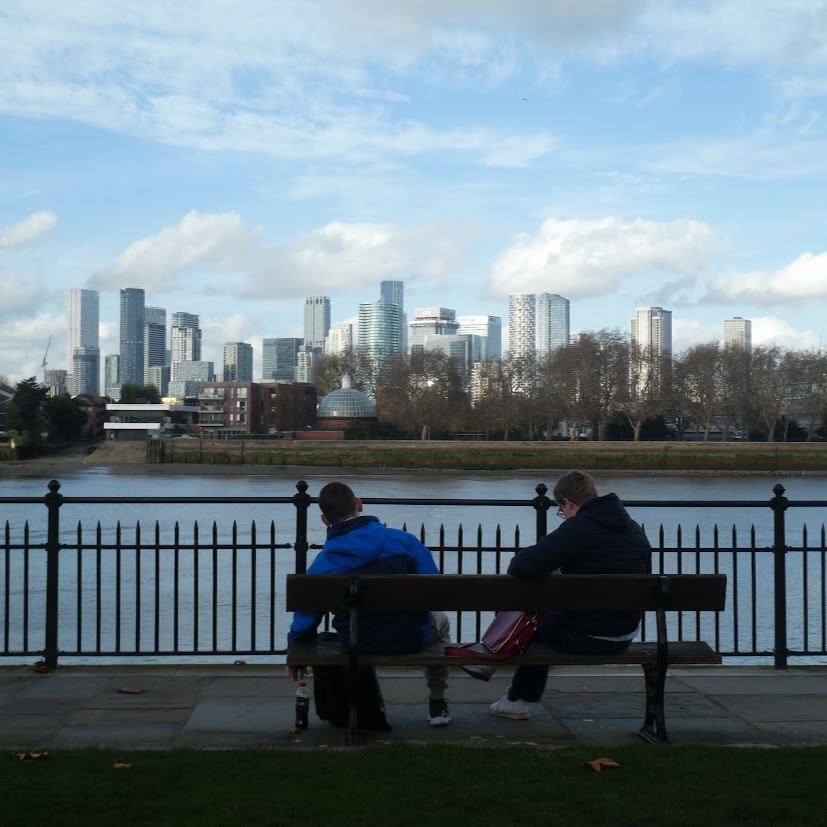
On Thursday I walked the Thames Path from Woolwich via the Thames Barrier and the Millennium Dome to Cutty Sark in Greenwich. A story for another day. Today I’ll just show a view across the Thames, as enjoyed by two picnickers on a bench in the gentle shadow of the buildings near the Dome, especially selected for Jude’s Bench Challenge, and Becky’s NovemberShadows.
I went to London last week. But it wasn’t all about seeing family. I enjoyed a few hours with Sarah of Travel with Me fame, and the day after that, walked part of the Thames Path. This route does exactly what it says, and offers you the chance to walk from where the river rises in the Cotswolds, to where it joins the North Sea: that’s 215 miles. Which must seem pretty small beer to most of you living outside the UK, but it’s our second longest river.
I opted for the stretch between the assertively twentieth century business district of Canary Wharf – along the north side – to Tower Bridge, before returning on the south side. A walk of some eleven miles.
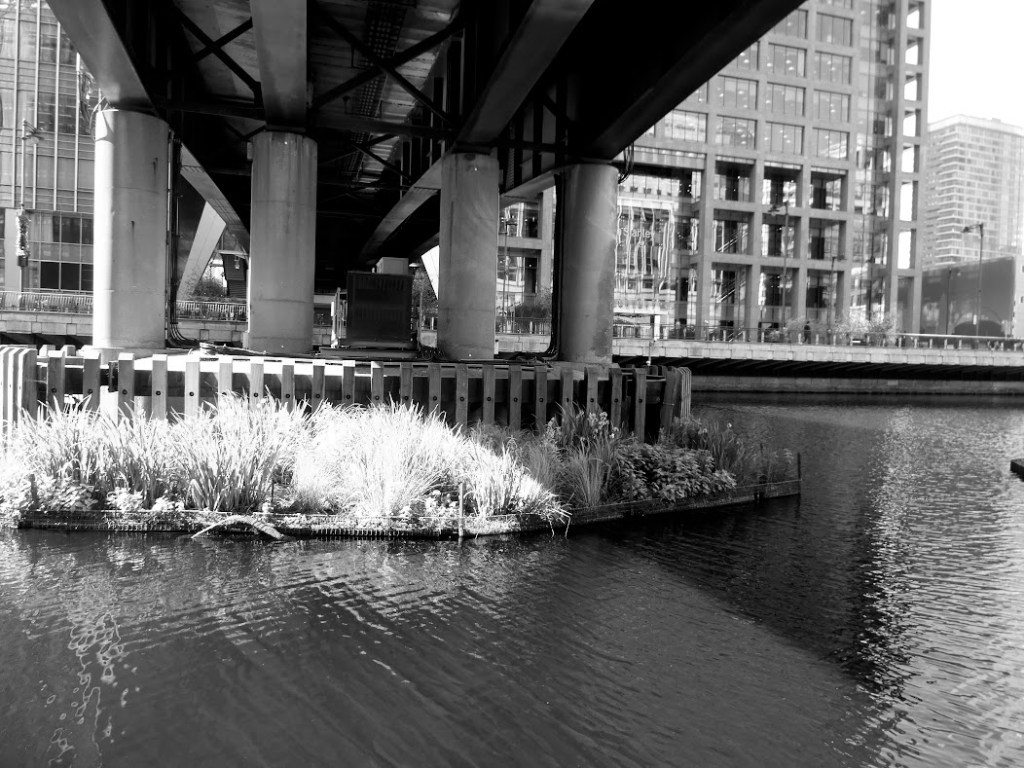
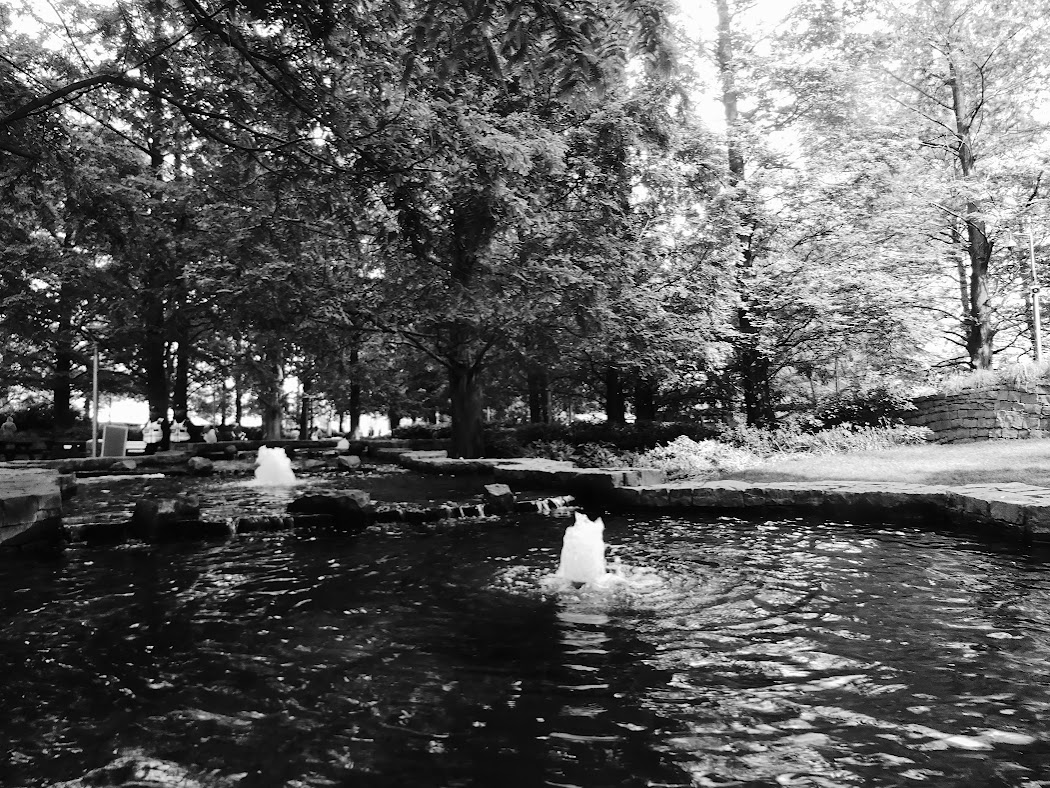
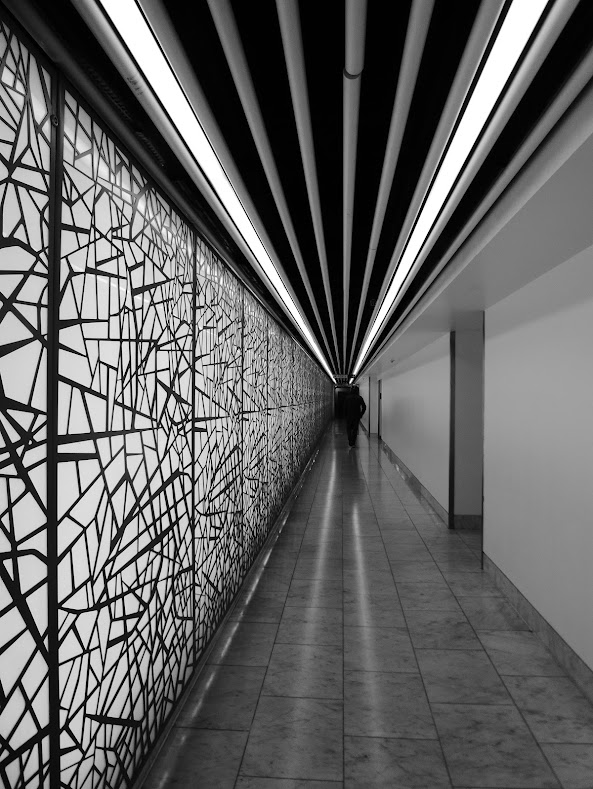
I rather enjoy Canary Wharf. It’s high rise, everywhere. But there are – slightly self-conscious – efforts to make it human-friendly. I found sculpture trails, and massed plantings in an around the various waterways. There are parks, and even mini woodlands with water tumbling about in mini waterways. Even the public toilets are interesting, as my third photo here shows.

But then it’s the Thames Path. And the water’s edge round here means wharfs and warehouses: reminders of a time when London was an epicentre for receiving tobacco, cotton, sugar, coffee, tea, porcelain, silk ….: offering hard and poorly paid labour to thousands in the Docklands and industrial towns throughout England, trade and prosperity to many beyond, and slavery to many of those who produced the goods we were happy to import.
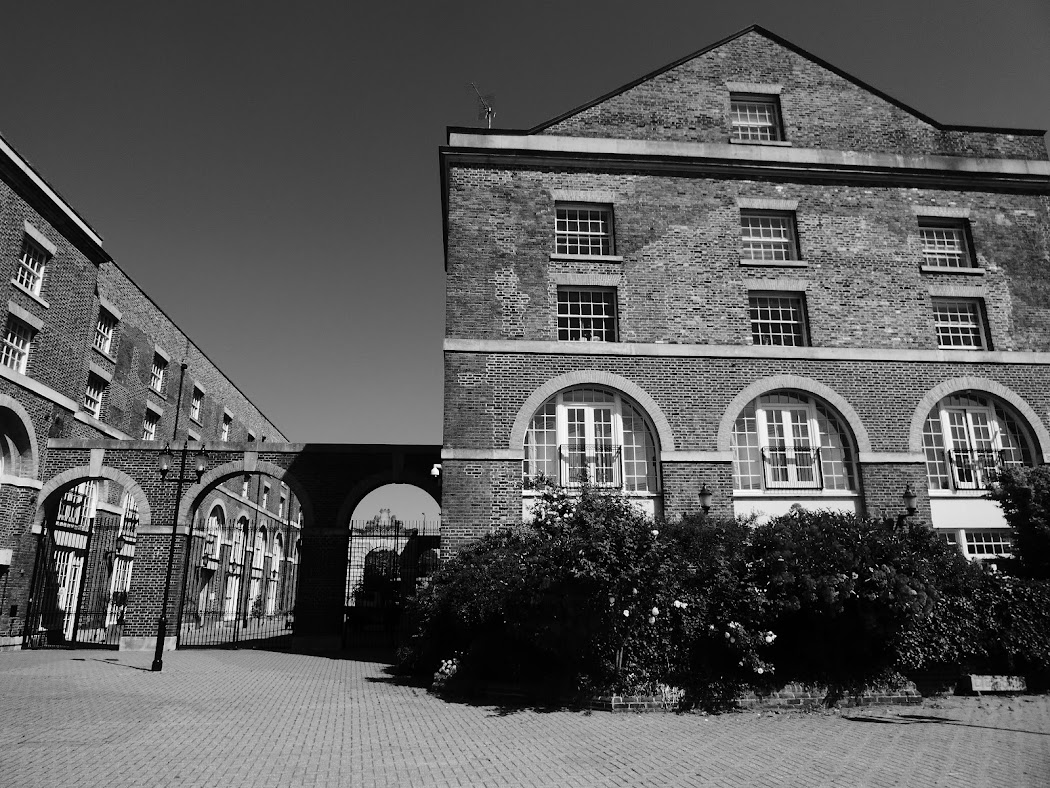
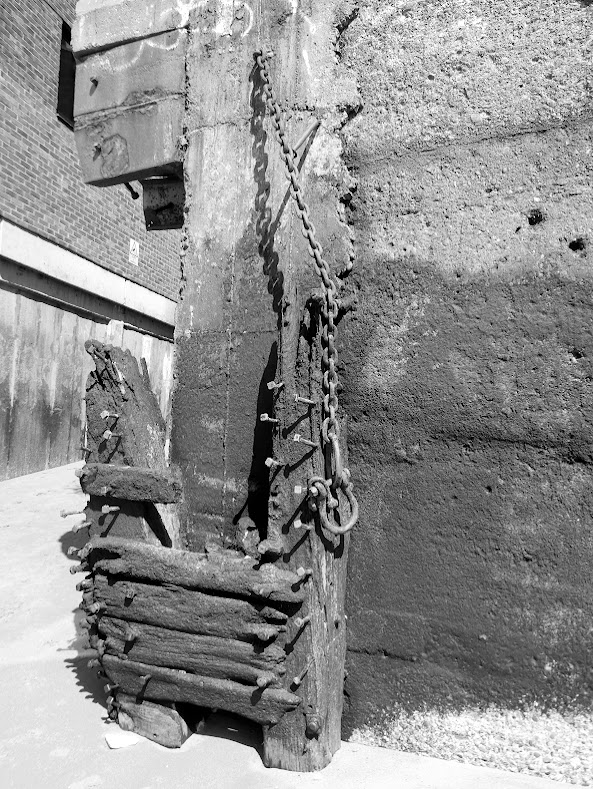
Now these warehouses – handsome buildings – are repurposed, often as sought-after apartments overlooking the Thames. I saw too pillars of rotting wood poking through the foreshore- evidence of once-upon-a time busy jetties and quays. There were even a few mudlarkers: hunters for souvenirs of London’s past as a settlement even back to Bronze age times. And always the contrast between old and new in a single glance.
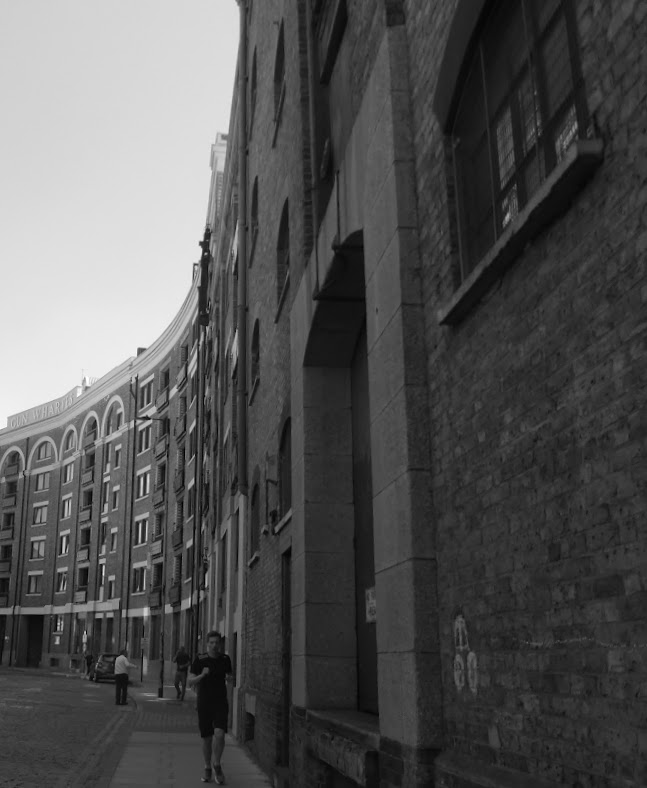
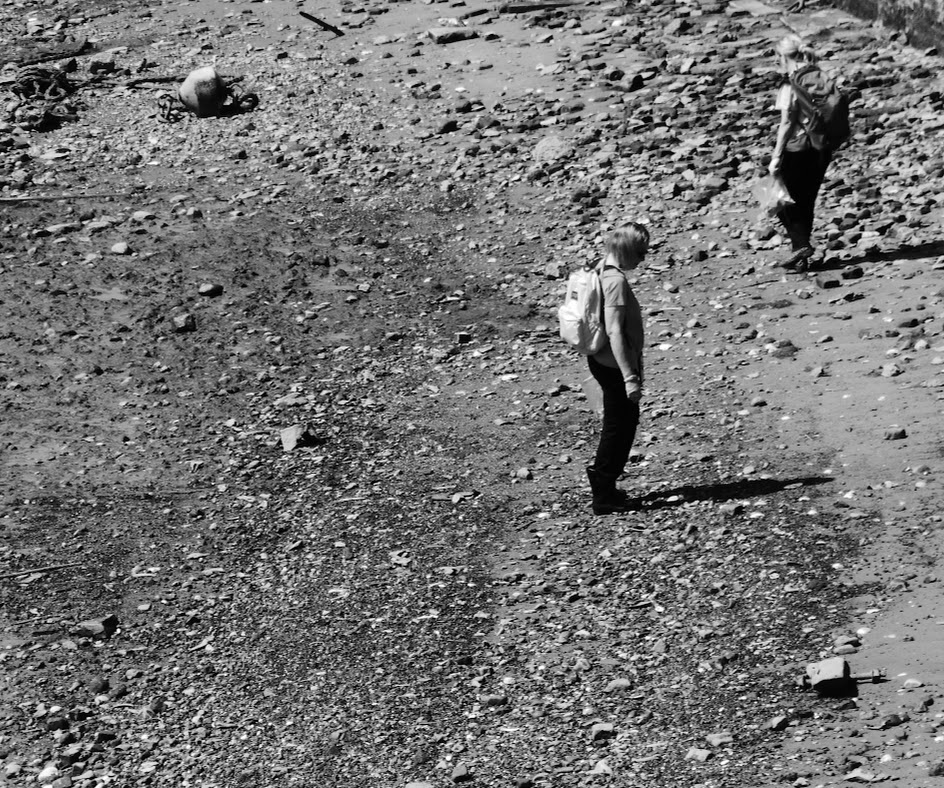
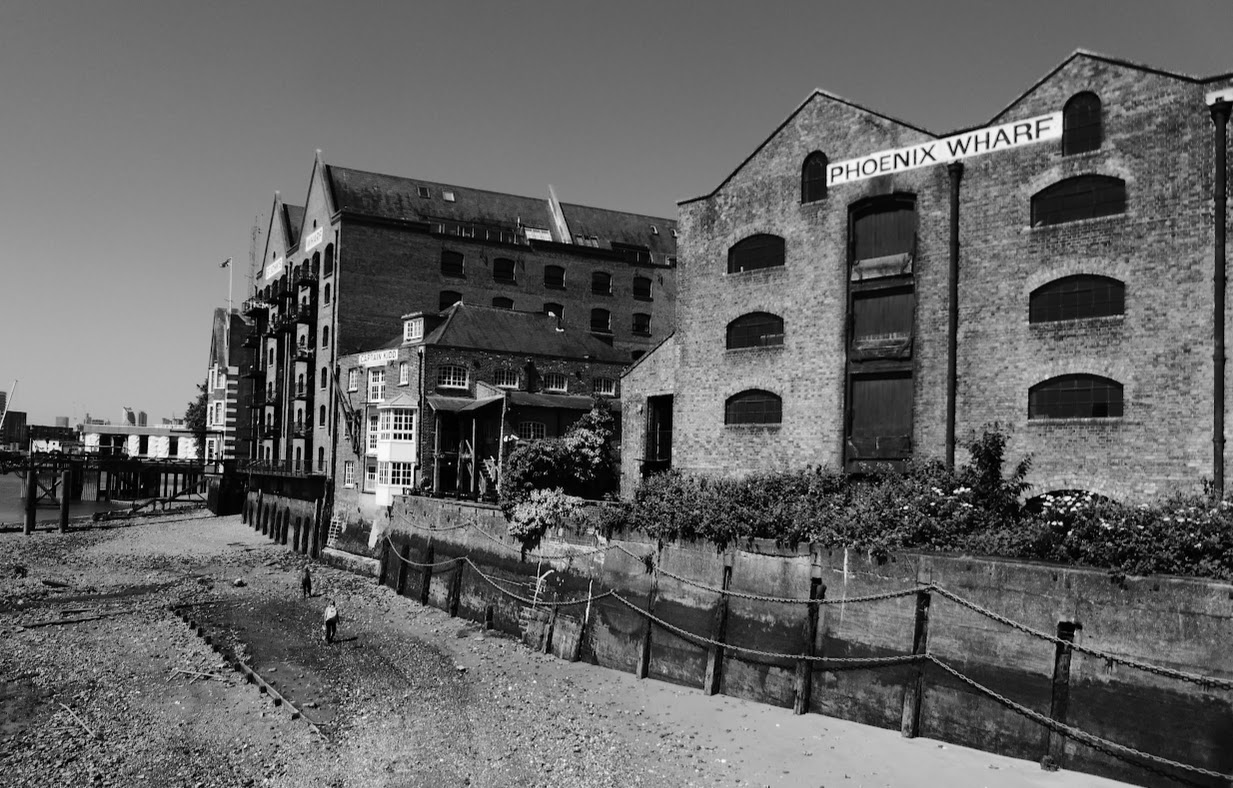
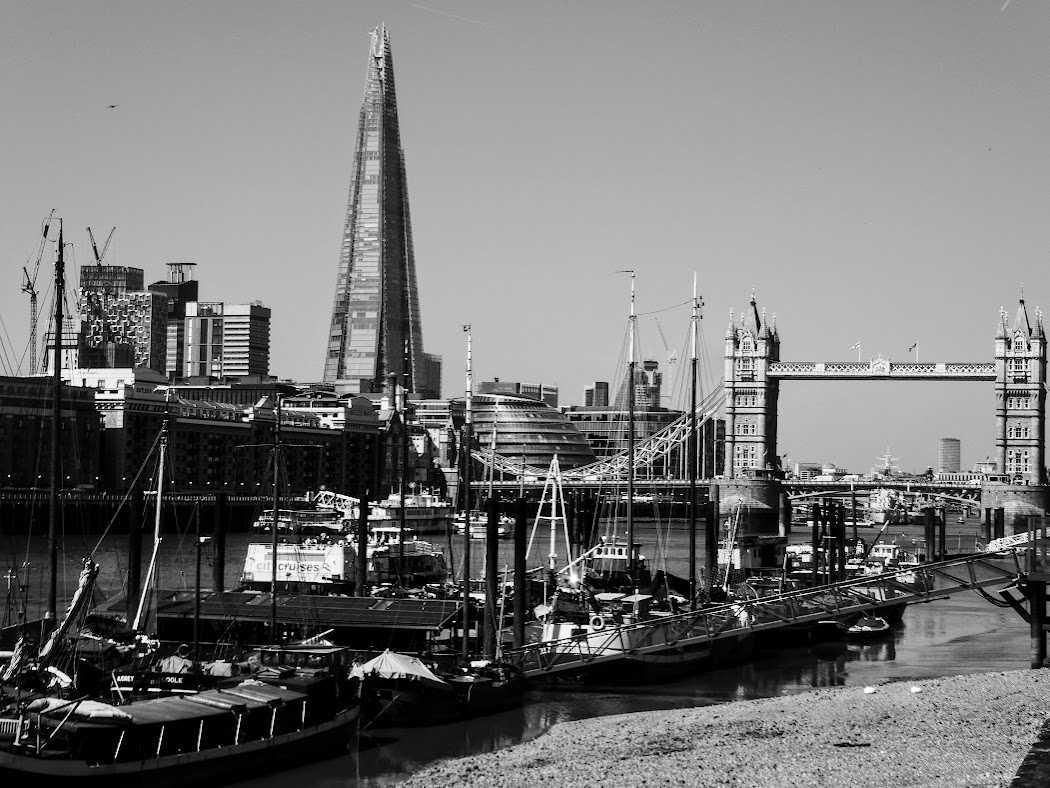
I arrived at Tower Bridge just in time for a lunch time sandwich. The area is glutted with tourists, but take yourself only a few yards away down the path and you can have a bench with this view all to yourself.
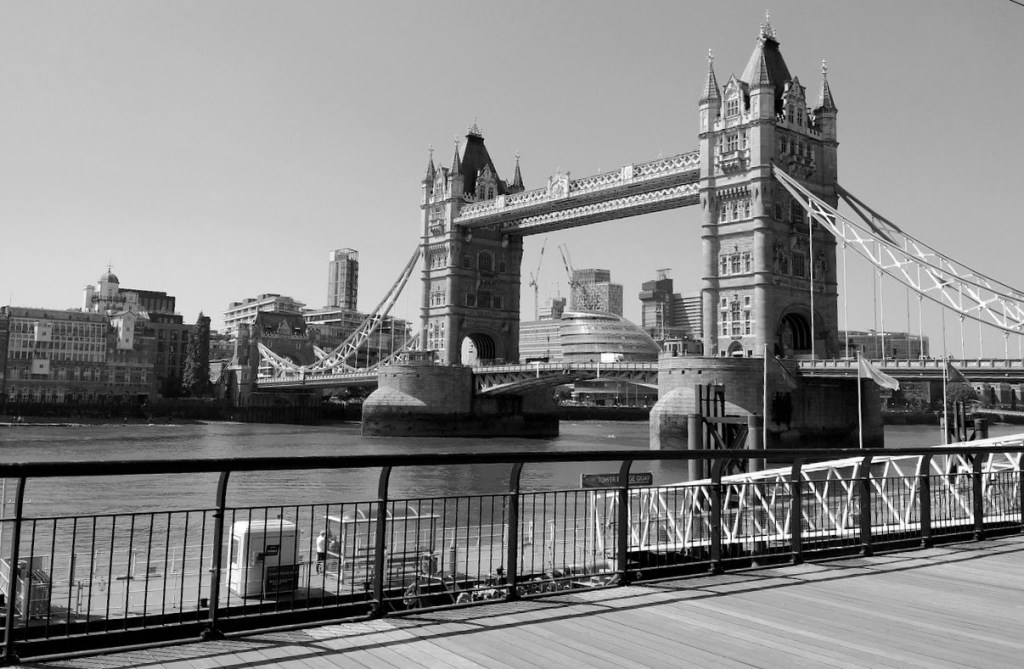
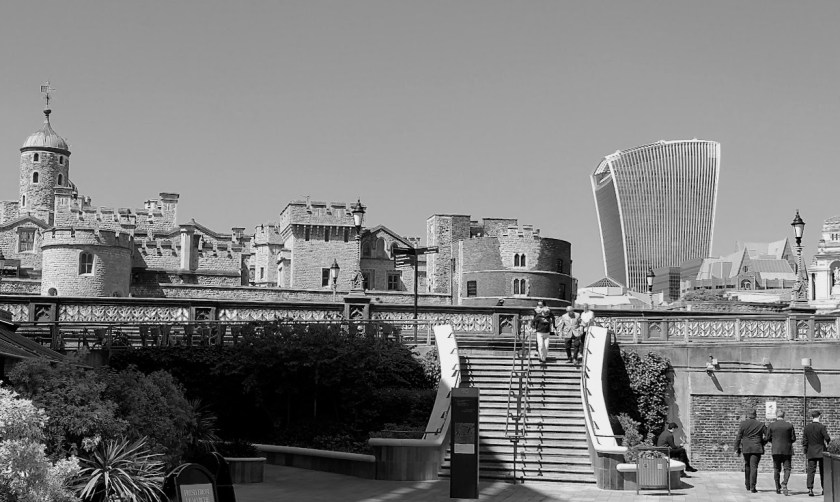
I didn’t stay long near Tower Bridge, built in 1886 or the Tower of London, built in 1066, both log-jammed with visitors. But the contrast between the very old and the extra-new captured in this shot appealed to me.
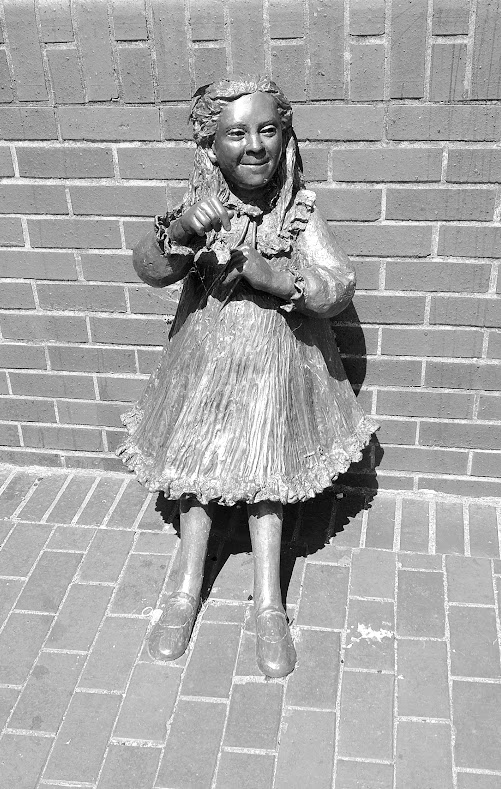
It was time to head back along the southern shore. This was easier. My morning journey had been hampered by diversions as a giant sewage system was being installed along the route of the path. My return through the evocative-sounding communities, reminiscent of Dickens (Bermondsey, Rotherhithe) was straightforward. It was here that I learnt about Alfred and Ada Salter, both born into relative privilege, who over a hundred years ago, devoted ther lives to alleviating the tough lives of the poor in Bermondsey. Quakers, Alfred was an outstanding doctor who treated poor patients for free and imported into Bermondsey all the latest medical clinics and facilities, creating in miniature an ’NHS before the NHS’. In 1922 Alfred was elected as MP for Bermondsey, representing Labour. Ada devoted her life to the demolition of slum housing. She built a model housing estate at Wilson Grove, campaigned against air pollution as early as 1913, and on the London County Council carried through a programme for the beautification of all of London Borough parks, children’s playgrounds and tree-lined streets. She became the first female Mayor of London – and the first Labour mayor! They insisted on living amongst the poor they devoted their lives to, and in 1910, their only child Joyce died of scarlet fever: a tragedy they never got over. Alfred and Ada earned the unending trust, support and love from the community they devoted their lives to. Somehow though, I only seem to have a photo of the statue of Joyce, playing by the Thames. The Salters were, I think, the kind of couple to gladden the heart of Anabel, The Glasgow Gallivanter.
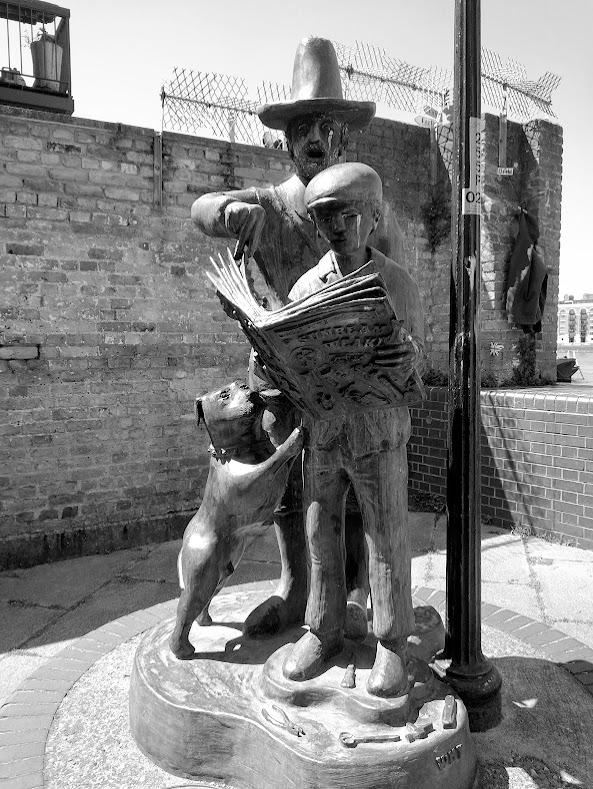
A little further along is another group: commemorating this time the intrepid band we call the Pilgrim Fathers. They were a group of English separatists – Protestants with extremely severe principles – who in 1620 sailed to America on the Mayflower to establish a colony where they could practice their religious ideas freely. Very bright sunshine made it impossible to photograph them easily, so you’ll have to make do with this one .
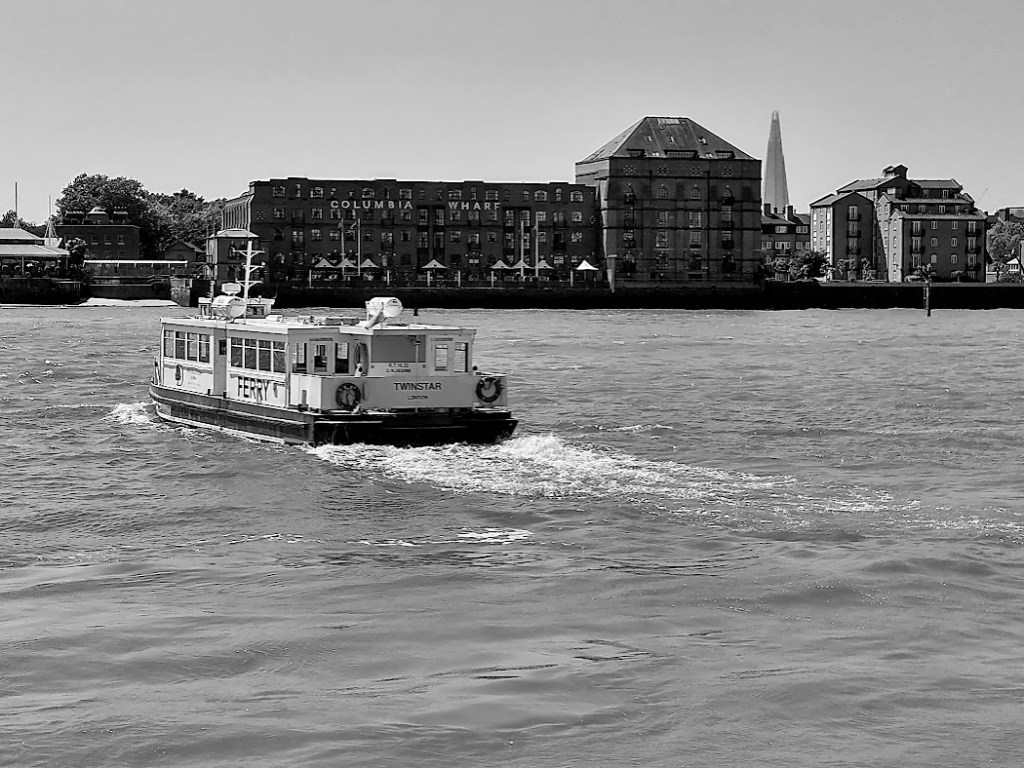
As I approached Canary Wharf again from the opposite bank, it suddenly occurred to me there is no bridge there. Aagh. Transport links from this side weren’t ideal for me. Cogitating my conundrum, I noticed signs for a ferry that would do exactly the journey I needed. Here is my saviour ferry boat. But salvation comes at a price. My two minute journey cost over £7.00. The ferry company knows a captive passenger when it sees one.
But I had a day filled with interest and exercise. And a plan. Over my next few visits to London, I’ll be walking the Thames Path. I’ll start from – not the sea itself. That’s too complicated. But at Crayford Ness. It’ll be unlovely: but interesting. From the Thames Barrier at Woolwich I’ll walk the river’s course through London. Using my son’s family’s home as my overnight base, my quest may end as London peters out. But we’ll see … Watch this space.
For Jo’s Monday Walk …
and Leanne’s Monochrome Madness.
 From Pyrenees to Pennines
You must be logged in to post a comment.