Snowshoes III: The very last episode

I’m not doing raquettes (snowshoes) ever again.  Never.  If I ever show signs of changing my mind, lead me into a darkened room, talk kindly to me, and sit with me till the feeling passes.

I have no idea how I got through yesterday.  I must have done though, because every move I make causes some protesting and unhappy muscle to complain vigorously at the pain it endured on our expedition, and is still enduring now.  Five hours walking, with half an hour off for lunch.  Something over 600 metres up, 600 metres down – that’s nearly 1900 feet each way in old money.

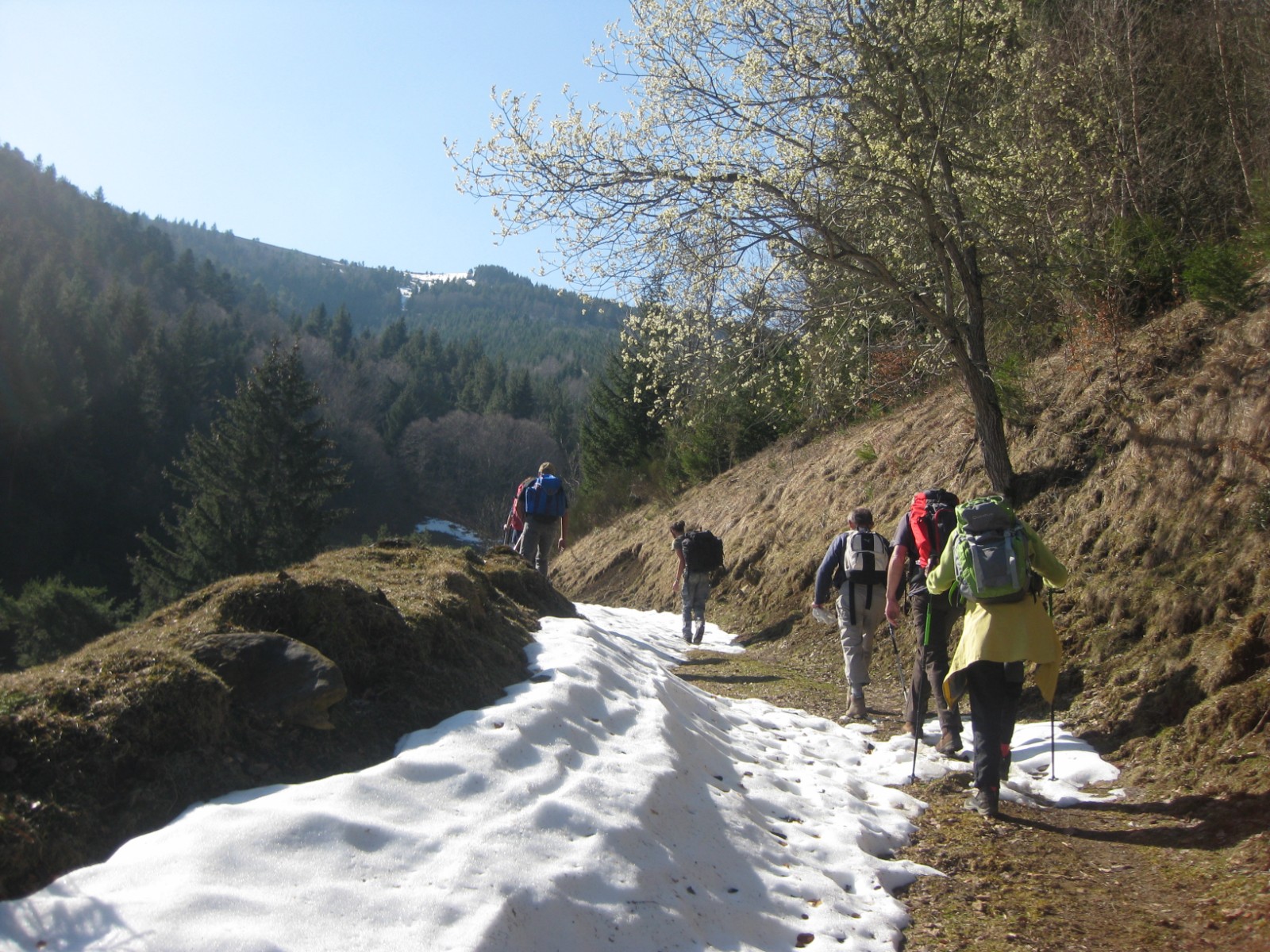
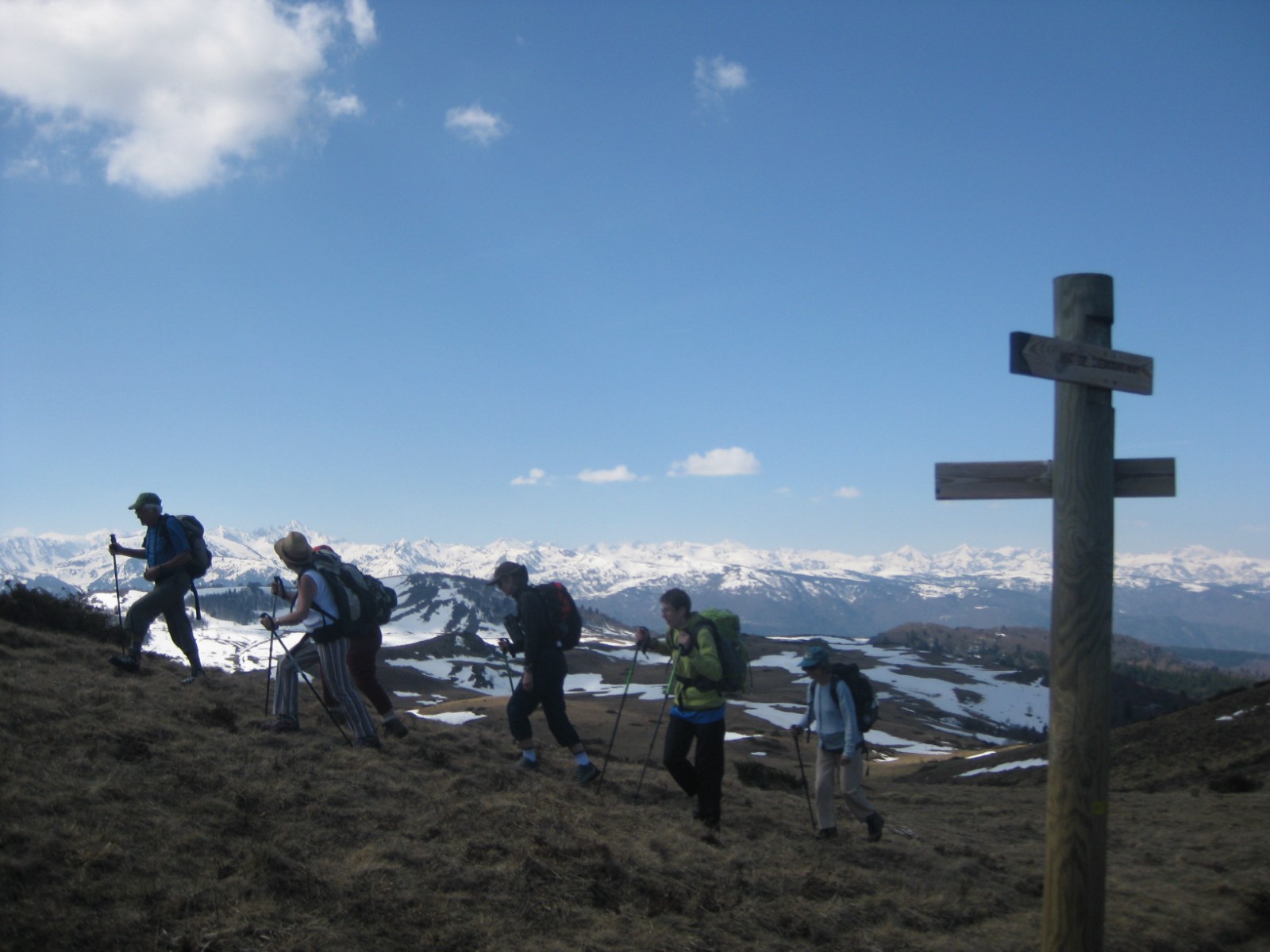
I said last week’s sortie was tough.  Compared with yesterday’s, it was a stroll in the park.  I said last week’s was ‘an upward slog: unremitting, tough’.  Yesterday’s was a vertical slog: unending, unforgiving.  Last week, the snow had been deep and crisp and even, and easy to walk on.  We had crunched satisfyingly upwards through the forest, and our descent had been a brisk and easy downward march.

Yesterday, following a warm and sunny week, the snow was soft and our snowshoes sank deep.  Bad enough on the upward route march, but coming down, we all skidded, slipped and lost grip of our poles as they plunged into unseen cavities.  I made landing smack on my back and descending bumpily downwards, legs waving helplessly in the air my personal speciality.

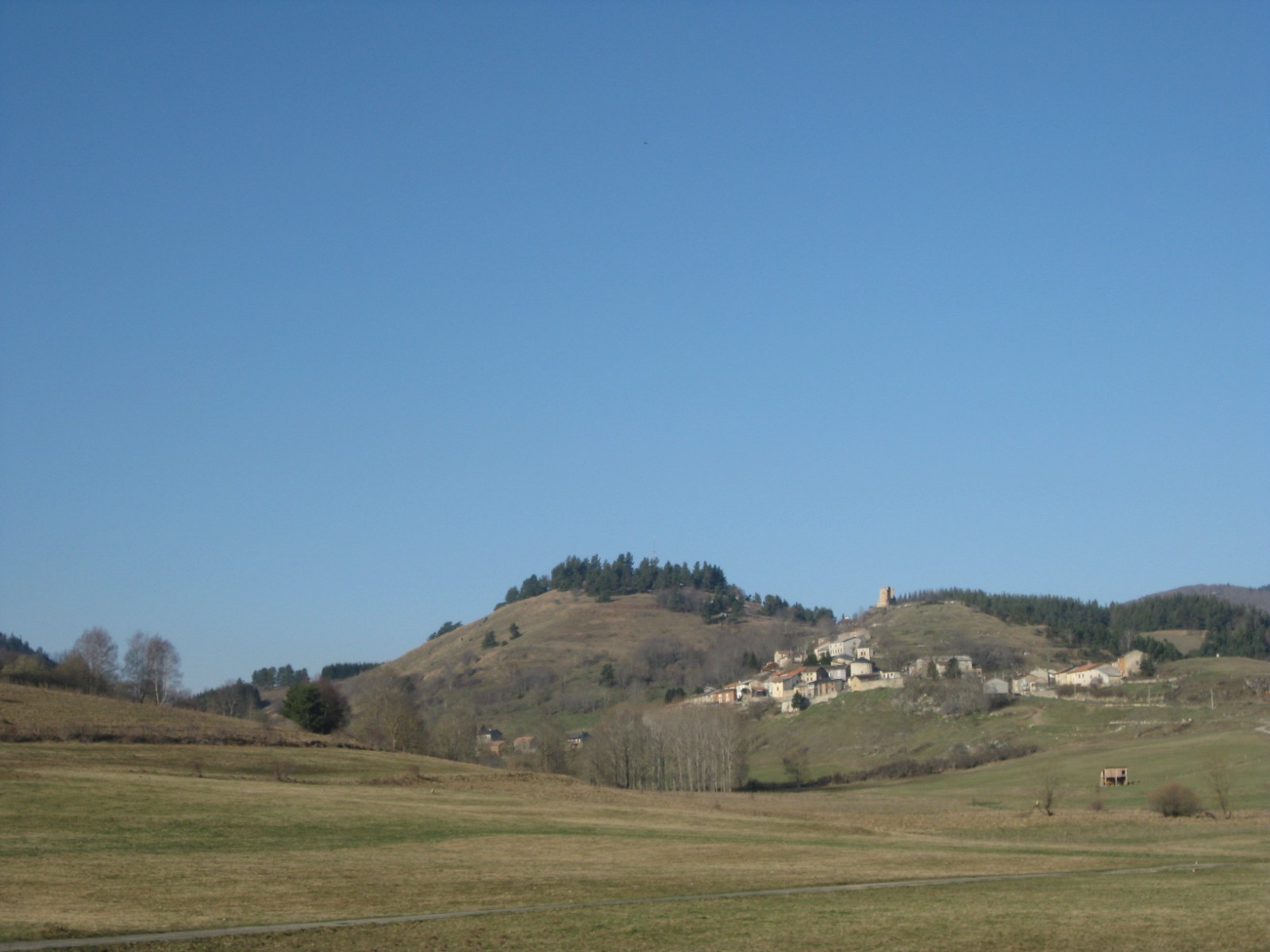
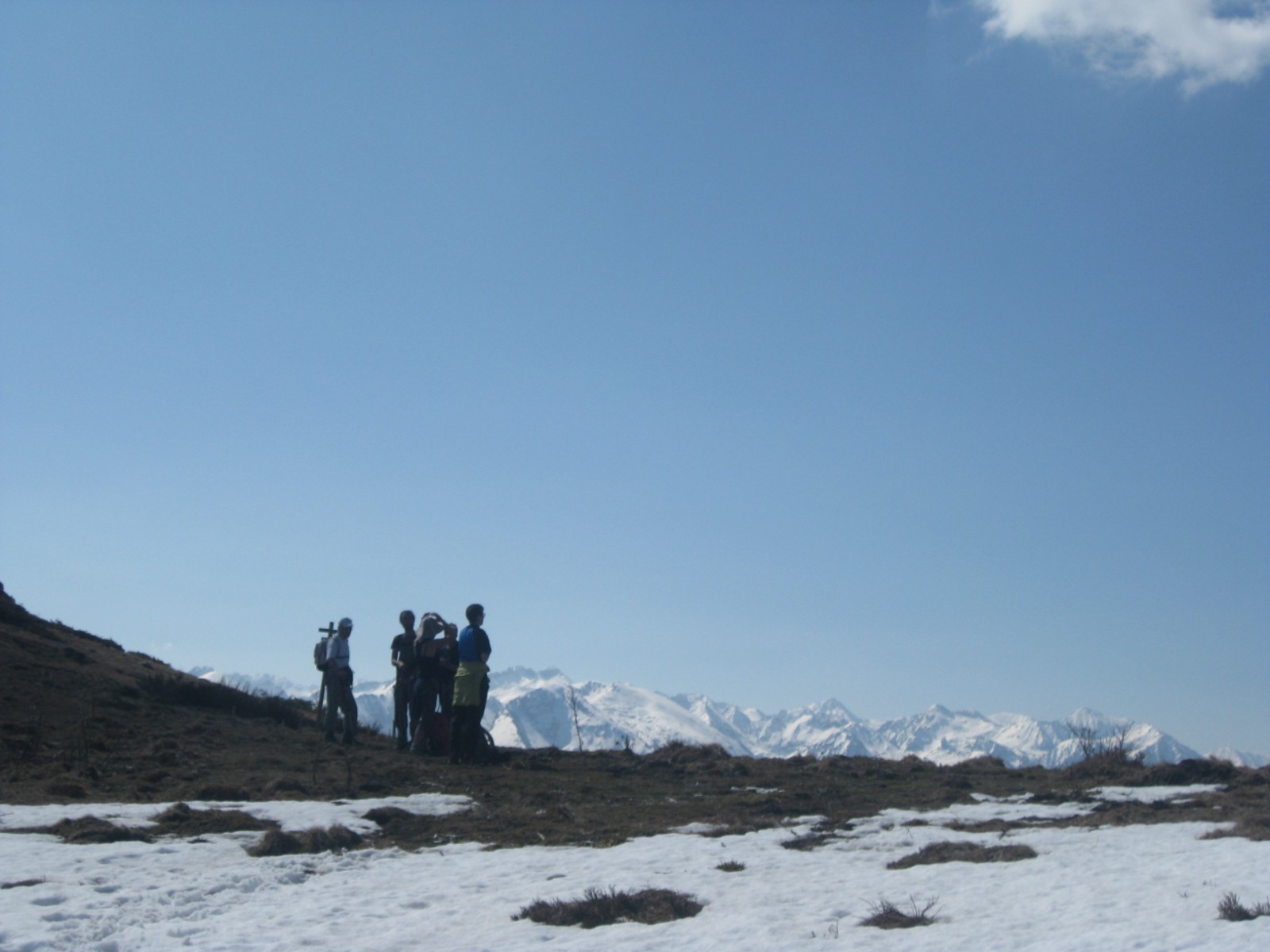
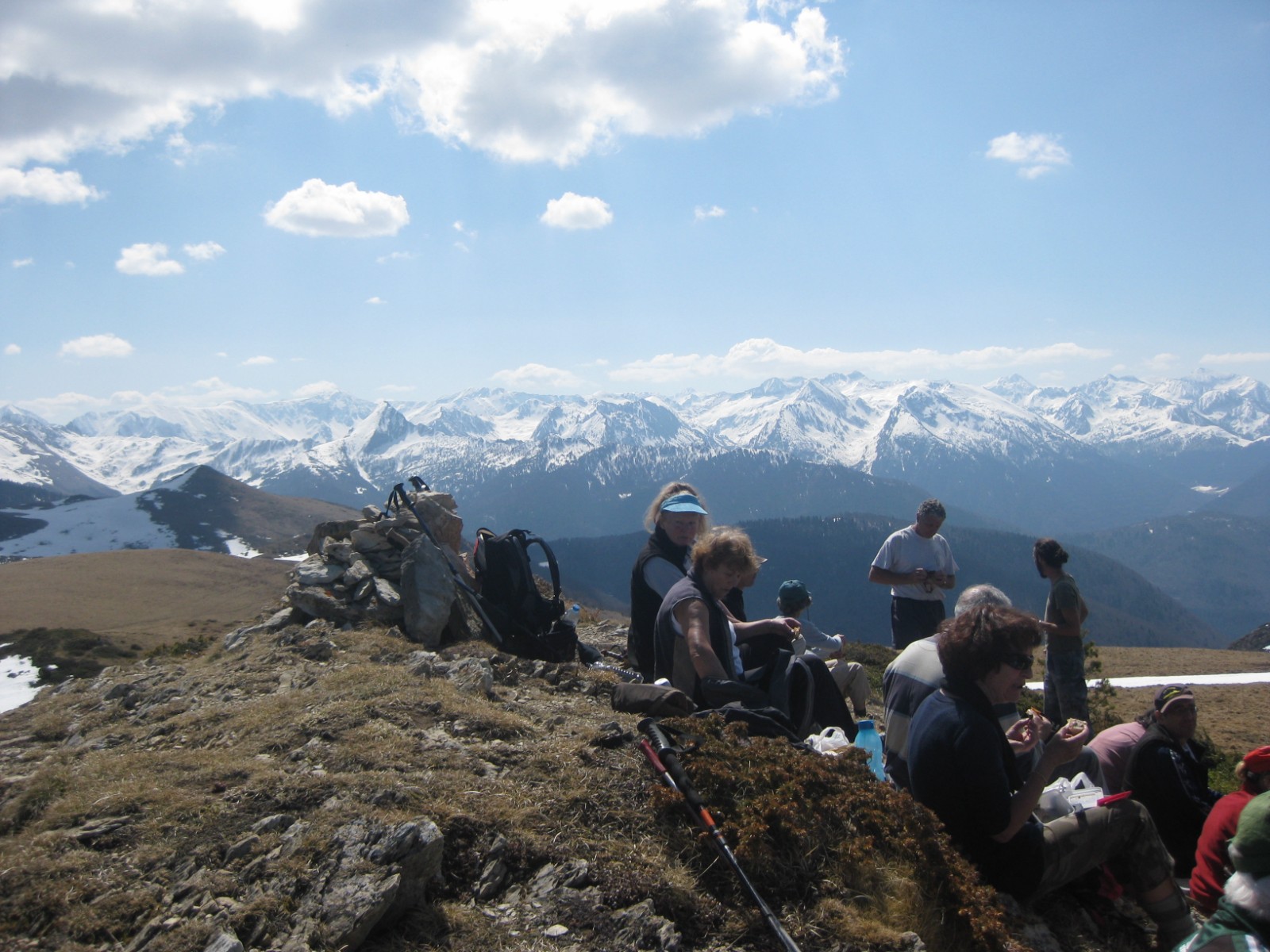
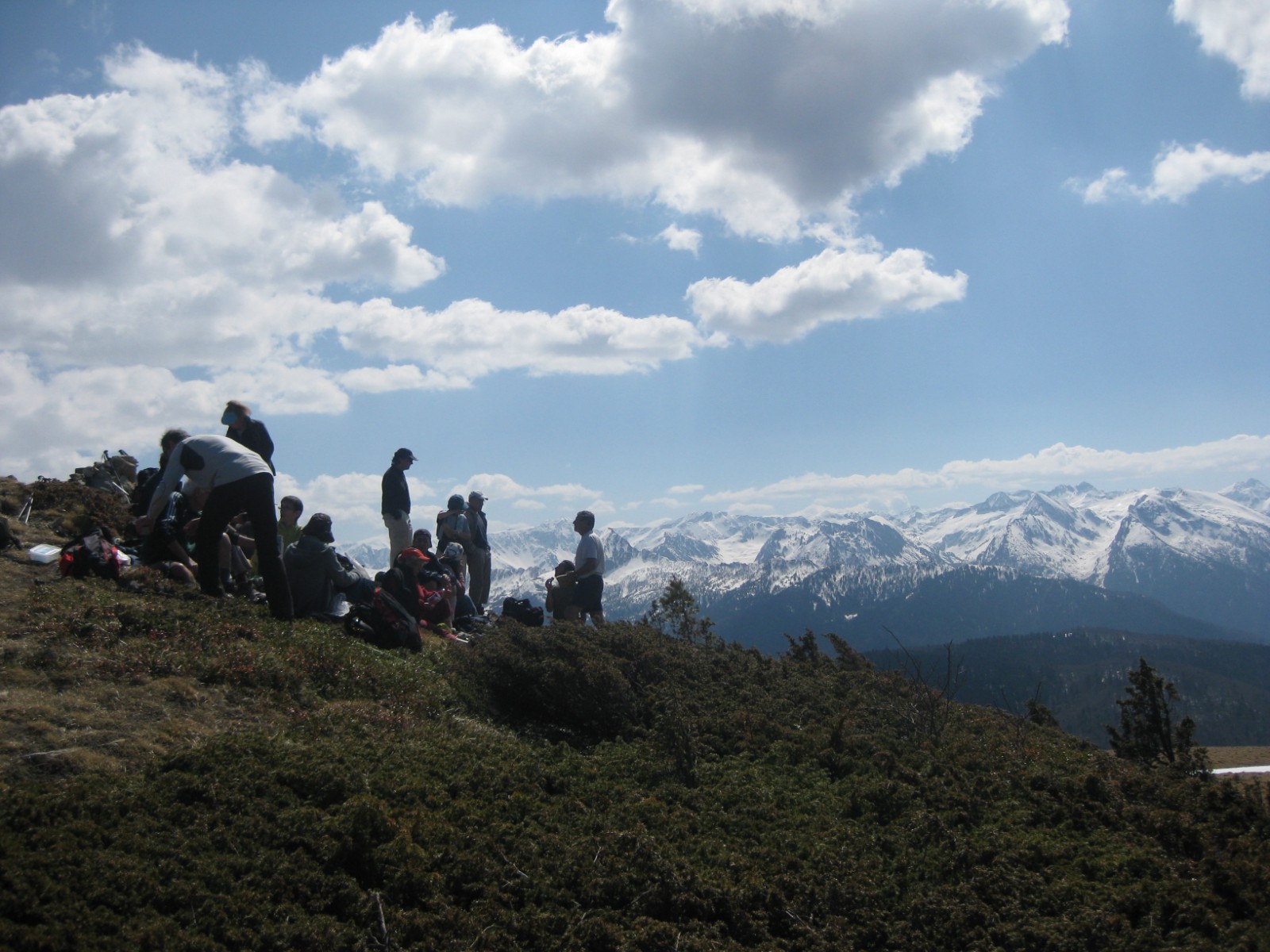
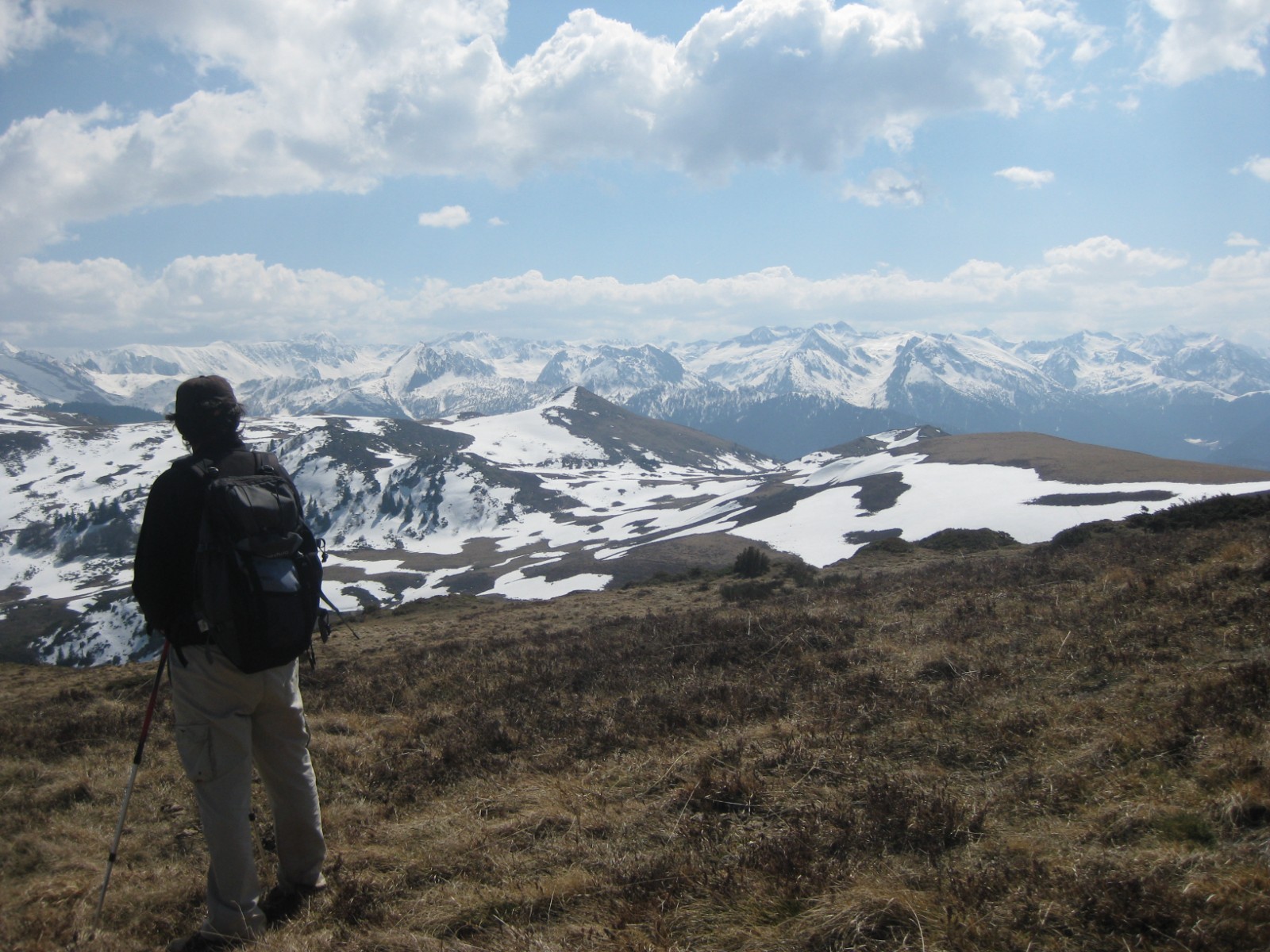
Still, it was good to see Montségur, looming above us at our starting point, providing points of reference throughout the day.  Soon after we started, we were level with the castle at its summit, then it was below us, and disappeared for a while as we plodded upwards through a stretch of forest.  At lunchtime it was impossibly far below.  As we ate, we enjoyed plotting the landscape for other landmarks: Lavelanet and Laroque of course, the lac de Montbel, and far north of us, the Montagne Noire.

Best of all were the cloudscapes: massed plump white cushions of cumulus with wispy brushes of cirrus above, turning a more characterful and moody grey in the afternoon, foreshadowing the evening’s expected rain.  We were just back at the cars when the rain arrived a little ahead of schedule, with a brief hailstorm of pencil-point-sharp hailstones to encourage us on our way.  We didn’t need telling twice.  Home comforts have never seemed more inviting.

Snow Shoes II, The Sequel

We walkers of Laroque got our snowshoes out again today (well, in my case, I borrowed some), and went for a much more local sortie, just above Montferrier and en route for the local skiers’ playground, Mont d’Olmes.

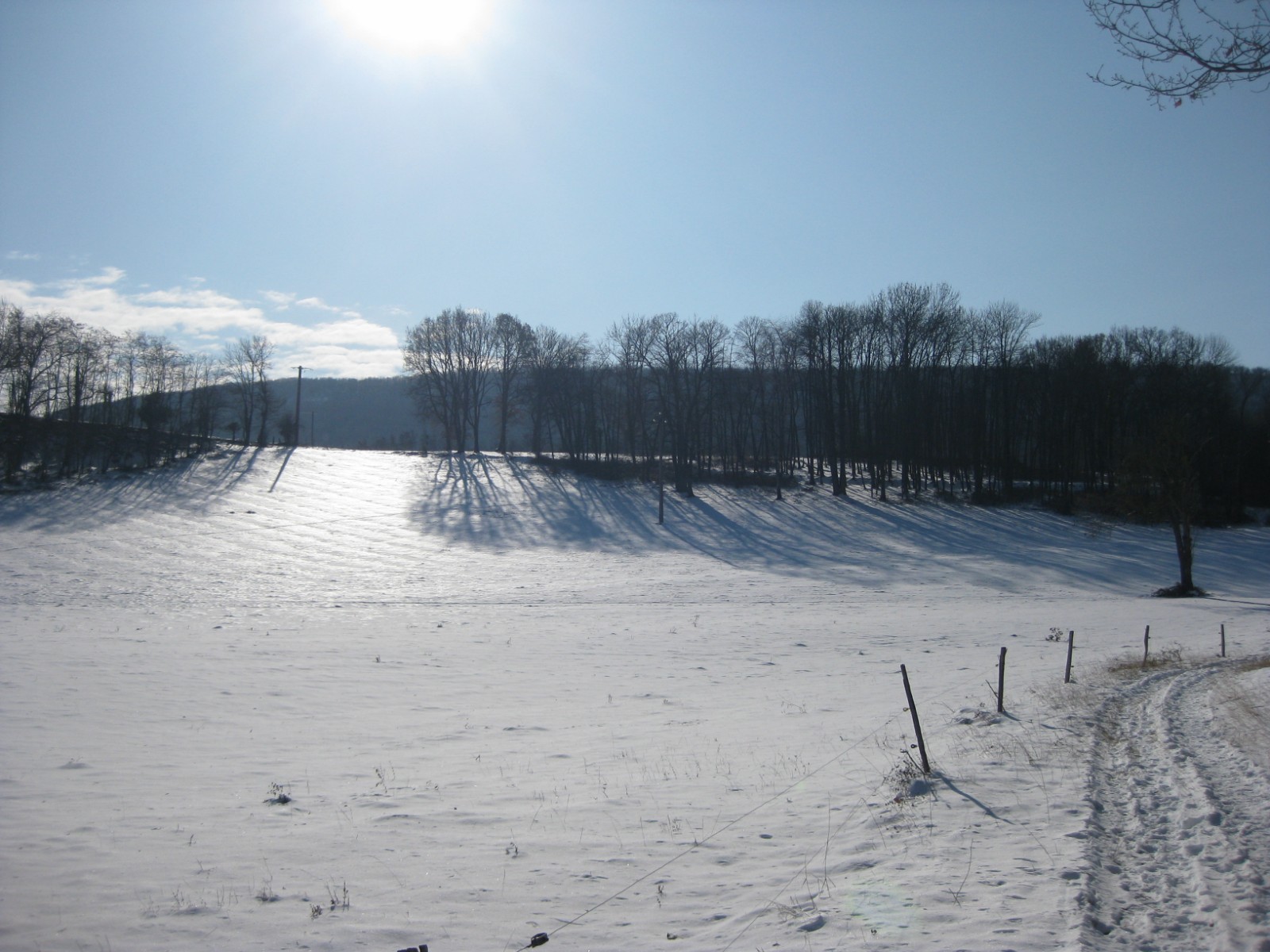
How different from our last walk.  Instead of wide open snowfields with distant views, we had woodland walking and bright sunlight casting blue shadows across our path.

Instead of gentle slopes rising and falling before us, we had an upward slog; unremitting, tough.  Micheline and I, discouraged and tired, failed to reach the top, and missed the prize: a frozen lake with snow-clad views in every direction.  Most of the party stayed with us and kept us company.  Though our views were less exciting than those of the intrepid climbers, our picnic was the better one.  We low-achievers had wine, home-made cakes and hot coffee with us to supplement our bread and cheese.

And the journey down was completed in record time.  We arrived home as our gardens were gently baking in the last of the hot afternoon sun.  More of the same is forecast for several days: there won’t be much snow left this time next week.

Snow shoes at Scaramus

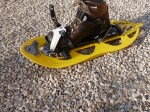
It’s 7 o’clock.  I can’t see me having a late night.  We’ve had a day of ‘raquettes’ – snow shoes.  Gosh it’s exhausting.  You strap great oval saucers of plastic, webbing, and toothed metal to your feet and spend some minutes feeling like an ungainly baby taking its first uncertain footsteps across the endless wastes of the living room carpet.

Booted and spurred
Booted and spurred

But equilibrium returns, and without these cumbersome contraptions, how else would you walk across the undulating white snowfields of the Plateau de Sault, with views of snow-sculpted hillsides nearby, jagged snow-crusted peaks beyond?  How else could you enjoy the sound of the satisfying crunch and crack as feet break through the crisp crust of the surface snow.  Thank goodness for that icy layer.  We found our 5’ long batons, plunged deep below the surface, wouldn’t touch the frozen ground beneath.

And with a bright blue sky, a hot sun enabling us to walk wearing T shirts and summer hats, what better way to spend a February Sunday?

A view from the washing line

Out on the roof terrace

There’s a blog I read.  Its author is a writer, a teacher, a mother, probably not in that order.  She loves people, words, conversations.  She’s enthusiastic, encouraging, and loves life.  She might be exhausting to live with: she’s exhausting to follow, because she’s constantly throwing out challenges.  What, she mused recently, makes you joyful?  Well, Renée Schulz-Jacobson, this is what.

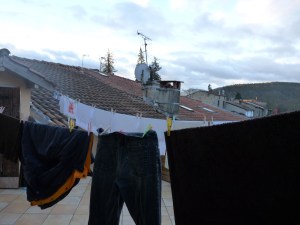
It’s hanging out the washing.  And bringing it in at the end of the day.  How sad is that?

All hung out for the day

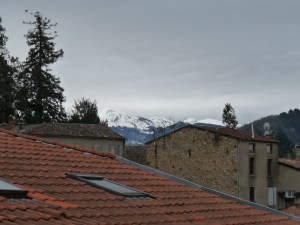
Every day, these simple acts raise my spirits.  We dry our washing out on our roof terrace.  From here, we can see the nearby peaks of the Pyrenees, covered in crystal white snow for half the year.

Zooming in on the cock  over the water
Zooming in on the cock over the water

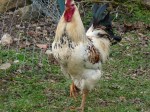
Across the river just beyond our house, a neighbour keeps hens, and I enjoy watching them fossicking about for grubs and cabbage stalks.  Sometimes the heron swoops along the river while I’m there, and lands near the weir to look for breakfast or supper.  The morning air is cold, fresh and energising.  Actually, at this time of year it can be ****** freezing, in which case I’ll run down and warm myself afterwards by the wood burning stove.

It’s the evening though, when the washing is dry, sweet-smelling and ready for folding and hanging (carefully done, so there’s no need for any ironing) that I’m happiest here.  I’ll listen to the birds chattering and singing.  I’ll check up on those hens again.  But best of all, I’ll watch the sun setting.

A subtle sunset
A subtle sunset

The sky will turn from vivid blue, through rusted orange and citrus yellow, to navy blues and bruised purples.  The snow on the mountains will change from sparkling white to ice-blue and then the subtlest shade of grey.  Suddenly, the sun will drop from sight behind the trees, and for a few minutes longer the palette of colours becomes moodier before giving over to shadowy moleskin grey.  Then the stars appear and later, the swooping, chirruping bats.  I’ll be back indoors by then, my mood invariably lifted by the simple pleasure of watching as the sun puts on its daily and ever-changing show.

Nearly gone, the sun

.

On the path of Cathar shepherds

Montaillou

Yesterday we walked through Montaillou.  It might seem a tiny and unremarkable village now, but it’s the place that’s maybe done most to contribute to our understanding of turn-of-the-14th century village life in the Languedoc when religious strife between the Catholics and the Cathars was at its height.  This is a big subject: it deserves more than passing mention: a future blog maybe.

I’d read le Roy Ladurie’s book on Montaillou more than 30 years ago,and never dreamed that I might one day live in what the tourist offices are pleased to call ‘Cathar Country’.  So it was the shepherds of Montaillou I was thinking of as we began our Sunday walk.  They would come to the annual fair at Laroque d’Olmes, a good 40 km from where they lived.  They would drive their flocks long distances for good pasture, and as national boundaries meant little in these mountain zones, their fellow shepherds whom they met in their travels would sometimes be Spanish.

Blossom and snow

We too were climbing out of Montaillou.  The paths seemed unchanged through the centuries – short springy turf with early spring flowers pushing through. Pale pink and white blossoms busting open.  Narrow streams cutting deep channels through the turf.  Thick forest climbing the slopes.  Patches of snow made the going a bit tough from time to time.  It was warm and sunny, the slopes were steep and sometimes hard-going

Those peaks appear

Then suddenly…suddenly, and so unexpectedly, we reached the top of our first climb.  Around us, to east, south and west were the snow-covered peaks of the Pyrenees, glistening white against the blue sky.  Above us, skylarks called and swooped.  Later, Danielle remarked that she felt as if at that moment she’d received a special gift: that perfect view, the clean clear air, the singing birds which were the only sounds.  She voiced, I think, what we all felt.

A few of those unending peaks
We keep walking
More distant peaks

We hadn’t reached our highest point: we climbed onwards, always with those snow capped mountains at our side.  And then we were on top: handy rocks provided seats and shelves and we unwrapped and shared our lunches, lingering in the sun, drinking in the views for well over an hour.

Picnic spot

The afternoon walk begins

Soon after lunch, we turned our back on the snowy mountains.  As we faced the hotter, drier Pyrénées Orientales, the equally high peaks there weren’t covered in white.  Our path was downwards now, and soon we had to pass the ski station above Camurac.  Built long after those years when snow could be relied upon throughout the winter, it was an area of scalped earth, snow machines and all-but-redundant chair lifts.  My Montaillou shepherds certainly wouldn’t have recognised it.

The walk draws to a close

But then it was forested paths again, open pasture and spring flowers.  We finished the walk passing a collection of horses, Thelwell style ponies, and appropriately for Palm Sunday, a couple of friendly donkeys.  A good day.

Plateau de Sault calling

Down here in the foothills of the Pyrénées, nobody’s interested in how far you walk as you stride up the mountainside.  It’s all about the DNV (dénivelé, or number of metres you’ve climbed – and remember a hillside can go down as well as up: coming up again after a descent starts the DNV counter all over again).  On Thursday, we did 791 metres.  That’s 2959 feet in real money.  Our mileage was less impressive:  19 km. or 11.8 miles – in the circumstances pretty damn’ good.

But we didn’t know the statistics till we’d finished.  We were far too busy having a very special walk.

To reach our departure point, you leave Belésta via a switchback forested road, over the Col de la Croix des Morts, and emerge onto a high and slightly bleak plateau.  This is the Plateau de Sault, home of the region’s potato growers.  We stopped at an insignificant track signposted Langrail and parked the cars.  As we got our boots on, we met another walker on a brief holiday from his home in Durban for a good long solitary hike (‘Durban?  Where do you suppose he meant?  Durban-sur-Arize in the Ariège?  The one in the Aude? South Africa even?’).  He was the last person we met all day.

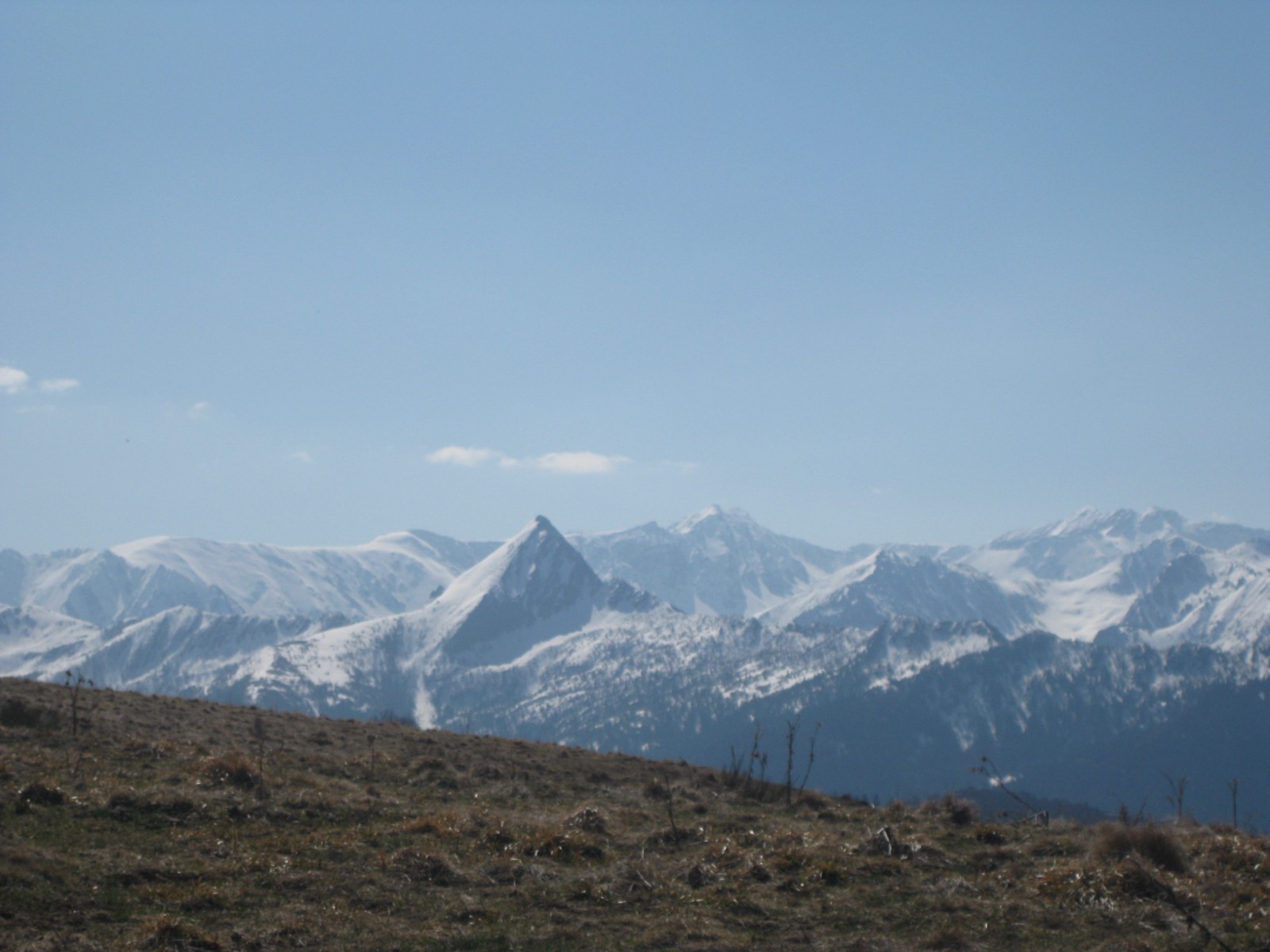
It was the 14th March.  There were large patches of snow all along our route.  Yet we wore tee shirts all day and became lightly bronzed in the hot sun as we crunched through that still hard-crusted snow.  Through the forests we could see the peaks of our more local mountains: Maguy, born and bred round here taught us how to recognise each one.

Then, quite unexpectedly, we emerged into a splendid expanse of pasture interspersed with areas of snow.  In every direction, there was a distant fringe of mountains: our day-to day familiar slopes, the more distant and higher peaks of the Hautes Pyrénées,and behind us, bereft of snow, those of the Aude and Pyrénées Orientales. It was a really special pleasure to tramp across this apparently unending pasture, enjoying views of our constant neighbour Montségur, as well as the towns and villages where we all live, and much further away, the Montagne Noir, with the sky clear and blue above us.

It kept us happy till lunchtime.  We’d arrived at a refuge by then, thoughtfully provided with a table and benches in the sunshine.  After the picnic, we left our rucksacks with Gilbert, the honorary man in the group and went off to investigate the Belvédère, the local viewpoint.  Craggily folded rocks plunged down deep towards the Gorges de la Frau and still we had our views of Montségur.  We were impressed.

Our route for the day was a simple there-and-back.  But the views were quite different, looking towards more eastern slopes so we didn’t feel at all short changed that we were repeating our route.  And most of the return was downwards too.  Which was helpful.  When you’ve climbed 2000 feet or more, it can get quite tiring as the day nears its end.  Lucky that there was cake and tea to look forward to.

This slideshow requires JavaScript.

A walk from Cépie

Thursdays, I walk.  I do these days anyway.  A few weeks ago I was invited to join a small informal group from round these parts, went once, and had a great time.  Then The Great Snows came, and that was that for a while.

Yesterday, though, we went to Cépie, near Limoux.  Cépie is a village that Malcolm and I happened to be driving through several years ago in high summer, and where we spotted a fruit producer, selling peaches and nectarines.  Those peaches we saw that day have become the standard against which all others are measured.  Dripping with perfumed sweet juices, the tray we bought scented the car with its decadent fragrance, and all but intoxicated us as we drove home. So I was keen to go again, lack of peaches notwithstanding.

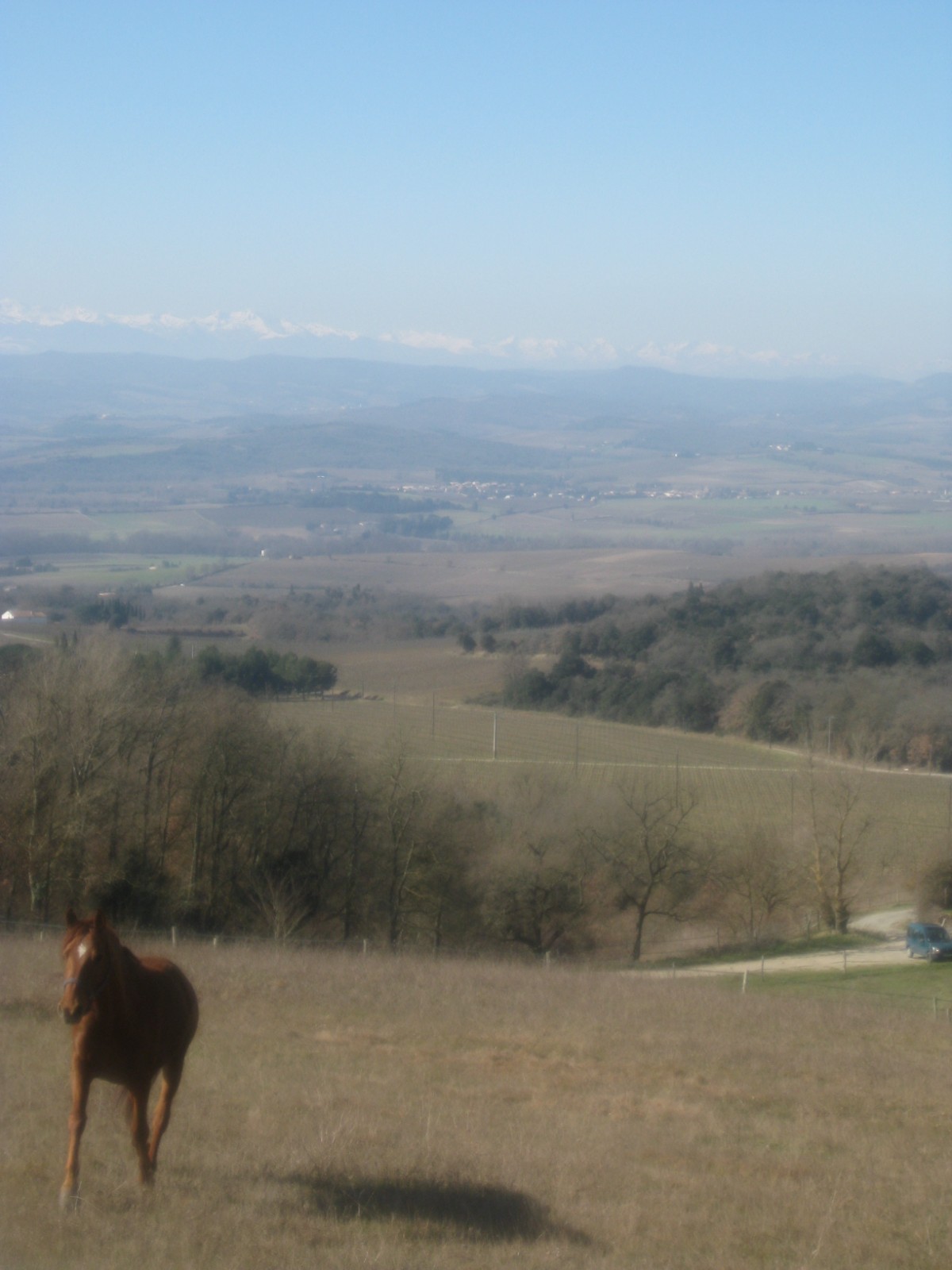
You'll struggle to see the snowy Pyrenees as the backdrop to this picture. They are there. Keep looking

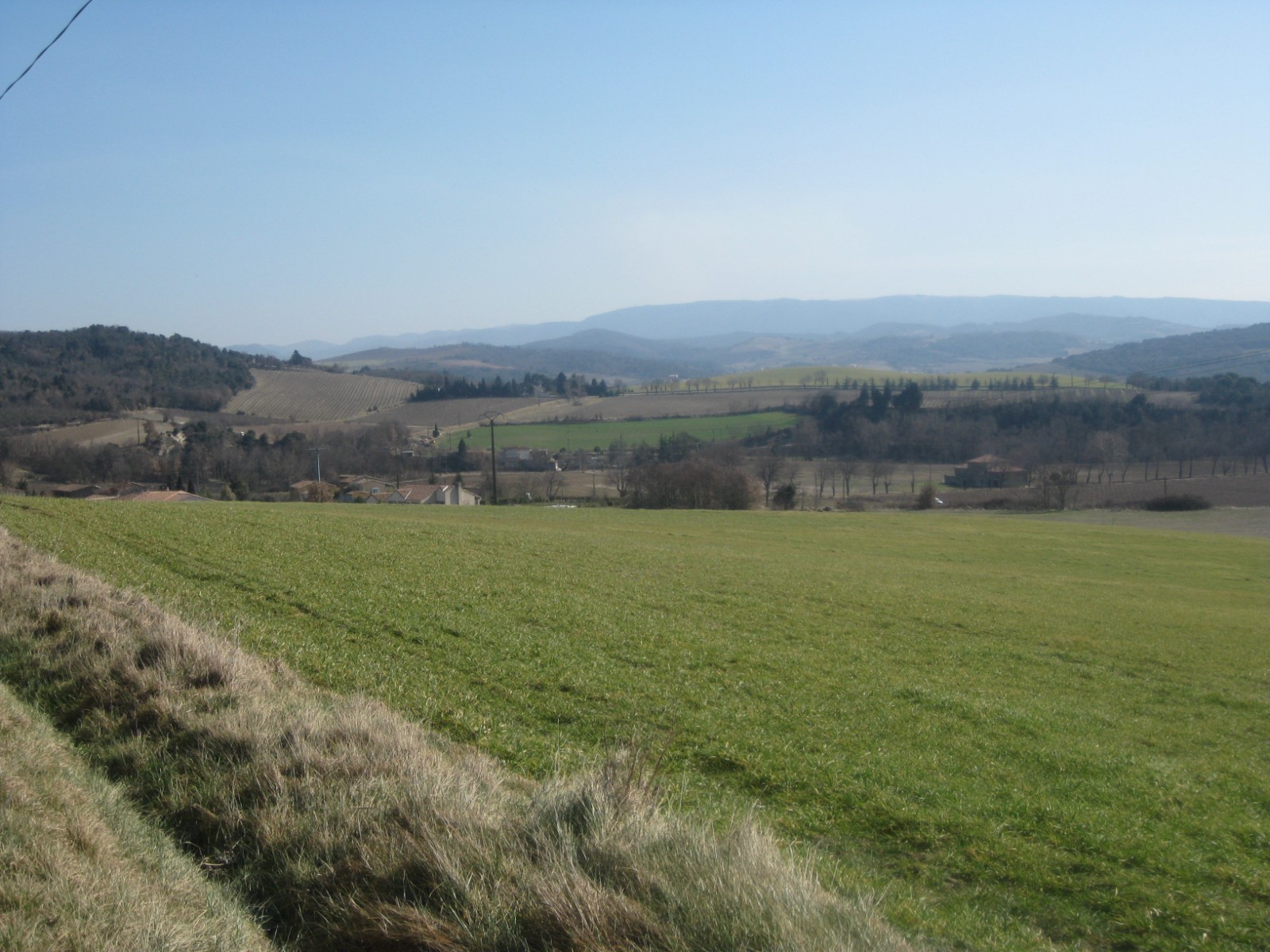
Instead of peaches, there were views.  The Pyrenees are more distant here, but that means we got horizon-filling views of the gleaming snowy mountains as they rise and sink in a line of angular peaks, marching right across the skyline from east to west.  Because of the haziness of the day, the photos give no idea of the panoramas which we quite simply had to stop and gaze at, time after time.

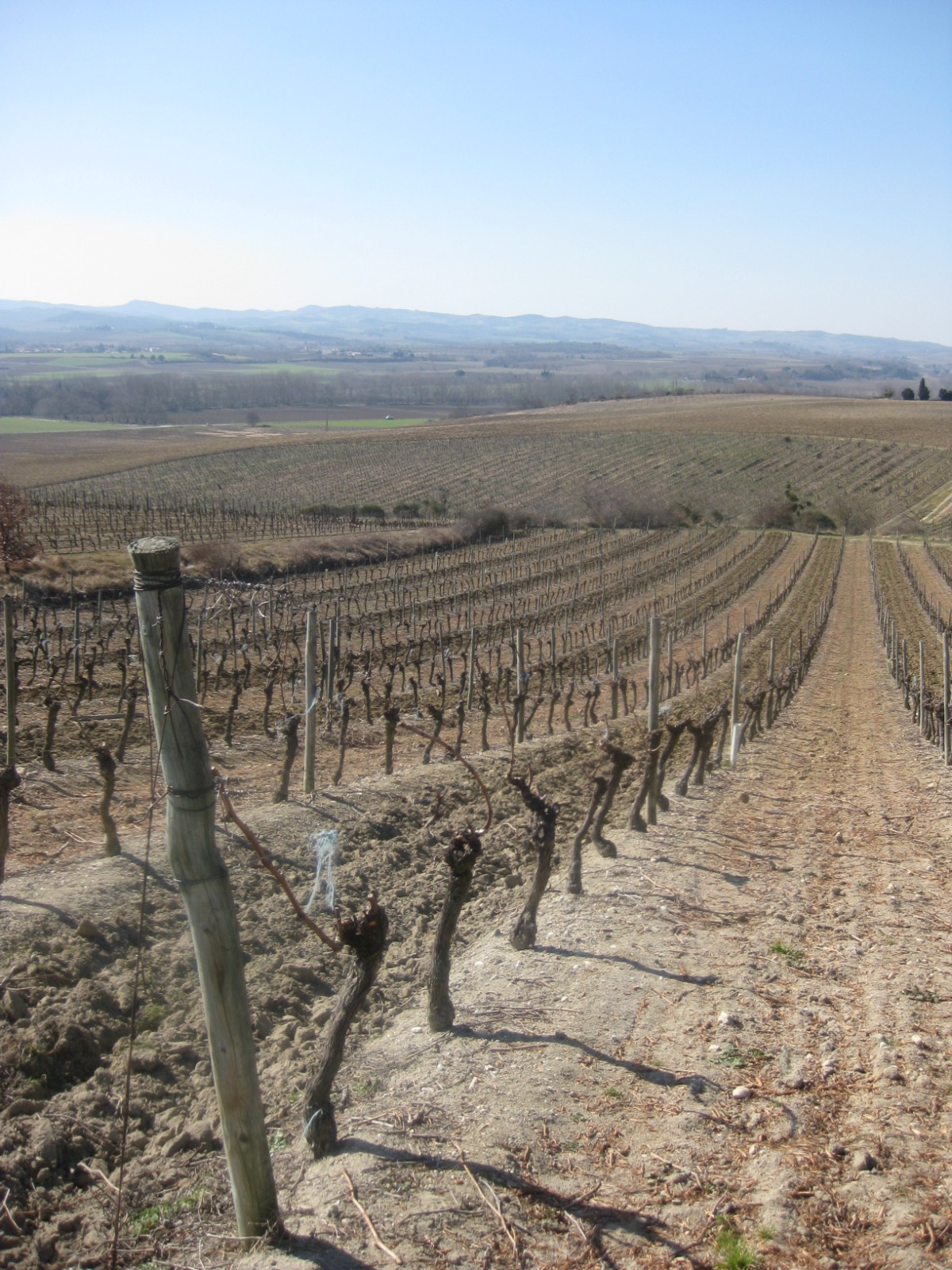
This area is Tuscan style Aude – rolling hills with distant domains and lines of cypresses, covered for acre after acre with mathematically precise lines of vines.  I used to find these vineyards rather dull in winter.

Notre Dame du Razès, protégez nous et protégez nos récoltes

Now, as the workers get busy in the fields, pruning away all the growth from the previous year to leave little more than a two or three foot high trunk, I enjoy the way these organised lines echo and follow the contours of the landscape.

Vineyards march across the landscape

Our walk took us in a figure of eight through sandy, stony wooded paths, passing near domaines and hamlets whose reason for being is those vineyards.  Towards the end, we paused in the tiny village of Saint Martin de Villereglan and enjoyed looking at the school-cum-town hall, the views down to the church, and generally pausing for breath before the final yomp up, then down the hill that divided us from Cépie.

A nice touch with these walks is that every week, one member of the group makes a special cake to share at the end of the day.  A lovely moment of sharing (in this case with a couple of passing villagers who got chatting), it gives a much needed calorie rush.  We’d only done about 16 km, but the local temperatures rose to more than 23 degrees, and we felt we deserved our gâteau aux noix.

The homeward stretch

Snow 3: The Market

We woke up to -11 degrees on Thursday (-13 for some on the outskirts). Market trader and greengrocer Patrice and his équipe, who live in Rouvenac, a fairly isolated village 18 miles from here, woke up to -14 degrees.  Thursday’s the day they come to sell in Laroque market. When it’s minus figures outside, who’d want to arrive before 8.00 a.m., set up a stall in an exposed market square, and stay there dispensing fruit, vegetables and bonhomie till about 12.30 p.m.?  Well, if that’s how you earn your livelihood, that’s what you do.  Your only other option is to stay at home and keep warm, earn no money, and watch your stock deteriorate.  Which is what about three quarters of the traders usually at Lavelanet market on Fridays unsurprisingly chose to do this week.

Market square closed for business

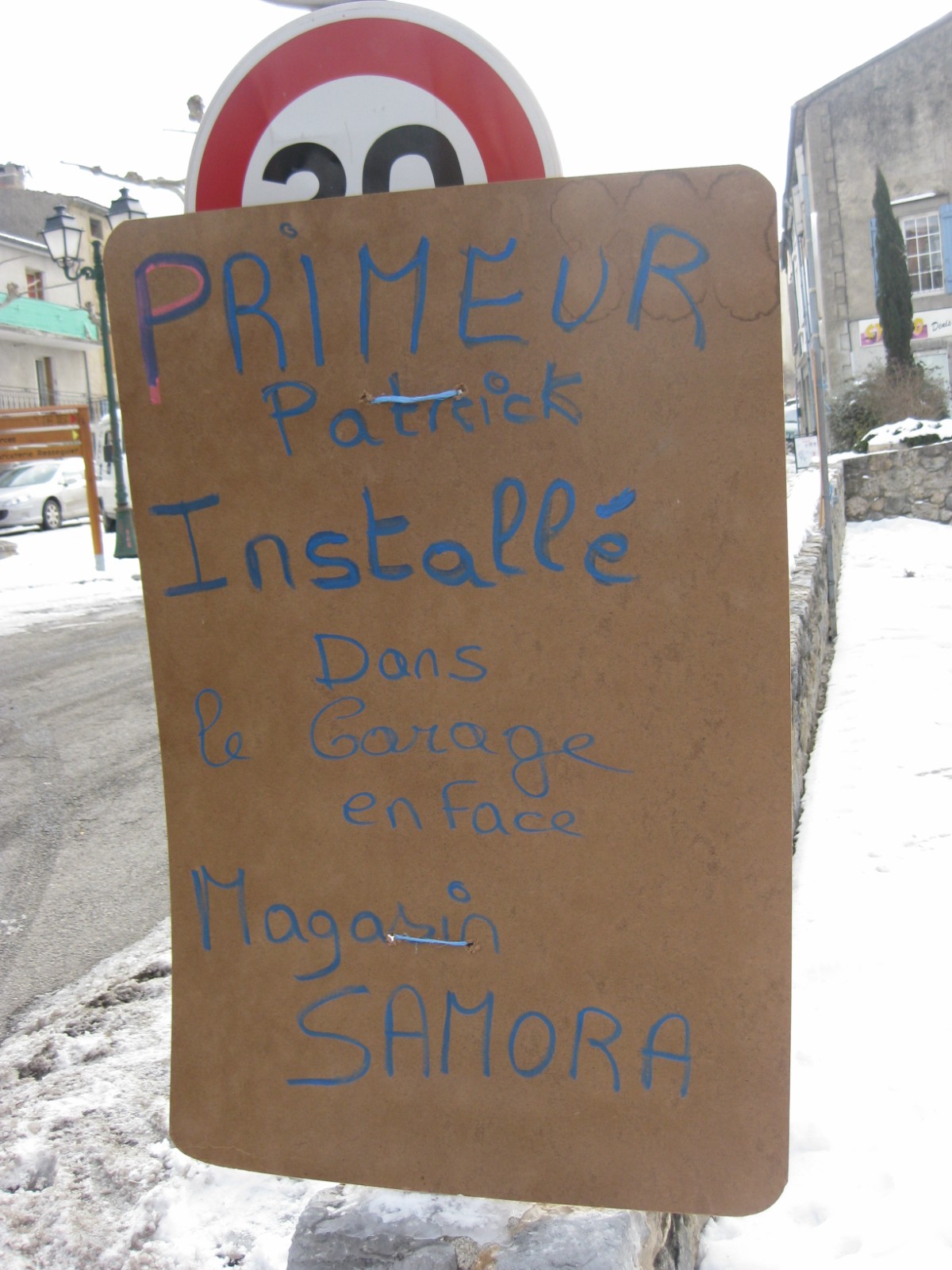
But Obé who runs the bar and restaurant up in Place de la Cabanette had other ideas.  He offered them his huge garage down in our street, big enough for 2 large vans and a car, and that became the market place for the day. It’s dark and perhaps a little cramped for several long runs of produce.  But we don’t get out much here in Laroque, especially in a week like this one, and we all found it quite exciting to crowd in together and do our shopping: it gave us something to talk about.  Patrice and co. took turns to warm their fingers at the rather antique heater Obé had dug out.  They needed to.  The temperature in that garage only just managed to crawl up to  -4.

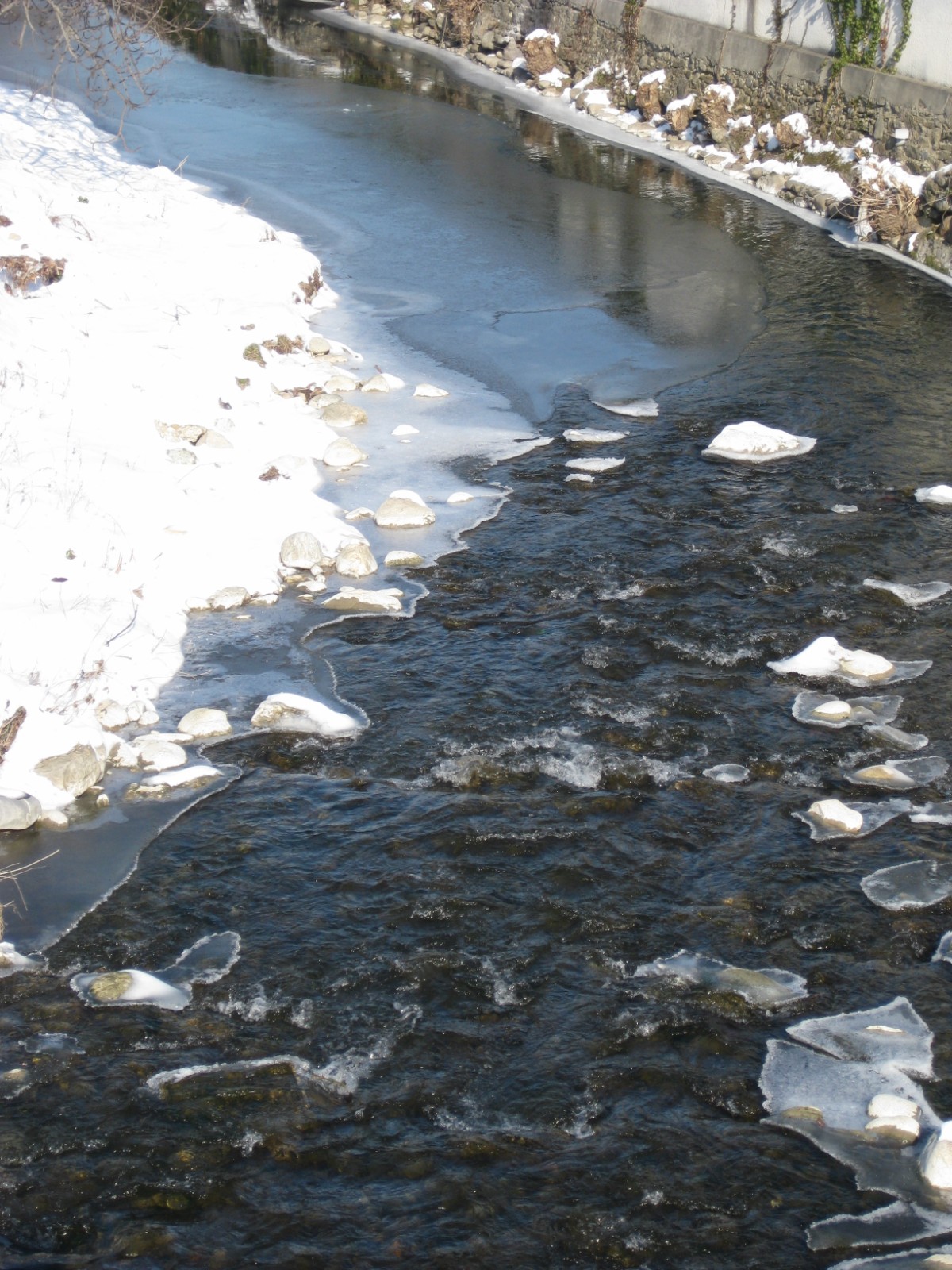
On our way back home, we just had to stop and look at the river which normally tumbles and chatters busily on its way though town.  Here it is, almost frozen over.

An all-but frozen River Touyre


Snow 2

Mid morning sun near Laroque

We Brits are famous for complaining when the Wrong Kind of Snow snarls up the networks.  The trains don’t run, schools shut, and there’s a run on store-cupboard ingredients in the shops.  The Daily Mail or some other self-styled Voice of The People is sure to announce that ‘We’re the laughing stock of Europe and America’.

A deserted field

Well, actually, life grinds to a halt when it snows in some parts of Europe too. Here for instance.  There has been no schools’ transport all week: and with many children living out in the sticks, schools have been half empty.  Markets, where we go to shop, catch up with jobs in town and to meet everyone we know, have pretty much not functioned for 10 days or more.  Clubs and walking groups, concerts lectures and meetings: all have been cancelled or postponed.  We’ve all left our cars at home and confined ourselves to doing what we can on foot.

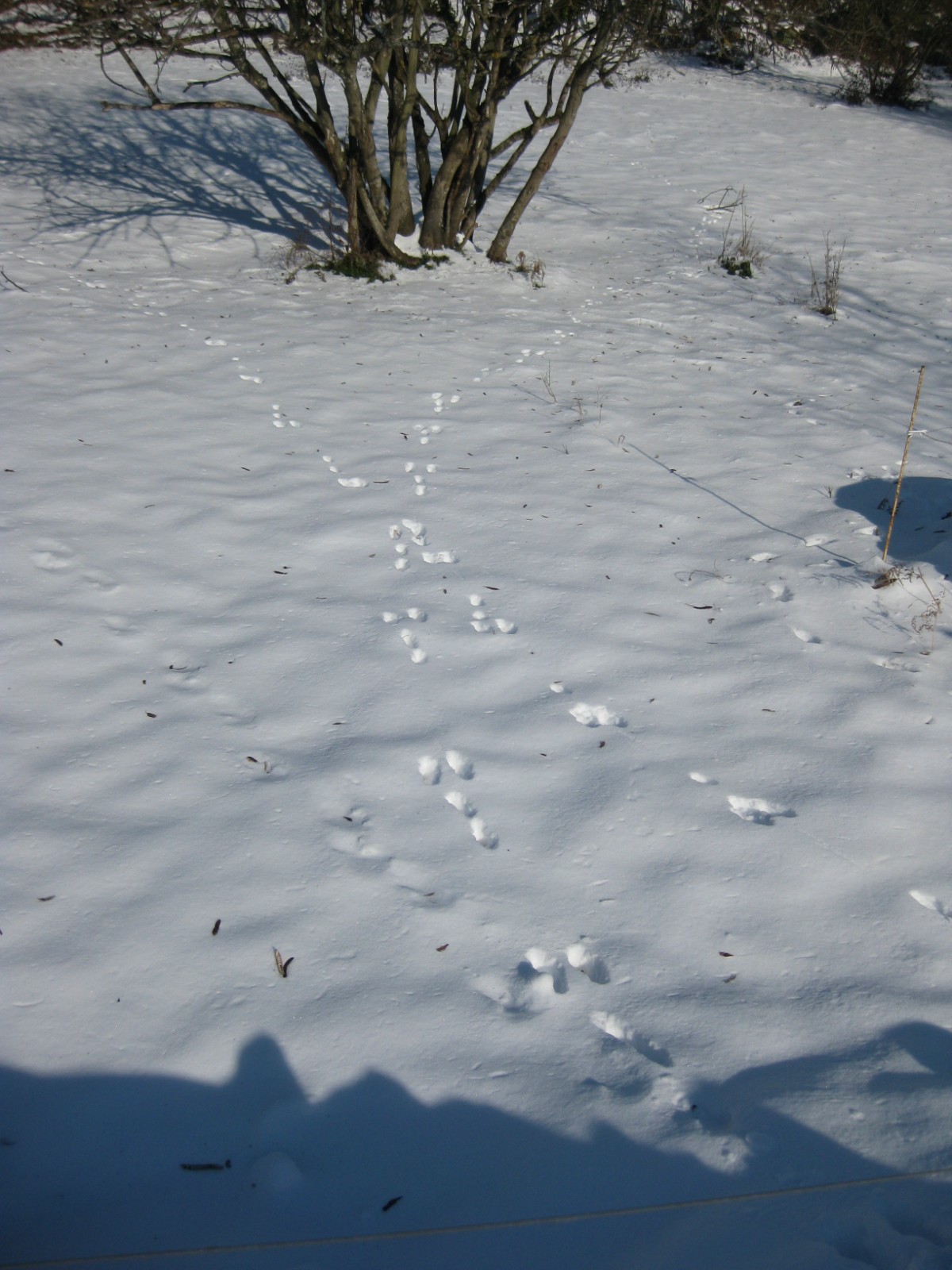
Rabbit cross roads

Don’t we have snow ploughs here?  Well, of course we do.  In big communes like ours (there are 2000 of us you know), council workers do the job.  In more rural spots, farmers may be pressed into service.  But either way, they’ve all been to the same training school.  After they’ve done their rounds, the ploughs leave an inch of hard-packed, glossily polished snow especially for drivers to enable their cars to take up skating.  Lethal stuff.

The fast-flowing River Touyre begins to freeze

We’d hoped to drive to Barcelona this weekend to see Emily.  Reading the local government website’s travel section soon changed our minds.  We were recommended to use snow chains on several of the roads on our route.  On others we’d be required to use them.  Conditions are described as ‘very snowy’, ‘difficult’, and everyone we know says ‘Don’t go’.  So we shan’t: not till the snow goes anyway.

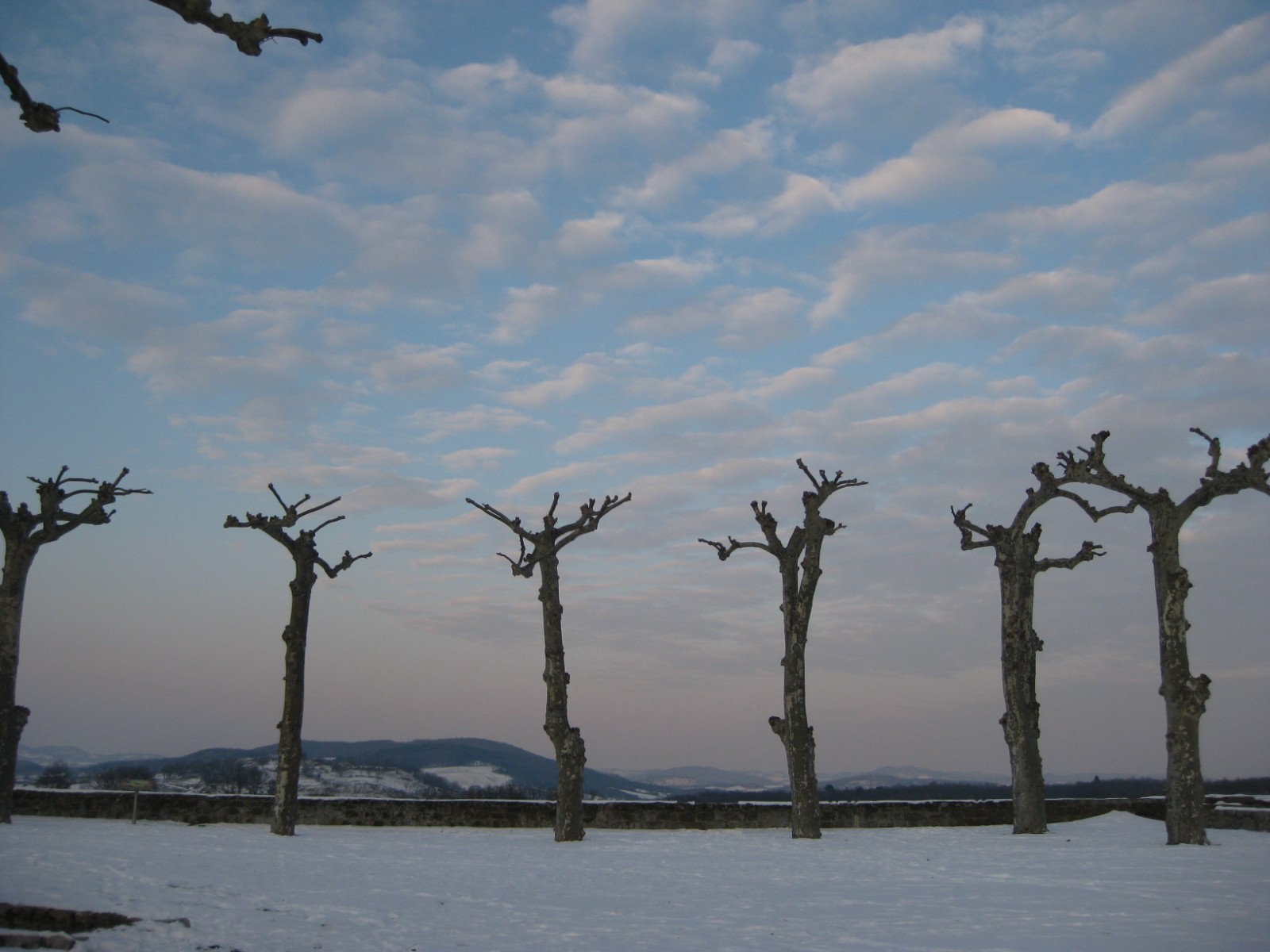
Pollarded plane trees by the church before sunset

As in the UK, radio TV and the local papers are filled with stories of the Big Snow.  The empty roads, the jack-knifed lorries (actually though, HGVs are kept off many of the main arteries and have either to turn back or make use of temporary lorry depots opened up for their use), the utilities failures, the heart-warming human interest stories – they’re all there.  The snow stopped some days ago, but the sub-zero temperatures remain, and so the snow’s till here.  What is different from England though, is the sky.  Through the day, we’ve enjoyed a cloudless duck-egg blue sky.  And that’s something to be relished.

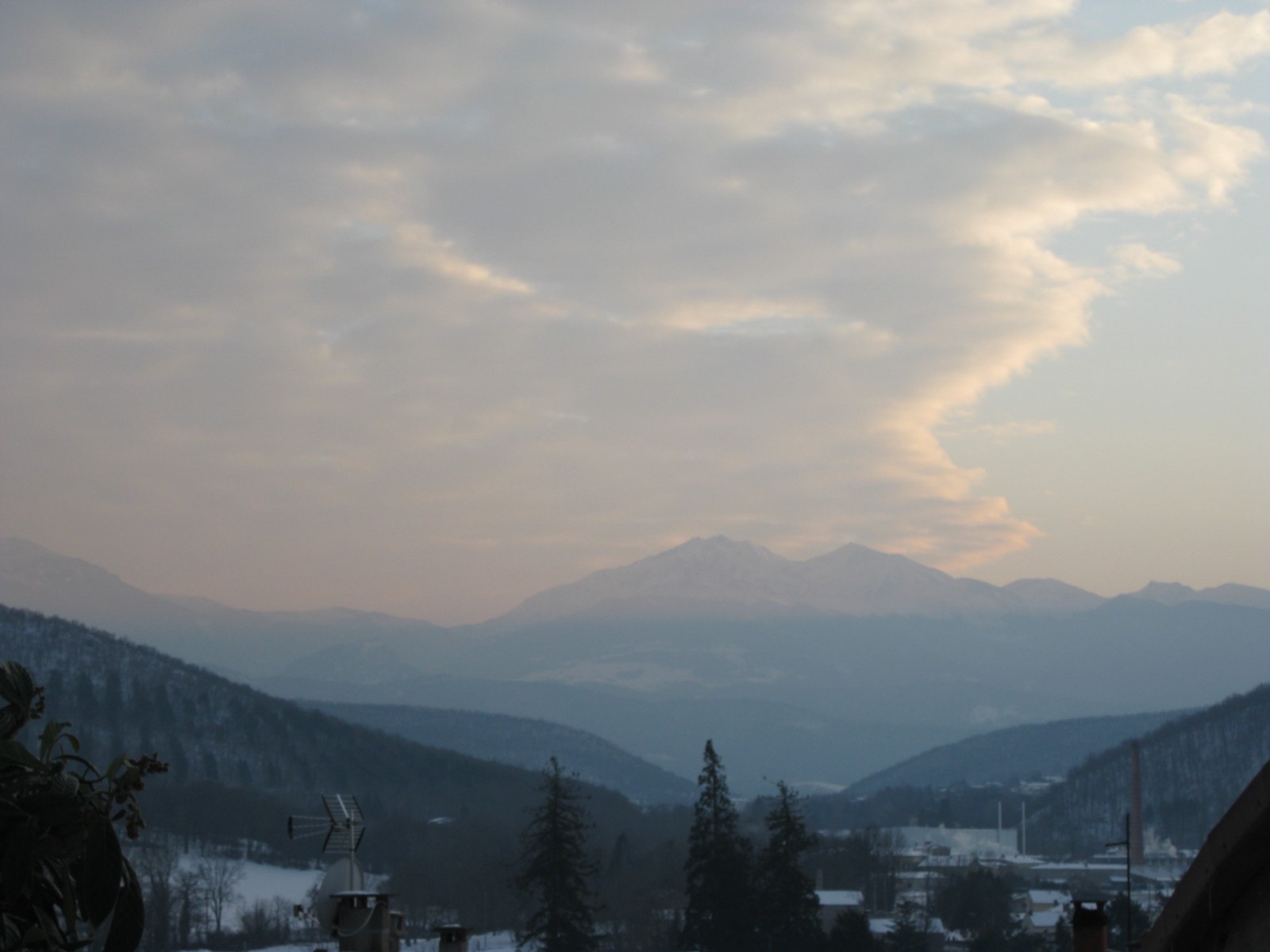
Sunset viewed from la Castella at Laroque