The banner headline on this morning’s regional paper, La Dépêche du Midi, told us what we already knew. There’s been twice as much rain this month as is usual. Of snow, we’ve seen hardly a flake.
Driving back from Foix yesterday, we saw meadows that have become mini- lakes. Even more fields glistened with water as the water table has risen to the very surface of the soil. It’s made the month a somewhat gloomy one, even though the days have been pretty mild. The mountain peaks are snow-capped, as expected, but the white stuff barely creeps down the mountainside and with all the low cloud and zilch visibility, it’s sometimes hard to know where the Pyrenees have disappeared off to.
Our regular yomps into the countryside have been a bit curtailed. Walk after walk has been rained off, and when we do go, we choose our routes with care. If we don’t, we’ll be lugging kilos and kilos of glutinous heavy clay with us as it clings to our boots and the bottom of our trousers.
Boots – with added mud
Roll on the 2nd of February, Chandeleur (Candlemas), the day when Winter decides whether to stick around or push off. Last year, it was icily cold, and Winter stayed and made his presence felt with several weeks of constant snow, ice and bitter cold. This year, he‘s looking much more half-hearted about it all. We blame ourselves. We invested in snow-tyres and snow chains for the car. We clothed our olive tree and a few other plants in white dresses of horticultural fleece.
Our olive tree all wrapped up for winter
So Winter laughed in our face. We daren’t change the tyres or undress the tree though. We all know what will happen if we do.
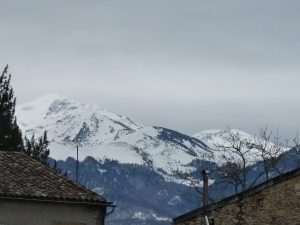
There’s snow on them there ‘ills: but not a lot. As seen from our roof terrace
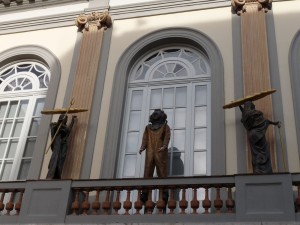
These three figures look down on you as you wait to visit the Dali Museum. And the loaves of bread?
“Where, if not in my own town, should the most extravagant and solid of my work endure, where if not here? The Municipal Theatre, or what remained of it, struck me as very appropriate, and for three reasons: first, because I am an eminently theatrical painter; second, because the theatre stands right opposite the church where I was baptised; and third, because it was precisely in the hall of the vestibule of the theatre where I gave my first exhibition of painting.”
That’s Salvador Dali, speaking about his wish to create a museum to his own work in the shell of the theatre at Figueres, destroyed, like so many other buildings in Catalonia and throughout Spain, at the height of their Civil war.
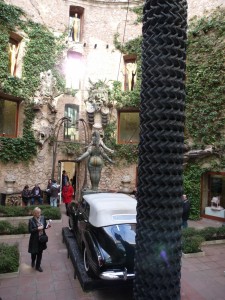
The courtyard, the Cadillac, the tyres… and… and….
It’s an astonishing place. Start out in the central courtyard, and you’re confronted by a Cadillac – Al Capone’s allegedly – beside a tower of tyres topped off by a fishing boat. Wander round – in any order, please: Dali insisted there was no timeline or other imperative to be followed.
Homage to Hieronymus Bosch?Gold cross.
You’ll discover rooms of paintings in which he worked in the style of other artists as diverse as Vermeer, Picasso, Goya, Velasquez, Millet, de Chirico: was he in search of a personal voice, or simply exploring and celebrating his knowledge of art history? A room full of fantastically bizarre creatures shows an affinity with the work of Hieronymus Bosch, but only a few yards away is a room full of exceptionally fine gold and bronze jewellery, largely made from coins with the heads either of Dali or his beloved wife Gala on them.
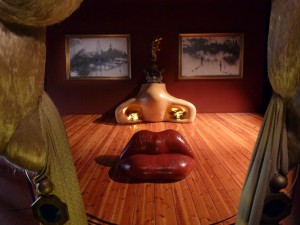
Then there’s the Mae West room. Walk in, and you’ll see some random objects: a couch, two wall paintings, a fireplace. Climb the stairs at one side of the room however, and look though the lens, and there she is, Mae West herself, in all her ruby-lipped glory.
And here she is.
It goes on. He’s copied Michelangelo’s Moses: but what’s an OT prophet doing with a giant squid?
Or go and get vertigo while standing four-square on the ground, viewing the dizzying perspectives of the ceiling in the Palau del Vent.
…and that’s only a bit of the ceiling.
The whole thing was by turns stimulating, exciting, puzzling and sometimes even annoying – bizarre for the sake of being bizarre. We’re really glad we went, though once may be enough. And if you want to know more, there’s an interesting account in the blog ‘Elsewhere’
The Civil War came up again when we visited the Castell de Sant Ferran, just outside Figueres. It’s an enormous, star-shaped site, built in the 18th century to protect the Spanish from the French, but it saw almost no action. But in the 1920’s, Salvador Dali did his military service there. It only came into its own during the Civil War. Then it provided secure storage for masterpieces from the Prado in Madrid, and became a stronghold for international brigades and ammunition.
We spent so long tramping round the walls – it’s a 3 km walk to encircle the entire site – that we didn’t explore the interior, which may have been a pity: some other time. But what a walk! As we began we could clearly see the Mediterranean coast and towns such as Roses. Then the Pyrenees, covered in snow over to the north, and the dusty more barren nearby hills. Figueres itself doesn’t give a good account of itself from up here: modern concrete factories and lots of high-rise blocks.
A small stretch of castle wall, with the Pyrenees beyond
And that was it. Our brush with the law in Barcelona had left us feeling a bit sour, and we felt our holiday was at an end. So off home for us, planning a return one day to explore that coast we’d caught distant glimpses off from the castle walls.
This is a walk past dozens of capitelles: shelter for sheep farmers & vineyard workers in former times.
First view of Bugarch.
Glance the other way, and it’s the Pyrenees
‘Bugarach! It’s over there!’
Cold. Pale thin fog baffles the contours of the hillsides, and those of the distant castle at Coustassa. Glimmering frost bristles the short maquis grass beneath our feet. A watered lemony sun high above us attempts to burn winter away, and eventually does so.
That’s when we have our first view of Bugarach, the imposing thick-set mountain which dominates this part of the Aude, because it stands alone, rather than as part of a range, and today is pretty much thatched in snow.
‘According to an ancient Mayan calendar, at some point towards the end of 2012, the world will come to an end.
It is not clear how that will happen, but apparently humanity does not stand a chance – except for those who seek shelter in the area surrounding Bugarach.
Just 200 people live there all year round, but doomsday believers and spiritual groups are convinced the village has magical powers, thanks to the local mountain – the Pic de Bugarach.
For years, rumours have circulated on the internet that extra-terrestrials live in the mountain, and come the apocalypse, the top will open and they will emerge with spaceships, and rescue the local inhabitants.’
Although it’s quite hard to entertain the idea that the mountain might be some sort of underground UFO car park, there are plenty of people who have done so, and with great fervour. Here’s today’s Daily Mail, which has been talking to Jean-Pierre Delord, Mayor of the tiny village of Bugarach (pop. 176).
‘On Wednesday, he will close the village for five days to anyone who doesn’t live here or isn’t already booked to stay, and draft in hundreds of police, military, firemen and Red Cross to ban any gatherings, shut off the mountain and arrest anyone silly enough to try flying over it.
‘What if tens of thousands of people turn up?’ he says, throwing his arms up in the air. ‘I have no way of knowing what will happen. I have no crystal ball! I don’t care if people want to chant naked or talk to the trees, but I have to protect my villagers. I am responsible for them.’’
He’s not over-reacting. Local house-owners have been able to rent out their homes for the period in question for astronomical prices, and even camping spots are going for 400 euros a night. For most locals though, the whole thing is at best a nuisance, at worst a real headache. The nearer we get to December 21st, the more people descend on the area, and the police and army are already involved in keeping order.
We enjoyed our views of Bugarach, as ever. We spent time pretending to look for UFOs and generally mocking the New-Agers who are so convinced by the end of the world as we know it. Then we got on with the business of enjoying our walk in the here-and-now. Here are some photos of our day.
Autumn colours beginning means it’s harvest time for foragers
I’ve written before about the ‘au cas où’ bag: the carrier you always have with you on a walk, ‘just in case’ something tasty turns up and demands to be taken home and eaten.
Well, at this time of year, it isn’t really a case of ‘au cas où’ . You’re bound to find something. A fortnight ago, for instance, Mal and I went on a country stroll from Lieurac to Neylis. We had with us a rucksack and two large bags, and we came home with just under 5 kilos of walnuts, scavenged from beneath the walnut trees along the path. A walk through the hamlet of Bourlat just above Laroque produced a tidy haul of chestnuts too.
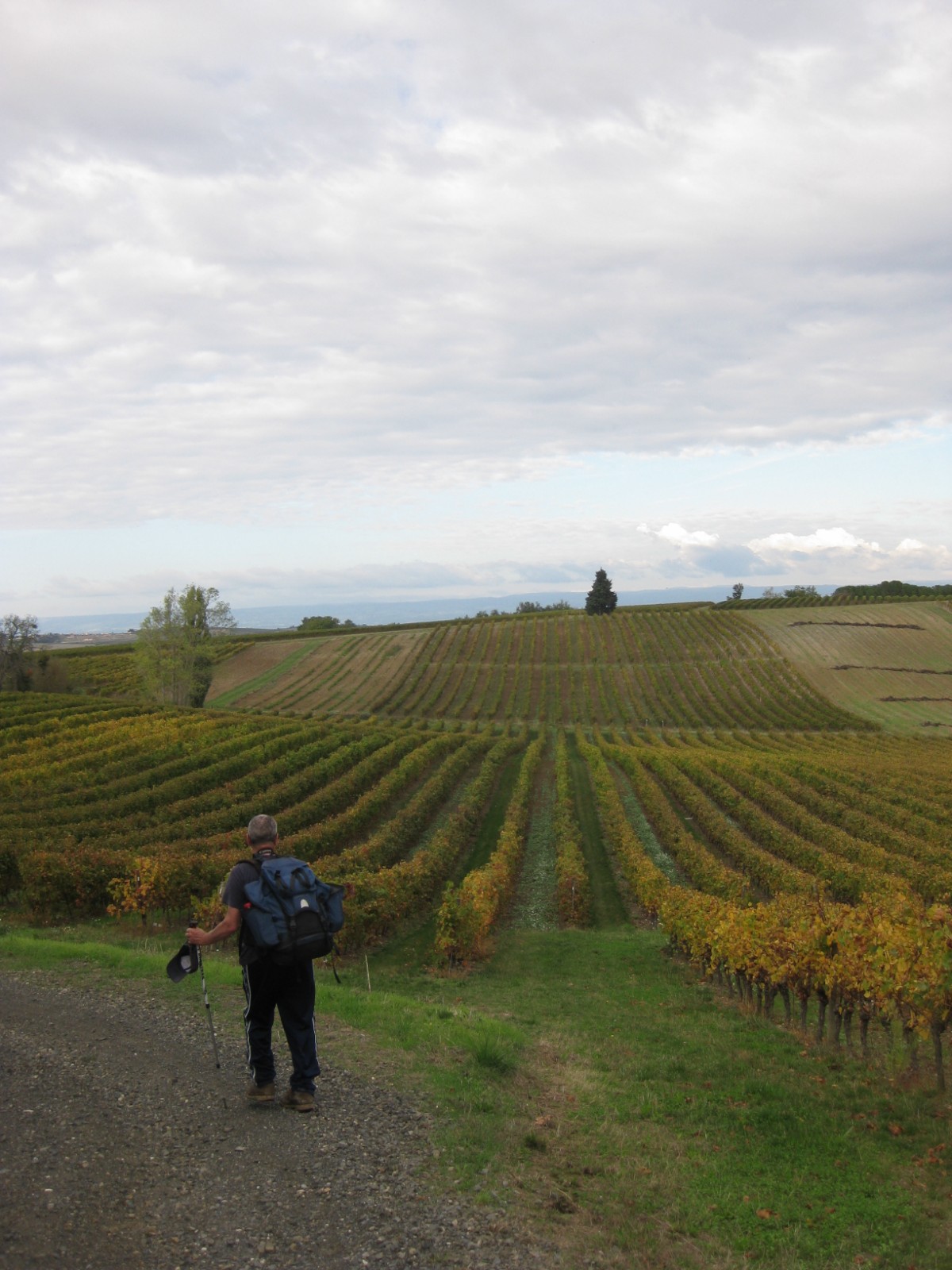
Yesterday, we Laroque walkers were among the vineyards of Belvèze-du-Razès. The grapes had all been harvested in the weeks before, but luckily for us, some bunches remained on the endless rows of vines which lined the paths we walked along. We felt no guilt as we gorged on this fruit all through the morning. The grapes had either been missed at harvest-time, or hadn’t been sufficiently ripe. They were unwanted – but not by us.
So many vines: there’ll be unharvested grapes there somewhere.
The walnuts we’re used to in the Ariège are replaced by almonds over in the Aude. You have to be careful: non-grafted trees produce bitter almonds, not the sweet ones we wanted to find. But most of us returned with a fine haul to inspect later. Some of us found field mushrooms too.
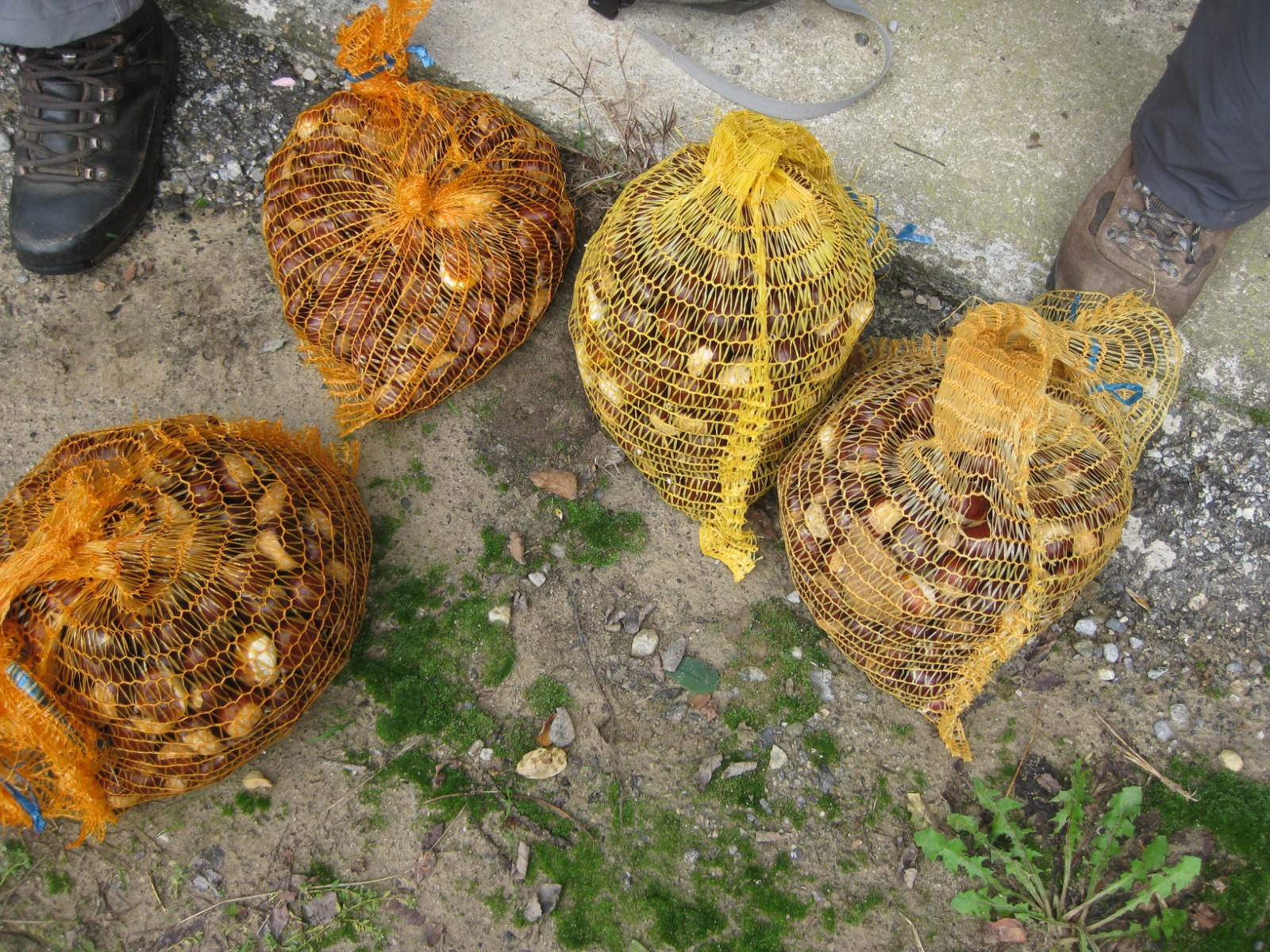
Today, the destination of the Thursday walking group was the gently rising forested and pastoral country outside Foix known as la Barguillère. It’s also known locally as an area richly provided with chestnut trees. Any wild boar with any sense really ought to arrange to spend the autumn there, snuffling and truffling for the rich pickings. We walked for 9 km or so, trying to resist the temptation to stop and gather under every tree we saw. The ground beneath our feet felt nubbly and uneven as we trod our way over thousands of chestnuts, and the trees above threw further fruits down at us, popping and exploding as their prickly casings burst on the downward journey.
As our hike drew to an end, so did our supply of will-power. We took our bags from our rucksacks and got stuck in. So plentiful are the chestnuts here that you can be as picky as you like. Only the very largest and choicest specimens needed to make it through our rigorous quality control. I was restrained. I gathered a mere 4 kilos. Jacqueline and Martine probably each collected 3 times as much. Some we’ll use, some we’ll give to lucky friends.
Now I’d better settle myself down with a dish of roasted chestnuts at my side, and browse through my collections of recipes to find uses for all this ‘Food for Free’.
I think these chestnuts represent Jacqueline, Martine and Maguy’s harvest.
* Two lines from an English hymn sung at Harvest Festival season: ‘Come, ye thankful people, come’
The drive to the start of the walk was dramatic enough. Forested and craggy, our narrow road out of Auzat switch-backed steeply up the slopes in a seemingly endless series of hairpin bends.
And our walk began, an 1800 foot climb, upwards through forest then out onto the stony, rocky path towards the man-made étang d’Izourt, one of the many reservoirs in the area maintained by EDF to provide power. Once, a helicopter flew over. Since there are no roads up there, it was delivering either men or supplies to a team we could see labouring on a more distant slope.
The walk changed for me as I learnt the story of what had happened back in 1939 when the reservoir was being built. Most of the members of the construction team at that time were economic migrants, Italians from the Veneto, and whilst working there, they lived in huts on site.
The weather conditions had already been atrocious for days when on March 24th 1939, a fierce blizzard struck. There was no option for the workers but to hole up in their huts. The storm was so fierce that huts B and C were destroyed from the weight of snow above, and the roof from hut A blew off. The desperate men sought both to escape and to try to help their work mates, many of whom had died or been gravely injured by the tumbling buildings. A nearby avalanche brought down the cable car linking the site with the works below. The only way up was on foot, and rescue attempts were pretty much futile, though bodies and the injured were recovered as management attempted to evacuate the entire area. On 28th March, a team of army skiers managed to get through and working into the night, brought down the remaining bodies and wounded. 31 men, 29 Italians and 2 French, were buried at the cemetery in Vicdessos on 31st March. There they remain, as the families in Italy were too poor to manage the expense of repatriating the corpses. The memorials at the lakeside are still the site of pilgrimage, thanks to the efforts of the ‘Ricordate-Izourt’ Association: locals and Italians who honour the memory of those lost workers.
We ourselves had started our walk in bright sunlight. Spots of rain began. Then the wind. By the time we reached the lake, there were times when the gusts felt almost horizontal, and we struggled to find protection from the rocks to eat our lunch. The more modern huts now on site have their roofs held on by strong metal cables, and we could understand why.
The sky turned the colour of lead, and we rejected the idea of exploring the lake in favour of hurrying down the way we had come. We knew we’d be OK, but we also know to treat the mountains seriously and with respect – conditions can change very quickly. We were fine of course, but that fierce wind on a warm October day gave us the smallest hint of what things could be like if you were trapped there in much nastier conditions. Even now, the most efficient way of supporting the workers still on site from time to time is to get them and their supplies there by helicopter. A noisy chopper whirled up and down the mountainside several times as we walked down, our journey cheered by a rainbow linking our mountain with the one next door. Though we were sorry the weather had chased us home, we were grateful not to have been exposed to the dangers the mountains can offer from time to time.
Fourth of October. The sun’s shining hot, but not too hot, high in an azure sky. A small group of hikers stands outside a little church and gazes up a steep slope towards the ruins of the Château de Lordat. And then sets off in the opposite direction.
It’s Anny who’s picked our route, and it’s designed to wind us up the hillside to the castle along chunks of country road, craggy uphill scrambles, dry-leaved woodland just thinking about exchanging green summer leaves for the ochre and russet tints of autumn, and the occasional tiny village – no more than a couple of streets encircling an ancient church.
Most of the time there are views upwards, towards the castle itself, or the cable-wagons serving the talc mines of nearby Luzenac, or across to the more distant mountains covered for the first time this season with bluish-white powdering of snow. Or down, past thickly forested almost vertical slopes to craggy rust-stained rocky outcrops with occasional hamlets and villages scattered through the countryside. Near villages and farms, we pass walnut trees, and feel obliged to gather the recently ripened and fallen nuts – this is France after all. We exchange recipe ideas.
Suddenly, we’re there. Lordat. In high season, the village must be a tourist trap, but now we’re happy to saunter along the sunny empty streets, with their pastel-painted cottages and tubs of geraniums. A final yomp and we’re at the castle walls. It’s ruined and closed to the public at the moment, but the views in all directions make the climb worthwhile.
A meandering trek through the woods, trying hard not to kick over the delicately-stemmed autumn crocus, brings us to our lunch spot in Axiat, sitting outside its Romanesque church. Mal and I are particularly taken by a notice on the door in French, English and Spanish. The English version reads: ‘Ladies and Gentlemen the visitors, we thank you for closing the door by going out’.
Afterwards, more craggy descents, sometimes through woods, at other times with more of those impressive views, along an ancient man-made winding path. And back to the village we started from. It’s a wonderful walk. If you come to stay, make us take you.
That exhibition, ‘From the Pyrenees to the Pennines’, about Yorkshire. It’s over and I’m not sorry. I loved working with the children in schools and in Centres de Loisirs, but the whole business of getting the exhibition for the general public up and running was stressful and exhausting.
Still, it’s good to remember why we did it. We wanted to introduce Yorkshire, particularly North Yorkshire, to local people here. We wanted to show how much these two areas have in common.
Both North Yorkshire and the Ariège are largely rural areas, where sheep have an important part to play. In no small part, they contributed to the development of the textile industry. Once the most significant part of the economy in the communities where the industry once thrived, now textiles have largely left Europe for the Far East. Formerly prosperous areas such as Bradford and Lavelanet are now struggling to find a new role. At the same time, immigrant textile workers have changed the face of these communities for ever: Spaniards in southern France, those from the Indian sub-continent in northern England.
Mining is similarly in decline. Coalmining in the north of England is the most obvious casualty, but industrial archaeologists in Yorkshire and the Ariège can point out many signs of a mining past – in disused and decaying workings of lead, alum, potash and talc. Jet, the black gemstone popular in the 19th century was worked here too, and a local historian here in the Ariège has uncovered correspondence between manufacturers here and in Whitby.
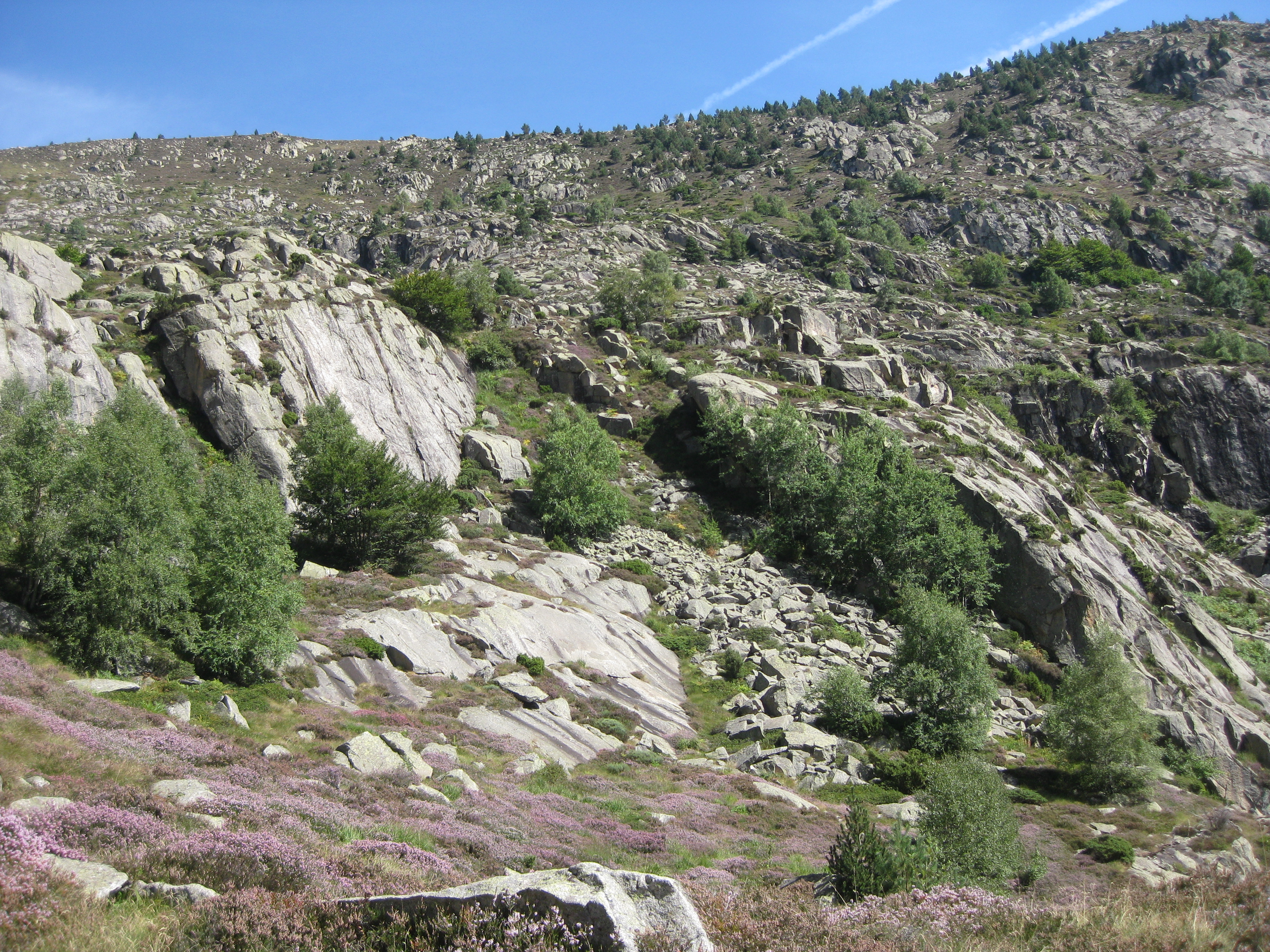
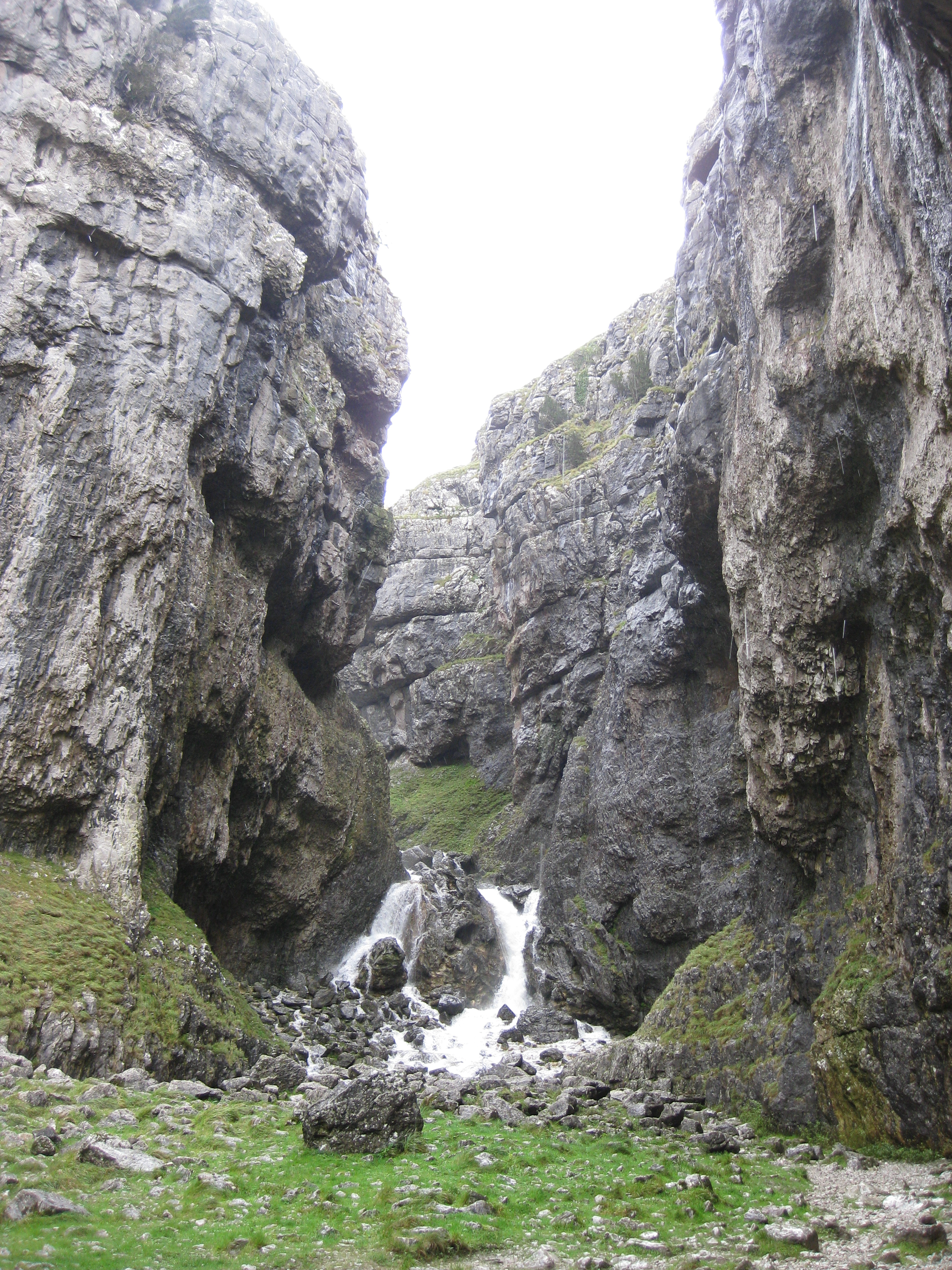
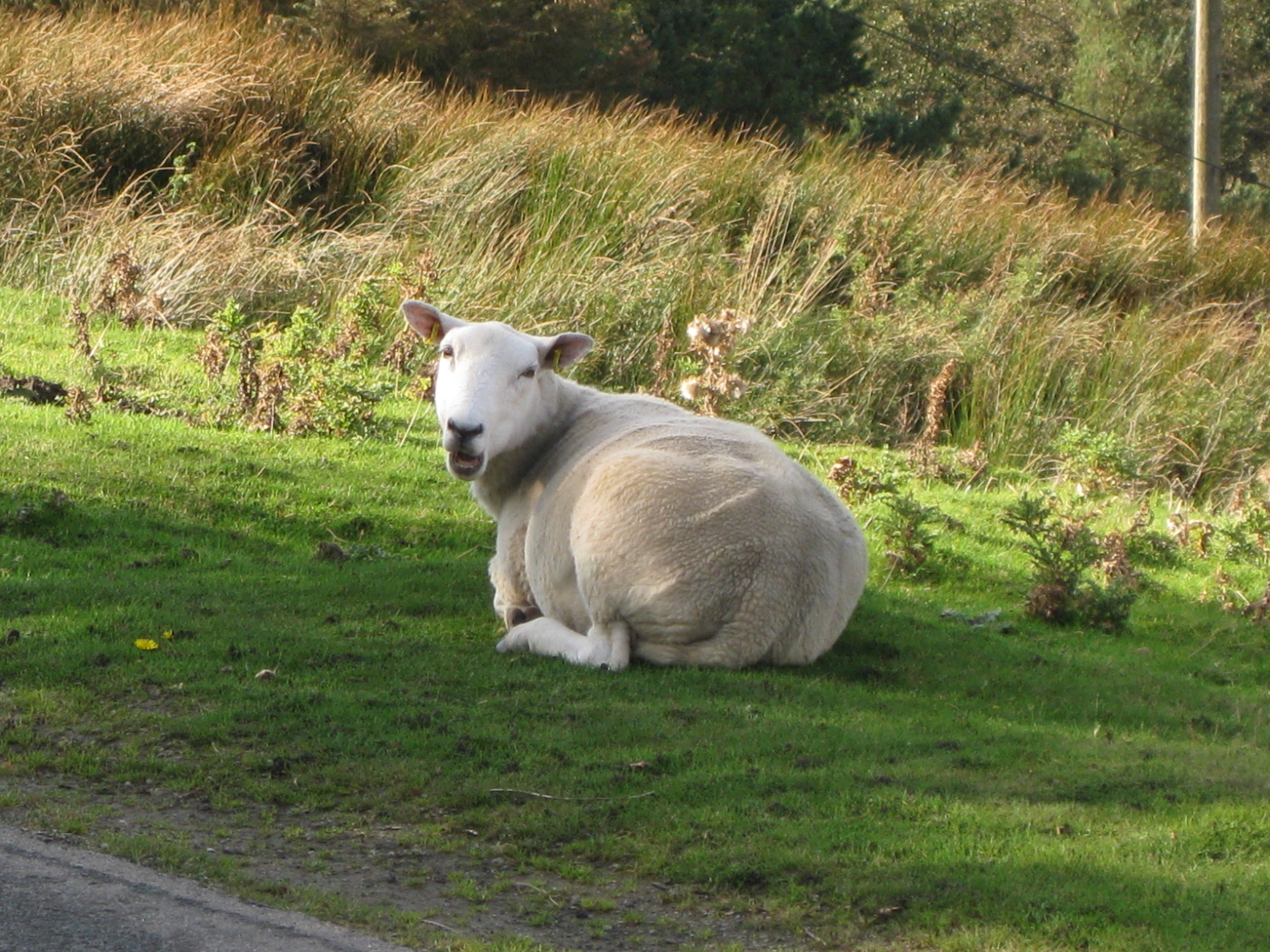
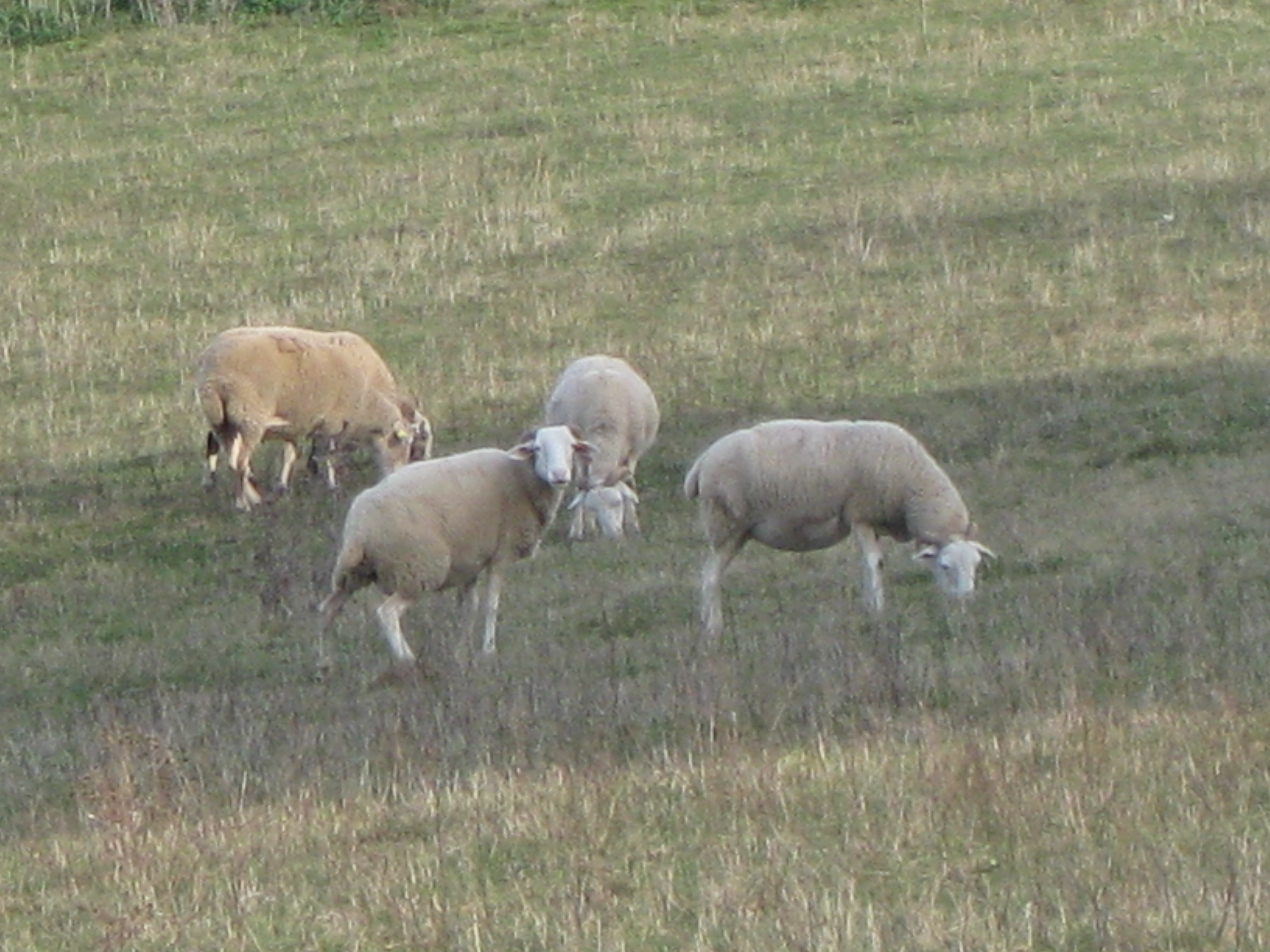
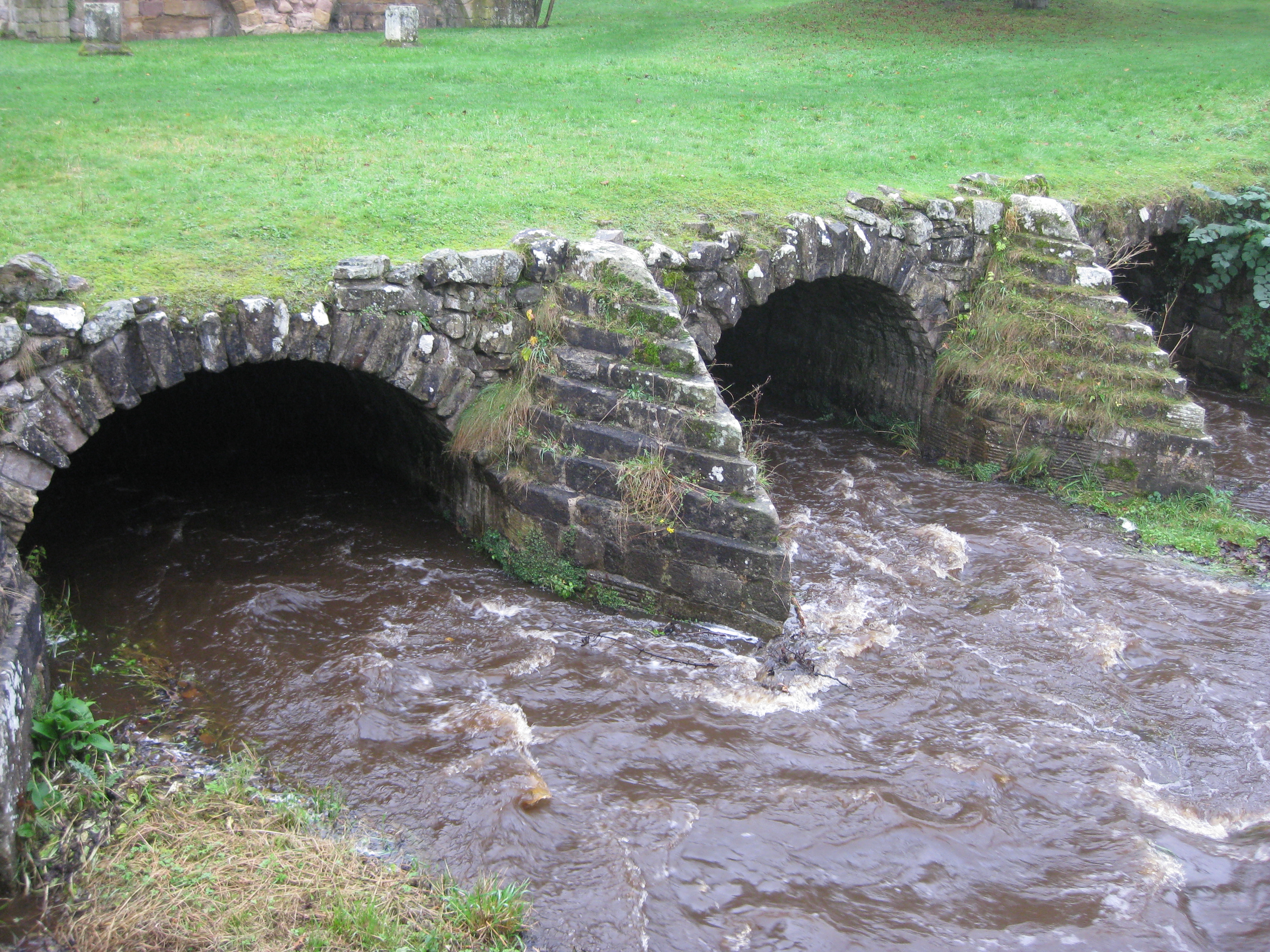
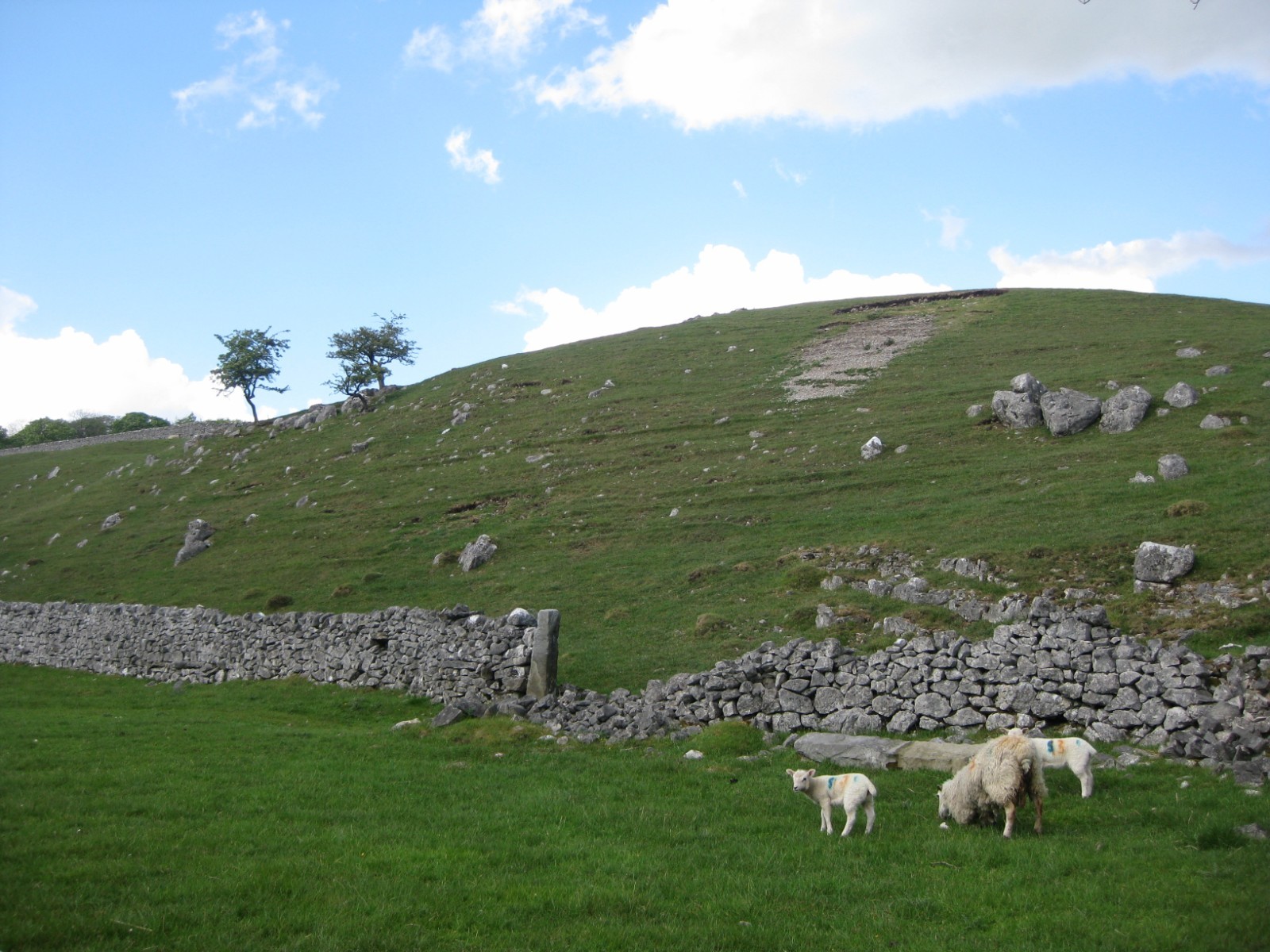
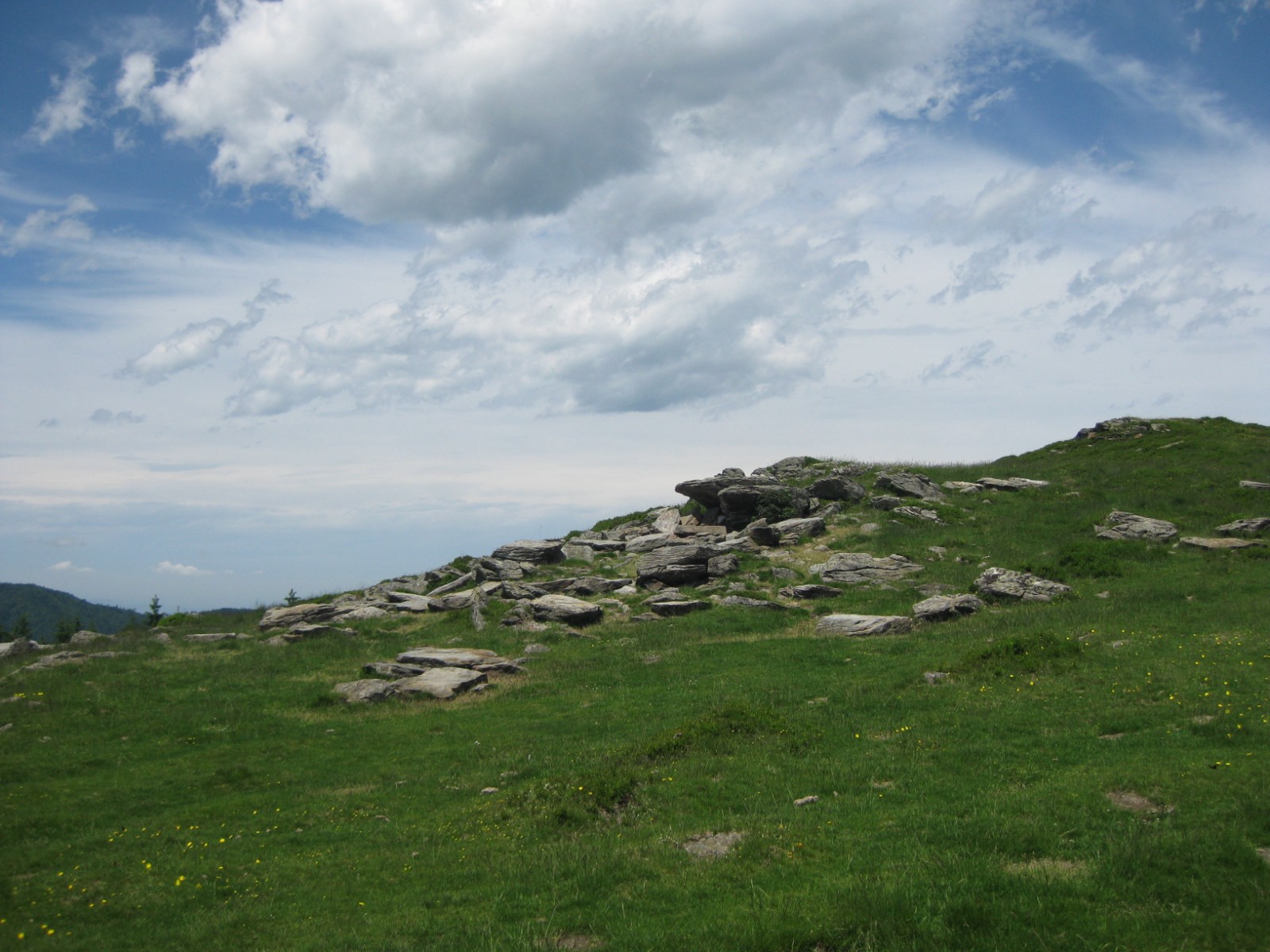
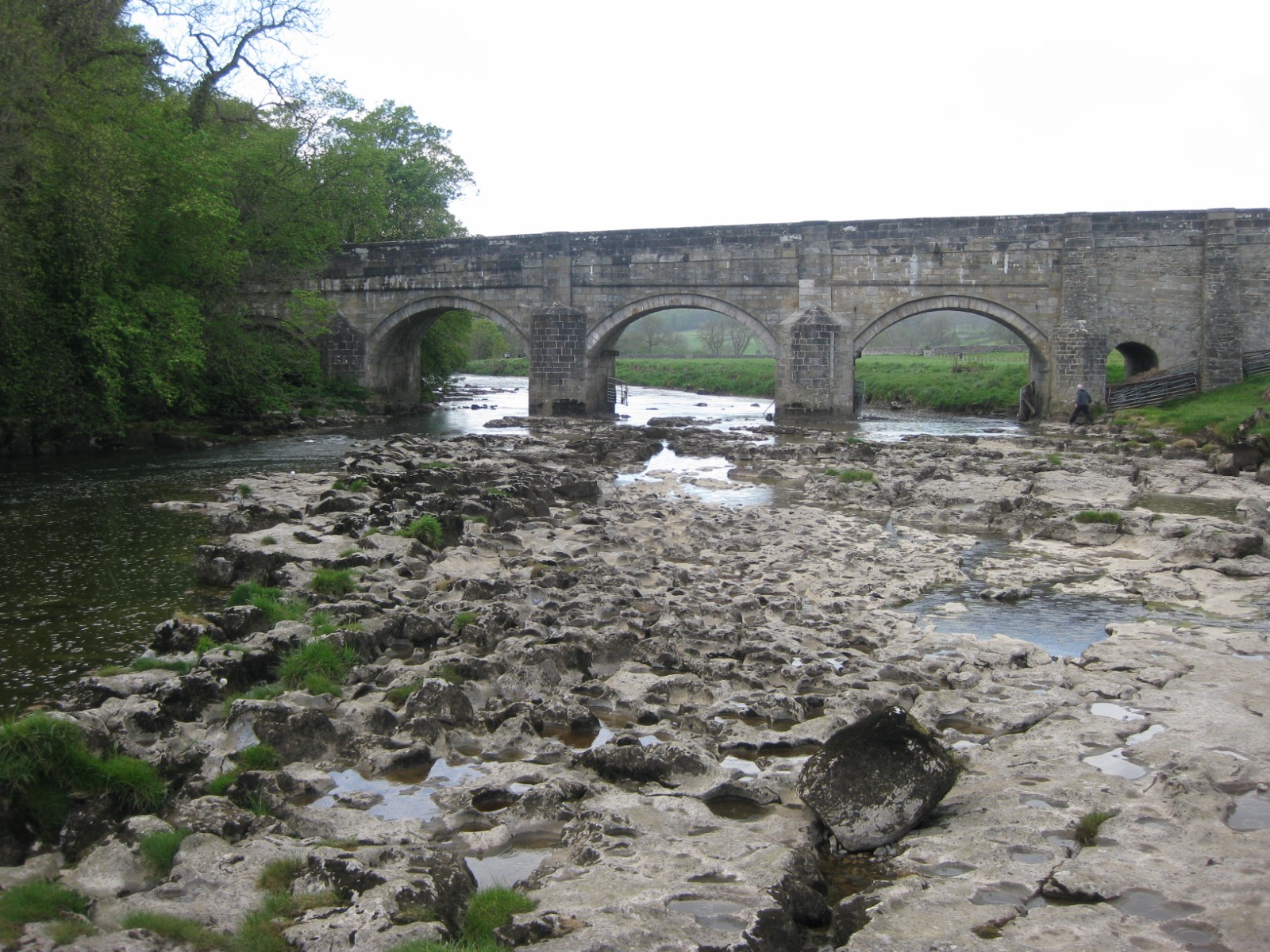
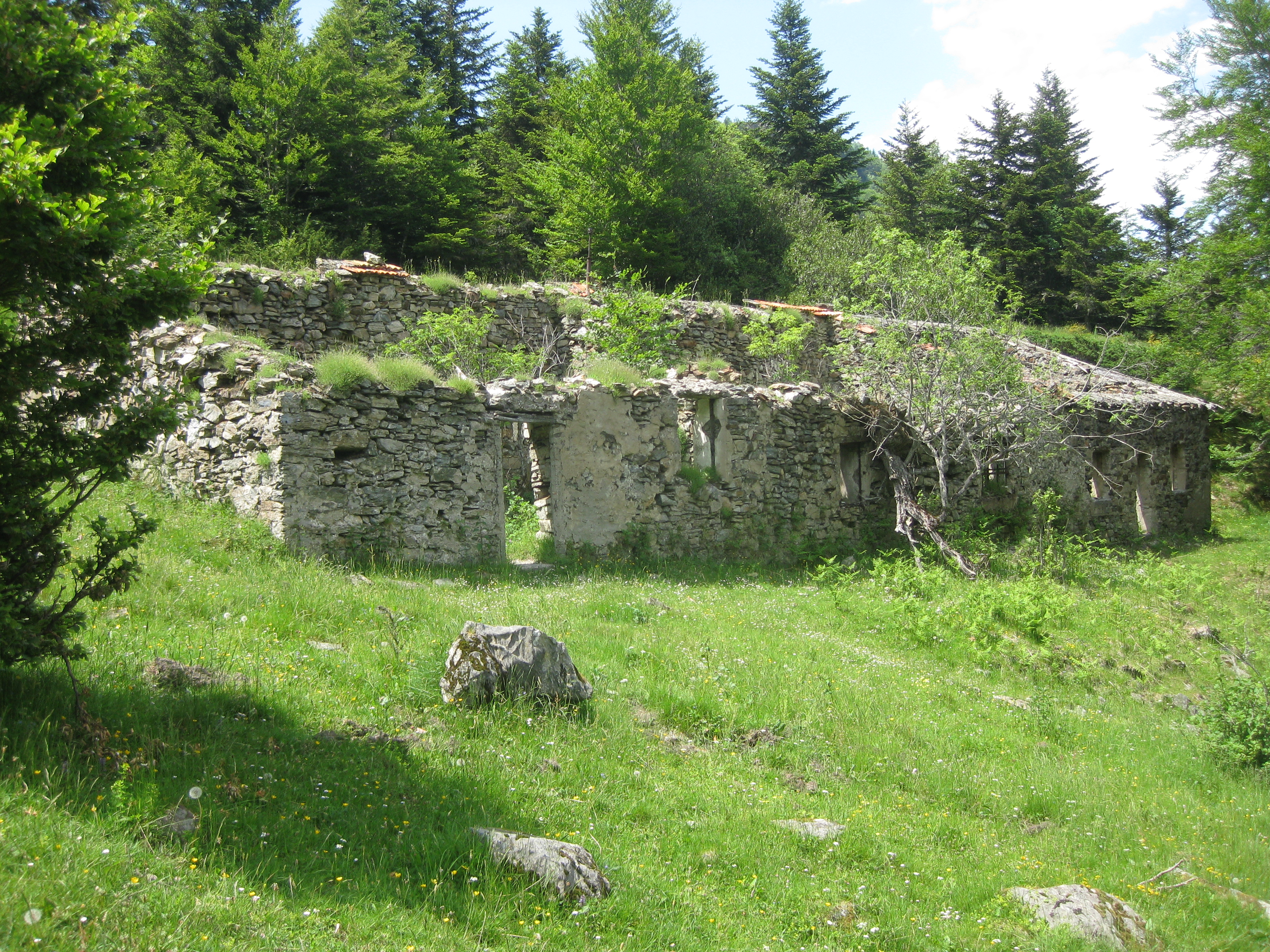
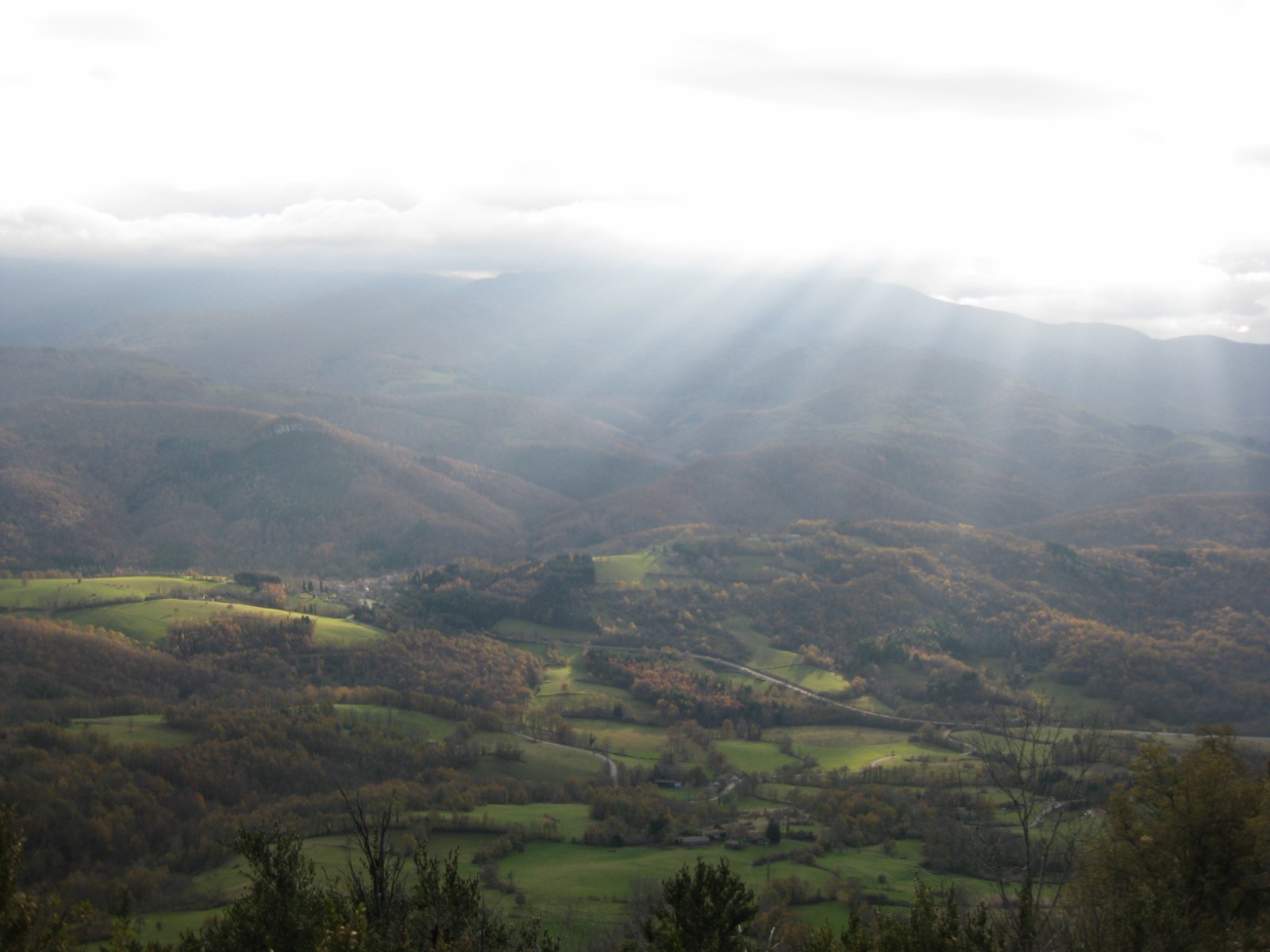
Both areas owe much of their character to limestone scenery. That’s why I’m going to give you a little quiz. Have a look at these photos. Where were they taken do you think? Yorkshire? Or the Ariège? It’s not always easy….
1. Limestone rocks. But where?
2. And this?
3. Does this sheep baa in English or French?
4. And these?
5. Where’s this?
6. And this?
7. More scenery.
9. And a typical market in, er….
10. And a bridge.
11. And a ruined house
12. Last one
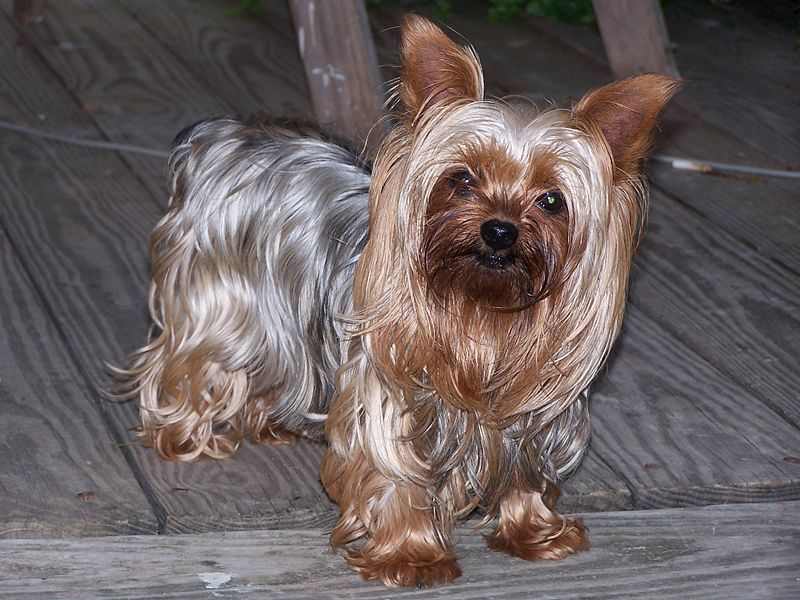
13. Oh, an afterthought
Answers
1. Rocks near Marc, Ariège
2. Goredale Scar, Yorkshire
3. Herdwick sheep
4. Tarasconnaise sheep in Troye d’Ariège
5. Axat, Ariège
6. Bridge at Fountains Abbey, Yorkshire
7. Grassington
8. Cap de Carmil, Ariège
9. Otley Market
10. Bridge at Grassington
11. Le Taulat
12. Roquefixade
13. A Yorkshire terrier. Often seen here in the Ariège. I wonder how many owners know these little dogs were originally bred in the 19th century in Yorkshire to catch rats in the textile mills?
Mont d’Olmes: local playground for skiers. You wouldn’t travel any great distance to spend a holiday here, but for locals, it’s the ideal winter sports spot. It’s a wonderful area for walkers too. We’ve only just begun to discover the wealth of footpaths, mainly across truly ‘sauvage’ slopes, with views downwards to Montségur, Roquefixade, and northwards almost, it seems, as far as Toulouse.
It’s alright waxing lyrical though. For many people living in the area many years past, and until the early years of the 20th century, these slopes were the places where they came for long hours each day, working both on the surface and by crawling through narrow airless tunnels, mining talc.
Talc? Yes, that stuff you sprinkle on babies’ bottoms. That stuff those Olympic gymnasts plunge their hands into before taking to an overhead bar. That stuff that apparently still has many industrial uses, notably in the ceramics industry and for plastics paints and coatings. This soft soapstone was found here on Mont d’Olmes and is still mined in nearby Luzenac. Here though, all that is left are the gashes in the mountainside where the workings once were, and a few ancient trucks once used to transport the material down to civilisation.
Come and take the path we took last Sunday. We walked in more or less a straight line, up and down hill after hill, as the path became increasingly rocky and impassable. Our reward was the occasional handful of raspberries or bilberries, then a lunchtime picnic by l’étang des Druides. No, sorry, l’étang des Truites. Whatever. Nobody seems to know which name is correct. Some say the person making the first map of the area misheard and wrote ‘truite’ – trout – instead of ‘druide’. We saw no trout. We definitely saw no druids. But we had a jolly nice picnic. And I paddled. And then ruined a perfectly good day, in which morning chill and mist had given over to hot sunshine, by falling flat against the rocky path, cutting open my face and chipping three teeth. I hope the druids weren’t lining me up for some kind of sacrifice.
Smoke from a forest fire high in the mountains above l’Hospitalet
We’re back in France. It’s hot. Very hot. Humid too. And yesterday we returned Emily to Barcelona, the city she now considers home. Barcelona was very hot indeed, 38.5 degrees Centigrade actually, which is 101.3 Fahrenheit in old money.
To get to Spain we crossed the Pyrénées where, for the past month or so, fires caused by the extreme dry conditions have been fairly out of control: mainly in Spanish Catalonia, but spreading through to the Catalan area of France too.
Now though, there are fires near L’Hospitalet-près-l’Andorre. This little commune is by way of being a frontier settlement between France, Spain and Andorra. It’s unaccustomed to being newsworthy outside the pages of tourist brochures aimed at those wanting mountain scenery and an energetic walking holiday.
We knew that so far, and thankfully, no human settlements are at risk from the fires. We knew too that all the walkers’ footpaths have been closed and so have the refuges, which offer basic accommodation and food to roughie-toughie hikers miles from normal civilisation. We’d heard that more than 25 tourists had been evacuated from deep in the area some days before. We didn’t expect to see from the road evidence of these fires, which have burnt and ravaged over 400 hectares of the countryside.
A helicopter reconnoitres.
But as we approached the village, traffic slowed. Bit by bit, we snaked up the mountain road which, as it turned out, had been reduced to a single carriageway. A lay-by outside l’Hospitalet has been commandeered and enlarged by the army and fire services to provide a heli-port. The fires are in thickly forested areas some 2400 metres high, and inaccessible to land-based fire-fighters. Trackers (air-borne fire-engines) have come from Carcassonne, and scoop some of the water they need to quench the flames from our nearby reservoir here at Montbel. Expertise and equipment have been borrowed from other areas of southern France, and both army and fire service are on duty 24 hours a day.
Seeing some helicopters temporarily at rest together with their crews, brought home to us the real dangers of fighting these fires: they obstinately refuse to submit to man’s control in isolated and largely unreachable forests. It was only on our journey home that we noticed, high above us, several fires at altitude, burning the trees and vegetation. It may be a long time before the fire-fighters can go home, certain in the knowledge that this round of drought-induced danger to man and wildlife is really over. The rain promised this weekend should help.
Army helicopters ready for action
My photos, by the way, are pretty poor. This is because they were taken from a moving car
When guests come to stay, Malcolm and I often pore over maps looking for some unexplored – by us – corner of our patch. But in the end, what’s the point? Our visitors aren’t sickly pale wraiths whose jaded walking appetites have to be tempted by novelty. They’re happy with the solid day-to-day fare just a mile or two down the road. To them, in any case, everything is new.
We too are happy to revisit favourite walks. They’re never the same. The changing seasons bring different flowers, different cloud formations. Mountains which perhaps were sparkling bluish-white last time we visited, turn green and purple towards summertime with just the odd small patch of snow near their summits.
Today, then, we went with Christine to visit our old friend Roquefixade, just a few miles away. A steady climb through the juniper-scented woods and along a rocky ridge leads to a ruined château, once far above us, now somewhat below. Here it is. Enjoy the views. We did.
The village of Roquefixade far below. We were there half an hour ago.
The gently clanking bells on the Gascon cattle joined the birdsong as our accompaniment
First view from our walk of the Château of Roquefixade
Castellated rocky crags complement the ruined château
View through the castle wallls
The 11th century château may have had a 17th century makeover
View from the château
..and another one
Wind and rain have sculpted these ruined limestone archways
Conquering the castle and raising the Occitan flag
Flowers by the flagpole
Walking back towards the village, the château above us once more










 From Pyrenees to Pennines
You must be logged in to post a comment.