‘I don’t sing because I’m happy; I’m happy because I sing.’ *

Thursday evening.  Choir.  Arrive early in time for a quick chat and a gossip, and then settle down to work.

The mood’s established from the first note.  Our voices chase up and down the scales in a series of jolly rounds, verses and tongue-twisters as we warm up our voices and then it’s down to work on the repertoire.  Vanessa, who squeezes pretty good music out of a very mixed bunch of singers, keeps us busy, committed and enthusiastic.  We love her.

It’s all so different from the choral society I belonged to in England.  There, the repertoire was the attraction.  Haydn’s ‘Creation’, Charpentier’s ‘Te Deum and all those stirring sacred Masses.  I liked my fellow choristers too.  Really though, I felt like Groucho Marx.  I didn’t care to belong to any club that would have me as a member.  I was never quite confident in what I was singing.  I was always running from behind and rarely had the confidence to sing my heart out.

But the repertoire held me in thrall, and so when I arrived in France, I looked for more of the same.  And didn’t find it.  I guessed the Departmental Choir was beyond my reach.  I took me ages to realise that most villages and small towns, even Laroque, do indeed have a choir, and even longer not to feel sniffy at what I then considered an irredeemably low-brow  programme.

More fool me.  Since I gave in and joined in I’ve had the best fun.  Thursday nights when we have our rehearsals are simply unmissable.  We sing a bit of everything: Henry VIII’s ‘Pastime with good company’ (en français naturallement); ‘Amezzing Gress’ (en American, off coss), some sacred stand-bys; Breton or Auvergnat folk songs: the odd sortie to Russia – but the general feel is vairy Frainch, often with songs to which everybody but me already knows the words.  I soon catch up though.  I have to.

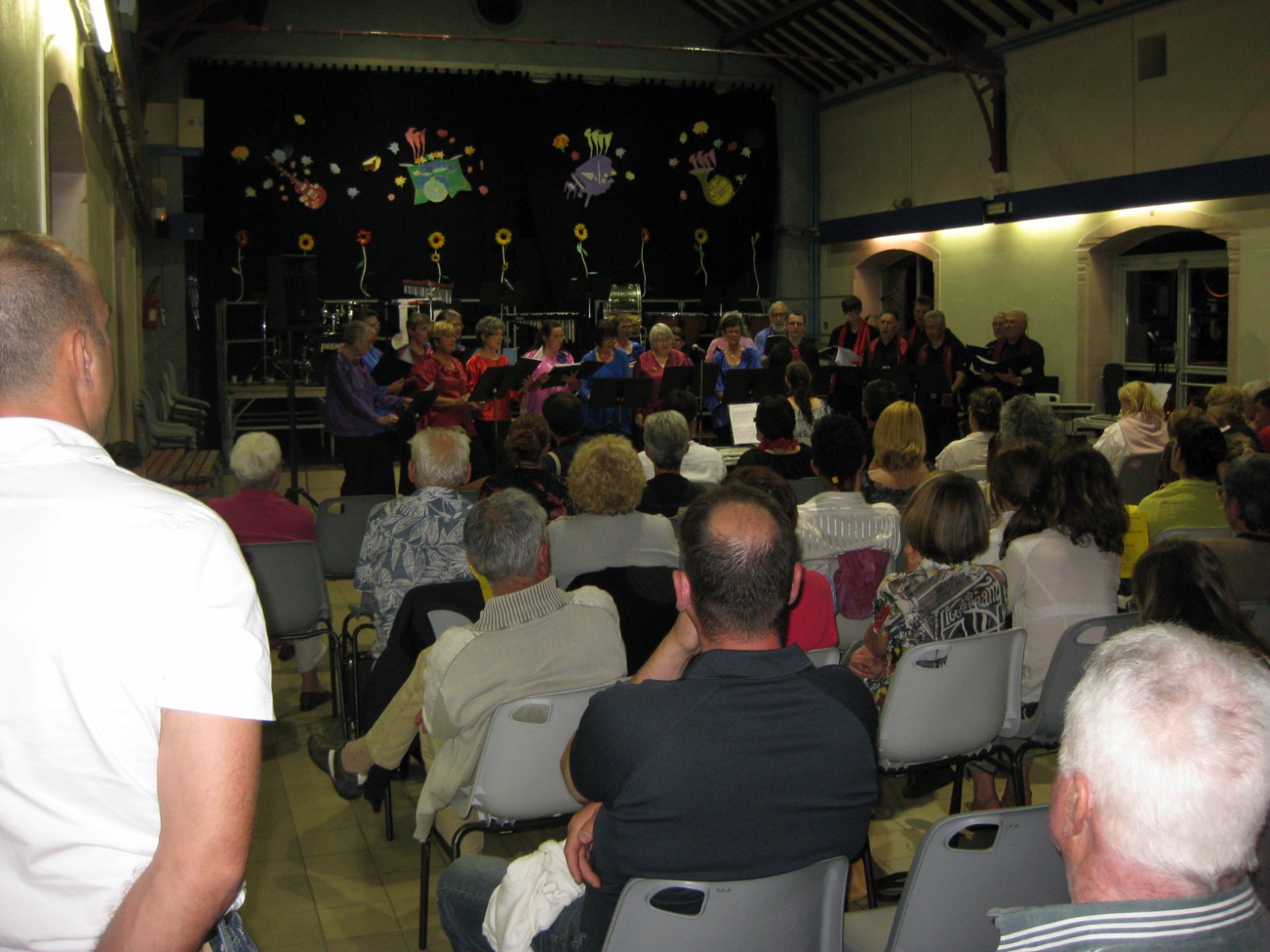
We’ll have concerts in the communities nearby.  And every now and then, as last week, there‘ll be a ‘Rencontre de Chorales’, when a number of choirs from a wide area gather together for the afternoon and invite the general public in for a feast of singing.  Each choir sings about 6 numbers from their repertoire, catering to every possible musical taste. And we all sit together in our concert get-up, sympathising with mistakes, applauding great performances until our own turn comes. At the end, every chorister from every choir will somehow squeeze onto the stage to join in the ‘chanson en commun’.  The audience enjoy it, but it’s even more fun for we singers to join together, united by our love of singing.  As we all suggested last week at the tops of our voices, ‘C’est magnifique’
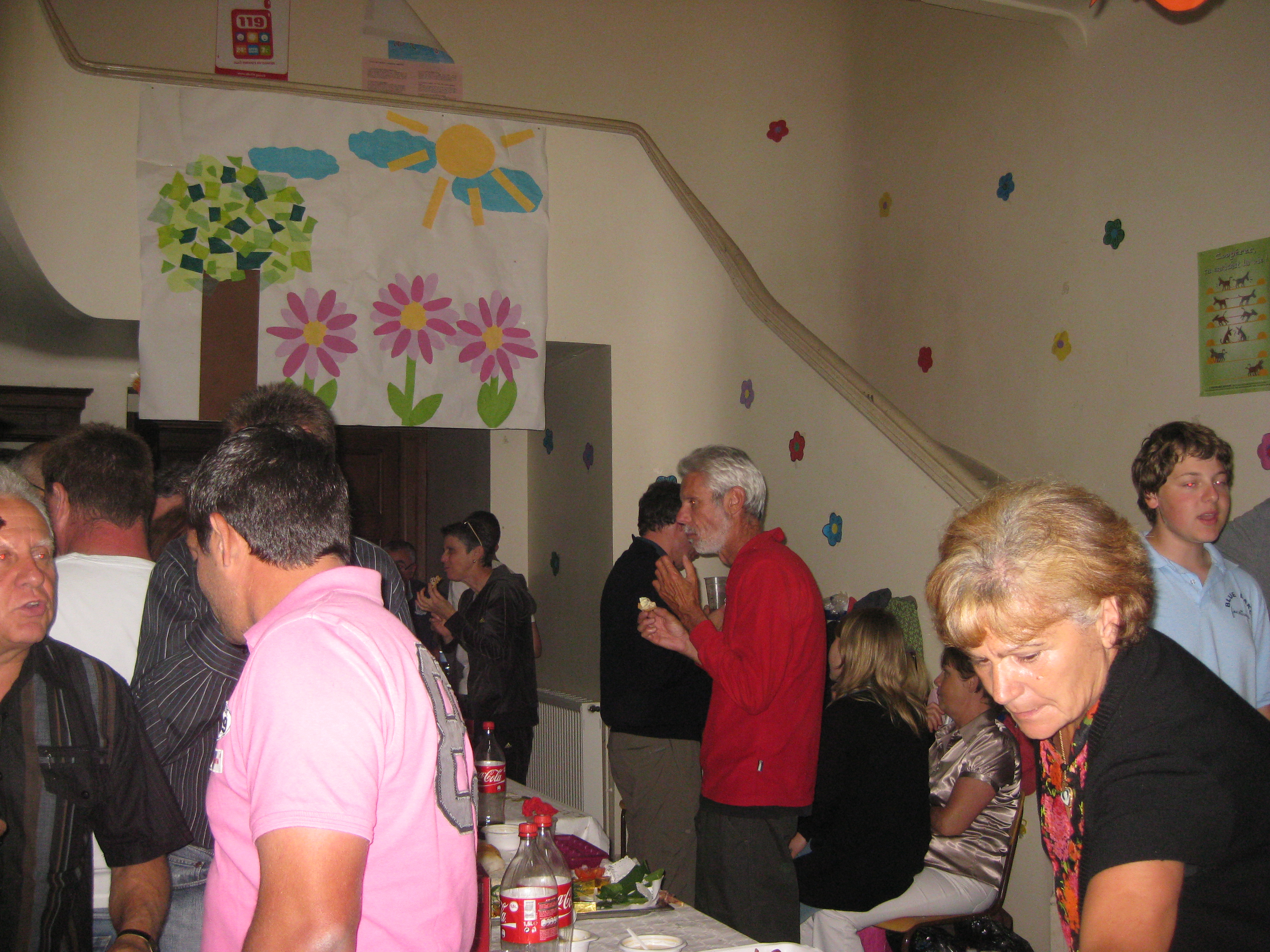
Far too busy getting to know each other and renew old friendships to start singing yet
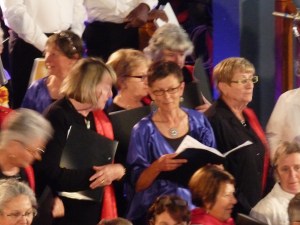
There we are, members of 5 different choirs, all in our different concert gear, squeezing together to begin singing.  That's me in the middle, in blue.
There we are, members of 5 different choirs, all in our different concert gear, squeezing together to begin singing. That’s me in the middle, in blue.

* William James
Entendre cordiale: Blue Lake again

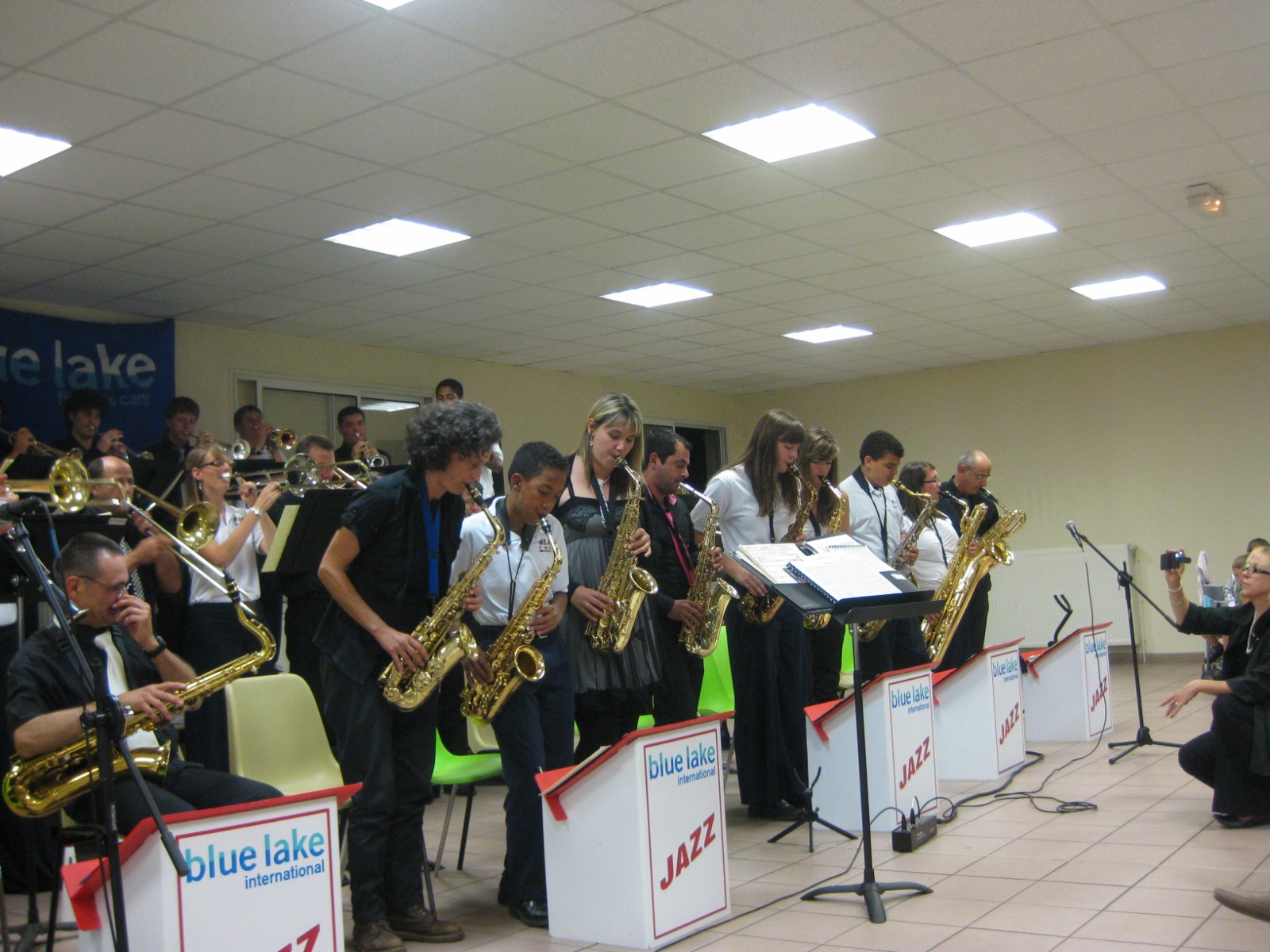
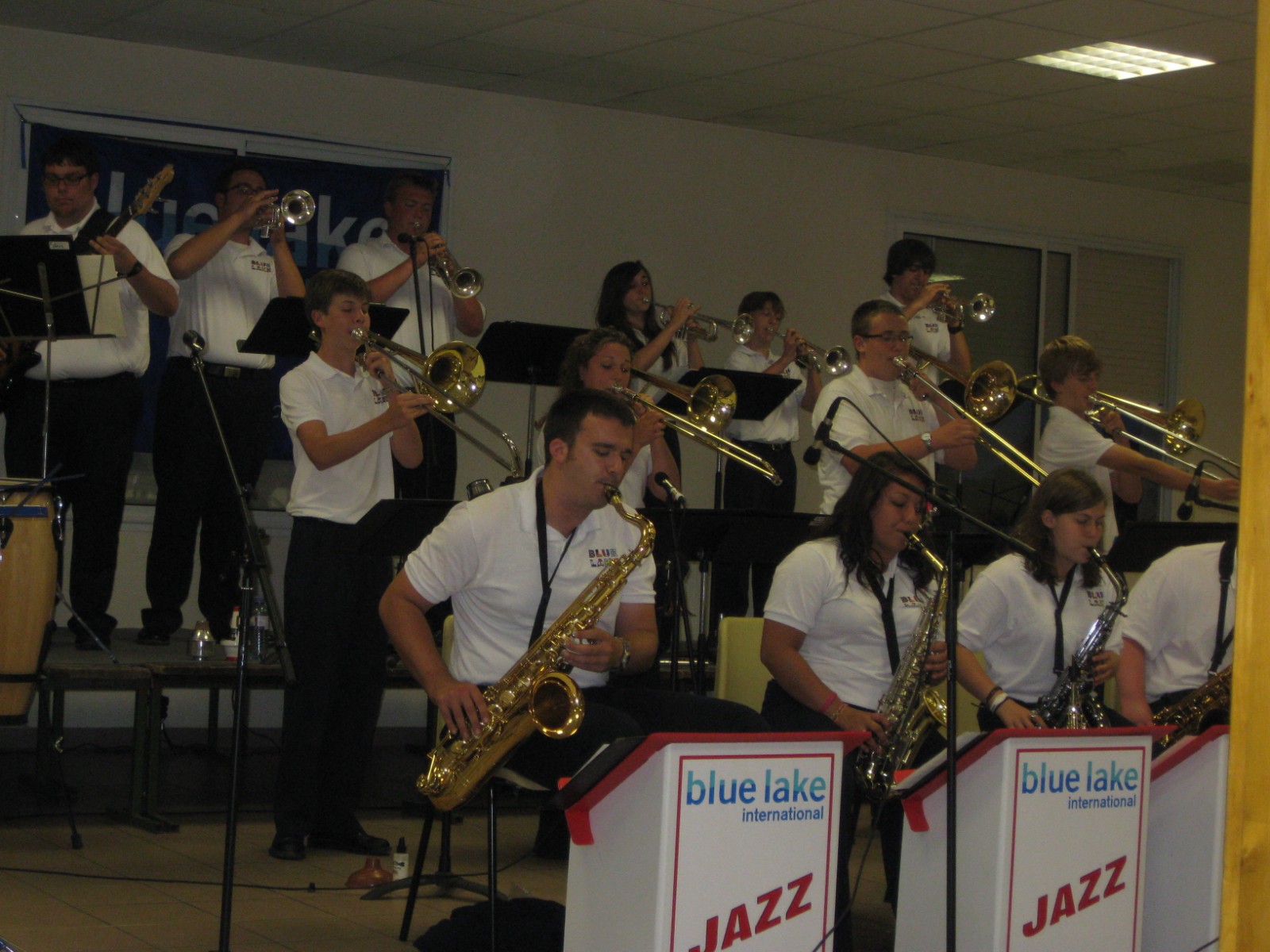
It’s been Blue Lake time again: that time of year when for 3 years now, we at Laroque have come to expect great entertainment from the musicians of the Blue Lake Fine Arts Camp in Michigan, USA, as well as some music from our own LDO Big Band.

This year, we welcomed a slightly different group from previous years – the International Jazz Band.  Mostly still in their teens, these players have been selected for the European tour not only because they’re good at what they do, but they’re hungry to become even better.  They want to seize the opportunity to spend time in cultures other than their own, and to perform in locations throughout parts of Europe, from prestigious concert halls and cathedrals, to smaller town venues like ours.

At the end of last night’s concert, the band’s conductor and group director Bill MacFarlin, spoke of how these chances for young Americans to travel and make music was a real opportunity to foster international friendship and understanding.

We’ve been watching that at work over the last 3 days.  The Blue Lake team, 17 of them, arrived in sunshine to a big welcome group in the Municipal Park.

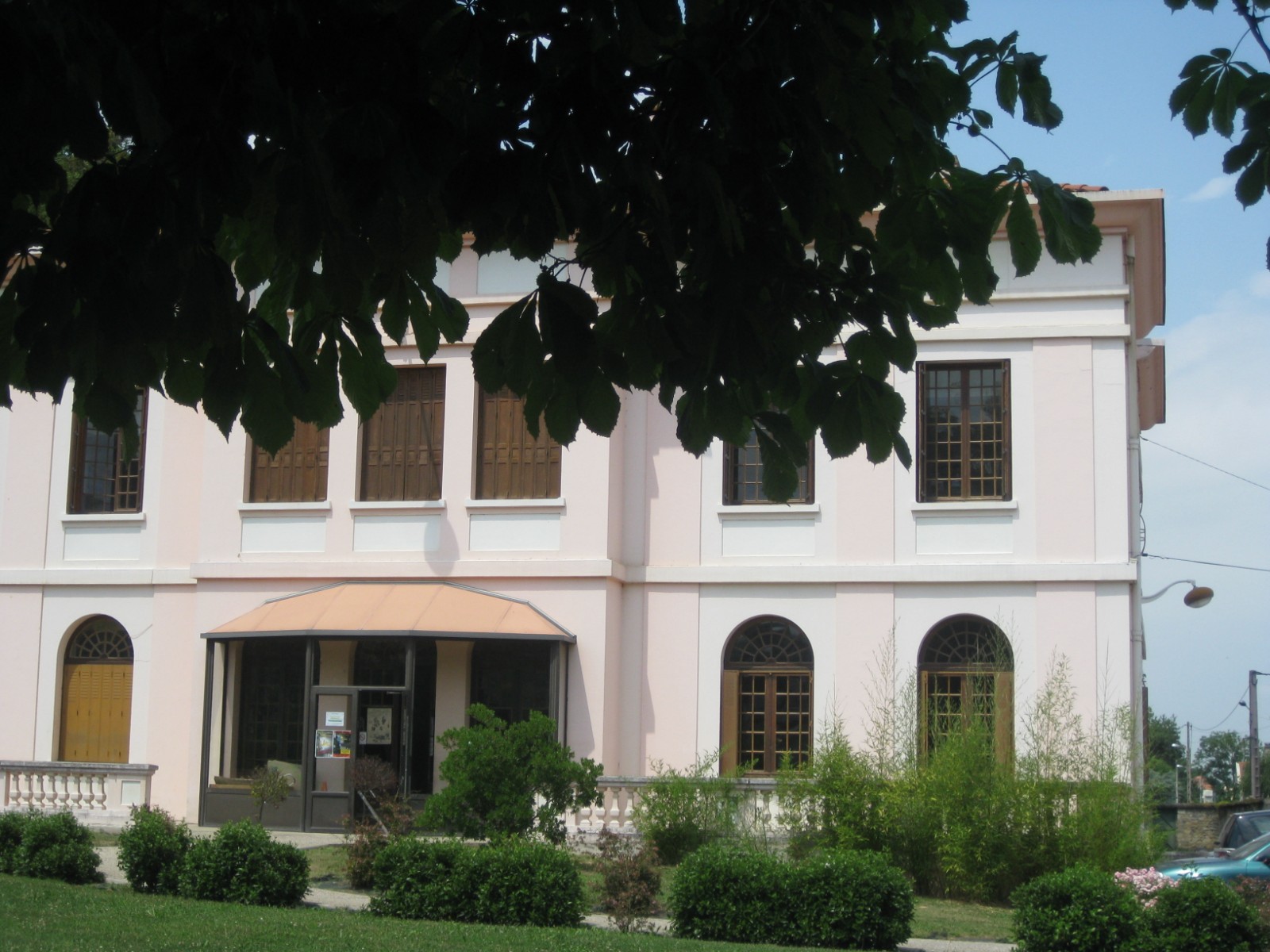
Our School of Music’s housed here in the château. I took this shot just before everyone arrived

The event went well, but it was easy to see the Americans and French weren’t mixing much – it was too hard to communicate: Malcolm’s and my interpreting skills were much in demand (Not that we’re much good.  I listened to our French head honcho, Michel Alvarez, and carefully interpreted it to Bill McFarlin.  Bill raised an eyebrow. ‘Do you realise’, he said ‘that you’ve just said all that entirely in French?’).

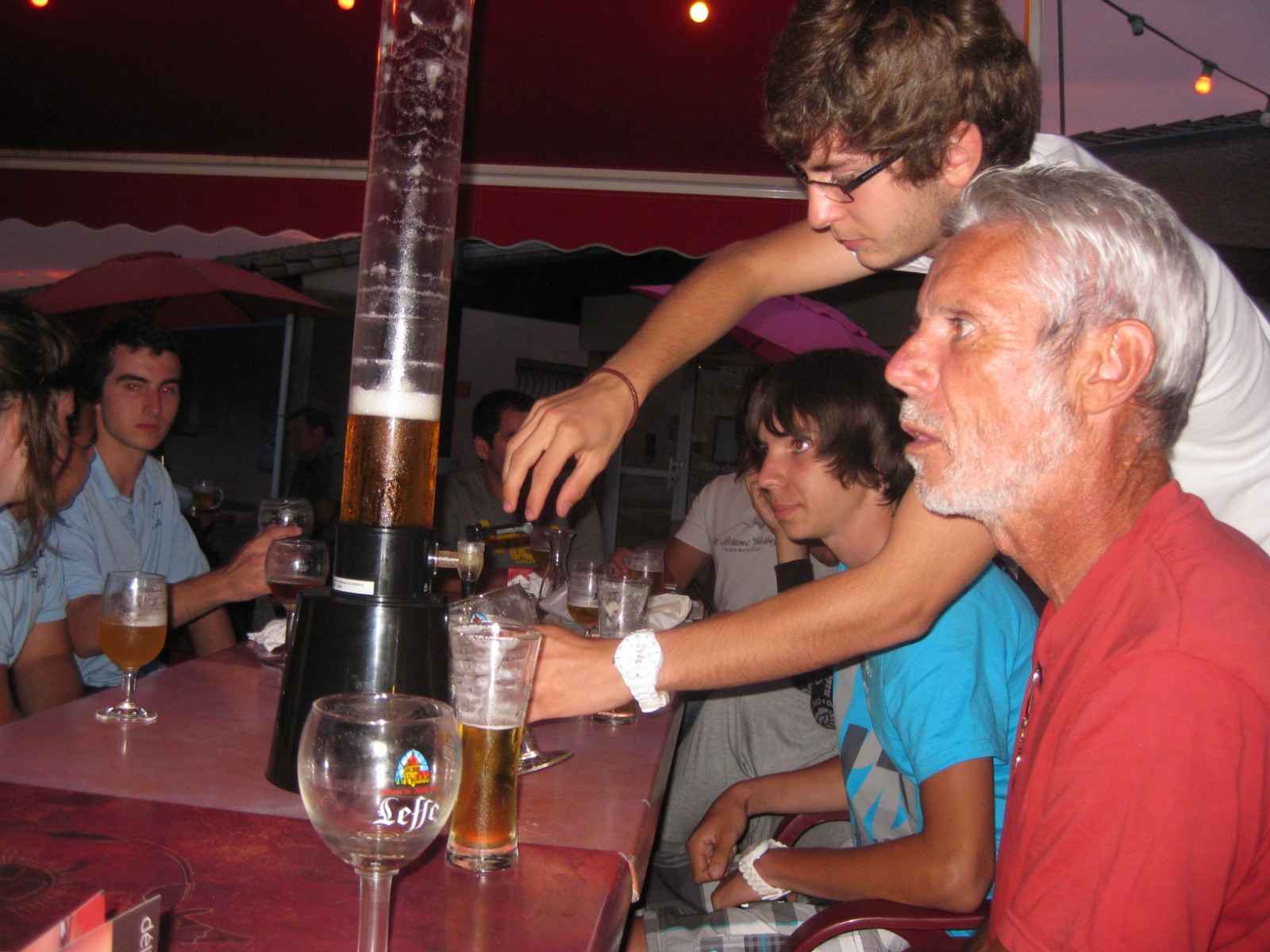
A giraffe of beer

Later, down at the bar with older students and members of LDO Big Band it got a lot easier.  The giraffe of beer may have helped.

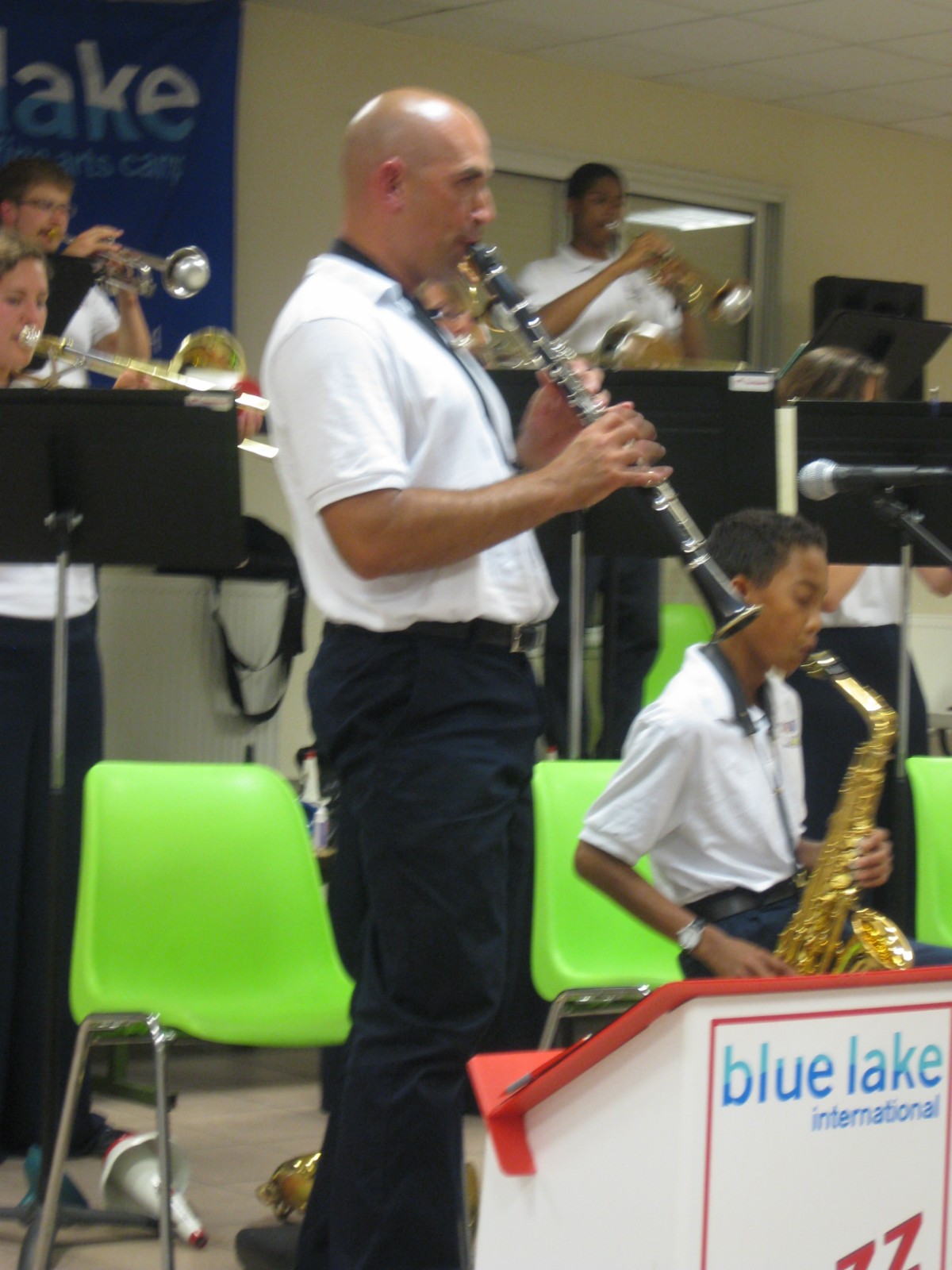
Lucas Munce – with a clarinet this time

It was next day that real change took place. First of all, there was a Master Class, with Lucas Munce, acclaimed as a saxophonist back in the US (AND for his clarinet and flute  playing too), and Parker Grant, a young jazz pianist also gaining recognition.  After a slow start, the need to exchange musical knowledge overcame shyness and the language barrier.

Then after a shared meal it was time to rehearse.  Towards the end of the evening, members of the French and American bands sat together to practise the pieces they planned to play together to conclude Fridays’ concert.  It was wonderful to witness them, heads together as they pored over their shared scores, animatedly and enthusiastically discussing  their music.  Their mutual comprehension of each other’s tongues seemed to have moved up a gear, but above all they now had a shared language – music.

Blue lake International Jazz Band and LDO Big Band at rehearsal

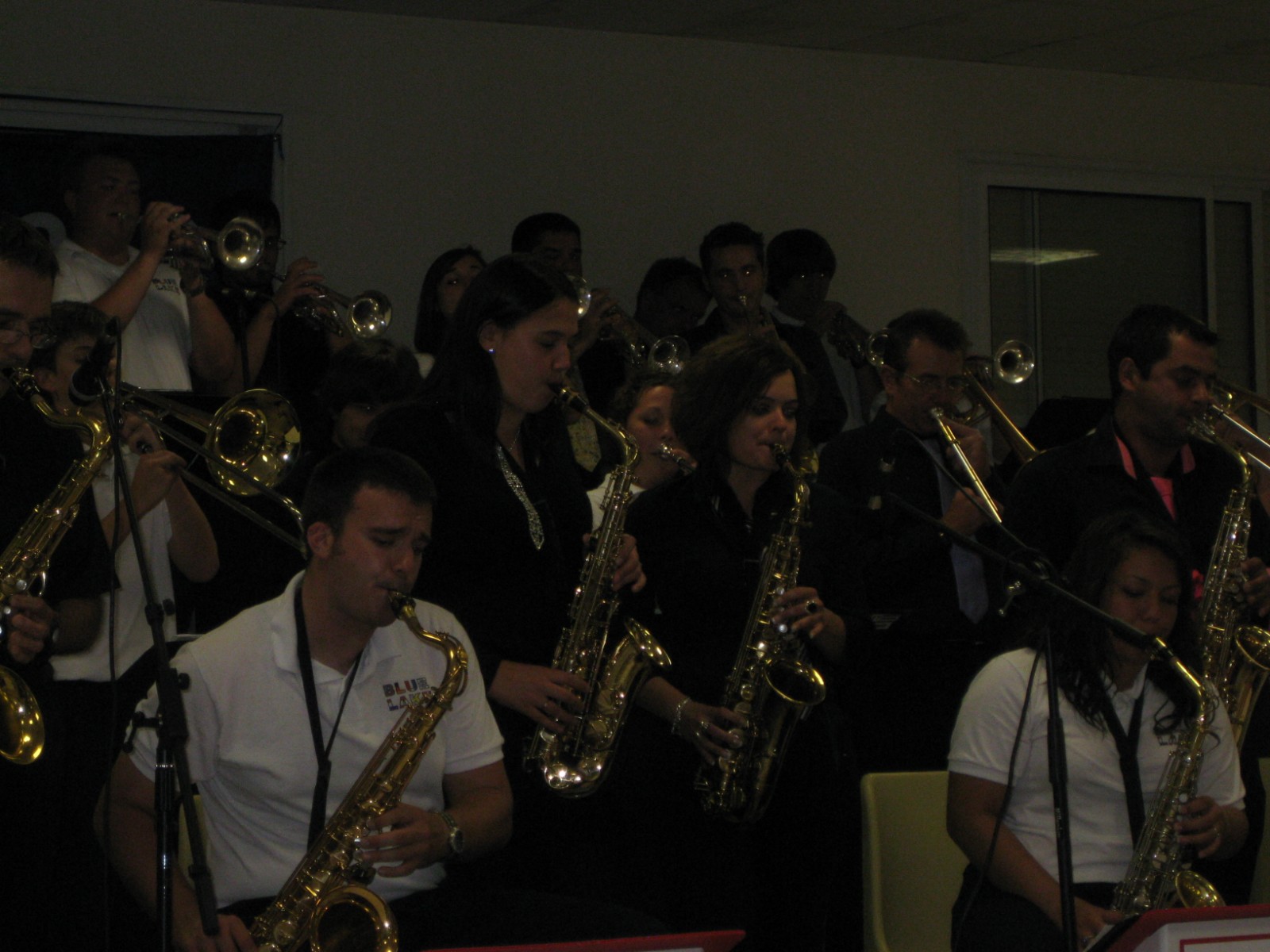
By the time Friday’s concert came, these musicians were friends.  They greeted each other affectionately and settled down to listen to each other’s performances with relish.  When they had to squeeze themselves together for those final numbers, placing themselves alternately American/French, they were confident to give the music their all.  They loved it.  The audience loved it.

Blue Lake and LDO saxophonists share the moment at Friday’s concert

At the moment of parting, there were hugs and all round and quite a few sniffles too.  As ambassadors for their country, Blue Lake do a pretty fine job.

Rencontre des chorales

Our Chorale at Laroque’s best friend is the Chorale at Mirepoix.  The Écoles de Musique in each town are best friends too, working together and running some joint classes and performances.

The chorales and other classes get together at least once every season to enjoy singing and playing for and with each other for an evening.  The public’s invited, and comes in encouragingly large numbers.

Those cannelés….

Last Friday, all the singers started wandering in shortly after 6, carrying carefully prepared dishes of buffet food.  The instructions were to bring no more than 6 portions, but nobody took any notice of that.  Robert from Laroque had made a pile of his deliciously chewy signature cannelés, Mirepoix’s William (yup, William’s a perfectly good French name) produced meringues, Mercedes’ plate was full of the cold meats and pâtés they make their charcuterie….and so on.

The rehearsal started, and was less a question of running through the songs than organising the logistics of moving around the dozens of us involved: Mirepoix’s orchestra, their children’s choir, the adult choirs from both towns.  It had to be done to a time-table, because nobody wanted to hurry over eating that buffet or sinking some wine.  ‘Don’t drink too much alcohol beforehand!’ urged Vanessa, our director ‘It’s bad for your singing voice’. I didn’t see anyone taking very much notice. ’Well really’, said Robert ‘How can you possibly eat cheese without a glass of wine to help it down?’

It had been more than 30 degrees for much of the day, so nobody wanted to come back indoors after the meal.  But we opened the windows, finished our preparations, and the audience drifted in for….oh, well before 9.10 for a 9.00 start.

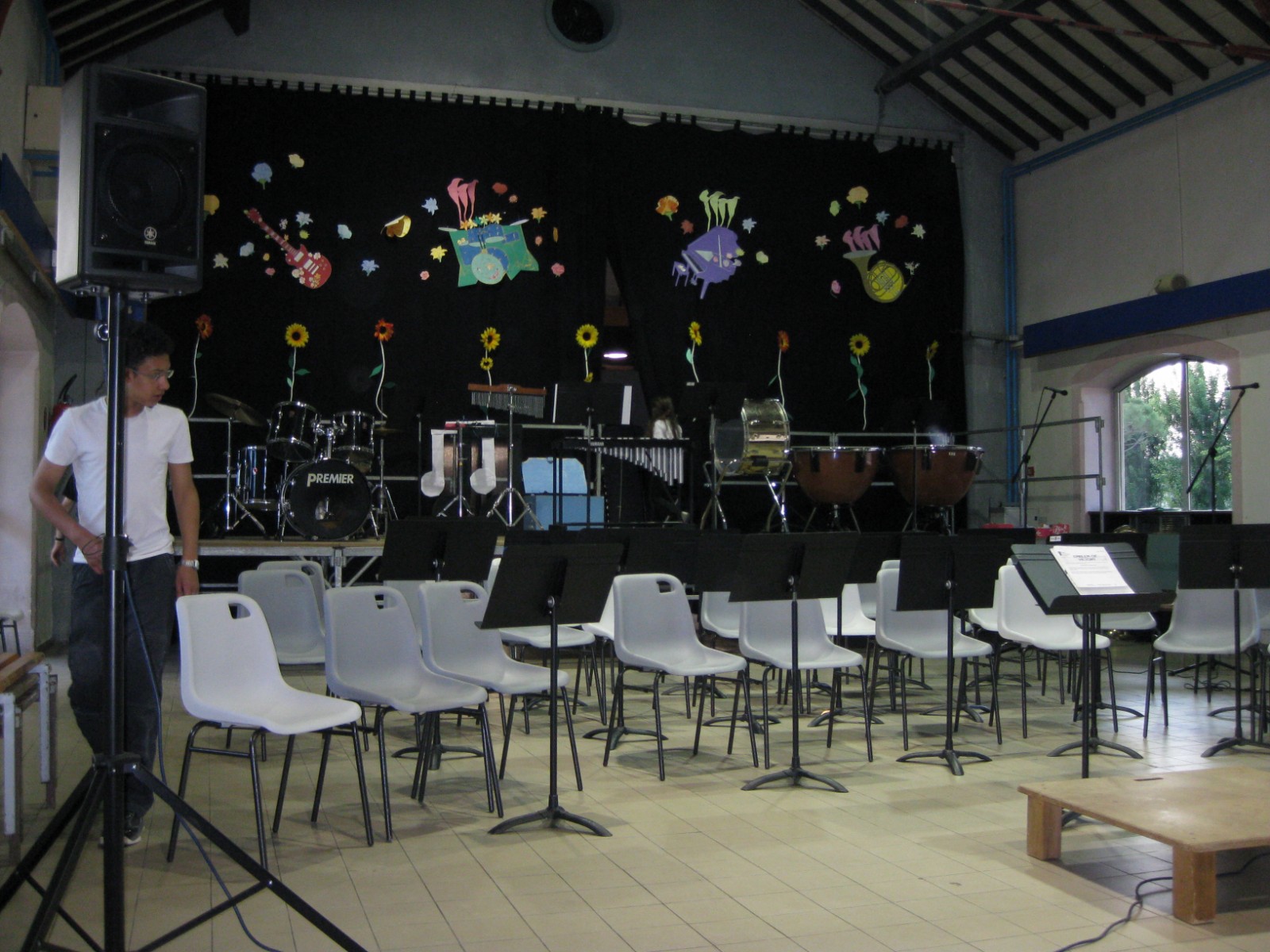
Almost ready to start

The orchestra started things off.  Lots of percussion. All good stuff. I’m always a soft touch for children singing: these were well-rehearsed and sang with verve and enthusiasm.  Joined by the Mirepoix adult choir, they belted out numbers that were old favourites to the French audience and unknown to Malcolm and me.

And then it was our turn.  Our repertoire is a catholic one.  We sang everything from Henry VIII’s Pastime with Good Company (en français bien sûr) and Moon River (en français bien sûr) to old favourites (if you’re French that is) like Mon Amant de Saint Jean.

The Chorale de Laroque d’Olmes takes the stage

Nearly the end. Time for all the singers to join together for two final numbers.  A few weeks ago, Mireille had spent half an afternoon explaining one of them, Mistral Gagnant, to me.  It features a man singing to his daughter and the allusions to a host of sweets that form no part of my own youth – carambars, minthos and the mistrals gagnants themselves, had left me totally baffled, though not the rest of the audience.

In true French tradition, we couldn’t leave without doing an encore or two.  In true French tradition, we couldn’t leave – nobody could – without sharing the pot d’amitié.  A glass of something, a chance to meet and talk to friends: the perfect way to end a busy evening

The multi-tasking baguette

Everyone knows what a baguette is.  Don’t they?  Here’s one:

But here in France, a baguette is so much more.

It’s a conductor’s baton.

It’s a wand for a wizard or a fairy.

It’s a chopstick.

And it’s also beading for those woodwork projects.

And a divining rod.

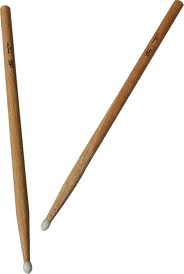
As well as a drumstick.

Or the side-trim on your car.

There seem to be one or two other things it could mean as well.  Who knew that one small word could have so very many different uses?

From the northern US to southern France: Blue Lake International Jazz Band

If you’re young, American, and living in Michigan, and if you like performing, you may be lucky enough to spend part of your summer at the Blue Lake Fine Arts Camp, a summer school of the arts located on a 1300 acre campus in the Manistee National Forest.  If you’re really talented and work hard, you may one year be selected for one of the 8 or so ensembles that have been coming over for a European tour every year since 1969.

And if you live in Europe, you may be lucky enough to live in one of those towns that welcome these young people. Here at Laroque, we’re among those fortunate people.

The Blue Lake Jazz Ensemble first came here 2 years ago. Their director, David Jensen, and the leader of our own LDO Big Band, Michel Alvarez, hit it off.  So when plans for this year were under way, both men were keen to see Laroque included in the itinerary.

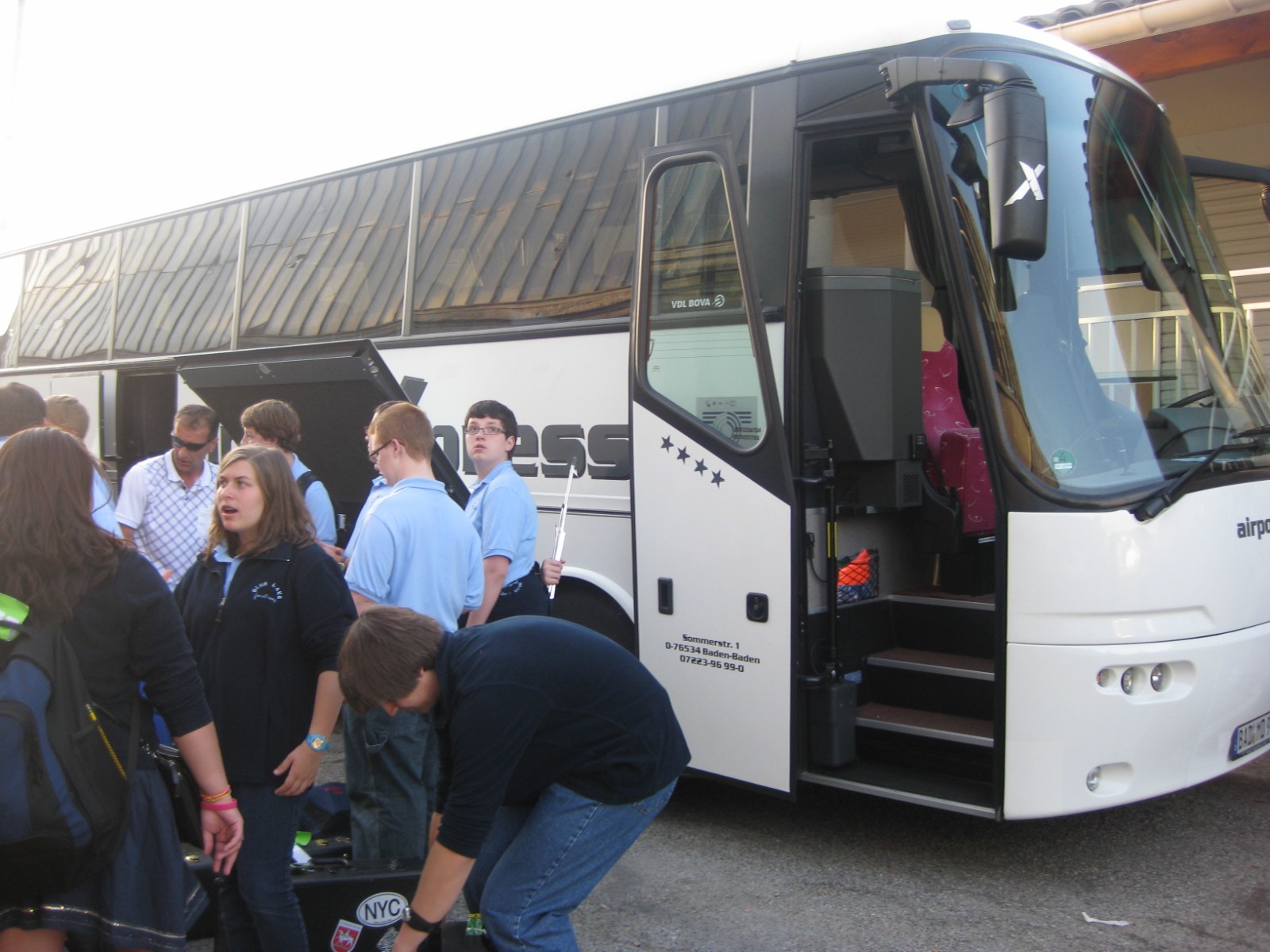
But what an itinerary!  The band landed in Paris on 17th June.  From Elbeuf in Normandy, they passed through Belgium to reach Germany, Denmark, Germany again, then Austria.  Then they travelled 1588 km to reach Laroque d’Olmes, a coach journey that took a whole 24 hours.  After staying with us, they were due to travel overnight to Paris and the plane home on July 9th.

Party at the Château

They might have been tired, punch-drunk with cultural variety and new experiences, but they had to be welcomed with a party.  It was here they met their host families.  What would two 16 year old boys make of the fact that they got to stay with us instead of a French family?  Pleased, as it happens.  Grappling with unknown languages – French, German, Danish over 3 weeks or so takes its toll.  At least we were a bit of a rest.

The concert on Thursday evening was what we were all looking forward to.  Well, not me so much.  Malcolm had provided translation and interpreting services last time, so this year, he thought it should be my turn.

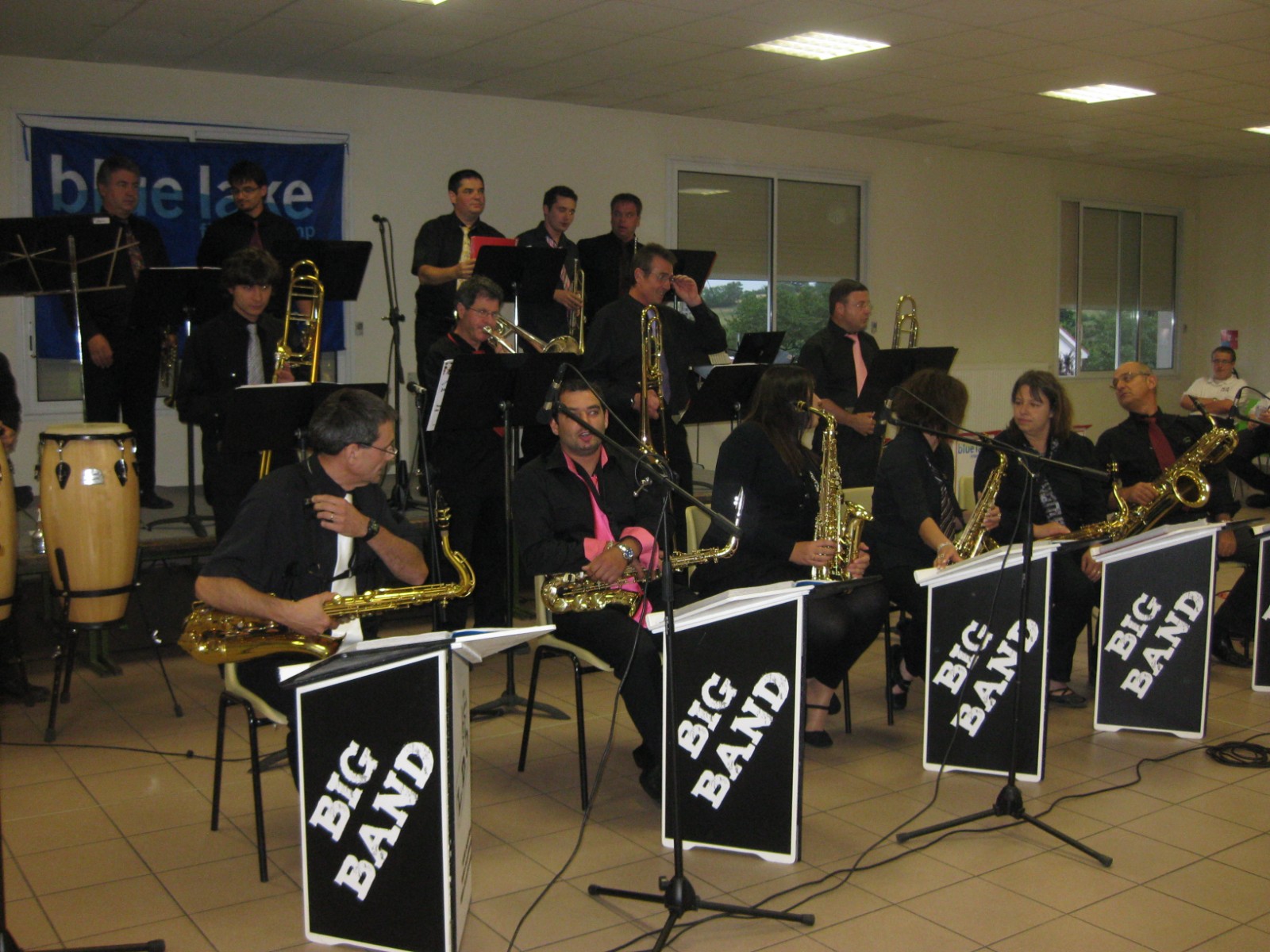
LDO Big Band get ready to play
Translation services in full swing

All went well at first:  I’d seen Michel’s speech in advance, and David’s response contained no surprises. But when it came to introducing the pieces….well…what IS the French for ‘Dance of denial’? Or ‘Struttin’ with some barbecue’?  We decided the titles didn’t matter; I bowed out, and then discovered the remaining repertoire was quite translatable, thank you.

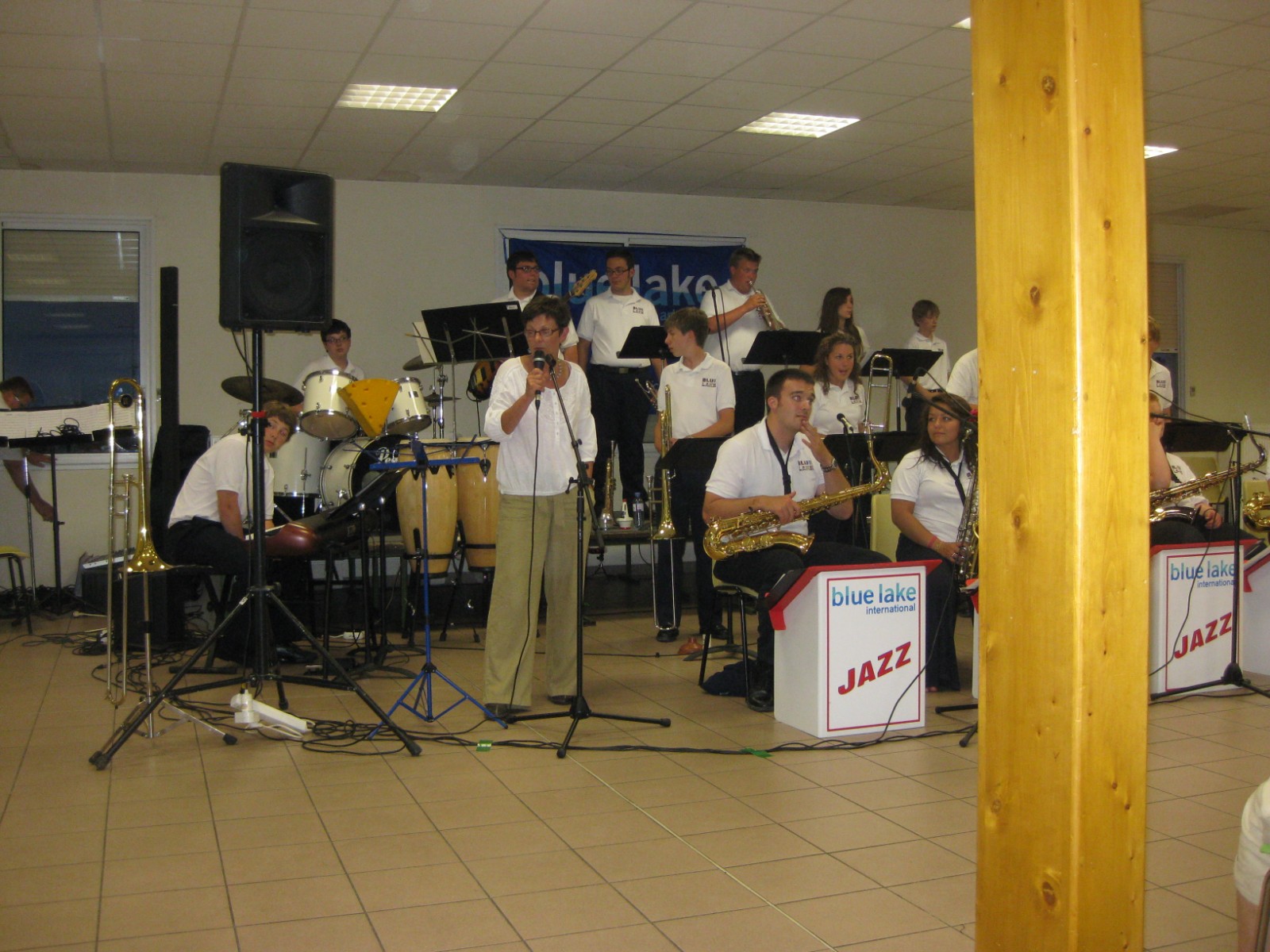
Blue Lake Jazz Band

But those Americans!  The performance they turned in was exciting, exhilarating, excellent, extraordinary.  Impossible to believe that some of the group were only 13, and that few had left High School.  They’re so professional.   LDO Big Band was on form too, so the high spot of the evening was when the two bands came together to perform.  Their pleasure and pride in working together communicated itself to an already delighted audience, and the evening ended on a high for us all.

The two bands squeeze together to play

This opportunity to play together is apparently what makes little old Laroque worth the detour for the Blue Lake musicians: it’s not something they do elsewhere.  They’d like to send a different band our way next year, David’s year off.  It seems Laroque is now firmly on the Michigan map.

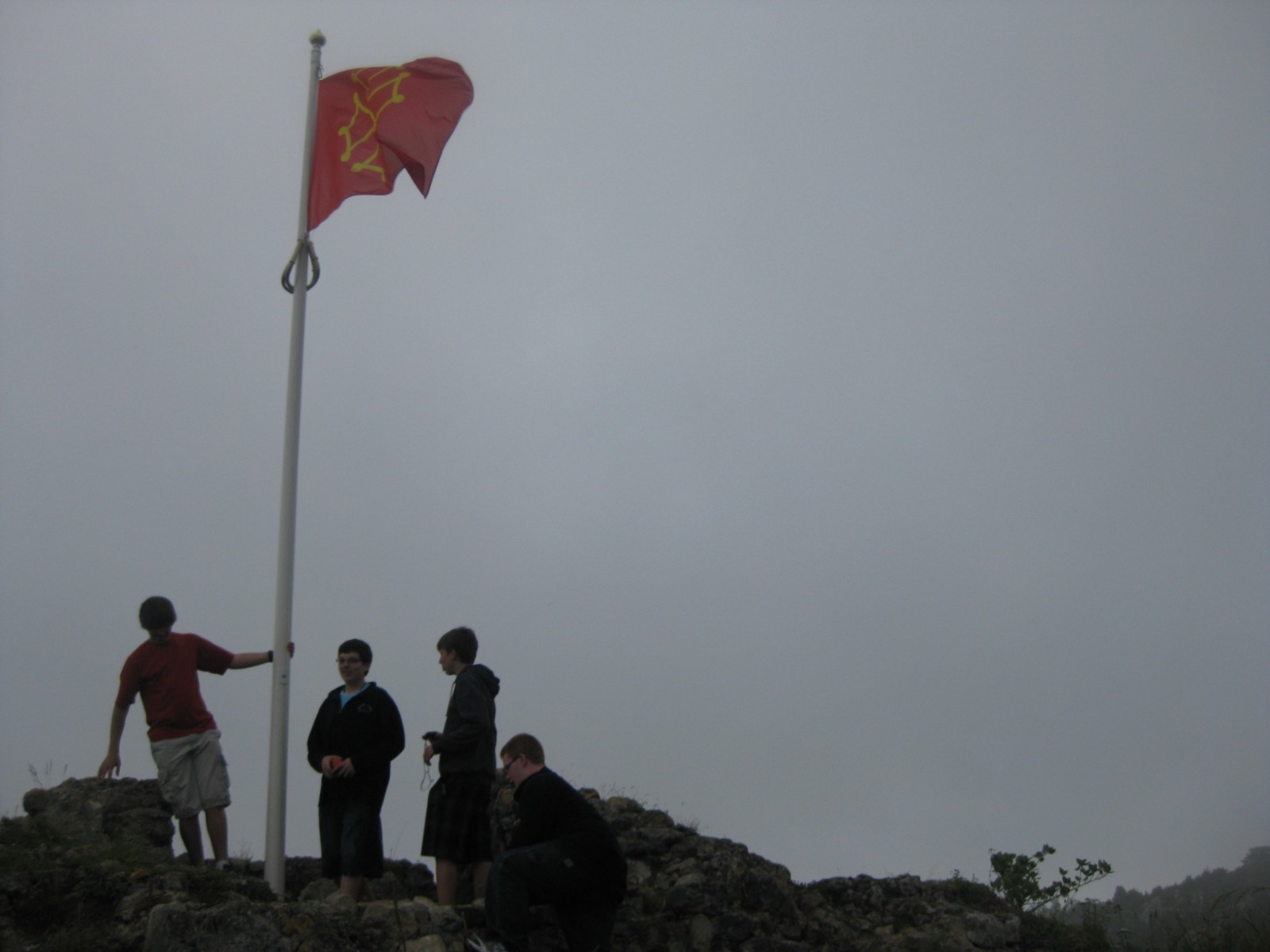
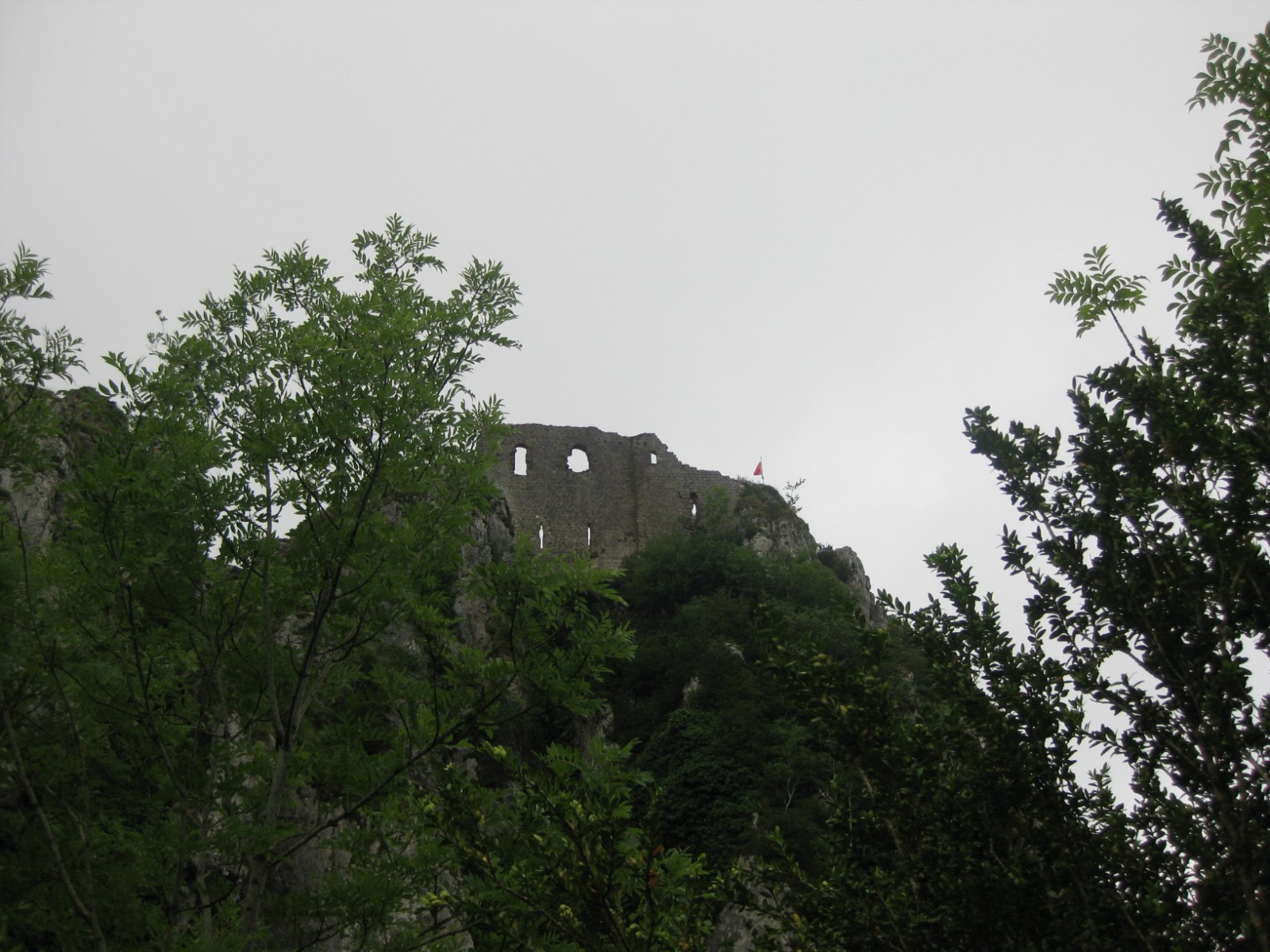
Roquefixade……
…. conquered by our American guests

The rest of the stay was given over to sleep, lots of it, and sightseeing, rather less of that.  We climbed Roquefixade to see a ruined castle, and took in the medieval town of Mirepoix. Others had different days-of-yore experiences:  Foix and Carcassonne.

The trip ended on a sad note though.  One of the group had lost her passport, and despite every effort, it couldn’t be replaced in time.  She’s still here.

Loading the bus for departure

La Remise des Diplômes.

Over the decades, Laroque has enjoyed a reputation as a musical town.  With hardly more than 2000 inhabitants, and horribly in debt, it still nourishes its Music Centre.  Children (some adults too) come first of all to sing, then perhaps to try their hand at an instrument, before moving on to play in ensembles, the orchestra, or the regionally well-regarded LDO Big Band.  Some people make a family thing of it.

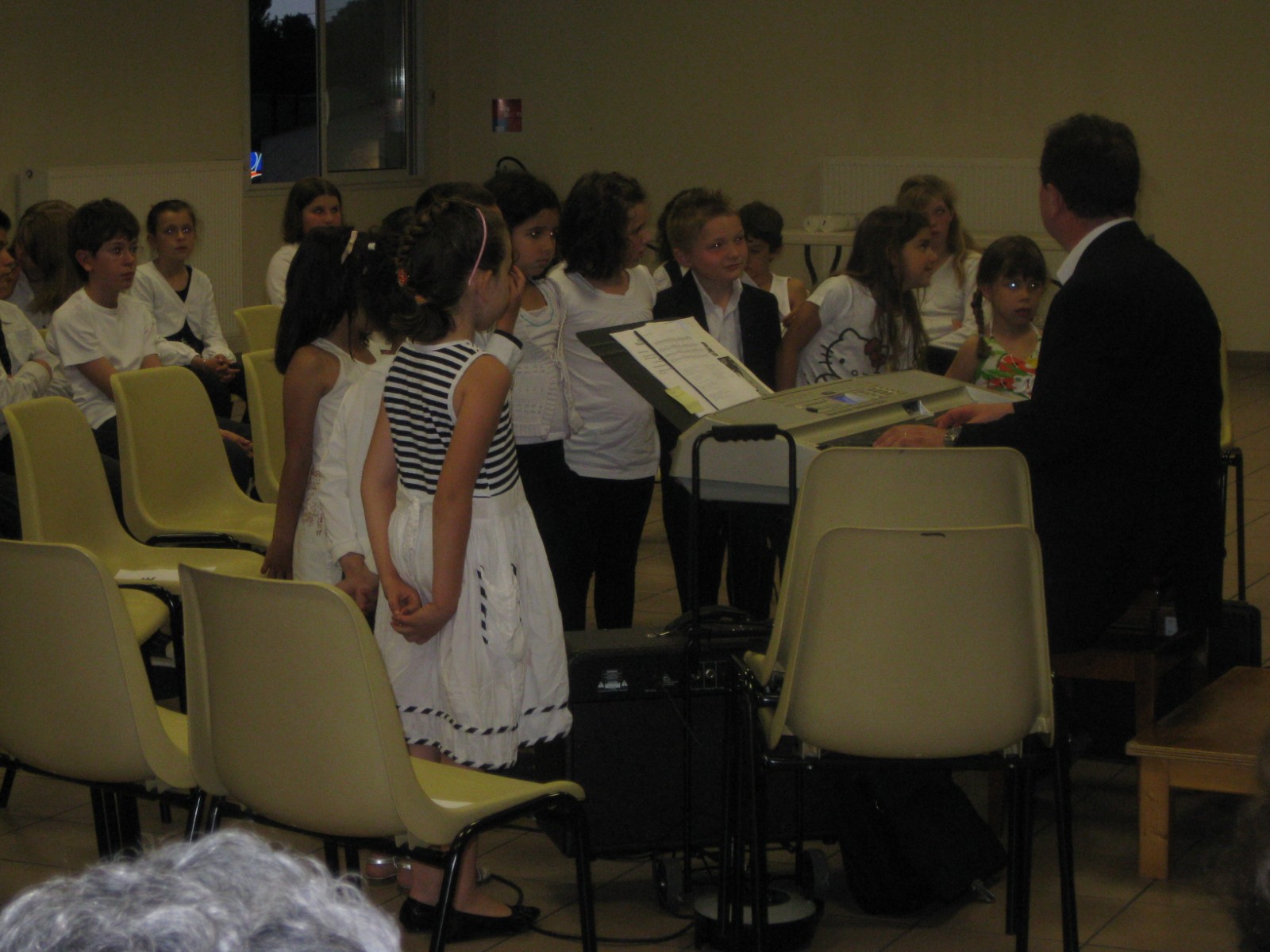
The littlest children of all take centre stage

The baker, for example, is always there at rehearsals and concerts with his trumpet, and his daughters joined him some time ago: wind instruments are their preferred choice.  Louis in the choir plays the sax as well as singing with us.  His son’s pretty good on the piano, and now his wife’s decided it’s not too late to learn to play the organ.  The Ribas family turn out singers, percussionists, and sound technicians….and so on.

Last night was prize-giving time for the Music Centre, la Remise des Diplômes.

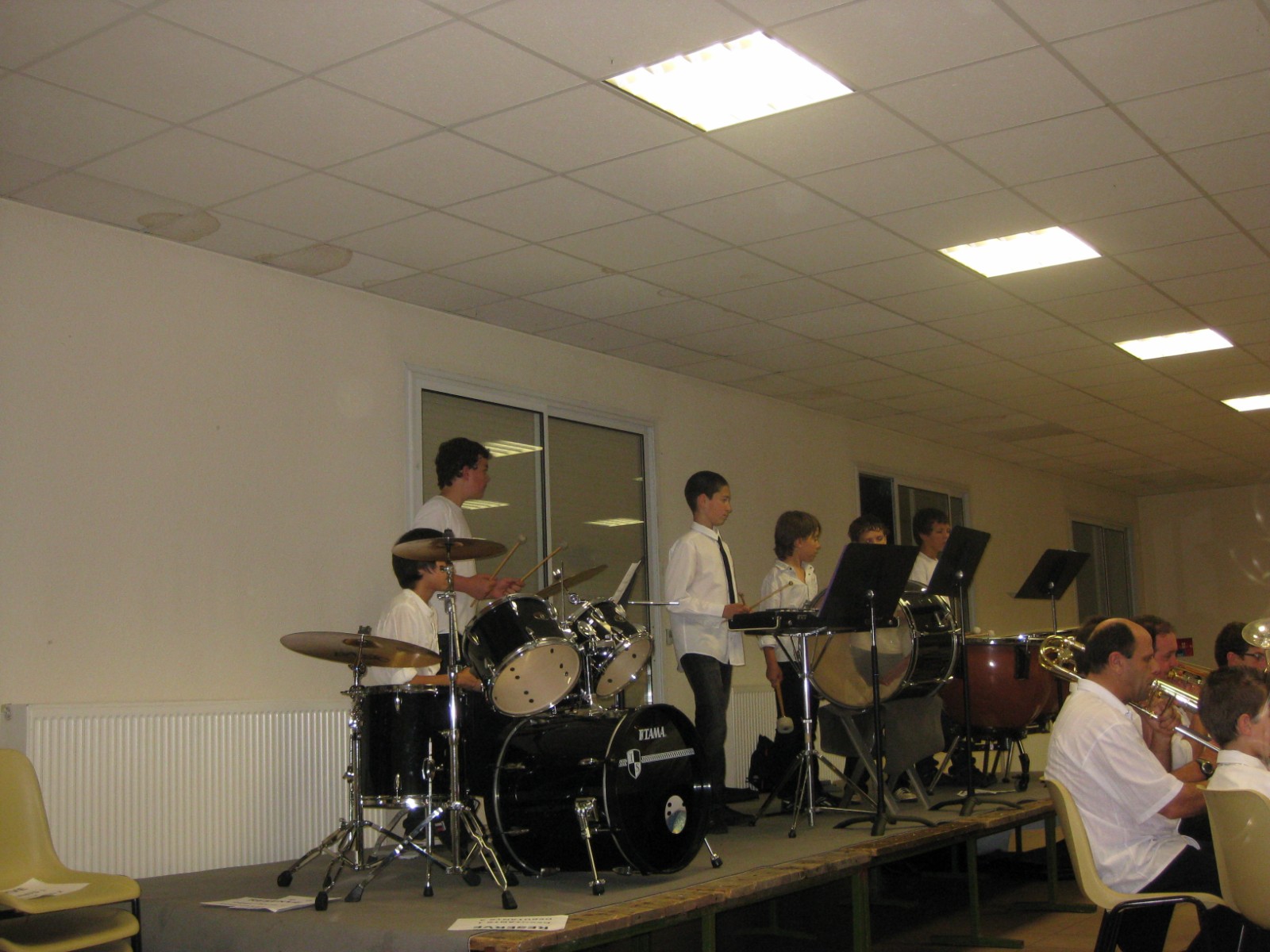
What is it about boys and percussion?

Everybody had their chance to be heard on stage: even our choir, la Chorale des Adultes, and we didn’t even get any certificates.  The children, however, had endured exams, so it was only fair that they should have diplomas for their efforts.  Lots of them got ‘mention bien’, ‘mention très bien’, and even ‘félicitations du jury’.

They seemed pretty happy to be there, even before they got their prized bits of paper.  A good evening for Laroque

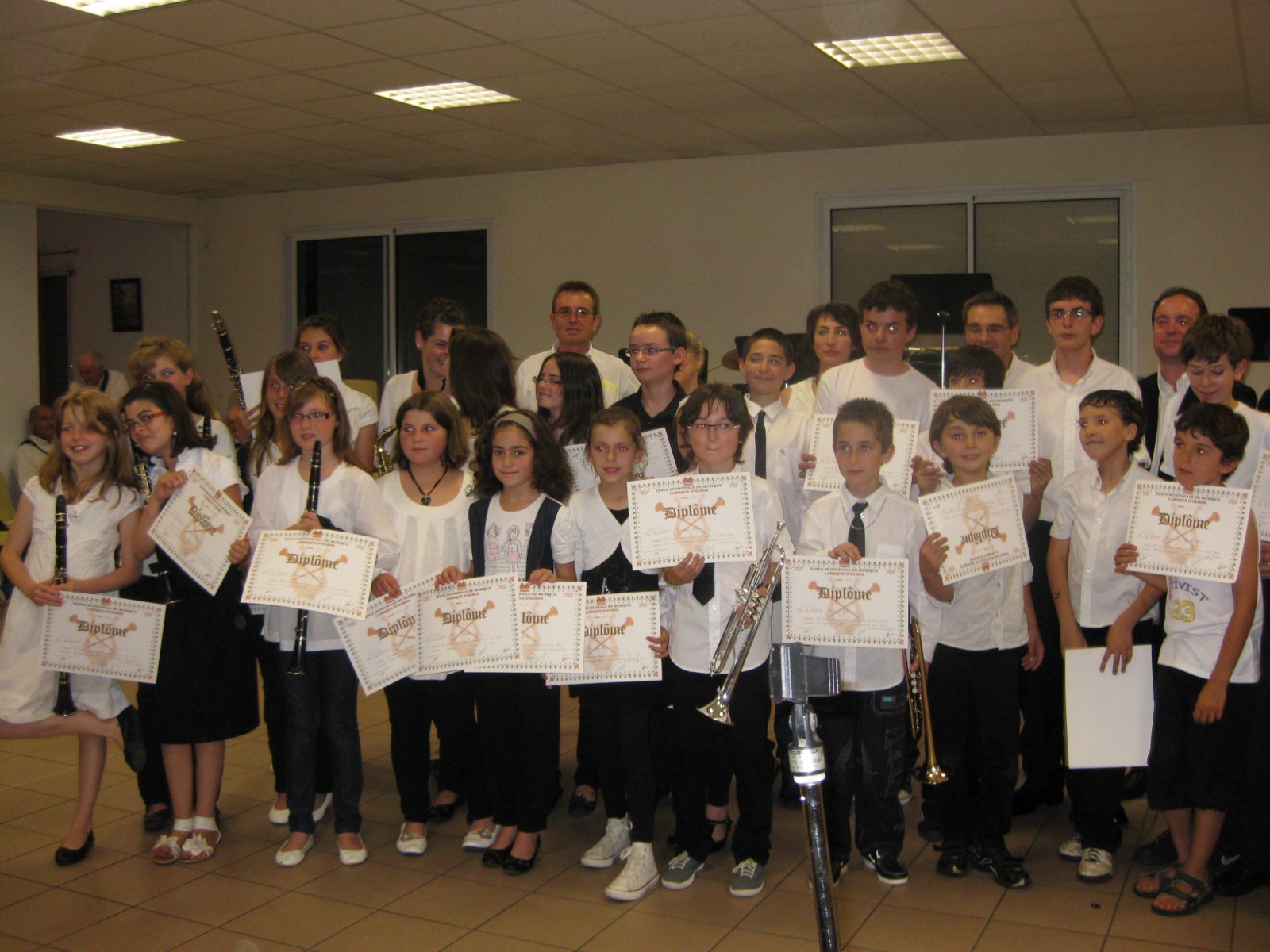
Diplomas awarded: everybody happy

A Salute to Alex Taylor

People who know me here are no strangers to the fact that we tend to avoid the English in France.  Not because we don’t like them (Some of our best friends are…. etc. etc), but because it seems to be a bit daft to seek them out here when there are some hundred and fifty thousand French living right here in the Ariège whom we’d maybe find it interesting to meet.  Our social calendar already seems entertainingly full with the ones we do know.

So perhaps it’s rather odd that my favourite radio presenter here is an Englishman, Alex Taylor. He co-presents the breakfast spot on France Musique, together with Emilie Munera. Despite the fact that he speaks excellent colloquial French, he’s got a recognisably British accent that cheers me up and brings me closer to England as I listen in on my way to the gym, or doing some early morning jobs round the kitchen.  His is a good programme too.  A well as an astonishing variety of music – not simply the classical repertoire – the pair look at current and musical news, and at what’s in the world’s press that day.  Is it my imagination, or are British papers more fully represented than others in this spot?  And I really enjoy the 5 minute Mot du Jour by Pierre Charvet when various musical terms are explored and defined.  What, for example, is the difference between ‘symphony’ and ‘philharmonic’ ? What is ‘noise’?  Thoughts on aspects of African music….and so on.

And in case you’re wondering at our relatively high-brow choice of radio station….here in the sticks we can only receive three.  France Inter, whose relentless talk drives us both nuts in the morning; France Culture, which is interesting but hard going if you’re not prepared to listen attentively; and…France Musique.  No contest.

Another Day, another Festival

Foire au Gras!

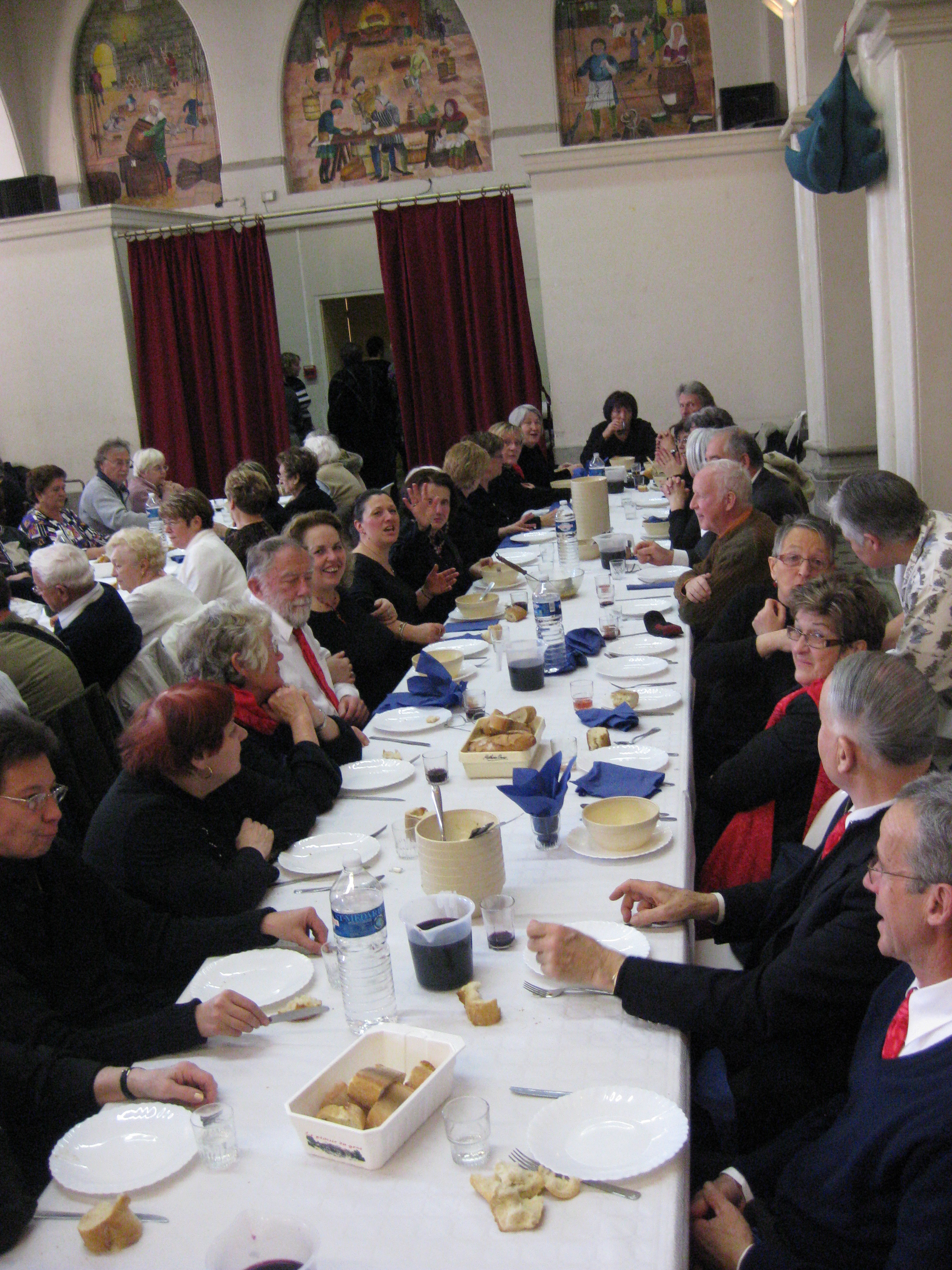
Today has been really good fun.  Singing morning and afternoon with four other choirs in a Choral Festival – performing to each other and with each other.  And of course after a hard morning’s singing, there’s only one way to spend the hours between 12.00 and 2.00, especially when you have 200 people all gathered together intent on having fun.  A big community meal, which the town, appreciative of our singing, treated us all to.  

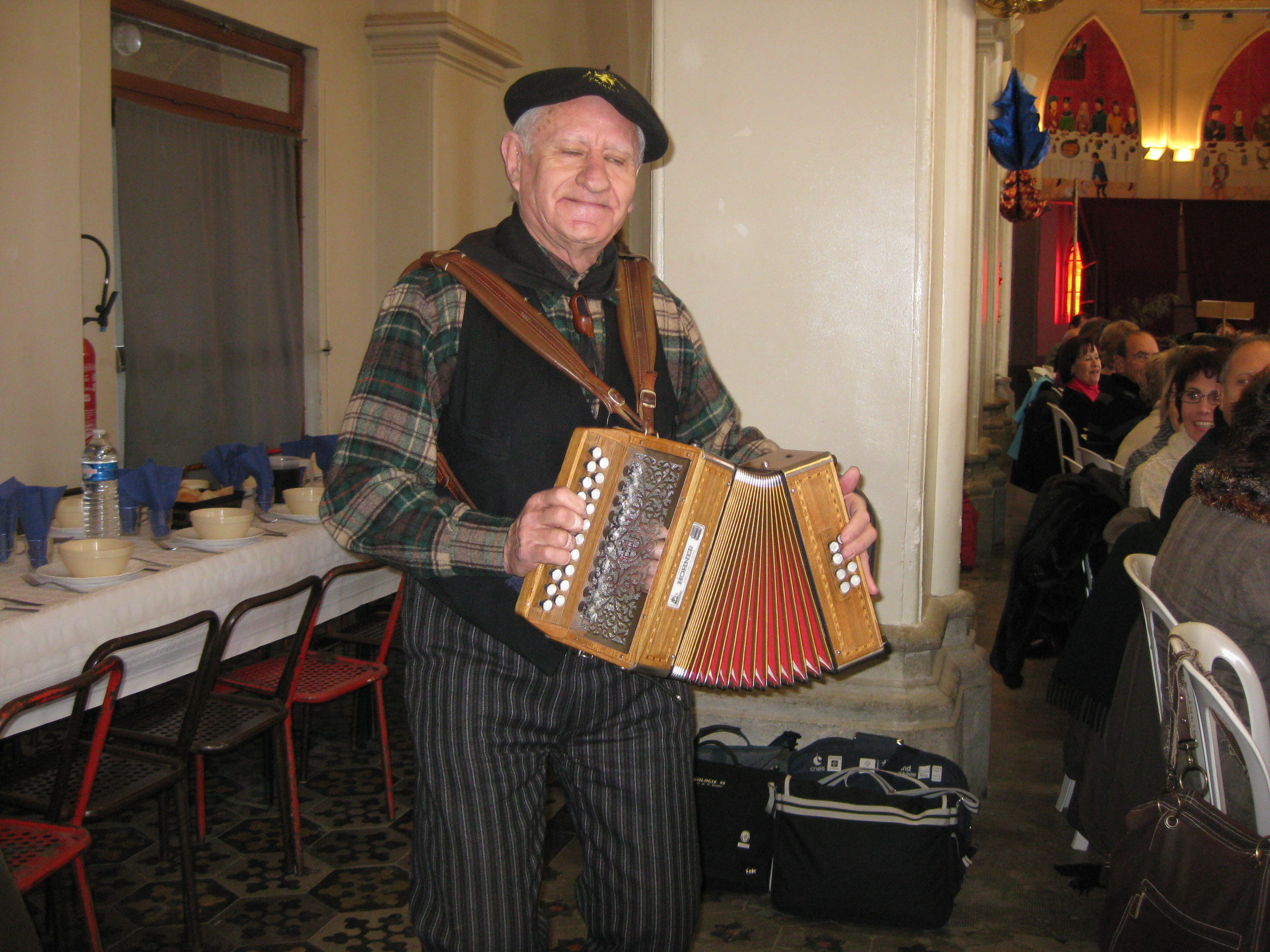
The accordian player at the feast

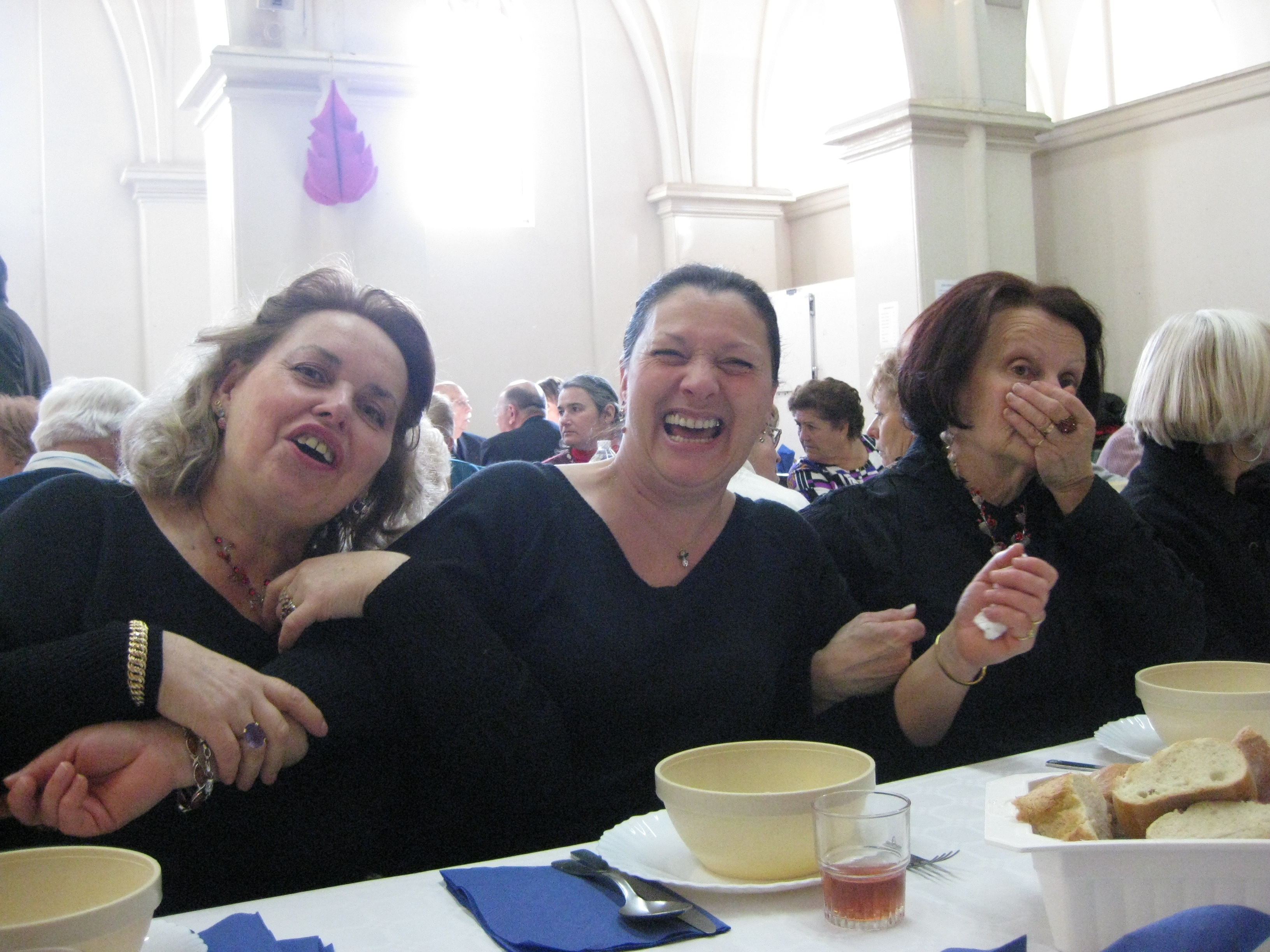
We were in Mazères, which is on the third day of its Foire au Gras, a celebration of the pleasures of those meats that are so appreciated down here – pork, goose and duck.  So forget the vegetarian option.  We ate garbure, a deeply meaty vegetable broth, followed by a richly pungent stew with every duck’s leg in the Ariège apparently popped into the pot, and the most delicious plain boiled potatoes I have ever eaten.  Perhaps because they weren’t really plain boiled, but cooked in a light flavoursome stock.  Kir and red wine a volonté.  And a great deal of singing and laughter as everyone gave their attention to the accordion player who seems to be at every event we’ve been to.  Men and women scuttled up and down the rows of diners, carrying scalding heavy pots, more bread, more wine. It was no surprise to anyone that we began our afternoon session at 3.00, rather than the scheduled 2.30.

Just a few of the diners

Somehow, however, we all heaved ourselves up from the tables and ambled back to the church, the scene of the concerts.  And there we stayed, singing or listening till 6.00 p.m.  Some hardy souls stayed on for yet more partying, sharing the ‘pot d’amitié’, but our little group called it a day, and came home, watching the last of the sunset over the Pyrenees as we drove back towards Laroque.

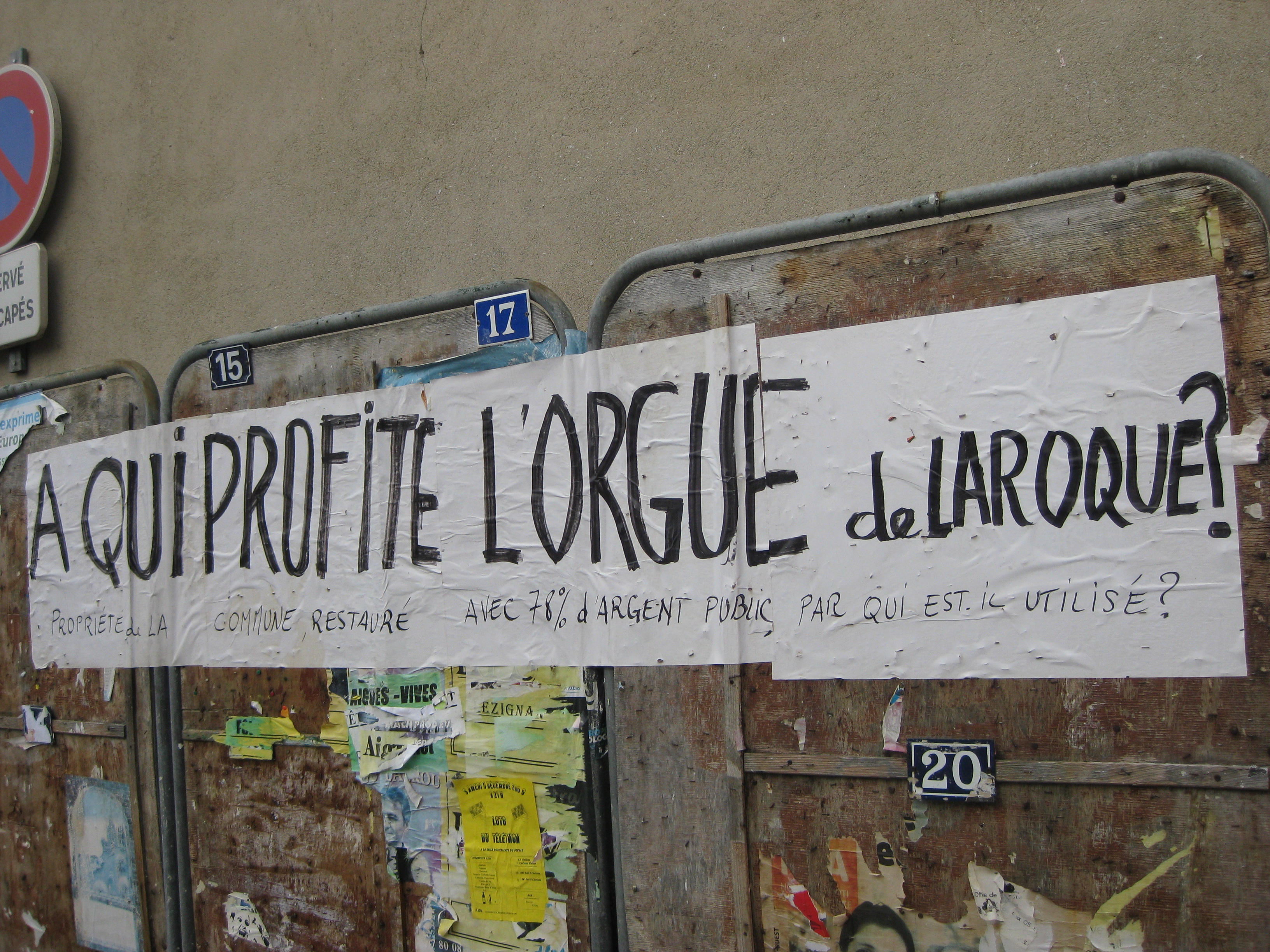
A qui profite l’orgue de Laroque?

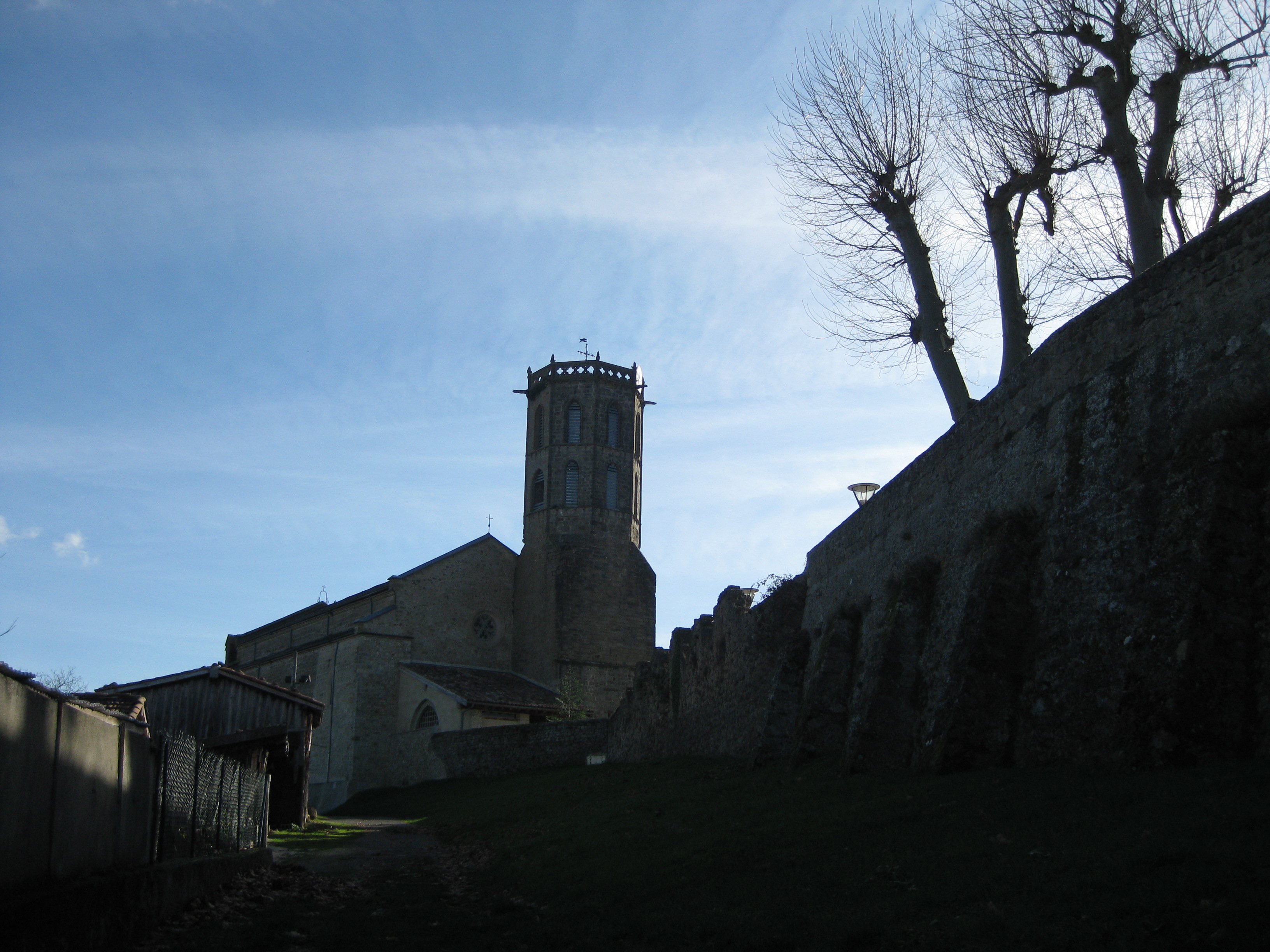
This is the church that houses the organ

The church at Laroque d’Olmes has a very fine organ.  It’s an instrument with an illustrious history.  Built in the 18th century, it was moved from its original home in the Chapel Royal at Versailles in 1989.  For the last 4 years, it has been the subject of a Battle Royal.

 You’ll know that France is a proudly laïque (secular) nation.  In the UK, most of us perhaps became aware of this through the foulard controversy, when Muslim schoolchildren were no longer allowed to wear headscarves or other symbols of their faith in school.  It was easy for the British to interpret this as racism, but in fact Christian symbols such as crosses are equally frowned on unless very discreet.  Religious studies are not taught in school, and the very idea of a Christian school assembly seems completely bizarre to the French – as it increasingly does in the UK too of course.  Because of this laïcité, church buildings and furnishings are the property of the community in which they are situated, and that community pays for much of their upkeep.

 Over the years then, communities such as Laroque have had the responsibility for buildings that may be in poor shape, even to the extent of being a public danger (towers in danger of subsidence – that sort of thing).  In addition, Laroque, keen at the time to see such a prestigious organ installed in its midst, has over the years, together with other public bodies,  made available 74% of the monies need for its upkeep.

 The council in Laroque didn’t want the organ simply for the regular congregation, or even for the draw that it represented to renowned organists, keen to accept concert engagements enabling them to play on such a prestigious instrument.  Small as the town is (2000+ inhabitants), it has a School of Music, with the usual range of after-school classes, bands and orchestras.  With such an organ as this, what a chance to give a new generation of young people the opportunity to learn to play this very special instrument!

 They made the decision that the School of Music should appoint a well-qualified teacher of the instrument.  A protocol (2003) and a convention (2006) was worked out between the École de Musique and the curé, allowing access for up to 20 hours per week  to the teacher and pupils; a highly qualified young musician was offered the post, and accepted.

Earlier this week, posters appeared round town

Since then, it’s all gone wrong.  Quite simply, the curé refuses them admittance to the church: no reason given.  He HAS offered very limited access from time to time, but at periods that are quite simply impossible for either the teacher or her students.  So she now teaches the basics on – a synthesiser. He no longer permits the free concerts staged in the church at Christmas and on St. Cecilia’s day (patron saint of music). Parents, pupils, town councillors and many parishioners and citizens are enraged by this turn of events, but nothing so far has persuaded the curé to change his stance.  Nor has the Mayor demonstrated any leadership over this issue.

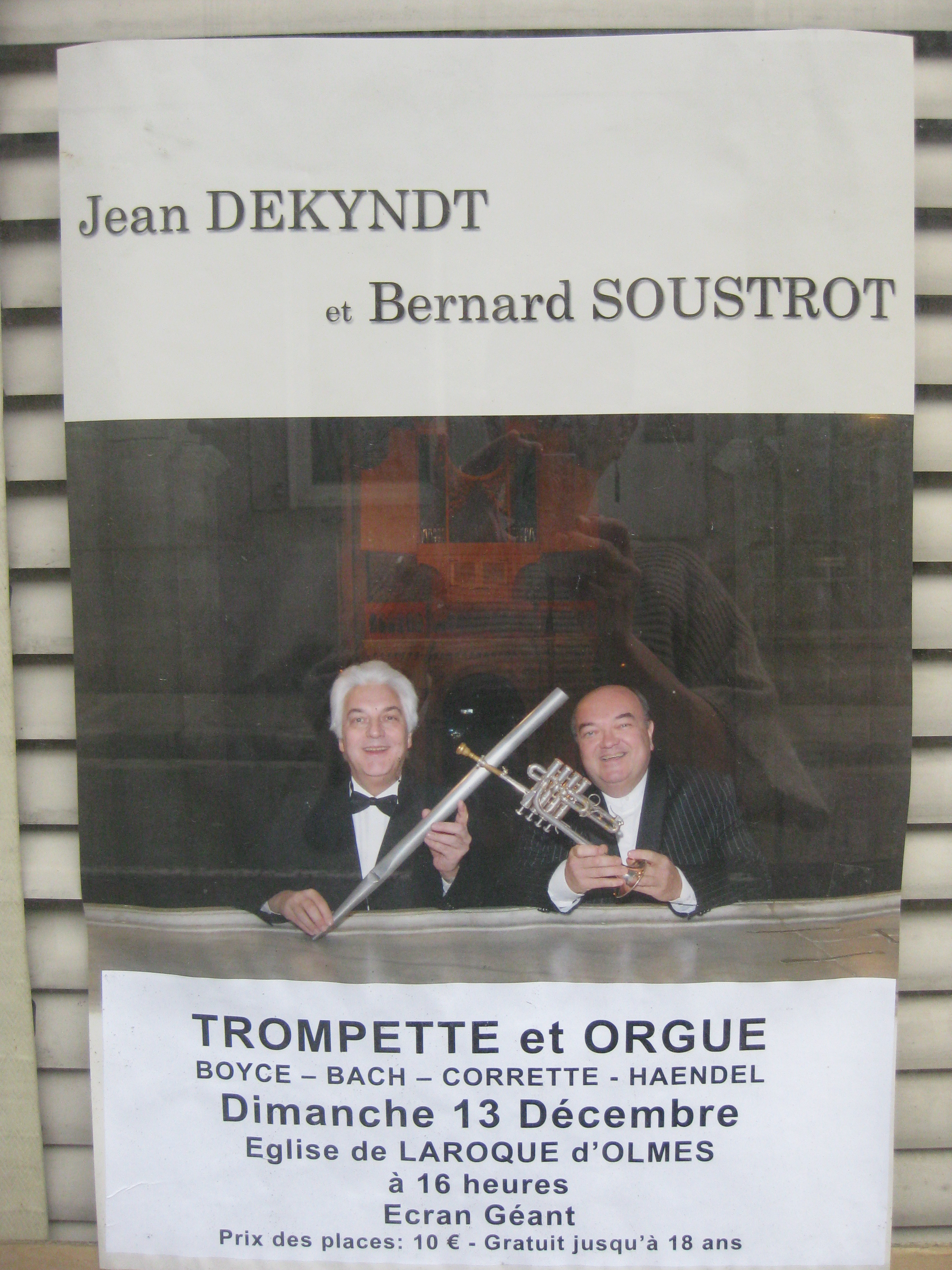
And this is a poster for Sunday's concert

The magnificent organ has its Society of Friends, who organise regular concerts with prestigious musicians.  These draw audiences from far afield.  There’s one of these concerts on Sunday.  And this time, there’ll be a protest to go with it: letters to the musicians themselves, asking for support, and leaflets to the audience – general awareness raising. We’ve all been writing letters to the Bishop, to the press – anyone with possible influence.  A State Mediator’s been requested.

And today, the lead story in our local paper tells how the Mayor and the curé plan to work together to solve the problem. Nobody much believes it.  Quite simply, the commune’s entitled to keys to the church, and the curé’s not letting them out of his hands.  The Mayor’s within his rights to demand those keys, and use them to let the musicians in.  If he’d done this in the first place, Laroque’s young would-be organists wouldn’t still be practising on a synthesiser, and the École de Musique would still be giving regular – free –  concerts in the church