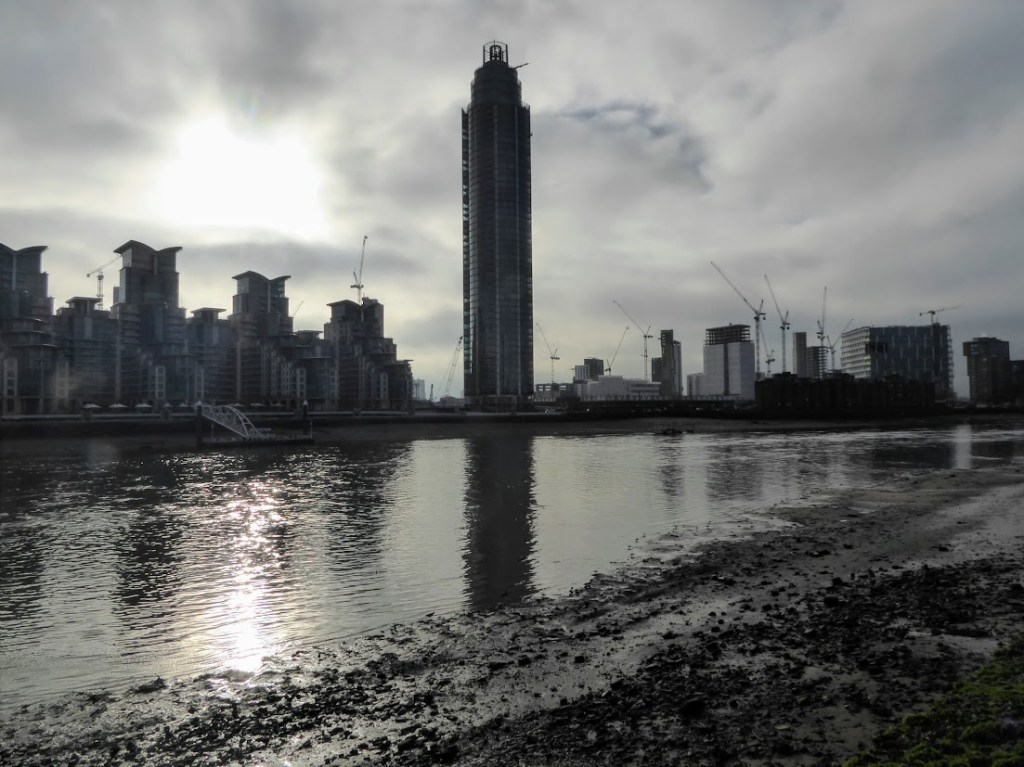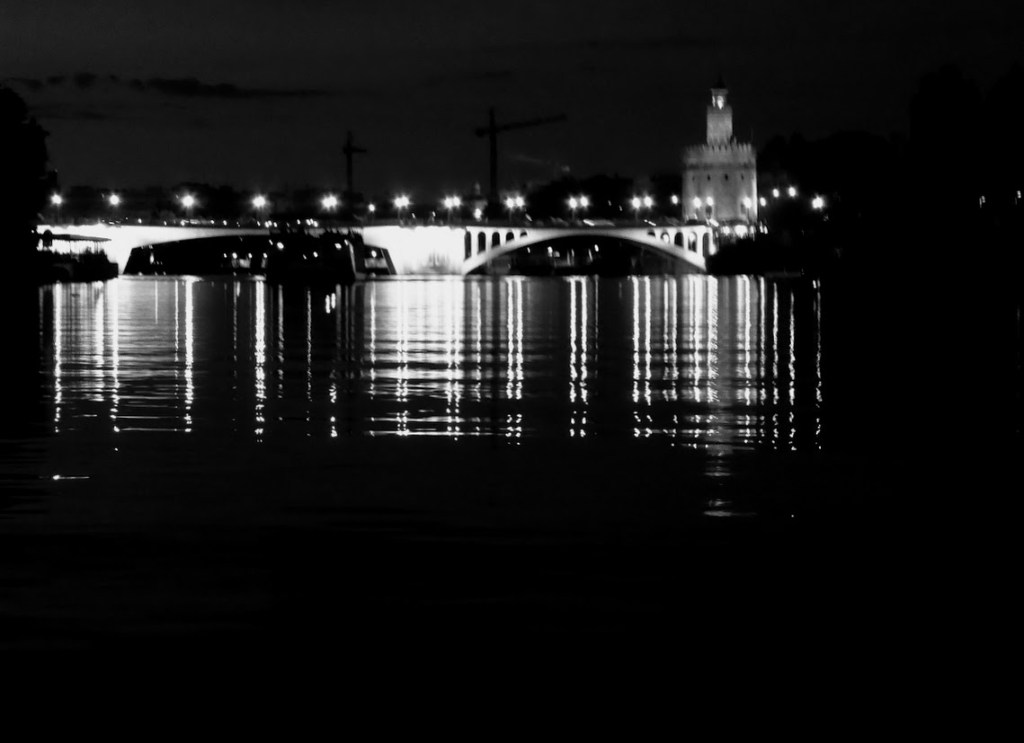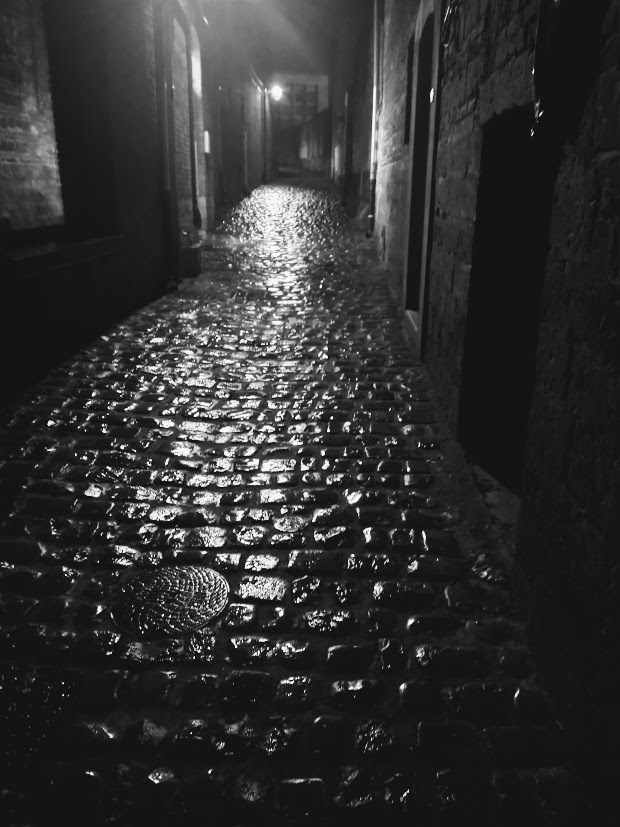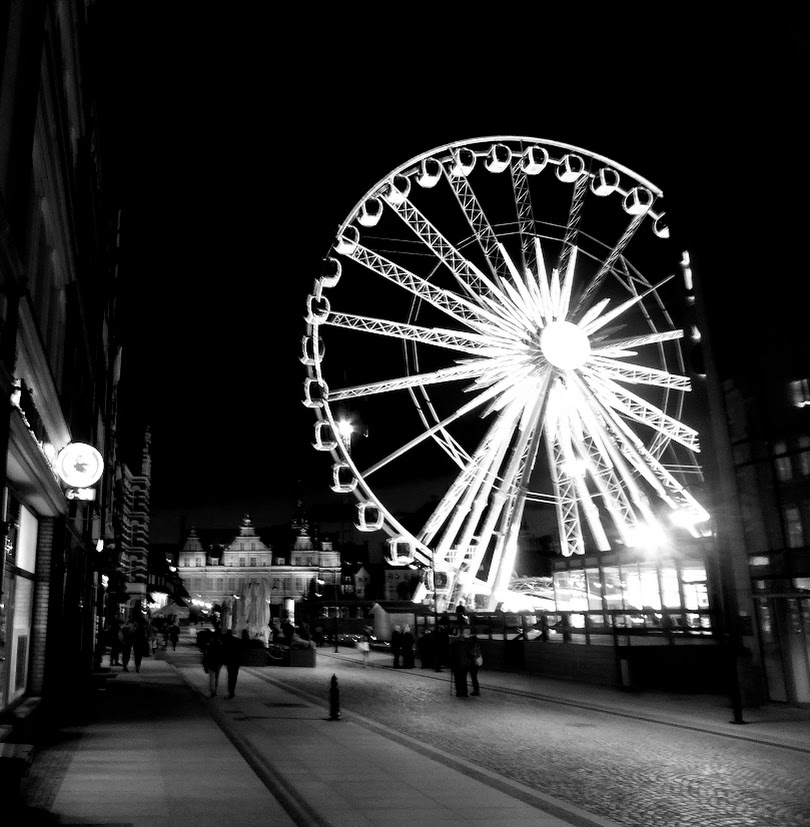
This last month, I’ve seen a lot of the sea. Travelling under it, to get to France; living beside it in Premià de Mar; and sailing over it to return to England. I’ve seen it in all its moods, and I’ll show a selection here for Sarah’s The Sea Challenge for Leanne’s Monochrome Madness.
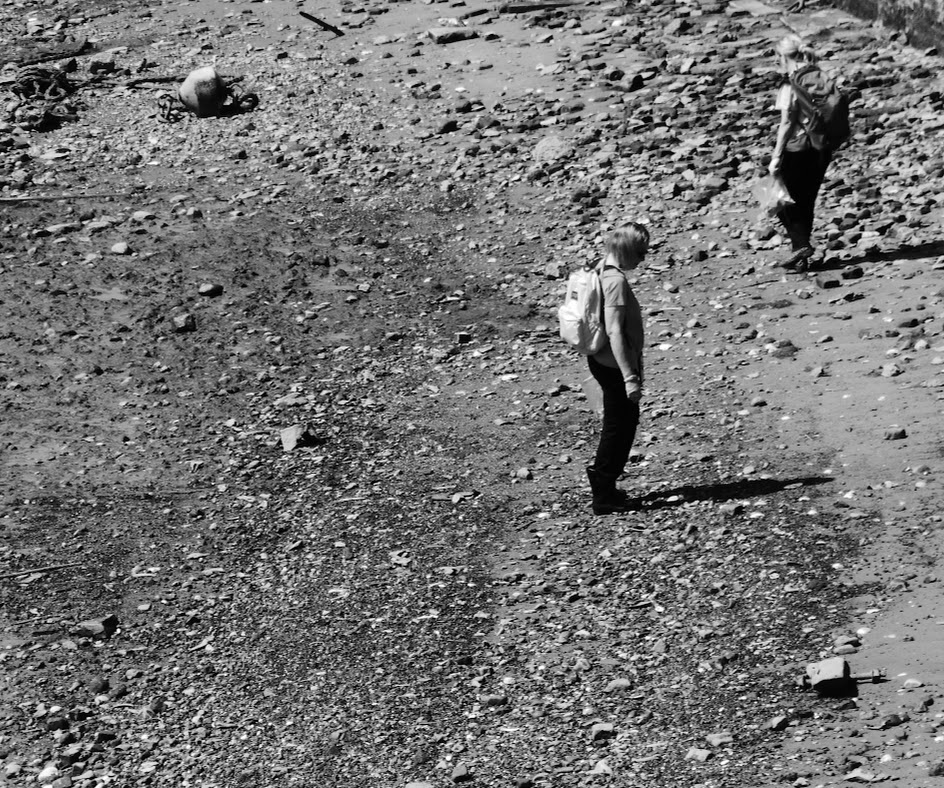
There’s the sea when it isn’t there, because the tide’s out…
Heysham, Lancashire.Dumfries and Galloway
And when it’s placid, even in the middle of the North Sea …
The North Sea
When it’s a little bit frisky, whether in Saltburn or Spain…
SaltburnSpain
Or limbering up for a storm, in Staithes or Saint-Malo….
StaithesSaint-Malo
Or just making a statement, as it is here in Igidae …
I haven’t got a truly stormy picture of a truly stormy sea. These pictures taken at Sandsend near Whitby, and at Igidae on a very windy day will have to do. They were bad enough for an unwilling matelot.
Here in the UK, we know a lot about clouds. And at this time of year, we know a lot about grey clouds. Looking out of the window just now yields an unending vista of smoky grey, darkening over Mickley way to gunmetal and slate. No cotton-wool puffs of cumulus for us.
So let me whisk you to a day in June, when the plane transporting me from Barcelona to Leeds offered me a constantly changing cloudscape below me, with tantalising glimpses of beaches, landscapes and the Pyrenees, the Atlantic coast, and then crowded old England. The featured photo shows us just leaving Barcelona – hardly a cloud in the sky. And then …
Mist rather than cloud, to start with.The foothills of the PyreneesWell, who can tell?Cresting the Pyrennean peaksOver the French coast now…Here too.Still FranceNearly homeEven more nearly home.
Although generally a big fan of monochrome, on a grey day like this, I’m not sure I like these clouds and vistas in black and white. My memory of that summer day was of clear bright and optimistic colours. But needs must. This is for Monochrome Madness, and hosted this week by Brian, of Bushboy’s World.
So said Mick Maslen, Yorkshire artist and teacher. And perhaps none is more energetic than the Leading Line: the one that draws you insistently into an image to discover what lies at the other end. And which may leave you wondering, because you often never reach it.
My header image is from Cádiz, and is a bit of a text book classic. Pavement, road, seawall, cars, kerb-side buildings – even to a lesser extent the wispy clouds- all lead you on and drop you outside the city’s cathedral.
In other examples, it’s the journey along the lines, rather than the destination that commands our notice. Here’s one from Chalons-en-Champagne: the wall paintings rather than the chap at the end, are the story. Just as the couple in the underpass in Premià de Mar attract less attention than the graffiti they’ve just walked past.
Other leading lines have no destination that we can see. The Chirk Aqueduct, with viaduct behind is going somewhere. We just don’t know where. The same with the Rolling English Road in the Yorkshire Dales, and the track in another part of the Dales whose path has been enveloped by fog.
Chirk Aqueduct: from Shropshire to Wales.
Just one more image today. The astonishing Millau Viaduct in France, some two and a half km. long, sweeps majestically about 35 metres above the River Tarn and the landscape and communities beneath- sometimes (and oh how I’d love to see it then!) even above the clouds.
Hallowe’en turns me into a Grumpy Old Woman. Not the event and its history. I like the fact that here, its roots lie deep in the Celtic festival of Samhain. As harvest ended and winter began, the veil between the living and the dead grew thinner, making it easier for spirits to return.
By the Middle Ages, the church had appropriated the days for its own ends, and made All Saints Eve (‘Hallowe’en’) a day for honouring the dead. And over the years, various merry-making traditions grew up round it: Trick or Treat; dressing up as witches, ghouls and ghosts; carving Jack-o’-Lanterns (from swedes in my day. Can you imagine the hard work involved?); and games such as apple-bobbing. Yes, all that I liked: community-based home-spun entertainment just right for this miserable time of year when clock-change plunges us all into night from about 4 o’clock onwards.
What I don’t like is that, these days, from September onwards, shops are crammed with Hallowe’en souvenirs of every kind – all plastic and ultra-transient, and cheap and tacky costumes, not even slightly bio-degradable, to be worn – for one night only – by marauding hordes of children descending on the neighbourhood demanding sweets without number from about four o’clock onwards. I can still remember the night we gave out more than 200 treats before firmly shutting up shop and closing the front door against all comers (We had an American base nearby – they taught our children well).
So the images I offer for this week’s Monochrome Madness: Spooky, as suggested by Dawn are perhaps eerie rather than spooky, and come from the natural world, or at least a world-gone-by. Apart from my header photo. This is a puppet from the Puppet Museum (Museo del Titere) in Cádiz and spooky enough to terrify anybody. And two bits of street-fun: one from Brick Lane, the other from Newcastle.
Any UK readers will have had plenty of occasions to recite a favourite childhood ditty this week.
Rain, rain, Go to Spain, Never show your face again.
James Howell, an Anglo-Welsh historian added this verse to the traditional English rhyme ‘Rain, rain go away/Come again another day’, as a reminder of the failed invasion of the powerful Spanish Armada in 1588. They had intended to overthrow Queen Elizabeth I and restore Catholic rule over England.
Like now, for instance. But we’re all safely indoors, so let’s peer out at a few rainy shots. I hope you have an umbrella.
Count the brollies in these two shots, and they’ll add up to seven.
Umbrellas waiting for the monsoon in IndiaNot England. San Sebastian. In Spain. The ditty worked …
Let’s start with a Roman Bridge, in Córdoba. It’s called the Roman bridge, because it was first built during the Roman colonisation of southern Spain. But it was overhauled in the 10th century. Then in the Middle Ages. Then in the 16th and the 17th centuries, when a statue of St Raphael was added. Lights were added in the 19th century, and it was pedestrianised in 2006. It’s a wonder it can still be called the Roman Bridge. But it can. The 14th and 15 arches are still the original ones.
El Puente Romano de Córdoba.
We’ll leap forward to the Renaissance, but stay in Spain, in Valencia, and visit the Puente del Mar. Flooding in the River Túria swept away an old wooden bridge, so in 1591, it was replaced with this:
Puente del Mar, Valencia.
Stone, brick, wood: all these were the traditional bridge -building materials of choice down the centuries. Until the Industrial Revolution here in England, whose original epicentre was in Coalbrookdale, thanks to its wealth of natural resources all conveniently in the same area. The world’s first iron bridge was built here in 1779.
The Iron Bridge, Coalbrookdale, Shropshire.
This bridge is the grandparent of almost all bridges built – in the UK at least – since then and into the 20th century. Here are three: Vauxhall Bridge, completed in 1906; the Tees Transporter Bridge, completed in 1911, and the Tyne Bridge, completed in 1928.
Let’s leap briefly into the 21st century, and look at one of the bridges in Valencia’s assertively future-facing Ciudad de las Artes y las Ciencias, created between 1998 and 2009.
Ciudad de las Artes y las Ciencias, Valencia.
And finally, the Millau Viaduct, sweeping more than 300 metres above the Tarn in southern France, designed by Norman Foster and completed in 2004. Like Valencia’s Science Park, it’s a destination in its own right.
Millau Viaduct, Occitanie, France.
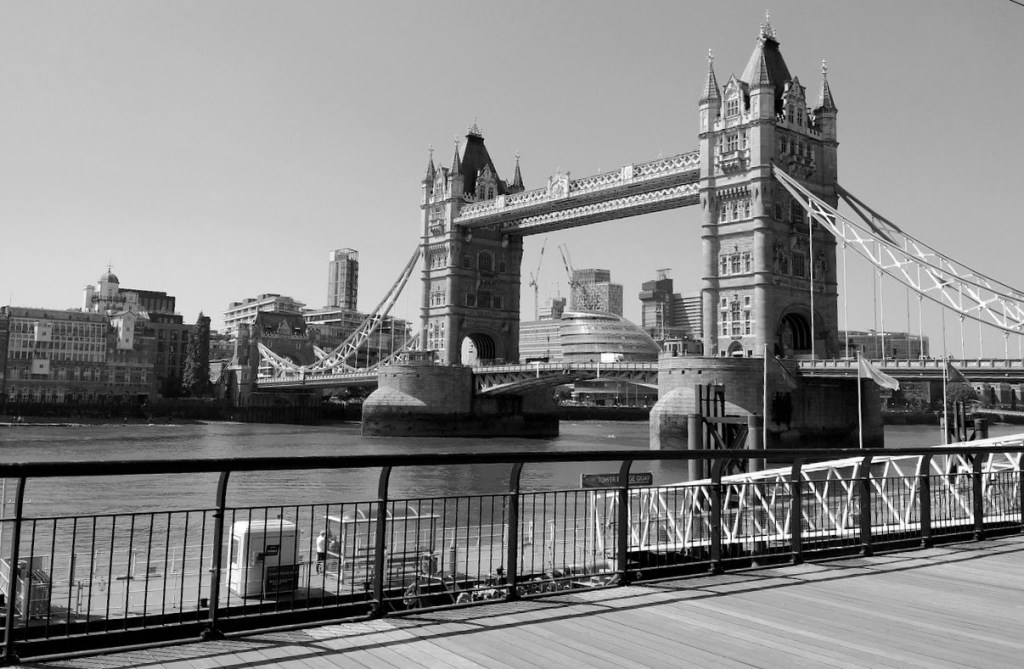
But we can’t leave without mentioning the featured photo: London’s iconic Tower Bridge, open to traffic since 1894: both road traffic, and when regularly lifted, to river traffic beneath. The photo demonstrates why the extra height is necessary: that’s HMS Belfast in the foreground.
And to finish off, let’s stop at something that’s even older than bridges as a way of allowing travellers to cross water. Stepping stones. These are at Redmire Force, and are still a popular way of crossing the River Ure.
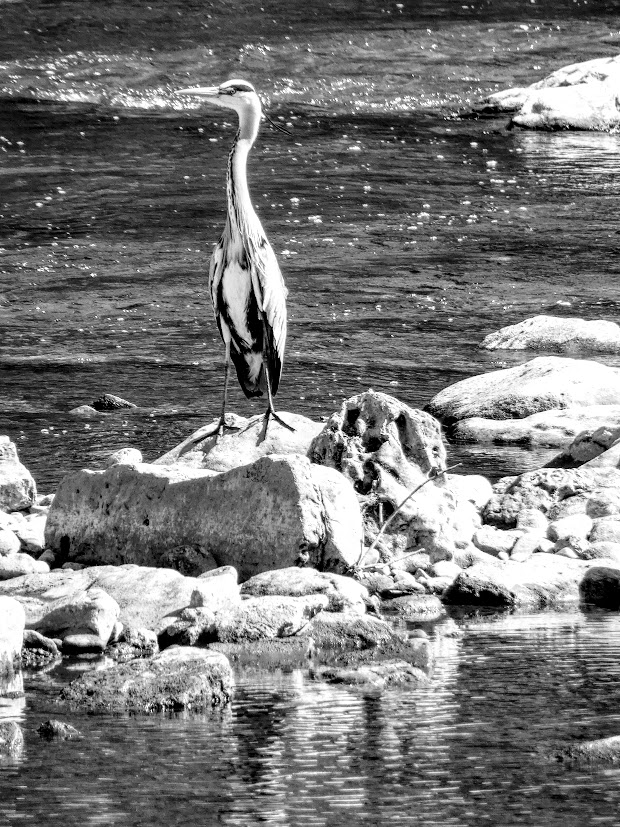
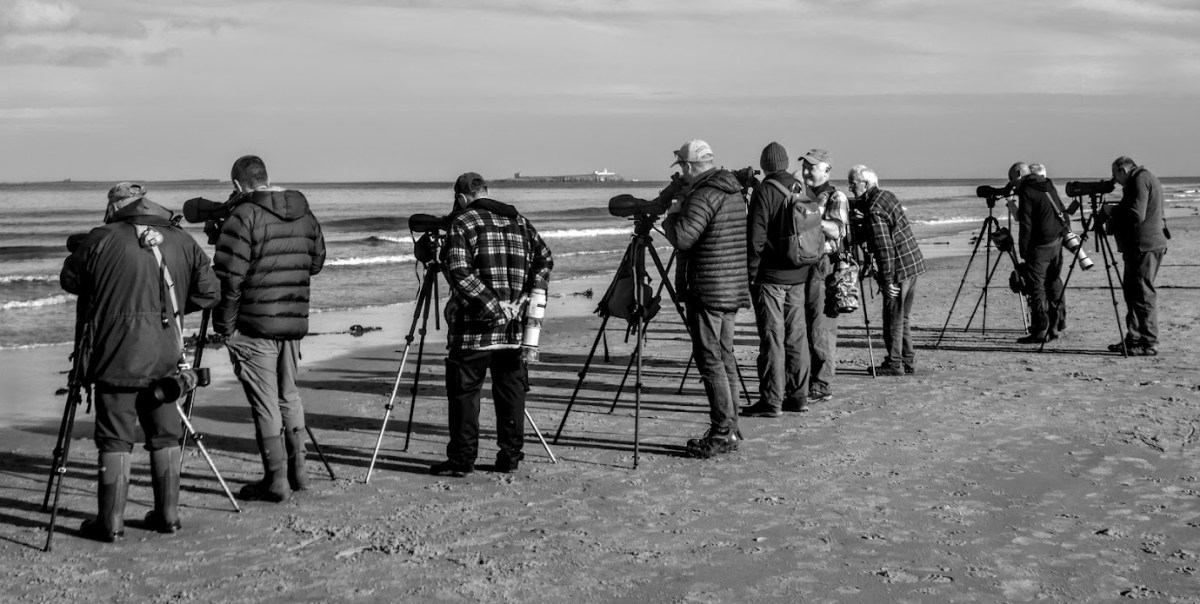
Bird photography isn’t something I excel at. No long lenses, no patience. But today, just so I can join in three whole challenges listed below, I offer you seven images. Not seven birds, please note. Just seven images.
My feature photo is of an egret and a heron studiously ignoring one another at our local nature reserve.
And my next is of a herring gull. Doubtless it’s a mug shot of him taken at the police station, as he helps police with their enquiries over the matter of the fish and chips snatched from a blameless pensioner eating his take-away fish dinner on the seafront.
The next two are familiar local residents: a robin posing for a Christmas card: and a house sparrow in reflective mood.
Back to the seaside. To the Farne Islands. Here is a puffin stretching his wings: and an irritated Arctic tern objecting to my possibly disturbing his young.
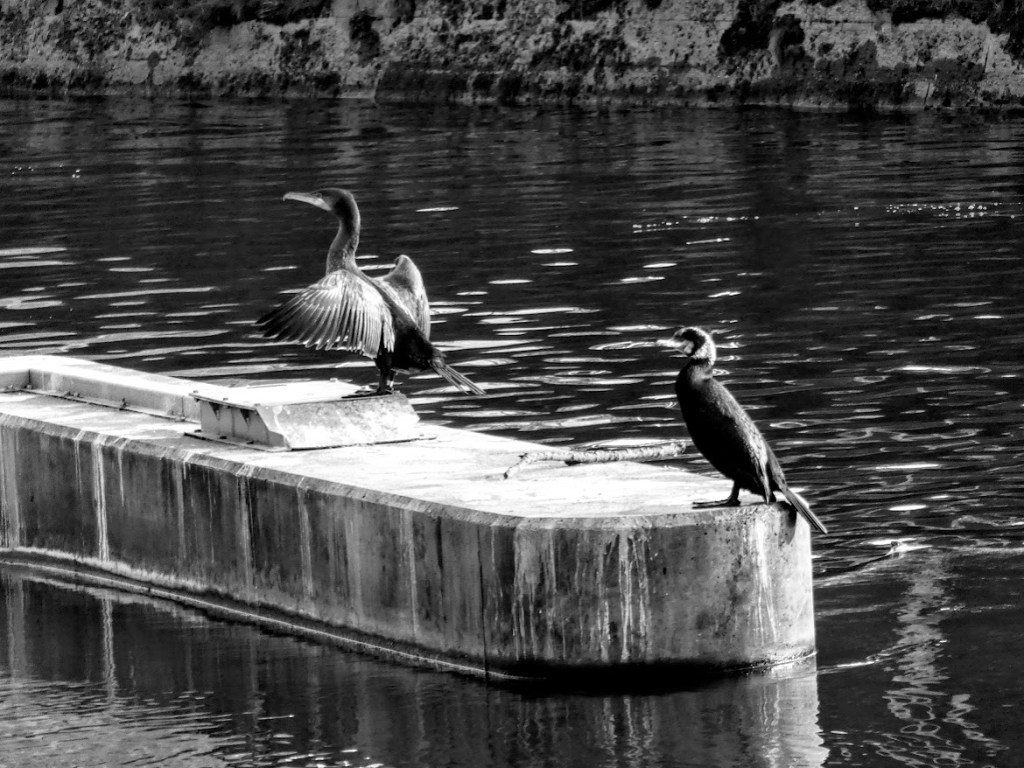
We’ll end where we (nearly) began: with two birds – cormorants in this case, ignoring one another at another local nature reserve.
Shropshire has well more than its share of half-timbered buildings still in daily use from the Tudor period, as well as more modern Tudorbethan stock. Here are just two examples from our local travels. The feature photo is from The Square in central Shrewsbury, and the image below is from Ludlow.
This week, Leanne’s Monochrome Madness has no theme. She has chosen to showcase lighthouses. We’re rather thin on lighthouses round here, so I won’t join her. Instead, I’ll show just a few towers I’ve seen this year.
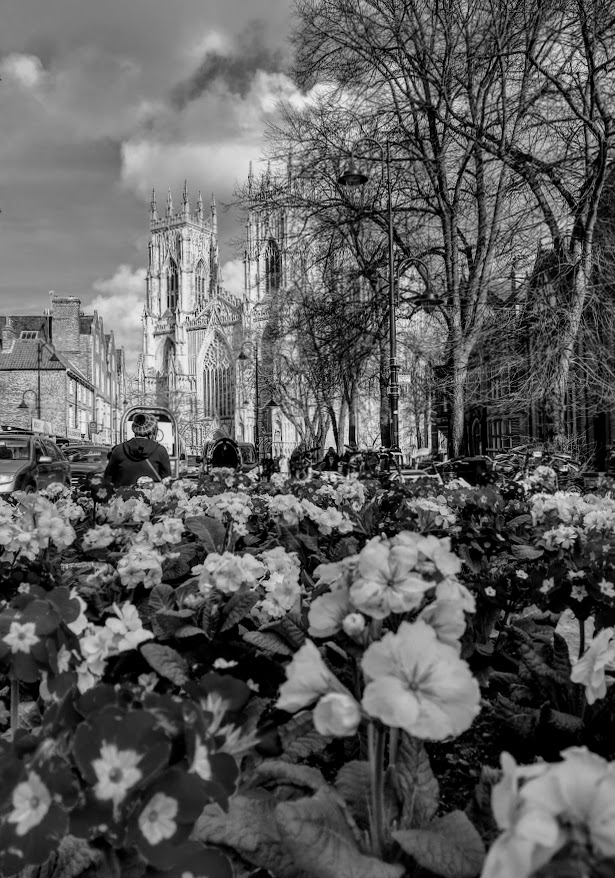
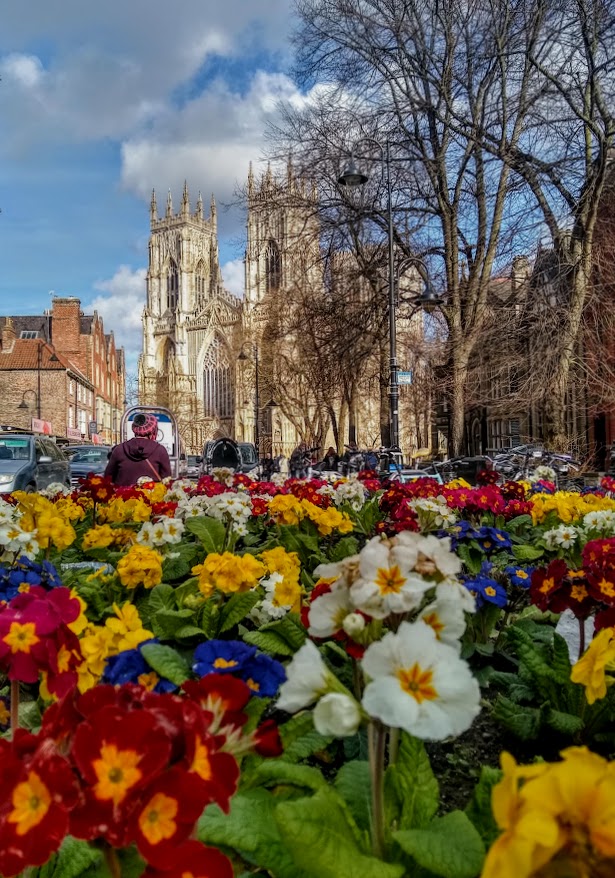
My first tower of the year was a human one, seen in York.
Then we went to Spain to meet our new granddaughter. And do a spot of discovering too.
Gaudi’s church in Colònia Güell
And later, I went back to Spain again, to lend a hand as my daughter’s maternity leave ran out. I still had moments of sightseeing.
And most recently, it was off to Holgate Mill, a fully functioning windmill slap in the middle of a housing estate in York. I must introduce it properly soon.
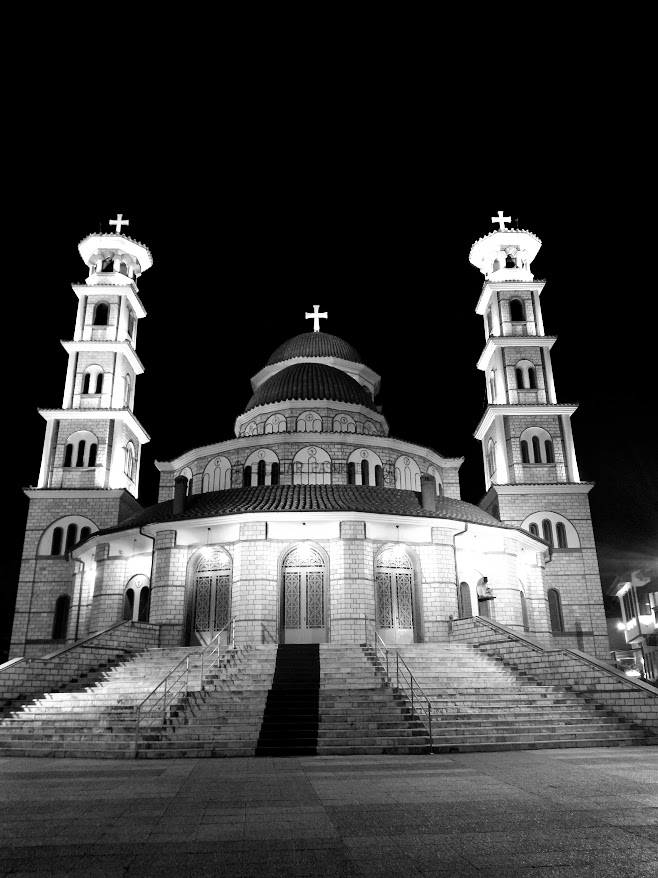
My featured photo is of Christ Church Hartlepool, now an Arts Centre. I was going to add in an AI generated photo too. Just for fun. But they were no fun, so I abandoned the idea.
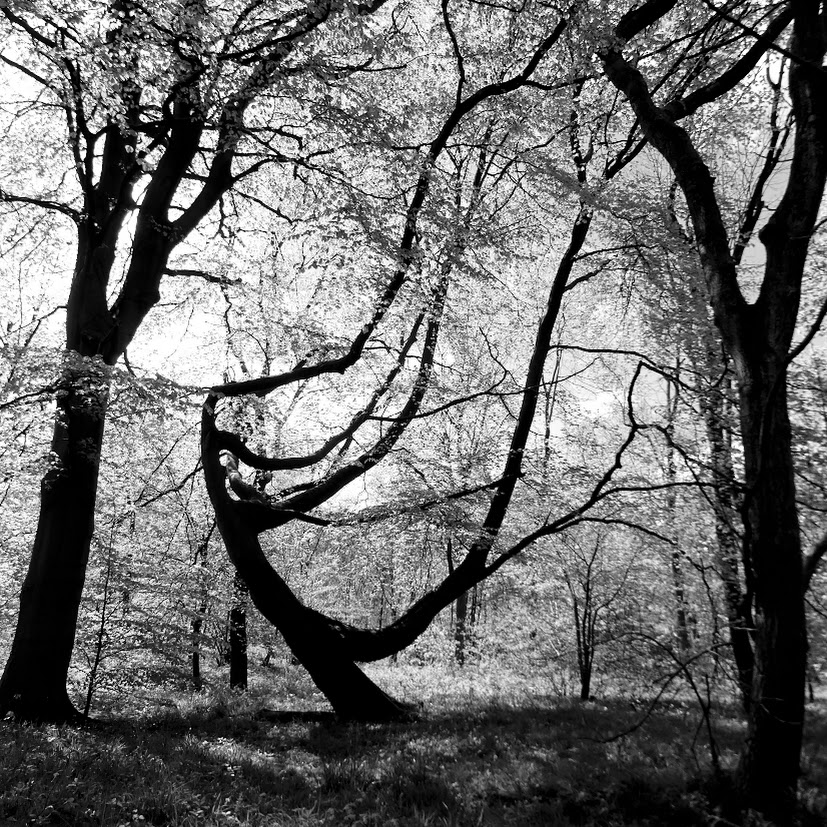
I feel so lucky that the area where I live is rich in trees, because not so very long ago, the local copses were woods, and the woods were forests. Here’s one favourite, an ancient oak: frustratingly, it’s not possible to stand far enough away to get it all in frame. But I love visiting this near neighbour of ours. How many centuries ago did it begin its life?
An ancient oak near North Stainley
There are trees that flourish against the odds. The feature photo shows two trees at Brimham Rocks. Where have they burrowed their roots? Where is the soil that nourishes them? And here are two we meet when walking near Coniston in Yorkshire.
Two trees near Coniston, Grassington
I’m always fond of this tree near Jervaulx Abbey. And I always wonder who the lucky child was who had a second home there.
Here’s another from Jervaulx Abbey itself that always makes me laugh.
The grounds of Jervaulx Abbey, North Yorkshire
This one’s a favourite in our nearby woodland at West Tanfield.
Greensit Batts, West Tanfield
And here’s just another local specimen. Not weird. Just wonderful.
You must be logged in to post a comment.