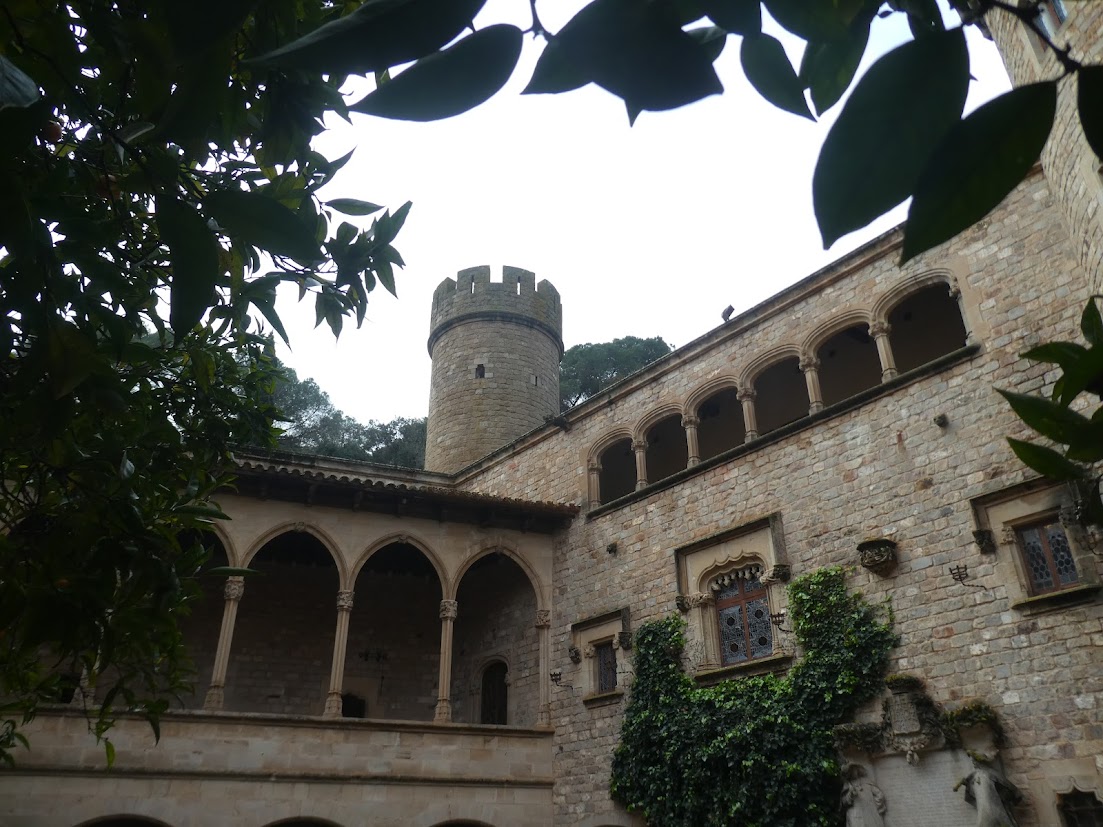
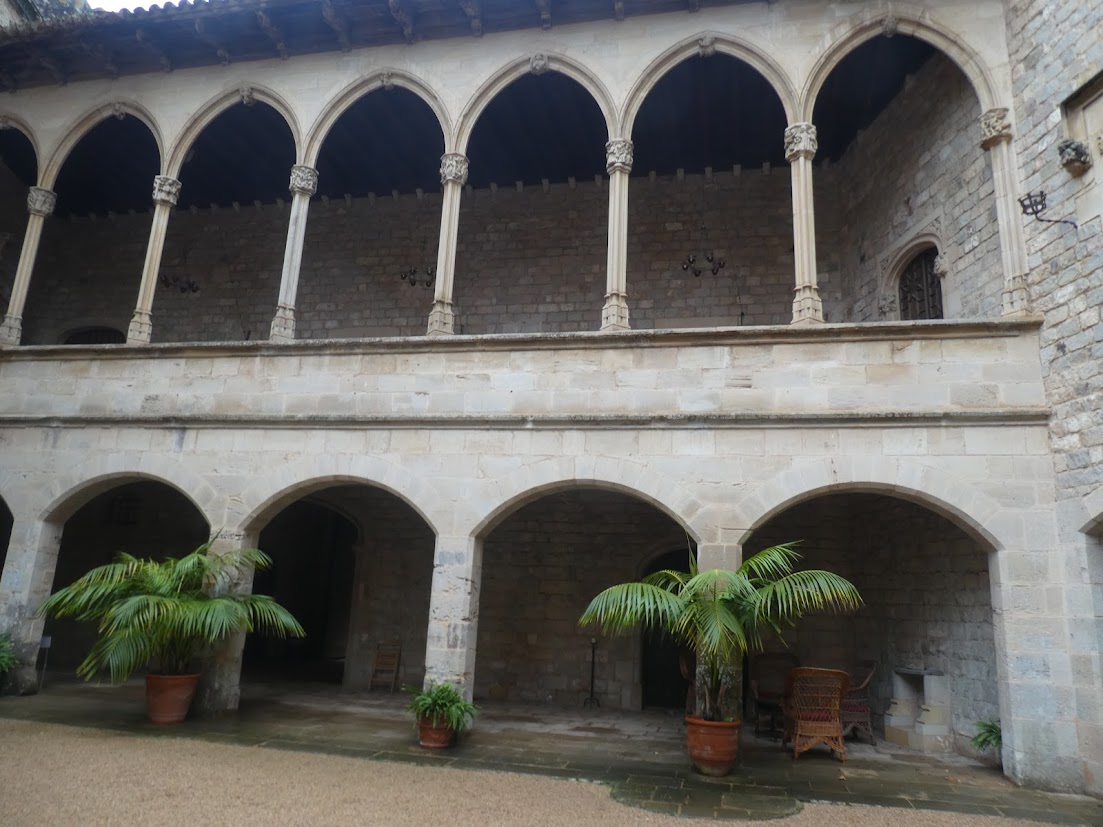
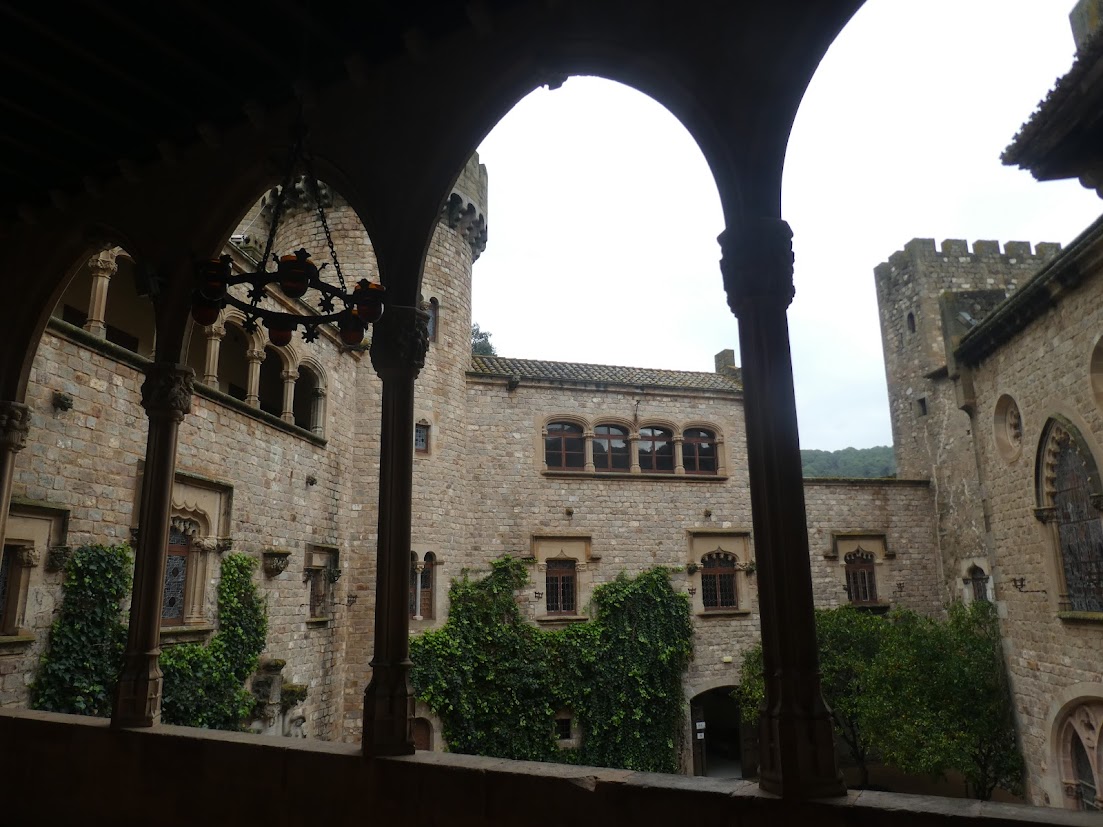
Castell de Santa Florentina has its roots as a 11th century fortified farmhouse, built on the ruins of a Roman villa to defend the area of Canet de Mar against pirates. It evolved into a proper castle-that-looks-like-a -castle-with-turrets in the 14th century.
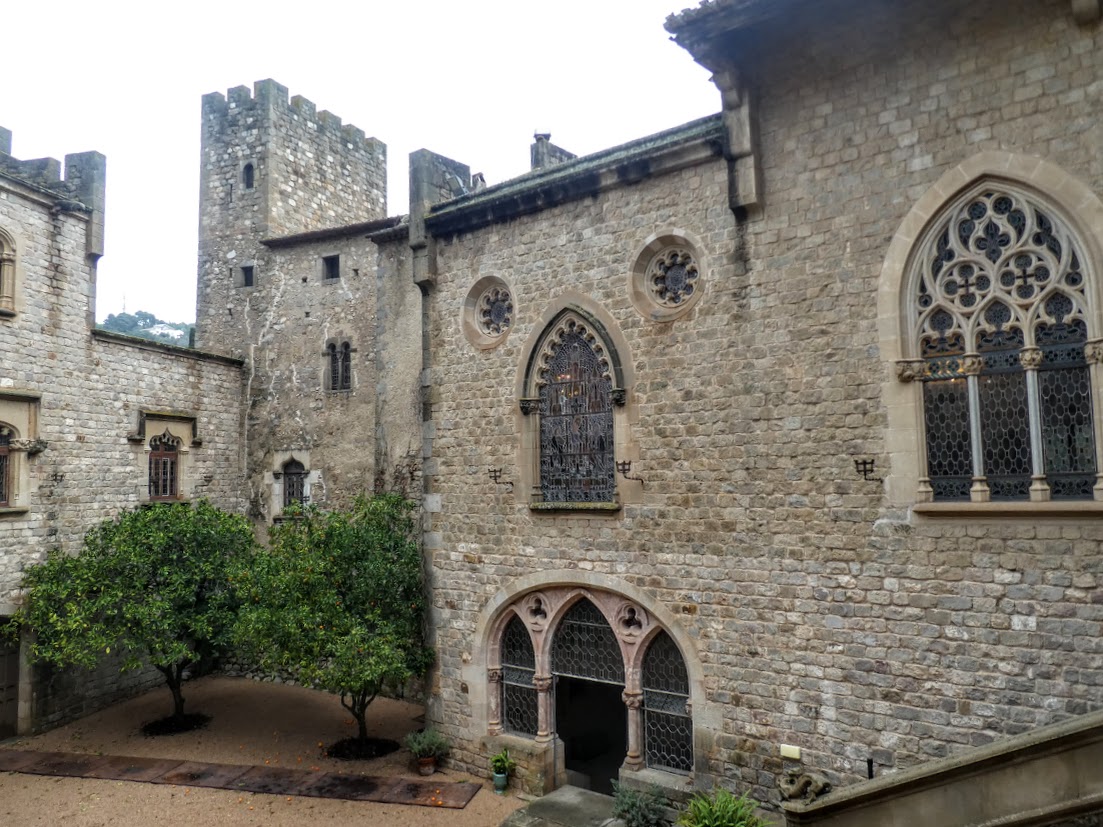
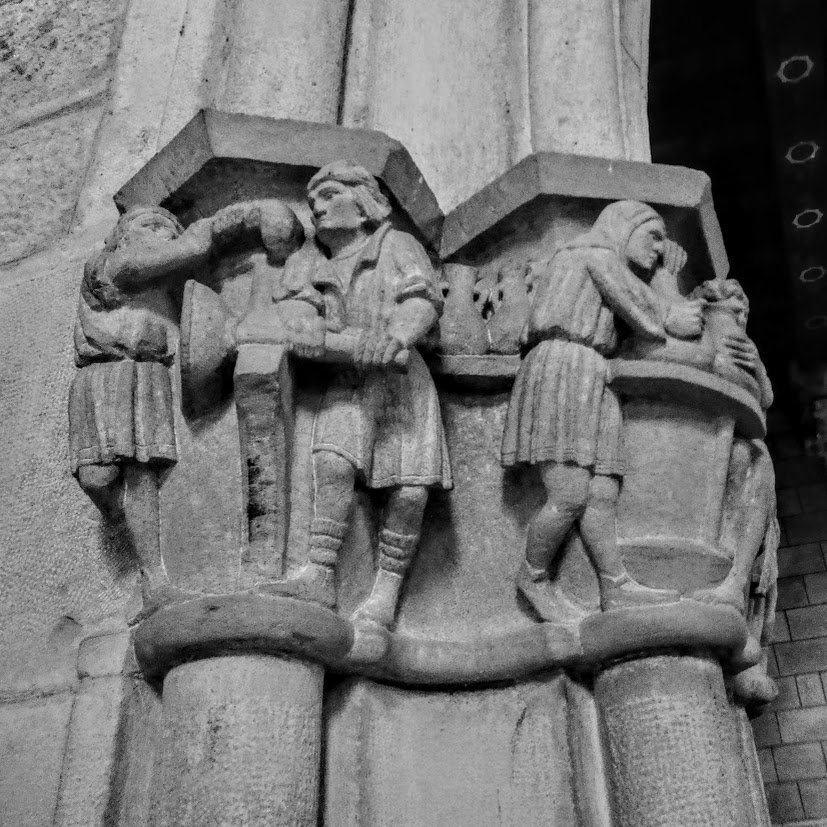
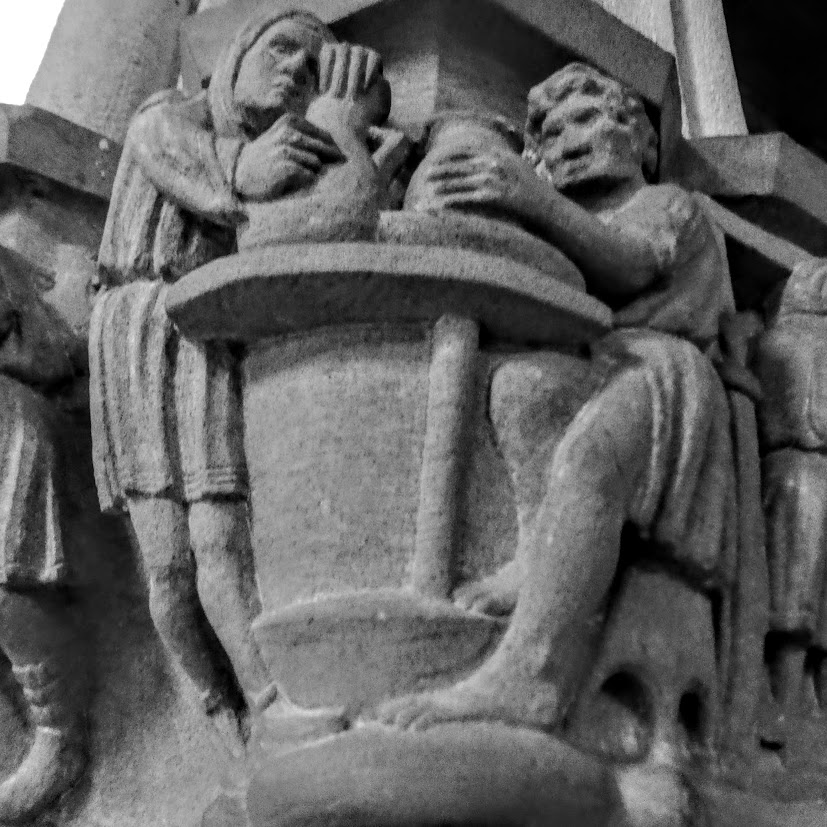
And that’s how it pretty much stayed until the end of the 19th century, when noted Catalan modernist architect Lluís Domènech i Montaner, who was related to the then owner Ramon de Montaner, came and put his own stamp on the building, employing a team of like-minded craftsmen and sculptors. We Brits would probably recognise the style as being somewhat pre-Raphaelite: a rather romanticised Gothic vibe.
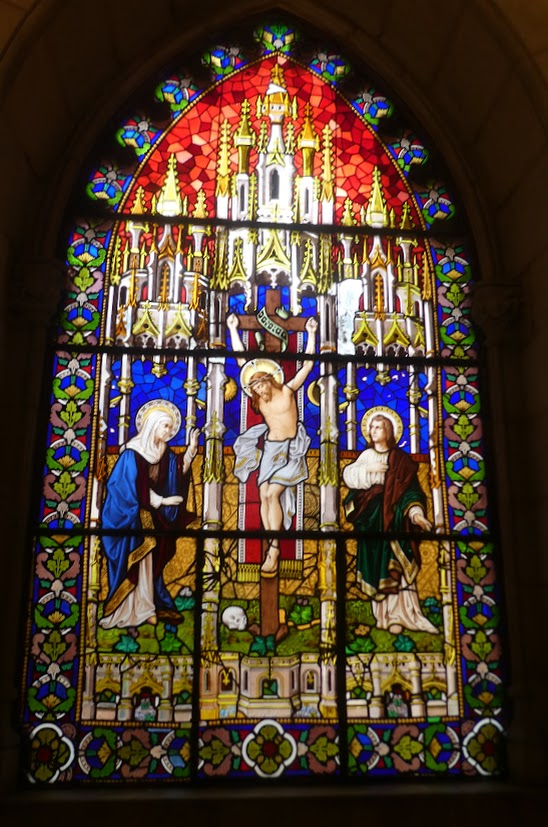
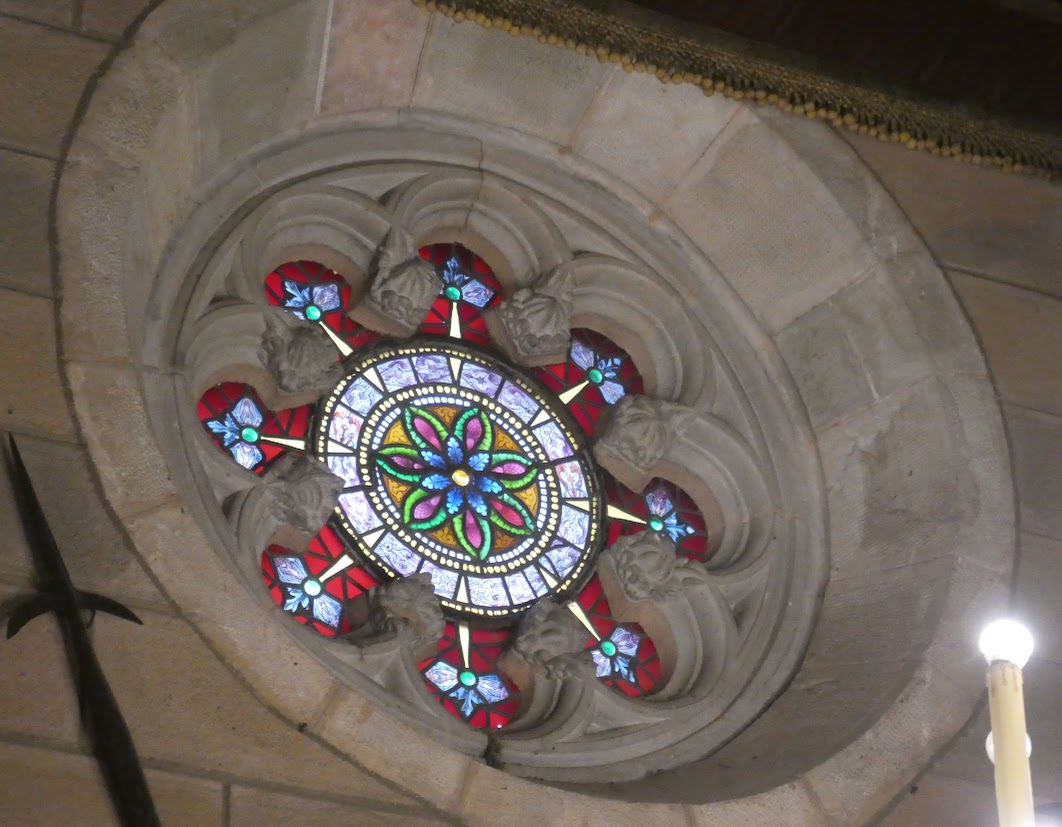
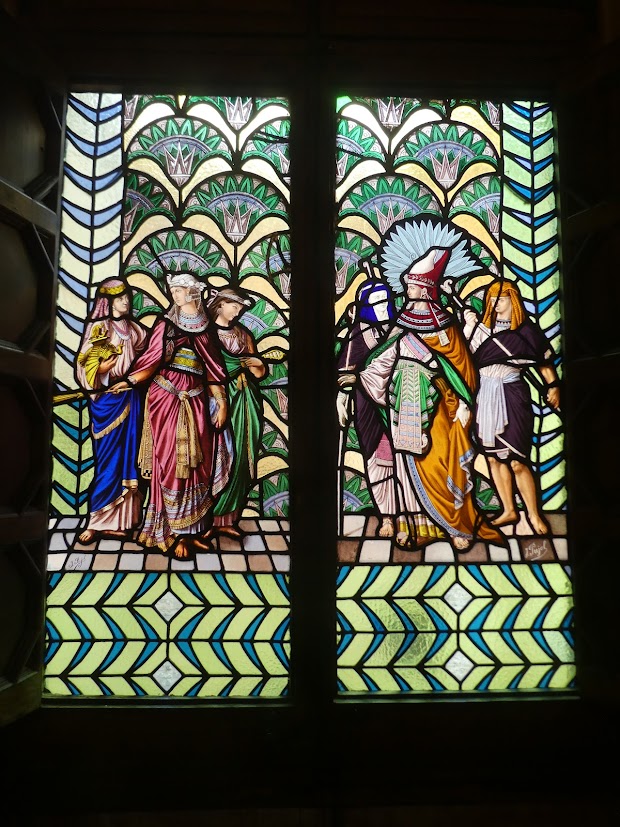
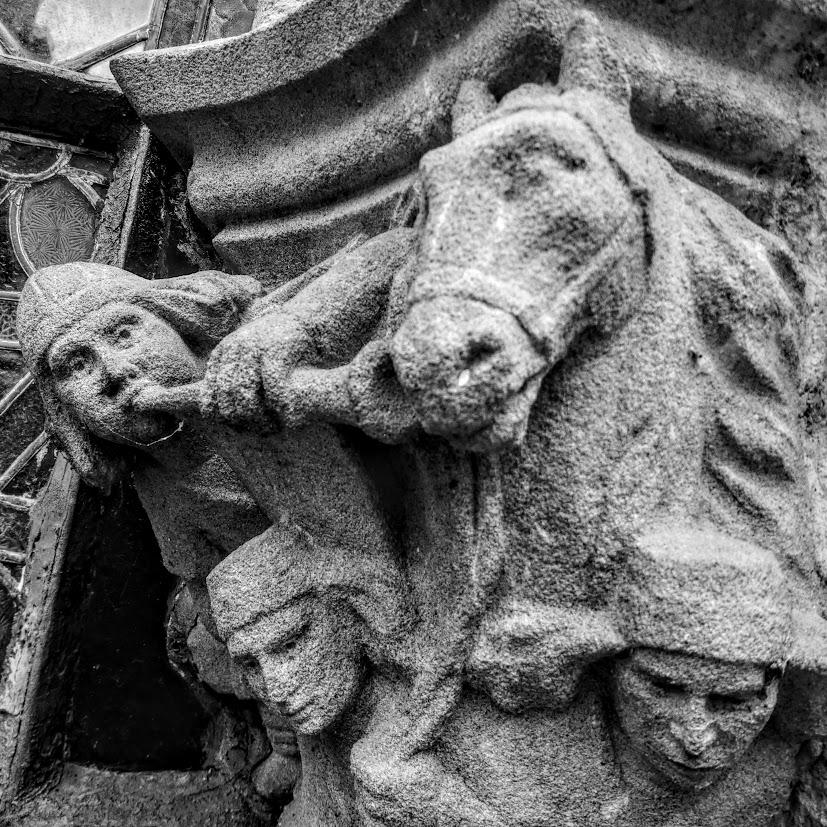
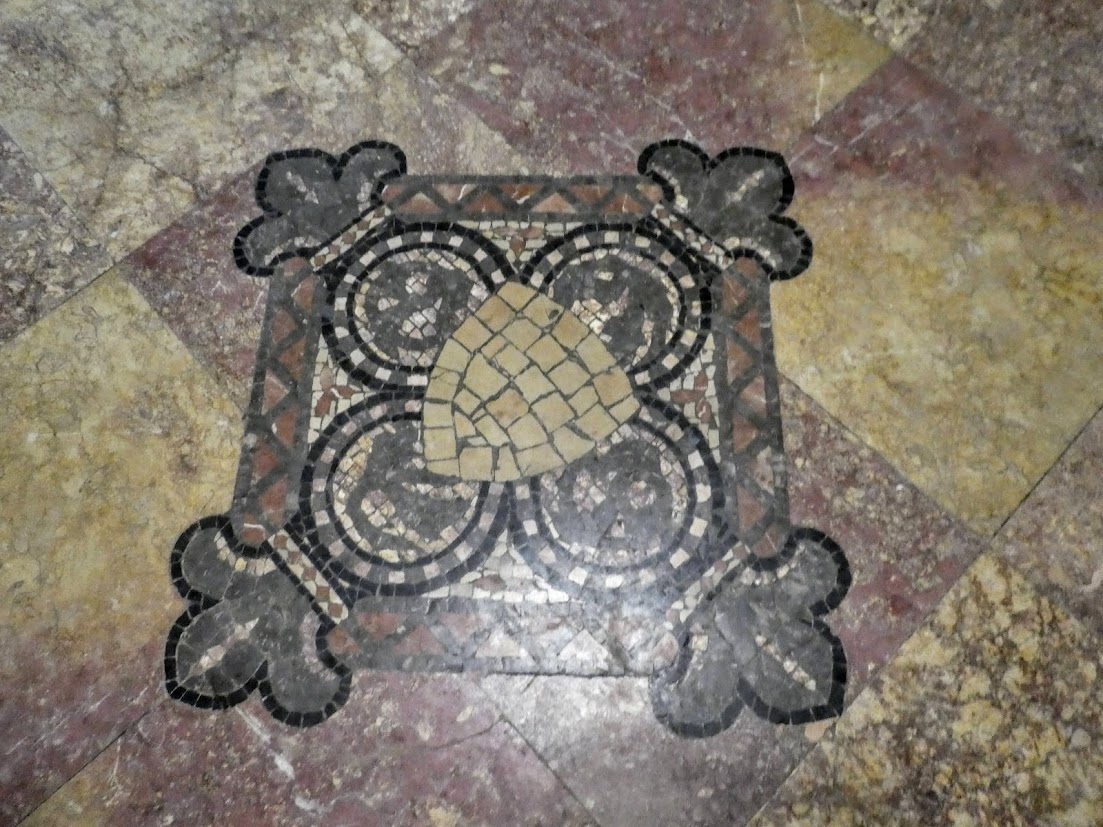
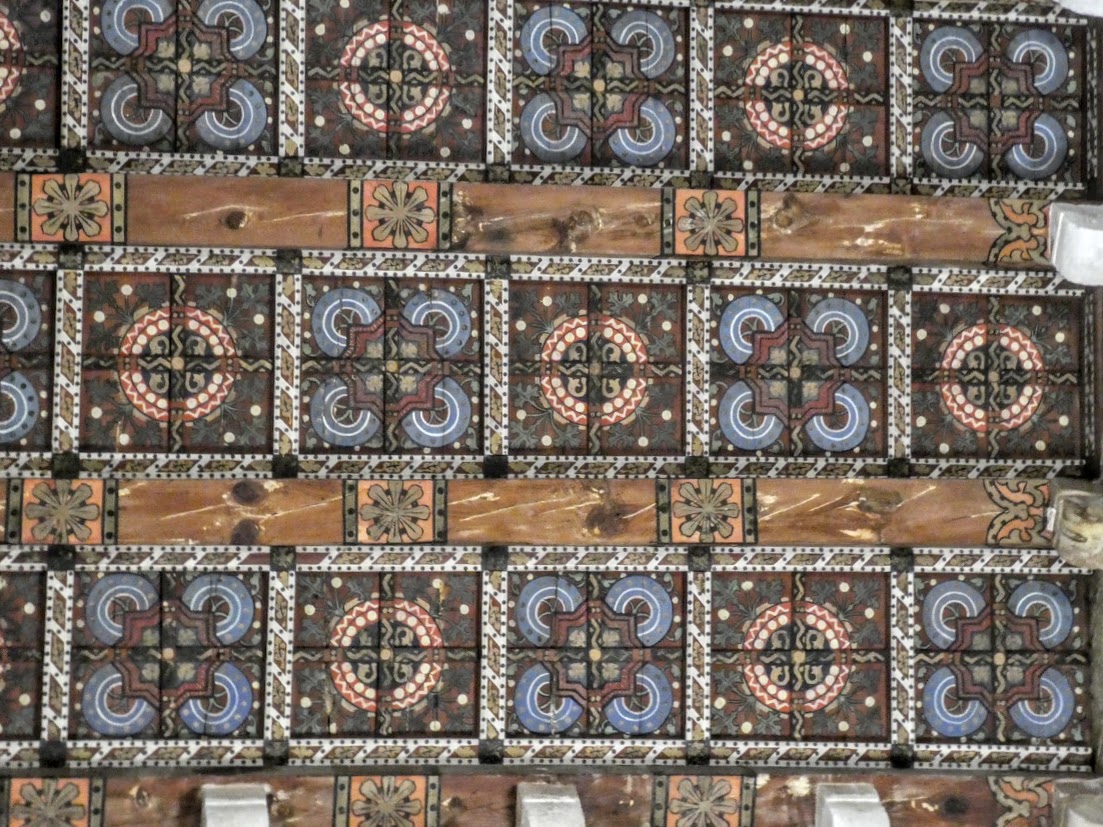
We went there yesterday. It was a bit unexpected. The route to the castle was an overgrown, muddy and pot-holed track to which our poor car strongly objected. The gate to the castle grounds was unprepossessing, firmly locked, and we and our two fellow would-be visitors wondered whether the place would open in time for our booked visit – or at all. It did: and our initial doubts were soon replaced as we wandered round this glorious building with its stained glass, ornate ironwork, fine ceilings and sculptures, harmoniously blending with the existing Gothic structure.
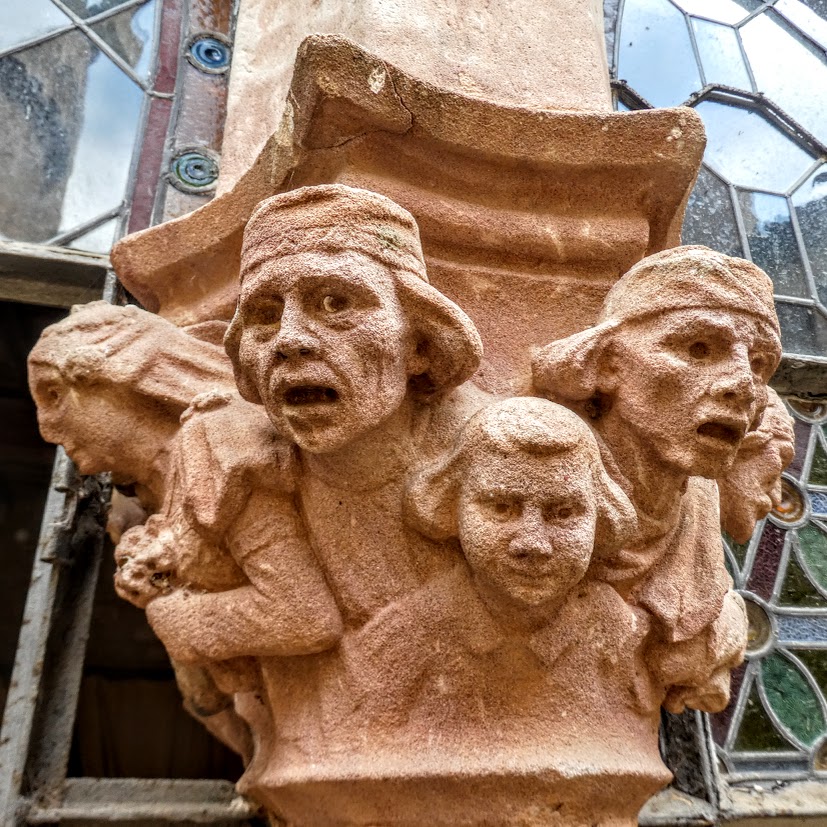
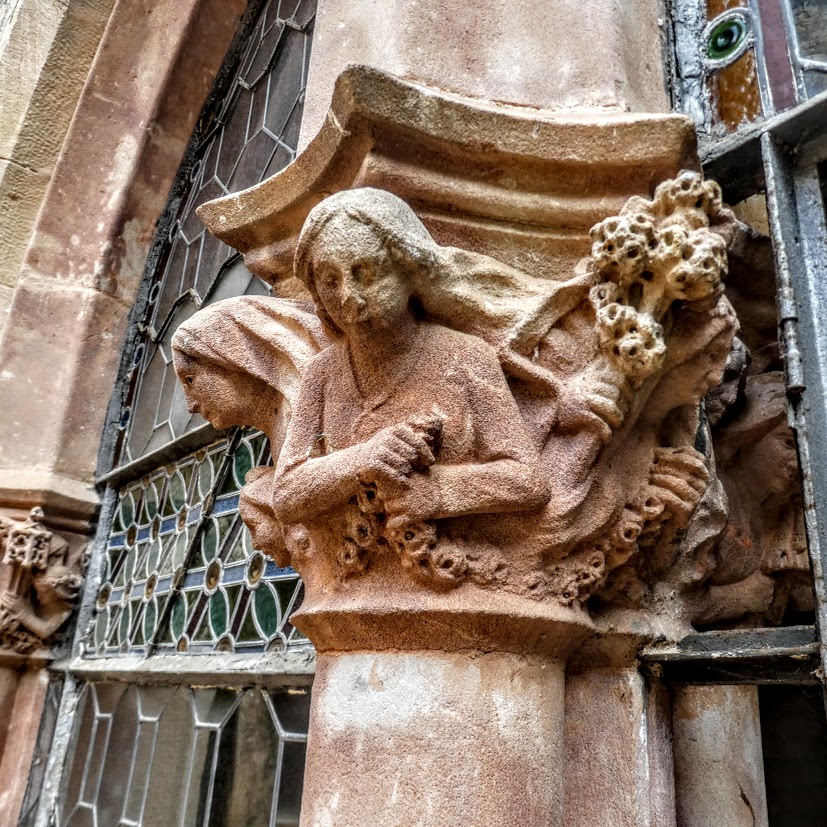
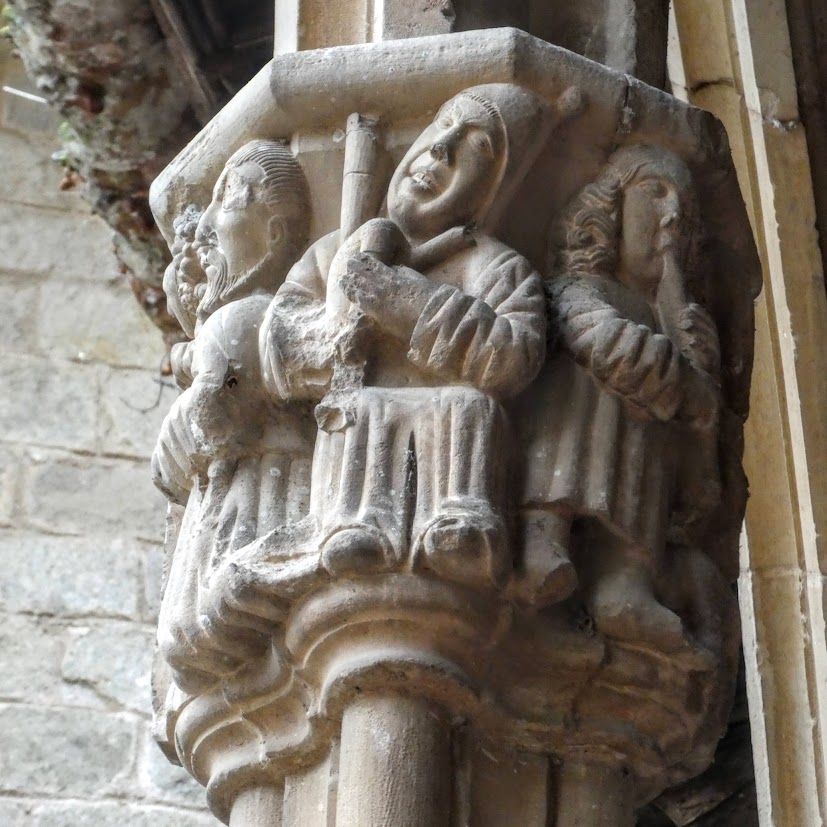
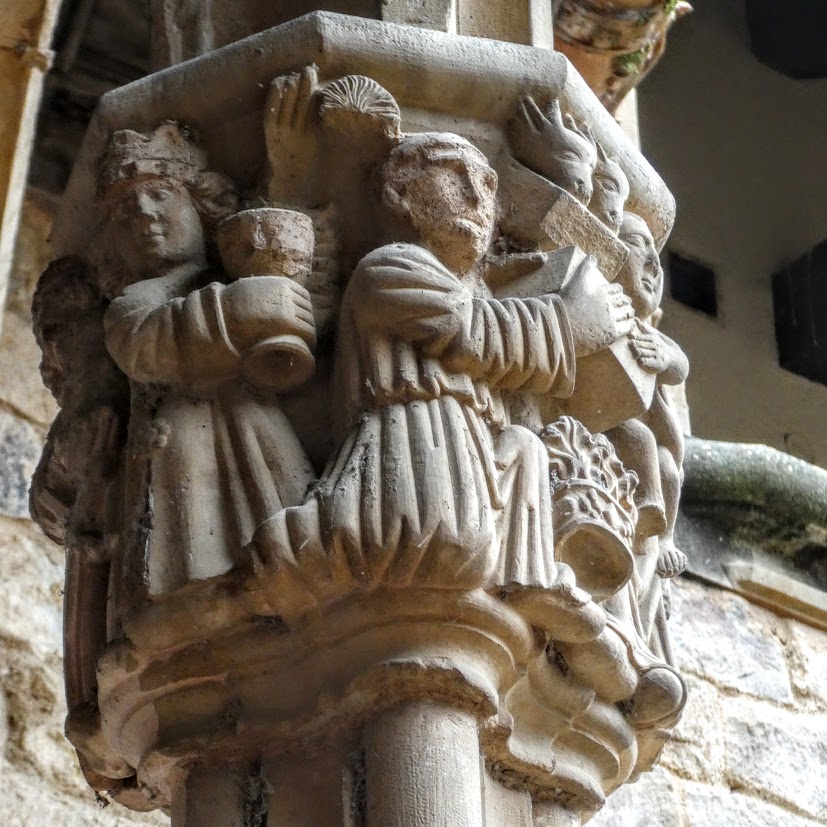
It’s beyond me to give you a structured and informative tour. Why don’t you just enjoy some of the details that we spotted and lingered over in the time we spent there?
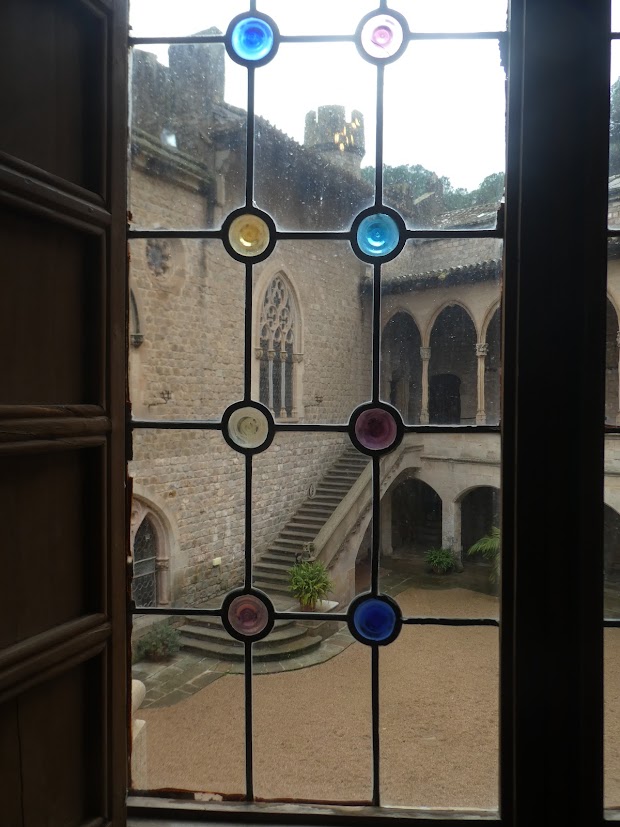
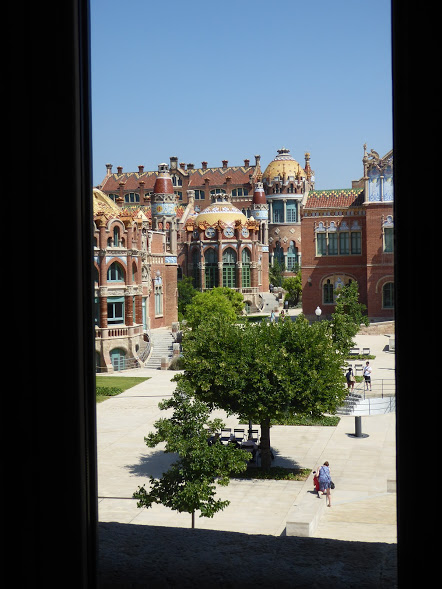
A view of some of the site, glimpsed through one of the windows.
It’s a story that goes back to the 15th century, when Barcelona already had six hospitals. In 1401 these merged onto a new site in Raval, to offer improved care to the sick.
By the 19th century, these facilities were too small, too outdated, no longer really fit for purpose. A Catalan Banker, Pau Gil, put up the money to fund a truly enormous and visionary project: a whole community of buildings offering state-of-the-art care to the poor of the city. The plan was for facilities of the highest quality, designed in cutting-edge modernist style by cutting-edge Modernista architect Lluís Domènech i Montaner.
Modernism? Think of it as Art Nouveau, Catalan style. You’ll recognise it in the works of Antoni Gaudi. Montaner found inspiration from Moorish architecture. Playful looking mosaics and the light-flooded areas are the special feature of his buildings. What we noticed straight away was bold colour, bold decoration: rich-hued tiled roofs: and within, tiles and mosaics in sunny yellow, grass green, sky blue.
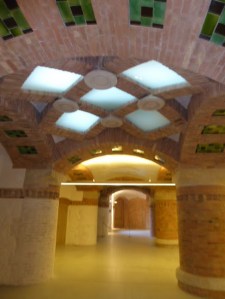
Sun, grass, sky. Why not remind the sick inmates of a cheerful world outside the hospital? Why not have light, airy, high-ceilinged rooms, tiled throughout for ease of cleaning, and because they would never become dingy and faded? Why not build underground tunnels, tiled in cream, so that patients could be moved round the site without being exposed to the elements? Why not build a decent well-lit operating theatre, well-stocked libraries for doctors to consult, and set all these buildings among gardens which patients and staff alike could enjoy?
Underground walkways between the hospital buildings.
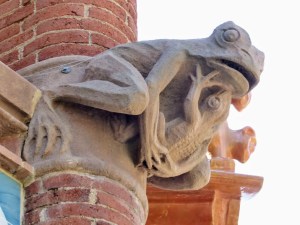
This was a Christian foundation. Nuns provided nursing care until the 1990s, as they had done since the hospital’s earliest years Mosaics in the building told stories from the Christian tradition, such as that of Saint George slaying the dragon. Other carvings and statues relied on ancient legends. This frog nursing a baby frog, for example, is an old symbol of caring love.
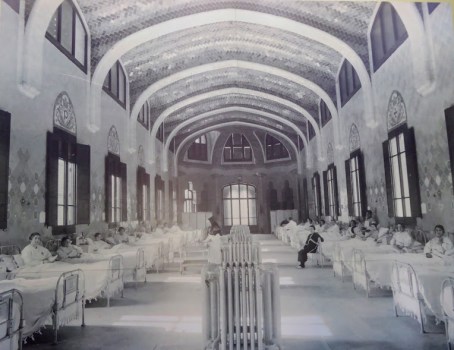
Originally, men and women were separated, but later, the hospital was organised by specialism. Now, although research continues here, modern buildings behind continue the work of the hospital.
A women’s ward in the hospital, 1920s.
The foundation stone was laid in 1902, and facilities were developed until about 1930. Large parts of the site were never built at all, from lack of funds. This isn’t surprising. There is nothing of the workhouse about this place. It’s a beautiful, special site, fully deserving of its UNESCO World Heritage status, acquired in 1997. It only opened its doors to visitors a few years ago, and it’s not yet truly on the tourist trail, despite being just up the road from then Sagrada Familia which is always surrounded by hordes of tourists. Visit it now, while it’s still an oasis of calm. It’ll be somewhere you’ll remember forever.
I’d intended to go into the story of this place in more detail. But a fellow blogger, Restless Jo, whom I ‘met’ only recently, introduced me to a series of posts by a blogging friend of hers, Jude. Here’s a link to the first one, from which you can reach all the rest. She tells and illustrates the history of this place so well that, quite simply, I don’t have to.


 From Pyrenees to Pennines
You must be logged in to post a comment.