Depending on your point of view, it was either Napoleon or Adam Smith who first called England ‘a Nation of Shopkeepers’
But it was only after I came to settle here in France that I started to think of shopkeeping and market trading as skilled occupations, and realised just what is involved in keeping the customer happy.
It’s probably because it’s just so much easier, where we live in England, to nip down to the supermarket. There weren’t too many independent shops on our daily round: so much for a nation of shopkeepers. Mind you, we loved it when Emily was a Saturday girl at the French patissier who was then in Harrogate, Dumouchel. She would often be sent home with a couple of unsold petits gateaux for us to enjoy, or some slowly-fermented sourdough bread. It was small shop, and quite expensive, so she learnt quickly to value customers and to treat them well, so they’d come back. She learnt too that while most of the people she served were friendly and appreciative, customers could be curmudgeonly too.
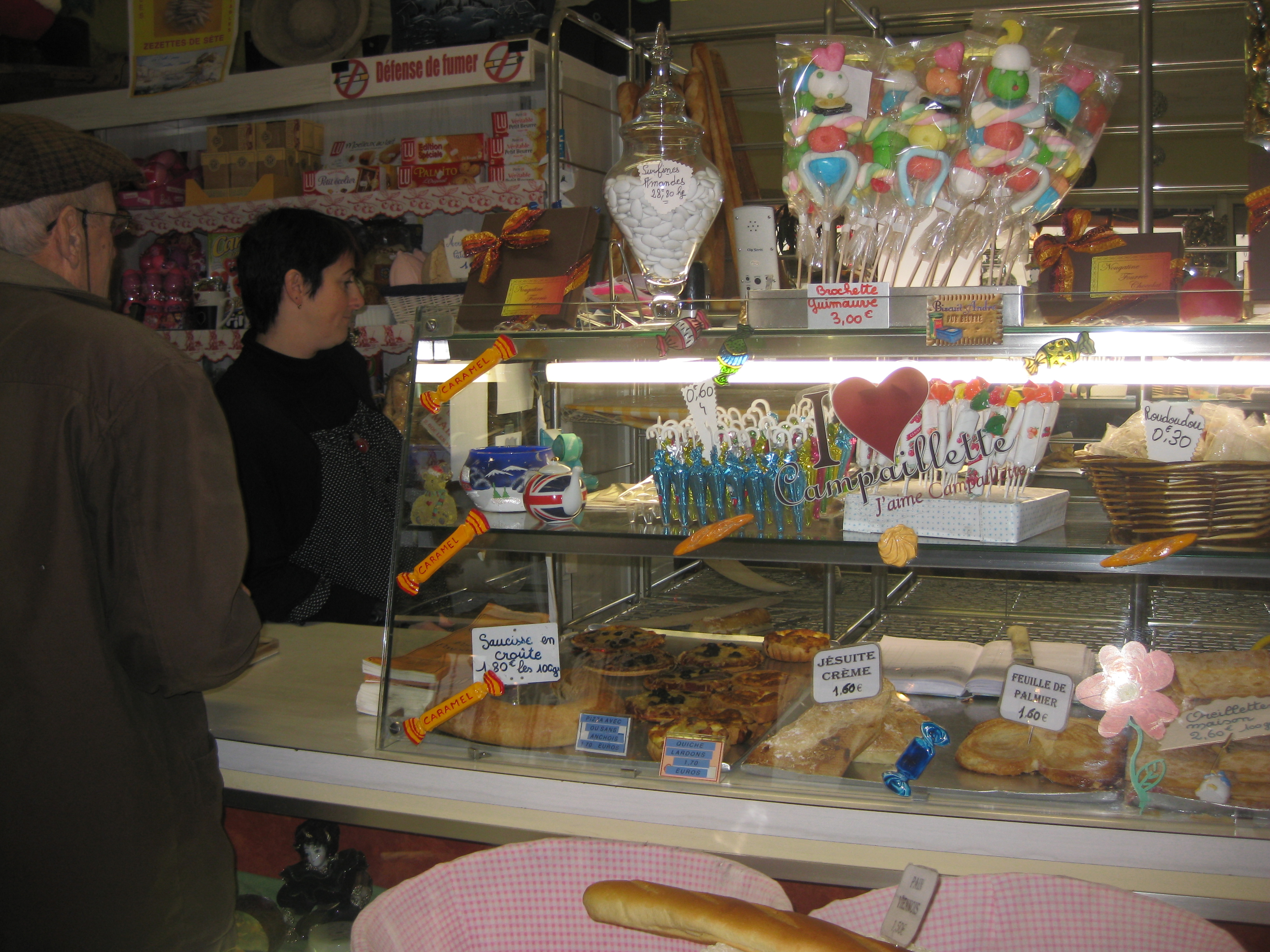
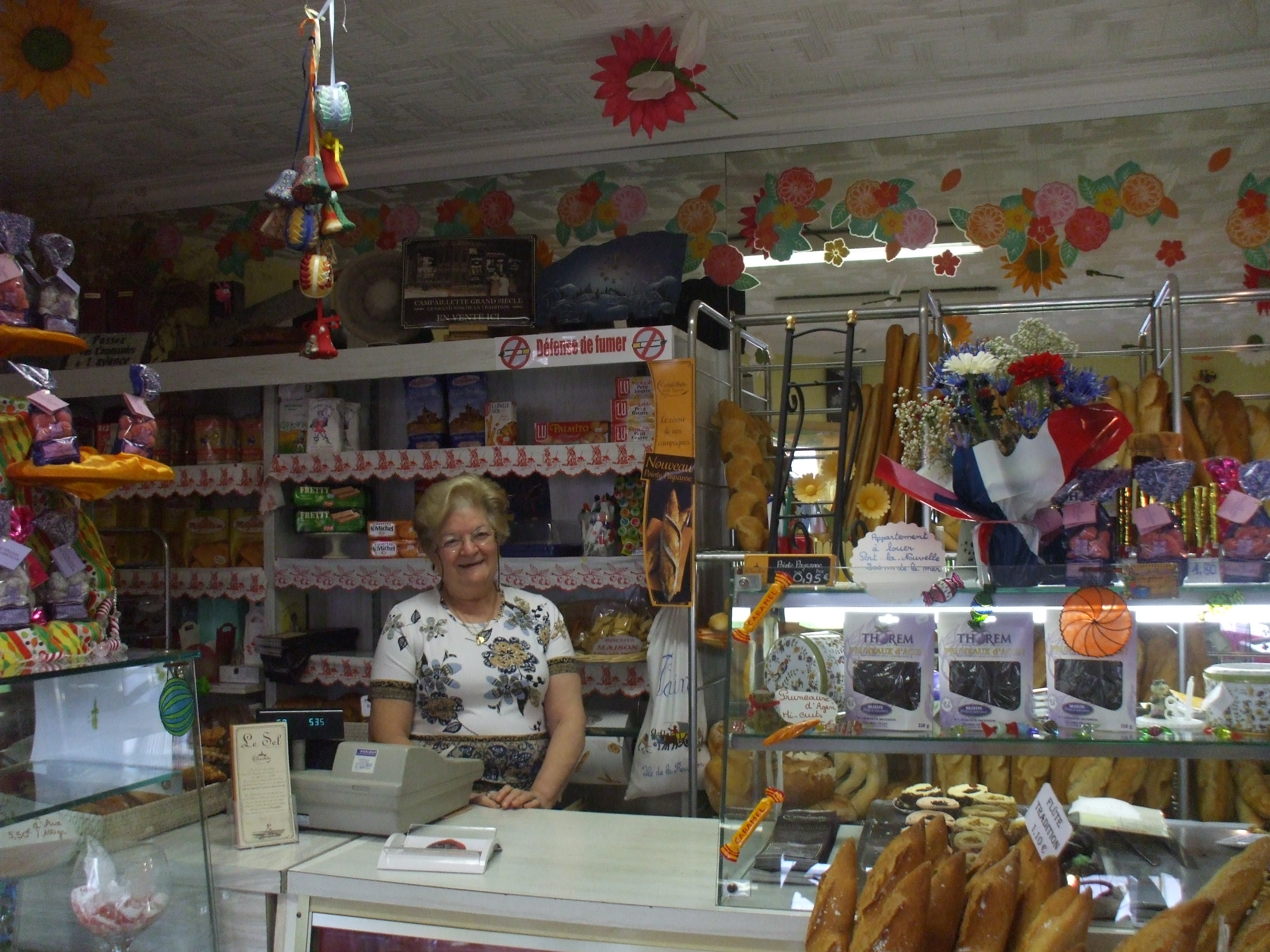
The baker’s – busy at lunchtime
So who are the good commerçants here? Well, down at the bakers, they’ll often put aside our much-loved pain noir without being asked if I’m not in bright and early, knowing we’d be disappointed if they sold out.
Buying cheese at the market
Today at the market, madame who runs the cheese and charcuterie stall had printed off some recipes specially for me, because she knew I might enjoy trying them out.
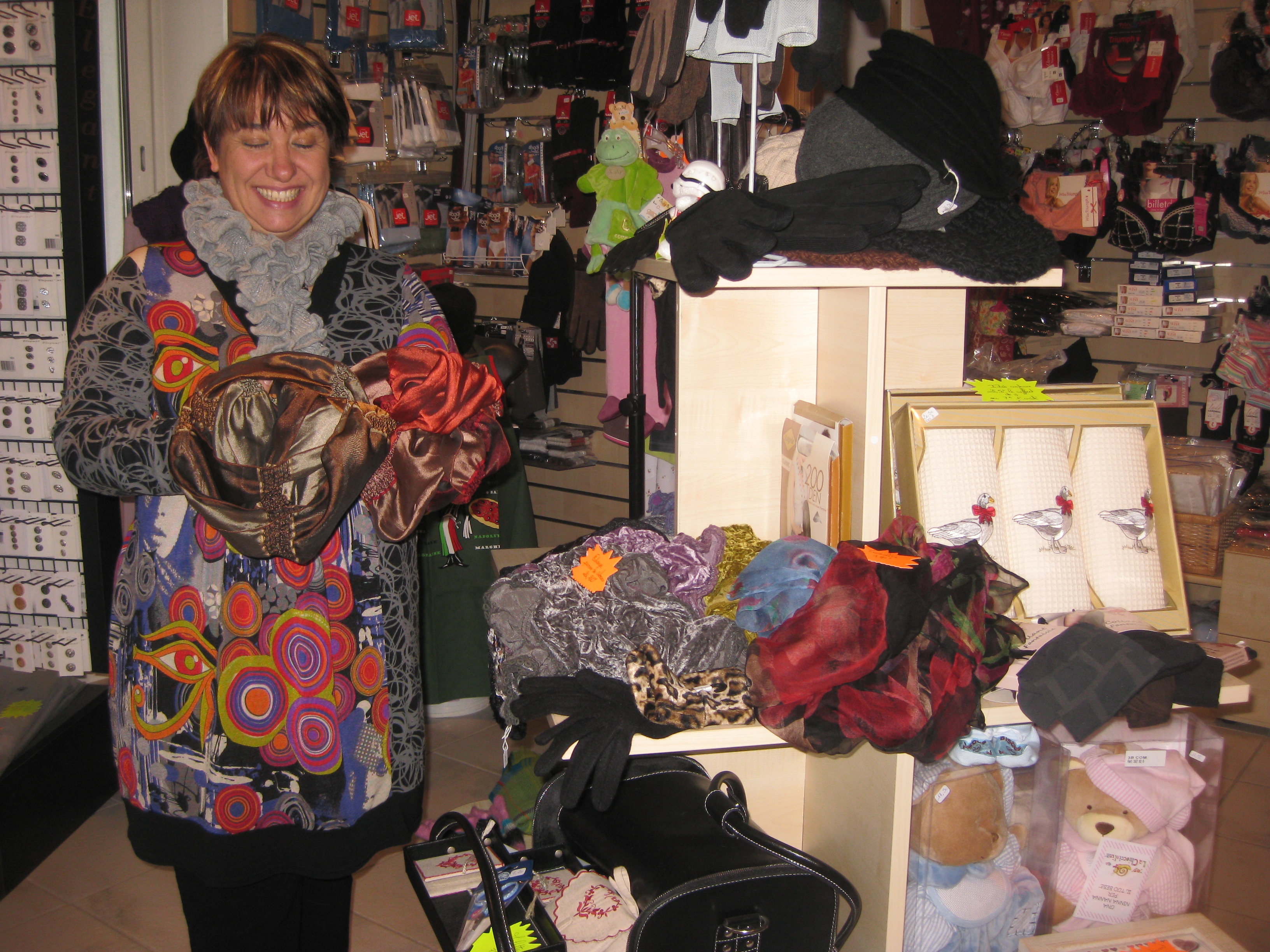
Down at Bobines et Fantaisies, she goes to Toulouse most weeks to seek out unusual scarves and accessories, so there’s always something new and worth trying at her tiny shop. ‘Let her try it on. If she doesn’t like it, bring it back!’, she’ll insist, as you dither between a bracelet, a couple of scarves and a chic but cosy winter hat. These shopkeepers remember us, our tastes, our whims and foibles. They welcome us, and chat cheerfully with us, even if we leave the shop empty-handed.
Madame at Bobines et Fantasies helps me choose a few presents
There’s just one shop here that doesn’t cut the mustard. ‘Il n’est pas commerçant’ we all grumble. Those of us outside the select band are routinely ignored, and as we feel our custom isn’t valued, some of us now go elsewhere.
But not to the supermarket. Oh no. Yesterday we DID pop into one, but as the muzak system was belting out a schmaltzy version of ‘Auld lang syne’ in what passed for English, we very soon shot out again. Small Shops Rule OK.
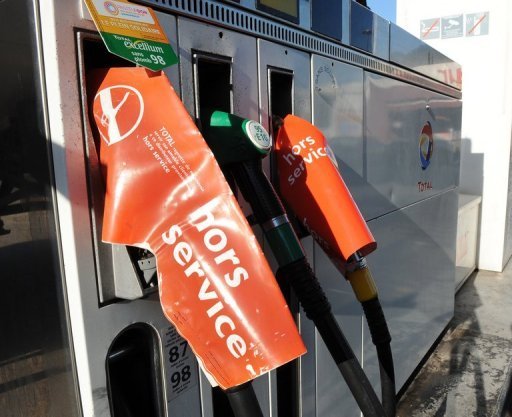
‘What a mess. Half of the population who’ve got jobs are on strike. The other half can’t get to work because there’s no petrol, or the trains are on strike. And meanwhile, the numbers on the dole are growing. And it’s half term, and nobody can take their kids out because there’s no fuel. Welcome to France.’ That was the baker’s wife on Friday morning.
France, like most of Europe, is in the throes of passing legislation to raise the retirement age to cope with the pensions crisis. And the French don’t like it. More than that, they really don’t like Sarkozy. What better time to express their dissatisfaction by going on strike! Since September, there have been General Strikes at least once a week, with marches, demonstrations and protests. For more than two weeks, the petrol refineries have been blockaded, and fuel is running out. Apparently some 70% of the population, even right-voting electors, support the protests. Not round here though.
This part of the world is traditionally left-leaning, and I’ve met nobody who’s prepared to admit to having helped vote Sarkozy into power. But they’re not happy with the present state of affairs. The baker’s wife is not alone. There’s discontent at the number of days the children have missed at school, and at the intimidation by some of the striking students. Rubbish isn’t being collected. Prices are rising.
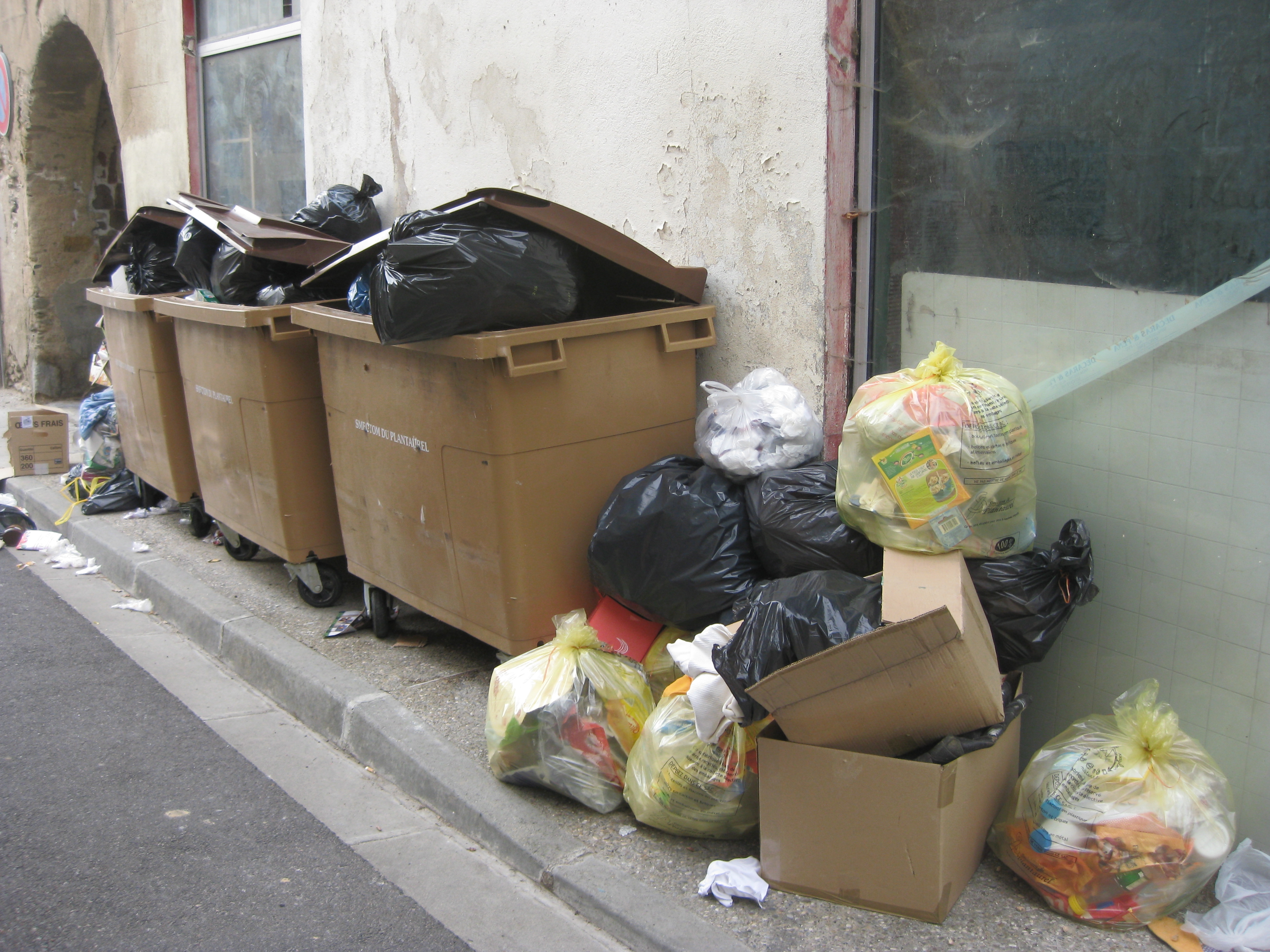
The rubbish piles up in Laroque
Some of the protests have their funny side. In the Dordogne, electricians have cut the electricity supply at town halls where the mayor supports President Sarkozy’s party, the UMP. Others seem to be turning a bit nasty. In a school in the Centre region, students and teachers who support the strike have smeared every available exterior surface with mayonnaise and ketchup to make it difficult and unpleasant for teachers and students who want to enter the building to do so.
chrysanthemums on sale for Toussaint
Today on the radio, a hortculturalist explained her difficulties. For weeks she’s been growing the chrysanthemum plants which are sold in vast numbers, this week only, in time for the traditional All Saints’ holiday, the day when people visit the graves of their relatives to lay flowers. Petrol shortages mean the plants can’t be distributed, and unless things change very quickly, she’ll be left in debt, with a mountain of unsaleable plants. Anyone who depends on logistics in any way, such as farmers and shopkeepers, is in a mess.
And as M. Fonquernie pointed out this morning, the senate voted to pass the legislation on Friday. They won’t change their minds. But laws like this take a while to enact. Come the next election, two years away, the French get their chance to rid themselves of Sarkozy et al, and the newly elected government can repeal the legislation and pass its own. If it chooses.
Meanwhile, I’m far from happy. On Thursday, my son, his wife and her parents are due to fly out from England to stay with us. Guess what? Another general strike. So….no air traffic control, no flights, no anything much.
How could they? I mean, what ARE they playing at? All last week, and most of this, the baker’s shop down the road has been closed. Instead of rising at 2.00 a.m. to get busy making baguettes, flutes, ficelles, baguettes a l’ancienne, flutes tradition, pain noir, chocolatines, croissants and so on and so on, our bakers have chosen to lie in till – ooh, 7 o’clock perhaps – and then spend the day catching up with their families – the children are on half term.
It’s a family business, our baker’s shop. M & Mme Fonquernie owned it, and now, although officially they’ve retired, they help out all the time .M. Fonquernie is the one who drives his little white van round the local villages which have no shops, selling bread. Their two sons have now taken over the day-to-day baking. One is responsible for all those loaves, while the other specialises in patisserie. Their wives divide the work of running the shop between them with Mme Fonquernie Senior’s help.
Mme. Fonquernie, Mater Familias
So our morning routine has been disrupted. First thing each day, one of us usually walks down the road to get our favourite pain noir, hot and crisp still from the oven. The other day, the baker forgot the salt. The bread wasn’t half so nice, but I rather liked this very human error. It proved that our loaves are still ‘artisanale’, rather than being churned out by some computer-assisted machine. There’s usually someone in the shop to chat to, or to walk back along the street with, and so neither of us looks on getting the bread in as a chore.
We’re lucky, I suppose, that there are three bakers in town. Last week, we went to the shops at Castellanes to the baker there. No pain noir at this shop, so we chose their unbleached white. The small one’s a slender baguette shape – an Ariegeoise – but buy the larger butch version, and you must ask for an Ariegeois.
But then what happened? A notice appeared in the shop: from Sunday, they too would be closed for a holiday. So for a few days this week, we have to patronise shop number three. Everybody moans ‘C’est pain industriel ça’. It’s true. It comes all the way from Lavelanet, from a bakery which has three shops. That’s mass production, and it shows. Roll on Thursday, when the Fonquernie family re-opens its shop doors
Once upon a time – though not very long ago, Laroque, population more or less 2000, had dozens of shops. You could live your life here without ever needing to leave town, and many people did just that.
Now we have three butchers, three bakers, and three – no, not candlestick makers – hairdressers. We have one épicerie left, 2 tabacs, a flower shop, and a new haberdashery store. There are six bars, restaurants and take-aways, and you can still buy paint, bikes, second-hand books, even a washing machine in town. Greater mobility and the rise of the supermarket have put paid to the habits of the old days, and we’re lucky to have as many shops as this left. But so many are no longer open for business, and our home is one of them.
From the early years of the 20th century until about 25 years ago, our house was Paul Vergé’s butcher’s shop, as well his family’s home – people here still refer to it as ‘l’ancienne boucherie’. Passers by, workmen who come to the house, delivery staff – all of whom remember coming to the shop as children, or working there as part time or weekend staff – have told us tales about the old shop, and the house itself is giving up some of its secrets…….
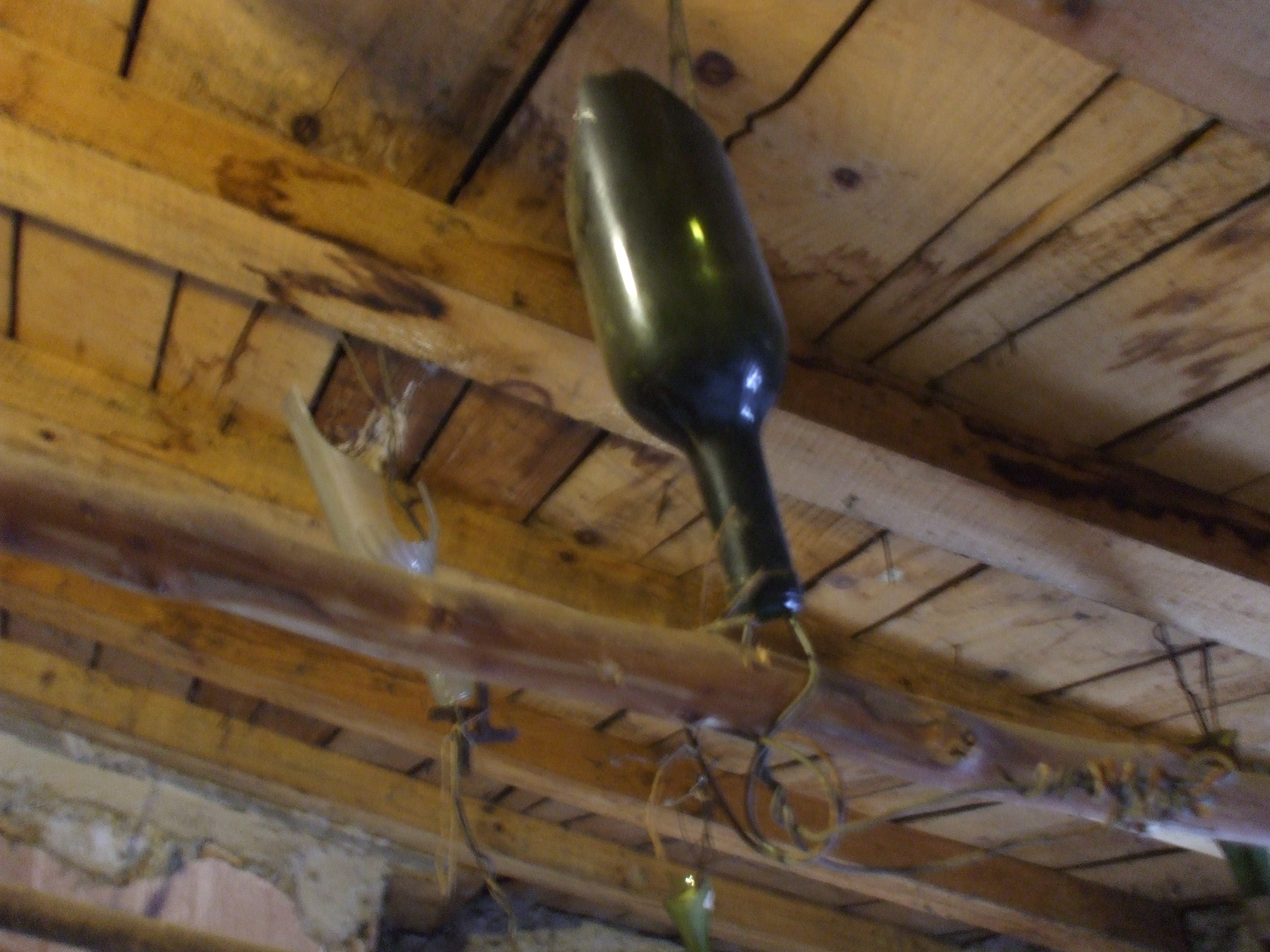
The butchery business must have been back-breakingly hard. After we’d moved in, we soon realised that carcasses were hauled up through the house to the top (or second) floor up a now filled-in shaft, where they hung from racks like clothes on an airer. We wondered why broken bottles were suspended above these rails, upside down. Answer: to prevent rats and mice running down onto the meat…
Anti-mice device
This floor of the house, without insulation, was bitingly cold in winter, but suffocatingly hot on summer days. People have told us that their memories of the shop include seeing these same carcasses, after they’d been hauled down again from the attic, hanging outside the shop door, crawling with flies, just waiting for customers to come and buy…..
The attic also has an area that was used as a smoke room for smoking cuts of meat. Hard to imagine that the pungent smells didn’t penetrate the rest of the house.
Our garage, next to what was originally the shop, has quite a few sturdy metal rings set into the walls. Animals were tied to these, prior to being shot and butchered by Mr. Vergé himself. Occasionally, a terrified beast would get away, and charge up the hill to Place de la Cabanette, where with any luck it would be rounded up by the sapeurs pompiers (fire and rescue service). An early job, when we moved here, was to line and paint the garage ceiling – to eliminate all the blood stains from this domestic abattoir.
We still have 2 enormous ex-cold rooms just off the shop. One of these is now a tool storage area, one a larder. We haven’t parted yet with the big old scales which were part of everyday life in the shop.
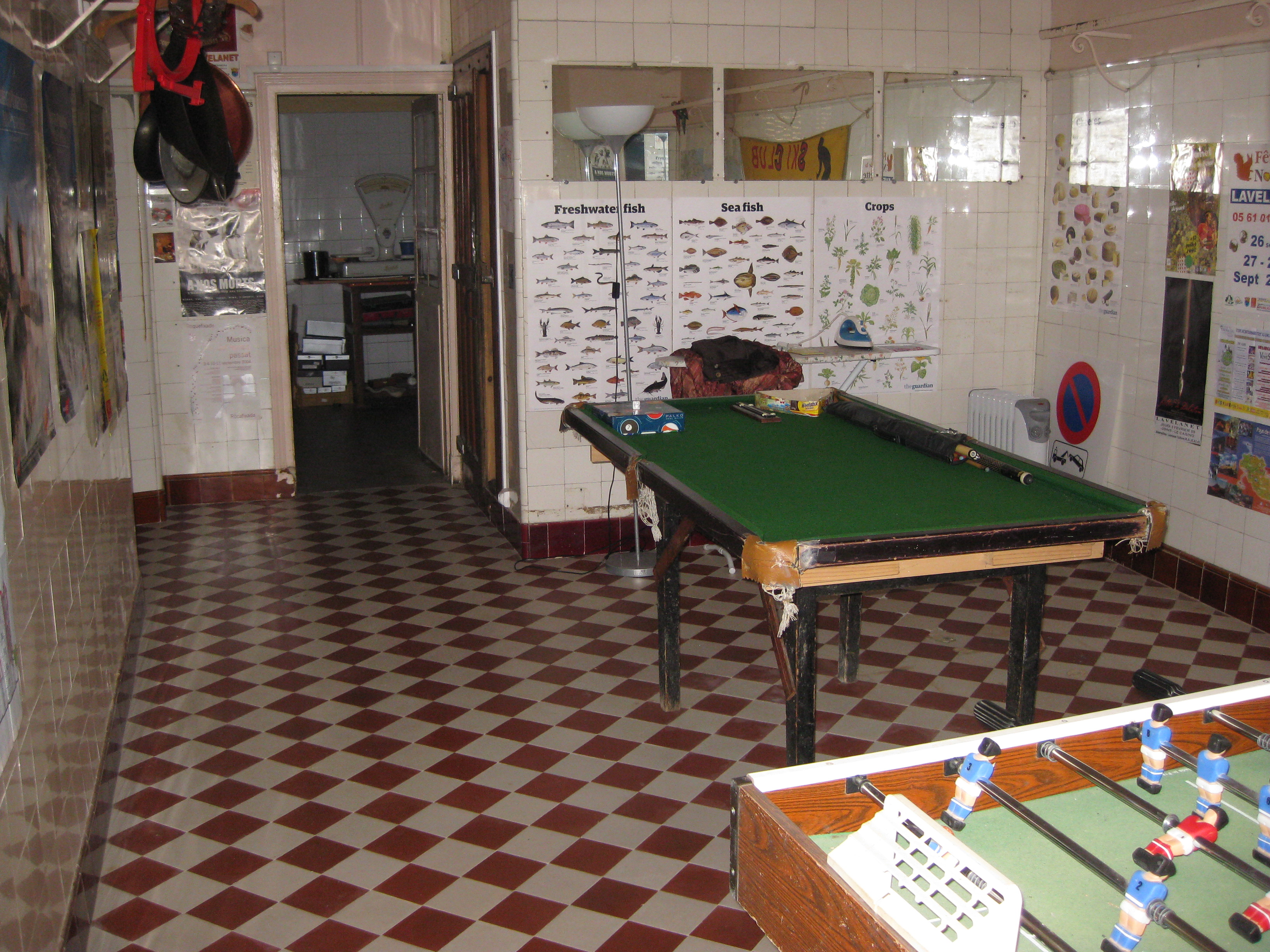
Then: butcher’s shop. Now: games room
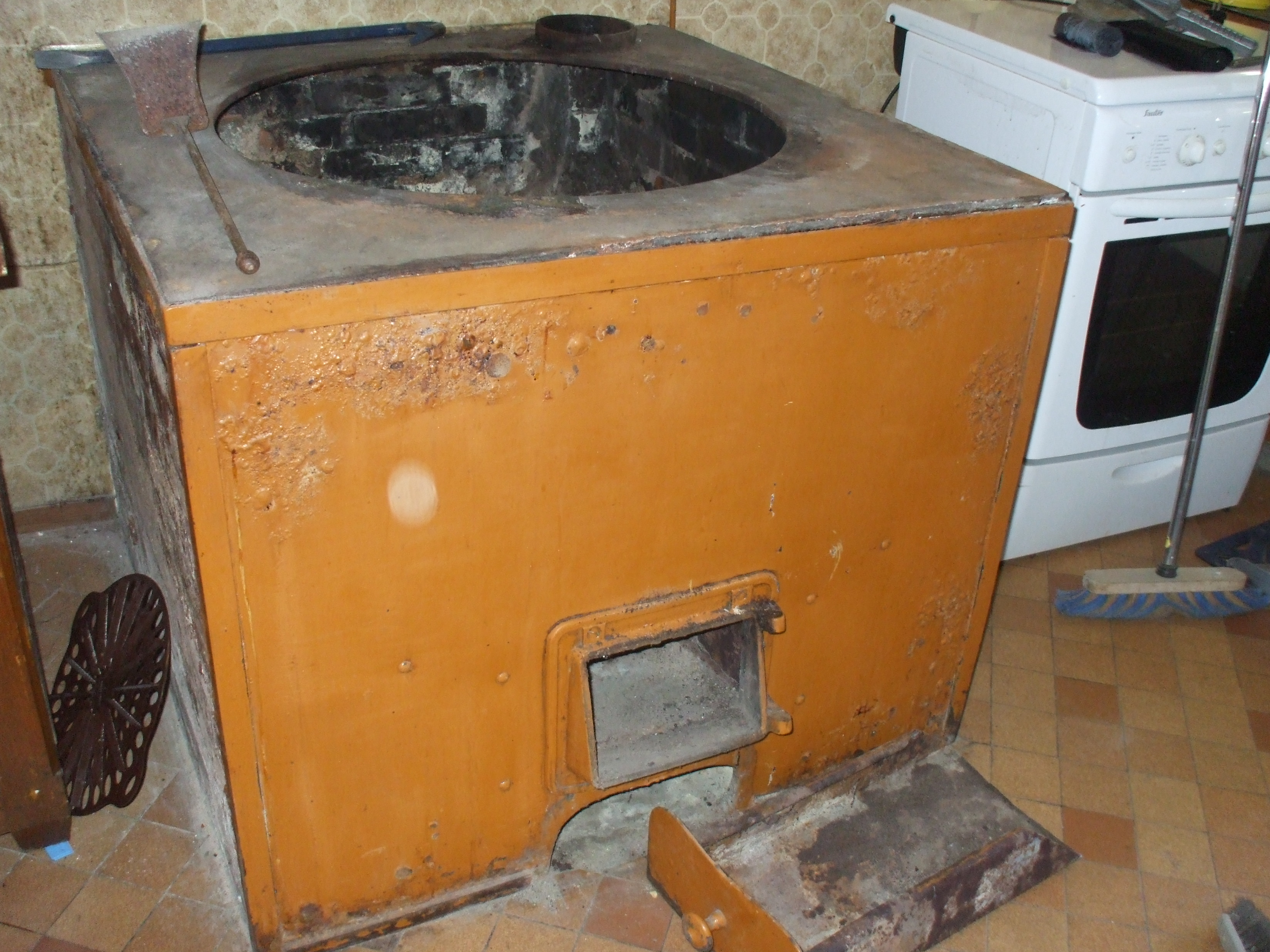
And then there’s the white-tiled shop, now a games room. The Vergés,in common with most shopkeepers, provided a few hard chairs for the comfort of those waiting or gossiping in the shop. Mr. Vergé was convivial, a lady’s man who enjoyed chatting to his female customers. Madame Vergé was busy in her little booth (remember those?) accepting payments and keeping the books. Her responsibilities didn’t end there. In the immense boiler in the kitchen, she made and canned patés of pork, duck and goose liver, rabbit, game; cassoulets; jarret de porc, for sale in the shop, day after day after day. We still have boxes of unused labels lurking in boxes in the workshop.
Mme. Vergé’s big old meat boiler: now defunct
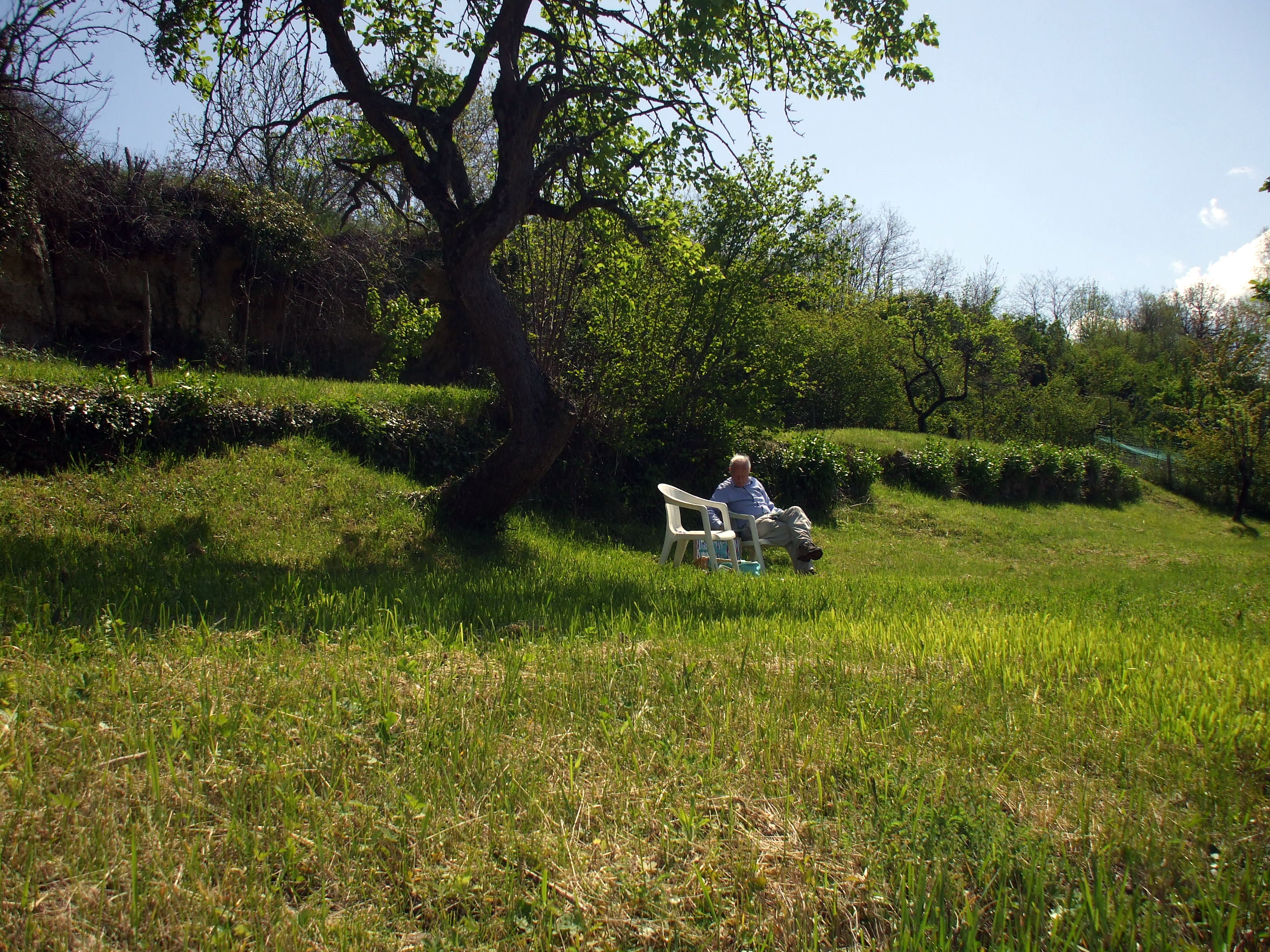
Besides all this, they found time to look after the garden, 2 minutes walk from our house. Just as they did, I grow vegetables: like them, I use the cherries, plums, apricots, figs, grapes from the trees there. Unlike them, I can take my time to enjoy digging, planting, harvesting, bottling, preserving, cooking. Frankly, I’m playing at it. For them, the hard work of looking after a plot so much larger than a couple of allotments was something that had to be fitted in after they’d slaved away at the butchery business. And they had a family….
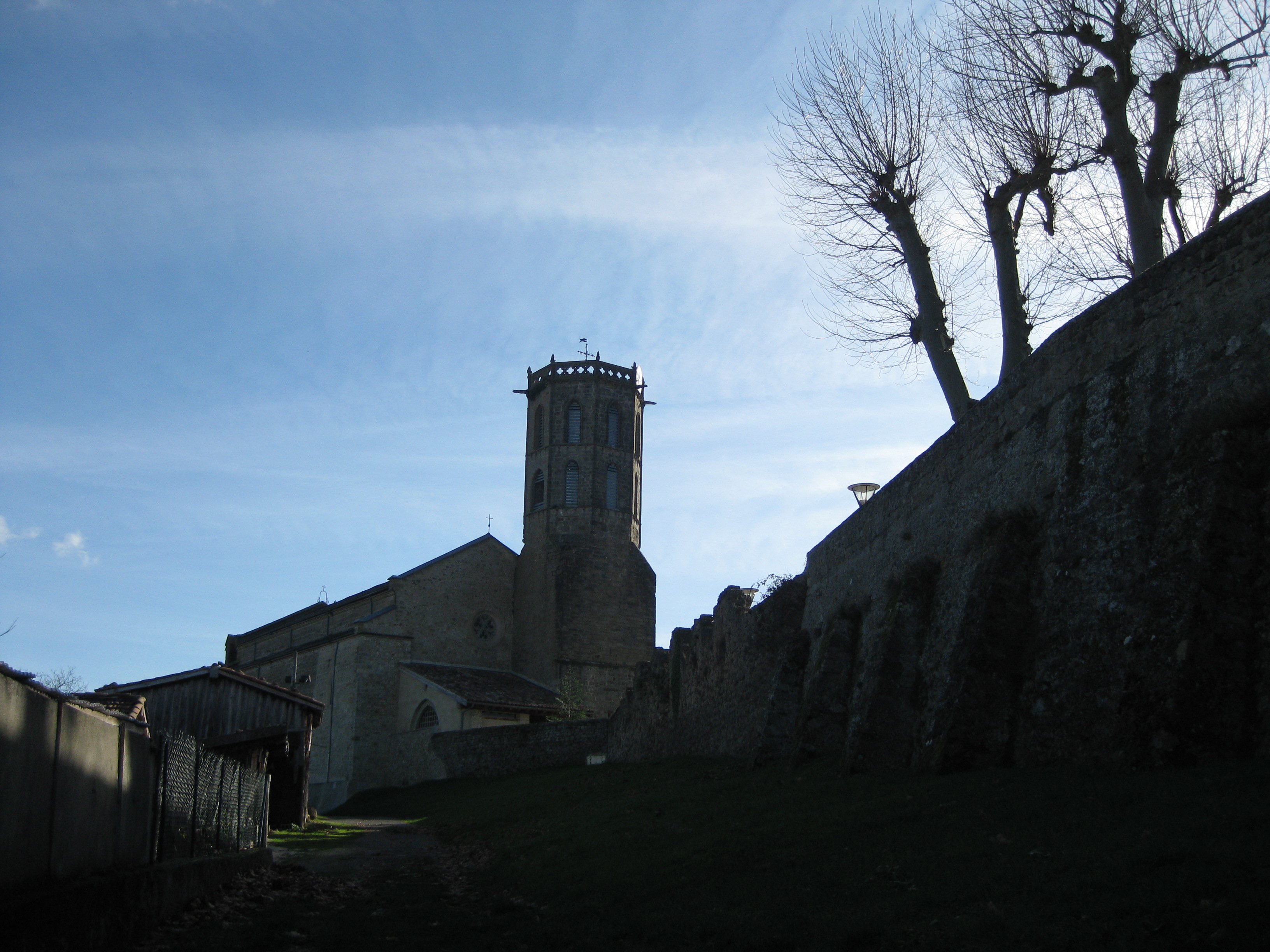
The church at Laroque d’Olmes has a very fine organ. It’s an instrument with an illustrious history. Built in the 18th century, it was moved from its original home in the Chapel Royal at Versailles in 1989. For the last 4 years, it has been the subject of a Battle Royal.
You’ll know that France is a proudly laïque (secular) nation. In the UK, most of us perhaps became aware of this through the foulard controversy, when Muslim schoolchildren were no longer allowed to wear headscarves or other symbols of their faith in school. It was easy for the British to interpret this as racism, but in fact Christian symbols such as crosses are equally frowned on unless very discreet. Religious studies are not taught in school, and the very idea of a Christian school assembly seems completely bizarre to the French – as it increasingly does in the UK too of course. Because of this laïcité, church buildings and furnishings are the property of the community in which they are situated, and that community pays for much of their upkeep.
Over the years then, communities such as Laroque have had the responsibility for buildings that may be in poor shape, even to the extent of being a public danger (towers in danger of subsidence – that sort of thing). In addition, Laroque, keen at the time to see such a prestigious organ installed in its midst, has over the years, together with other public bodies, made available 74% of the monies need for its upkeep.
The council in Laroque didn’t want the organ simply for the regular congregation, or even for the draw that it represented to renowned organists, keen to accept concert engagements enabling them to play on such a prestigious instrument. Small as the town is (2000+ inhabitants), it has a School of Music, with the usual range of after-school classes, bands and orchestras. With such an organ as this, what a chance to give a new generation of young people the opportunity to learn to play this very special instrument!
They made the decision that the School of Music should appoint a well-qualified teacher of the instrument. A protocol (2003) and a convention (2006) was worked out between the École de Musique and the curé, allowing access for up to 20 hours per week to the teacher and pupils; a highly qualified young musician was offered the post, and accepted.
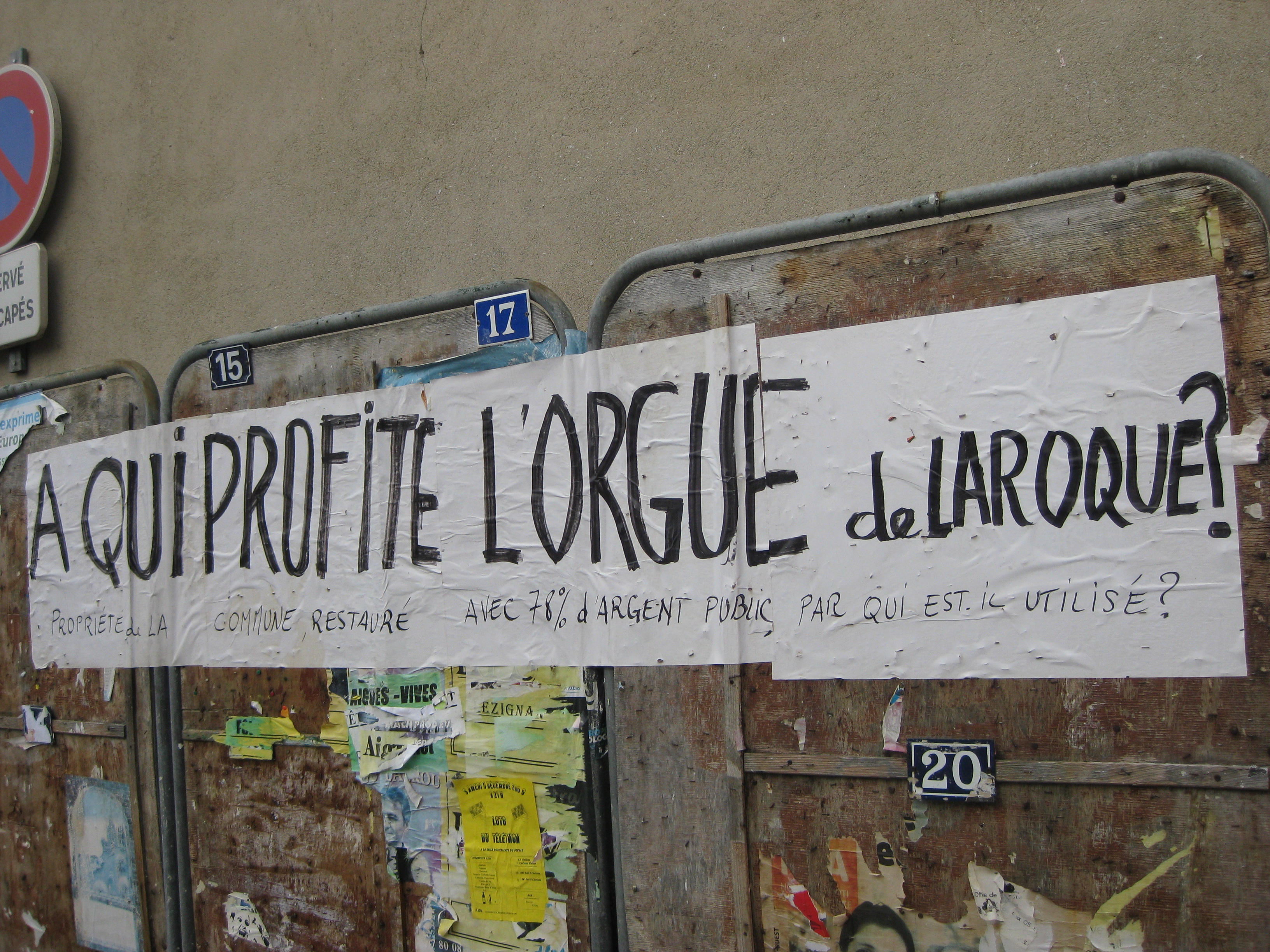
Earlier this week, posters appeared round town
Since then, it’s all gone wrong. Quite simply, the curé refuses them admittance to the church: no reason given. He HAS offered very limited access from time to time, but at periods that are quite simply impossible for either the teacher or her students. So she now teaches the basics on – a synthesiser. He no longer permits the free concerts staged in the church at Christmas and on St. Cecilia’s day (patron saint of music). Parents, pupils, town councillors and many parishioners and citizens are enraged by this turn of events, but nothing so far has persuaded the curé to change his stance. Nor has the Mayor demonstrated any leadership over this issue.
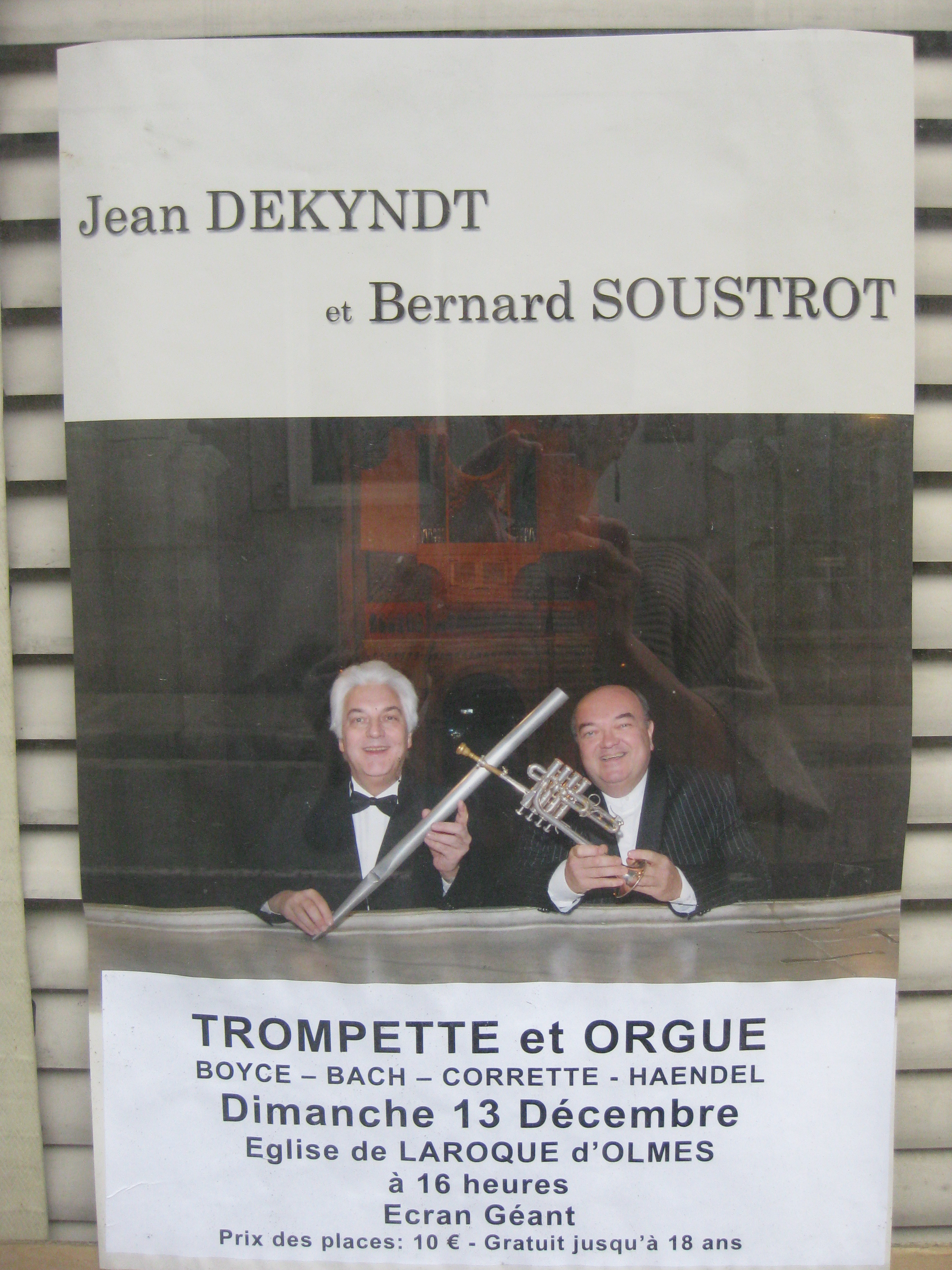
And this is a poster for Sunday's concert
The magnificent organ has its Society of Friends, who organise regular concerts with prestigious musicians. These draw audiences from far afield. There’s one of these concerts on Sunday. And this time, there’ll be a protest to go with it: letters to the musicians themselves, asking for support, and leaflets to the audience – general awareness raising. We’ve all been writing letters to the Bishop, to the press – anyone with possible influence. A State Mediator’s been requested.
And today, the lead story in our local paper tells how the Mayor and the curé plan to work together to solve the problem. Nobody much believes it. Quite simply, the commune’s entitled to keys to the church, and the curé’s not letting them out of his hands. The Mayor’s within his rights to demand those keys, and use them to let the musicians in. If he’d done this in the first place, Laroque’s young would-be organists wouldn’t still be practising on a synthesiser, and the École de Musique would still be giving regular – free – concerts in the church
Accent –local: If standard French is a challenge, how much more so is the local accent? Remember school French, and being told that usually you don’t pronounce the final letter? Doesn’t apply here. ‘Pain’ is ‘peng’, ‘loin’ is ‘lueng’, and so on. ‘G’s happen a lot – ‘tous ensemble’ becomes ‘tous angsamble’
L’Apero, l’heure de: Great custom
Bio: – organic. Buying organic food is ‘normale’ here, especially at the markets.
Bountiful free food: The hoarding season’s pretty much past its best now. We’ve been out looking for walnuts, almonds, chestnuts, rosehips, apples, sloes and coming home with the kind of quantities that will see us through the year. It’s a full time job.
Butterflies: So many varieties, and seen everywhere, almost all the year round. Even yesterday, November 22nd.
Courtesy: Walking down the street here, it’s normal to offer greetings to everyone you meet. ‘Bonjour Madame!’ With anyone you actually know, you shake hands, maybe exchange bises on both cheeks. Small children greet you, surly teenagers greet you. It’s one of the real pleasures of small town life.
This sheep is currently not on milk-for-cheese duties
Cheeses: Cows, goats, sheep, all busily producing milk for dozens of varieties of (preferably non pasteurised) cheese: soft, hard, creamy, runny, mild, stinky.
Dépêche du Midi (La): It’s the local daily. We don’t often buy it, as world events seem to pass it by in favour of the marriage of the local lass in La Bastide de Bousignac.
En cas où…….. Out walking, we always have a spare bag stuffed in a pocket. En cas où we find some mushrooms, a handful of berries, some windfalls, a log for the fire. Everybody does it.
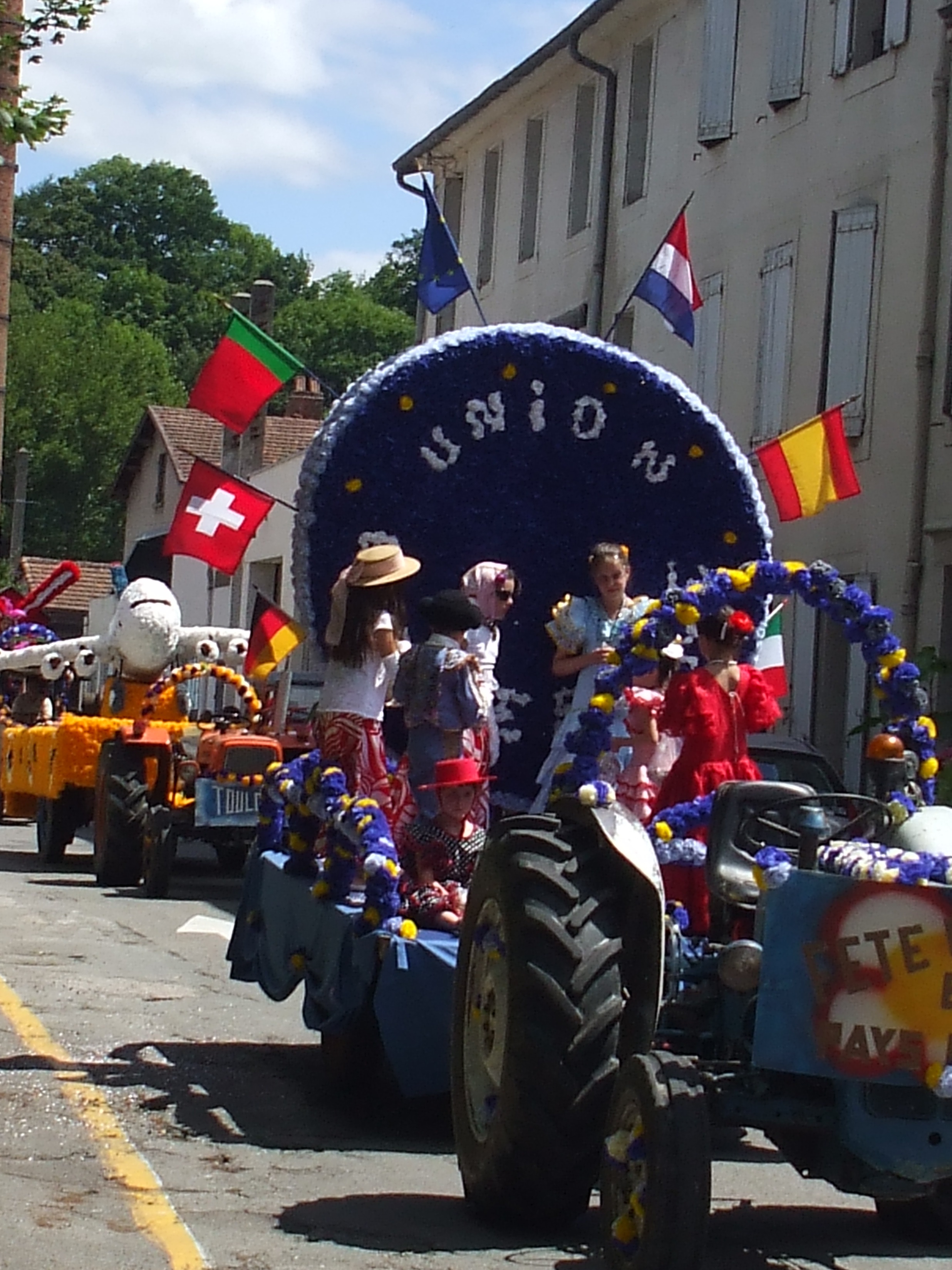
Fêtes Festivals and Fun: No weekend is complete without its fête, or festival, somewhere nearby. The other weekend saw the Fête de la Transhumance at le Sautel, with cows and sheep returning to the lowlands. There was a food market, a vide grenier (see below), films, dancing, a barbary organ, a big communal meal on Sunday. Le Sautel is a hamlet rather than a village, but it hasn’t stopped it running a right good show. Recently, there have been la Fête de la Noisette at Lavelanet, la Fête de la Figue at Mas d’Azil…. and in among, there are small local fêtes in nearby villages. No need to get bored at weekends, ever.
Gallic shrugs and gestures. I’ve posted about this before, and do you know, I don’t think my accent’s getting any better. I’m rubbish (shakes left hand vigorously with floppy movement from wrist)
History: I love it that so many people, especially older people, seem to know so much about the history of the region. They’re proud to tell you stories of times past, farming traditions and customs.
Ingenuity: The sort of make-do-and-mend that is such a feature of English allotment life is even more commonplace here. Our garden shed is made of several old doors, a redundant polystyrene fish box, random bits of corrugated iron and plastic screwed together, ancient bits of wire netting and bits of string. To our knowledge it’s been standing 20 years or more, and it’s not about to fall down.
Junk: Freecycle may not exist here – yet – but one person’s junk is another person’s lucky find. We take our household rubbish to central collection points – no dustbin collections here. On Sunday evenings, lots of people (including us, naturally) will be hovering to walk off with and make use of discarded pans, empty packaging, toys, plant pots….
Kilometres and Kilometres of space….. North Yorkshire, which always seems spacious by English standards, has a population density of 74 people per square km. The Ariège has 28. So there’s plenty of room
Lizards: Our garden companions on any sunny day
Lunar calendar: Planting by the phases of the moon is completely mainstream here. Gardening magazines carry free lunar calendars early every spring, and anybody you talk to will give you unsolicited advice on which day the moon dictates you get those spuds into the ground
Monday market, Mirepoix
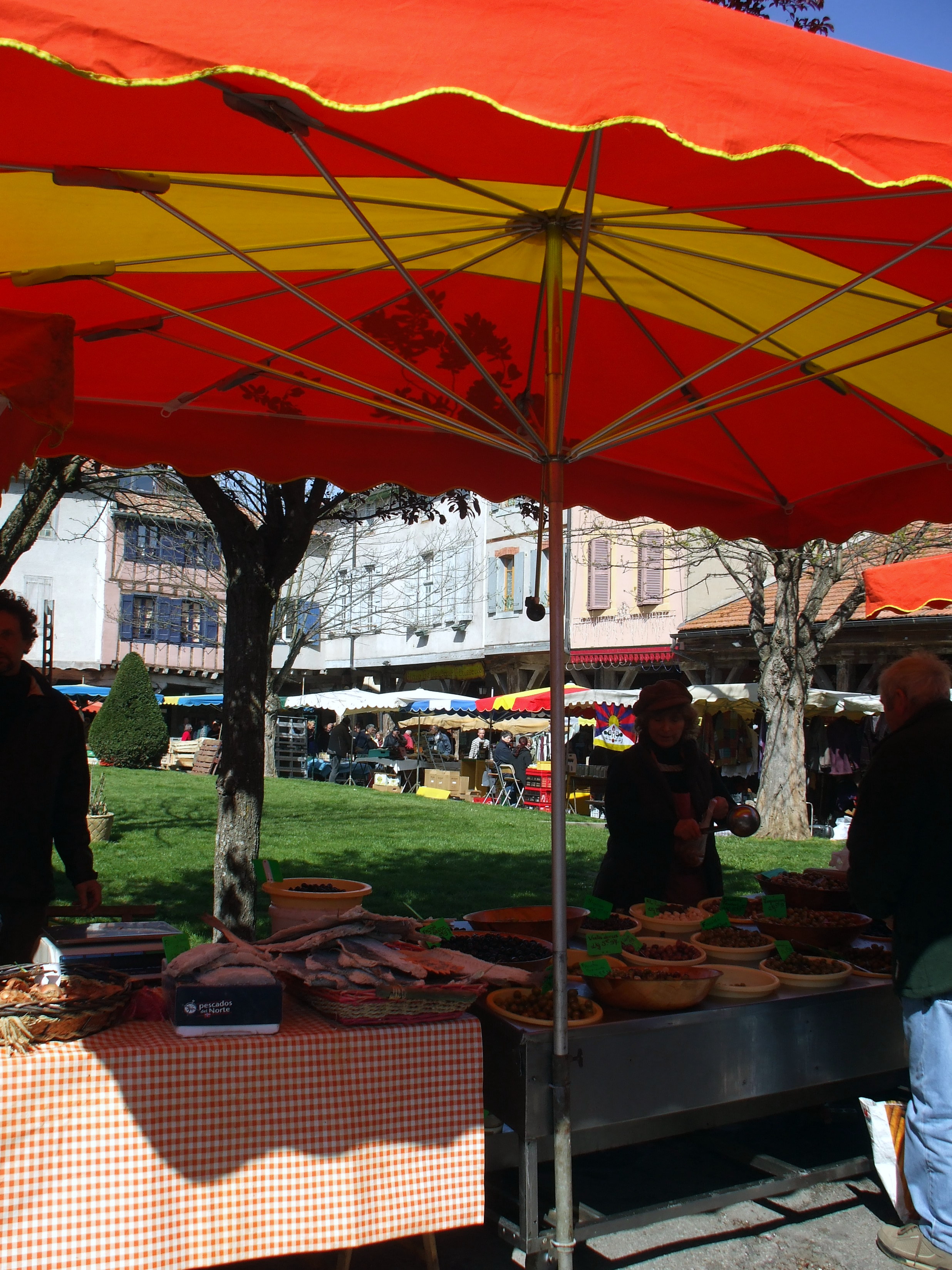
Markets: The best and happiest way to shop for fresh seasonal food. Don’t be in a hurry though.
Music: So important here. Concerts of every kind, cheap or free, in public buildings, market halls and squares, and churches everywhere. Choirs (introduced to a large extent by the English apparently) in most communes – I belong to two. Bands and singers at fêtes. Even small towns like ours have their own music centres. And lots of bars are home to groups of local musicians too.
Non! Protest comes naturally to the French. We’ve even been on a ‘manif’ ourselves, protesting at teacher cuts. But you won’t travel too far in France before you see signs painted, very large, across the road. ‘Non à l’ours’ (bears are being reintroduced to the Pyrénées, to the disgust of the farmers). ‘Non à la déchetterie!’ (tip), ‘Non aux aeoliennes !’ (wind farms)
Occitan: The everyday language of south western France until well into the 20th century, the Lenga d’òc is little spoken now, thanks to the systematic imposition of the French language in the early years of the twentieth century. Nevertheless, we do hear the elderly speaking it from time to time. It’s once again taught as an option in schools, and in adult education classes. I love passing through the many places that celebrate their Occitan heritage by having town and street names expressed in Occitan as well as French – Autariba rather than Auterive for example.
Patrimoine in the Pays d’Olmes et Pyrénées: ‘Patrimoine’ translates I suppose as ‘heritage’, but it’s not quite as chintzy and twee as that word suggests. Everyone here is proud of their history, and there’s so much going on to celebrate it – talks, walks, conferences, often with a meal thrown in. Just join the party!
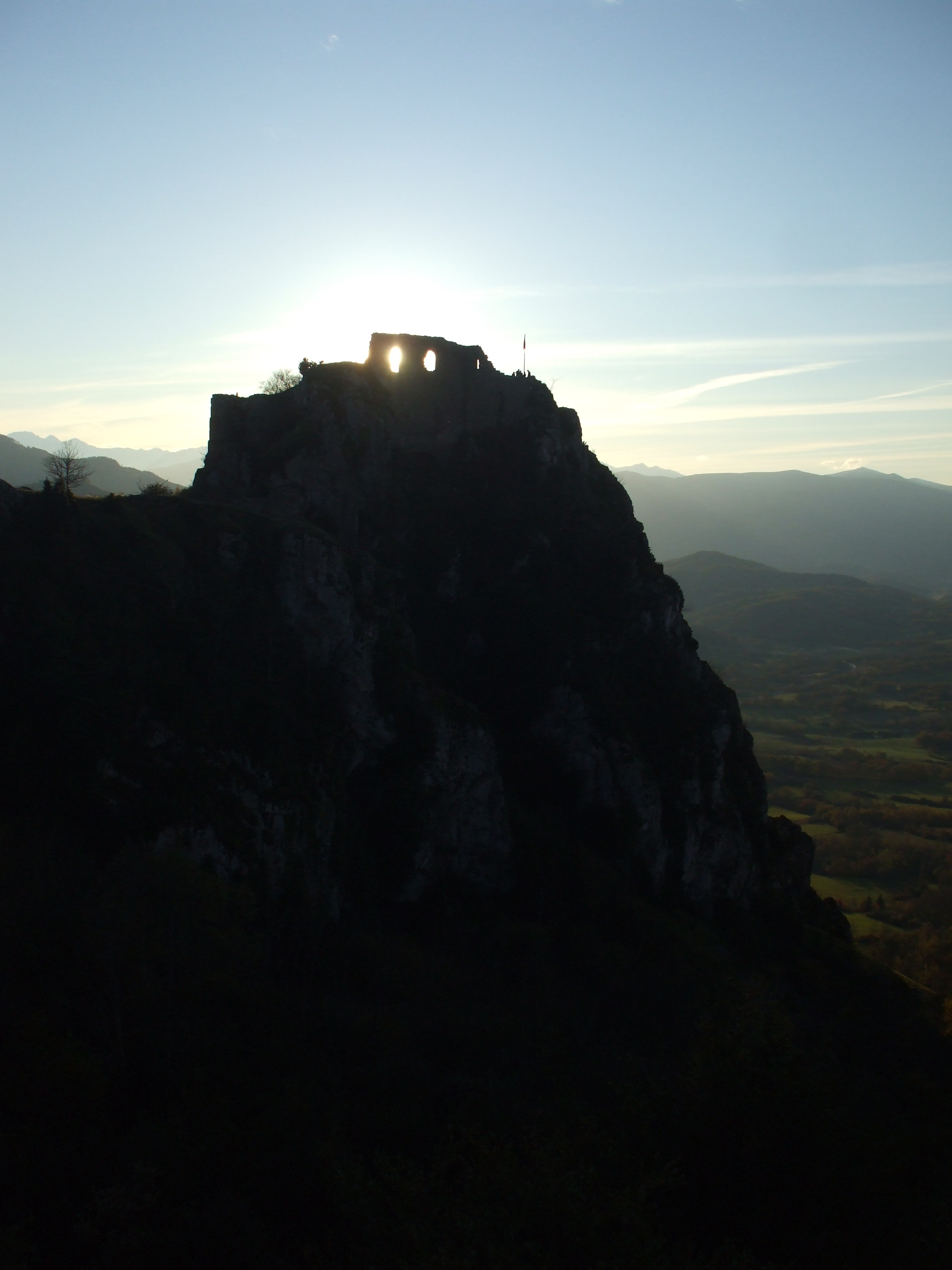
Sunset over Roquefixade
Queuing. Don’t let anyone tell you that only the English queue. It’s part of life in neighbourhood shops and markets here. But it’s not a problem. It’s an opportunity to chat with friends and strangers, exchanging local gossip, recipes, scandals. If it’s our cheese man in Lavelanet market, he’ll join in too, and you’ll never get away
Restaurants: I’m not thinking of the elegant once-in-a-blue-moon meal out. I’m thinking of the ‘formule’ at midday, when to a large extent you get what you’re given, in copious and well cooked quantities. Take today, when we went to a fairly down-at-heel looking brasserie on a busy street corner at the wrong end of town. Great salad, followed by tender tasty magret de canard and wonderfully creamy dauphinoise potatoes, a home made concoction of fromage blanc and crème chantilly, coffee, wine, all for 12 euros. We shan’t be eating again today….
Shopping-centre-free-zone. Bliss. Also, though this has recently been partially undermined, almost no Sunday shopping. AND shops usually close for between 2 and 4 hours at midday
Temperatures: Proper seasons here. Summers are hot, winters cold. Autumn, warm, is a time of glorious colour and food for free. Spring, warm, is a treat for its flowers
Underwear. If you want to be disabused of the notion that the French are chic, that haute couture rules, go to any market stall selling women’s undies. Turquoise knickers, orange bras, lime green or luridly lavender matching sets….. And while you’re there, check out those lovely pinafore dresses so beloved of French women of a certain age. Wonder when I’ll be old enough to wear one?
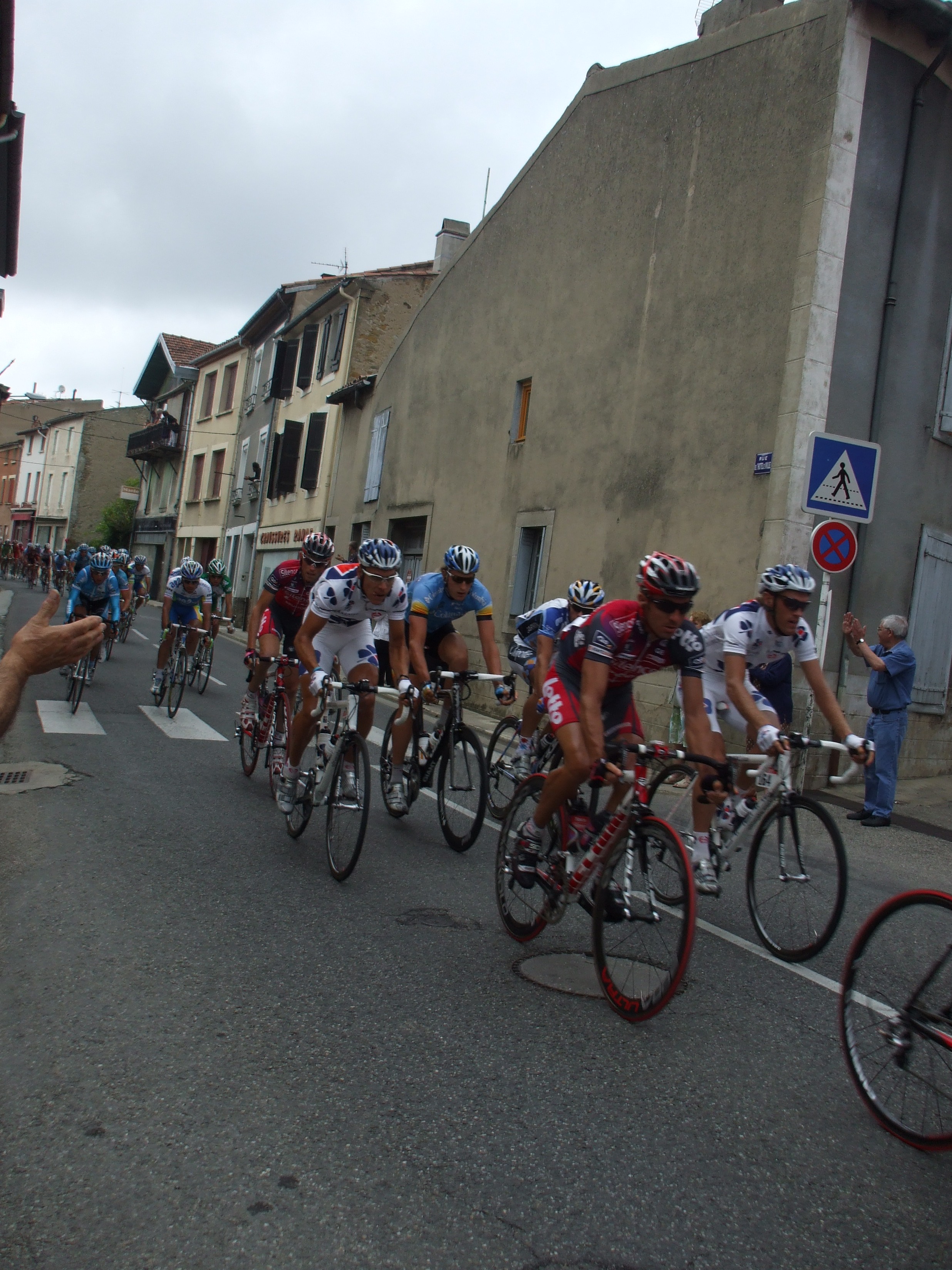
The Tour de France whips down our street in 2008
Vélo . Cycling’s big here. Any cyclist, old or young, is kitted out in skin tight lycra, and may well own a bike costing several thousand euros. There’s a cycling club here that meets on Wednesdays and Saturdays. Its runs are routinely 120 km. or more (and it’s very hilly). The wimps manage some 80 km., but only ‘les ancêtres’ can get away with a mere 40 km or so
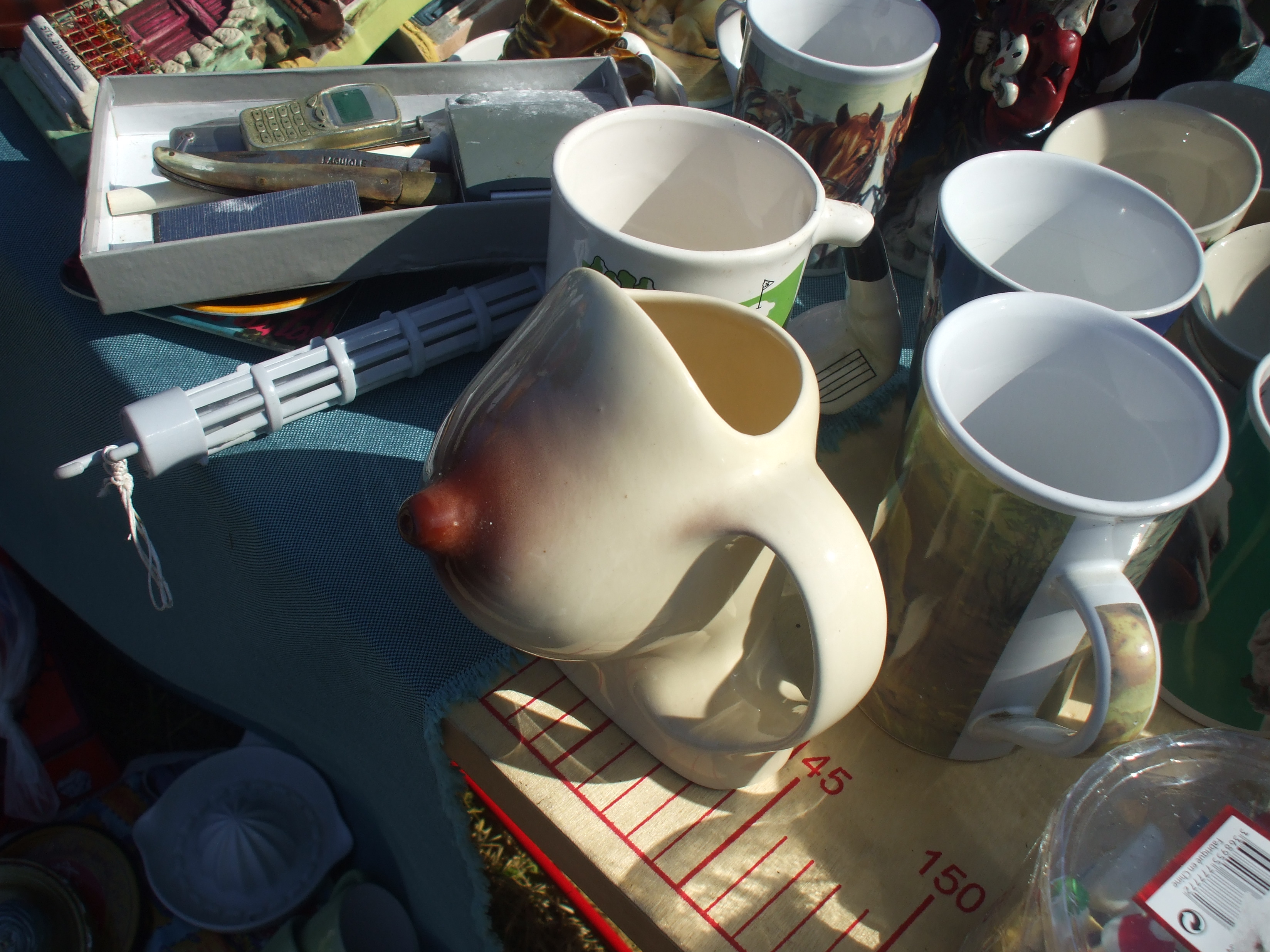
A lucky find at a vide grenier?
Vide Greniers; People here empty their attics instead of filling their car boots. Any Sunday in spring, summer or autumn some commune or another nearby will have a Vide Grenier organized. One of the larger streets, and probably a few more besides, will have been taken over by the sellers, who display their goods from early morning till supper time,. It’s the same mixture as an English car boot sale, with the addition of all kinds of rusting tools and junk that really HAS come out of the attic. Nobody will buy it. It’ll just appear at the next sale
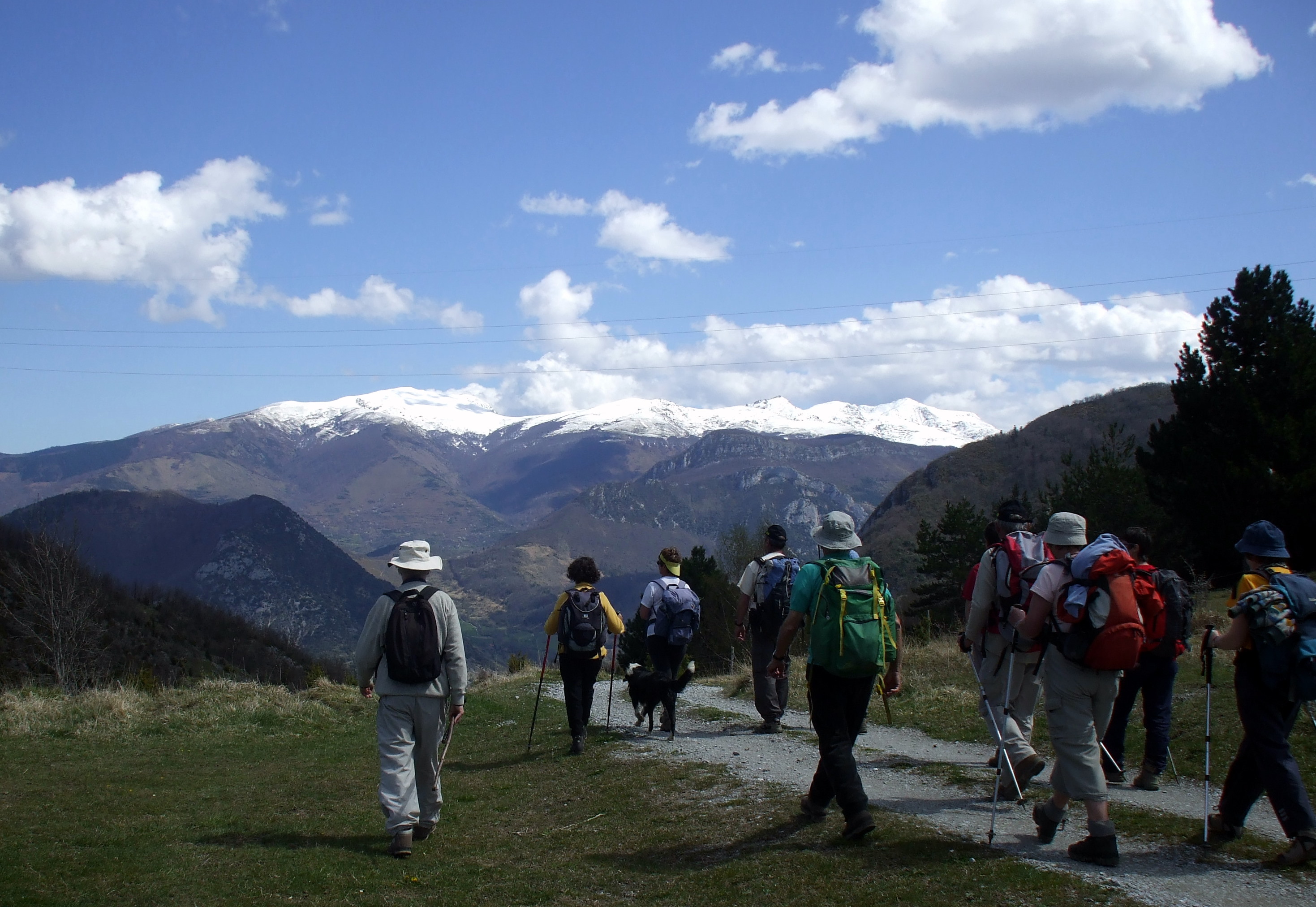
A walk with our group, near Tarascon
Walking: so many walks, so much variety. We love learning about new places to explore from books, from maps, from talking to friends, from walking groups. We’ll never run out of fresh walks to try, ever.
Wood-burning stoves: So cosy, we really looked forward to November chill. As for foraging for wood, see ‘en cas où ’, above
Xmas. In early September, a friend over from the UK said that Christmas had already started in the shops. We’re happy to report that nothing at all will happen here until the first week of December at the earliest. Wonderful.
You: Here, there’s the whole tricky business of ‘tu’ or ‘vous’, and it’s a minefield. Children and your friends are of course ‘tu’. The shopkeeper, the bank manager and those adults you really don’t know, are obviously ‘vous’. But there’s a whole grey area in between. Fellow randonneurs and choir members generally settle for ‘tu’ from Day 1, on the grounds we’re all in this together. But not necessarily. Last year at Choir, I sat between 2 women, both more or less my age, both chatty and friendly. To one I was routinely ‘tu’, to the other. ‘vous’. And I was supposed to pick the bones out of that??
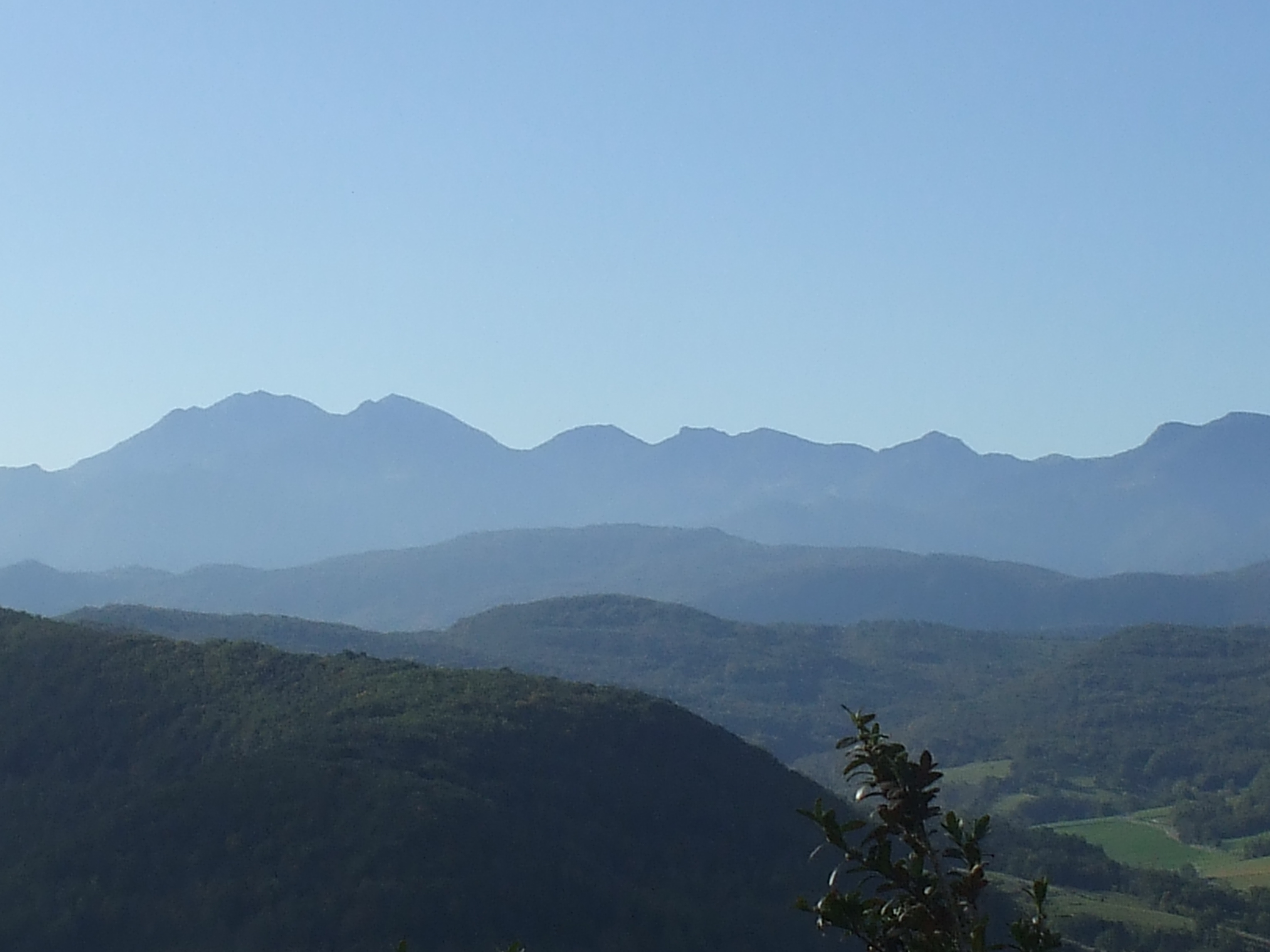
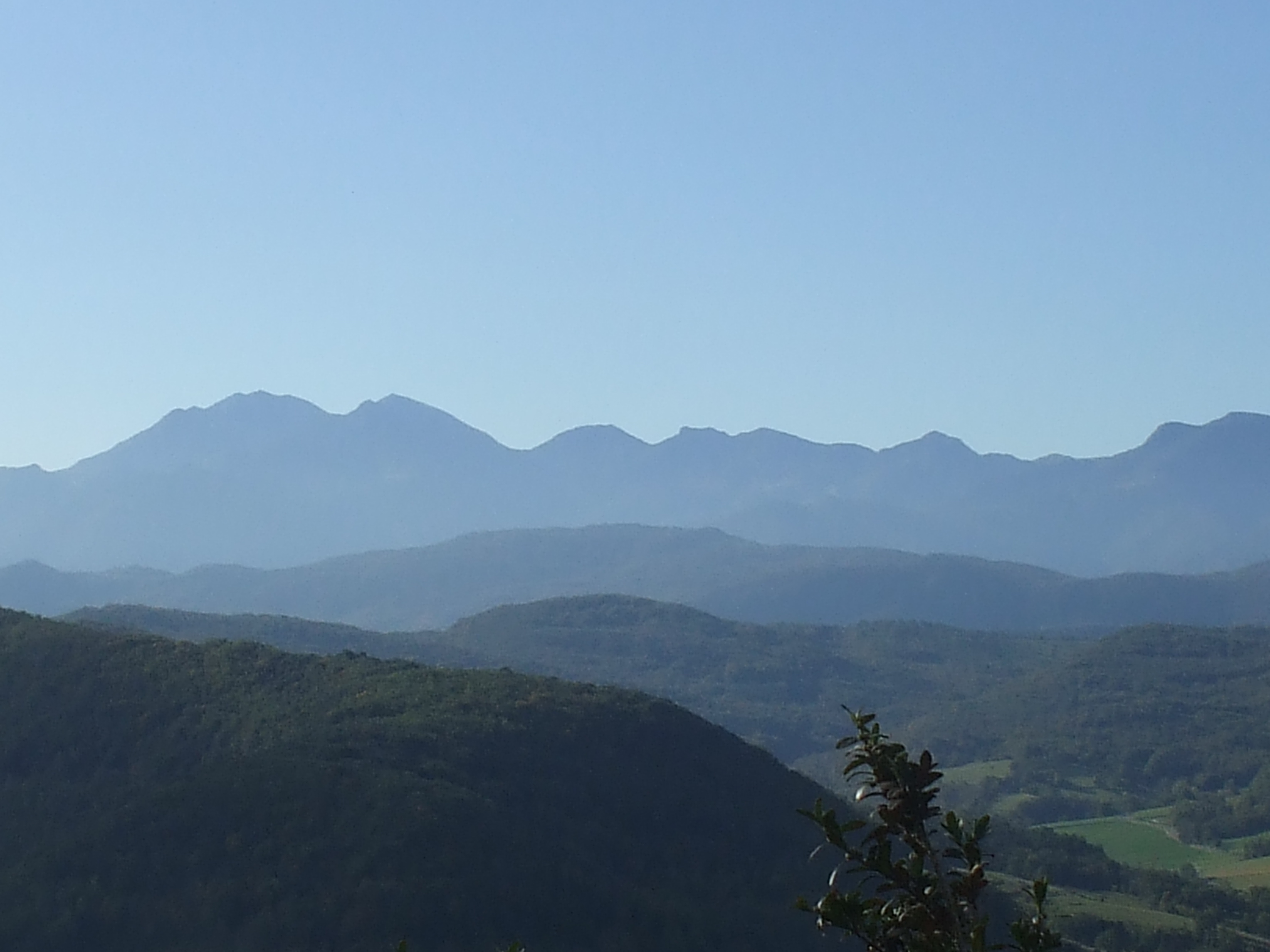
Zero Neuf: 09, the Ariège, our department. We love the space, the huge variety of scenery. There’s gently rolling countryside that wouldn’t be out of place in Shropshire with its orchards and winding lanes, oak and beech forests, gentle foothills with grey Gascon cattle, and stunning, awe-inspiring mountains with craggy outcrops and peaks. And all within easy reach of our house.
A few minutes from our house...and this is the view



 From Pyrenees to Pennines


You must be logged in to post a comment.