Wandering round Cádiz

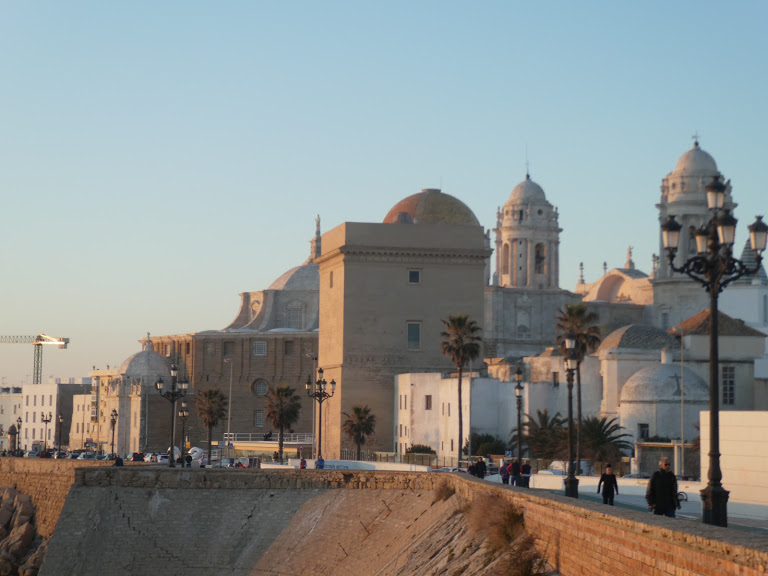
Near the Cathedral, walking by the Atlantic.

Do you want to come for a walk with me in Cádiz?  Let’s see.  We’ll want to see the Cathedral and its museum; the former Cathedral; the Roman Theatre; the Mercado Central; the Castillo de Santa Catalina; the monument to Cortes of Cádiz, promulgators of the Spanish constitution in 1812; the city walls …..

That sounds too much?  You’re right.  Let’s just go for a stroll instead, and see what turns up.

We’ll start out from our hotel. It was a convent once, and while it’s still a spacious and gracious place, we didn’t have to get up in the small hours to pray.

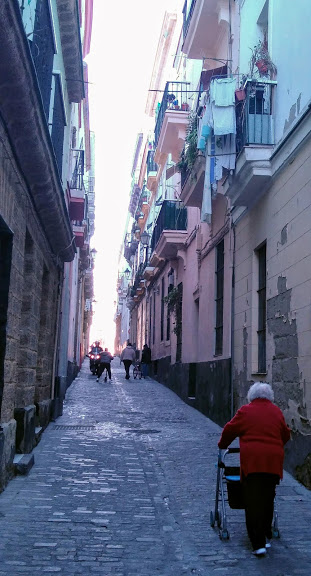
We’re surrounded by a warren of old streets just like this.
And just down the street is this greengrocer, with its inviting wall display that changes every day.

Breakfast first though.  Let’s find a bar.  We’re having a large glass of freshly squeezed orange juice, pan con tomate (grilled bread with grated raw tomato and a drizzle of olive oil), and a good strong coffee.
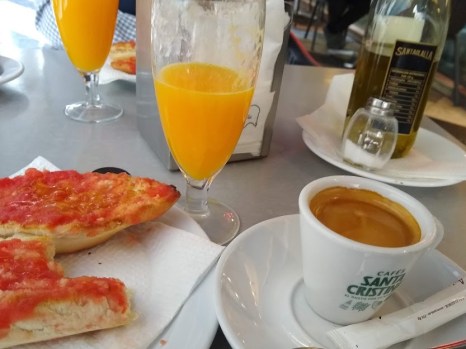
This is from an earlier holiday. But it’s still our standard breakfast.

We needed to post a letter on our first day.  It took us ages to find somewhere.  And  it’s here, in the wall of the Central Post Office.  That was once a convent too.

And look!  These narrow streets need protection from ill-driven carriages crashing into them,  Corners of buildings are kept intact by covering them with metal plates, or even using redundant canons from the Napoleonic wars.

We haven’t been to the market yet.  It’s in the hub of the city, and all about the fish: stall after stall of it.  It’s hard to believe there’s anything left in the sea.  Fruit and veg., meat and cheese and all the rest come a poor second here.

We said no sightseeing.  But we have to pop into the cathedral – mind that crane!
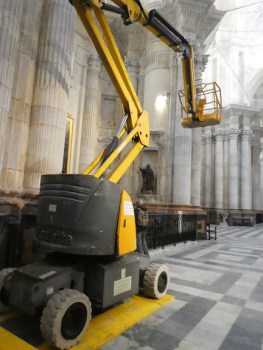
The Cathedral interior.

And climb the tower for views over the city.
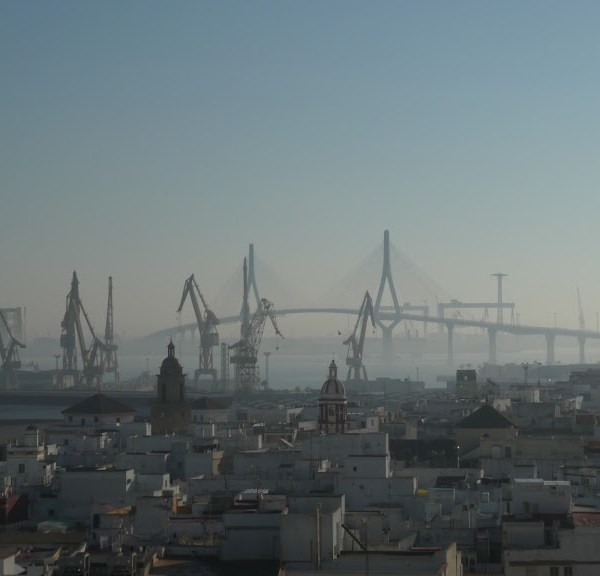
The industrial face of Cadiz, and a distant view of Puente de la Constitucion, 1812

You’re never more then a minute or two from the sea here.  Views? Of course there are.  But there are also community-driven cats’ homes, randomly furnished with boxes and cast-off carpets, and lots and lots of cats.

And while we’re walking along the seafront – look at this.  It’s a ficus macrophylla – a giant kind of fig tree, allegedly brought back from India as seedlings round about 900 by two nuns.  It’s too big to photograph really.
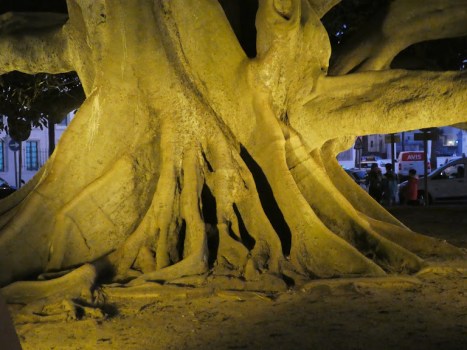
This ficus was easier to photograph at night.

And here’s La Casa de las Cinco Torres (five houses, despite the name), built facing the sea in the 18th century, to make a fine impression on incoming visitors.
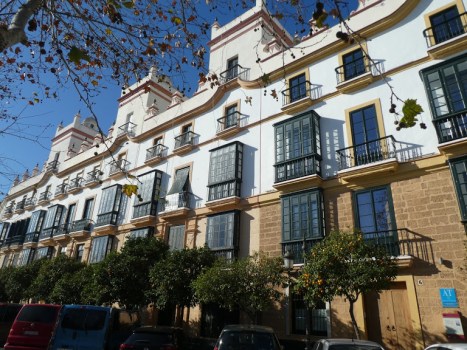
La Casa de las Cinco Torres.

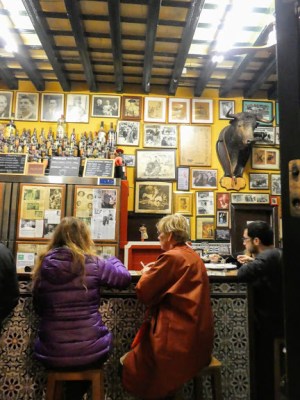
Time for a drink now?  You’re in sherry country (Jerez is just down the road), so let’s go where the locals go, and ask for some advice about what to choose.  Here’s Taberna Manzanilla. Malcolm was offered a 7 year old number, but mine was 14 years old, and accompanied by a local sheep-and-goat cheese. What will you choose?

We could just as well choose La Manteca.  Either way, decorating the interior with bull-fighting posters seems obligatory.
Tired now?  Well, mooch round a bit then – here are some entirely random images.


Then we’ll finish off the day in the fisherman’s quarter, La Viña , at la Tabernita, a family concern only open at the back end of the week, and weekends, share a few tapas, and wander back to the hotel.

An entry for Jo’s Monday Walk Jo – I don’t think this walk will get past Quality Control, as it’s a composite.  But I just couldn’t pick one!
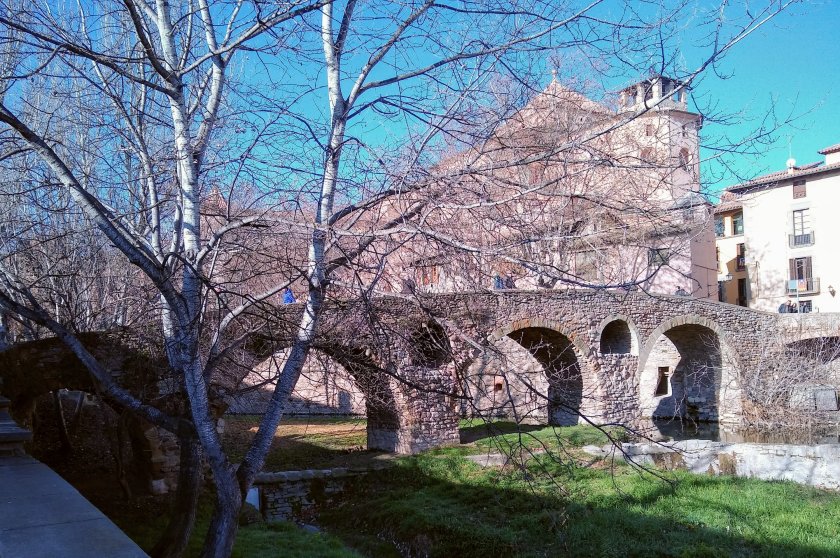
A Day in Vic

You may have realised we’re in Barcelona with Emily and Miquel, looking forward to the Three Kings arriving tomorrow. But yesterday, we left the Big City, caught a slow local train, and trundled off to the foothills of the Pyrenees, to Vic, 45 miles away.

The Romans knew Vic. The bridge they built here is in daily use. There’s a temple too.

The early Christians knew Vic. An important bishopric was established here, and a seminary, the basis of the present university. It was the most important market town in the area. This was the mediaeval town we’d come to see.

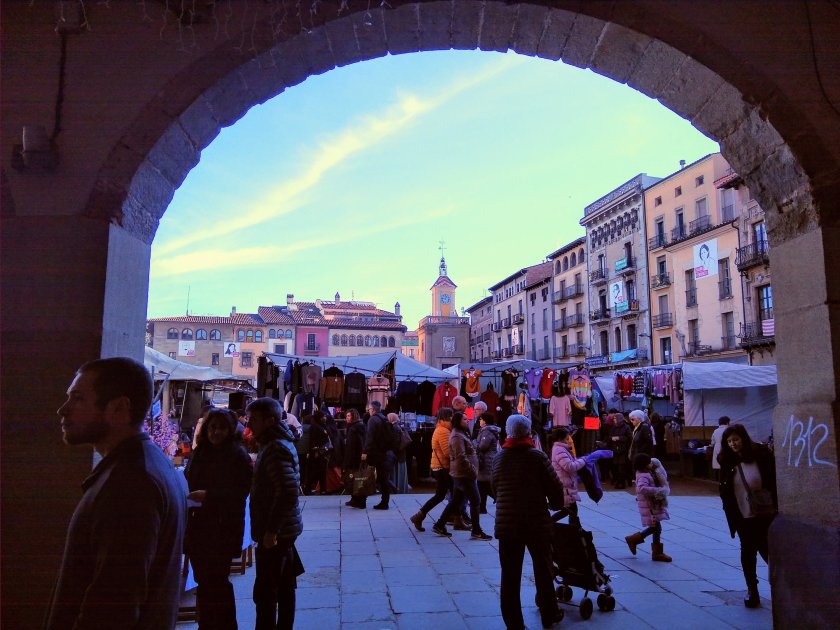
Look! Here’s the busy Market Square.

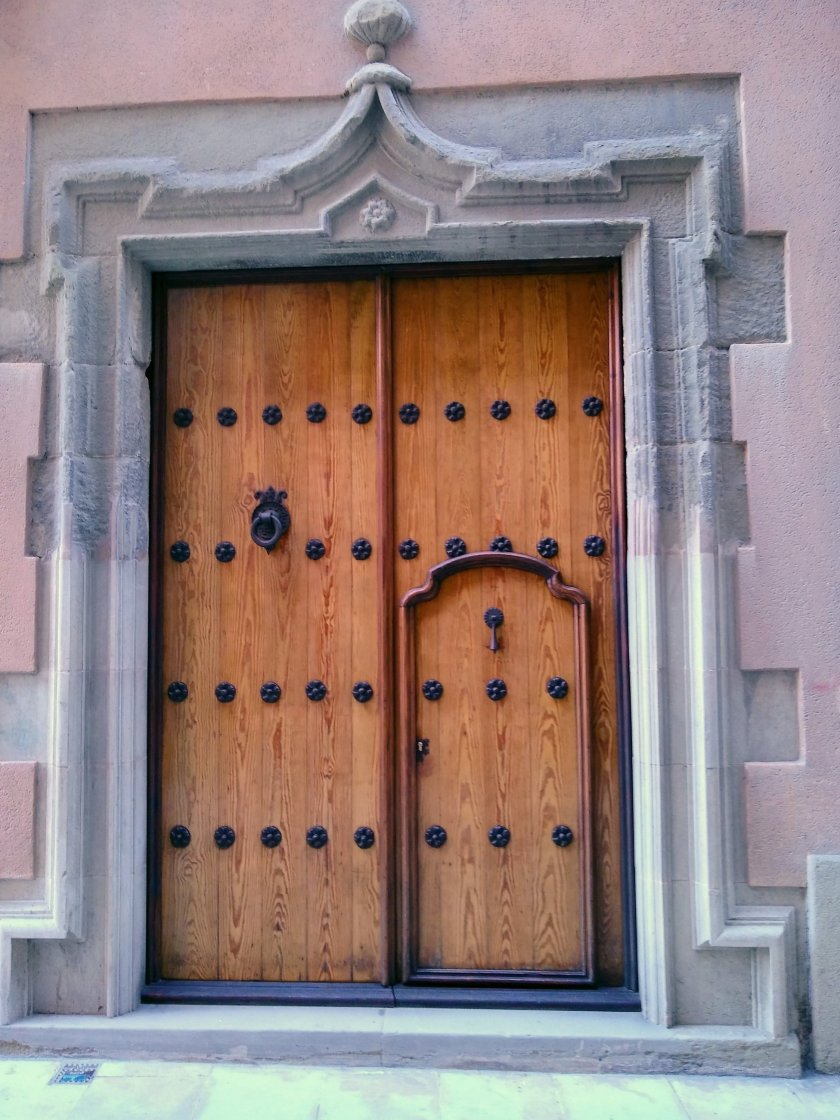
I’ve taken this photo from one of the covered arcades, built tall enough to allow a man on horseback to ride there. Many town doors are big enough to allow this horseman through.

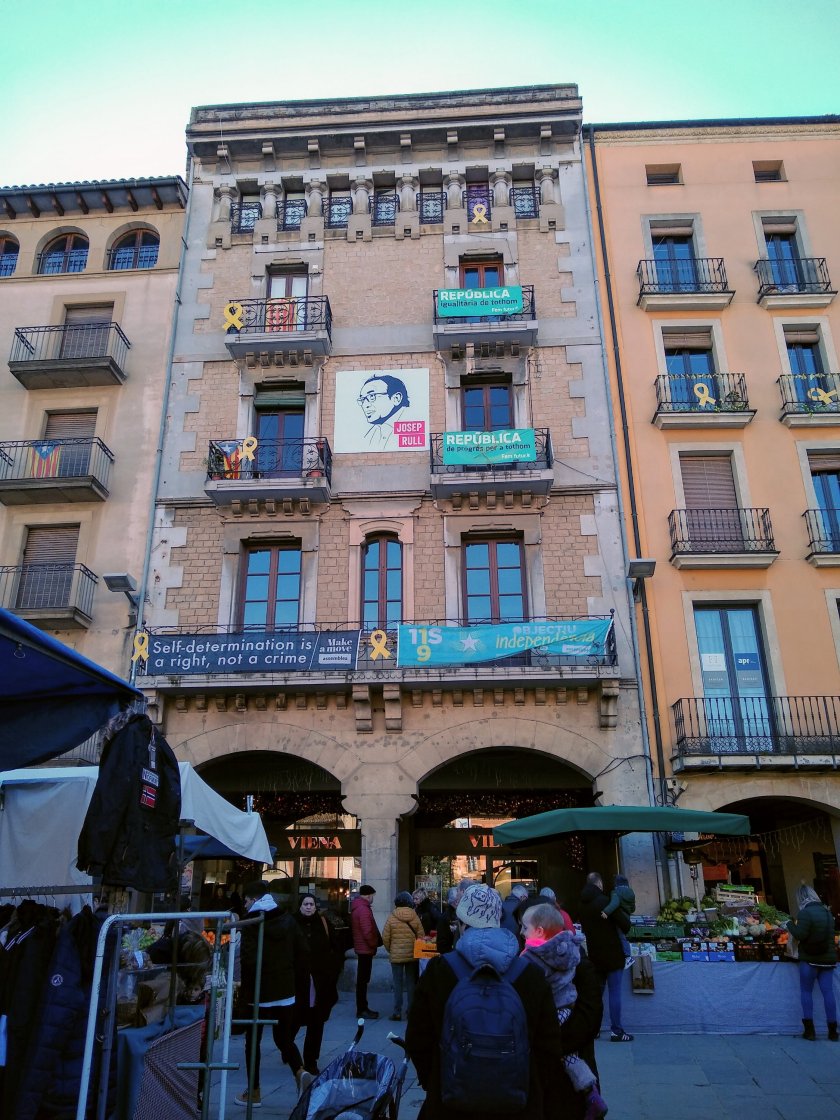
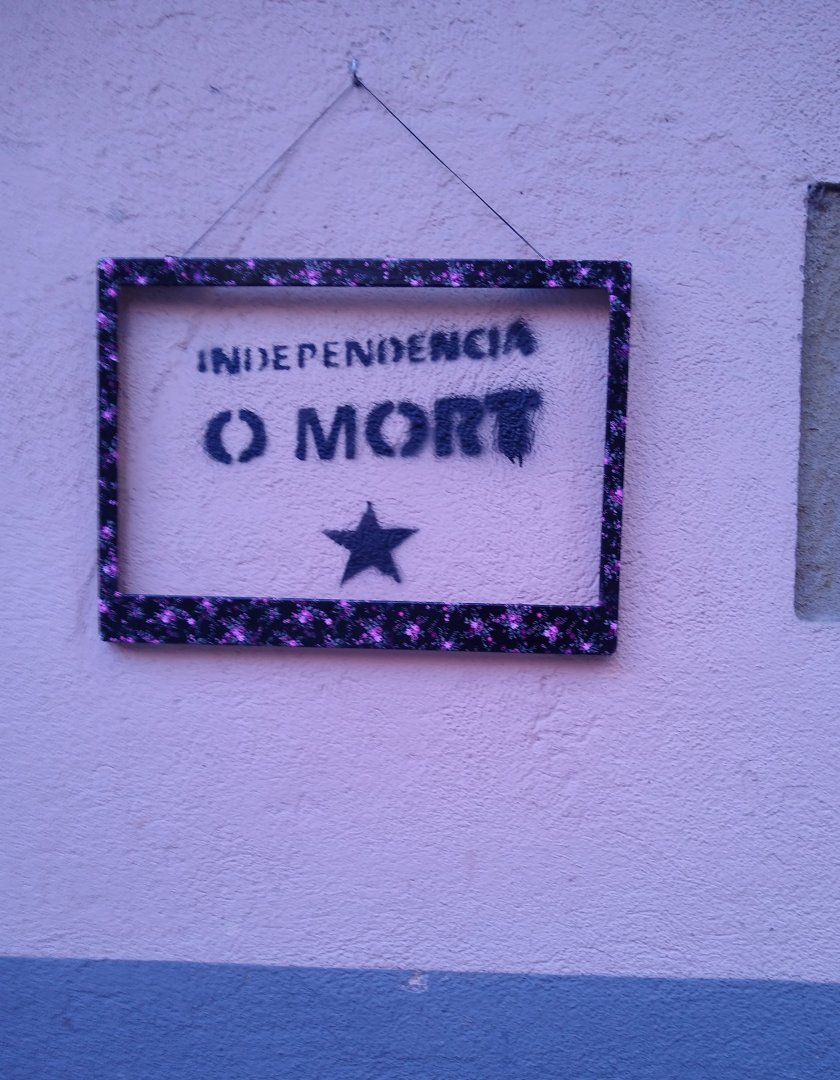
Nowadays, Vic is assertively Catalan. If you look, you’ll see banners on the buildings supporting their political heroes. Slogans are everywhere.

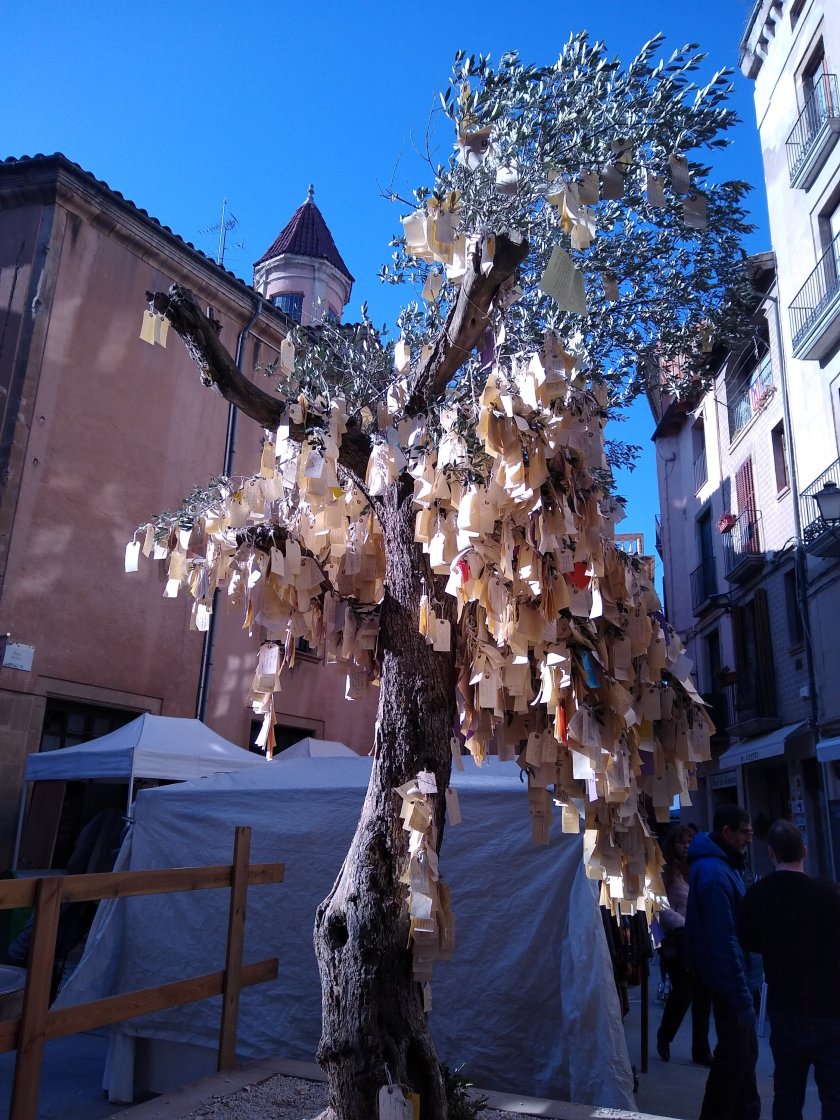
But here is the Olive Tree of Peace. Hang your hopes here.

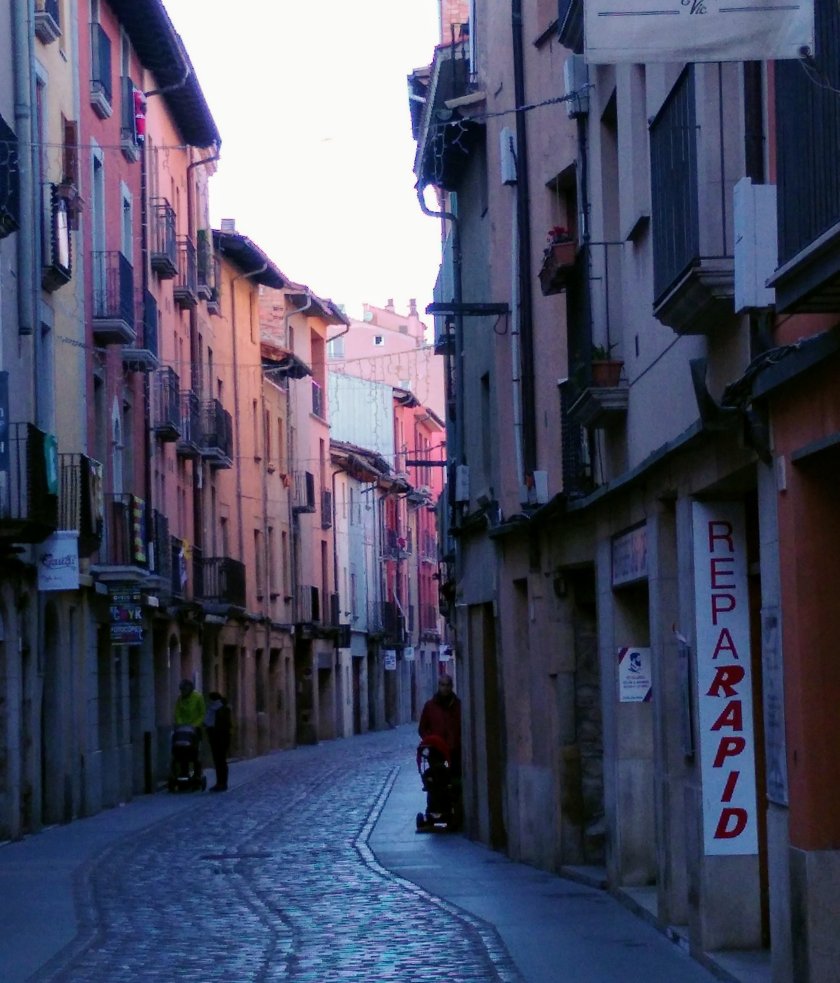
Most of my photos are in my camera. Here are phone snapshots of our walk round this delightful untouristy town, going about its market day business.

Jo’s Monday Walk

A Sunday Walk, Accompanied by Thirteen Dogs

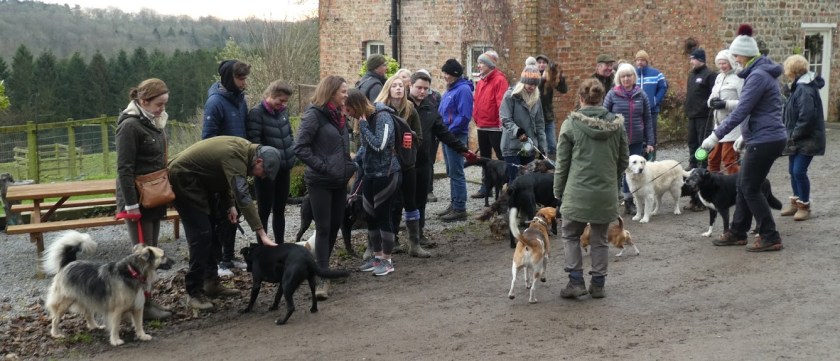
Our good friends Gill and Dave host a mid-winter walk for all their friends after Christmas every year.  We’re invited, and we’re never sure why.  We’re not known for showing much interest in horses, and we don’t own a dog.  As you can see from this shot taken just as we set forth, fortified by bacon sandwiches and coffee, having a dog in tow is pretty much expected.

Boots, wellies and dogs organised.

We love this post-Christmas event, and this year I was especially keen.  I’ve not been able to go on a decent hike for six months now because of a knee condition, but today was the day to begin to put all that behind me.

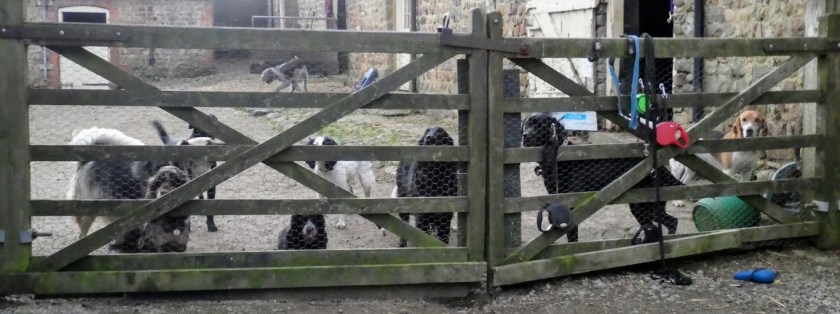
So here we all are.  Here are the dogs, here is the mud, here are the woods and the local views – understated, pleasant good old rolling English countryside.  I’ve deliberately overstated the mud for dramatic effect – it really wasn’t bad at all, and with enjoyable company we didn’t notice it anyway.

Back home with Gill and Dave, we ate and drank, laughed and talked for most of the afternoon.

The human friends are all inside eating, drinking and making merry. It’s a dog’s life.

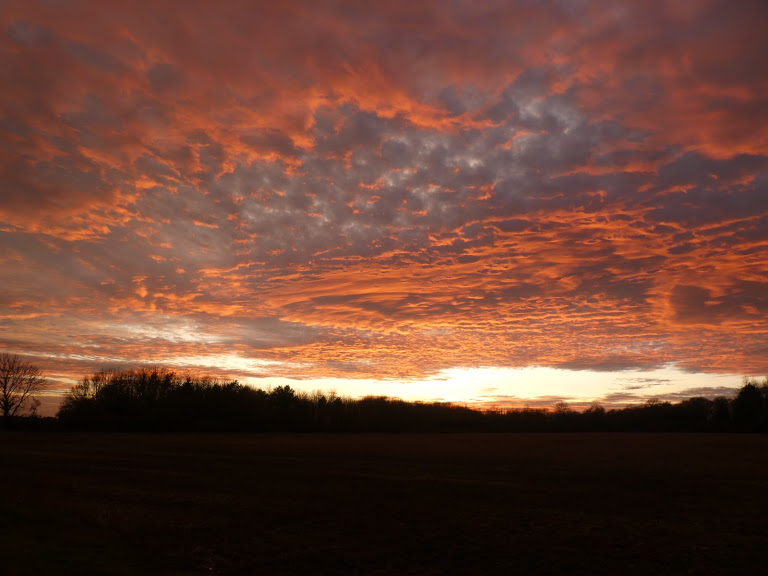
And on the way home, this was the sunset.

Another entry for Jo’s Monday Walk.  It’s been such a long time since I’ve had the chance…

Winter Walking on the South Bank

We love a walk along the South Bank in London. It reminds us of happier times, when during the 2012 Olympic Games, London was for a time the capital of the world: inclusive, happy, welcoming, proud. The South Bank was full of festivity, fun, food, friendliness and foreigners – all welcome.

For a bleaker view of the legacy of that time, turn to Stuart Heritage in Boxing Day’s Guardian:‘ … a moment of optimism that destroyed the decade’.

But it’s still Christmas-tide. Let’s stay happy.

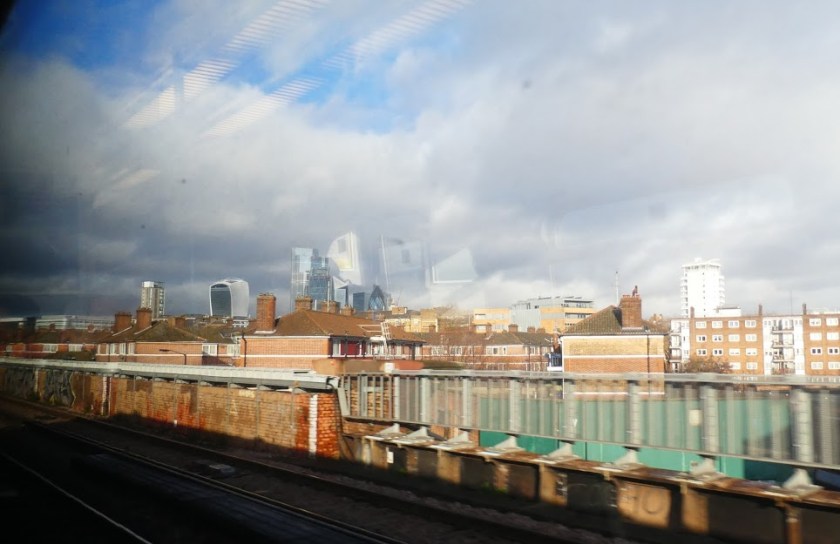
We’ll begin our ‘walk’ on the train into town. Now then. Baffled by the window, it’s hard to pick out which are the city-centre monoliths, and which their reflections.

Not far from London Bridge Station.

We arrive at London Bridge. Here’s street art under the bridge by Nathan Bowen.

Union Jack Dripping by London Bridge: Nathan Bowen.

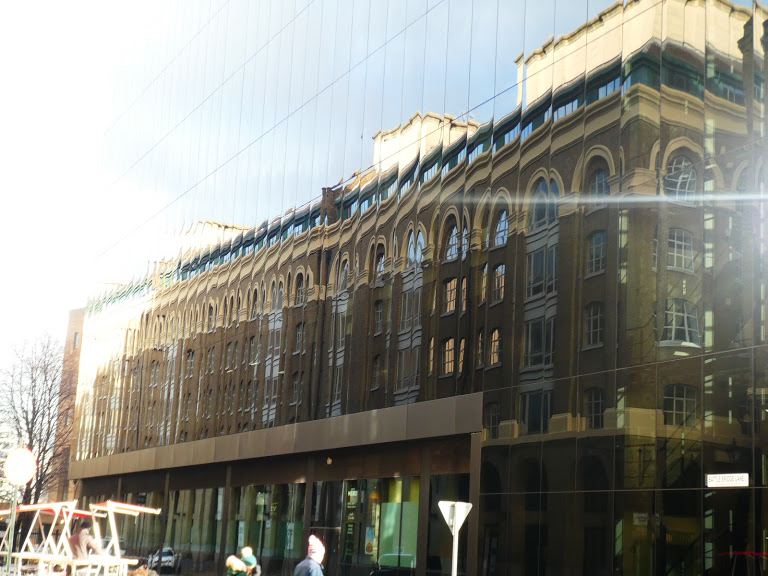
Long-established buildings reflected on new facades.

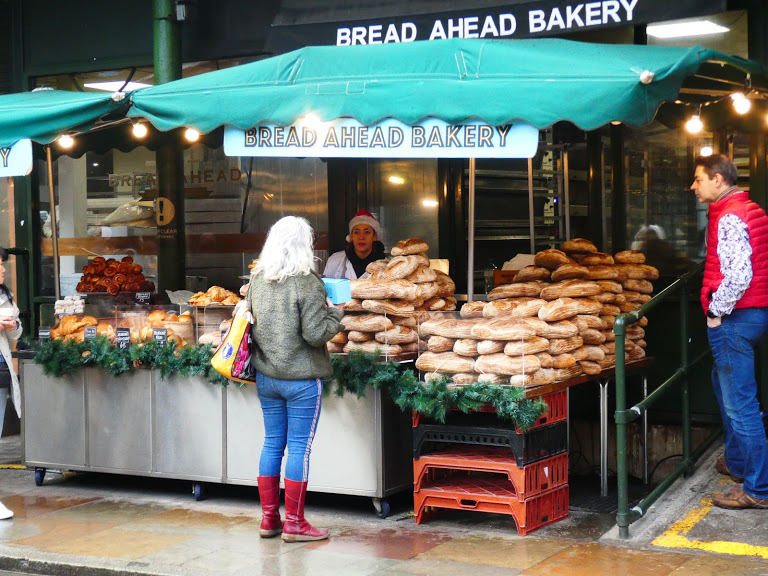
Borough Market. Is it too early for lunch? Sadly, yes. Just looking, then.

Buying bread at Borough Market.

And all those buildings, new and old juxtaposed, on the opposite side of the Thames.

Ah! This is fun. This is Zoë’s moment. A Bubble Man, providing unalloyed joy to dozens of children. And to Zoë.

Time for a coffee-stop (no cake, Jo).  We dive into a narrow alley, which opens up to this: we’re not so far from Shakespeare’s Globe here.

But just as we’re getting a little tired of walking, the rain starts. The team divides. The younger members head off for a spot of retail therapy at South Bank’s Winter Market. The oldest and the youngest join forces and return to London Bridge on the river bus. For us, our winter walk of sights is at an end.

Not quite. Back at Hither Green, this is what awaited us just outside the station.

For Six Word Saturday, and Jo’s Monday Walk.


(Almost) all is safely gathered in…

Regular readers will know I’ve got into the habit, once a month or so, of revisiting an old post. And I’m reminded of what October used to mean in France. Blackberrying’s over now in England (the devil spits on the fruit as soon as October kicks in, didn’t you know?), but my inner-Frenchwoman has been squirreling away scavenged apples, pears, mushrooms – even a few unimpressive walnuts. It all reminds me of France, where foraging is a way of life…

October 25th, 2012

‘All is safely gathered in, ere the winter storms begin’ *

Autumn colours mean it’s harvest time for foragers.

I’ve written before about the ‘au cas où’ bag: the carrier you always have with you on a walk, ‘just in case’ something tasty turns up and demands to be taken home and eaten.

Well, at this time of year, it isn’t really a case of ‘au cas où’ .  You’re bound to find something.  A fortnight ago, for instance, Mal and I went on a country stroll from Lieurac to Neylis.  We had with us a rucksack and two large bags, and we came home with just under 5 kilos of walnuts, scavenged from beneath the walnut trees along the path.  A walk through the hamlet of Bourlat just above Laroque produced a tidy haul of chestnuts too.

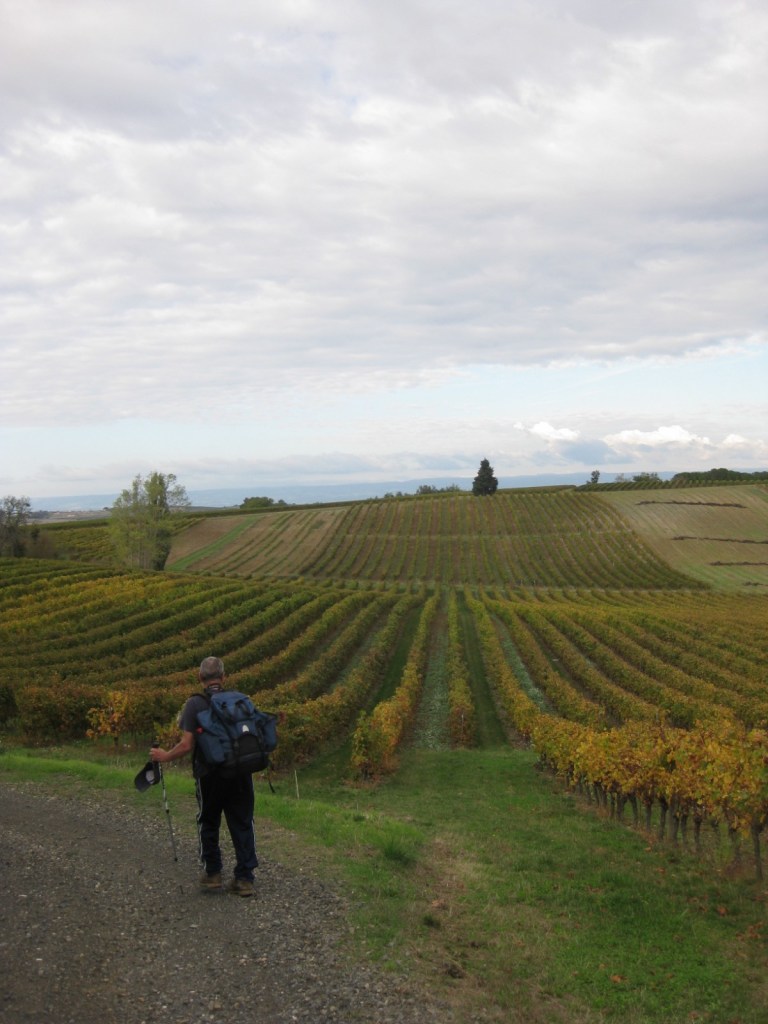
Yesterday, we Laroque walkers were among the vineyards of Belvèze-du-Razès.  The grapes had all been harvested in the weeks before, but luckily for us, some bunches remained on the endless rows of vines which lined the paths we walked along.  We felt no guilt as we gorged on this fruit all through the morning.  The grapes had either been missed at harvest-time, or hadn’t been sufficiently ripe.  They were unwanted – but not by us.

The walnuts we’re used to in the Ariège are replaced by almonds over in the Aude.  You have to be careful: non-grafted trees produce bitter almonds, not the sweet ones we wanted to find.  But most of us returned with a fine haul to inspect later.  Some of us found field mushrooms too.

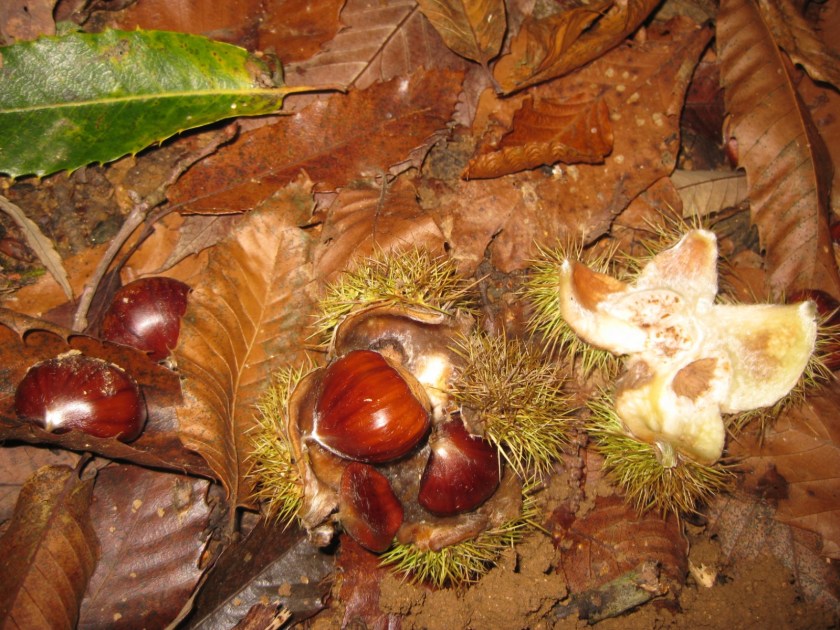
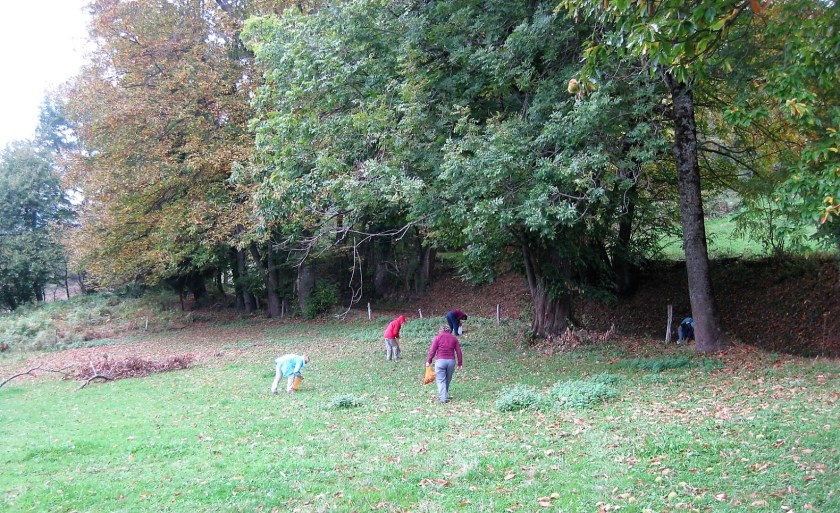
Today, the destination of the Thursday walking group was the gently rising forested and pastoral country outside Foix known as la Barguillère.  It’s also known locally as an area richly provided with chestnut trees.  Any wild boar with any sense really ought to arrange to spend the autumn there, snuffling and truffling for the rich pickings.  We walked for 9 km or so, trying to resist the temptation to stop and gather under every tree we saw.  The ground beneath our feet felt nubbly and uneven as we trod our way over thousands of chestnuts, and the trees above threw further fruits down at us, popping and exploding as their prickly casings burst on the downward journey.

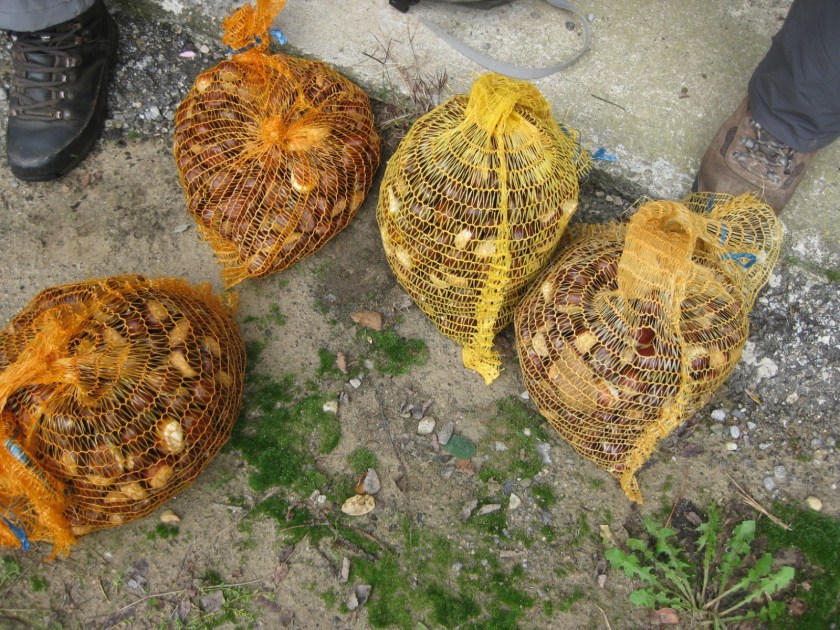
As our hike drew to an end, so did our supply of will-power.  We took our bags from our rucksacks and got stuck in.  So plentiful are the chestnuts here that you can be as picky as you like.  Only the very largest and choicest specimens needed to make it through our rigorous quality control.  I was restrained.  I gathered a mere 4 kilos.  Jacqueline and Martine probably each collected 3 times as much.  Some we’ll use, some we’ll give to lucky friends.

Serious business, this scavenging.

Now I’d better settle myself down with a dish of roasted chestnuts at my side, and browse through my collections of recipes to find uses for all this ‘Food for Free’.

Jacqueline, Martine and Maguy’s chestnut haul.

* Two lines from an English hymn sung at Harvest Festival season: Come, ye thankful people, come’

A contribution to Six Word Saturday, and Jo’s Monday Walk: it’s more than one walk Jo.  Extra value?  Or disqualified?

Les demoiselles de Caraybat, daffodils and gentians: revisited

This hasn’t been a week for writing for fun, as while I was having a good day in London on Monday, Malcolm ended up dialling 999, and is now in Harrogate Hospital after a heart attack. I wasn’t told until well on the way home, which may have been as well, as there was nothing I could have done. He’s awaiting transfer to the much bigger James Cook Hospital in Middlesbrough. But there’s every reason to assume that all will be well.

So I’ve picked out this post from six years ago, from our days in the French Pyrenees to re-blog. Who doesn’t love a good yarn, spring flowers and spectacular views? It cheered me up, anyway.

April 2013

Les demoiselles de Caraybat, daffodils and gentians

Once upon a time long ago in Caraybat, when times were hard, the men of this small village had to look far afield for work.  And they went to Spain, for the hay-making season.  Hawkers came to the village, and pedlars.  They found a village with no men.  They took advantage.  So did the women.

When the hay-making season was over, the men returned, and the women spied them returning over the distant mountains.  Suddenly ashamed and frightened, they fled to the hills.  God, in vengeful and Old Testament mood, was displeased.  As the women reached the summit, he turned each one of them to stone.  And there they are to this day, les demoiselles de Caraybat, a petrified reminder of a summer of sin.

A few of those demoiselles hide themselves behind the woodland trees

We remembered this legend yesterday when I took our Laroquais walking friends to Caraybat and the dolomies to discover those daffodils I’d been shown on Thursday.  I was quite chuffed that not a single one of them had previously known this special spot, and we had a pleasant hour up on the rocks, picnicking and enjoying the last days of the daffodil season.

We followed the walk I’d learnt about on Thursday, and then we finished our day by going to the plateau above Roquefixade to see the gentians there.

Gentians above Roquefixade

Sadly, it was by then rather cold and windy, and most of the gentians had sensibly folded their indigo skirts about their faces and tucked themselves away to wait for a sunny day.  We’ll wait too.  And when the sun comes out properly, we’ll be back.

Ragtag Saturday: The Cleveland Coast

Older people like coach trips.  Allegedly.  They sit in a coach, gossip, have a nice cup of tea when they reach their destination, then they go home again.

On Thursday, fifteen people from Ripon U3A (Walkers’ Division) did exactly that.  Except that in between the gossip in the coach and the nice cup of tea, they fitted in an eight and a half mile walk along a section of the Cleveland Way.

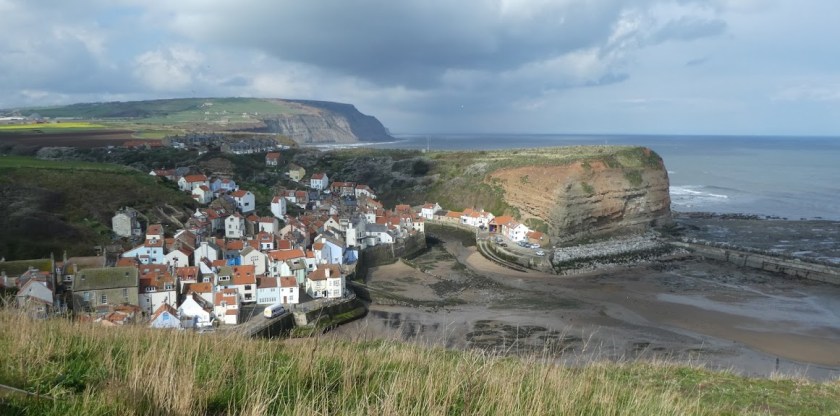
Staithes seen from the cliffs.

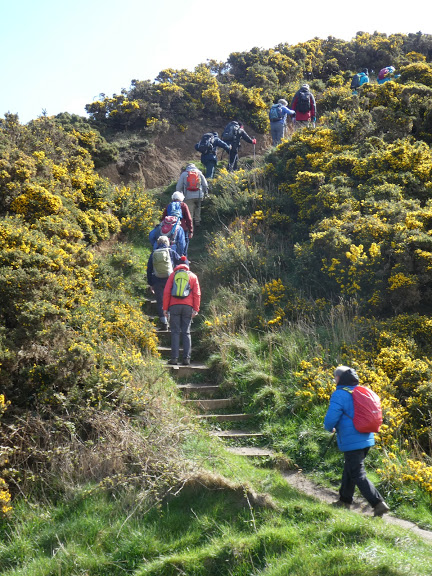
We started at Staithes, once a busy fishing port, now a picture-postcard-pretty holiday destination.  It nestles at the foot of imposing cliffs, and our walk began with a good hard yomp to get from sea-level to cliff top.  This was the first of several yomps up steep paths cut into the hillside at an unforgivingly steep gradient.

The first of several climbs – and not the hardest.

And what goes up must come down, as we discovered towards lunchtime at Runswick Bay, and later still at journey’s end in Sandsend.

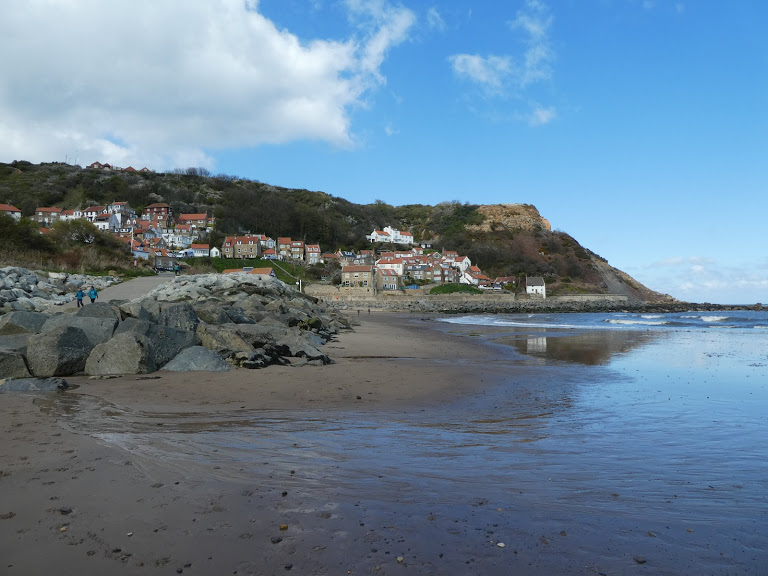
Runswick Bay at low tide.

All this would have been arduous enough.  But there was a stiff breeze.  This developed, as the day wore on, into a searching wind: the sort that blows any attempt at conversation far out to sea, turns pockets inside out, and rips scarves from shoulders.  A few forays past farms offered slight shelter.

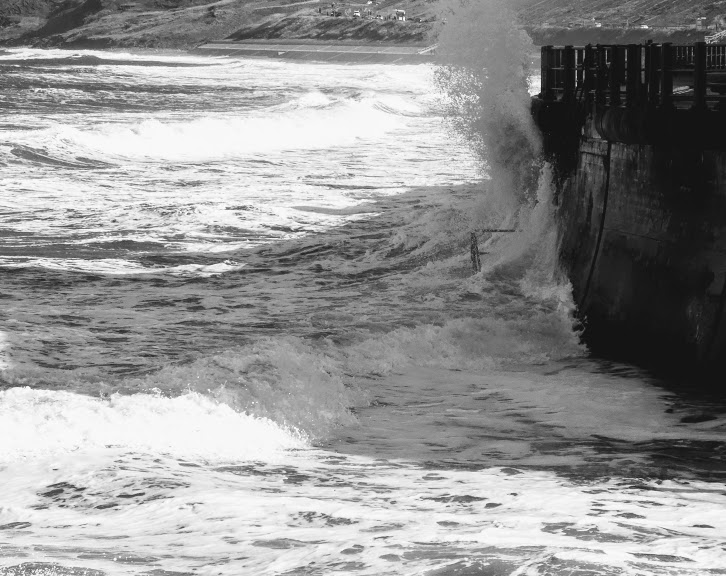
By the time we arrived in Sandsend, the wind was arguing with the sea too, which rose up, roaring and seething and hurling itself against the breakwaters.

Stormy seas at Sandsend.
The view across to Sandsend and Whitby.

Did we complain?  We did not.  This was scenic walking at its best.  Violets and primroses scattered our path, and striking barriers of yellow gorse imposed themselves between us and the cliff edge.

Eight and a half miles of this kind of treatment was just about enough though.  We were good and ready for tea and home-made cake at Wits End Cafe, and continued our gossip in the coach on the way home.

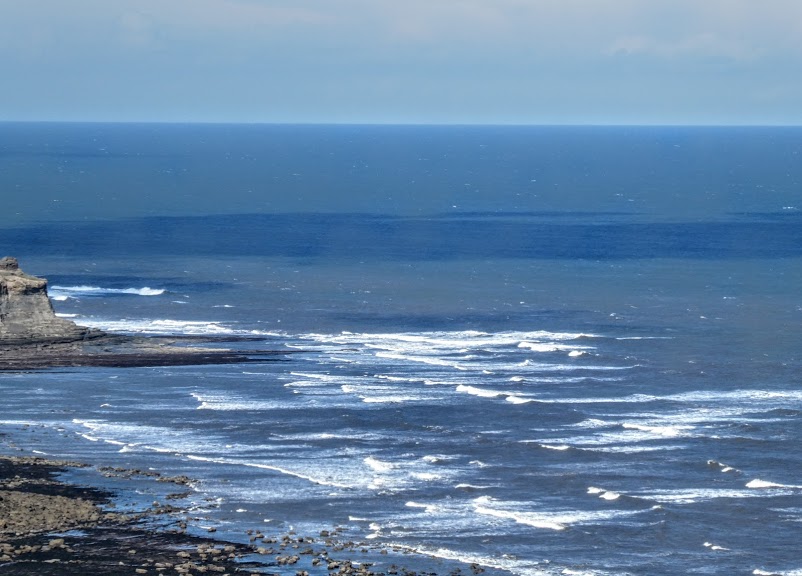
The sea: our constant companion for the day.

Here is my entry for today’s Ragtag prompt: Coast, and for Jo’s Monday Walk.  As ever, click on any image to see it full size.

Botany and a bus ride

It seemed to be a long time before we found the right bus going at the right time to a terminus in the right place – beyond Málaga’s city limits. But we got there. La Concepción Historical-Botanical Gardens.

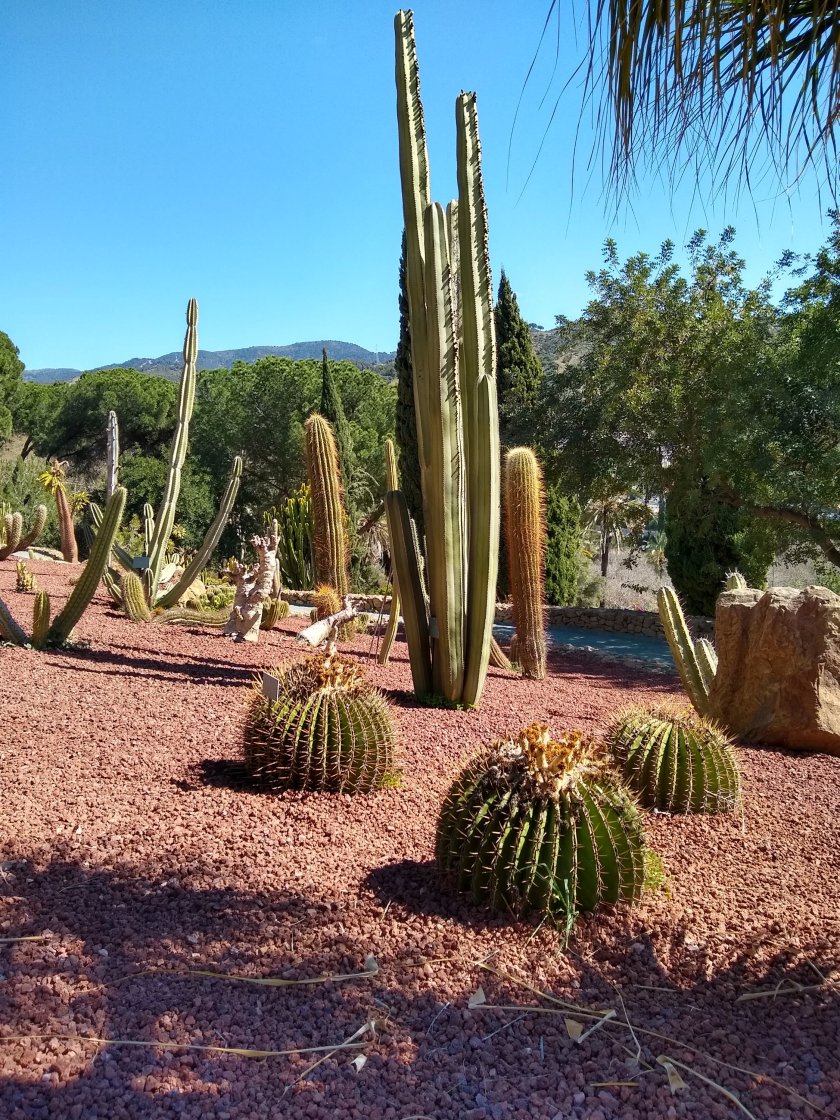
We quite enjoyed hiking round its Mediterranean landscapes, and visiting a desert-scape of giant and vicious looking cacti. We took a long forest walk with spacious mountain views one way, and a panorama of Málaga the other … and sadly, the motorway grumbling and roaring only just below. We agreed the place was lovely, worth exploring… but just a little under-loved and under-resourced.

We had lunch outside in the sunshine, and thought we might go home.

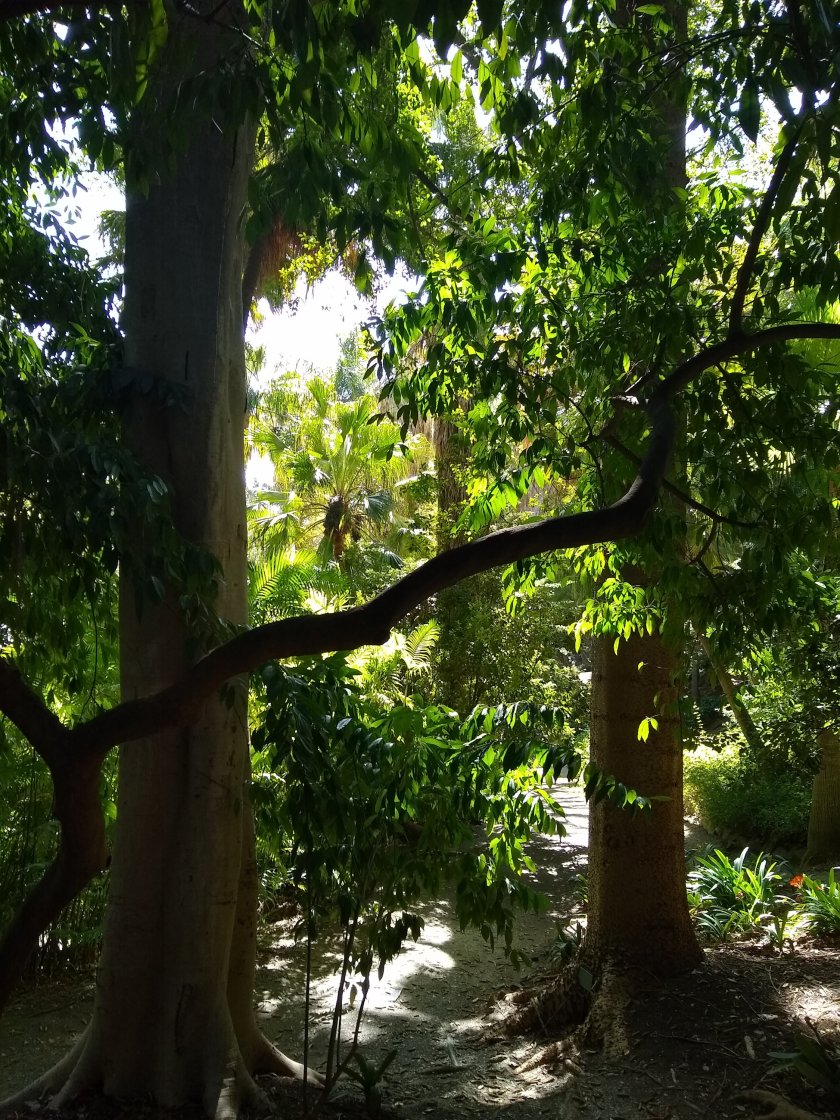
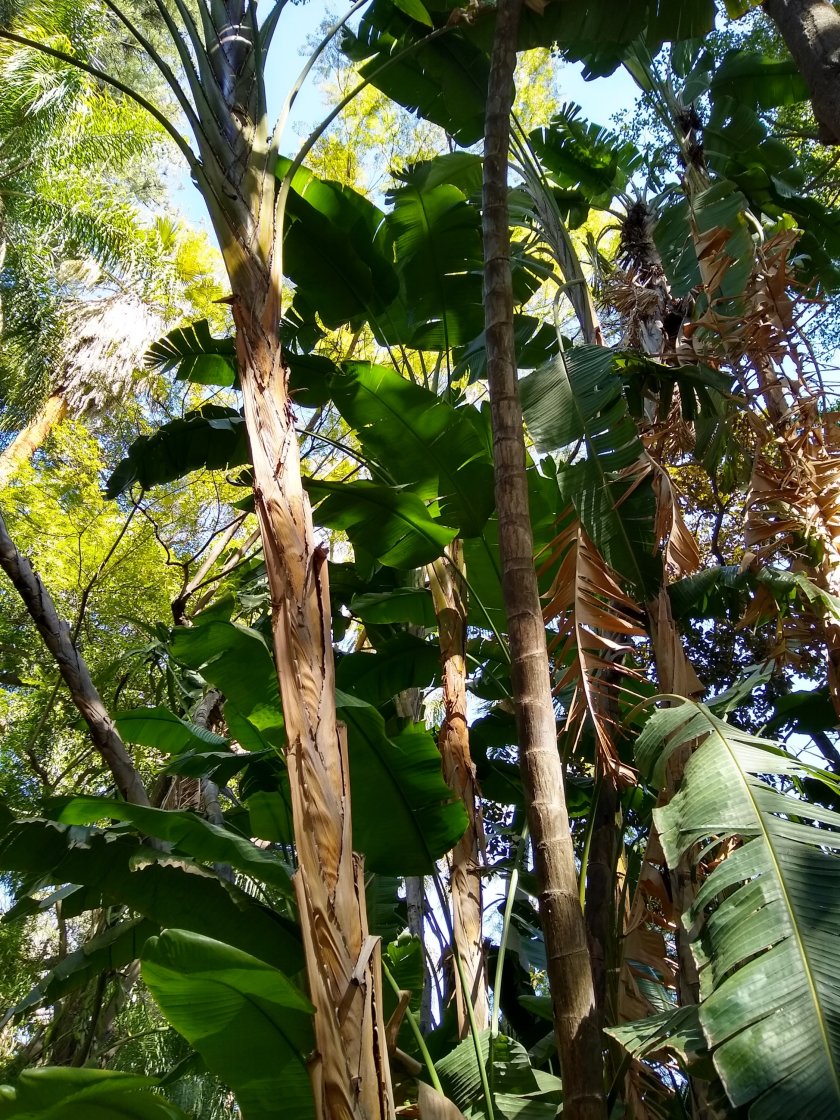
Thank goodness we didn’t. We had circled the outer edges of the gardens and failed to explore its heart. Here were subtropical glades, bamboo forest, tumbling jungle waterfalls. Shady, mysterious, quiet and only disturbed by birdsong.

Two Country Mice had a very enjoyable day.

A Spanish candidate for Jo’s Monday Walk. It’s Thursday but never mind.

Jo’s Monday walk

Walking in Woolwich

I was with Team William & Zoë at the weekend.  A walk in Woolwich seemed a fine Sunday outing.

Woolwich is firmly a part of London now. But it wasn’t when it was omitted from the Domesday book in 1086, on the grounds that it was part of Saint Peter’s Abbey in Ghent.

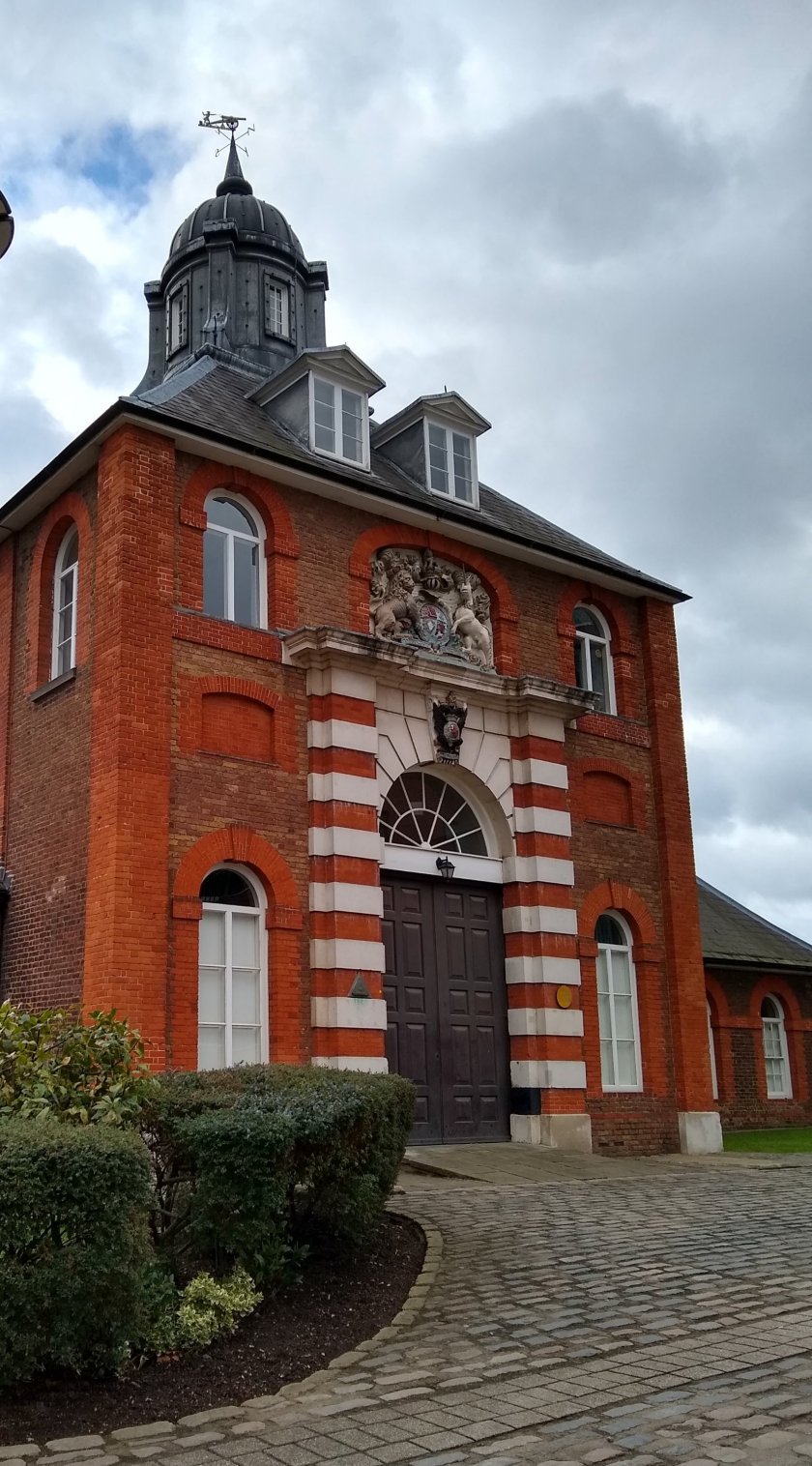
It wasn’t when Henry VIII founded a dockyard here in 1513 to build his royal ship Henri Grace à Dieu. It remained a royal dockyard till 1869. Then a Royal Laboratory, producing explosives, then a Royal Arsenal. By 1741, it had a Royal Military Academy too. Woolwich was a fine industrialised garrison town.

Royal Arsenal

Until it wasn’t. The dockyard closed first. The Academy moved to Sandhurst in 1945. The Arsenal closed in 1967, though during WWI it had employed over 70,000 workers Woolwich fell on hard times. Even though, or perhaps because it became home, in 1975, to Britain’s very first McDonald’s.

It’s beginning to recover. Those fine military buildings are finding new uses as housing. With improved transport links, Woolwich is being touted as south London’s ‘next big thing’.

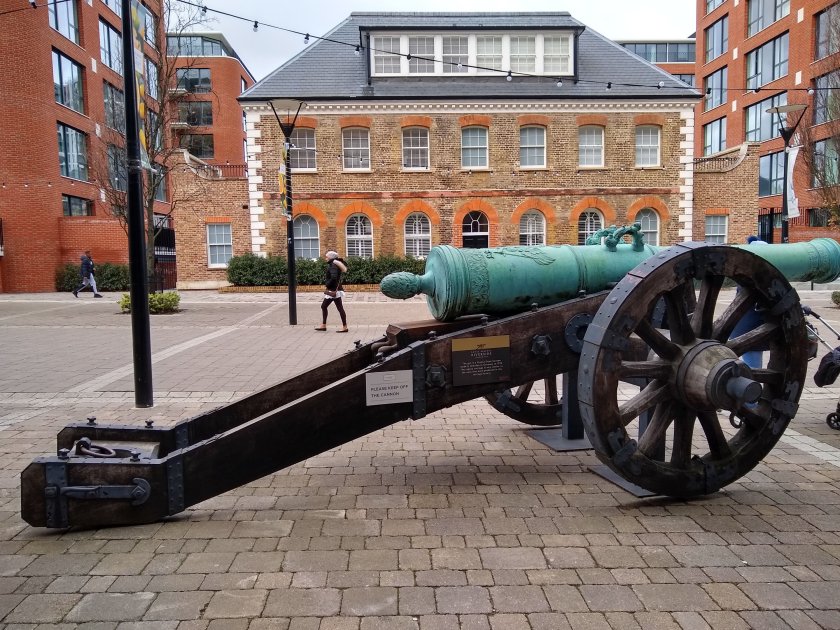
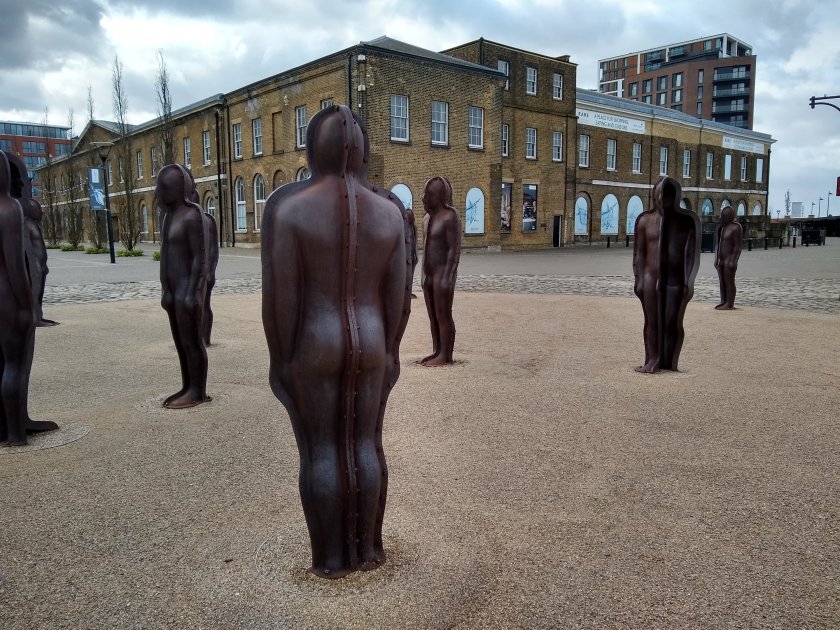
We did explore. That military architecture really is pretty fine. It forms the backdrop here to Peter Burke’s Assembly, 18 cast iron figures which speak of Woolwich’s busy industrial past.

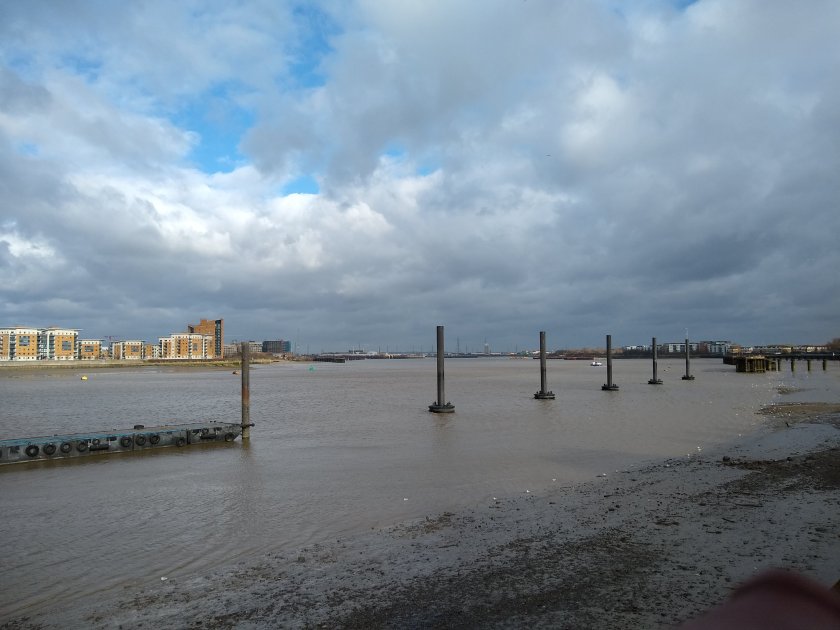
And I love a gritty urban riverscape too. We planned to walk on, to the Thames Barrier.

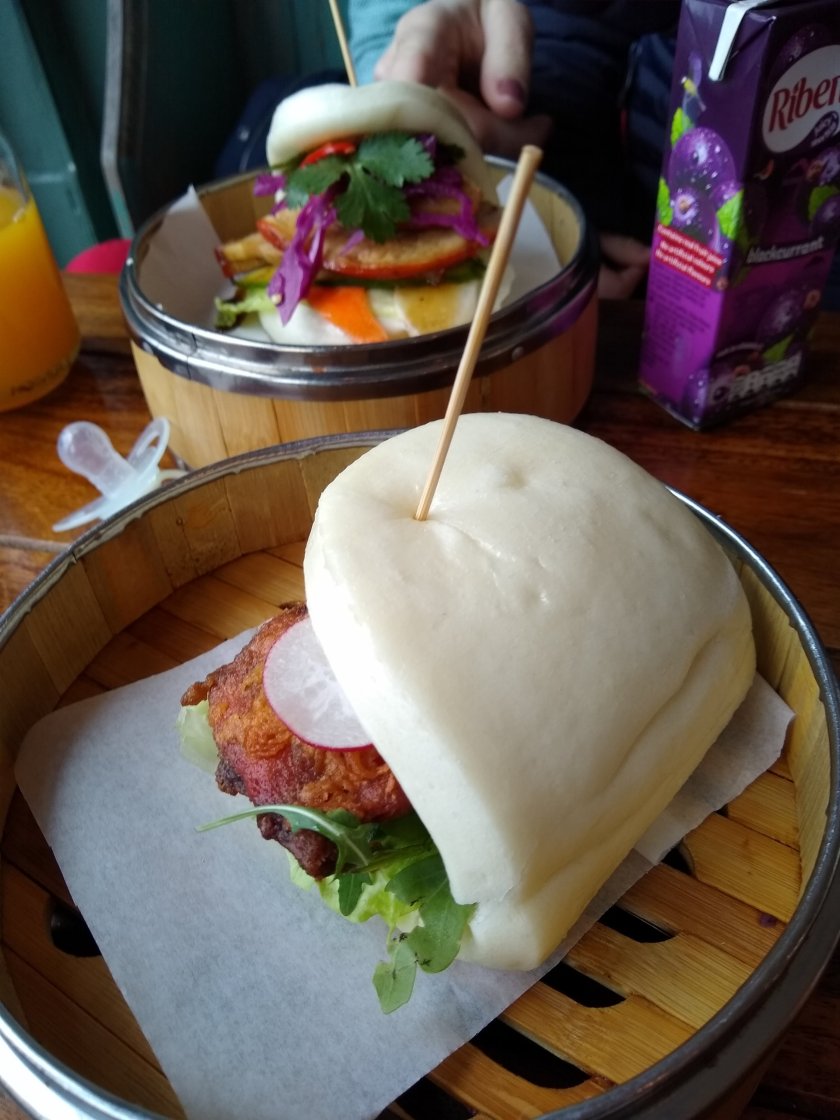
But it was cold. It was raw. We wanted to enjoy our exploration. So we will come back another day, when the sun is shining. And we’ll return to Vib too. The bao at this wonderful Vietnamese café are certainly worth exploring.

Walked on Sunday, published on Tuesday, this is a candidate for https://restlessjo.me/jos-monday-walk/
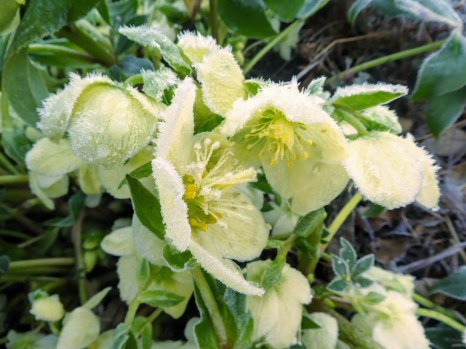
Ragtag Saturday: Frosted fields

It was -3 degrees in the night. It was still -3 degrees, at nearly nine o’clock in the morning. But I started my walk anyway. Right here in the garden, next to this hellebore.

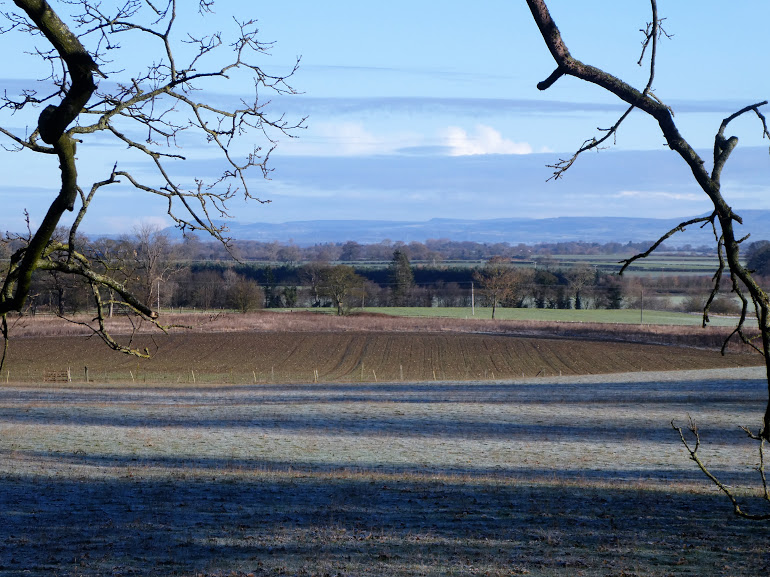
Here were the pleasures of scrunching through crisp, frosty grass.  Through small puddles, frozen solid.  Watching long shadows extend the trunks of trees across the width of a field.  Sheep doing their best to scratch a breakfast from the hoary grass.  Bracken with delicately rimed edges.  A car on the roadside, blinded by Jack Frost’s artwork.

The sun rose and despite the cold, quickly burnt off the chilly white from the fields. The newborn lambs, which I’d hoped to spot in West Tanfield had been kept indoors – I could hear their plaintive bleating in  barn.  Instead – winter blossom, catkins, and a sky-blue sky.

This is my contribution to Ragtag Daily Prompt: Frosted.  And though I walked on a Wednesday, posted on a Saturday, to Jo’s Monday Walk.

As ever, to view any image full size, simply click on it.