Six Degrees of Separation: from Kitchen Confidential to The Christmas Chronicles

On the first Saturday of every month, a book is chosen as a starting point and linked to six other books to form a chain. Readers and bloggers are invited to join in by creating their own ‘chain’ leading from the selected book.

Kate: Six Degrees of Separation

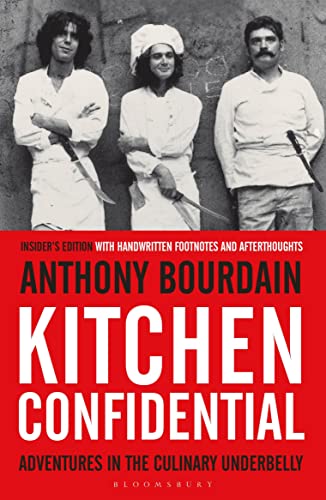
I read Anthony Bourdain‘s Kitchen Confidential quite a long time ago, and seem to remember not liking it – or indeed him – very much. But it’s given me my chain for the month. You’re not getting a single novel from me this time, not one. Simply a run-down of a few cookery books.
To ease you in gently, I will start with a book that – though full of recipes – is also meant to be read from cover to cover; the 1950s classic by Patience Gray: Honey from a Weed. I’ve only just got it out of the library, so I can’t really comment on it. The inside cover says that it’s a ‘passionate autobiographical cookery book; Mediterranean through and through, and as compelling as a first class novel.

Which leads me to one of the first cookery books I owned, one which was my cookery bible when I was a student in the late 60s and early 70s: Elizabeth David‘s A book of Mediterranean food. She wrote very readably and enticingly about ingredients which I was able to source on a student budget in multi-cultural Manchester, and cemented the love of cooking fostered by my mother when I was growing up. All the same, my only memory from that time of using one of her recipes was when I cooked an indifferent moussaka for a lecturer whom my then boyfriend and I were trying to impress. I’ve never really liked moussaka since.

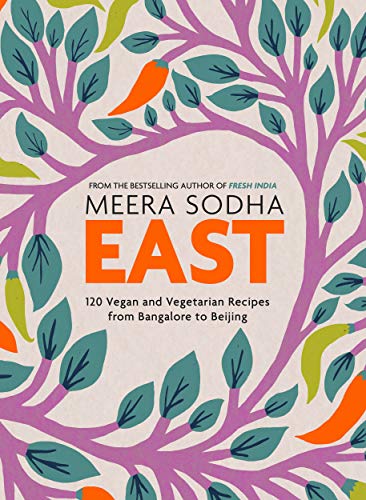
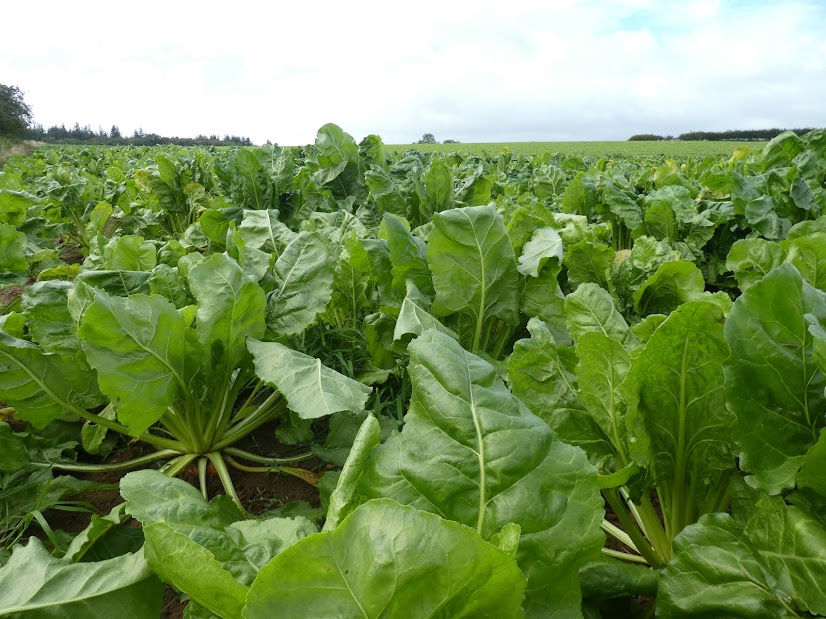
Now I have different cooking bibles. Unsurprisingly, some are written by the cooks who contribute to the Guardian’s food supplement on Saturdays. I went through a phase of perpetually using Meera Sodha‘s East: ‘vegan and vegetarian recipes from Bangalore to Beijing‘. Try this one: Leek and Chard Martabak.
I like to keep cooking straightfoward these days. So Yotam Ottolenghi‘s Simple hits the spot. Recipes like his Puy lentils with aubergine tomatoes and yoghourt.
Yotam Ottolenghi came my way via the Guardian: Rick Stein via his television series. I recently found his India in a charity shop, and it seduced me because of its glorious pictures of food and street life . The recipes are pretty good too. How about Aloo dum: potato and pea curry with tomato and coriander?

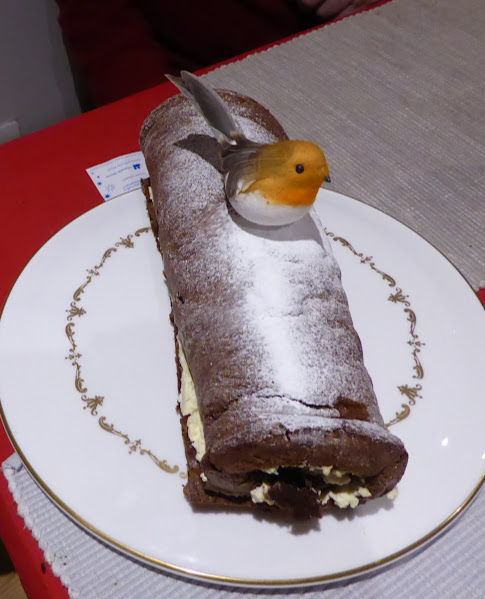
But for my last book, I’ll choose another cookery book which can be read from cover to cover. And I’ll make it seasonal: Nigel Slater‘s The Christmas Chronicles. Nigel Slater is my sort of cook, in that he doesn’t go in for careful measuring. If you haven’t got this, use that. He’s keen to tell you what he doesn’t bother with. And licking the bowl out is part of the joy. Recipes here are interspersed with stories of his Christmases, and his greedily-anticipated preparations for them. I hope you made your Christmas cake at the end of October. But if you didn’t, here’s his.

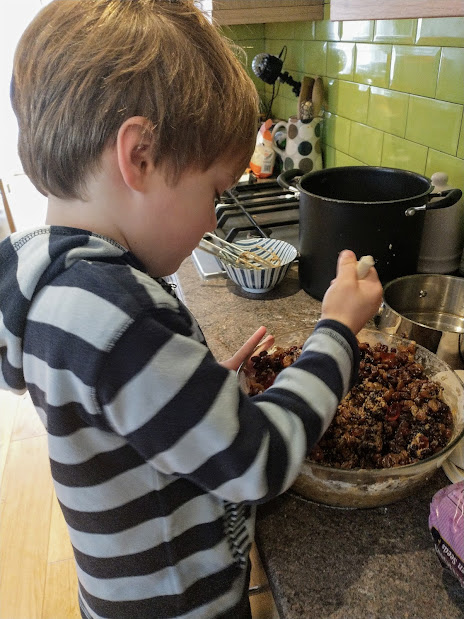
So that’s my chain. one in which most of the books I’ve chosen are capable of being linked with each other. It’ll be business as usual next month, with books where you can start at the beginning, and read until the end. Our starter book will be Gabrielle Zevin‘s Tomorrow and Tomorrow and Tomorrow. I happen to know our daughter’s read this, and I shall be able to snaffle it from her bookshelves when we go to visit the Spanish branch of the family early next month. Not in time for the next Six Degrees, but still …
Six Degrees of Separation: The Foodie Special

On the first Saturday of every month, a book is chosen as a starting point and linked to six other books to form a chain. Readers and bloggers are invited to join in by creating their own ‘chain’ leading from the selected book.

Kate: Six Degrees of Separation

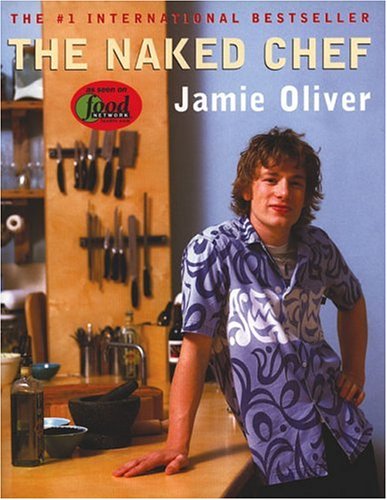
This month, our chain starts off with a recipe book: Jamie Oliver‘s The Naked Chef. I’ve used this and other books by Jamie Oliver as jumping-off points when thinking what to cook. But what I really like is a recipe book that’s a good enough read to enjoy even when not planning meals.

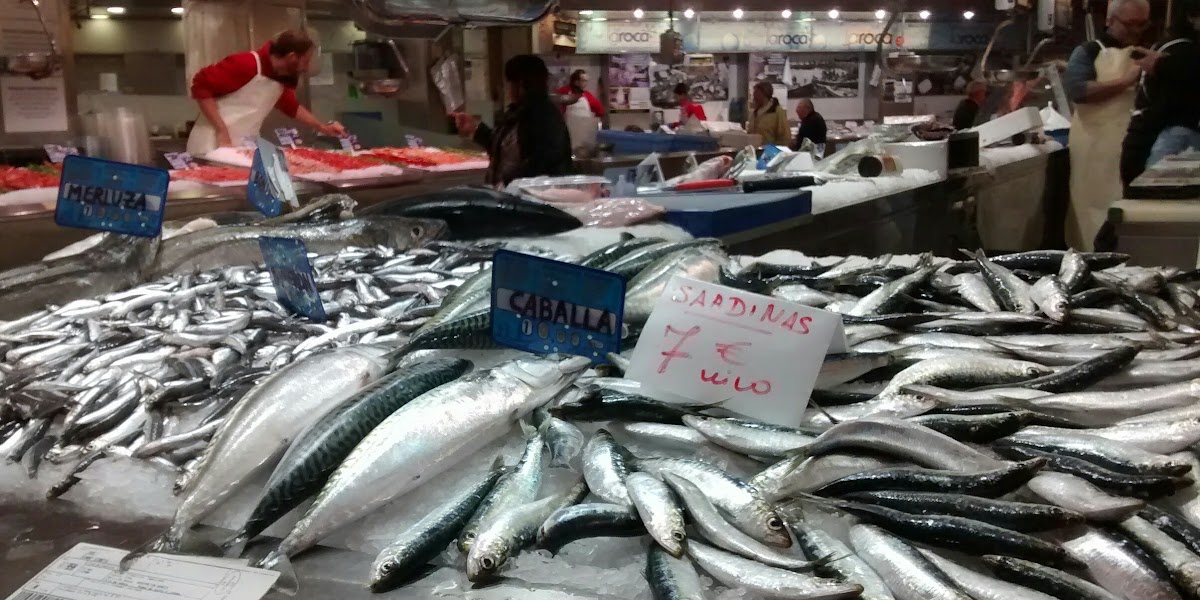
So that’s why I’m starting my chain with Rachel Roddy. I used to follow her when she was a food blogger, a young Englishwoman living in Rome. Then she wrote a book. Then the Guardian newspaper took her up. These days she blogs no longer. But I still use and enjoy that first book, My Kitchen in Rome, in which she talks about Testaccio, the working area of Rome where she lives, far from the tourist hot-spots. She writes about the daily market, her discovery of Roman foods and recipes, and getting to know those who help her on her culinary journey. It’s a right good read. With added recipes.

Nigel Slater is another food writer featured in the Guardian and Observer. I own just about every book he’s written: but today, even if it’s definitely not OK to start doing the Christmas shopping and enter shops where Christmas musak is already being belted out, it is OK already to have baked the family Christmas cake, I’m featuring his The Christmas Chronicles. It intersperses vignettes from his life with observations from his garden, his travels, his kitchen, his Christmas preparations with recipes for Christmas and the winter season generally. Like Rachel’s book, it’s a jolly good read.

The book which probably started many of us out on our cooking explorations is Elizabeth David‘s A Book of Mediterranean Food, first published in 1959. It doesn’t have the same story book quality of Roddy and Slater’s books, but it’s more than a list of ingredients followed by the instructions. She sets the scene, either with her own words or those of other writers, to explain the joy of say a family lunch, a Greek feast, the snail. She explains which ingredients are best, how you might make do, and when you must not make do. I no longer use David’s books as much as I did, but she’s the foundation on which so many later cooks and their books were built.

We’ll stay in the Mediterranean. I’ve written before about my entirely unrequited love affair with Commissario Guido Brunetti in Donna Leon‘s books set in Venice. In any one of them you’ll find evocatively described meals, family meals prepared by his talented wife Paola, or those taken in one of the neighbourhood restaurants he’s come to know and be known at over the years. Let’s pick on Trace Elements. A dying woman has an important message to relay to Commissario Brunetti about her recently deceased husband. Inevitably, she dies before she’s able to convey clearly what she needed to say. Can Brunetti and his friend and colleague Claudia Griffoni pick the bones out of all this? Inevitably, they can. Inevitably too, there are twists and turns on the way, and an intriguing ending. A classically satisfying tale, with meal time interludes. 

Still in Italy – Sicily this time. Andrea Camilleri‘s Inspector Montalbano is reliably greedy. His housekeeper leaves him tempting suppers to enjoy when he returns from labouring over yet another murder. Local restaurateurs know him well, and keep their choicest dishes for him. All Camilleri’s books about him celebrate his love of food. It’s a long time since I’ve read one, so no review for this one: The Terracotta Dog.

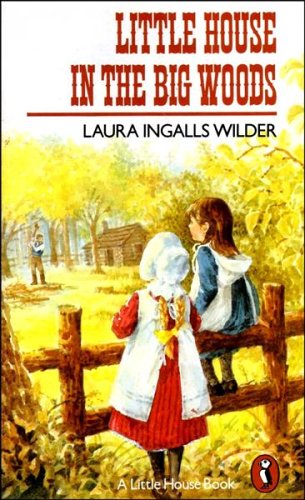
We’ll finish with the Laura Ingalls Wilder Little House on the Prairie books, which my younger daughter read incessantly for a period when she was about 10. It describes the life and adventures of a pioneer family in 19th century America, and the simple business of living occupied much of their days. In Little House in the Big Woods, for example, we’ll be with mother and daughters as they bake bread, churn butter, grow vegetables, dry fruits, make pickles. Father may turn up with a fowl for the pot. It was a simple, tough and hardworking life lived by an energetic and loving family with a deep uncomplicated faith. As my daughter prepared for her teenage years in a rather different society, these books were her frequent companions.

I don’t think I’ve ever written a book post about food before, and I doubt if I shall again. But it’s been fun. Back to the world of fiction next month, for Eowyn Ivey‘s The Snow Child. Join in on the first Saturday in December with a chain of your own?