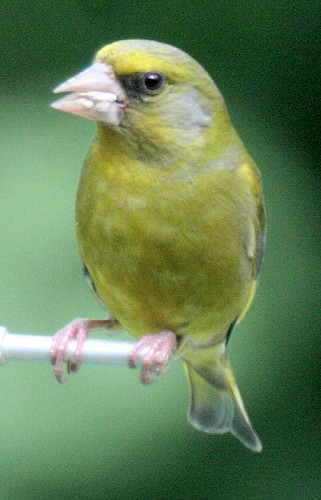
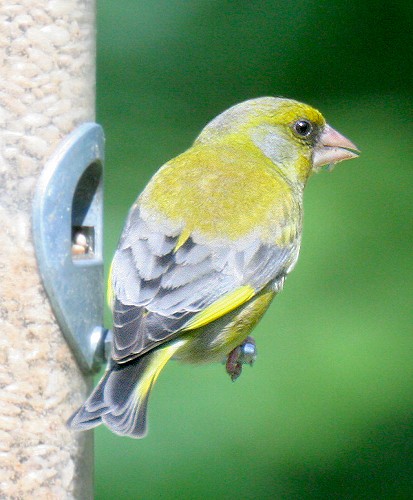
Two years ago, on Valentine’s Day, we had friends over to lunch. We spent much of the meal glued to the sight of a huge flock of greenfinch which had suddenly, and seemingly out of nowhere, descended to the garden, and specifically the bird table. It was food they were after, and they swooped, squabbled, jostled for position, selected seeds, came back for more, and generally monopolised the garden to the astonishment of the regular tits, wagtails, blackbirds, sparrows and robin.
On 15th February, we got up, eager for a repeat performance. But they’d gone. And they never came back.
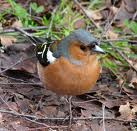
Male greenfinch
Until today.
We only realised they were here when over breakfast we heard ‘Bang!’ followed by ‘Bang!’ against the window. Two finches, one after the other, had hurtled – hard -against the glass, and we found them lying inert on the ground. We tiptoed round, knowing we had to leave them be, and hoped for the best. After ten minutes, one of them suddenly shook her head in surprise, ruffled her feathers, and flew off. The other never recovered.
The other greenfinches didn’t seem to care. All day they’ve been wheeling around, careering from sunflower seed feeder to peanut net, to grain dispenser, always feeding, feeding, dropping discarded shells and tiny crumbs onto the ground beneath, where all the birds, whether finches or regular residents, continued to scavenge all day.
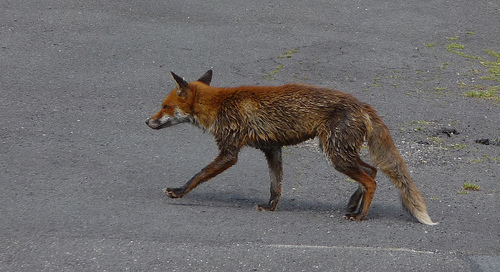
When we left Laroque for Christmas and New Year in London and Harrogate, we thought we’d left most wildlife behind too. Not so. It seems as if wherever you are in South London, you’re only yards from a fox’s lair. Tom and Sarah refused to share our excitement at seeing so many. ‘They’re on the station every night when we come home from work’, they yawned. ‘They’re quite mangy anyway’. We didn’t think so. We loved to see them trotting spiritedly along the street once darkness had fallen, sniffing round the dustbins for Christmas turkey.
Back in Harrogate, the birds we thought would have abandoned our garden, now we aren’t there to feed them regularly, have quite simply moved in. Chaffinches hunt for seed, blackbirds tug at worms, and all of them relish the garden pond for regular bathing sessions in the all-but-frozen water. They’re obviously glad we’ve not been there to disturb them
I chose these birds because, apart from the nuthatch, they can all be seen from the house. In fact the heron cruises past down onto the river to feed once, maybe twice, every day. We still get quite excited every time it happens.
But in most cases, not so very different from England, eh?
The good and the bad. Good news first. The birds have discovered there’s more to be had here than yesterday’s bread. At bird mealtimes, which are not quite the same as ours, though much more frequent, they’re here vying over the nuts, the seeds, the fat, the mealworms, though still the stale soaked bread is best of all. It must be the fat I mix in with it.
There’s an addition they’ve not yet come to terms with. Henri arrived the other day with a large bag filled with sheets of suety fat that he’d cadged from his butcher. Slabs like these hang in his garden, and the birds have pecked away at them so much that they look like fine and delicate antique lace tablecloths swaying gently in the breeze. Our birds are still sticking to what they know. Though one or two have been eying up the new additions
The marmalade? Well, last Friday I was in Lavelanet market with a big shopping bag so I could clear the stock of Seville oranges from the one trader who’d had then the week before. ‘Oh, those’, he said. ‘I couldn’t sell them, so I’m not getting any more’. I’ve pleaded with him to bring me some, but I’m not too hopeful. All I have is the little cache of marmalade we made last week. Now that IS bad news.
PS. More bad news. I left my camera in England, so the only shots I can use here are those that friends let me use, my own recycled from last year, or royalty free photos on the net
Now that you’ve followed Bill Oddie, and become known as a twitcher as well as a comedian, can you to be an Agony Uncle too? On the subject of birds?
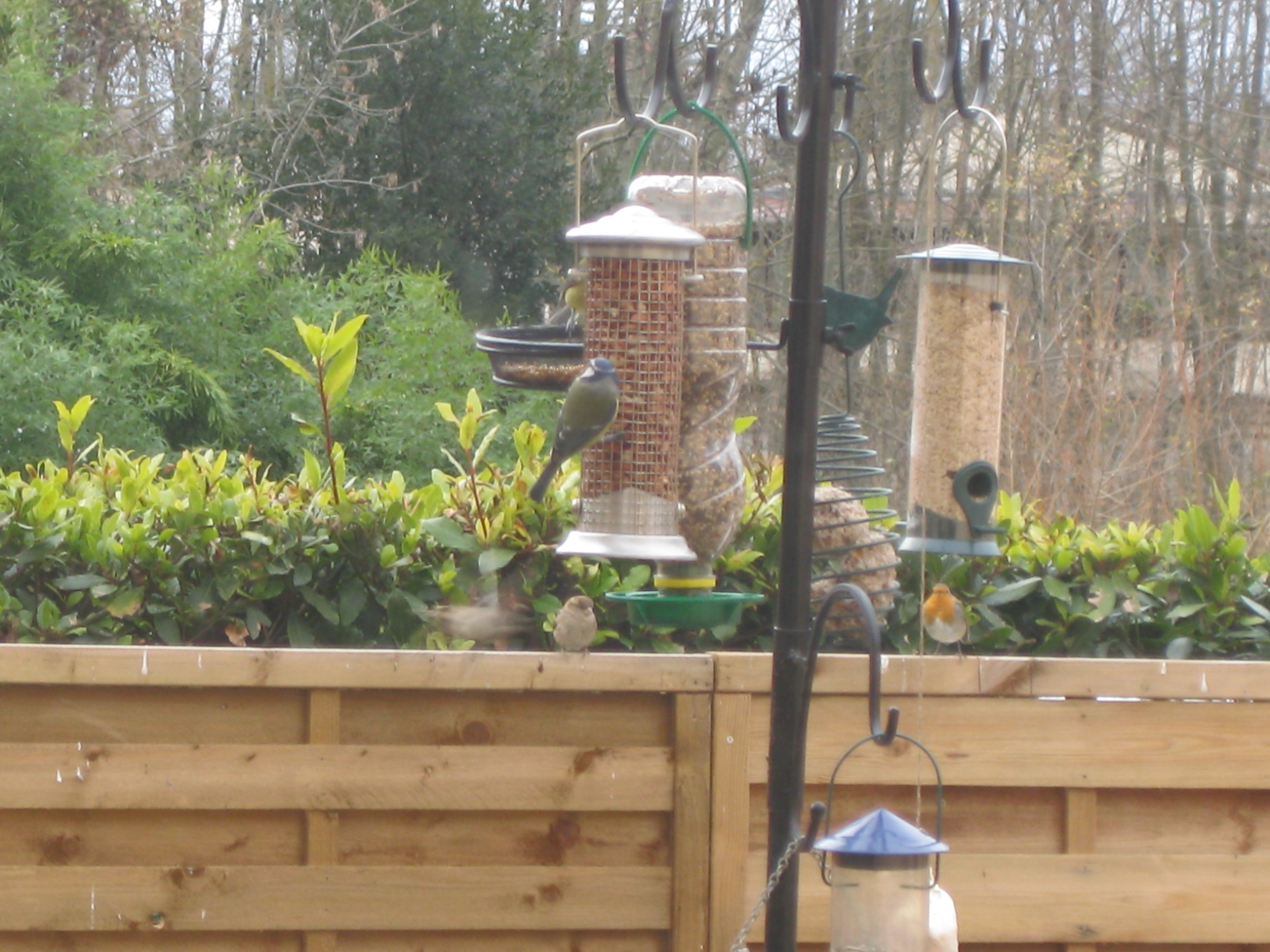
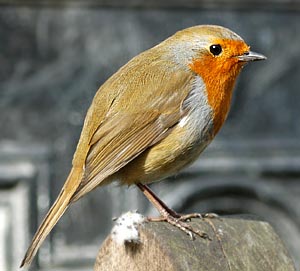
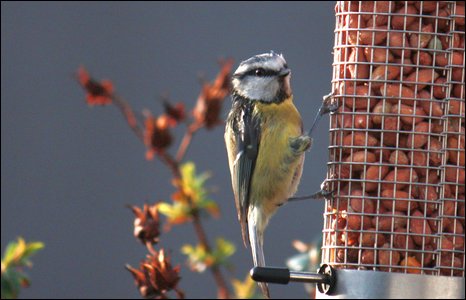
Here in our back yard in Laroque, we’re doing our best to keep our local birds happy. The usual suspects visit us: sparrows, blackbirds, various tits, robins, wagtails, redstarts: once, but only once, on 14th February last year, a whole flock of goldfinches descended and ate all we could offer.
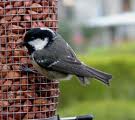
We offer a great menu. There are suet blocks, fat balls and feeders crammed variously with peanuts and all kinds of seeds. I even bought – at great expense – dried mealworms endorsed by Bill Oddie. Last year, all our birds fluttered, perched, fought, queued, squabbled, scoffing everything (apart from the suet blocks) that we put out. This year, they’re ignoring the whole lot, apart from the stale crumbs I chuck out after every meal. Which seems a bit like choosing a bag of crisps instead of a decent meal.
What’s up? There isn’t a cat within range, and the dog next door probably wouldn’t manage to catch a slug on the loose. Last year, disgusted that our birds ignored the suet blocks, I gave them all to a friend who lives out in the wilds of the Seronnais. She reported that HER birds were fighting over these goodies within hours.
So perhaps I should give all the bird food to her. But I don’t want to. They’ll give in eventually. Won’t they? Any ideas?
Yours,
Margaret
Lexique pour mes lecteurs français:
Bill Bailey : Stand up comique anglais
Bill Oddie: comédien et ornithologue anglais
Twitcher : observateur d’oiseaux amateur
Agony Uncle : journaliste responsable du courrier du coeur
Accent –local: If standard French is a challenge, how much more so is the local accent? Remember school French, and being told that usually you don’t pronounce the final letter? Doesn’t apply here. ‘Pain’ is ‘peng’, ‘loin’ is ‘lueng’, and so on. ‘G’s happen a lot – ‘tous ensemble’ becomes ‘tous angsamble’
L’Apero, l’heure de: Great custom
Bio: – organic. Buying organic food is ‘normale’ here, especially at the markets.
Bountiful free food: The hoarding season’s pretty much past its best now. We’ve been out looking for walnuts, almonds, chestnuts, rosehips, apples, sloes and coming home with the kind of quantities that will see us through the year. It’s a full time job.
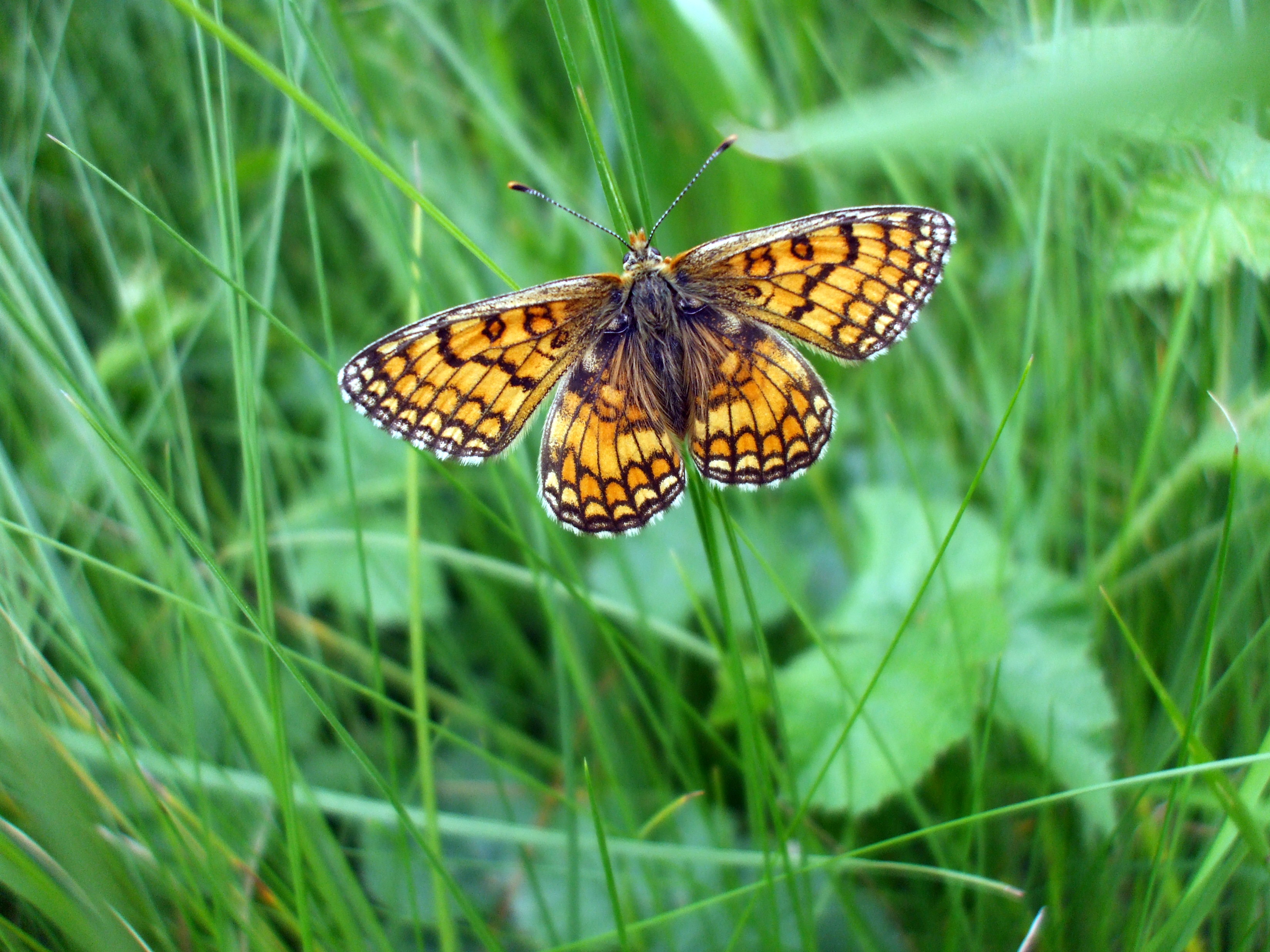
Butterflies: So many varieties, and seen everywhere, almost all the year round. Even yesterday, November 22nd.
Courtesy: Walking down the street here, it’s normal to offer greetings to everyone you meet. ‘Bonjour Madame!’ With anyone you actually know, you shake hands, maybe exchange bises on both cheeks. Small children greet you, surly teenagers greet you. It’s one of the real pleasures of small town life.
This sheep is currently not on milk-for-cheese duties
Cheeses: Cows, goats, sheep, all busily producing milk for dozens of varieties of (preferably non pasteurised) cheese: soft, hard, creamy, runny, mild, stinky.
Dépêche du Midi (La): It’s the local daily. We don’t often buy it, as world events seem to pass it by in favour of the marriage of the local lass in La Bastide de Bousignac.
En cas où…….. Out walking, we always have a spare bag stuffed in a pocket. En cas où we find some mushrooms, a handful of berries, some windfalls, a log for the fire. Everybody does it.
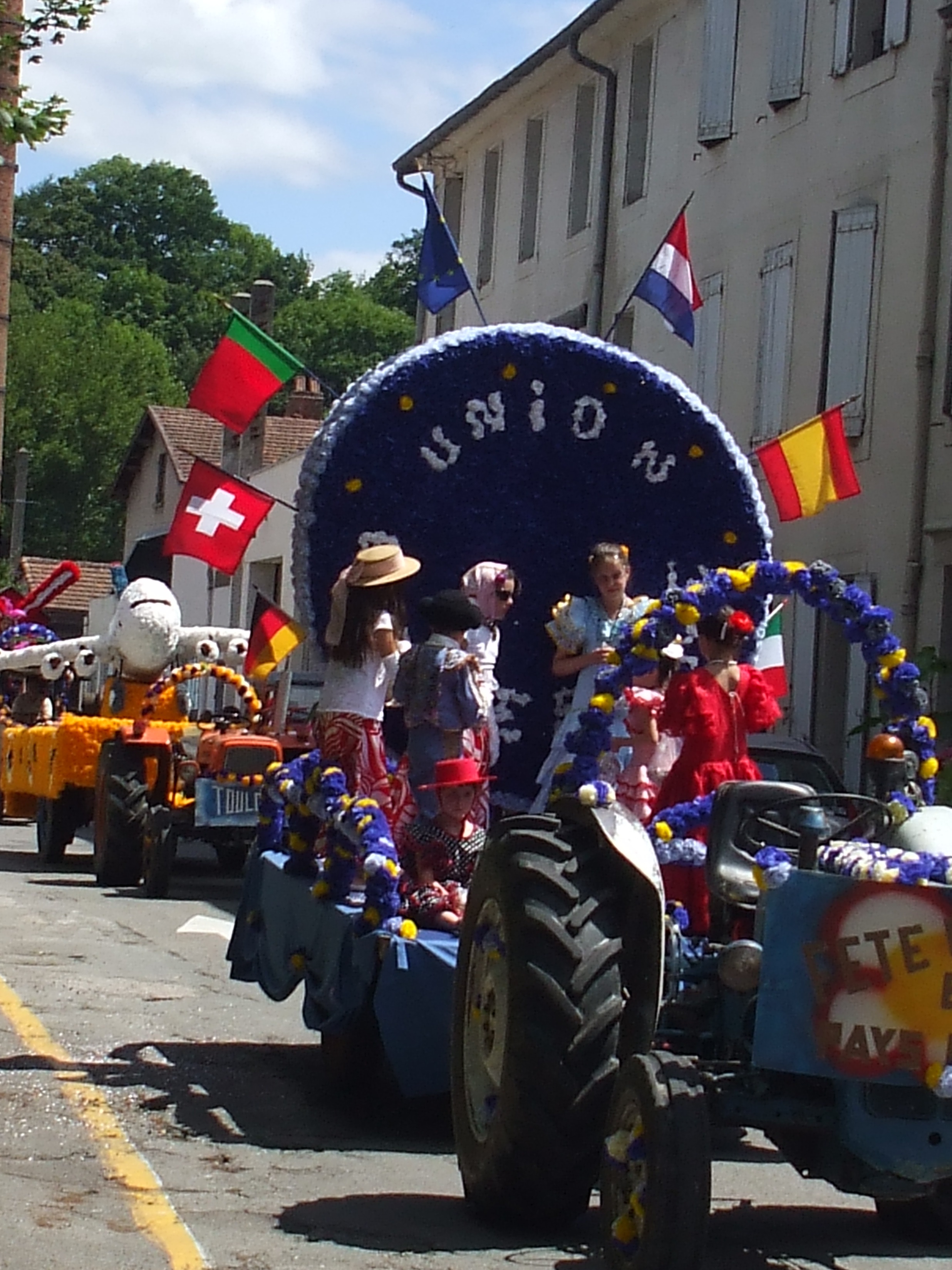
Fêtes Festivals and Fun: No weekend is complete without its fête, or festival, somewhere nearby. The other weekend saw the Fête de la Transhumance at le Sautel, with cows and sheep returning to the lowlands. There was a food market, a vide grenier (see below), films, dancing, a barbary organ, a big communal meal on Sunday. Le Sautel is a hamlet rather than a village, but it hasn’t stopped it running a right good show. Recently, there have been la Fête de la Noisette at Lavelanet, la Fête de la Figue at Mas d’Azil…. and in among, there are small local fêtes in nearby villages. No need to get bored at weekends, ever.
Gallic shrugs and gestures. I’ve posted about this before, and do you know, I don’t think my accent’s getting any better. I’m rubbish (shakes left hand vigorously with floppy movement from wrist)
History: I love it that so many people, especially older people, seem to know so much about the history of the region. They’re proud to tell you stories of times past, farming traditions and customs.
Ingenuity: The sort of make-do-and-mend that is such a feature of English allotment life is even more commonplace here. Our garden shed is made of several old doors, a redundant polystyrene fish box, random bits of corrugated iron and plastic screwed together, ancient bits of wire netting and bits of string. To our knowledge it’s been standing 20 years or more, and it’s not about to fall down.
Junk: Freecycle may not exist here – yet – but one person’s junk is another person’s lucky find. We take our household rubbish to central collection points – no dustbin collections here. On Sunday evenings, lots of people (including us, naturally) will be hovering to walk off with and make use of discarded pans, empty packaging, toys, plant pots….
Kilometres and Kilometres of space….. North Yorkshire, which always seems spacious by English standards, has a population density of 74 people per square km. The Ariège has 28. So there’s plenty of room
Lizards: Our garden companions on any sunny day
Lunar calendar: Planting by the phases of the moon is completely mainstream here. Gardening magazines carry free lunar calendars early every spring, and anybody you talk to will give you unsolicited advice on which day the moon dictates you get those spuds into the ground
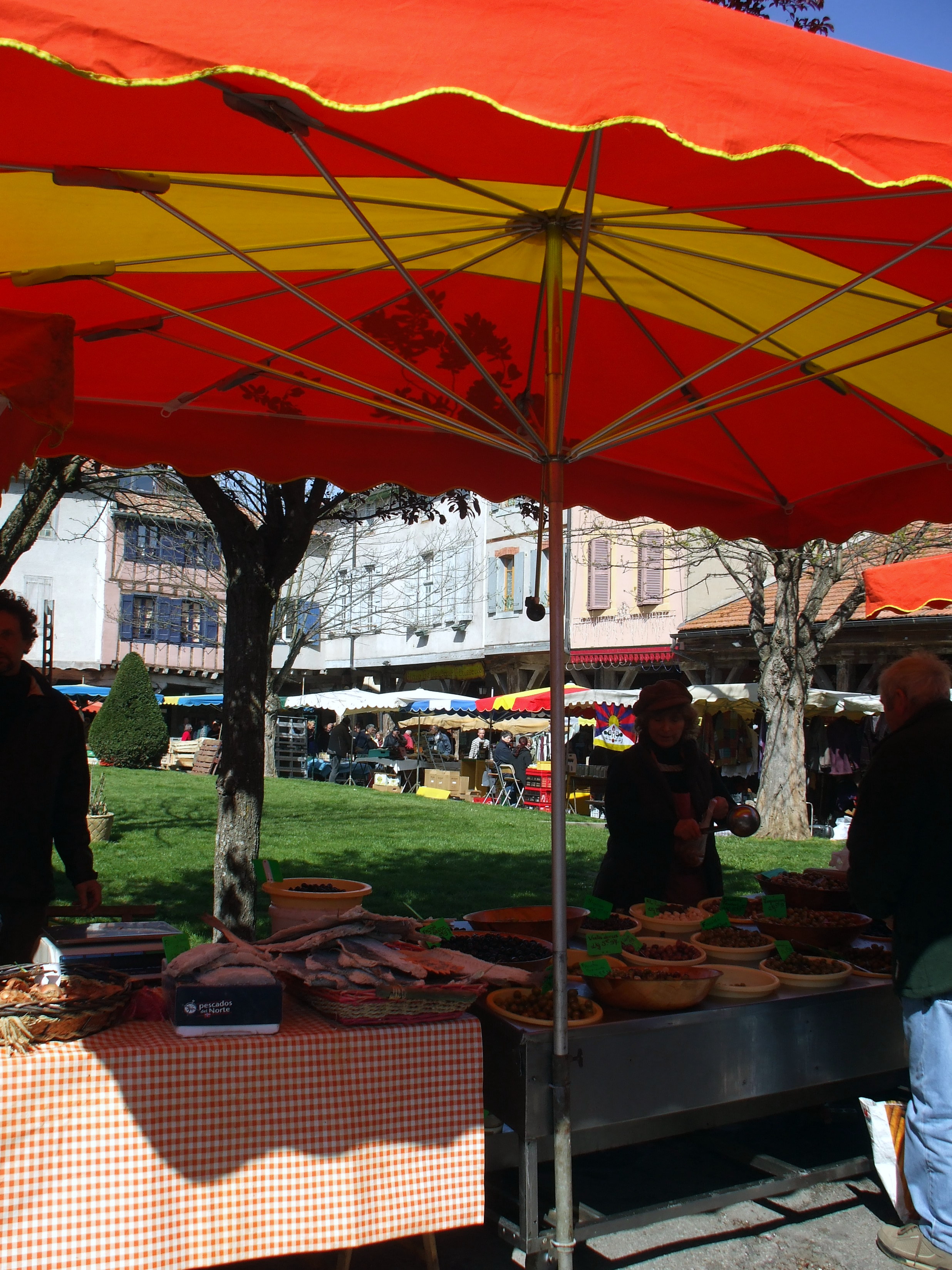
Monday market, Mirepoix
Markets: The best and happiest way to shop for fresh seasonal food. Don’t be in a hurry though.
Music: So important here. Concerts of every kind, cheap or free, in public buildings, market halls and squares, and churches everywhere. Choirs (introduced to a large extent by the English apparently) in most communes – I belong to two. Bands and singers at fêtes. Even small towns like ours have their own music centres. And lots of bars are home to groups of local musicians too.
Non! Protest comes naturally to the French. We’ve even been on a ‘manif’ ourselves, protesting at teacher cuts. But you won’t travel too far in France before you see signs painted, very large, across the road. ‘Non à l’ours’ (bears are being reintroduced to the Pyrénées, to the disgust of the farmers). ‘Non à la déchetterie!’ (tip), ‘Non aux aeoliennes !’ (wind farms)
Occitan: The everyday language of south western France until well into the 20th century, the Lenga d’òc is little spoken now, thanks to the systematic imposition of the French language in the early years of the twentieth century. Nevertheless, we do hear the elderly speaking it from time to time. It’s once again taught as an option in schools, and in adult education classes. I love passing through the many places that celebrate their Occitan heritage by having town and street names expressed in Occitan as well as French – Autariba rather than Auterive for example.
Patrimoine in the Pays d’Olmes et Pyrénées: ‘Patrimoine’ translates I suppose as ‘heritage’, but it’s not quite as chintzy and twee as that word suggests. Everyone here is proud of their history, and there’s so much going on to celebrate it – talks, walks, conferences, often with a meal thrown in. Just join the party!
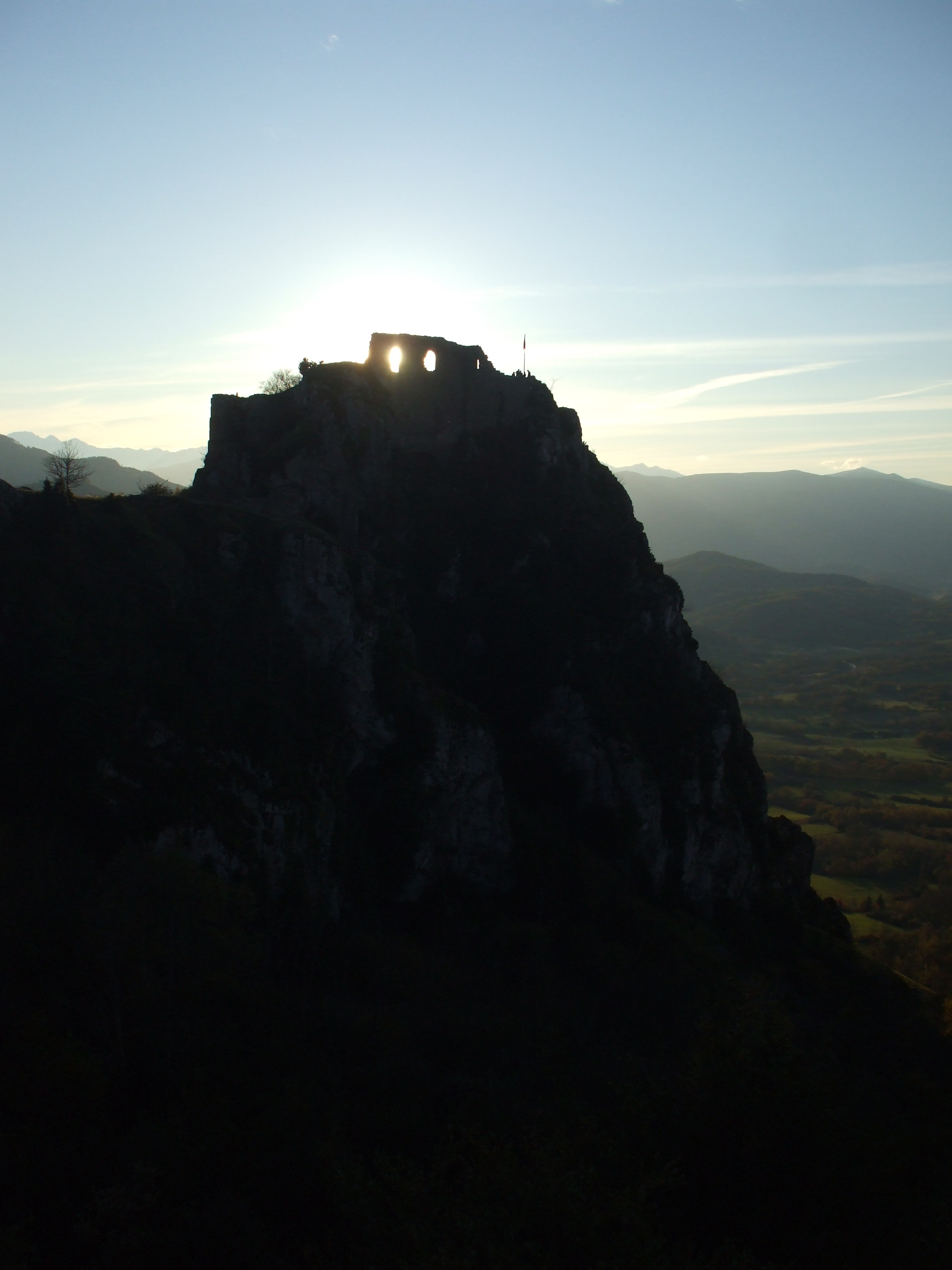
Sunset over Roquefixade
Queuing. Don’t let anyone tell you that only the English queue. It’s part of life in neighbourhood shops and markets here. But it’s not a problem. It’s an opportunity to chat with friends and strangers, exchanging local gossip, recipes, scandals. If it’s our cheese man in Lavelanet market, he’ll join in too, and you’ll never get away
Restaurants: I’m not thinking of the elegant once-in-a-blue-moon meal out. I’m thinking of the ‘formule’ at midday, when to a large extent you get what you’re given, in copious and well cooked quantities. Take today, when we went to a fairly down-at-heel looking brasserie on a busy street corner at the wrong end of town. Great salad, followed by tender tasty magret de canard and wonderfully creamy dauphinoise potatoes, a home made concoction of fromage blanc and crème chantilly, coffee, wine, all for 12 euros. We shan’t be eating again today….
Shopping-centre-free-zone. Bliss. Also, though this has recently been partially undermined, almost no Sunday shopping. AND shops usually close for between 2 and 4 hours at midday
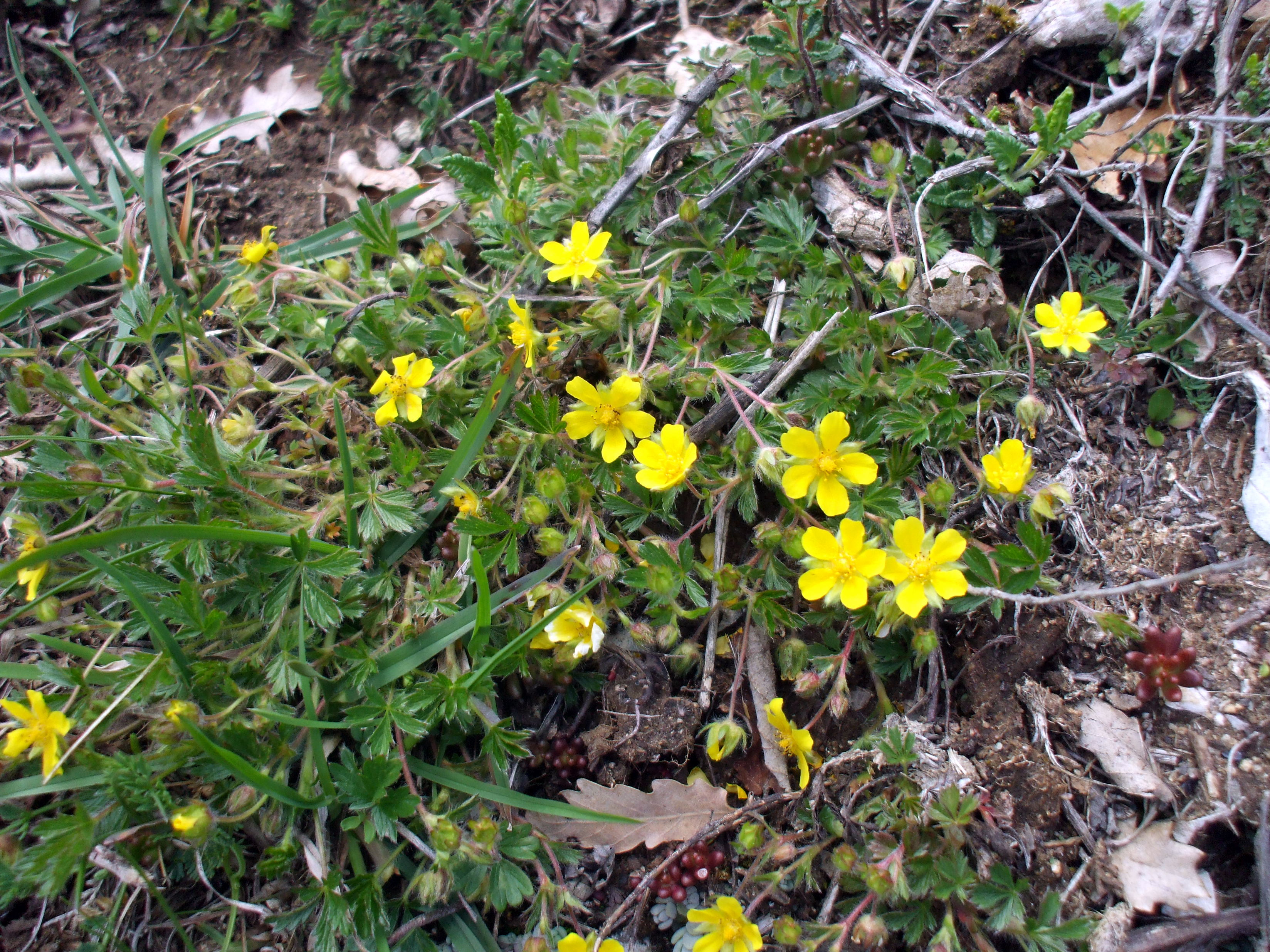
Temperatures: Proper seasons here. Summers are hot, winters cold. Autumn, warm, is a time of glorious colour and food for free. Spring, warm, is a treat for its flowers
Underwear. If you want to be disabused of the notion that the French are chic, that haute couture rules, go to any market stall selling women’s undies. Turquoise knickers, orange bras, lime green or luridly lavender matching sets….. And while you’re there, check out those lovely pinafore dresses so beloved of French women of a certain age. Wonder when I’ll be old enough to wear one?
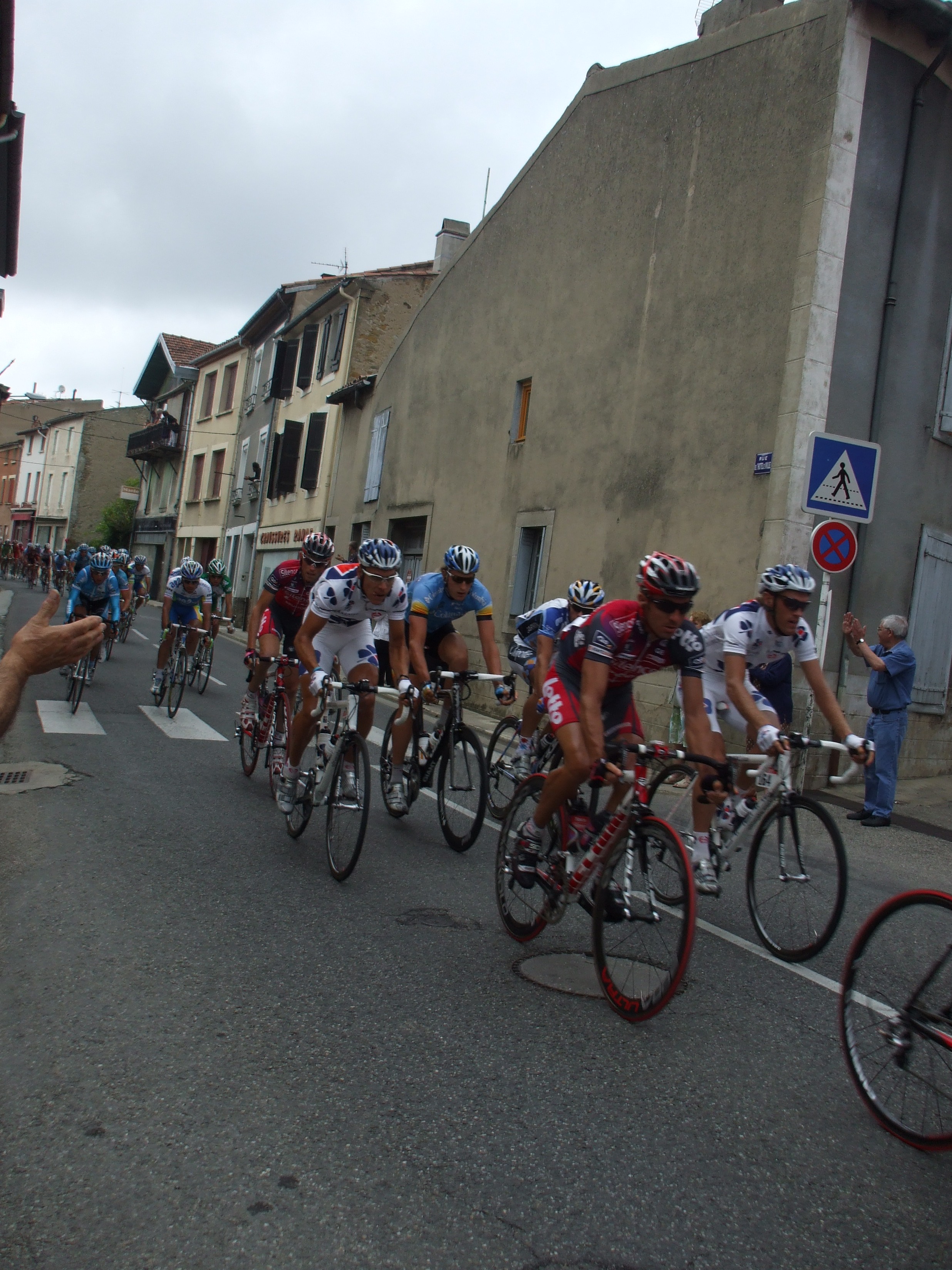
The Tour de France whips down our street in 2008
Vélo . Cycling’s big here. Any cyclist, old or young, is kitted out in skin tight lycra, and may well own a bike costing several thousand euros. There’s a cycling club here that meets on Wednesdays and Saturdays. Its runs are routinely 120 km. or more (and it’s very hilly). The wimps manage some 80 km., but only ‘les ancêtres’ can get away with a mere 40 km or so
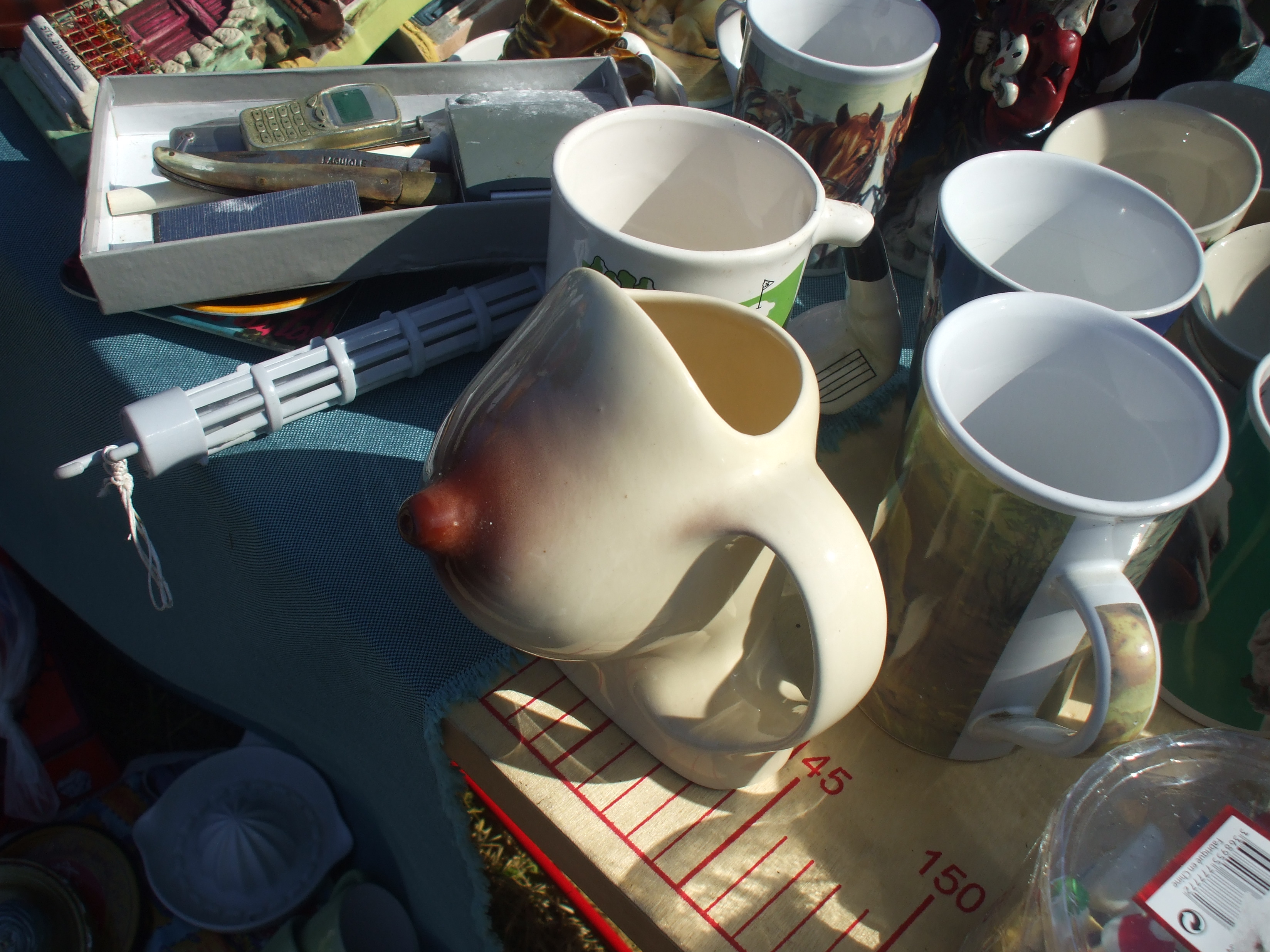
A lucky find at a vide grenier?
Vide Greniers; People here empty their attics instead of filling their car boots. Any Sunday in spring, summer or autumn some commune or another nearby will have a Vide Grenier organized. One of the larger streets, and probably a few more besides, will have been taken over by the sellers, who display their goods from early morning till supper time,. It’s the same mixture as an English car boot sale, with the addition of all kinds of rusting tools and junk that really HAS come out of the attic. Nobody will buy it. It’ll just appear at the next sale
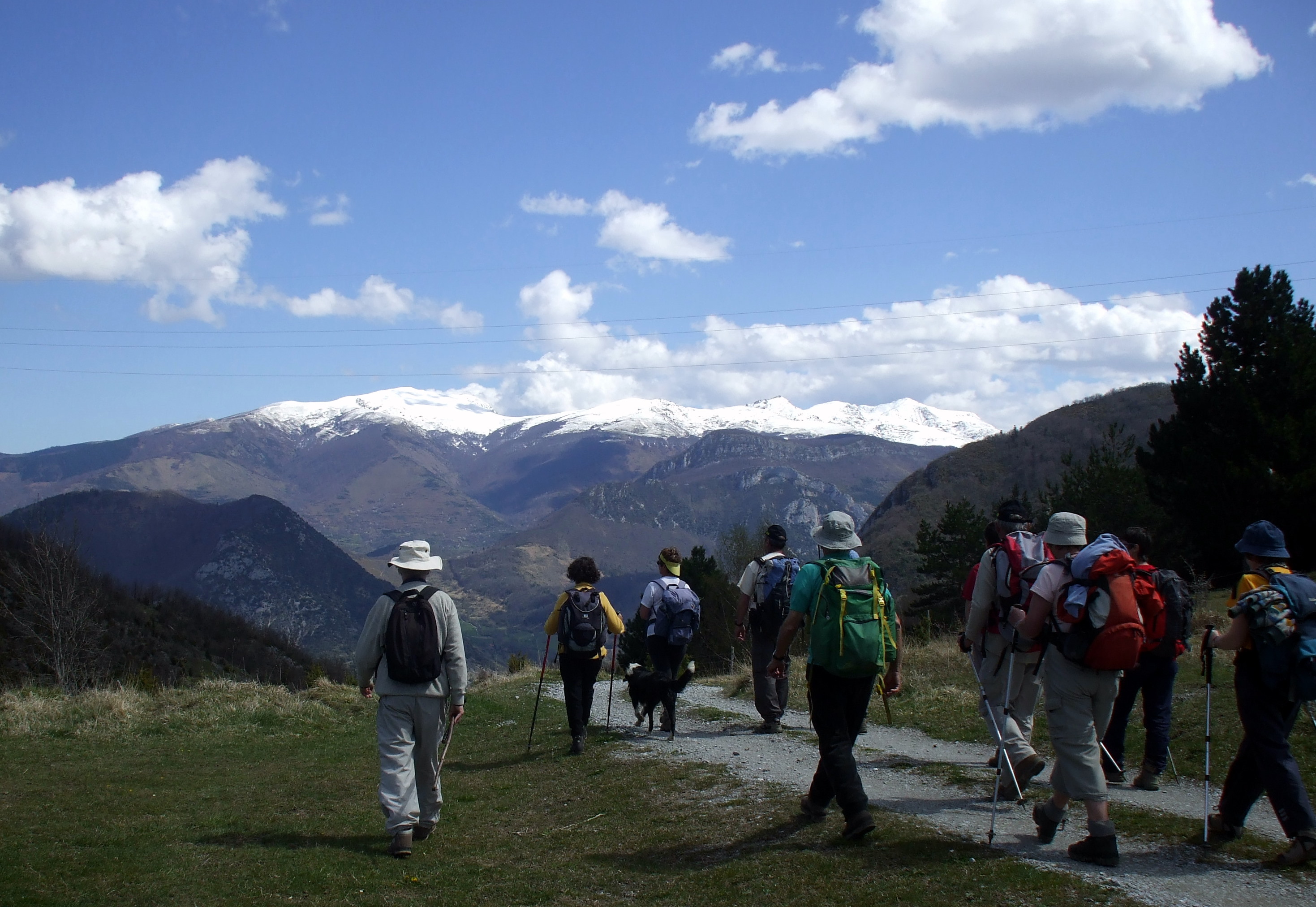
A walk with our group, near Tarascon
Walking: so many walks, so much variety. We love learning about new places to explore from books, from maps, from talking to friends, from walking groups. We’ll never run out of fresh walks to try, ever.
Wood-burning stoves: So cosy, we really looked forward to November chill. As for foraging for wood, see ‘en cas où ’, above
Xmas. In early September, a friend over from the UK said that Christmas had already started in the shops. We’re happy to report that nothing at all will happen here until the first week of December at the earliest. Wonderful.
You: Here, there’s the whole tricky business of ‘tu’ or ‘vous’, and it’s a minefield. Children and your friends are of course ‘tu’. The shopkeeper, the bank manager and those adults you really don’t know, are obviously ‘vous’. But there’s a whole grey area in between. Fellow randonneurs and choir members generally settle for ‘tu’ from Day 1, on the grounds we’re all in this together. But not necessarily. Last year at Choir, I sat between 2 women, both more or less my age, both chatty and friendly. To one I was routinely ‘tu’, to the other. ‘vous’. And I was supposed to pick the bones out of that??
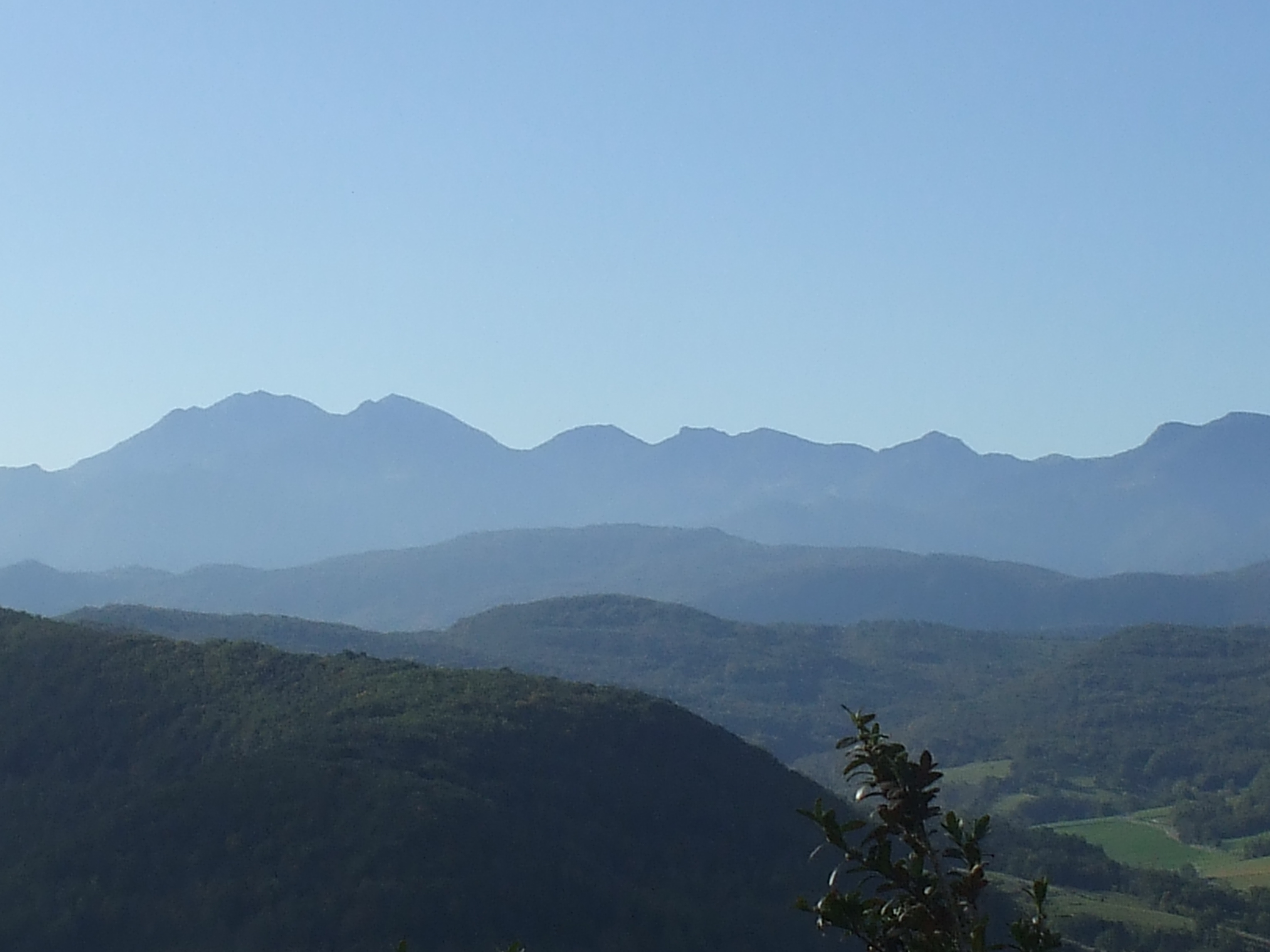
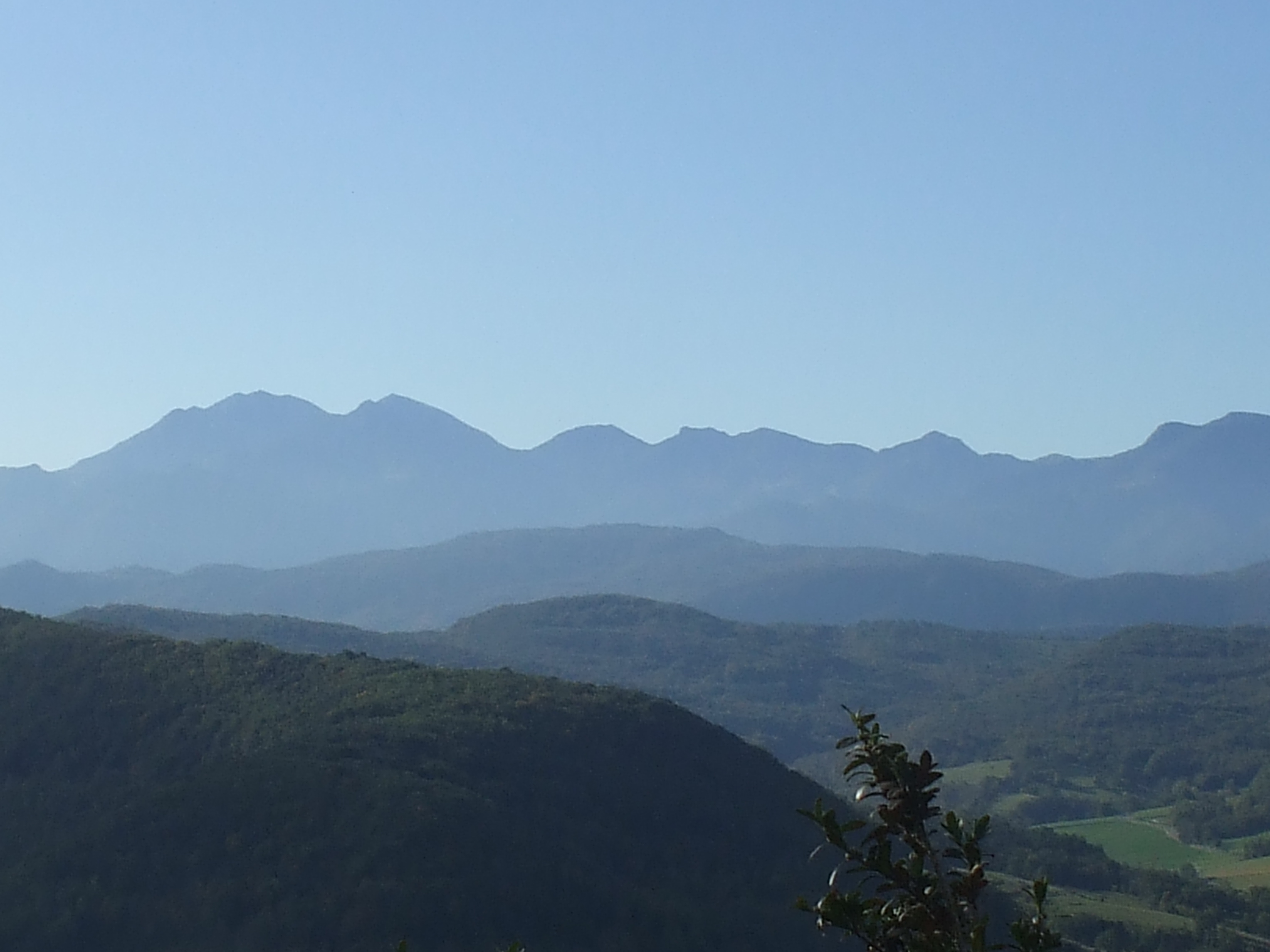
Zero Neuf: 09, the Ariège, our department. We love the space, the huge variety of scenery. There’s gently rolling countryside that wouldn’t be out of place in Shropshire with its orchards and winding lanes, oak and beech forests, gentle foothills with grey Gascon cattle, and stunning, awe-inspiring mountains with craggy outcrops and peaks. And all within easy reach of our house.
A few minutes from our house...and this is the view






 From Pyrenees to Pennines


You must be logged in to post a comment.