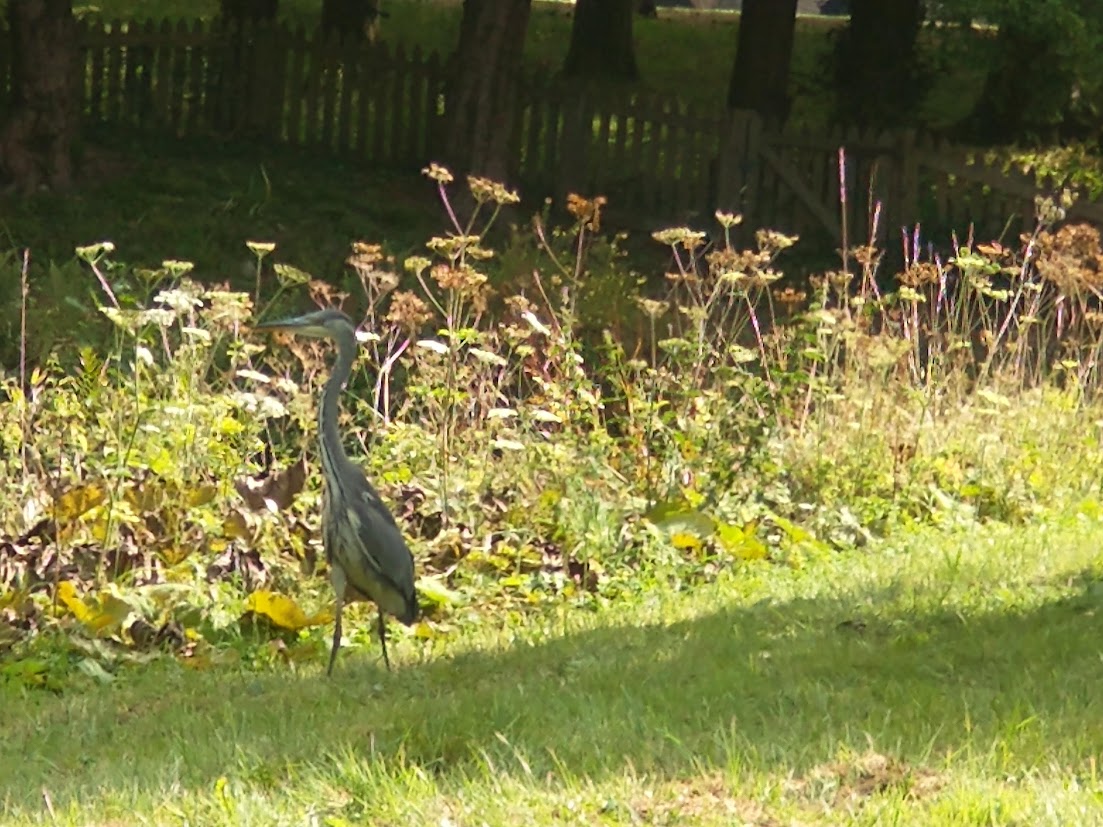
Walking through the orchard at Fountains Abbey early yesterday, I came upon this heron, not 10 feet away. He was unconcerned about me, and spent his time alert for a breakfast meal. He found three courses during the time I watched him – about 20 minutes. This video shows him enjoying just one of them.
A heron out hunting along the river bank for breakfast.
It’s my last (and first) video of the month. My last shot of the month is also one of the heron, and is my featured photo. I was quite fed up that I only had my bargain-basement phone with me, rather than my camera. Never mind.
Bird photography isn’t something I excel at. No long lenses, no patience. But today, just so I can join in three whole challenges listed below, I offer you seven images. Not seven birds, please note. Just seven images.
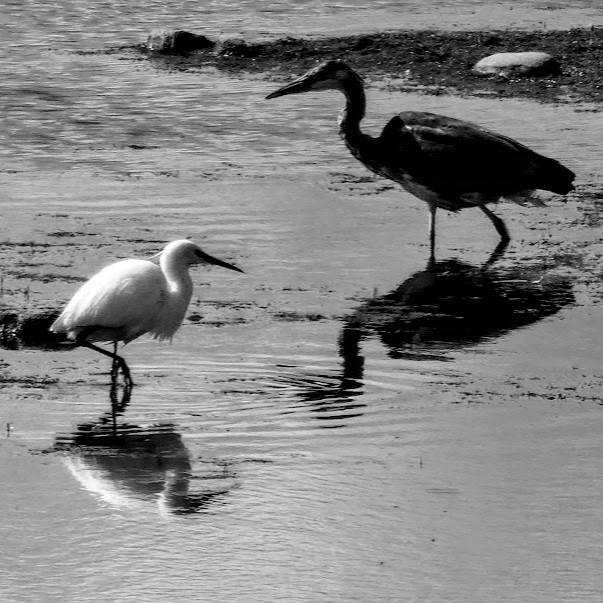
My feature photo is of an egret and a heron studiously ignoring one another at our local nature reserve.
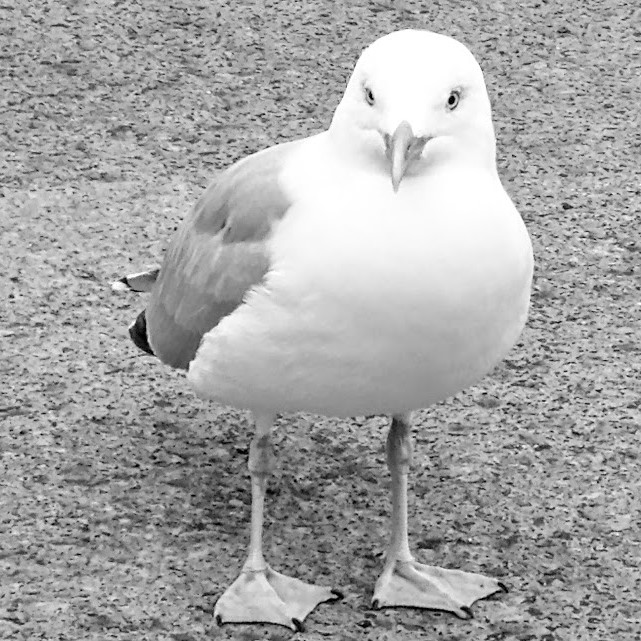
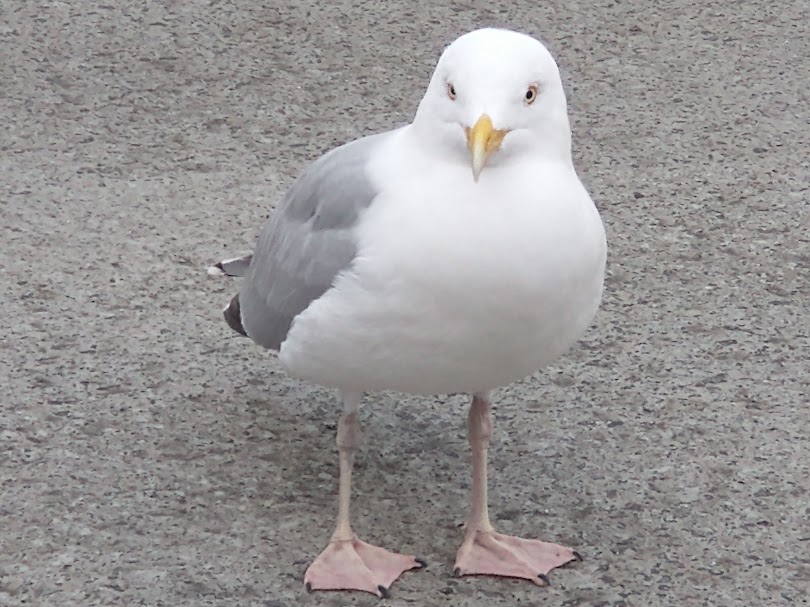
And my next is of a herring gull. Doubtless it’s a mug shot of him taken at the police station, as he helps police with their enquiries over the matter of the fish and chips snatched from a blameless pensioner eating his take-away fish dinner on the seafront.
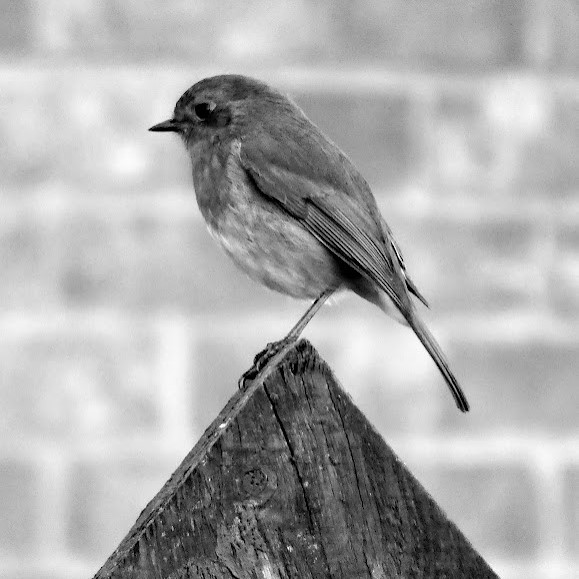
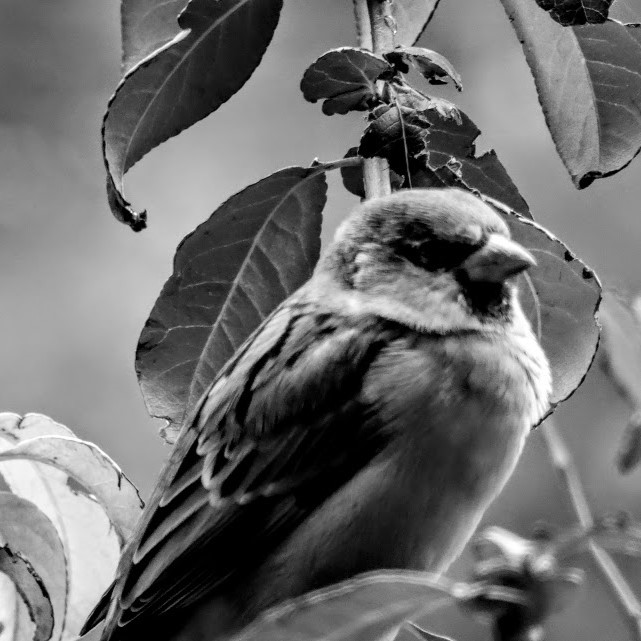
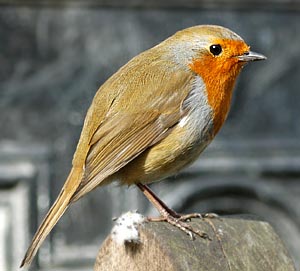
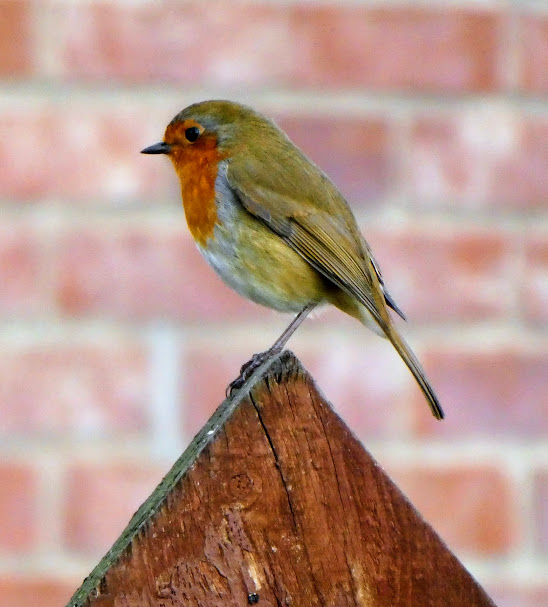
The next two are familiar local residents: a robin posing for a Christmas card: and a house sparrow in reflective mood.
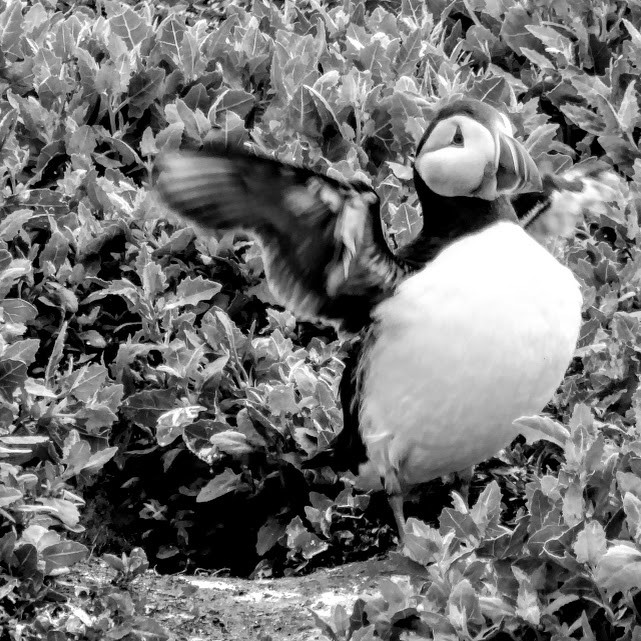
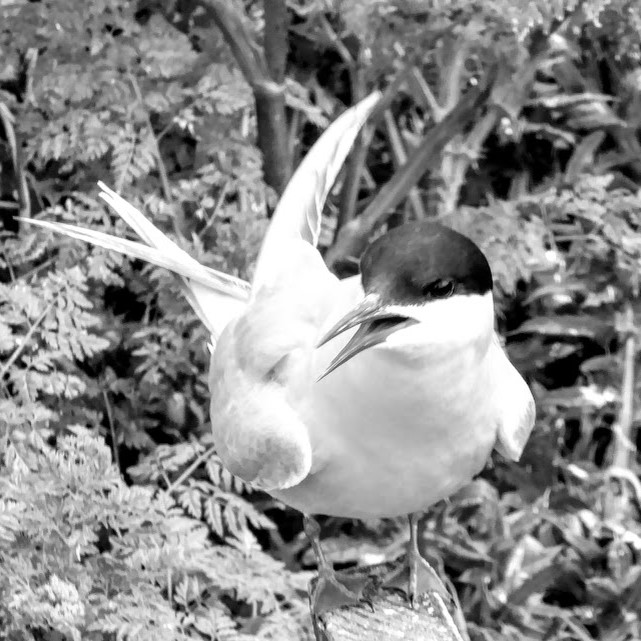
Back to the seaside. To the Farne Islands. Here is a puffin stretching his wings: and an irritated Arctic tern objecting to my possibly disturbing his young.
We’ll end where we (nearly) began: with two birds – cormorants in this case, ignoring one another at another local nature reserve.
The featured image is of a herring gull who paraded obstreperously outside our car – only our car – as we waited to board the ferry at Dover. It was elevenses time-ish, but we displayed no evidence of snacking, so I don’t know what it was all about.
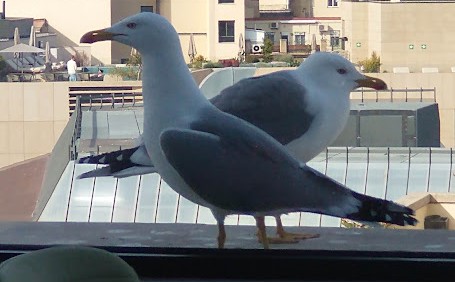
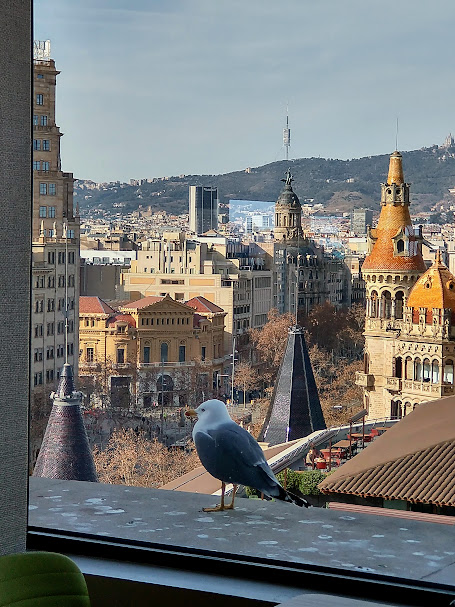
These other gulls are, according to Google Lens, yellow-legged gulls, and closely related to the herring gull. These specimens were loitering on the window ledge of the roof top café from which we were enjoying the view in the centre of Barcelona.
Thank you, everybody who identified last week’s creature as an Egyptian Grasshopper. It is good to know what this impressive creature is.
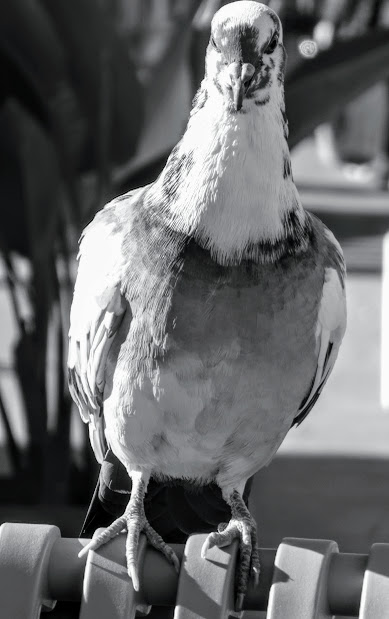
Pigeons of different varieties are apparently found on every continent on earth except Antarctica. I’m not surprised. I’ve yet to visit a country where I’ve seen none. This particular specimen was opportunistically hanging round the outside tables of a a café down at the port in Premià de Mar on Thursday. There were croissant crumbs to be had …
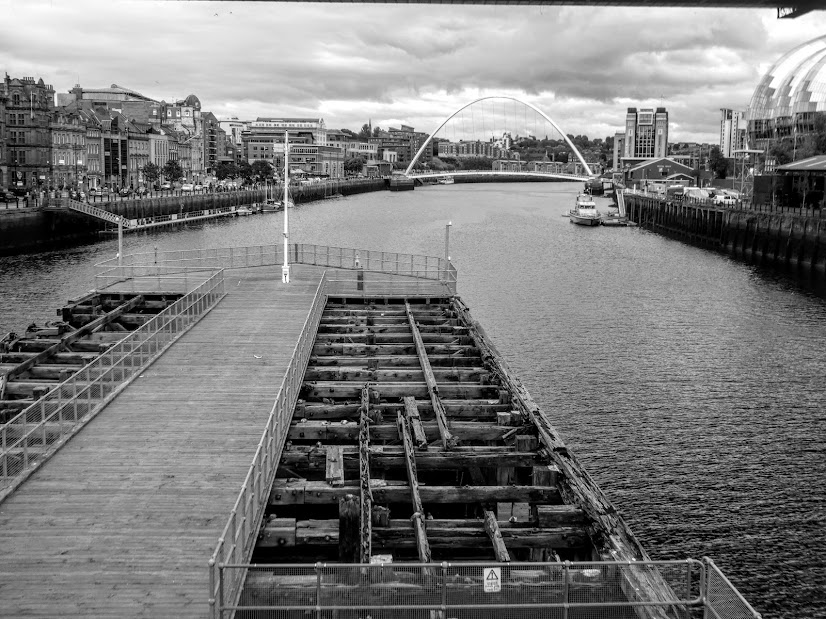
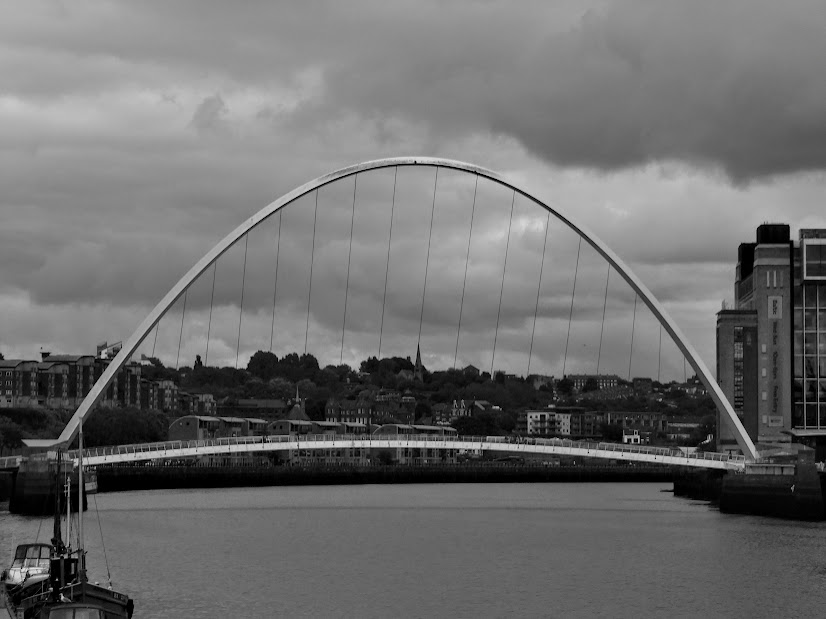
Our day in Newcastle earlier this week wasn’t just about people-watching. We’d come to walk the banks of the Tyne, weaving back and forth over at least some of its seven bridges. Let’s take a bird’s eye view of the scenes we saw.
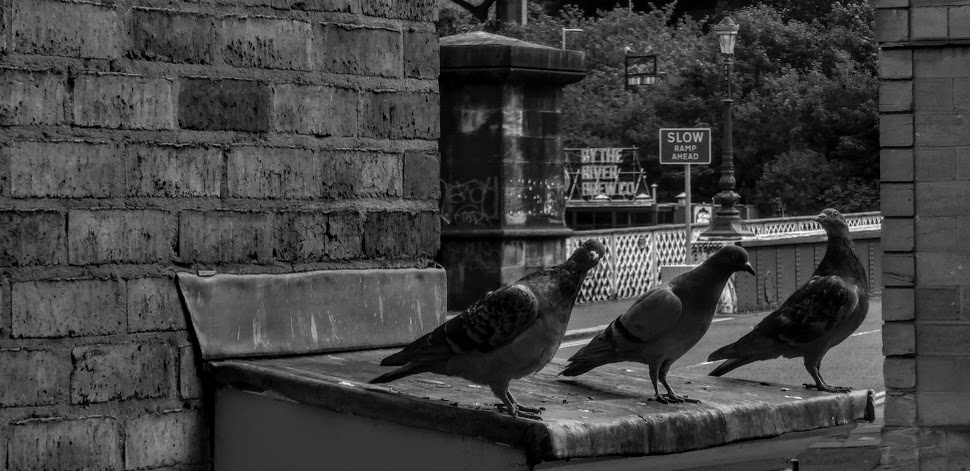
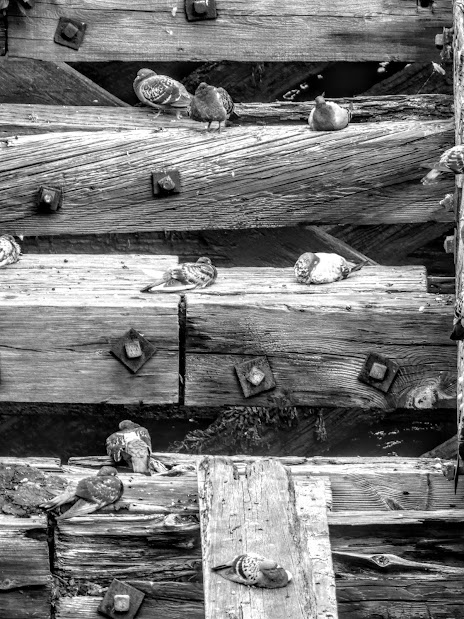
This is what those pigeons in the header photo were looking for.
This is the Tyne Bridge, with just beyond, the Sage Gateshead and the Baltic Centre.
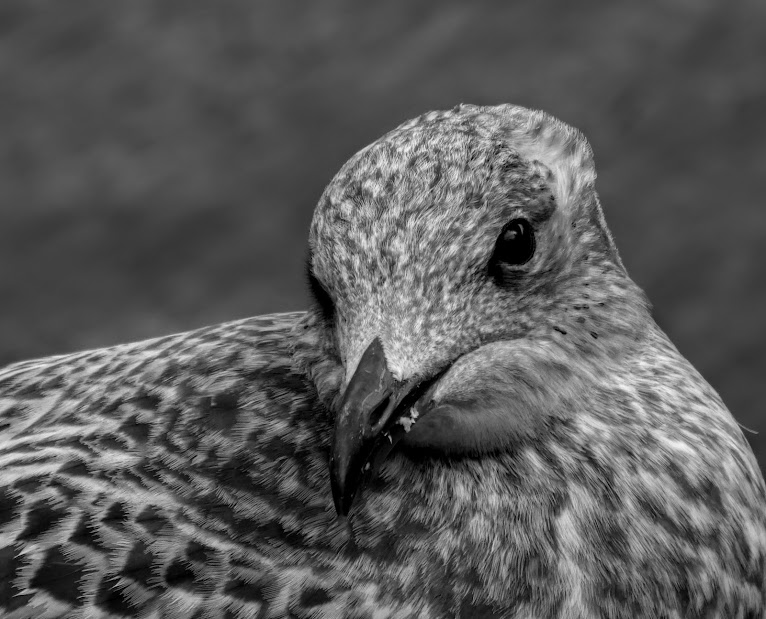
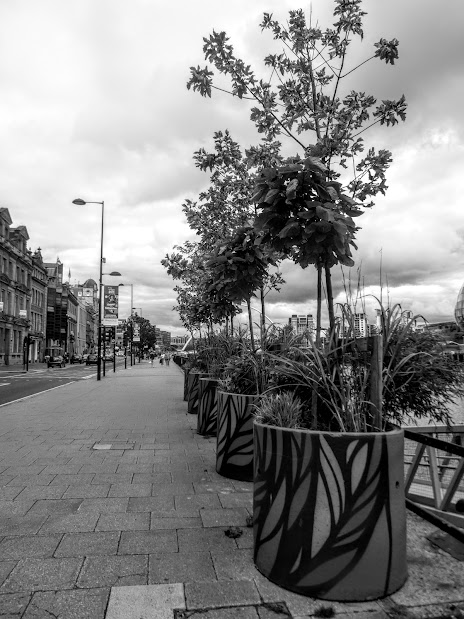
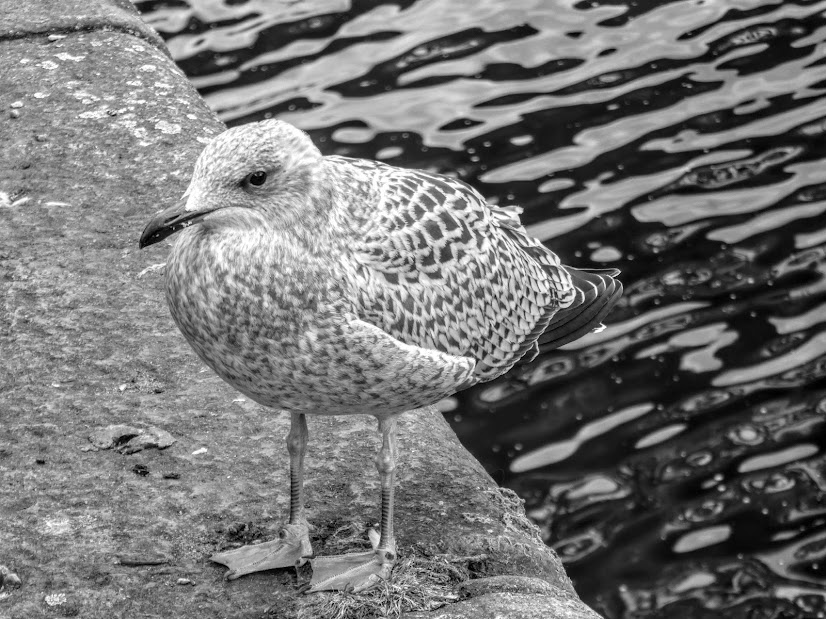
This young herring gull was inspecting me as I inspected him. He was tucked behind a railing just beyond that first planter.
We wandered onto the Swing Bridge, which luckily didn’t want to open to allow river traffic through. Its elderly wooden jetties provided the perfect resting place for gangs of pigeons.
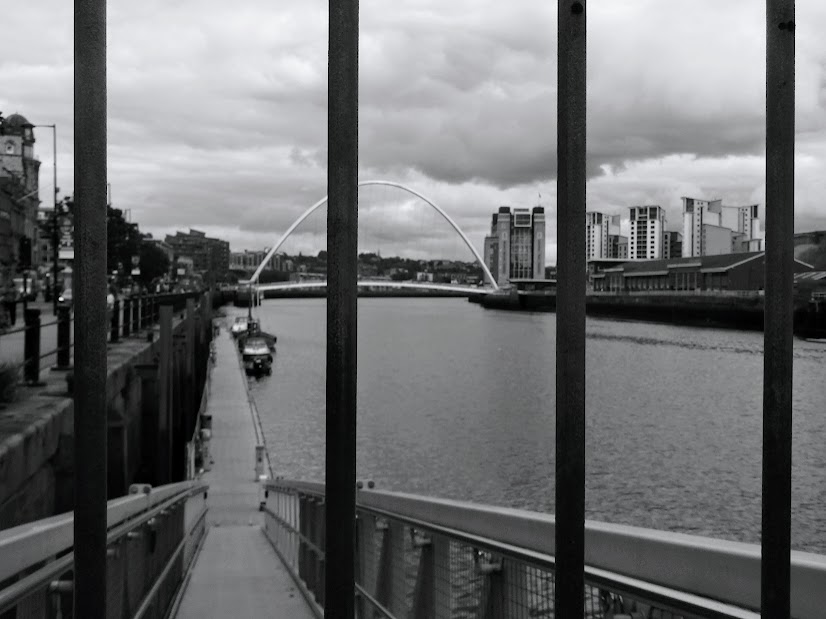
Then we walked down this walkway, for another view of the Millennium Bridge …
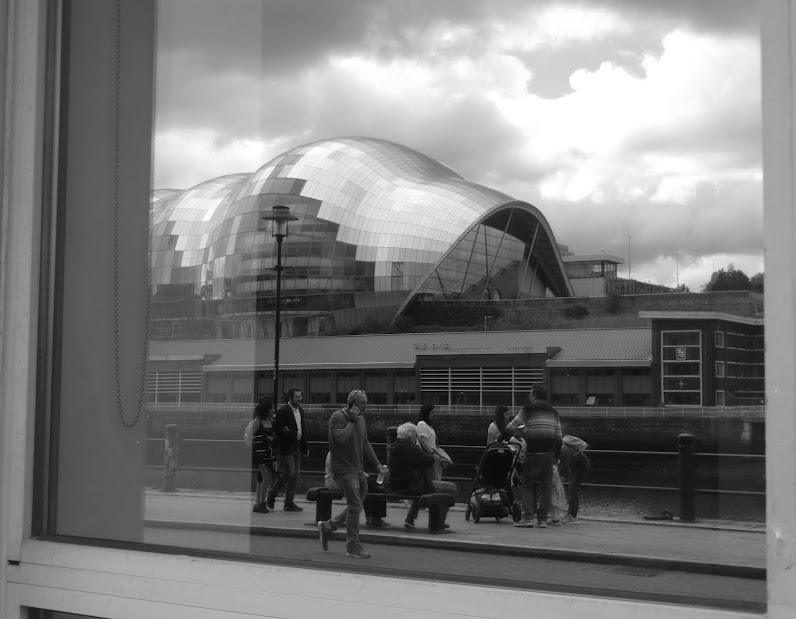
… but one of our views of the Sage was reflected in a nearby office window.
We didn’t really see any more wildlife. Unless this counts.
I’ll see if I’m allowed to sneak both the pigeons and the herring gull into I. J. Khanewala’s Bird of the Week.
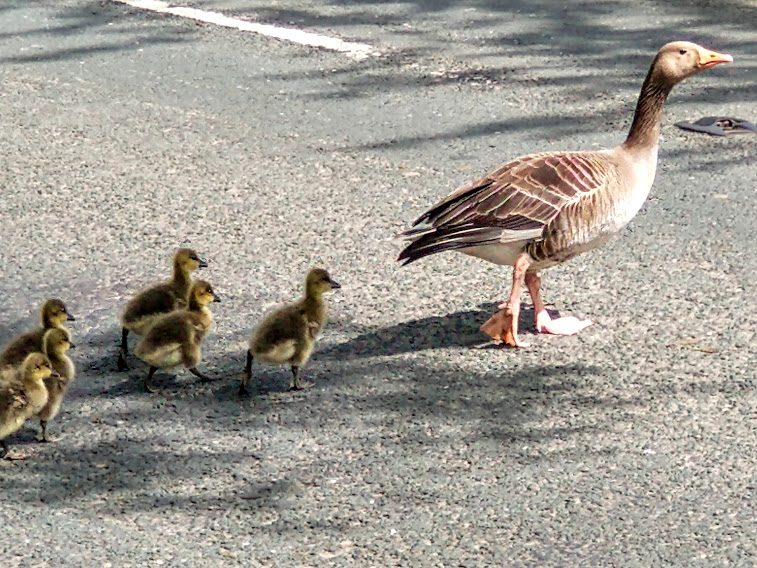
We don’t know. In the village, we have ponds on either side of the road, so why bother? I suspect they enjoy having every car, motorbike and lorry grind to a halt, allowing a small and patient queue of traffic to form in both directions. Sadly, I’ve always been just a little too far away to get a photo that properly represents the tailback.
Practising road-crossing skills on a footpath.
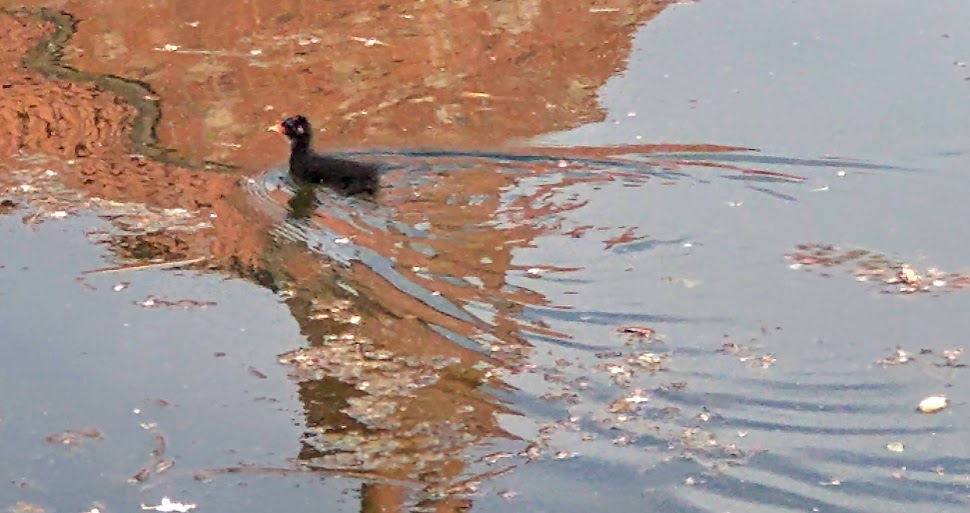
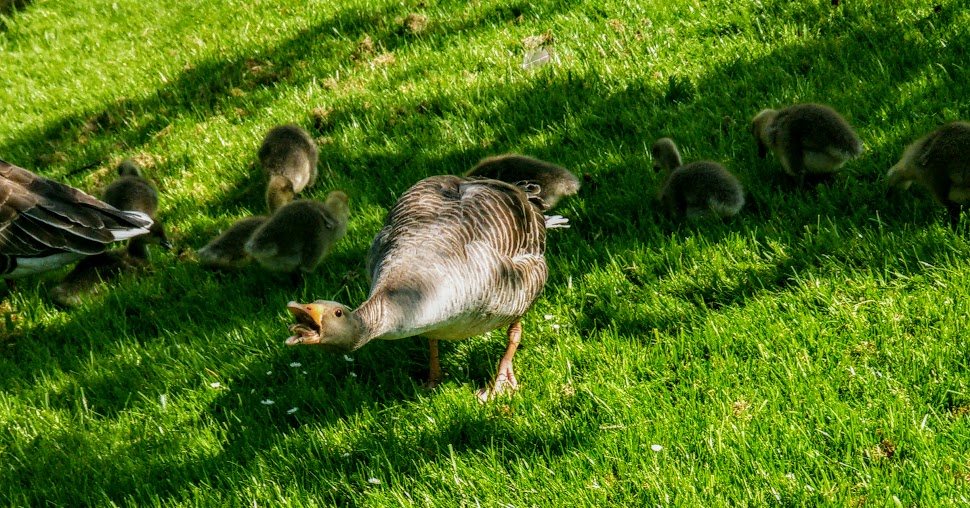
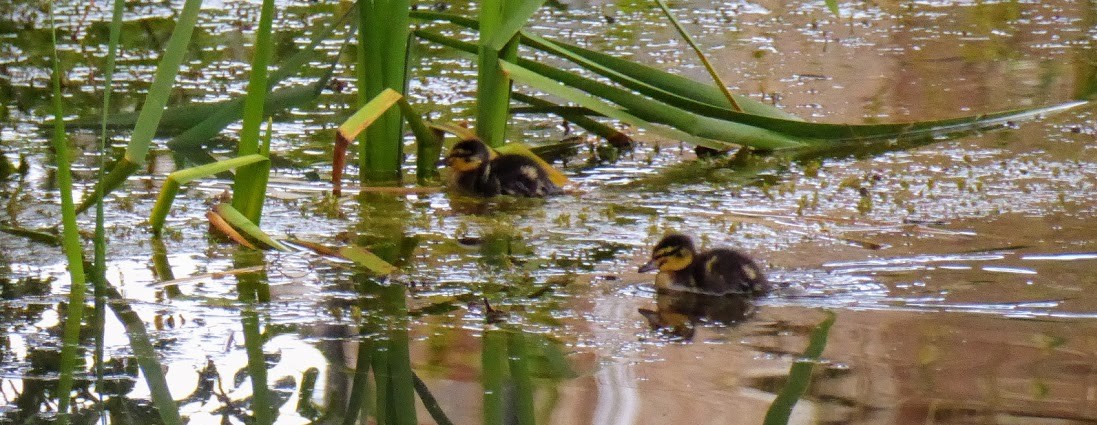
Our geese are less than popular here. Because of them, our mallard population’s efforts to breed come to nothing. So far this year, no duckling has survived longer than two days. I’m more hopeful for the moorhens.
A solitary baby moorhen.
The pavements are thick with goose droppings and hard to dodge, especially if you’re a toddler. The geese have spread from their traditional home down the road at Lightwater Valley, where there’s still room for them. On our smaller village ponds, they’ve chased away any of the quite large variety of ducks who used at least to call in for a while.
They’re hissy, protective parents.
Looking around the area – generally, it seems that geese – generally – are out for World Domination. They’re tough enough not to be predated, and are fierce unfriendly neighbours. Does it look that way where you are ?
I’m getting in early for Brian’s Last on the Card. Just to make sure I don’t cheat and take any more photos this month, I’ll leave my phone behind, and not take my camera with me when I go out.
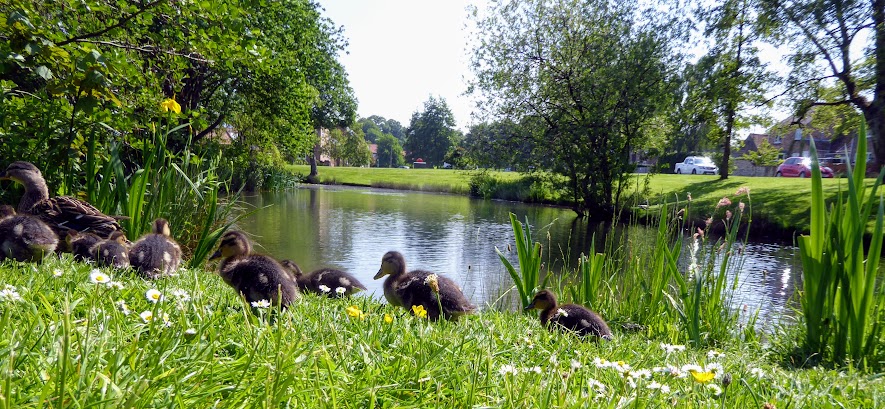
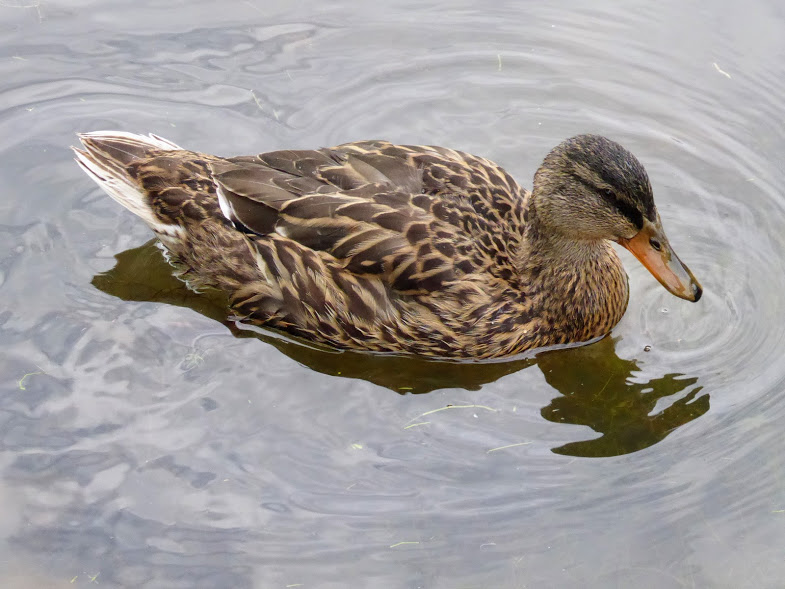
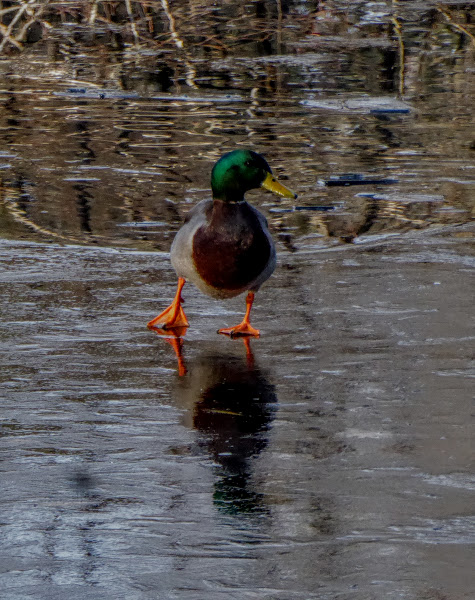
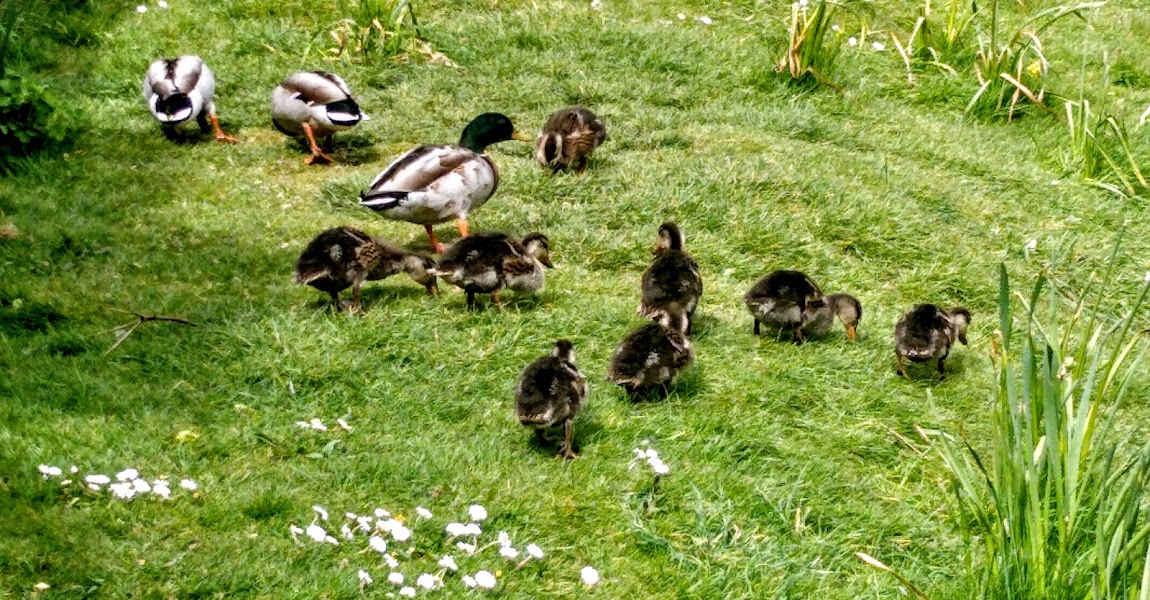
We’re lucky. Our village has not just one, but three village ponds. It’s home to a variety of geese, to coots and moorhens … and to any number of mallards. Males seem to outnumber females. Most days in the spring and summer the laddish drakes – if they’re not lazing around on the grass – like so many teenage boys, mob the younger females in a rather aimless and half-hearted fashion.
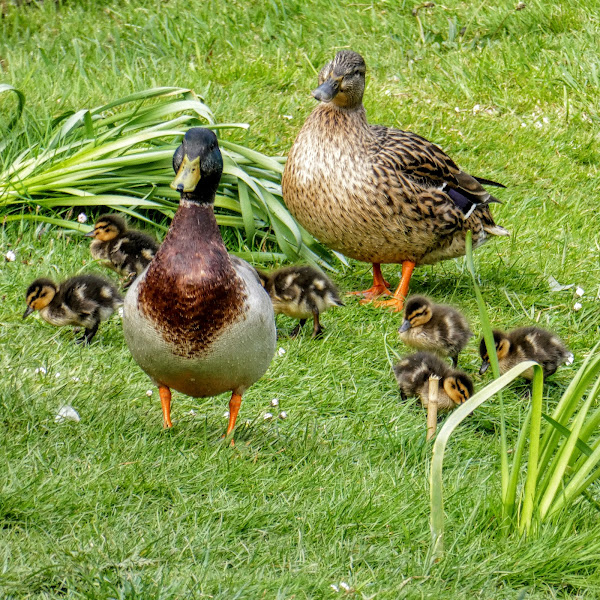
We’re nearly at the time of year when ducklings will hatch and charm us all. The ponds are on both sides of the main-ish road that splices the village in two: the mother ducks march their broods back and forth, confident that traffic – yes even huge and heavy municipal dustbin lorries – will instantly grind to a halt to let the young family cross.
Nevertheless, few broods grow intact to adulthood. Jealous mallards despatch ducklings not their own. Geese kill them. Foxes take them to feed their own young. Herons visit. And despite the care most drivers take, there are traffic accidents. We often wonder what happened to the brood that Malcolm spotted one day on a lane near here: a mother duck leading fourteen – yes fourteen – ducklings along the road.







 From Pyrenees to Pennines
You must be logged in to post a comment.