The Tour de France: a dilemma

La Boulangerie Fonquernie at Laroque prepares for the arrival of the Tour de France

We have a few of the family here staying with us.  They claim that they want to see us.  They’ve mentioned walking in and near the mountains.  They certainly want good food and wine – lots of it – whether here at home or in one of the restaurants in the patch.

Really though, they’ve chosen this weekend with some care.  It’s the one when the Tour de France whizzes past our house.

Today then has been a day of careful research in advance of Sunday’s ‘fly past’.  There was a planning meeting at a nearby restaurant, ‘La Maison’, over copious and varied hors d’oeuvres, blanquette d’agneau and bavarois de framboises to decide what we should choose as our vantage point for the action.
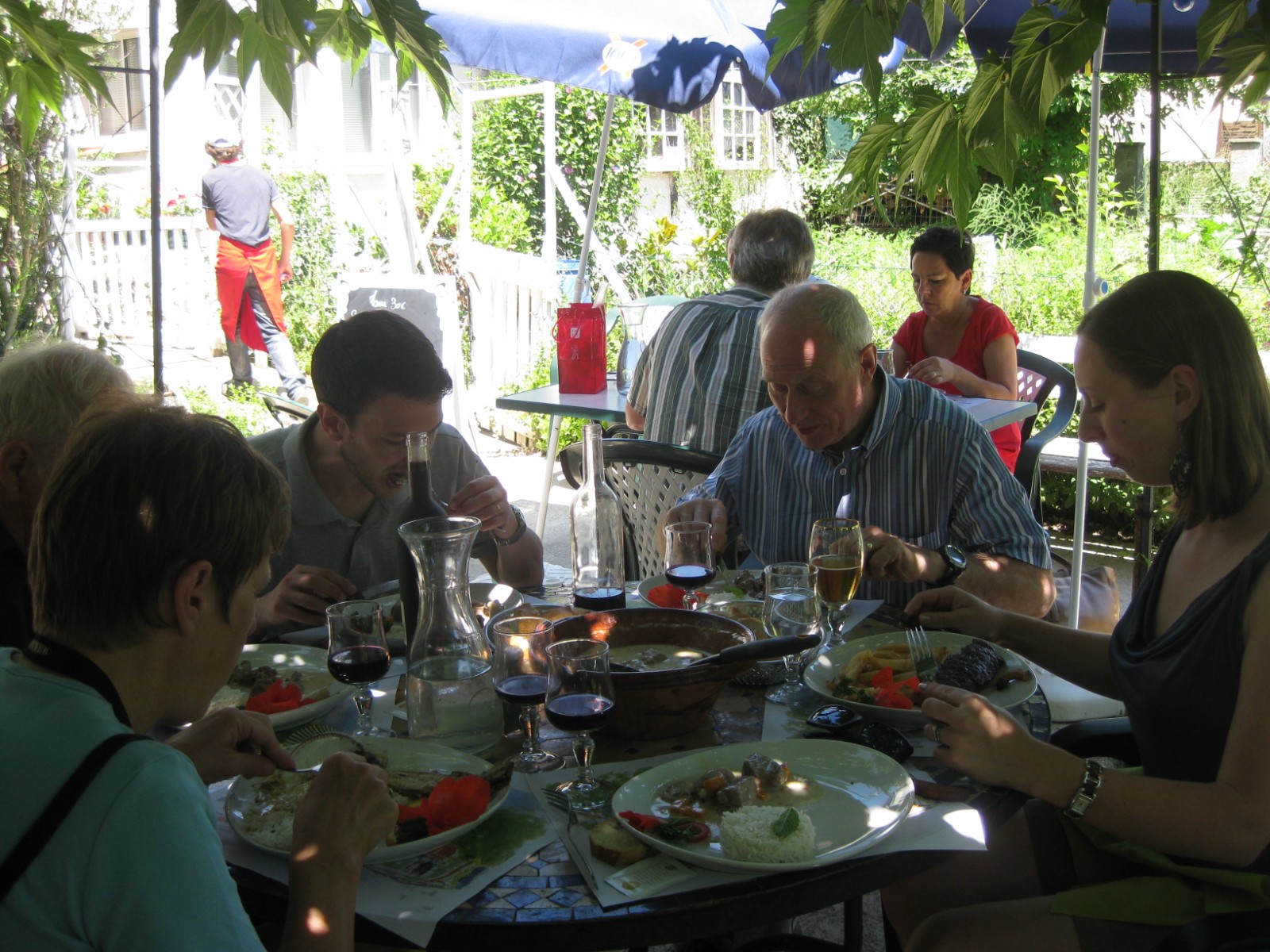
We’ll have the planning meeting after we’ve got outside this little lot

Then there was the walk.  This followed the Voie Verte between us and la Bastide sur l’Hers, and closely hugs the route the cyclists will take; and the ridge path between la Bastide and home, which peers down over the same road.  Where to choose to watch?

We’d thought of the land occupied by the old station.  A film crew has moved in for the duration.  We considered looking up towards the race from the old railway line itself.  Too far away.

And the ridge, which we’d thought the perfect answer, turns out not to be.  Certainly we could see many hundreds of metres of road at once, but at a distance that means that we’d be doing no better than sitting at home in front of the TV.
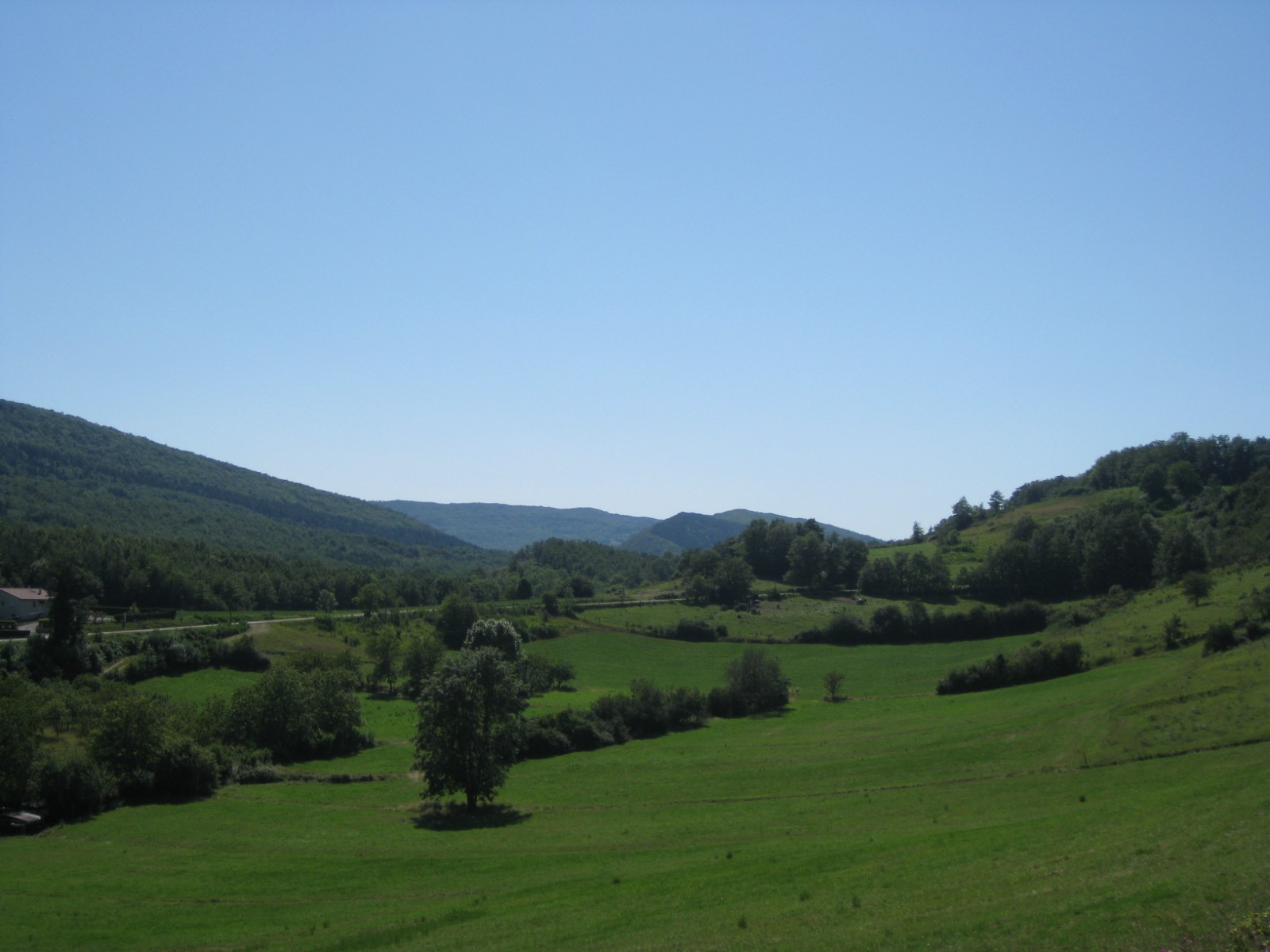
We’ve decided against watching from here.

In the end, we’ll be staying put.  We want to see the riders close up, smell the sweat, and absorb the atmosphere.  There are still decisions to be made.  Upstairs in one of the bedrooms?  If so, which one?  Downstairs on the street, where we’ll be nearer still?

Shall we ham it up and decorate the house in Union flags, and hang banners reading ‘Go Wiggins’ out of the window?  So many decisions, so little time.
Entendre cordiale: Blue Lake again

It’s been Blue Lake time again: that time of year when for 3 years now, we at Laroque have come to expect great entertainment from the musicians of the Blue Lake Fine Arts Camp in Michigan, USA, as well as some music from our own LDO Big Band.

This year, we welcomed a slightly different group from previous years – the International Jazz Band.  Mostly still in their teens, these players have been selected for the European tour not only because they’re good at what they do, but they’re hungry to become even better.  They want to seize the opportunity to spend time in cultures other than their own, and to perform in locations throughout parts of Europe, from prestigious concert halls and cathedrals, to smaller town venues like ours.

At the end of last night’s concert, the band’s conductor and group director Bill MacFarlin, spoke of how these chances for young Americans to travel and make music was a real opportunity to foster international friendship and understanding.

We’ve been watching that at work over the last 3 days.  The Blue Lake team, 17 of them, arrived in sunshine to a big welcome group in the Municipal Park.

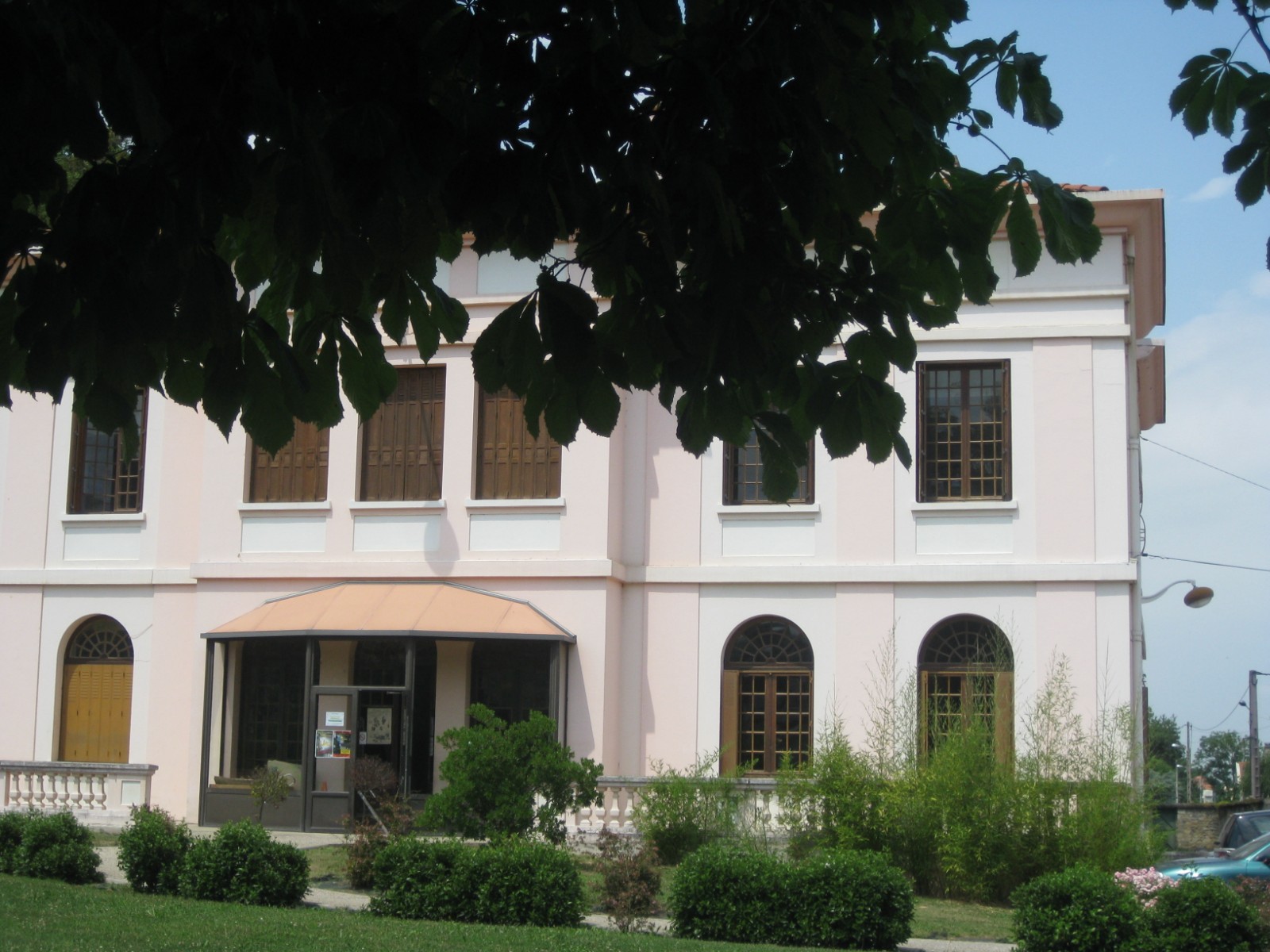
Our School of Music’s housed here in the château. I took this shot just before everyone arrived

The event went well, but it was easy to see the Americans and French weren’t mixing much – it was too hard to communicate: Malcolm’s and my interpreting skills were much in demand (Not that we’re much good.  I listened to our French head honcho, Michel Alvarez, and carefully interpreted it to Bill McFarlin.  Bill raised an eyebrow. ‘Do you realise’, he said ‘that you’ve just said all that entirely in French?’).

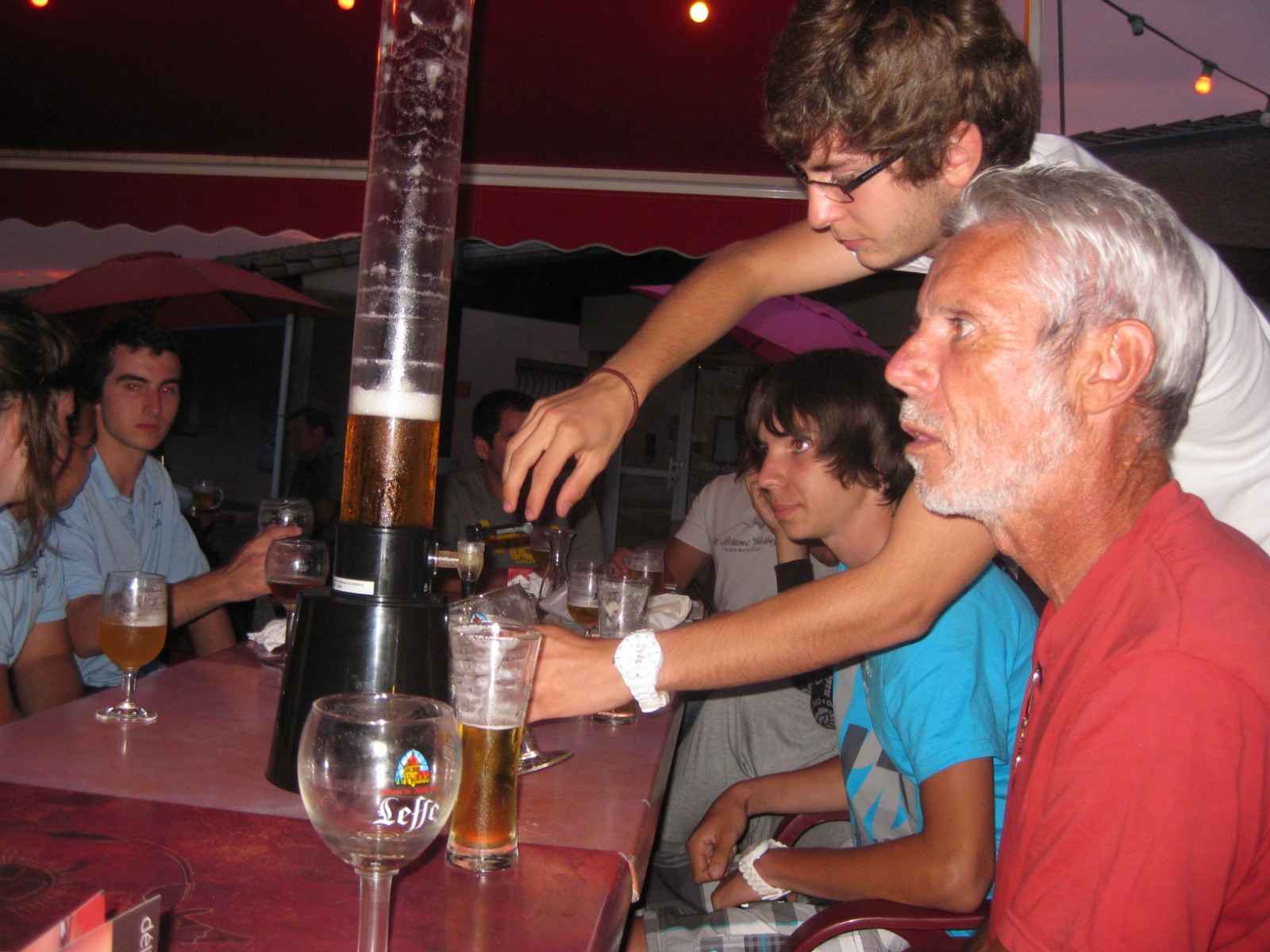
A giraffe of beer

Later, down at the bar with older students and members of LDO Big Band it got a lot easier.  The giraffe of beer may have helped.

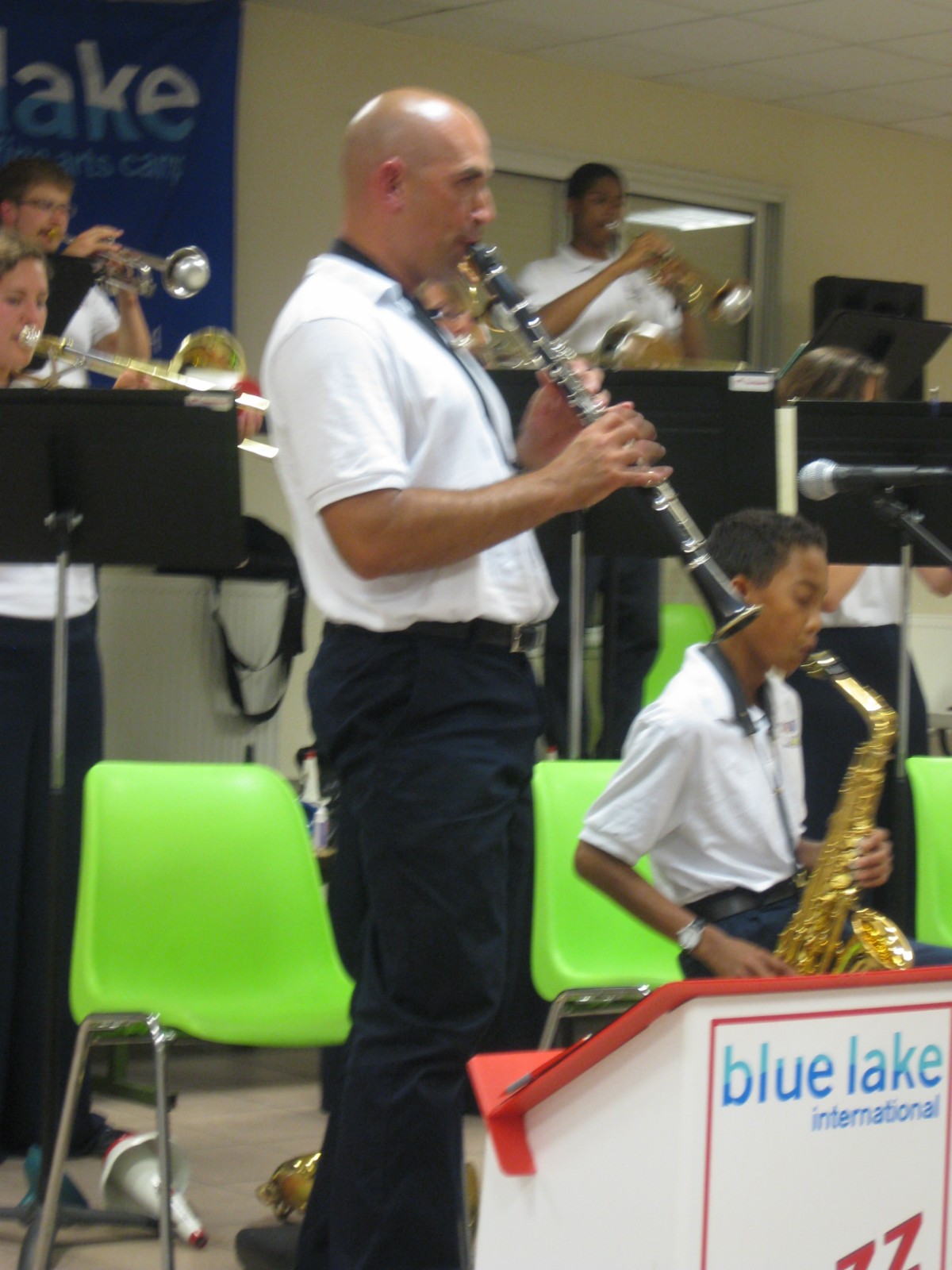
Lucas Munce – with a clarinet this time

It was next day that real change took place. First of all, there was a Master Class, with Lucas Munce, acclaimed as a saxophonist back in the US (AND for his clarinet and flute  playing too), and Parker Grant, a young jazz pianist also gaining recognition.  After a slow start, the need to exchange musical knowledge overcame shyness and the language barrier.

Then after a shared meal it was time to rehearse.  Towards the end of the evening, members of the French and American bands sat together to practise the pieces they planned to play together to conclude Fridays’ concert.  It was wonderful to witness them, heads together as they pored over their shared scores, animatedly and enthusiastically discussing  their music.  Their mutual comprehension of each other’s tongues seemed to have moved up a gear, but above all they now had a shared language – music.

Blue lake International Jazz Band and LDO Big Band at rehearsal

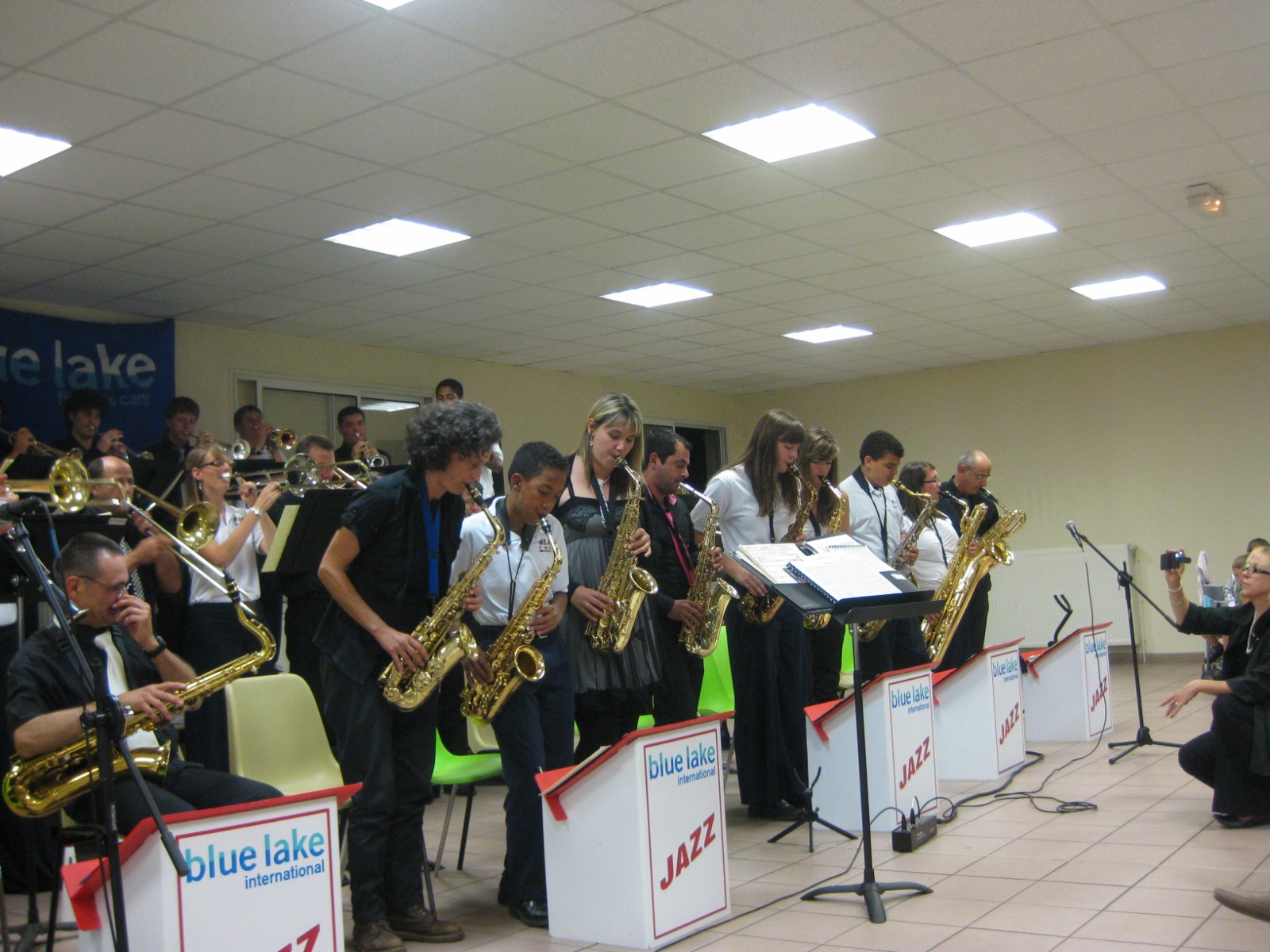
By the time Friday’s concert came, these musicians were friends.  They greeted each other affectionately and settled down to listen to each other’s performances with relish.  When they had to squeeze themselves together for those final numbers, placing themselves alternately American/French, they were confident to give the music their all.  They loved it.  The audience loved it.

Blue Lake and LDO saxophonists share the moment at Friday’s concert

At the moment of parting, there were hugs and all round and quite a few sniffles too.  As ambassadors for their country, Blue Lake do a pretty fine job.

‘East, west, home’s best’

When guests come to stay, Malcolm and I often pore over maps looking for some unexplored – by us – corner of our patch.  But in the end, what’s the point?  Our visitors aren’t sickly pale wraiths whose jaded walking appetites have to be tempted by novelty.  They’re happy with the solid day-to-day fare just a mile or two down the road. To them, in any case, everything is new.

We too are happy to revisit favourite walks.  They’re never the same.  The changing seasons bring different flowers, different cloud formations.   Mountains which perhaps were sparkling bluish-white last time we visited, turn green and purple towards summertime with just the odd small patch of snow near their summits.

Today, then, we went with Christine to visit our old friend Roquefixade, just a few miles away.  A steady climb through the juniper-scented woods and along a rocky ridge leads to a ruined château, once far above us, now somewhat below. Here it is.  Enjoy the views.  We did.

Capital Capitelles

The first capitelle on our walk

We’ve been walking north of Carcassonne today, with our friends Barbara and Tim, holidaying in the Aude from North Yorkshire.  When we decided to go and explore the curious stone huts called capitelles in the scrubby garrigue near Conques sur Orbiel, we assumed they were something like the orris of the Ariège.  These too are small sturdy dry stone wall huts: but orris were used by upland shepherds.

The dry stone walls of the capitelles

Capitelles are quite different.  Following the formation of France’s Second Republic in 1848, everyone wanted something to call their own.  Here in Conques, the poorest members of society looked beyond the village where they lived for some way of acquiring a bit of land  and earning some extra money. They realised that the dry impoverished soils of the garrigue were good for only one crop: vines.  As the peasants started to work the land to plant their vines, they dug up stones – hundreds of stones.  And they used them in the first place to make low stone walls marking the limit of their territory.

That south-facing door’s not very big

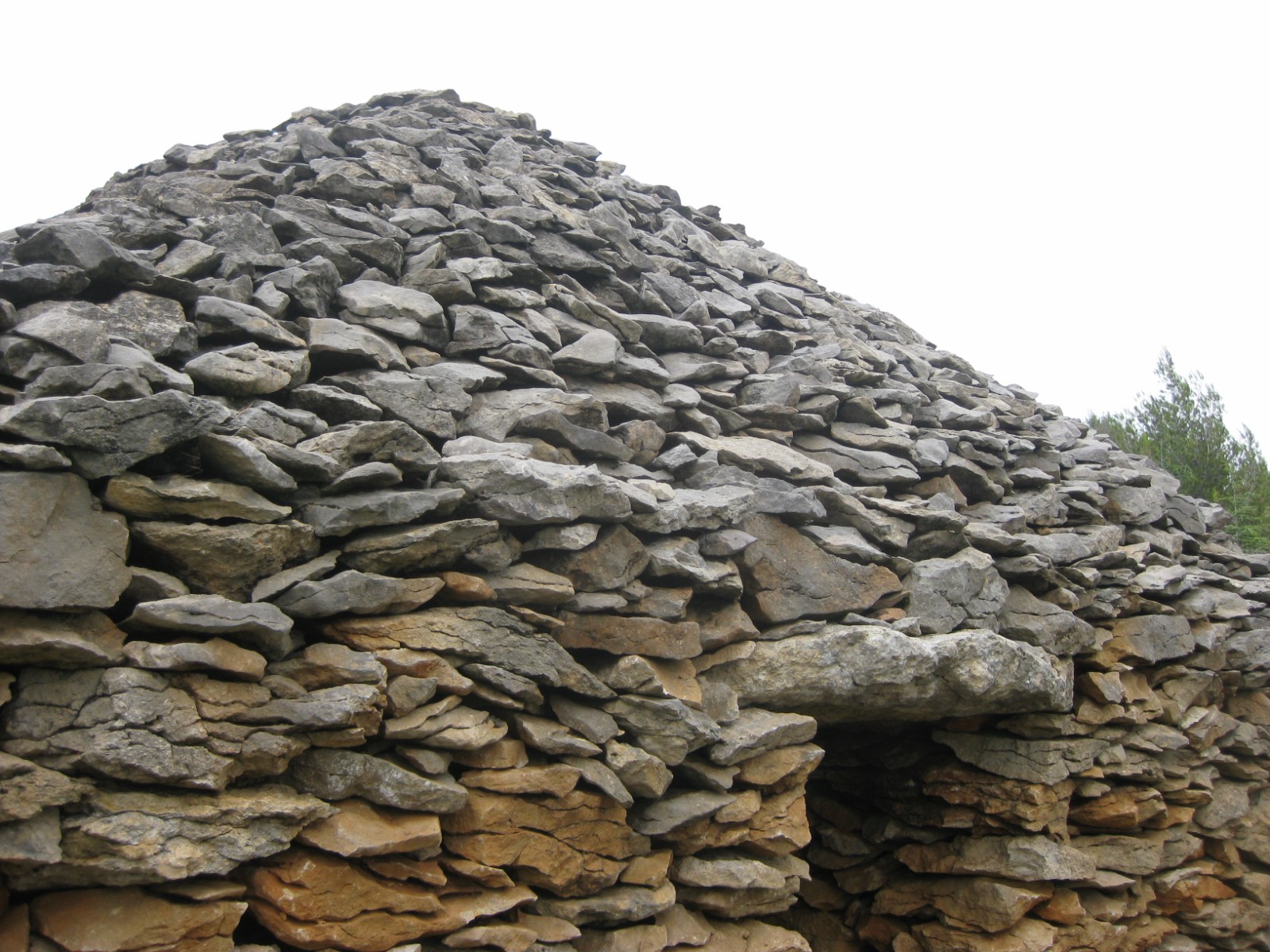
After that they built small huts to shelter from bad weather.  These round or square huts are in the form of a dry stone wall rising to a semi-circular vaulted roof also in stone: no mortar, no foundations, a bare earthed-floor and a single small door, always facing south.  They were all built by1880 or so, and the peasants who built the huts and worked the land here would have done so in any spare time left from their ‘day jobs’ as farm labourers.  And this continued till the Fist World War.  Men left to become soldiers, and at much the same time phylloxera struck.  This double blow meant the area returned to uncultivated garrigue, and only recently have the capitelles been restored.  They add interest to a stony landscape characterised by scrubby vegetation, low trees and shrubs and bright ground-hugging summer flowers.  I’d have said distant views of the Pyrenees too, but today was misty and overcast, so Barbara and Tim had to take our word for it.

Close up of a carefully constructed roof

Once upon a time there was a town…

We thought we knew Laroque. An afternoon’s walk round town with local historian Paul Garrigues as part of this weekend’s Journées du Patrimoine has convinced us otherwise.

The bridge near our house is modern and slightly re-sited. But we had no idea that the main road it’s on, leading to one the busiest roads in the Ariège, the D625 to Lavelanet, used not to exist. To go to Lavelanet, you used to go straight up the hill, and down back-street Rue des Pas Perdus.

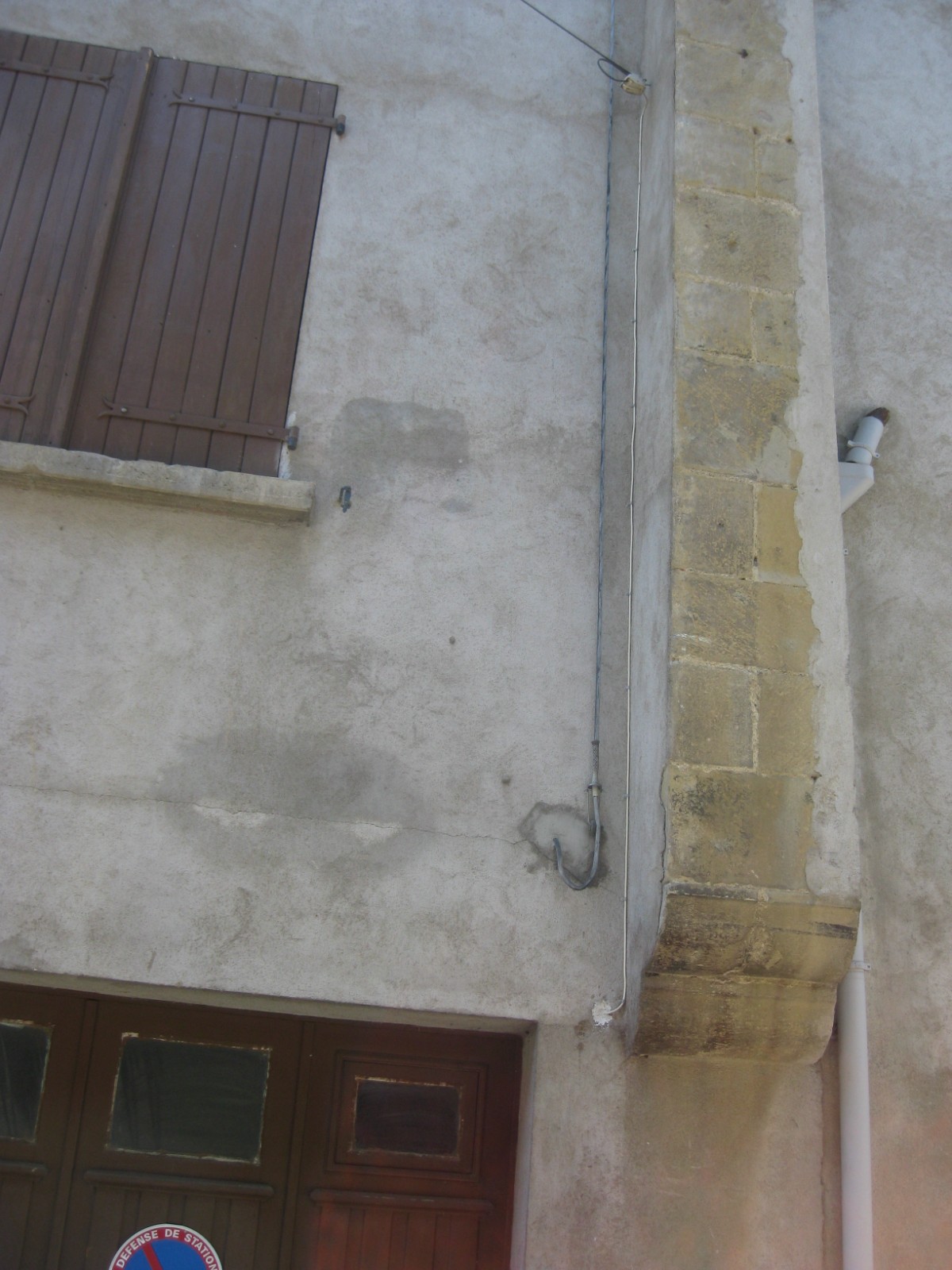
To those in the know, evidence of the former town gates

And here you’d go through one of the town gates. Using this path day after day to reach our garden, we’d never noticed the buttressing that indicated the former presence of these gates. Nor did we suspect that the narrow road and path which is now a way-marked walker’s route which passes past our garden, down to the River Touyre was once a busy thoroughfare. You follow the river to the former railway line, where you turn right and take a shady tree-lined route barred to anything more technical than a bicycle through the next village, Dreuilhe, and on into Lavelanet. Quite different from the lorry-van-and-busy-commuter route now in operation.

Once upon a time the main road to Lavelanet. Now the path past our garden.

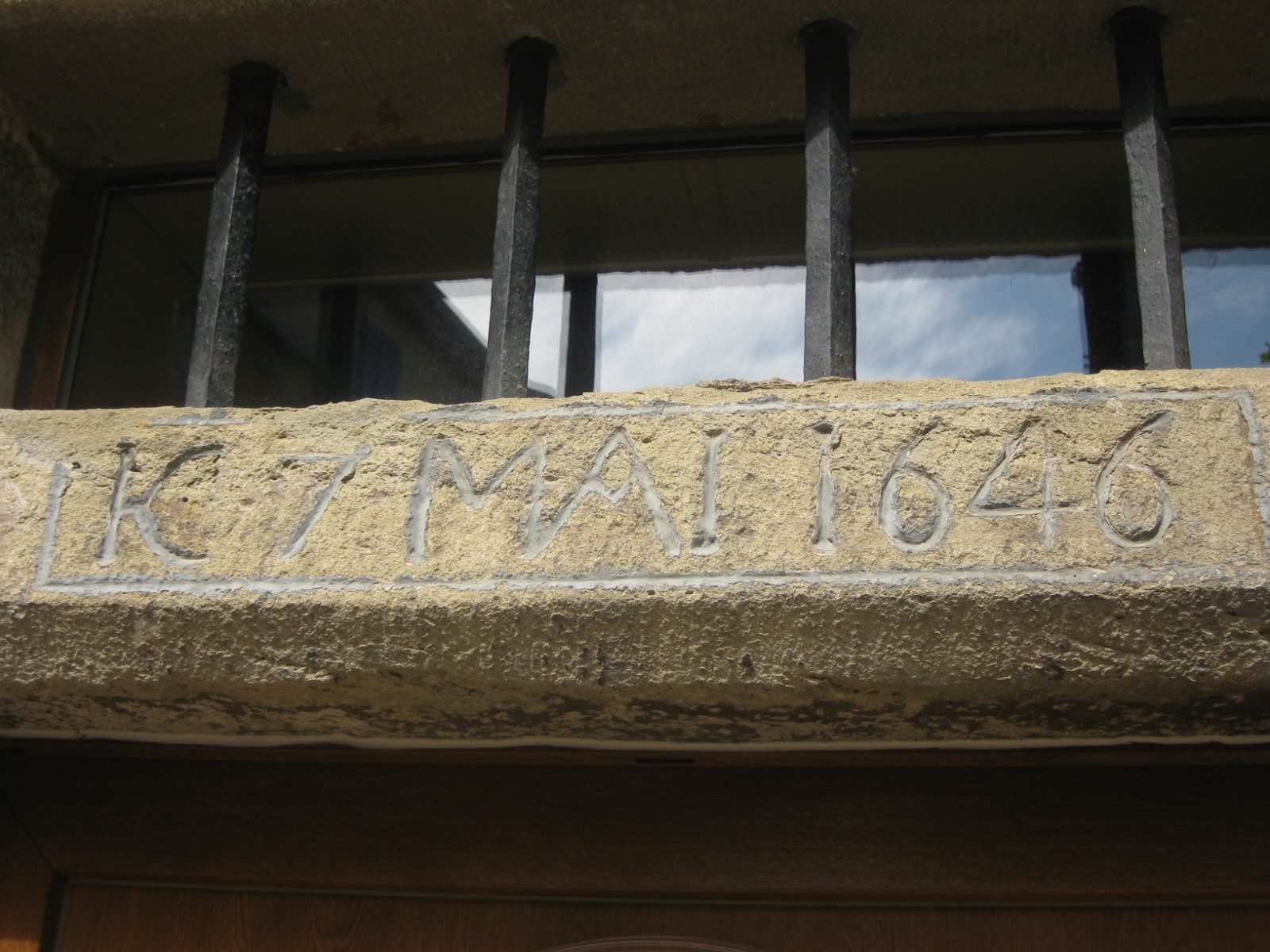
We knew our town is an old one. It’s not uncommon to pass houses whose door lintels are inscribed with a date from the 17th century.

A nearby house announces its d.o.b.

What we didn’t know was that in the old town itself, there are no buildings at all from before this time. This is because every single dwelling was destroyed during the French Wars of Religion (1562 – 1598). The crisis was so grave the King permitted the townspeople an amnesty from paying taxes for several years to give them a chance to rebuild.

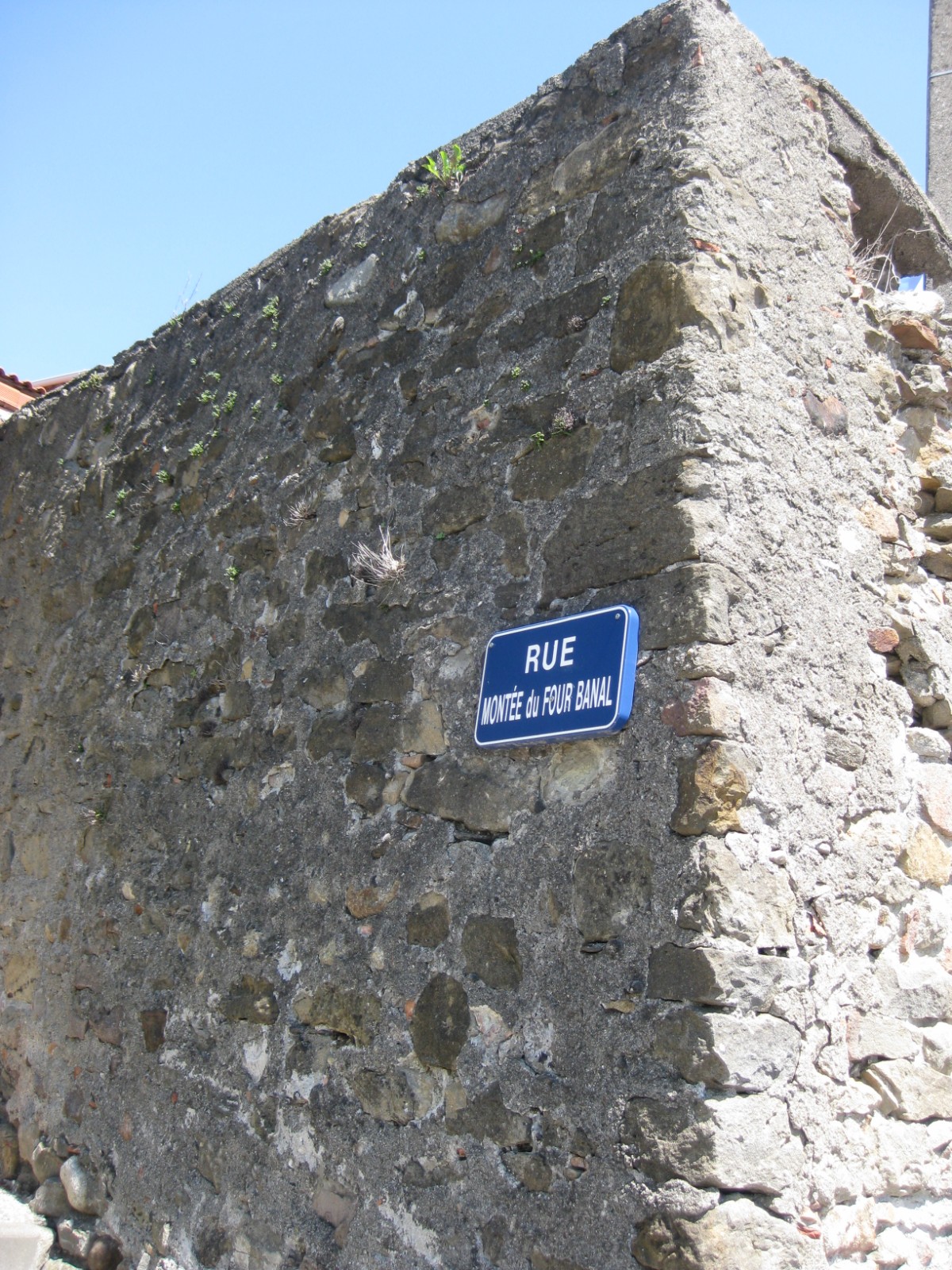
But before all that was …. the Women’s Revolt.  Back in the 16th century, the women of the town would bring their bread to be cooked at the Four Banal, the site of which lives on today as a street name.

Rue Montée du Four Banal: the sign’s fixed to remnants of the old town wall

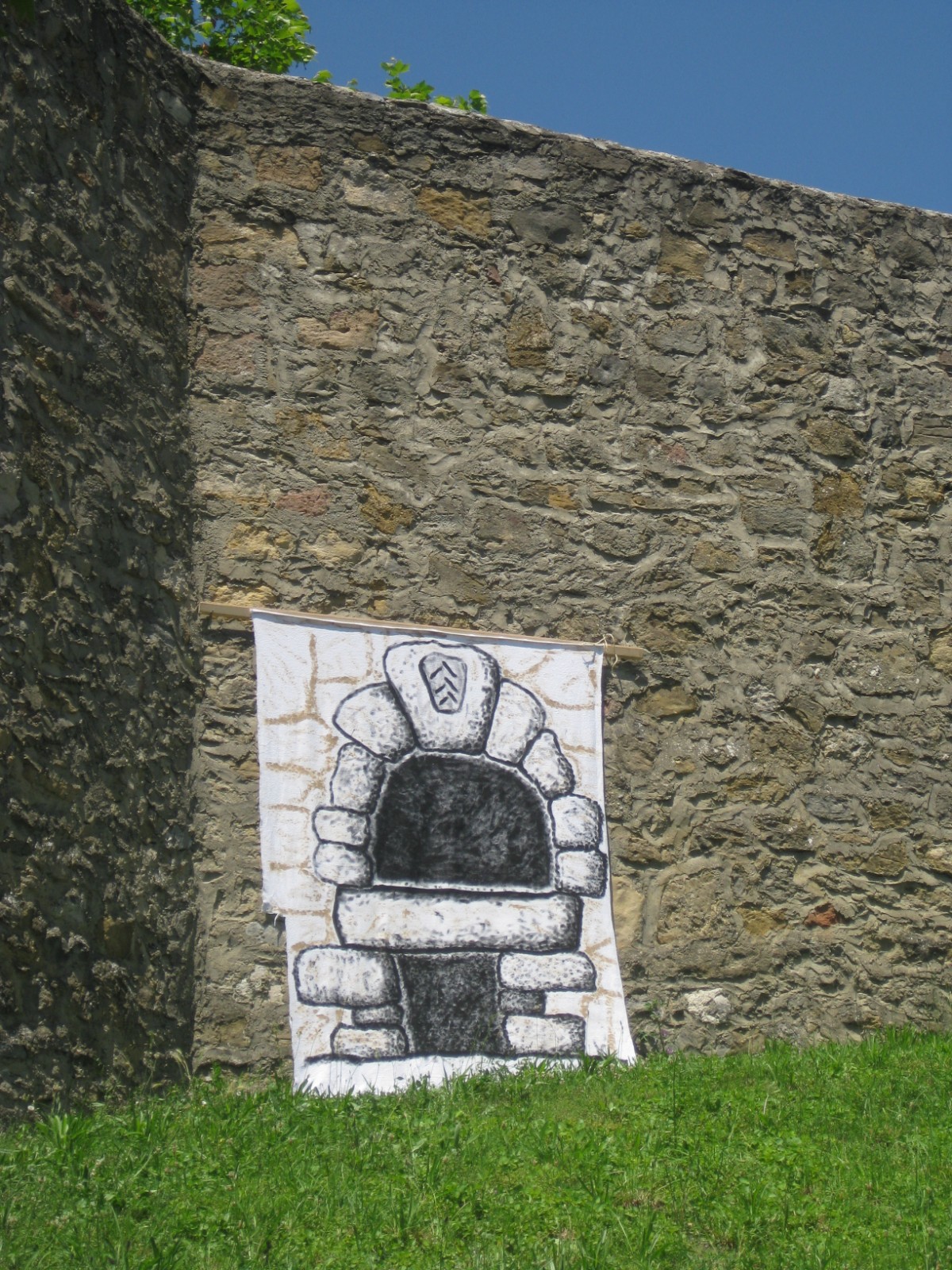
They paid the local lord to manage this service and the lord paid a baker. Who decided to exact his own charges too – one loaf in every 20. When the women’s angry protests were ignored, some 80 women held a somewhat violent demonstration, and followed up by taking their bread to nearby Esclagne and La Bastide to be baked. It all ended up in an enquiry directed from Carcassonne. Result? It was the baker himself who was found to be at fault: his taxes were illegal, but it was the lord who had to reimburse the women. For their part the women were forbidden to have their bread baked elsewhere. The Four Banal itself is by yet another former town gate, and traces of the old town wall still exist.

Perhaps the Four Banal looked like this?

It was during this period too that several streams ran through the town, forced into culverts between the houses, with little wooden bridges built over. They were useful to all the artisans involved in various aspects of the textile industry and other trades.  Can you imagine the smells you’d have had to endure if you were unlucky enough to live in the same street as the tanner?

More recently, in the late 19th and early 20th centuries, Laroque was a prosperous commercial centre for its then more than 4000 inhabitants (2000 now) and the workers who flocked from a wide area to work in the textile mills. There were three cafés in the market square alone, as well as an hotel. Three abattoirs too, to serve the needs of all the butchers – one was in what’s now our garage. And shops of every description in what are now entirely residential streets. Then as now there was a huge social mix. One fine house, now down on its luck, was built for a successful surgeon and his banker son.

Once a surgeon’s house: now increasingly shabby

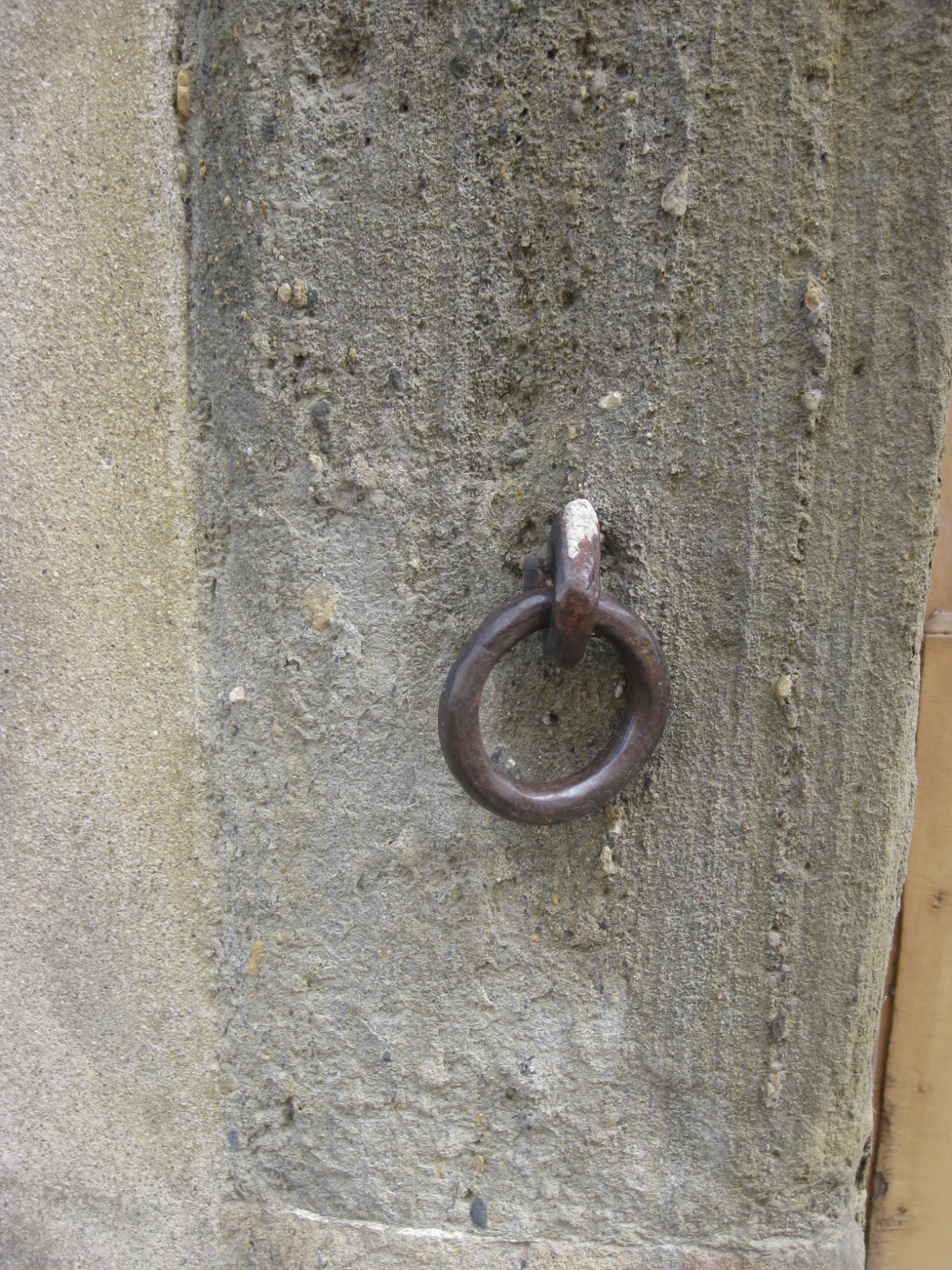
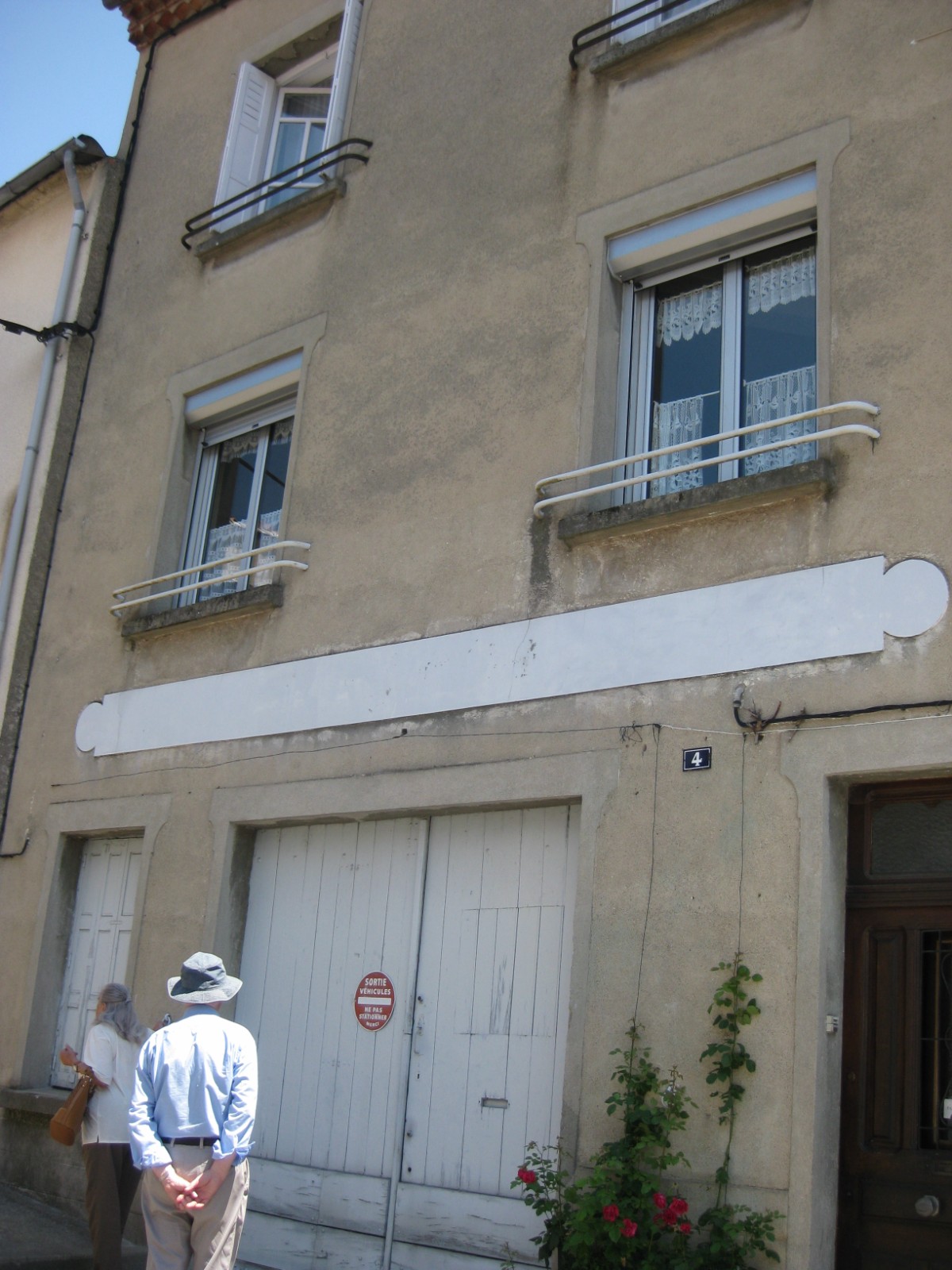
So now we’ll keep our eyes open, and perhaps notice those clues of former commercial activity: a ring set in a wall perhaps, for a trader delivering stock to tie up his horse or donkey, as well as the more obvious painted-over shop signs. I-Spy for residents.

I-Spy a delivery man’s tethering ring

I-Spy a shop front: one of the several vintners in town

Above us only skylarks

Every Thursday, Anny leads us on a walk. We might go eastwards to the Aude, south towards the higher  Pyrénées….or indeed travel in any direction, certain of a wonderful day’s walking.

Today we met just beyond Foix, and still in our cars, climbed…and climbed…and climbed,  steadily for 9 miles.  And at the highest point of the Col d’Uscla (1260 metres), we parked. Then we laced up our walking boots, slipped on our rucksacks, and climbed…and climbed…. and climbed.

It was steady rather than challenging, and several times, Malcolm and I remarked that if it were not for the  Pyrénées beyond, we could have been on the North York Moors, with added altitude and sunshine.  Endless expanses of bilberry plants added to the illusion. Each hill we climbed promised to be the last: but as we reached each summit, another hillside appeared in view.

Our eventual reward was at the Cap-du-Carmil, at 1617 metres, with a 360 degree panorama of the  Pyrénées. It was quite, but not perfectly clear, yet we could probably see 50 miles or more in any direction. The only sounds were from the skylarks, joyfully singing way above our heads. I’ll let my pictures tell, slightly inadequately, the story.

Down through more wooded paths, there was the town of Massat below. Once the Ariège’s largest town, its isolated position and failing industrial life means it’s slightly forlorn now.  But not when you’re looking down on it, several hundred feet below.

A quick sortie to the Tour Lafont. This was built in the 1830’s, at a time when 12,000 French soldiers descended on the area to fight the ‘demoiselles’, local guerrillas disguised for some reason as women, determined to maintain their rights to collect wood for fuel, rather then allow it to be taken for the industrial economy slowly emerging throughout France. Despite their superior numbers, the soldiers lost the battles, and there are only odd reminders of their presence at the time in towers such as this one.

After lunch, on through the woods, until we rejoined once more our path with its open mountain views. Horses grazed the short grasses, and seemed only mildly curious about us.

And then it was over.  Boots and rucksacks off: cold juice, a moist and squidgy chocolate cake (thanks, Anny!), a final chat…. and back down that narrow uninhabited 9 mile road to civilisation , home and a cool shower.

Our socially mobile terraced house: or ’génoises’ – a history

You might have thought we were pretty ordinary types living in an ordinary old terrace house – an ex-butcher’s shop for heaven’s sake – in a run-down ordinary little town.

Well, you’d be wrong.  This house, and the neighbouring ones, was built for minor nobility.  We haven’t scoured the archives or talked to the Oldest Inhabitant to find this out.  We just know.

And this is how we know.  Under the eaves of our houses are three rows of génoises, resembling a child’s drawing of ocean waves, but turned upside down.

Three rows of our génoises, underneath carefully picked out in terracotta paint to show them to full advantage

Back when our house was built, some time in the 18th century, the number of rows you were able to have denoted your social status. Artisans were permitted one row, shopkeepers two.  Minor nobility – ahem – three.  And if you were directly in the service of the king, then you could claim four rows.

You’ll see houses with génoises south of a line that runs pretty much from Bordeaux to Lyon.  It’s thought that the technique, which is Italian, was introduced firstly to Provence and then more widely, by artisans from Genoa round about the mid 17thcentury.

Here at Villar Saint Anselme in the Aude is a rare building with 4 rows of génoises. Look carefully: the swallows – no respecters of status – have built their nests on the undersides

By the nineteenth century, the social implication of the number of rows of génoiserie had pretty much disappeared: people contented themselves with one or two rows for decorative purposes.  We’ve seen our house on a late eighteenth century plan of Laroque, so we know the house, complete with génoises, must have been built by then.

And a family with pretensions to nobility lived in a tall, narrow terraced house?  Admittedly with some nice features, but still nothing fancy at all.  Well, inheritance laws in pre-Revolutionary France had estates divided up between all the heirs, so land and property became shared into decreasingly smaller parcels.  Families graced with extensive land and properties were few and far between.  This helps explain too why the agricultural revolution taking place in England from the 18th century took no hold in France.  Tiny farms resulted in small-scale farming and a near-impoverished peasantry.

And at some point, the house passed into the hands of the previous owners’ family and became a butcher’s shop.  Now it belongs to (almost) the only English in town.  Its noble origins are long forgotten.

Rencontre des chorales

Our Chorale at Laroque’s best friend is the Chorale at Mirepoix.  The Écoles de Musique in each town are best friends too, working together and running some joint classes and performances.

The chorales and other classes get together at least once every season to enjoy singing and playing for and with each other for an evening.  The public’s invited, and comes in encouragingly large numbers.

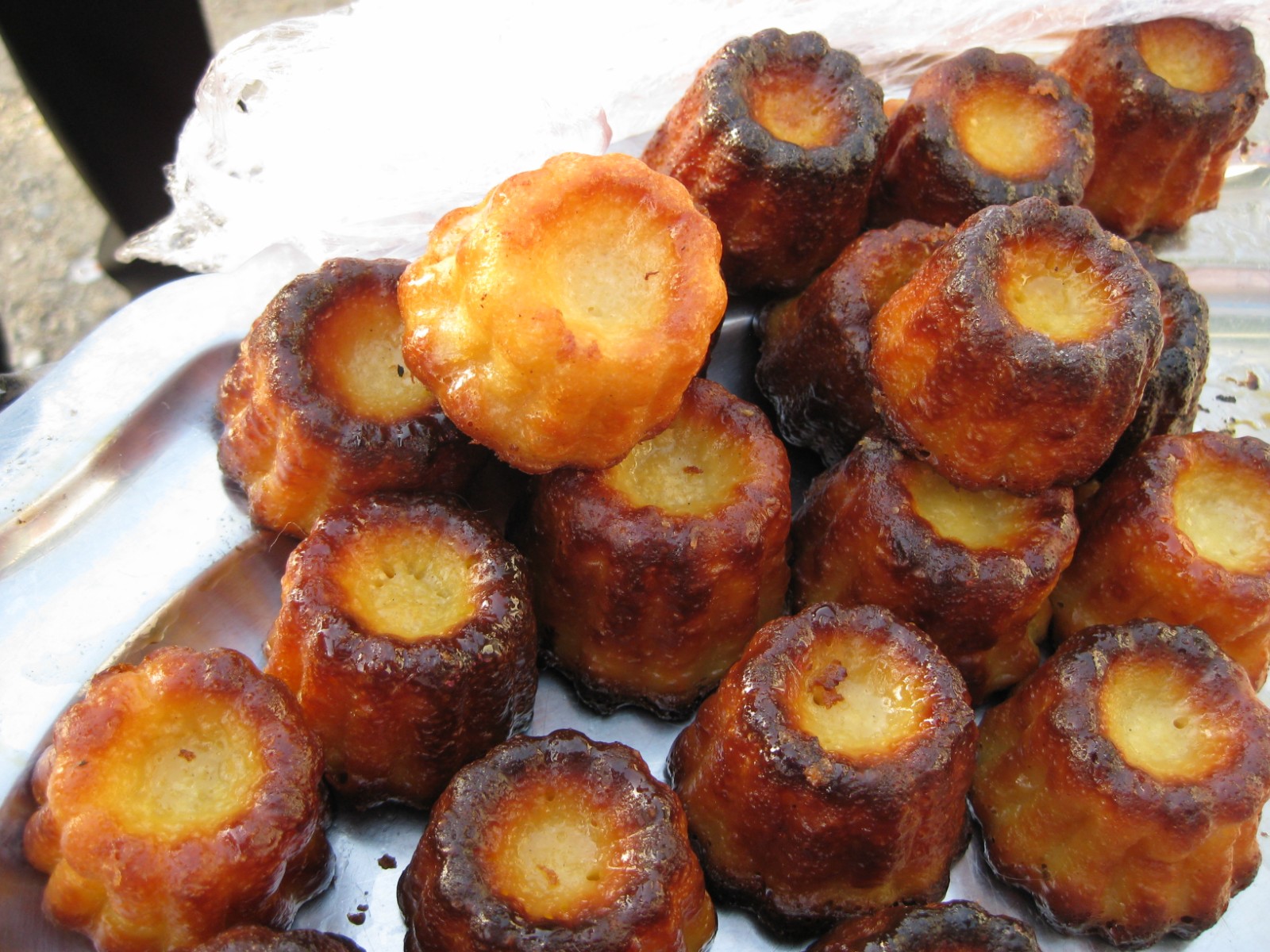
Those cannelés….

Last Friday, all the singers started wandering in shortly after 6, carrying carefully prepared dishes of buffet food.  The instructions were to bring no more than 6 portions, but nobody took any notice of that.  Robert from Laroque had made a pile of his deliciously chewy signature cannelés, Mirepoix’s William (yup, William’s a perfectly good French name) produced meringues, Mercedes’ plate was full of the cold meats and pâtés they make their charcuterie….and so on.

The rehearsal started, and was less a question of running through the songs than organising the logistics of moving around the dozens of us involved: Mirepoix’s orchestra, their children’s choir, the adult choirs from both towns.  It had to be done to a time-table, because nobody wanted to hurry over eating that buffet or sinking some wine.  ‘Don’t drink too much alcohol beforehand!’ urged Vanessa, our director ‘It’s bad for your singing voice’. I didn’t see anyone taking very much notice. ’Well really’, said Robert ‘How can you possibly eat cheese without a glass of wine to help it down?’

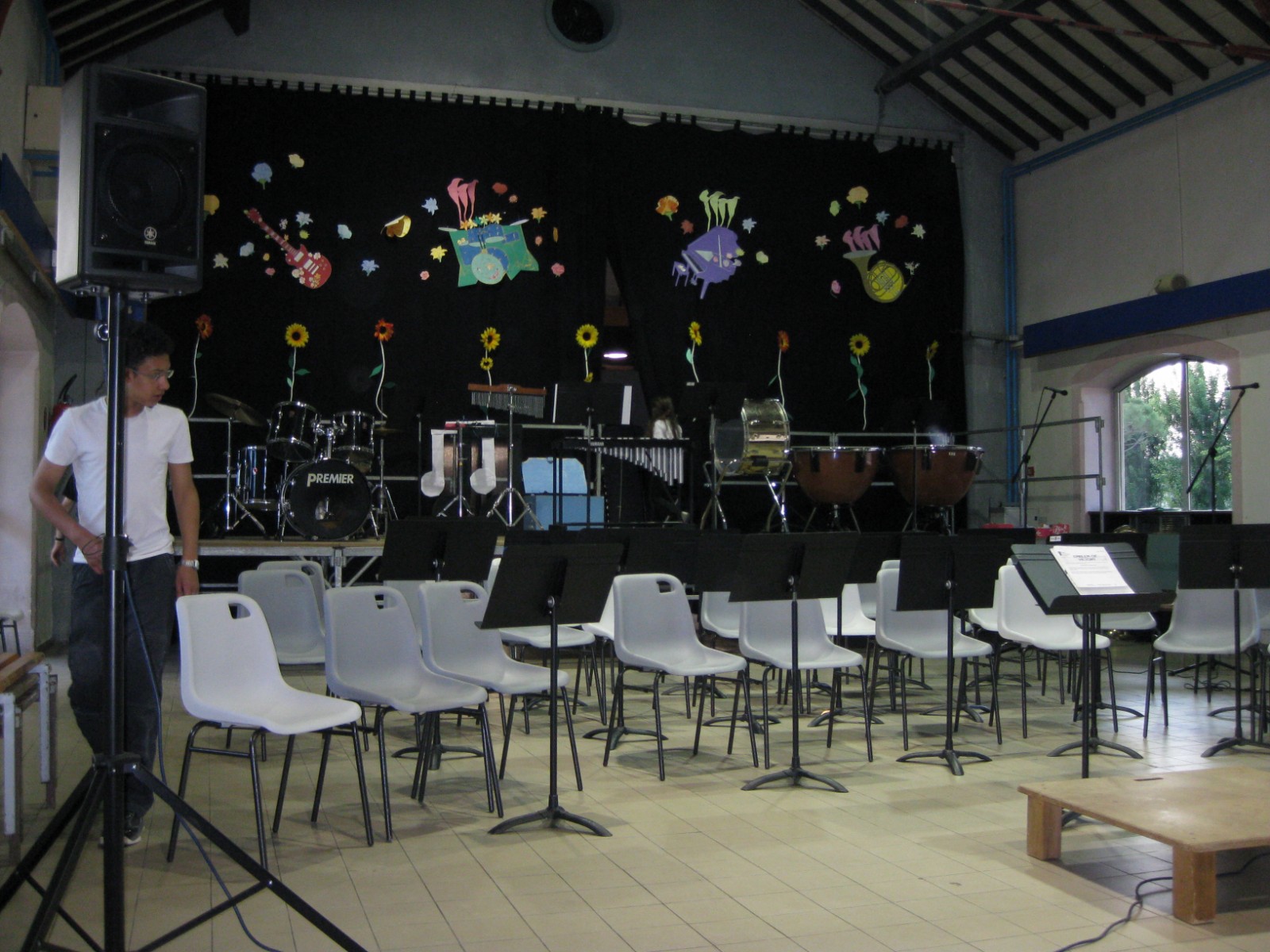
It had been more than 30 degrees for much of the day, so nobody wanted to come back indoors after the meal.  But we opened the windows, finished our preparations, and the audience drifted in for….oh, well before 9.10 for a 9.00 start.

Almost ready to start

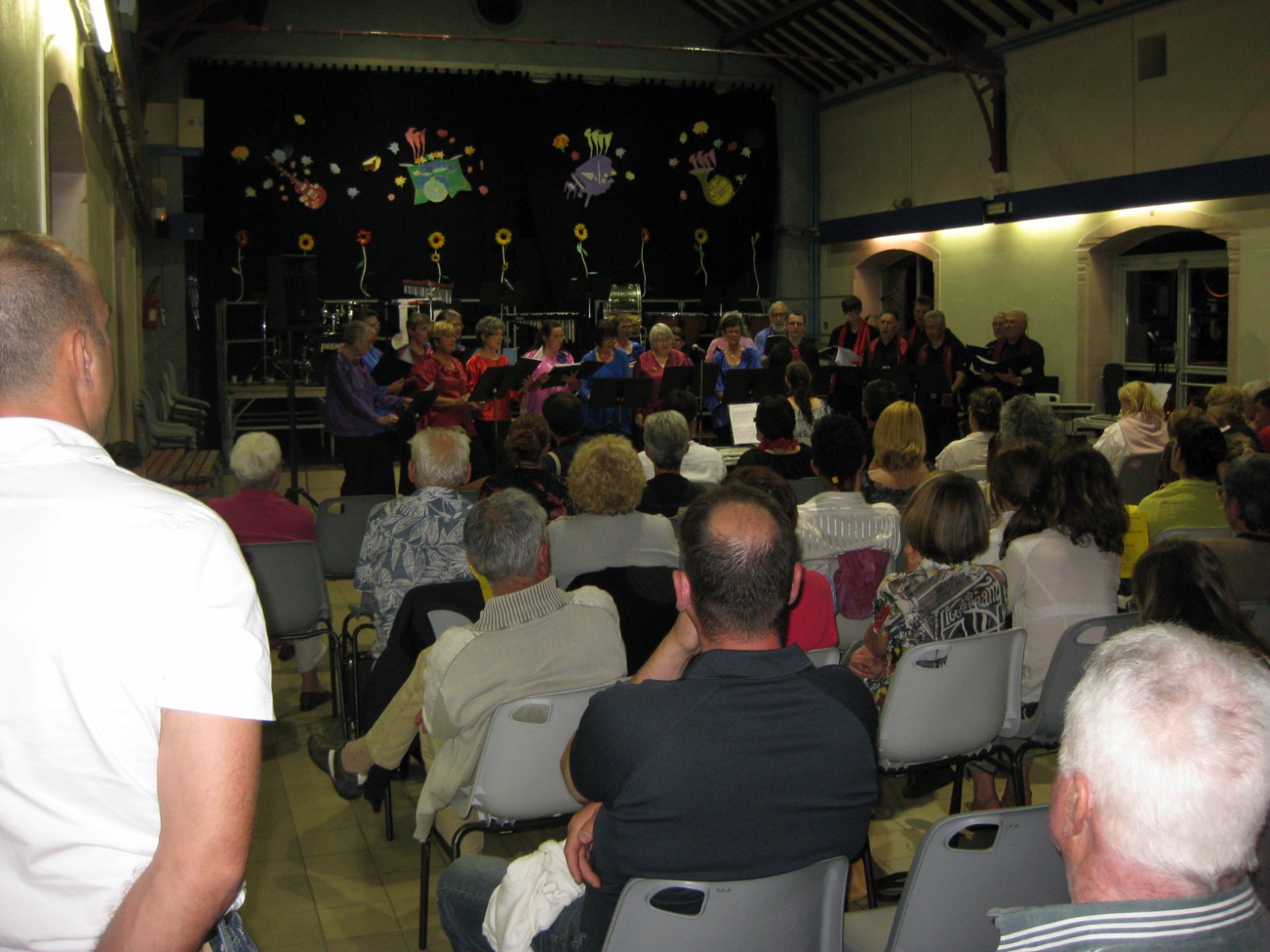
The orchestra started things off.  Lots of percussion. All good stuff. I’m always a soft touch for children singing: these were well-rehearsed and sang with verve and enthusiasm.  Joined by the Mirepoix adult choir, they belted out numbers that were old favourites to the French audience and unknown to Malcolm and me.

And then it was our turn.  Our repertoire is a catholic one.  We sang everything from Henry VIII’s Pastime with Good Company (en français bien sûr) and Moon River (en français bien sûr) to old favourites (if you’re French that is) like Mon Amant de Saint Jean.

The Chorale de Laroque d’Olmes takes the stage

Nearly the end. Time for all the singers to join together for two final numbers.  A few weeks ago, Mireille had spent half an afternoon explaining one of them, Mistral Gagnant, to me.  It features a man singing to his daughter and the allusions to a host of sweets that form no part of my own youth – carambars, minthos and the mistrals gagnants themselves, had left me totally baffled, though not the rest of the audience.

In true French tradition, we couldn’t leave without doing an encore or two.  In true French tradition, we couldn’t leave – nobody could – without sharing the pot d’amitié.  A glass of something, a chance to meet and talk to friends: the perfect way to end a busy evening

Four seasons for the price of one

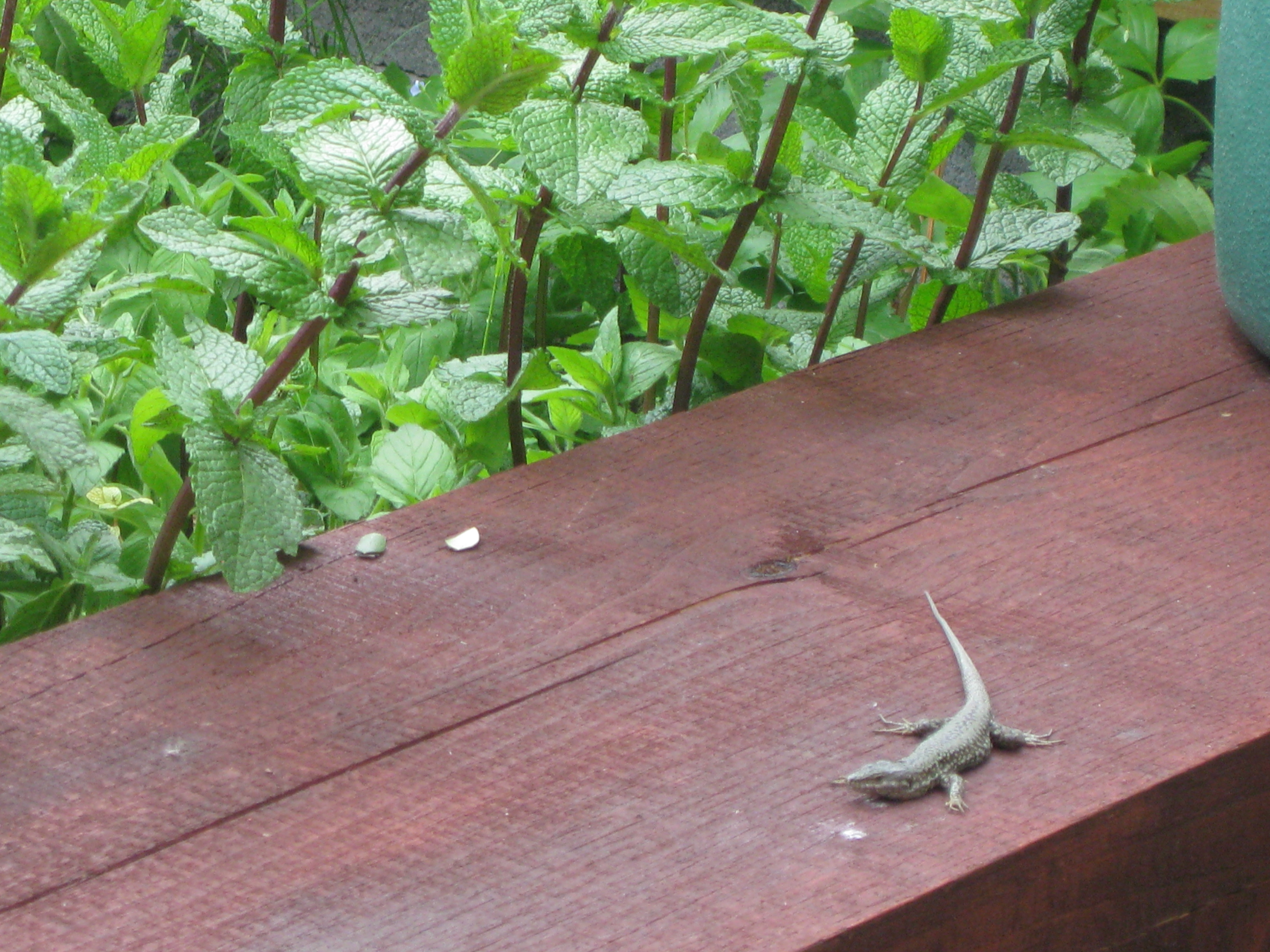
A lizard hopes summer’s on its way

I’m writing this in Laroque.  I have the feeling that whether you’re reading this in France, England, elsewhere in Europe or even in more far-flung places you’ll be sharing something of the same experience.

Get up in the morning and peek though the shutters.  Perhaps it’s raining.  Perhaps not.  But whatever: it won’t last.  We’re getting used to having all 4 seasons – several times – in the course of a single day.

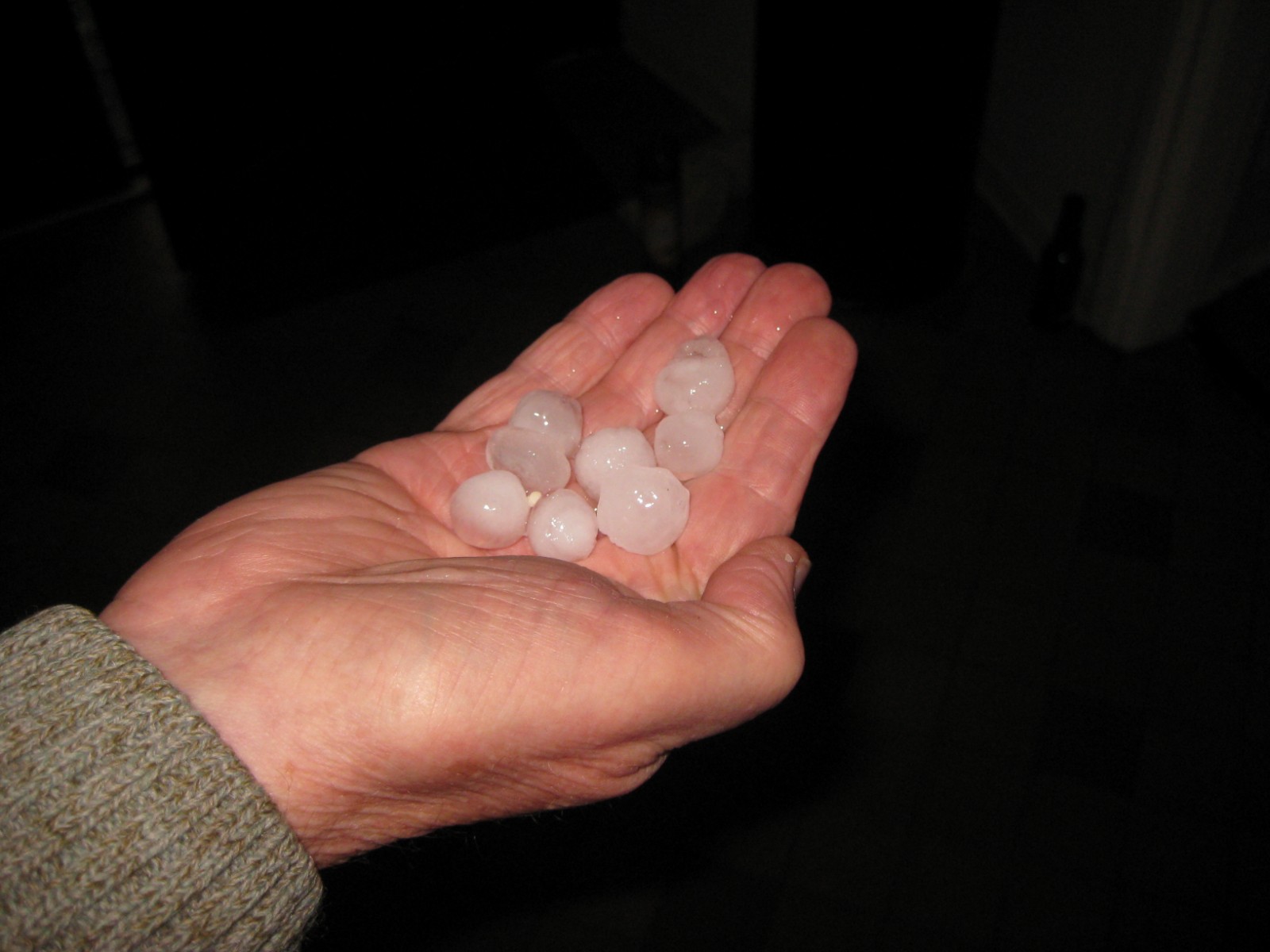
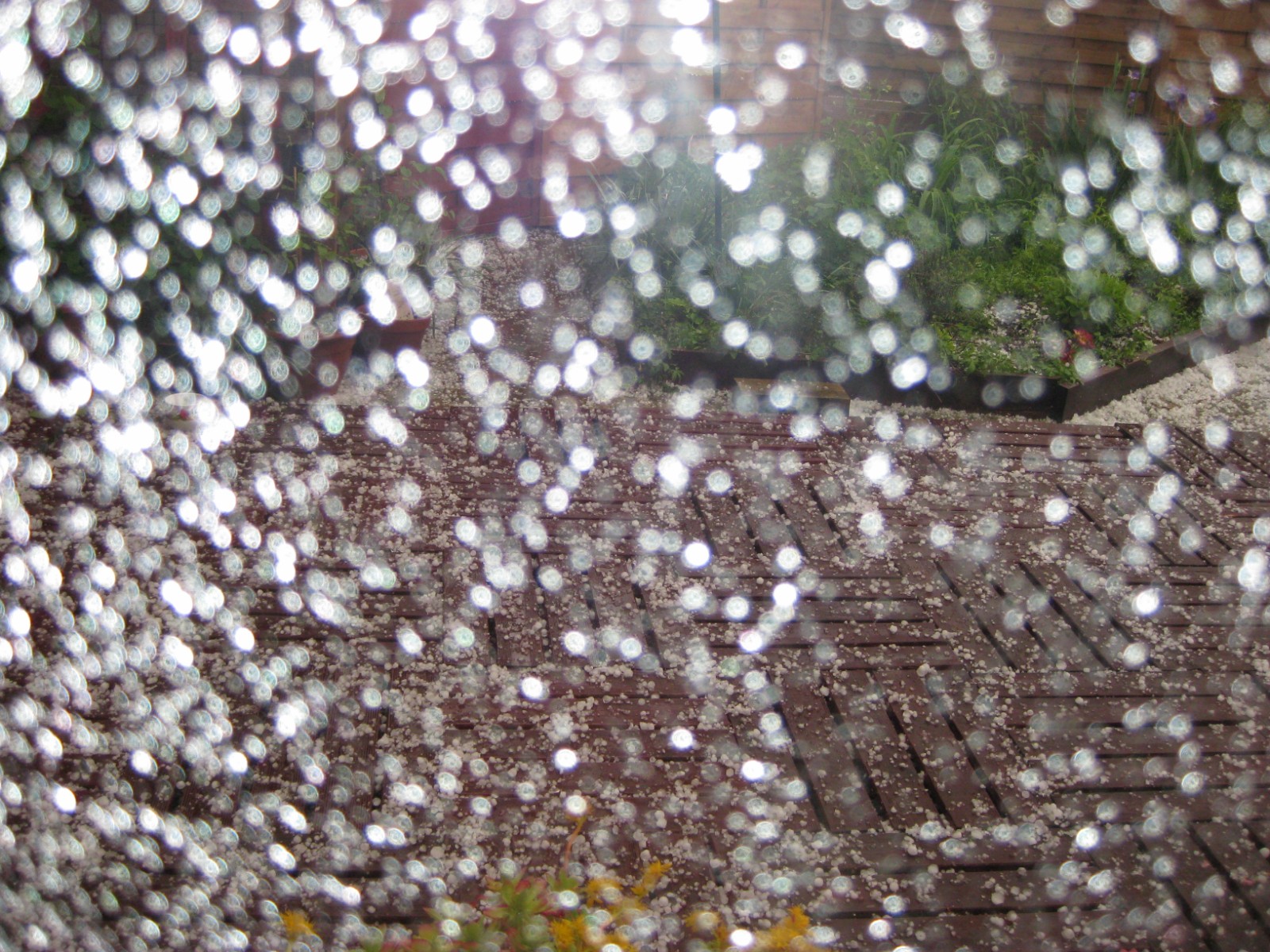
The other day, blazing sunshine and a brilliantly clear blue sky brought the lizards out and had us stripping down to our T shirts.  Minutes later we were reaching for fleece jackets and shortly after that we had to scurry indoors….a hail storm.  And what a storm! Hail stones as big as Maltesers flung themselves noisily against the shutters and scythed down young leaves and shoots in the garden.

May hailstorm

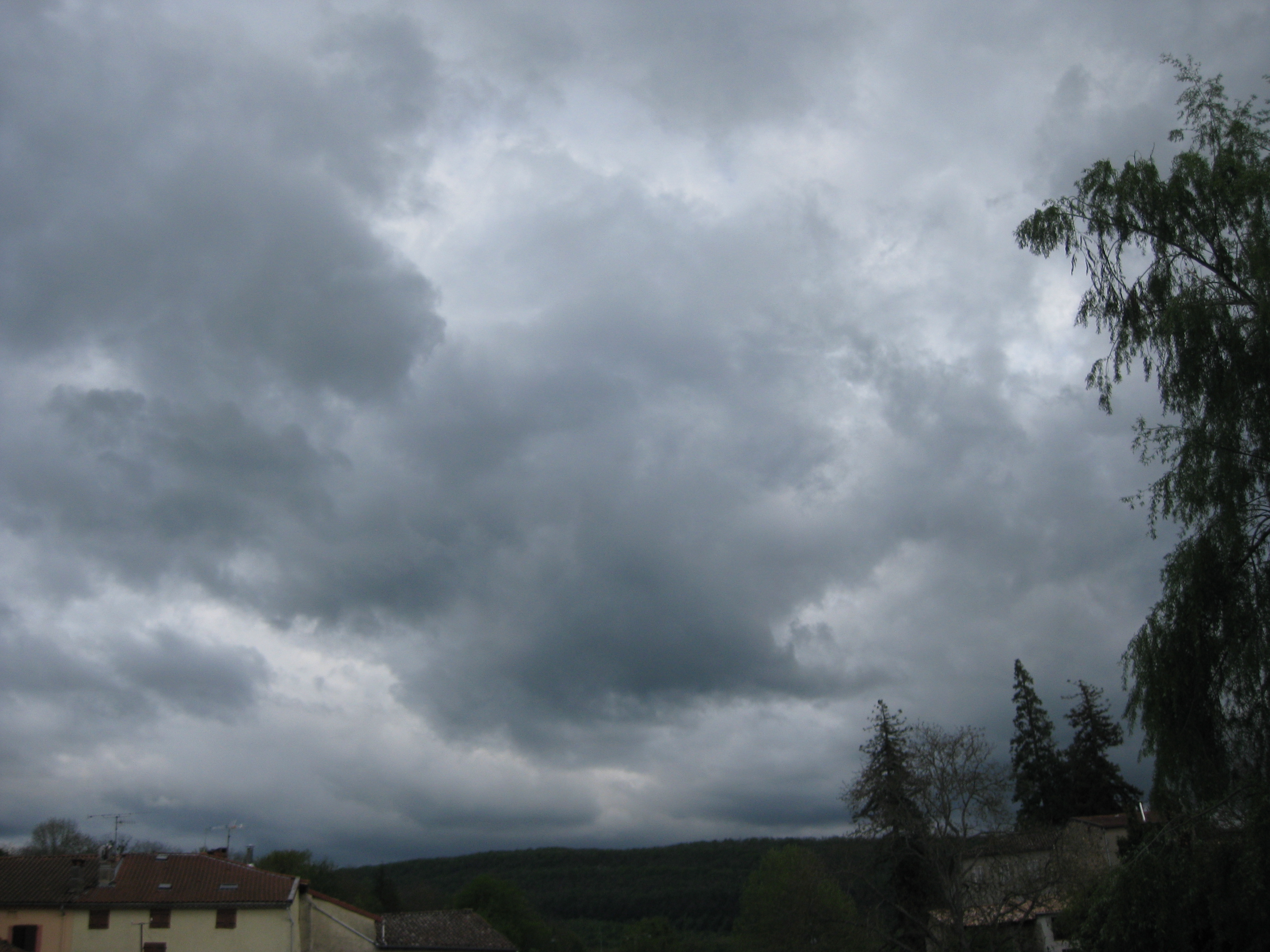
At other moments puffy white cumulus meandered across the sky and minutes later angry violent gusts of wind tugged sullen heavy grey clouds into view.  But this time two years ago, we had snow in May, lots of it.  Let’s hope summer will arrive soon, as it did that year.

Laroque cloudscape, looking southwards
Laroque cloudscape, looking northwards

On the path of Cathar shepherds

Montaillou

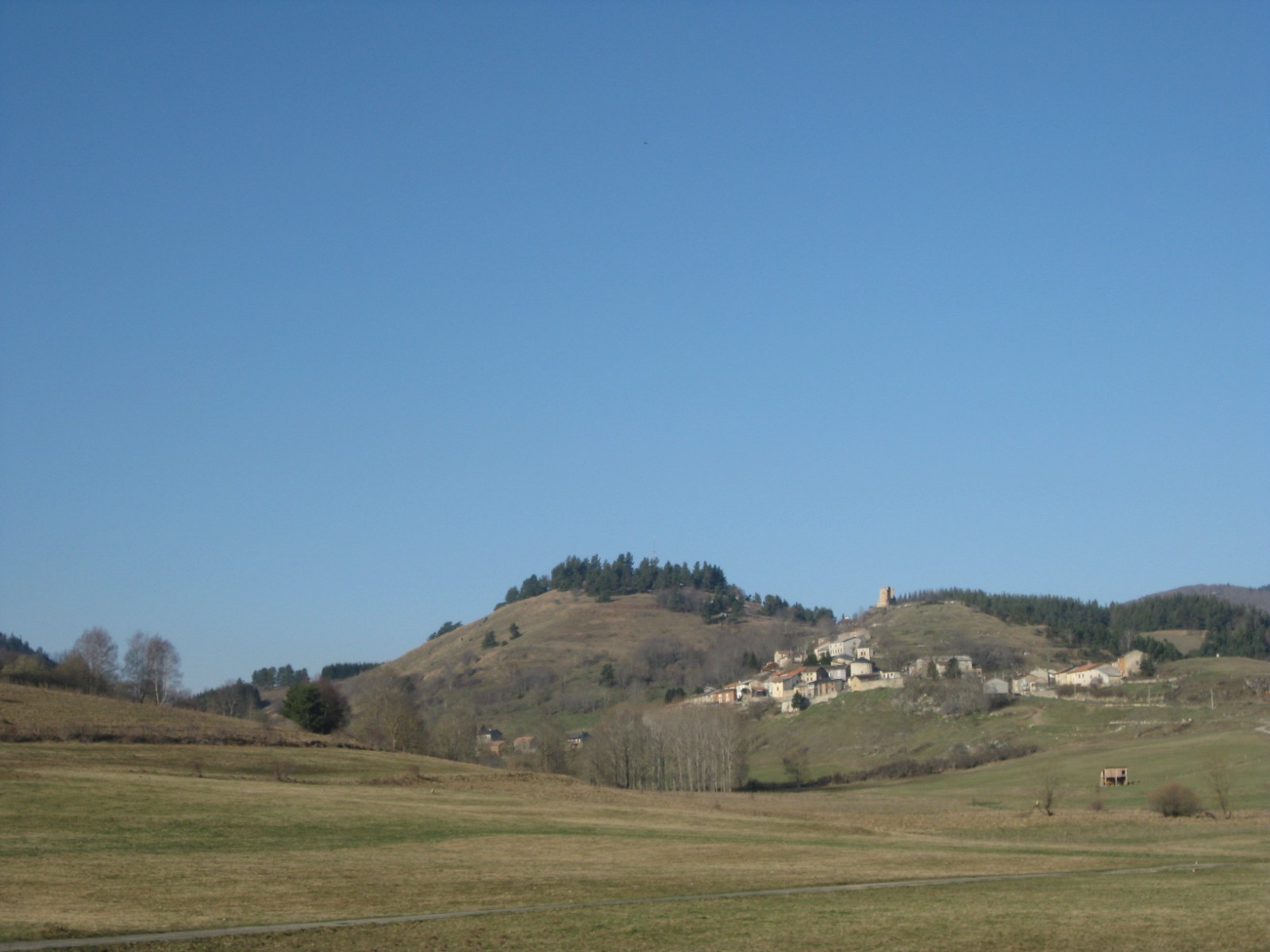
Yesterday we walked through Montaillou.  It might seem a tiny and unremarkable village now, but it’s the place that’s maybe done most to contribute to our understanding of turn-of-the-14th century village life in the Languedoc when religious strife between the Catholics and the Cathars was at its height.  This is a big subject: it deserves more than passing mention: a future blog maybe.

I’d read le Roy Ladurie’s book on Montaillou more than 30 years ago,and never dreamed that I might one day live in what the tourist offices are pleased to call ‘Cathar Country’.  So it was the shepherds of Montaillou I was thinking of as we began our Sunday walk.  They would come to the annual fair at Laroque d’Olmes, a good 40 km from where they lived.  They would drive their flocks long distances for good pasture, and as national boundaries meant little in these mountain zones, their fellow shepherds whom they met in their travels would sometimes be Spanish.

Blossom and snow

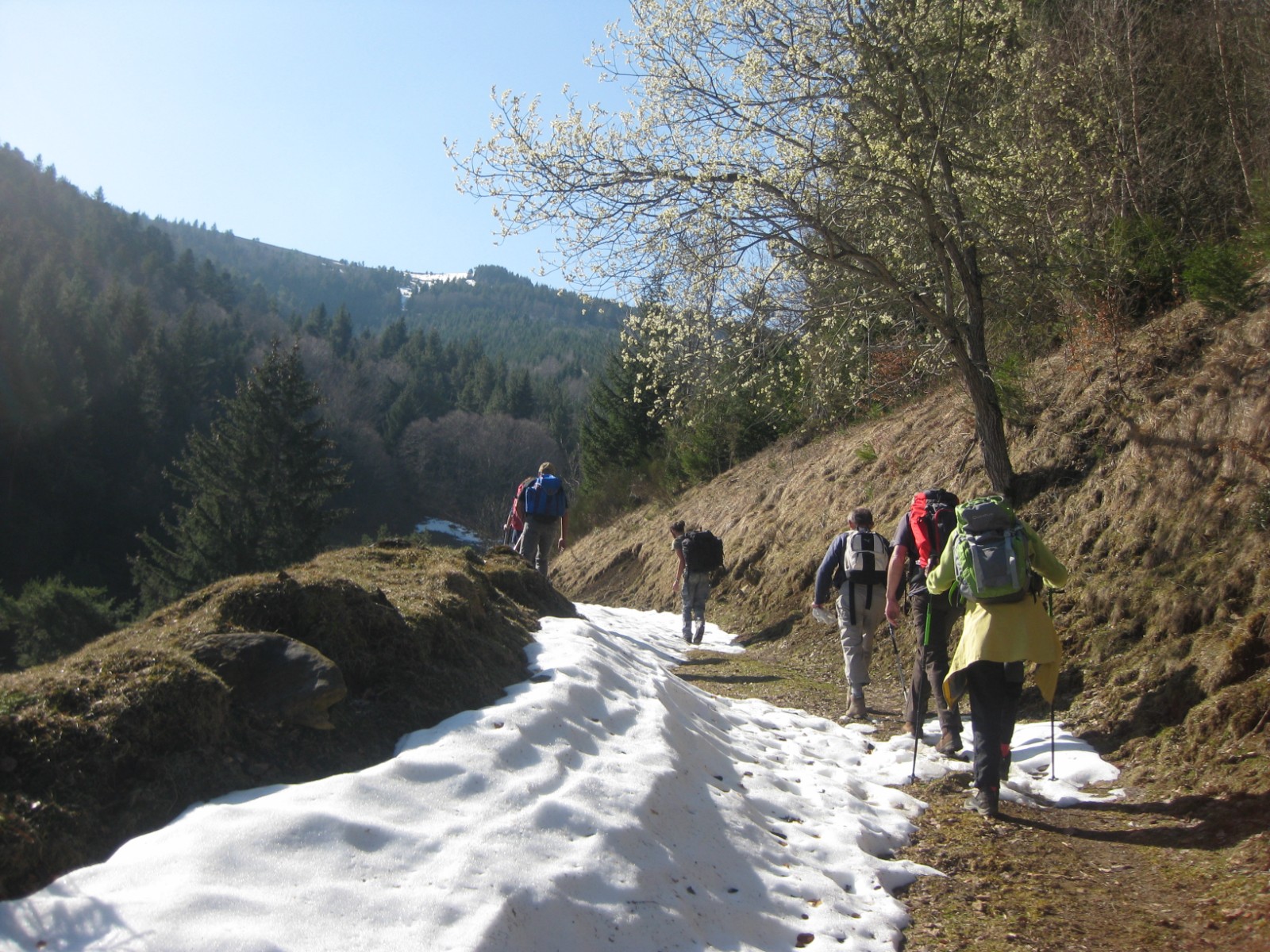
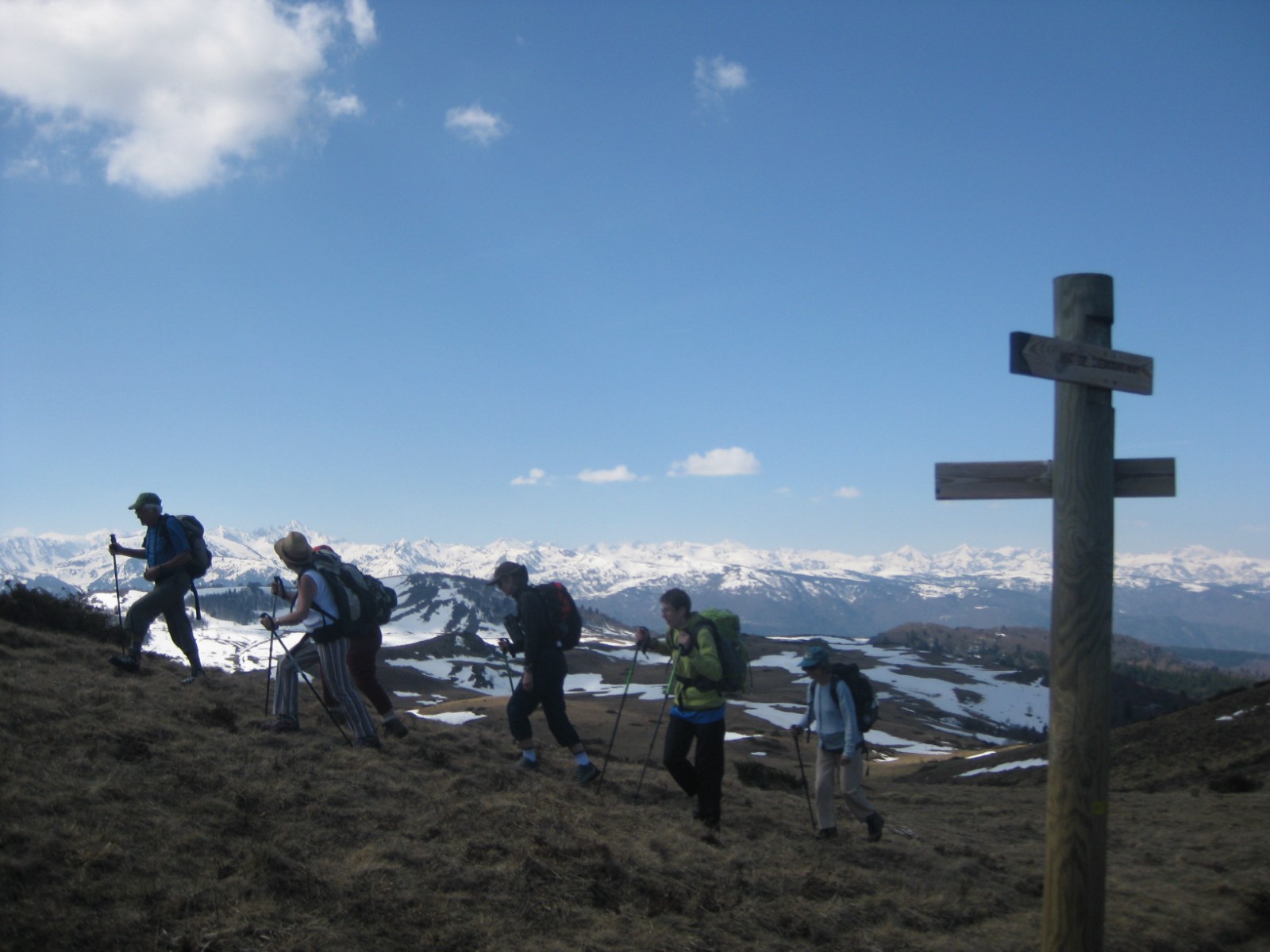
We too were climbing out of Montaillou.  The paths seemed unchanged through the centuries – short springy turf with early spring flowers pushing through. Pale pink and white blossoms busting open.  Narrow streams cutting deep channels through the turf.  Thick forest climbing the slopes.  Patches of snow made the going a bit tough from time to time.  It was warm and sunny, the slopes were steep and sometimes hard-going

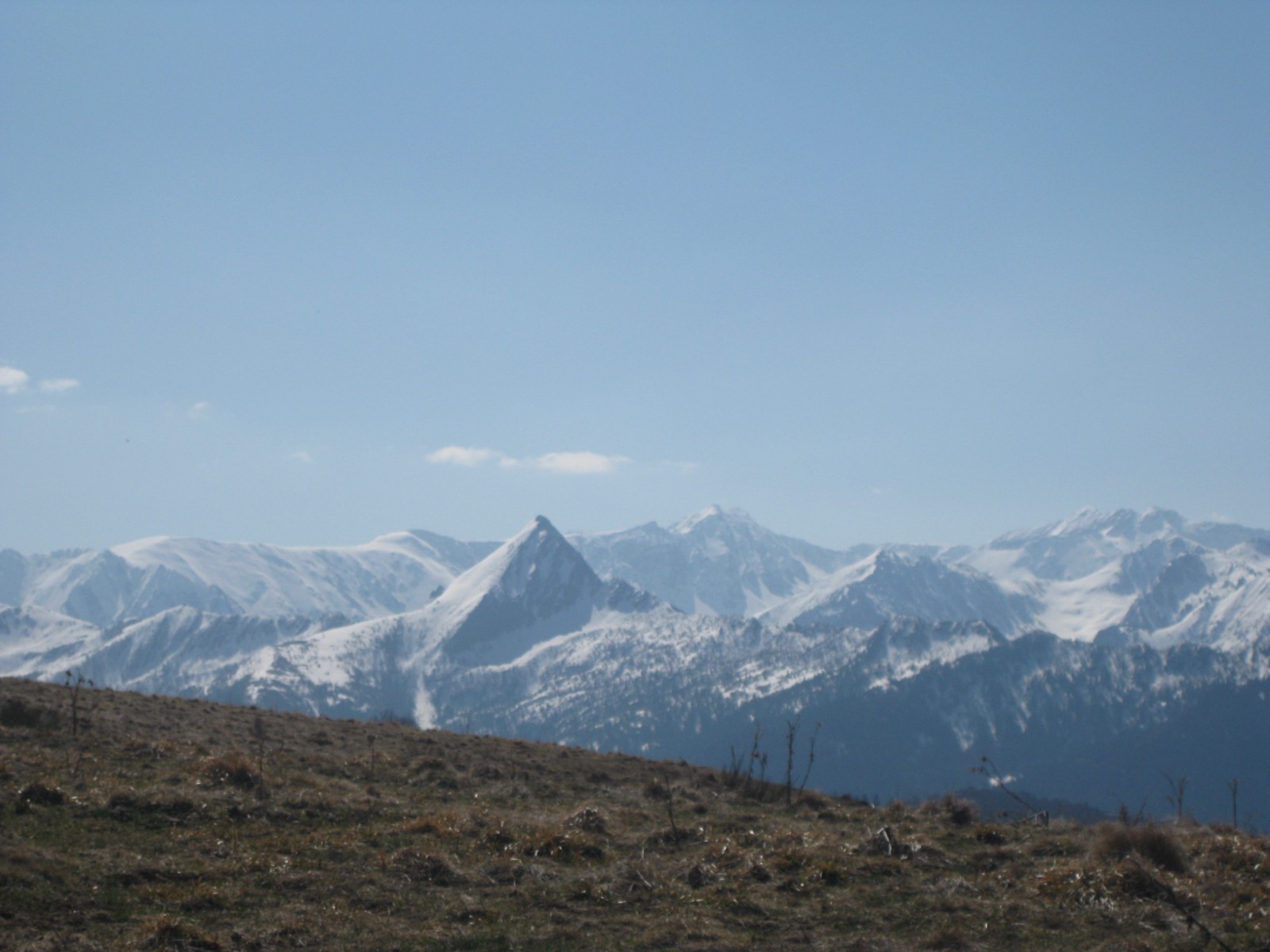
Those peaks appear

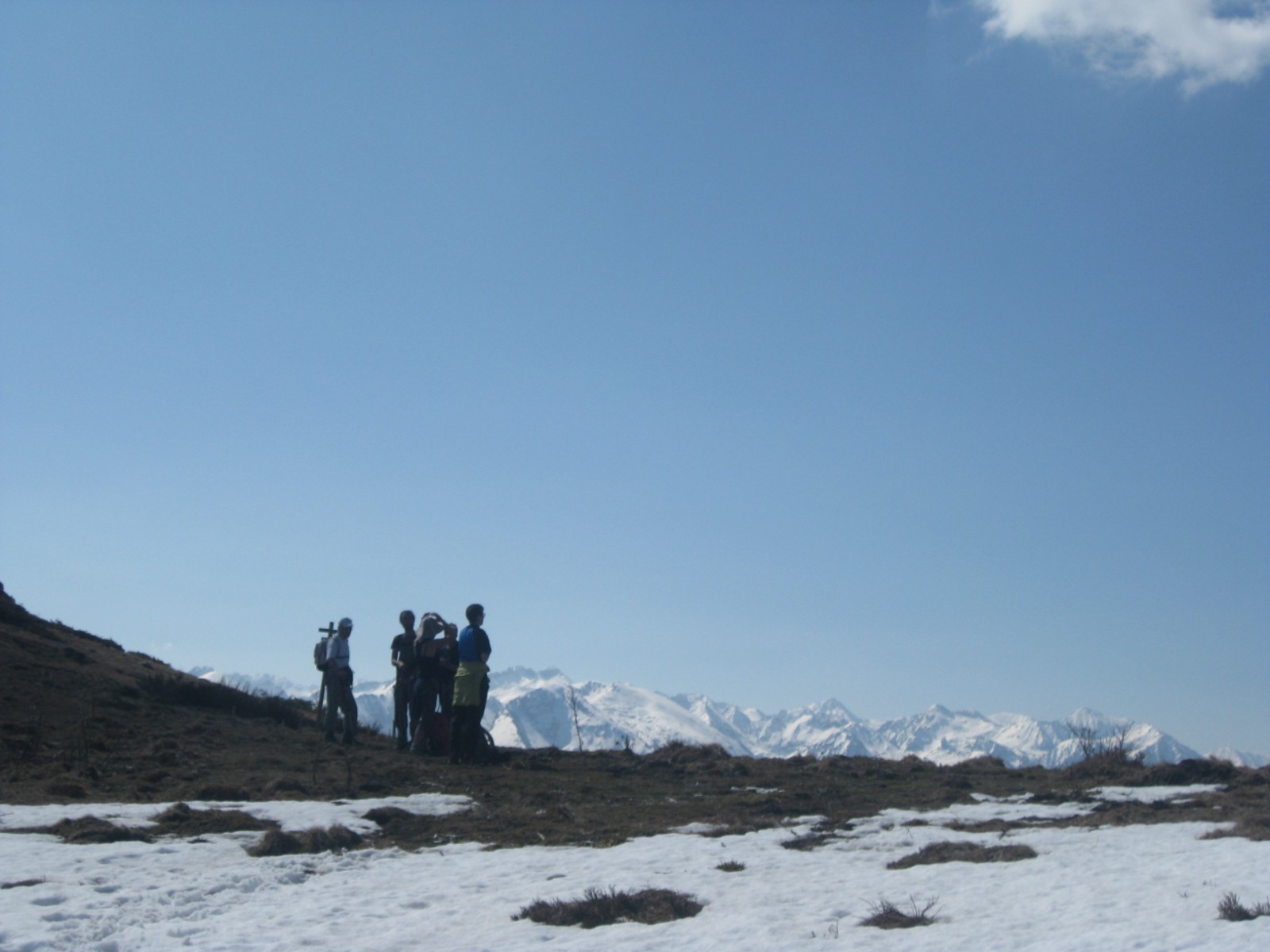
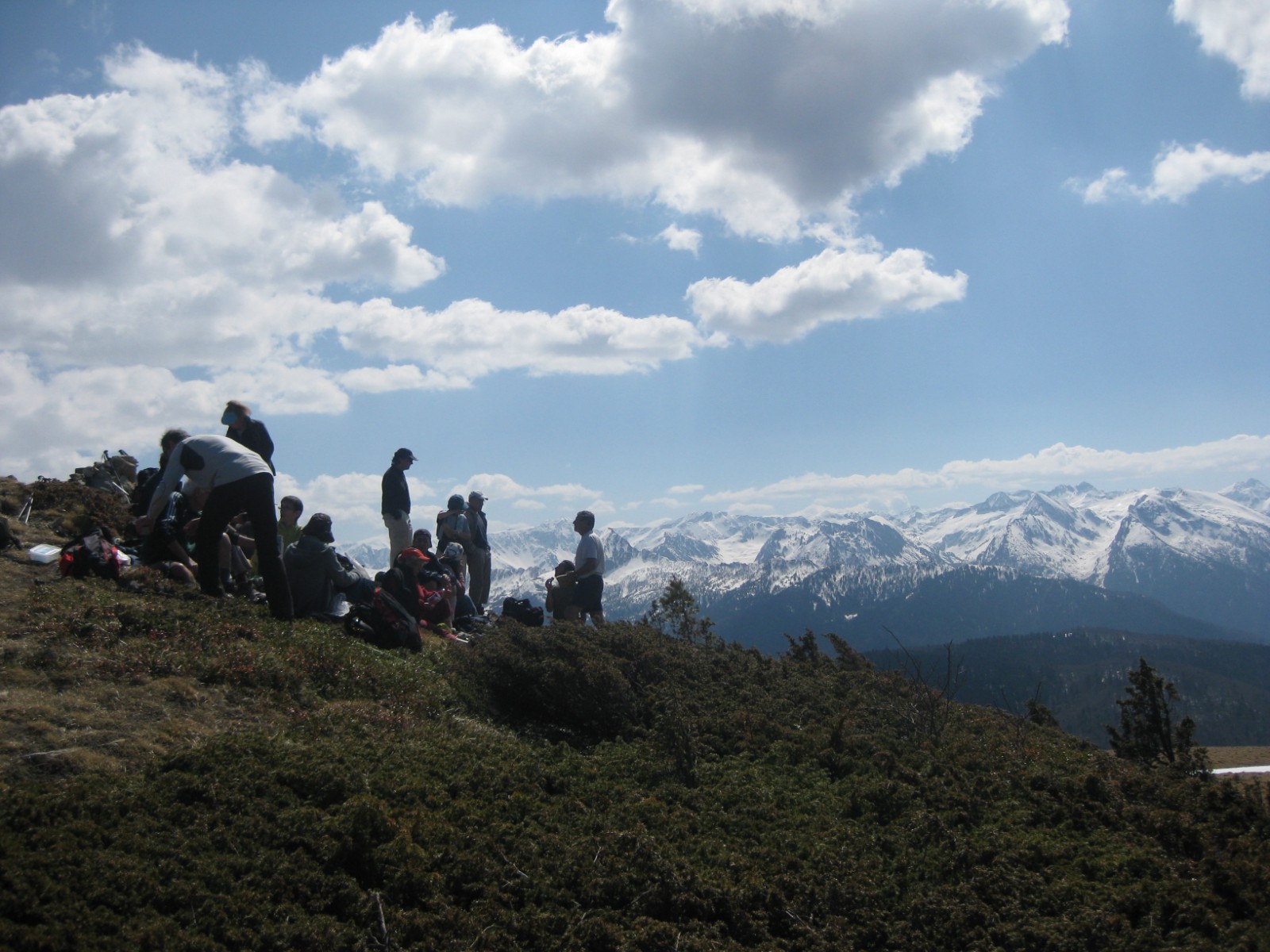
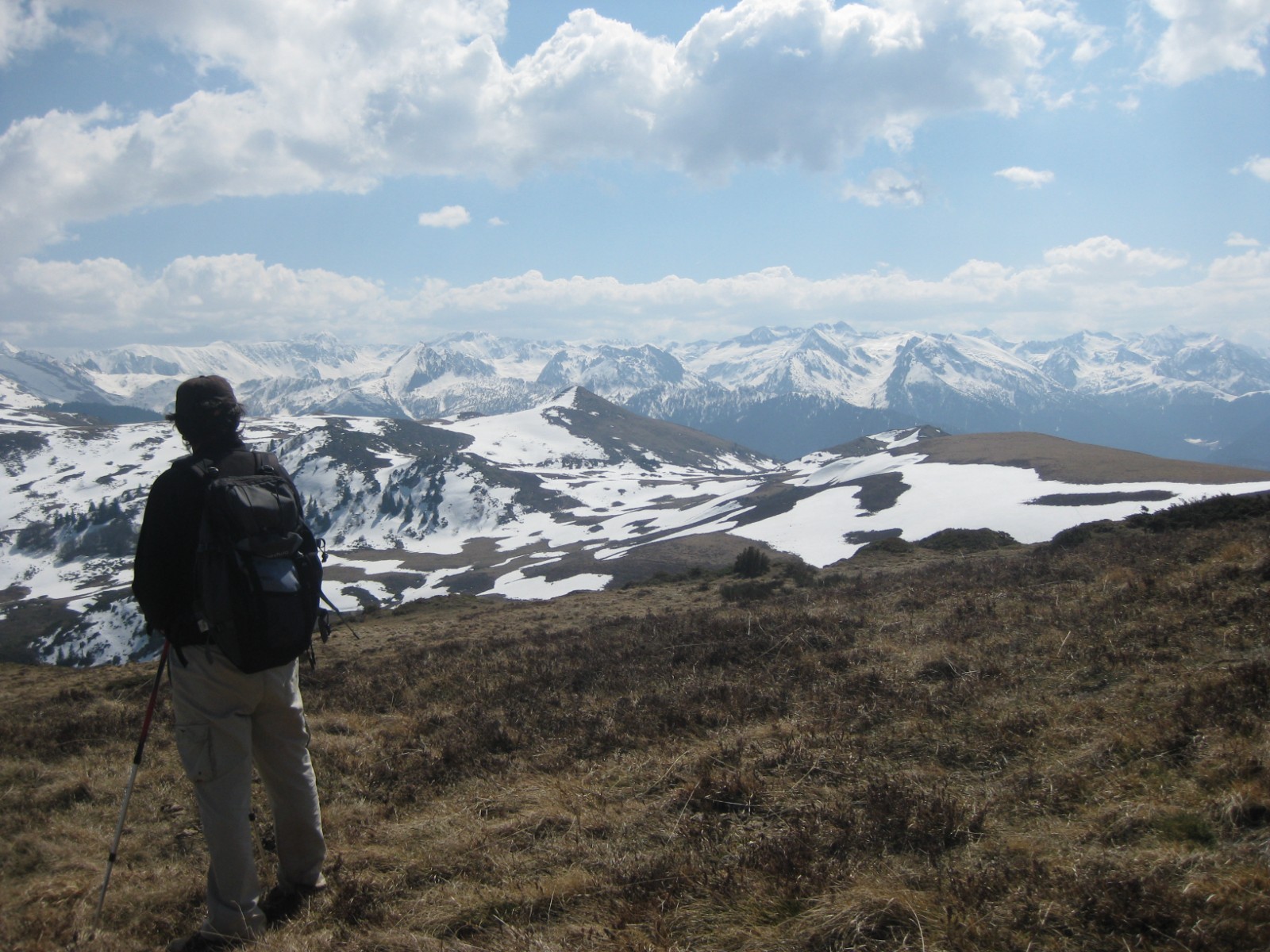
Then suddenly…suddenly, and so unexpectedly, we reached the top of our first climb.  Around us, to east, south and west were the snow-covered peaks of the Pyrenees, glistening white against the blue sky.  Above us, skylarks called and swooped.  Later, Danielle remarked that she felt as if at that moment she’d received a special gift: that perfect view, the clean clear air, the singing birds which were the only sounds.  She voiced, I think, what we all felt.

A few of those unending peaks
We keep walking
More distant peaks

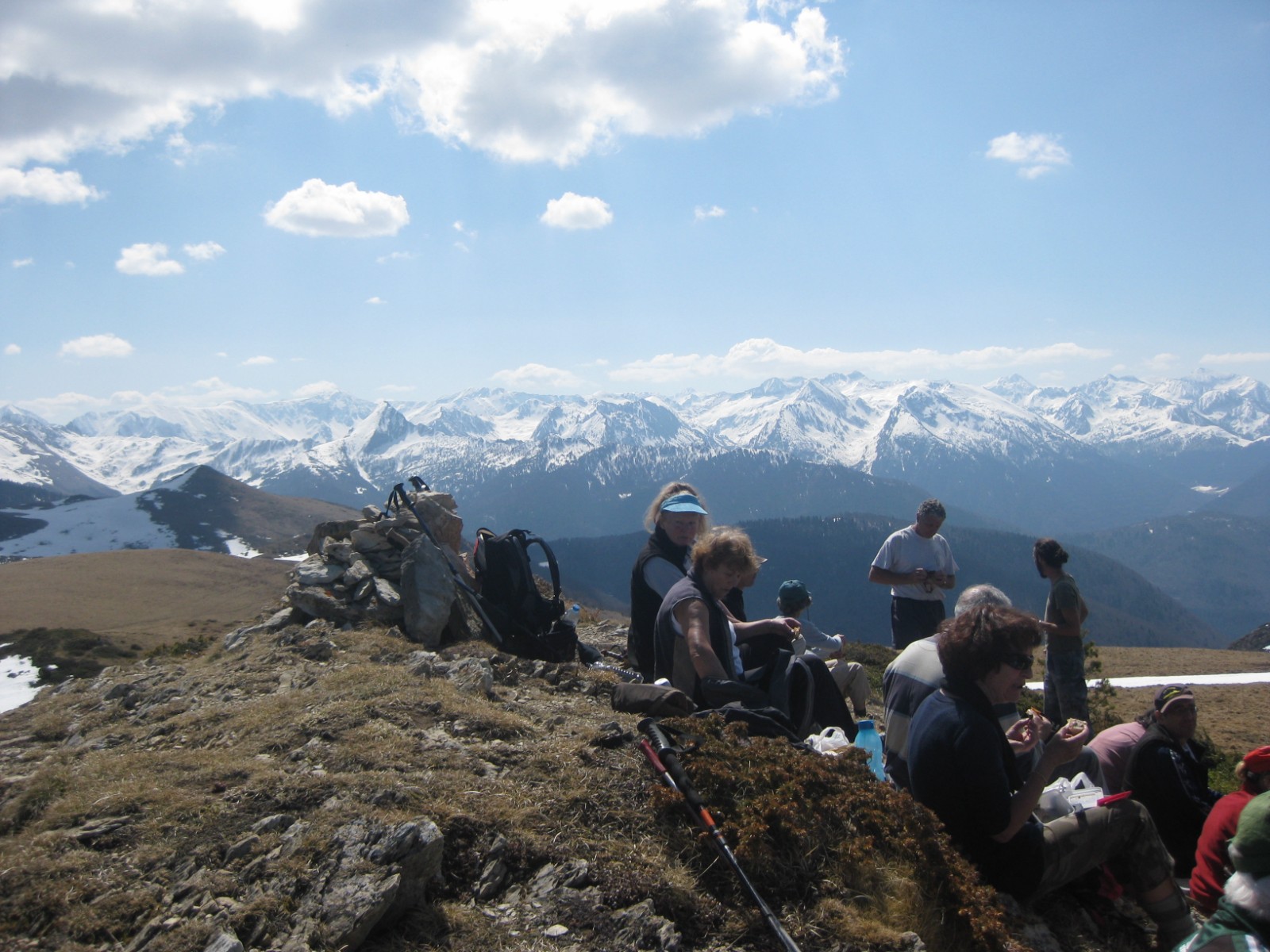
We hadn’t reached our highest point: we climbed onwards, always with those snow capped mountains at our side.  And then we were on top: handy rocks provided seats and shelves and we unwrapped and shared our lunches, lingering in the sun, drinking in the views for well over an hour.

Picnic spot

The afternoon walk begins

Soon after lunch, we turned our back on the snowy mountains.  As we faced the hotter, drier Pyrénées Orientales, the equally high peaks there weren’t covered in white.  Our path was downwards now, and soon we had to pass the ski station above Camurac.  Built long after those years when snow could be relied upon throughout the winter, it was an area of scalped earth, snow machines and all-but-redundant chair lifts.  My Montaillou shepherds certainly wouldn’t have recognised it.

The walk draws to a close

But then it was forested paths again, open pasture and spring flowers.  We finished the walk passing a collection of horses, Thelwell style ponies, and appropriately for Palm Sunday, a couple of friendly donkeys.  A good day.