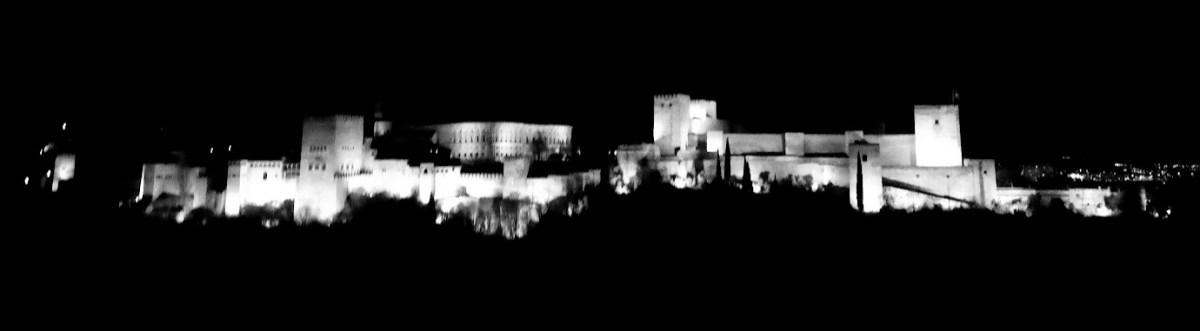
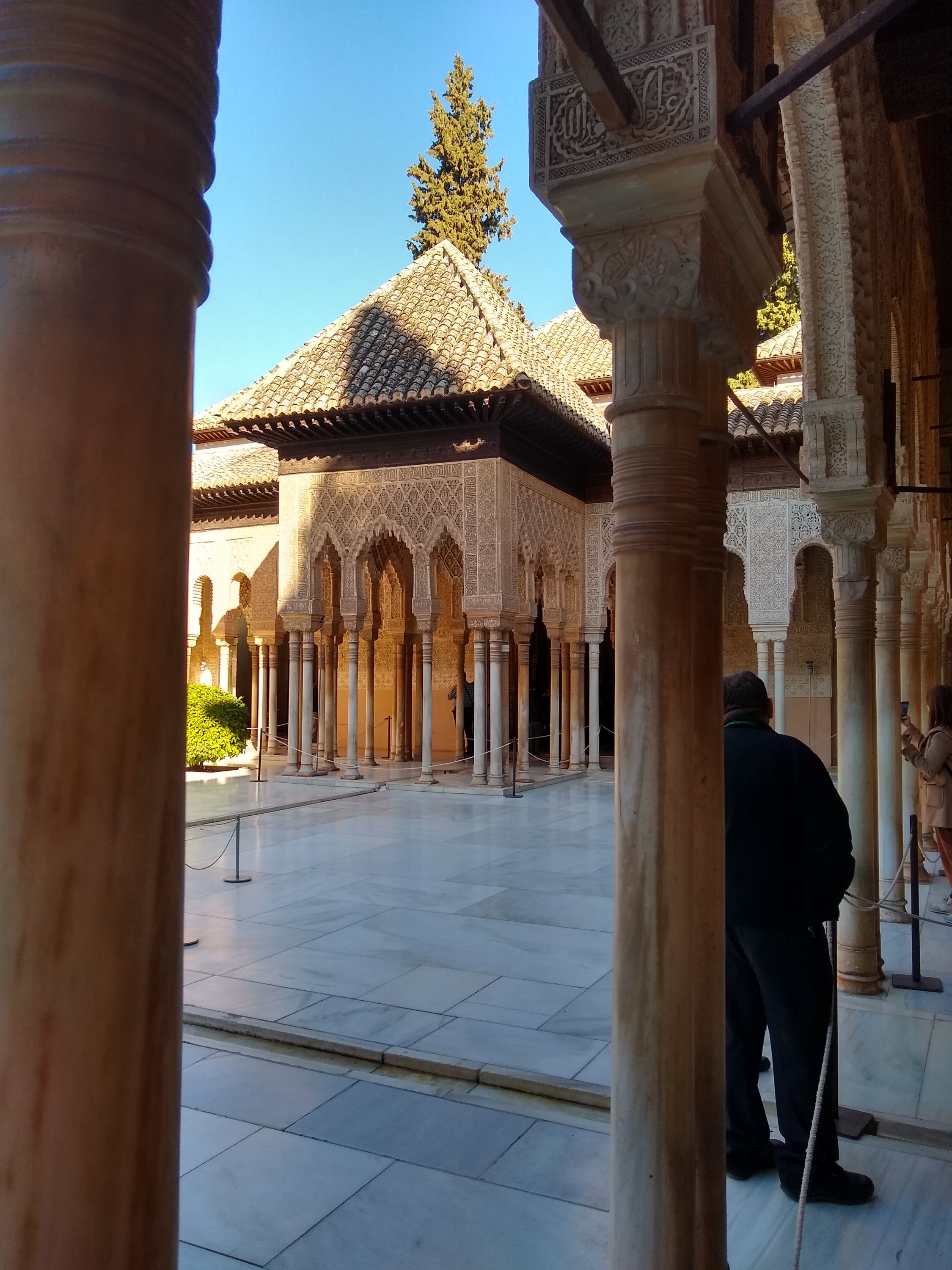
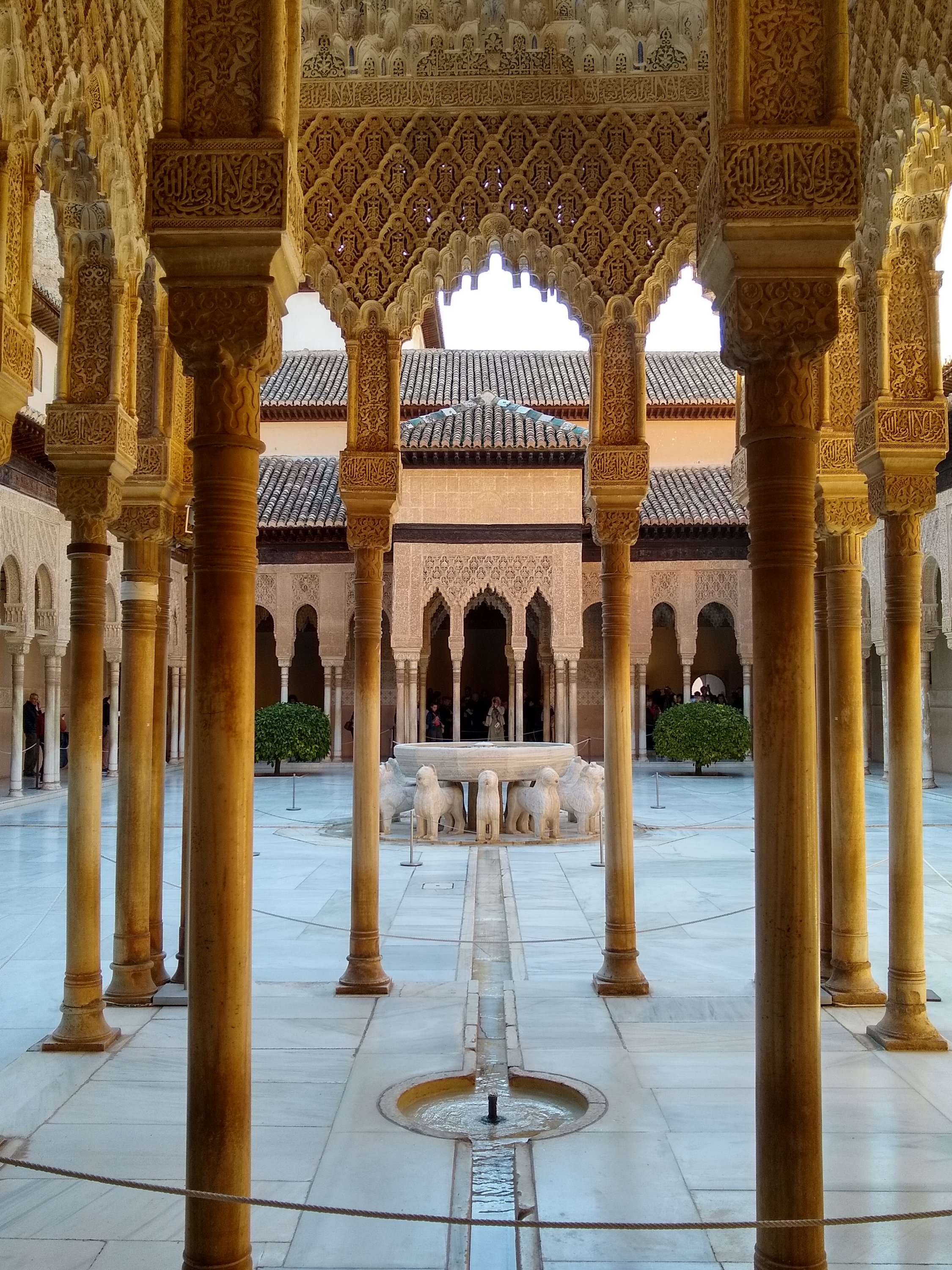
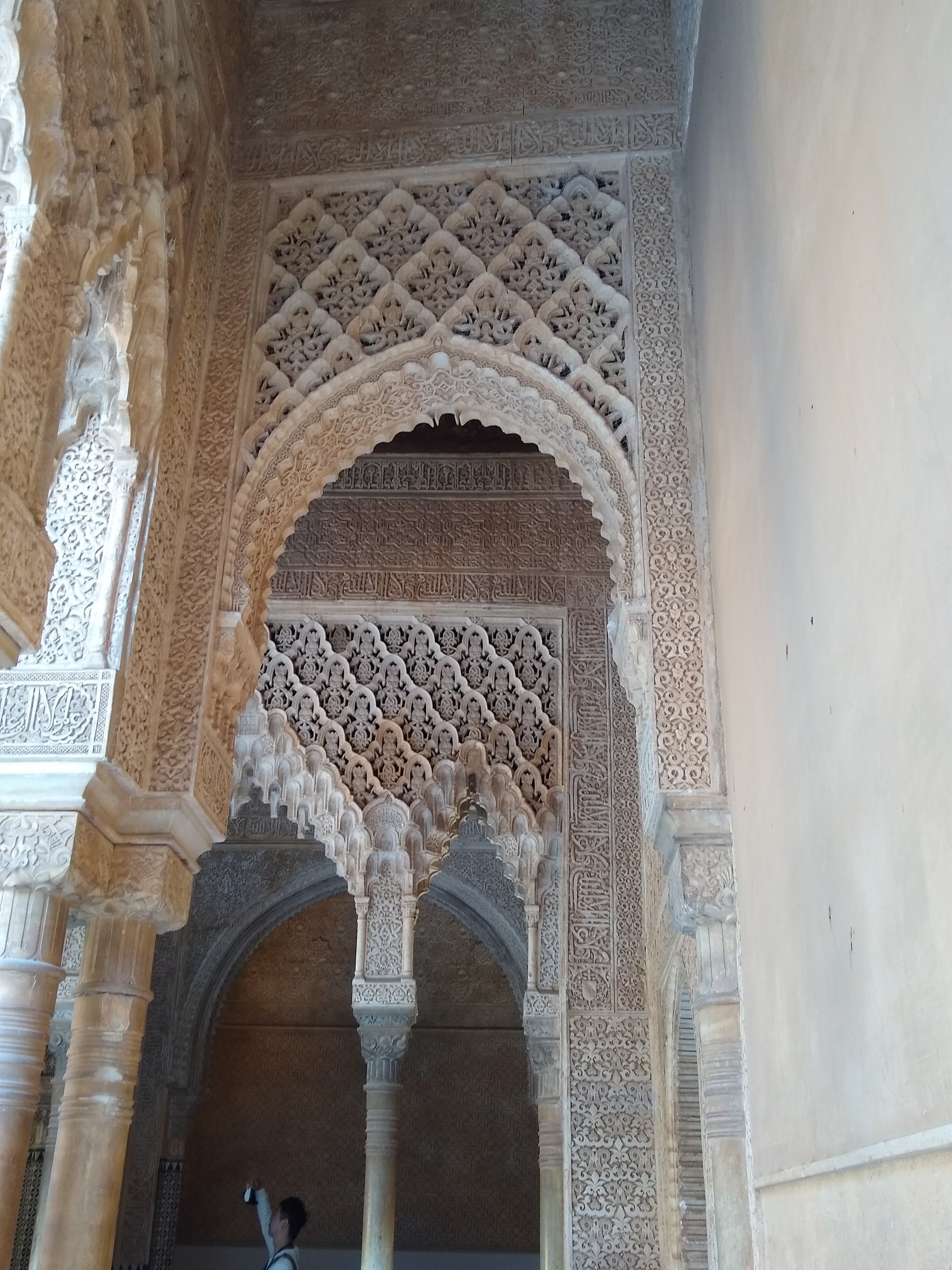
The Alahambra in Granada has a history going back to the 11th century. It was a Zirid fortress, then a 13th and 14th century Nasrid royal palace and fortress complex. Like all Nasrid palaces, it’s a harmonious blend of space, light, and water, featuring intricate decorations and inscriptions, and it’s quite wonderful. Despite the crowds and the selfie-seekers, one of whom is immortalised below. We couldn’t get rid of her.
But in 1492 (the same year, as any English schoolchild knows, that ‘Columbus sailed the ocean blue‘), Catholic monarchs captured Granada, the last bastion of Moorish rule in Spain. It became a royal court for some time before falling into disrepair, was damaged by Napoleon’s troops, and was eventually discovered by 19th century Romantic travellers. Rediscovered, restored, it’s now a UNESCO World Heritage site.
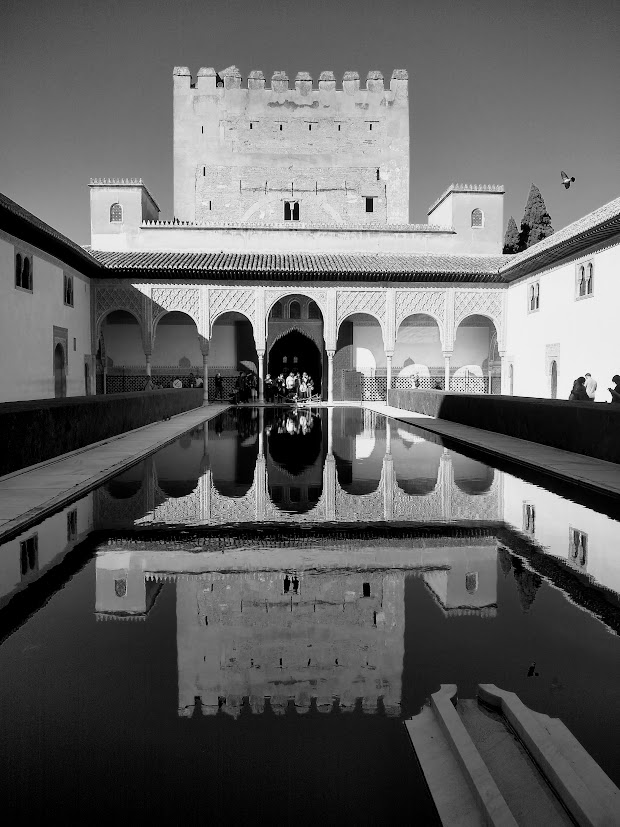
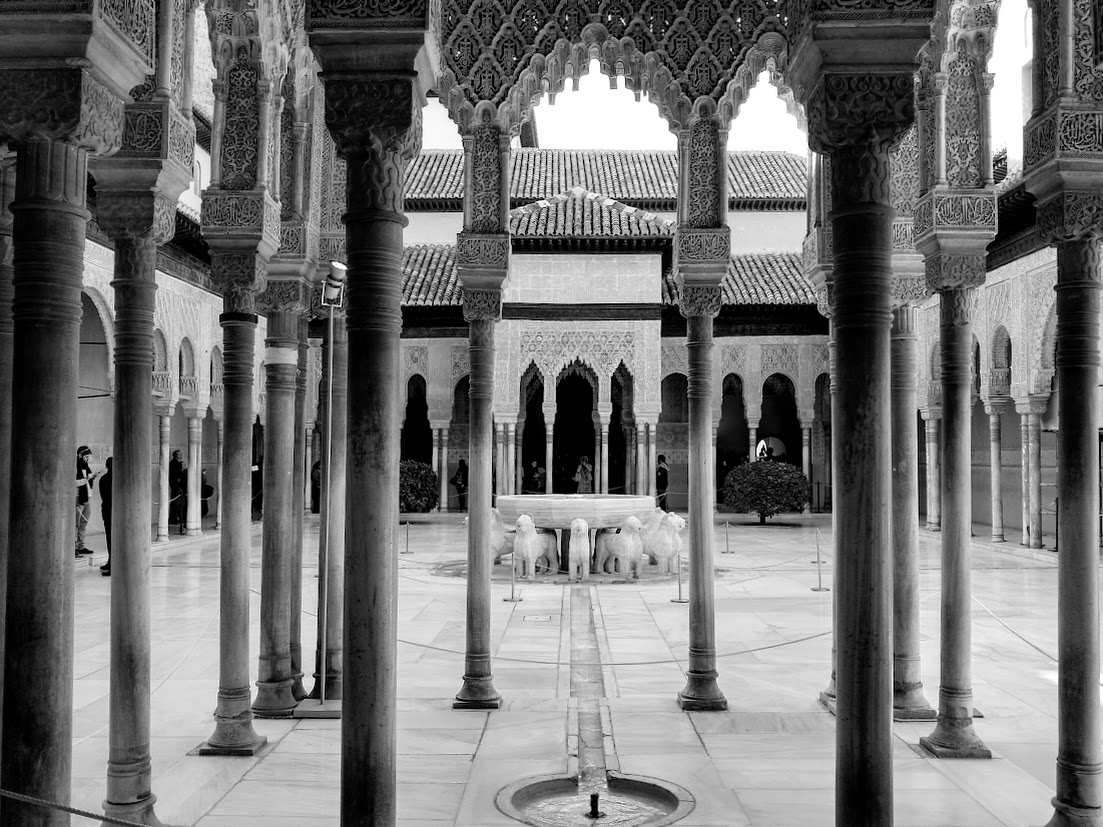

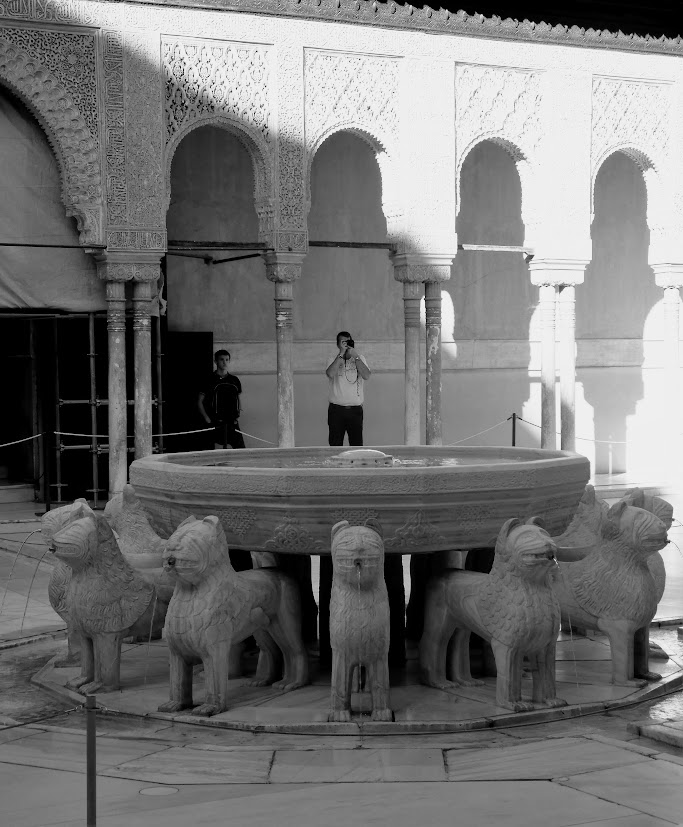
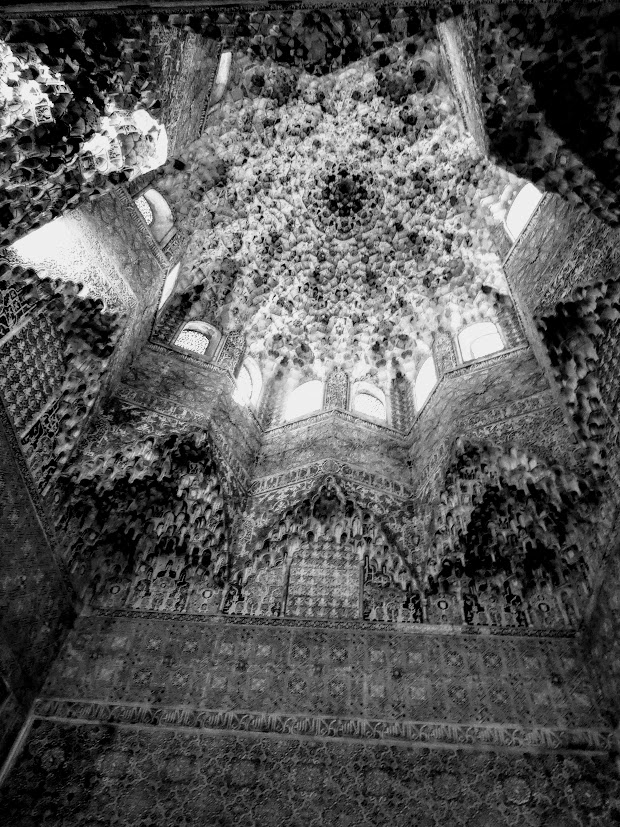
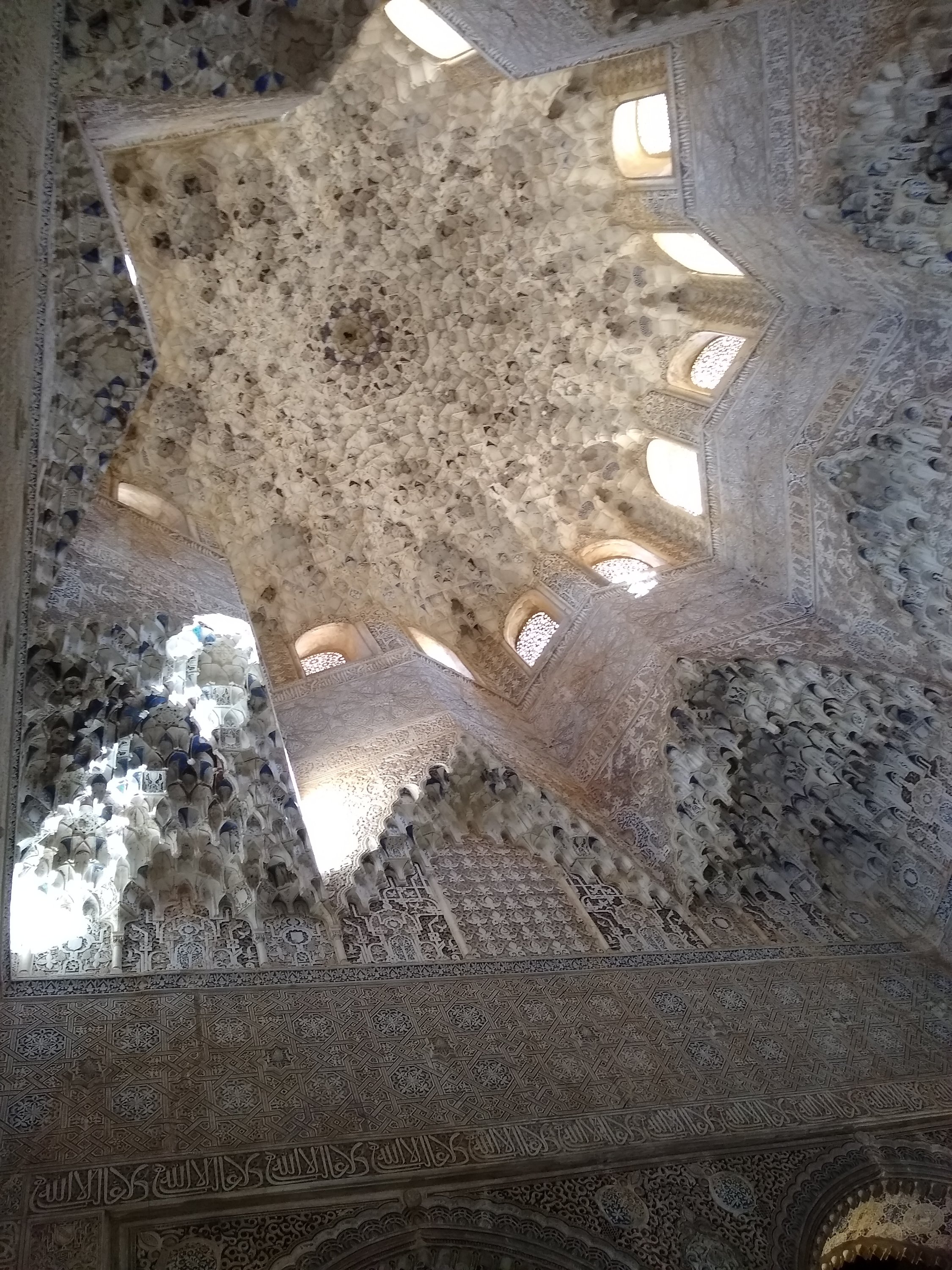
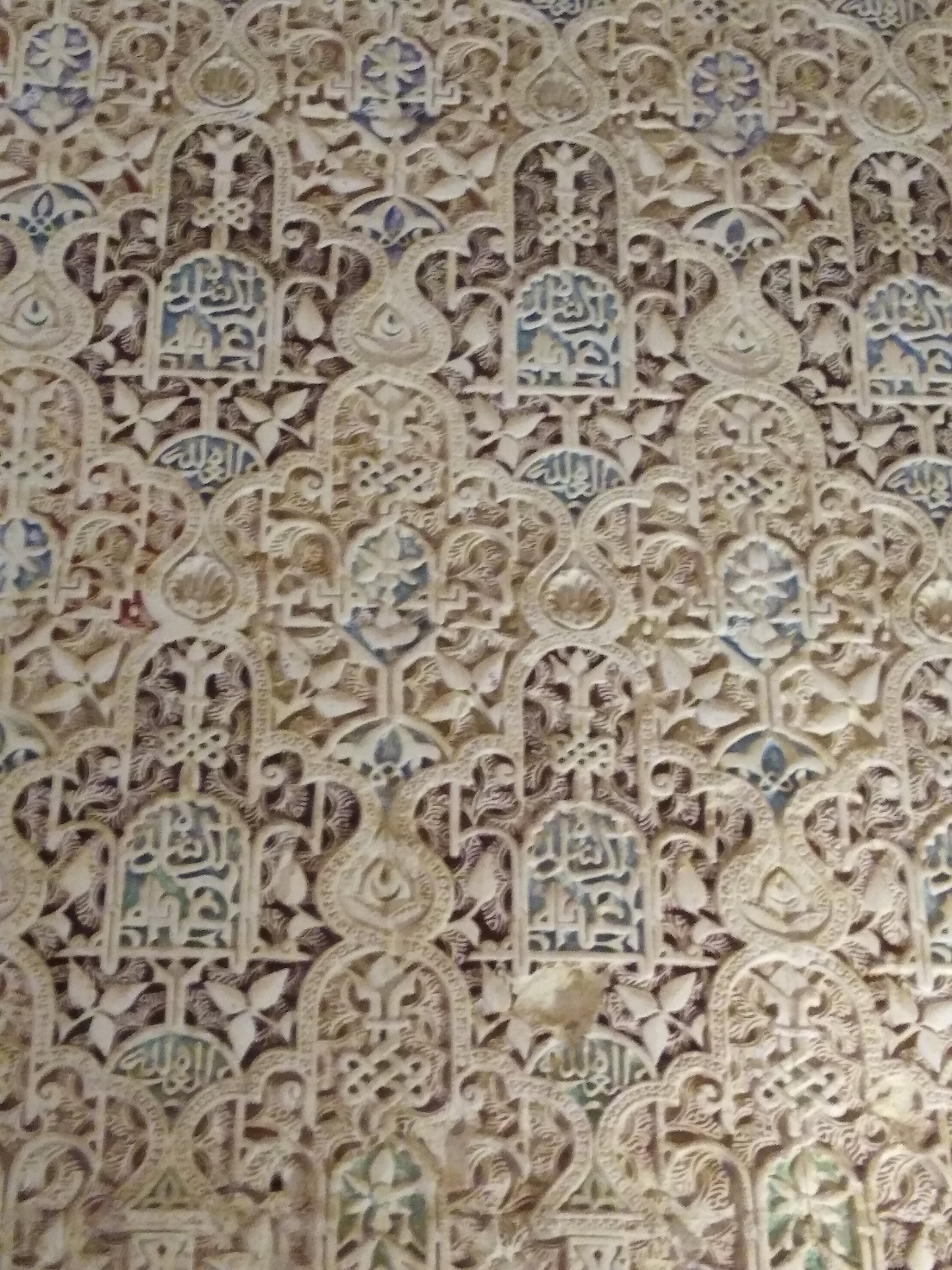
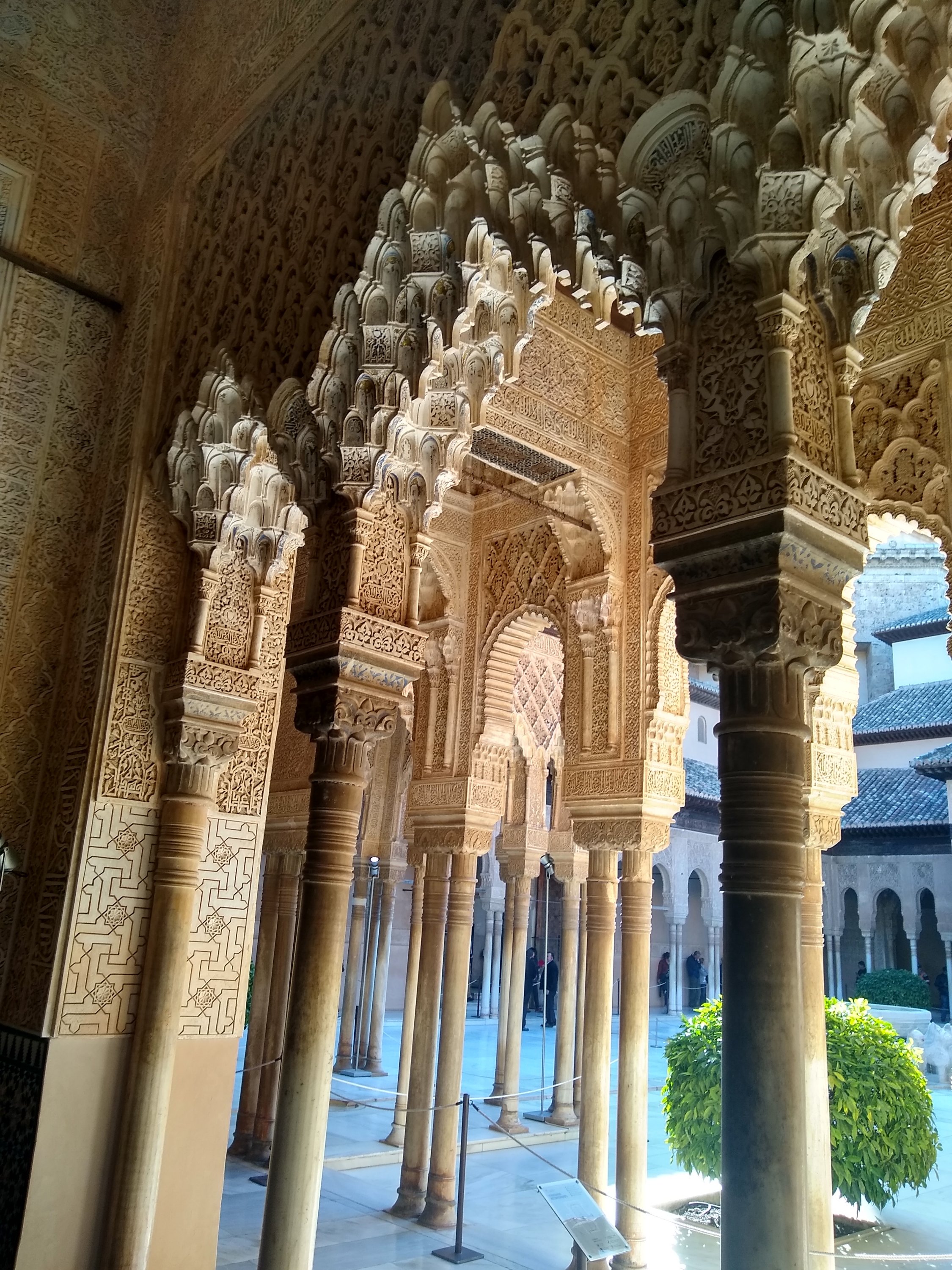
Here’s some decorative detail. Also symmetrical.
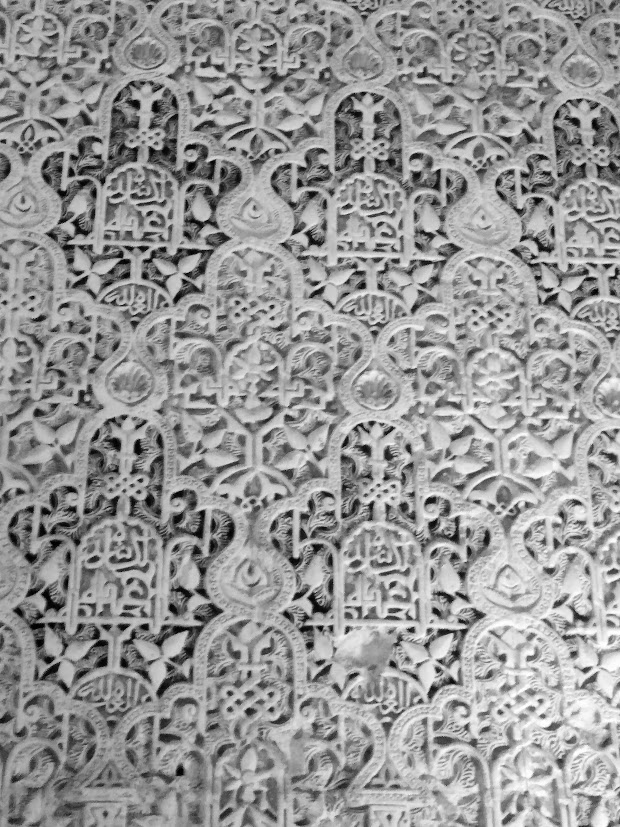

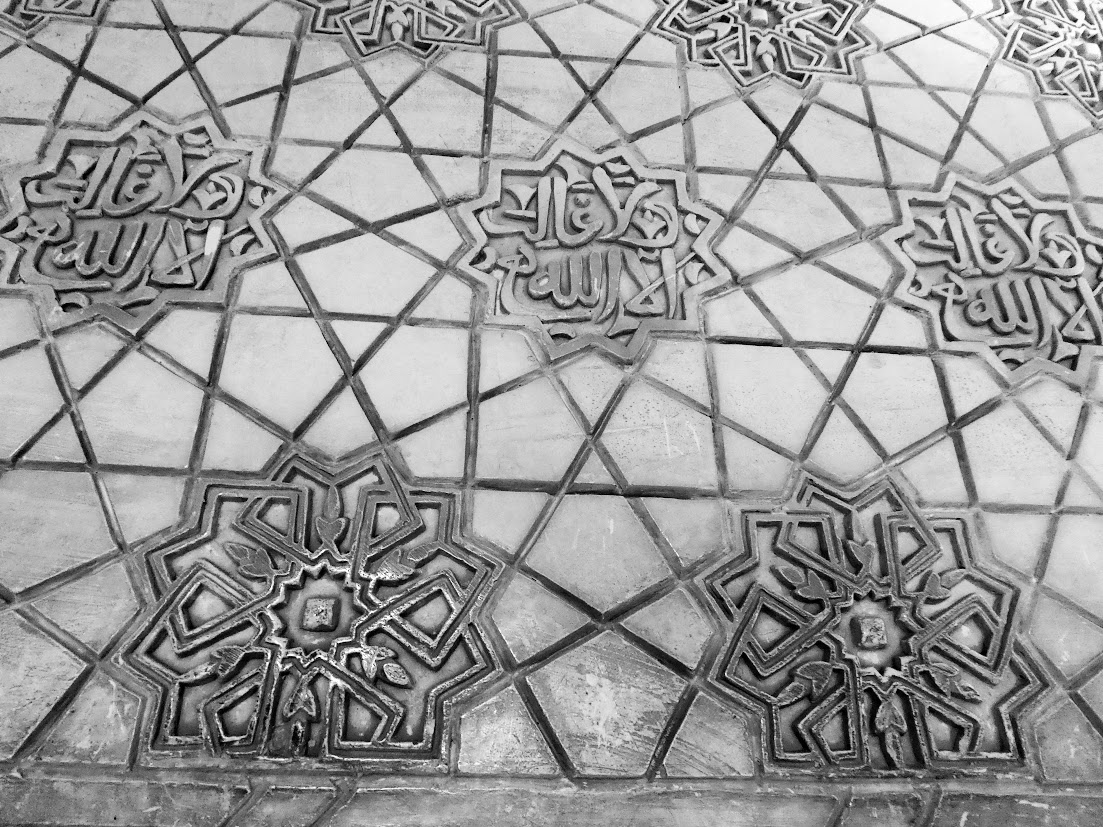
And so it’s here I’ve come to celebrate symmetry for Leanne’s Monochrome Madness, hosted this week by Dawn of The Day After. We visited in 2019.

 From Pyrenees to Pennines
You must be logged in to post a comment.