After my own breakfast, I had just half an hour to spare to watch this great white egret hunt for his. While I was there, he caught just two small fish. The nearby hens were busy too, as you can hear.
Our Prespa adventure is over now: our Balkan adventure is not. To be continued …
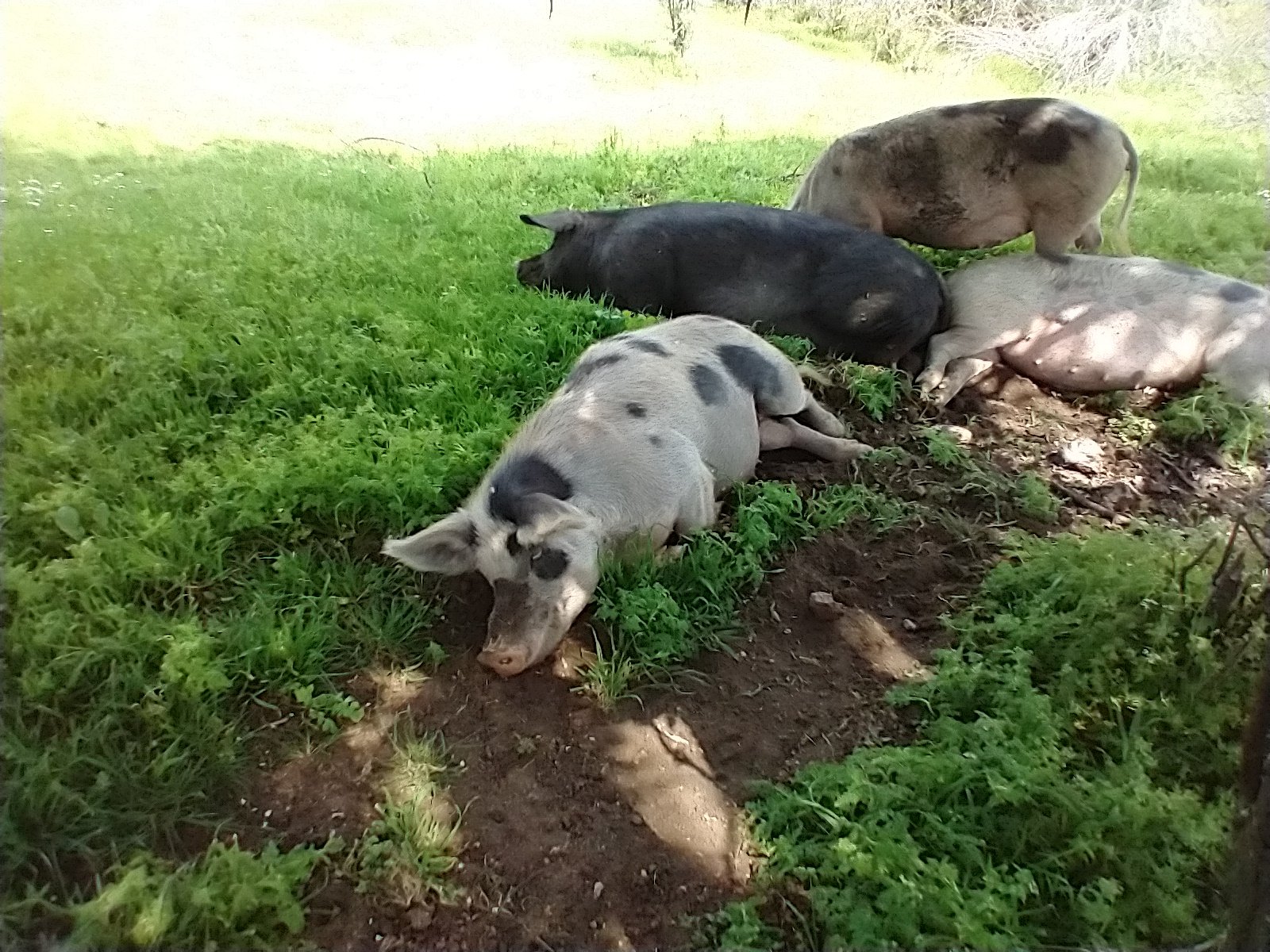
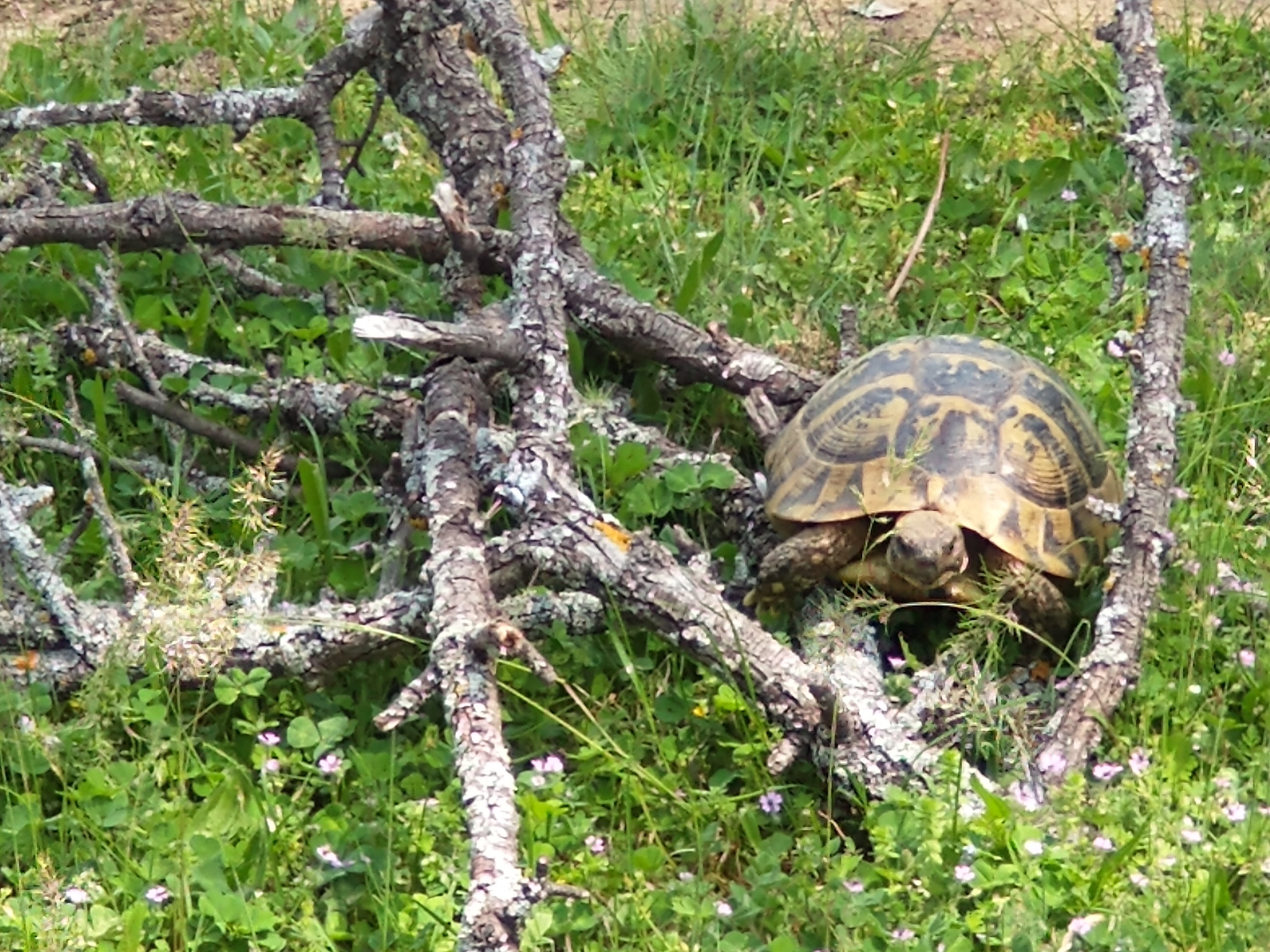
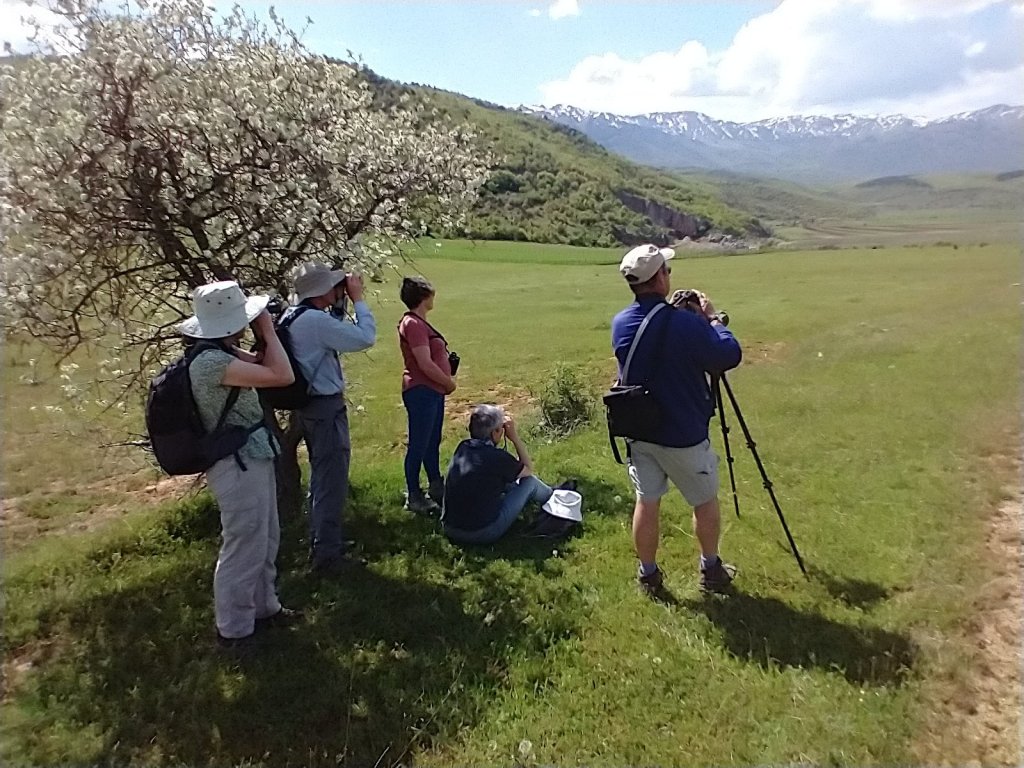
Today was a day of birdsong: of nightingales without end, of golden orioles and hoopoes. It was a day to watch bee-eaters, pelicans, grey herons, night herons flying over the lake. It was a day to watch sows idling away the morning under a shady tree, or goats commandeering the hillside. Or to see a wild tortoise lumbering across the path.
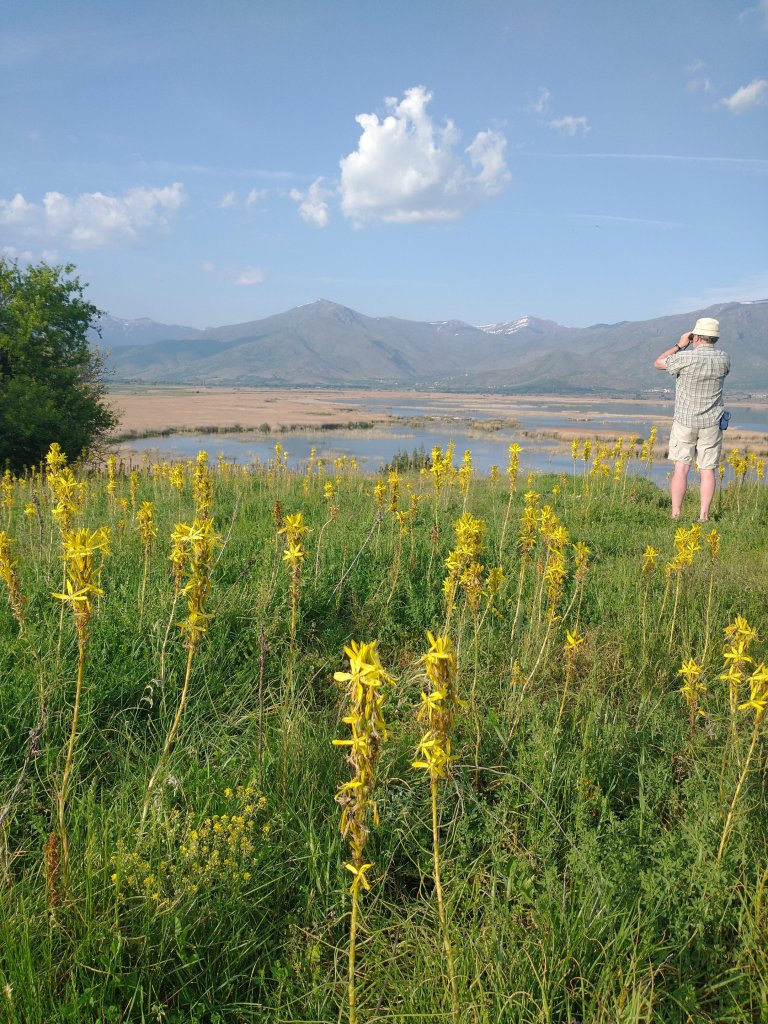
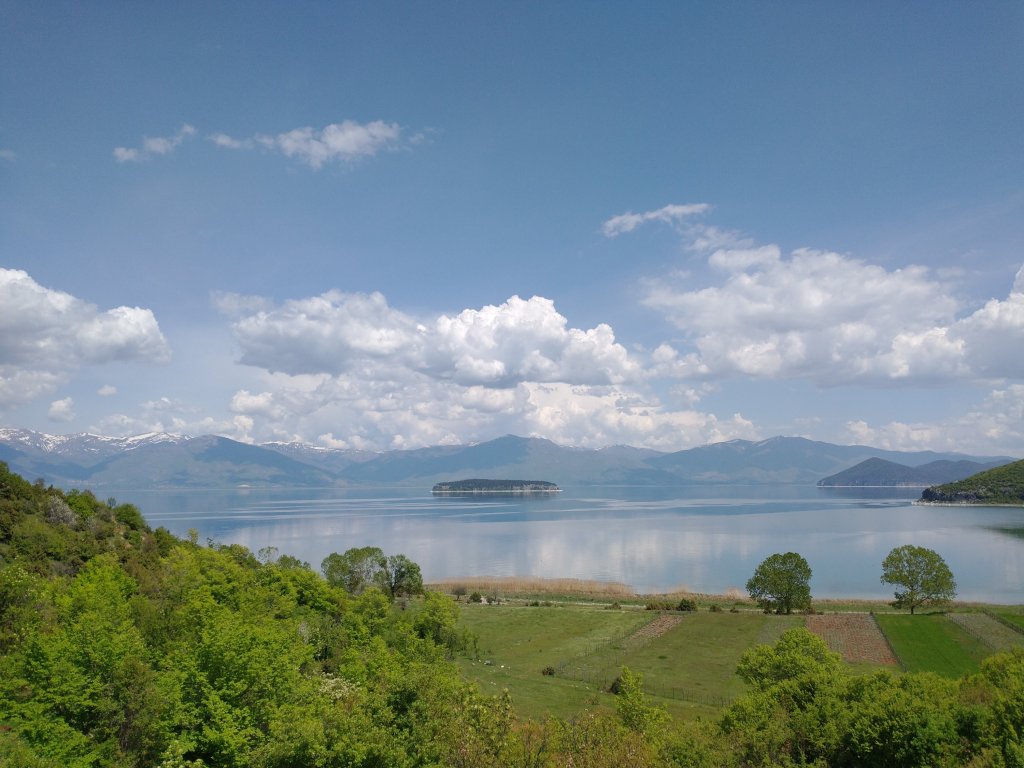
Today, we journeyed to Lake Prespa, Grecian section. To Little Prespa to be exact. We are staying on an island where we were promised a cacophony of frogs – all night – and a plethora of pelicans. The frogs are delivering: but the pelicans, up to perhaps 80% of them, have been decimated by avian flu. They were not there to greet us as we hoped. But aided by powerful lenses, we finally saw them. Trust me, they’re there, and there in abundance, roughly in the middle of the first shot.
Little Prespa and its pelicans, behind a carpet of asphodels.
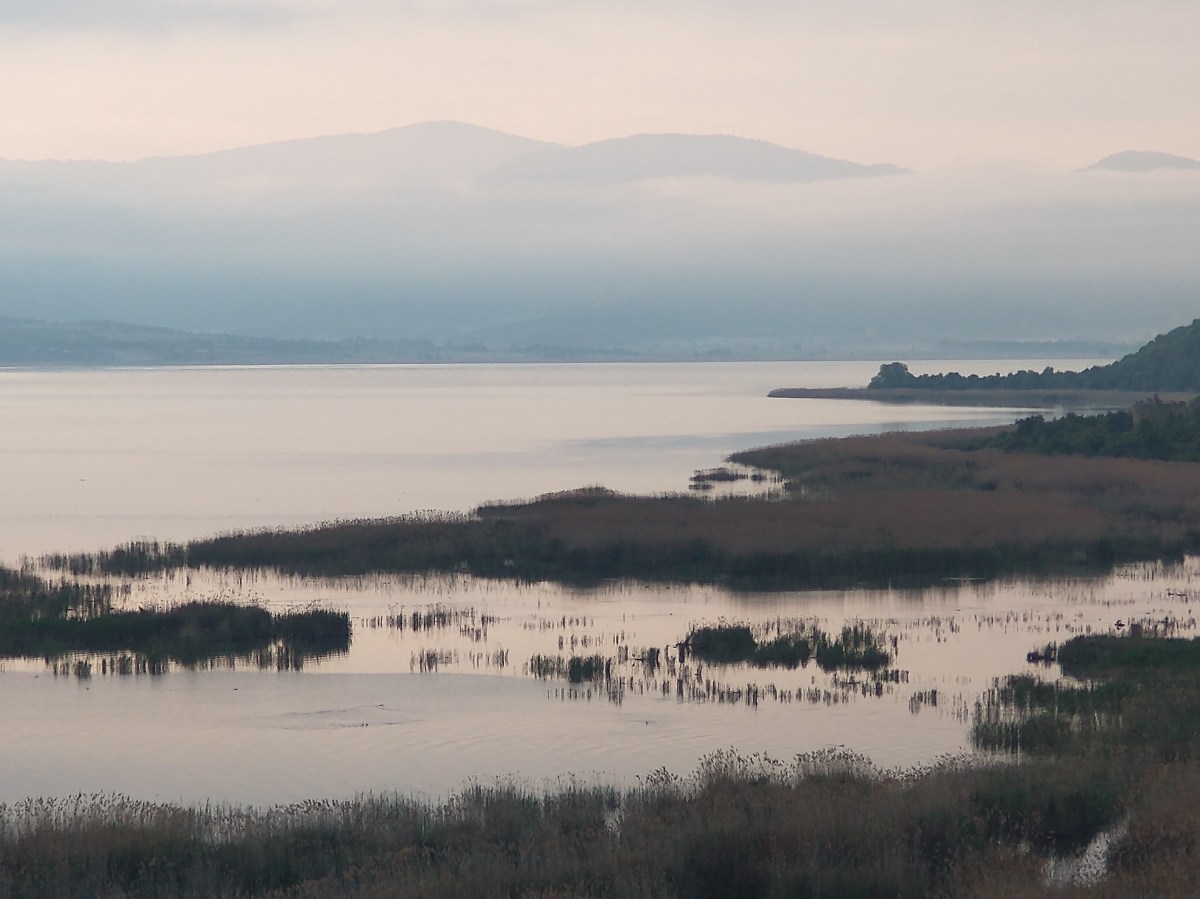
I’ll send just one more postcard this evening, taken just as the sun set.
I’m still in rural life mode, still observing an everyday story of country folk.
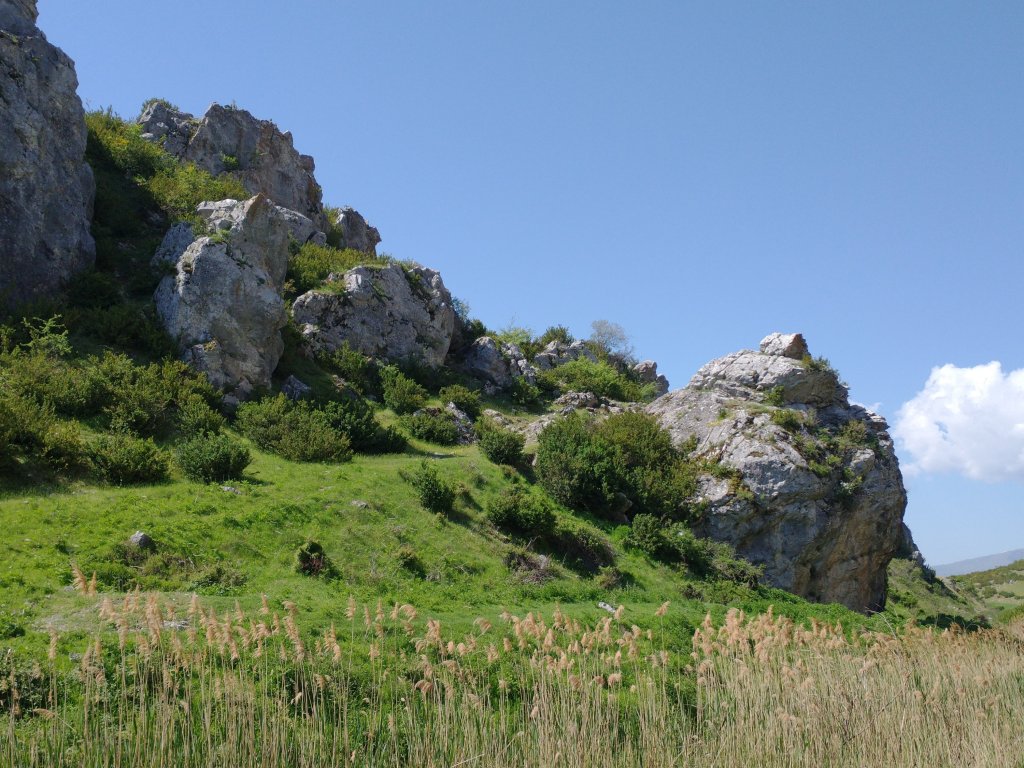
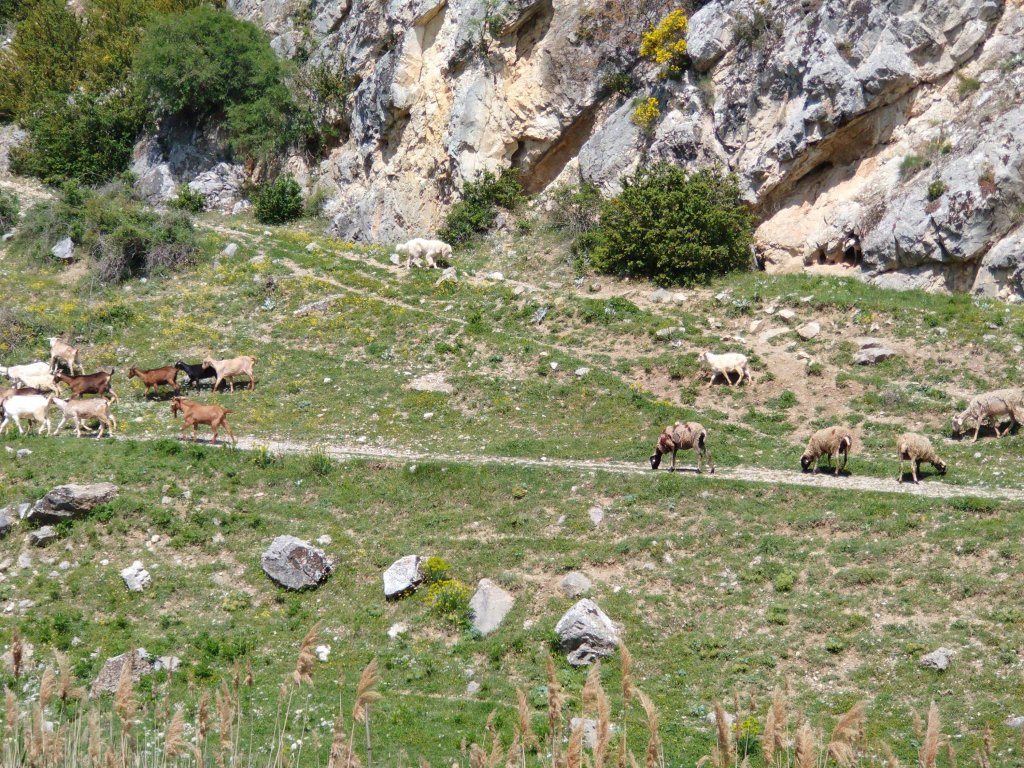
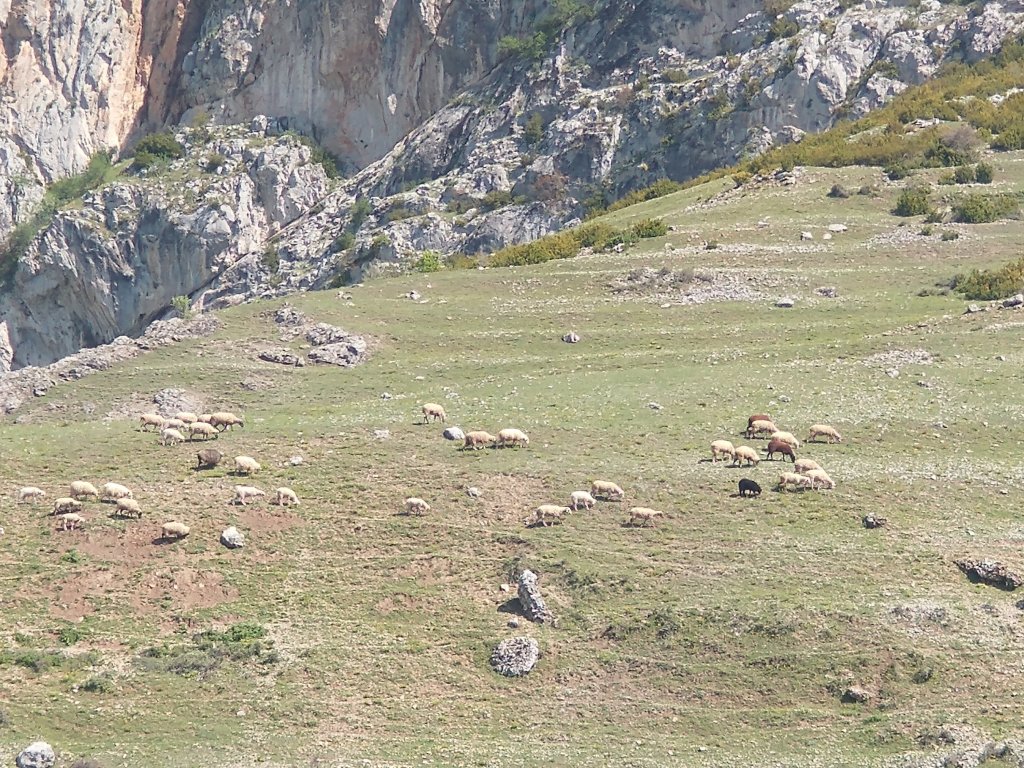
Today, we were at Little Prespa, wildlife haven for birds, lizards, butterflies and above all frogs. Yet again, we saw shepherds spending their day guiding their flocks, meandering along mountain paths. What we noticed was that goats and sheep prefer not to talk to one another. Goats in front, surging ahead to find the lushest bits of grass, sheep dawdling behind.
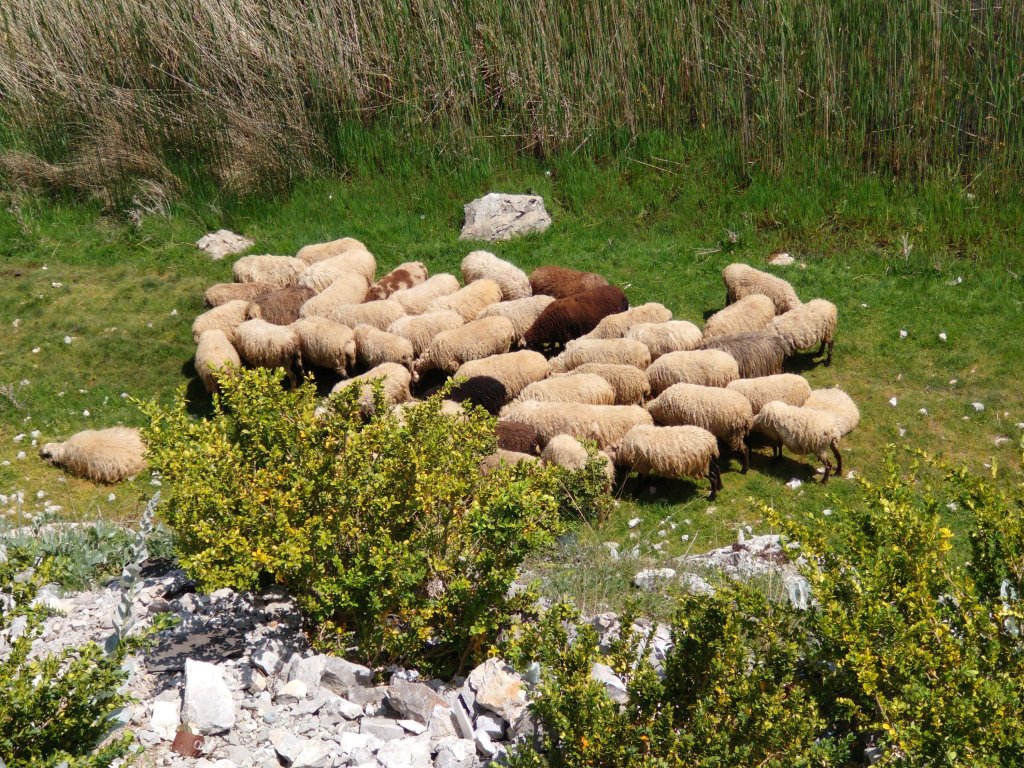
And later, as we ate our own picnics, we saw the sheep sheltering from the hot mid-day sun, huddling up close together, so that as little as possible of their bodies was exposed. Goodness knows where the goats and shepherd were at this point.
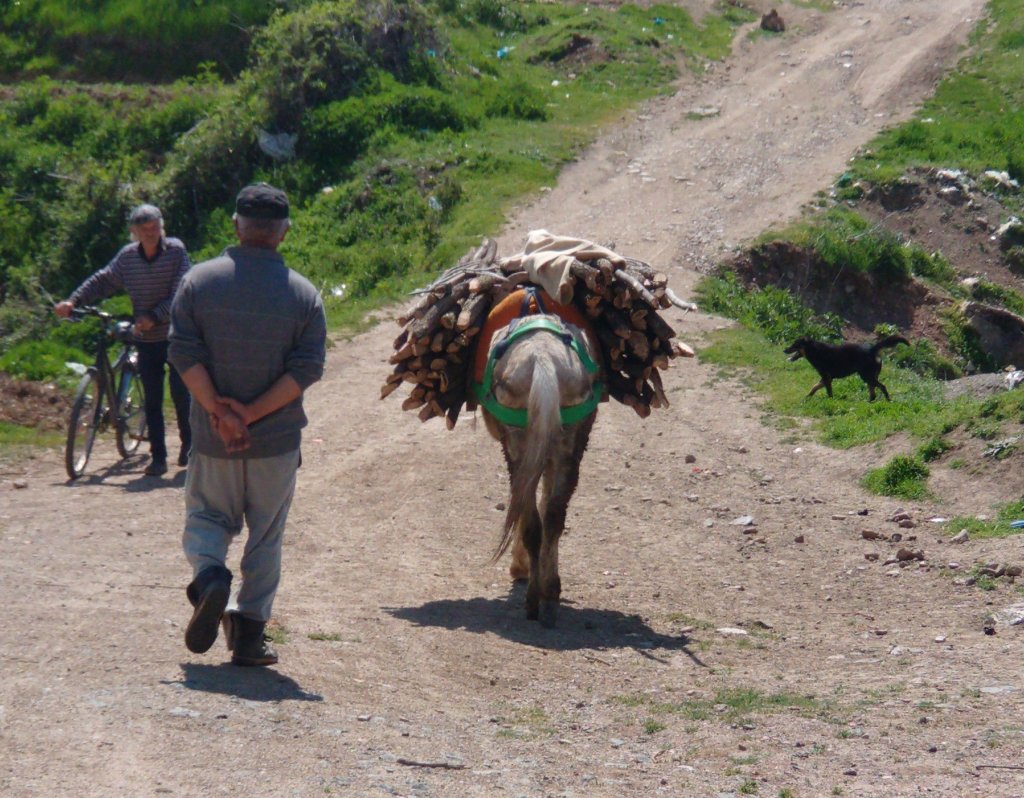
And here is a workhorse, carrying a load of wood for his owner.
Off to the hills around Albanian Lake Prespa today, we got to see something of the tough life of a farmer here. Though the sight this morning of a shepherd with his small flock – fewer than 40 animals – of sheep and goats and three sheepdogs wandering slowly along as they grazed seemed idyllic, I’m sure the reality of this subsistence-level existence is rather different. We spotted several other such flocks throughout the day. Do take the time to look and listen to the grazing sheep with their melodious bells in the video I link to below. It all seems to be from a very different world.
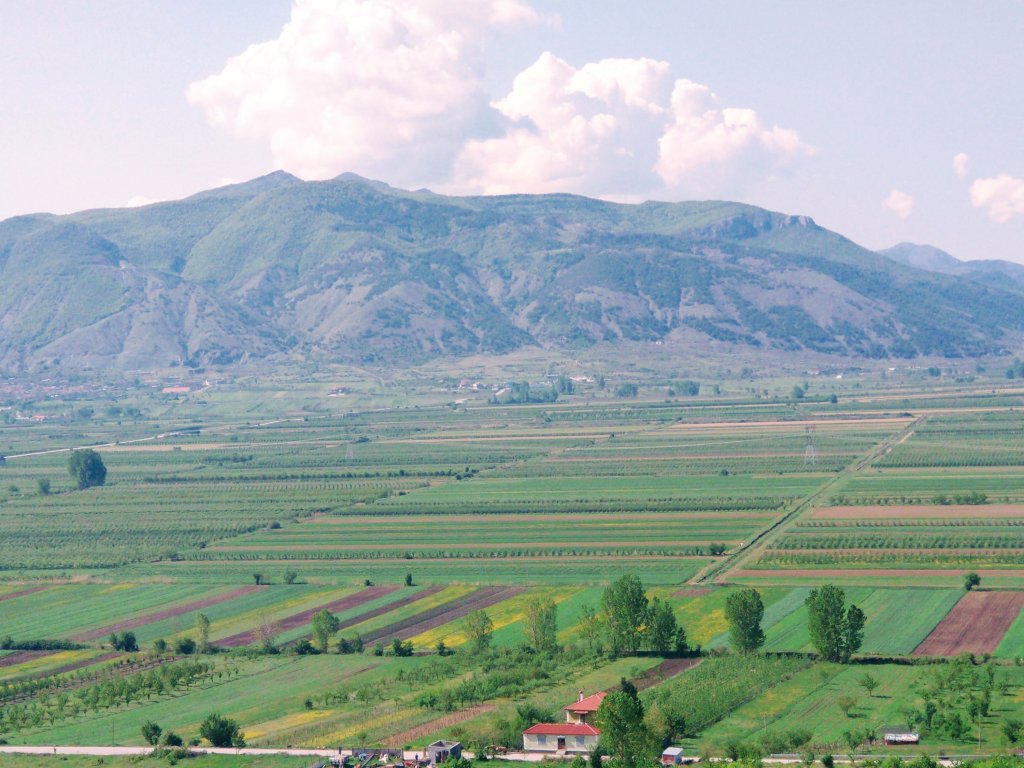
Throughout the day, we saw solitary elderly women working alone in their narrow fields, weeding and wielding heavy mattocks. We spotted distant farmers working with ancient tractors. The thin rectangular fields set in regular grid formation in the picture below are a throw-back to communist days, but have been retained because they work.
A grid of fields, shared fairly between local farmers.
You might notice we’re no longer in North Macedonia, but have moved to Albania. This is not in the spirit of ‘If it’s Tuesday, we must be in …’, but rather that our adventure is to get to know Lake Prespa, which laps the shores of these two countries, as well as Greece. An area largely unspoilt by tourism or any form of agribusiness, we’re here to discover its birds, bees, flowers, insects, as well as its chequered history.
There are plenty more birds around, from waxwings, cuckoos, reed warblers, black woodpeckers and dozens more. But they’re too camera-shy to get in on the postcard.
And we ended the day spotting a wild boar family: boar, sow, and three little ones. They were camera shy too.
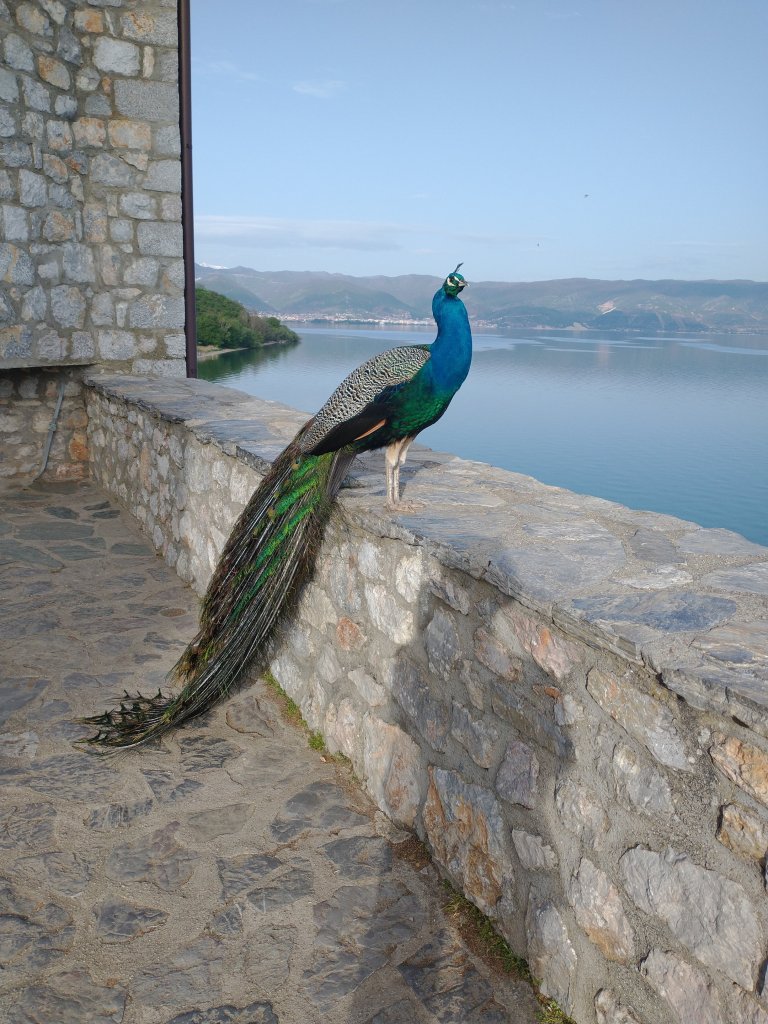
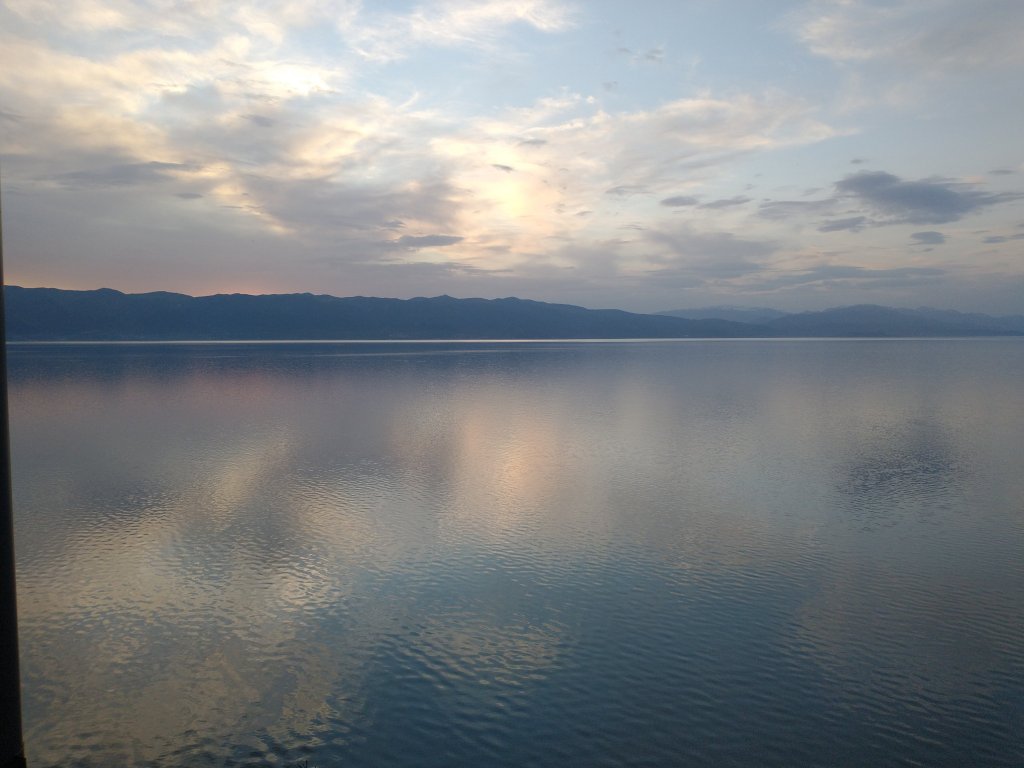
Monastery of Saint Paul, Lake OhridSunset over Lake Ohrid
The first of a series of Balkan vignettes: full story later – postcards aren’t for long stories. Here we are beside Lake Ohrid in North Macedonia, staying in a former monastery. In a modern take on Henry VIII’s Dissolution of the Monasteries, this working monastery, dedicated to Saint Naum, was seized during the communist era, and transformed into a hotel. Yugoslavia and the Communist period are long gone, but the hotel remains. God’s loss is Mammon’s gain.
On the first Saturday of every month, a book is chosen as a starting point and linked to six other books to form a chain. Readers and bloggers are invited to join in by creating their own ‘chain’ leading from the selected book.
I fully intended to read the book beginning this month’s chain, Peter Carey’sThe True History of the Kelly Gang. It had been sitting unread on my shelves for years. It still is. Oh dear. I gather it’s an exploration of Australian bushranger Ned Kelly and his gang as they attempt to evade authorities during the 1870s.
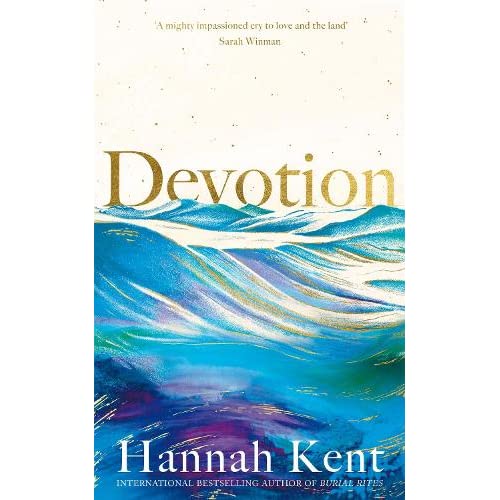
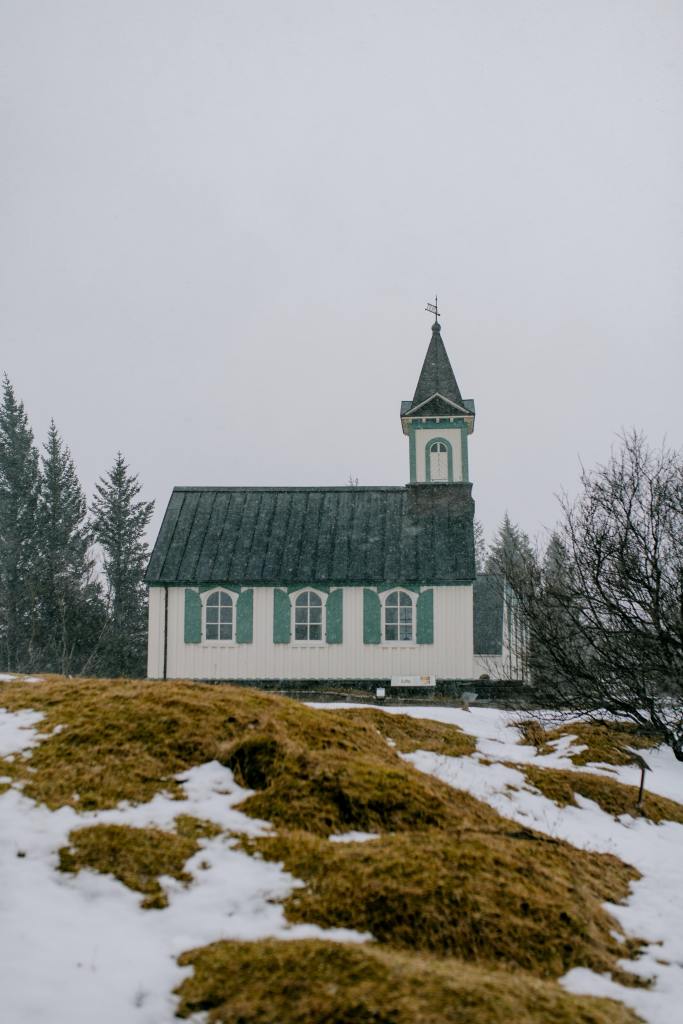
So for my first link, I’ll stay in Australia, in a similar period of history: Hannah Kent’s Devotion. It started so well – Hannah Kent can write. A simple, isolated Lutheran community in Prussia is the setting, and the plan for it to move wholesale to Australia in a six month voyage is mooted and executed during the first half of the book. This early part of the story also details the deep friendship developing between the narrator Hanne, and Thea, a relative newcomer to the village. So far so good, so evocative and well told. In the second half, the book relies on magical realism, and I’ll avoid spoilers, and simply say – it wasn’t for me.
Lutheran Church,, near former region of Prussia. Julia Volk, Pexels
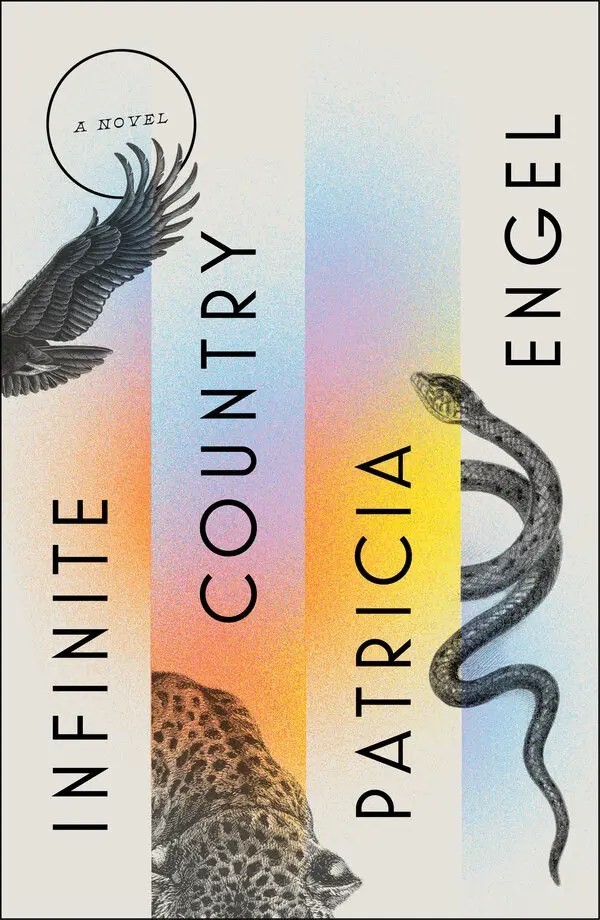
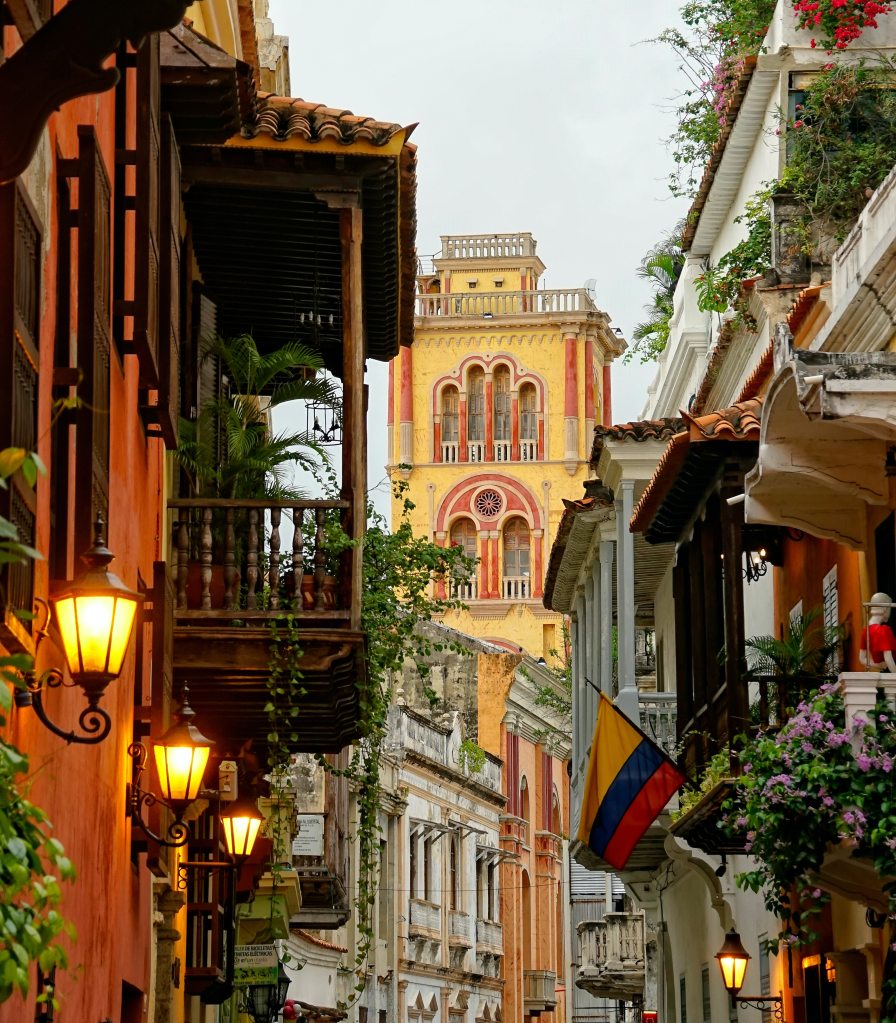
Migrants looking for a better life? A very different story is told in Patricia Engel’s Infinite Country. This story is about one family’s struggle as illegal immigrants from Colombia to America. But it’s so much more than that. It’s a web of different stories, different experiences, as the family struggles with their unsatisfactory status, aiming to secure jobs, accommodation, peace of mind, It’s evocatively told, painting a picture of the discomfort and deprivation that accompanies this family, whether in urban-warfare torn Colombia, or at the margins of American society. A damning indictment of the way in which migrants, more or less wherever they end up, are often treated.
Cartagena, Colombia, Ricardo Gomez Angel on Unsplash
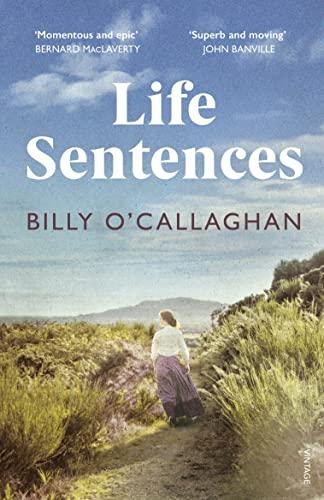
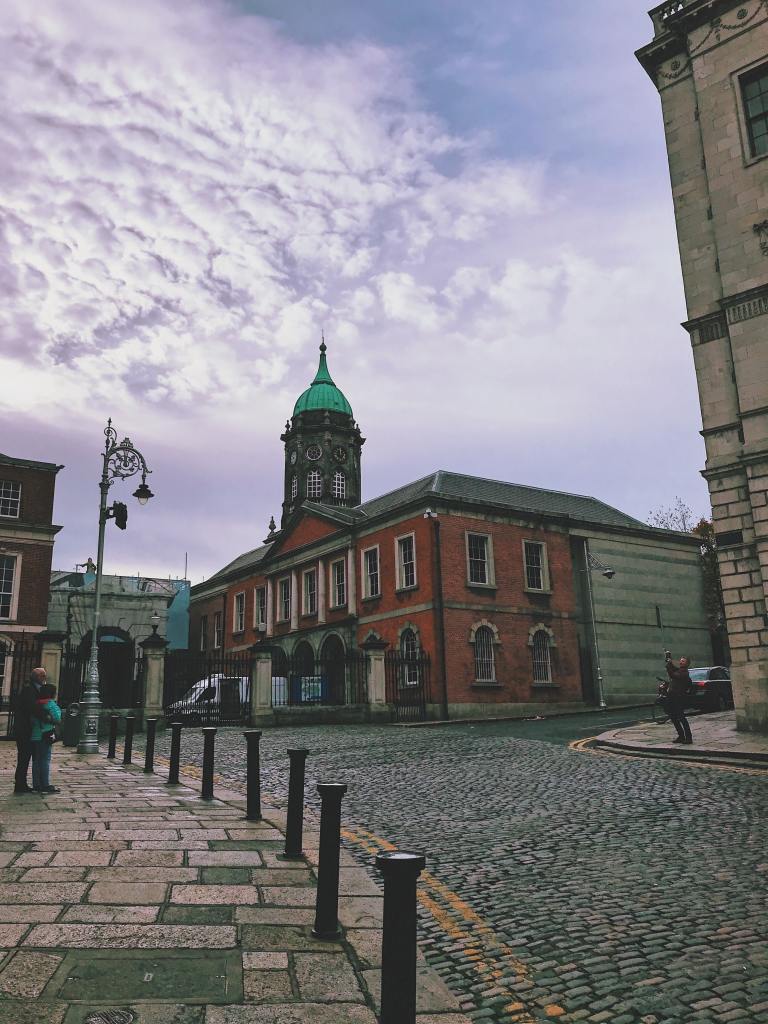
Sadly, the life of a migrant is frequently one of poverty. Life sentences, by Billy O’Callaghan, details three such impoverished lives. This is an involving, compassionate and evocative story set in Ireland at various points in the twentieth century. It’s the story of Nancy, born into extreme poverty: her son Jer, born in the workhouse, and Nellie, his daughter, also raised in straitened circumstances. It tells of Nancy, who fell in love with a man who avoided his responsibilities when she fell pregnant – twice – by him. Well, she was the one who got pregnant, wasn’t she? Jer was a soldier who found civilian life more difficult than his war-time experiences, while Nellie had to cope with the death of her first-born. There IS a lot of death in this book . This book piercingly shows what unenviable choices real poverty thrusts upon those who survive it. And yet this book is lyrical, tender, and immersive, conjuring up lives and times none of us would wish to share.
Mark Dalton: Pexels
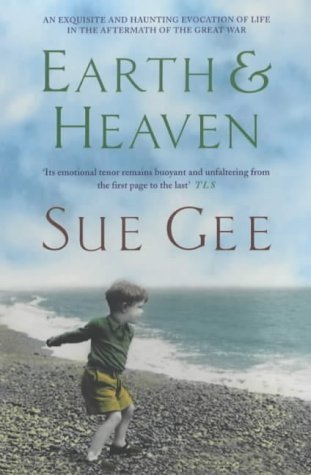
Sue Gee’s Earth and Heaven also details the life of a family battling not the extreme poverty of O’Callaghan;s book, but severe money problems all the same. This is a book which will stay with me. Walter Cox, brought up in Kent in the early years of the 20the century, is – against the odds – a painter. We follow him from his home in Kent to the Slade School of Art and back to Kent with new wife Sarah, a wood engraver, and their friend, sculptor Euan as they struggle to make names for themselves. This beautifully observed book gravely details their lives, loves, losses and longings in a slow-moving story which beautifully conjures up the lives and landscape of the main protagonists. A book to savour.
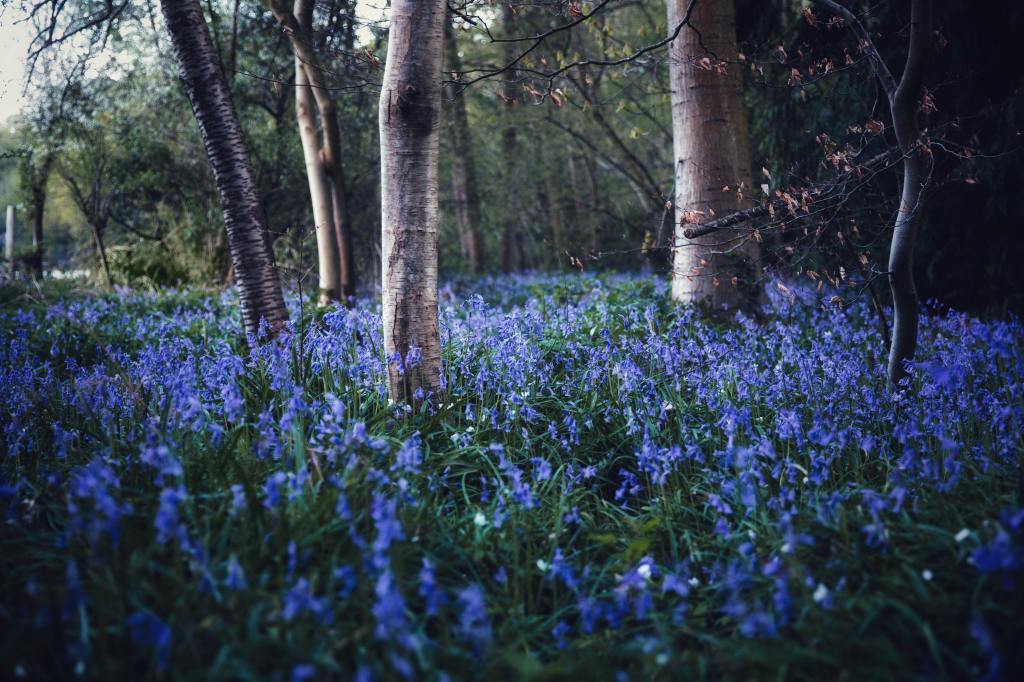
Photo by M Mitchell on Unsplash
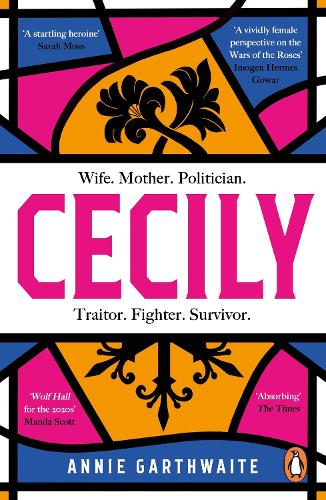
I’m going to slam straight into a contrasting world where money shortages are really not a problem. Read this book, and you will enter a privileged fifteenth century world. One in which bloodline counts. One in which it matters what alliances you make, which families you choose to link with yours as you marry off your sons and daughters. You will enter the world inhabited by Cecily, wife of Richard Duke of York. Annie Garthwaite‘s book will dispel any notion you might have had that a high-born woman’s lot was to spend the day at her needlework. On the contrary, women like Cecily were politically engaged, working with their husbands to secure status and power, both for themselves and their children. Women like Cecily inevitably bore many children: twelve in her case, of whom five died in infancy: while husbands inevitably went off in battle, changing alliances and allegiances as the political wind changed. This absorbing book, given immediacy by its use of the present tense shows us Cecily fiercely promoting her family’s interests, while she brings child after child into the world. We are present in 15th Century England.
Cecily, Burrell Collection (Wikimedia Commons)
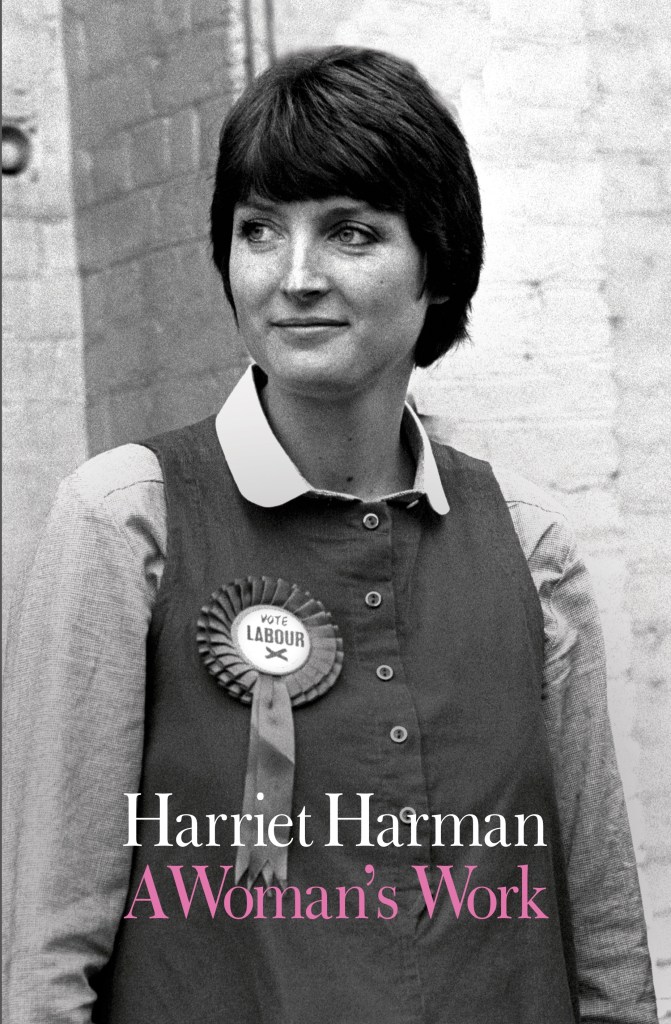
From one woman with her finger on the pulse of power to another: the autobiography of Harriet Harman MP: A Woman’s Work. This is a compelling account of the women’s movement, of life in parliament over the last 40 years, and of Harriet Harman’s struggle to use her role as MP to change the lives of women and families: in many ways successfully while her party was in power, but frustratingly and impotently slowly when they were not. Harriet Harman kept no diaries, so this book is free of obsessive day-to-day minutiae. But it’s a lively and compelling account of a woman struggling to prosper professionally, and to change the lives of women in that most macho of environments, the House of Commons. Even if you don’t share her political views, read this book for an overview of social reform campaigning over the last half century. You may even find yourself grateful to her, and to women like her, for taking on the battles she has fought and often won.
Protesting outside Parliament
We’ve visited three continents and four different centuries, and explored both extreme poverty and great wealth. I wonder where your chain would take you?
This post is scheduled to appear today, but, away from home just now, I will neither respond to your comments, nor read everyone’s chains. But I will – before too long.
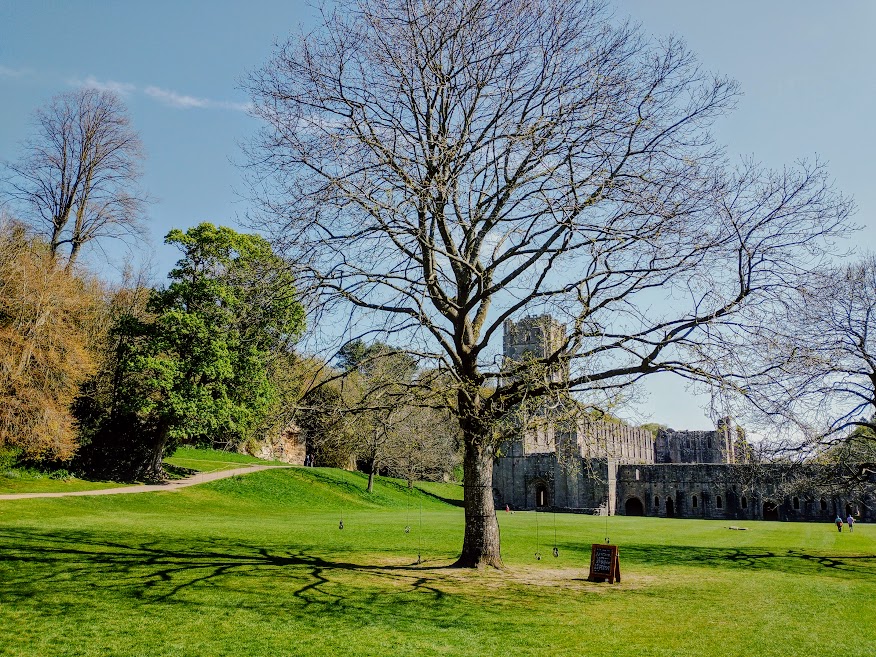
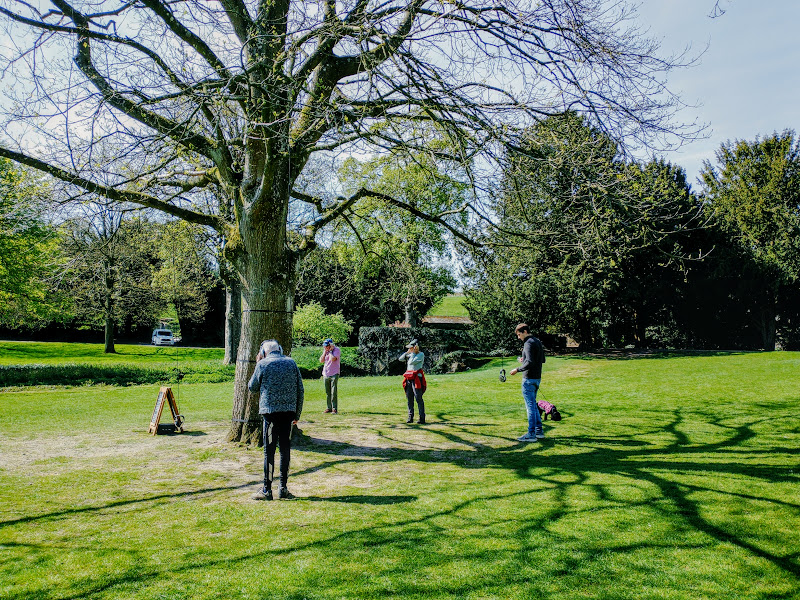
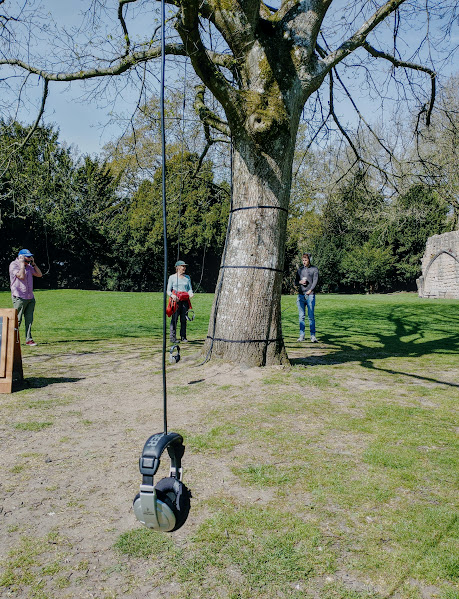
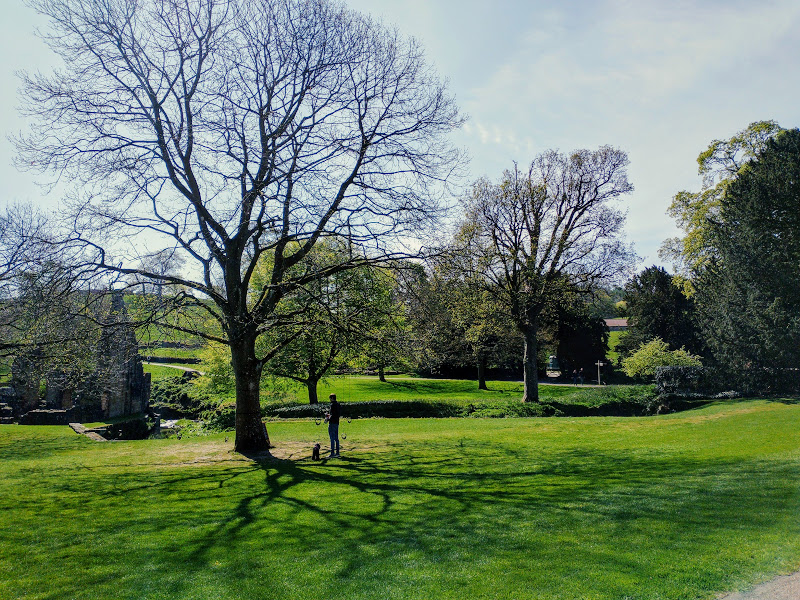
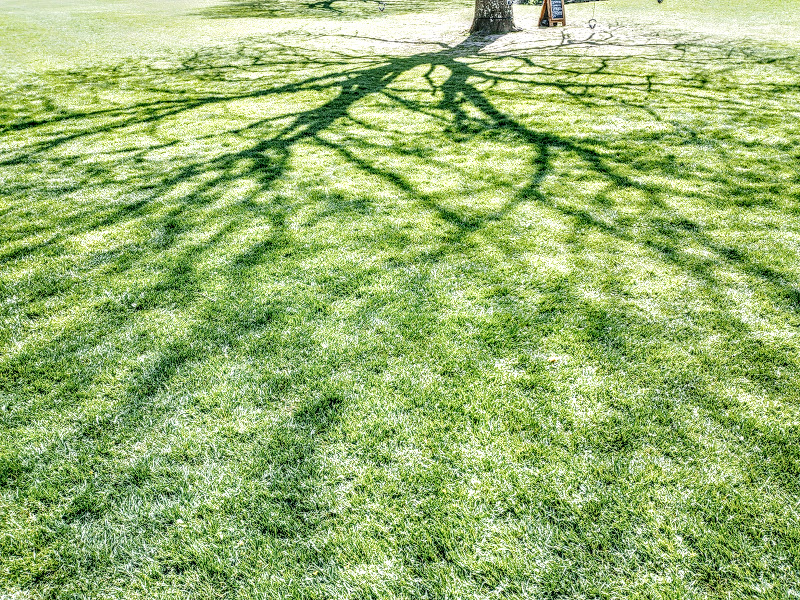
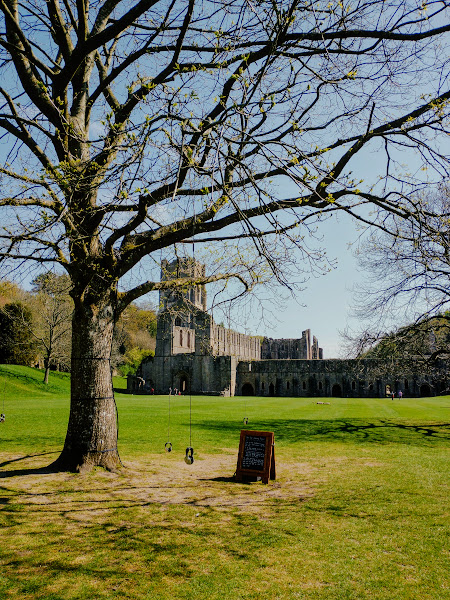
As you wander down the hill to Fountains Abbey, and arrive at West Green, you’ll spot a tree, a sweet chestnut tree with – how odd! – a girdle of headphones hanging from its branches.
This information board explains all: these headphones enable you to listen in, via highly sensitive microphones, to the hidden sounds of the tree.
Truly – it’s astonishing, mesmerising. Just as our blood courses round our body, day in, day out, so water and air courses constantly through the tree. Through headphones, it sounds something like the tinkling of a mountain stream as it tumbles over pebbles. And behind it, as your ears adjust, there’s a low, more intermittent soft rumbling sound. This is the tree moving. Saturday was a still day, but we could hear that rumbling as we listened closely. On a windy day, I wonder what we’d have heard?
This next photo is the last I took, and the last one of all for April, so one for Brian Bushboy’s Last on the Card
During May, I’m taking a break. I probably won’t even have a chance to read the posts of those of you I follow. When I get the chance though, I’ll try to send a virtual postcard or two.










 From Pyrenees to Pennines
You must be logged in to post a comment.