Wanderlust Bingo

This year, I tried to read my way round the world. And to help me along, I played a game of bingo. Here’s how. You take the bingo card shown below, and attempt to cover each square with the title of a book you’ve just read. 

Here’s how I got on. The stars represent how much I’ve enjoyed the book (out of five). The scoring here is quite high – these are among my year’s Best Books. Other star ratings are available, and visible on some other – less successful -choices this year.

The links will take you to my reviews on Goodreads. I’m actively in the process of changing my book tracking to Storygraph. When I started recording the books I’d read, I was at first unaware that Goodreads was owned by Amazon. I’m a fervent Amazon Avoider, so it really is time to go, especially as the site is actually quite clunky.

Wanderlust Bingo

North America
Elizabeth Strout: The Burgess Boys⭐⭐⭐
Nordic
Roy Jacobsen: Just a Mother⭐⭐⭐
City
Elizabeth McCracken: The Hero of This Book (London)⭐⭐⭐⭐⭐
Western Europe
Donna Leon: So shall you reap (Italy, Venice)⭐⭐⭐⭐
Far East
An Yu: Ghost Music (China) ⭐⭐⭐

Indian Subcontinent
Kiran Desai: Hullabaloo in the Guava Orchard (India) ⭐⭐⭐⭐⭐
Village
Barry Unsworth: Morality Play (14th century Northern England) ⭐⭐⭐⭐
Australia
Kate Grenville: A Room Made of Leaves (New South Wales) ⭐⭐⭐⭐⭐
Island
Audrey Magee: The Colony (Island off West Coast of Ireland) ⭐⭐⭐⭐
UK (excluding Scotland)
Caleb Azumah Nelson: Small Worlds (London) ⭐⭐⭐⭐⭐

Mountain
Christopher Somerville: Walking the Bones of Britain (mountainous regions of Scotland; Pennines)⭐⭐⭐⭐⭐
Central America
Any suggestions?
Scotland
Douglas Stuart: Young Mungo (Glasgow) ⭐⭐⭐⭐
Africa
Petina Gappah: Out of Darkness Shining Light (Central Africa: the route explored by David Livingstone) ⭐⭐⭐
Small Town
Jo Browning Roe: A Terrible Kindness (Aberfan, Wales)⭐⭐⭐⭐⭐

Caribbean
Any suggestions?
Beach
Sheila Armstrong: Falling Animals (Ireland) ⭐⭐⭐⭐
South East Asia
Kate Strasdin: The Dress Diary of Mrs. Ann Sykes (partly Singapore) ⭐⭐⭐⭐
River
Shelley Read: Go as a River (USA Colorado) ⭐⭐⭐⭐
Southern Europe
Joseph O’Connor: My Father’s House (Rome)⭐⭐⭐⭐⭐

South America
Dan Saladino: Eating to Extinction (Bolivia and Venezuela: a bit of a cheat as Saladino visits every continent in this book)⭐⭐⭐⭐⭐
Central or Eastern Europe
Lauren Chater: The Lace Weaver (Estonia)⭐⭐⭐
Sea
Karen Pinchin: Kings of their Own Ocean (Tuna, widespread)⭐⭐⭐
Middle East
Susan Abulhawa: Against the Loveless World (Palestine). I've hardly started this one, so no thoughts or ratings yet.
Polynesia
Eleanor Catton: Birnam Wood (New Zealand)⭐⭐

This great idea comes from Fiction Fan: you can read all about it on her site and maybe decide it’s for you too. At least one other blogging pal, Karen of Booker Talk has joined in the fun. Read all about it!

As this is my last post this year, it’s time to thank you all for reading and commenting, and for being part of such an engaging community. All good wishes for 2024.

Nicola Nuttall of Unsplash has provided my featured photo.
Early to Rise ….

Several readers of my blog threw up their hands in horror in reading of our horrid journey-from-London-to-Yorkshire-that-wasn’t yesterday. The frightfulness we and hundreds and hundreds of others encountered made the national news. So I thought I’d bring the story up to date.

Today was easy. The train company, LNER had announced that anybody affected yesterday could, for the next two days, catch any train that would reach their intended destination. We imagined that every one of these trains would be full to bursting, standing room only. Unless … we travelled early.

So….

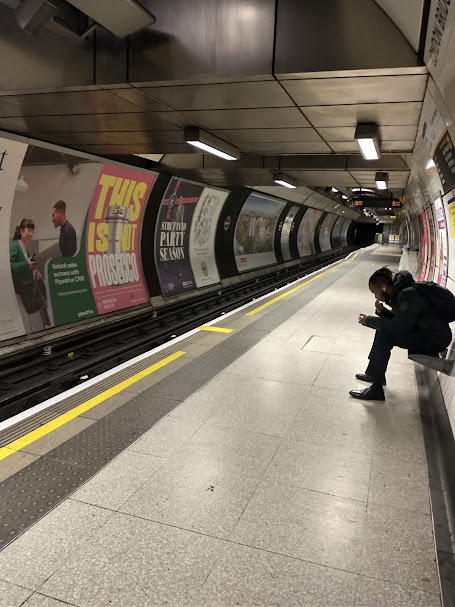
5.00 a.m. Catch the first train of the day from Hither Green.

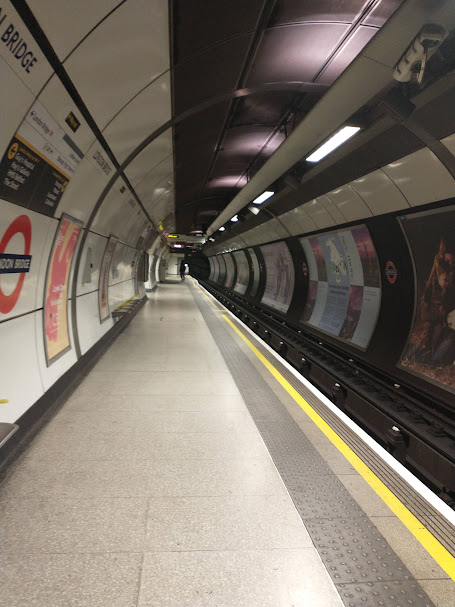
5.30 a.m. Arrive London Bridge tube station as entrance gates clatter open, and take escalator to Northern Line.

Wait on platform till 5.45 for train to Kings Cross., with just a few scuttling mice for company.

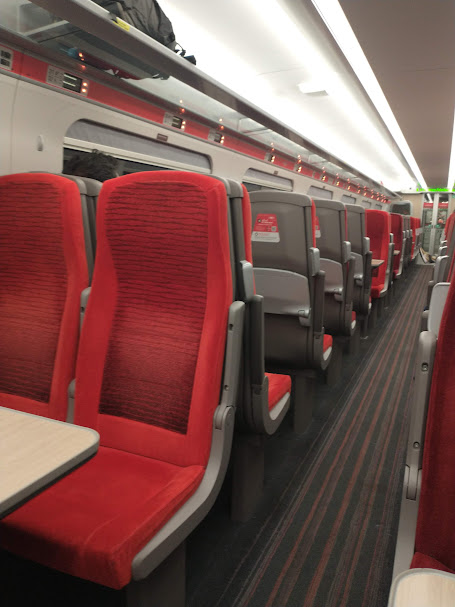
6.00 a.m. Catch train bound for Edinburgh, which takes us to the station nearest our home.

Near York, begin to understand what yesterday’s difficulties were about.

8.55 leave train to be met by a friend who arrives with his car to spirit us home - the long way round because of flooding. Nearing home, we see a rainbow ….

9.29: Arrive home.

Perhaps this proves the truth of that old saying about the early bird who catches the worm. I only wish I’d taken Before and After shots of the concourse at Kings Cross Station yesterday (maelstrom) and today (perfect peace). Two nervous little Country Mice are rather glad to have finally scuttled home.

The Passenger Pigeon

There’s an American bird – the Passenger Pigeon – that is thought to be extinct. It turns out this isn’t true. It’s come to London. Let me explain.

We’ve had a bit of a horrid day. After our wonderful Christmas with the family (London Branch) we were due to travel home today. Kings Cross Station, when we arrived, was crammed with travellers staring at the Departures board, unable to begin their journey. We joined them. Five minutes before our train’s scheduled departure, it was cancelled. Not that we had been able to fight our way through the throng to get on it. And so it went on. Finally, we abandoned all hope. We turned round to beg another night from the London Branch.

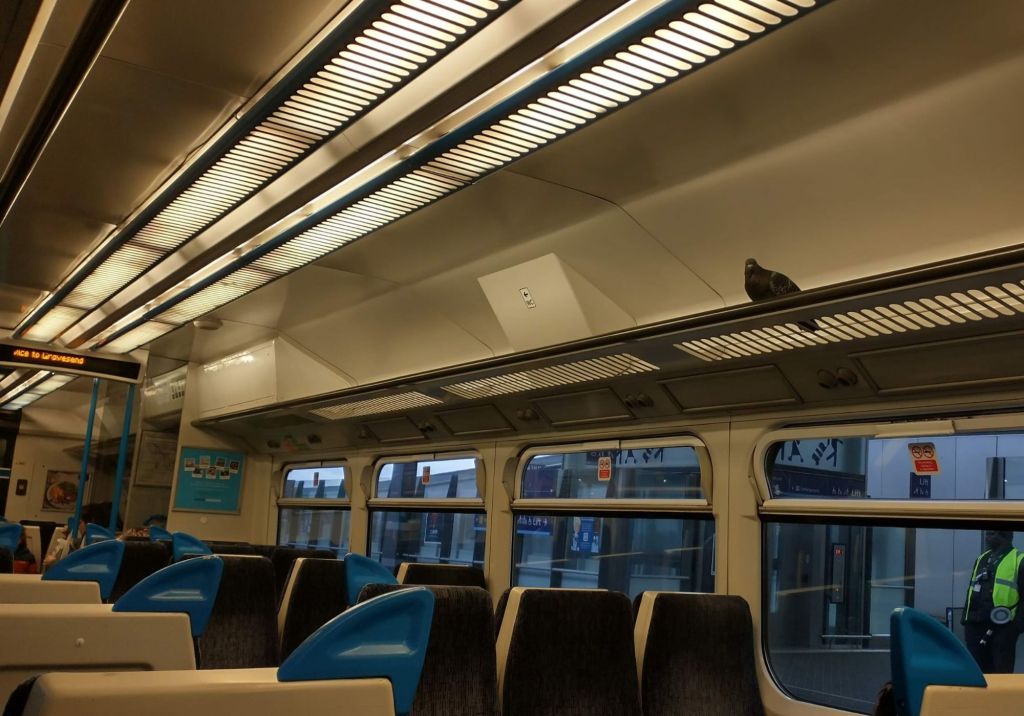
And that’s where the Passenger Pigeon comes in. As we got onto our local train, we spotted a bird – a pigeon – in the luggage rack, intent on joining us for the journey.

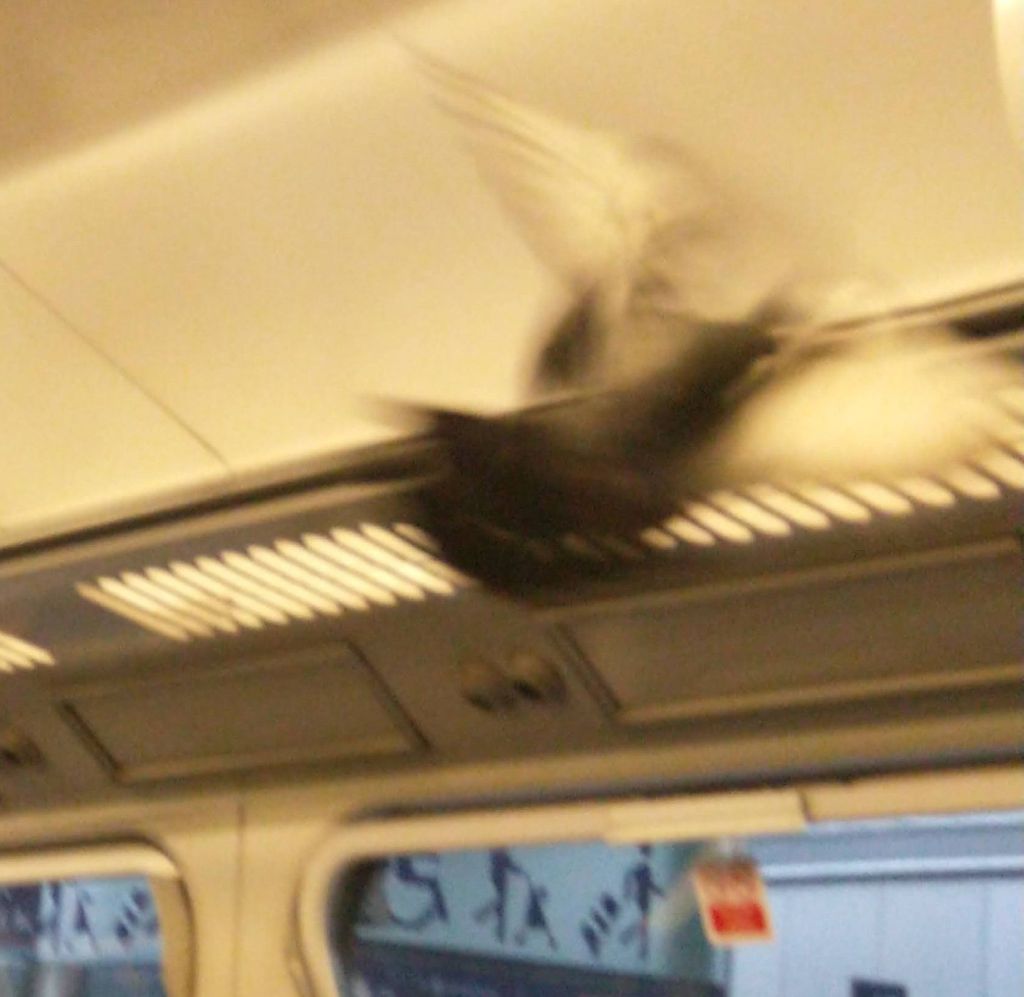
He must have realised he didn’t have a ticket. Just before the doors closed, he pulled himself energetically together … and flew off.

Christmas Greetings from the Thirsk Yarnbombers

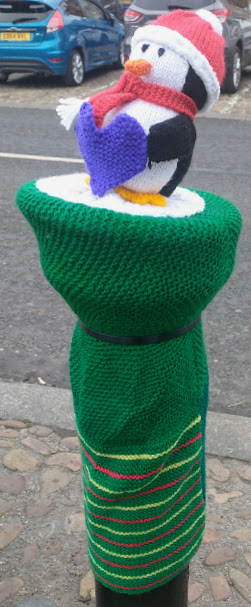
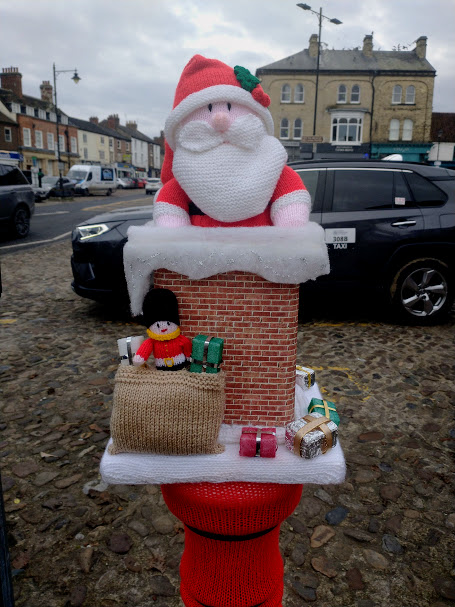
The Thirsk Yarnbombers have been at it since 2015 when the Tour de Yorkshire cycle race passed through the town. Since then, this doughty group of knitters – some of who no longer live in the town, but in places as far-flung as Australia – have decorated the Market Square with knitted tributes on all kinds of occasions – notably the late Queen’s Platinum Jubilee. 

They’ve ‘done’ Remembrance Day more than once; commemorated the new King’s Coronation; celebrated Thirsk’s Local Treasure Alf Wight, aka James Herriot of All Creatures Great and Small fame (you could visit the museum dedicated to him here); celebrated the NHS. And now it’s Christmas. Come for a stroll round the square .

And a Happy Christmas to you all!

Monday Portrait: Reindeer

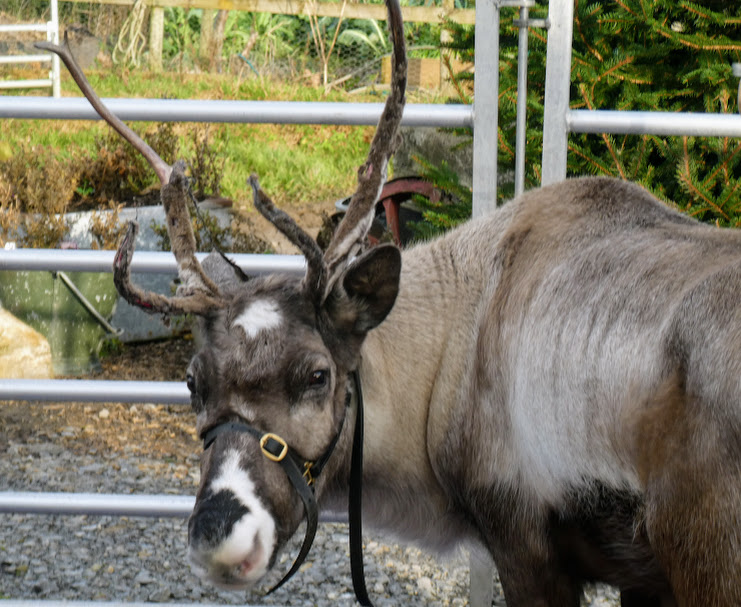
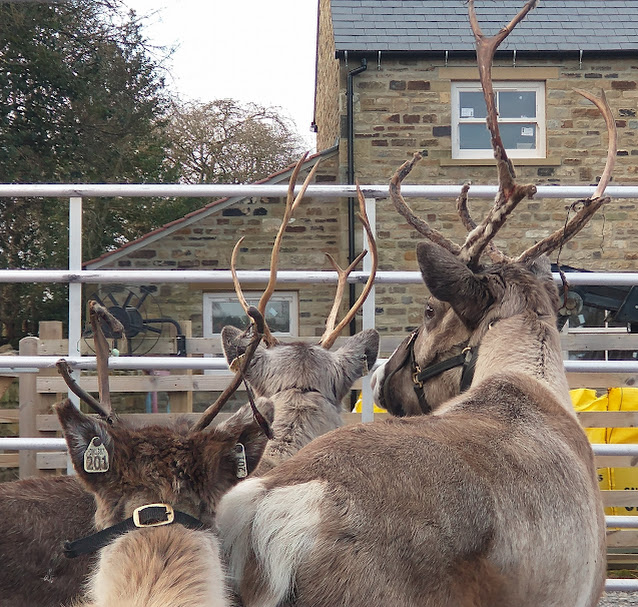
We haven’t been to Lapland for the weekend. Just a few miles up the road from here live a herd of reindeer. This is their busy season, and instead of grazing peacefully, their diet of grasses augmented by occasional goody-bags of lichen imported at enormous expense, they are toted hither and yon for the delectation of local children – and their parents. We met them at a local farm yesterday. These caribou are surprisingly small and delicate looking, with antlers far less hefty than those of their red deer cousins.

Their feet are soft and spreading, giving them their version of a snow shoe. They make a clicking sound as they walk, enabling them to keep track of each other as they wander in search of food. We didn’t hear them, but apparently they utter a low barking sound from time to time.

Here are a few extra shots.

Goodbye!

The Magic of Cádiz

This week, Anne-Christine invites us to share Magical Moments from for the Lens-Artist Challenge. I’m choosing a magical few days spent four years ago in Cádiz, Andalucía.

Cádiz isn’t a city with world-beating museums or inspirational churches. But it’s the oldest city in Western Europe, founded by the Phoenicians. Greeks and Romans peopled the area, and from the 8th century, the city was a Muslim stronghold for 700 years. Christopher Columbus sailed from here three times on his voyages of discovery to the New World, and in 1812 the first Spanish Constitution, making a unified nation of the peninsula’s disparate kingdoms. All this is reflected in today’s city.

For us though, this was a seaside city of characterful streets. It had once-upon-a time fishing quarters now re-purposed for locals and tourists alike as the place to relax at an outdoor table over a leisurely meal (this was January).

It was the city where we could find delightful old bars selling local sherries to savour and compare. And above all, it was the city of sunsets. Every evening it seemed, everybody came to the seashore to simply stand and watch, and witness the magic of the sun dipping down over the sea and beyond the horizon. These photos have not been edited or retouched – except to correct the odd wonky horizon.

Even one of its museums, the Puppet Museum, Museo del Titere, had moments of magic. How about these rather witchy women?

Or the magical and gigantic baobab tree?

Two months later, as we looked back on this special holiday, it seemed even more magical. We hadn’t known as we wandered its streets that this would be our last bit of freedom to travel for a very long time. In March 2020, the world locked down.

You’ve ‘done’ Barcelona. Now what? A train ride to Caldes d’Estrac?

Samuel Johnson famously said in 1777 ‘When a man is tired of London, he is tired of life‘. The same could easily be said of Barcelona. And yet, although you might not be tired of this city, you might need a break from its unrelenting busyness. I have a suggestion. Go to a RENFE station in the city – maybe Sants, or Plaça de Catalunya, and simply get a train going northwards up the Maresme coast. You’ll enjoy the journey.

Back in the 1840s, when the trainline was constructed, it was as a goods line. It had therefore to be built next to the sea and the various ports along the way, with a road running alongside the tracks. So you, having picked a seat on the right hand side of the carriage, will travel alongside the seashore for your entire journey. Spare a thought for all those communities now divorced from the sea which gave them their reason for being. Although it’s easy enough really to pop through a pedestrian underpass and join the beach path which extends all the way from Barcelona, the whole way up the coast.

Where will you stop off? Maybe Badalona? if you want to meet me, I’ll join you at Emily and family’s home town, Premià de Mar. We could stop at charming Vilassar de Mar. We could stay in the only big town in the area, Mataró, which is well worth a day of your time, and I’ll take you to all of these places eventually, so we’ll go two stops further and get off at Caldes d’Estac. This was – and to some extent still is – a spa town. Its glory days in the late nineteenth and early twentieth centuries are over, but the town centre and beach-side villas still have a certain charm and sense of style from those days. Away from the immediate centre it’s been spoilt by ripping down older properties in favour of tall apartment blocks, and a busy highway has been constructed above this hilly town. Luckily, enough is left. And in any case, we’re staying in the centre to visit its Picasso museum, Fundació Palau i Fabre.

Yes, this small town has a museum dedicated to Picasso, with works too by the likes of Tàpies and Miró. And that’s because the renowned Catalan poet Josep Palau i Fabre (no I hadn’t heard of him either) was a friend of Picasso, who gave him several of his works: others he bought. By 1987, Palau had decided that, with no descendants of his own, he wanted to form the ‘Palau Foundation’ to house and display these works. But where? He hunted throughout Catalonia; he went to Andorra, to Menorca, to Ibiza. All the would-be deals he thought he had came to nothing.

And then, in Caldes d’Estrac, one of the spa town’s thermal centres was put out to tender. Nobody wanted it. The town’s mayor saw an opportunity: an opportunity to bring a first class cultural asset to the community. In 2003, the Fundació Palau opened its doors. It houses a permanent collection, temporary exhibitions, archives and a library. I think it’s a national treasure. But the day I visited, I shared the exhibition spaces with no more than half a dozen other visitors – mind you, it was November.

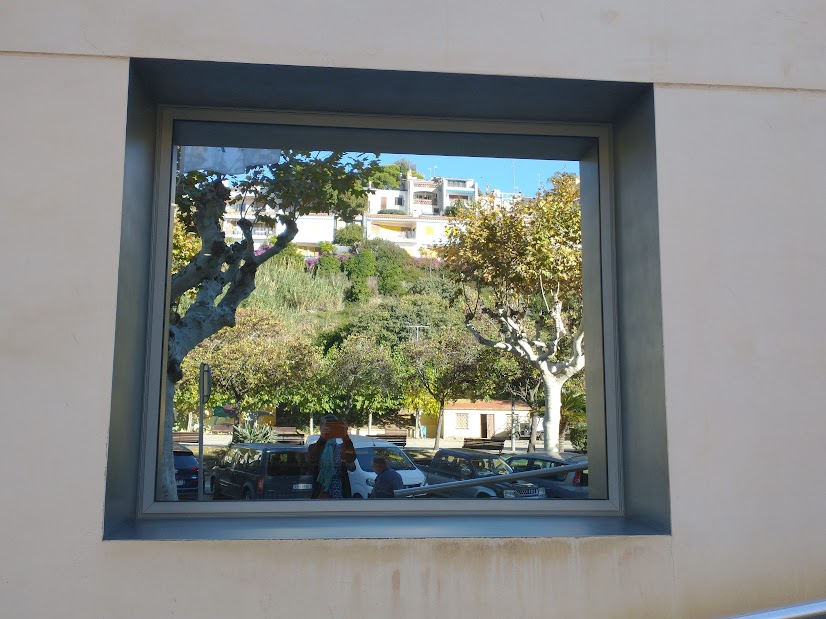
Anyway, in I went, having first taken a snapshot of the town reflected in an outside window of the gallery.

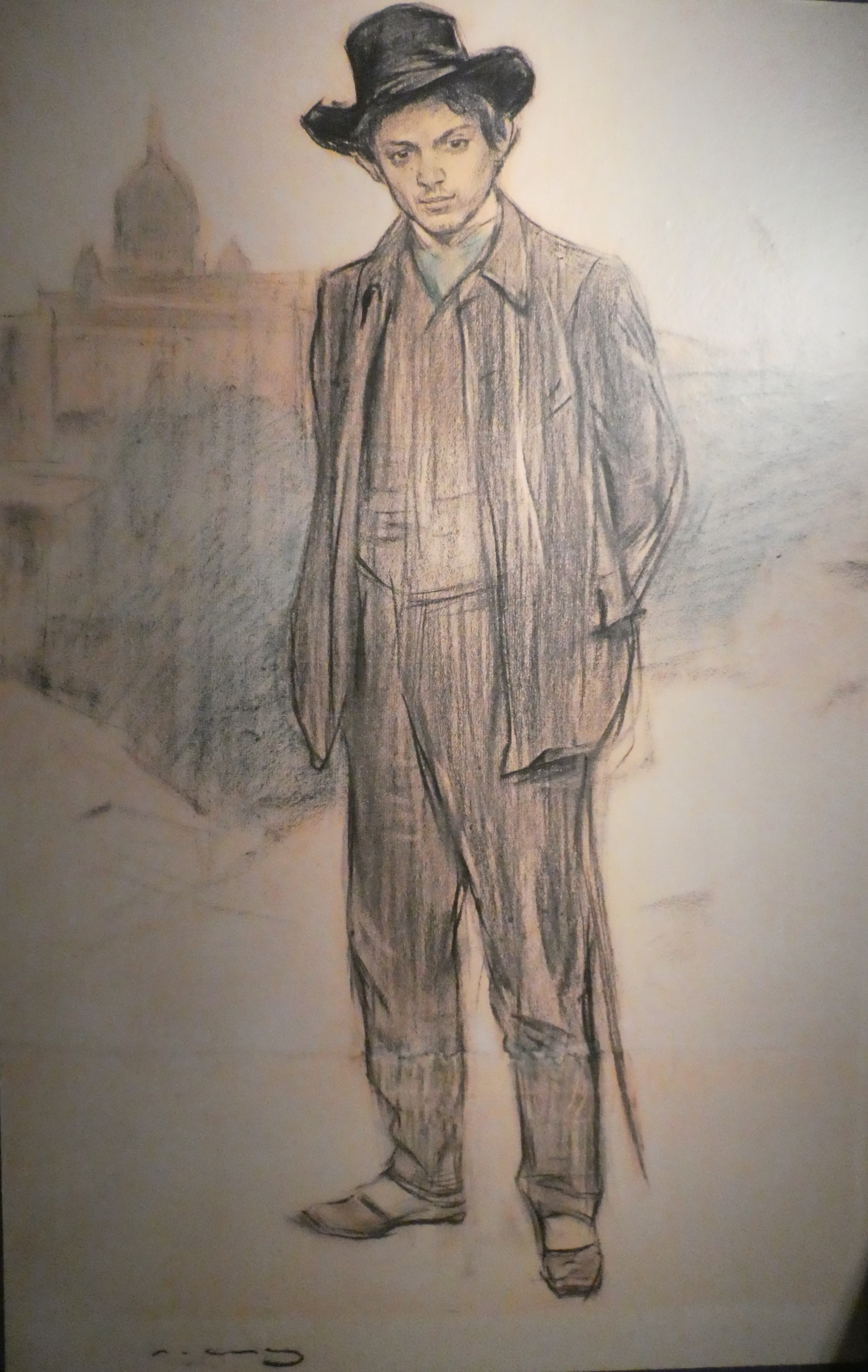
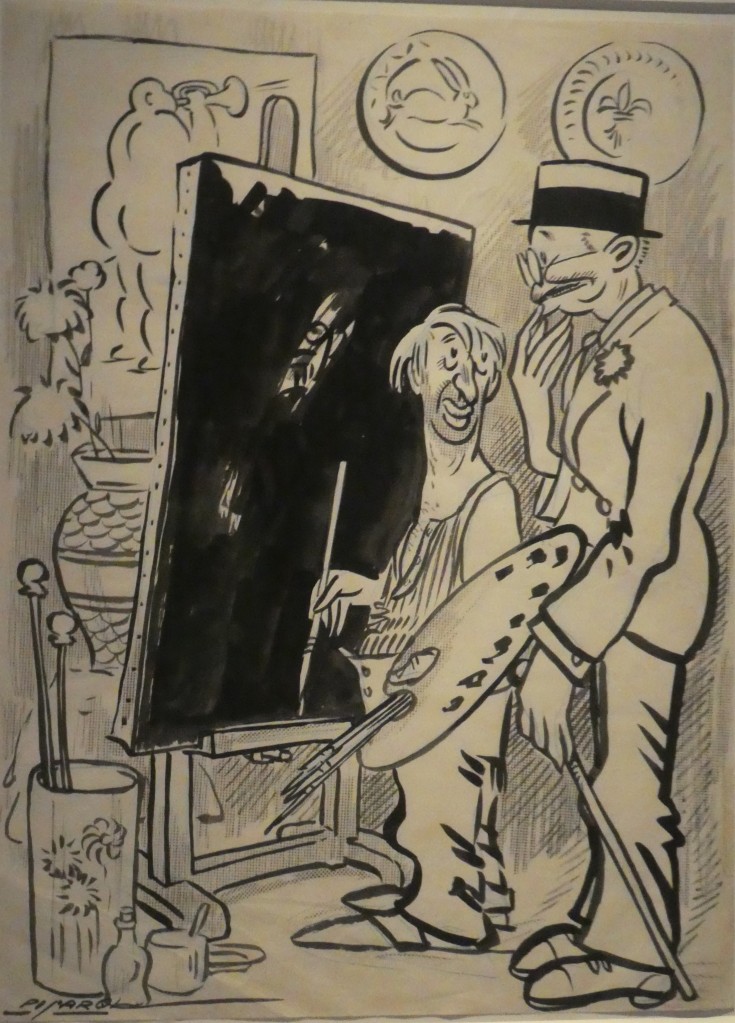
I was greeted by a temporary exhibition, which l loved. Here was the young Picasso, surrounded by his artsy friends, all sketching one another, doodling, cartooning, finding their artistic feet. Only Picasso from this period ever made it big-time, but I still found them to be a talented and engaging bunch. Here are three examples.

Josep Costa Ferrer: Caricature of Picasso with a client.

Then it was off to the collection of poetry by Palau and friends. Though it was often visually interesting, I struggled with this. I don’t pretend to speak Catalan, though I can read it adequately. You might want to have a go yourself if you speak French, Spanish or Italian. Just click here for an example of Josep Palau’s poetry.

Finally, it was upstairs to see what I could see. I knew not to expect to see the equivalent of, say, Les Demoiselles d’Avignon, or Guernica. I was quite prepared to be interested in a collection mainly of sketches and drawings by Picasso, and a few works by his friends and contemporaries.

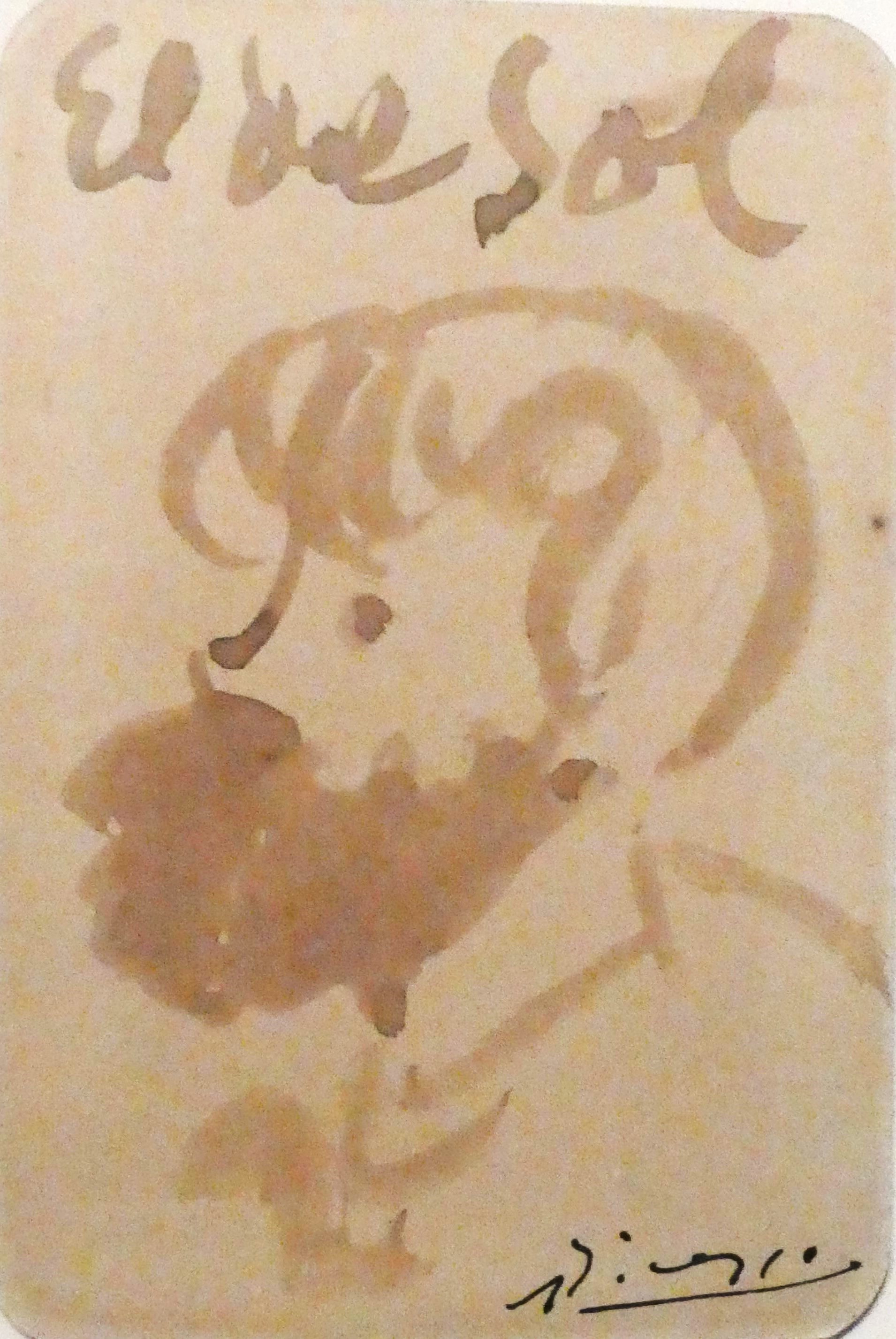
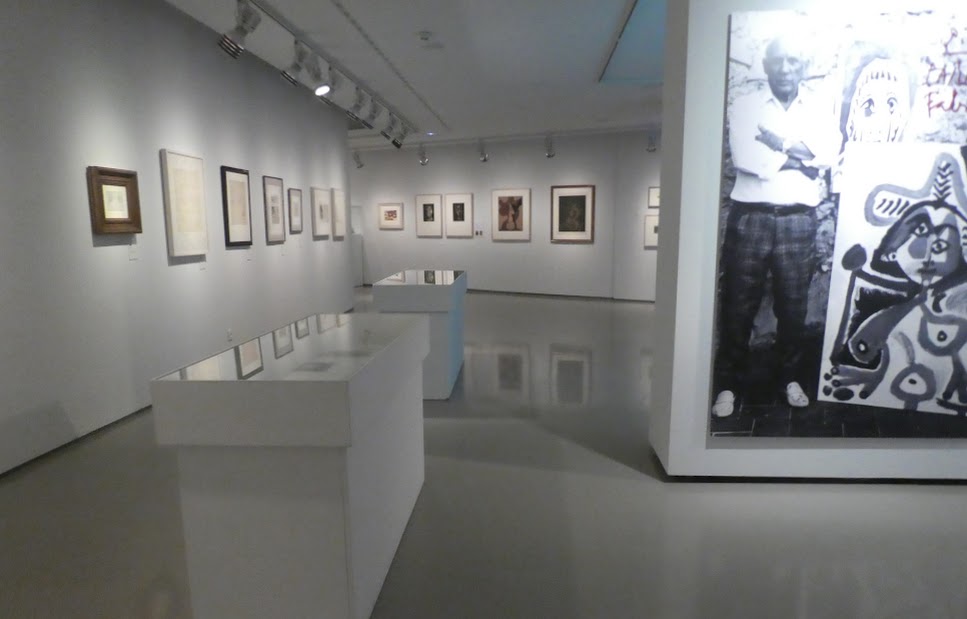
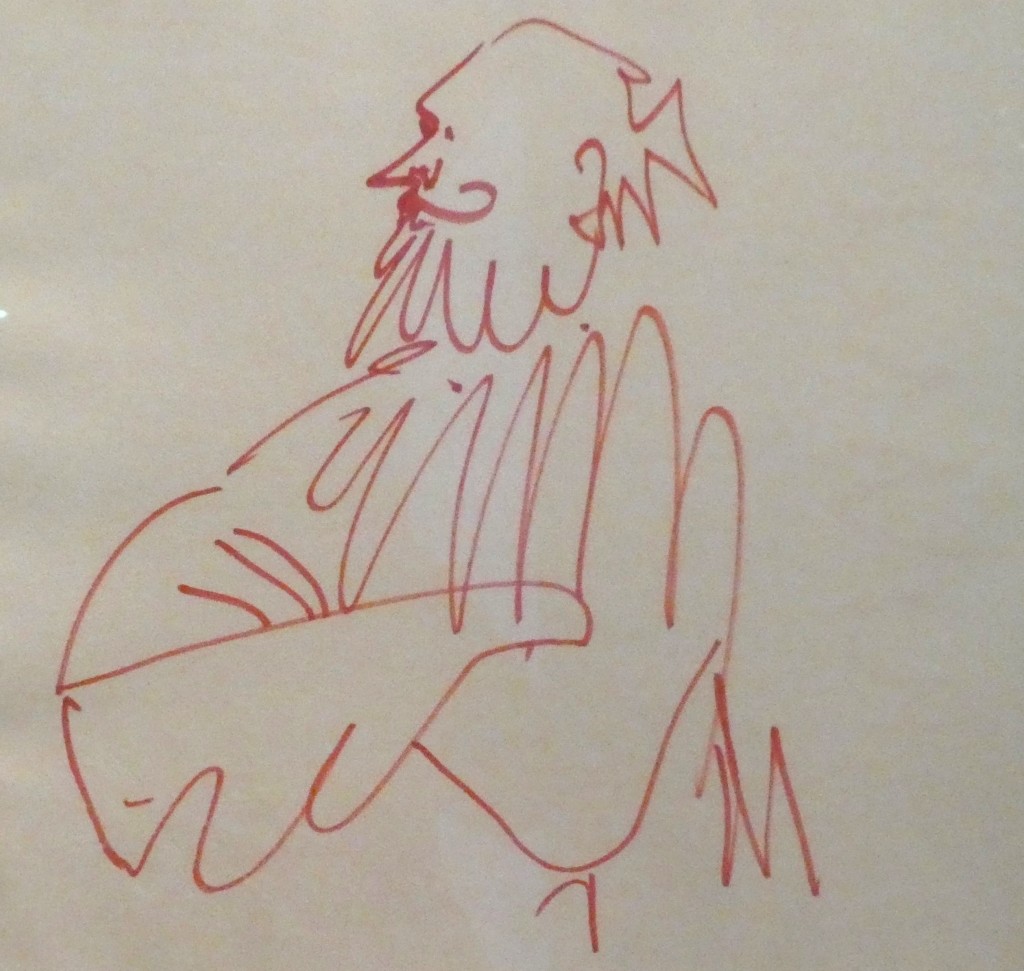
It was sympathetically displayed: though I’ve decided my own attempts to photograph them were unsympathetic, and – apart from showing you one late sketch by Picasso, showing himself as a faun – I’ll instead give you an impression of one of the display rooms.

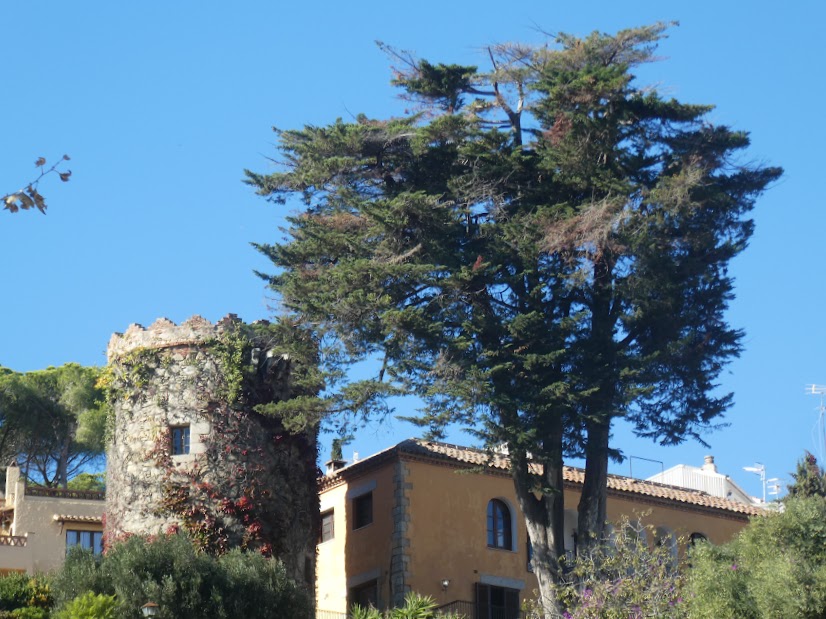
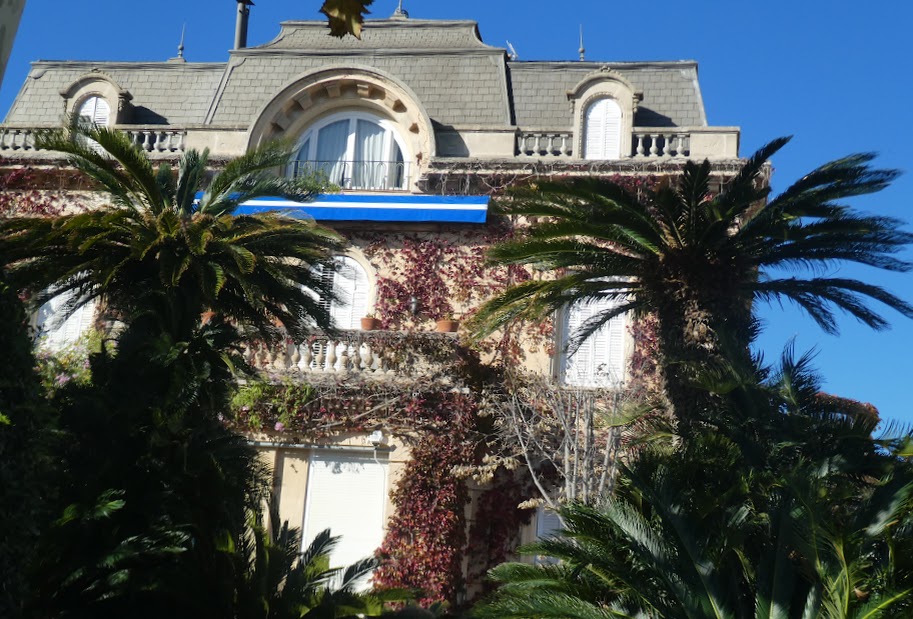
Then I had a stroll round the old town. The feature photo shows one of the 16th century towers built when the town was suffering from the depredations of Turkish pirates. And the picture below shows the building which was once the British Embassy. Yes, during the Spanish Civil War of 1936 – 1939 many embassies moved themselves out of the main firing lines and Caldes d’Estac was the choice of quite a few. The Argentinian Embassy is a few doors down.

The former British Embassy.

A good day out. And the museum makes a great (and very much cheaper) complement to Barcelona’s Museu Picasso.
Monday Window visits Caldes d’Estrac

I first took you to Caldes d’Estrac back in November, when I showed you a very fine door. Now I want to show you a very fine window, from the same corner of town.
This is by way of being a preview to my next post, when I’ll be telling you why you should consider putting this little town on your visiting list if you have time during a break in Barcelona. To be continued …

For Ludwig’s Monday Window, after a very long time-out.

Winter Sunrise

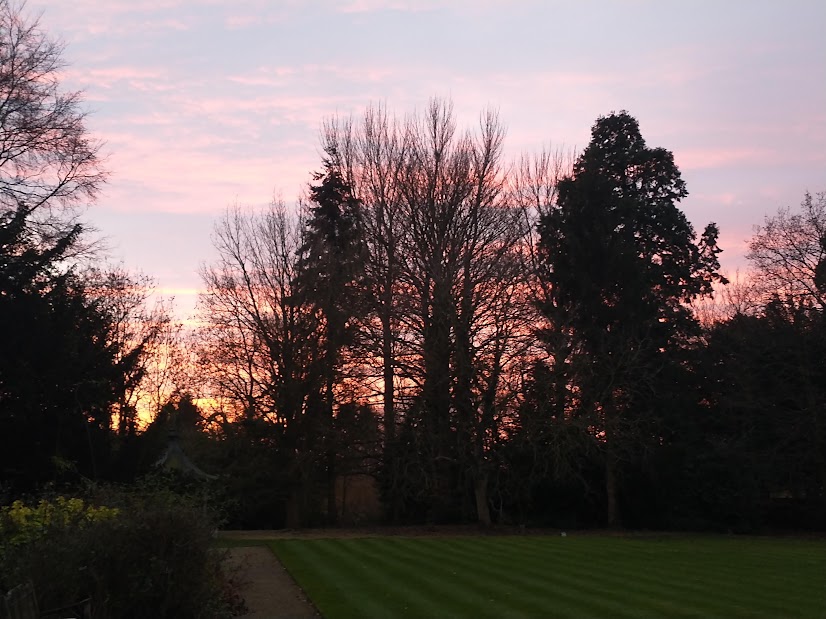
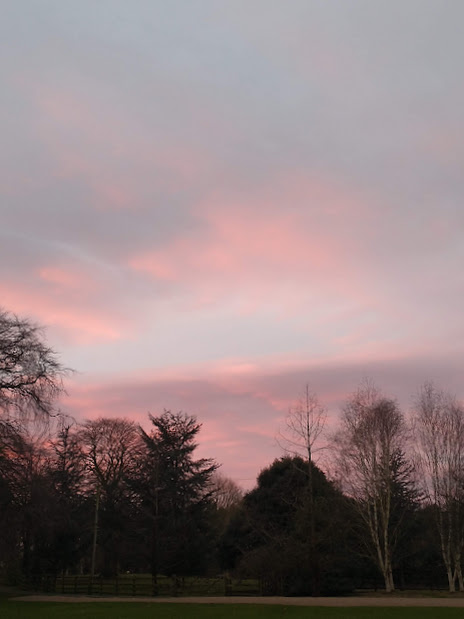
I glanced up from checking my emails twenty minutes ago, and this is what I saw.

You have to seize the moment. In half an hour it’ll be raining- a proper deluge with fat splashy drops tumbling relentlessly down for the rest of the day (just like yesterday). So I went for a mini-walk.

Just in time. Now it’s like this – and becoming more sombre by the minute.

For Johnbo’s Cellpic Sunday

You’ve ‘done’ Barcelona.  Now what? (Part Two)

Nobody could accuse Barcelona of being a spot of ‘rus in urbe‘.  Oh, it’s tremendously good at public open space to relax in and at tree lined streets.  But shady expanses of groves and avenues of trees, of busy little streams and placid ponds?  Not so much. 

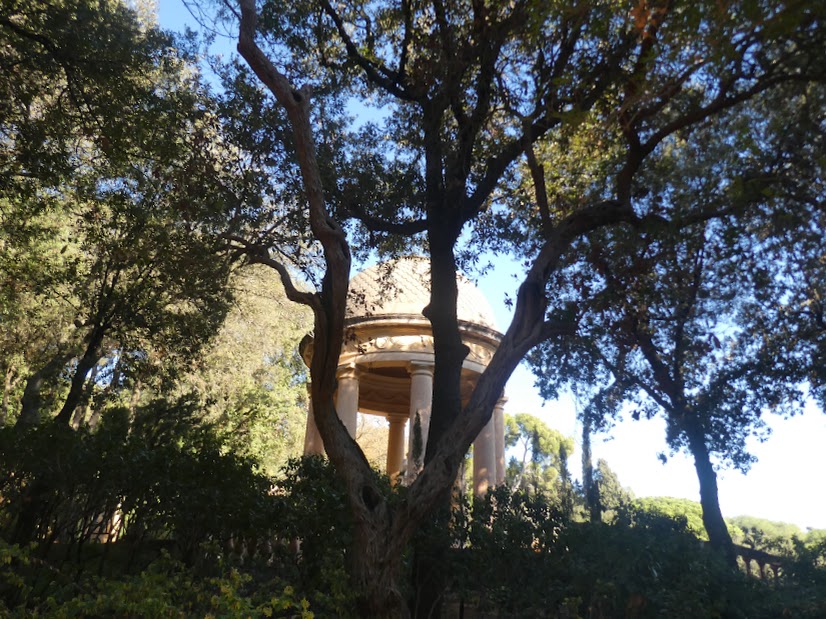
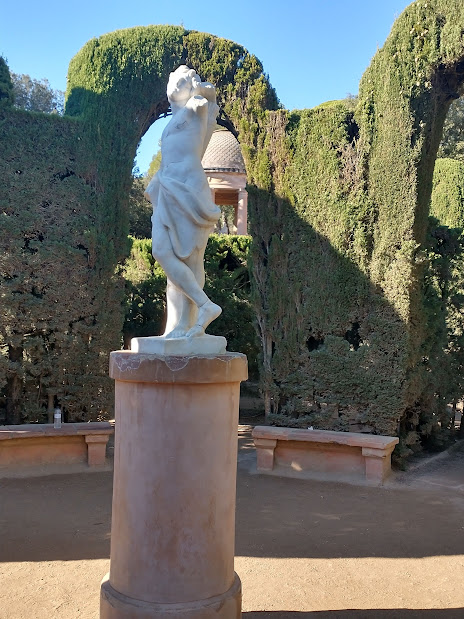
Except for one place, quite unique in the city.  The Parc del Laberint d’Horta (Labyrinth Park of Horta) has been here since 1791, when the Desvalls family had it built as a Neoclassical park, and one featuring a maze – hence the park’s name – and any number of classical statues of Greek deities.  In the mid 19th century a more free-flowing Romantic woodland park was added.  And in the 1960s it became a public park, hidden from the view of many of the city’s inhabitants, let alone tourists.  It costs the very odd sum of 2.23 Euros to get in, except on Wednesdays and Sundays when it’s free: or if your an old fogey like me, it’s always free.

Come with me for a stroll.  When we feel up to it, we’ll attempt the maze.  They say it’s harder than it looks.

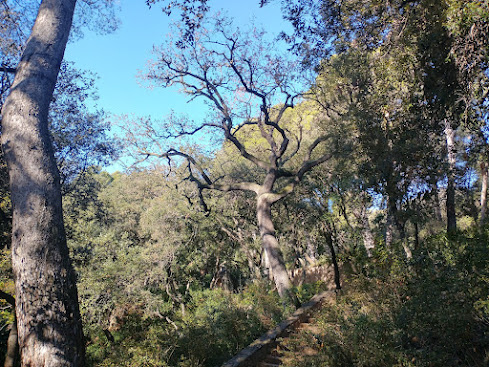
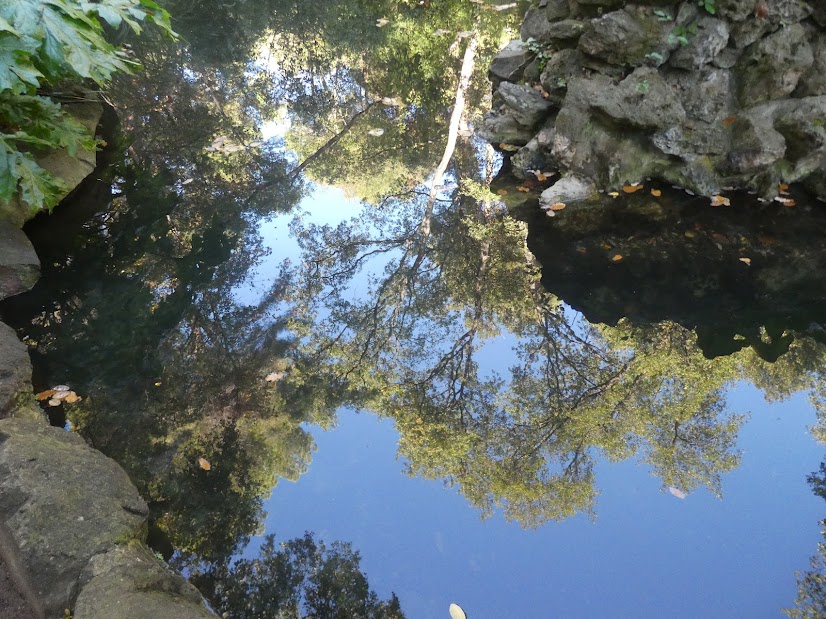
We’ll begin with a rather hearty climb among woodland glades interspersed with pretty reflective pools.

Soon, we realise we must have skirted the very heart of the garden, now lying below us.

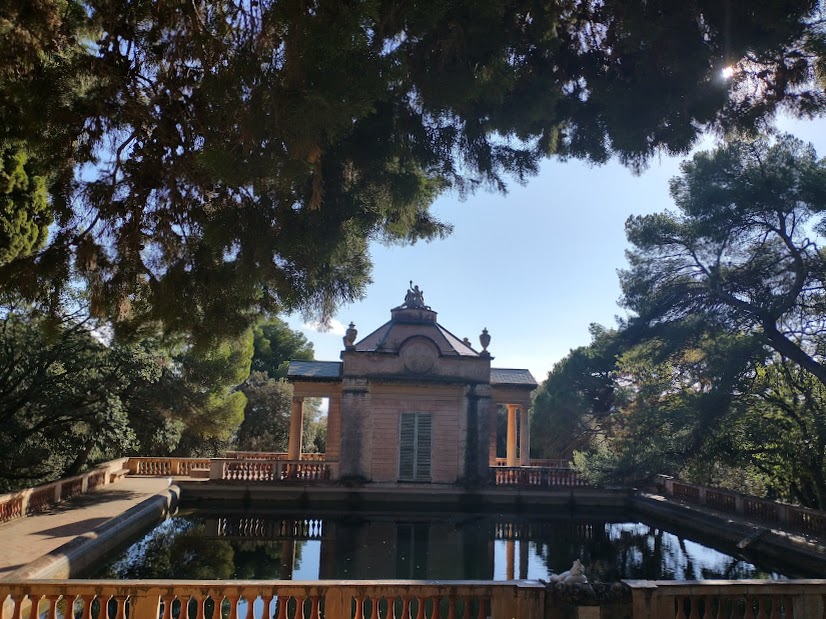
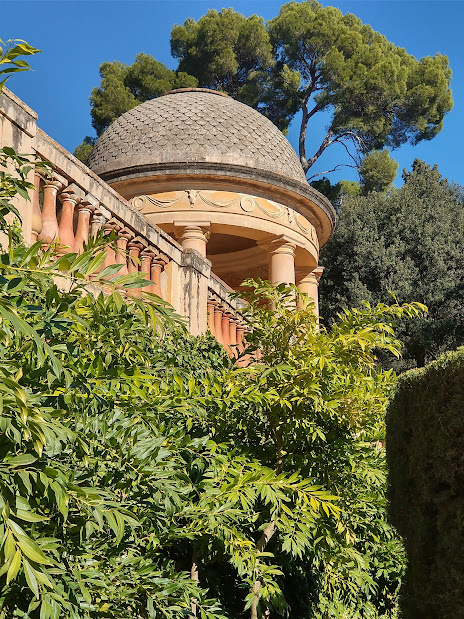
Oh look. There are balustrades, and statuary, and pavilions and … that must be the maze in the centre? Let’s go along and look.

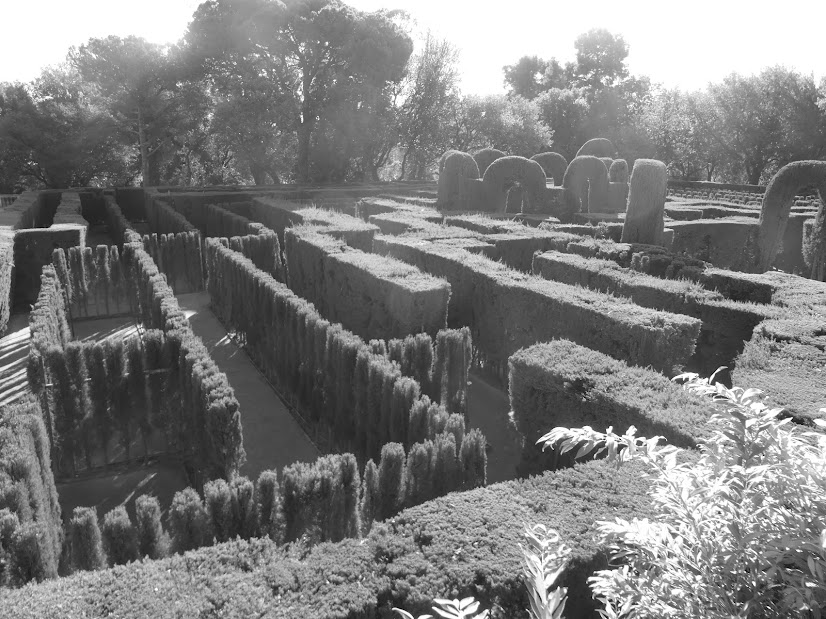
A final look at the maze from above, before we plunge in.  Black and white white might make it easier to sort out. You’d sooner not try it? Your choice.

Oh, this won’t take long.  Look, I can see through the branches easily.  In fact I can see the centre from here …

Oh hang on.  I want to go left, and I can’t.  OK, right, left and left again.  Hmm. I seem to be near the beginning again.  Right, let’s take this slowly …

And I did.  Eventually, I met Eros in the centre and sat with him for a while.

Getting out was worse than getting in.  I kept on fetching up with Eros again, or finding myself up yet another blind alley.  But I made it out eventually, and decided that I really would have liked your company as I thrashed helplessly around. 

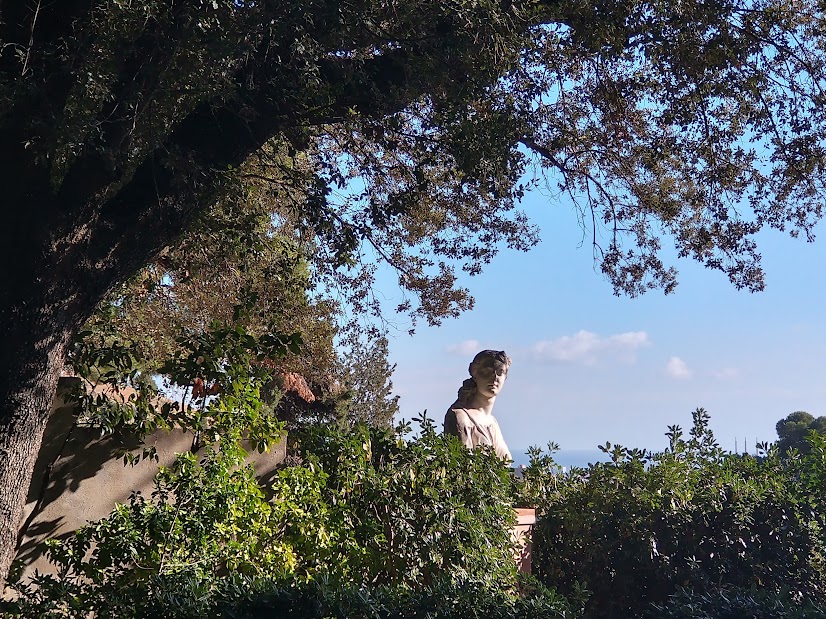
I’d nearly explored the whole site, but went for a final stroll, encountering various characters, identity unsolved, on the way.

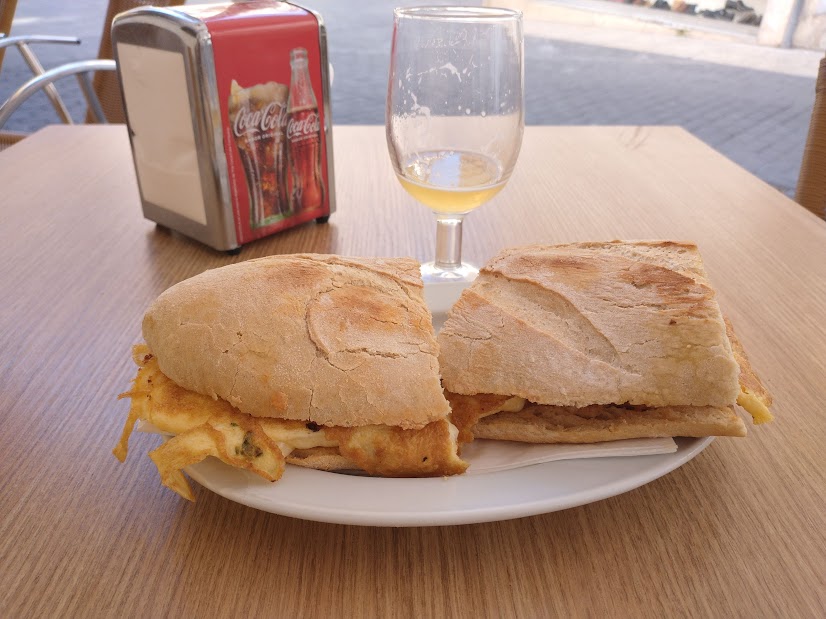
At this point, I could have gone home.  Instead, I walked into the Horta district, roughly a kilometre away: a well-established community where ordinary citizens live and work, and where there is no possible reason for a tourist to venture. Except I’d had a tip-off.  I should have my lunch at Quimet d’Horta.  This unique bar has been serving the locals its signature dish for almost 100 years.  An omelette sandwich.  A bit weird? I thought so.  But I was wrong.  A cheesy, herby omelette enveloped into half a crisp-crusted baguette, and helped down by a clara turned out to be just the thing I needed.  And as I was eating at the ridiculously early hour of 1 o’clock, I had the place almost to myself.

This is a multi-tasking post.  First of all, it’s part of my Barcelona series.  Then it’s for Amy’s Lens-Artist Challenge #288: Unique.  And then, despite the fact that no cake was consumed in the expedition, it’s for Jo’s Monday Walk.