Down on the Farm: Revisited

It’s not been a great week, has it? The American election has come and gone, and anxious nail-biting has been replaced by the new reality. I’m going to distract myself by looking through an old blog post, first posted in November 2009 – gosh – 15 years ago, when I was a fairly new blogger, recording our day-to-day life in the French Pyrenees.

Down on the Farm

Well, I mentioned Patrimoine in my last post. Yesterday we had Our Farming Heritage, an event organised by Pays d’art et d’histoire des Pyrénées Cathares. 20 or so of us turned up at a nearby village, Troye d’Ariège, to have a look round a traditionally run sheep farm.

The event was immediately hi-jacked by an unscheduled event – the birth of a lamb. Out in a field, a mother sheep heaved herself up, plonked herself down, then up again, baahing loudly, until suddenly, quite suddenly, there was the front half of a lamb hanging out of her. A bit more wriggling and fussing, and there was the lamb, out on the grass, while the mother flopped beside it. A few minutes later, both were standing again. No shelter, no farmer in attendance – no need to worry apparently. These sheep are Tarasconnais, ‘The 2 CV of the sheep world’ said the farmer: rough and ready sheep who can turn their hooves to anything – wool production, milk and meat production, surviving on their own: molly-coddling is not required. They even get on with delivering their lambs regularly all the year round, somehow producing between them a steady crop of young, without human intervention.

Very pregnant sheep out in the fields.

Over to the lambing sheds then, where the mothers, having delivered, come inside for a while with their lambs. The noise! Dozens of lambs constantly baahing in their high-pitched tones, while the mothers hit more melodious lower notes. Hopeless to try to follow all that the farmer, Marcel, was telling us.

Supper time.

Marcel runs his farm of 800 sheep by himself, helped only by an apprentice (who has to go to College in among, of course) and occasional visits from a retired farm hand. He grows their feed – hay, beets & maize, keeps the animals fed and watered, dips them against insects monthly, de-parasites them every 3 months, regularly cuts 800 sets of hooves (he’s devised various metal narrow bus-shelter-style contraptions to make it easier to queue the animals up take their turns for these various procedures). He’s not organic, but many of his practices are, and he certainly usually chooses, for example, organic treatments if his beasts fall ill, believing them to be better.

View from the ‘treatment shed’.

Every summer, about 400 of his sheep go off to the mountains with a shepherd, following the ancient tradition of transhumance. The old, the young and the weak remain behind.

This maize is a winter treat. And here’s the cage where it is dried and stored.

As the sun went down, it got colder and colder. Time for the next part of the evening, an Apéritif dinatoire. What this meant was that everyone from the farm walk and most of the village inhabitants got together to choose and share plates of local sausage, hams, pâtés, cheeses, bread, wine, apple croustades and fruit, mainly sourced from no more than 10 miles away.

Apéritif dinatoire over, time to clear the tables.

The atmosphere got merrier and merrier, and yet, come half past eight, the tables were cleared, and we all sat down for a lecture (this is Saturday evening we’re talking about…..). Eric Fabre, a university lecturer specialising in the farming history of our area painted a picture of 19th century life in which most people farmed tiny patches of land: only the Church and a very few landowners had substantial holdings. People grew what they and their few animals needed, and the sheep they had were valued for the manure they produced, and secondly for their wool. The meat got eaten, of course, but it only became a marketable product following urbanisation, when town based workers no longer had land of their own. The farmers listening to all this were even more interested then we were, and question time was lively. But it was late and we were tired, and in the end, we were glad to go. 11 o’clock seems well past bedtime when you’ve had a day down on the farm.

Sunset over Marcel’s farm,

Silence

Egidio, of Through Brazilian Eyes fame, has presented us with a thoughtful task this week, for the Lens-Artists Challenge . He asks us to portray Silence. He frames his post by discussing the work of photographer Robert Adams, who identifies five core principles* when thinking about the photography of silence. I have borne these in mind, while not illustrating each one, as I had originally intended.

Here are some I came up with.

The silence of the beach on a calm day, in the early morning, or the early evening, when visitors have gone and the beach is yours alone.

Mossyard, Dumfries and Galloway

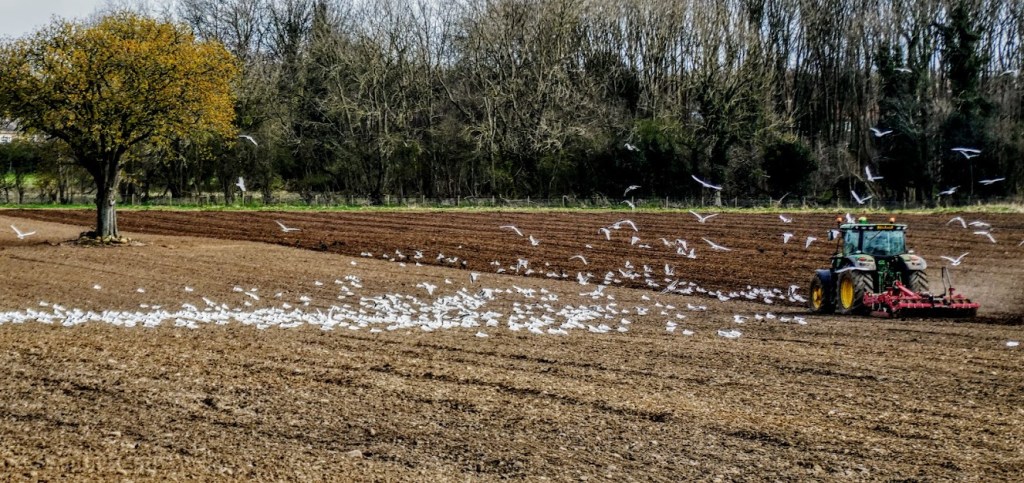
The aftermath of flooding in the countryside. The tractors, farmers and customary wildlife is silent, and the fields instead reflect the trees at the margins.

Winter fields near North Stainley.

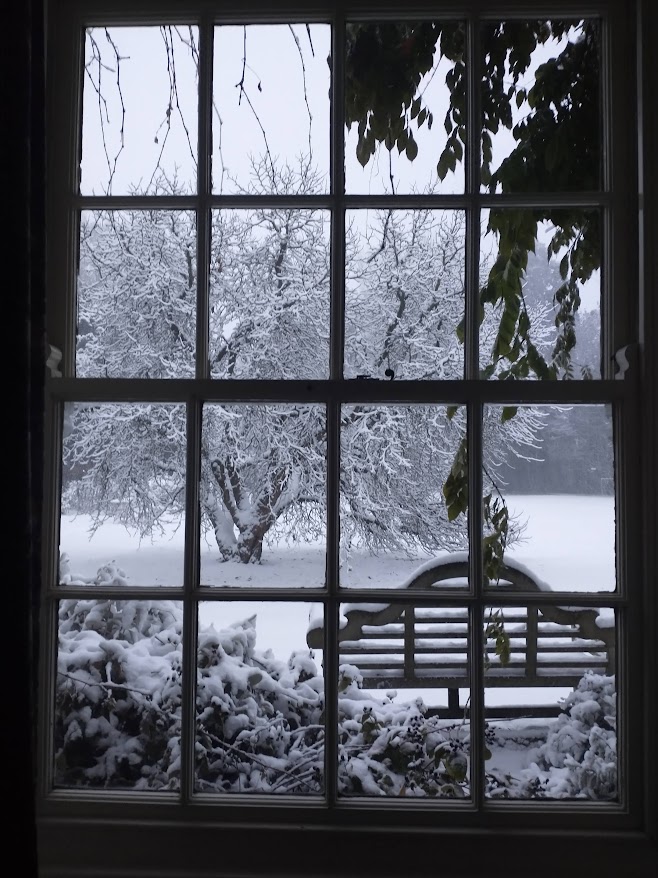
The silence of the snow. No wind, no chatter of birds, no soft animal calls. We passers through are reduced to low murmuring, if we speak at all.

Near Montferrier, Ariège

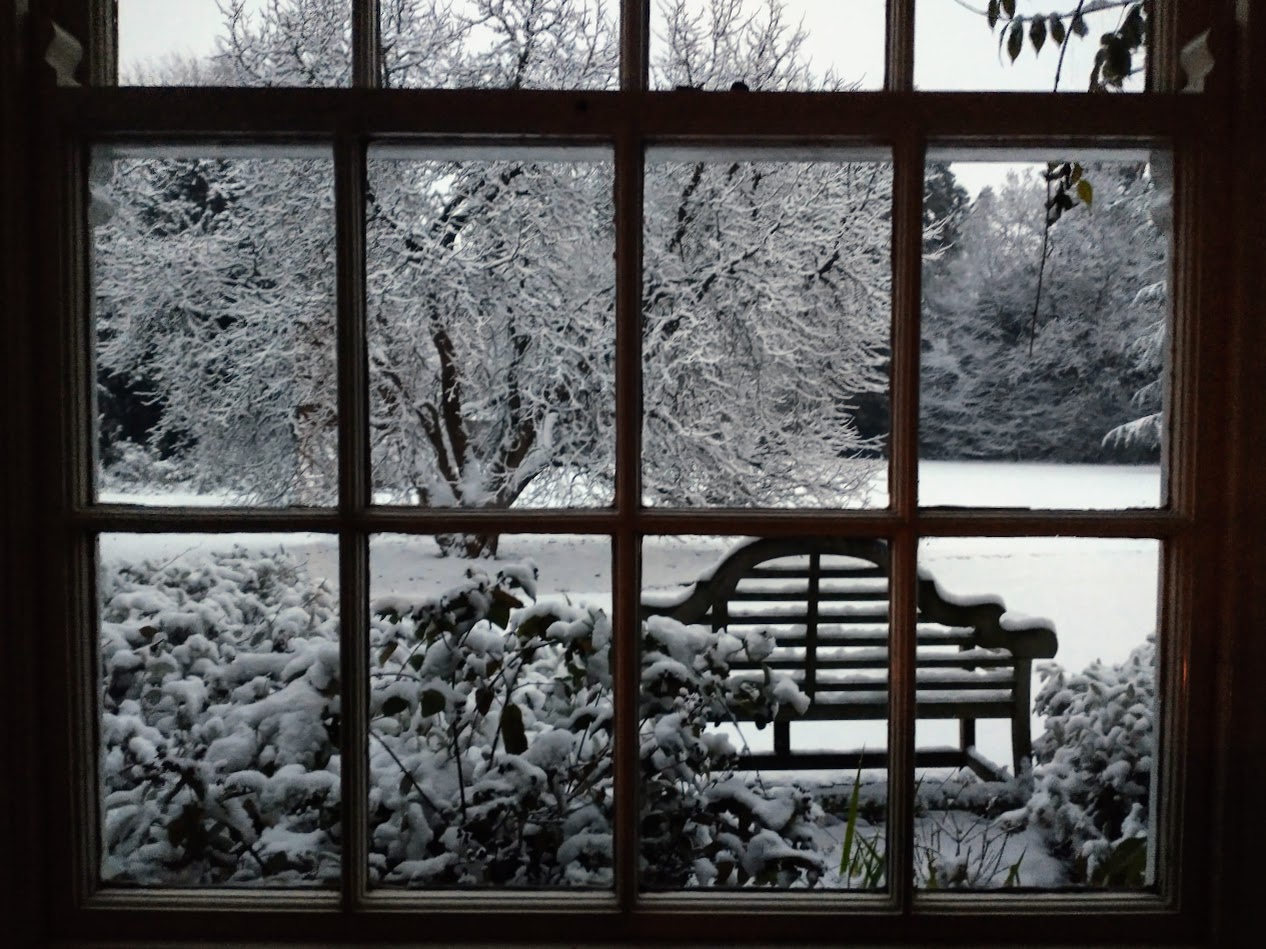
The silence of the garden. Not a true absence of noise. Birds trill. Insects hum. A light breeze rustles the leaves. But there’s a silence here that stills the busy mind.

Our landlord’s walled garden that we’re privileged to use.

The silence of a deserted place. Early morning at Fountains Abbey. The place is empty of visitors. But the whole history of the place crowds into the mind: the tanners and builders and labourers and chanting monks. They’re silent now. And so are we.
Fountains Abbey.

Lastly, a terrible silence. A few years ago, I visited Auschwitz-Birkenau. During the morning, we were taken round the site by guides who had been trained by former prisoners. They knew their subject well, and brought it vividly to life. In the afternoon,we were confronted by those tracks that brought the trains conveying hordes and hordes of men, women and children to slave here, to die of sickness or starvation, or to be killed in the gas chambers. There was nothing whatever to say. We were utterly silent.

Auschwitz-Birkenau
*Silence of light. 
*Silent witness to environmental change.
*The silence of the subject.
*Silence as a form of protest.
*The silence of the viewer

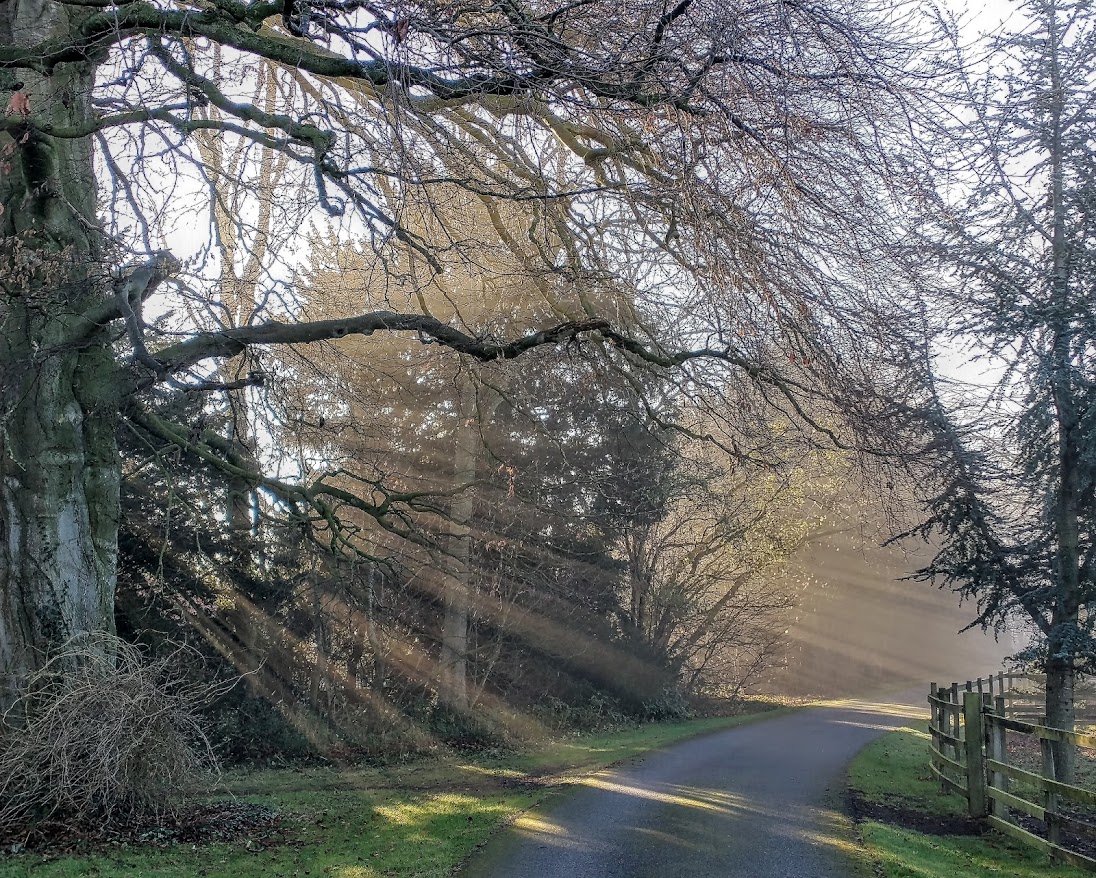
My featured photo shows the lakeside at Kiplin Hall, North Yorkshire.

Monday Portraits: A Few Goths Encountered in Whitby

Whitby is a rather lovely seaside town in Yorkshire. And every year at this time…

Every Goth that ever there was 

will gather there for certain because...

today's the day for a Goth and Steampunk party

(Ahem. Adapted from The Teddy Bear's Picnic)

So on Friday, I went along with friends from Masham Photographic Club to be an unashamed paparazza. The atmosphere was upbeat and friendly, and those who’d gone to so much trouble to find their costumes and dress up actively sought out opportunities to have their picture taken. There was even a baby … and the oldest were well into their eighties. I felt distinctly underdessed in my workaday trousers and jacket.

An excellent day was had by all: especially after a large plate of tasty fish and chips.

Six Degrees of Separation: from Intermezzo to The Patient

On the first Saturday of every month, a book is chosen as a starting point and linked to six other books to form a chain. Readers and bloggers are invited to join in by creating their own ‘chain’ leading from the selected book.

Kate: Books are my Favourite and Best

This month’s starter book, Intermezzo, is by Sally Rooney and I have no immediate plans to read it. It’s -apparently – a moving story about grief, love and family. Which seems to leave the field wide open.

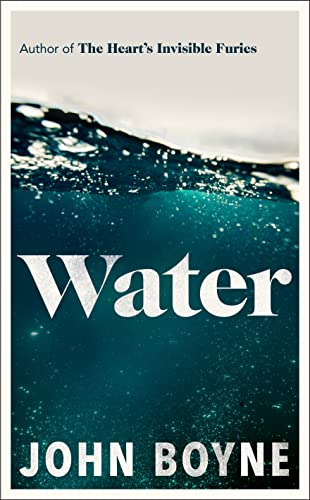
Maybe Stone Yard Devotional by Charlotte Wood hovers round the edges of all these themes. I was somewhat unsettled by this book, which reads somewhat as auto-fiction. It presents as a sort of diary of a woman who has abandoned both her marriage and her job, and thrown her lot with a community of nuns, despite having no religious belief. She takes comfort in the daily rhythms of the convent, and its hard physical work. Events arrive, in the form of the bones of a former member of the convent, murdered in Thailand and transported there by Helen Parry, assured climate activist whom the writer had, with others, bullied dreadfully at school. Even worse is the cataclysmic arrival in the convent of an infestation in their thousands of mice, of over a long period. The writer muses on her past, on her relationships, paying great attention to detail. I’ve a feeling this book may stay with me, though I can’t say I enjoyed the experience of reading it.

Here’s another woman who’s just made big changes in her life, in The Arsonist, by Sue Miller. It’s an engaging book, whose central character is Frankie, home on extended leave – or is it forever? – from her post as an Aid Worker in Africa. She goes to her parents’ summer house, which on retirement is where they plan to live permanently. And then her father shows increasing signs of Alzheimer’s disease … Frankie’s adjusting to life back in America when a series of arson attacks sweeps the town – just the homes of those who come here only for the summer months. This book is a slow burn in a thoroughly satisfactory way as Frankie starts to find her feet in the community and falls in love. I particularly liked the ending as it (sort of) slowly resolved the mystery surrounding the arson attacks, the changed situation of her parents, her own career plans – and the love affair.

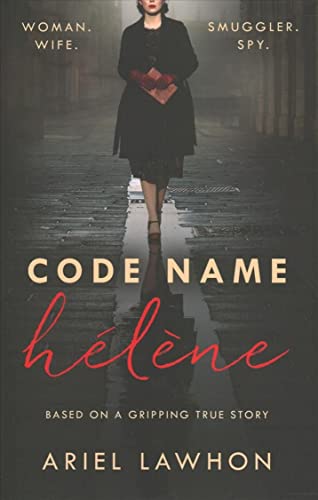
It’s every character who undergoes change in my third book, Catherine Chidgey‘s Remote Sympathy. This is a cleverly constructed narrative, set mainly in and around Buchenwald Concentration Camp, and the nearest town, Weimar. The voices are those of Dr. Weber, a doctor with Jewish ancestors, who is a camp inmate. He has previously invented a cancer-curing machine, only recently found to be ineffective: Frau Hahn, who has reluctantly move to the area with her son, following her husband’s appointment as camp administrator: SS Sturmbannfuhrer Dietrich Hann himself: and a 1000 voces from Weimar – the collective voice of the town’s citizens. The narrative cleverly contrasts the opulence and ease of the Hahn’s lifestyle with that of the camp inmates’. The terrible lies believed by the town’s citizens, and by everyone outside the camp itself are exposed as the plot develops to allow Frau Hahn and Dr. Weber to meet in uncomfortable and deeply painful circumstances. This exhaustively researched novel depicts the holocaust anew. It’s sensitive yet powerful in its exploration of human feelings and emotions, and is both moving and involving.

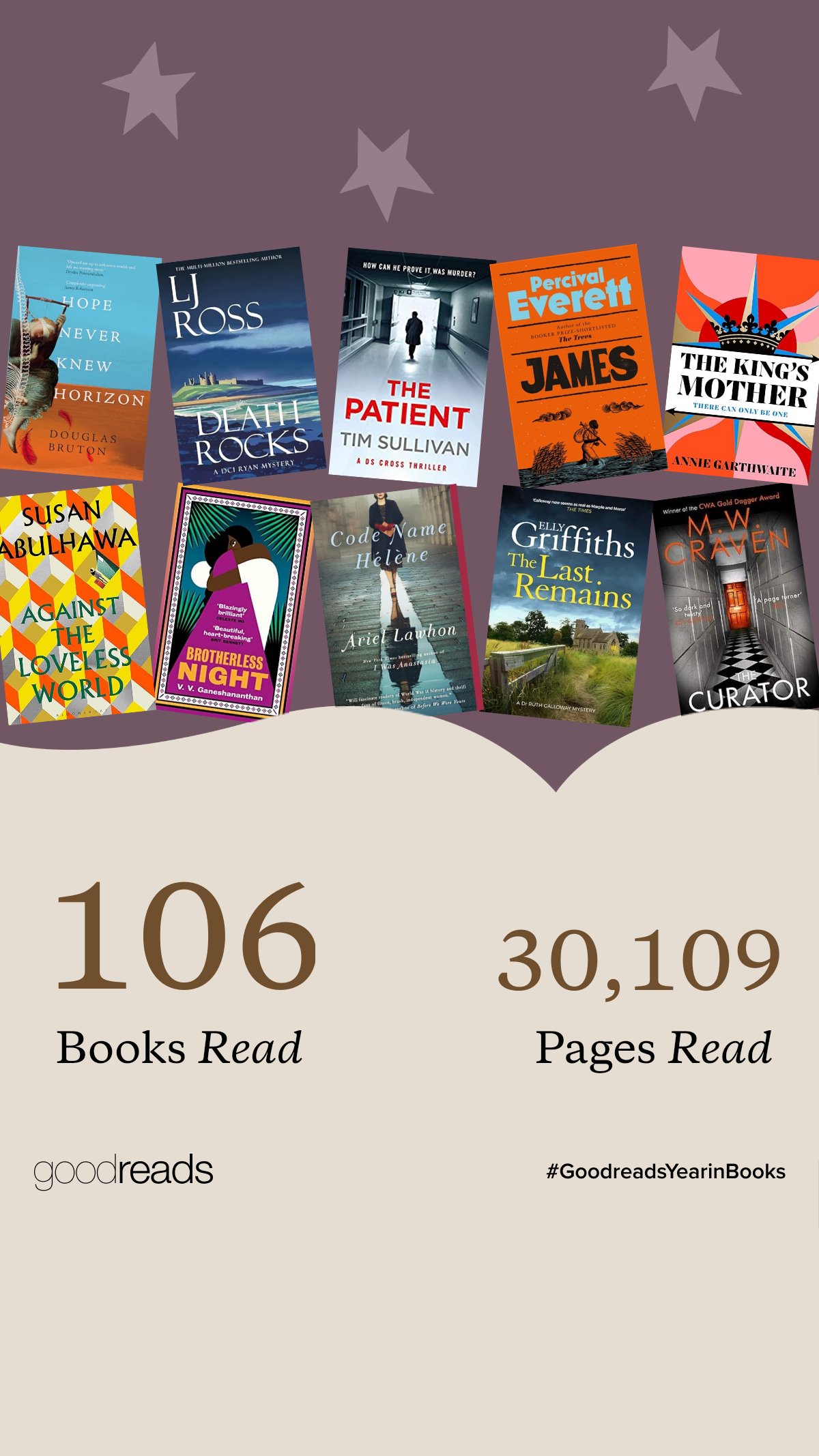
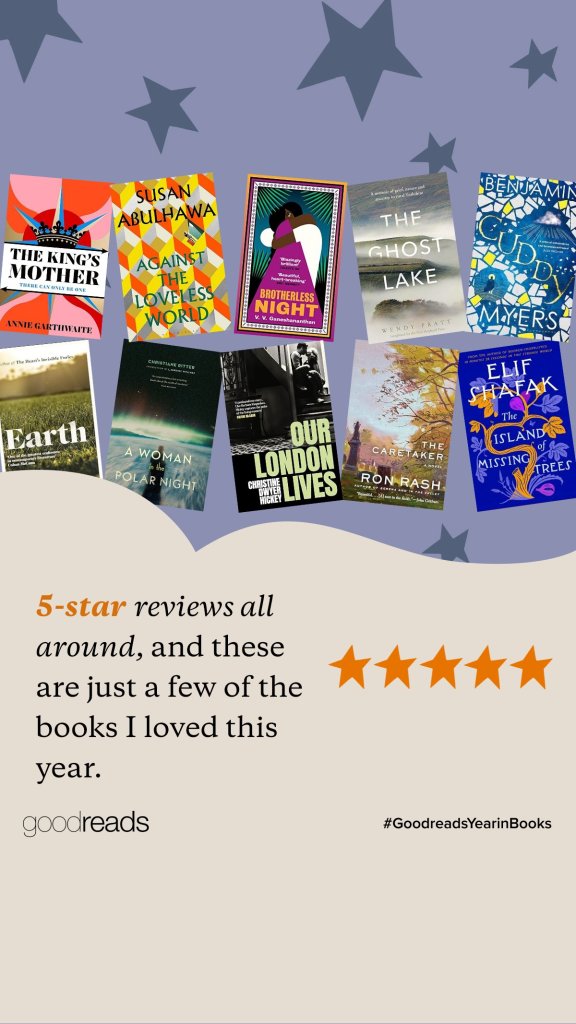
Family relationships as seen through the prism of politics and power is the theme of Annie Garthwaite‘s The King’s Mother. A fine sequel to Garthwaite’s first book, Cecily. This narrative about the troubled reigns of her sons Edward (IV) and Richard (III) is brought to life in the story told from the perspective of their redoubtable mother. It offers a rounded perspective of life as it must have been at that time. Being rich, powerful and influential was no passport to an easy life, with allies becoming sworn enemies , and enemies friends, for a whole variety of reasons both good and bad. Richard in particular is sensitively portrayed, and is a different one from his image in popular mythology. I paid attention to the genealogical tables and the notes, because the strong list of characters is not always easy to get a handle on. Not Garthwaite’s fault. That’s the way it was. An involving and powerful story from a troubled period of history.

Dani Shapiro‘s Signal Fires also explores relationships. Here is a book about two families living in the same comfortable urban neighbourhood. Their situation – well off, cultured families, one with 2 almost-adult children, the other with one – can’t take away the fact that all is not well. In the doctor’s family, one child was driving the car when an accident they caused resulted in the death of a passenger. The other family’s highly intelligent son disappoints the father, because he’s not following the track his father had mapped for him. The narrative slips back and forth between various decades, allowing each of the principal characters a voice each time. This tender and moving novel with several sub-plots looks at different family dynamics, exploring guilt, penitence and loneliness.

Just to add something completely different to the mix, let’s go off piste and meet someone who’s rubbish at relationships, in Tim Sullivan‘s The Patient. George Cross is an unusual detective, in that he is neuro-diverse. His autism however, is what gives him focus, and an unusually fine attention to detail that others miss. His logical brain stands him in good stead. But he’s often awkward, rude and therefore misunderstood. His single-mindedness means that he determines to follow a case involving a woman who’s died, even though it’s already been decided by the Crime Unit that it’s a suicide. His obstinacy pays dividends, and what had appeared a fairly simply if tragic circumstance is revealed to be something much more complex and wide-ranging. My first George Cross read, but definitely not my last. An absorbing read.

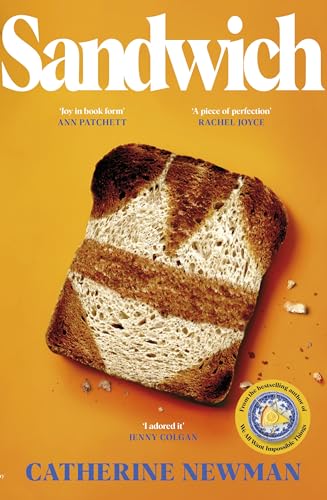
One way or another, this month’s books have all been about relationships. As is next month’s starter book, Catherine Newman‘s Sandwich, which I’ve already read – and enjoyed: perhaps best described as a beach read with a difference.

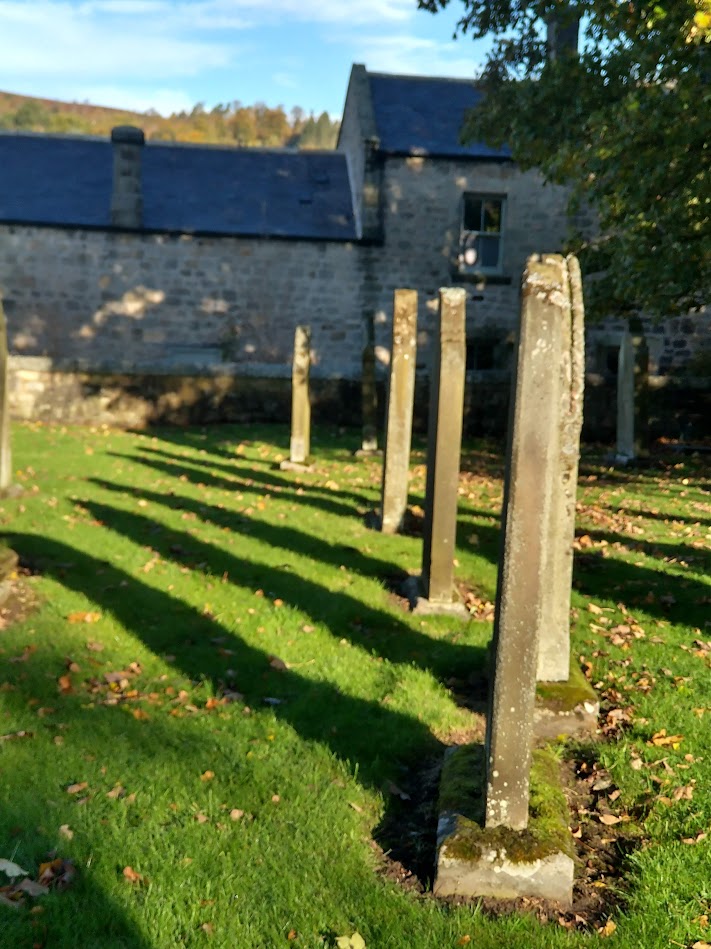
Photo no. 1 is by Vladimir Šoić on Unsplash. Photo no. 3 is my own, but is an accommodation block from Auschwitz, not Buchenwald. Photo no 4 is also my own, of Alnwick Castle: the next nearest castle to Raby where Cecily Neville was born. Photo no 6 is by Gerda on Unsplash. Photos 2 & 5 are also my own.

Last on the Card

My last photo on my phone this month was taken a few days ago. Chipping Sodbury’s shopkeepers were celebrating Hallowe’en Big Time. And then we spotted the post box. It seems the cats and kittens were celebrating too. Perhaps I can get away with showing my next-to-last photo too: the baker’s shop window.

For Brian’s Last on the Card.

Spooky? Perhaps … Eerie?

Hallowe’en turns me into a Grumpy Old Woman. Not the event and its history. I like the fact that here, its roots lie deep in the Celtic festival of Samhain. As harvest ended and winter began, the veil between the living and the dead grew thinner, making it easier for spirits to return.

By the Middle Ages, the church had appropriated the days for its own ends, and made All Saints Eve (‘Hallowe’en’) a day for honouring the dead. And over the years, various merry-making traditions grew up round it: Trick or Treat; dressing up as witches, ghouls and ghosts; carving Jack-o’-Lanterns (from swedes in my day. Can you imagine the hard work involved?); and games such as apple-bobbing. Yes, all that I liked: community-based home-spun entertainment just right for this miserable time of year when clock-change plunges us all into night from about 4 o’clock onwards.

What I don’t like is that, these days, from September onwards, shops are crammed with Hallowe’en souvenirs of every kind – all plastic and ultra-transient, and cheap and tacky costumes, not even slightly bio-degradable, to be worn – for one night only – by marauding hordes of children descending on the neighbourhood demanding sweets without number from about four o’clock onwards. I can still remember the night we gave out more than 200 treats before firmly shutting up shop and closing the front door against all comers (We had an American base nearby – they taught our children well).

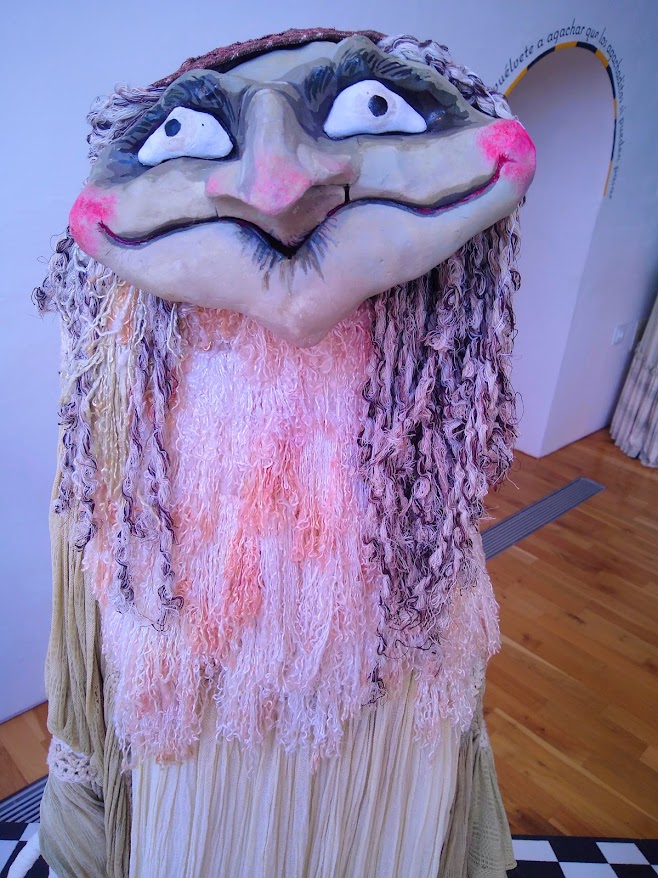
So the images I offer for this week’s Monochrome Madness: Spooky, as suggested by Dawn are perhaps eerie rather than spooky, and come from the natural world, or at least a world-gone-by. Apart from my header photo. This is a puppet from the Puppet Museum (Museo del Titere) in Cádiz and spooky enough to terrify anybody. And two bits of street-fun: one from Brick Lane, the other from Newcastle.

Flowers for Two – No Three – Blogging Friends

Rebecca, of Fake Flamenco fame has suggested with typical generosity of spirit that we send virtual flowers or autumn colour to Becky, Queen of Squares and to Cee, Queen of Challenges. Becky, in England, has kept us up to date with the health difficulties currently being experienced by Cee, in America.

I’m sending flowers from a phone box to each of them. These cheery additions to the urban scene can be found in Bath, where I spent yesterday with both Becky and Anabel, The Glasgow Gallivanter. Lucky me! Spending time with fellow bloggers is quite the best fun.

The header photo features the central box, which is the work of Mr. Doodle.

The So-Bad-It’s-Good Experience

Well, we ‘did’ the Chillingham Cattle. So now, maybe some culture, some history at the nearby Chillingham Castle, parts of which date from the 12th century?

Perhaps we should have guessed. We drove through the gates, then bumped along the drive, deeply pitted with pot holes. The parking area was filled with random notices relating to a golf course that was nowhere in evidence. We found the entrance, where a slightly surly individual examined our pre-booked tickets and gestured us through a door. ‘Ramshackle’, rather than ‘weathered’ was the term that occurred to us as we passed through the courtyard. Still the cafe offered home made soup and cakes, so that was alright.

But our visit! An ill-lit room offered instruments of torture, in no way explained or contextualised, but which included a broken down skeleton in a broken down wheelchair. Progressing further, we found halls scattered with elderly croquet mallets, rooms featuring peeling table tennis bats, torn and yellowed newspaper cuttings roughly pinned to a mantelpiece – one drawing pin having fallen out. A box of magazines from a bygone age tossed into a Fyffes banana box. Windows dressed with rotting and ripped curtains. Somewhere in among all this, it was just about possible to pick out a family story, and witness at first hand a high-born family descending into genteel poverty.

Actually, the formal gardens weren’t too bad. Here’s a view from the roof.

But perhaps we’re miserable old curmudgeons, unable to recognise a National Treasure when we see one. Here are some reviews from Trip Advisor. There are those who loved their visit. Is it now on your ‘must visit’ list?

The Wild Cattle of Chillingham

Venture to north Northumberland near the Cheviot Hills and the Scottish border, and you may find yourself near Chillingham. If you do, be sure to visit its wild cattle. Yes, for maybe 700 years, a herd of cattle has lived and prospered here, always untouched by man – no farmers, no vets, no medical treatment, no cowsheds, no milking.

Though their territory is large, there is inevitably a fence round their domain. But there are no other cattle like them anywhere (except cousins in Scotland who are kept there just in case anything happens to this lot). so genetically, they are in-bred. Normally, this leads to all kinds of problems. Remarkably, not with these creatures.

These feisty cattle – the females anyway -can bear a single calf at absolutely any time of year: snow, hot summer – they don’t care. Males will fight – sometimes bitterly – for the privilege of breeding with females. They’re herd animals, and their society is matriarchal, so an older female will call the shots in deciding where they’ll move off to next for safe and worthwhile grazing. Here’s a matriarch summoning her companions with her slightly underwhelming ‘moo’.

It was Charles Darwin who encouraged records to be kept on the breeding behaviour and numbers of the Chillingham cattle. They’re still being studied today. And visited too, by interested onlookers like us, who definitely keep a very respectful distance.