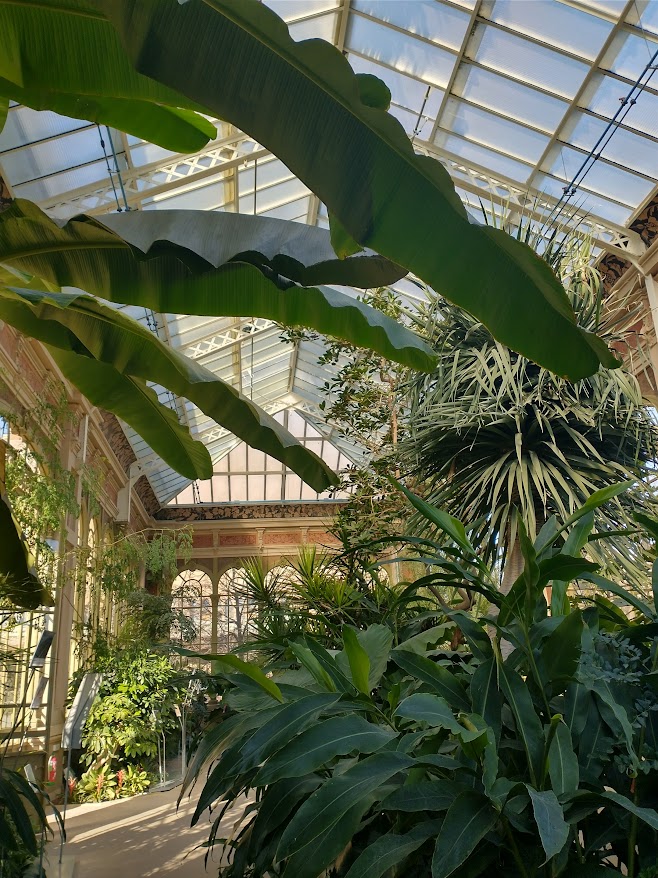
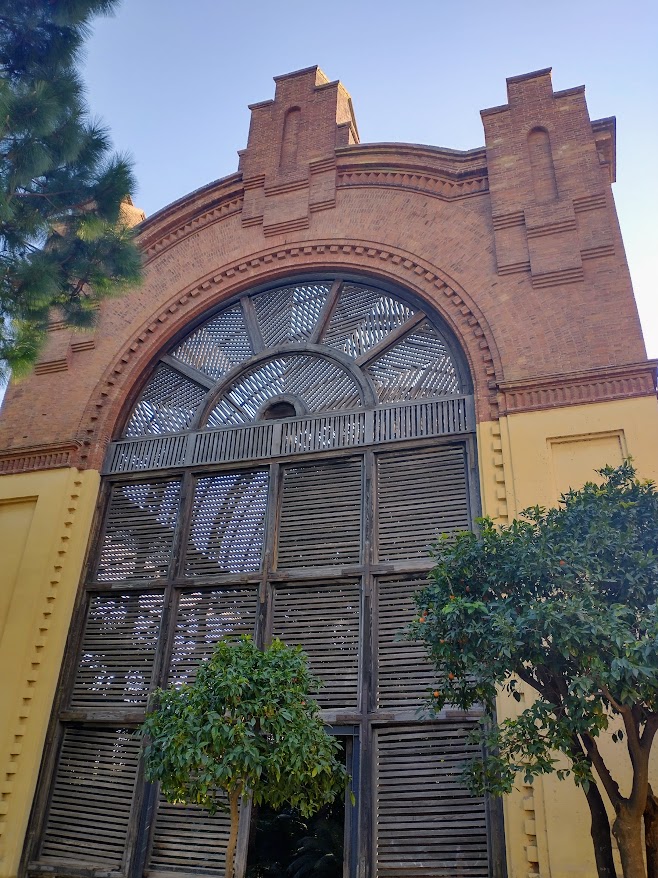
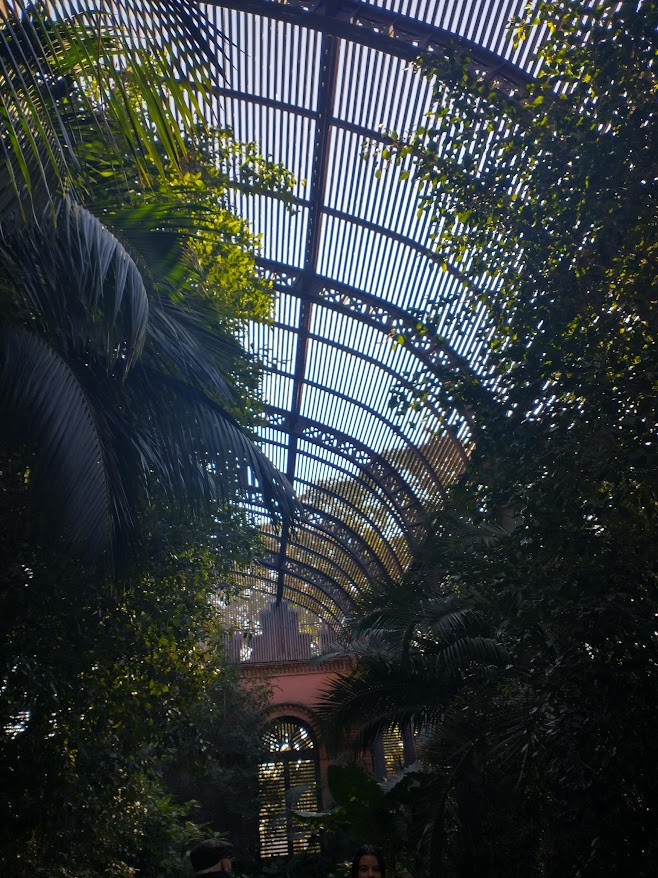
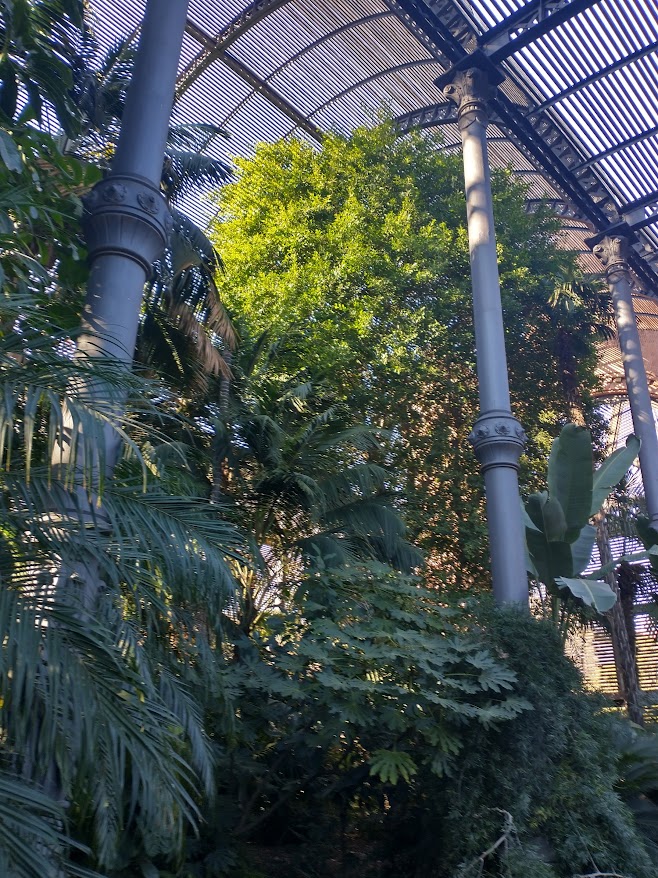
And let’s hope for positive things during 2025.
Rushing Round Two Nature Reserves
Our local Nature Reserves tend to be chilly in December. Especially when, as today, the wind is making its presence felt. Best to rush round the bulrushes and hurry home for a mug of hot chocolate. Sunny days, though, are available, for a gentler amble. My header photo is from Nosterfield on a sunny day. A wintry trip to Staveley was distinctly nippy,


For Debbie’s One Word Sunday: Rush
Happy Christmas from Thirsk Yarn Bombers!
Those yarn bombers in Thirsk always have something new to show us. And now of course, it’s time to celebrate the Christmas season. So Happy Christmas from me too. I may or may not post next week, so I’ll get the good wishes in early.

For Debbie’s Six Word Saturday.
My Year in Books: 2024
I was just thinking about writing a post about the books I’ve enjoyed this year. I was feeling not a little daunted. But then an email from Goodreads dropped into my inbox . It’s done the hard yards so I don’t have to. Here are a few highlights: although the examples in the featured photo seem to include representatives of both my most enjoyed and least remembered books.

They’ve missed a few of my ⭐⭐⭐⭐⭐ reviews here. What about Stowaway: The Disreputable Exploits of the Rat by Jo Shute? Or Bee Sting, mentioned below? There was Old God’s Time by Sebastian Barry. Clear, by Carys Davies. And Orbital, by Samantha Harvey. Tomb with a View, by Peter Ross. I might have missed one or two others as well. I really HAVE had a really good reading year. For which I must thank two book bloggers in particular. Susan, who blogs at A Life in Books. And Kim, of Reading Matters fame. Both read a wide range of My Kind of Fiction, and write thoughtful and enticing reviews for the books they enjoy, whilst warning me off just a few of the ones they come across.

I’m reminded of the very first book I read this year: the Norwegian Hanne Ørstavik‘s Love. That got ⭐⭐⭐⭐⭐.

And the very last (up to press – there are still 13 days left of 2024): also a ⭐⭐⭐⭐⭐read – Malachy Tallack’s That Beautiful Atlantic Waltz.

This is information overload really. I hope that clicking here will lead you to thumbnails of the books I’ve read this year, and by clicking on individual titles, to their reviews. But in January, I’m migrating to The StoryGraph, because it’s independent from Amazon. The StoryGraph might be a bit stats heavy for me, but I’d like to give it a go. Might you join me?
A Winter’s Monday Window
The view from the study window … less than a month ago. No snow since. And none expected.
For Ludwig’s Monday Window.

The World Didn’t End in 2012
Back in 2012, we were living in France. And if we’d believed the doomsayers, not for very much longer. Here’s the story as I told it on my blog, after we’d spent the day with our walking group near the Pic de Bugarach.
Bugarach: ‘Doomsday Destination’
December 15th 2012

Cold. Pale thin fog baffles the contours of the hillsides, and those of the distant castle at Coustassa. Glimmering frost bristles the short maquis grass beneath our feet. A watered lemony sun high above us attempts to burn winter away, and eventually does so.

That’s when we have our first view of Bugarach – shown in the featured photo – the imposing thick-set mountain which dominates this part of the Aude, because it stands alone, rather than as part of a range, and today is pretty much thatched in snow.
Bugarach has been in the news for a while. Here’s BBC’s ‘From our Own correspondent’ back in July 2011:
‘According to an ancient Mayan calendar, at some point towards the end of 2012, the world will come to an end.
It is not clear how that will happen, but apparently humanity does not stand a chance – except for those who seek shelter in the area surrounding Bugarach.
Just 200 people live there all year round, but doomsday believers and spiritual groups are convinced the village has magical powers, thanks to the local mountain – the Pic de Bugarach.
For years, rumours have circulated on the internet that extra-terrestrials live in the mountain, and come the apocalypse, the top will open and they will emerge with spaceships, and rescue the local inhabitants.’
Although it’s quite hard to entertain the idea that the mountain might have some sort of underground UFO car park, there are plenty of people who have done so, and with great fervour. Here’s today’s Daily Mail, which has been talking to Jean-Pierre Delord, Mayor of the tiny village of Bugarach (pop. 176).
‘On Wednesday, he will close the village for five days to anyone who doesn’t live here or isn’t already booked to stay, and draft in hundreds of police, military, firemen and Red Cross to ban any gatherings, shut off the mountain and arrest anyone silly enough to try flying over it.
‘What if tens of thousands of people turn up?’ he says, throwing his arms up in the air. ‘I have no way of knowing what will happen. I have no crystal ball! I don’t care if people want to chant naked or talk to the trees, but I have to protect my villagers. I am responsible for them.’’
He’s not over-reacting. Local house-owners have been able to rent out their homes for the period in question for astronomical prices, and even camping spots are going for 400 euros a night. For most locals though, the whole thing is at best a nuisance, at worst a real headache. The nearer we get to December 21st, the more people descend on the area, and the police and army are already involved in keeping order.
We enjoyed our views of Bugarach, as ever. We spent time pretending to look for UFOs and generally mocking the New-Agers who are so convinced by the end of the world as we know it. Then we got on with the business of enjoying our walk in the here-and-now. Here are a couple of photos showing what else we saw that day


Update: December 14th, 2024. As you see, we’re still here. And so are you.
For Debbie’s Six Word Saturday
Above the Clouds
Here in the UK, we know a lot about clouds. And at this time of year, we know a lot about grey clouds. Looking out of the window just now yields an unending vista of smoky grey, darkening over Mickley way to gunmetal and slate. No cotton-wool puffs of cumulus for us.
So let me whisk you to a day in June, when the plane transporting me from Barcelona to Leeds offered me a constantly changing cloudscape below me, with tantalising glimpses of beaches, landscapes and the Pyrenees, the Atlantic coast, and then crowded old England. The featured photo shows us just leaving Barcelona – hardly a cloud in the sky. And then …


Although generally a big fan of monochrome, on a grey day like this, I’m not sure I like these clouds and vistas in black and white. My memory of that summer day was of clear bright and optimistic colours. But needs must. This is for Monochrome Madness, and hosted this week by Brian, of Bushboy’s World.
Monday Window at the Car Wash
After a weekend of Storm Darragh, our car needs a litte TLC. On the way into town this morning, we’ll have a session at the car wash, and enjoy the view through the window as the suds and brushes do their work.


For PR’s Monday Window.

Six Degrees of Separation: From Sandwich to My Coney Island Baby
On the first Saturday of every month, a book is chosen as a starting point and linked to six other books to form a chain. Readers and bloggers are invited to join in by creating their own ‘chain’ leading from the selected book.
Kate: Books are my Favourite and Best

This month begins with Catherine Newman‘s Sandwich. It’s a book I enjoyed – with reservations – but let’s concentrate on the basics. This is a smartly delivered story told through the voice of menopausal Rocky as she goes with her husband; her two grown up children; and for part of their week there, her elderly parents to the same -faintly decrepid – house in Cape Cod that they’ve rented every summer for years and years. This gives me my premise for my Six Degrees this month. All my choices will have a marriage embedded in the story – to a greater or lesser degree.


Here’s another American marriage, in Ron Rash‘s The Caretaker. Jacob is called up to fight in the Korean war, and has to leave his pregnant wife Naomi behind. He is from a privileged background, and Naomi most definitely is not. His parents disapprove of the match so much that they set up a subterfuge to ensure that the couple will never see one another again once Jacob returns. Only one person, Jacob’s childhood friend has an idea that something very wrong is taking place. The book quietly presents a story that slowly unfolds when Jacob comes home, invalided out of the war, and believing himself a widower, with a child who never saw life. A cleverly devised plot, which for all its lack of high drama, is suspenseful to the end. My first Ron Rash. But definitely not my last.


Naomi doesn’t feature directly in Rash’s story. The wife in my next choice doesn’t either: Bernhard Schlink‘s The Granddaughter. 1964. A young West Berliner spending time in East Berlin meets a young woman and falls in love. He contrives her escape, marries her. But they do not live happily ever after. She only half heartedly returns his love, is constantly searching for she knows not quite what, and eventually dies in a drunken stupor. Only then does her husband, a bookseller, discover that she’d had a baby whom she’d abandoned before marrying him. The book describes his search for this woman, who must now be well into her 40s, and it results in his taking the woman’s own daughter under his wing and having her visit him for weeks at a time. A tale of complex feelings: getting to understand that the East was not in fact necessarly grateful to be ‘liberated’: that anger, bitterness, political feelings that resulted in the rise of the Far Right in Germany is one of the consequences of the fall of the Berlin Wall. His granddaughter’s father has passed all this anger onto his child, and this plays out in the latter part of this book. A moving and illuminating account of the feelings informing modern German politics.


The division of Germany into East and West was a consequence of World War II, so let’s go to wartime France. Code Name Hélène by Ariel Lawhon. A real fast-moving page-turner, detailing the war time adventures of the real-life Nancy Wake. An Australian, Nancy lived and worked in Europe as a reporter in the years before the war. By 1939, she was in Marseille, and it’s here that her story begins – as far as the book is concerned. The plot however, weaves between her four incarnations as, initially an ambulance driver and people-smuggler for the French resistance: and increasingly, under different guises, as a fully fledged member – and commander even – of the guerilla military arm, in her case in the Auvergne. We are also witness, in Marseille, to the slow-burning yet passionate love affair between herself and Henri which results in their marriage. Her war work drives them physically apart, but does not diminish their love for one another. This work cannot be described as a biography. Lawhon has admitted to some characters being composite, some incidents elided or transposed for the sake of the story. And certainly there are scenes here whose veracity could never be proved: though I am sure the general ‘flavour’ remains accurate. Nancy was unusual in being a female commander in a male world, which brought its own difficulties, and also meant she probably had to be larger-than-life. Henri has his own role in the story. But not until towards the end. Because I already am familiar with much of the history of the French resistance, I found this a fascinating and involving story, and I fairly raced through its (almost) 450 pages.


Let’s stay in France and look at Boxes by Pascal Garnier. I simply don’t know what to make of this. Brice’s wife Emma has disappeared, leaving him to manage alone the move into the countryside which she had wished for. In this book, we witness Brice’s descent into depression and madness. We see his developing odd friendship with his neighbour Blanche. Various intriguing hints are dropped, but never ultimately satisfied. For instance, why does Brice so strongly resemble Blanche’s father? The house, the surrounding countryside are described in unsettling ways. Everything is alien. Brice’s past life. His present life. His career, which he abandons, apparently on a whim. Everything’s on a whim: from his shopping choices to the hole he stoves into the kitchen/dining room wall. It was all a bit like watching a certain kind of French film, and I was bemused, rather than enthusiastic about this book.


Now for another book where it’s a woman who’s centre stage: Water, by John Boyne. We meet a woman in middle years who has just fled to live in a fairly remote Irish island, changed her name and as far as possible her appearance. Why? Only slowly do we find out. Her husband’s crimes reflect on her: the world assumes she had enabled them – and, she believes, one even greater tragedy. She has done her best to vanish. She meets a few characters who are also uncomfortable with their lives, making relationships with some. Slowly she regains the strength of character necessary to reject her husband and to renew her relationship with her daughter. This book deftly charts her slow, but steady steps to recovery.


And for our last book, we’ll return to America, though to (like Boyne) an Irish writer, in Billy O’Callaghan‘s My Coney Island Baby. Michael and Caitlin have been meeting as lovers for one day a month, for a quarter of a century. They are married, but unhappily, to other people. The book explores their time together, on a single day. The day when Michael reveals that his wife has been diagnosed with terminal cancer. And Caitlin will reveal that her husband is likely to be promoted, and will require them both to move to Illinois, almost 1000 miles away. Yet despite their marriages’ fading passion, duty and the constraints of middle age will probably keep them tied to their respective spouses. The book swings between the hotel bedroom where the couple meet, and their past lives which have brought them to where they are now, disappointed by the choices they have made. An achingly poignant exploration of an intense and long-held love, drowned out as darkness falls and duty calls.
So that’s it for this month. A selection of marriages and stories, and ending where we began, in America. Next month we leave earth all together, and read Booker Prize-winning Orbital, by Samantha Harvey.
Air, Water, Fire, Earth … Metal, Wood
Ask someone in the Western world about the Four Elements, and they might talk to you about Air, Water, Fire and Earth. Ask someone familiar with a Chinese cosmology and Wu Xing, and they would protest that there are five: adding Wood and Metal, and discounting Air. Sofia asks us to look at the five Chinese elements for her Lens-Artists Challenge. This is a big ask. I’ve seen wonderful posts from those who’ve contributed already, as well as Sofia’s own post illustrating elements as seen in the natural world. I’ve decided to focus on those elements as pressed into the service of man.
Let’s start with Air: through which fly aeroplanes (Metal) over the Earth beneath.

And where would our washing lines be without air coursing through our clothes hanging out to dry?

Or flags, flapping in the breeze?

Water next. Essential in every branch of life, here’s a (Metal) ship ploughing through it.


Fire. Trickier, this one. Here’s a blacksmith doing his Metalwork at Tees Valley Pumping Station. This Pumping Station is now consigned to history and the odd Open Day. But in the Victorian era, it existed to provide clean drinking Water to the people of Darlington.

And here is a collection of Metal artefacts and objects we saw when we visited.


Earth next. Without which … no forests, no crops, no bricks no … normal life at all.


Then there’s wood. One of our oldest building materials. Still the material of choice for window frames, for furniture. Even sometimes for cutlery!


And there we have it. A whistle top tour of the Elements, Western or Chinese style. I think my header photo, by the way, shows a bit of everything. Except perhaps fire. Do visit Sofia’s post, which will lead you in turn to other terrific responses to this challenge.
You must be logged in to post a comment.