We Brits are famous for complaining when the Wrong Kind of Snow snarls up the networks. The trains don’t run, schools shut, and there’s a run on store-cupboard ingredients in the shops. The Daily Mail or some other self-styled Voice of The People is sure to announce that ‘We’re the laughing stock of Europe and America’.
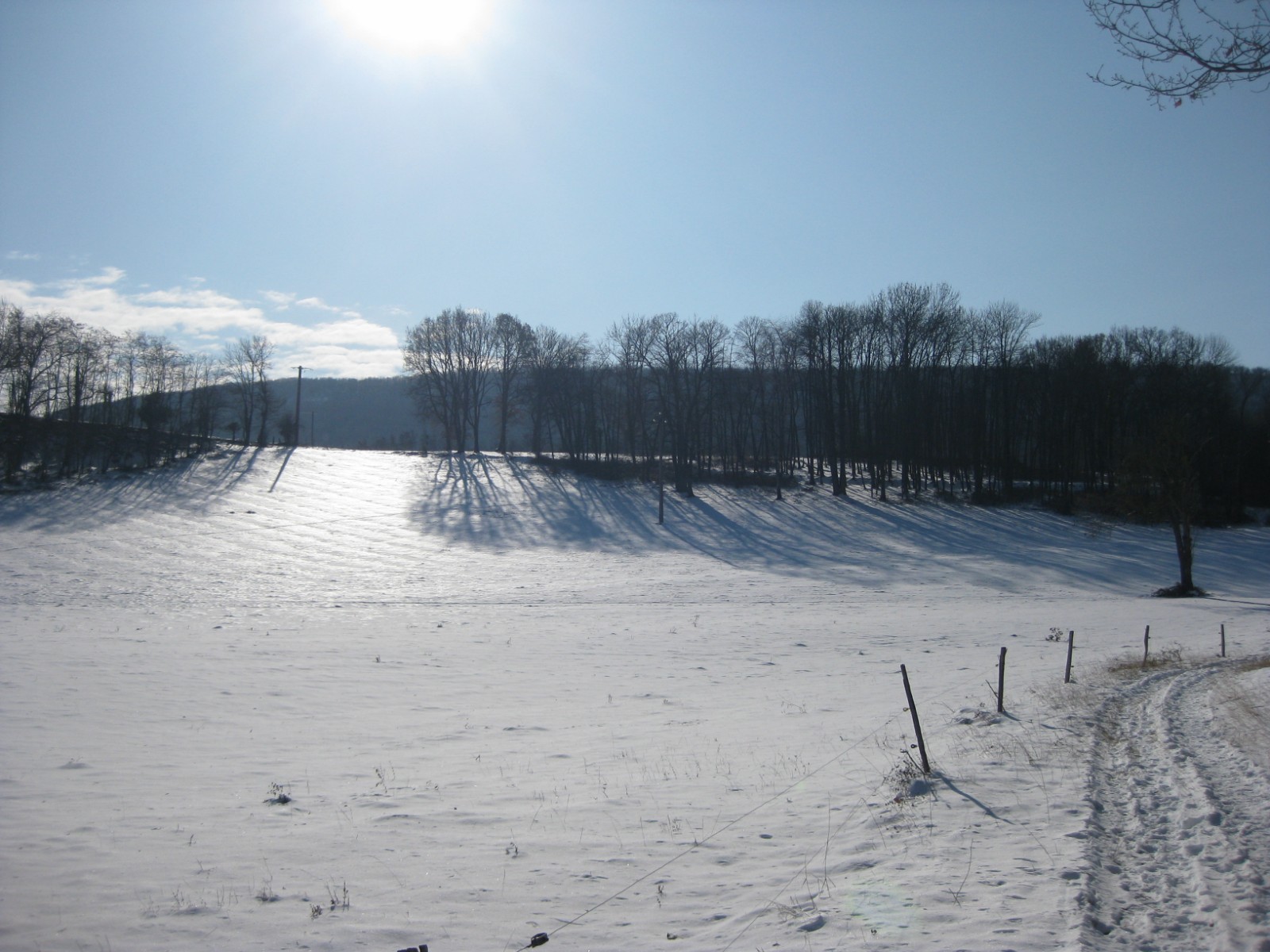
A deserted field
Well, actually, life grinds to a halt when it snows in some parts of Europe too. Here for instance. There has been no schools’ transport all week: and with many children living out in the sticks, schools have been half empty. Markets, where we go to shop, catch up with jobs in town and to meet everyone we know, have pretty much not functioned for 10 days or more. Clubs and walking groups, concerts lectures and meetings: all have been cancelled or postponed. We’ve all left our cars at home and confined ourselves to doing what we can on foot.
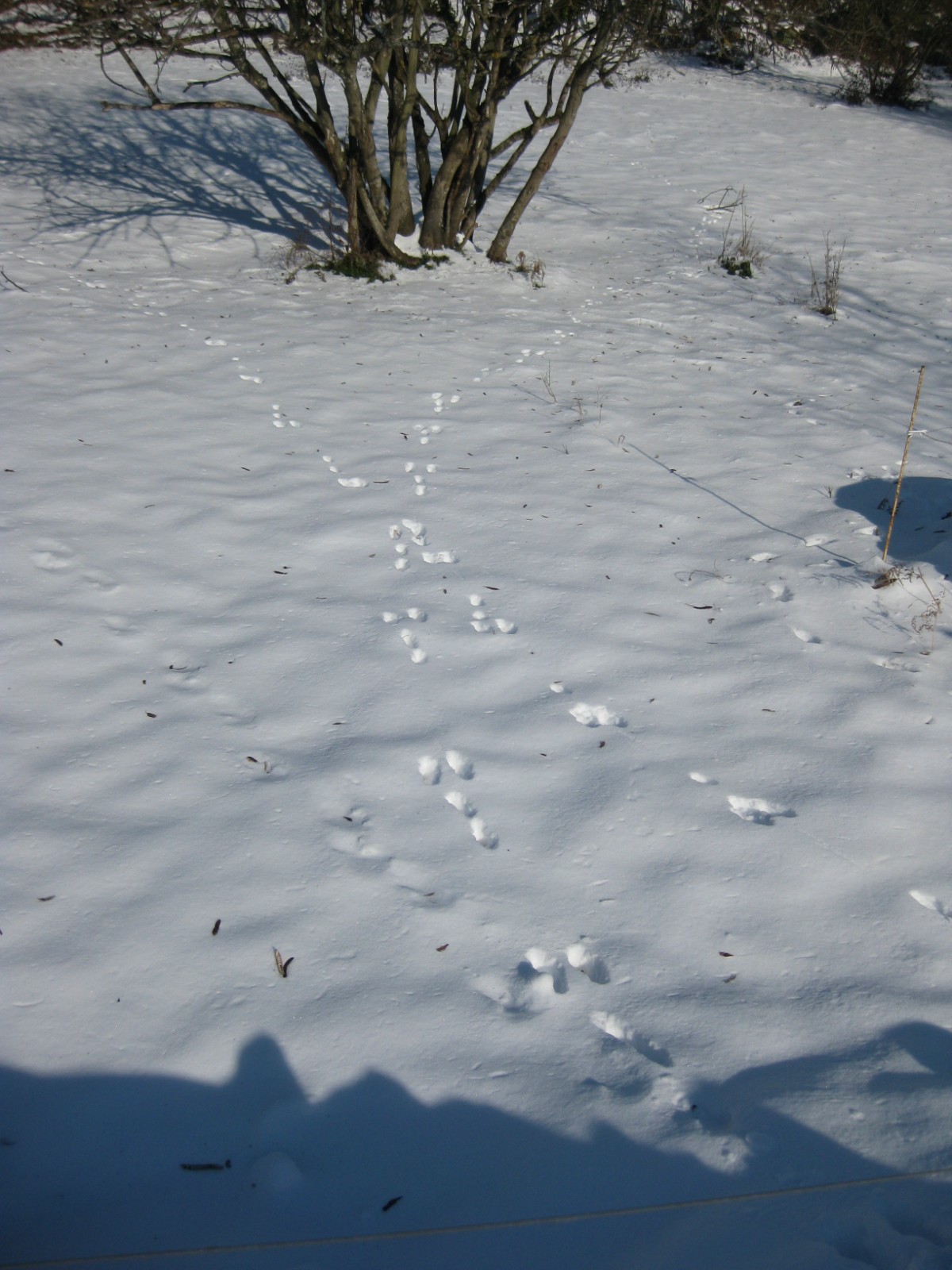
Rabbit cross roads
Don’t we have snow ploughs here? Well, of course we do. In big communes like ours (there are 2000 of us you know), council workers do the job. In more rural spots, farmers may be pressed into service. But either way, they’ve all been to the same training school. After they’ve done their rounds, the ploughs leave an inch of hard-packed, glossily polished snow especially for drivers to enable their cars to take up skating. Lethal stuff.
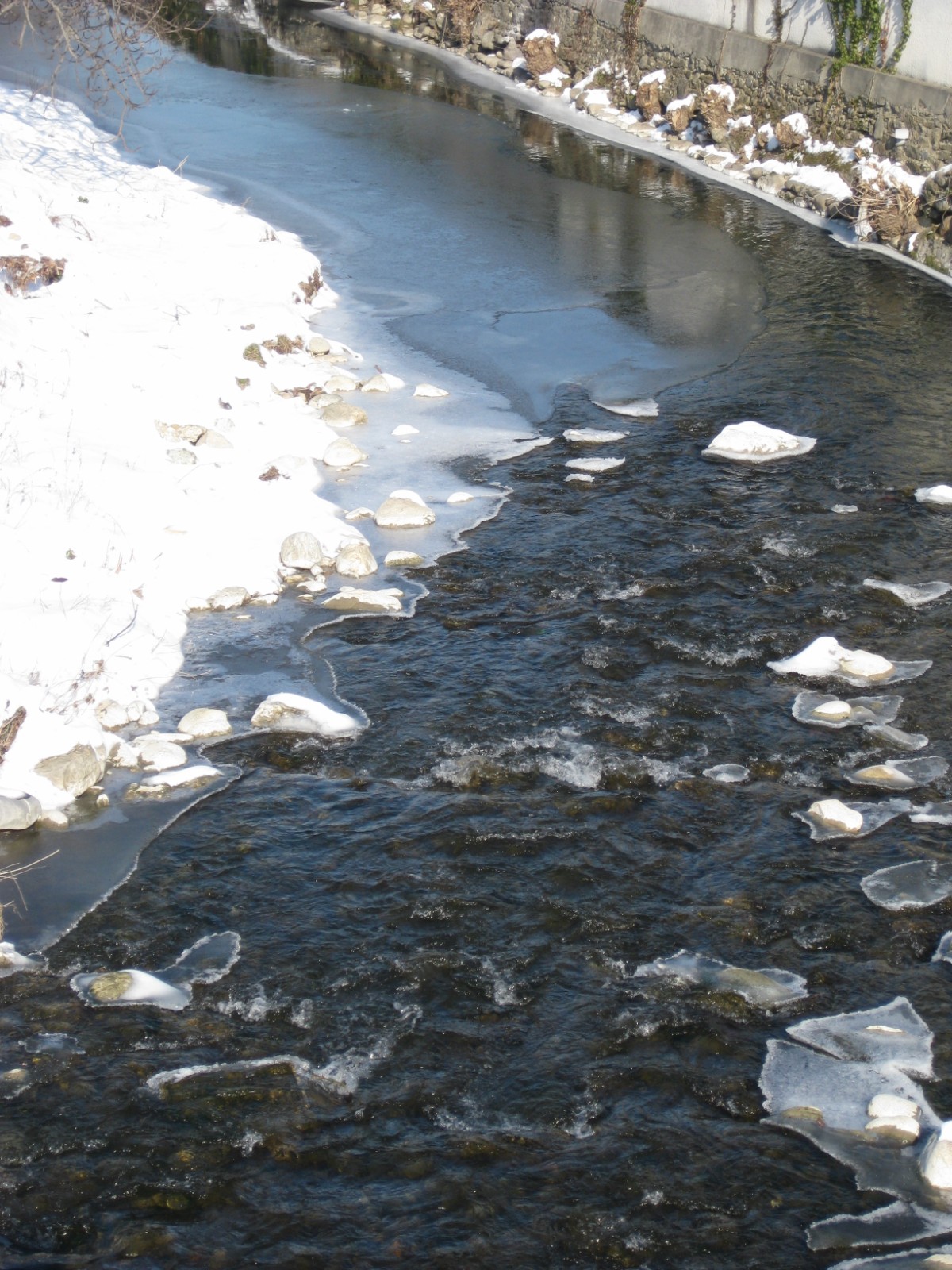
The fast-flowing River Touyre begins to freeze
We’d hoped to drive to Barcelona this weekend to see Emily. Reading the local government website’s travel section soon changed our minds. We were recommended to use snow chains on several of the roads on our route. On others we’d be required to use them. Conditions are described as ‘very snowy’, ‘difficult’, and everyone we know says ‘Don’t go’. So we shan’t: not till the snow goes anyway.
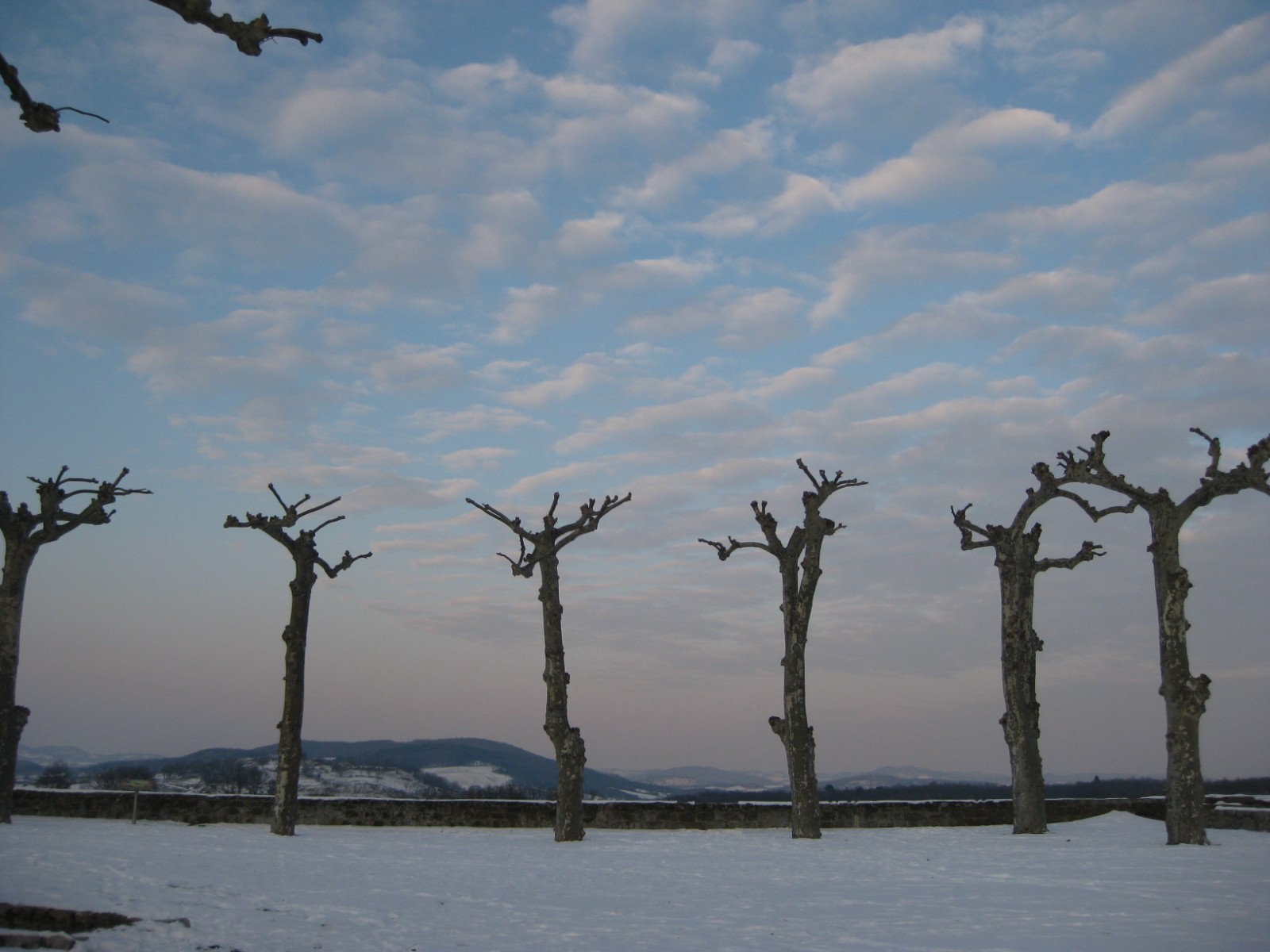
Pollarded plane trees by the church before sunset
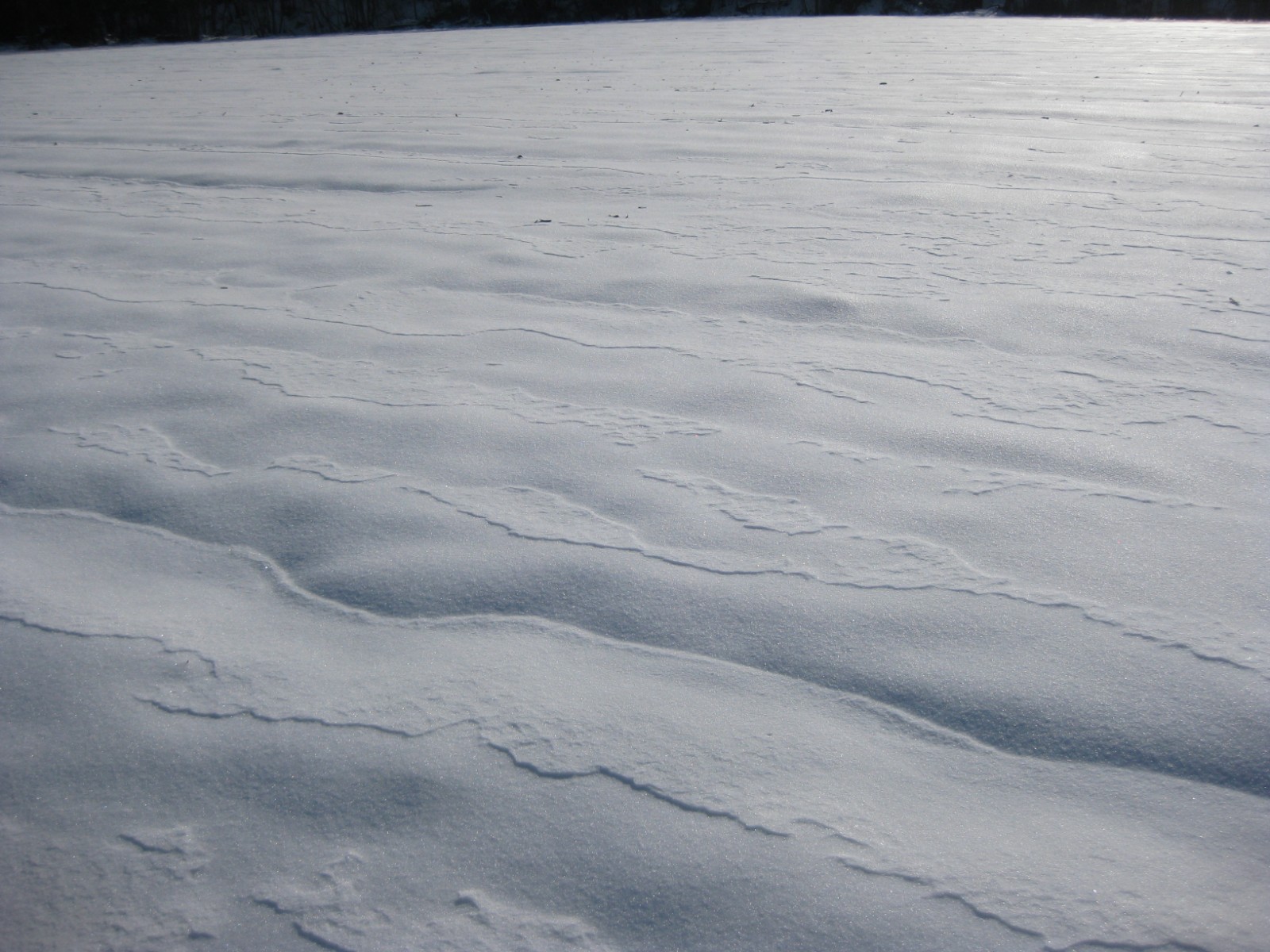
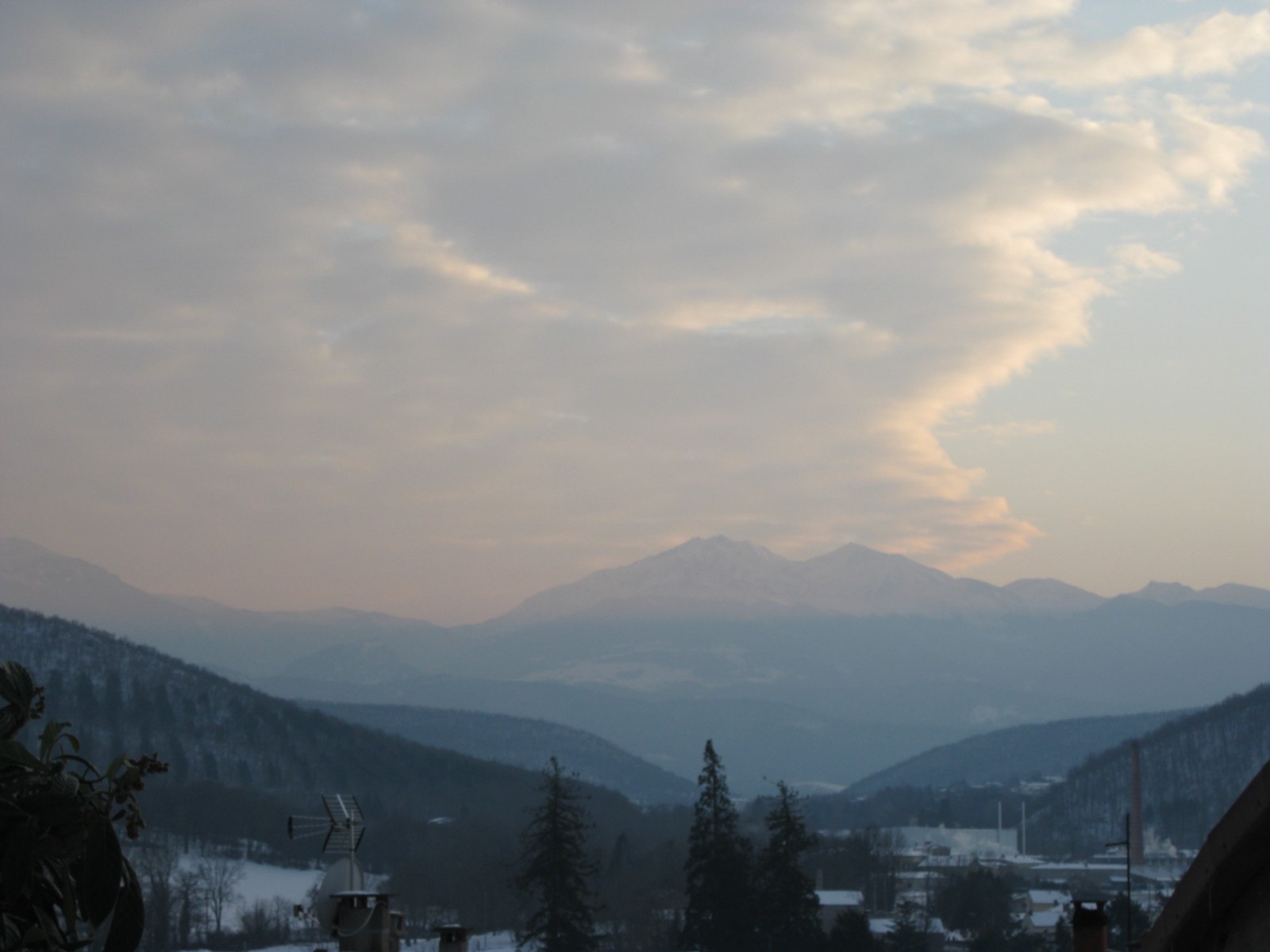
As in the UK, radio TV and the local papers are filled with stories of the Big Snow. The empty roads, the jack-knifed lorries (actually though, HGVs are kept off many of the main arteries and have either to turn back or make use of temporary lorry depots opened up for their use), the utilities failures, the heart-warming human interest stories – they’re all there. The snow stopped some days ago, but the sub-zero temperatures remain, and so the snow’s till here. What is different from England though, is the sky. Through the day, we’ve enjoyed a cloudless duck-egg blue sky. And that’s something to be relished.
We’ve all had snow – well, much of Europe, anyway. And everyone’s been posting their snow pictures on blogs, news sites, Facebook…. so here are a few of mine.
It’s La Chandeleur, Fête de la Lumière today. You might know it as Candlemas, and if you’re English, you’ve probably not given it a thought, or even knew it existed.
Here in France, you’ll certainly know all about it. If you’re Catholic, you’ll remember the day as the one in which the Virgin Mary was purified after giving birth, and Jesus himself was presented at the Temple.
Catholic or not, the French eat a lot of crêpes today. Apparently, whilst making them, it’s traditional to hold a coin in your writing hand and a pan in the other, and flip the crêpe into the air. If you manage to catch the pancake in the pan, your family will be prosperous for the rest of the year. It’s exactly half way though the official winter season, in any case. Pancakes perhaps look a little like the sun, so they stand in for the sun – ‘la lumière’.
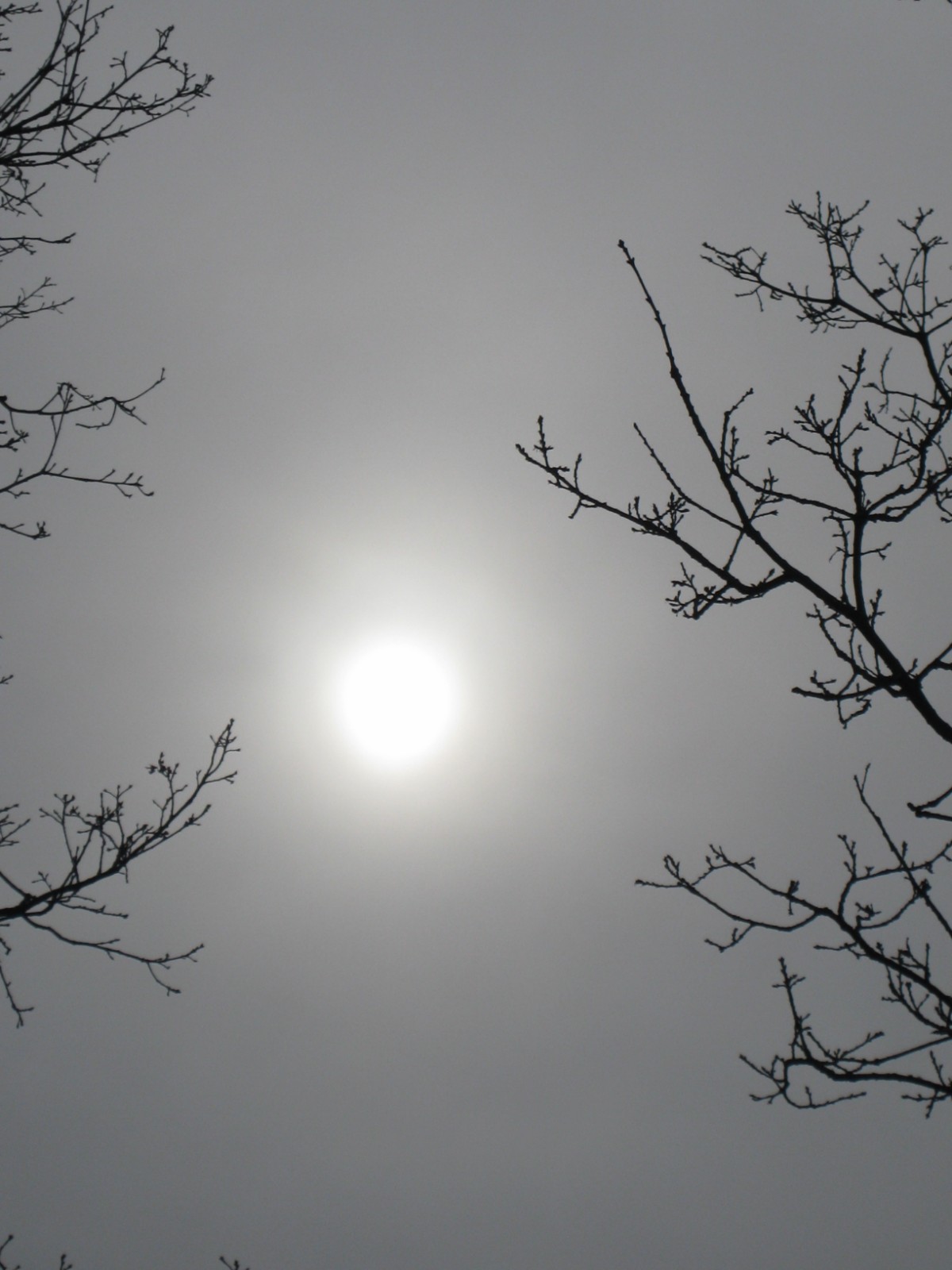
Winter sunlight looking like a crêpe?
More important than eating however, is seeing what Winter is thinking. He pays the day a lot of attention. He has decisions to make. On this day, Winter will either pack his bags and disappear till the end of Autumn, or he’ll settle in, and make his presence thoroughly felt for quite a few more weeks. Hence the expression:
À la Chandeleur, l’hiver cesse ou reprend vigueur
At Candlemas, winter ends or strengthens.
It looks pretty much as though he’s decided though. Today the temperatures plunge from a high of minus 3, to a low of minus 10 (and feeling like minus 16), and the ten day forecast is worse. Tomorrow, for example, it promises to be minus 9 at 10.00 a.m. and feel like minus 16.
It’s quite nice not to have to wait till Shrove Tuesday for the first pancakes of the year though. Even better that we can be snug indoors today and hope for Winter to knock off duty.
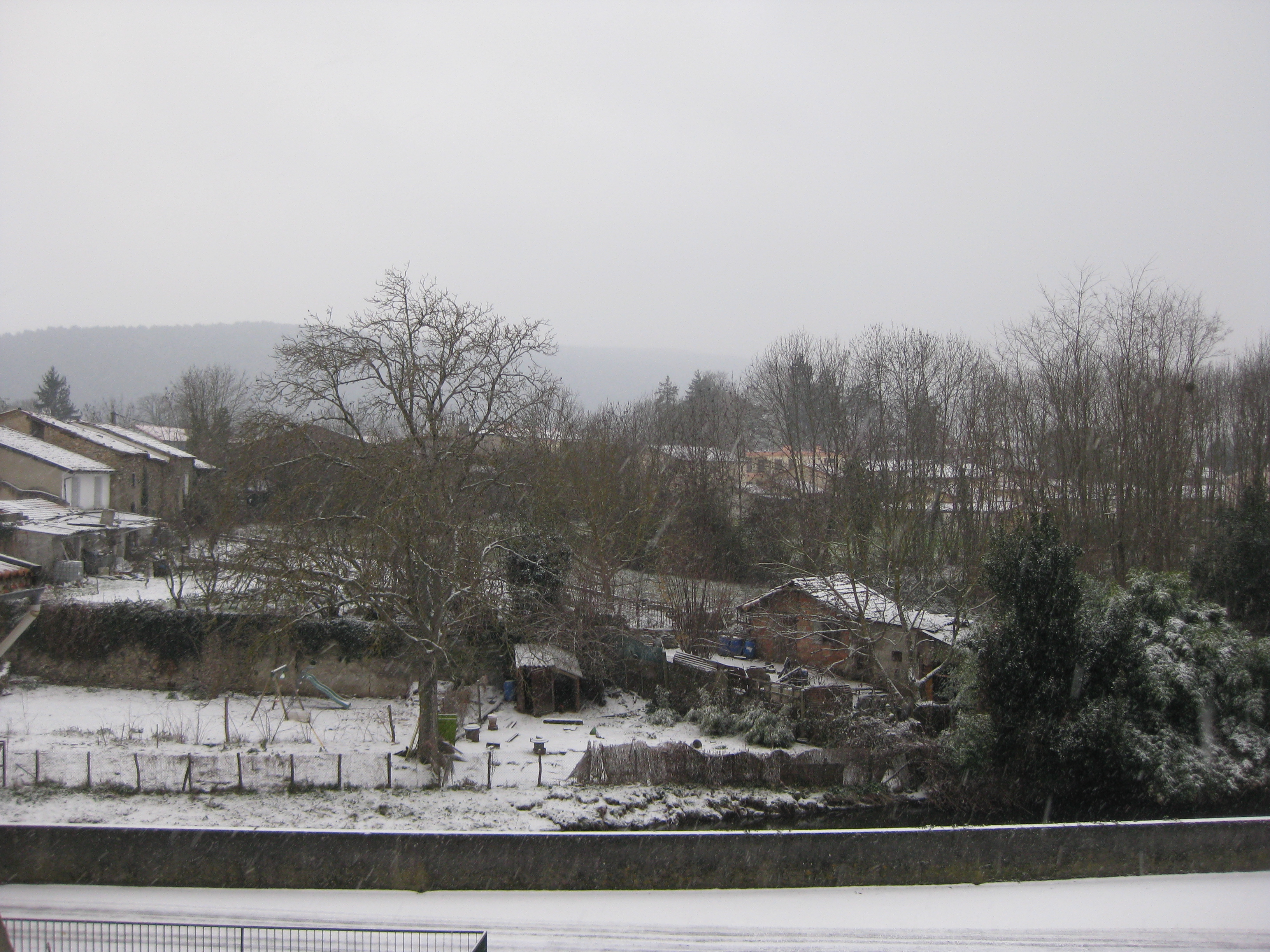
View from the roof terrace at 8.00 a.m. It looks as though Winter’s really made up his mind
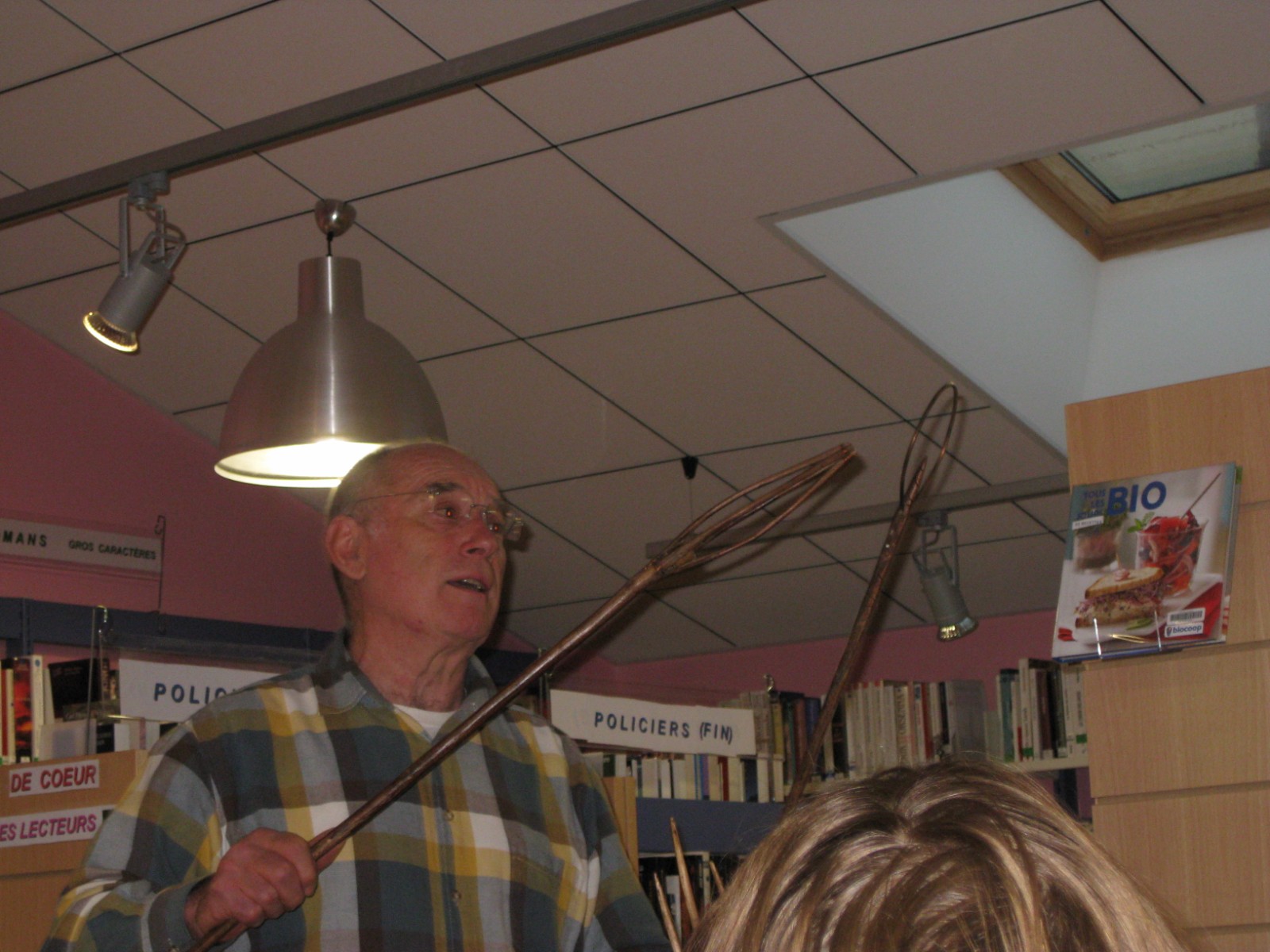
Yesterday afternoon was fascinating. We went to Belesta library for a talk by Paul Garrigues, a local historian who collects old wooden artifacts. He’s such a good speaker, and gave us an insight into a way of life which only finally drew to a close about 30 years ago. He’s pretty much my age, but his childhood was spent around ox-drawn farm machinery, distaffs and a host of things that formed no part of my rural infancy. Now that most Ariègeois farms look pretty much like anywhere else’s, with tractors, silos and irrigation systems, it’s rather hard to believe.
Paul’s childhood was spent in the next village to here, Aigues Vives. Later, he met and married a young woman from a tiny community in the Couserans, a part of the Département to the west of here. He was surprised to find how different the tools in his wife’s village often were. There too, the villagers spoke Gascon, rather than the Occitan traditional in our part of the area.
And so his interest began. He started to collect mainly wooden artifacts: agricultural items, kitchen tools, playthings. To him these things tell a story of rural life here as it was lived over many centuries. Yesterday he came to Belesta Library to talk and show part of his collection.
First of all, a simple wooden torch, looking something like a charred rounders bat. This interests him because items just like this were in use – almost daily – since man first populated the area in Stone Are times, right up until the First World War, and in a few cases, beyond.
Next, a distaff. This item too remained unchanged almost from those early days until the early years of last century. Any female over the age of about 8 living over the last 1000 years and more, whether rich or poor, would have recognised it. Spinning would have been a constant part of her daily routine, whether she was managing a fine estate, or supervising a few sheep on the mountainside. And do you know what? Constantly licking your finger and thumb as you handled the wool made your mouth dry, so beside you, you might have a little wooden box, filled with snuff, to help your saliva to flow: he showed us samples.
A couple of millas stirrers
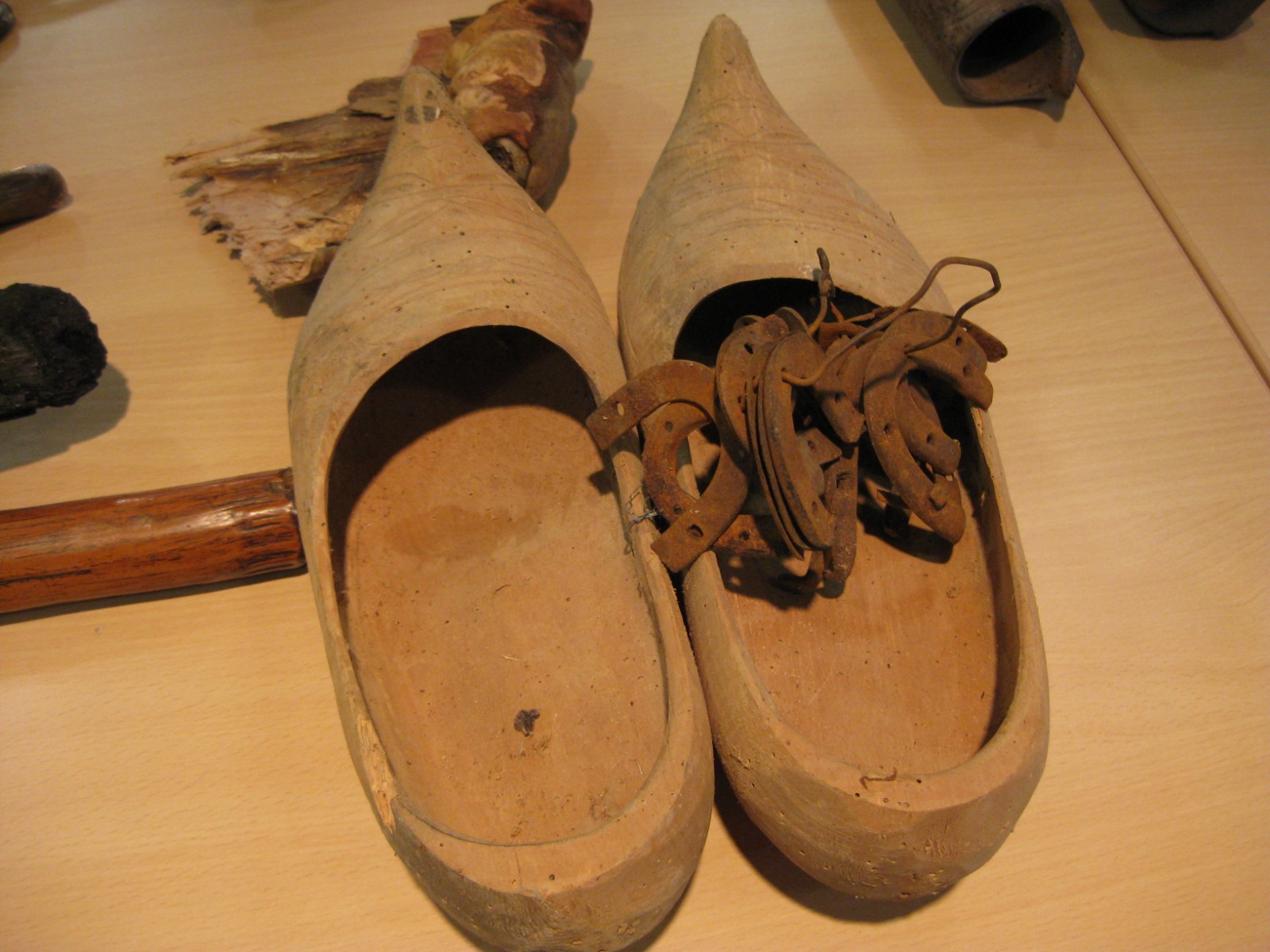
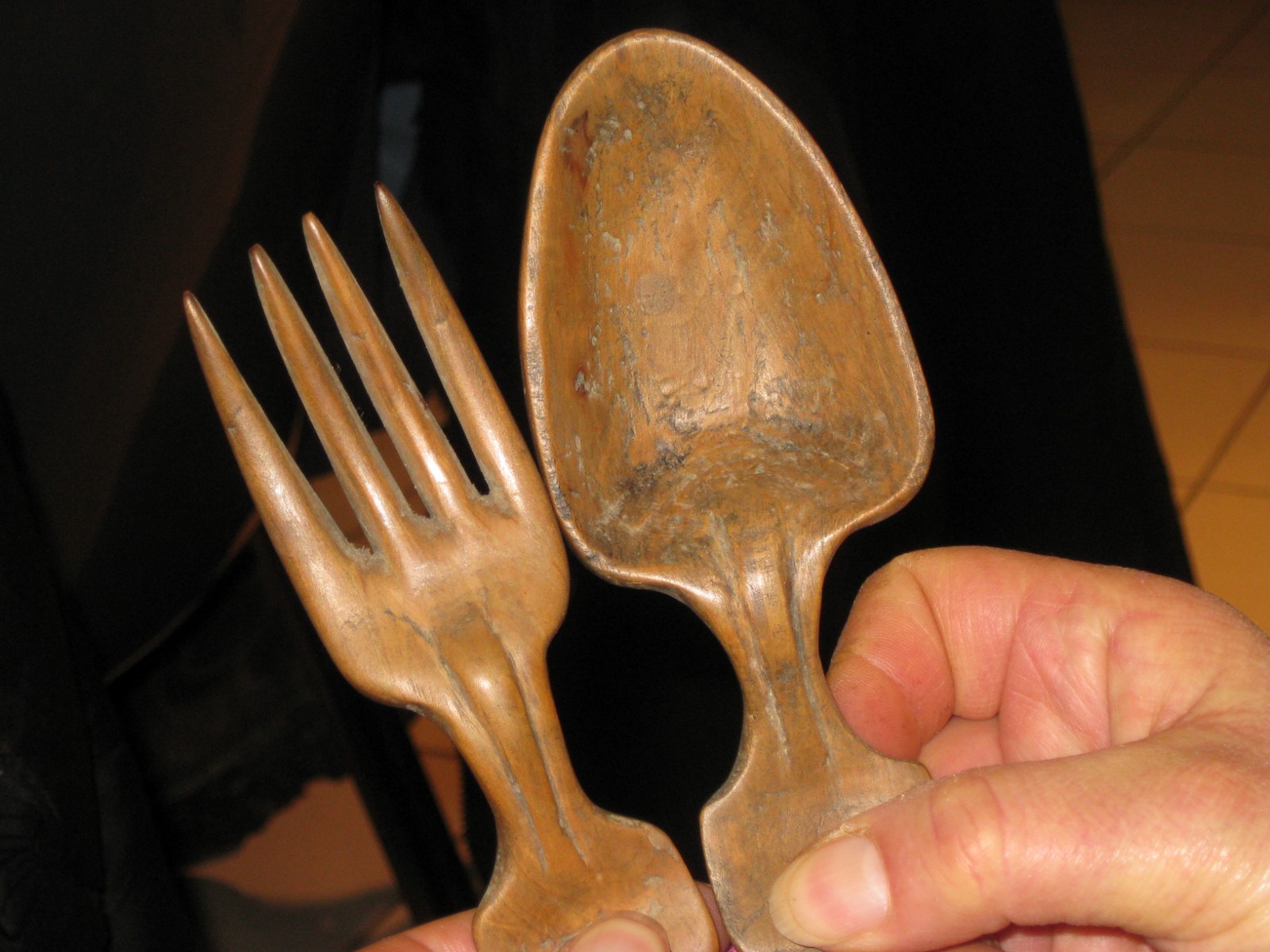
We saw long wooden balloon whisks and three-pronged forks used to stir the great vats of millas (a sort of porridge made from cornmeal) beloved of the Ariègeois, wooden spoons and forks, large wooden bowls. He showed us wooden clogs.
Wooden clogs with metal horseshoe-style heel strengtheners
We saw wooden roof tiles. All these things are made from unplaned wood, so the implements can follow the natural grain of the wood and be strong and sturdy.
From the Couserans he had savage long thick knives, looking like swords in their wooden or leather scabbards. Their design was directly descended from the instruments of war the Gascons often saw in their battle-rich past, but in fact they were used to cut rough grass, crops, and the long straw required for thatching.
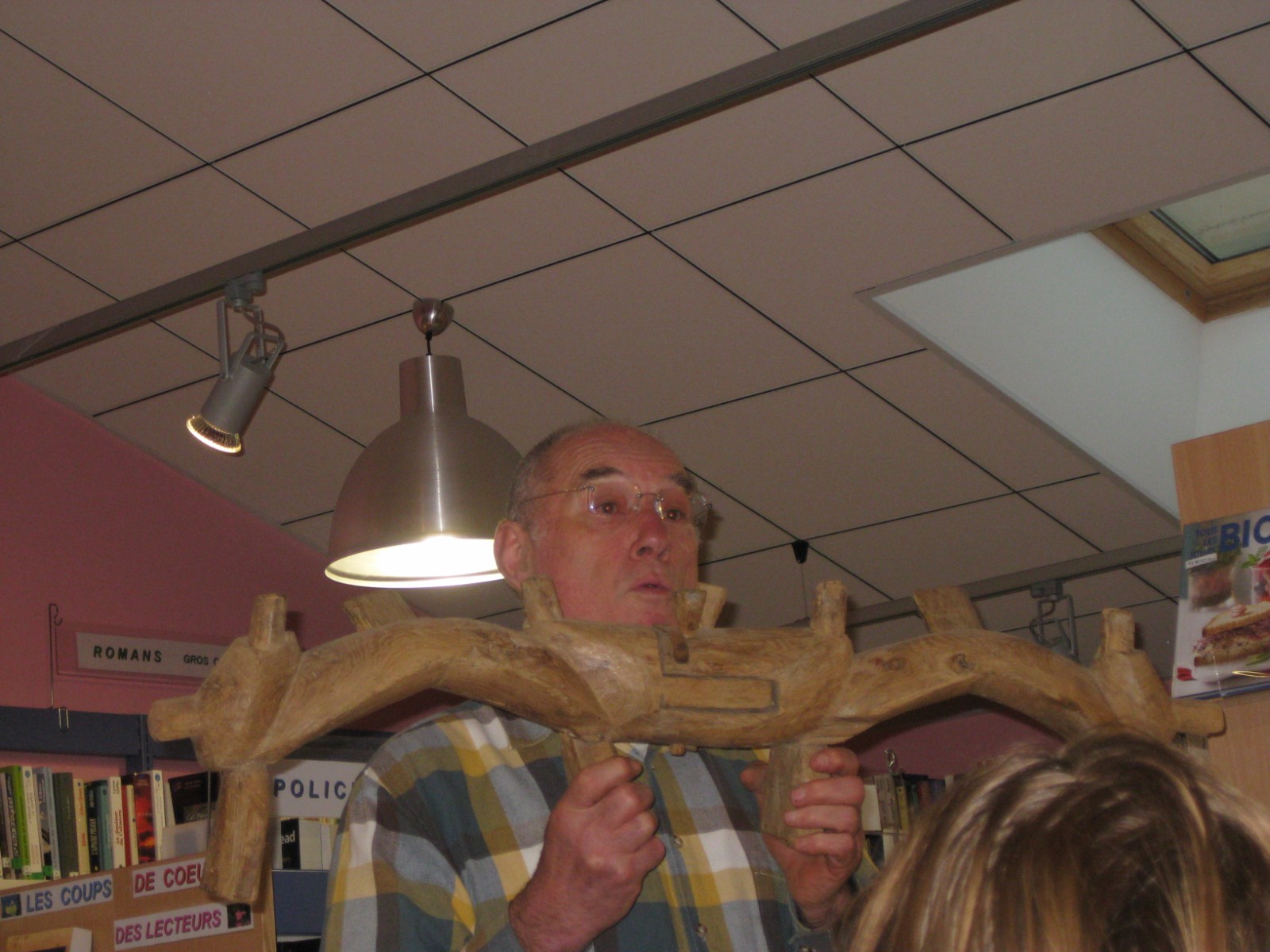
A yoke. For safety reasons, it can quickly be divided in two
There were other differences between that part of the area and ours. Here, terracing was a feature of upland farms, and it was male beasts who worked the land. There, the farmers worked directly on the steep slopes: the cows who ploughed the land (it was female animals who did the work here) had to have specially designed wooden yokes so that they weren’t strangled as one worked at a higher level than her work-mate.
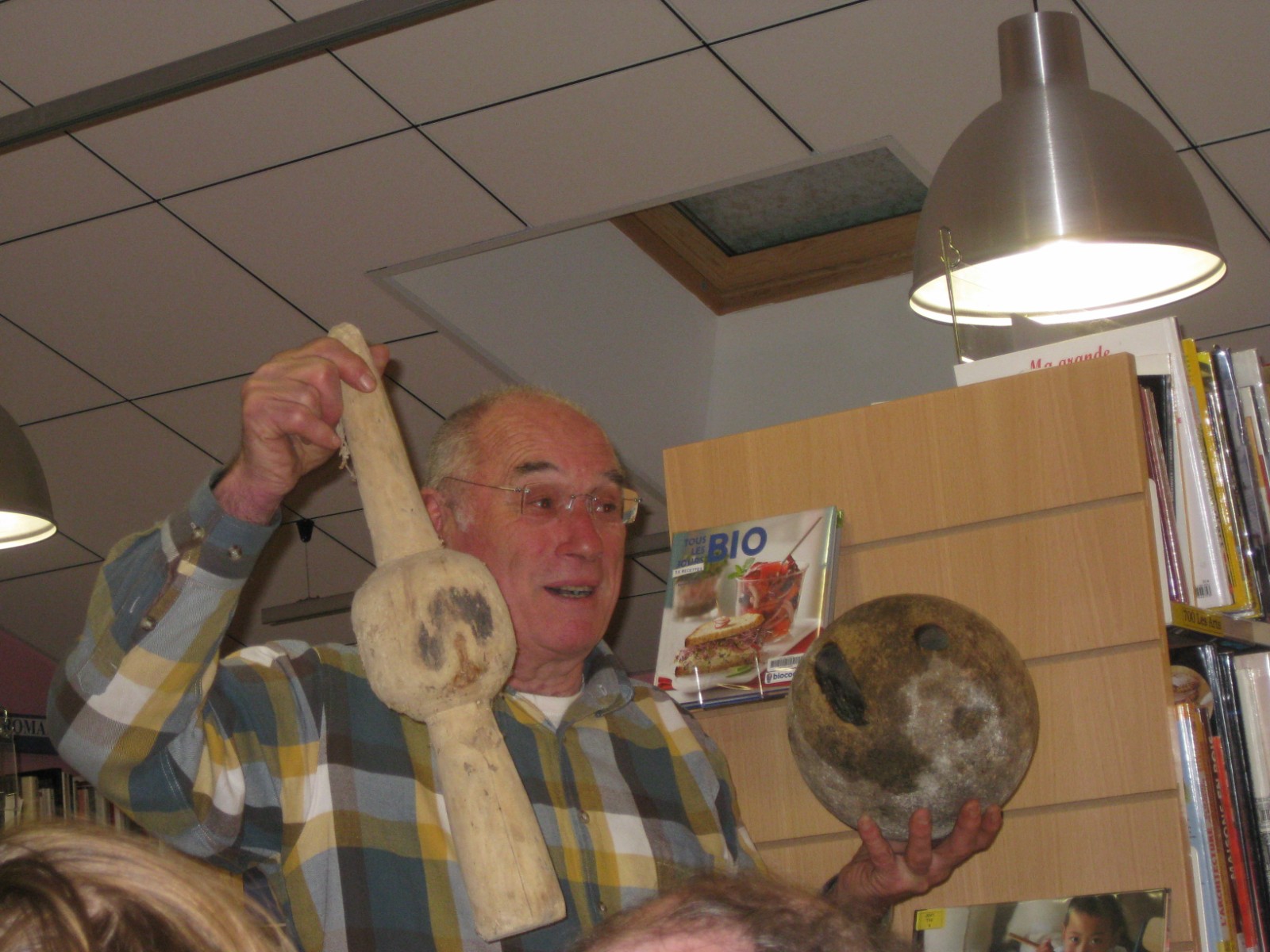
But it wasn’t all hard labour. Anyone who’s ever been to a bowling alley would recognize the bowls and skittles he showed us (made from wood, naturally). They were a big feature of life round Biert in the Couserans, but inter-village tournaments were rare. They all played to different rules, which tended to make contests rather difficult. But it was over here, in nearby Le Sautel, that a game was bought to a sudden end at the end of the 19thcentury.
Wooden skittle and bowl. Confiscated from the church at le Sautel?
One Sunday, the women went obediently to Mass, and as usual, the men played with their bowls outside, getting argumentative and noisy as the morning wore on. Eventually, the priest in church could take no more. He stormed out through the church porch, confiscated the bowls, and hid them in the sacristy. Evidently completely unchastened, the men simply produced other bowls when it came to their next match.
Paul’s keen that we should regard these tools and artifacts as living objects, part of a traditional way of life extending back hundreds, sometimes thousands of years. He doesn’t want them consigned to the cemetery of history. If you live round here in some old-style village or town house, you’re almost certain to find quite of few of the things he talked about in your outhouse or attic. Perhaps I should have another look.
Wooden fork and spoon. A good strong shape. The short handles ensure a long and useful life.
I’ve had a professional life working in Public Service – employers included the Probation Service and local authorities. So there’s nothing you can tell me about politically correct, right-on in-service training. Some of it was good – very good – some of it was bad, and some was even horrid, but over the years, there was plenty of it.
Well, I retired. I came to France, and put that part of my life behind me. I assumed. Wrongly. I’ve written before about Découverte Terres Lointaines, and now I’m a co-President. So I thought I should join the other co-president, Sylvia, and do my bit by attending a training evening in Foix for people involved in working with volunteers.
Billed erroneously as a ‘Round Table’ it turned out to be a series of presentations to more then 100 of us packed into a hot room too small to accommodate us. Sample subject: ‘ Financial relationships between voluntary organisations and statutory bodies’. Between the heat, the poor sound system and the generally ungripping nature of the subject matter, and stuck in the back row unable to see much, I soon lost interest, and fell to musing instead about how I’ve perceived the differences between volunteering in France and in England.
Back in the UK, most towns of any consequence have a Council for Voluntary Organisations which is an umbrella organisation offering all kinds of support to huge numbers of charitable organisations: advice, support for those with life changing conditions and diseases or other difficulties, concerned with trees, animals, people, volunteering indoors, outdoors, by day and by night. Would-be volunteers are offered help in matching their skills and enthusiasms with organisations who would welcome their time and effort, whether they want to roll their sleeves up and get stuck in, lend a listening ear, or take further training to enhance their skills for the voluntary sector.
Here in this part of France – and I understand things are very different in the north – there seem to be few opportunities for the would-be volunteer outside sporting and similar physical pursuits for young people. ‘Secours Populaire’, ‘Secours Catholique’ , ‘Emmaus’, Croix Rouge and ‘Restos du Coeur’ all offer much-needed practical help to the very poor and those at the margins of society: but despite my best efforts, I’ve not found other volunteering opportunities. This is in part because there is a strong belief that the state should provide those essential back-up services which the UK largely relies on the voluntary sector for. There’s a strong belief too that if you offer those services, you should expect to be paid. There’s a lot in this of course.
But my experience of the voluntary sector in England is that it’s no longer about Lord and Lady Bountiful doing their bit for those less fortunate than themselves, if it ever was. It’s a two-way street in which the volunteer receives as well as gives: fellowship, new skills, new confidence, a sense of worth, even a chance to polish the CV. Judging by the scrum at the meeting in Foix last night, perhaps this is happening in France too.
We’re back in France, to rather strange mid-January scenes. Our local skiers’ playground at Mont d’Olmes appears to have only a dusting of snow, though it claims to have 5 pistes open. Our garden’s full of marigolds flowering alongside the snowdrops, and on a walk yesterday afternoon, dressed in light pullovers, we heard birds singing ceaselessly, apparently to welcome the spring as they busily seemed to be putting winter behind them.
And so it was in England too. We rarely wrapped up warmly, and enjoyed being out and about in the balmy conditions.
Best of all was our trip to the part of the country that includes parts of South Gloucestershire and Witshire and Somerset, to stay with my daughter-in-law’s family. They took a dim view of our lack of knowledge of their end of the country, and set about putting things right.
Everyone knows Bath as a Roman stronghold and as a wonderfully intact 18th century city much visited by Jane Austen. No wonder it’s an UNESCO World Heritage site. We had to be content with a taster session. And we began with a stroll across Pulteney Bridge, which has shops on it, like Florence’s Ponte Vecchio, and along the Avon to enjoy the views of the Abbey and Parade Gardens.
Bath Abbey’s an ancient church, but what we see today- a light graceful building soaring upwards to spectacular stone fan vaulting – is largely the work of the Victorian Gilbert Scott. Every wall is covered with memorials: so many people came to Bath to ‘take the waters’ and then upped and died. Plumbers, admirals, sugar plantation owners, soldiers – they’re all here.
Time for a coffee break. Where else but the 18th century Pump Room, where we decided a Bath Bun was a good idea, a sulphurous glass of spa water a very bad one?
We can’t recommend the Roman Baths Museum highly enough. After spending several hours there, we feel as if we’ve had a real taste of the life of a Roman citizen living, working, playing and praying in Bath during that period. The baths themselves have been very sensitively and imaginatively interpreted. If near Bath, just go!
After that, a quick stroll round the 18th century. The graceful symmetry of streets like the Royal Crescent is so impressive: just don’t look round the back, you’re not meant to.
Next day, we were tourists too. England at its most picturesque. Cotswold villages with solid stone-walled, stone tiled cottages.
Back in the medieval period and beyond, Castle Combe used to be a centre for the local woollen industry. Now, more often than not, it’s a film set, the scene of many a period drama on TV or at the cinema. And Lacock is so picture-postcard perfect that almost the whole village is owned by the National Trust. Great for a relaxing visit. I wonder what it’s like to live there.
We’d mooched happily round these two villages for some while. But after all that we needed to step out and stretch our legs. Kennet and Avon Canal anybody? Brian and Sue chose for our walk the Caen Hill Locks, a flight of 16 locks packed tight together, one after the other, with ponds at the side to store the water needed to operate the locks. We thought our walk up the canal banks used quite enough calories. What if we’d been taking a canal boat up the entire flight and beyond, through lock-gate after lock-gate? This 100 mile canal has more than 100 of them in total…..
A wonderful couple of days then, steeped in history and splendid views and countryside. We’ll be back – if Brian and Sue’ll have us.
One of the daily pleasures of our Life in Laroque is watching the birds of prey, particularly buzzards and red kites, wheeling above our heads, catching the eddying breezes.
One of our pleasures here back in Yorkshire, is doing exactly that, now that red kites have become almost common round and about Harrogate.
It was back in 1999 that red kites were first re-introduced to Yorkshire, to Harewood. Back then it was a rare treat to spot one, a newsworthy event to share with all your friends. Gradually they became more common, though no less exciting. Then last time we were here, we spotted one lazily coasting over the Yorkshire Showground, only a very few miles from Harewood as the kite flies. Later that day, there were others, this time over the relatively urban Knaresborough Road estate. This visit, we’ve spotted them for the first time in the part of north Harrogate where we used to live.
And then today, after lunch catching up with a good friend – thank you Cath – I took myself off for a walk. Soaring above me, then plunging down, so very close that I could clearly see his breast plumage, was a red kite, nearer to me than one has ever been before. It made my day.
We’ve been staying with Daughter Number One and family. It’s a treat for us to have evenings in with the twins, and so one evening we sent Ellie and Phil off for a rare Night Out. Then we bathed the boys, wallowed in a few bed-time stories together, kissed them goodnight. And went downstairs to watch TV.
Twenty minutes later, we were still battling with remote controls, switches, buttons and flashing lights. Incomprehensible messages flashed up on screen, none of them to do with that evening’s viewing. We gave up and read the paper.
‘Oooh, I’m sorry’, said Ellie when we complained later. ‘I suppose it’s a bit complicated at first. You should have got Ben up. He’d have sorted it out for you.’
Back in France, we go out with our walking group most Sundays. ‘Most’, not ‘all’. Some are just too damn’ tough, but more often, it’s because the walk’s been cancelled. Rain stopped play. Unlike their English counterparts, no French hiker wants to hole up behind some convenient rock at midday to fuel up on a damp spam sandwich. No, lunchtime on a French walk is the opportunity for an extended picnic in some scenic spot, when someone will produce a pastis, someone else a home-made cake or chunks of chocolate, and the whole thing will be rounded off with sugar lumps soaked in some potent home made hooch. And you can’t do that when the weather’s poor.
We English are made of sterner stuff. As we discovered just after Christmas. Our Friends Hatti and Paul arrange a post-festivity walk for about 20 of their friends each year. It blows away the cobwebs and gets rid of some of those unwanted calories we all seem to absorb throughout December.
On the day, it was intermittently raining. The wind was gusting and the sky was solidly grey. Did anyone cancel? Certainly not! Instead we were all welcomed at our rendez-vous point with hot coffee or a warming nip of home made sloe gin, and route -maps to send us on our way.
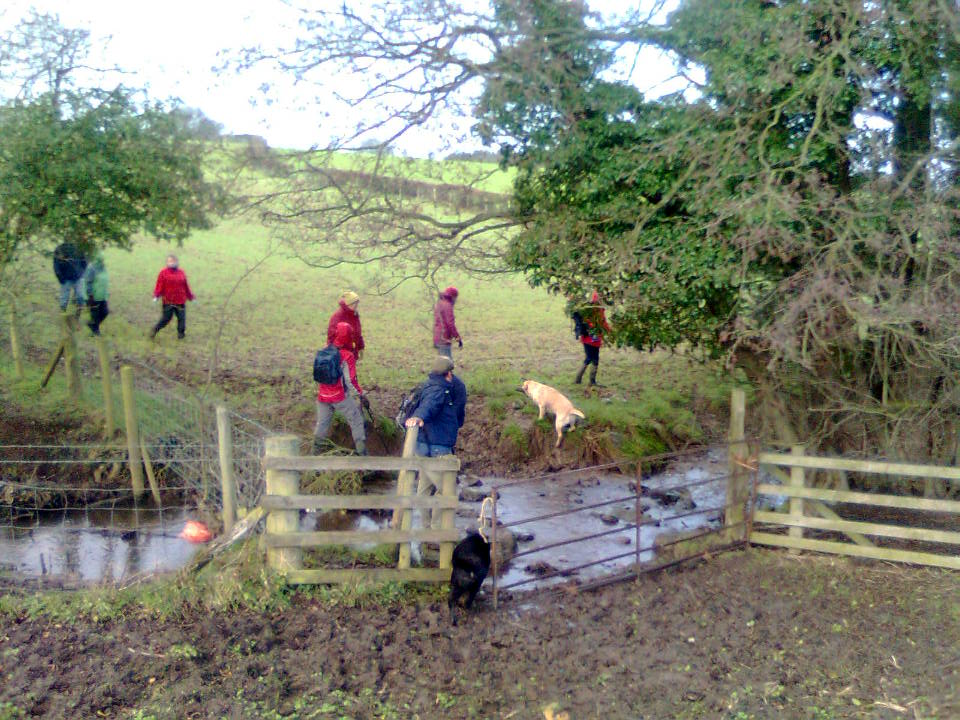
Fording our first stream
The walk itself was under 5 miles long. But we got our work-out alright. Leg muscles strained to heave limbs out of gloopy mud, or to leap from stepping stone to stepping stone across overrflowing streams. Vocal chords often gave up the unequal struggle as wind whipped away shouted attempts at conversation. Our feet became heavier and heavier with the weight of solid clay sticking to our boots .
But it was fine, dear French reader. We had fun. Along the route, we spotted a rainbow which accompanied our path for much of the journey. Welcome pauses in the wind and rain gave us the chance to appreciate the scenery: the skeletal trees set against the grey-green hillsides: the stone farm cottages and the folly at Azerley and the rushing tumbling streams which punctuated our journey.
Arriving at Kirkby Malzeard
No soggy spam sandwiches for us. At journey’s end, we were snug and warm in the Queen’s Head at Kirby Malzeard. Paul and Hatti had organised sandwiches and chips to be be ready and waiting as we arrived. And that, surely, is the perfect walk. A good work-out in good company in lovely countryside, followed by the chance to relax and laugh with friends and food, knowing that nothing more taxing than a hot bath and cosy evening indoors remains to conclude a well-spent day.




 From Pyrenees to Pennines
You must be logged in to post a comment.