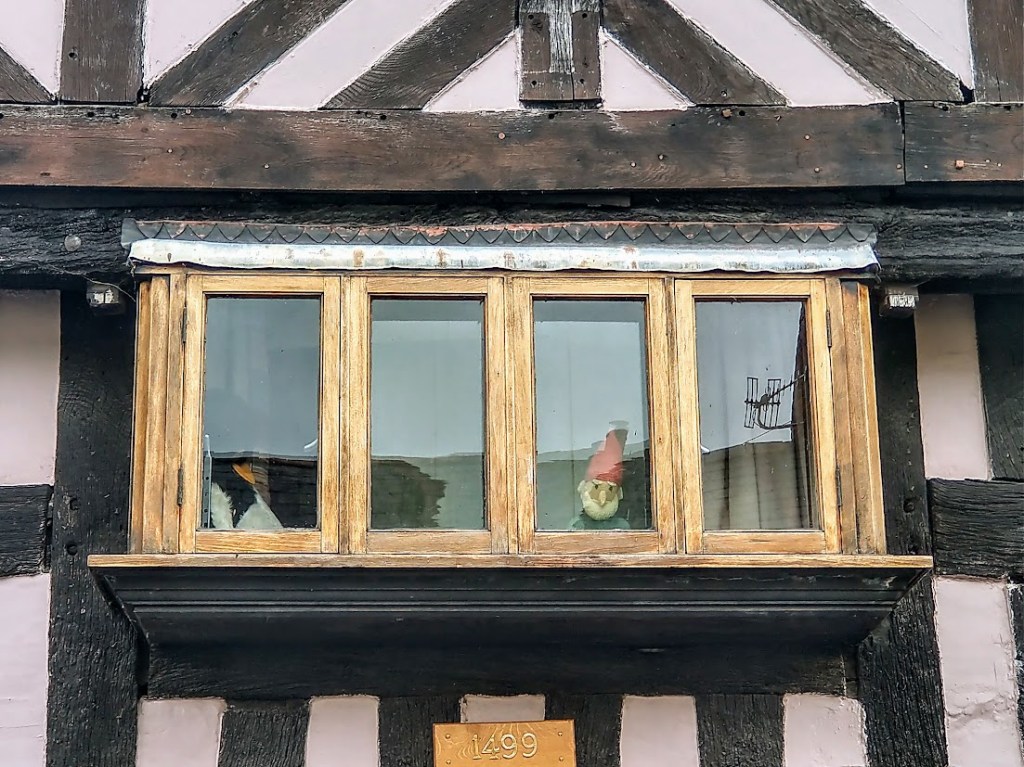
Someone has called this place home, since 1499. Current tenants? Apparently a garden gnome and a penguin. Spotted last summer in Bishop’s Castle.
For Debbie’s One Word Sunday: Home
Someone has called this place home, since 1499. Current tenants? Apparently a garden gnome and a penguin. Spotted last summer in Bishop’s Castle.
For Debbie’s One Word Sunday: Home
This year Bradford is the UK’s City of Culture. This might seem unlikely. Once a town prosperous thanks to the textile industry which thrived there in the 19th and early 20th century, its vitality decreased thanks to the collapse of this industry during the mid 20th century, not long after the time that thousands of Pakistanis and Indians came to work in those textile mills. Now it’s once again finding its feet, and is a lively multi-cultural city. We don’t visit as often as we should.
But in late August, we did. We had to see the show that everyone was talking about. In Edith Nesbit’s 1905 book The Railway Children, often since adapted for stage and screen, siblings Roberta, Peter and Phyllis are forced to move with their mother to a country cottage after their father is unjustly imprisoned for espionage. Living by a railway, they become fascinated with the trains, stop a runaway train to save lives by waving flags, and befriend their mother’s wealthy, kind neighbour, an ‘Old Gentleman’, who helps their family and ultimately finds their father. Conveniently, in this Bradford production, the mother is an Indian woman whom the children’s father met whilst working there. This allowed the children to be played by British Indian actors, to celebrate the Indian aspect of Bradford’s heritage.
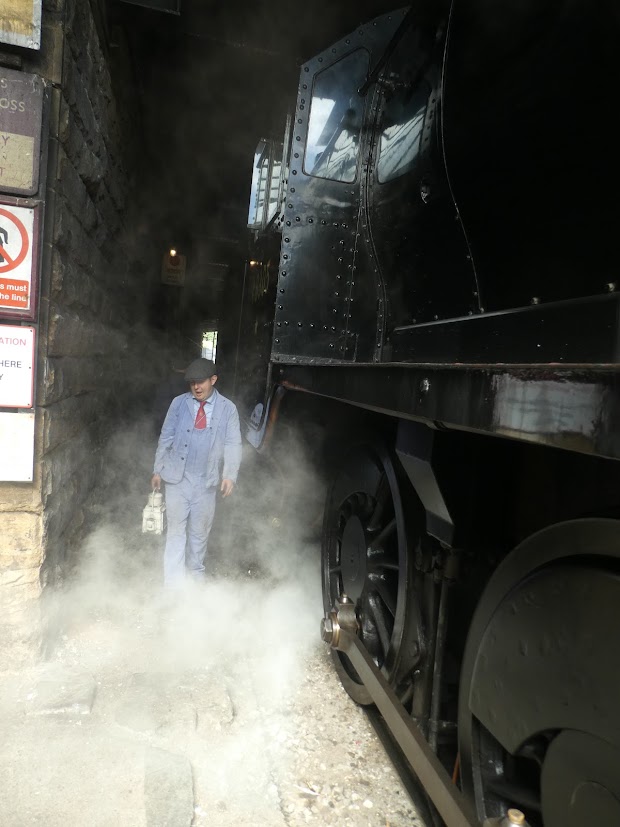
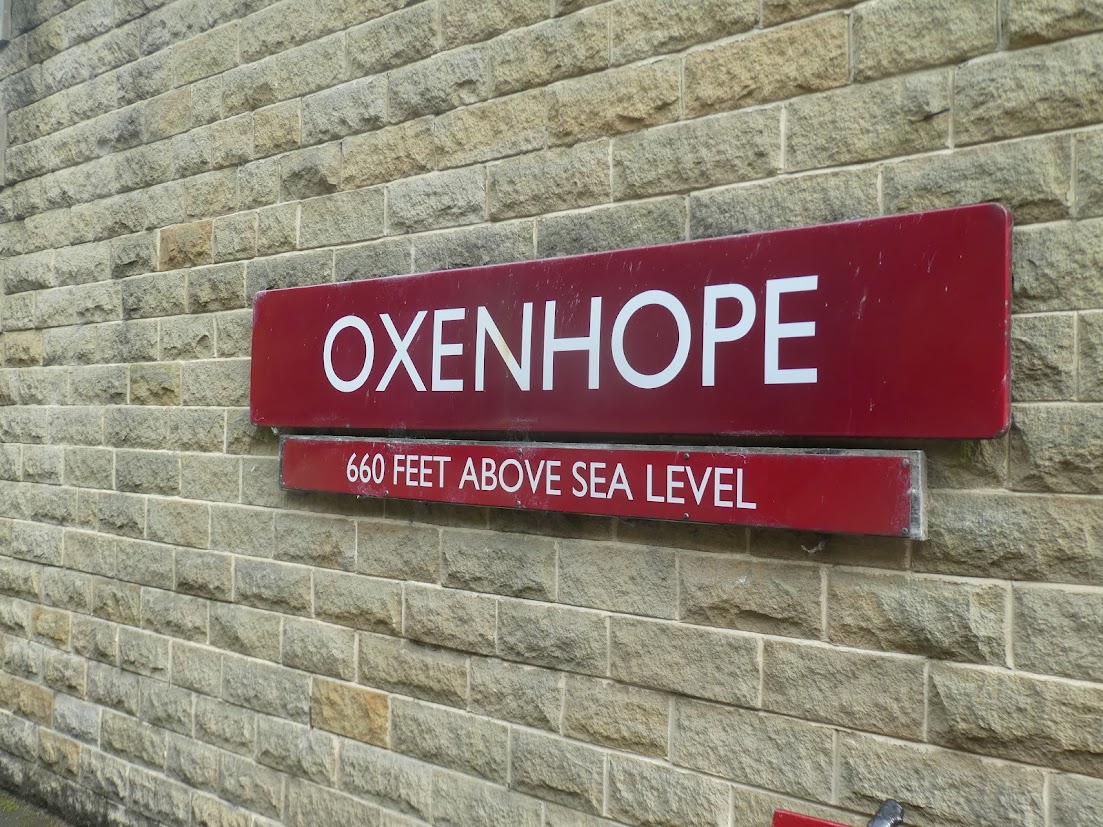
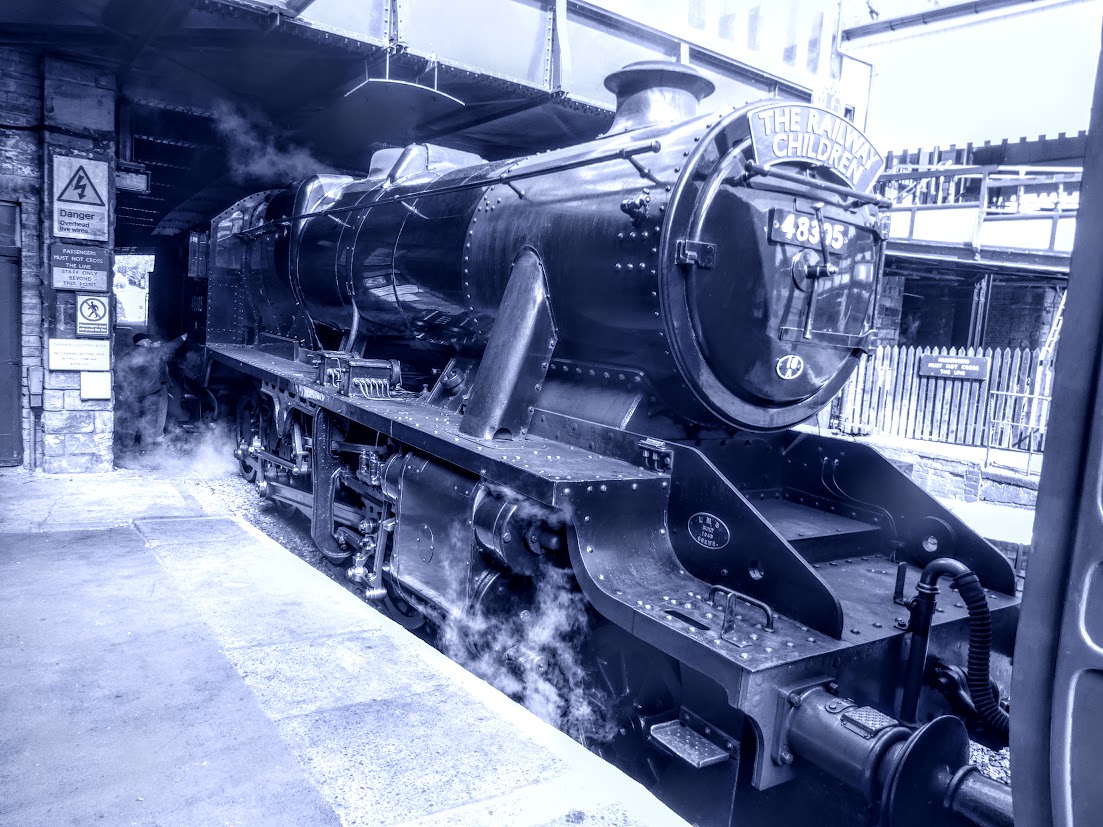
Well. Anyway. This wasn’t any old play. We had to report, several hours before the production began, to Keighley Station. Which is part of Bradford Borough. Why? Because we were to be transported by steam train to Oxenhope where the play would take place in a re-purposed engine shed.
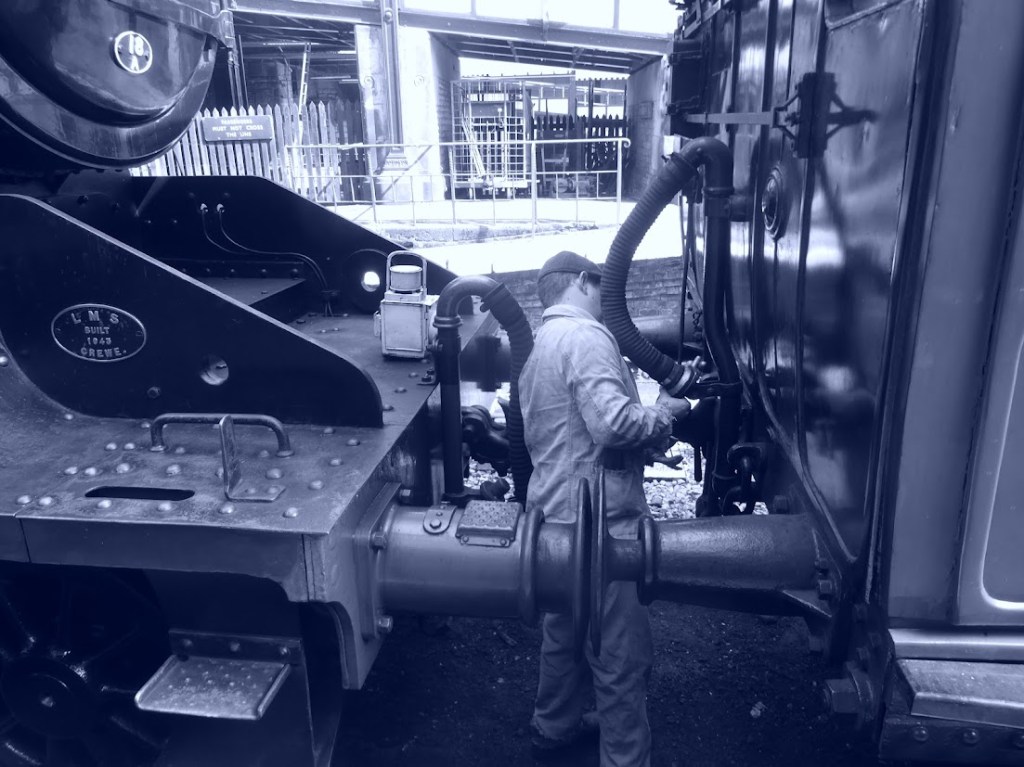
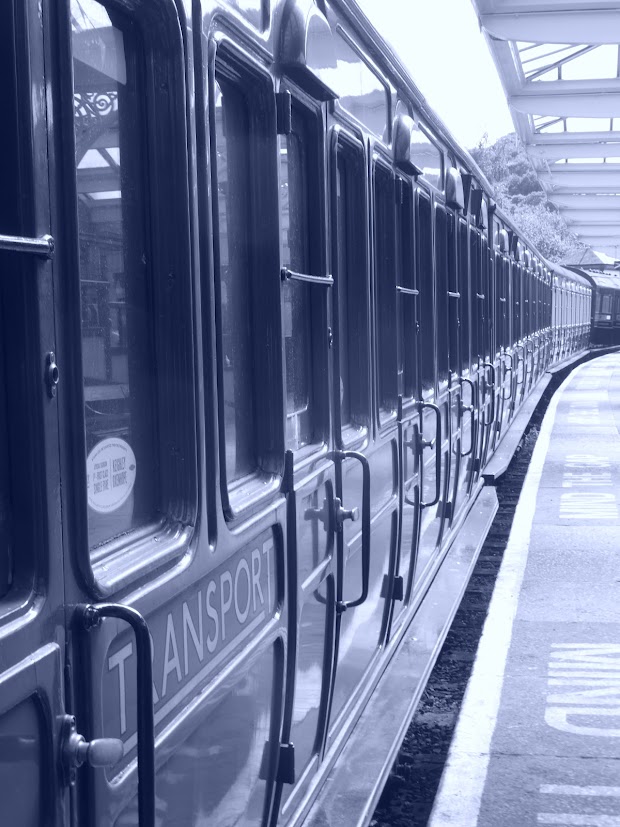
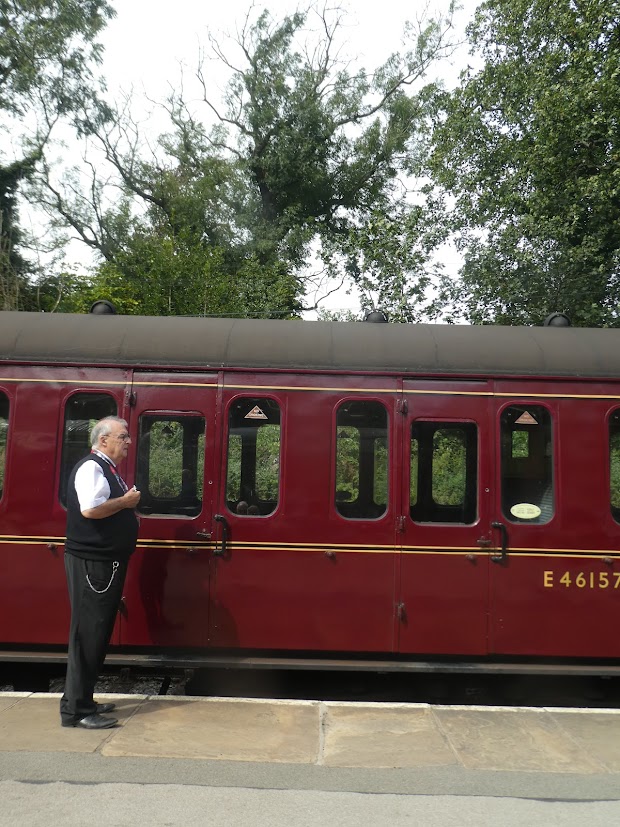
A long queue formed there and at the advertised time, we all filed forward to be packed into elderly – but spick and span – carriages and transported several miles to Oxenhope Station. We all relished the background chuffing sound, the loud, echoing sound of the steam whistle, the rhythmic clanking of the running gear and of course the distinctive mildly sooty smell, and enjoyed the instant camaraderie struck up amongst fellow passengers.
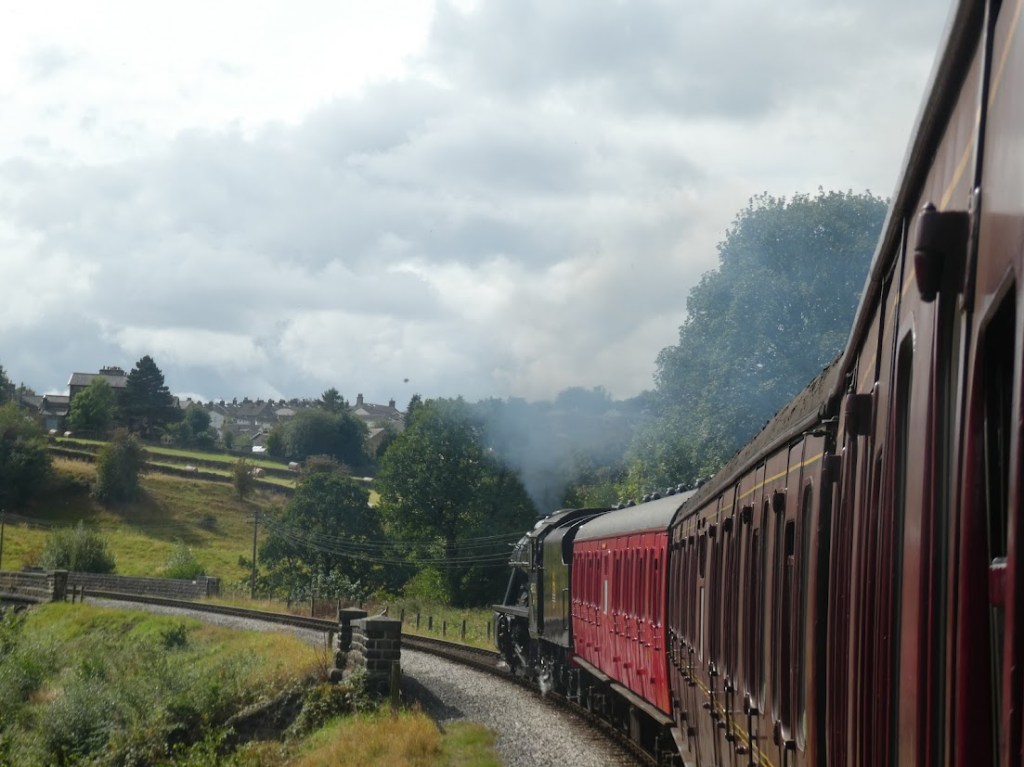
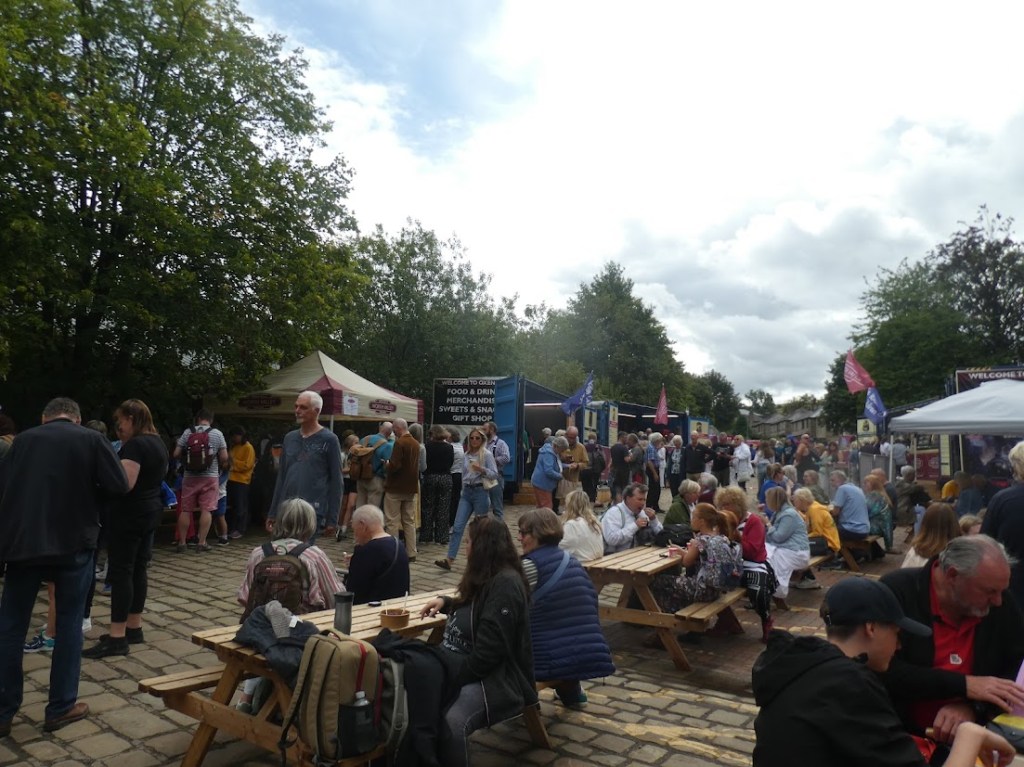
Then we arrived. Long before the play started. That was OK. We had a picnic. There was a cheery market full of food stalls and relevant souvenirs. It was sunny. Everyone was in holiday mood.
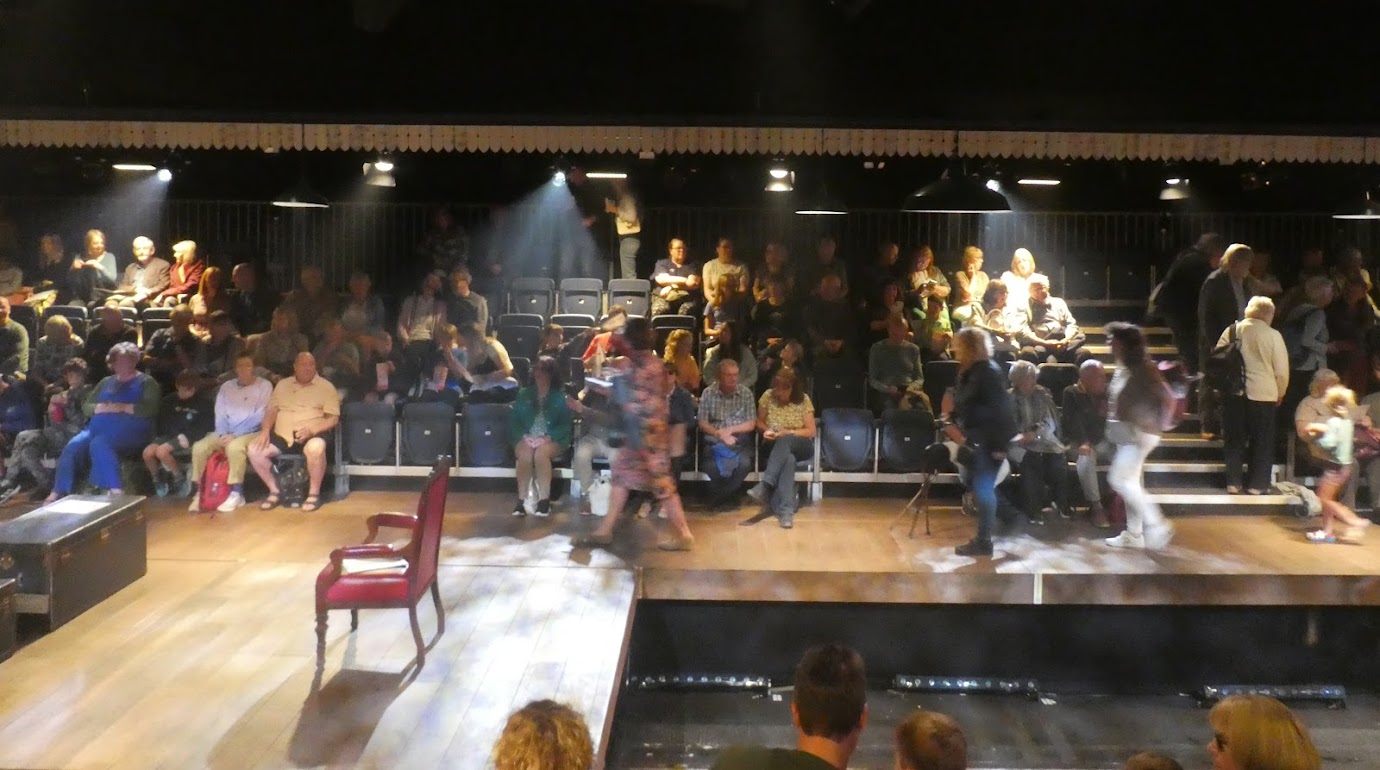
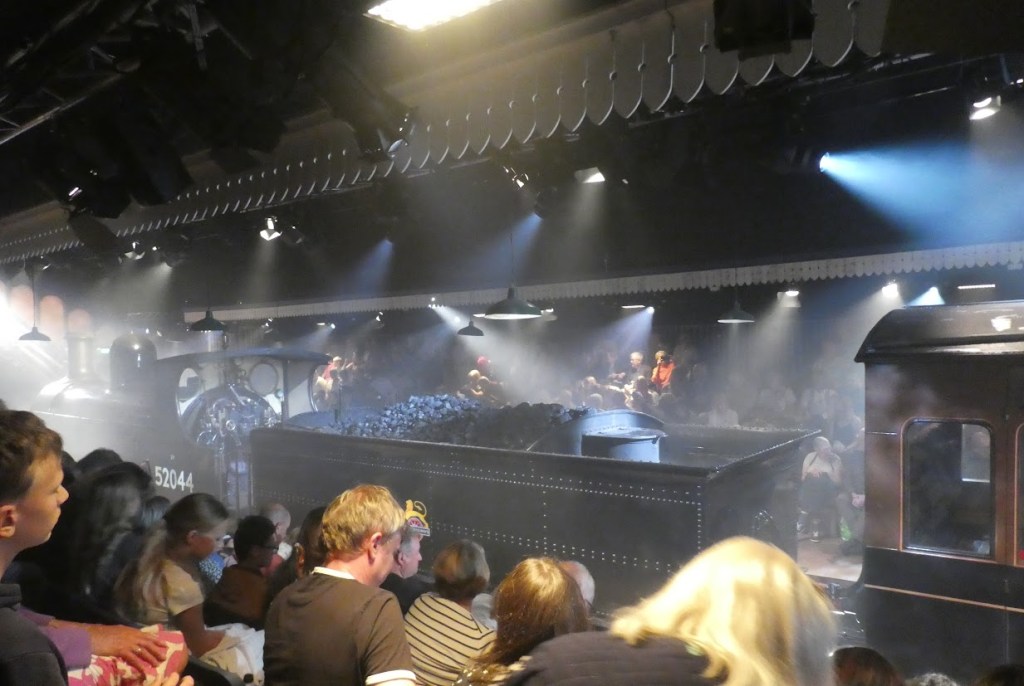
Finally though, it was time to file into the theatre. Or engine shed. Two large banks of seats rose up on either side of a railway track, above part of which was a stage: a moveable stage, as we would eventually find out. Once we were seated, the cast, all costumed up for the afternoon drifted in and mooched round among the audience, chatting and laughing . My images come from those moments, as photography was forbidden during the performance.
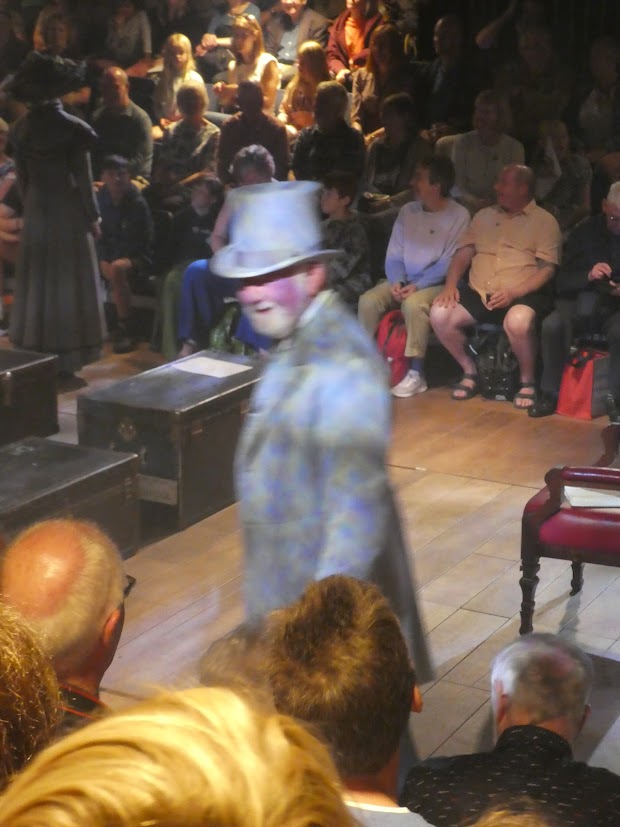
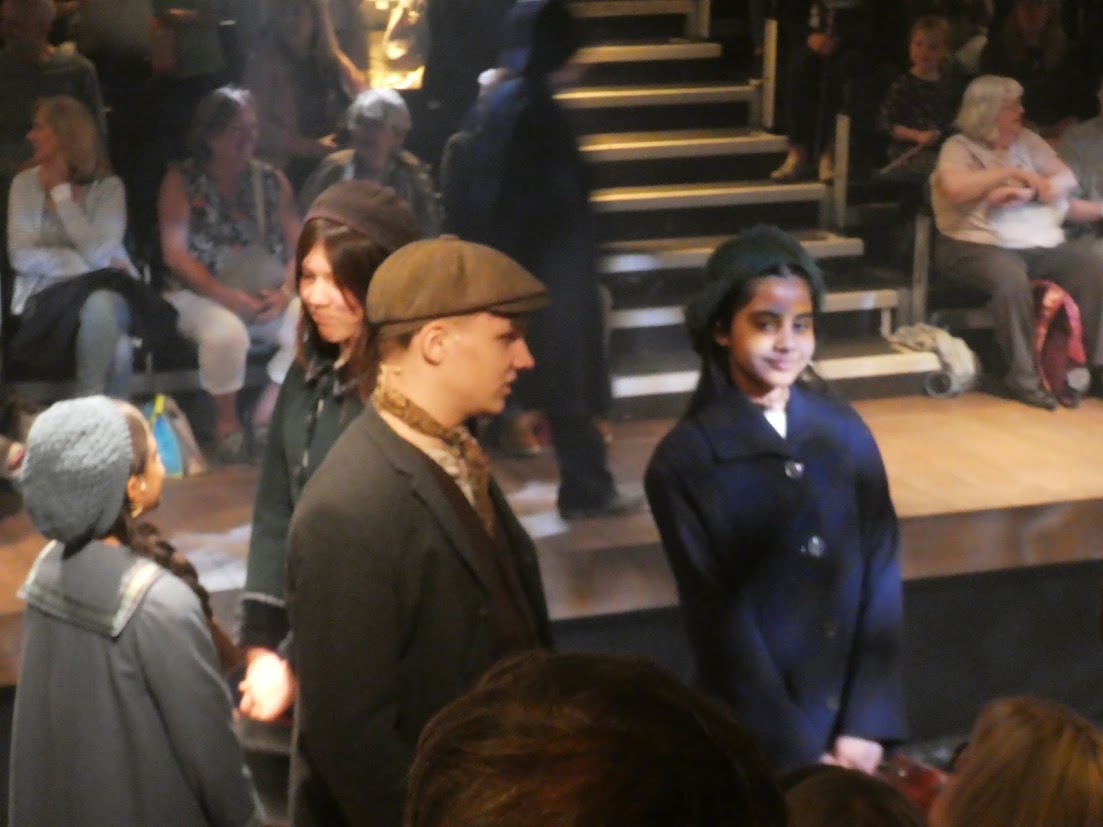
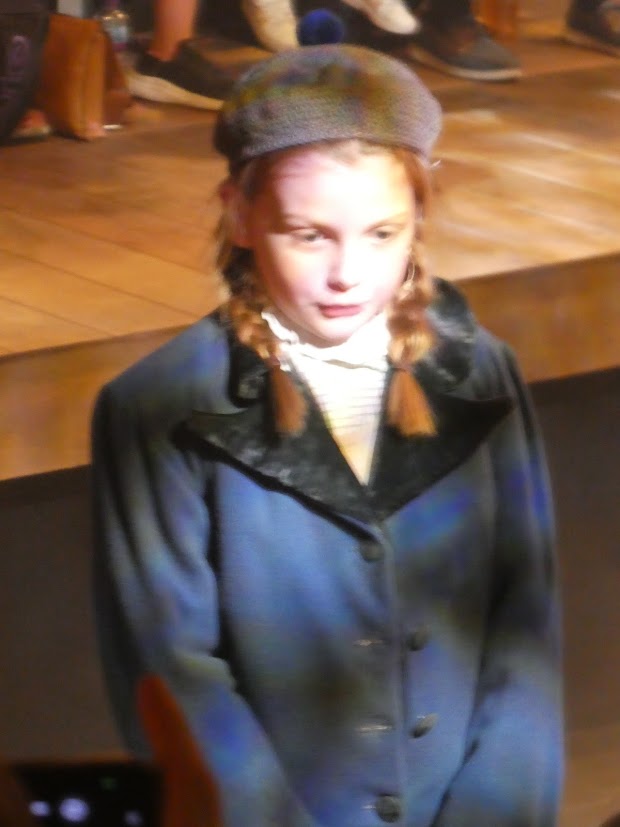
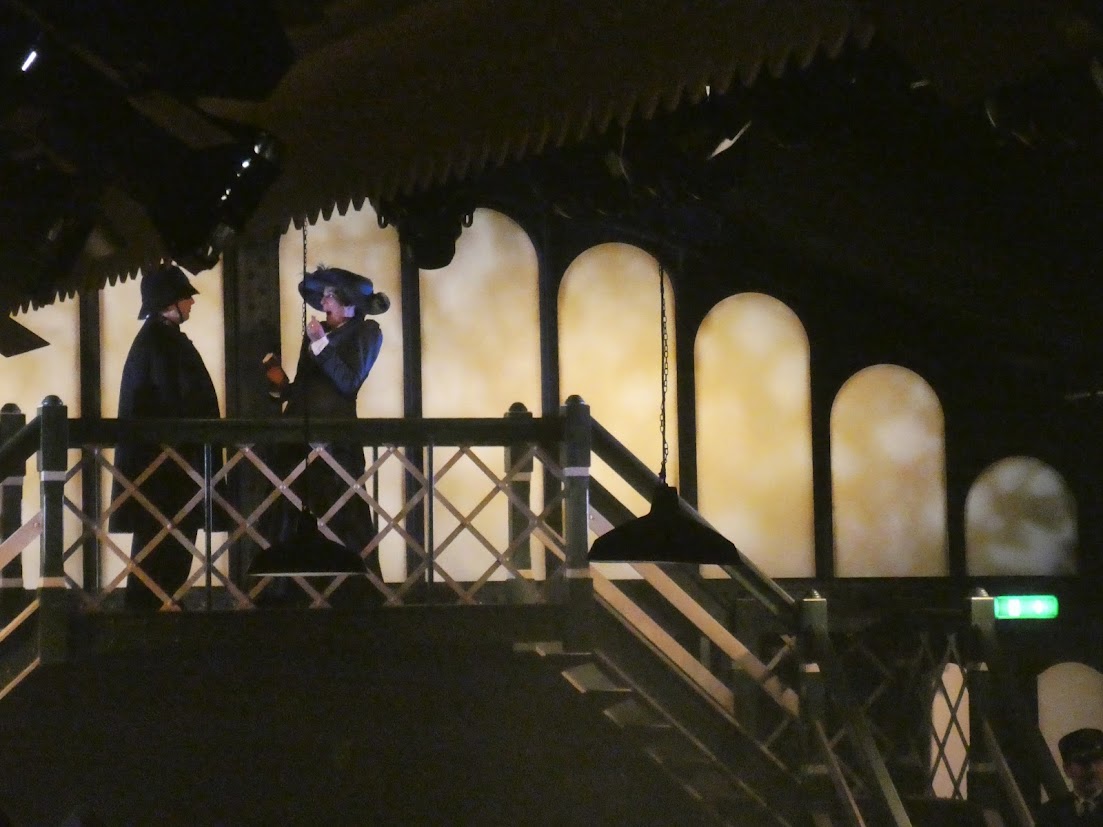
Which, when it came, entranced us. We entered into a world of family disappointment, moving downmarket, and adaptation to a new way of life. How those children grew to love the railway line that was their nearest neighbour! And how thrilled we were when the children noticed a runaway train advancing unexpectedly along the track – an actual train, surging into the auditorium before our very eyes. Waving flags and the girls’ red underskirts as a warning, the children brought the train to a halt. Just in time for the interval.
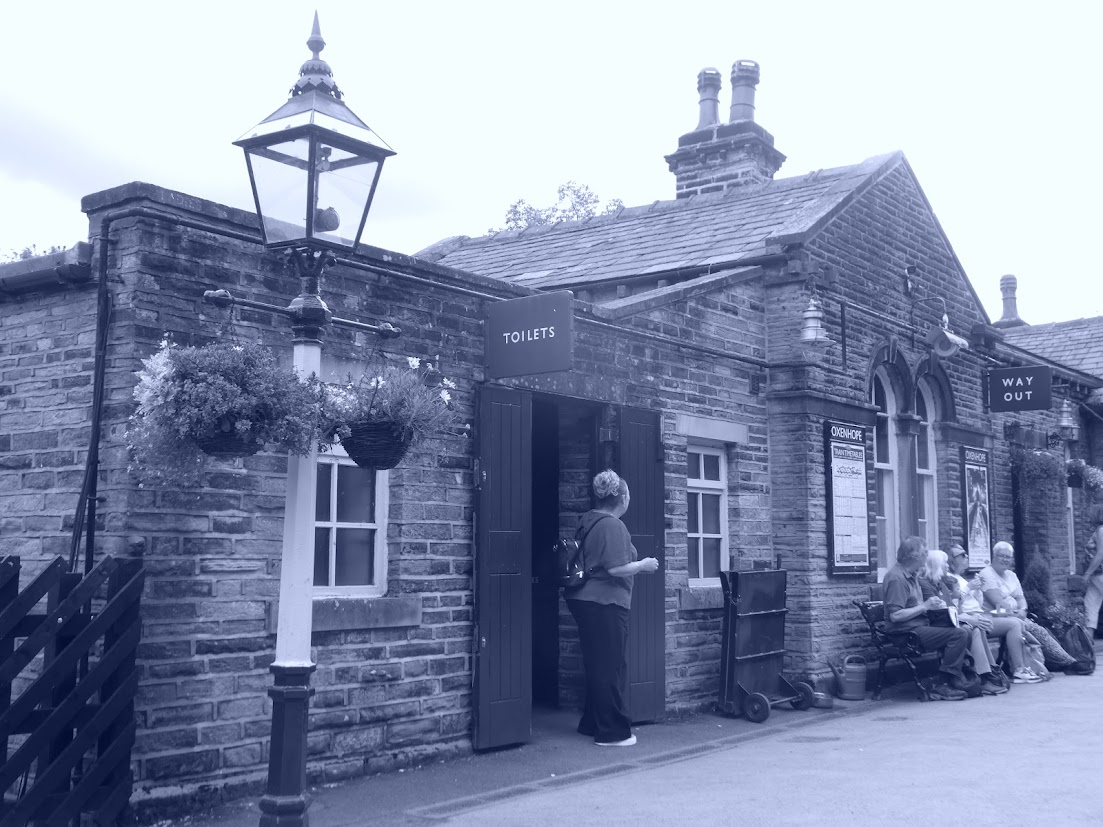
More happily mooching around in the market and on Oxenhope station before returning for the second half, which brought the story to its happy conclusion.
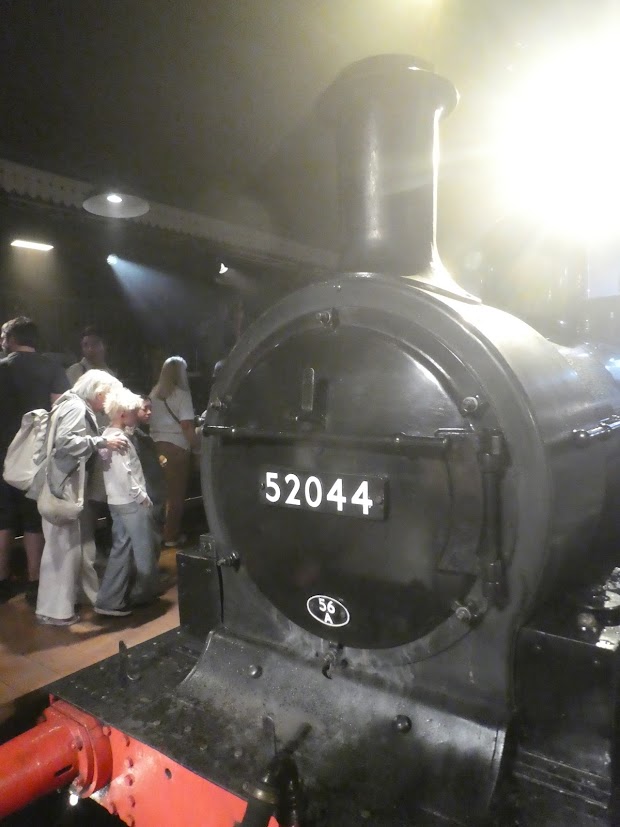
Then it was back onto the platform at Oxenhope where our train soon appeared to take us on board and return us to the station at Keighley. A very special afternoon.
I mentioned the other day our habit of having with us at all times an au cas où bag, foraging for the use of. At this time of year, this bag is a completely necessary accessory. Here’s my haul from last Thursday.

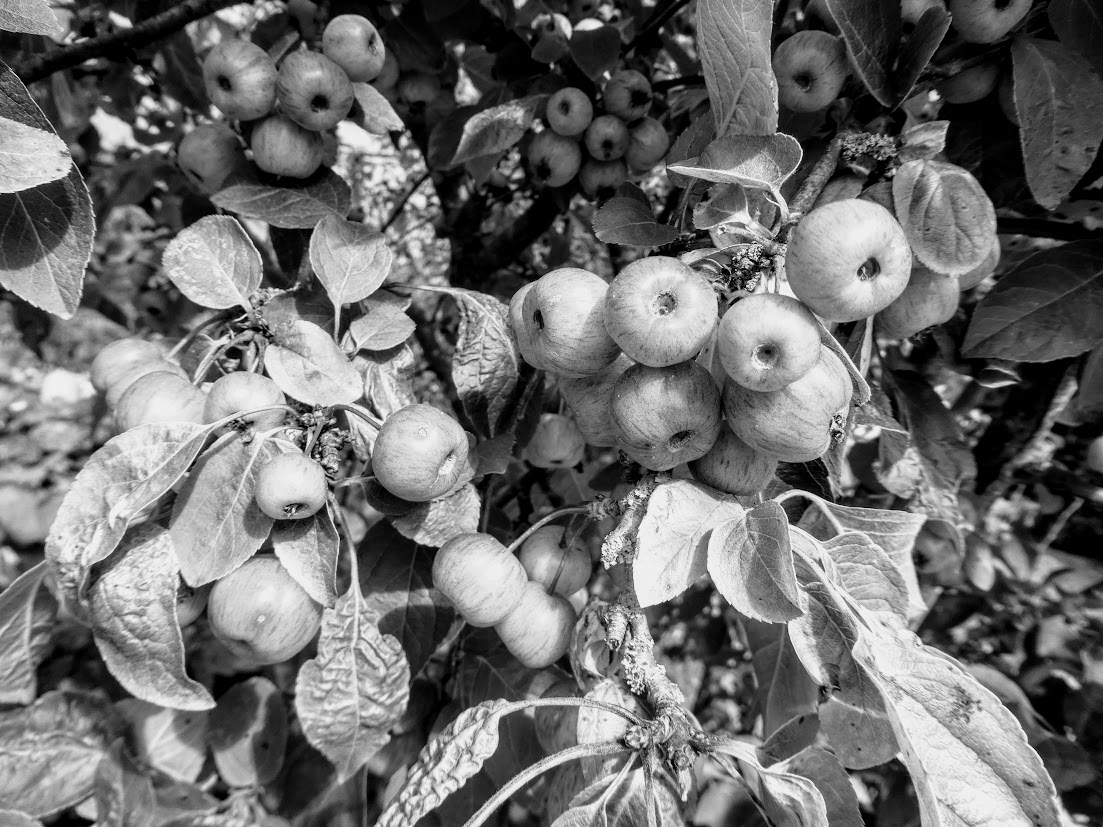
Here we are. Crab apples; cooking apples; windfall pears; red mirabelles. These have become crab apple and chilli jelly; cooked down with previously foraged then frozen blackberries; scrumped; mirabelle frangipane with a good number of them, then … not sure yet. We’ve made quite enough mirabelle jam, thank you.
This is the time of year for mushrooming, but we haven’t been lucky yet. Apart from the obvious field mushrooms (no pictures!) I’m only confident to look for football sized puffballs (which make, apart from other dishes, excellent steak substitutes) …
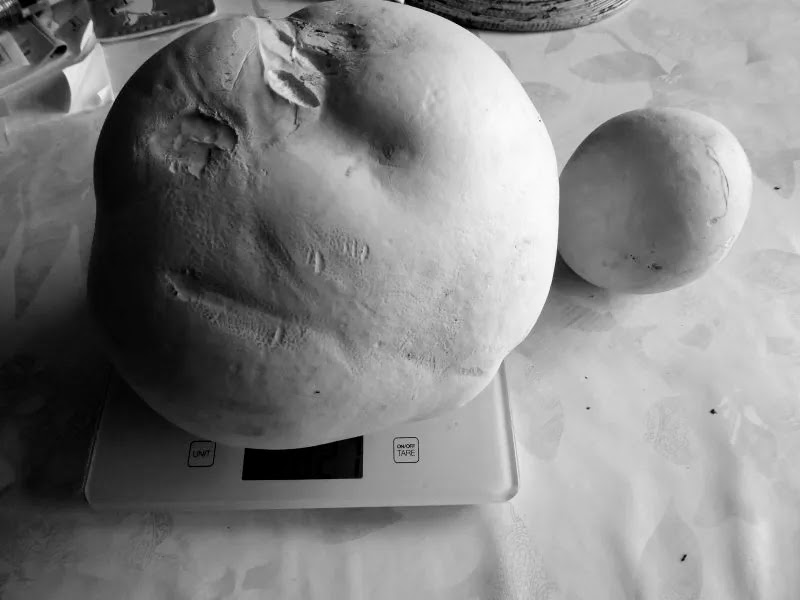
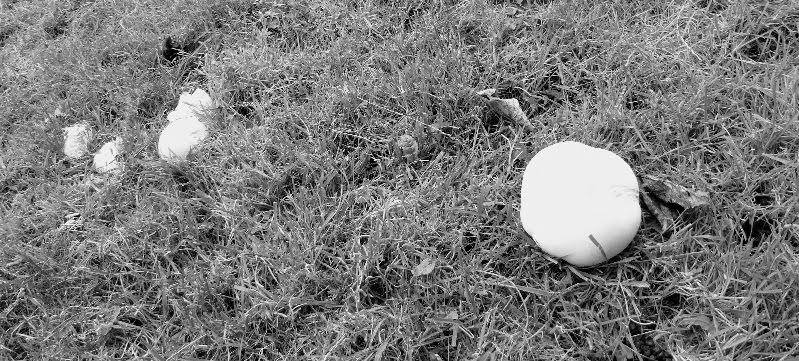
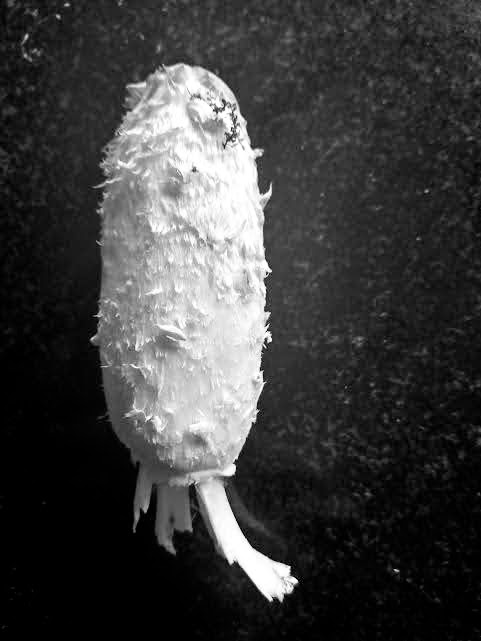
… and shaggy inkcaps, which need to come home quickly before they deliquesce into inky pools.
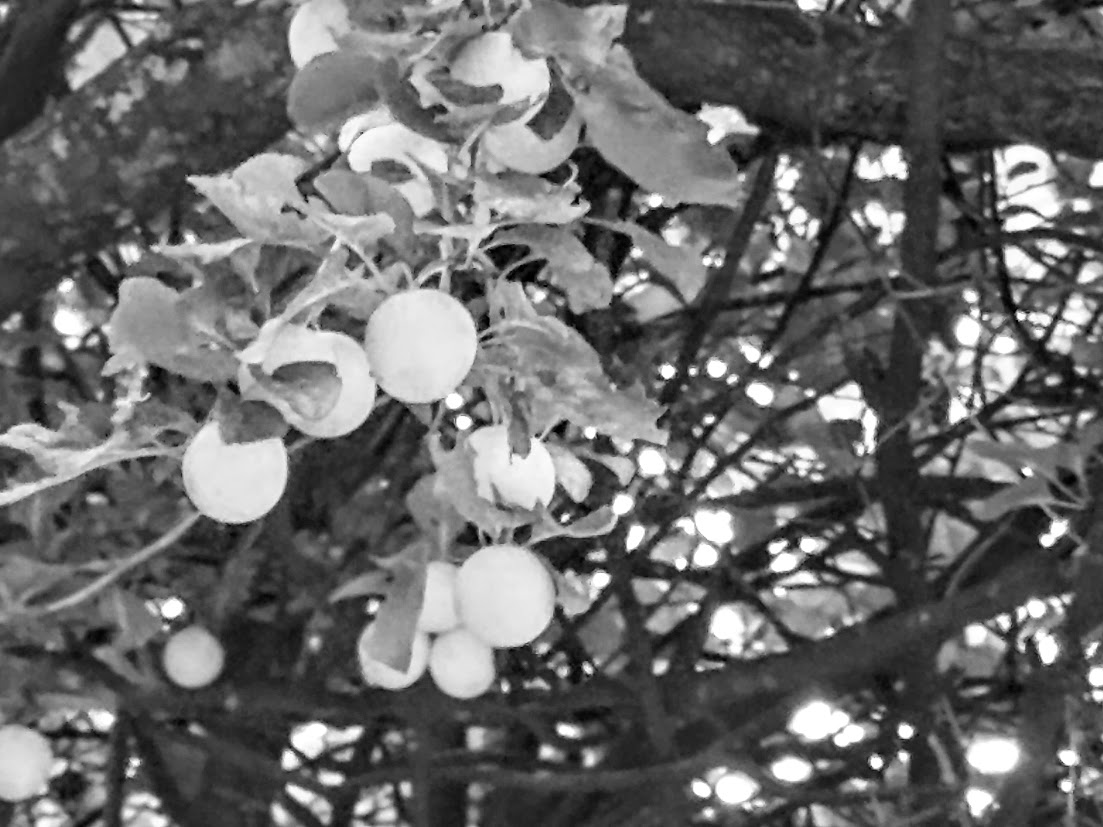
Here are some of the other regular finds: crab apples in the feature photo; mirabelles both yellow and red; blackberries; apples of all kinds.
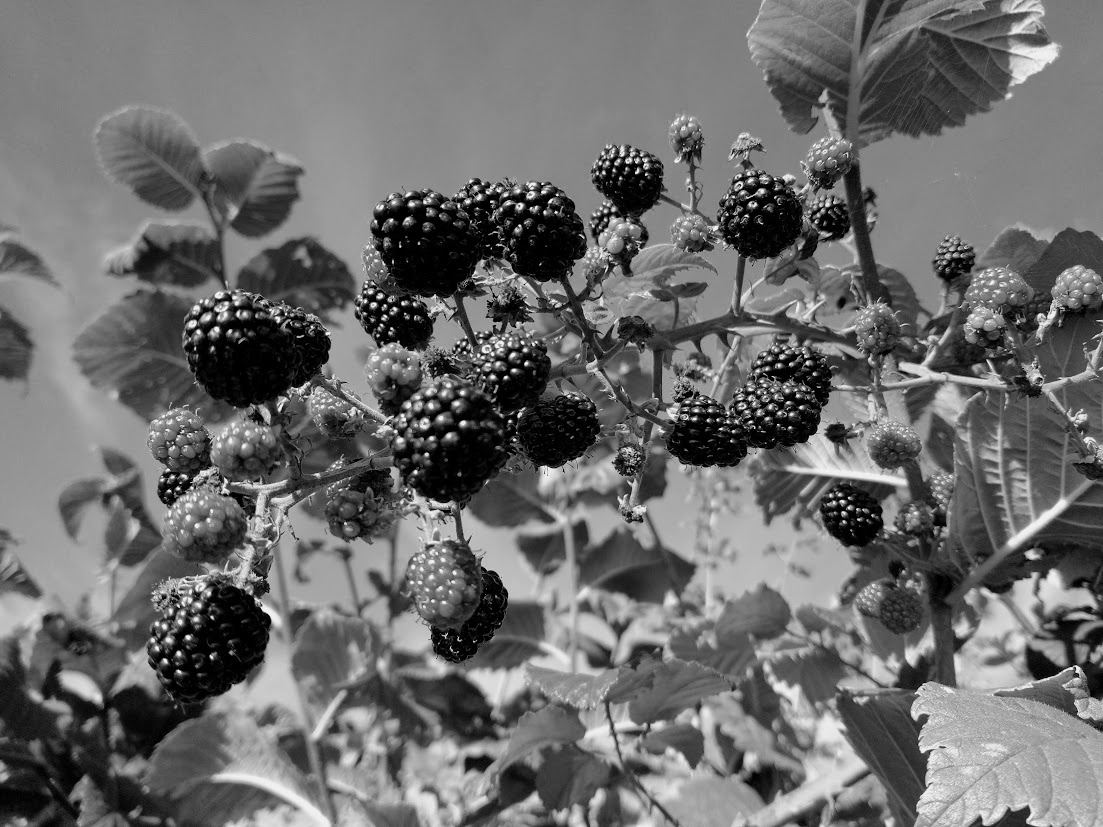
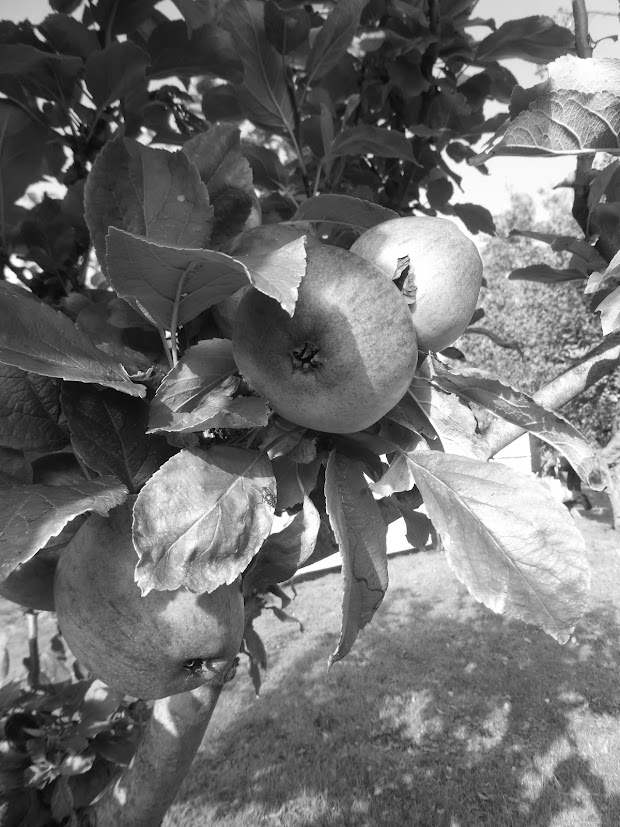
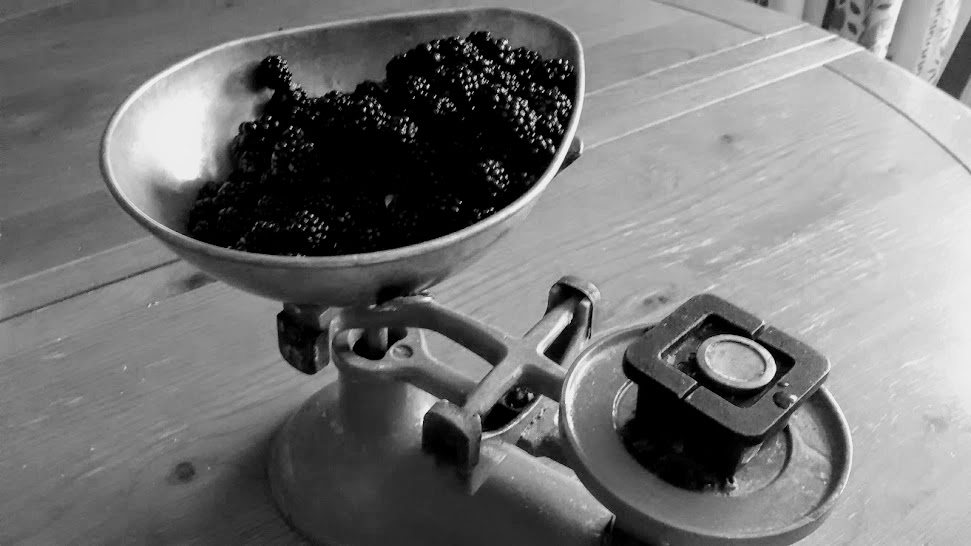
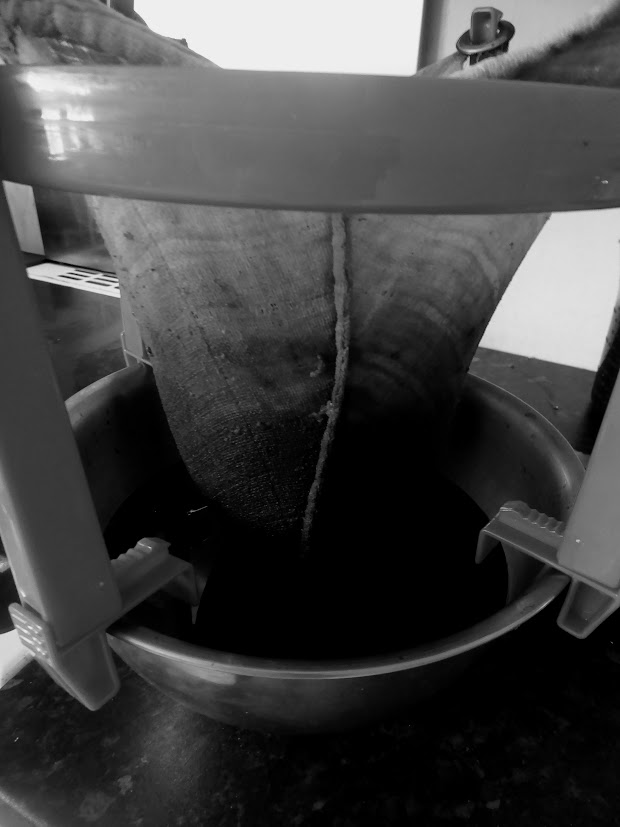
Here’s some of the kitchen activity: Weighing, then straining the juices from simmered-down fruits.
… and some of the results:
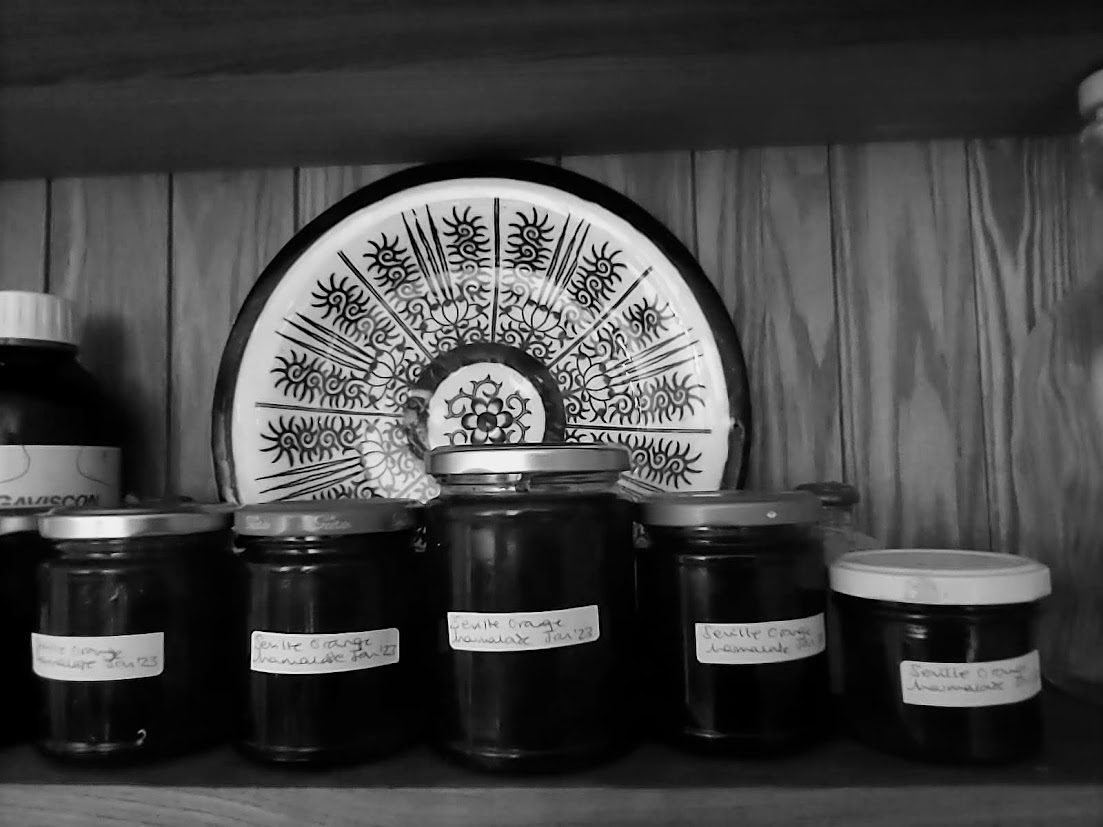
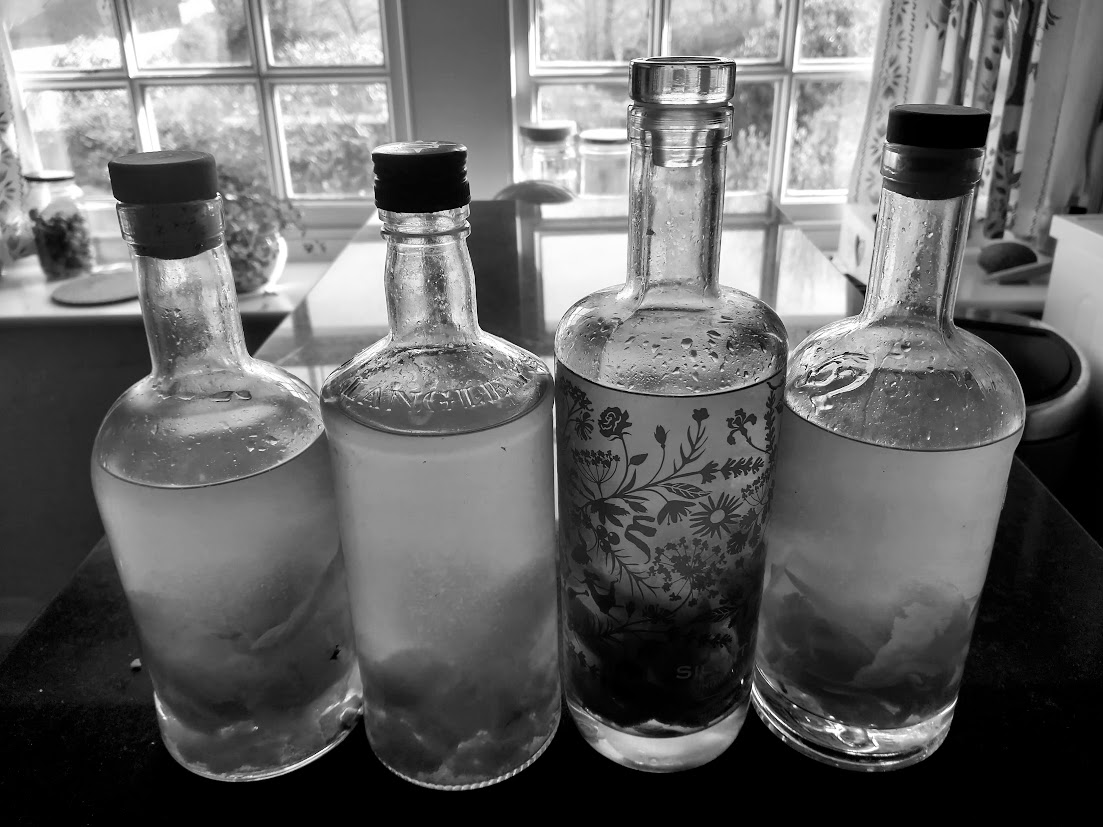
In this case, the only photo I had to hand was of jars of marmalade (I even forage Seville oranges when we’re in Spain in winter), and gin which I have made in Seville orange, mulberry, sloe, and mirabelle varieties at different times.
Foraging is some of the best fun to be had in autumn. Just don’t forget your au cas où bag.
For Leanne’s Monochrome Madness.
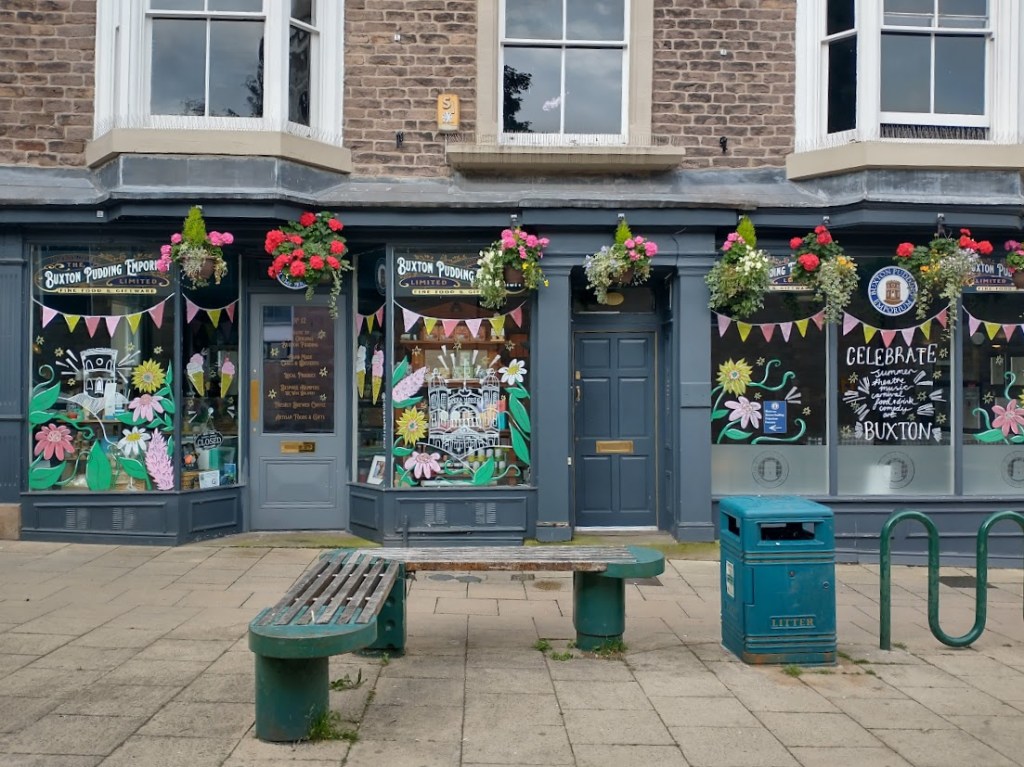
Or is it two benches? Either way, it/they could do with a lick of paint to keep up with the cheerful shop front behind.
And that, Jude, is me done with benches I think. Unless I spot anything interesting in the remaining months of the year. My archive is now a bench-free zone – apart from the ones I’ve shown you. But it’s been fun. Thank you.
For Jude’s Bench Challenge.
Saudade is a Portuguese word, introduced to us by Egidio, who proposes it for this week’s Lens-Artists Challenge. Here’s what it means:
... an emotional state of melancholic or profoundly nostalgic longing for a beloved yet absent someone or something. It is a recollection of feelings, experiences, places, or events, often elusive, that cause a sense of separation from the exciting, pleasant, or joyous sensations they once caused.
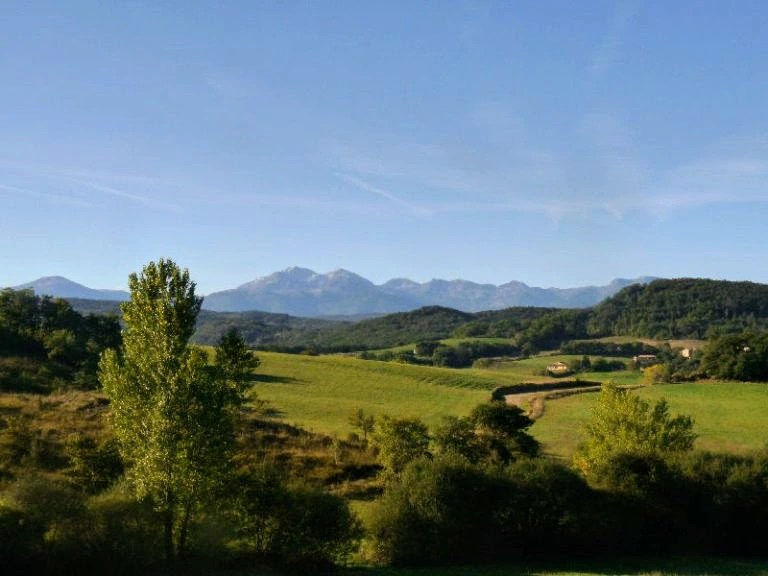
It’s what we both feel so very often about our years in southern France, now some ten years gone. Of course we remember the landscape – the foothills, the Pyrenees themselves, the seasons, the climate , the slower pace of life …
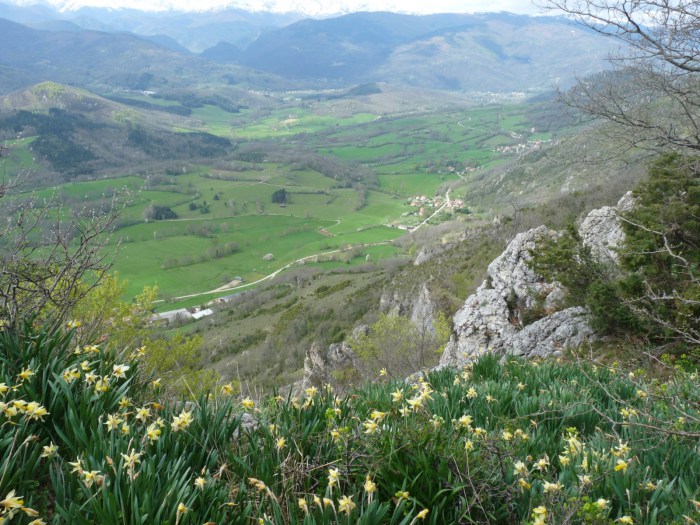

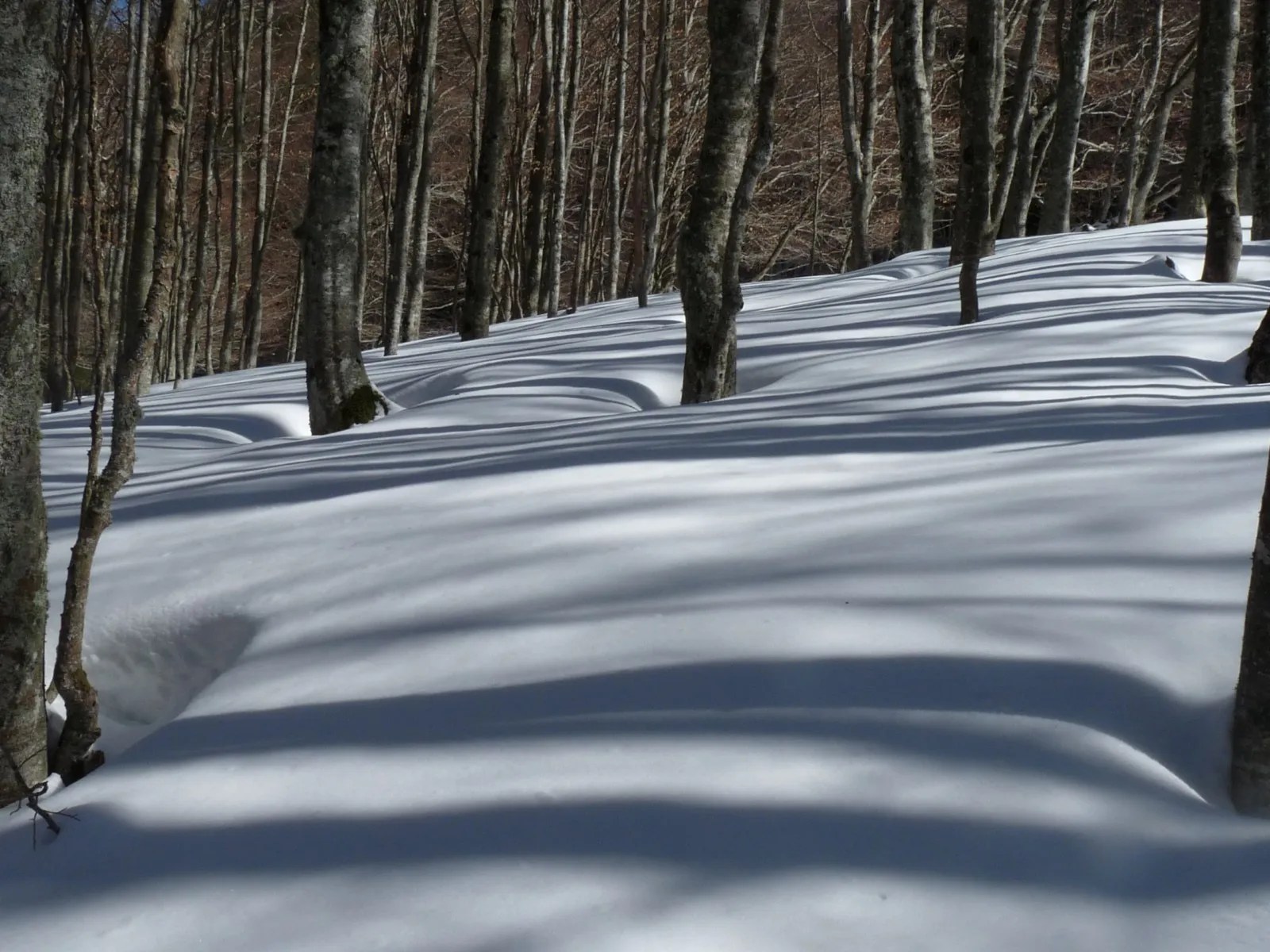
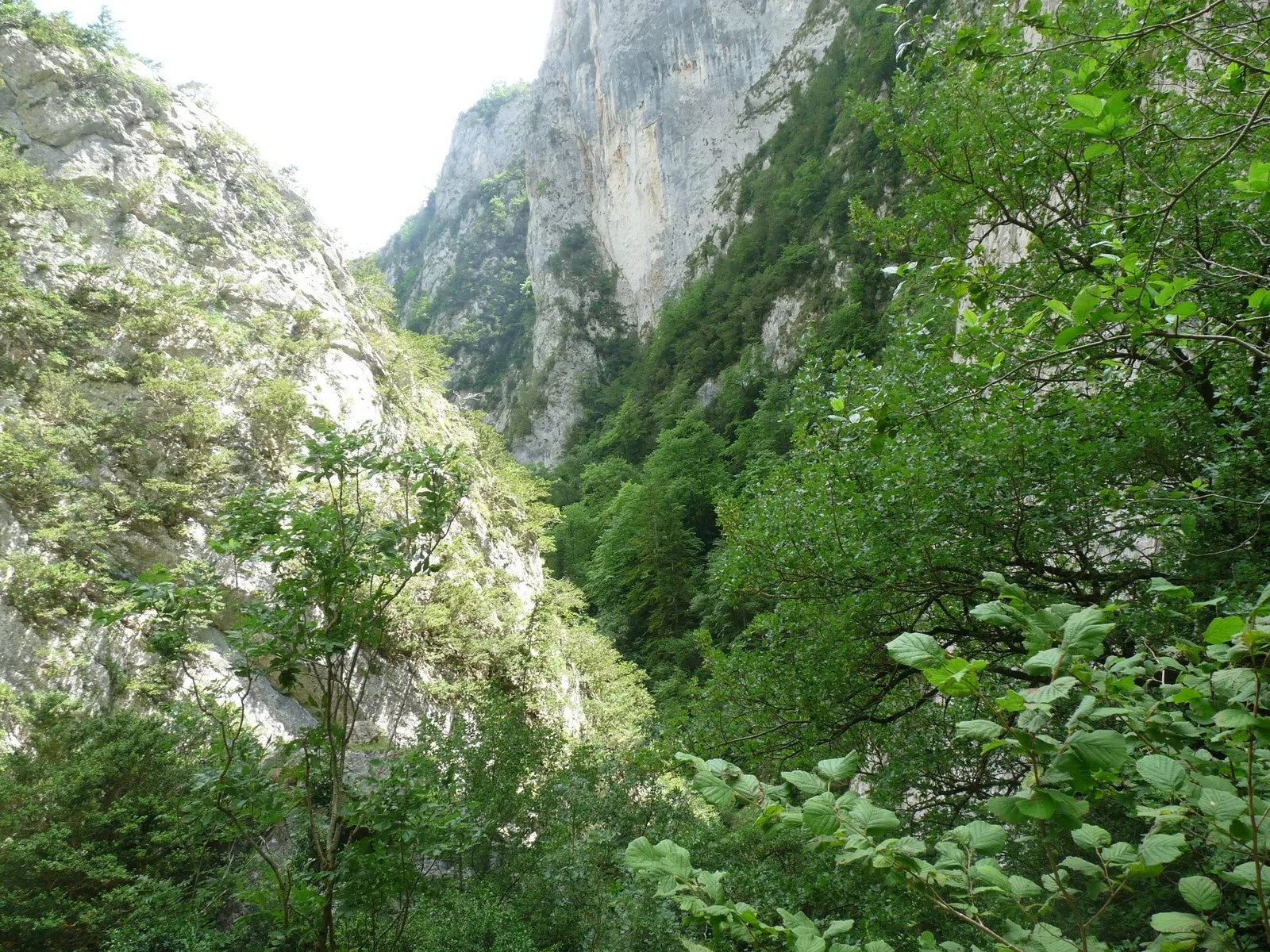
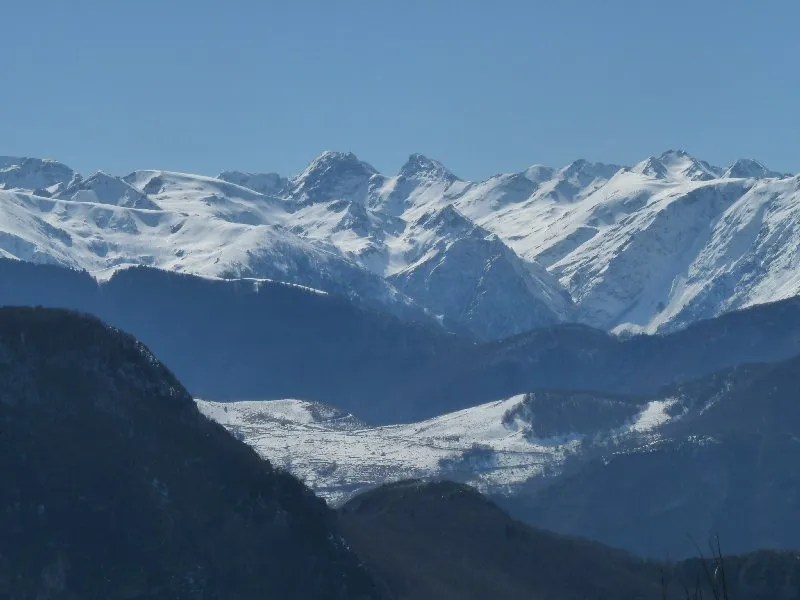
Of course we do. But we remember even more the happy Sundays and Thursdays we had discovering these landscapes with our two local walking groups. We were the only British members, and how different these expeditions were from their English equivalents. After a morning slogging up a mountain, we were rewarded with views, perhaps a stream, a wild-flower strewn meadow. Then Marcel the butcher would produce his own home-cured sausage; Sylvie offered her daughter’s sheep’s milk cheese; someone would bring bread; Yvette and I brought cake; wine was on offer, and an apéro, and after that someone or other would hand out sugar lumps, on which to drip just a little of their grandfather’s special home-confected digestif. After a nice long rest, we’d pack up and find a different path downwards.

Eating was at the heart of so many activities. Here’s another community meal, tables ranged over the town square so everyone could get together and enjoy each other’s company while celebrating some local highlight..

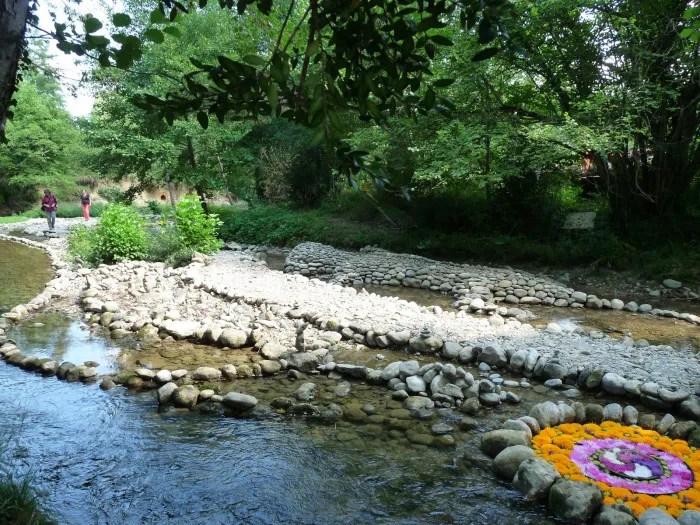
In fact enjoyment came high on everyone’s agenda. Every July, for instance, in a small village a few miles from ours, a group of volunteers spend months devising Le Jardin Extraordinaire. People come from miles around to enjoy strolling through bowers confected from still-growing gourds, and climbing upwards through woodlands with surprises: beautiful, silly, witty – every year was different.


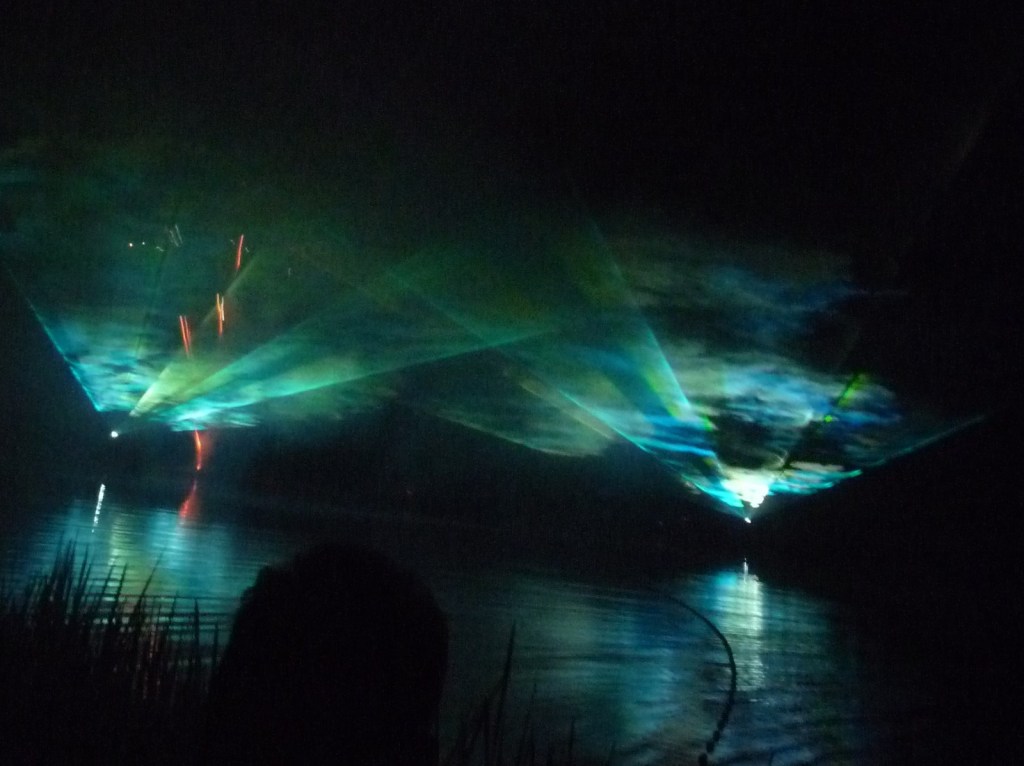
Then there was the annual firework display on the lake at Puivert, which took the concept of fireworks to a whole new level. It reduced the audience of 1000 or more, who’d all come with families, friends and the makings of a fine picnic to astonished silence as the spectacle ended, before simultaneously roaring their tumultuous appeciation of the astonishing creations set before our eyes.
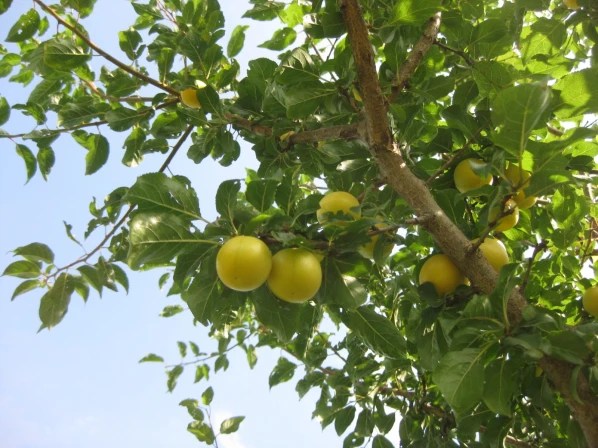
Our French friends taught us about ‘au cas où‘: the need to have with you at all times a bag or similar ‘just in case‘ you found walnuts, wild cherries, sweet chestnuts, mushrooms – all sorts of food-for-free for the thrify householder. I was au cas où–ing only yesterday, finding crab apples, pears, apples, mirabelles all there for the taking, just as our French friends recommended.
I’ll stop there. The feelings of longing, of saudade are strong …
For Egidio’s Lens-Artists Challenge #365: Longing.
My diary, revived from my trip to India back in 2007. Only this bit isn’t my diary. It’s the notes I wrote back home: because diary writing, even if I’d been well enough, would never have been permitted during my hospital stay. Lie back and get better!
3rd – 8th December
What picture have you got of an Indian Hospital? I bet it’s wrong. My ward at Sri Balaji Hospital resembled pretty much any hospital ward in an older-style British hospital that you may have come across – only cleaner. It sparkled with clean paint, fresh blue and white candy-striped sheets and general good order. 4 beds in my ward, with 2 nurses by night and 6 by day, all in a smart white jacket and trousers uniform. The nurses, being Tamil, are of quite astonishing physical beauty: I really couldn’t take my eyes of ‘my’ night nurse, Jhoti, whose loveliness extended to her personality. They appeared equally taken with me, and would pat and stroke me, or chuck me under the chin at the least provocation. As I started to get better, they amused themselves teaching me Tamil. With one exception, they didn’t speak much English, but what they did know, they’d learnt at Nursing School. Phrases like ‘Go to the toilet’/’Use the bathroom’ etc. were not understood, until light dawned. ‘Ah! You want pass urine?’
Besides nurses there were:
– nice ladies in saris who appeared to fulfil some kind of auxiliary role.
– doctors – lots.
– men in blue jackets and trousers who seemed to be gophers, called Ward Boys.
– men in brown ditto- porters.
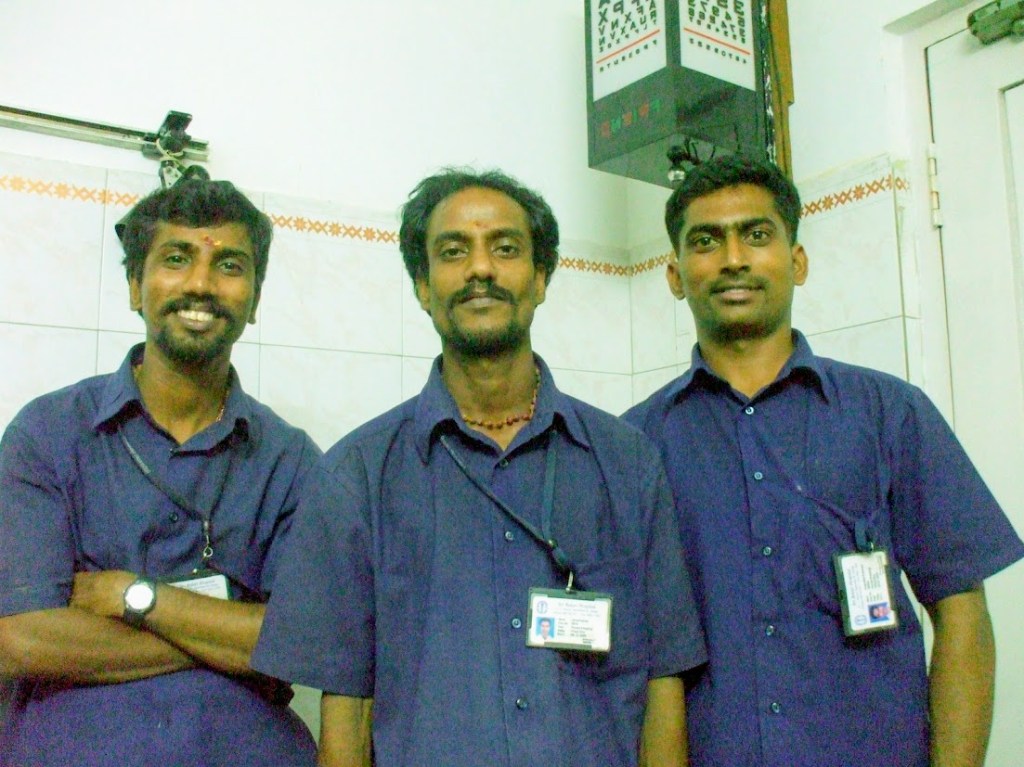
The night nurses did 12 hour shifts and before you feel too sorry for them, they told me that when doing night shift, they work just 10 nights a month.
Medication and tests of all kinds flowed freely – they make the French look amateurs.
No TV, no radio, no nice ladies from the WRVS dispensing sweets, newspapers and library books. No getting up either. You lie in bed until you’re good and better, and meanwhile you do nothing. I was caught attempting to wash on my last day, and was chivvied back to bed and given a bed bath.
The biggest surprise to me was that the wards were mixed-sex. In a country where (at that time at least) it would have been a monumental faux pas for me to have sat down next to a man on a bus, that seemed to me astonishing.
At visiting time, those of us without visitors did not go without attention. Dozens of noses were pressed against the glass wall of the ward as curious onlookers gave us all the once-over. I felt a bit like an inmate of Bedlam in the 18th century.
After 5 days, I was deemed well enough to go home, though I was still feeling pretty ropey. I knew insurance would pay up eventually, but I was terrified at what the bill might be for my stay in hospital, and they woudn’t let me go till I paid up. Would there be enough money in our account? It turned out to be … just a little over £30.00…
Incidentally, the insurance company DID cut up rough. Why hadn’t I rung them to tell them of my indisposition? Well, lots of reasons actually. I was far too ill for such a thing to have entered my head. And on my first day in hospital, because the only phone available was that used by all the doctors and nurses on the ward, I was permitted to make just one call. So I didn’t even ring Malcolm, who was in transit from France to England. It was my son in London whom I called, and he had to contact anyone who needed to know (no, he didn’t ring the insurance company either). I have no idea who took it upon themselves to change my flights, but it wasn’t me. Instead of a direct flight, I had an internal flight to Bangalore, and then a dreadful wait from about midnight to 4.00 a.m. with nowhere to wait but a gloomy hall with no seating, clinging on to my luggage before my connecting journey to London.
And then it was over. We were back in England for a short while before we returned to France. I was by no means the full shilling for a while. Malcolm said I hardly uttered a word for days and days …
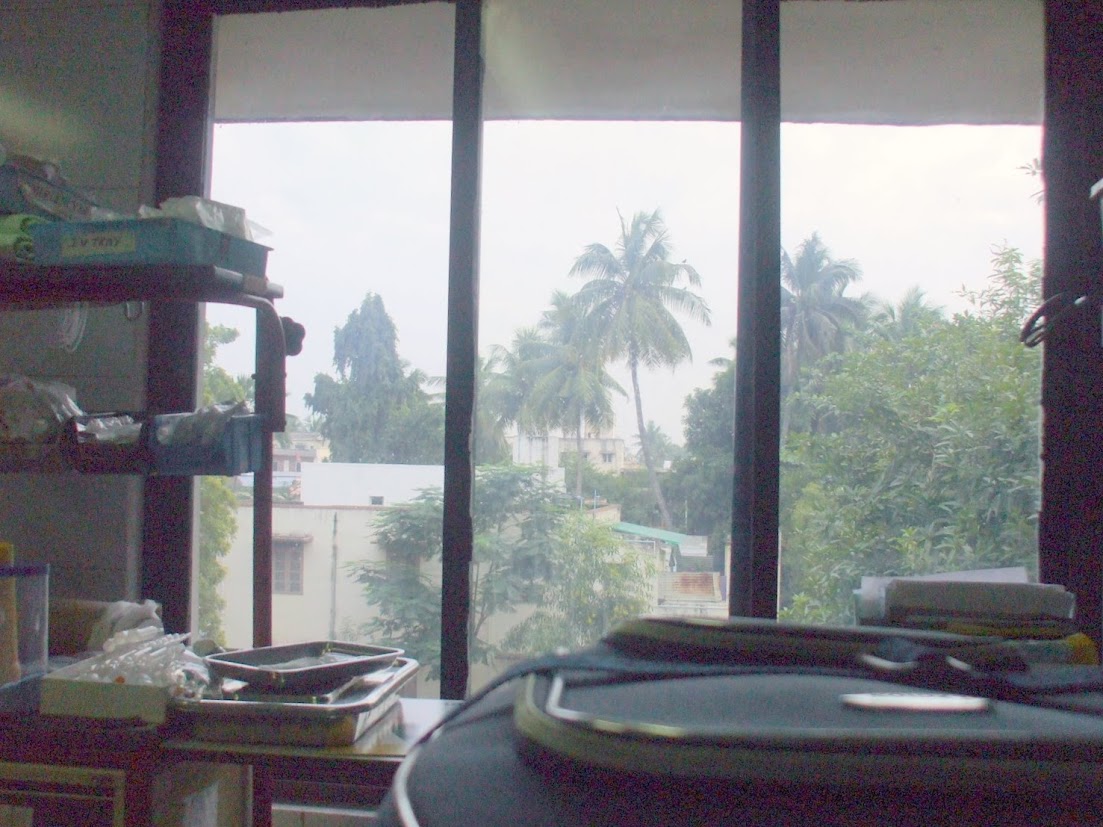
My featured photo shows the view from my hospital bed.
And that, ladies and gentlemen, is it. My Indian diary. Next week we’ll go to Bradford, where, to ease us gently back to the UK, my post will have at least some Indian connections.
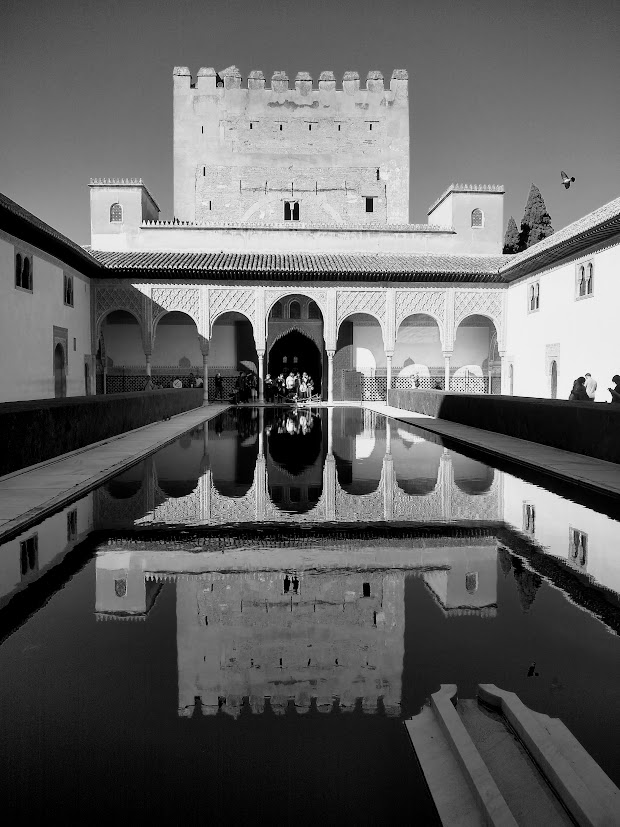
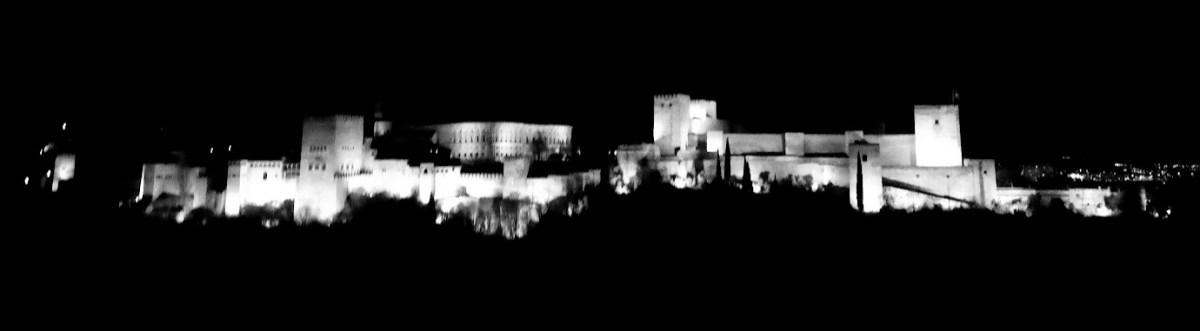
The Alahambra in Granada has a history going back to the 11th century. It was a Zirid fortress, then a 13th and 14th century Nasrid royal palace and fortress complex. Like all Nasrid palaces, it’s a harmonious blend of space, light, and water, featuring intricate decorations and inscriptions, and it’s quite wonderful. Despite the crowds and the selfie-seekers, one of whom is immortalised below. We couldn’t get rid of her.
But in 1492 (the same year, as any English schoolchild knows, that ‘Columbus sailed the ocean blue‘), Catholic monarchs captured Granada, the last bastion of Moorish rule in Spain. It became a royal court for some time before falling into disrepair, was damaged by Napoleon’s troops, and was eventually discovered by 19th century Romantic travellers. Rediscovered, restored, it’s now a UNESCO World Heritage site.
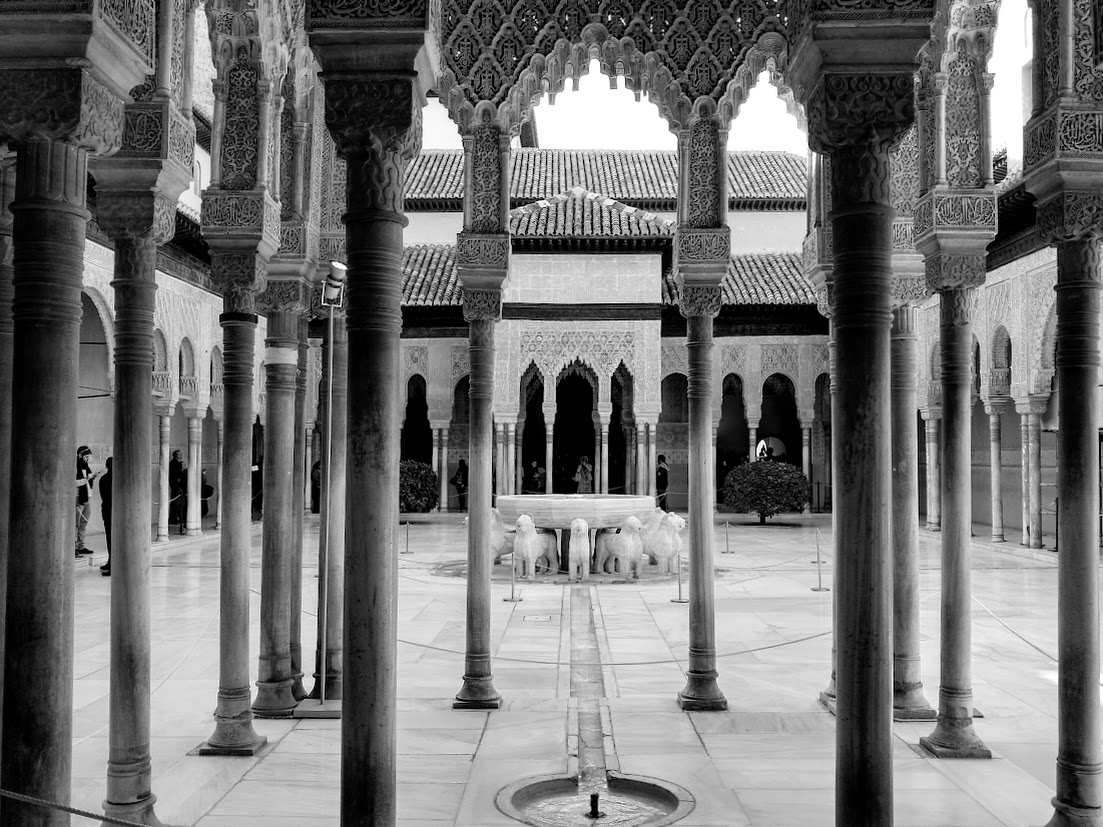
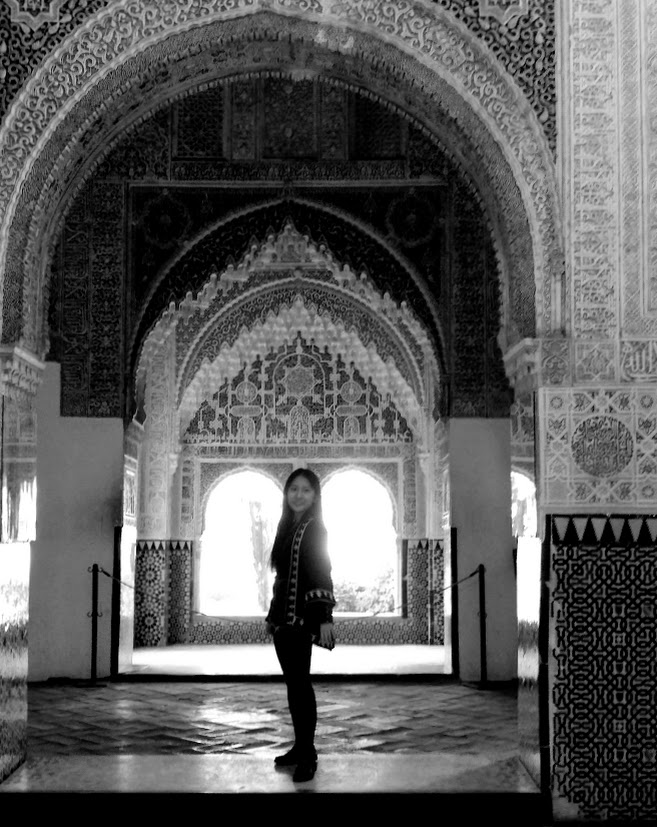
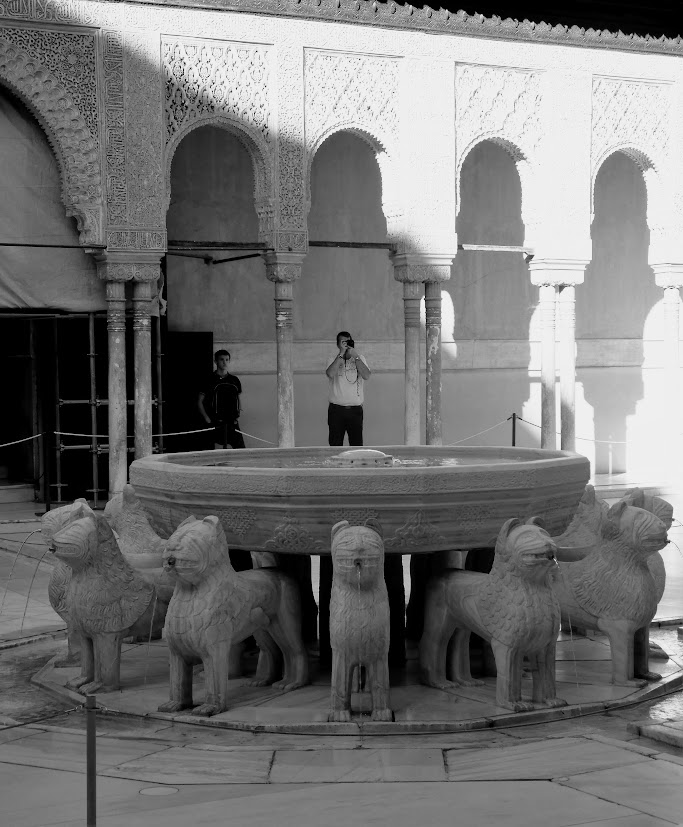
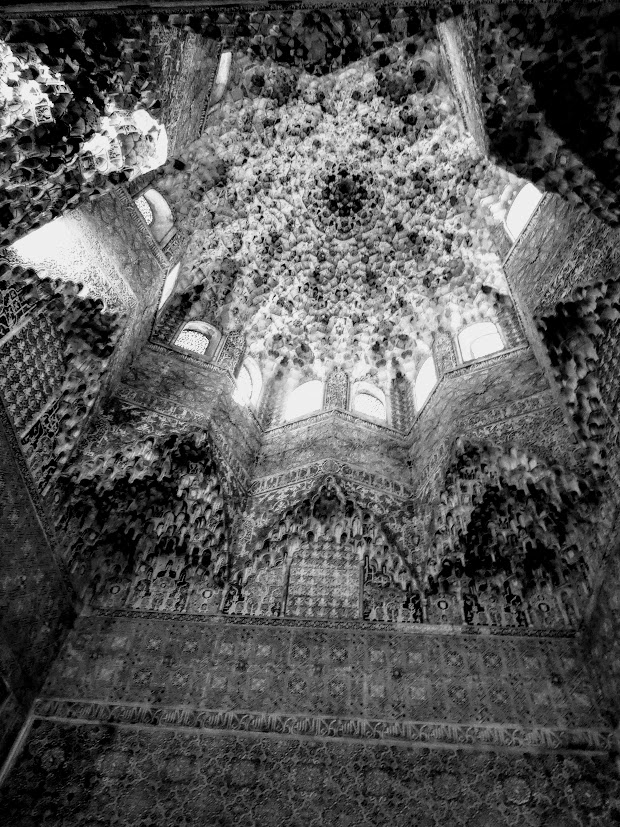
Here’s some decorative detail. Also symmetrical.
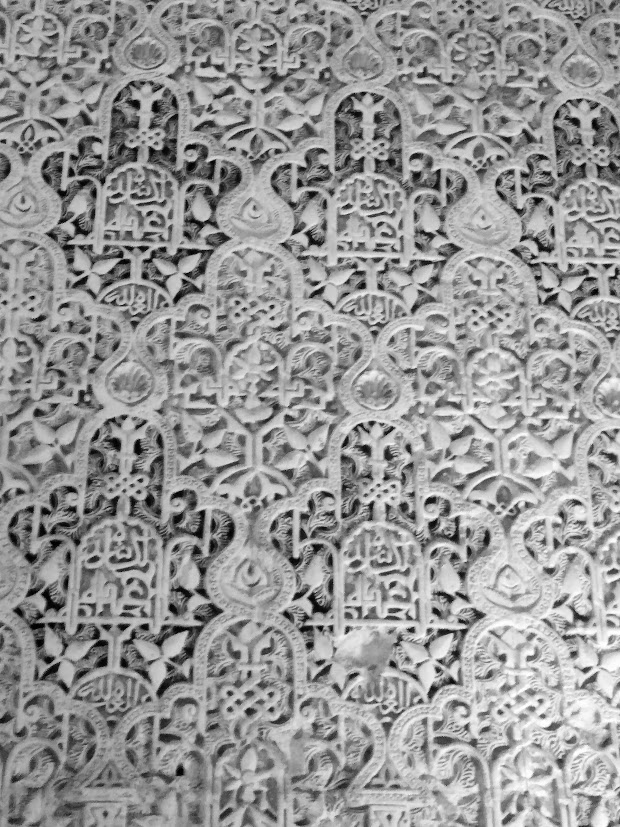
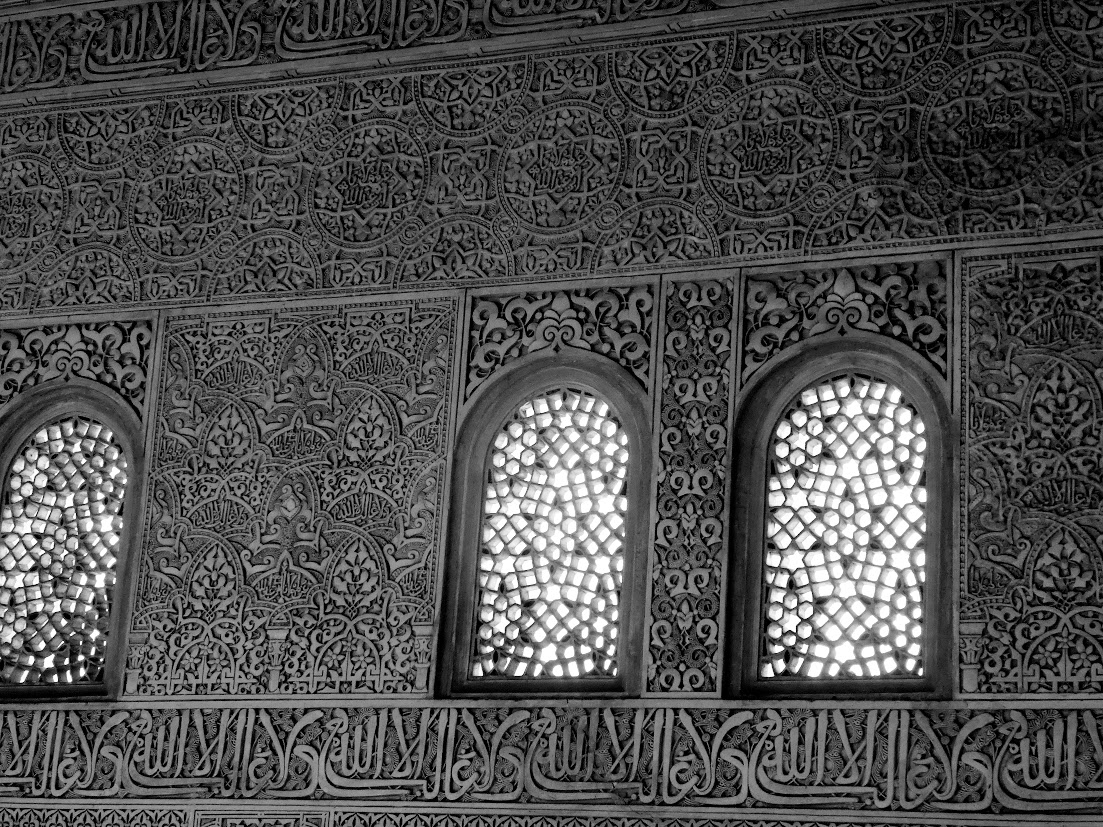
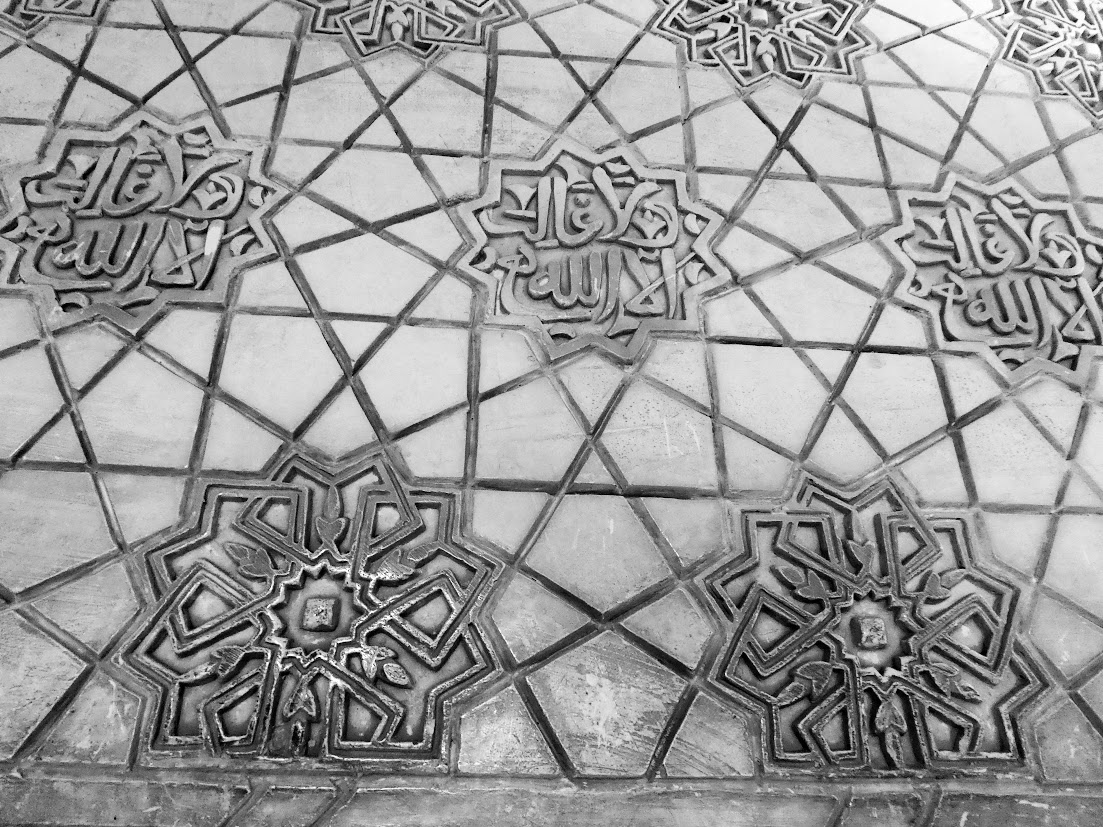
And so it’s here I’ve come to celebrate symmetry for Leanne’s Monochrome Madness, hosted this week by Dawn of The Day After. We visited in 2019.
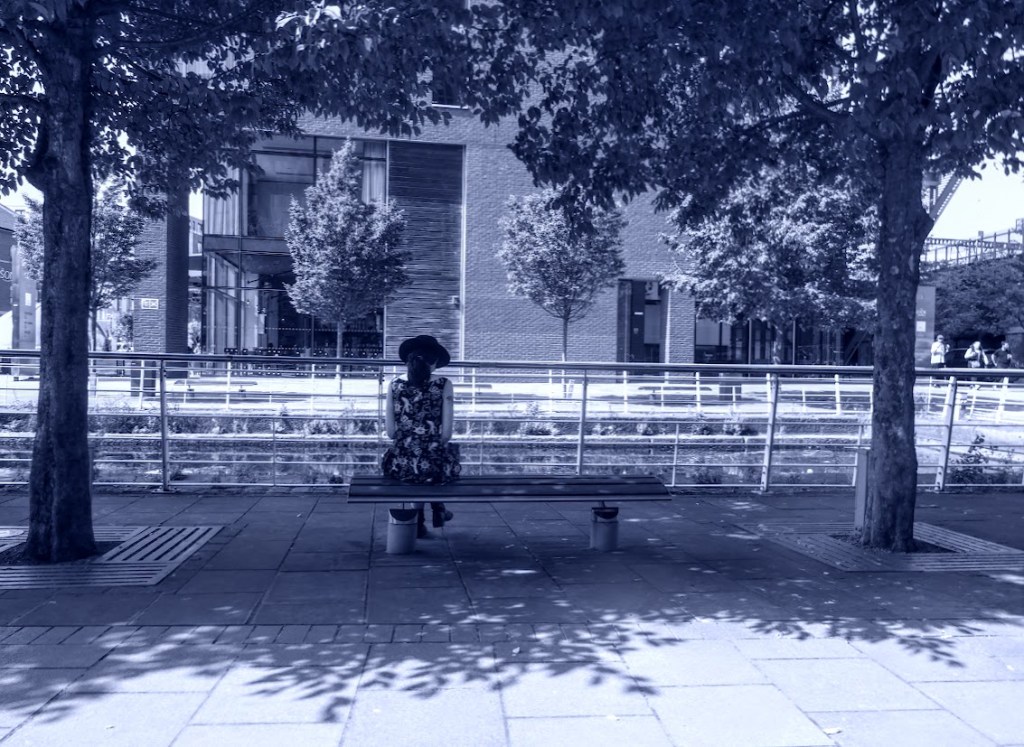
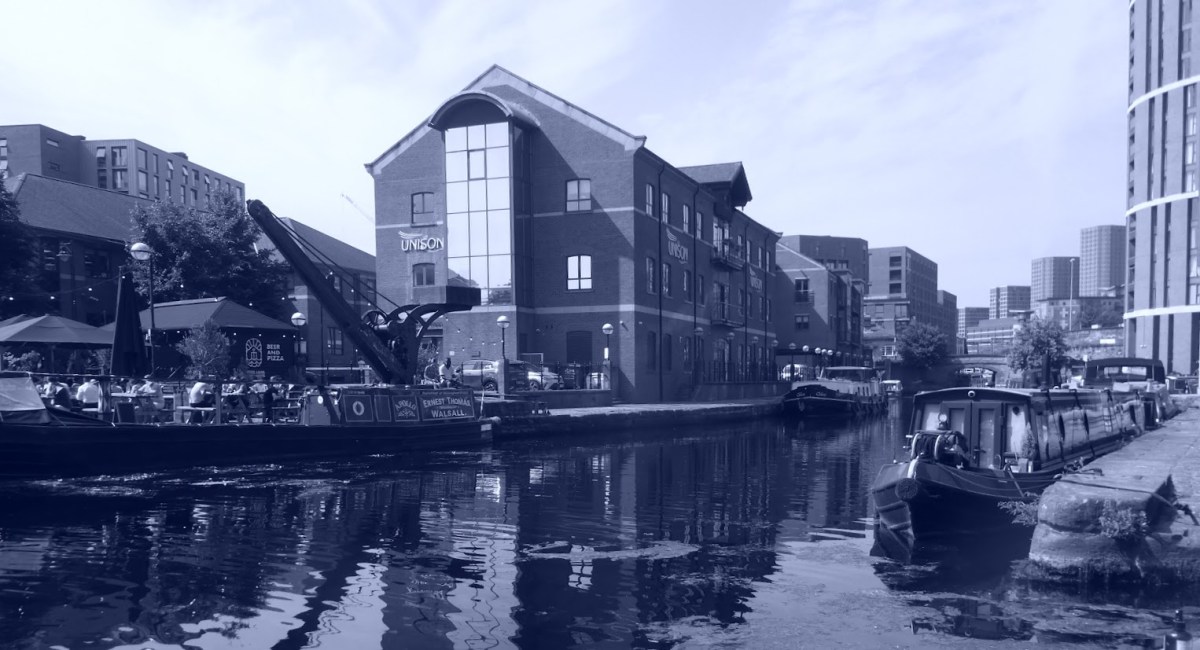
Back when I lived in Leeds, its waterfront was emphatically not A Thing. It was certainly not called The Waterfront, being a disregarded area of town rotting behind the station, with long-closed mills and factories collapsing into weed-smothered decay. These dessicated buildings stood alongside ill-repaired streets, deserted except by cars whose owners parked here for free before scurrying off to work or shop in a more salubrious part of town. The River Aire, the Leeds-Liverpool Canal were uninviting, rubbish-clogged. The area wasn’t anybody’s idea of a good day out.
Nowadays, what a surprise! Mills and factories have been restored: repurposed as offices, shops, bars and restaurants. It’s busy day and night with local workers, tourists and pleasure-seekers. Canal boats saunter in and out. Here’s a woman enjoying a quiet moment, probably in her lunch break, on a bench overlooking the canal.
And here are members of a local art group, sketching the area in all its vibrancy one sunny August day. They seem to have commandeered all the benches-for-one.
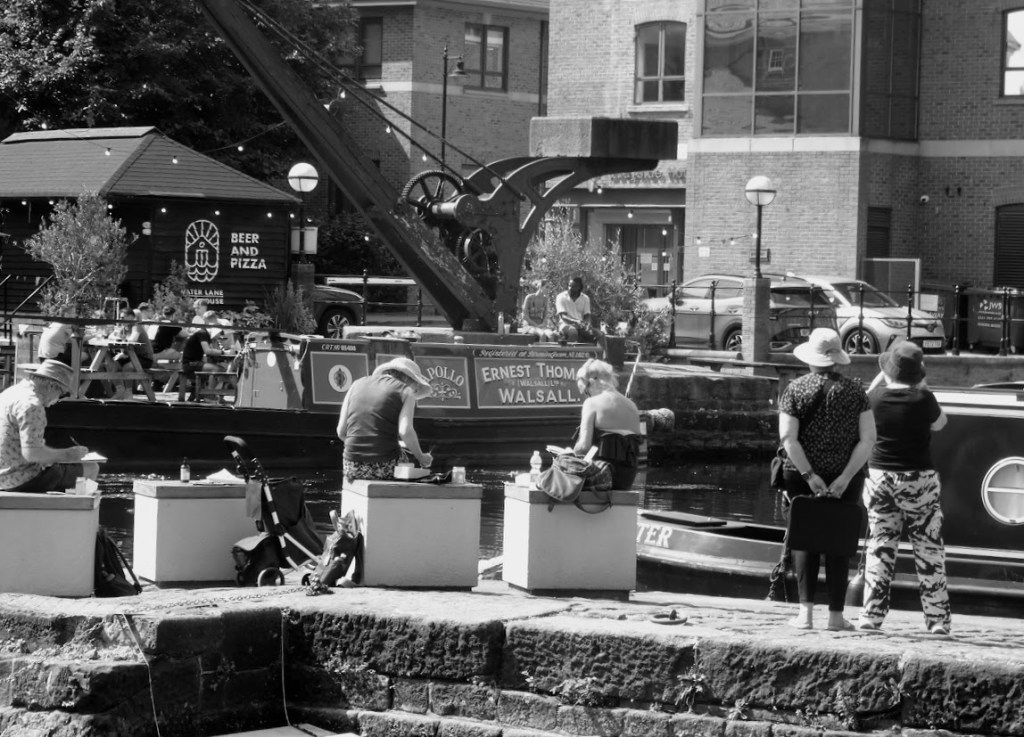
For Jude’s Bench Challenge.
My diary, revived from my trip to India back in 2007. This second part details my solo travels during the last three weeks or so. From now on, increasingly exhausted, my entries become terser and frustratingly light on detail.
Monday 3rd December
I woke up with a high fever and sore throat, listening to heavy rain outside – and I only had the clothes I stood up in. I’d have liked to have bought a brolly, but no luck.

Finally the Blue Elephant cafe, where I’d been yesterday opened, and the woman in charge, on hearing my voice, wouldn’t hear of my having a coffee – ‘Lemon and ginger for you!’ Mighty delicious – huge chunks of ginger brewing in squeezed lemon juice and hot water. I couldn’t face an Indian breakfast though, so it was eggs and toast. After that it wasn’t too long before I caught the bus back to Chennai, where fever or no fever, there was still shopping to be done, and packing to be done back at The Hotel from Hell.
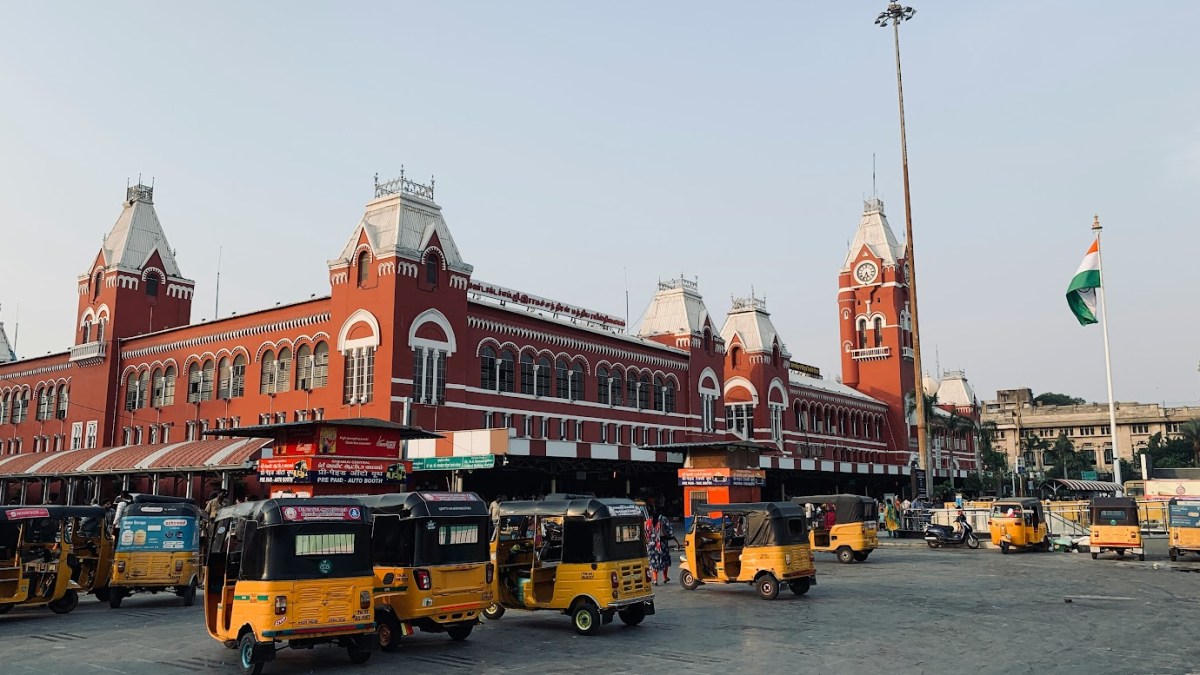
I eventually made it to the station , where I planned to catch a train to the airport – a local service with a quick journey time. How was I to know that the train would fill and fill and fill and fill until people were hanging from the doorways in true travel doc. style? With me crushed inside feeling iller by the second? Actually, ‘crushed’ doesn’t begin to cover it: the only reason I didn’t fall to the floor was that it was physically impossible. At a certain point I couldn’t stand it any more, and somehow forced myself and luggage off the train, with everyone shouting behind me ‘No! No! Airport is 2 more stations!’. By then though I was sprawled across the platform, vomiting and vomiting as the train went off. A lovely man tried to help – he brought me water which he poured over me, washing my face and making me drink. A concerned crowd gathered, but by then I had lost all pride as I lay there, being repeatedly sick.
Two police women turned up, at as much of a loss as everyone else. Finally, they made a decision. They manhandled me, extraordinarily roughly, as if I were a somewhat dangerous demonstrator rather than a rather ill female tourist, and tried to bundle me onto a train. By yelling and weeping I managed to avoid the first train (later now, the trains were nearly empty again), but lost the battle in the end as they chucked me onto the floor of the next one.
At the airport station, we were joined by a handsome young male PC, who carried me ‘Gone with the Wind’ style up the stairs (shame I was way too ill to appreciate it) and heaved me into a rickshaw, where they all joined me, together with my luggage. Airport at last – or at least the airport medical centre. Here they finally examined me and decided I needed to go to hospital – I’d been muttering that for at least an hour. An ambulance appeared and I was dumped on a stretcher – bang! The ambulance driver revelled in using his siren – who wouldn’t if it meant actually MOVING in the streets of Chennai? And after arriving at hospital I don’t remember much of the rest of the day. I think the Consulate was told, and dealt with the fact I could no longer catch my flight home.
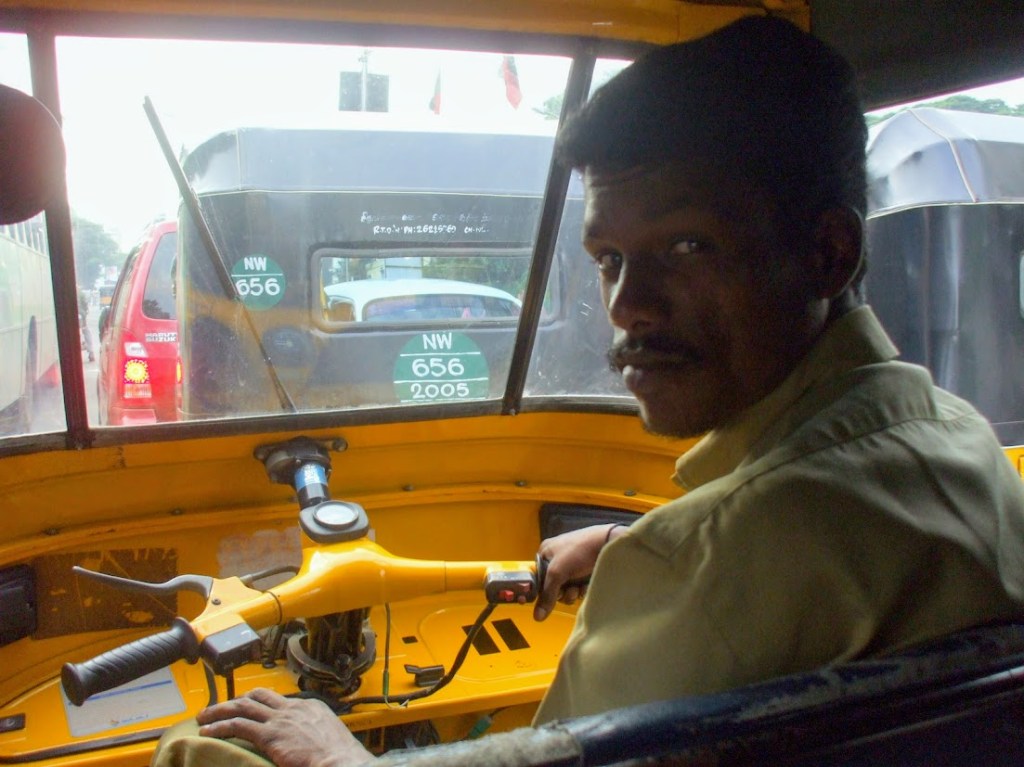
It’s rather astonishing to me that I even took two photos that day. But I did: one on the beach at Mamallapuram in the rain, the other of my very last auto-rickshaw driver in Chennai. My featured photo, of the central station at Chennai is courtesy of Unsplash, and taken by Ahamed Sameel.
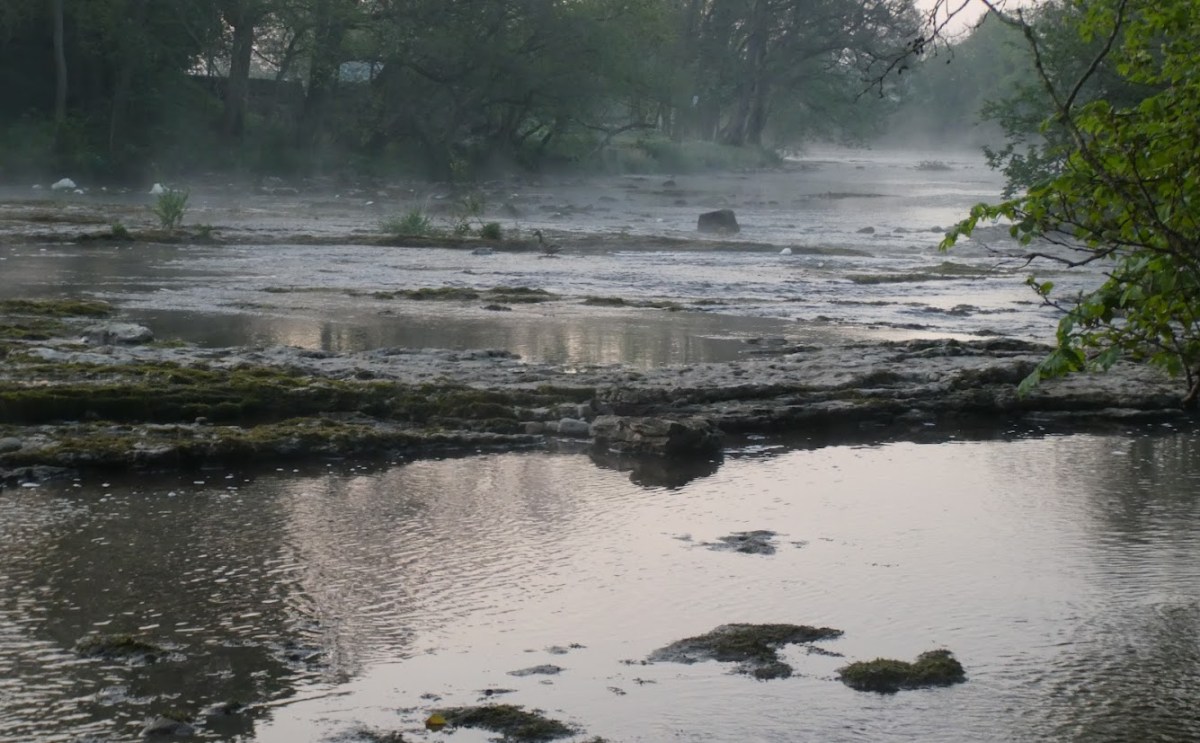
Ours is a land of rivers. Nearby, the Ure, the Skell and the Laver all course through Ripon, and the Ripon Canal peacefully splices the town in two. Local gravel pits end their working lives transformed into watery nature reserves. We’re approaching the time of year when, because of the surrounding water, morning mists envelop the landscape. I relish those early hours when quiet descends with the mist, muffling sound, slowing us down and encouraging us to savour these peaceful moments.
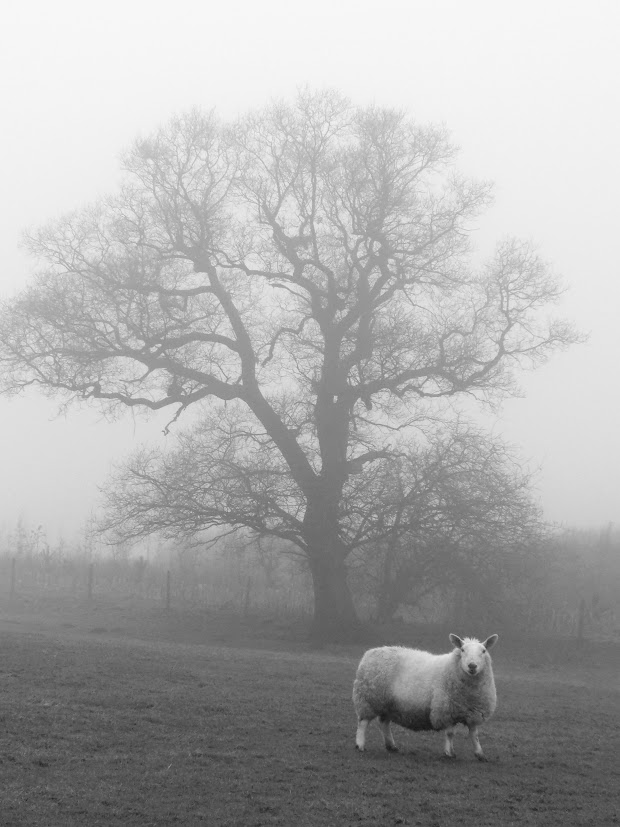
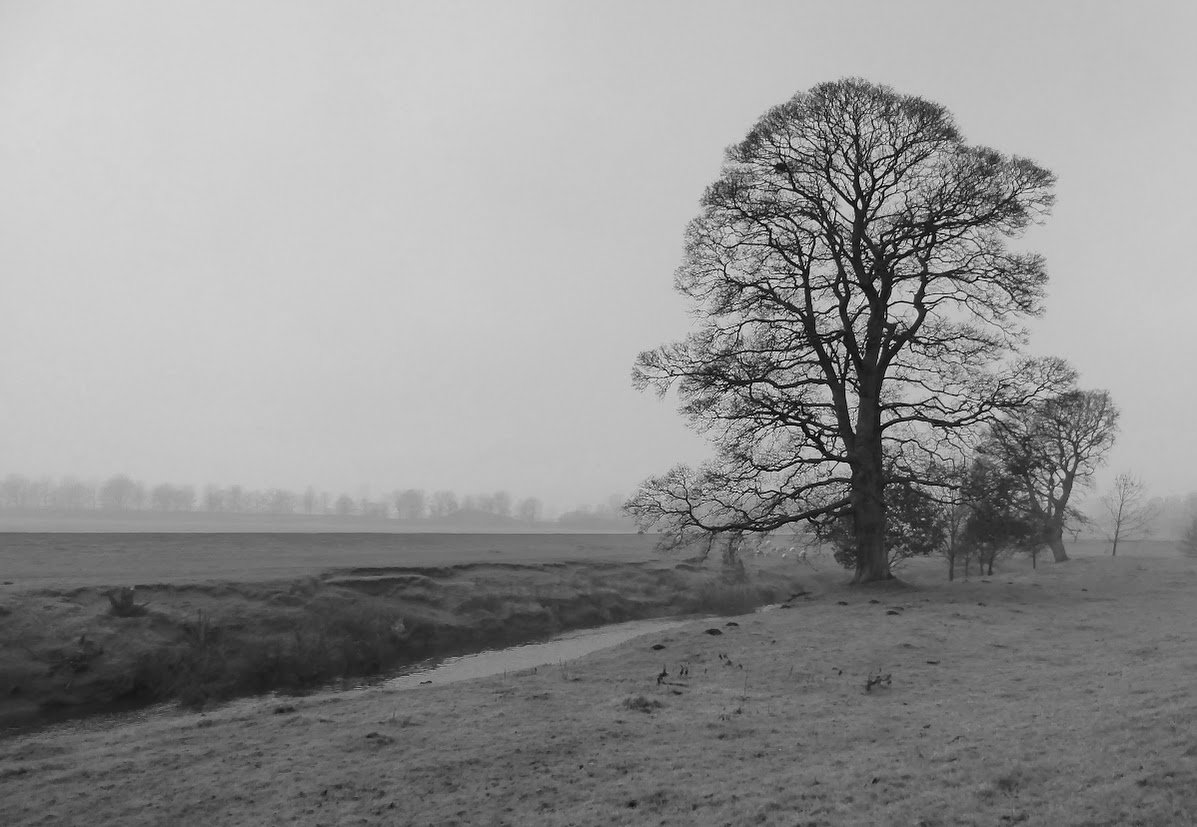
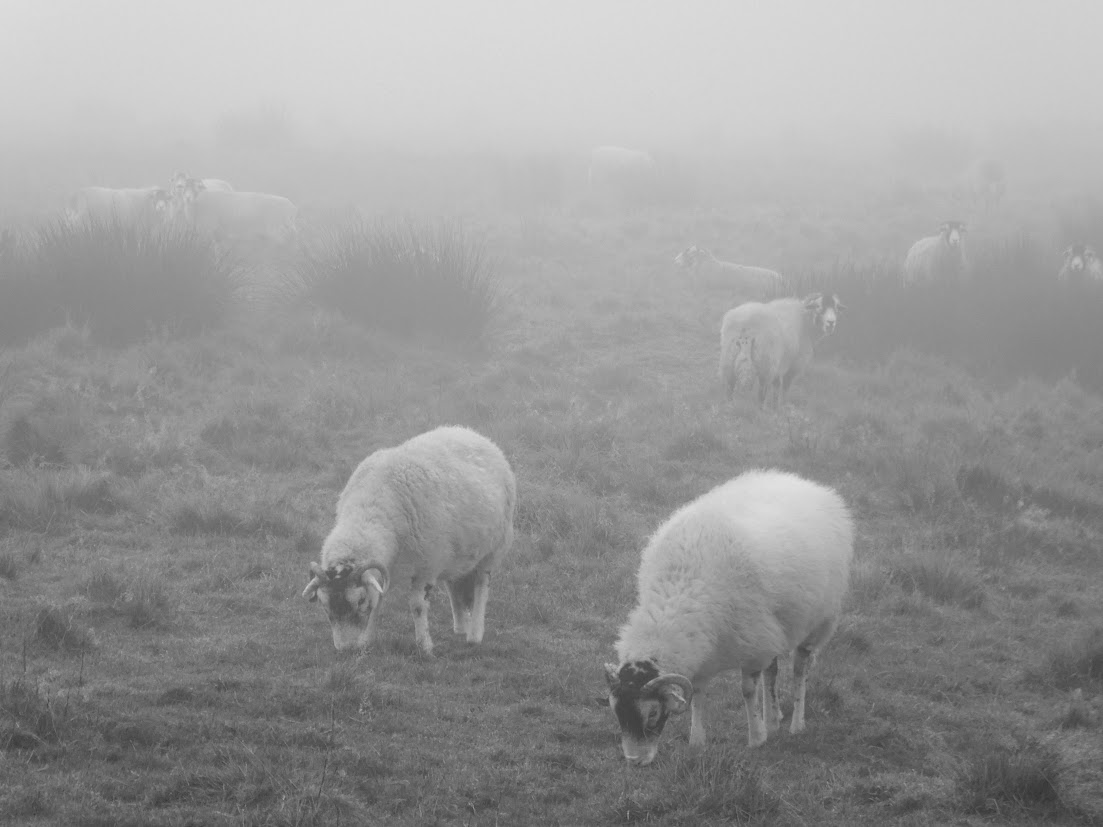
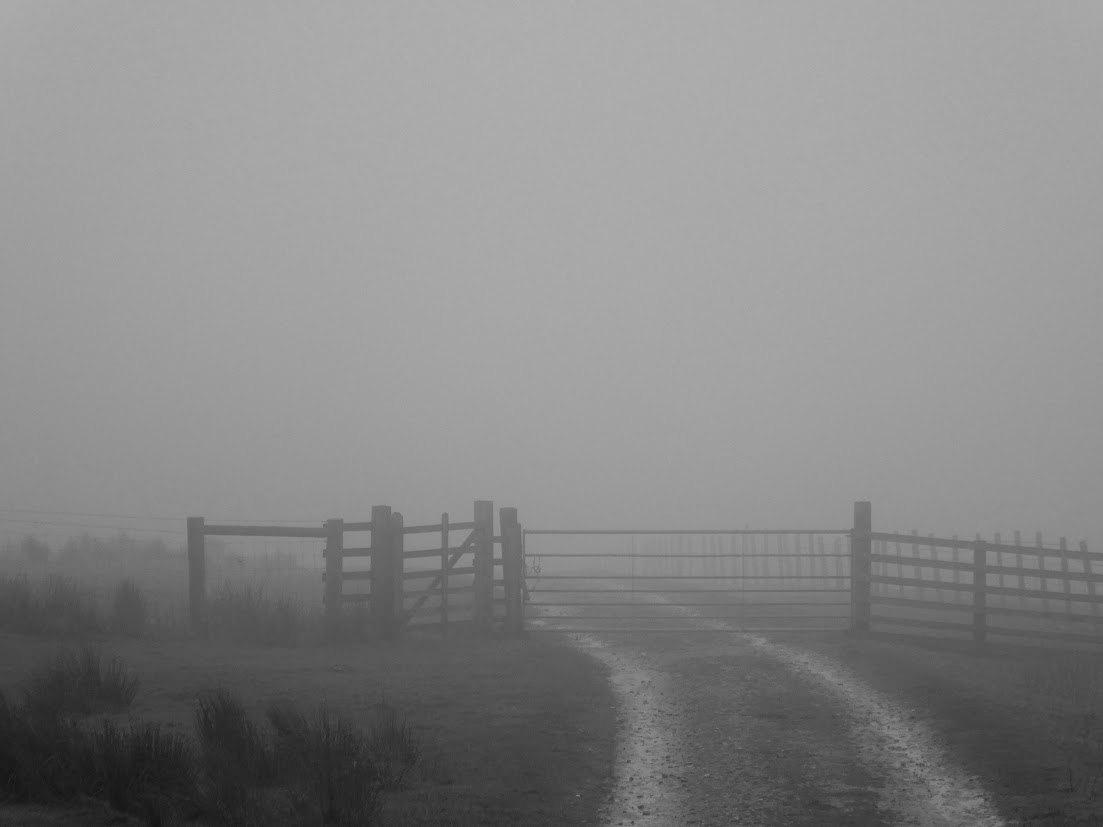
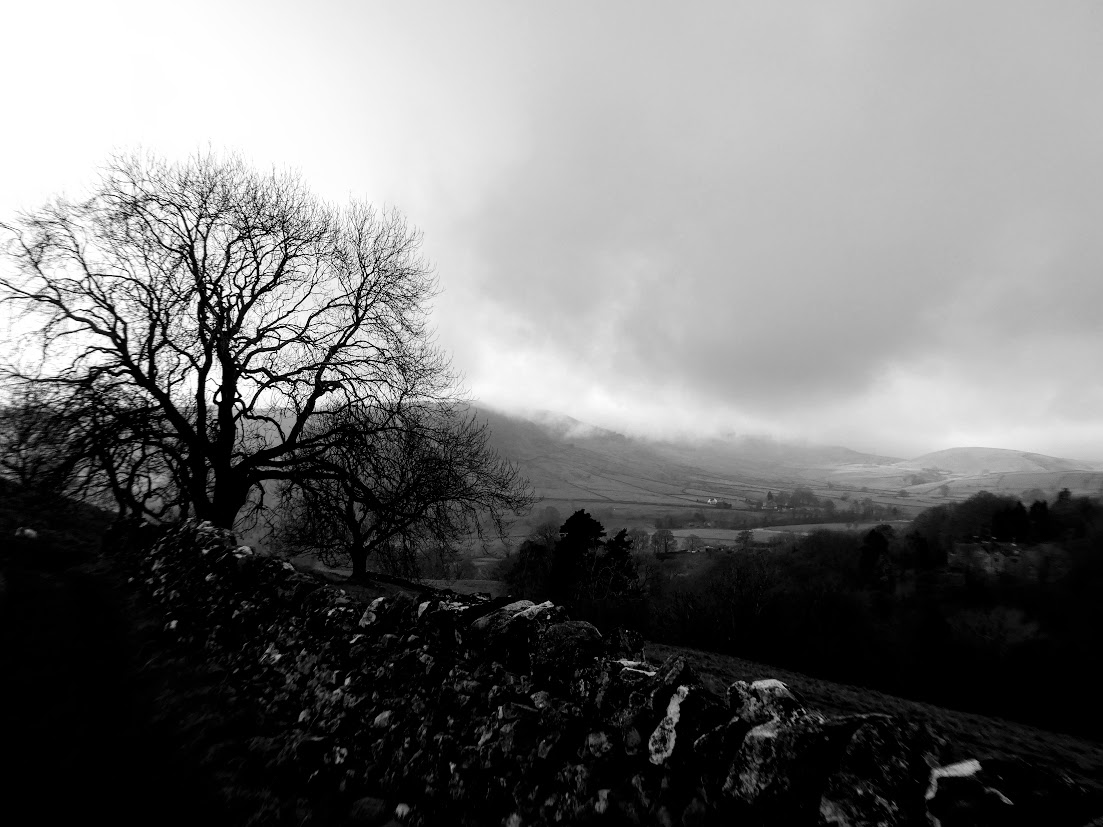
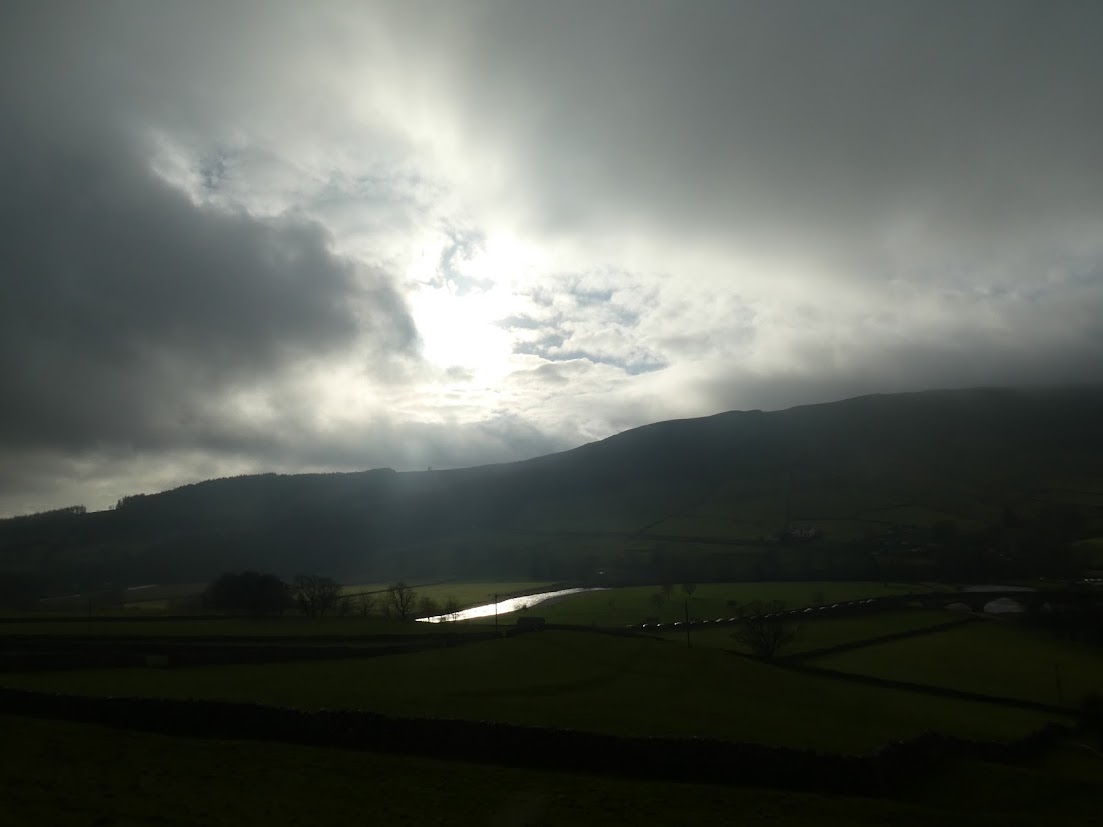
For Ritva’s Lens-Artists Challenge #364: Quiet Moment.
And Leanne’s Monochrome Madness.
 From Pyrenees to Pennines
You must be logged in to post a comment.