Euskal Herria meets the Yorkshire Dales – Revisited

I was sorry, when we left France, that we hadn’t made more than a couple of visits to its Basque Country. It’s such a different part of France, for all kinds of reasons, some of which may become apparent in this post I wrote – gosh – fourteen years ago.

Euskal Herria meets the Yorkshire Dales

March 10th 2011

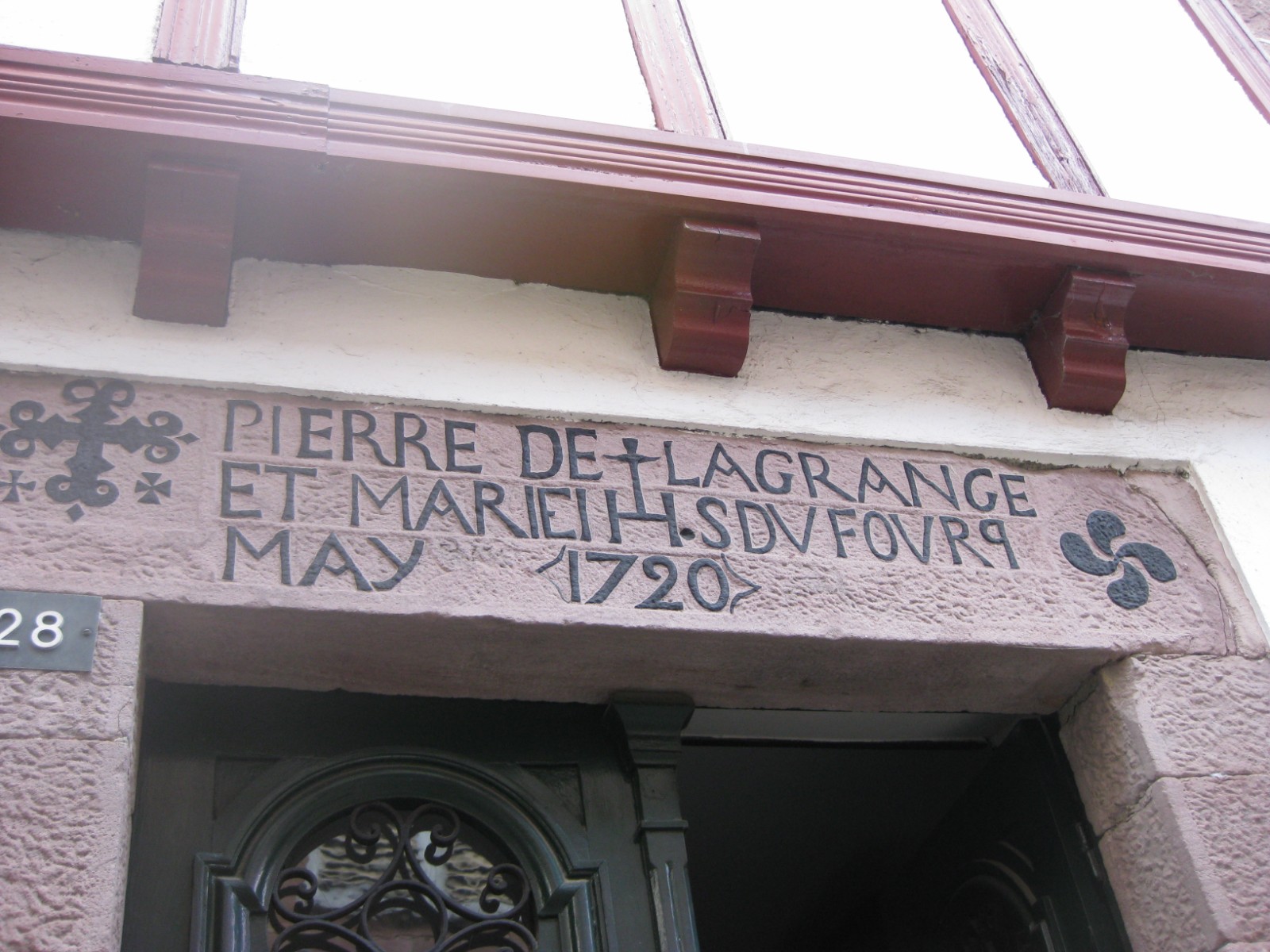
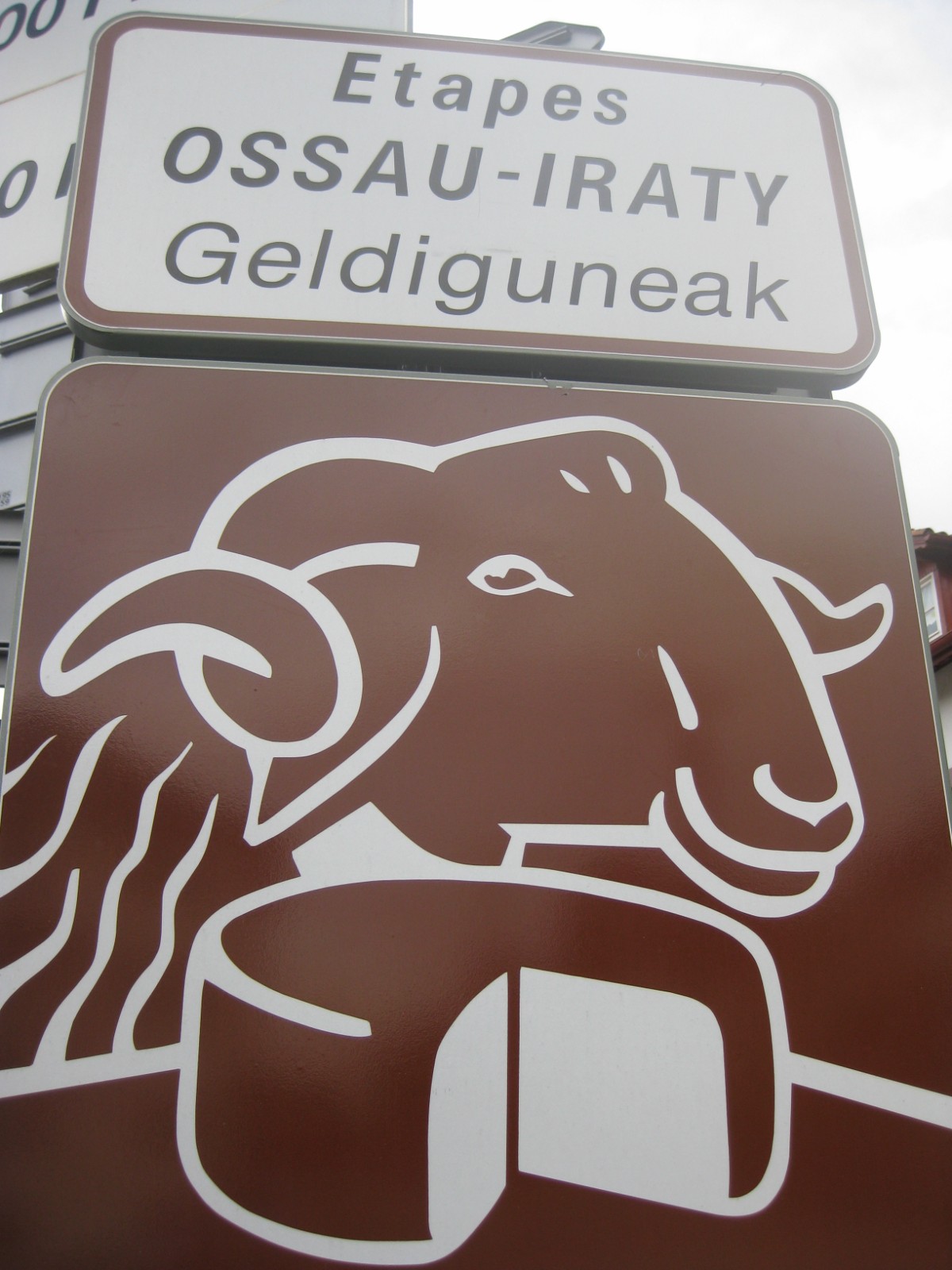
This week was a first for us, when we made a quick visit to the Basque country (Euskal Herria), way over to the west .  When we got there, there were no frontier posts, but we knew immediately that we’d arrived.  Suddenly, houses, instead of being colour-washed in creams and beiges and ochres, or not at all, were  all tidily painted white, every single one, with ox-blood coloured shutters and paintwork.  Place names were in French and Basque, and quite a lot of other signage too.
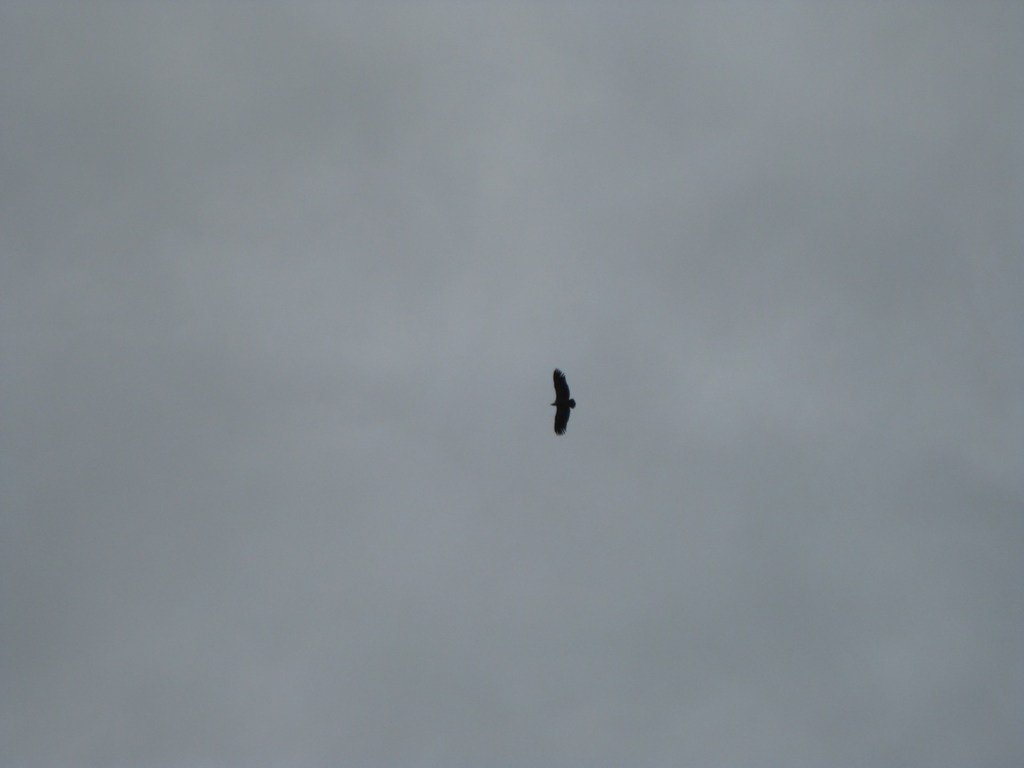
Not a Yorkshire view. A vulture wheeling overhead.

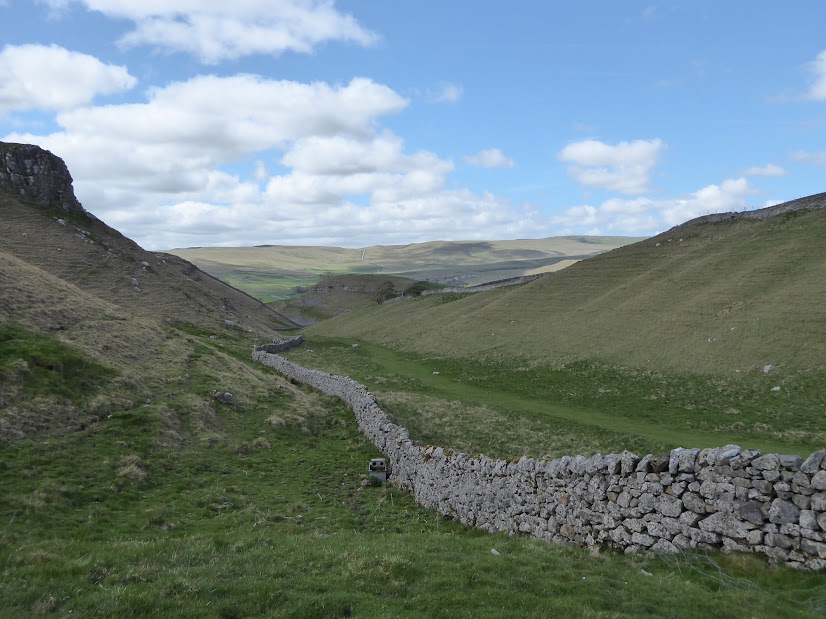
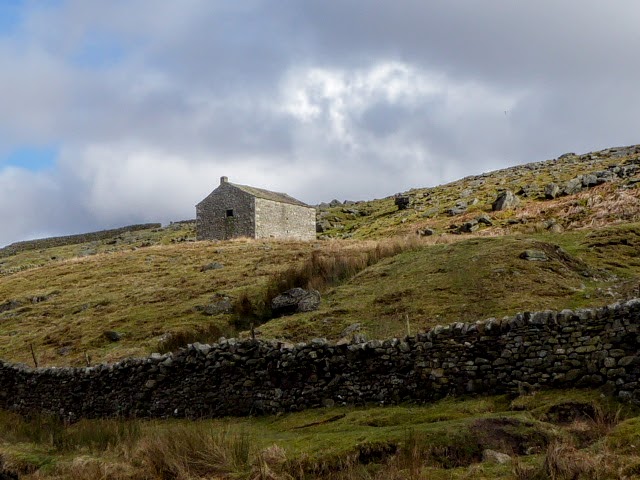
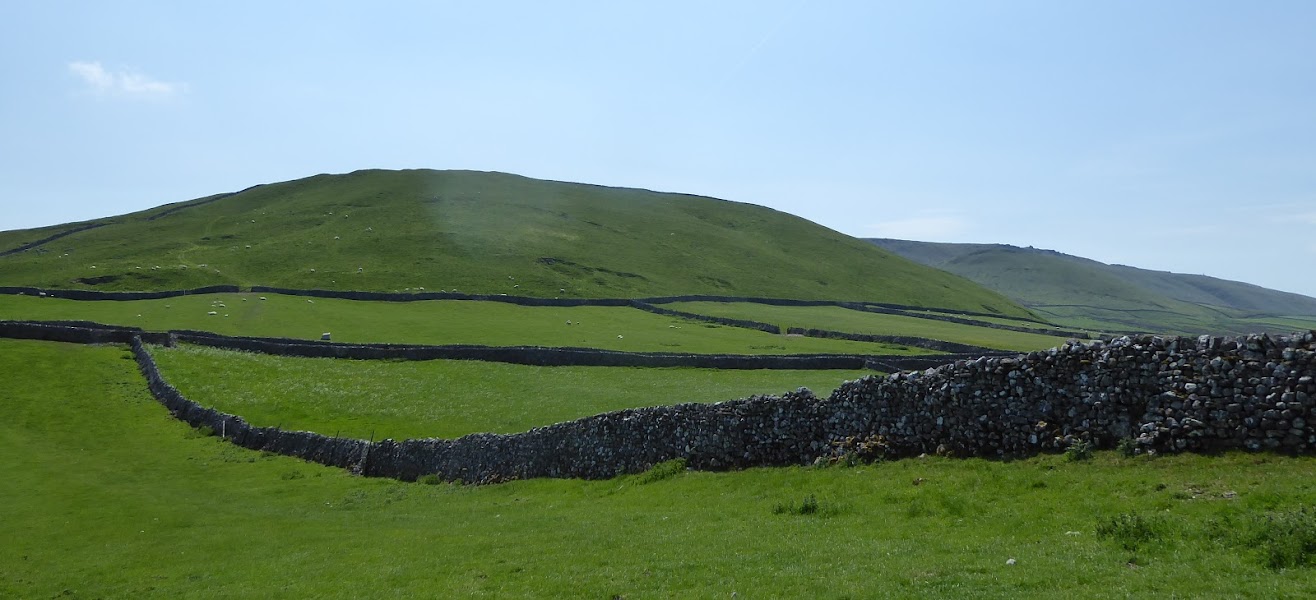
But the thing is, despite all that, we thought we’d arrived in Yorkshire, or Lancashire, or somewhere in England at any rate.  Softly rambling ranges of hills, so very green, and studded with sheep.  Roads which preferred to ramble gently round the contours instead of going straight in the French style.  Take away the Pyrénées in the background, their jagged peaks still white with fresh snow, add in a few drystone walls, and – voilà! – the Yorkshire Dales.
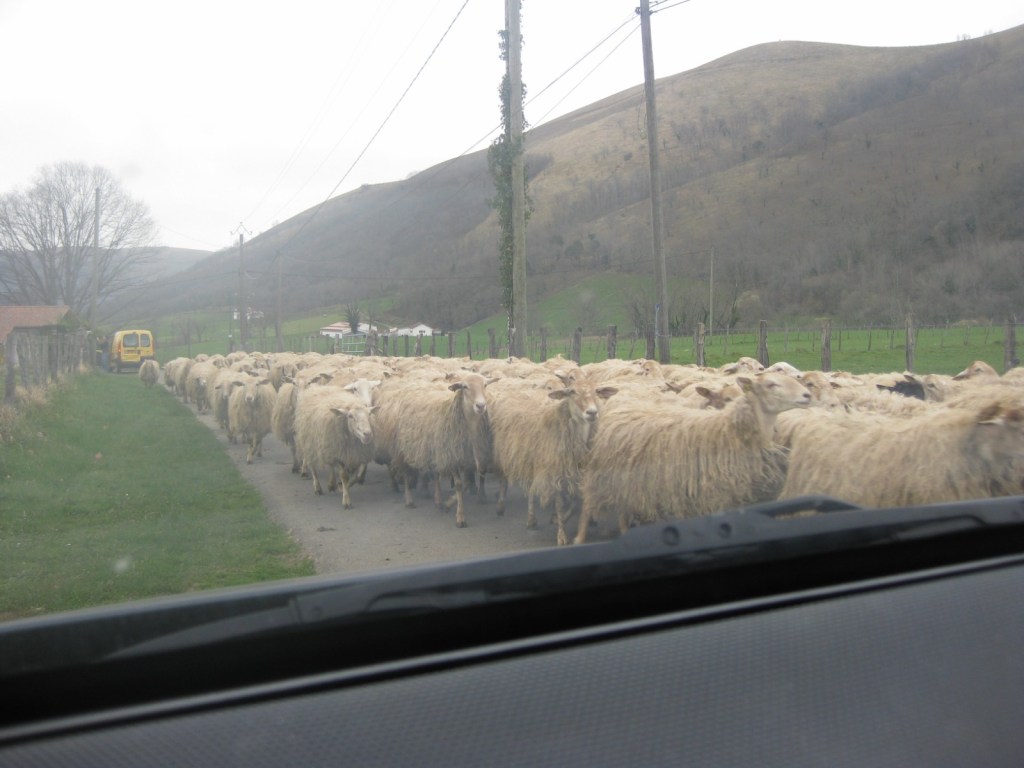
Traffic jam, Basque style

After all the hard work back at the house, we needed the peace of the countryside, so we’d chosen to stay at an Accueil Paysan farm. We knew that  meant that we’d be welcomed into simple comfortable accommodation at the farmer’s house, and share a family meal with them in the evening.  Always good value in all sorts of ways.
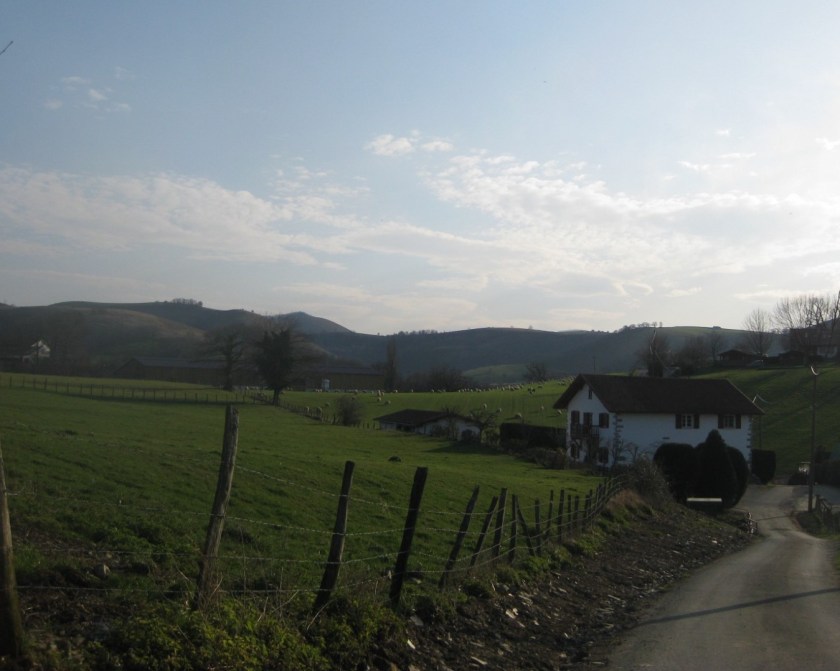
The road to the farm where we stayed …

The welcoming committee in this case turned out to be six cheerily noisy pigs, a gang of chickens, and a sheep dog.  The humans were no less friendly, and we settled in by exploring the small farm with its 30 or so cattle, and about 300 sheep.  Sheep’s cheese is the big thing round here, and throughout the autumn and spring, when there’s plenty of milk, this family makes cheese every morning (far too early for us to be there, it turned out: all over by 7 o’clock) in their fine new cheese-production shed.

Pigs doing what pigs do best

Our hosts are Basque speakers.  Their children only learnt French when they went to school.  Now that one of these children has a son of his own, he and his wife (who’s not a Basque speaker) have chosen to have the boy educated at one of the many Basque-medium schools, so that he will be among the 30% of Basques who are comfortable using their language.  It’s an impenetrable and complex one.  Its roots are a bit of a mystery, and certainly it’s not Indo-European.  With French, Italian and Latin at our disposal, we can make a good stab at understanding Occitan, the language of our region, but Basque remains impenetrable to anyone who hasn’t been immersed in it.
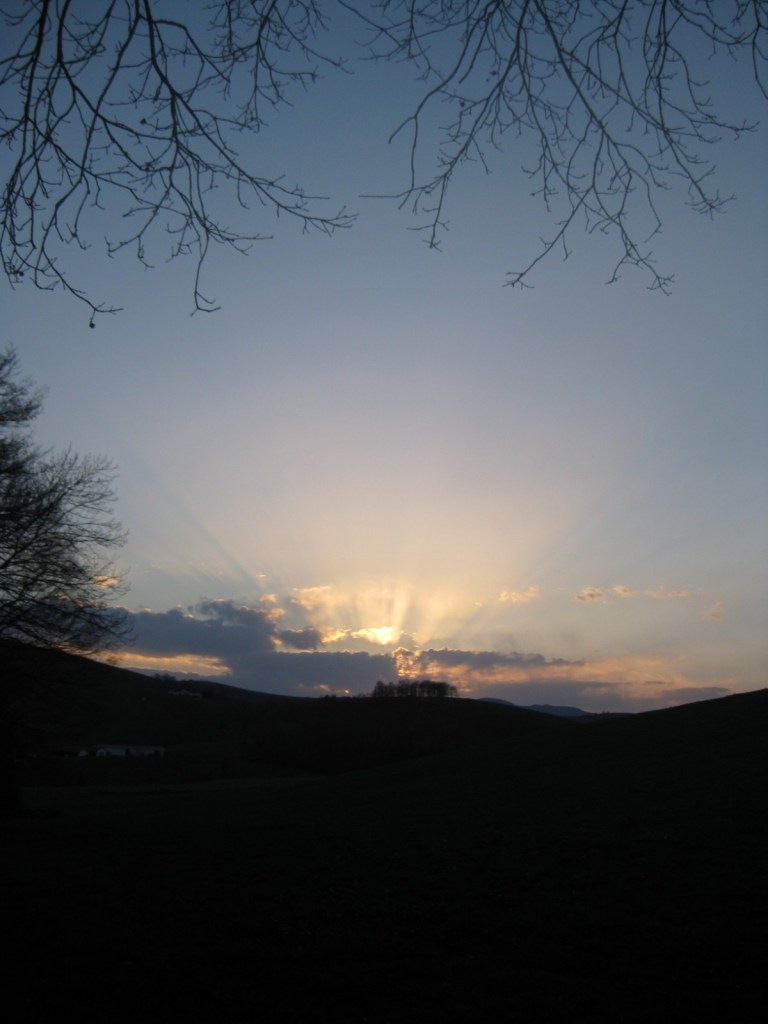
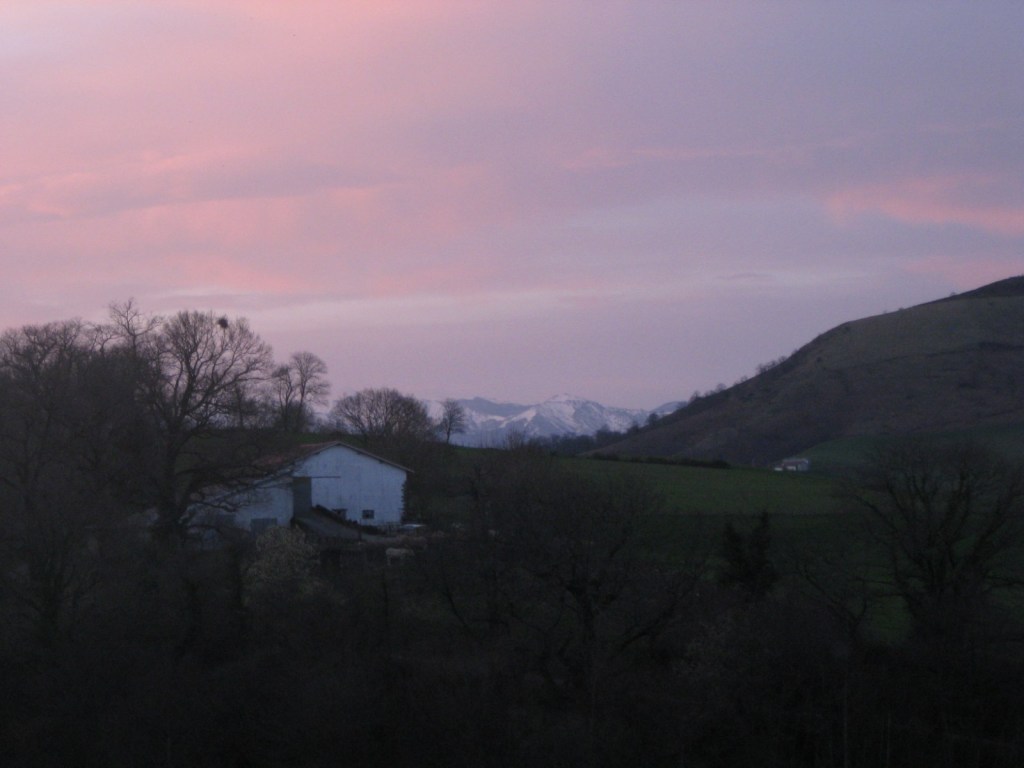
The next day, we explored St. Jean Pied de Port. From before the time of the Romans, it’s been a market town, an important jumping off point for Spain.  It’s been a garrison too, and an important stop-over for pilgrims on their way to Compostella.  Now it’s a tourist centre too, for walkers in the region.  It’s an attractive town, surrounded by ramparts.  We pottered around, enjoying views from the ramparts, pilgrim-spotting, ancient doorways, and watching the river, before setting off for a leisurely journey home.
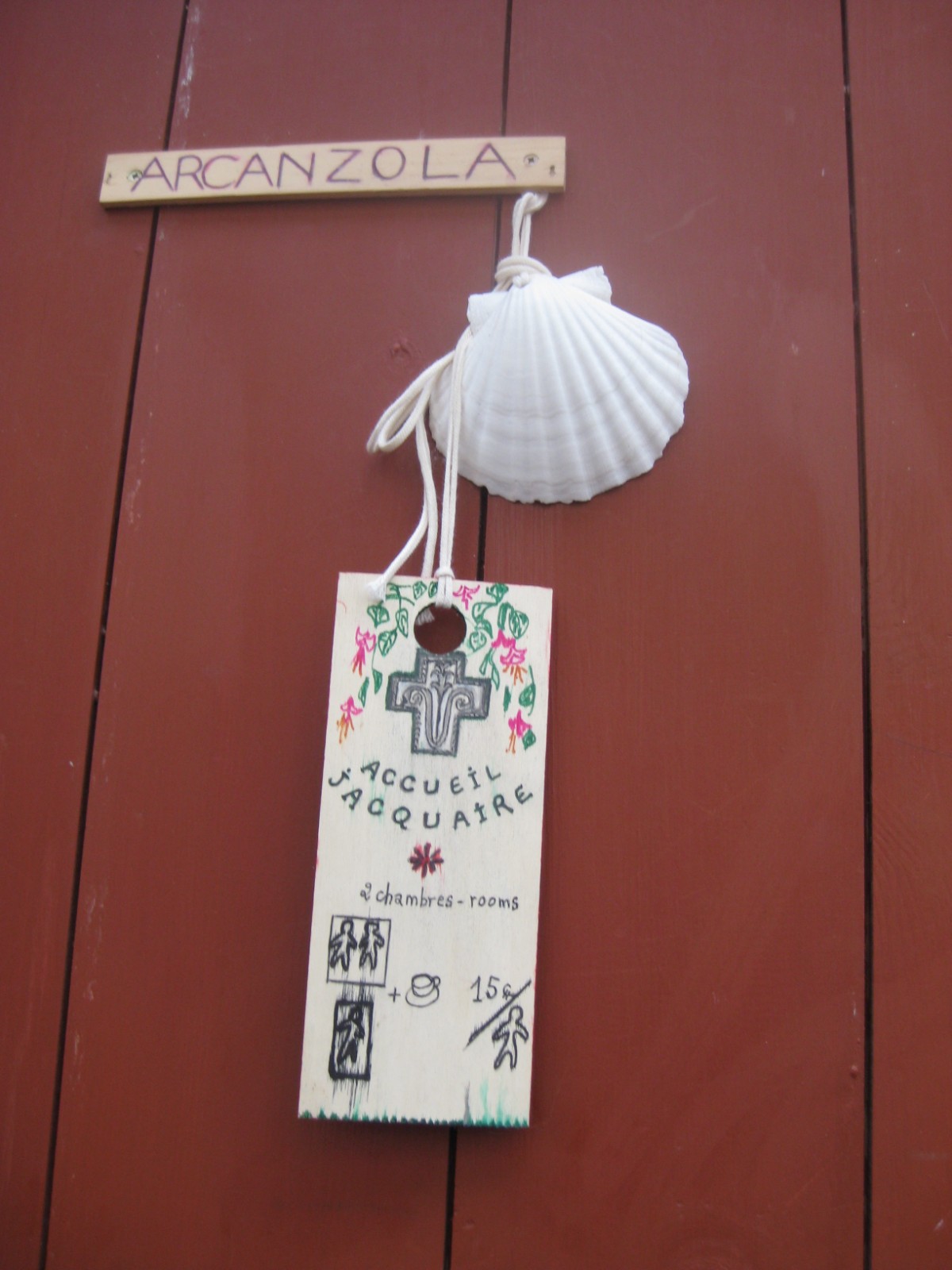
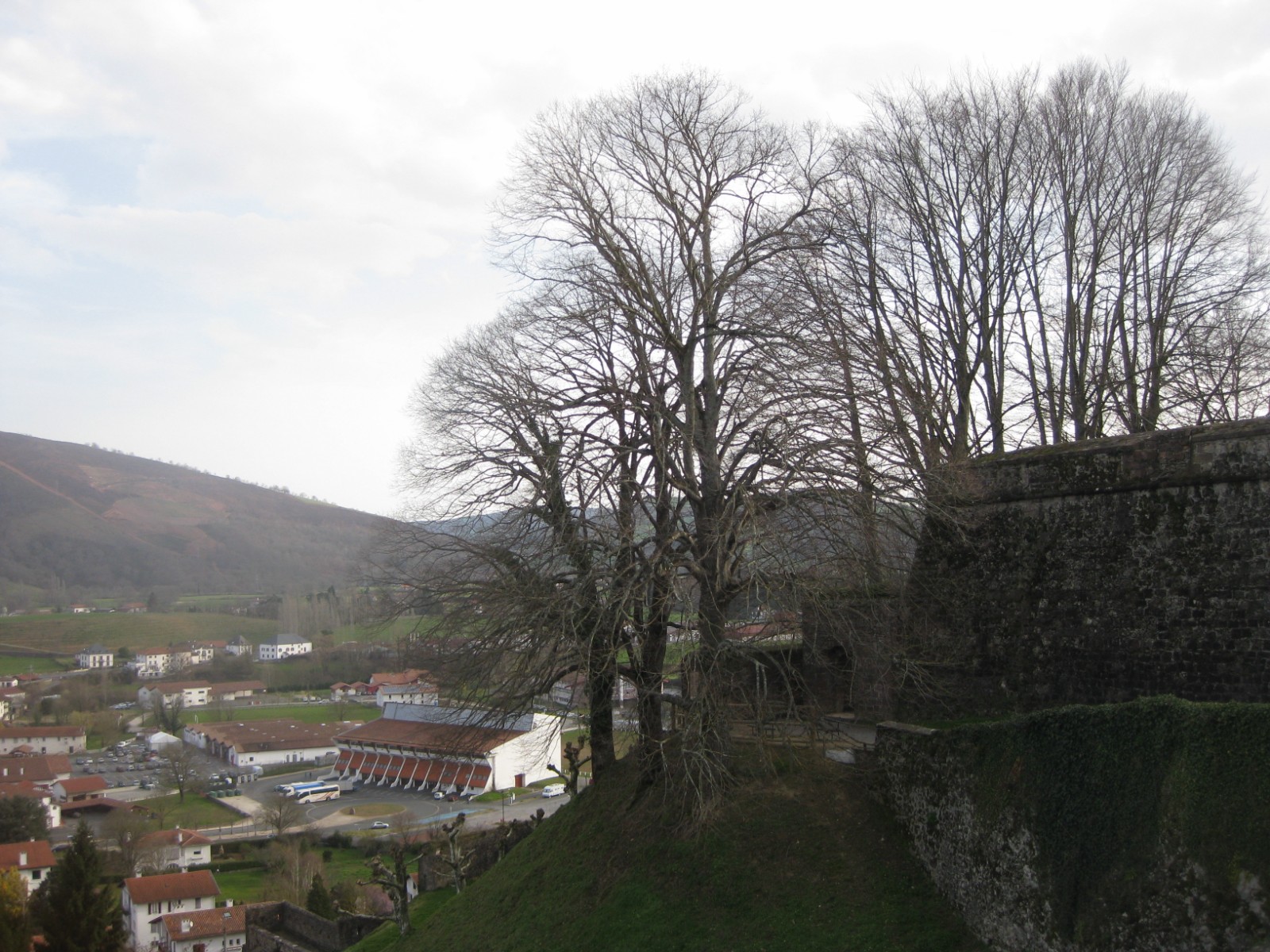
And next time we stay, we’ll make it much longer than 36 hours.
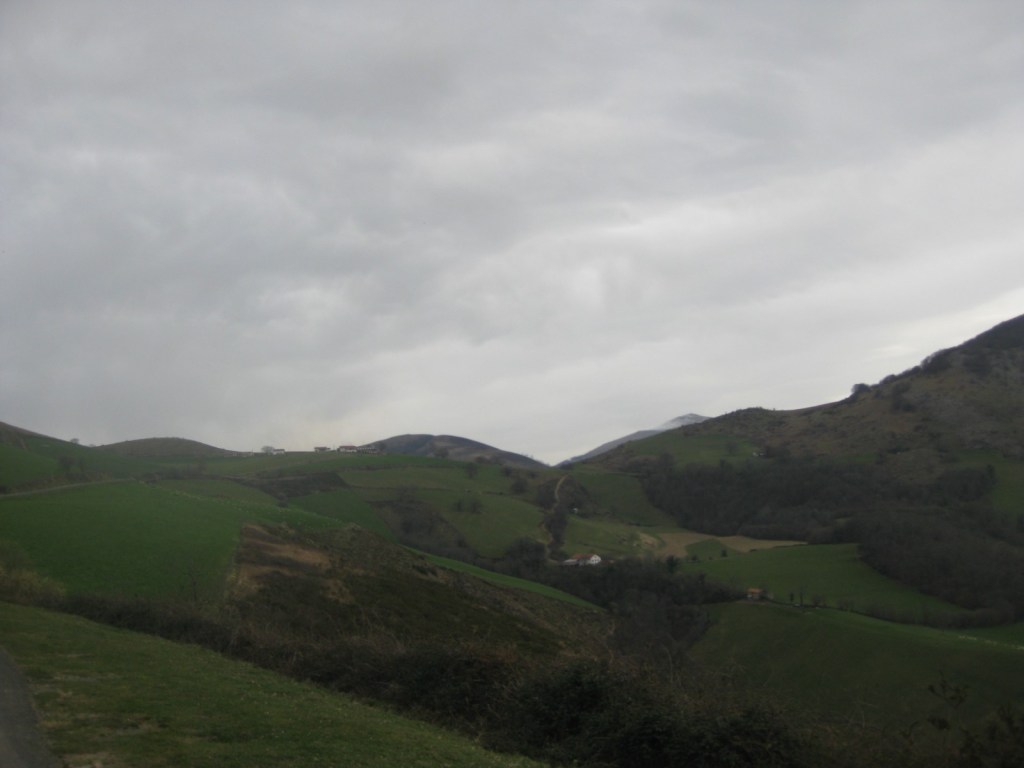
A final view, on the way home

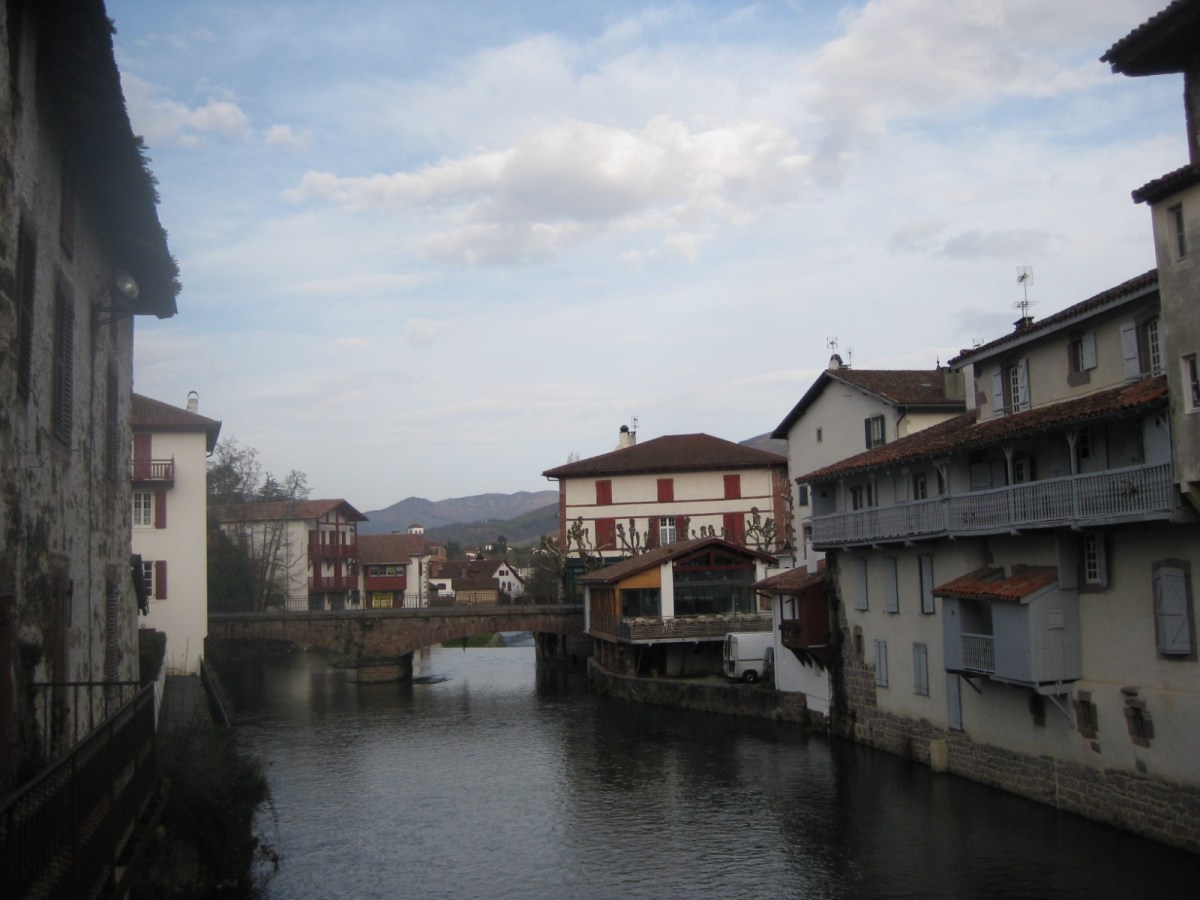
The featured photo is a view of St. Jean Pied de Port.

‘A Line is a Visual Trail of Energy’

So said Mick Maslen, Yorkshire artist and teacher. And perhaps none is more energetic than the Leading Line: the one that draws you insistently into an image to discover what lies at the other end. And which may leave you wondering, because you often never reach it.
My header image is from Cádiz, and is a bit of a text book classic. Pavement, road, seawall, cars, kerb-side buildings – even to a lesser extent the wispy clouds- all lead you on and drop you outside the city’s cathedral.

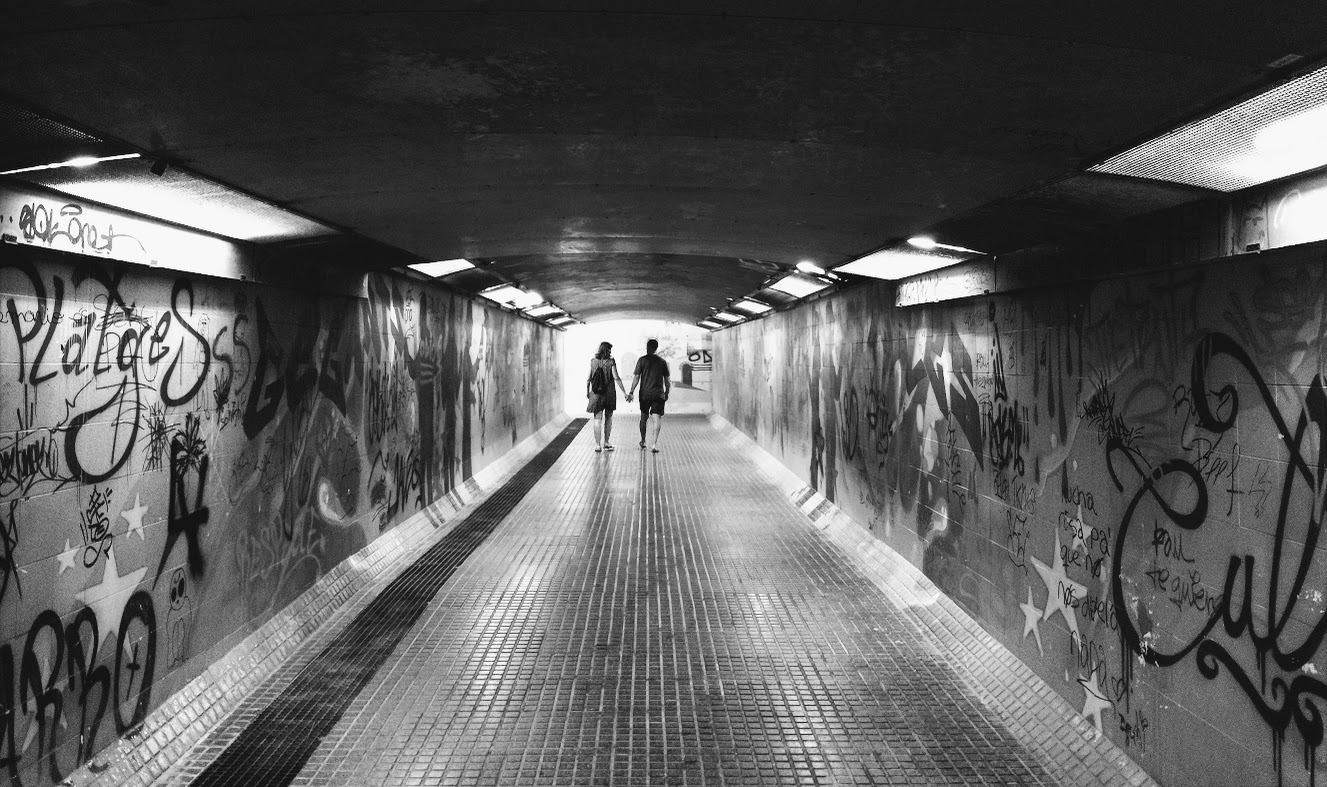
In other examples, it’s the journey along the lines, rather than the destination that commands our notice. Here’s one from Chalons-en-Champagne: the wall paintings rather than the chap at the end, are the story. Just as the couple in the underpass in Premià de Mar attract less attention than the graffiti they’ve just walked past.

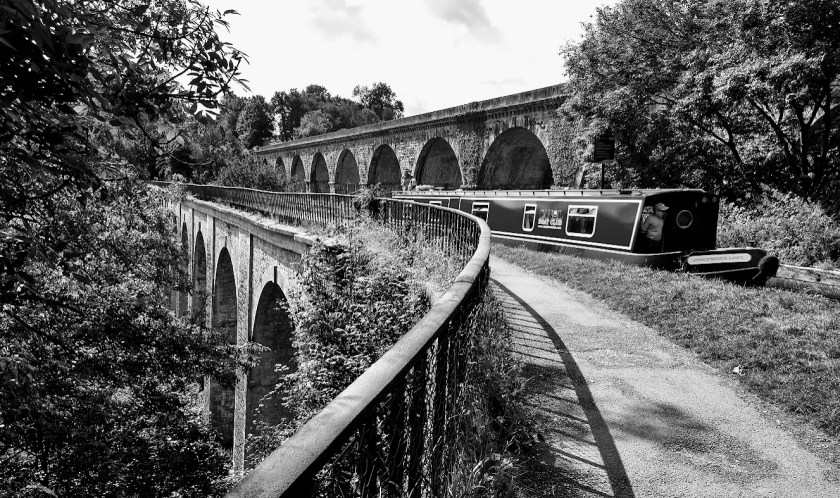
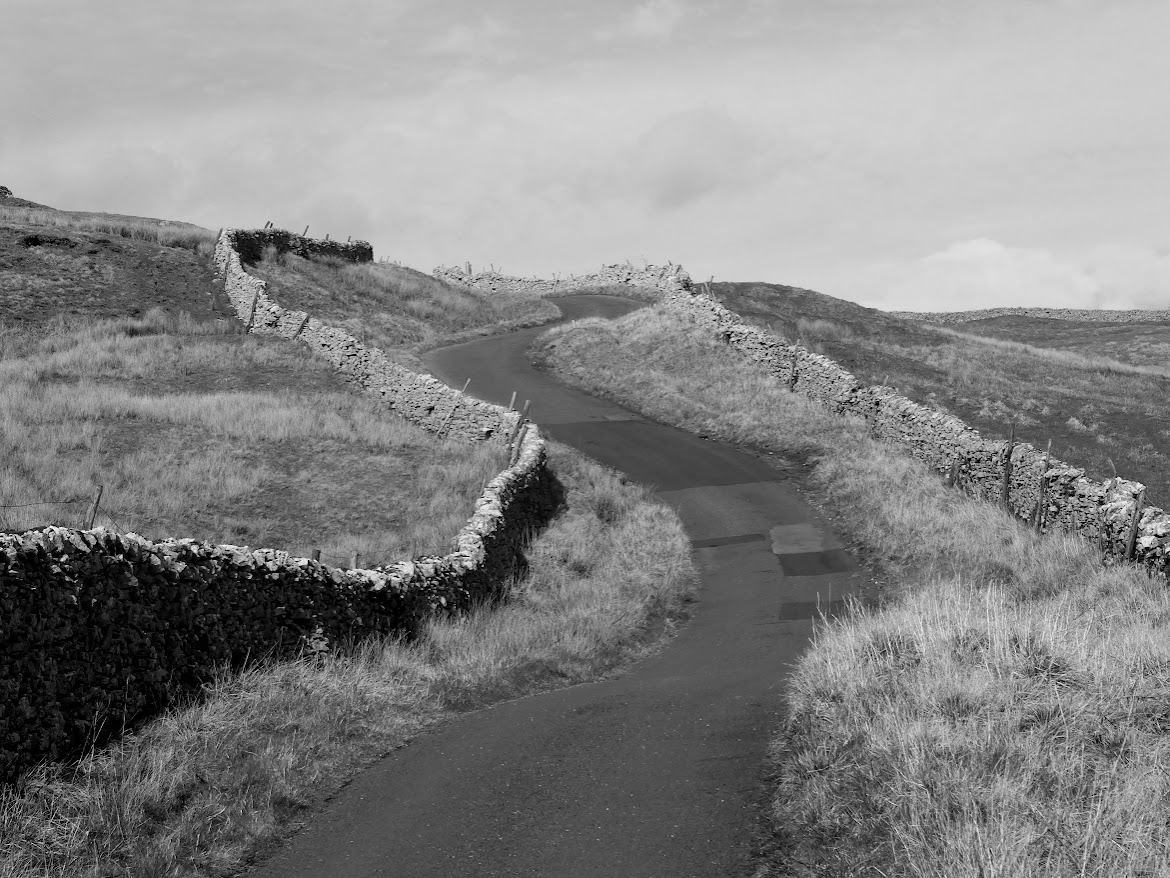
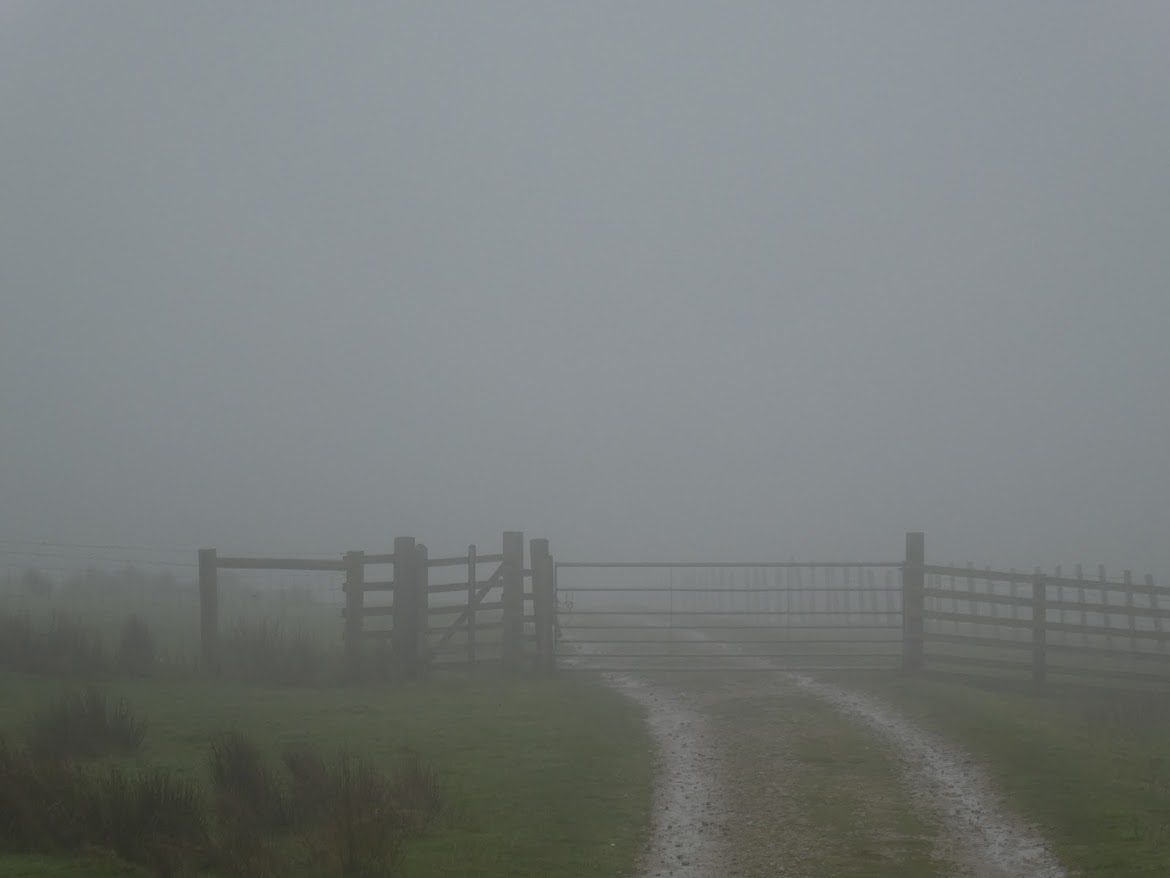
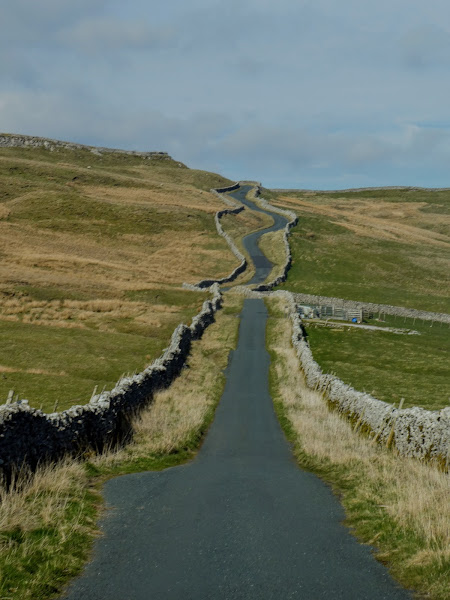
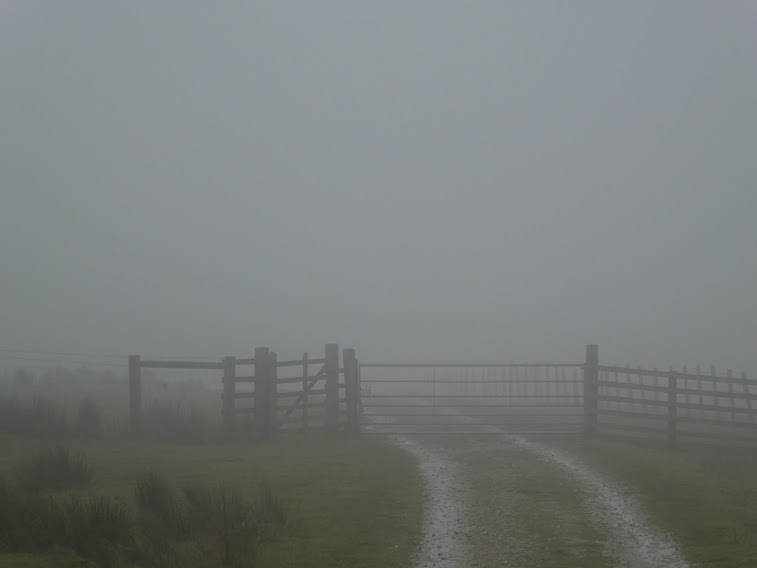
Other leading lines have no destination that we can see. The Chirk Aqueduct, with viaduct behind is going somewhere. We just don’t know where. The same with the Rolling English Road in the Yorkshire Dales, and the track in another part of the Dales whose path has been enveloped by fog.

Chirk Aqueduct: from Shropshire to Wales.

Just one more image today. The astonishing Millau Viaduct in France, some two and a half km. long, sweeps majestically about 35 metres above the River Tarn and the landscape and communities beneath- sometimes (and oh how I’d love to see it then!) even above the clouds.

Millau Viaduct

For Leanne’s Monochrome Madness and her guest host this week Sarah, who writes Travel with Me.

A Window on a Vet’s World

This is a window designed in honour of a vet – James Herriott. He (under his real name of James Alfred Wight) made his name by writing a whole series of books about being a young vet in Darrowby (actually Thirsk) visiting farms and their animals hither and yon in the Yorkshire Dales from the 1930s onwards. If you don’t know his books, you may know one of the TV series going out under the name of All Creatures Great and Small: 1978 & 2020, as apparently they’re doing the rounds the world over.

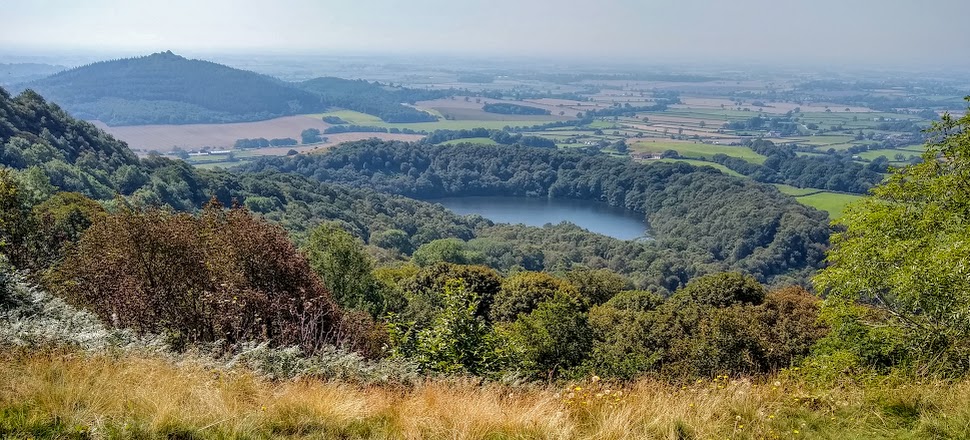
Well, there’s a museum in Thirsk as well – World of James Herriott – occupying the house he and his family lived and worked in all those years ago. And it has a window celebrating the landscape that formed the backdrop to his work. Here it is as the featured photo. And here is a bit of a collage of the backdrop to the working week of any Yorkshire vet, then and now. Except I haven’t got a picture of the White Horse at Kilburn featured in the window. About 170 years ago, it was cut into the landscape to emulate the chalk hill figures of southern England, and Herriott, like all the rest of us, would see it often as he drove round and about the area.

If you’re in the area and want a good family-friendly destination, the museum is highly recommended. You’ll come away with all the older family members saying ‘I remember those’, as they peer at tea-cosies, mangles and a thoroughly ancient car (Gumdrop, anyone?), bemused by the vetinary equipment, and entertained by the quizzes and activities in the children’s gallery. You too can insert your arm into a cow’s rear end to deliver a reluctant calf.

And for a bit of context, here’s a view from a window in the museum.

Monday Window

Stone

Millennia pass.
Continents collide.
Oceans swell, ebb, freeze.
Rocks accrete…

..and, in England, form
its nubbly spine: the Pennines.
Men gathered scattered stones -
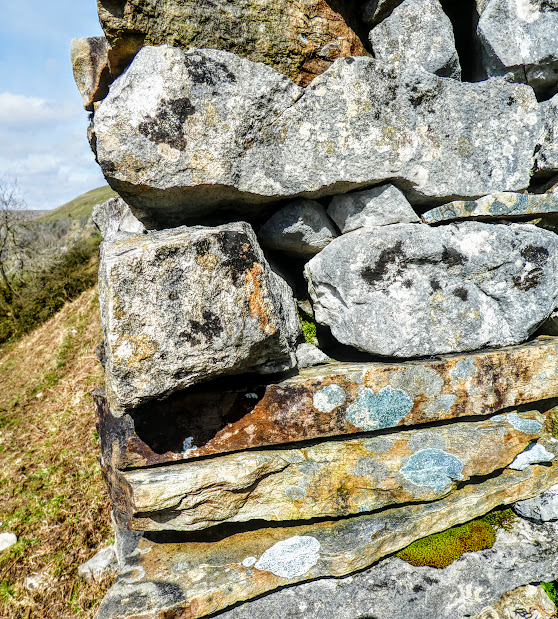
erected walls, marching across dales, hills, moors
holding fast the sheep or meadowland.                         

These stony barricades are the landscape -
like the rocks from which they came.   

For Rebecca of Fake Flamenco’s November Poetry Challenge: Stone.

An Asymmetrical Amble

Last week, I invited you to join me in Spain, and hunt for the symmetrical. This week, we’ll stay closer to home, and have a countryside wander looking for the asymmetrical for Dawn’s Lens-Artist Challenge.

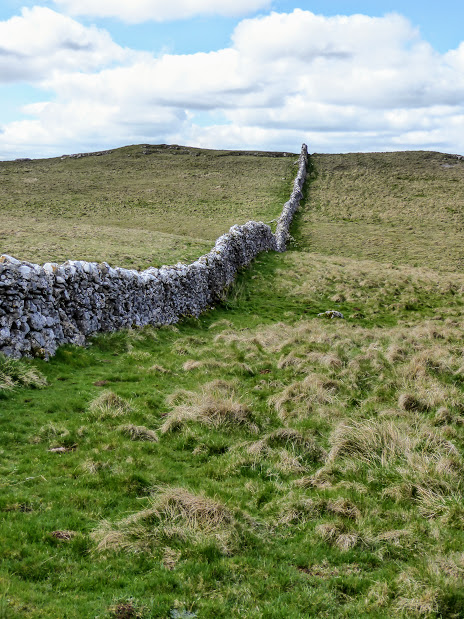
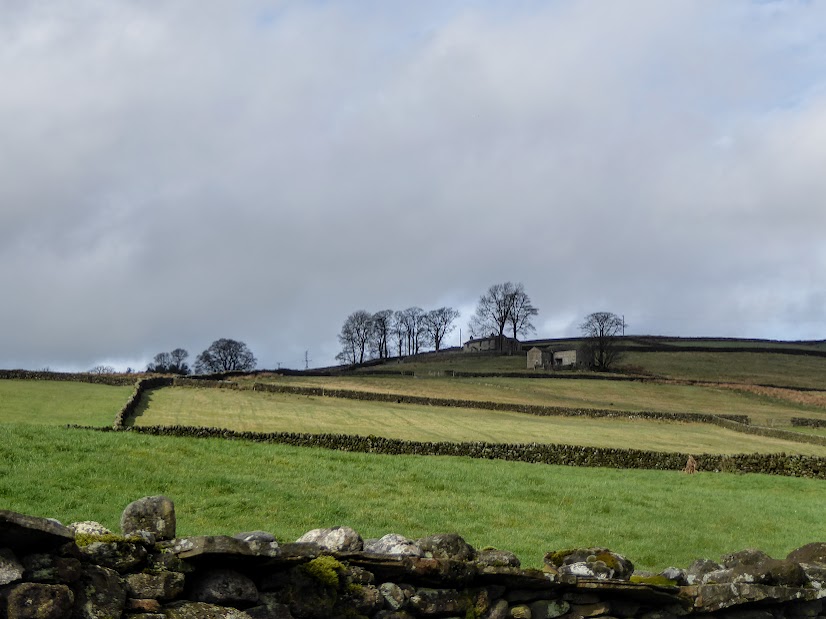
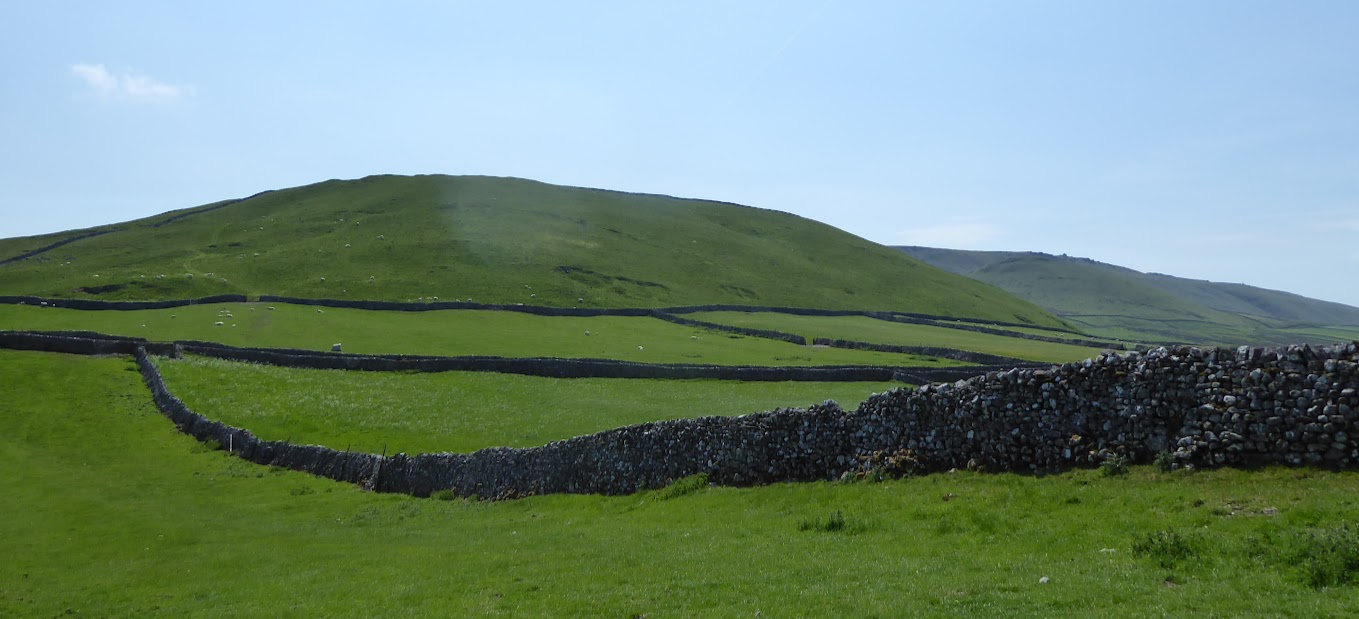
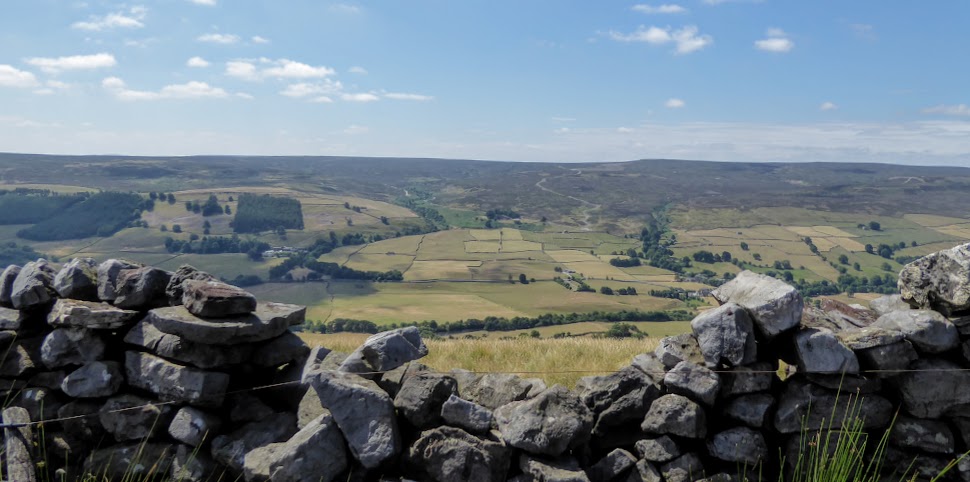
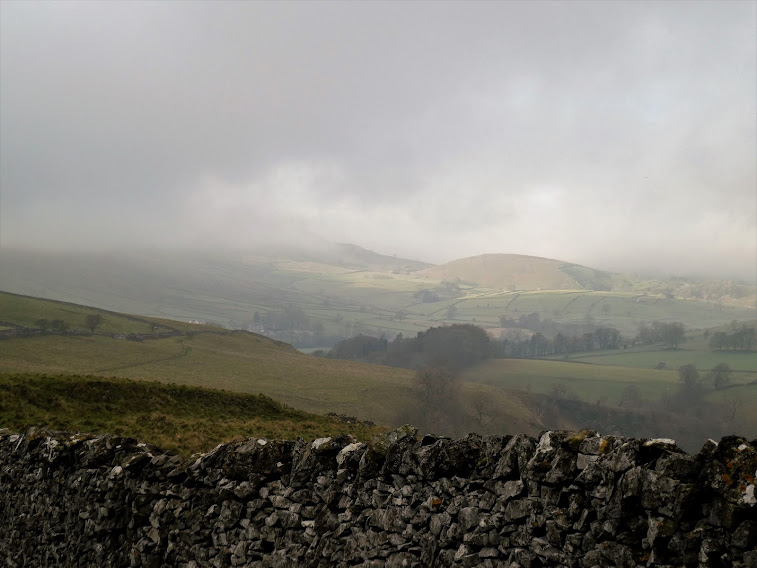
What we’ll do is start off in the Yorkshire Dales. Let’s peek over a drystone wall and look at the patchwork of small fields that has evolved over the centuries, way before agri-business and the space-gobbling demands of giant machinery.

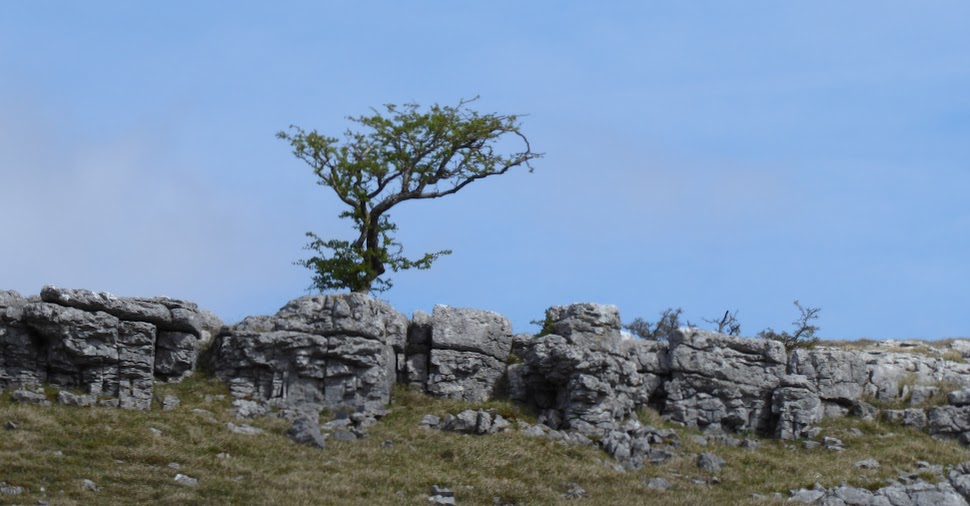
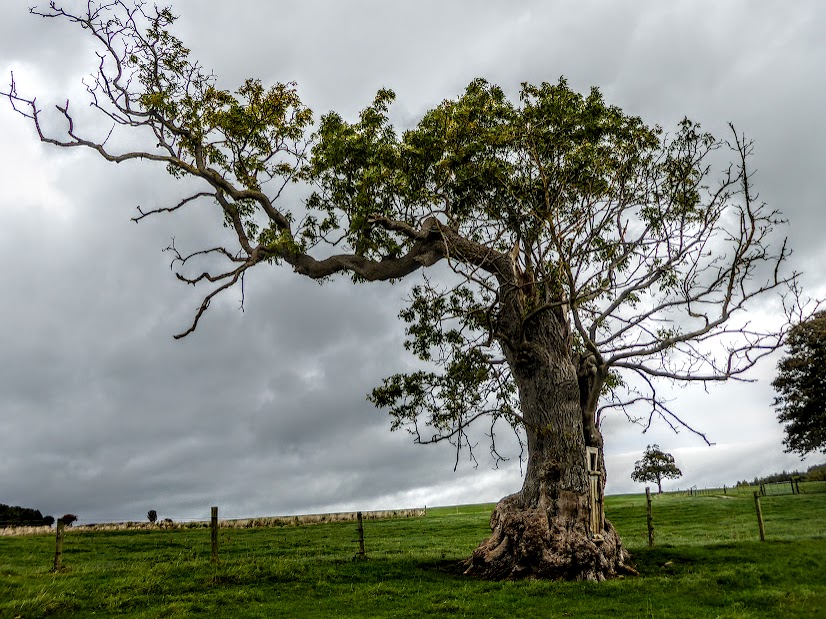
Conditions are harsh: not too many trees then. But those there are battle to reach maturity and stay upright against prevailing winds. Symmetry is the last thing on their minds.

Look carefully. At the right hand side of the hollow trunk, some fond grandfather (I’m guessing) has fashioned a door to the hollow trunk, to make a very special tree-house.

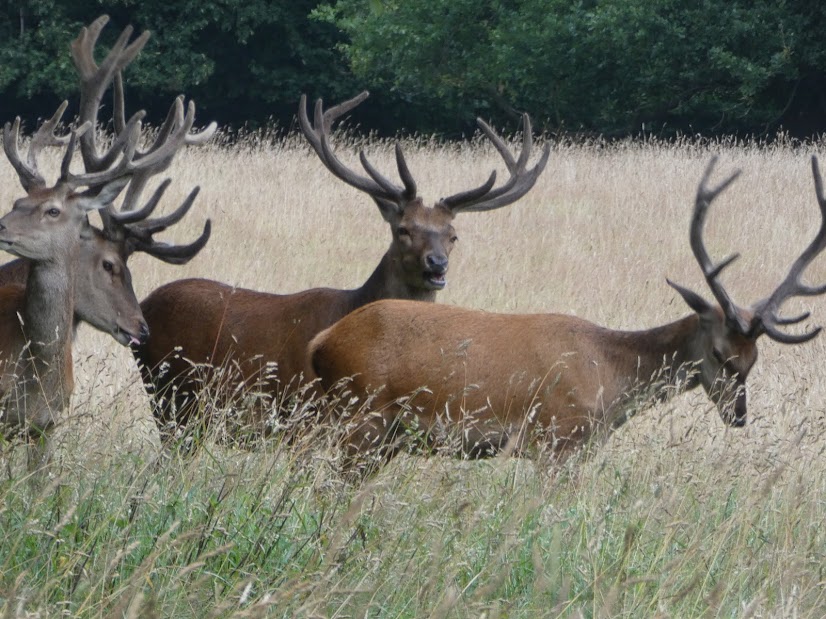
Let’s hurry back to civilisation, before darkness falls. Here in Studley Royal is a blasted tree that always reminds me of the antlers of the red deer stags who call this area home.

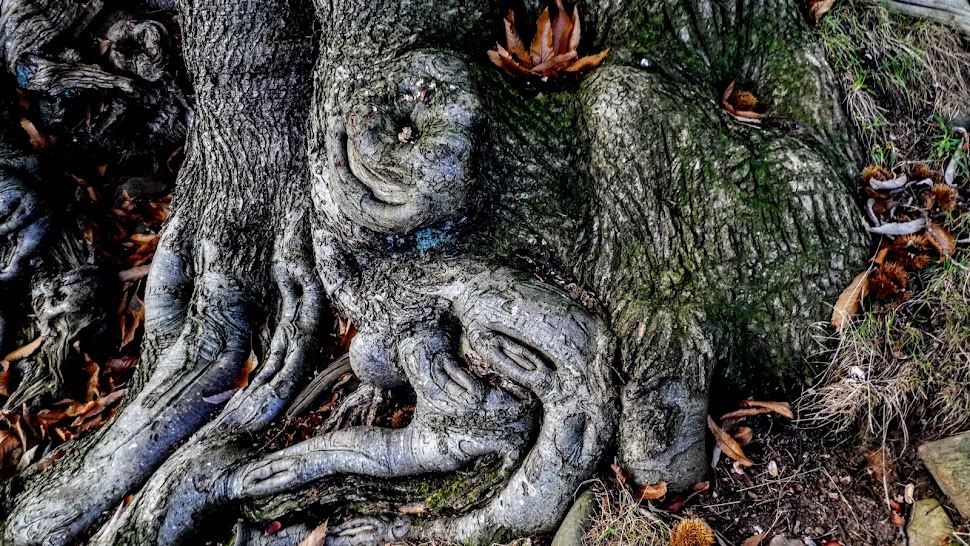
And here too are ancient tree roots, complete strangers to symmetry: some of the older stumps house fungi.

Oh look. Darkness is falling.

Let’s hurry into town. Bright lights, big city. Perhaps we could grab a warming mug of hot chocolate to thaw out our chilly fingers. And that’s where I’ll leave you for now. See you soon, I hope.

It’s a bit of a stretch to get from Studley Royal to London in time for the final photo-op of the day (250 miles). Photographer’s licence.

What’s in the Frame?

This week, for the Lens Artists Challenge, Amy asks us to consider ways of framing our shots. So my featured photo doesn’t do that. The frame shown here, at Brimham Rocks IS the subject of the shot.

Sometimes, the photographer finds a frame has been fortuitously laid on. Here we are on the Regents Canal in London, in maritime Barcelona and at Harlow Carr Gardens in Harrogate.

A band plays on the floating bookshop, Word on the Water, on the Regent’s Canal, London

Sometimes a window – an actual window, or a suitably-shaped hole-in-the-wall provides that frame. Here’s the South Bank in London, a shot taken while sailing to Bilbao, another view at Harlow Carr, and a convenient window overlooking the River Thames near Blackfriar’s Bridge.

In her post about framing, Sarah of Travel with Me fame took us to Fountains Abbey and Studley Royal. We’ll go there too, but wander through the wooded area of the High Ride, and into the parkland of Studley Royal, allowing the trees themselves to frame the picture.

Fountains Abbey in autumn.

And lastly, another view which didn’t work as well as I hoped, through a chink in a drystone wall in the Yorkshire Dales.

Birdy-long-legs

This week, Denzil, for his Nature Photo Challenge #9, invites us to hunt down long-legged birds.

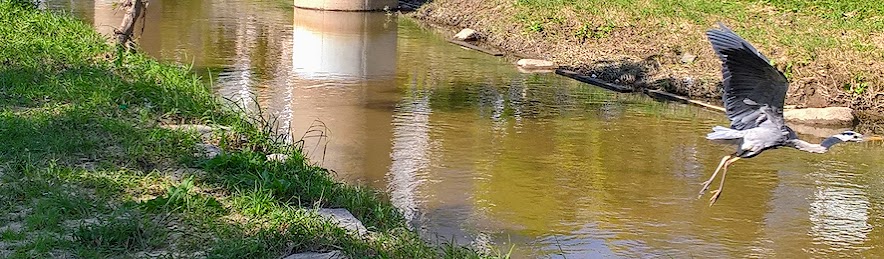
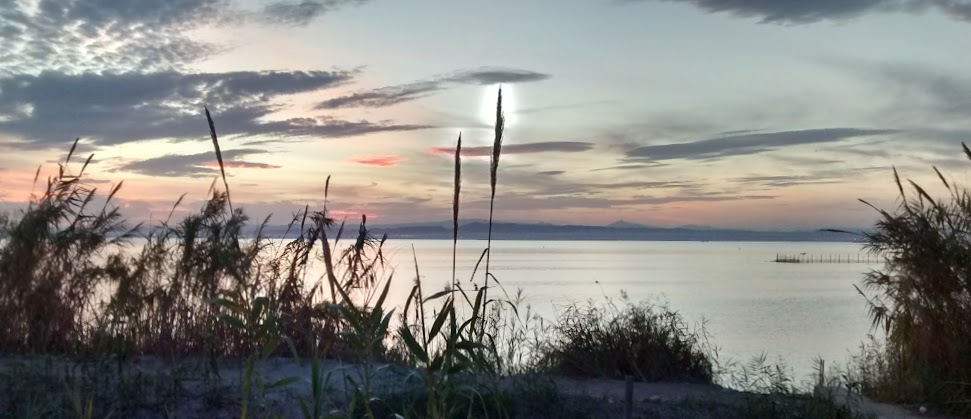
So I’m going to book-end my post with herons, omnipresent herons, seen in every continent but Antarctica, almost anywhere where there is fresh water. I could have shown you one of our local birds, patiently fishing in the River Ure. Instead, I feature one seen in urban Busan, South Korea, and finish with one surveying the evening scene from his look-out post in l’Albufera, Valencia, Spain.

Let’s stay in Spain, and showcase a stork supervising the nest a-top a church in Tudela, Navarre.

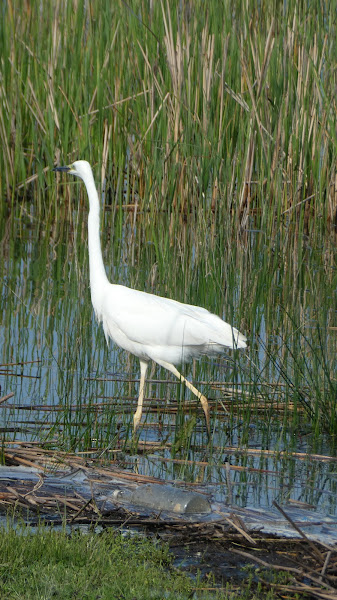
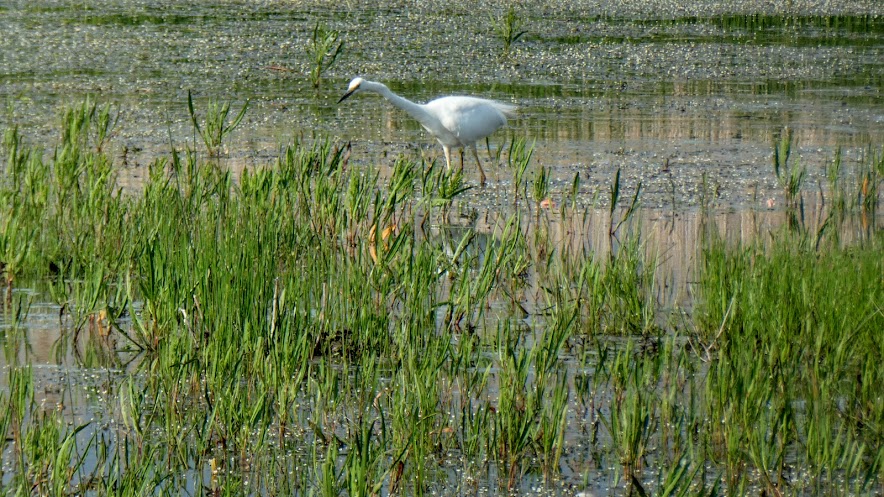
Now Greece, and another member of the heron family, the egret, hunting for breakfast.

Let’s return to England. But you’ll only find flamingos in places like Slimbridge Wetland Centre.

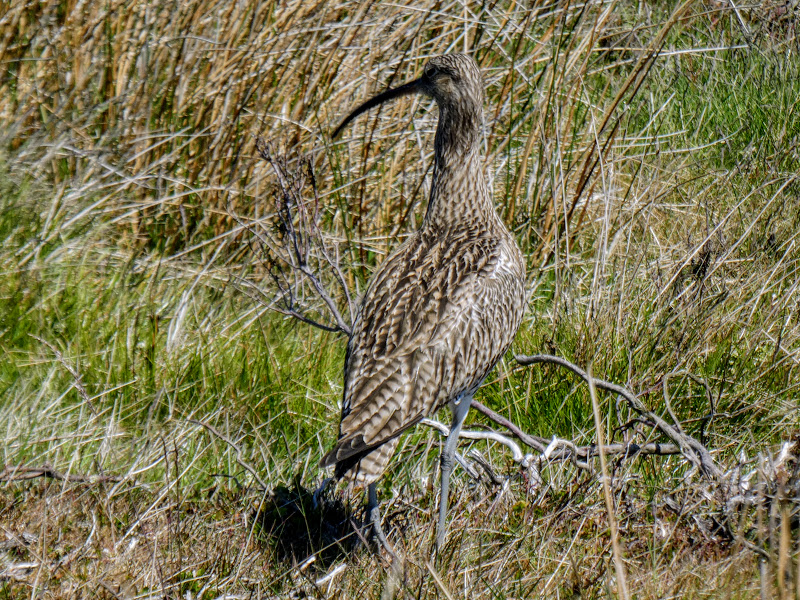
Just as Lockdown came to an end, we ventured once more into the Yorkshire Dales, and found curlews, so newly unaccustomed to traffic that as we parked ready to go on our walk, they stayed nearby, unconcerned.

The patterned curlew blends in so well with the less-than patterned grasses. Especially the legs. Keep looking – you’ll find them.

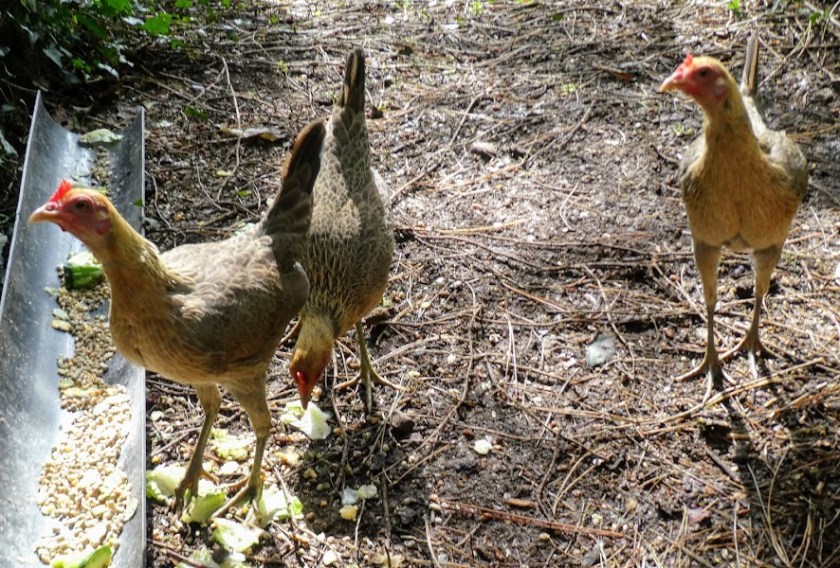
I bet you wouldn’t expect to find a hen in this post. But our neighbour’s chickens have long legs. And they lay the smallest hens’ eggs ever.

And finally, as promised, here’s our Spanish heron.

L’Albufera, Valencia

Alone Time

I don’t have a problem being alone. As an only child who was often uprooted while growing up, I was used to my own company. Nowadays, though I value family and friends, time to myself is important too. My happiest memories of lockdown are of the Daily Exercise we were permitted, when I’d take myself off to enjoy the differences each day made on familiar daily walks, and discover new tracks and pathways.

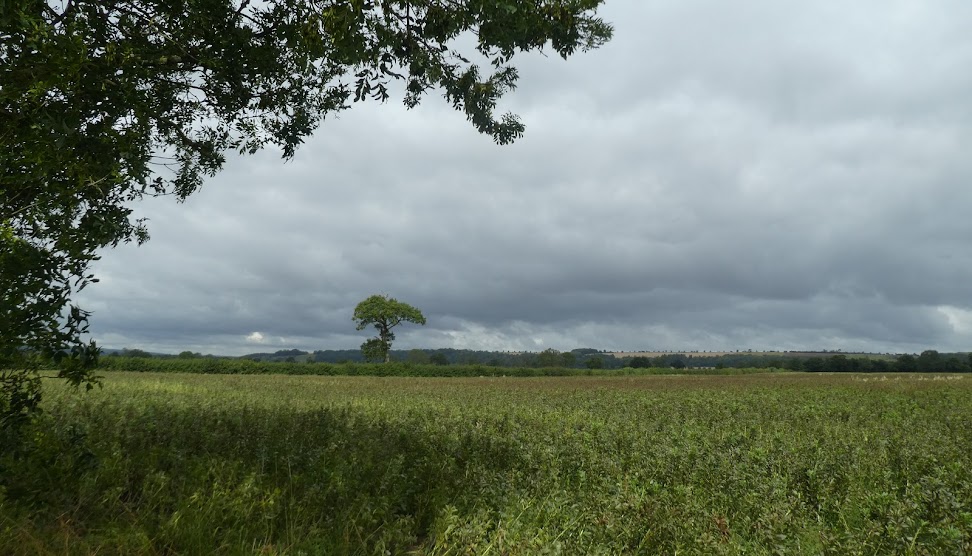
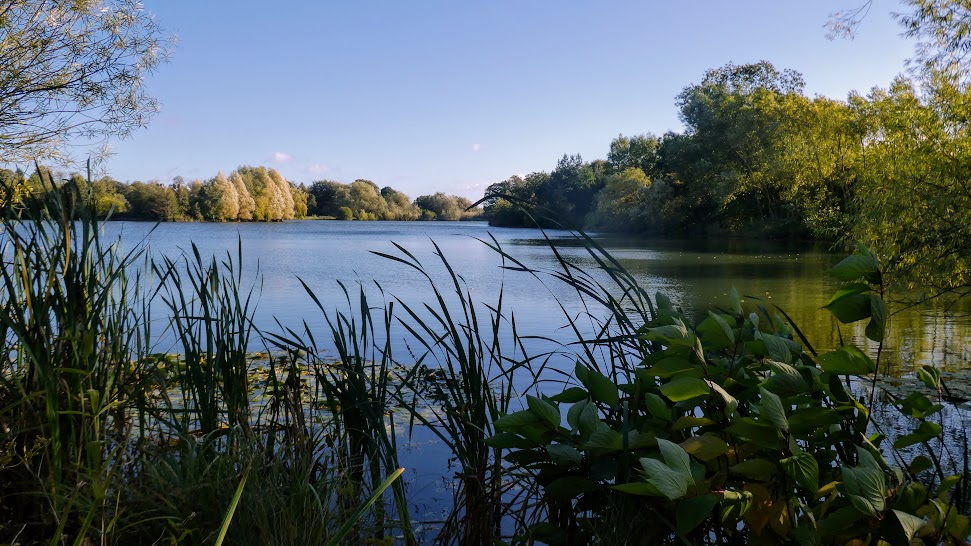
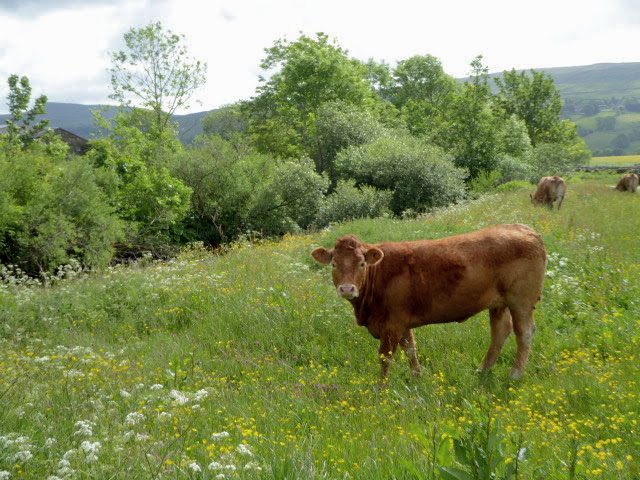
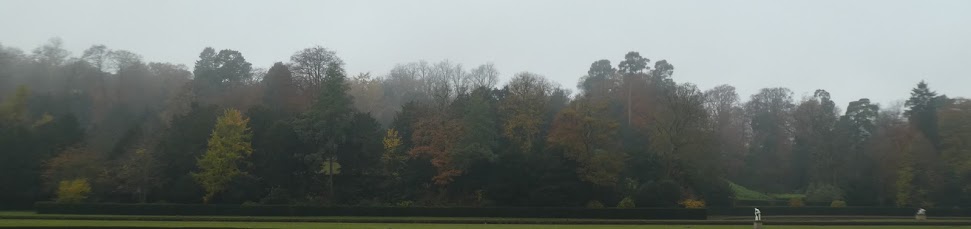
Here’s a rather random gallery of landscapes that may meet the needs of the solitary walker. Put on your hiking boots and yes, why not? We’ll go and enjoy them together.

…. and then you could just go off by yourself if you wanted …

For Ann-Christine AKA Leya’s Lens-Artists Challenge #238 Alone Time

The header image is from l’Albufera, near Valencia, Spain, where I had a wonderfully solitary afternoon and evening one November about four years ago.

I’m a fan …

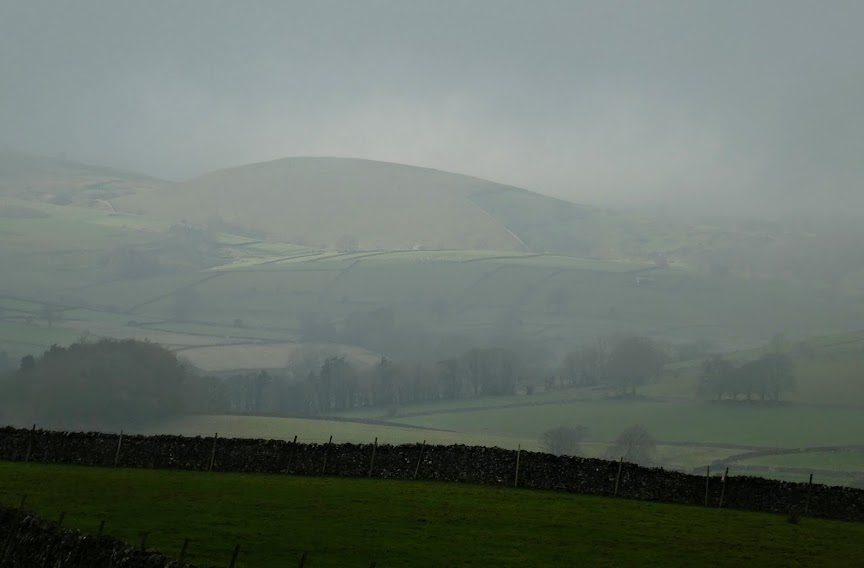
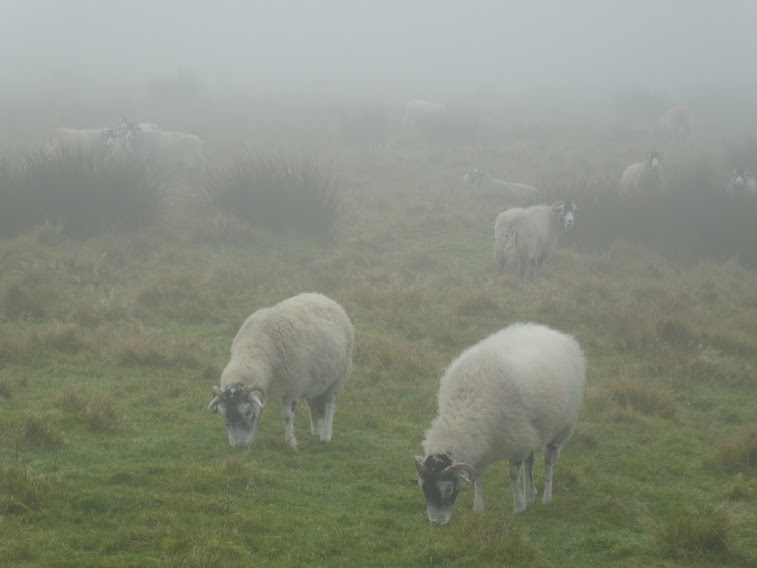
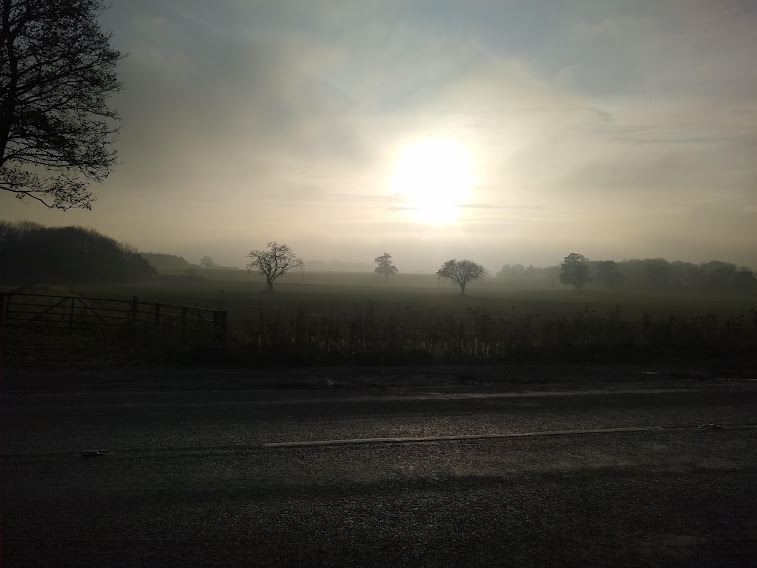
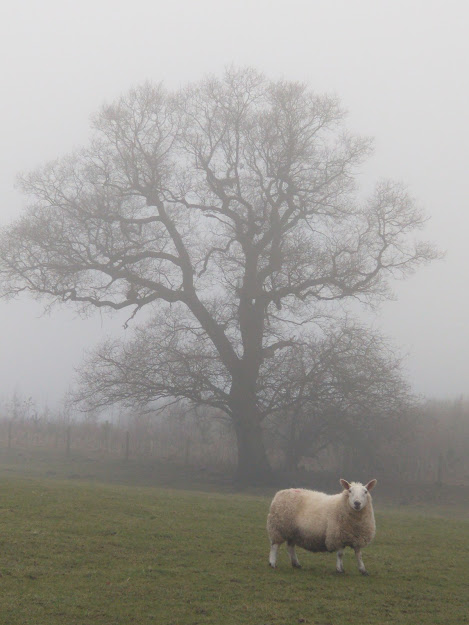
I’m a fan of fog. Not the yellowish throat-catching, grimy sooty pall that that I remember from a 1950s London childhood, which dirtied our clothing and made us cough while we waited in vain for buses, delayed by their headlights’ inability to pierce the gloom with their faint orange glow. Sometimes the conductor, carrying a torch, had to walk in front, picking out a path through the murk. No, now I enjoy peeking through the windows at a landscape softened in a mantle of greyish white. Or walking in the Dales, barely able to distinguish the path ahead, as sheep suddenly loom before us, concealed behind frozen grassy clumps.

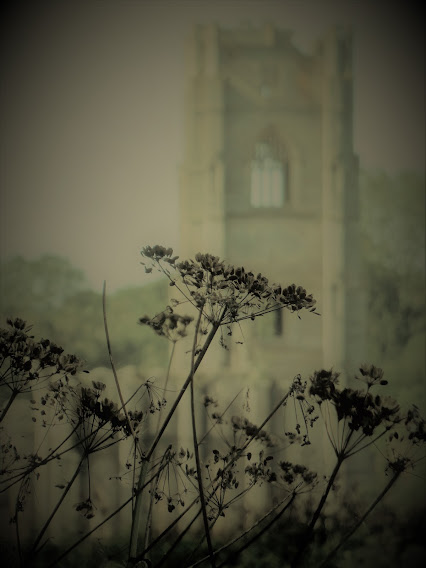
These are all from the Yorkshire Dales, in Wharfedale near Burnsall. Here are just a few more – three taken near our house, and one, like the header photo, at Fountains Abbey.

For Jez’s Fan of … challenge