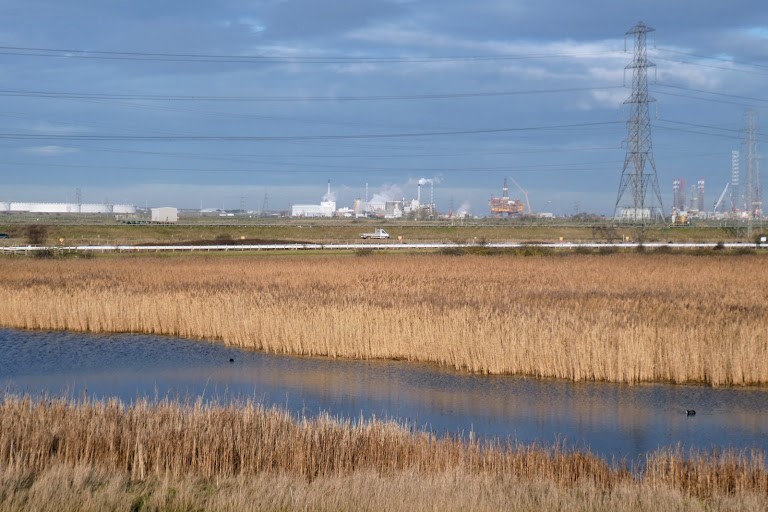
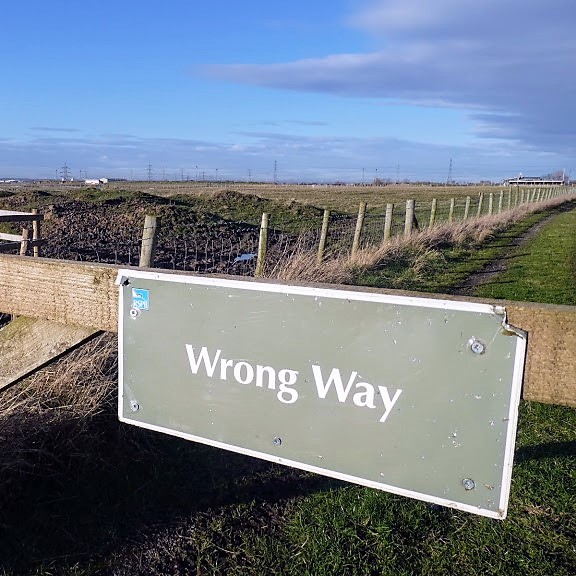
If you’re ever near Middlesbrough, and fancy a breezy walk on an RSPB reserve, you could do worse than go to Saltholme. It’s modest enough to explore in an afternoon, and besides, there’s helpful signage to prevent your getting lost.
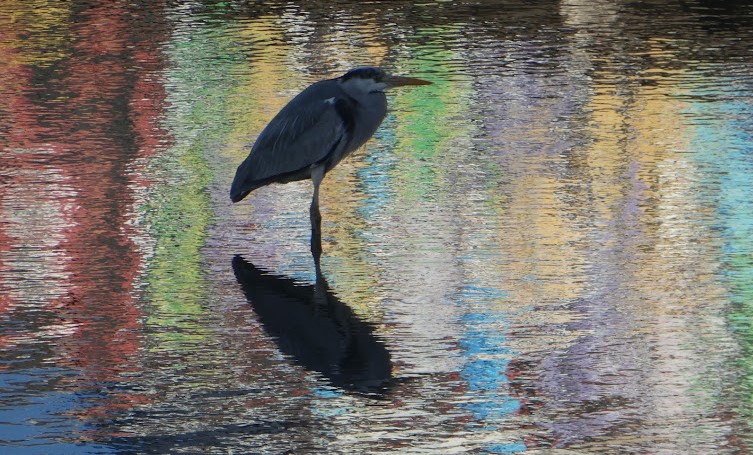
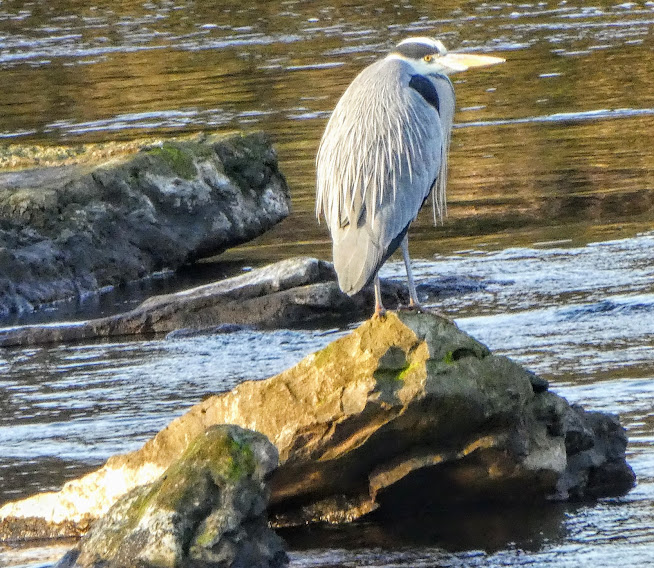
The river down the track from us is a favourite fishing ground for herons. I love to watch them as they patiently watch too, for fish. And I love it too that wherever we travel, we’re likely to see local herons about their business. The one in the featured photo lives on the Guadalquivir in Córdoba, but his routines seem just the same as those of our Yorkshire birds.
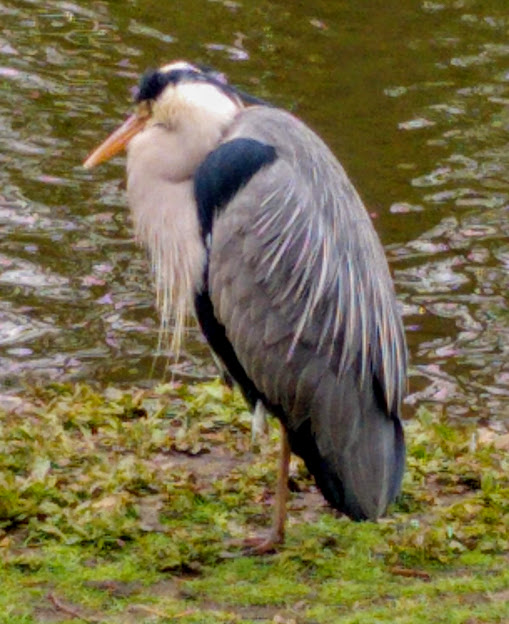
This one lives in Kew Gardens, and the heavy rain makes him look a little out of focus:
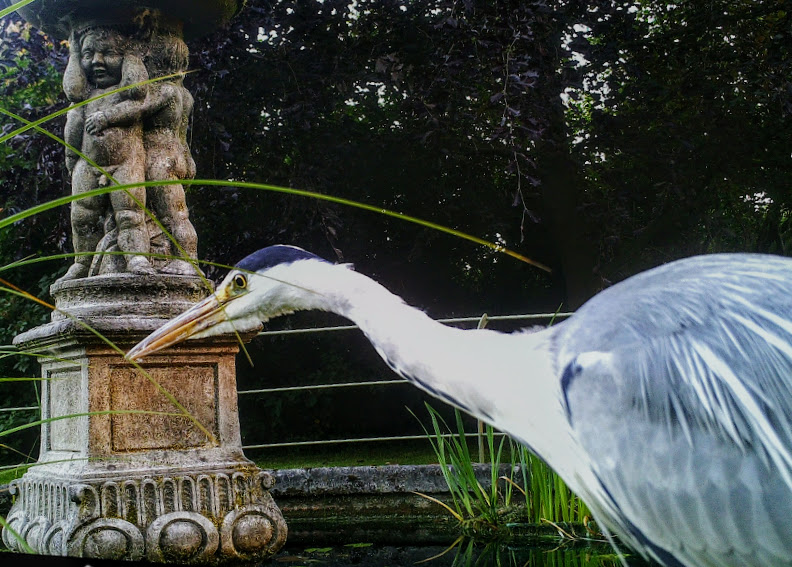
Here are a few more:
Elke of Pictures Imperfect demonstrates that the black-and-greyness of these birds makes them ideal for Jude’s Life in Colour challenge, as she’s seeking shots that are black and grey this month.
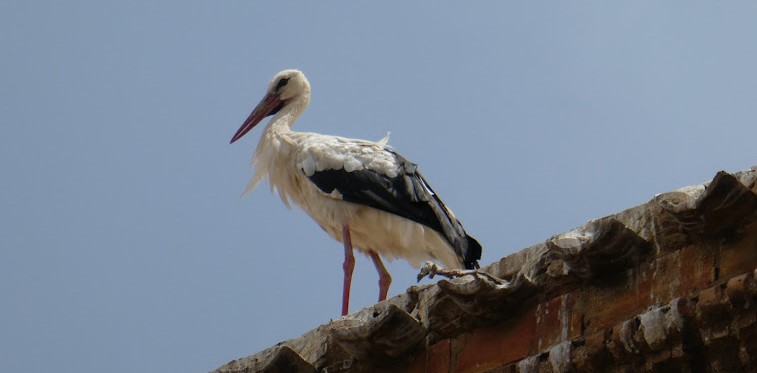
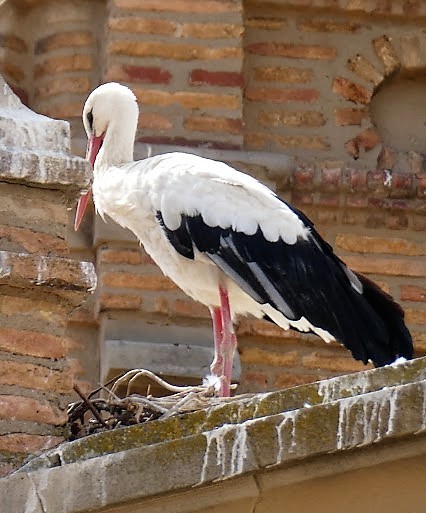
What a good idea Becky had when she began to start her blogging week with a favourite portrait! I’m going to follow suit, and choose to give fifteen seconds of fame to a special bird: a stork, nesting on a church in Tudela in Spain.
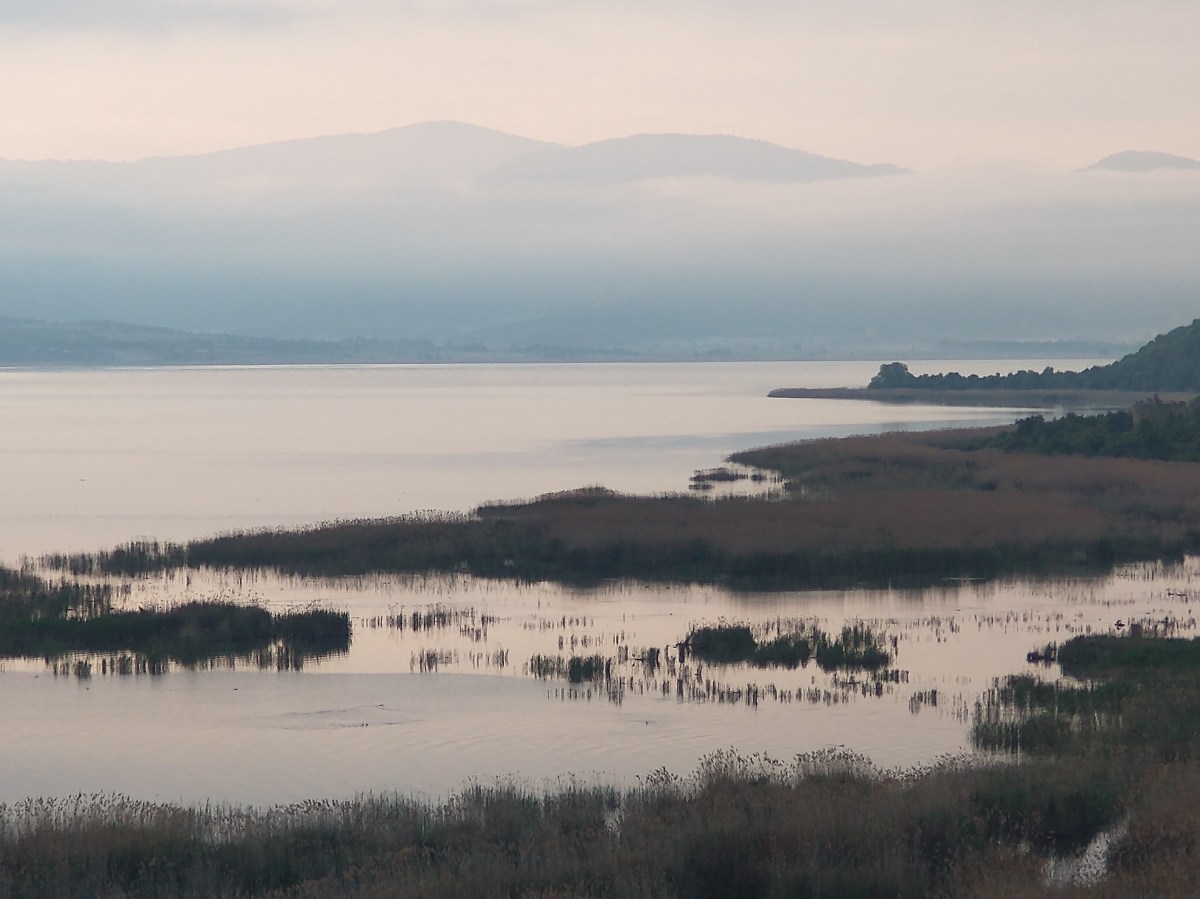
It’s time for Fandango’s Flashback Friday. I’m taking you to France, to a gloriously sunny day – 20th August 2013. Happy Memories.
Butterflies: Half an Hour of my Life
August 20th 2013
There we were at Roquefixade, showing our favourite walking destination off to two of our Harrogate friends, when a butterfly discovered me. Then another. These two creatures played round my wrist for more than half an hour before finally dancing off into the sunshine. They made our day.
He found Chris first …
… then abandoned her for my wrist.
Then there were two.
I’m thinking they’re the Common Blue (Polyommatus icarus). Any dissenters?
What do you think of when Derbyshire’s Peak District is mentioned? It’s a glorious area of England, part of its Pennine spine. There are old stone-built towns and villages with long histories of hard work in mining, textiles and farming. There are limestone and millstone grit uplands and escarpments, with distant forest and moorland views, and valleys and gorges cut deep into the limestone.
A view from Hay Dale
We were there last weekend. Not for the broad brush of those appealing landscapes, though we got those too. Instead, we were there to inspect what we could see inches, or at most feet from us, as we and a small band of like-minded people slowly wandered narrow pathways and farmers’ tracks with Mark Cocker., on a tour which he organised with Balkan Tracks.
These were the tracks of our childhood, a time when (if you’re as old as me) flowers and insects weren’t routinely eliminated from the fields by cocktails of fertilisers and insecticides. Nature Walks were the once-upon-a-time weekly staple of the village school where I began my education: a neat crocodile of children hunting curiously for leaves, berries and treasures for the Nature Table in the corner of the classroom. Our group last week formed anything but a neat crocodile, and we collected treasures through the lenses of our cameras, exchanged young eyes for our pairs of binoculars.
The places we explored with Mark often had poor thin soil. It’s not worth cultivating, but huge numbers of wild flowers seek out and colonise such spaces and it can be pasture-land too. Where there are flowers, there are insects: flying creatures of all kinds, bees of all kinds, beetles, moths, butterflies.
I knew there were a fair number of different bee species, though I had no idea that there were some 270 of them. But I thought a bumblebee was a bumblebee was a bumblebee. It turns out that there are getting on for twenty different kinds, and that some of those are cuckoos. Cuckoos? Well, yes. Cuckoo bumblebees are as wily as the birds they are named after. They lay their eggs in another bee’s nest and leave the workers of that nest to rear the young.
Erm… I hope this is a white-tailed bumble bee
We found caterpillars, we found flying creatures and bugs, we found moths and butterflies. Mark was excited enough about one find to write it up in this week’s Guardian.
Cinnabar moth caterpillar
Gatekeeper butterfly
Ruby-tailed wasp
We climbed up to Solomon’s Temple. We wandered through Millers Dale, once the site of a busy railway line. We explored a now disused quarry, now colonised by a rich variety of life, including orchids, and a collection of stunted trees. Unable quickly to get the nourishment they need, they reach maturity as dwarves. We explored almost unvisited dales such as Hay Dale. All these were limestone, but we had a little time in the imposing millstone grit landscape of The Roaches, which – don’t tell anyone – is actually just in Staffordshire.
The viewfrom Solomon’s Temple
Millers Dale
This quarry just off the main trail hosted abundant flowers .. and these stunted trees
Ragwort plays host to a huge variety of insect life
Walking in little-visited Hay Dale
A view from the Roaches
Our days were far from silent. Even if it’s no longer prime bird-song season, there were spotted flycatchers, willow warblers and sightings of various finches and tits. Wheeling above us: buzzards, red kites, hobbies, while shallow rivers, busily chattering over stones and rocks were feeding stations for dippers and ducks.
This song thrush obligingly posed for a photo
A distant dipper on the River Wye
We even had a little time to explore Buxton, where we stayed, and where, each evening, we ate, talked, laughed and generally got to know each other at the (highly recommended) Brasserie.
Buxton by night
What a weekend. I’ve learnt that I still have an awful lot to learn. And our own garden is the perfect classroom.
I was quite amused a while back while at our local nature reserve, watching an egret and a heron occupying the same patch of shallow water. They were both fossicking about feeding in a desultory sort of way, and they simply didn’t seem to see one another. They passed so close to each other from time to time that a cursory glance might have seemed in order. Nothing. Here they are:
Here are a few more unrelated birds showing they really have no interest in each other at all.
Another heron, and a cormorant, at L’Albufera near Valencia
Same place, different view.
A herring gull and a mallard ignore each other at Studley Royal
Bird weekly this week is looking for birds beginning with ‘G’. I don’t have all that many examples. But gulls, obviously gulls. There’s a whole row of them in the header photo.
I have a shot of herring gulls looking imperiously down over the town of Whitby, and a black-headed gull fossiking on the beach there.
Herring gulls in Whitby
Black-headed gull on the beach
Then there are guillemots on the Farne Islands…
And geese – always geese. Be sure to click on the second image to see the whole happy family
A hissy Greylag on the village pond
Two proud parents of newly arrived goslings at Fountains Abbey and Studley Royal
We’ve all heard of sheep dogs. But did you know they can turn their minds to herding geese too, if required?
From a bird’s point of view, though not from a human’s, our local patch is a watery world. Our nearby town of Ripon has three rivers and one canal. The River Ure passes our house. Gravel extraction is a local industry, and once exhausted, these sites are made over to wetland nature reserves. Geese flock here. Autumn and spring are the times when large V-shaped formations pass noisily over the house, honking and calling. The feature photo shows just two – are they greylags? I don’t know. Herons are here – yesterday we watched as one heaved itself from the river, and, battling against the prevailing wind, launched itself towards a distant stand of trees, where it circled, circled, before finally finding its perch. Black-headed gulls follow the farmers as they plough and harvest. I was going to go on a trip to look at coastal birds too, but no – let’s stay local.
This is a frequent sight as I go out to hang the washing
A buzzard on the wing
A red kite – they’re less frequent here, but common just a few miles further south
I’m cheating: this heron’s not local, not even British. It was spotted in South Korea. None of my local herons was in flight when I got my camera out.
This week’s Lens-Artists Challenge is Taking Flight. What to choose? I thought of hot air balloons I’ve seen. I thought of planes. I thought of bubbles magically released into the sky to delight children and adults everywhere. In the end, two ideas insisted on their fifteen minutes of fame.
The first is the starling murmurations which are such a feature of life here early every spring. Once, one even took place over our garden. We were entranced until we saw the state of our car afterwards. Have you seen one? Murmurations take place towards evening, when thousands of starlings swoop and swirl in the sky above their chosen roosting site for that night. Are they keeping predators at bay? Exchanging information before nightfall? Nobody’s sure. But as suddenly as it begins, the display stops, and the birds descent to their roosts, and it’s over for another night. Here are a few shots – and look at the featured photo too.
Then there was our visit to the Farne Islands, a protected National Trust bird reserve off the coast of Northumbria What an afternoon we had here. We saw puffins, we saw razorbills, guillemots, eider duck, fulmars …. sea birds of so many kinds. But if it’s flight you want to see today, we’ll just stick with the Arctic Terns, with their brightwhite and grey plumage and orange beaks.
Arctic terns are feisty, aggressive birds, fiercely protective of their young, as these pictures may suggest. They are impressive migrants, flying between 44, 000 – 59, 000 miles a year to reach their European breeding grounds from the Antarctic.
You must be logged in to post a comment.