Le Jardin Extraordinaire est mort. Vive le Jardin Extraordinaire.

Gosh.  Was it really only five weeks ago that we were there?  Was it only 5 weeks ago that we togged ourselves in skimpy sun gear, floppy hats and clodhopping sensible shoes to make our annual pilgrimage to Le Jardin Extraordinaire?  If you’ve been following our story of our life in France you may remember the photos of this joyful, playful, meditative, exuberant, and quite lovely space which so many of us come to explore and relax in for the one weekend only, in very early September (follow the link above).

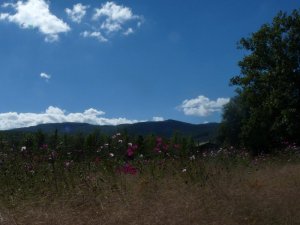
The meadow at the Jardin Extraordinaire today

Today we wanted a walk: it’s not high summer any more, but the sky was very blue, the sun was pretty hot, the morning mists had burnt off and who knows if tomorrow it may rain?  We wanted to take bags and a bucket and see if there were a few late blackberries (there were), a few sloes (there weren’t) and a few early walnuts (there were) to make our sortie near Lieurac worthwhile.

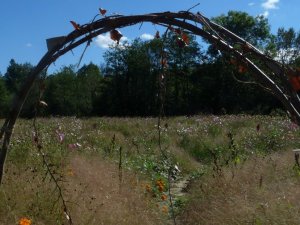
That was the entrance, a few weeks ago.

Our path took us past the site of Le Jardin Extraordinaire.  It’s not normally a public space, so we couldn’t wander down to the river, or scramble up the hillside.  But we could walk by the meadow which had greeted us at our last visit, and we could see the tunnels and bowers of gourds.  Autumn has struck.  The bright fleshy stems and leaves of the gourds and sunflowers have changed into gnarled and bony twigs.  The pumpkins which once peeped from beneath their leafy green sunhats are now exposed on bare earth, those leaves crisp and brown like curls of tobacco.  The sunflowers still rear their tall heads over the scene, but they too are blackened and dry.

It’s still lovely though.  This is no cemetery.  The seed pods, the gourds, the berries are all ripe now, They’re ready for the next stage: marauding animals may eat them, humans too, or else they’ll seed themselves, so that early next year, the garden can begin to grow again, and be transformed by the creative artists and gardeners of Artchoum.

Rosehips along our walk

And we too marauded today.  We came back after our walk with full bags, muddy shoes, and that feeling of well-being that comes from a peaceful and productive afternoon  out in the countryside in the bright Autumn sunshine

P1070802

Harvest home…..

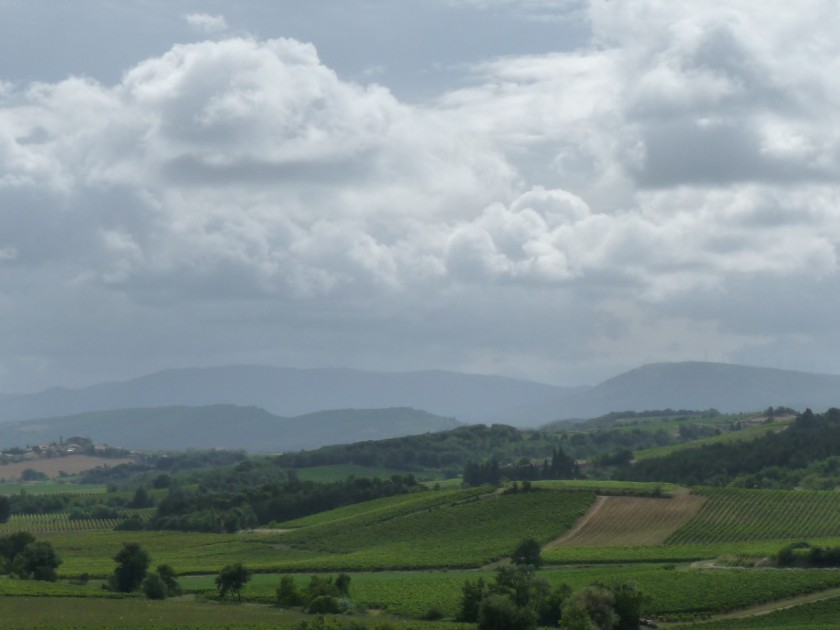
Fields near Villelongue.  A grey summer's morning.
Fields near Villelongue. A grey summer’s morning.

….. next month.

We were walking in the Aude today, and with every step we took, we realised that harvest season is well on its way.
Sorghum grains for animal feed swelled in fields where last year sunflowers had grown.  A few seeds had escaped the Autumn harvest, and so this year a few cheeky sunflowers raised their heads above the more lowly winter feed.
Sunflowers among the sorghum.
Grapes cluster  on the vine. They’ve grown almost as much as they intend, but they still have work to do.  Most are still a bright acidic green.  A few are starting to blush a bruised pink.  Some have even achieved a classic purple: but they’re not ripe yet.  We know.  We tried one or two.
And those fields of sunflowers,  Apart from one field’s worth, they no longer look like those cheerful images you see on postcards from our region.  Their bright sunny faces no longer track the movement of the sun as it travels across the sky.  Instead, they’ve developed a hang-dog look as the weight of their maturing seeds pulls their heads earthwards.
Then there were almonds.  We found a few had fallen already, so made a handful of creamy nuts into a small 11 o’clock treat.  Walnuts are a different matter. They’re still heavily enclosed in their thick green fleshy coats.  It’ll be a few weeks before this protection dries and splits to reveal the ripened nuts within.
Apples?  Yes, a few, but they’re still green, with white flesh that browns as soon as it’s bitten into.  Blackberries?  Hardly any have turned black.  They’re still very small and green, or rather small and pink.  We’ll have to wait.
P1060669
So far then, only the hay bales sit plumply at the edges of the fields, ready for winter. The other crops soak up the remaining summer sunshine, fatten, ripen, and wait for the moment when they too will be gathered in.
Fields of vines and sunflowers near Villelongue d'Aude
Fields of vines and sunflowers near Villelongue d’Aude

Butterfly bonanza

I’ve never been all that good at butterfly spotting.  Back in the UK, I could manage my red admirals, peacock butterflies and cabbage whites.  Oh yes, I could certainly identify those pesky cabbage whites.  Their eggs were usually plastered over the undersides of nearly every vegetable I had on my allotment.

On Sunday though, we had a real butterfly bonanza.  We had a perfect day’s walking on the nearby Plateau de Sault, near Belcaire.  It was perfect because the scenery was friendly: gently rising and falling lightly forested slopes offered distant panoramas of the Pyrenees.  The wonderful weather was bright and sunny, without being too hot. The walk offered challenges but no real difficulty; good companionship too.  What made this Sunday memorable though were the butterflies.  At this altitude – about 1000 metres – the summer flowers were still bright and fresh, and the butterflies couldn’t leave them alone.  They fluttered ahead of us every step of the way, and we finally gave up exclaiming over their delicate beauty.

What we couldn’t do was identify them.  This evening I’ve pored over sites on the internet.  I’ve excitedly identified a specimen.  Then I’ve looked at the next image… and the next… and realised that my confident identification isn’t at all secure.  Tentatively, then, I’ve named my photos.  But I rely on you, dear reader, to put me right about the undoubted mistakes I’ve made.

In the end though, whether I’ve been able to name them or not, I carry with me the memory of a summer’s day made extra special by the presence of those butterflies  wheeling, turning, diving and fluttering, rarely still, but constantly engaging our admiration and attention

What’s the point of horse flies?

There’s a series on BBC Radio 4 that somehow I’ve never caught up with on i-player.  It’s called ‘What’s the point of….? and examines a whole range of British institutions, from the Tate Gallery at the more serious end of the spectrum, to lawns and pubs at the other.  Though some right-thinking Englishmen might argue that nothing could be more important than a well-kept lawn and a drink in your local after you’ve finished mowing same.

I have a suggestion for a programme, though the subject that interests me isn’t a British institution. But I really need to know.

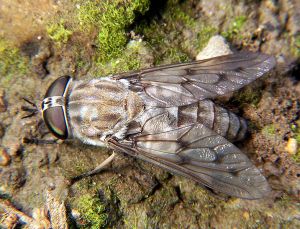
What’s the point of horse flies?

Thanks to Dennis Ray and Wikimedia Commons for this graphic image of a happy horsefly

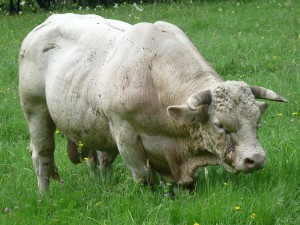
Out walking at this time of year, some – but not all of us – have come to dread being near horses, cattle or still water.  Because when we’re near any of them, we’re likely suddenly to feel a sharp piercing of our skin, as a horse fly eagerly pumps poison into our flesh whilst sucking our blood.  It’s not easily brushed away.  In the hours that follow, our skin swells, and for several nights, sleep will elude us as we scratch frantically at our fiery, itchy, tightly inflamed skin.  These nasty creatures are pretty immune to any repellents, though a cocktail of essential oils such as lavender, melissa and tea-tree sometimes helps.  Nor have I found any remedy soothing after the event.

So what are they for?  It’s bad enough for us humans, but cattle and horses seem truly to suffer all summer long, as flies of all kinds cluster round their eyes and mouths, resisting all attempts to flick them away.

Here be horseflies....
Here be horseflies….


.... and here be horse flies
…. and here be horse flies

Apparently they make a tasty snack for a swallow or a frog.  I’m sorry, that’s no good.  There are plenty of other insects about, so their having a place in the food chain simply isn’t justification enough.

And while we’re about it, what’s the point of ticks?  And mosquitos?  And another thing.  Why do I get so many bites from all of the above while Malcolm, and so many of my other friends, are blissfully immune?

Mountain Apollo

P1050895

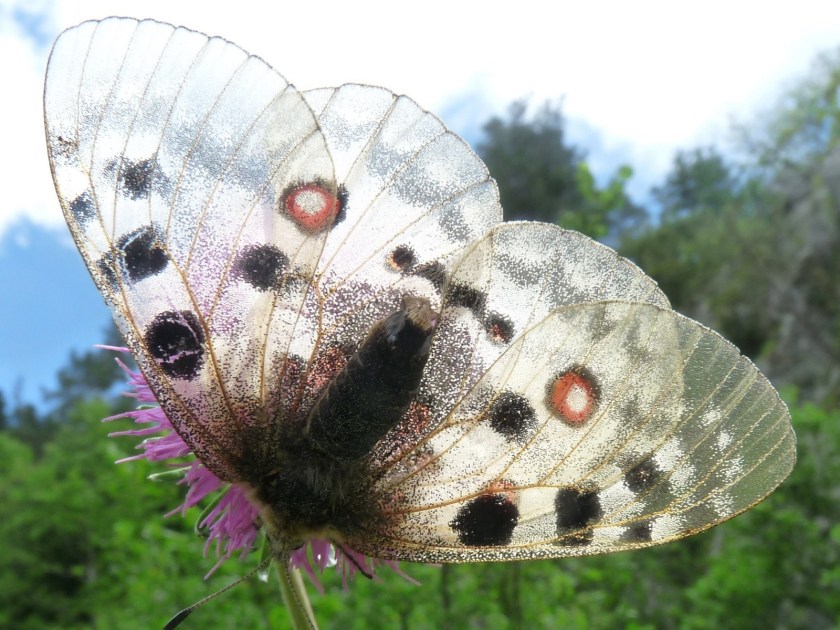
I just want to share a photo I took on our walk on Sunday, when we went to the Gorges de la Frau.  This butterfly seduced us all with its distinctive spots and white grisaille wings.  It turns out to be rare, a protected species, and known only in mountain regions, mainly in Southern Europe.  The French know it as Apollon, and its Latin name is Parnassius Apollo.  If your French is up to it, you can read about it here.  

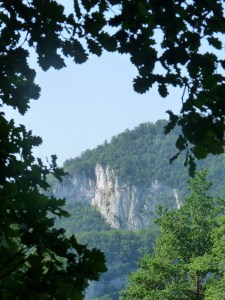
And here’s a small taste of the Gorges de la Frau, only a few miles from our house.

‘Not all those who wander are lost.’* But we were….

On Sundays we walk, with our friends from Laroque.  This time though, Malcolm and I were cramming in something else too: an afternoon birthday party right at the other end of the Ariège.

This was the plan. Walking Party A (which included me) set off at 8.00 a.m. to do a walk from Lieurac to Roquefort-les-Cascades, where we were to meet Party B (including Malcolm) for lunch. Party B consisted of the temporarily halt and lame, as well as Marcel, whose bread hadn’t finished baking by the time we left.  ETA for us all, 11.30.  At which point M & I would have made our excuses and left for the birthday party.

We did fine, we keenies in Walking Party A.  We walked past Rapy, Ilhat, Tanière, glad of the frequently wooded and well-signposted paths, and all went well till Bac d’en Haut.  There was a choice of routes which we discussed at length as we studied the map and made our choice, though we agreed it was an obvious one.

View towards Rapy
View towards Rapy

In due course it became clear that it was not obvious at all.  Instead of climbing up about 250m, then descending, we went on up…. and up… and up.  We’d been due to meet Party B at about 11.30, but midday came and went, 12.20, 12.30, 12.40… and then we came out of the woods to be confronted by a sight just behind us to the right. Roquefixade, a beauty spot really rather a long way from Roquefort-les Cascades.  Even if you’re a crow.  But if you use the paths, or even worse the roads, it’s absolute miles (19 km. actually.  It involves doing the two longer sides of a triangle).  We rang every member of group B who had a mobile.  Nobody responded.  We concluded there was ‘pas de reseau’ but wondered why at least one of them didn’t get into a reception area and ring us.

My view from the back of the van.

In the end, one of our group rang her husband, and he came to take some to Laroque to collect a rescue car, and others of us on to Roquefort. He didn’t drive a comfortable family saloon.  Oh no.  Our walking companion Corinne had that.  He had the bright yellow van he uses for hunting.  Behind the front seats was a compartment prickly with fresh straw where he and his fellow-hunters accommodate any wild boar they succeed in catching.  I was one of the ones who … er …. drew the short straw and travelled in the wild boar compartment.

By the time we climbed aboard it was…. 1.40.  By the time we reached Roquefort, it was well after 2.00.  By the time the rescue car arrived with the remaining walkers, it was well after 2.30.

Meanwhile I rang our hostess and warned her we might not be able to get to the party.  It didn’t take too long for ‘might not’ to become ‘can’t’.  Hot, sweaty, and with no time to go home for a shower, I don’t think we’d have been entirely welcome.

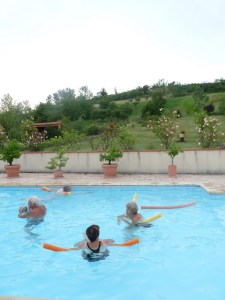
So we stayed with our friends from Laroque.  A picnic lunch, then home for that shower, before going round to the home of Michel and Annick, who have a pool.

P1050494

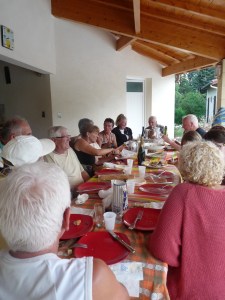
A refreshing swim, an ‘auberge espagnole’ (pot luck supper) and a glass or two of wine soon helped us reframe our day of not-very-brilliant navigating skills into a yarn that will no doubt go down in the annals of the group. It was just a shame about that party.

'Auberge espagnole'
‘Auberge espagnole’

*JRR Tolkein: ‘The Fellowship of the Ring’

A walk gone wrong

This slideshow requires JavaScript.

Yesterday was gorgeous.  Hot and sunny until long into the evening.  We ate outside and stayed on the roof terrace till 10 o’clock.  Today seemed to promise more of the same.  We should know better.  This year, getting even two days on the trot where the weather is hot and clear all day is asking a bit much.

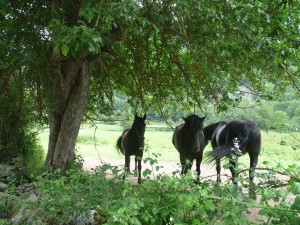
And so it proved.  Today, our walking group met to share lifts to where our walk was to begin.  We set off in the sunshine, watching our in-car thermometers climb steadily to 27 degrees as we drove ever upwards, beyond Villeneuve d’Olmes, beyond Montferrier, up a road which became narrower and less well maintained, to Frémis, a tiny hamlet.  We parked there, in a flower-spangled meadow offered by a local farmer.  We peeled off our fleeces, applied suncream and set off towards the peak, Coulobre. Sometimes the upward-going was tough and quite a scramble, but we were encouraged by looking across to the still snow-capped tops, and the thought that we’d be having our picnic at the top there,  the Ariège spread below us with views, views and more views.  We met a herd of black Mérens horses sheltering in a copse from the already-hot sun.   A donkey befriended us.  And still we climbed.

Towards midday, walking through the forest, we suddenly realised things were changing.  Didn’t it suddenly feel cooler?  And weren’t those little scraps of mist swirling round those peaks?  Apparently yes.  The mist descended.  The ‘cool’ became ‘chilly’.  With 20 minutes to go to arrive at our lunch spot, Micheline, who had developed a gammy knee, announced she could go no further.  It didn’t take much for us to decide that it was not only friendly to remain with her and have our lunch, it made sense.  The mist was swirling around us, the views up there wouldn’t be up to much, and it was obvious that rain or worse was on its way.

We found logs to sit on, got our fleeces out again, ate our lunch with little ceremony, and scuttled down.  The climb up had taken nearly three hours. Scurrying down took not much more than an hour.  And as we reached Frémis, the rain started.  It’s not stopped since.  And those in-car thermometers on the way home? 15 degrees.

Les demoiselles de Caraybat, daffodils and gentians

Once upon a time long ago in Caraybat, when times were hard, the men of this small village had to look far afield for work.  And they went to Spain, for the hay-making season.  Hawkers came to the village, and peddlers.  They found a village with no men.  They took advantage.  So did the women.

When the hay-making season was over, the men returned, and the women spied them returning over the distant mountains.  Suddenly ashamed and frightened, they fled to the hills.  God, in vengeful and Old Testament mood, was displeased.  As the women reached the summit, he turned each one of them to stone.  And there they are to this day, les demoiselles de Caraybat, a petrified reminder of a summer of sin.

A few of those demoiselles hide themselves behind the woodland trees

We remembered this legend yesterday when I took our Laroquais walking friends to Caraybat and the dolomies to discover those daffodils I’d been shown on Thursday.  I was quite chuffed that not a single one of them had previously known this special spot, and we had a pleasant hour up on the rocks, picnicking and enjoying the last days of the daffodil season.

We followed the walk I’d learnt about on Thursday, and then we finished our day by going to the plateau above Roquefixade to see the gentians there.

Gentians above Roquefixade

Sadly, it was by then rather cold and windy, and most of the gentians had sensibly folded their indigo skirts about their faces and tucked themselves away to wait for a sunny day.  We’ll wait too.  And when the sun comes out properly, we’ll be back.

Daffodils in the Dolomies

Yesterday, we walked in Les Dolomies, which you could confuse with the Dolomites with its craggy pillars and rocky outcrops: though actually it’s a small area between Lavelanet and Foix, just along from Roquefixade.  After a few days of hot sun and blue skies, it was disappointing to have the threat of rain, but the slight mistiness brought its own beauty to the landscape, softening the distant views, and enhancing the vibrant greens of the springtime meadows. Everywhere, blossom and flowers.

We walked upwards through the woods.  Anny and Maguy had a surprise for us.  And quite suddenly, there they were.  Daffodils.  Thousands and thousands of them, extending upwards over the hillside, tumbling over rocks, leaving not an inch of path for us to walk along.  The weather cleared. The sun came out.  We were entirely happy.

Come and share the walk with us, along blossom-laden paths, through the daffodil woods, and then down into the valley, looking across at those still snow-covered peaks.

To view any of these photos  full-size, click on the image.

Donkey Derby

We were walking yesterday in glorious spring weather near a little village called Unac, quite near the winter sports area of Ax-les-Thermes.  Just outside the village, we spotted donkeys: eight of them.  They spotted us too.  They came to say ‘hello’.  And then they followed us.

Every field for miles about was theirs by the looks of things, because every time we rounded a corner, or scrambled higher up the craggy path, thinking we’d at last said our ‘goodbyes’ to them, there they were again, peering over the fence and hoping for carrots, which we failed to offer.

Someone remembered that they must come from La ferme aux ânes, in which case their job is to carry the baggage of any hikers who care to hire them.  But they weren’t working then.  Like us, they were enjoying the first day of spring.  They cheered our afternoon along no end.