For this week’s Lens Artist Challenge, Beth asks us to show shots of what has astonished us, and takes her inspiration from this short poem by Mary Oliver.
For some reason, my mind was drawn back to Lockdown. For us, Daily Exercise was one of the pleasures of that peculiar time. Country dwellers, we could range freely over our home patch without meeting a soul. And here, it happened to be a wonderful spring, where plants, birds and all life could flourish in balmy temperatures and just the right amount of rain.
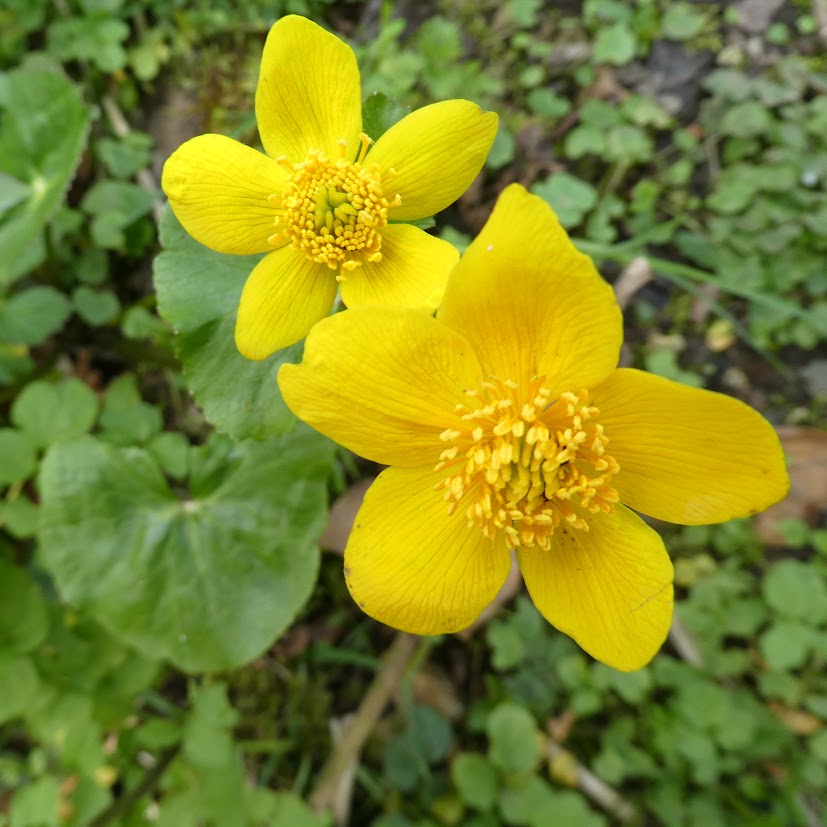
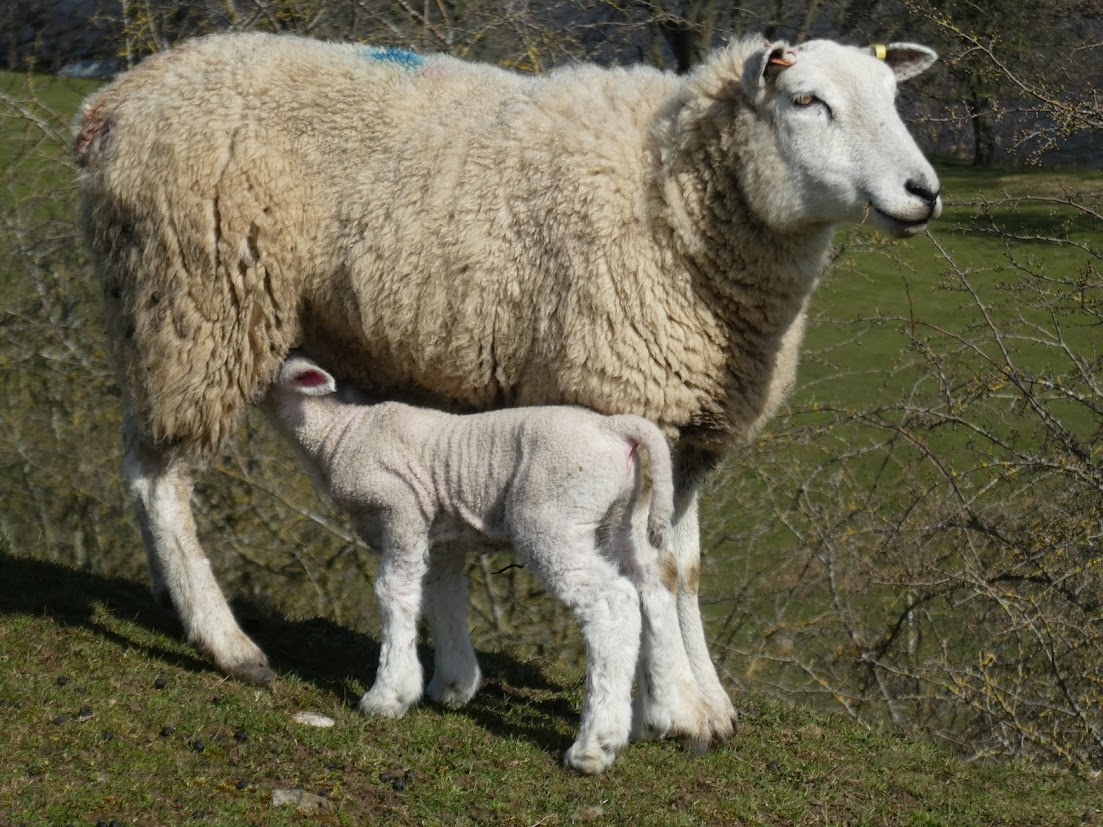
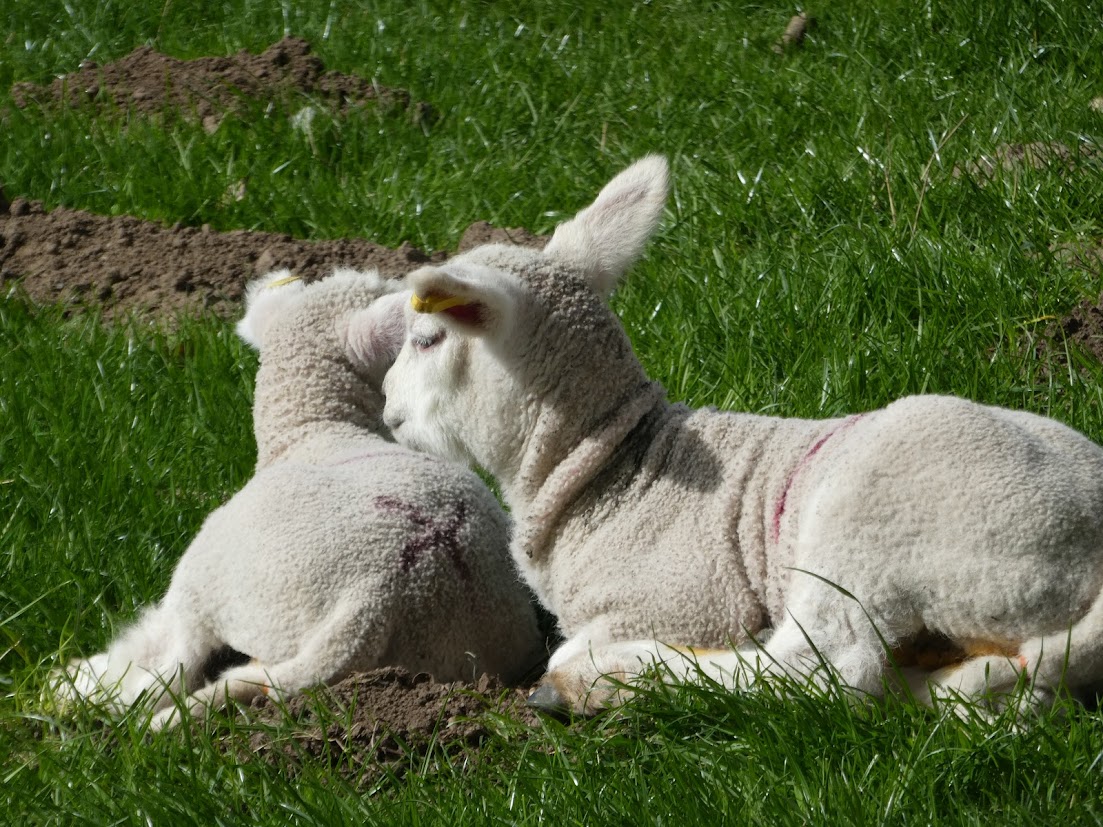
Walking by myself down deserted paths – M was exploring on his bike – I discovered Wonder and Astonishment anew. Day by day, I could watch leaves unfurl from tightly-bound buds; flowers appear; lambs totter their first hesitant steps.
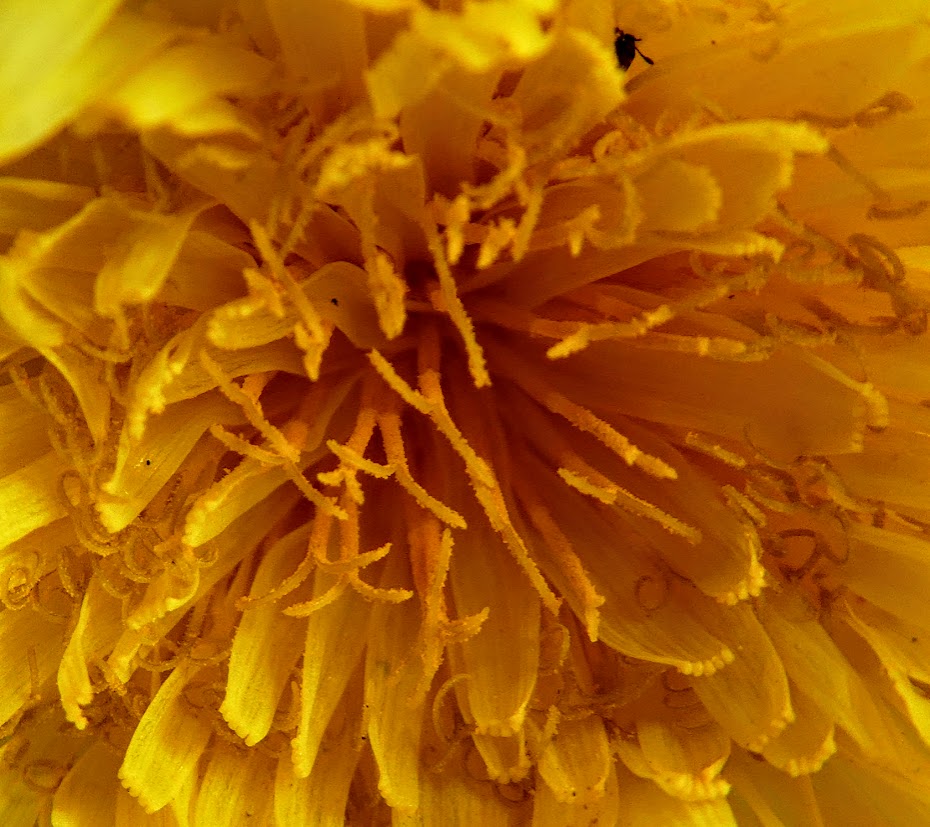
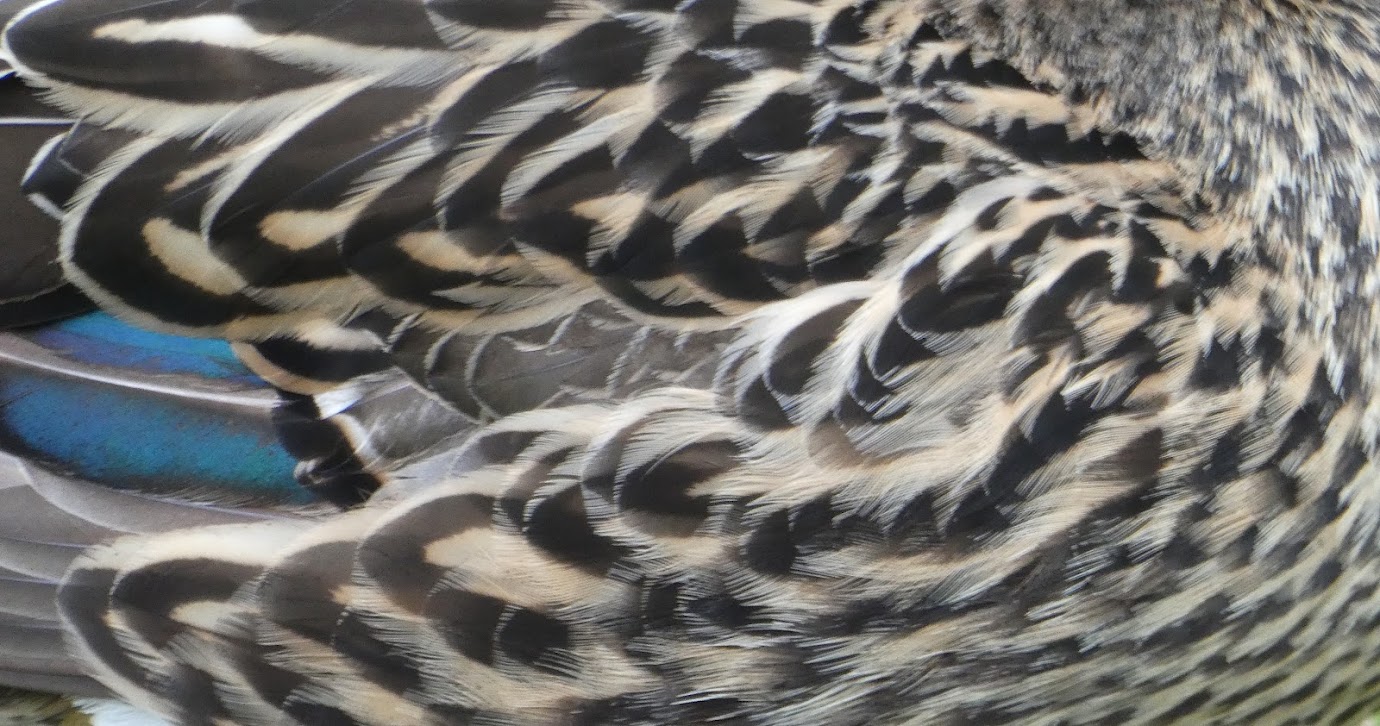
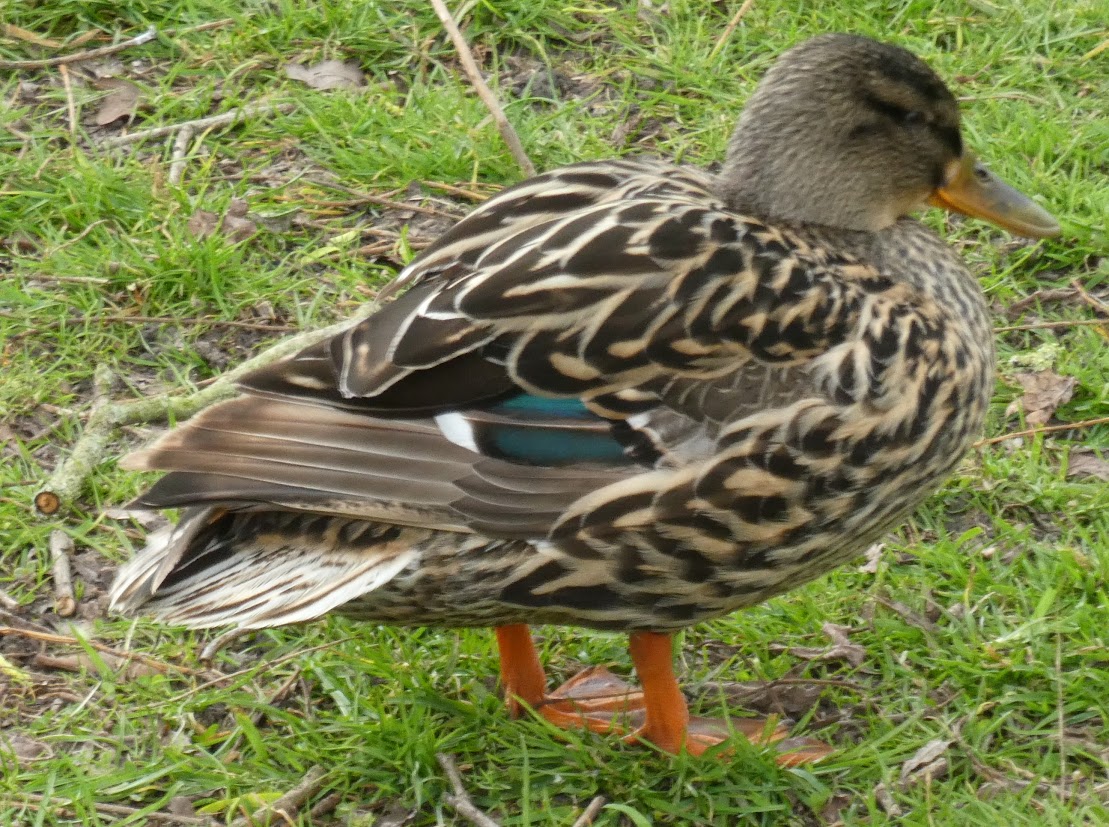
I had the leisure to enjoy the intricately-designed feathers of a common-or-garden mallard, or the complexity of dandelion petals.
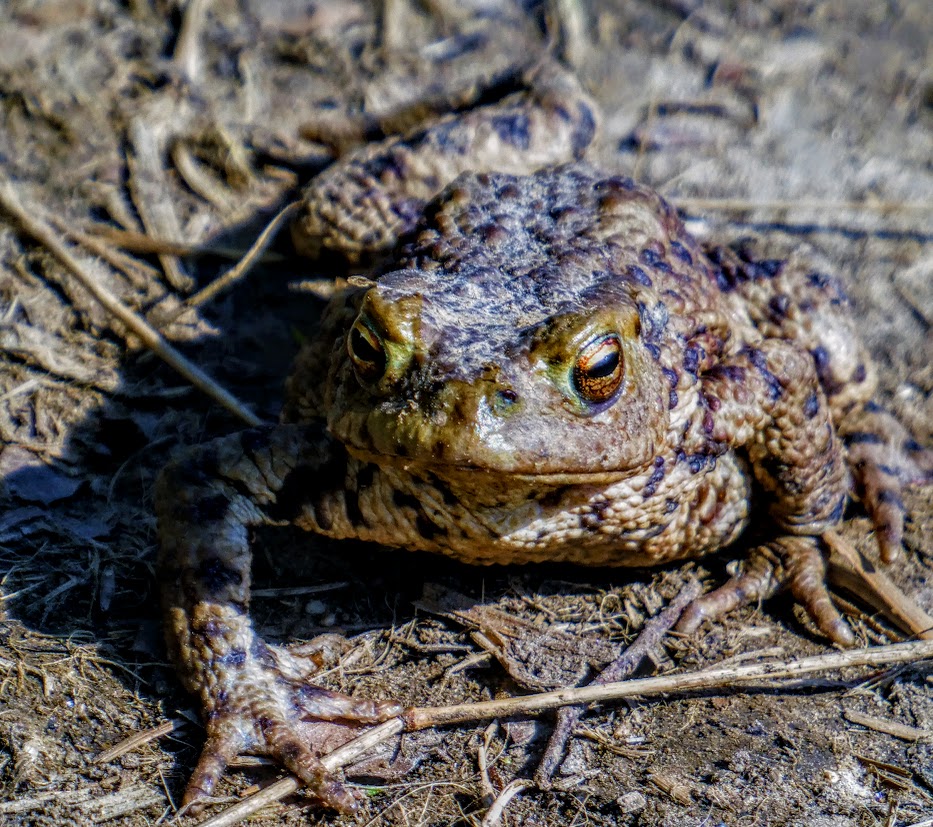
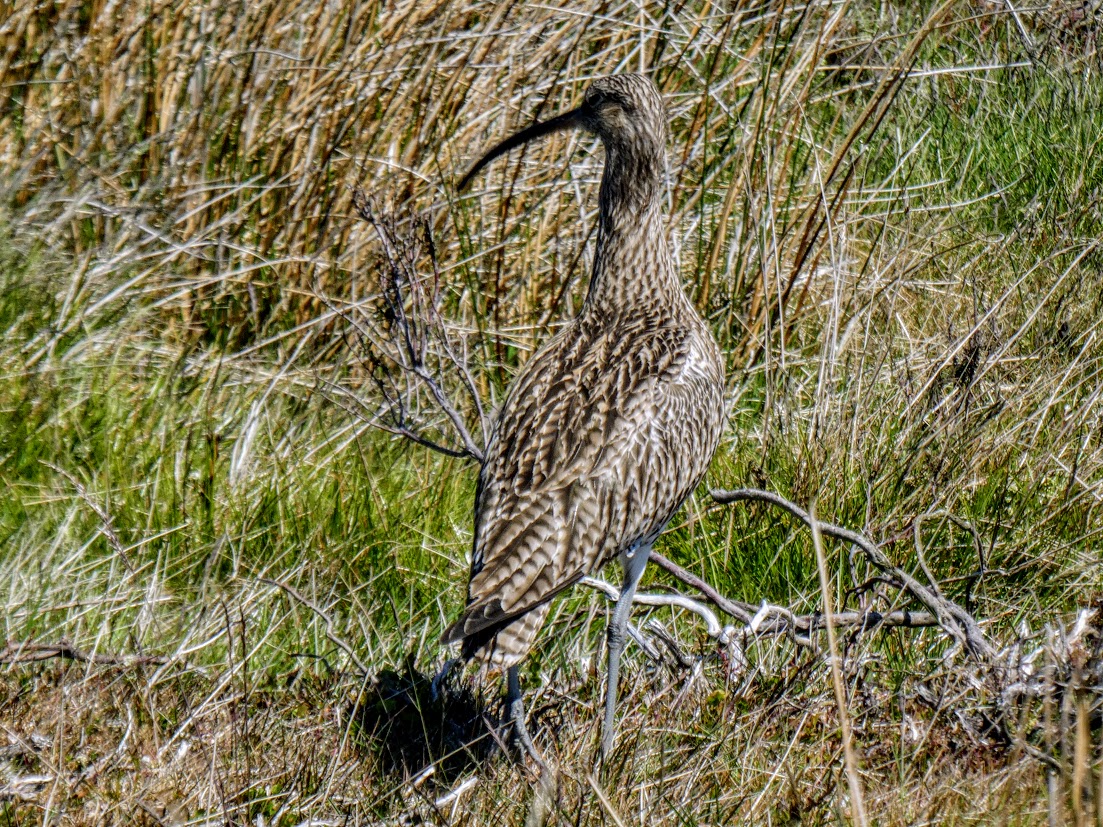
Best of all, creatures we rarely saw close up crossed my path. Who expects to stumble by a toad on a riverside stroll? Or, best of all, come across shy curlews nesting within a foot of a normally well-used road across the moors.
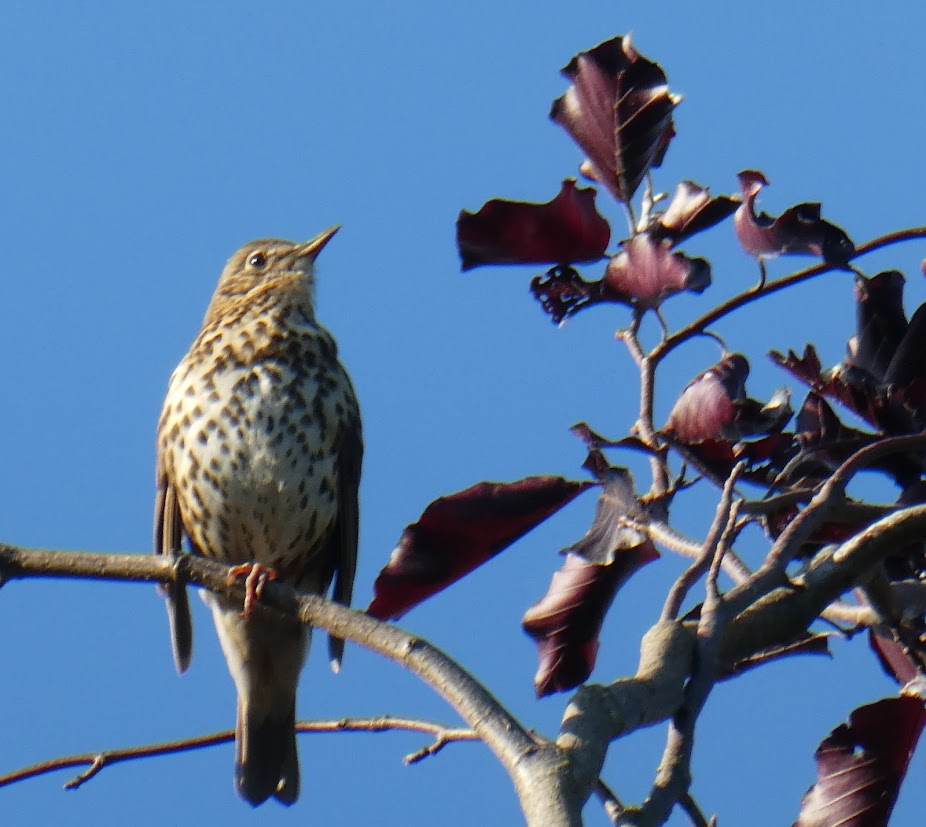
Skies, undefaced by plane trails seemed more multi-faceted and interesting. And back home, day after day, hour after hour, from dawn until darkness, this thrush gave an apparently unending performance with almost no breaks.
Such a time of loneliness, grief and isolation for many remains in my memory a period of joy in the rediscovery of the astonishment offered by the countryside just outside our front door.
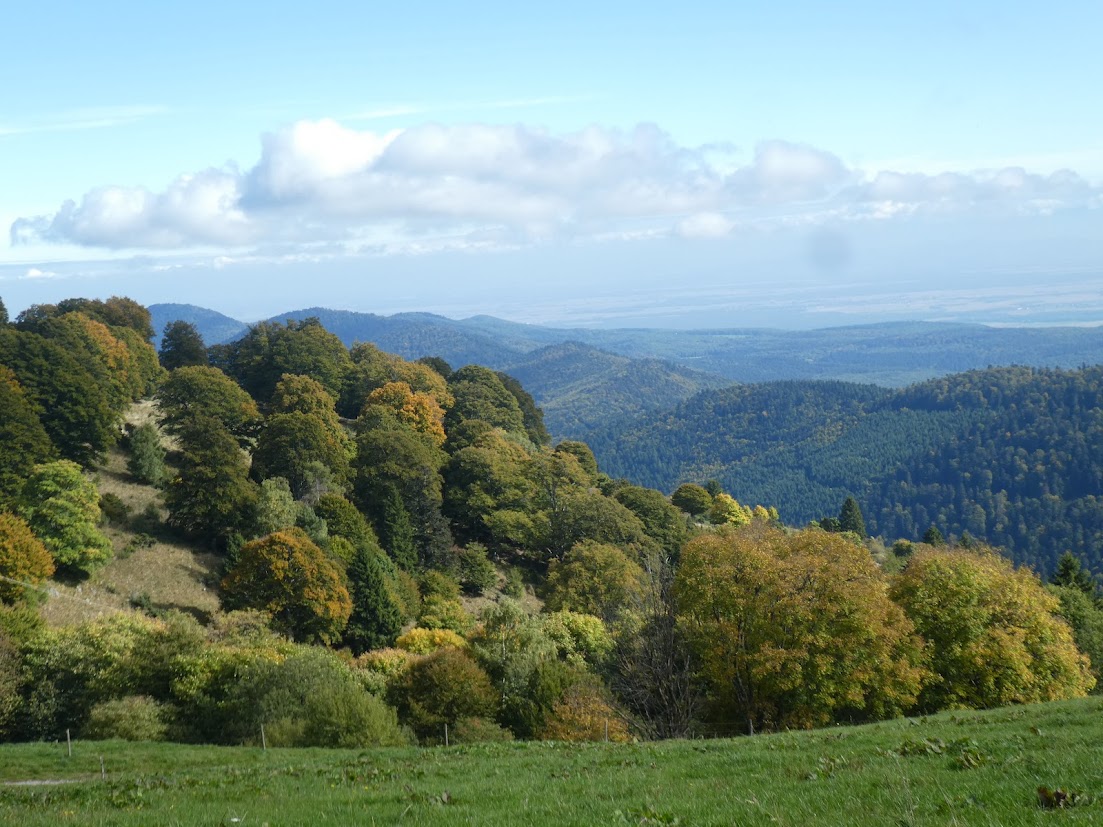
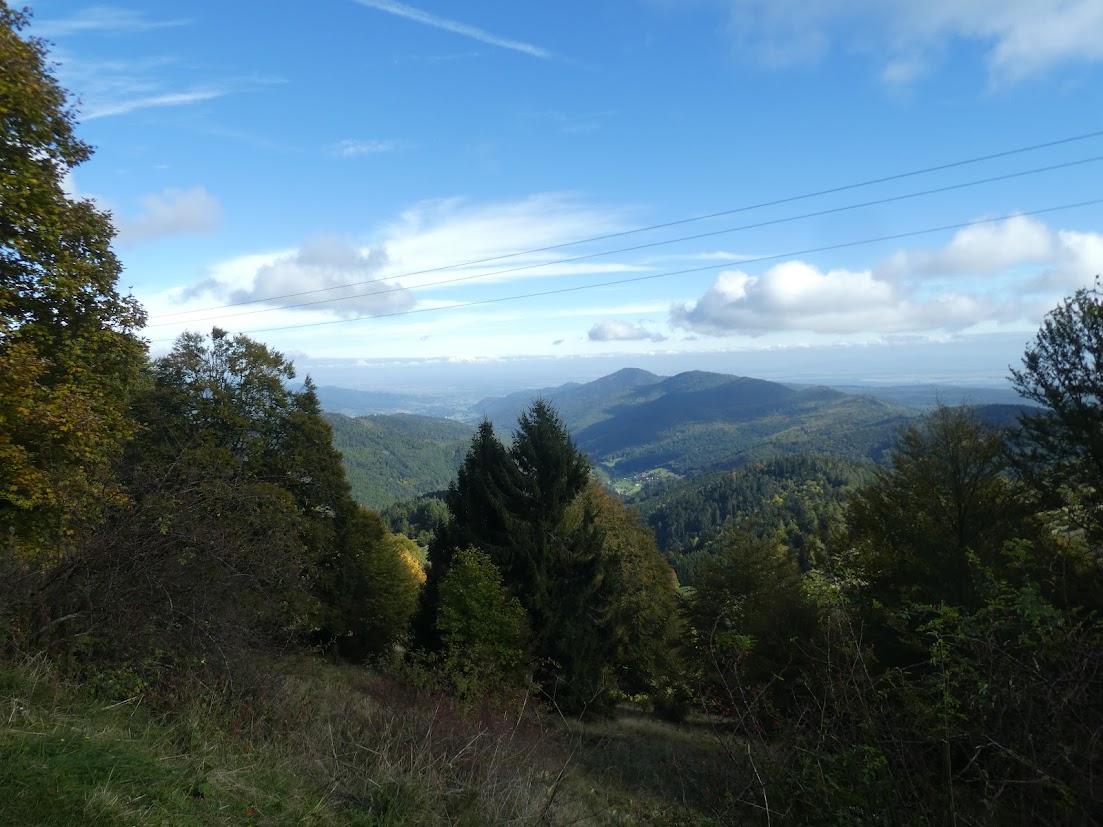
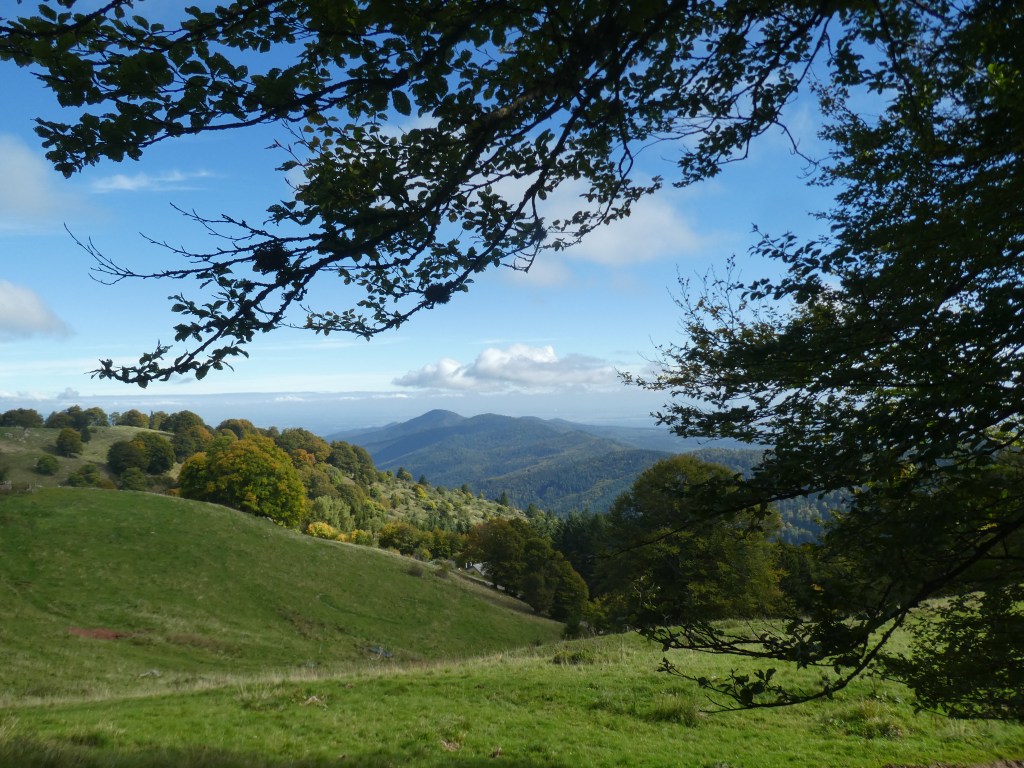
Since we left our home in France, eleven years ago, I’d forgotten the exhilaration of walking in the mountains. The Vosges are not the Pyreneees, far from it. But they offer the same reward of yomping, puffing and panting ever the harder, up the steepest of slopes before finally offering you views- across to distant slopes, and to valleys below: pastures, forests, settlements.
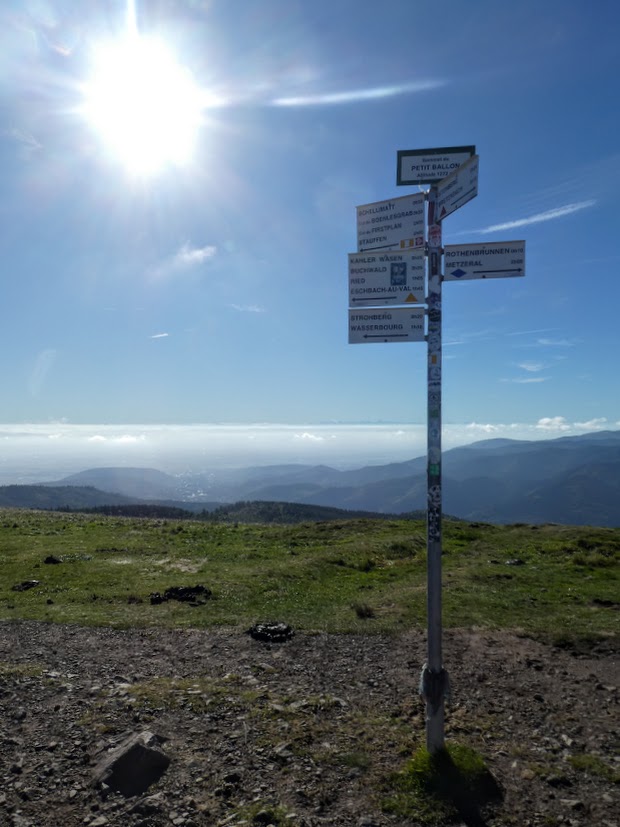
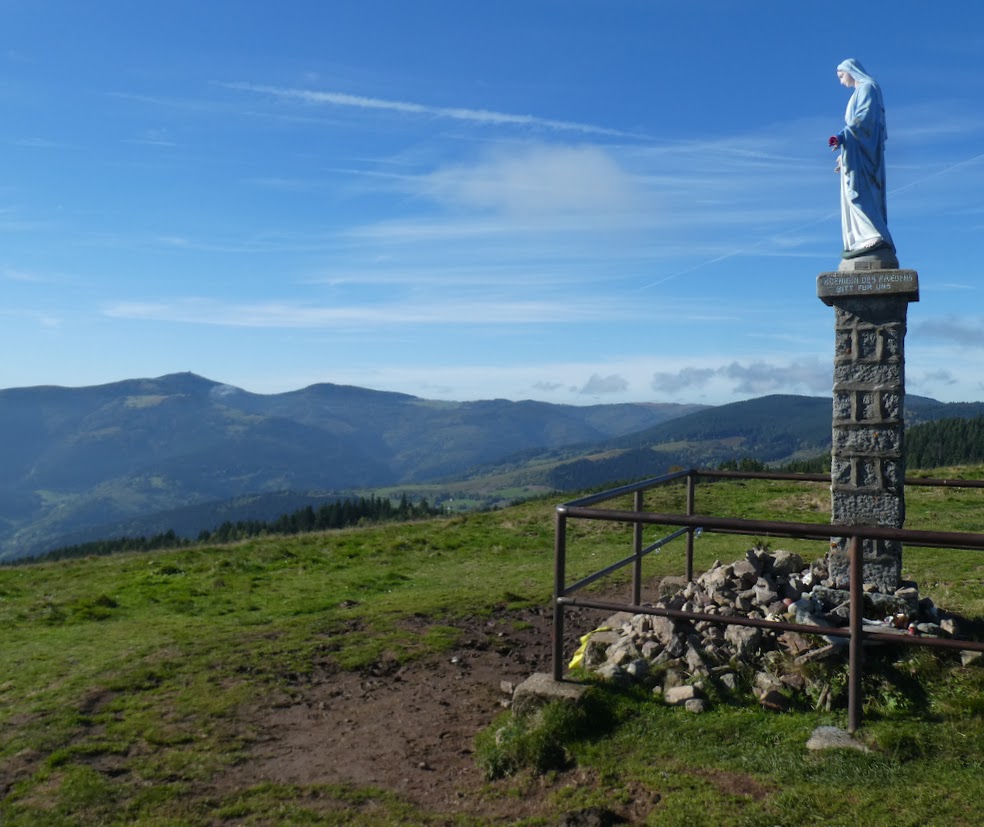
So in Alsace, Malcolm and I picked our chosen pastimes – walking for me, cycling for him. And on this day, we’d driven about 15 km. from ‘home’ to only a couple of hundred metres below the summit of Le Petit Ballon, so he could enjoy the exhilaration of zooming downhill, then along the valley bottom on a series of cycle ways to our holiday premises. I was to enjoy the different exhilaration of climbing to the top of the mountain before walking down and up and down and up the circular route I’d chosen to get me back to the car.
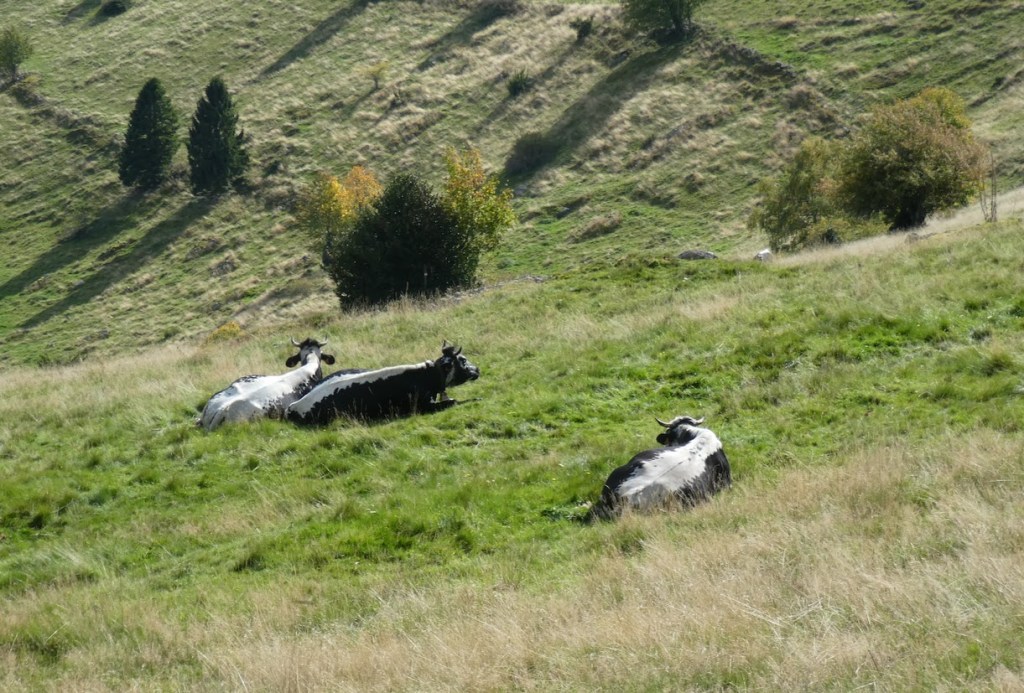
I passed cows first, the sound of their bells reverberating mellifluously far across the valleys.
It was a hard slog to the top, but I got there, and was disappointed by the presence of a bulky and rather ugly phone mast. And then immediately went wrong. I was relying on a walk description in a booklet I’d bought, and on the French equivalent of our OS maps. Which we’d long ago discovered do not do anything like as good a job. I was to follow several different series of balises (waymarks), which are also inconsistent in their usefulness (they tend to be there when you don’t need them, absent when you do).
My booklet said to walk to the statue of the Madonna and turn right. I did. I walked downwards, and found a path which didn’t seem right. Coming across some walkers from a French rambling group, they greeted me cheerily. ‘Are you alone? Come with us!’ I was tempted, but they were going the other way. But they pored over my map with me and set me right before going on their way. Anyway, it turned out I had followed the Wrong Madonna. Who knew there would be two in more or less the same area? I adjusted my walk plan and carried on.
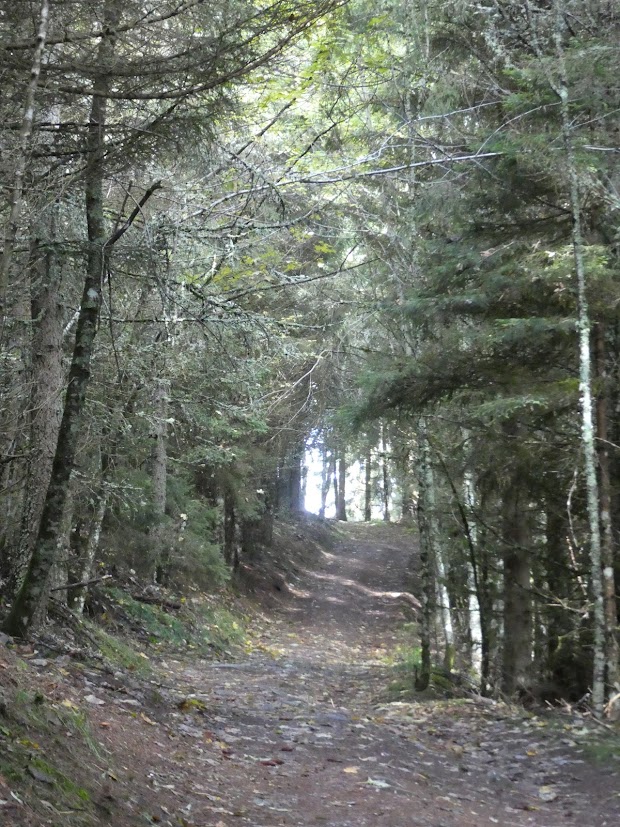
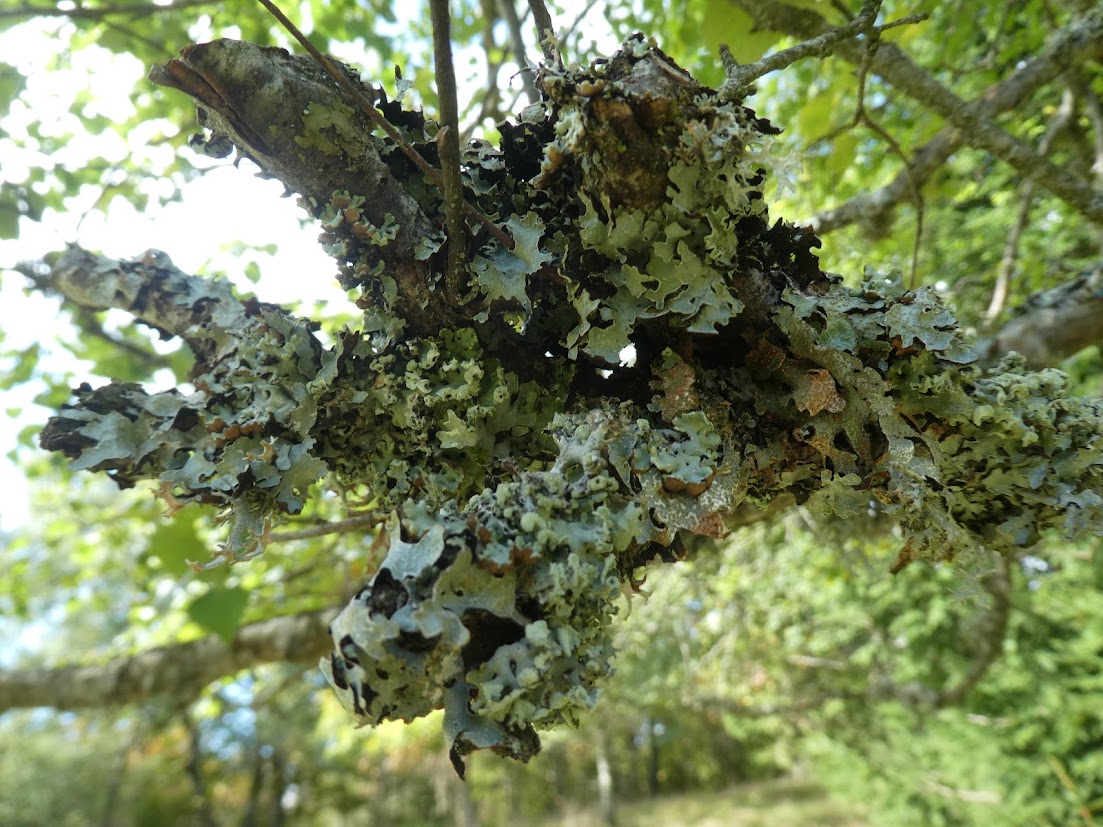
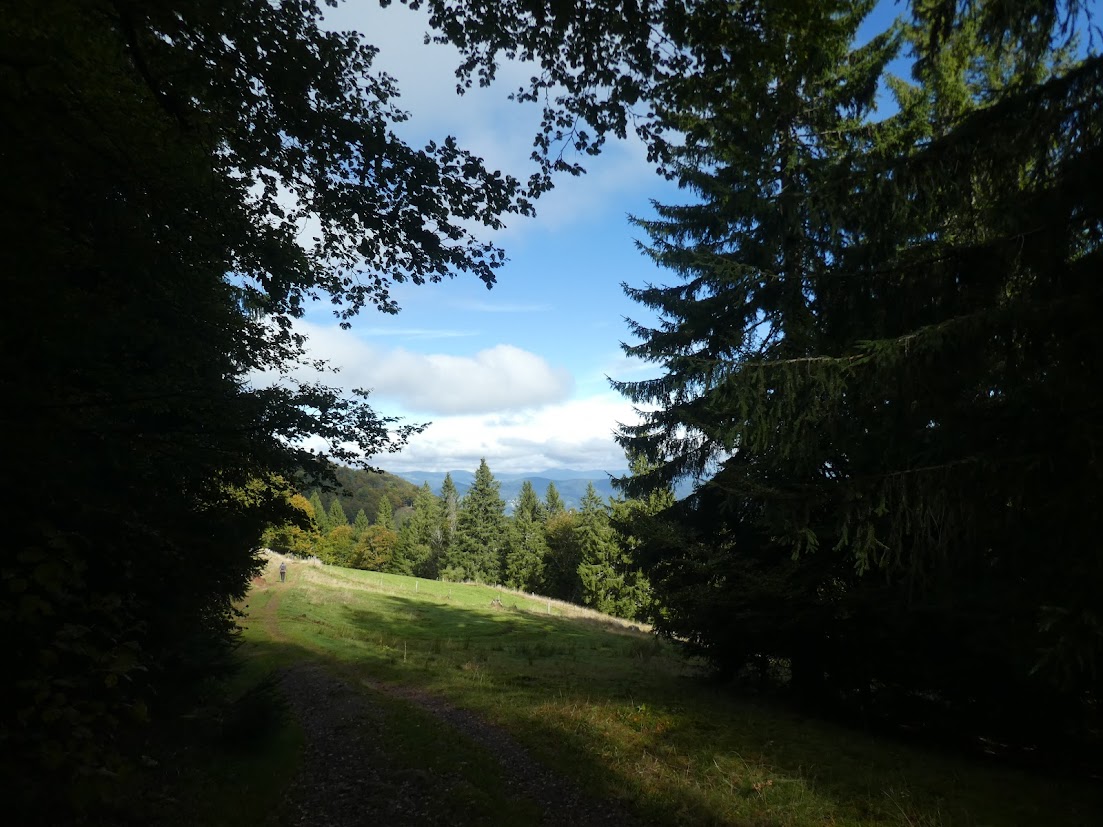
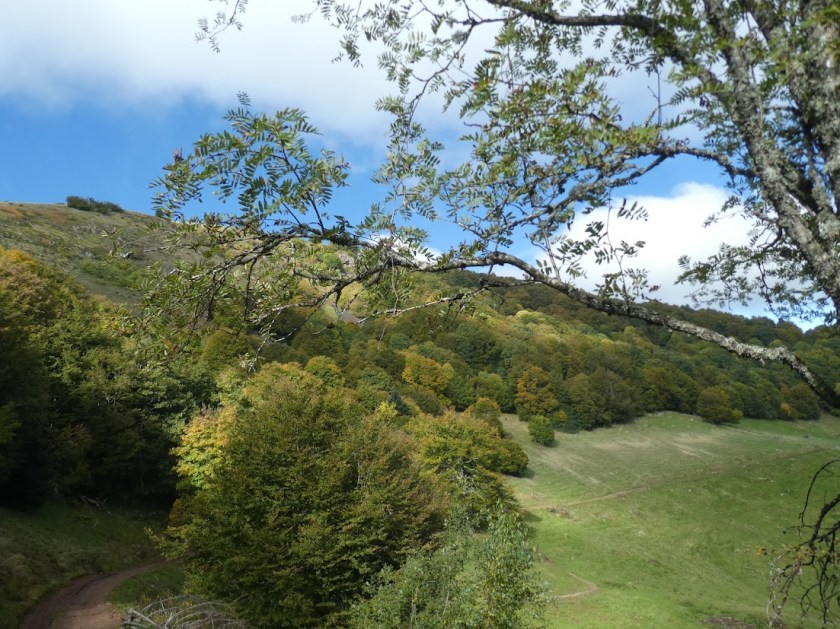
I passed through woodland, a rich loamy path, with weightless grey lichens clinging to every twig and branch. Then open pastureland with distant mountain and forest views.
Onwards and upwards, till I came to an open summit with boulders scattered randomly around, making a perfect choice of picnic venue for me, offering me views in every direction. It was just warm enough, just sunny enough. Perfect.
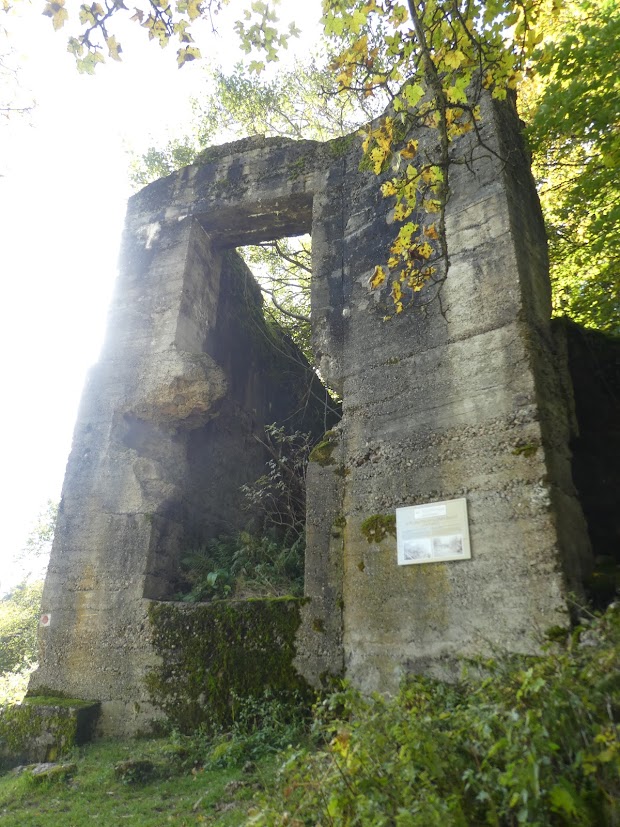
After lunch, the views became more open, the colours more autumnnal, the path, though inexorably upwards, was a gentler slope. I passed the peak with the bench I showed you yesterday, and meandered slowly down to the wooded valley. On my way down, I found a piece of history from 1915: the remains of a German téléphérique, used to transport goods and all the chattels of war: a reminder of all we’d learnt up at le Linge.
My final couple of kilometres were disappointing, along a road – the one we’d travelled ourselves en route that morning. But I’ve forgotten that now, and kept instead the memories of a fresh, bright day in early autumn: an energetic and satisfying walk.
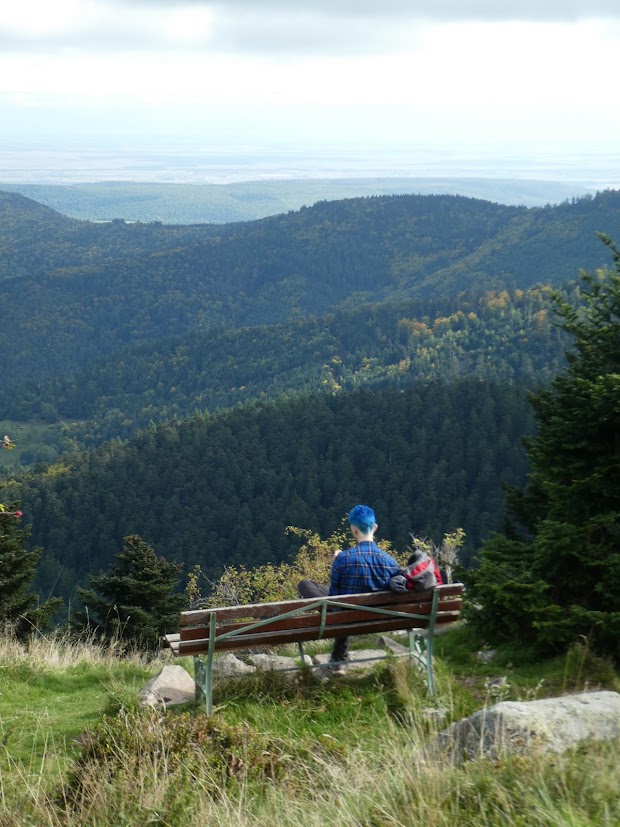
This is by way of being a preview for Jo’s Monday Walk tomorrow. It’s a viewpoint near le Petit Ballon in Alsace, but as you see, the Boy with Blue Hair Bagged the Bench first. I still offer it for Jude’s Bench Challenge.
Technology strikes, so just one photo today of my wonderful day walking the area of the peak known as le Petit Ballon, while Malcolm enjoyed a day’s cycling.
Saudade is a Portuguese word, introduced to us by Egidio, who proposes it for this week’s Lens-Artists Challenge. Here’s what it means:
... an emotional state of melancholic or profoundly nostalgic longing for a beloved yet absent someone or something. It is a recollection of feelings, experiences, places, or events, often elusive, that cause a sense of separation from the exciting, pleasant, or joyous sensations they once caused.
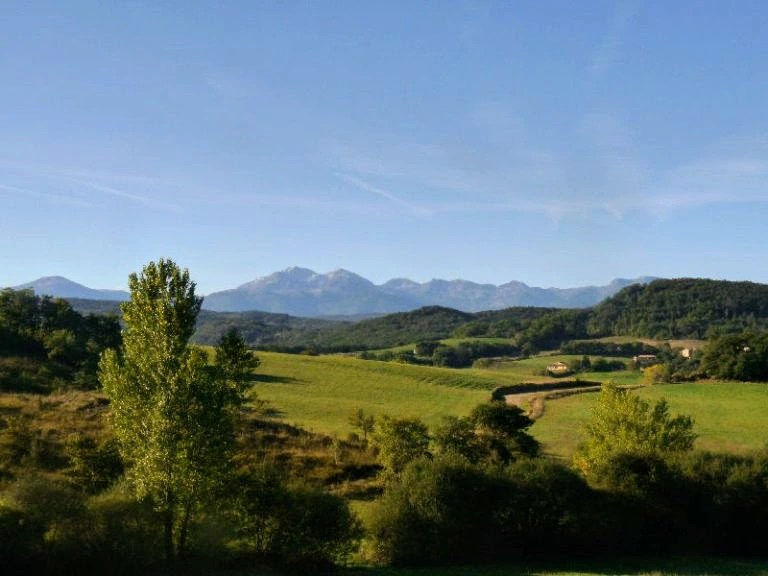
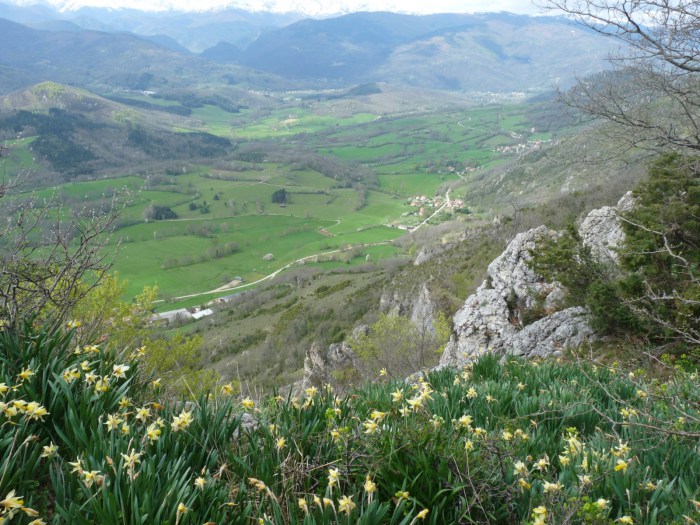
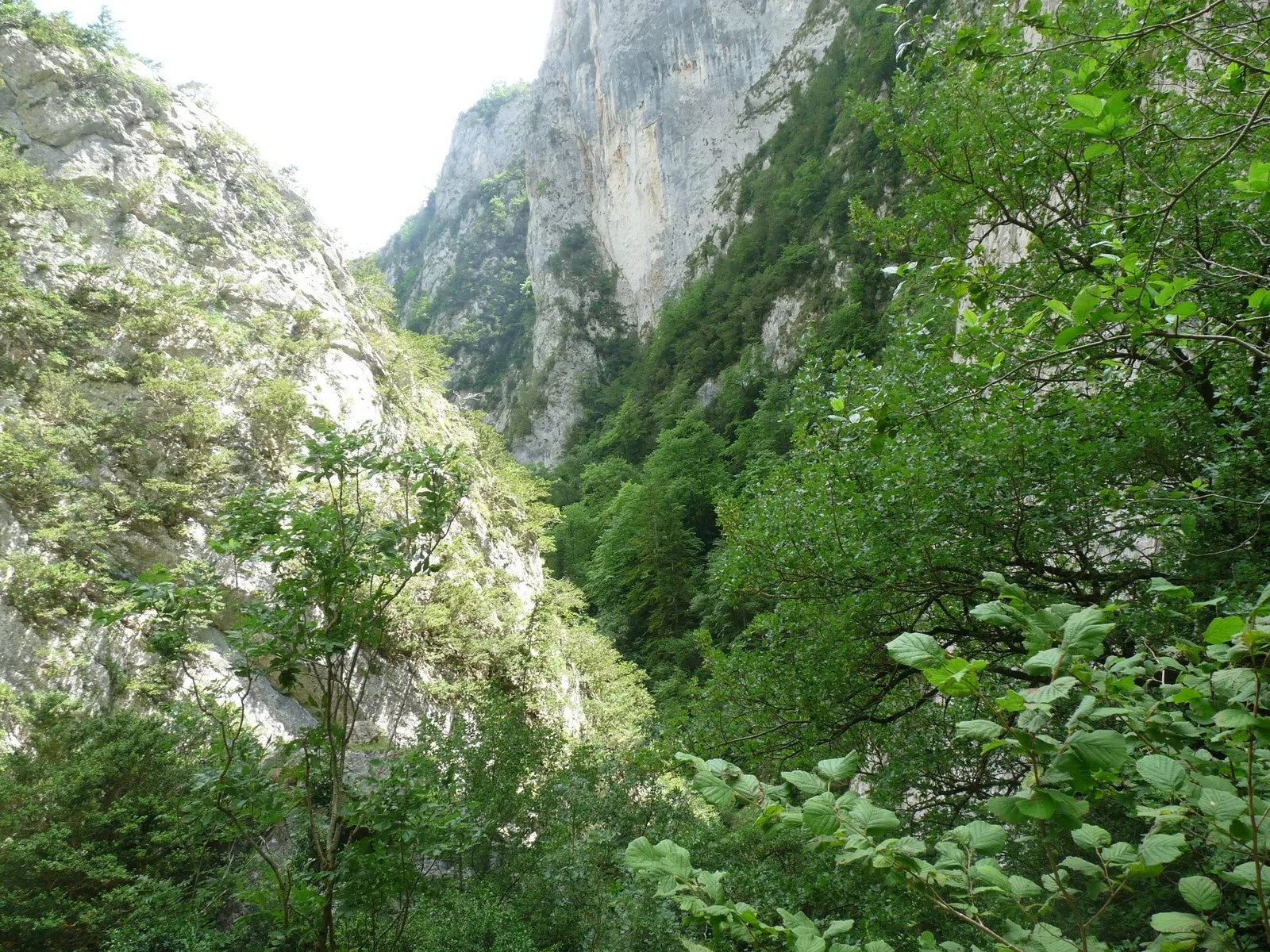
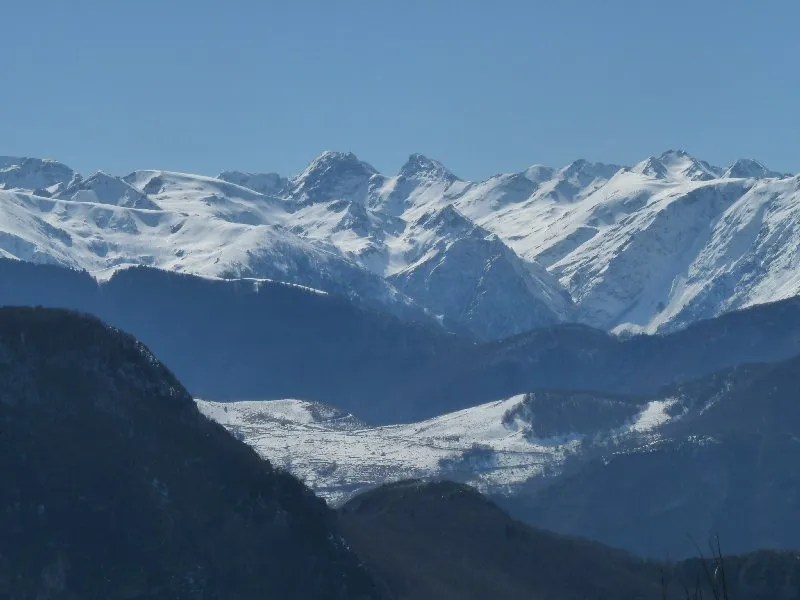
It’s what we both feel so very often about our years in southern France, now some ten years gone. Of course we remember the landscape – the foothills, the Pyrenees themselves, the seasons, the climate , the slower pace of life …
Of course we do. But we remember even more the happy Sundays and Thursdays we had discovering these landscapes with our two local walking groups. We were the only British members, and how different these expeditions were from their English equivalents. After a morning slogging up a mountain, we were rewarded with views, perhaps a stream, a wild-flower strewn meadow. Then Marcel the butcher would produce his own home-cured sausage; Sylvie offered her daughter’s sheep’s milk cheese; someone would bring bread; Yvette and I brought cake; wine was on offer, and an apéro, and after that someone or other would hand out sugar lumps, on which to drip just a little of their grandfather’s special home-confected digestif. After a nice long rest, we’d pack up and find a different path downwards.
Eating was at the heart of so many activities. Here’s another community meal, tables ranged over the town square so everyone could get together and enjoy each other’s company while celebrating some local highlight..
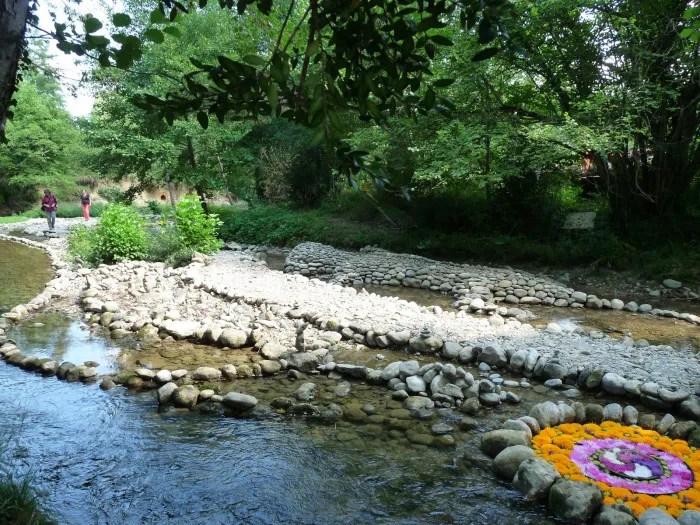
In fact enjoyment came high on everyone’s agenda. Every July, for instance, in a small village a few miles from ours, a group of volunteers spend months devising Le Jardin Extraordinaire. People come from miles around to enjoy strolling through bowers confected from still-growing gourds, and climbing upwards through woodlands with surprises: beautiful, silly, witty – every year was different.
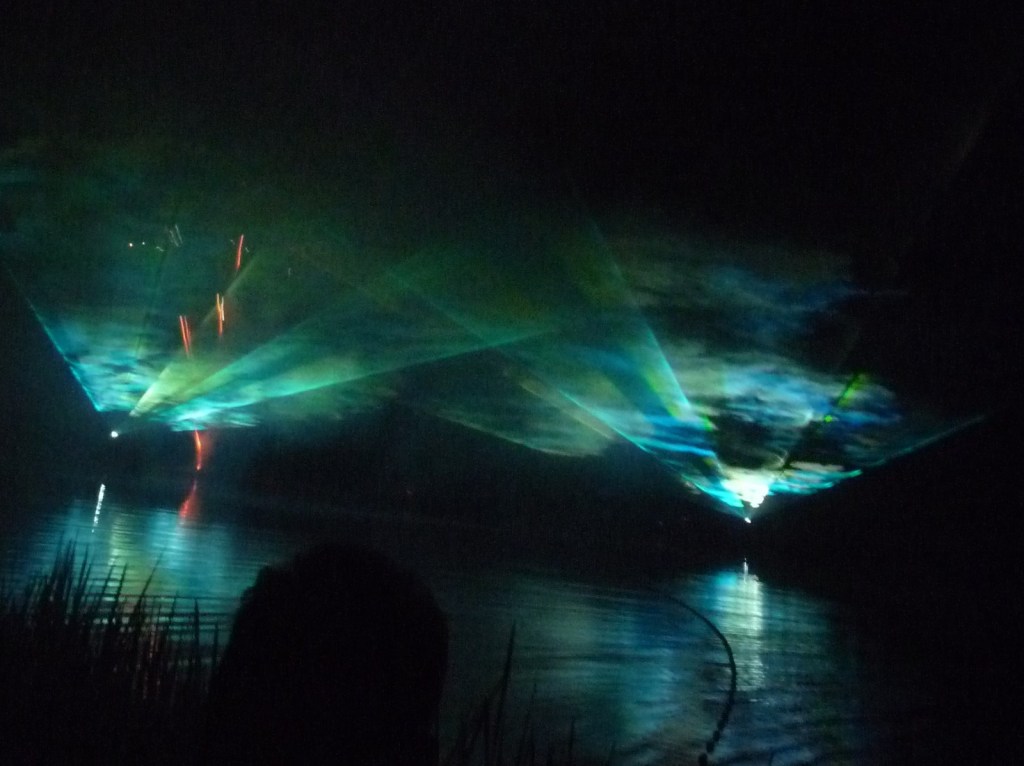
Then there was the annual firework display on the lake at Puivert, which took the concept of fireworks to a whole new level. It reduced the audience of 1000 or more, who’d all come with families, friends and the makings of a fine picnic to astonished silence as the spectacle ended, before simultaneously roaring their tumultuous appeciation of the astonishing creations set before our eyes.
Our French friends taught us about ‘au cas où‘: the need to have with you at all times a bag or similar ‘just in case‘ you found walnuts, wild cherries, sweet chestnuts, mushrooms – all sorts of food-for-free for the thrify householder. I was au cas où–ing only yesterday, finding crab apples, pears, apples, mirabelles all there for the taking, just as our French friends recommended.
I’ll stop there. The feelings of longing, of saudade are strong …
Sunday afternoon. Sunny, warm, breezy. Just the time for a bike ride (‘im Indoors) or a solo walk (me). Marfield Wetlands suited us both as a starting point, though we went our separate ways after that. These reclaimed gravel pits, scattered with ponds, just by the River Ure are at their busiest in the autumn and winter months as a stopping off point for migrating water birds. Less variety here just now. But blue skies, blue waters greeted me: plenty of geese – Greylag, Canada and Barnacle, the odd cormorant and swan, and beyond, oystercatchers hectoring me from above, and more tuneful skylarks.
A walk along a brookside, then farmland with drystone walls.
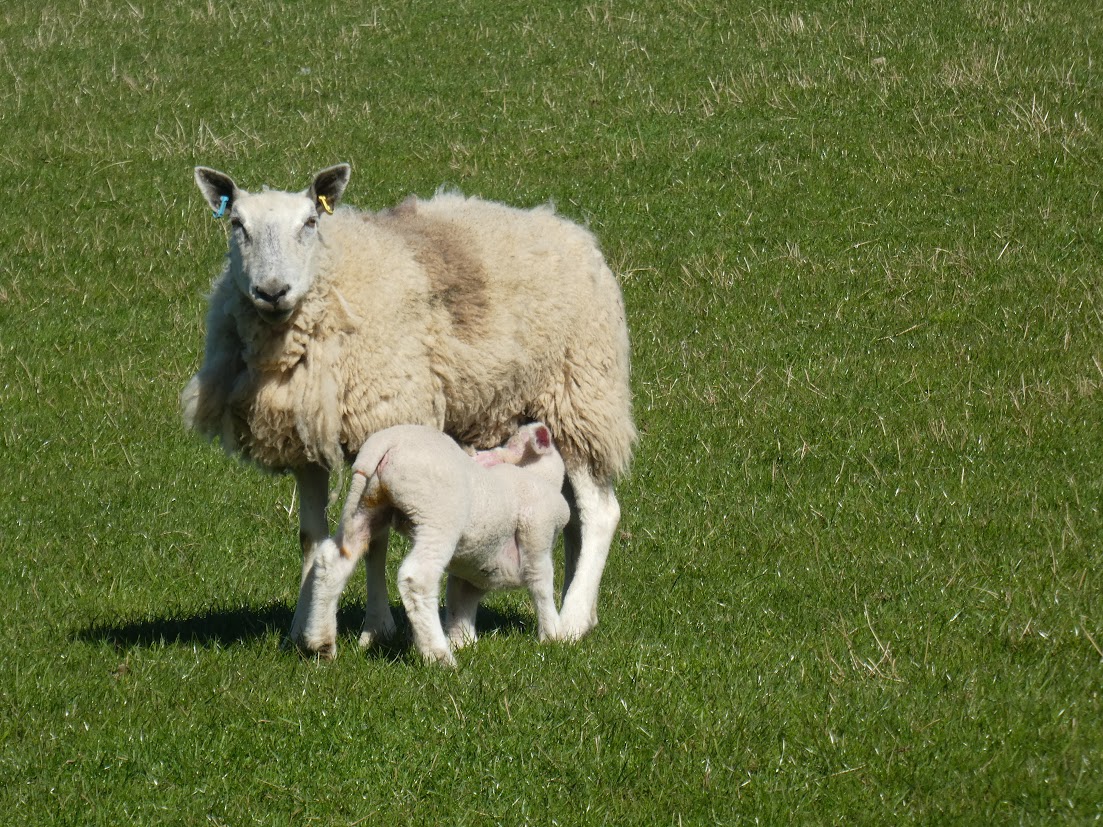
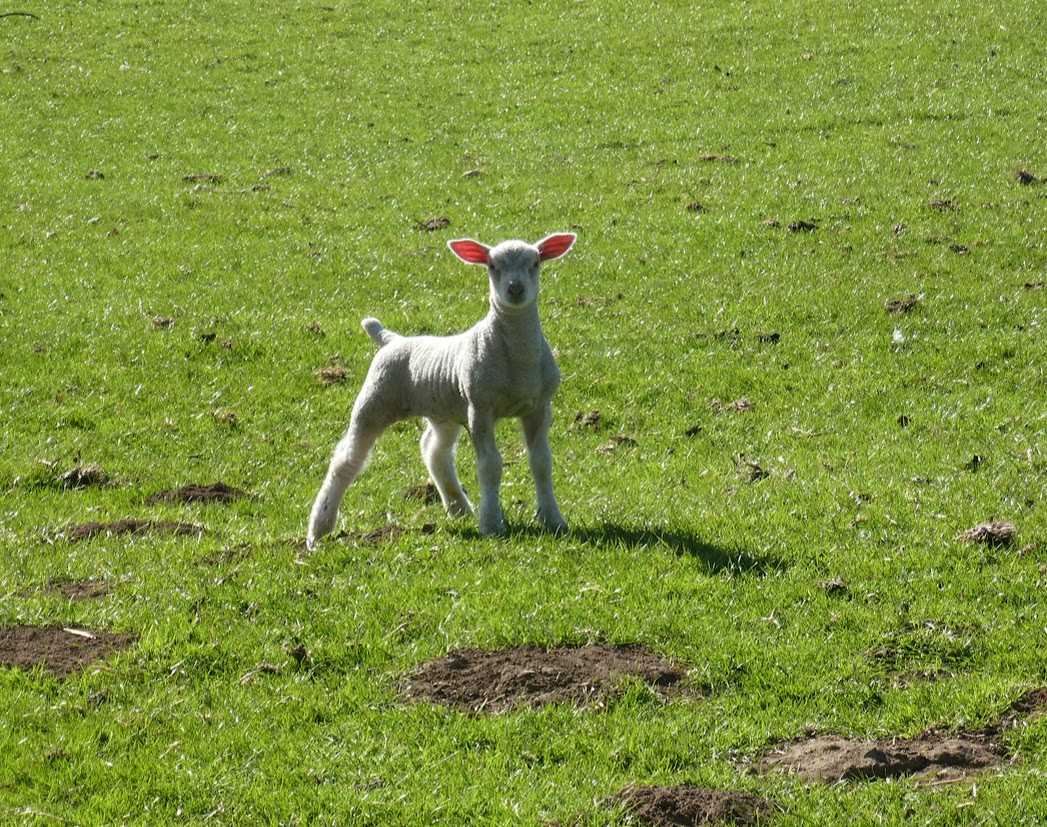
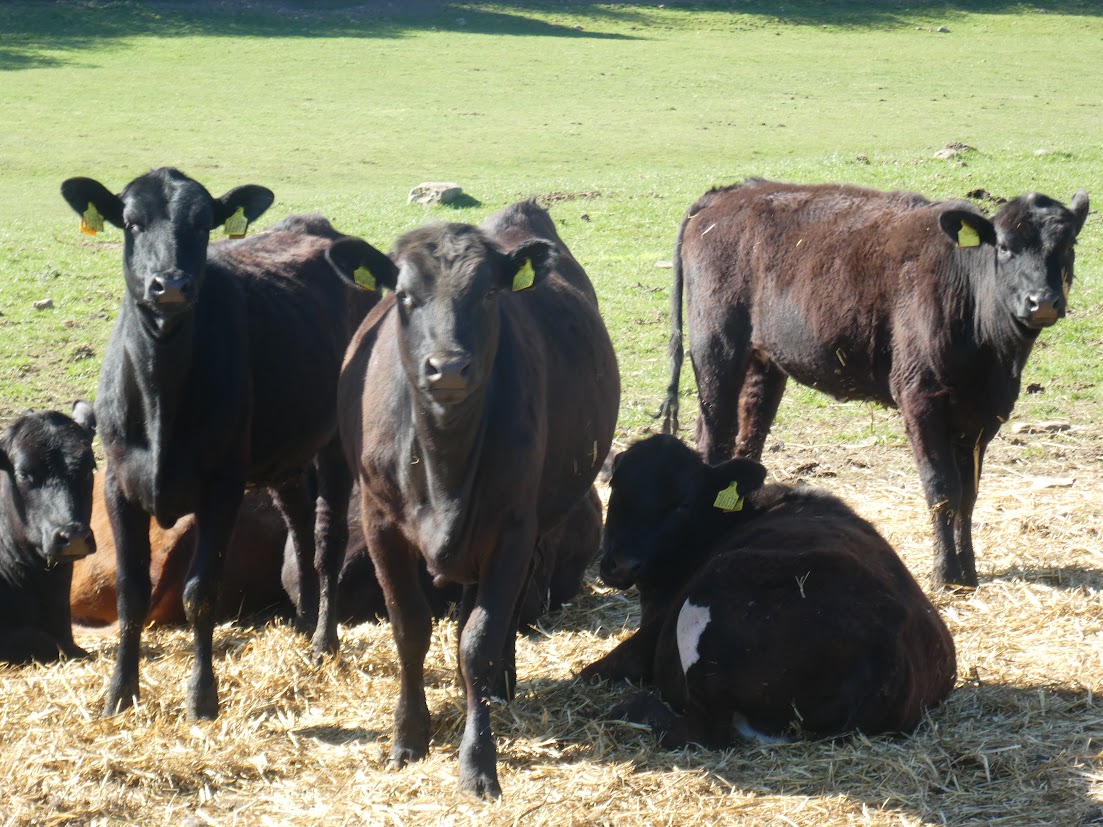
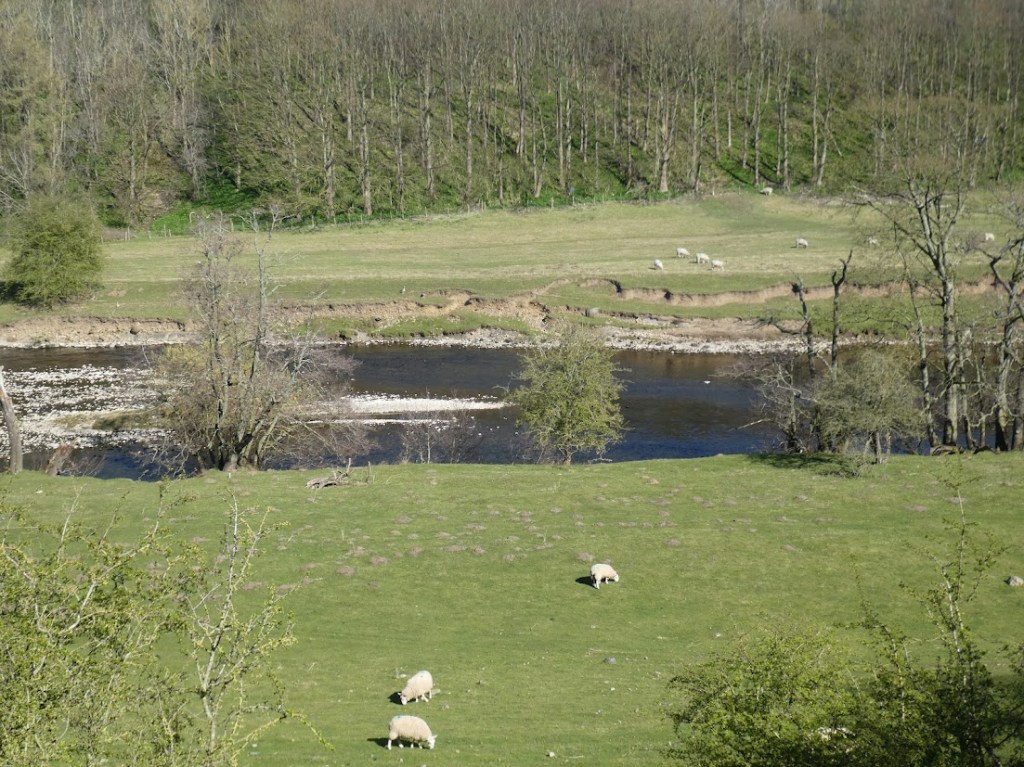
Here are young cattle; sheep with their now-skittish lambs.
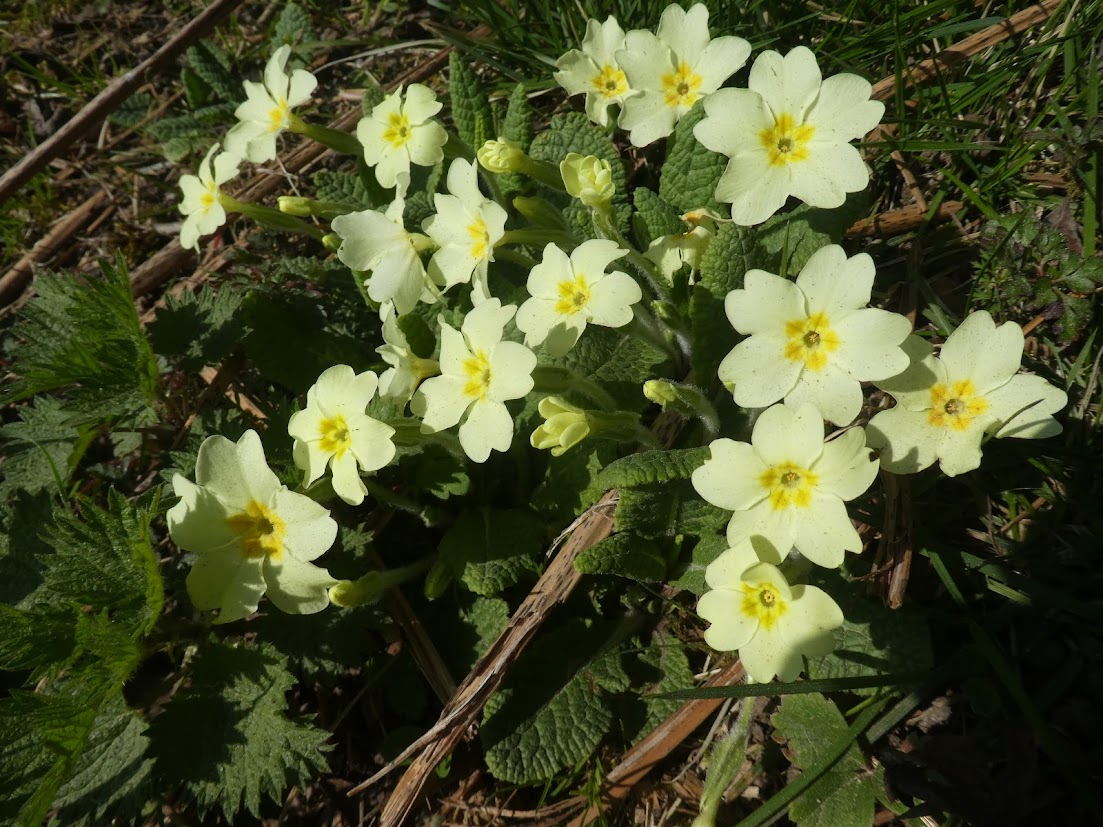
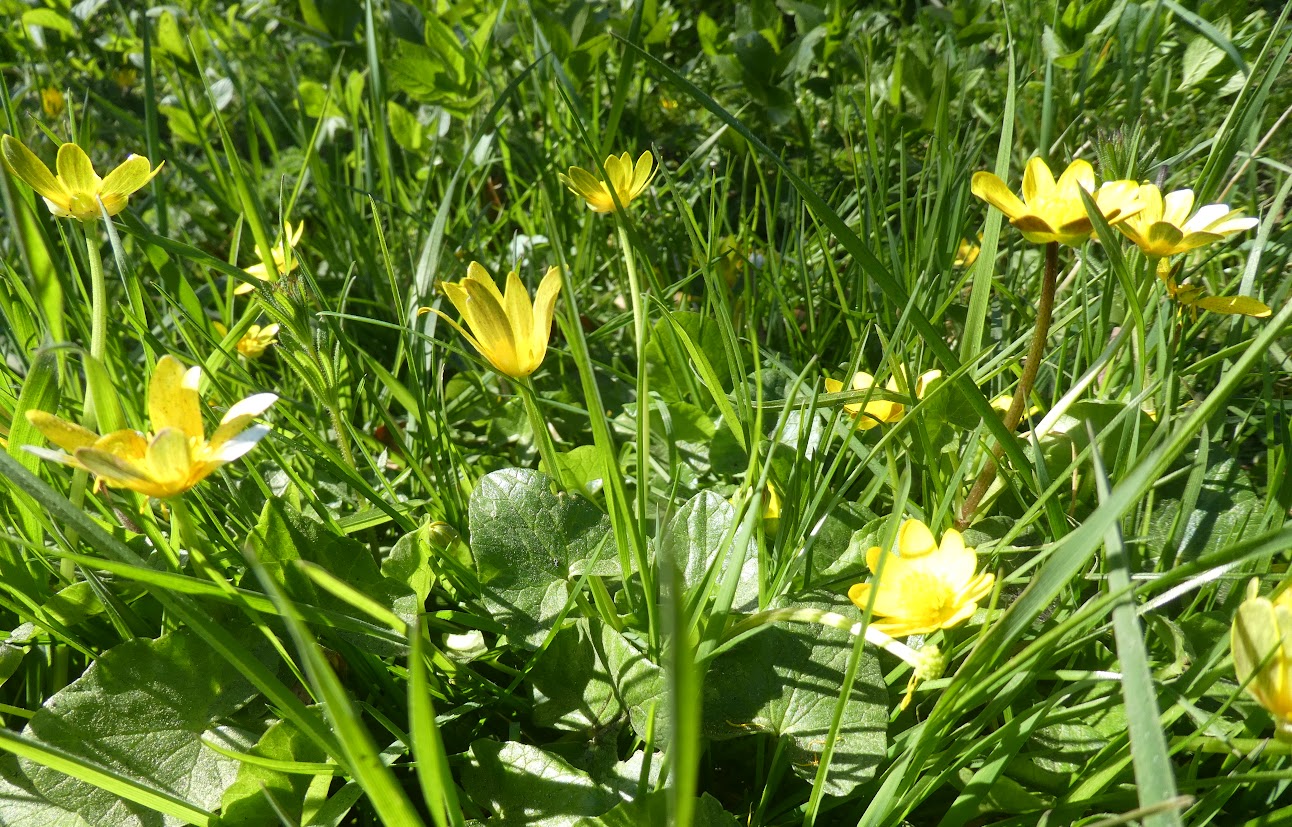
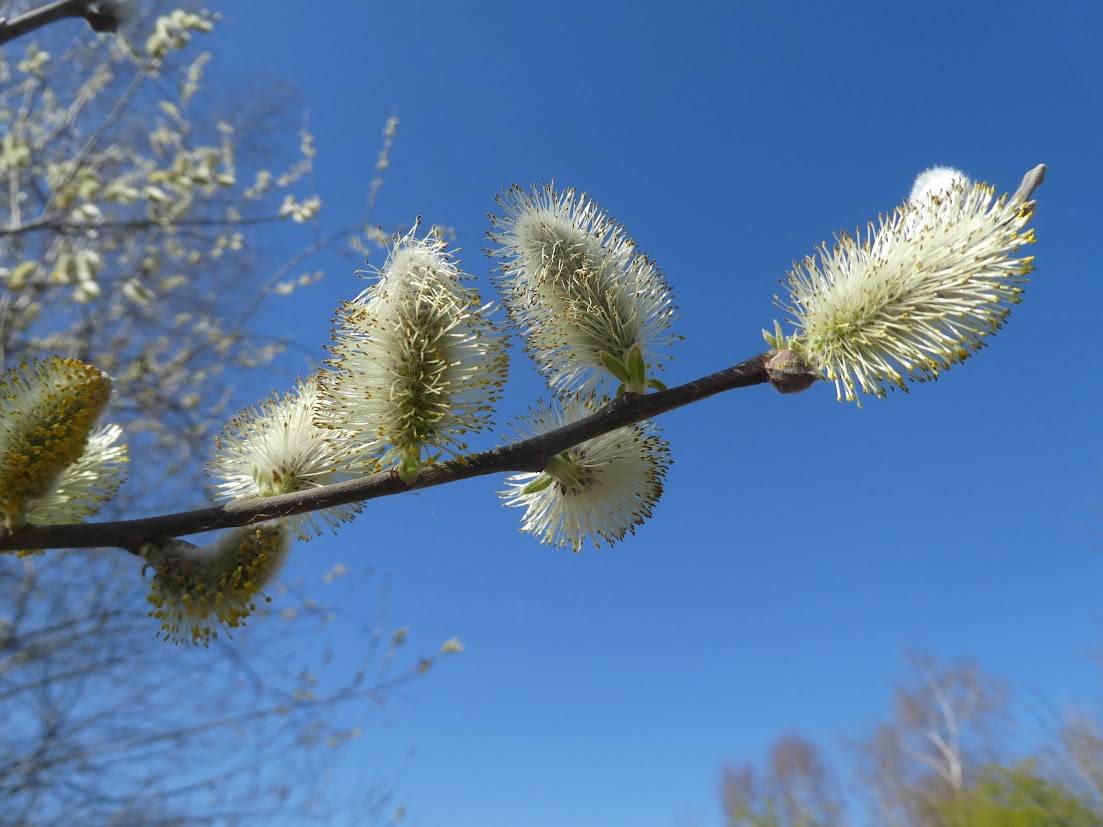
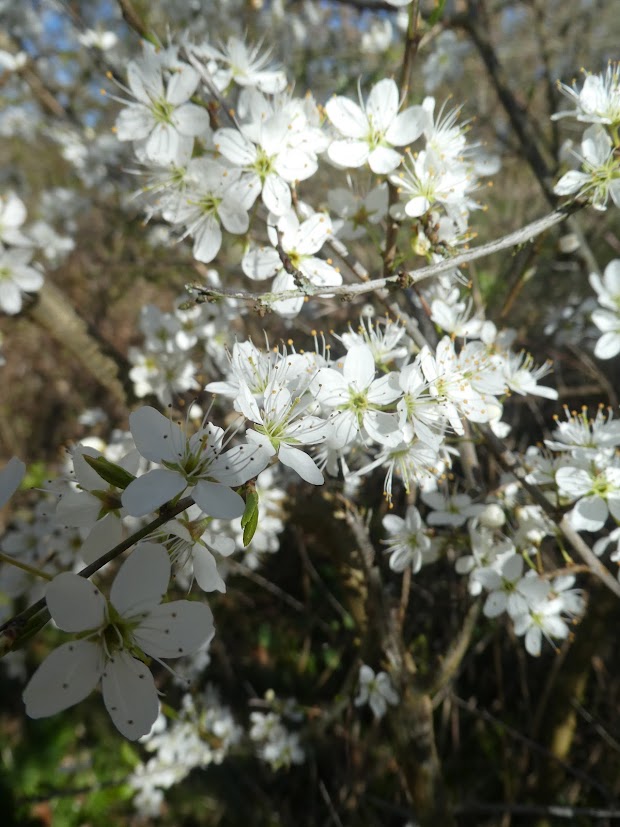
Primroses, celandines, willow catkins dusted with yellow pollen, blackthorn blossom.
Turn right through a field of cows, and reach the river banks, high above the river itself at first.
Right again, through pastureland with characterful trees, woodland, always with the river, sometimes still, sometimes chattering and clattering its way over its stony pathway.
Touch into the edge of Masham, then more fields with open views and here I am. back at Marland Wetlands again. Only four miles, but enough to send me home refreshed and content.
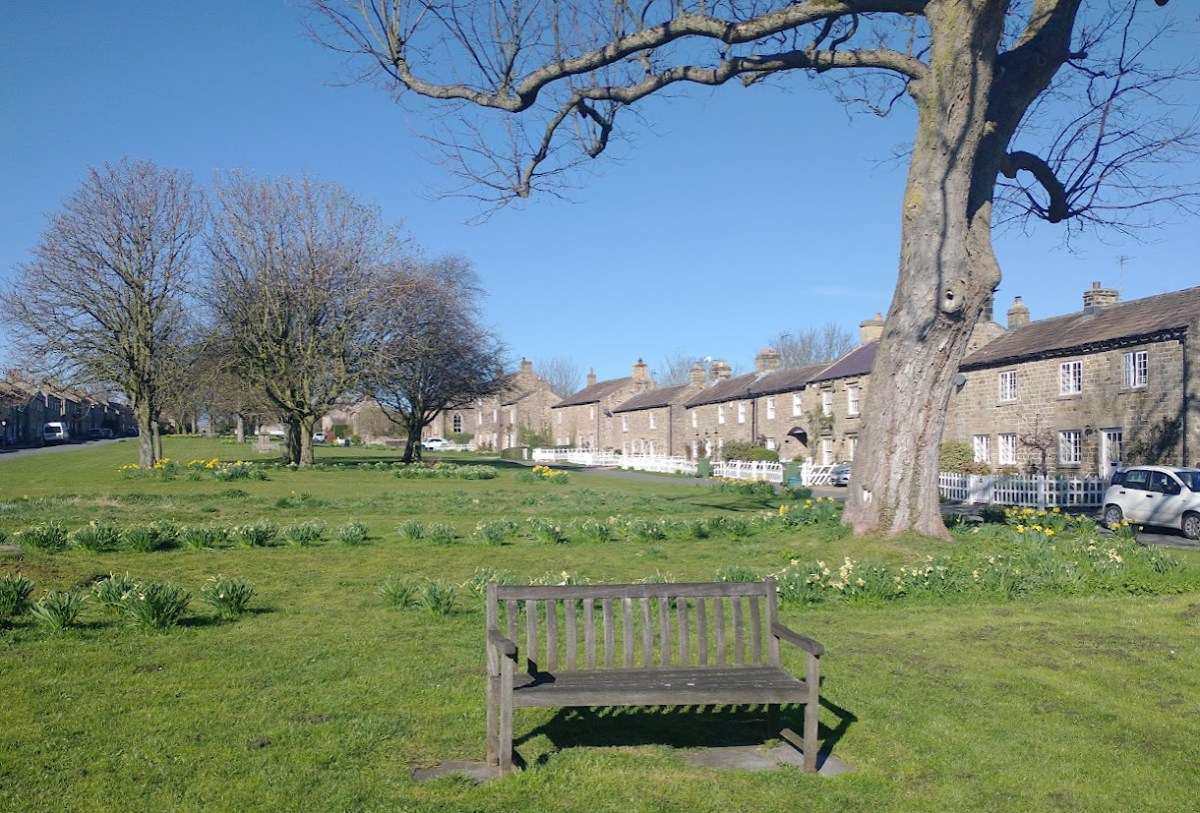
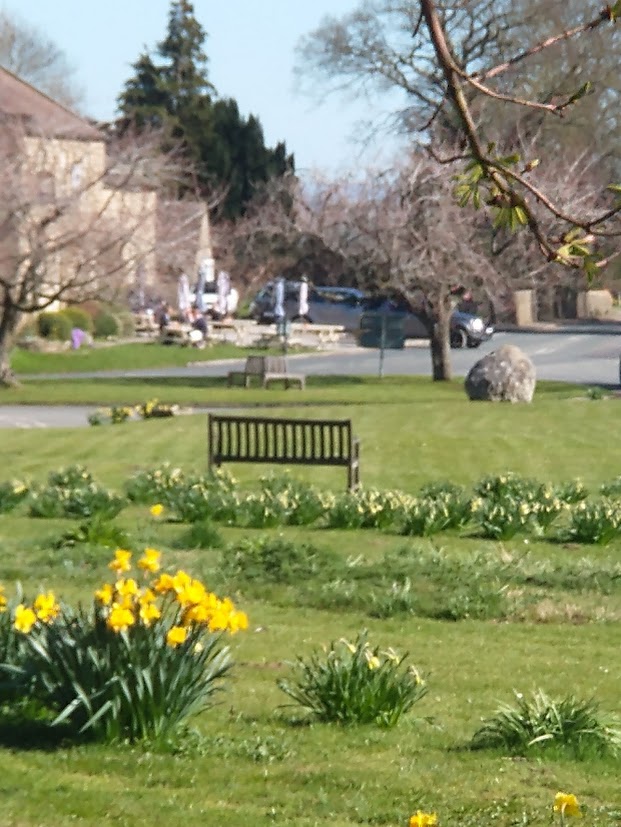
Out walking in Wensleydale the other day, we came upon this bench in East Witton. I thought it important to catalogue it, front and back, for Jude’s Bench Challenge.
This week, A Canadian blogging pal, Rebecca of Rebecca’s Reading Room reflected on re-reading Emily Brontë’s Wuthering Heights. It made me think of a post which I wrote six years ago, in which I described a walk in Emily’s footsteps. Now it’s not really playing fair to re-post something I published before for the Lens-Artists Challenge: Tourist Attractions Near and Far. But I’m going to do it anyway. How many walking routes does anyone know in the UK where the way-marking is in any language other than English? Here, they’re in Japanese. This wild and often unforgiving part if England has become an unlikely tourist Mecca for devotees of Brontë’s story of the passionate and tumultuous love affair between Heathcliff and Catherine Earnshaw.
Wuthering Heights
28th July 2018
Haworth: a charming village on the top of a high and steep hill, in an area of high, bleak and steep hills; home to the Brontë sisters and the surrounding moorland countryside of Wuthering Heights.
Cottages near Haworth. Cosy now: possibly less picturesque back in the Brontë’s time.
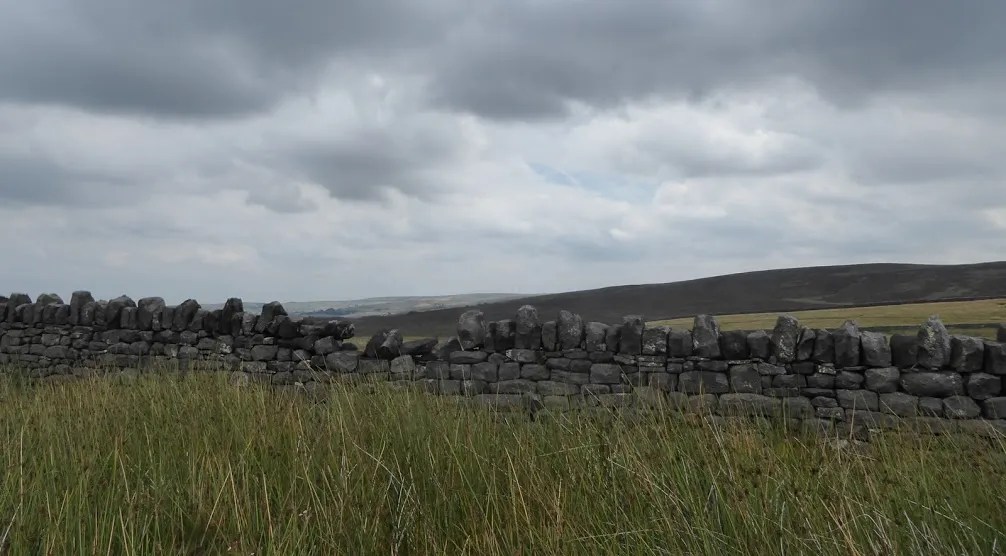
Everyone knows that you can expect ‘weather’ when you come here, whatever time of year you arrive. As you stumble along the church path to leave the village, slashing rain tumbling from sullen hostile skies needles your skin, slicks your hair to your face and saturates your clothes. As you set your face against the wild wind, your boots sink into the sodden peaty turf as you trudge onto the moor. If you dare to glance up, you see unending moorland before you: bleak, barren and bare, with sheep huddled against the dry stone walls which march across the landscape. This is Nature-in-the-Raw, and we expect no different.
I went there earlier this week. None of the above applied.
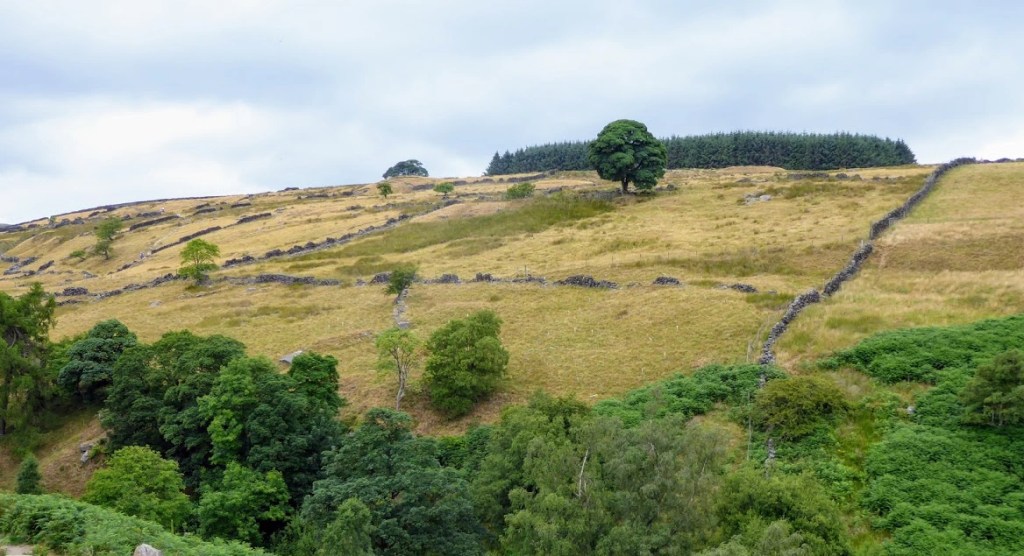
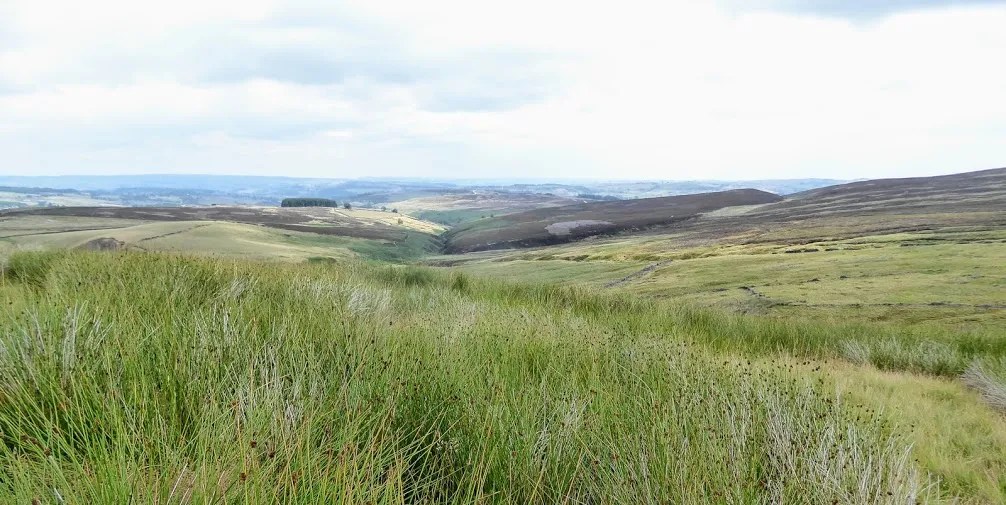
We are in Week Five of a heatwave. I doubt if either the Brontës or even Heathcliff himself had ever seen the like. Brittle coir matting now carpets the brooding moorland fells: and several weeks early, the heather is almost in flower, rich and purple. Yellowing grasses replace the dense green turf the sheep prefer, whispering and rustling in the light breeze.
Beyond Howarth, coir matting stands in for moorland turf.
There’s a little brook in the valley here. Angry peaty water jostling officiously along its path has been replaced by still, clear shallow pools.
The brook by Brontë bridge.
The Brontë sisters would cheerfully have paused here to rest, reflect and write a little. Then, like me, they would have slogged on, up the peat-and-stone pathway that leads upwards, ever upwards, towards Top Withens.
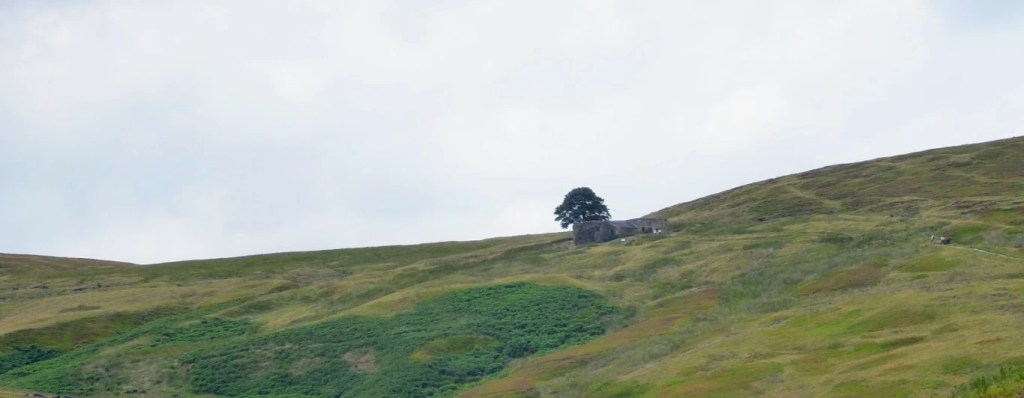
There’s Top Withens, up there. Beside that solitary tree.
Top Withens may have been the isolated upland farmhouse that Emily Brontë pictured Cathy Earnshaw and family living in when she wrote Wuthering Heights. It’s a ruin now, the roof torn off in a violent thunderstorm in the 1890s. Just as you’d expect.
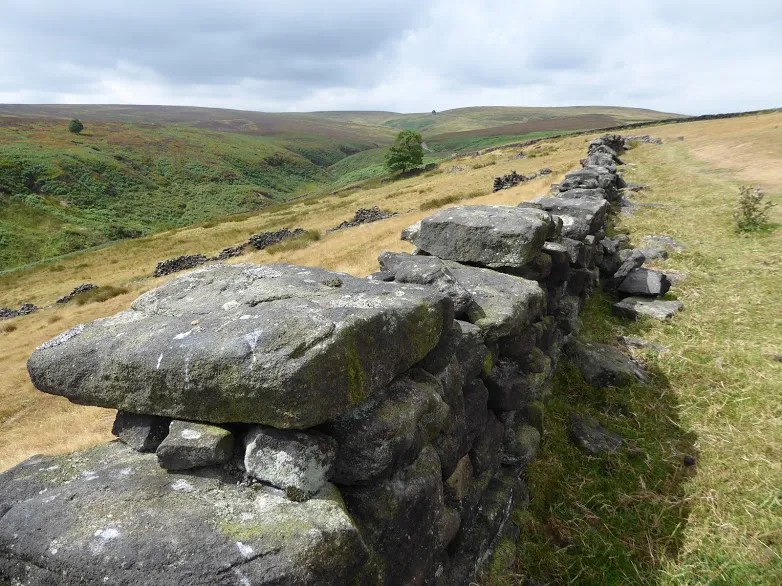
It was the perfect picnic spot for me. The moorland stretched before me, its hillsides rhythmically rising and falling. The world was silent: not that silence in which there is no sound, but that of the living countryside: the low susuration of the swaying grasses; the humming of the wind in my ears; the occasional complaint of a bird sweeping overhead. Beyond the moorland, greener fields lay, chopped centuries ago into rough rectangles by drystone walls. Some held sheep, some cattle, others recently cut hay. The sun warmed my rocky seat, and I was perfectly content.
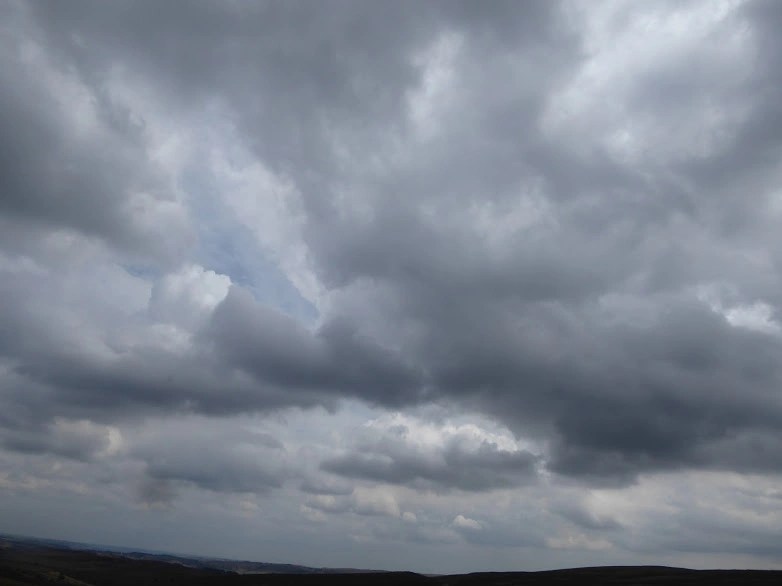
Except for the sky. The day was sultry, sweaty, but freshened by a soft breeze. I knew the sun might be chased away by gusty rain. Ash-grey clouds swelled and receded, revealing granite tones behind: and beyond that, cornflower blue once more. It was a signal. Haworth takes weather seriously. Never be tempted to climb these uplands without a very capable waterproof in your kit.
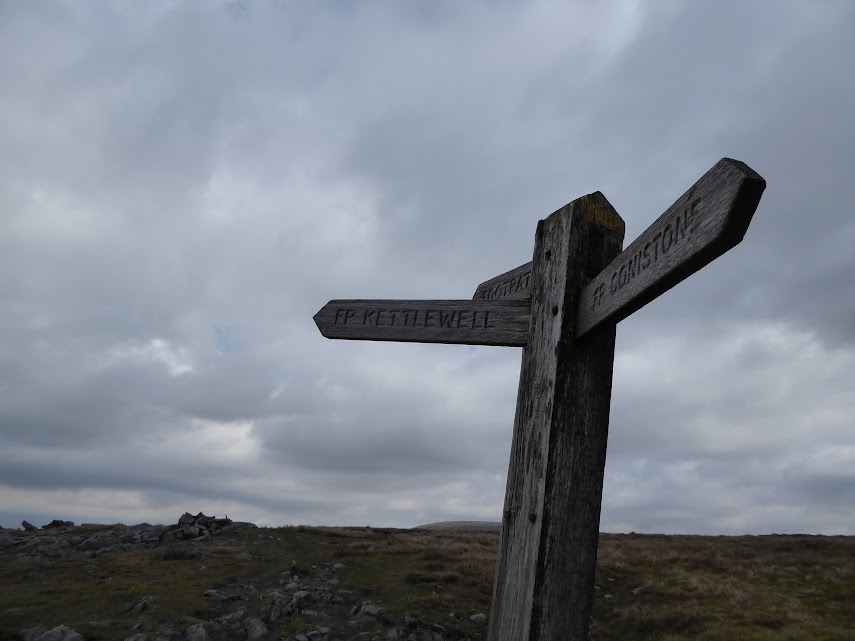
The moorland I saw this week was not the Brontë’s moorland. It’s been a little sanitised. There are helpful finger posts pointing the way at every junction, in English and … Japanese.
Top Withens or Top Withins? Take your pick. I don’t know which the Japanese choose.
The pathways the sisters trod are no longer springy peat tracks, or sticky muddy gullies. Instead, heavy slabs line the way, to prevent footfall damage to this fragile area from the hundreds of people who tramp these paths looking for the Real Brontë Experience.
My day was far too comfortable for that. I was not returning to a draughty parsonage with self-destructive brother Branwell to worry about. If you want to see the Brontë’s life through his eyes, read Robert Edric’s ‘Sanctuary’. You’ll be glad to get back to bustling tourist-destination Haworth for a nice cup of tea.
The other day, a friend and I took ourselves off to the Ryedale countryside to reconnoitre a route. It turned out to be not only the Longest Day, but the First Day of Summer, in the sense that the weather was wonderful – hot and sunny .
Setting off on a shaded woodland path, we criss-crossed a flowers-edged stream several times.
We forged our way up a steep – unending – hill. Is that even a path?
We exchanged woodland for fields and open views, with clouds above:
We met a ford which lapped along a long stretch of road. Luckily there was a footpath through a field nearby, and edged with iris too.
Sheep looked on, and ancient walls often marked our way.
And at last, below us the ancient ruined Cistercian Abbey of Rievaulx.
Now let’s run this in black and white.
We criss-crossed a stream:
… and later, the woods opened out into farmland. Crazy sky!
Luckily, we were able to dodge fording the ford: or testing our brakes.
As an alternative to sheep-watching, we chose shadow-watching on the narrow road that was part of our route.
And soon after that, Rievaulx Abbey was no longer below us, but alongside.
And as our walk finished, the road sign confirmed that we had indeed seen Rievaulx.














 From Pyrenees to Pennines
You must be logged in to post a comment.