
Out walking yesterday, we saw lots of lambs. They brightened up our day.


Out walking yesterday, we saw lots of lambs. They brightened up our day.
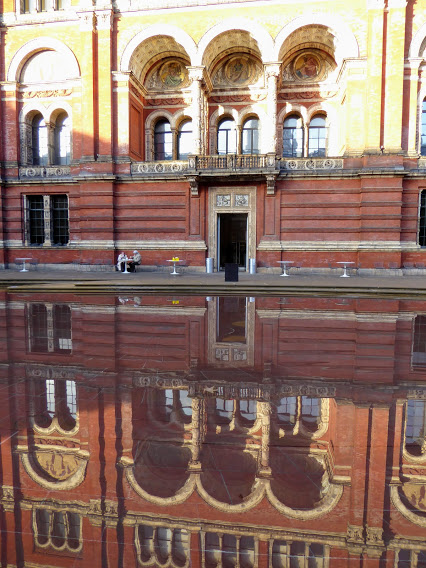
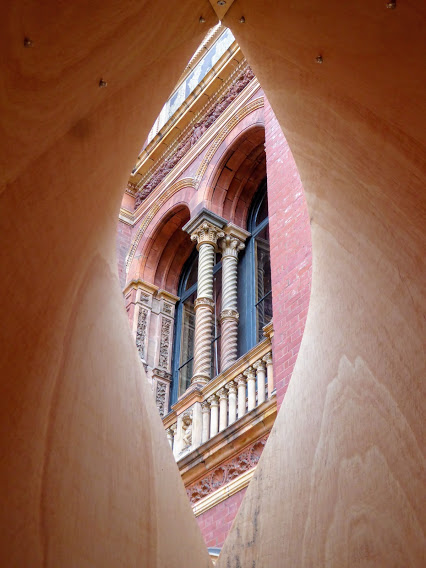
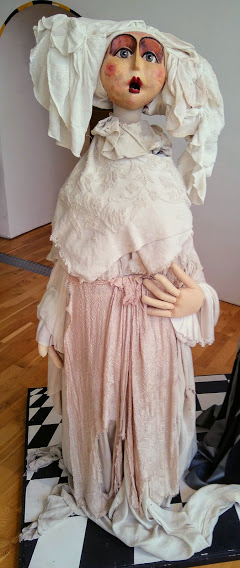
Let’s have a bit of culture, and have a Museum Tour. Our only aim is to find Things That are Pink. We’ll start off at the V&A in London: there’s a view of one of the entrances in the featured photo. In fact we won’t have time to go inside – there’s plenty of pink outside. Then we’ll catch a bus over to the Horniman, and see its Aquarium, its Butterfly House, and pop William into the changing colours of the lightbox which was there for a temporary exhibition on colour. Then it’s over to Dulwich Picture Gallery, just for a very quick look round. We’ll whiz down to Gloucestershire, to Slimbridge. It’s not a museum of course, but its purpose is collecting and educating. We’ll only stop long enough to find two pink flamingoes, because then we have to get straight over to Spain, to Cádiz and to El Museo del Titere – The Puppet Museum. If we hurry, we can be home in time for tea.
The Victoria and Albert Museum
The first three images are from the bright and glowing aquarium, and are therefore bright squares.
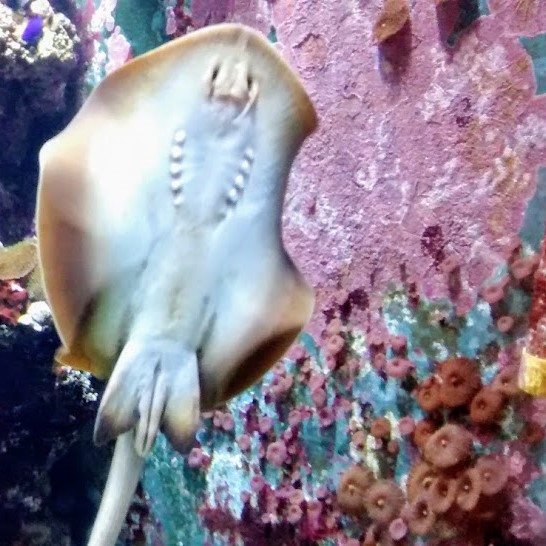
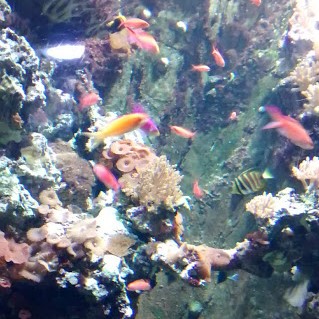
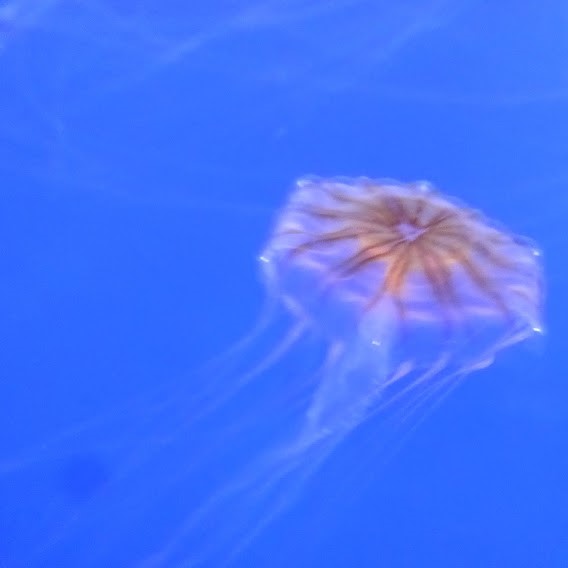


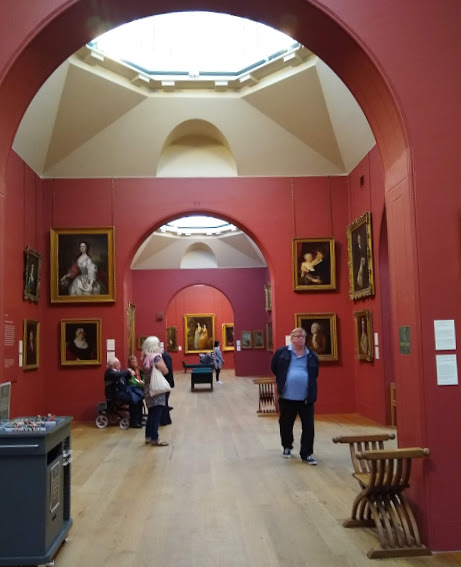
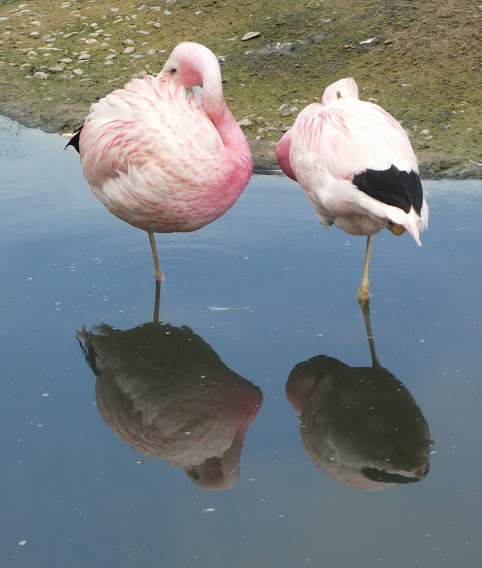
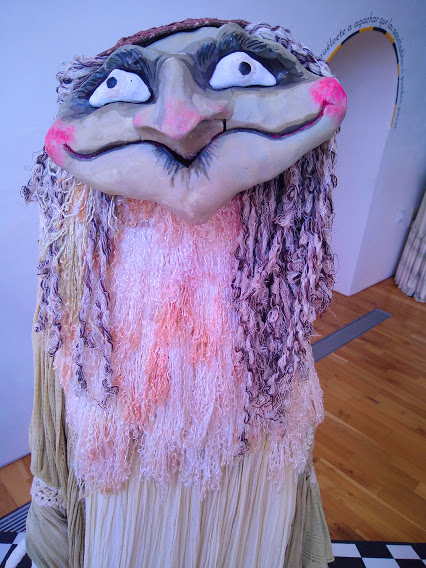

Bright Square
Are you bright-eyed and bushy-tailed today?
Bright as a button?
Come on, you know what this is.
Don’t you?

It’s still bright and early – you have all day to think about it.
It’s also Pink. So Jude can have a go too.
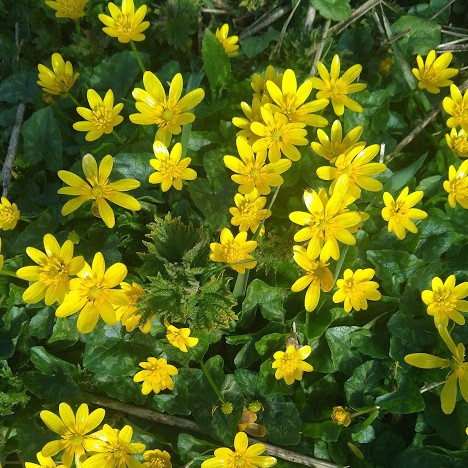
A bright start to Becky’s BrightSquare Challenge. And as it happens, my very last photo in March, for Brian-the-Bushboy’s Last on the Card Challenge (but I did have to edit it into a square)
The first elephants I met in India were in Karnataka, at Dubare Elephant Camp. Nowadays it seems to be a holiday lodge destination with added elephants, but when we visited, it was still largely home to elephants who’d given years of service to the state’s Forestry Department as log-hauliers.
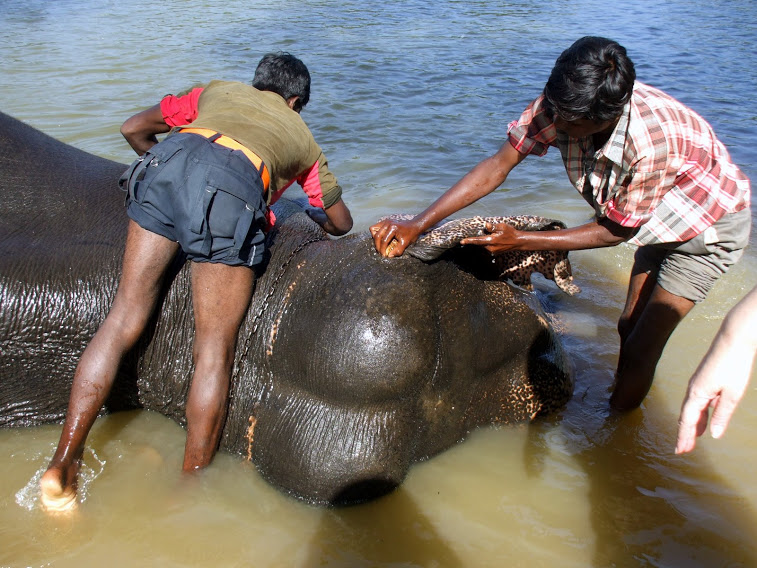

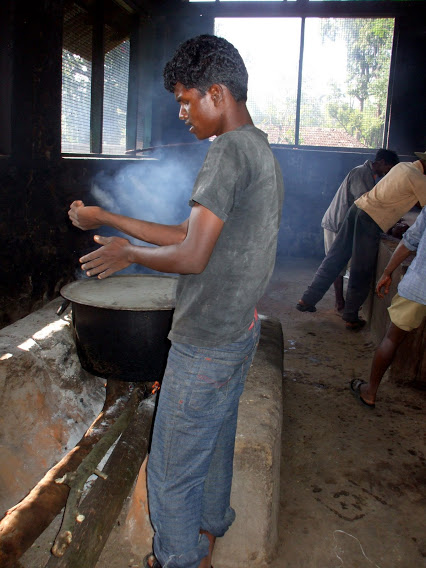
As we arrived, the elephants were being a good old scrub in the River Cauvery, It was clear they relished having their hard leathery hide scrubbed, their hard bristly hair scratched. And it was obvious their minders were enjoying it too. After that – breakfast. Here’s a picture of a cook in the cookhouse. He’s boiling up an appetisng concoction of jaggery (dense dark sugar), millet and vegetation before rolling it into giant balls which the men feed to the expectant animals.
And here’s feeding time. And that was it really. A short but memorable experience.

I had a very different time about ten days later, at Kumbakonam, where my new American friend had taken me to visit some of the eighteen – EIGHTEEN – temples in this small town. I’ll take you for a tour another time. This time I’ll introduce you to the elephant who, at one of the temples, was available to bless visitors in exchange for a few coins for the temple’s finances. Gwen took me to meet her. As I stood before her, she lifted her trunk and laid it gently in my shoulder. I did indeed feel blessed.
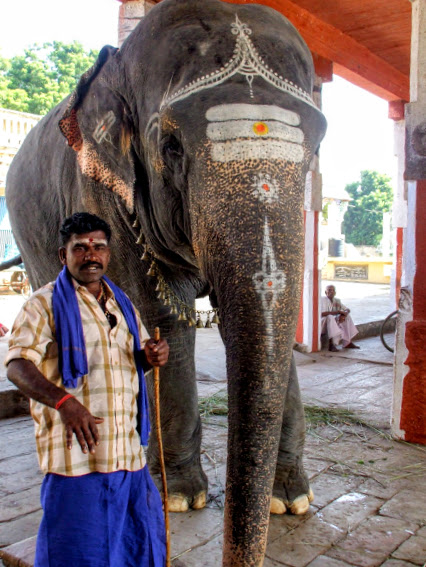
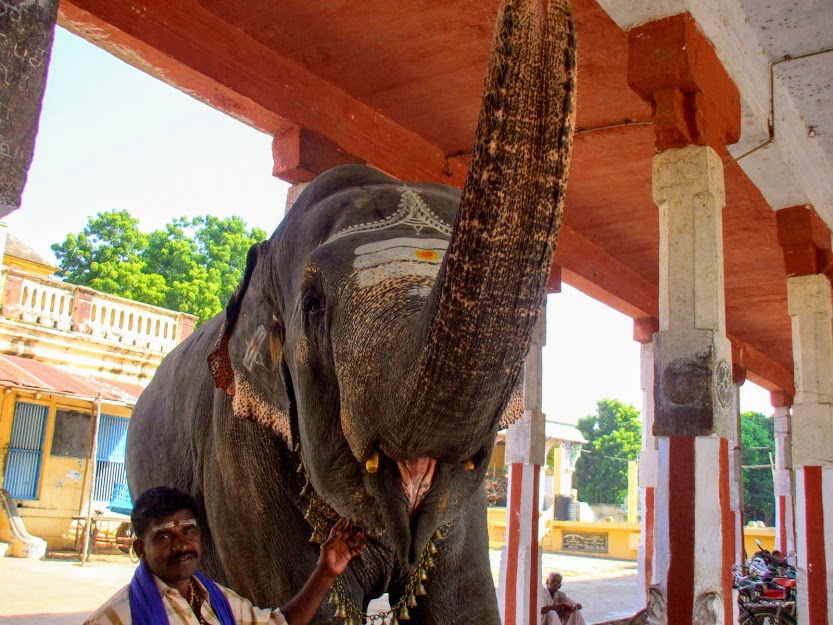
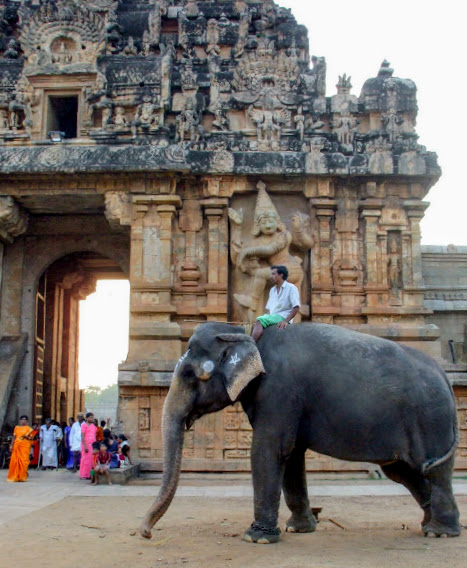
Temple elephants are a common sight – here’s one in Thanjavur.
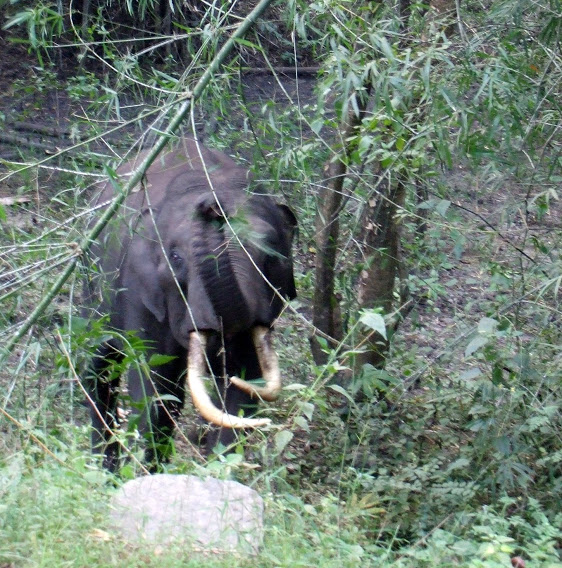
But only once did I see one in the wild, a youngster crashing through the undergrowth and feeding at the edge of a forest.
With thanks to That Travel Lady in her Shoes, whose challenge Just One Person from Around the World has had me rifling through my archive hunting for memories of long-gone adventures.
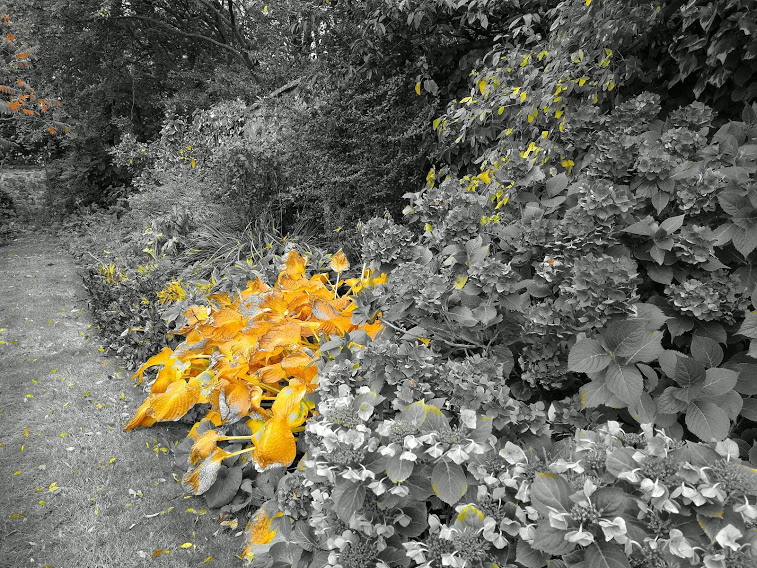
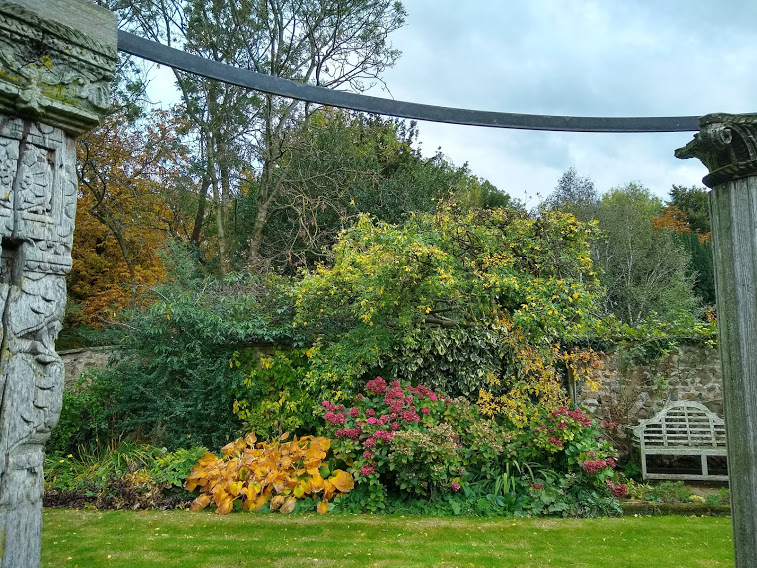
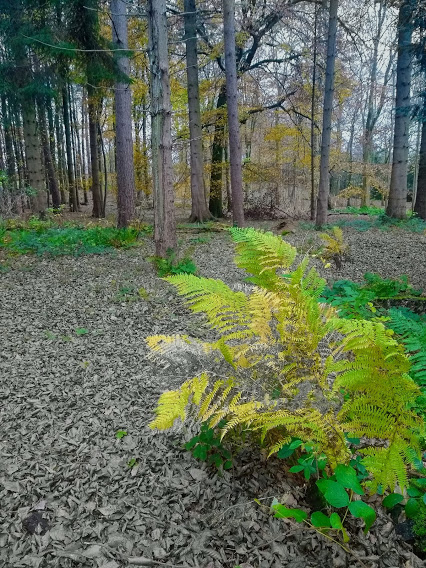
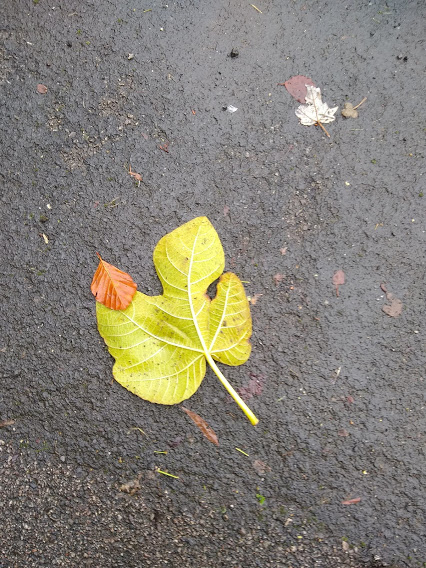
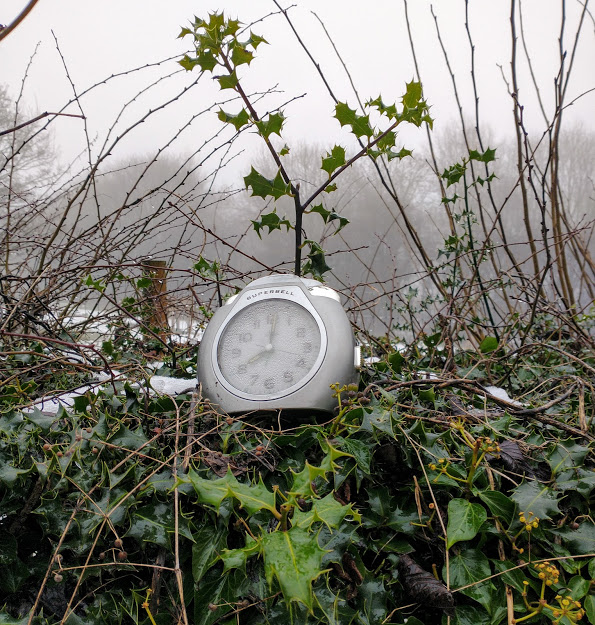
… if that’s what I ask it to do. I must have known about Jude’s Life in Colour challenge when I persuaded it to take these shots.

It’s Six Degrees of Separation time again, and this time I’ve struggled to put my list together. Put it down to Lockdown Lassitude. But I got there in the end.
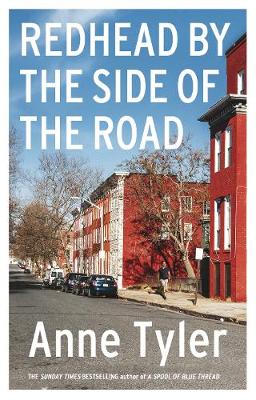
I like Ann Tyler. I really should read the first book in this month’s chain, Redhead by the Side of the Road which features Micah, a creature of habit, whose routines are blasted uncomfortably away when someone who claims to be his son …
Clare Morrall’s The Last of the Greenwoods features two elderly brothers, long in the habit of loathing and ignoring each other, despite living in adjacent converted railway carriages: and a letter from a sister, supposedly murdered fifty years before. There’s also a young women postal worker who hasn’t lived up to her early promise and a railway restoration project to add spice to the mix. Morrall is a good writer, who tells a good tale. . It should have absorbed me, had me eagerly turning the page. But it didn’t. It hung heavy, and it took me well over a week to finish it.

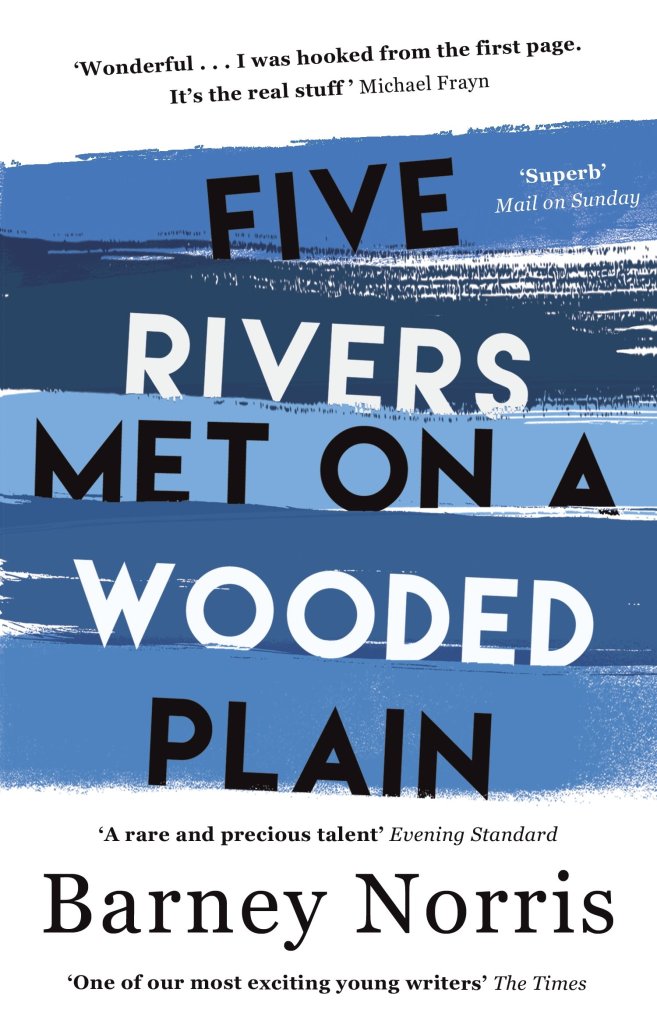
Unrelated, often lonely lives intermesh in Five Rivers Met on a Wooded Plain by Barney Norris. This book, set around Salisbury, is written in five voices, each one involved to a greater or lesser degree with a thoroughly nasty car crash in the town. There’s the self-deluded and foul-mouthed flower seller; the soon to be bereaved schoolboy who’s an odd mixture of articulate beyond his years and immature; the widower, mourning both the death of his wife, and the end a long and happy marriage; the lonely army wife, desperately seeking some purpose in this, the latest of her husband’s postings (he’s now been sent on to Afghanistan); and the highly over-qualified young security guard. This is a satisfying, humane, perceptive read about ordinary people, ordinary lives, often poetic in the way it examines the reality of our everyday existence.
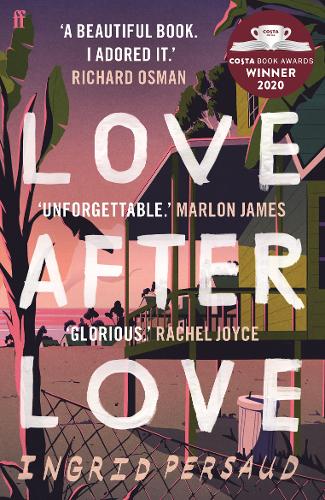
Love after Love, by Ingrid Persaud is set among the Indian community of Trinidad. There’s Betty, lone parent to Solo after the death of her violent husband. There’s lodger Mr. Chetan: friend to everyone but with secrets that are hard to live with. And there’s Solo himself, who discovers how his father died, and draws painful conclusions. The narrative swings between these three characters over the years in which the story plays out. Extraordinary, ordinary lives, often steeped in loneliness. Here are three characters looking for love, for understanding, for acceptance. Written in lilting, poetic Trinidadian patois, this is a powerful, absorbing and compelling story.
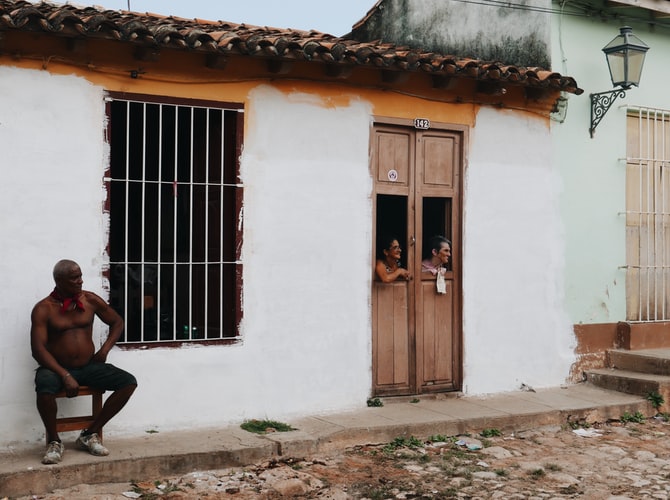
Sam Selvon’s The Lonely Londoners, written in a form of Caribbean English details the journey from isolation and loneliness to acceptance for the young men who came alone from the Caribbean to 1950s London. It paints a picture of a city which, for all the difficulties of dead-end jobs, unsatisfactory housing and dismal food and shows how the immigrants’ new lives could be exhilarating and exciting: offering relationships with young European girls also finding their feet in England, the freedom of the dance floor and an escape from the not always welcome traditions of the homeland.

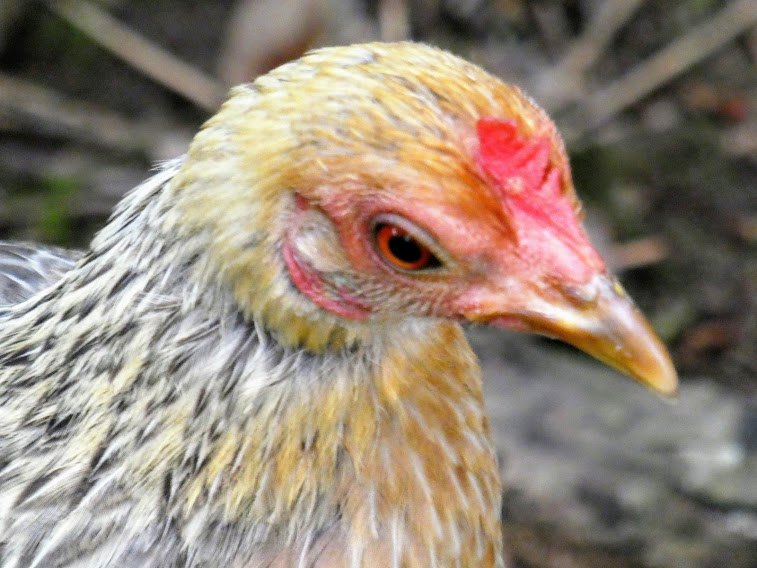
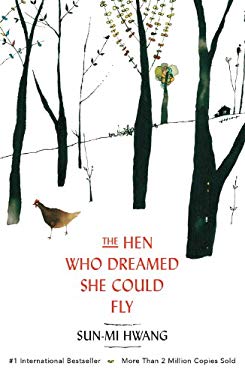
And now for something completely different, though this is a tale of resilience too. Sun-mi Hwang’s The Hen who Dreamed she could Fly is a disarming fairy tale for our times, featuring Sprout, the hen who dreams of rearing her very own chick from her very own egg. That never happens, but this indomitable bird has a way of making her dream come partly true in a satisfying, charmingly written clarion call for independence, motherhood and resilience.
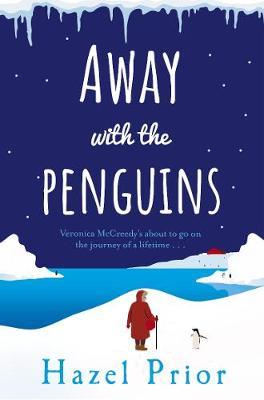
And finally, another loner, more birds. Away with the Penguins by Hazel Prior. At first, I was quite prepared to abandon this book. I thought it was going to irritate me beyond measure, in the way that Leonard and Hungry Paul did. I expected it to be Heartwarming and all that, which I can’t stand. In the end, there was enough grit in this tale to salvage it, and this impossible tale of a little old lady who visits a research station in the Antarctic to visit the penguins had me turning the pages in the end. But it won’t make my Top Ten of the Year.

It turns out that this chain encircles the world – Baltimore USA to England, to Trinidad and back to England: over to Korea and finally Antarctica. That’s the beauty of a book. It can take you anywhere.


Found down a quiet country lane. I’d like to have found out more …. but I just didn’t have the time.
… I just want to choose something upbeat to bring a smile on this slightly murky Wednesday.
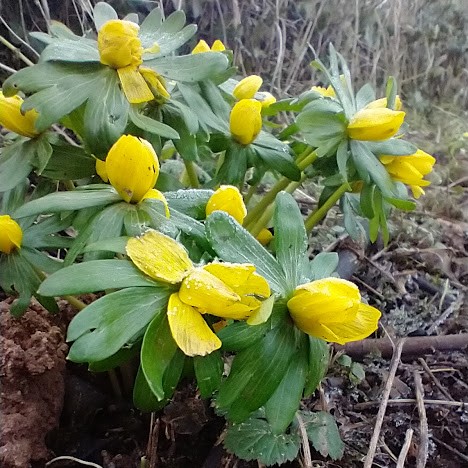
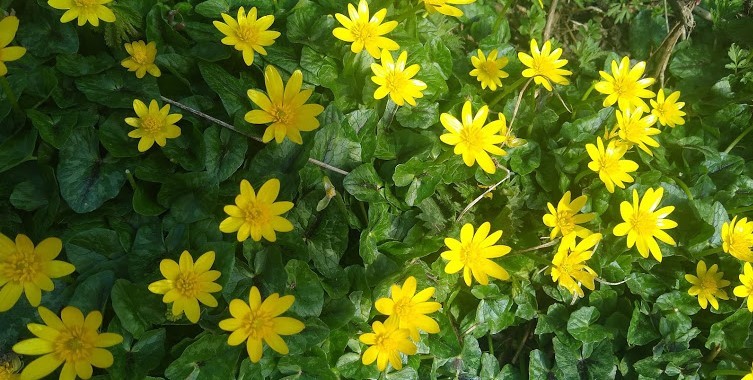
Shall I choose this little clump of aconites, found on yesterday’s Virtual Dog Walk …?
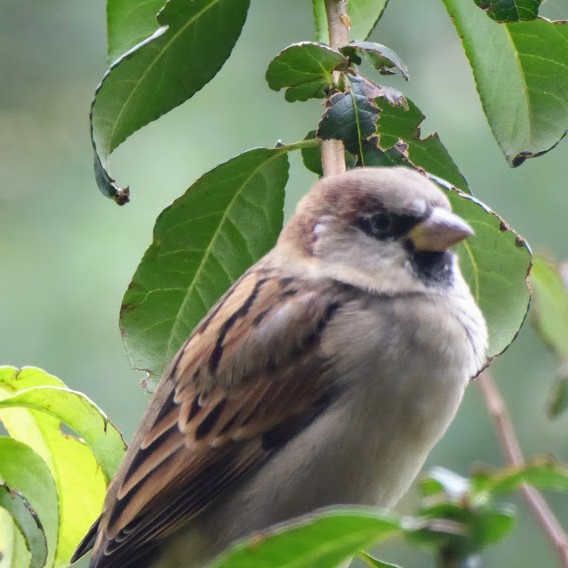
… or this cheery little sparrow?




 From Pyrenees to Pennines
You must be logged in to post a comment.