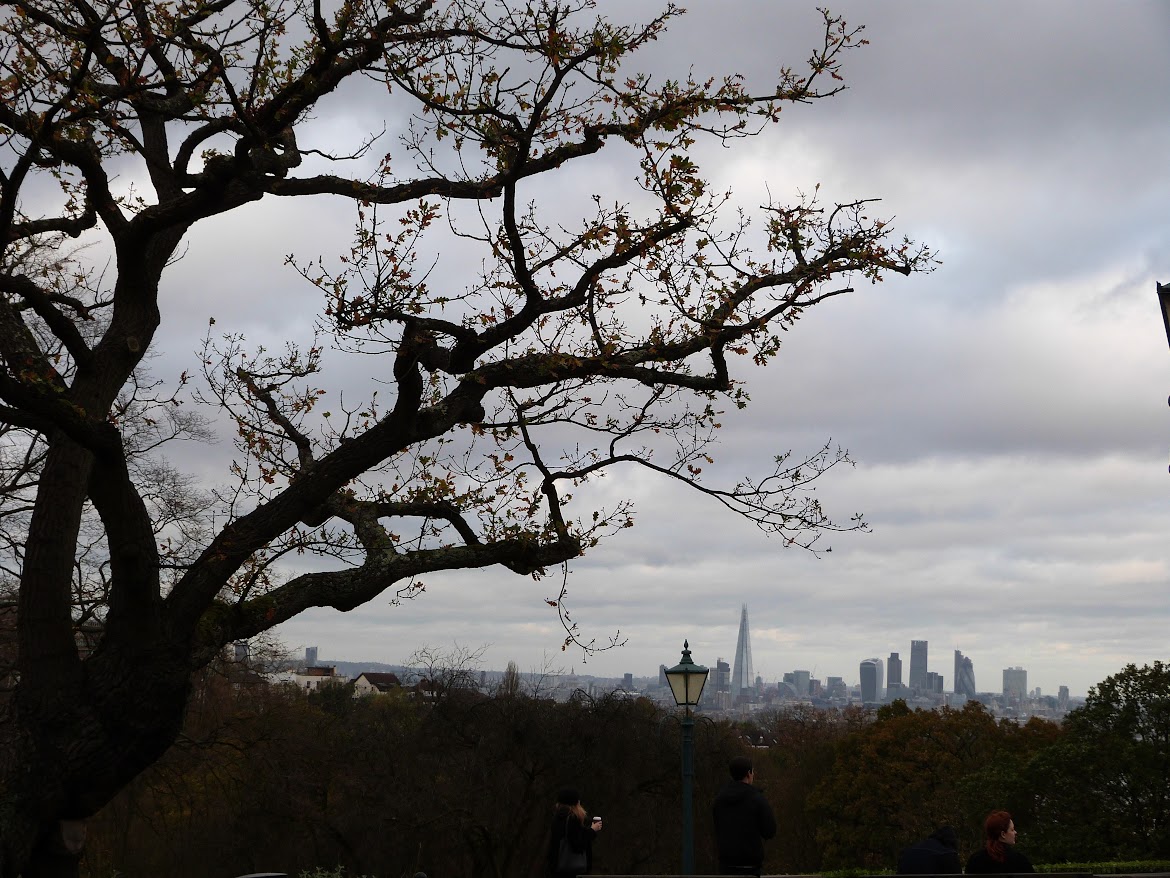
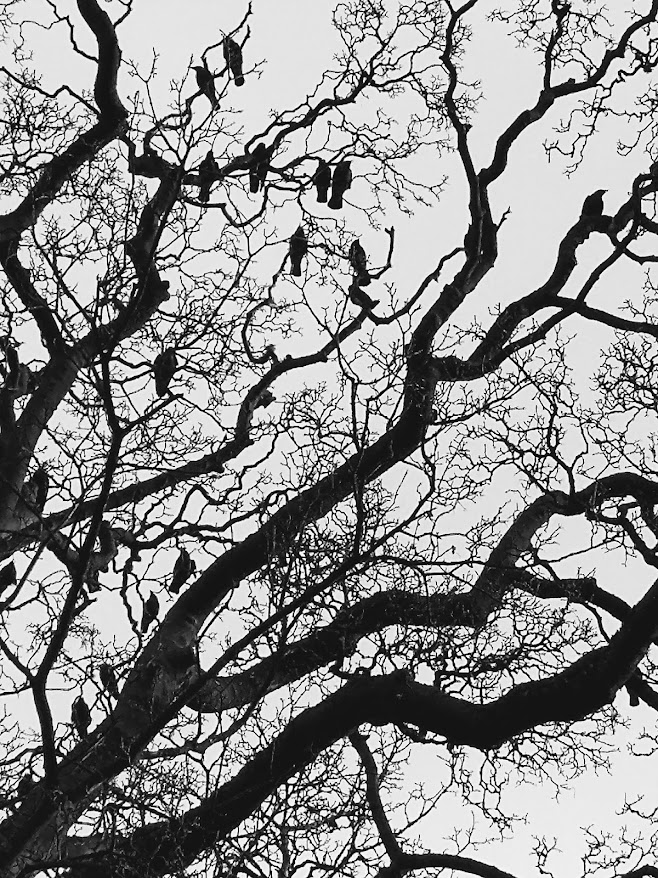
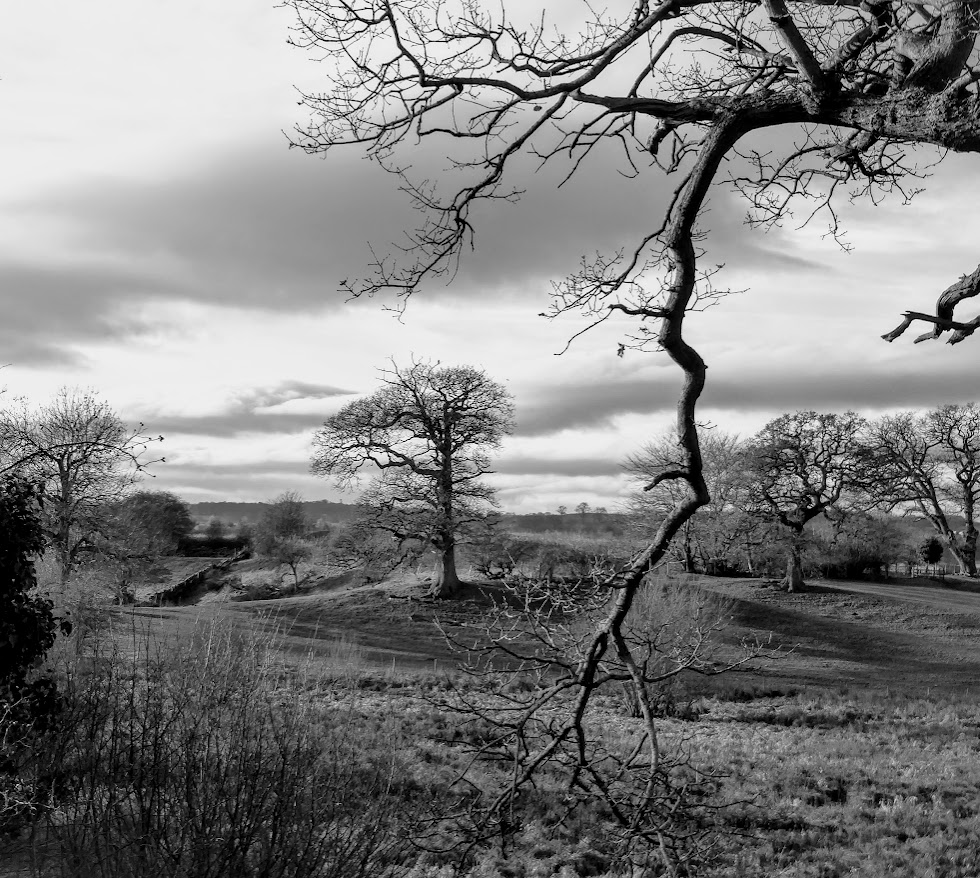
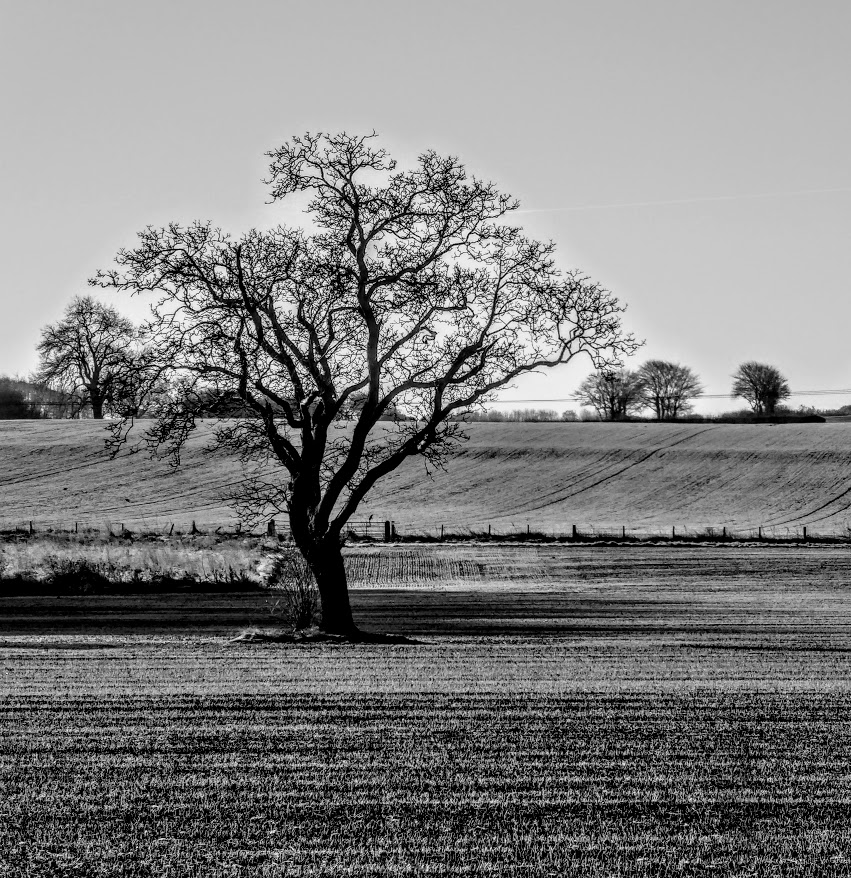
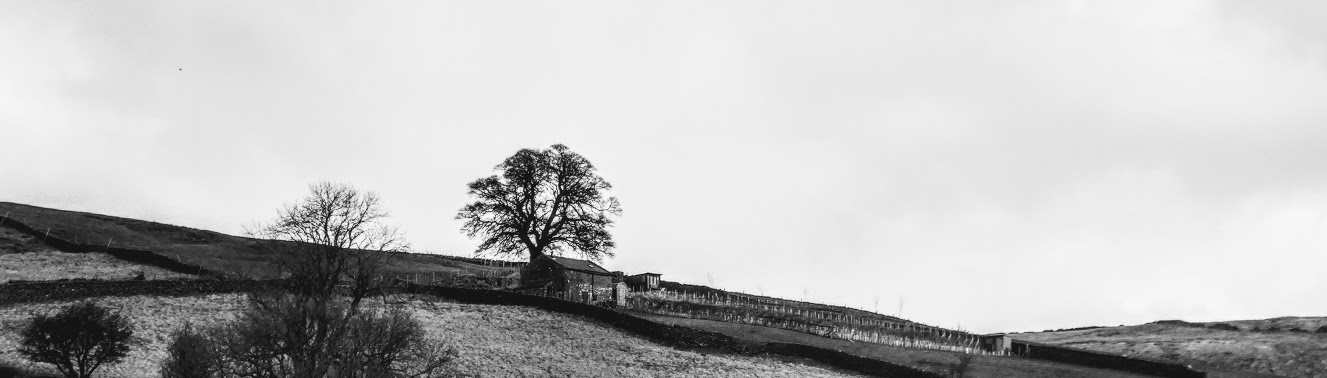
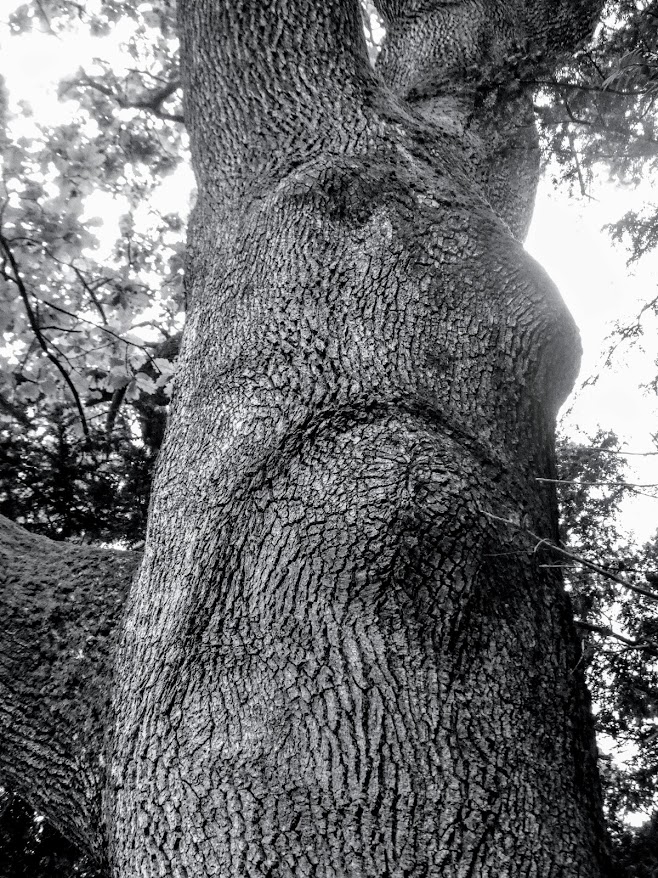
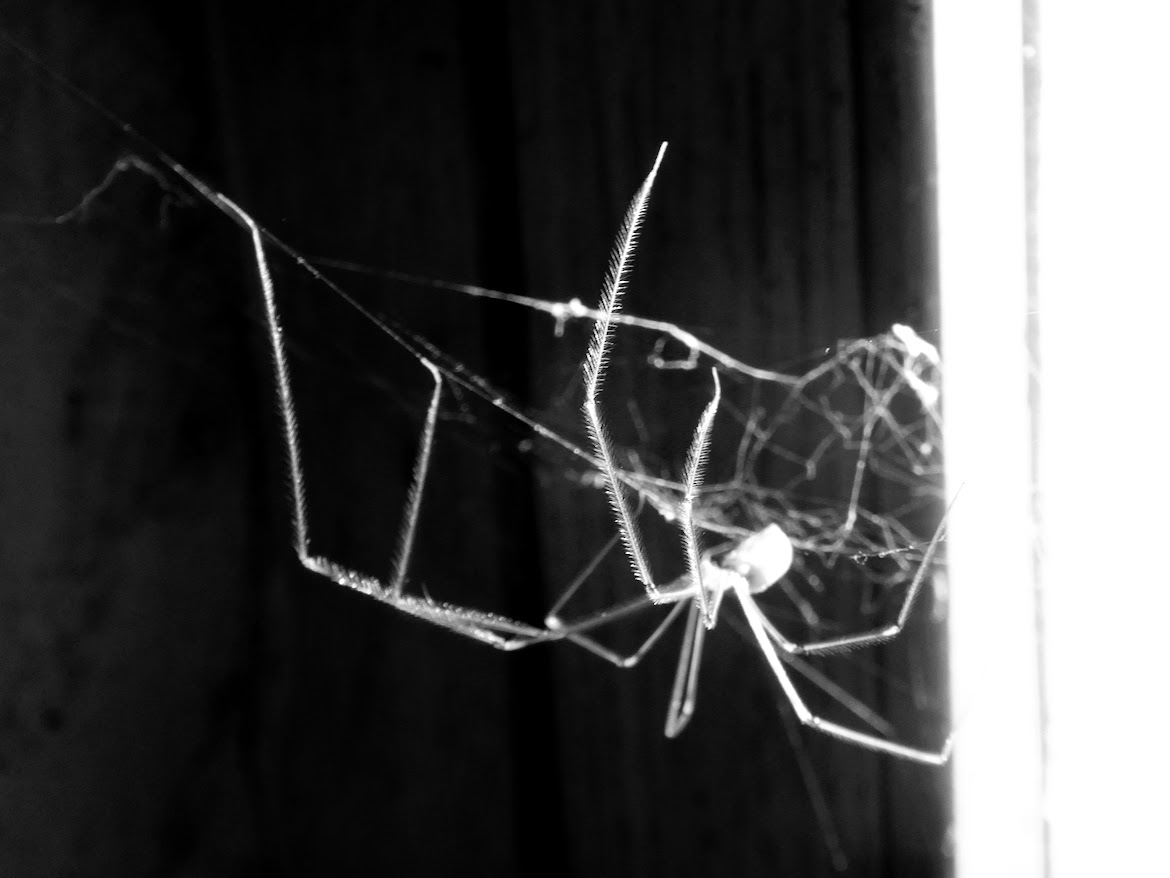
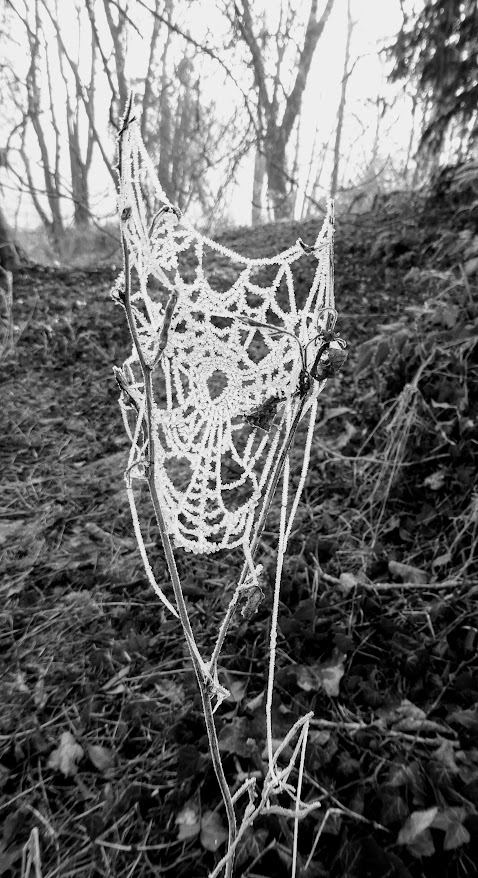
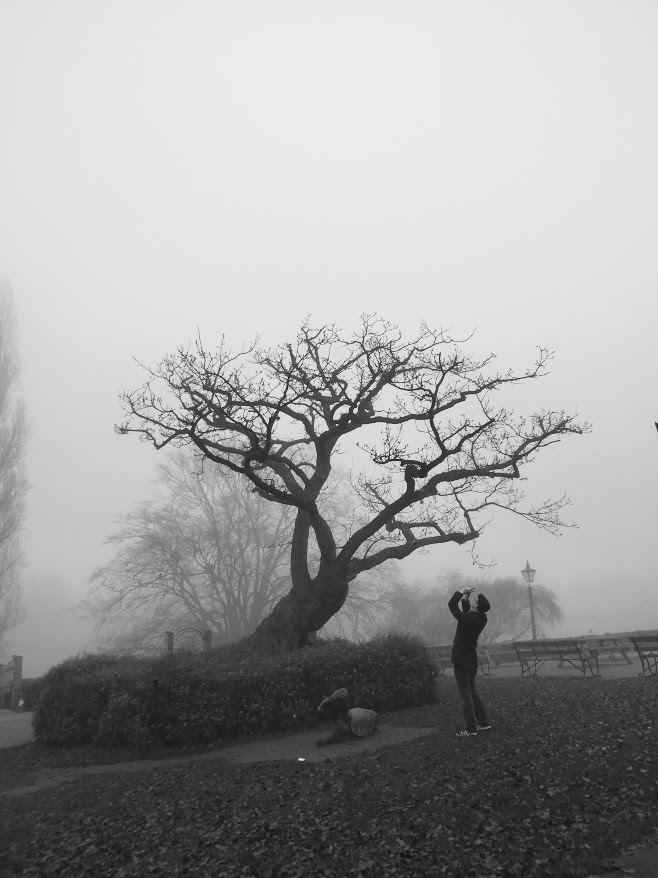
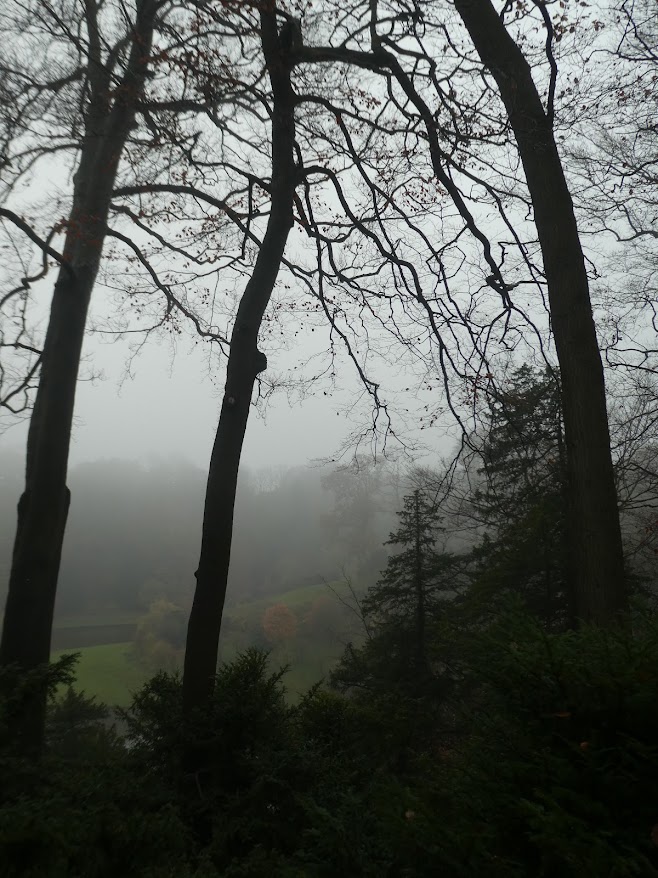
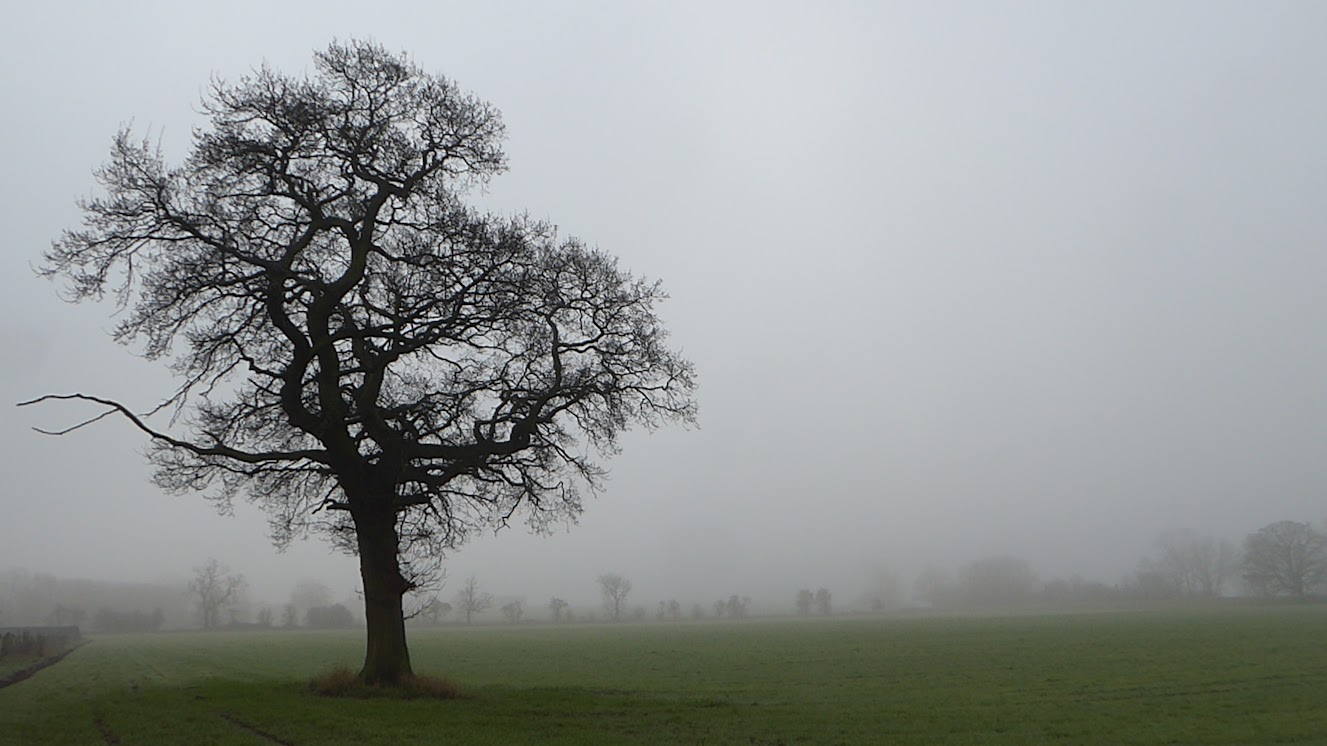
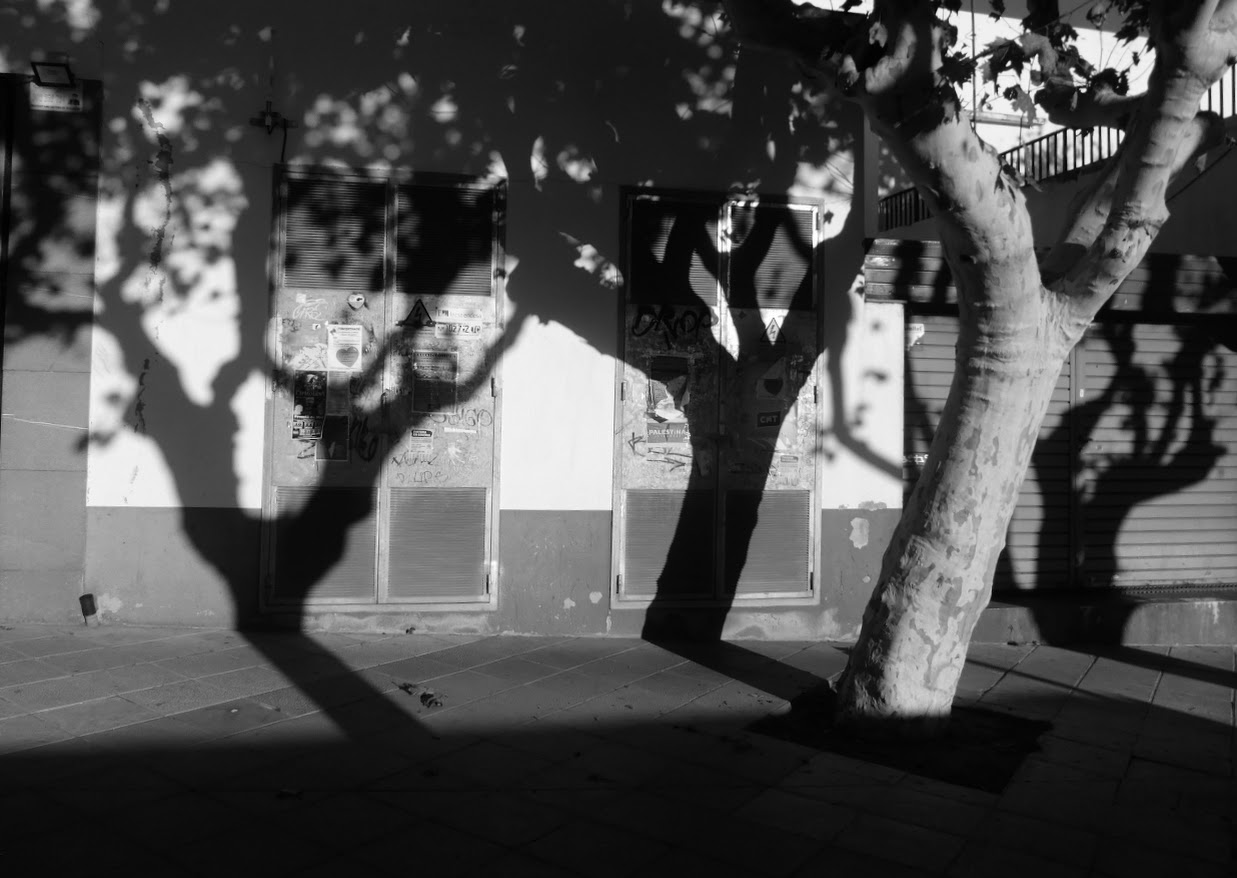
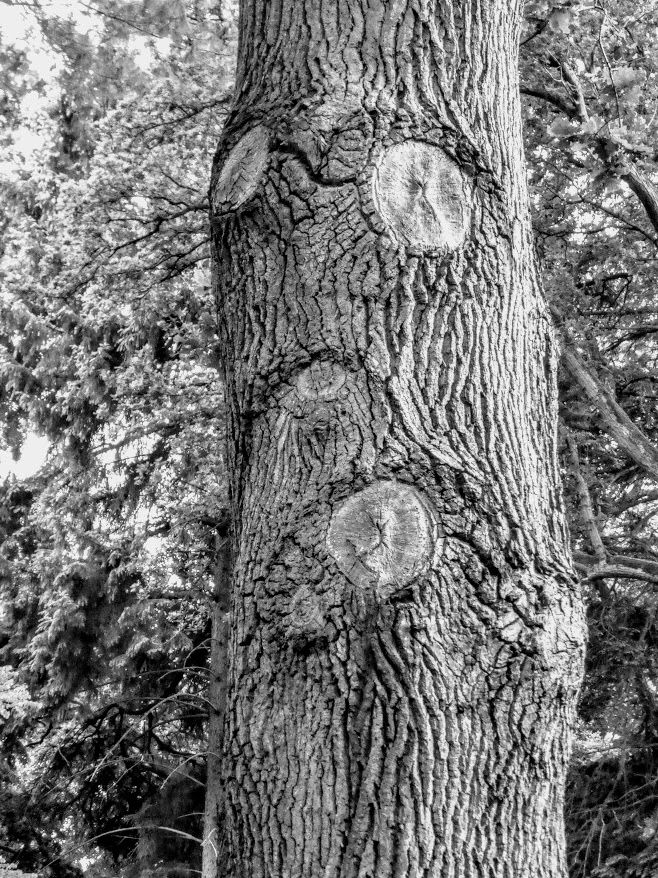
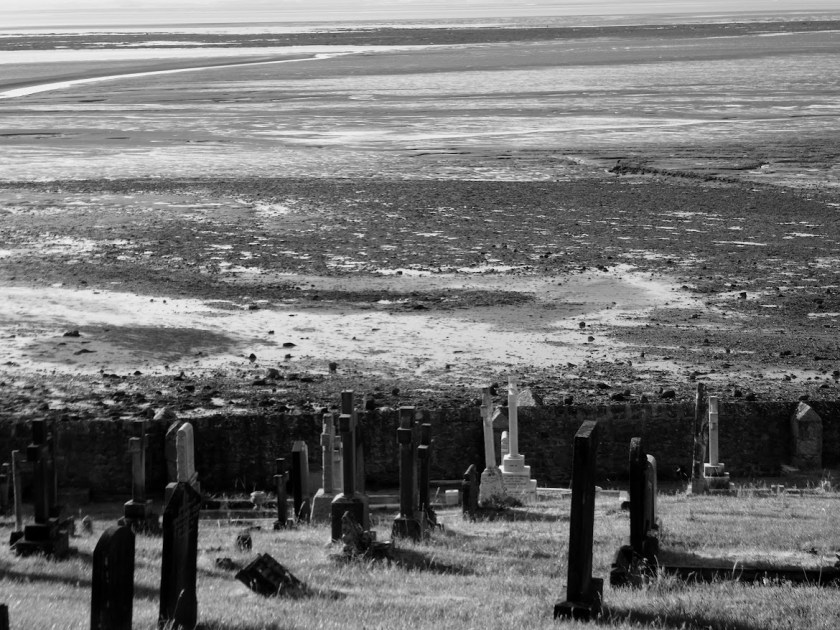
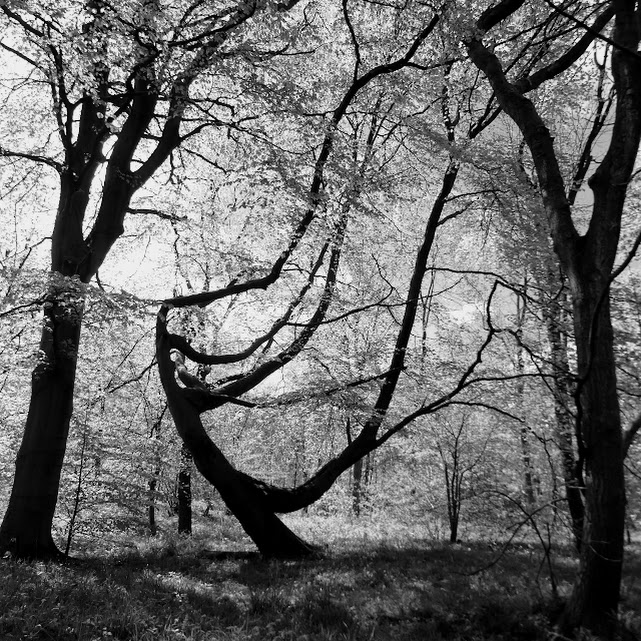
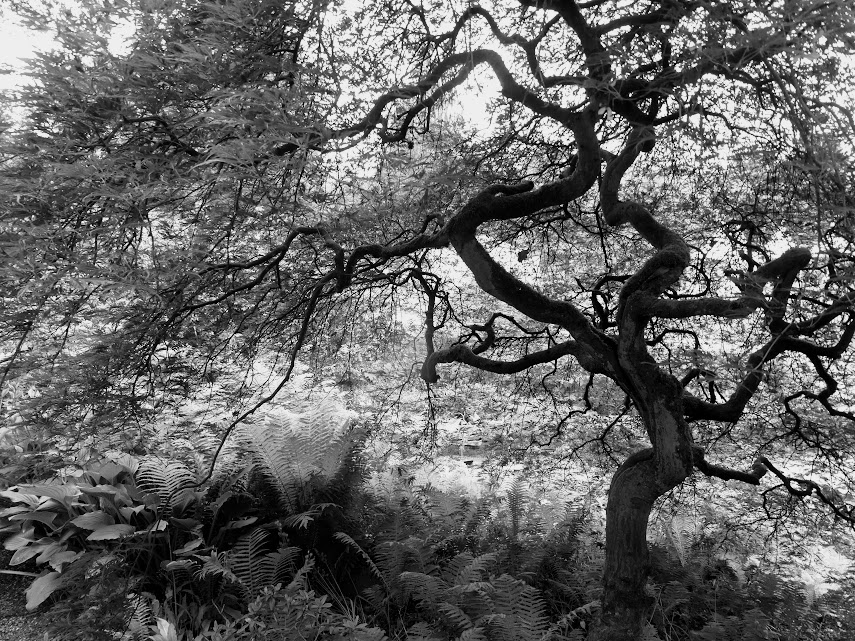
This week is perhaps the first one in which winter trees came into their own here in North Yorkshire. Recent high winds have snatched the very last scraggy leaves from their boughs, and now their austere skeletons are revealed in all their – often handsome – characterfulness. Here’s a small selection for Leanne’s Monochrome Madness. The header image, taken in Horniman Gardens, Forest Hill is not a true monochrome, but I’ve left it just as it is, to remind us that winter days – in London especially – can be black and white indeed. It’s the only image here not from North Yorkshire, or as we might call it today, The Frozen North.
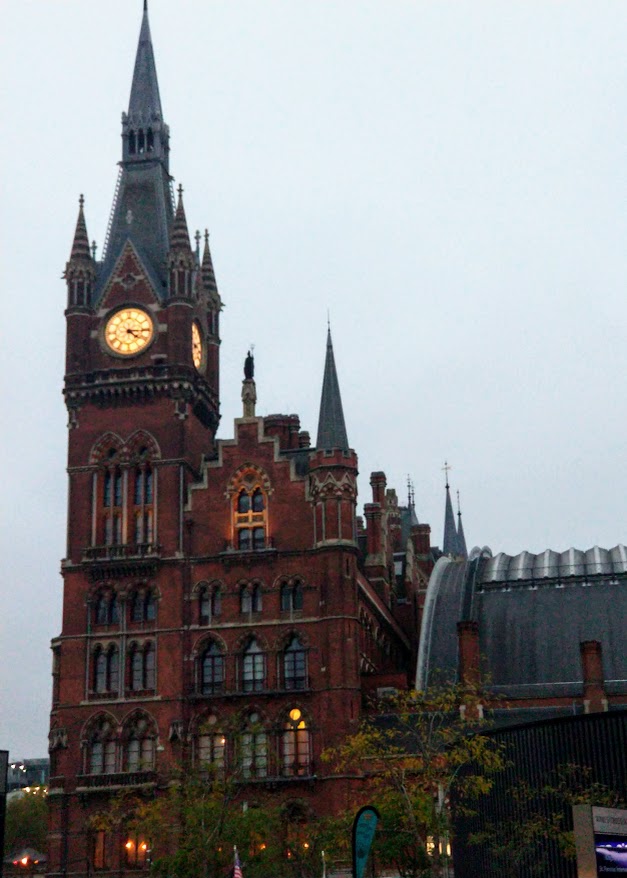
On my way to and from London, we often pass through the Victorian Gothic masterpiece which is St. Pancras Station. The featured photo shows the sight that greets us as we emerge into the open from the adjacent and much less interesting Kings Cross Station.
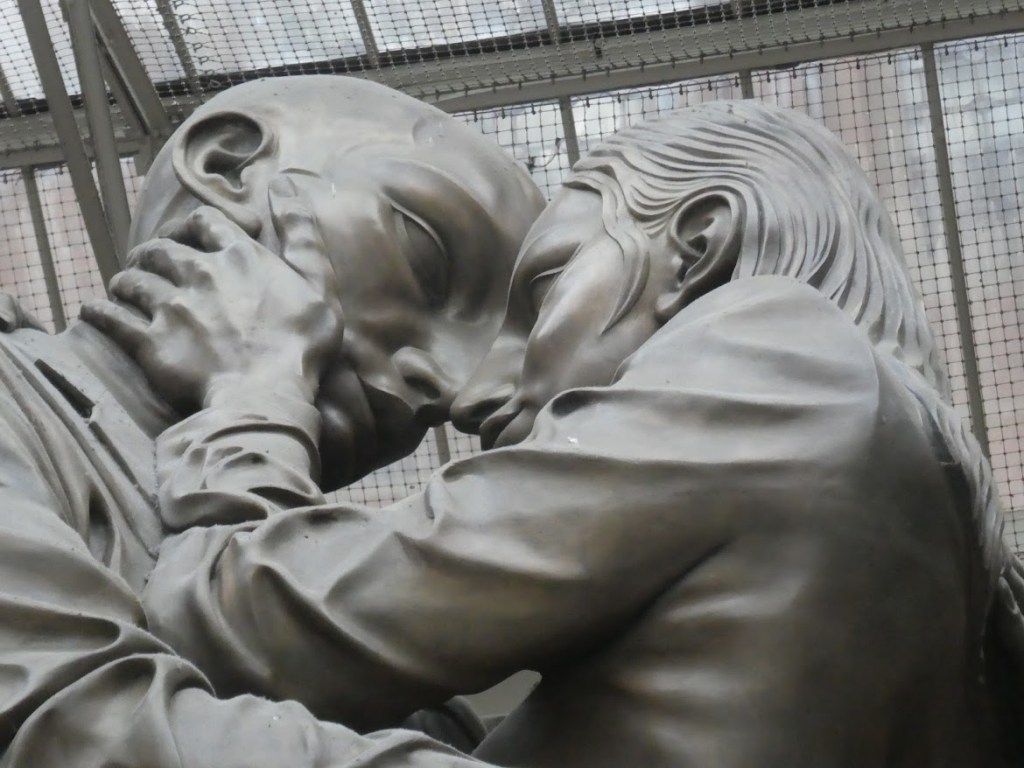
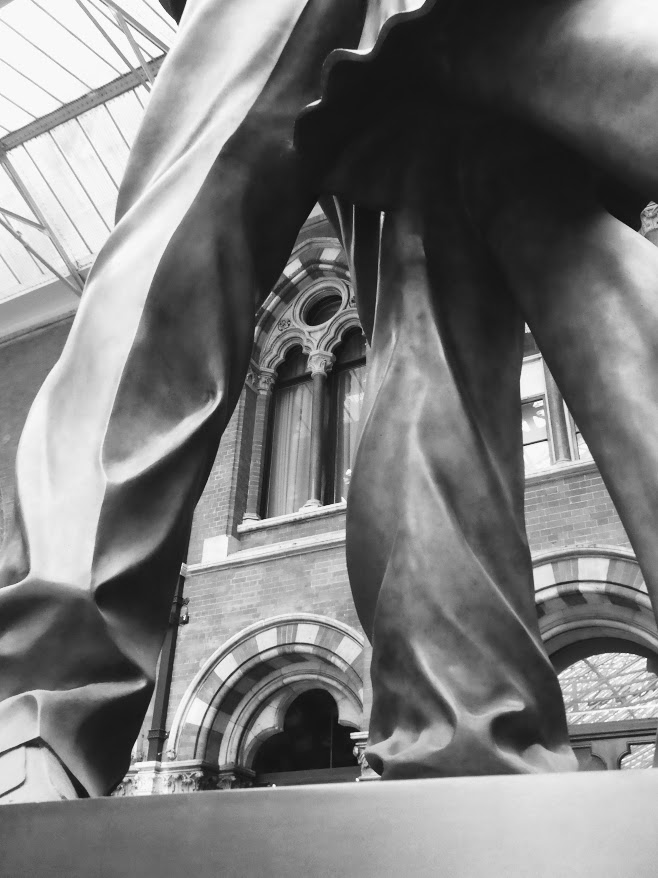
This time, we had a little time to mooch round St. Pancras, and I’ll share some photos another time. But today, for Patti’s Lens-Artists Challenge, I’m going to focus on the statue that I love to hate, and that greets us as we enter the station. It’s Paul Day’s The Meeting Place , and it’s been here since 2007. The design brief at the time asked for a statue that would ‘capture the spirit of romance once associated with train travel‘ and ‘be iconic like the Statue of Liberty‘. Two young lovers, one a soldier, exchange a farewell embrace. I find it cloying and sentimental: something to do with the monumental size of this essentally private moment offends me. And as for being iconic. Imagine replacing, for example, Michelangelo’s David, or indeed the Statue of Liberty with this statue. I think not. I know this is a minority opinion, so I was delighted to find this article from the Guardian, published in November 2007.
Patti wants us to home in once – twice – and focus on the details of our chosen object. So here are the faces of this young couple.
Personally, I’d sooner glimpse down to their legs and look at the architecture beyond.
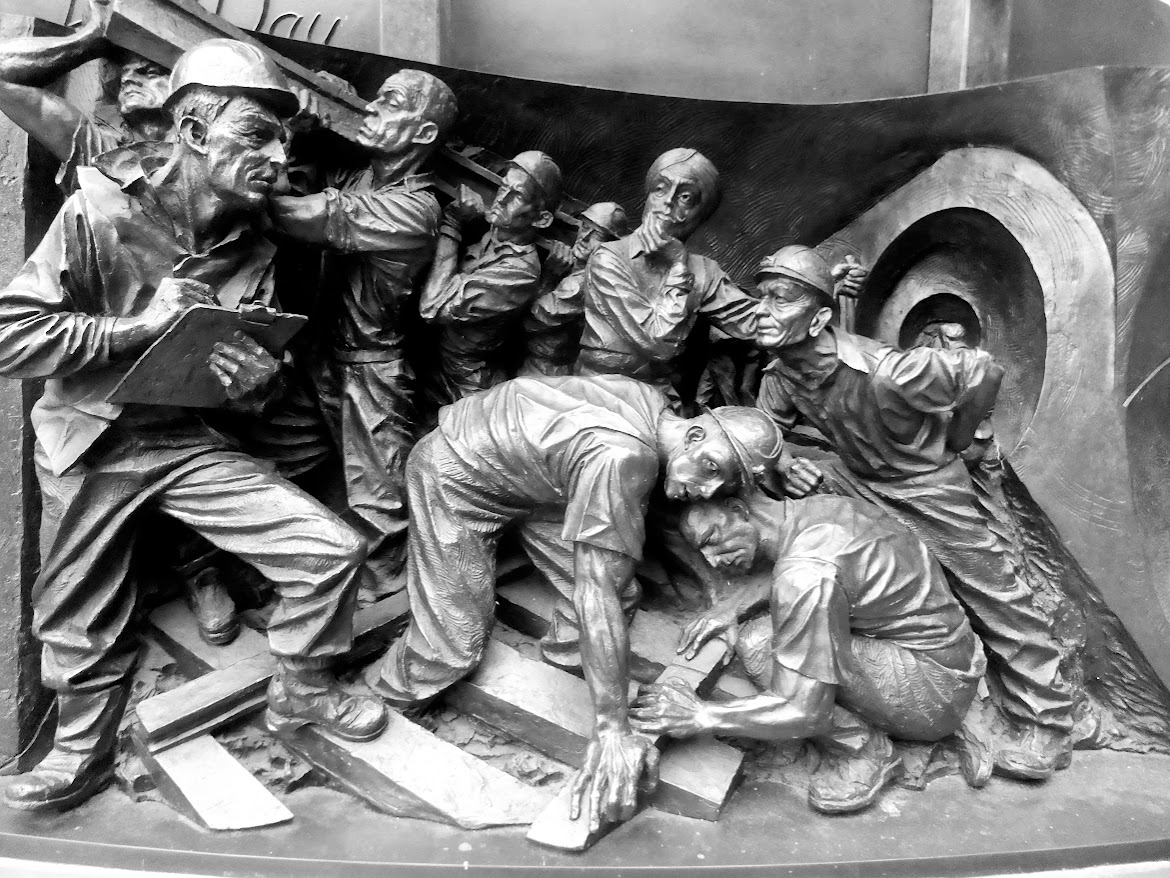
The plinth beneath was added slightly later, and is a collection of rather sombre scenes about which I have managed to find out little. In particular, the subject matter of the two scenes I show here eludes me. Perhaps the second one shows the evacuation of the underground after the terror attacks on the tube on July 5th 2005. But the first?
I never expected I would ever give this couple star billing. But sometimes, when you give your focus to something you haven’t appreciated, you discover what it is that other people have enjoyed, and that you have missed. It hasn’t worked for me with this one. Ah well.
PS. WP is having a moment again. Despite repeated attempts both yesterday and just now, it won’t allow me to add tags to this post. Anybody else?
Egidio, of Through Brazilian Eyes fame, has presented us with a thoughtful task this week, for the Lens-Artists Challenge . He asks us to portray Silence. He frames his post by discussing the work of photographer Robert Adams, who identifies five core principles* when thinking about the photography of silence. I have borne these in mind, while not illustrating each one, as I had originally intended.
Here are some I came up with.
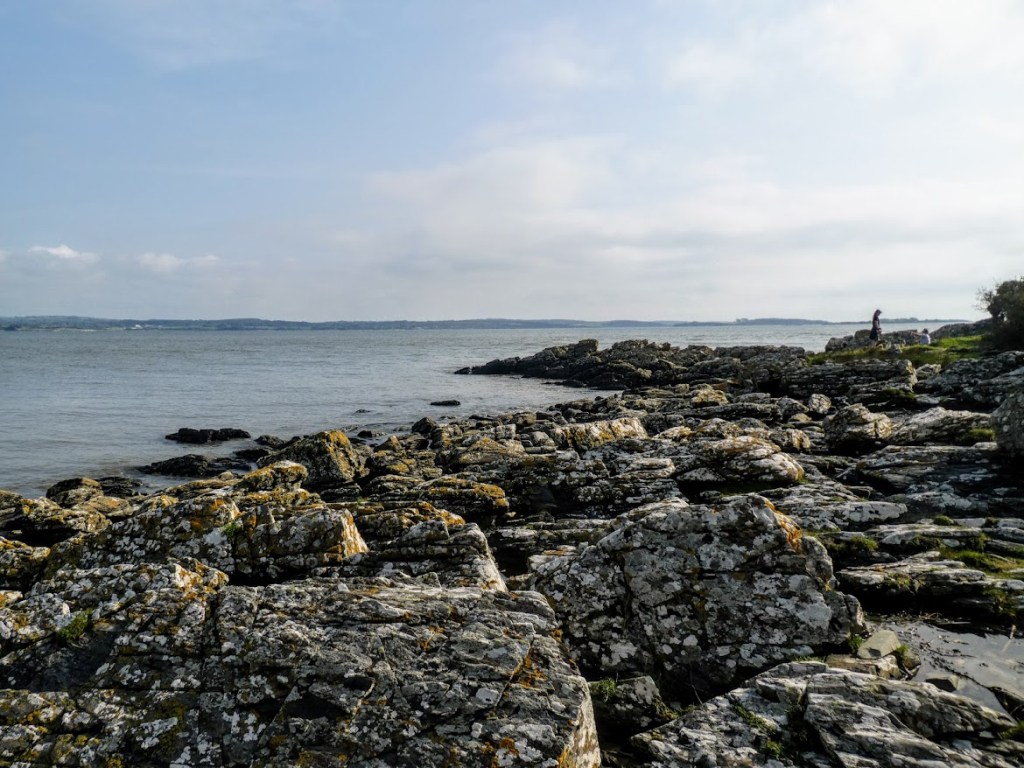
The silence of the beach on a calm day, in the early morning, or the early evening, when visitors have gone and the beach is yours alone.
Mossyard, Dumfries and Galloway
The aftermath of flooding in the countryside. The tractors, farmers and customary wildlife is silent, and the fields instead reflect the trees at the margins.
Winter fields near North Stainley.
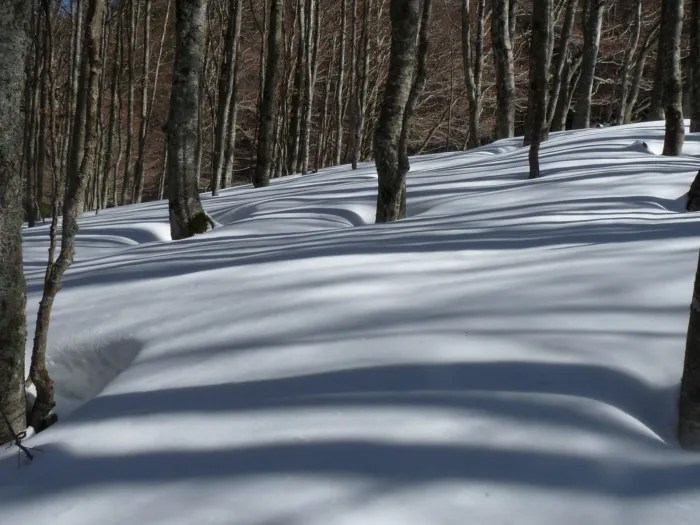
The silence of the snow. No wind, no chatter of birds, no soft animal calls. We passers through are reduced to low murmuring, if we speak at all.
Near Montferrier, Ariège
The silence of the garden. Not a true absence of noise. Birds trill. Insects hum. A light breeze rustles the leaves. But there’s a silence here that stills the busy mind.
Our landlord’s walled garden that we’re privileged to use.
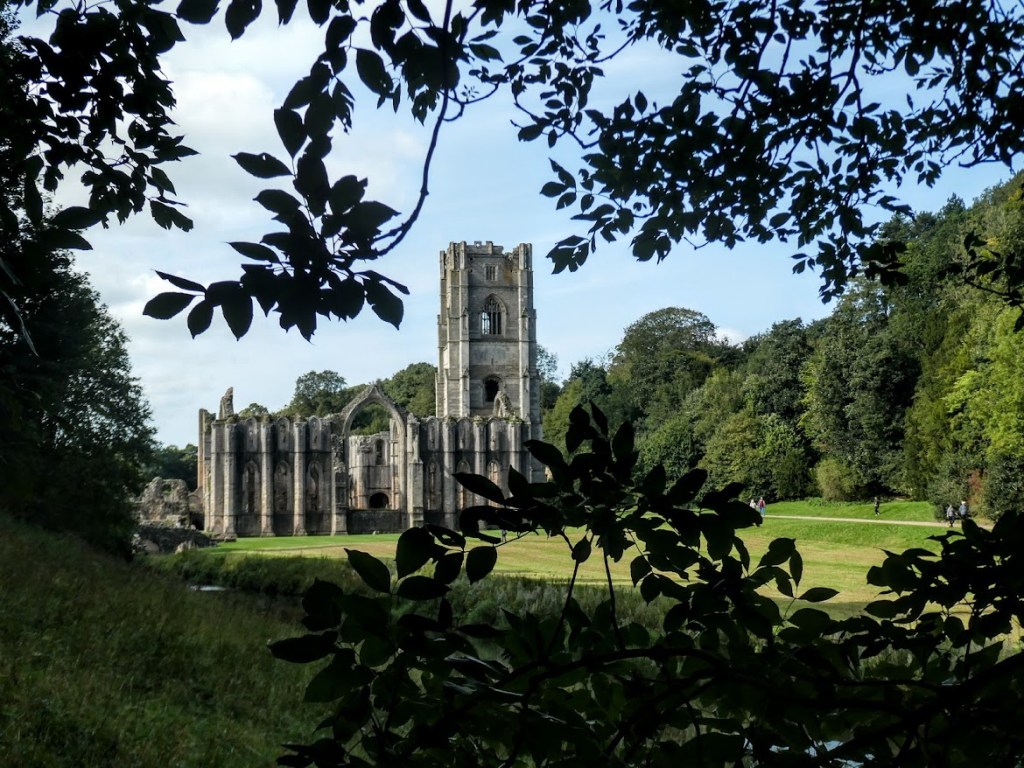
The silence of a deserted place. Early morning at Fountains Abbey. The place is empty of visitors. But the whole history of the place crowds into the mind: the tanners and builders and labourers and chanting monks. They’re silent now. And so are we.
Fountains Abbey.
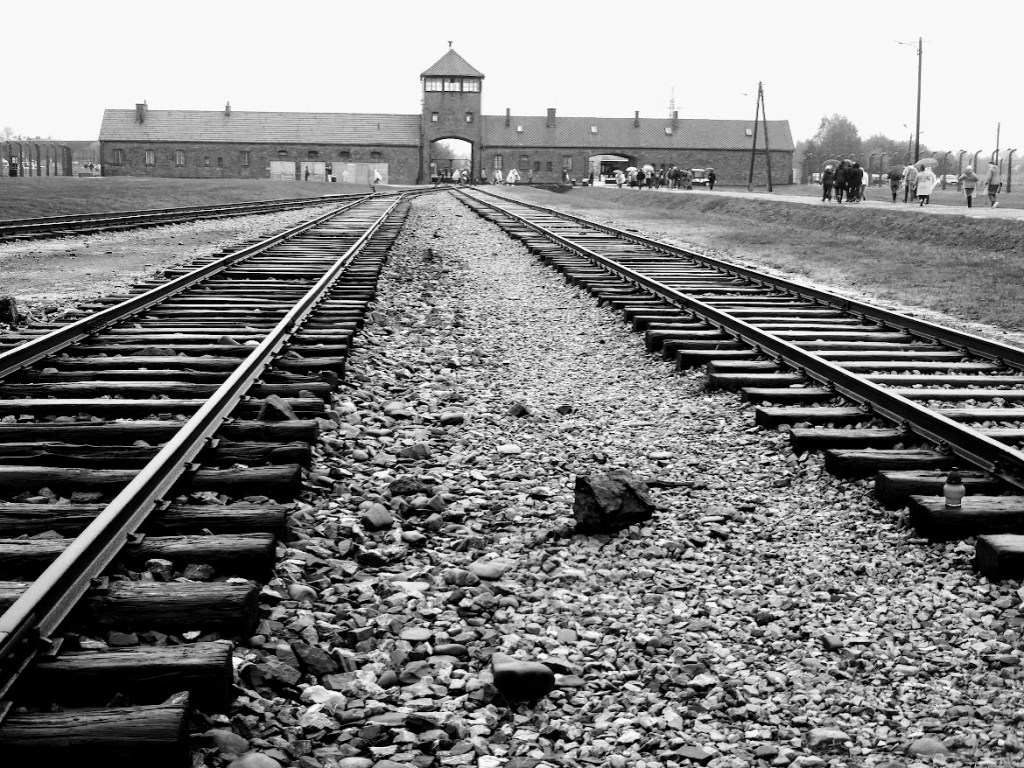
Lastly, a terrible silence. A few years ago, I visited Auschwitz-Birkenau. During the morning, we were taken round the site by guides who had been trained by former prisoners. They knew their subject well, and brought it vividly to life. In the afternoon,we were confronted by those tracks that brought the trains conveying hordes and hordes of men, women and children to slave here, to die of sickness or starvation, or to be killed in the gas chambers. There was nothing whatever to say. We were utterly silent.
Auschwitz-Birkenau
*Silence of light.
*Silent witness to environmental change.
*The silence of the subject.
*Silence as a form of protest.
*The silence of the viewer
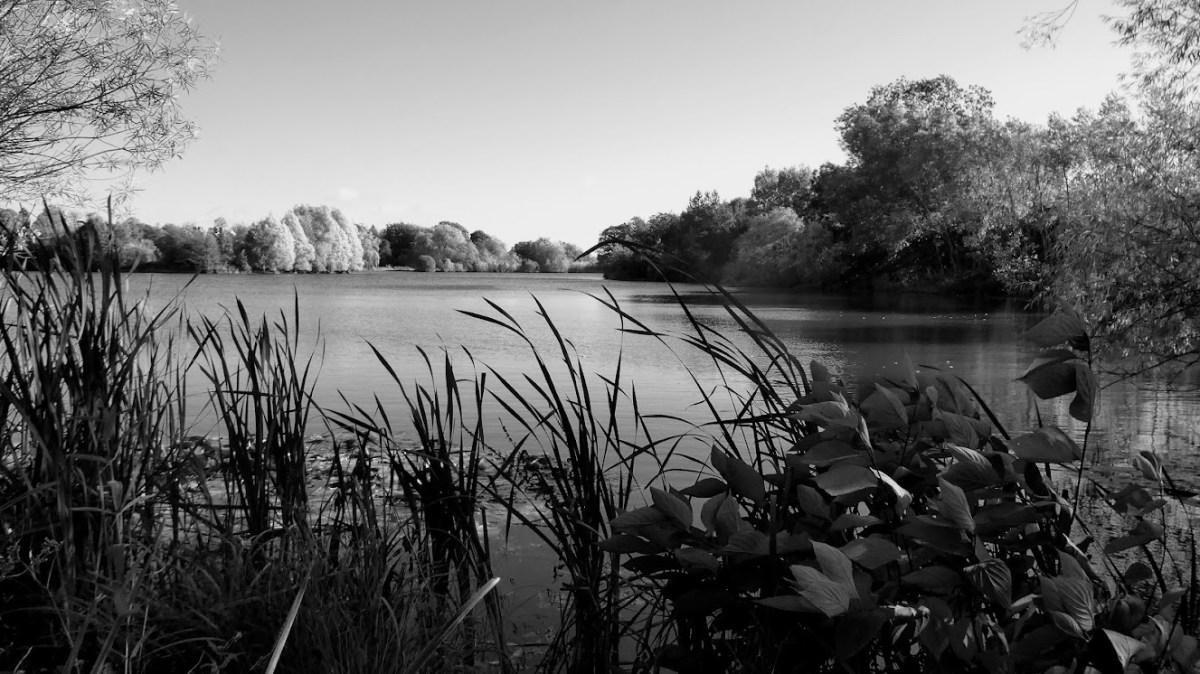
My featured photo shows the lakeside at Kiplin Hall, North Yorkshire.
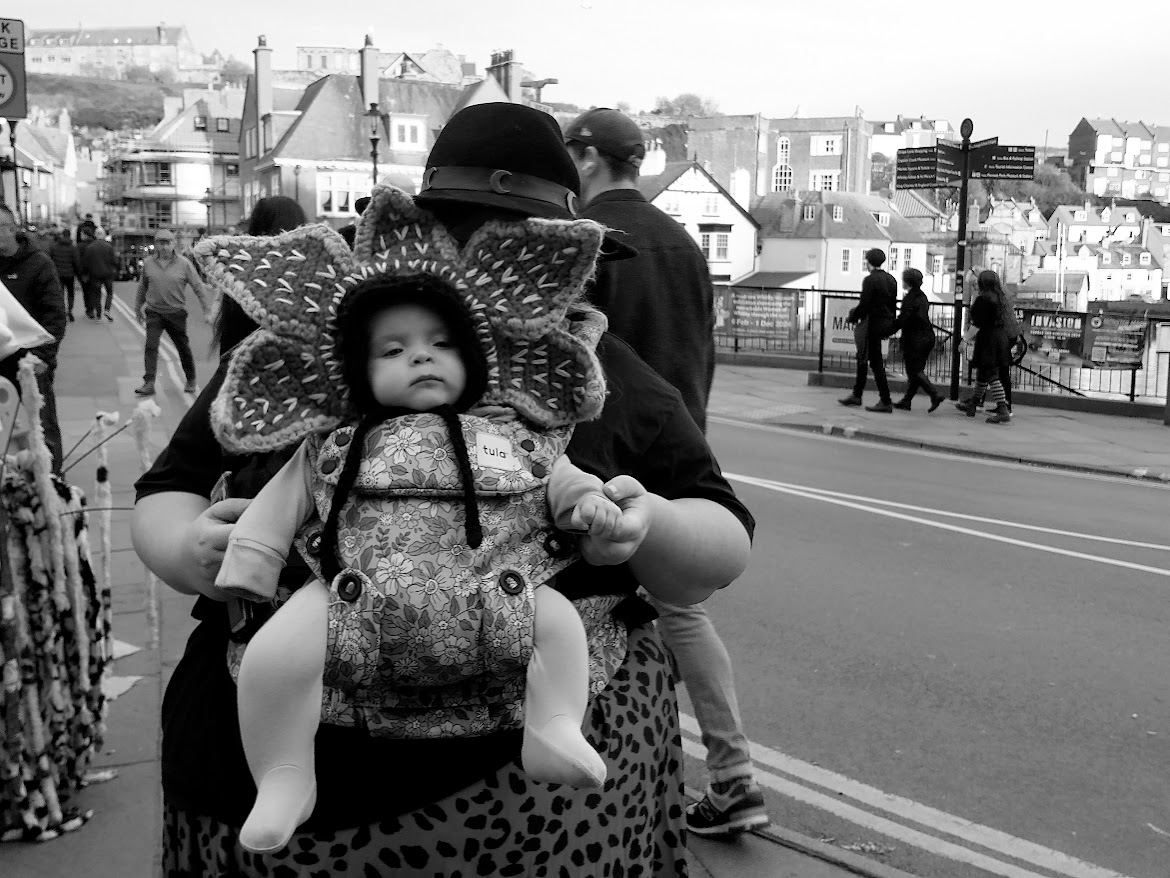
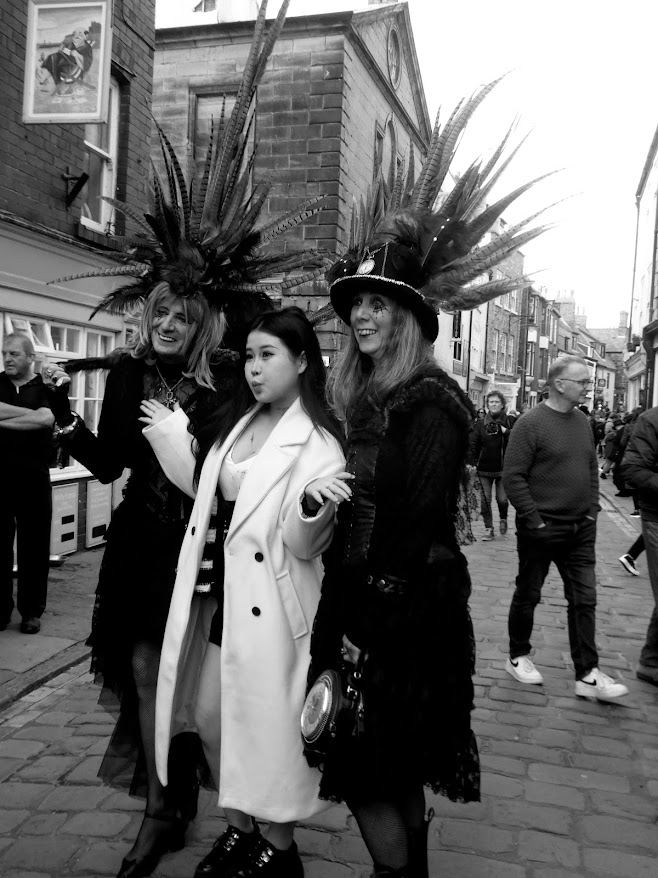
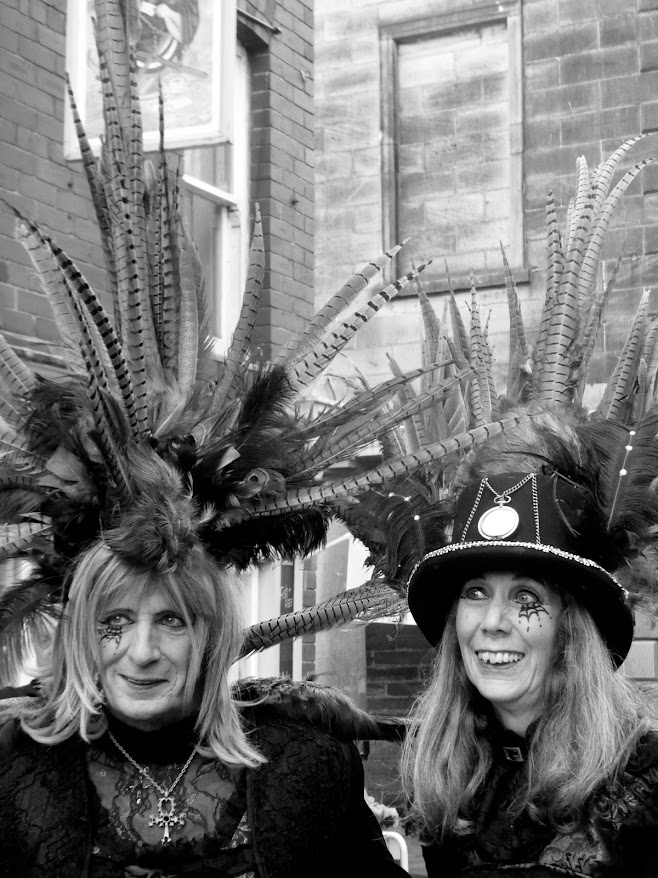
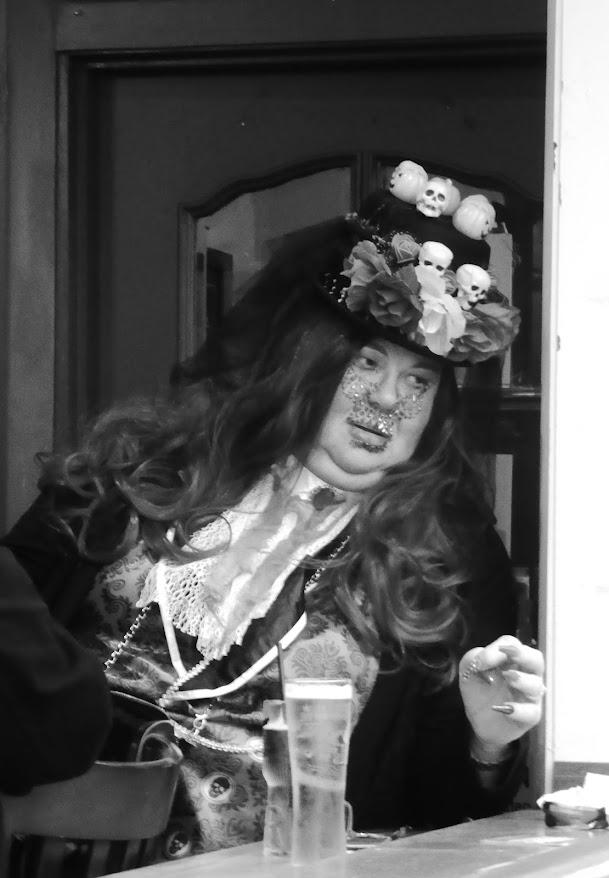
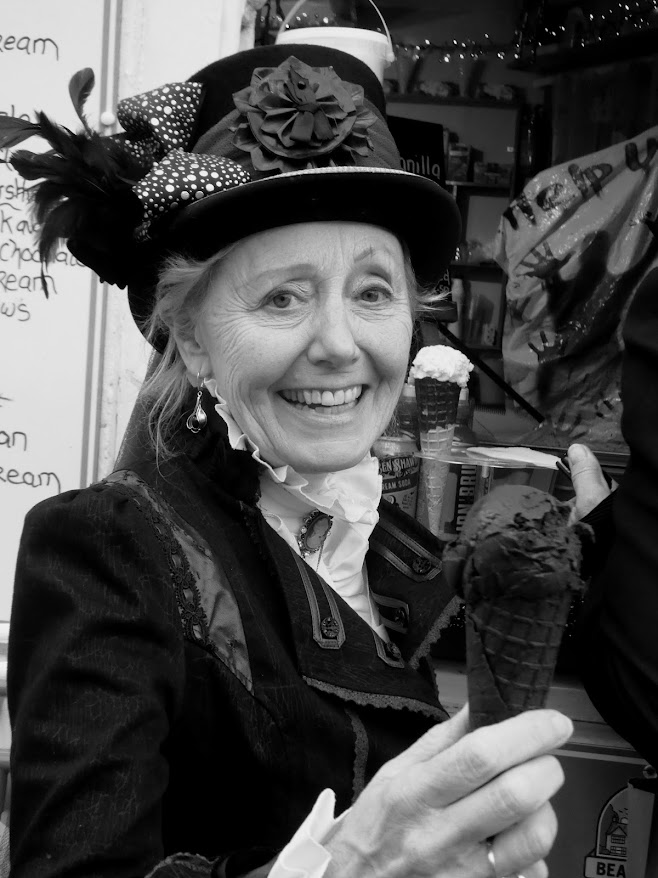
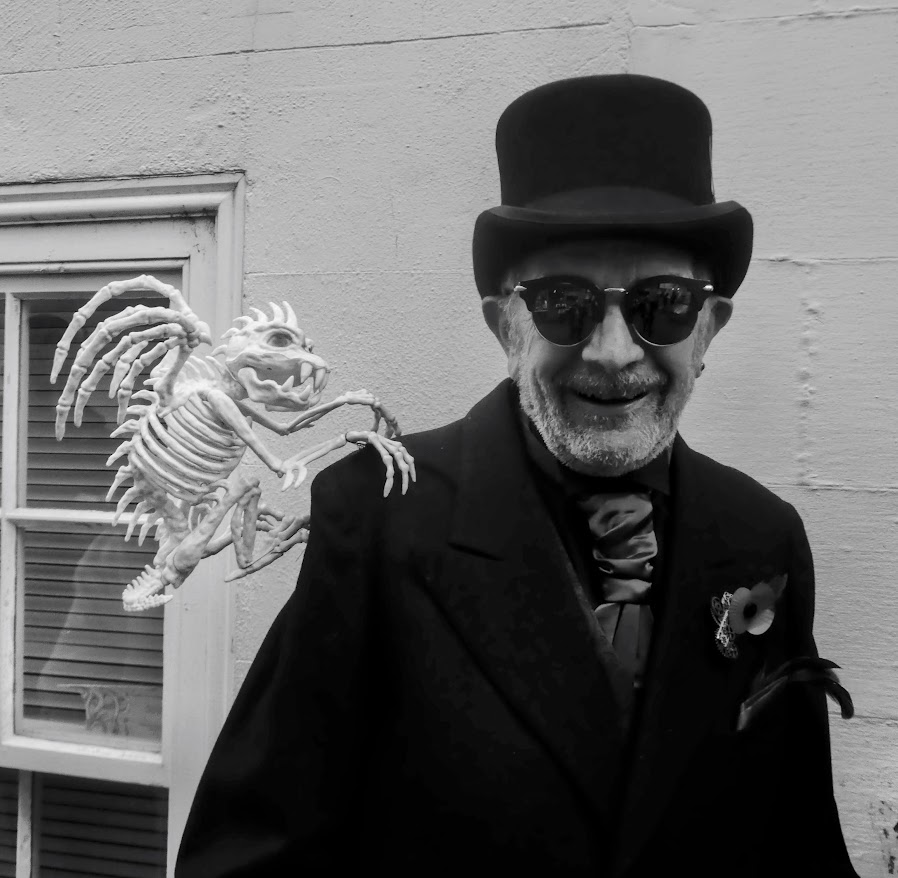
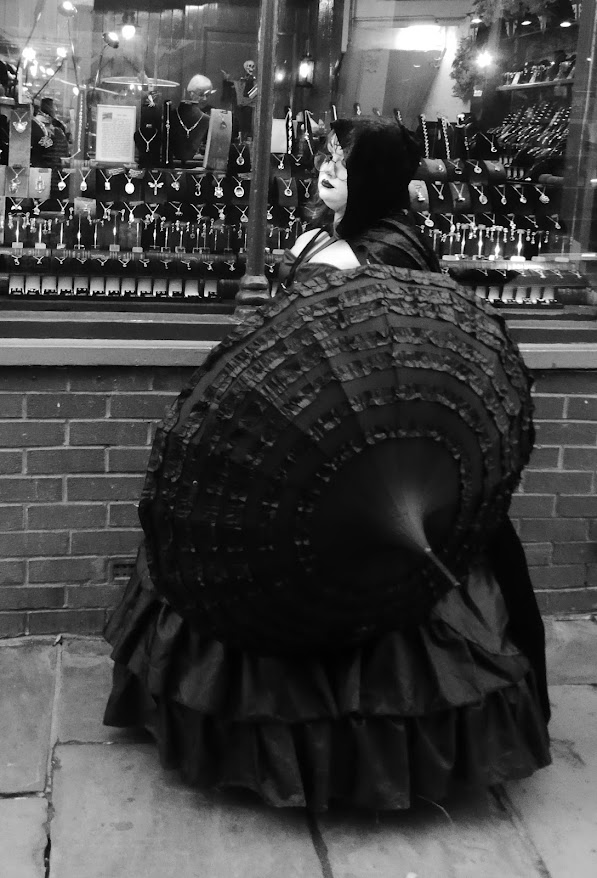
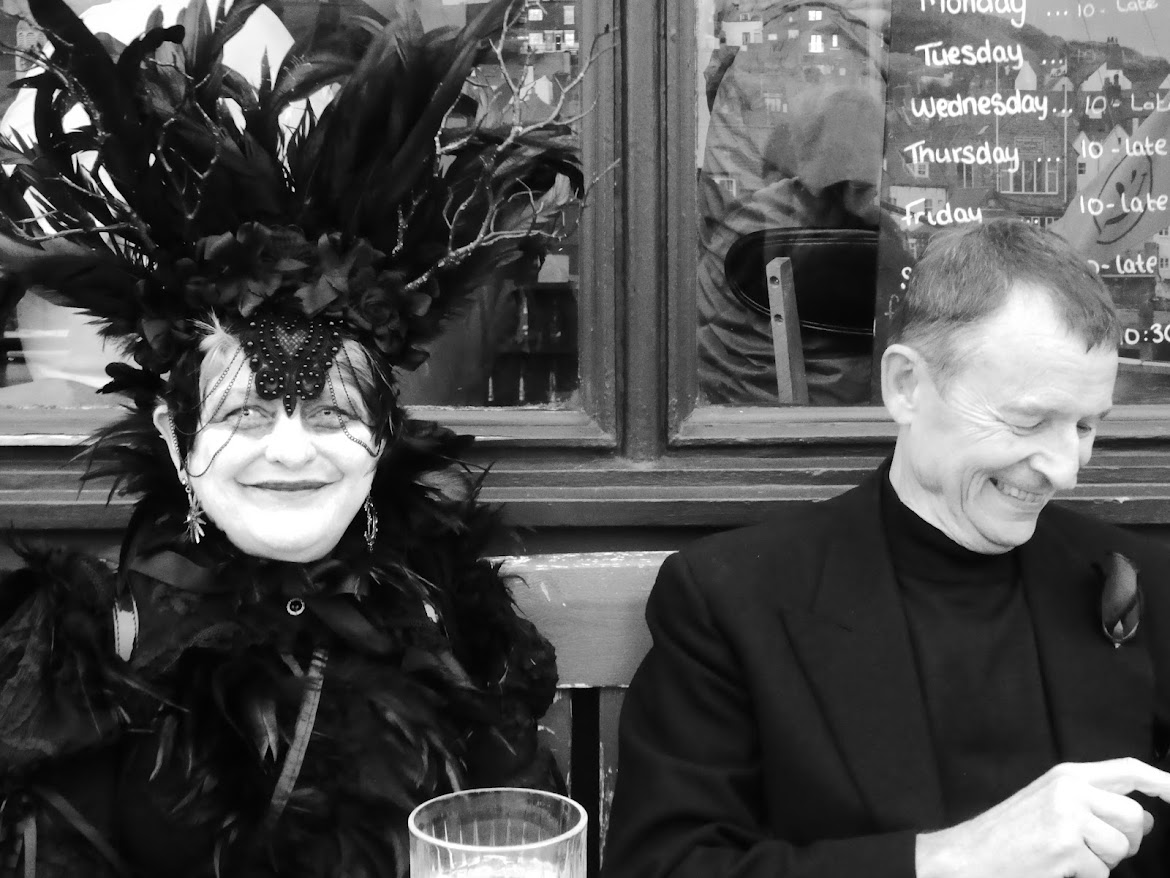
So on Friday, I went along with friends from Masham Photographic Club to be an unashamed paparazza. The atmosphere was upbeat and friendly, and those who’d gone to so much trouble to find their costumes and dress up actively sought out opportunities to have their picture taken. There was even a baby … and the oldest were well into their eighties. I felt distinctly underdessed in my workaday trousers and jacket.
An excellent day was had by all: especially after a large plate of tasty fish and chips.
Hallowe’en turns me into a Grumpy Old Woman. Not the event and its history. I like the fact that here, its roots lie deep in the Celtic festival of Samhain. As harvest ended and winter began, the veil between the living and the dead grew thinner, making it easier for spirits to return.
By the Middle Ages, the church had appropriated the days for its own ends, and made All Saints Eve (‘Hallowe’en’) a day for honouring the dead. And over the years, various merry-making traditions grew up round it: Trick or Treat; dressing up as witches, ghouls and ghosts; carving Jack-o’-Lanterns (from swedes in my day. Can you imagine the hard work involved?); and games such as apple-bobbing. Yes, all that I liked: community-based home-spun entertainment just right for this miserable time of year when clock-change plunges us all into night from about 4 o’clock onwards.
What I don’t like is that, these days, from September onwards, shops are crammed with Hallowe’en souvenirs of every kind – all plastic and ultra-transient, and cheap and tacky costumes, not even slightly bio-degradable, to be worn – for one night only – by marauding hordes of children descending on the neighbourhood demanding sweets without number from about four o’clock onwards. I can still remember the night we gave out more than 200 treats before firmly shutting up shop and closing the front door against all comers (We had an American base nearby – they taught our children well).
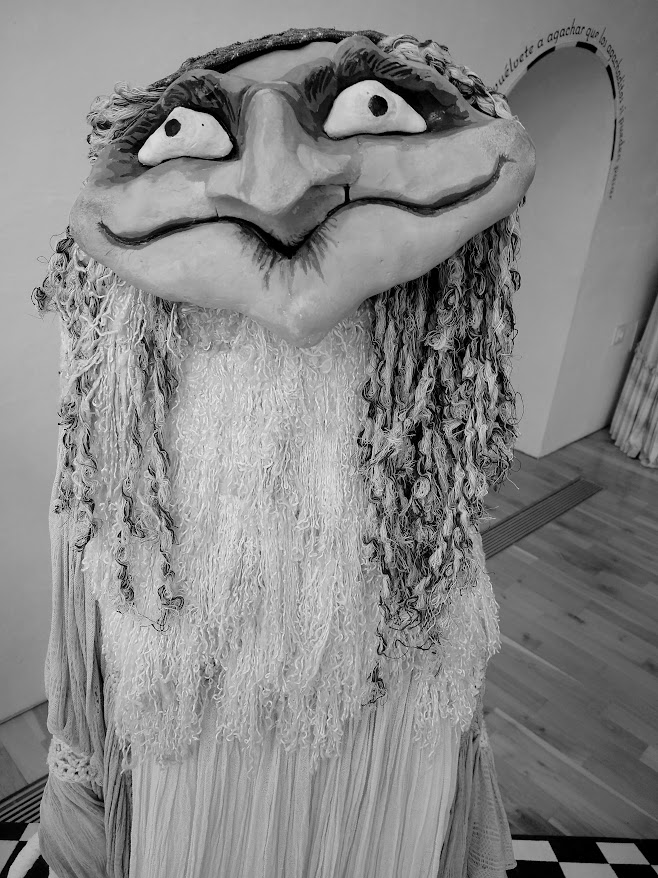
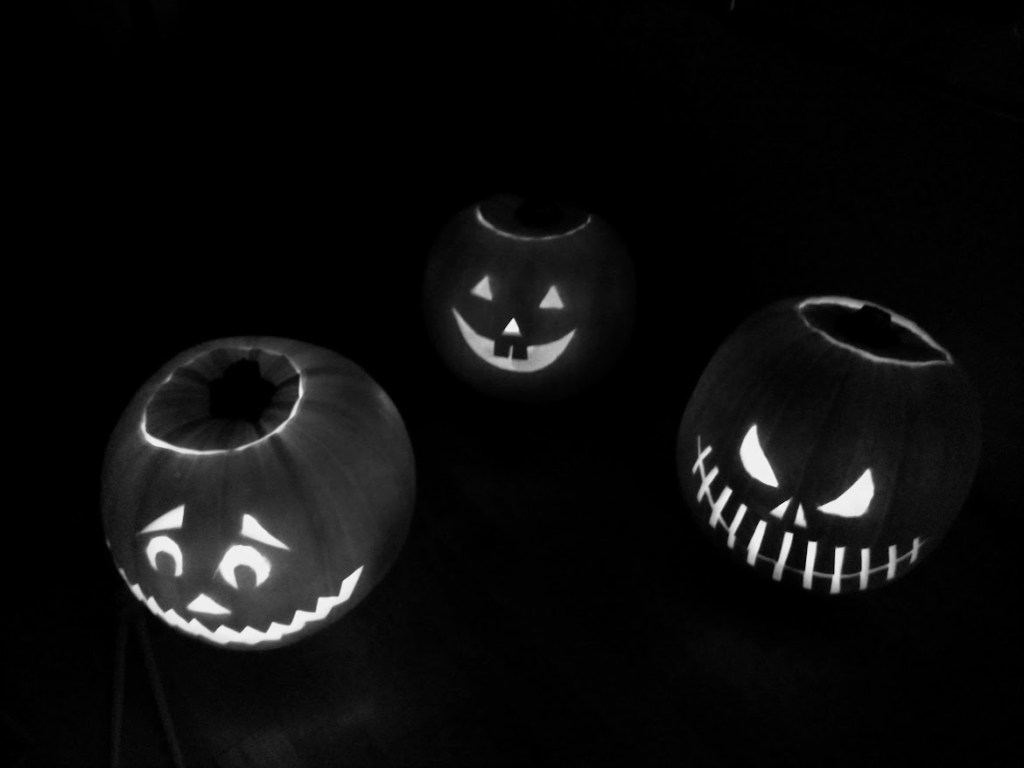
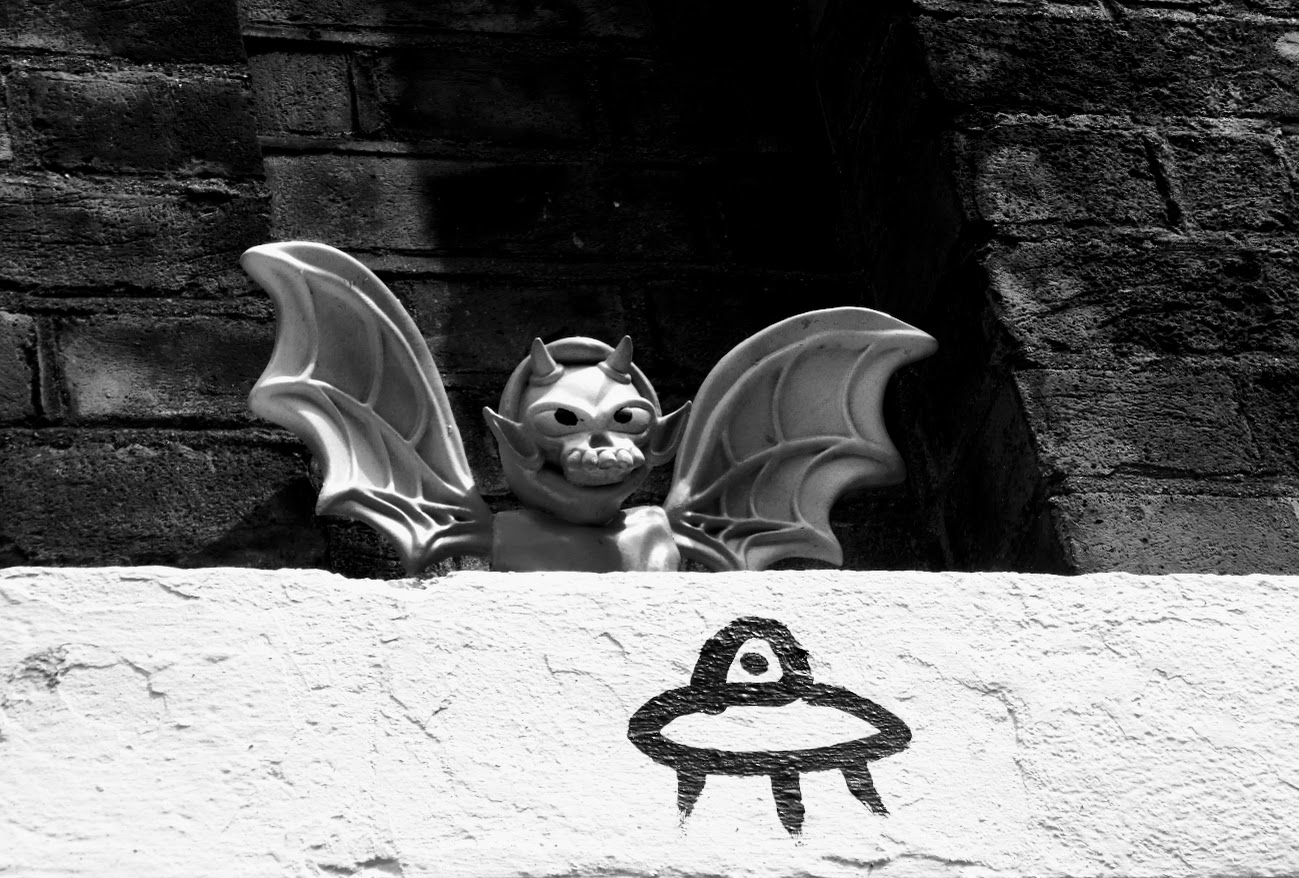
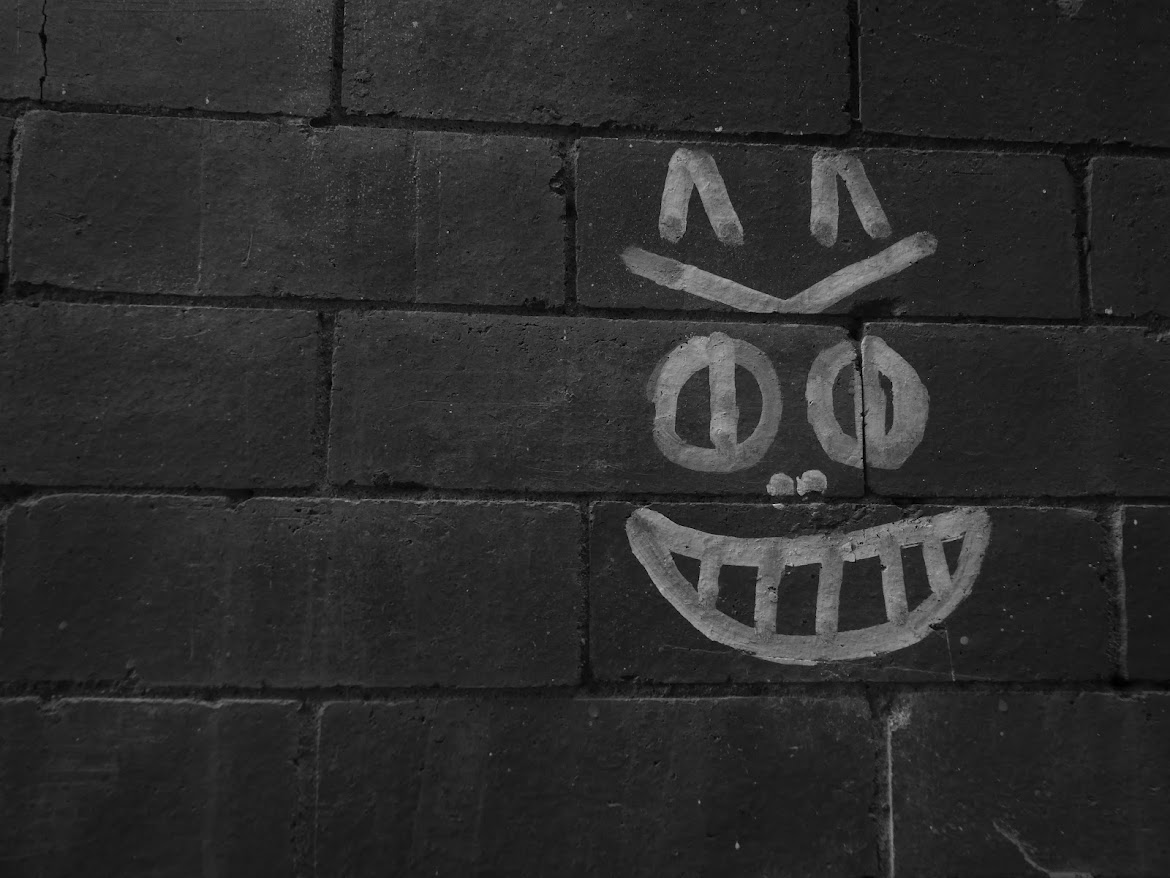
So the images I offer for this week’s Monochrome Madness: Spooky, as suggested by Dawn are perhaps eerie rather than spooky, and come from the natural world, or at least a world-gone-by. Apart from my header photo. This is a puppet from the Puppet Museum (Museo del Titere) in Cádiz and spooky enough to terrify anybody. And two bits of street-fun: one from Brick Lane, the other from Newcastle.
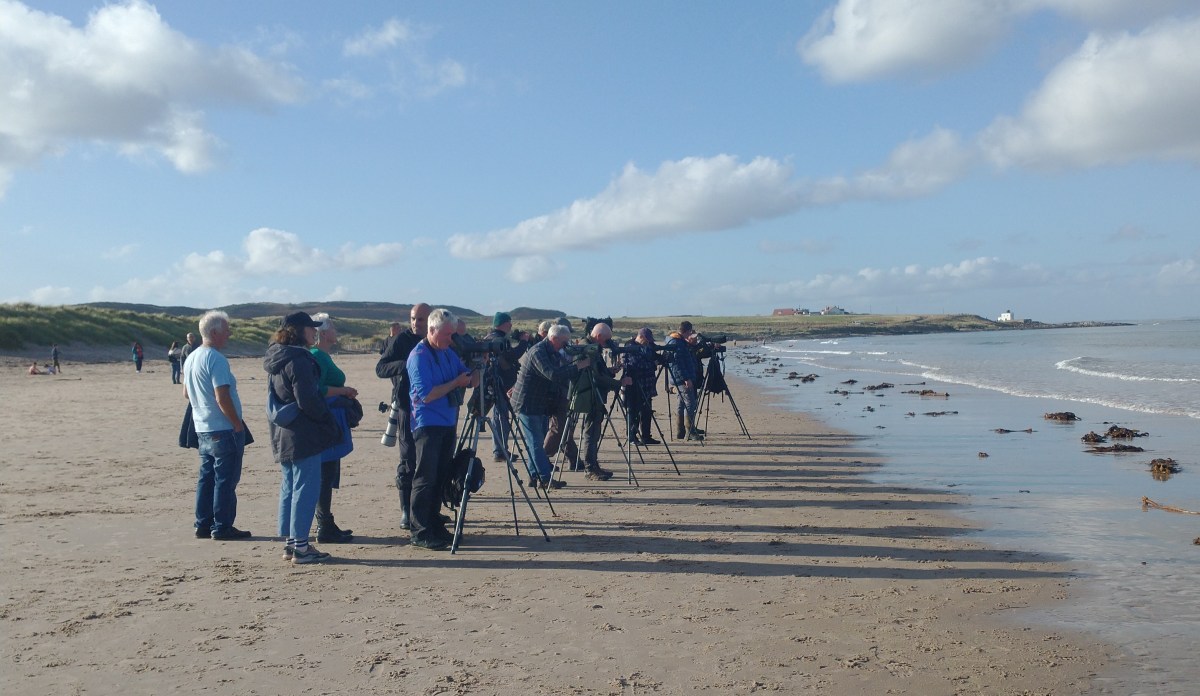
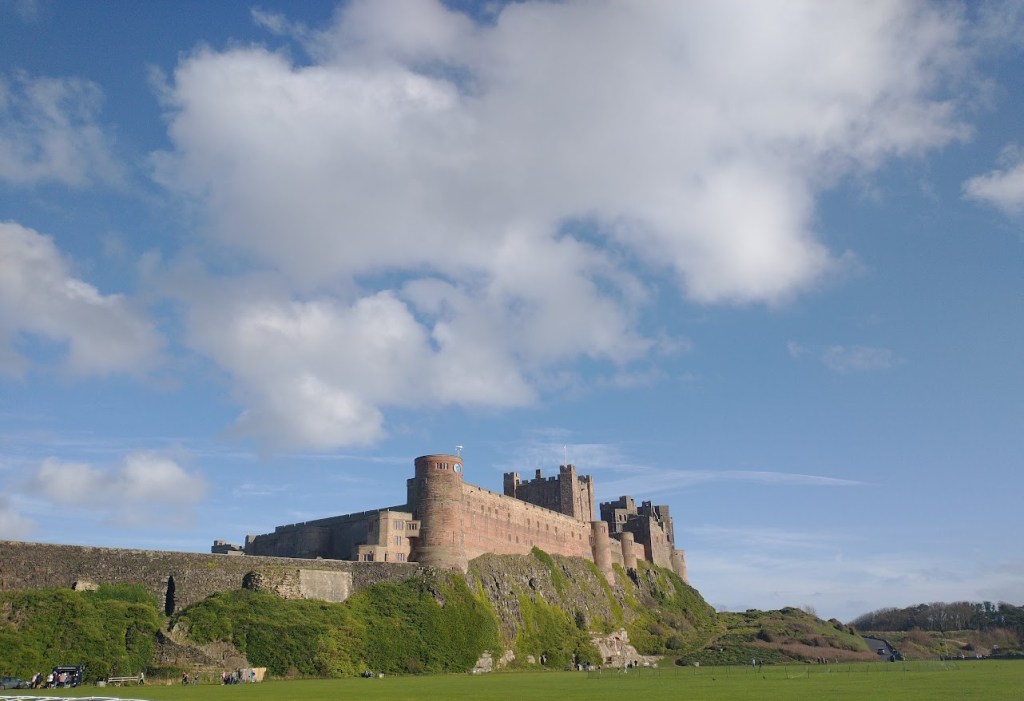
We popped to Bamburgh yesterday afternoon to enjoy views of the castle and a healthy stride along the beach. What greeted us was the group of photographers in the featured photo, all pointing their lenses out to sea. It turns out they were all twitchers, alerted by some bird-enthusiast-bush-telegraph to the presence of a bird whose home is normally North America and Canada: the White Winged Scoter. We couldn’t see it. It was too far out to sea.
Here’s a view of the Castle. Other castles are available in Northumberland. I’ll be reporting back later.
Bamburgh Castle
I thik I’ll be cheeky and make this a late entry to Debbie’s One Word Sunday challenge: Shadows.
I feel so lucky that the area where I live is rich in trees, because not so very long ago, the local copses were woods, and the woods were forests. Here’s one favourite, an ancient oak: frustratingly, it’s not possible to stand far enough away to get it all in frame. But I love visiting this near neighbour of ours. How many centuries ago did it begin its life?
An ancient oak near North Stainley
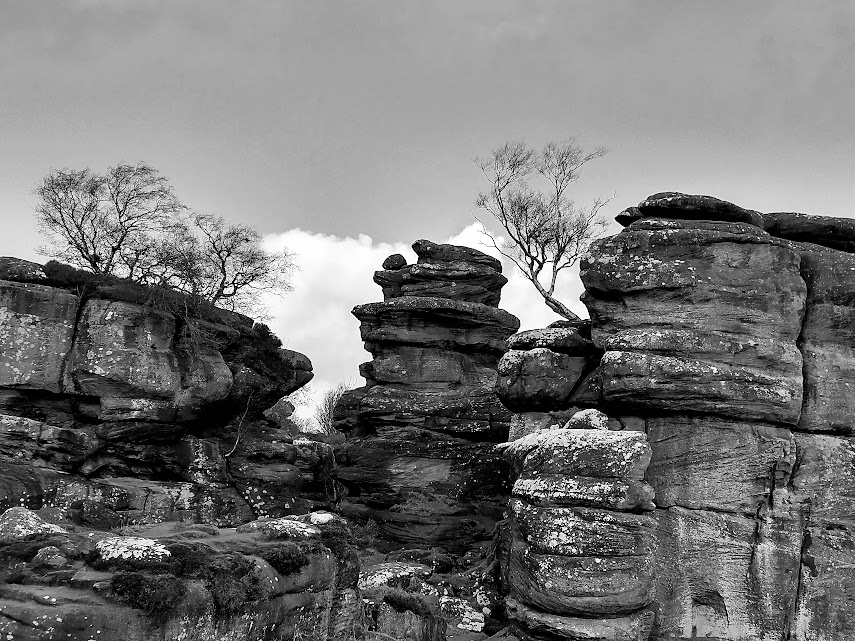
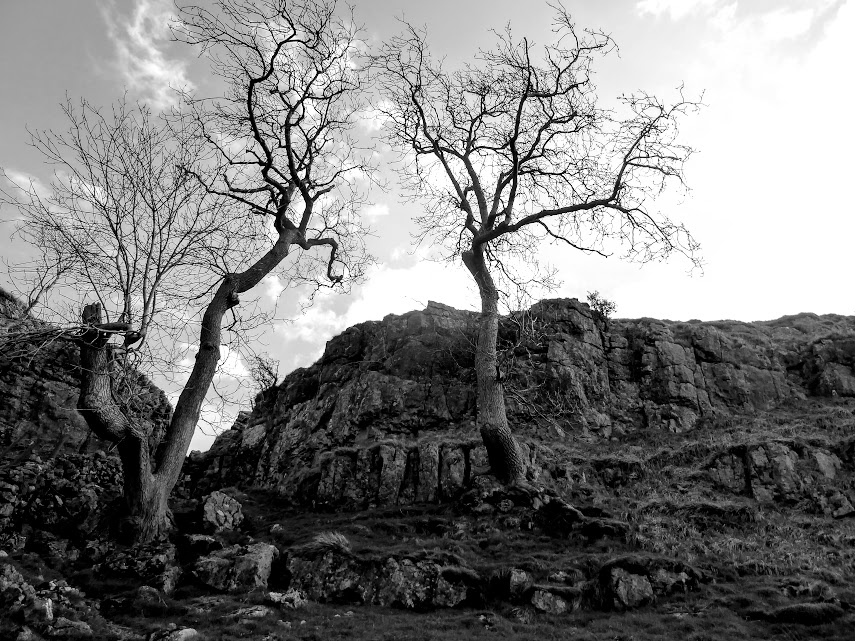
There are trees that flourish against the odds. The feature photo shows two trees at Brimham Rocks. Where have they burrowed their roots? Where is the soil that nourishes them? And here are two we meet when walking near Coniston in Yorkshire.
Two trees near Coniston, Grassington
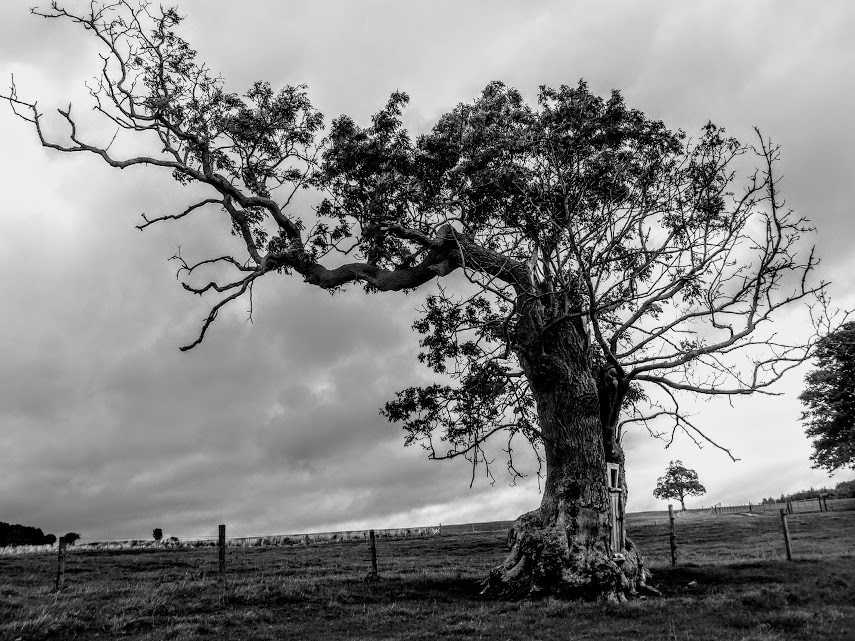
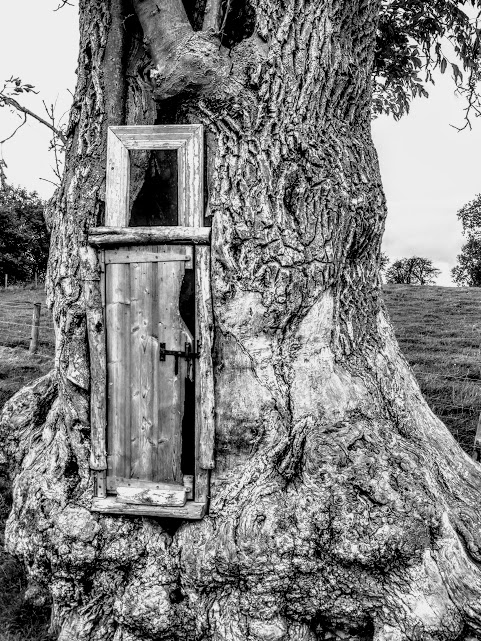
I’m always fond of this tree near Jervaulx Abbey. And I always wonder who the lucky child was who had a second home there.
Here’s another from Jervaulx Abbey itself that always makes me laugh.
The grounds of Jervaulx Abbey, North Yorkshire
This one’s a favourite in our nearby woodland at West Tanfield.
Greensit Batts, West Tanfield
And here’s just another local specimen. Not weird. Just wonderful.
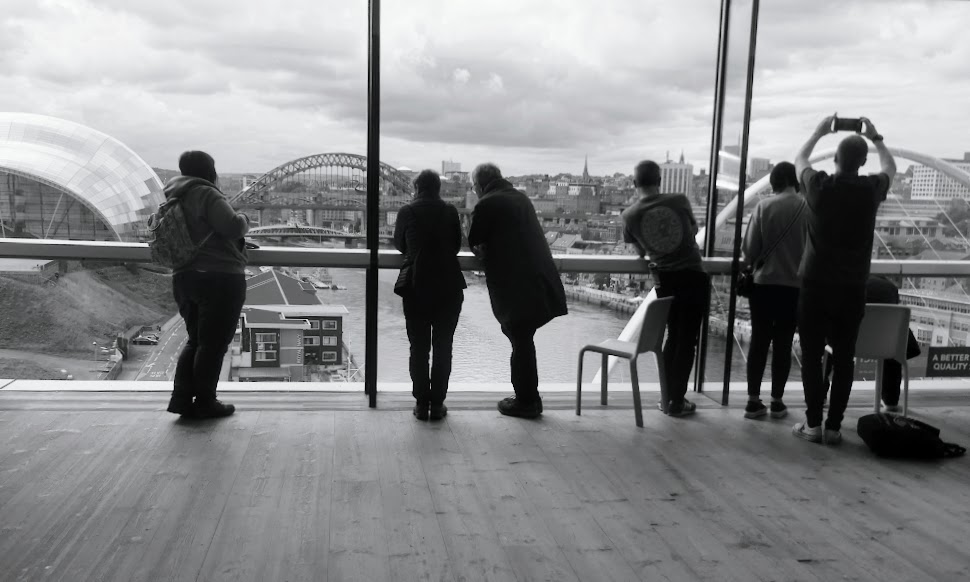
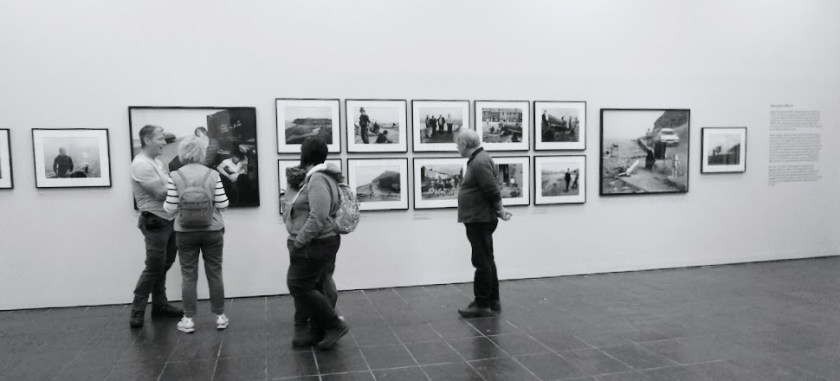
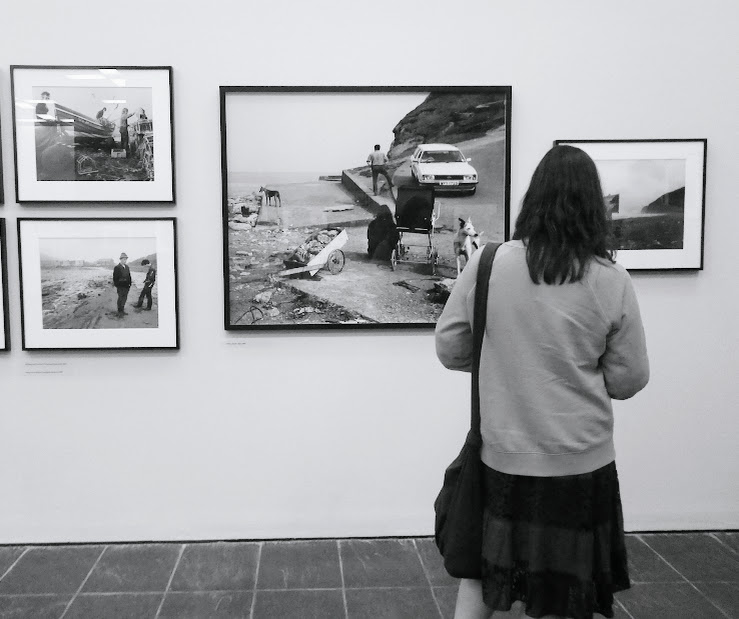
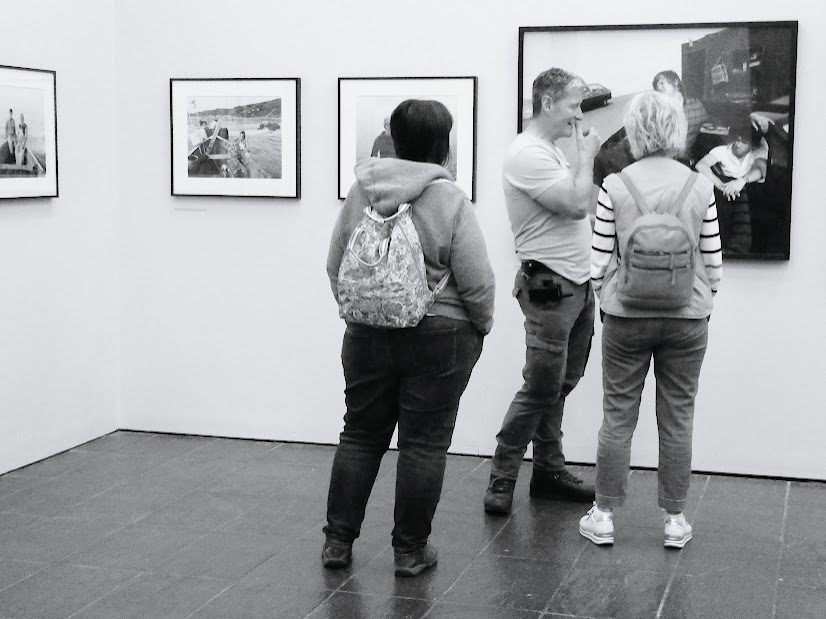
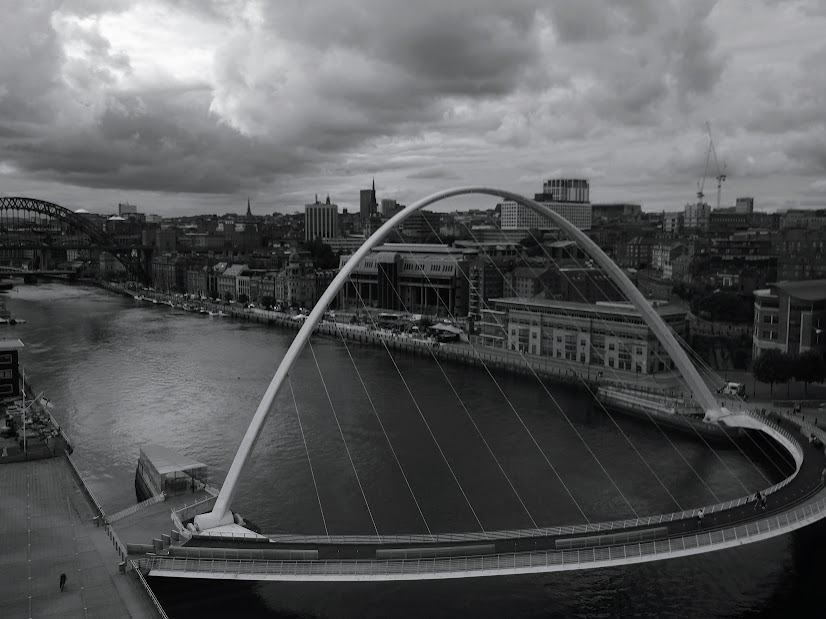
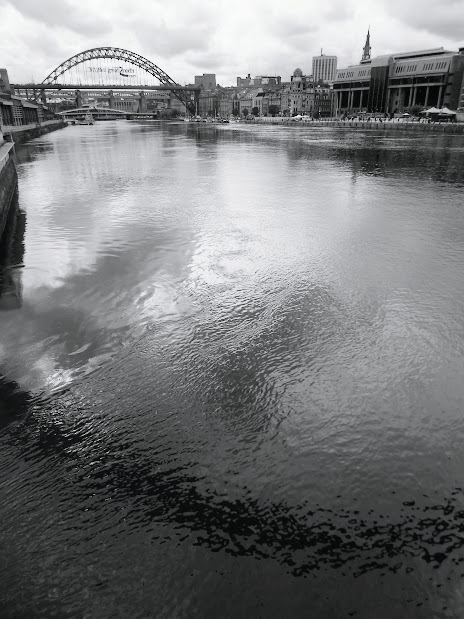
We went back to Gateshead last week. What we hadn’t fitted in to our previous day out was a trip to the Baltic, to see the retrospective exhibition showing the work of Chris Killip.
Here is a man who dedicated his working life, as a photographer working exclusively in monochrome, to recording the ordinary lives of people living in disadvantaged communities, mainly in the North of England, and latterly the North East. He gained their trust by living amongst them, witnessing their communities, their friendships, their day-to-day lives. He assembled an unparalleled collection of photos documenting the effect of the economic downturn which devastated those communities, particularly during the 1970s and 80s. These photos remain as powerful today as they were then. You can read about this exhibition, and see some of the images he took, here. The account in this edition of the Guardian is of the same exhibition as we viewed, which was shown in London before moving to Gateshead.
Woman views Father & Son watching a Parade, Newcastle, Tyneside, 1980.
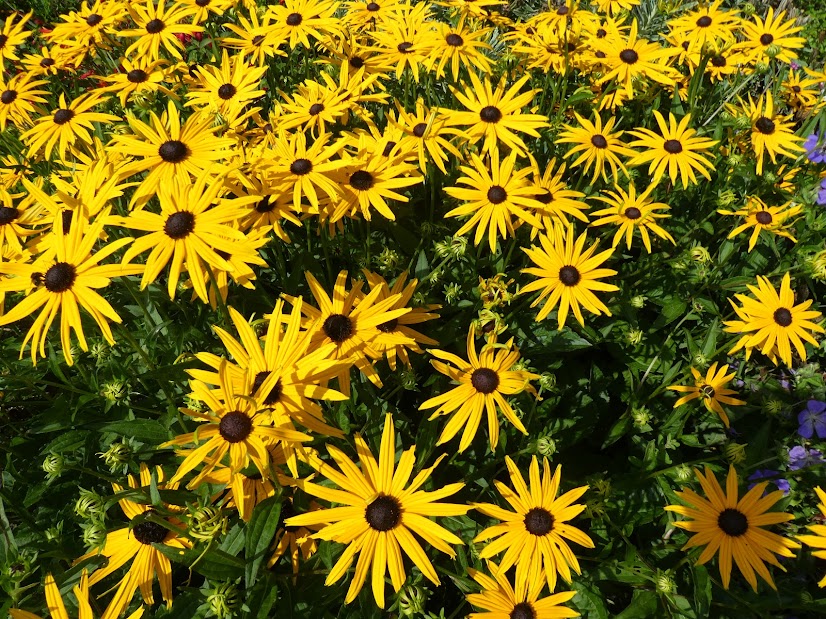
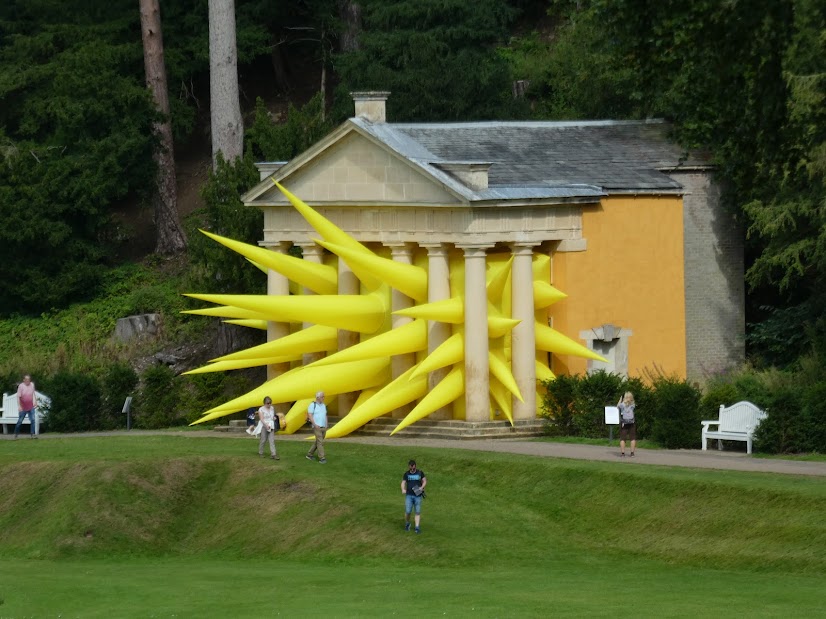
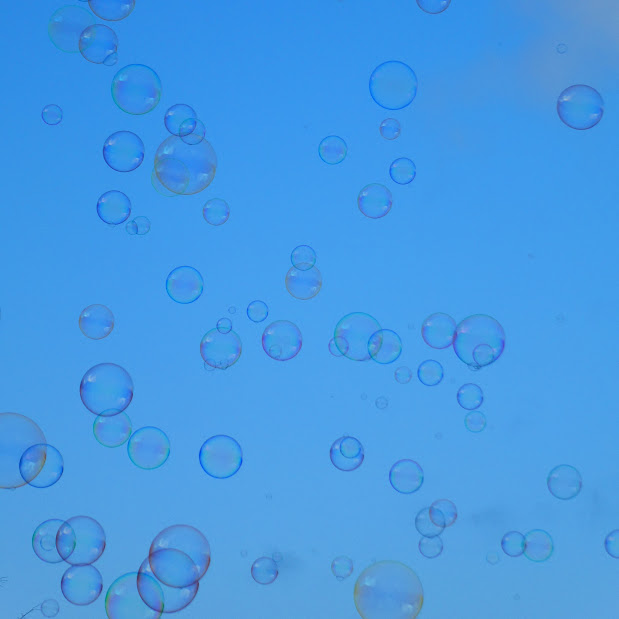
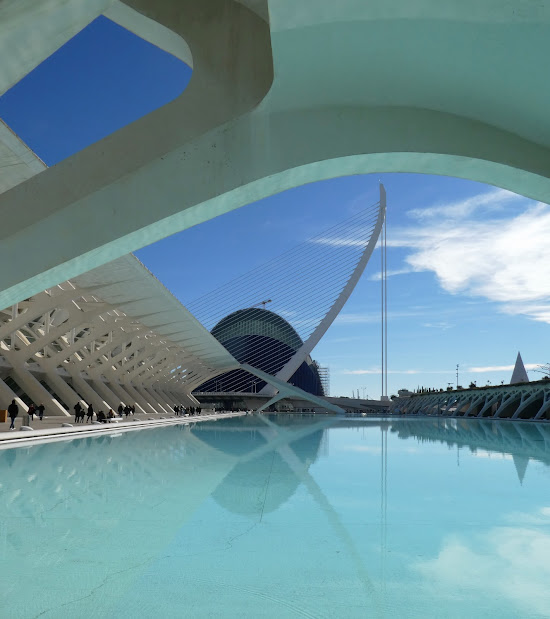
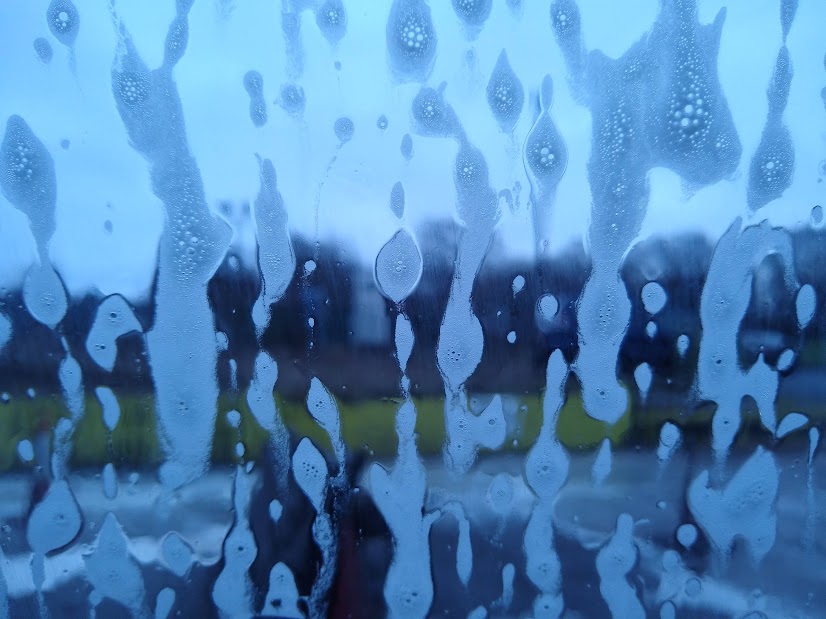
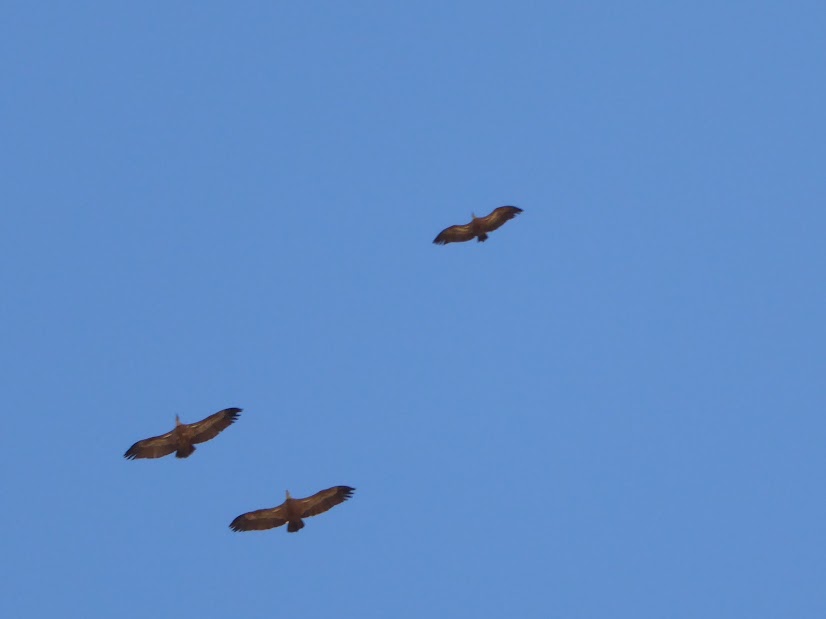
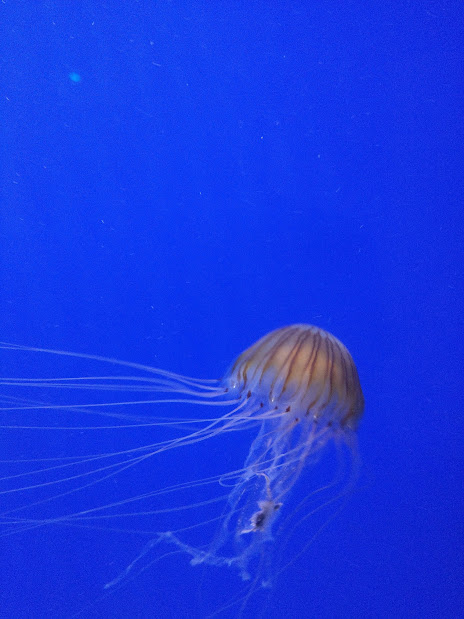
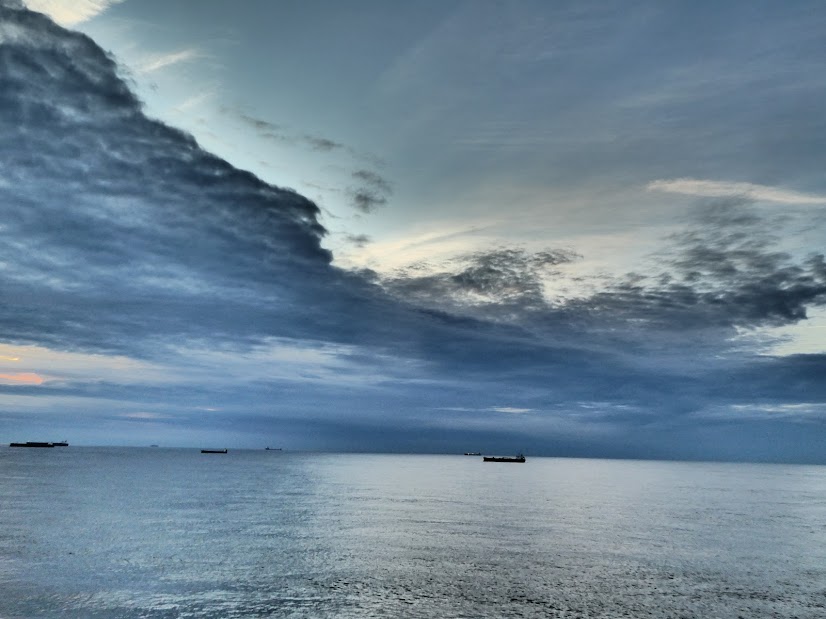
This week, for the Lens-Artists Challenge, Sofia invites us to focus on primary colours: red, yellow and blue. Let’s keep it simple and do just that. Click on any image to enlarge it.
RED
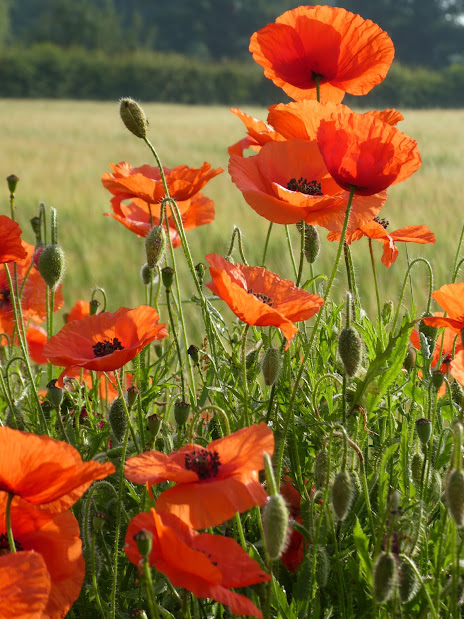
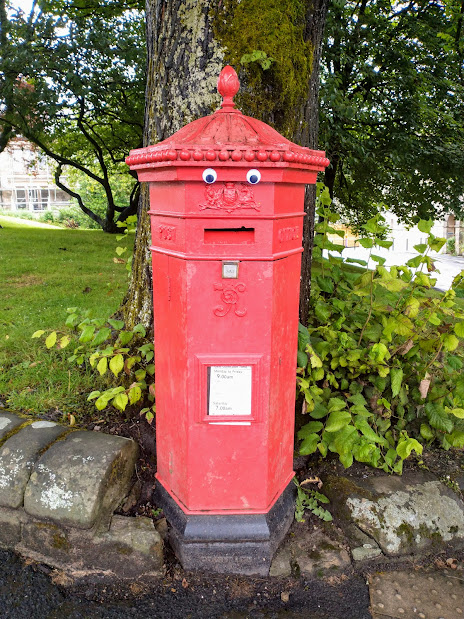
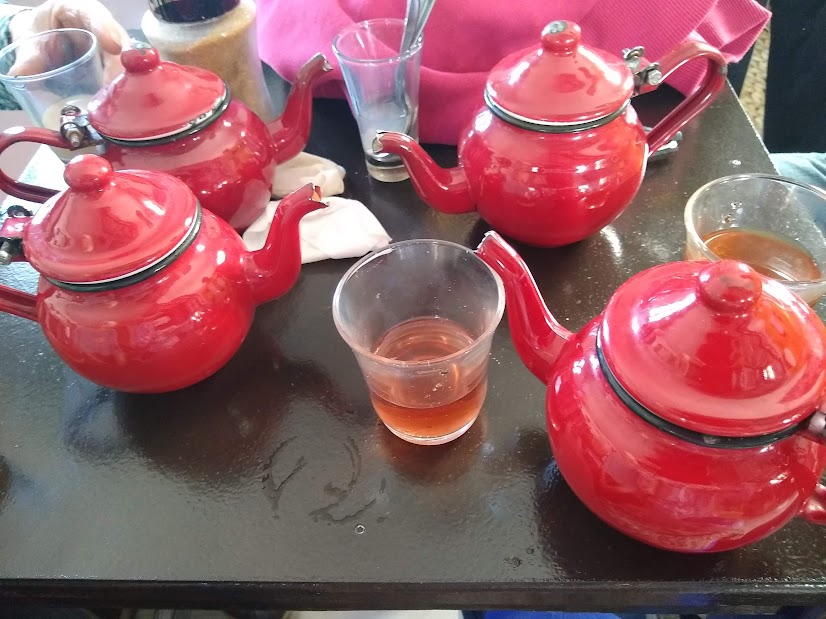
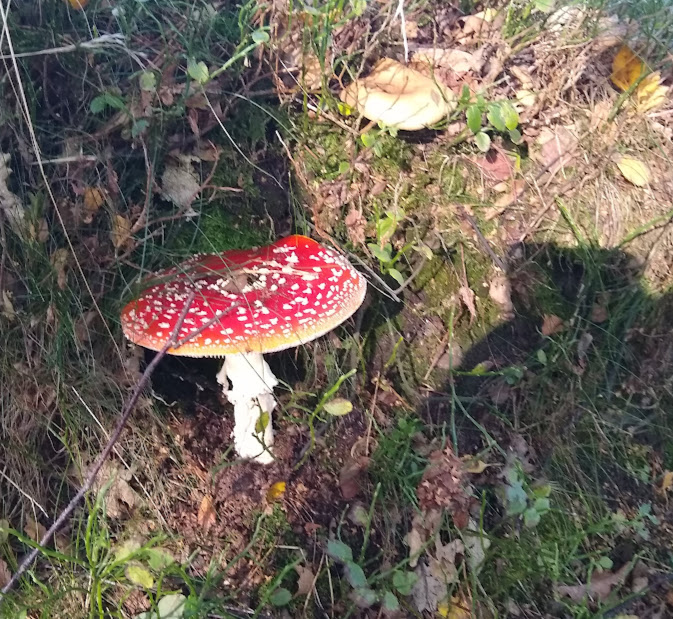
Poppies in a field along the roadChillies drying below a window in SpainMy granddaughter looks through the red window.A pillar boc in Buxton, DerbyshireTeatime in Granada.Fly agaric.
YELLOW
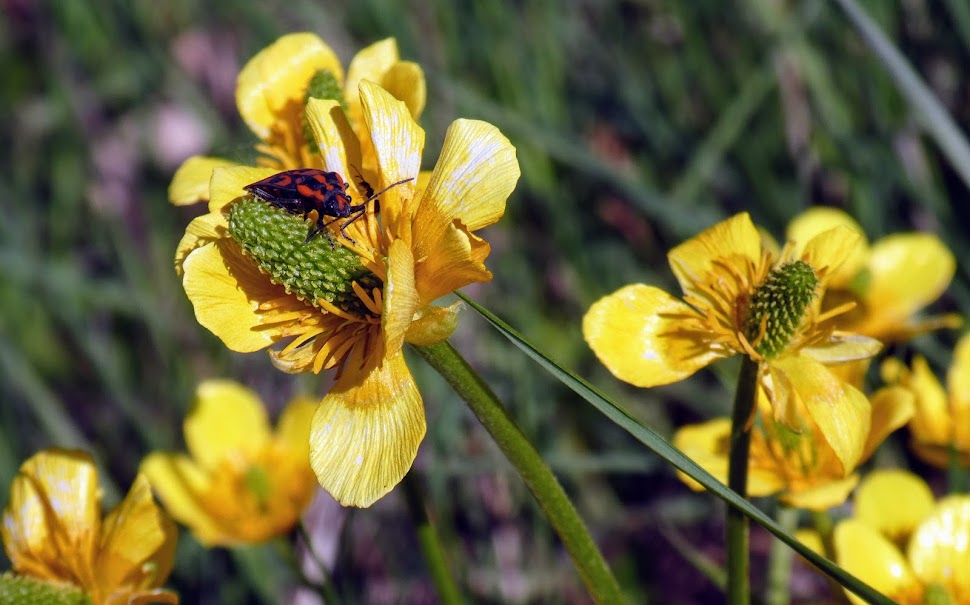
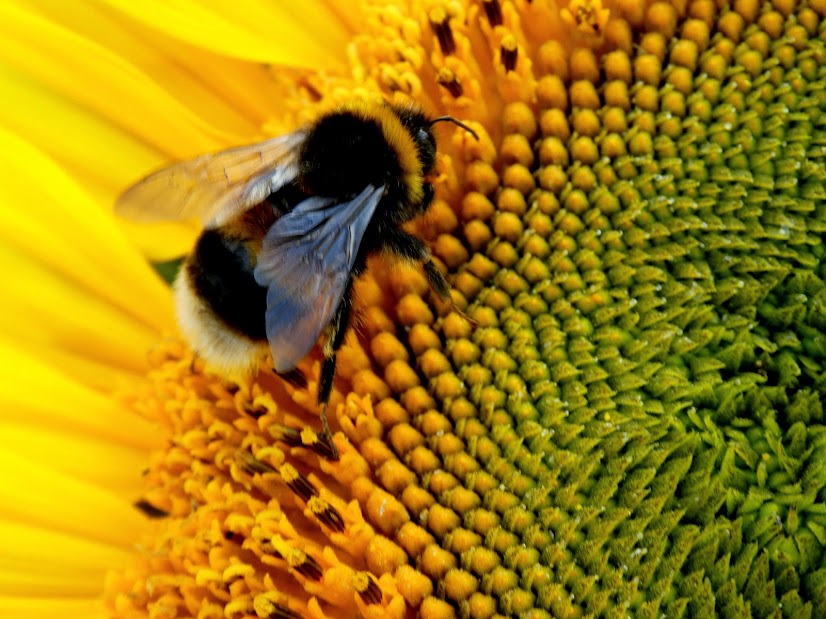
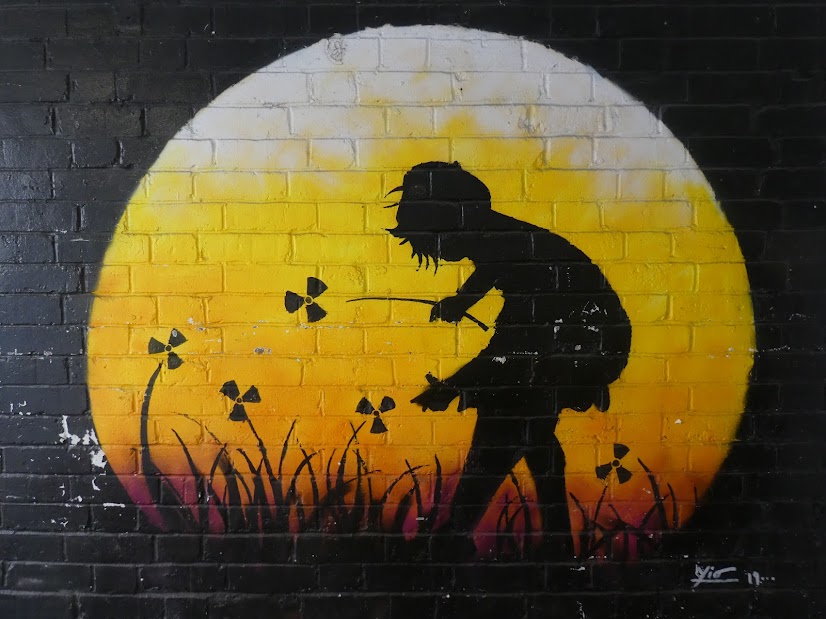
In Galicica National Park, North MacedoniaBee and sunflower in ShropshireSreeet Art in Brick Lane LondonGorse above Staithes, North YorkshireRudbeckia Steve Messam’s ‘Spiked’ in the Temple of Piety, Fountains Abbey 2021
BLUE
Bubbles above the South Bank, London.Ciudad de las Artes y las Ciencias, ValenciaAt the car wash in RiponVultures in la Rioja, SpainJellyfish at the Horniman Museum, LondonThe North Sea between Hull & Rotterdam
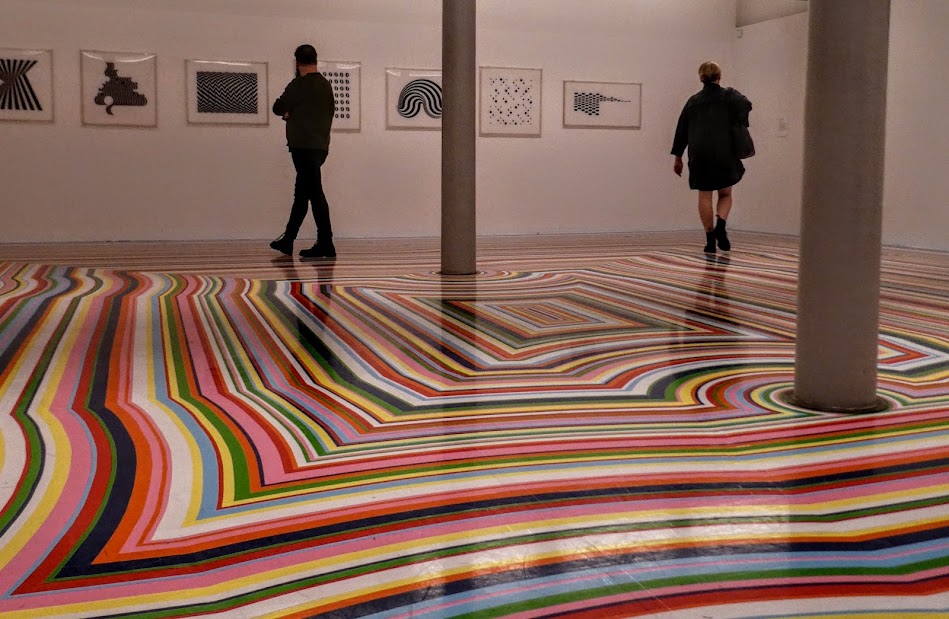
The header image comes from the floor of a room at Tate Liverpool. It’s Jim Lambie’s: Zobop 1999.


















 From Pyrenees to Pennines
You must be logged in to post a comment.