Pretty in Pink

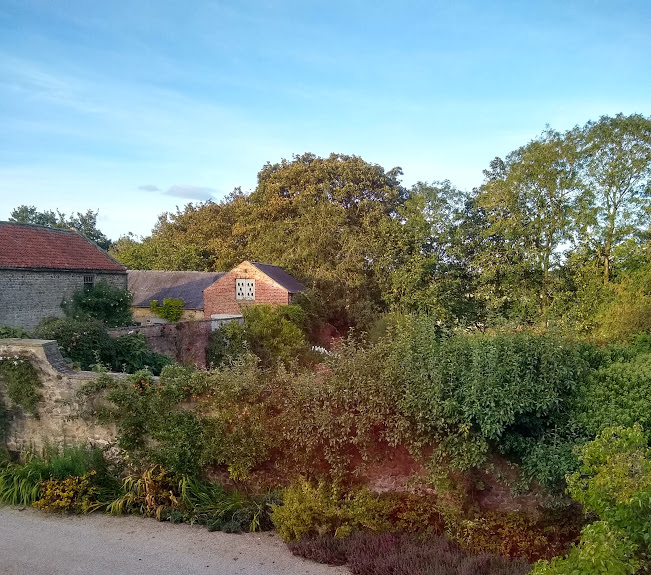
Overlooking the lake at the Himalayan Gardens, Grewelthorpe.

I couldn’t be doing with pink when I was younger.  I thought it was an itsy-bitsy sort of colour, suitable to be worn by annoying little girls of the Violet Elizabeth Bott persuasion (You do know who I’m talking about here, don’t you?  Violet Elizabeth was the lisping, spoiled creature who tormented Richmal Crompton’s delightfully grubby-kneed and accident-prone Just William, as popular now as when he was first created in 1922).

I declined to dress my young daughters in pink, or to wear it myself.  I despised its sugar-sweet prettiness.

These days I’m rather less hardline.  I even have a raspberry pink shirt.

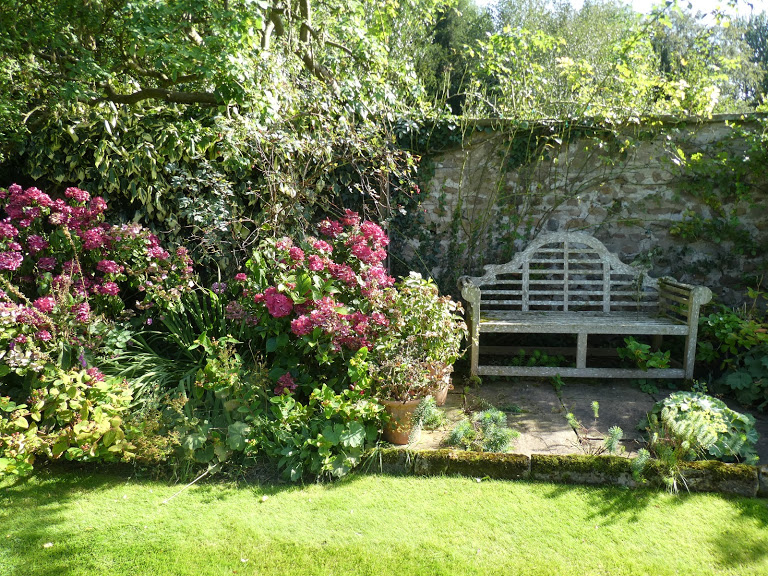
All the same, I think pink is happiest in the garden.  It’s here that flowers can celebrate the colour in all its variety, from the softest most delicate shades of baby pink through to vibrant, vivacious flamingo pink.  Pastel pink.  Shocking pink.  And pinks that use flower names: cherry blossom; rose; fuschia; carnation; cyclamen; dogwood.

Here’s a picture gallery of May time flowers taken over the last few years.  All of them are pink.  And I like every single one.

Many of these pictures were taken in our garden; in our village; at Newby Hall; and at the Himalayan Gardens at Grewelthorpe.  It’s my entry for today’s Ragtag Challenge: pink.

Click on any image to view full size.


The rapacious stillness of the heron*

Herons seem to be a part of our lives.  It’s a rare week when we don’t spot one flying languidly along the river, or waiting on an exposed rock for the next snack.

Wherever we travel, we can go heron spotting.   We’ve seen them in Dordrecht in the Netherlands, Córdoba in southern Spain, l’Albufera near Valencia, and Busan in South Korea.  Town and country: herons are there.

We see them as we walk along the path towards West Tanfield, and spot them on the garden pond.

The other day after a stressful week, I needed a bit of space.  Nosterfield Nature Reserve just up the road was the answer.  I walked along the wetland paths watching water birds courting, feeding, simply being there, standing motionless or swimming peacefully.  Quiet fields formed the backdrop.

Nosterfield Nature Reserve, spotted through a hide.

I went to the farthest hide.  I became transfixed by the under-stated drama being played out between a heron and two or three egrets.  They were fishing.  All plodded gracefully in and out of what humans might see as each other’s personal space.  They didn’t care or even seem to notice one another. They simply co-existed, fishing.

This is what first caught my eye….and then I zoomed in closer…..

This series of pictures might not seem that different one from another.  They’re a record of a simple afternoon in the lives of a heron, three egrets ….. and me.

Click on any image to view full size.

* The Crow Road: Iain Banks


The tale of the Jacob sheep and the copper beech

Mrs J with one of her lambs.

There are sheep at the bottom of the garden.  Jacob sheep, three of them.  And not so long ago, they gave birth to lambs – five between them.  We didn’t see this domestic drama.  They visit a neighbouring farm for ante-natal and delivery services.  But a fortnight ago, they all returned home, and relished the fresh grass, newly lush after the winter.

Last week, the large and spectacular copper beech at one end of their field virtually overnight burst into leaf. Naked twigs produced swelling leaf buds, and then…. almost instantly, delicate pinky-crimson leaves, practically translucent.  The Jacob sheep eyed them with interest.  Grass is all very well, but …. young beech leaves?  Oh yes!   Well worth craning your neck for!

Yesterday afternoon, one of the ewes and her two lambs popped over to inspect me as I walked down the drive.  They thought I might be John with a bucket of food (I had neither a beard nor a bucket, and it wasn’t the right time of day, but well, it was still worth a try).  I was, as ever, a big disappointment.  But it did remind the ewe that the copper beech was there beside me, its lowest branches just about reachable.  She reached up. She selected bunches of young leaves, chewed them, ate them.  Moved on a few yards and repeated the process.  Again and again.

In a few days, those leaves will toughen up.  Got to take your pleasures while you can.  I hope her gourmandising didn’t give her a tummy ache.

I wonder if the apple tree will be next?

This is my entry for today’s Ragtag Challenge: gourmand.

Click on any image to view it full size

Is that a blackbird or a bullfinch, a chaffinch or a chiffchaff?

We’re fond of our garden birds.  Little by little, we’re getting to identify them.  But their songs and calls?  Not so much.
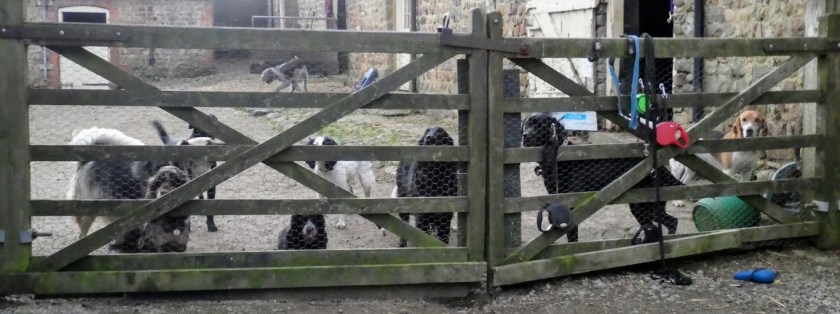
On Saturday though, we had an opportunity.  Just along from here at Old Sleningford Farm, Linda Jenkinson whom we first met some five years ago on her bird watching course at Nosterfield, was exploring Bird Song.  We  knew we had to sign up.

A morning in the classroom.  We learnt about blackbirds:

……and chaffinches…..

….and bullfinches (just think ‘rusty gate’ apparently….)

And chiffchaffs: think ‘chiffchiff’ rather than ‘chiffchaff’

and coal tits, and all the other kinds of garden tit.

We tackled about sixteen kinds of bird and their songs, listened, looked, did quizzes, and finished the morning feeling fairly sorted.

Then we had lunch.  Home made frittata and bread, freshly gathered salad leaves, locally pressed apple juice, deliciously damp cake – that’s the sort of nourishment you get when you come to Old Sleningford Farm.

And afterwards it was The Great Outdoors.  Well, I’m sorry birds, but you ought to get organised, form an orderly queue and sing, one by one.  We wandered through woodland, along the river, explored the Forest Garden.  And as we sauntered, ears cocked at the ready, willow warblers; marsh warblers; blackcaps; kingfishers all cacophonously introduced themselves, quite drowning out our carefully revised memories of bullfinch, chaffinch and the like.  It was wonderful. We learnt, we listened, we enjoyed simply being in this peaceful place, shared only with the birds and other unseen wildlife.  Thank you Linda.  So glad to Start Birding with you!
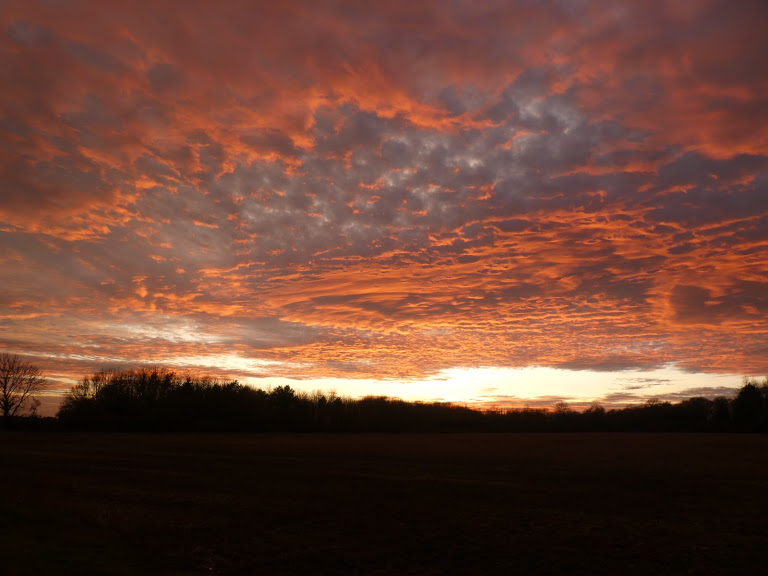
Linda helps us get close and personal to the birds we’ve been learning about.


Ragtag Saturday: The Cleveland Coast

Older people like coach trips.  Allegedly.  They sit in a coach, gossip, have a nice cup of tea when they reach their destination, then they go home again.

On Thursday, fifteen people from Ripon U3A (Walkers’ Division) did exactly that.  Except that in between the gossip in the coach and the nice cup of tea, they fitted in an eight and a half mile walk along a section of the Cleveland Way.

Staithes seen from the cliffs.

We started at Staithes, once a busy fishing port, now a picture-postcard-pretty holiday destination.  It nestles at the foot of imposing cliffs, and our walk began with a good hard yomp to get from sea-level to cliff top.  This was the first of several yomps up steep paths cut into the hillside at an unforgivingly steep gradient.

The first of several climbs – and not the hardest.

And what goes up must come down, as we discovered towards lunchtime at Runswick Bay, and later still at journey’s end in Sandsend.

Runswick Bay at low tide.

All this would have been arduous enough.  But there was a stiff breeze.  This developed, as the day wore on, into a searching wind: the sort that blows any attempt at conversation far out to sea, turns pockets inside out, and rips scarves from shoulders.  A few forays past farms offered slight shelter.

By the time we arrived in Sandsend, the wind was arguing with the sea too, which rose up, roaring and seething and hurling itself against the breakwaters.

Stormy seas at Sandsend.
The view across to Sandsend and Whitby.

Did we complain?  We did not.  This was scenic walking at its best.  Violets and primroses scattered our path, and striking barriers of yellow gorse imposed themselves between us and the cliff edge.

Eight and a half miles of this kind of treatment was just about enough though.  We were good and ready for tea and home-made cake at Wits End Cafe, and continued our gossip in the coach on the way home.

The sea: our constant companion for the day.

Here is my entry for today’s Ragtag prompt: Coast, and for Jo’s Monday Walk.  As ever, click on any image to see it full size.

A very English afternoon tea.

What could be more quintessentially English than tea and cake?  What could be more quintessentially English than fundraising with tea and cake?

Hire the village hall.  Get the Good Ladies of the Parish to closet themselves in their kitchens, dig out their favourite recipes, don their aprons and get stuck into a couple of hours combining butter, flour, sugar and eggs with favoured additions such as chocolate (got to have a chocolate cake), lemon (got to  have lemon drizzle cake), coffee, walnuts (got to have a coffee and walnut cake), dried fruit (it would probably be a criminal offence not to offer scones), and any other pièce de résistance that the accomplished home baker can offer.

And on the day itself, friends, family, passers-by, readers of the Parish magazine will all be tempted to drop in and cheerfully while away a half hour or so with a slice or two of cake, or even the makings of a light lunch, all in pleasant, light-hearted company.  All talk of calories and healthy options is banned.  This is waistline expansion in a very good cause.

On Saturday, we gallantly took ourselves over to Fewston Village Hall to support our sporty friends Barbara and Tim. The cause? Almscliffe Tennis and Bowling Club.  Now what could be more English than bowls?

All the home bakers ready for action in the Village Hall.
… and overlooking the proceedings at Fewston Village Institute ……

Click on any image to view it full size.

Ragtag Saturday: A Red Kite.

Ah, could I see a spinney nigh,
A paddock riding in the sky, 

Above the oaks, in easy sail, 
On stilly wings and forked tail.

John Clare (c. 1820)
Paddock is an old English name for the Red Kite

Red kite (Wikimedia Commons, Arturo de Frias Marques )

Red kites, coasting lazily across the skies on gentle thermals – floating, free-wheeling, gliding – command our instant attention.  When we spot them as we’re walking, we can’t help but stand and stare, and relish their easy command of an immense sky.  It’s that forked tail that gives them away.

And yet these noble-seeming creatures exist mainly on carrion.  They’ll swoop quickly down to snatch roadkill – after the crows have helped themselves – and take it off to perch on some quiet tree to dismember and eat.  Sometimes we’ll watch numbers of them wheeling above just-ploughed fields, questing for worms and small mammals.

Young red kite perching in a tree (Wikimedia Commons)

They used to be a very rare sight indeed.  But about twenty years ago, and thirty miles from here, some red kites were released onto the Harewood Estate as part of a conservation initiative.  We lived in Harrogate at the time, and got so excited if we were near Harewood, by very occasional sighting.

Fast forward a few years, and the kites reached the outskirts of Harrogate: we’d even spot them above the town centre.  Later still, they spread onwards and outwards  – north, south, east and west.

Yorkshire red kite sightings 2018
(www.yorkshireredkites.net)

And this week, just this week, for the very first time, this is what I saw, above the house, keeping an eye on me as I hung out the washing.  I’m very excited by our new neighbour.

A bit blurred, this image. But this red kite was very high above me.

Today’s Ragtag Challenge is ‘kite’.

Ragtag Saturday: A Tracery of Twigs

It’s equinox season: that blessed time of year when day equals night, and when, for us, the days are getting longer.

The full moon. The equinox.

It’s transition time in so many ways. Those wonderful winter trees, their tracery of twigs and branches transcribed against the sky are skeletal still: but only just.

This morning, on my way out, I noticed tightly furled leaf buds, glossy and taut on shrubs in the garden. Two hours later, coming back, the tender leaves had burst out, tiny and delicate, waiting to be toughened up and to grow in the mild spring air. It was very windy too – hence no photos.

Has spring sprung?

A late afternoon sky over the River Ure, just before the equinox.

Today’s Ragtag Challenge is Tracery.https://wp.me/p9YcOU-1ll

All photos apart from the first and the last one were taken walking through the parkland of Studley Royal, Fountains Abbey.

A winter walk: footprints, snowy sheep – and just one robin.

A field near North Stainley.

I think I like this kind of wintry day best of all. We’ve had a carpet of snow on the ground, blanking out grass, pavements and drifts of snowdrops. But today, it’s just a little warmer, and the snow is softly melting into the ground. But still here. We go out for a walk, before the cold descends once more. Winter footprints are visible now, because the impacted snow has dissolved away, leaving a silhouette of – what? Is that a crow print? A pheasant? Oh look, those are rabbits – look at how they land, four square and neatly as they run. And here’s a dog of course.

The landscape assembles itself into broad strata of austere colours: raw umber earth; no-longer pristine snow, almost dappled in places; perhaps some olive-shaded grass, and behind all these, a line of winter trees, their skeletons highlighted against the grey sombre skyline.

We see this robin on a fence post.

But apart from him, sheep are the only living creatures we spot on our walk today. Against the snow, they aren’t white at all, but a slightly dirty cream. They scratch an unsatisfactory meal from the less snowy parts of the fields. They come to look at us. We look at them.

Then we look for snowdrops instead, and for wood. It’s forbidden to go out at this time of year without coming back with an armful of kindling for the log burner.

And how glad we are to get back to our log burner! We enjoyed seeing our familiar landscape clothed in its skimpy veil of whiteness. But we appreciated getting back to warmth, a fireside, and a nice cup of tea even more.

Here’s a contribution to Jo’s Monday Walk (Jo’s own walks tend to be in Portugal these days. That’s where she lives. Feeling chilly Jo, reading this?)

Click on any image to view it full size.

Ragtag Saturday: Frosted fields

It was -3 degrees in the night. It was still -3 degrees, at nearly nine o’clock in the morning. But I started my walk anyway. Right here in the garden, next to this hellebore.

Here were the pleasures of scrunching through crisp, frosty grass.  Through small puddles, frozen solid.  Watching long shadows extend the trunks of trees across the width of a field.  Sheep doing their best to scratch a breakfast from the hoary grass.  Bracken with delicately rimed edges.  A car on the roadside, blinded by Jack Frost’s artwork.

The sun rose and despite the cold, quickly burnt off the chilly white from the fields. The newborn lambs, which I’d hoped to spot in West Tanfield had been kept indoors – I could hear their plaintive bleating in  barn.  Instead – winter blossom, catkins, and a sky-blue sky.

This is my contribution to Ragtag Daily Prompt: Frosted.  And though I walked on a Wednesday, posted on a Saturday, to Jo’s Monday Walk.

As ever, to view any image full size, simply click on it.