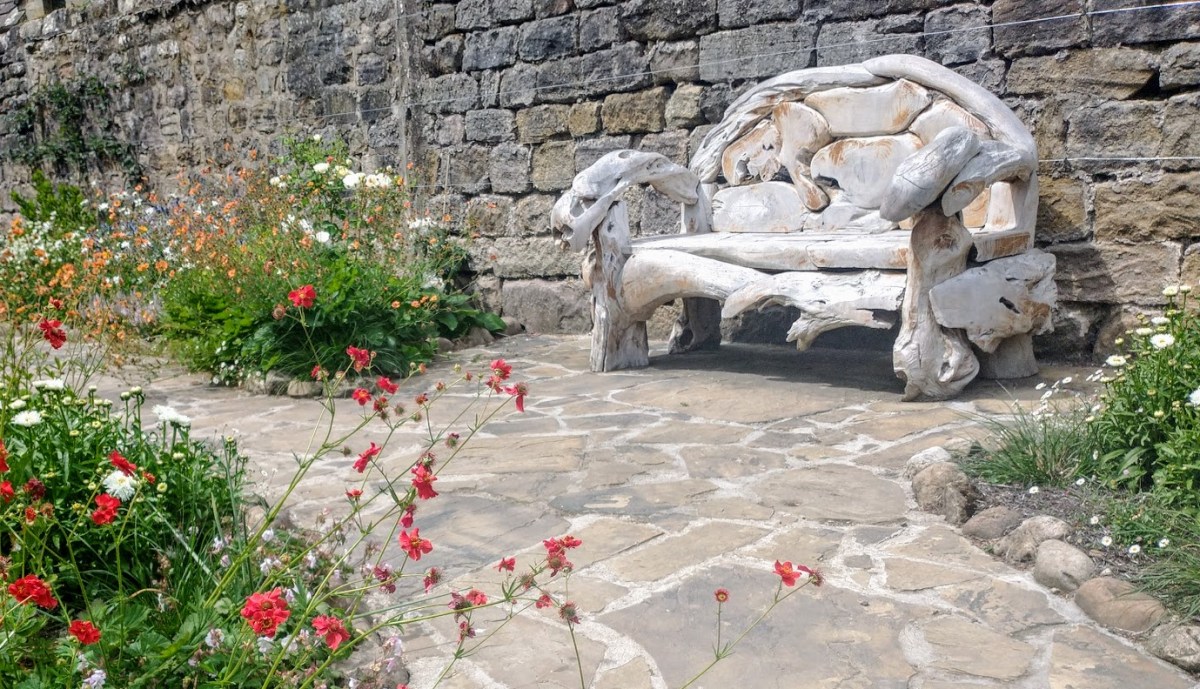
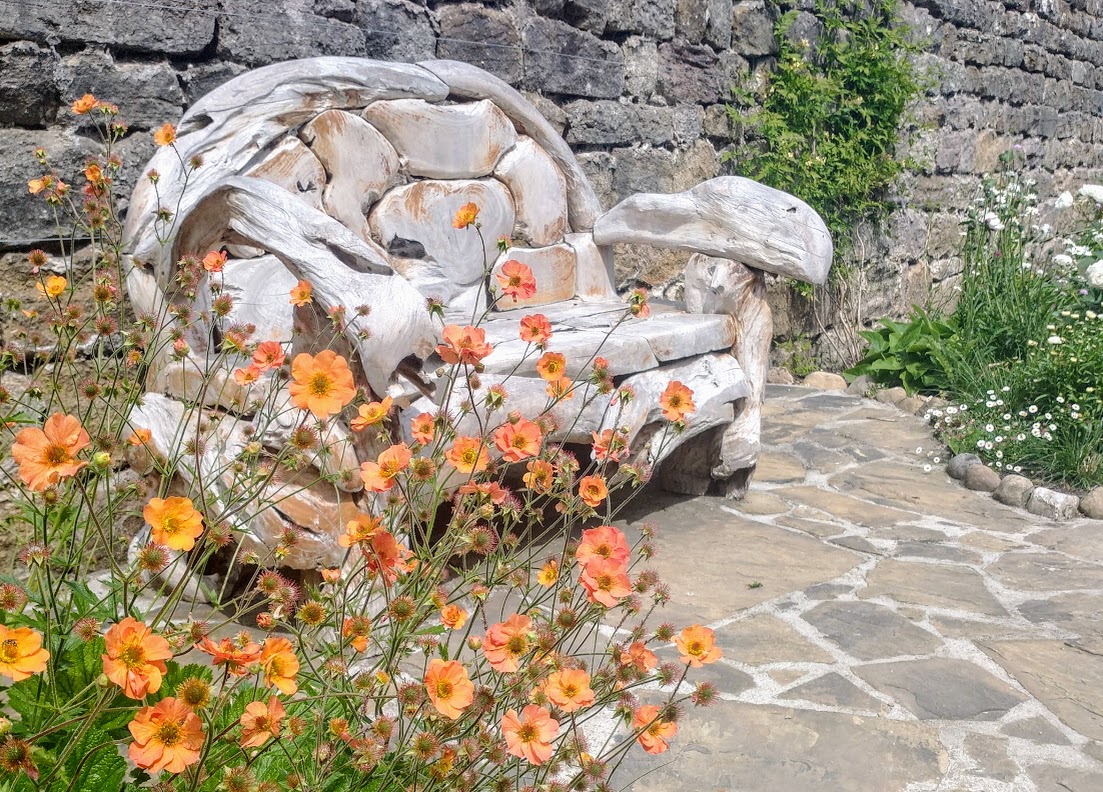
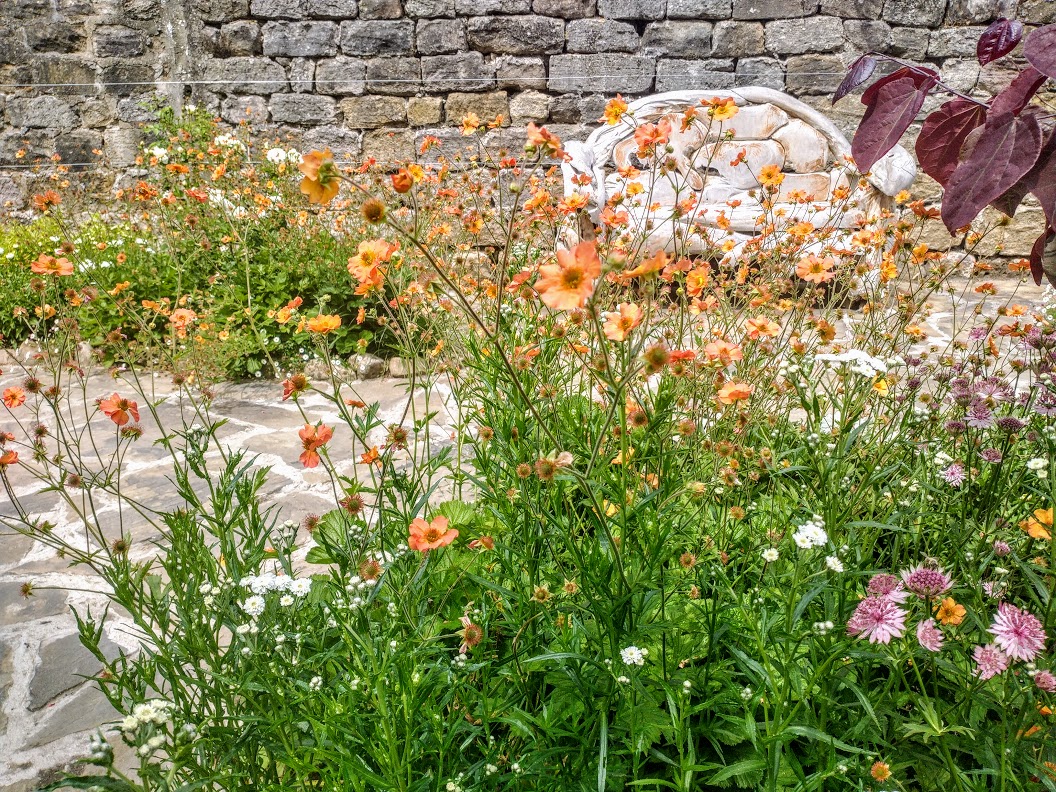
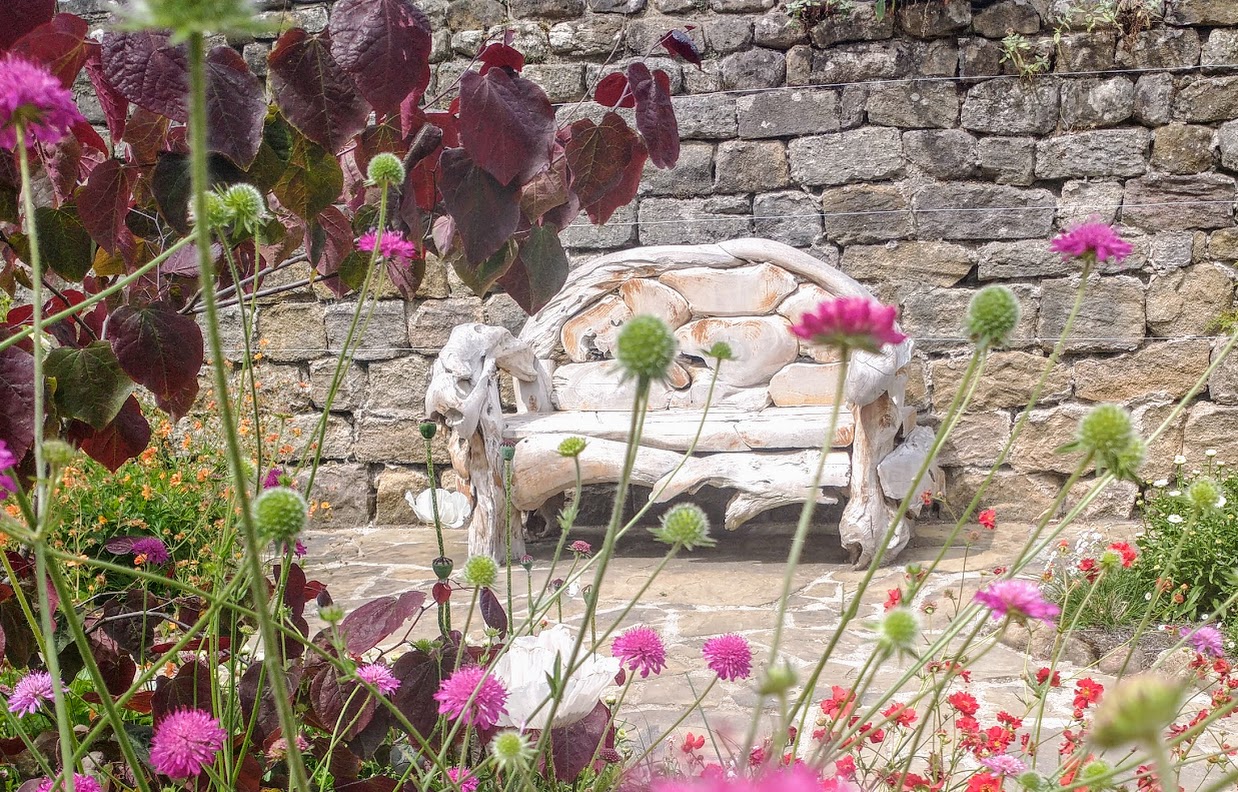
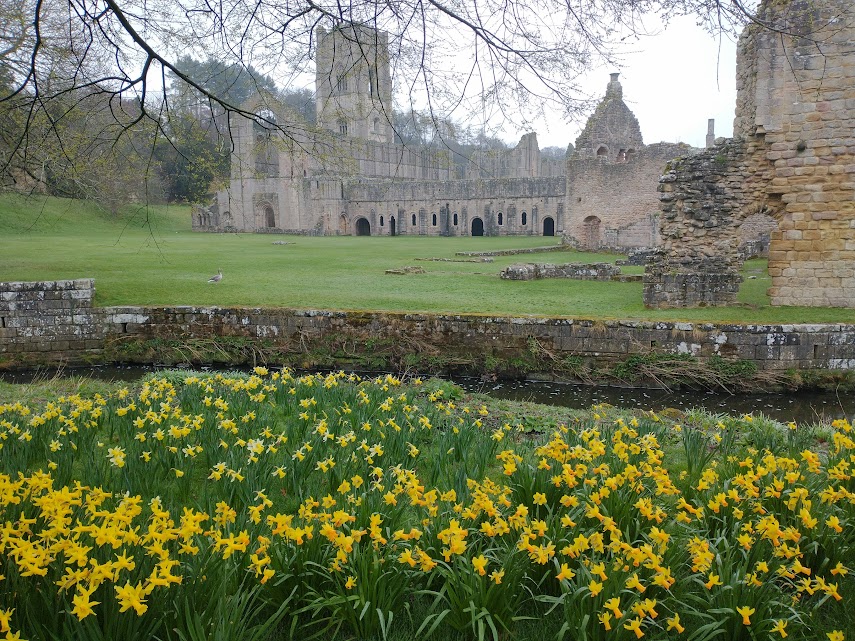
Near Fountains Hall, the early Jacobean house in the grounds of Fountains Abbey, a new garden has recently been opened. The Quiet Garden. It is indeed a peaceful haven. My favourite feature is this bench, made from the wood of now-fallen trees in Studley Royal’s deer park.
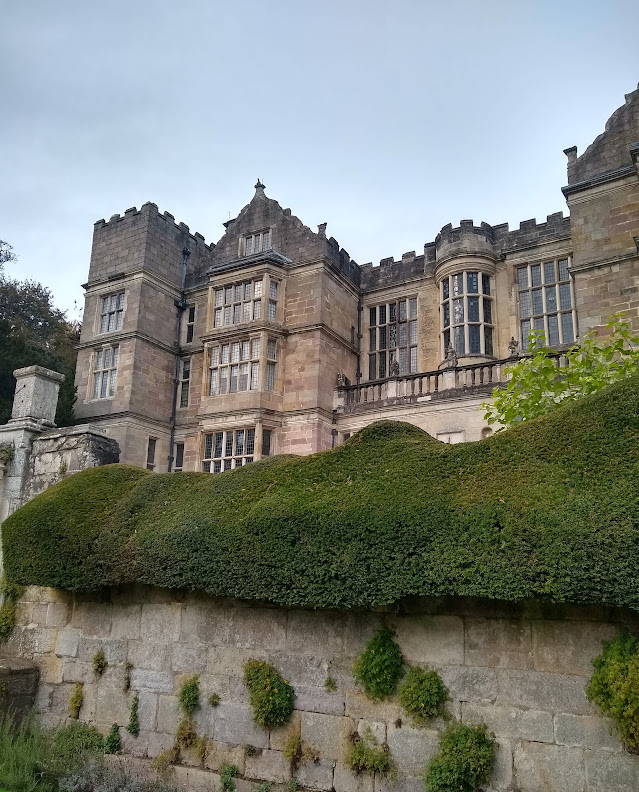
And in case you’ve not seen it before, here is Fountains Hall.
This wasn’t the post I intended to make. But an accident turned into an opportunity..
Yesterday morning saw me with a friend, completing our tour of duty as volunteer Roaming Rangers in the Deer Park at Studley Royal. This involves doing a low-key census of the deer, looking out for noteworthy wildlife, answering questions from the public, and occasionally asking dog-owners to put their pets on a short lead, especially now, when female deer are busy giving birth. And I took my camera. Accidentally, I left it on black and white setting. But I find I don’t mind. I’ll share some of my images with you.
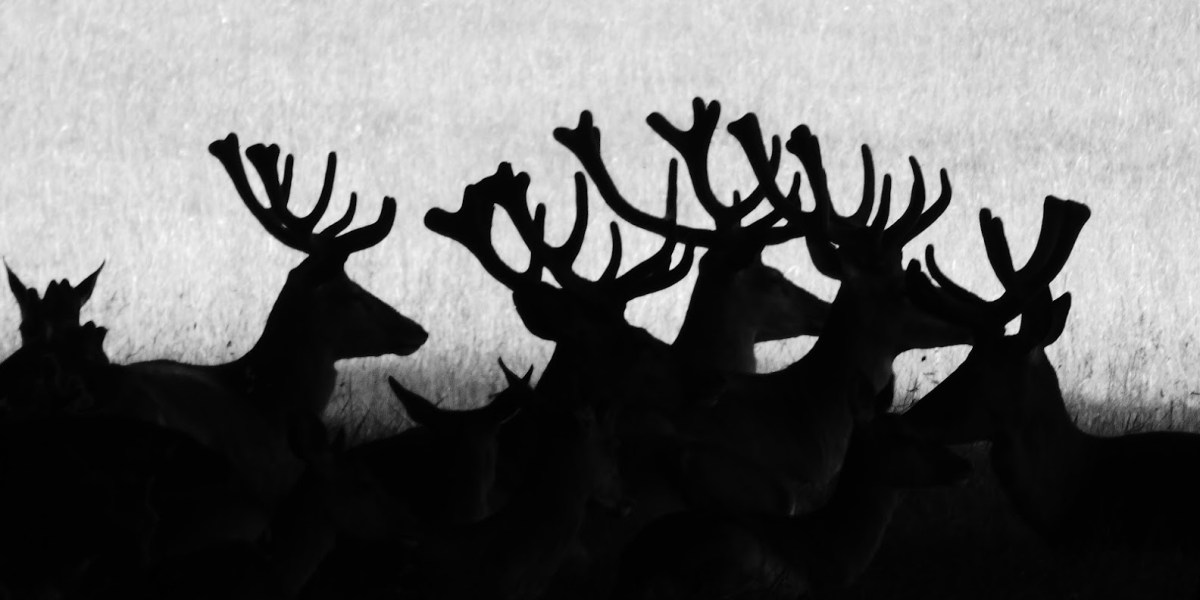
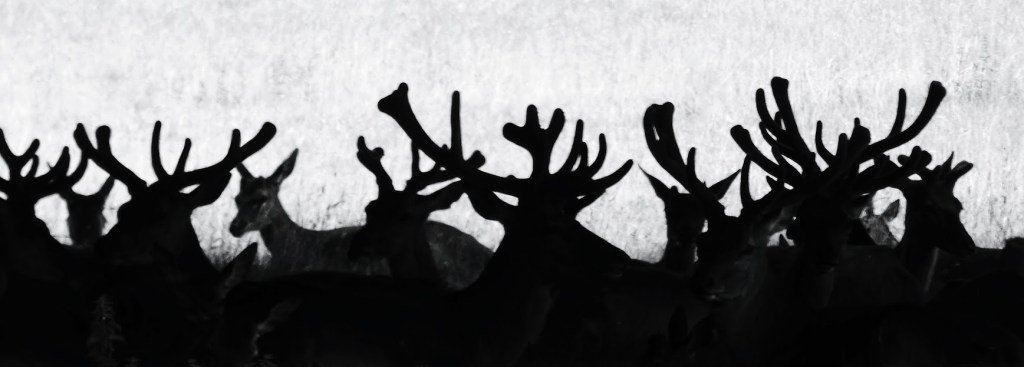
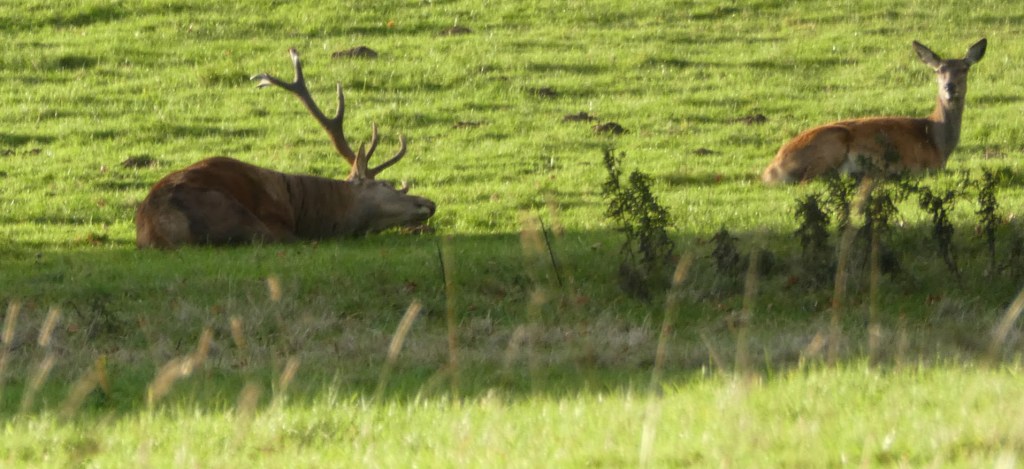
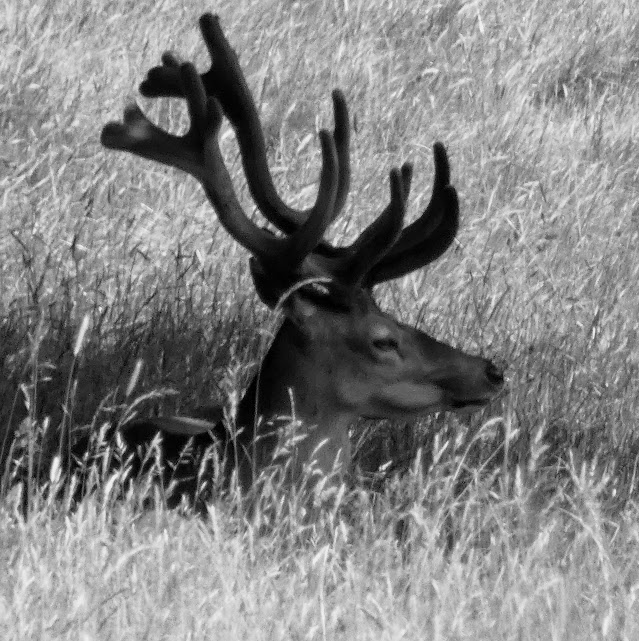
The featured photo shows the first scene we saw: red deer stags all sitting resting beneath the trees. This is their languid time of year, when they eat and rest, building up their strength for the autumn rut.
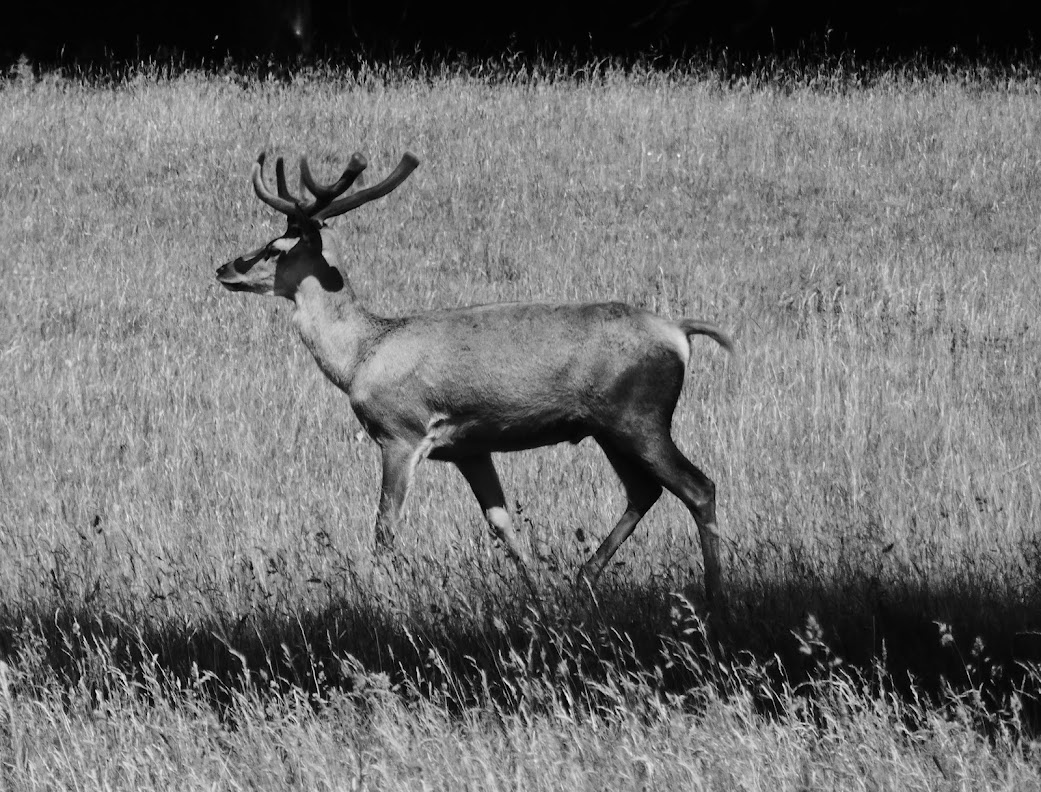
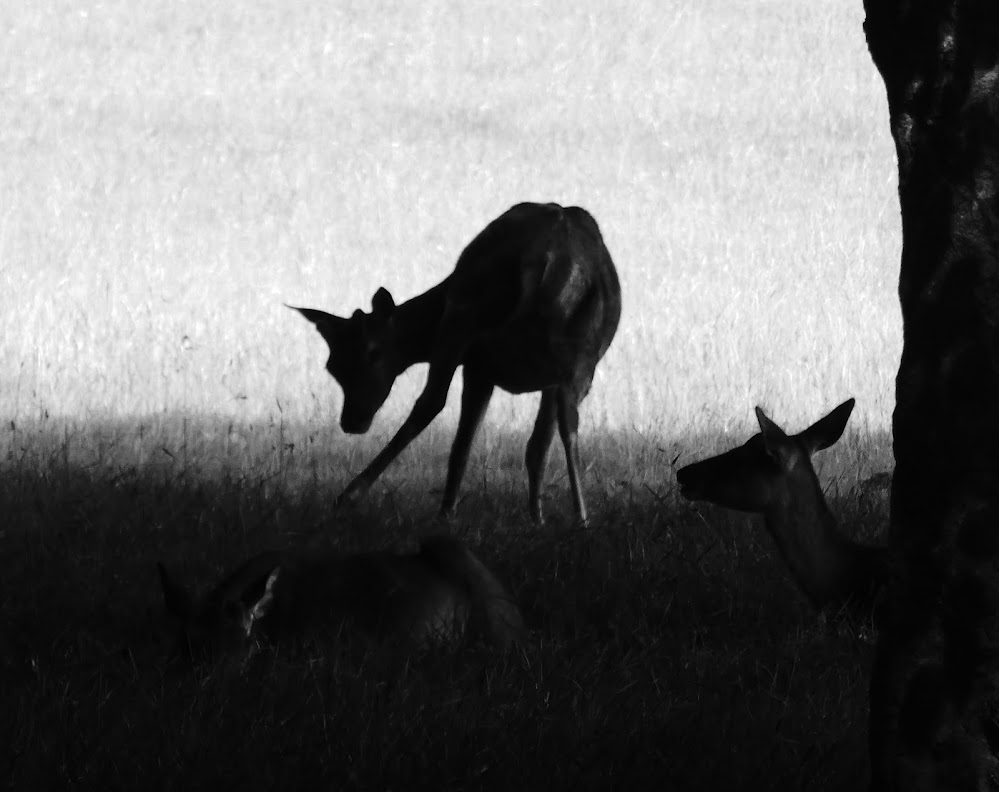
And here’s a stag; a young calf; and a hind with her calf.
We’re just about to change terminology, because we’re leaving red deer behind, and joining the fallow deer. The male is a buck, the female is a doe, and the youngster a fawn.
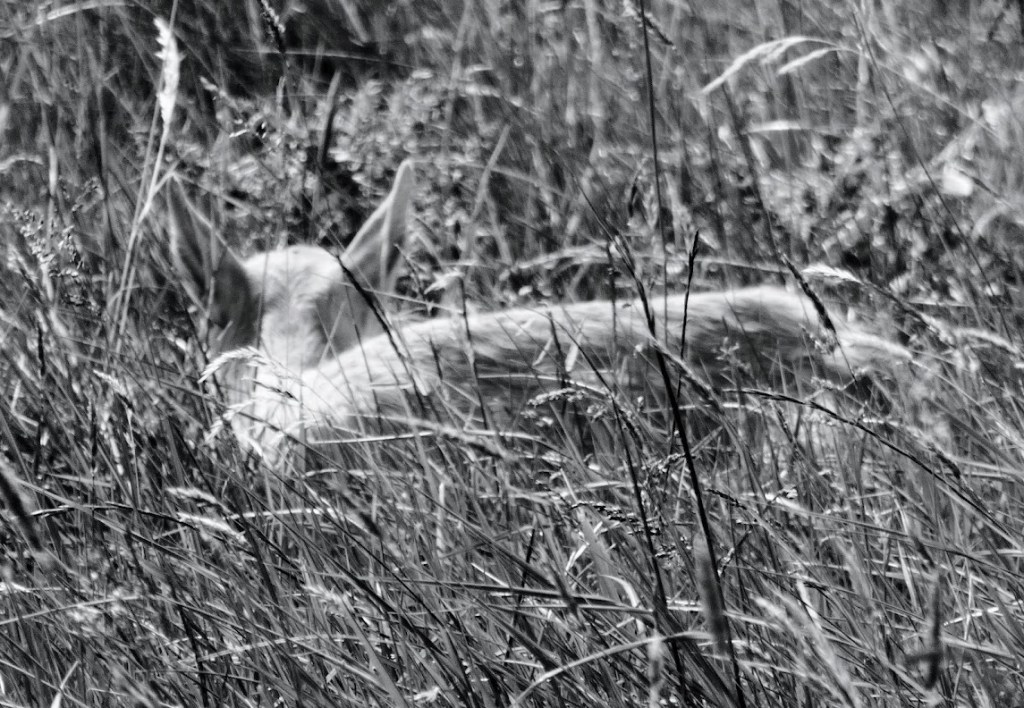
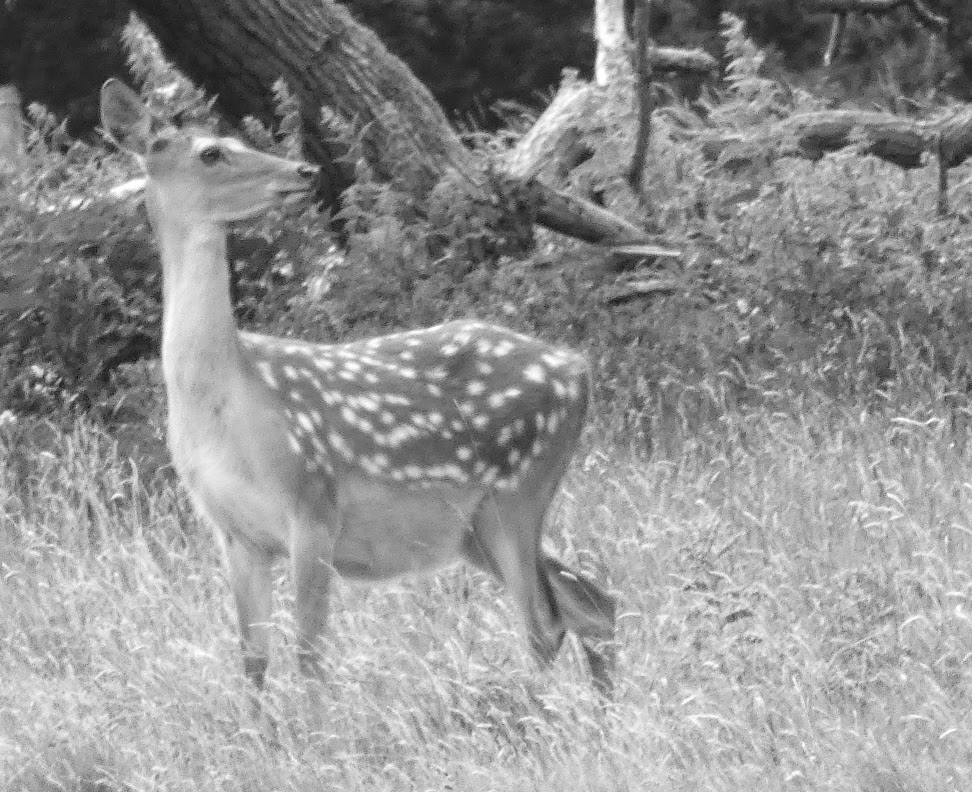
As we spotted fallow deer ahead of us, we all but walked into the youngest of young fawns, left sleeping by its mum far too near an – admittedly little-used – path. I snatched this photo, but we hurried away, not wanting to cause distress to the little creature’s mother.
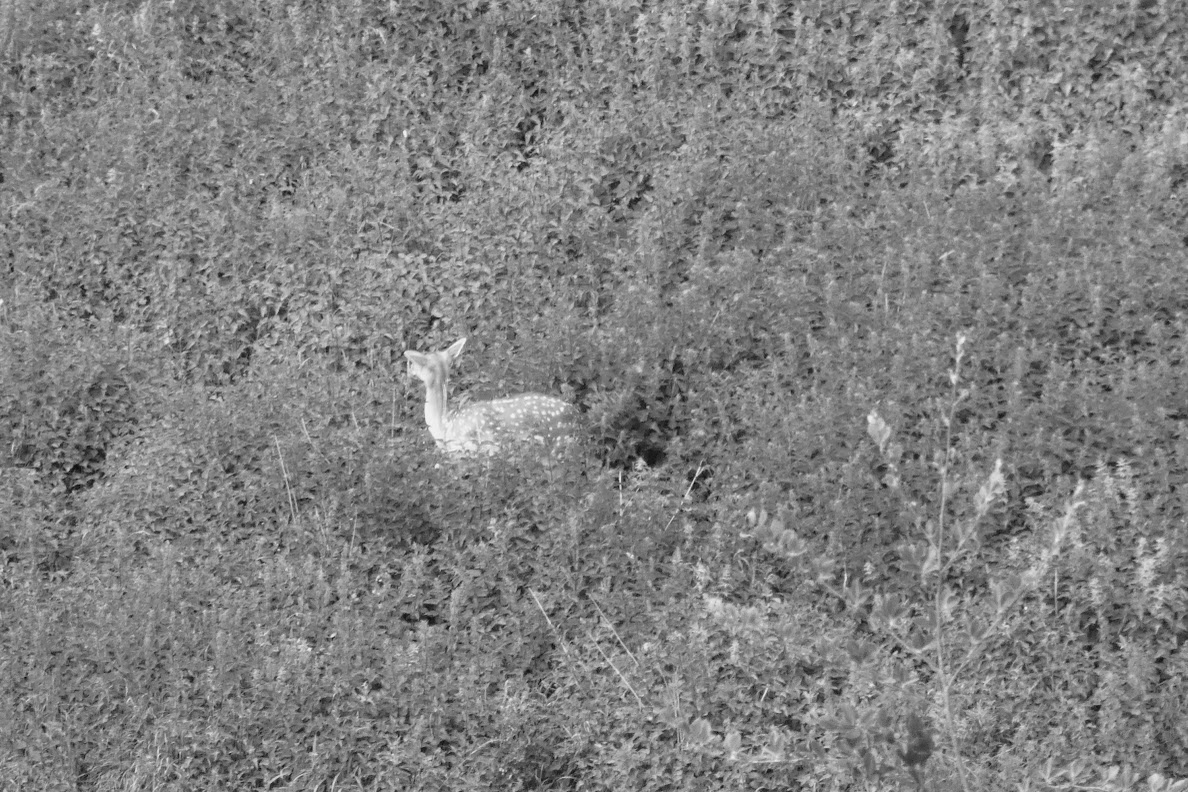
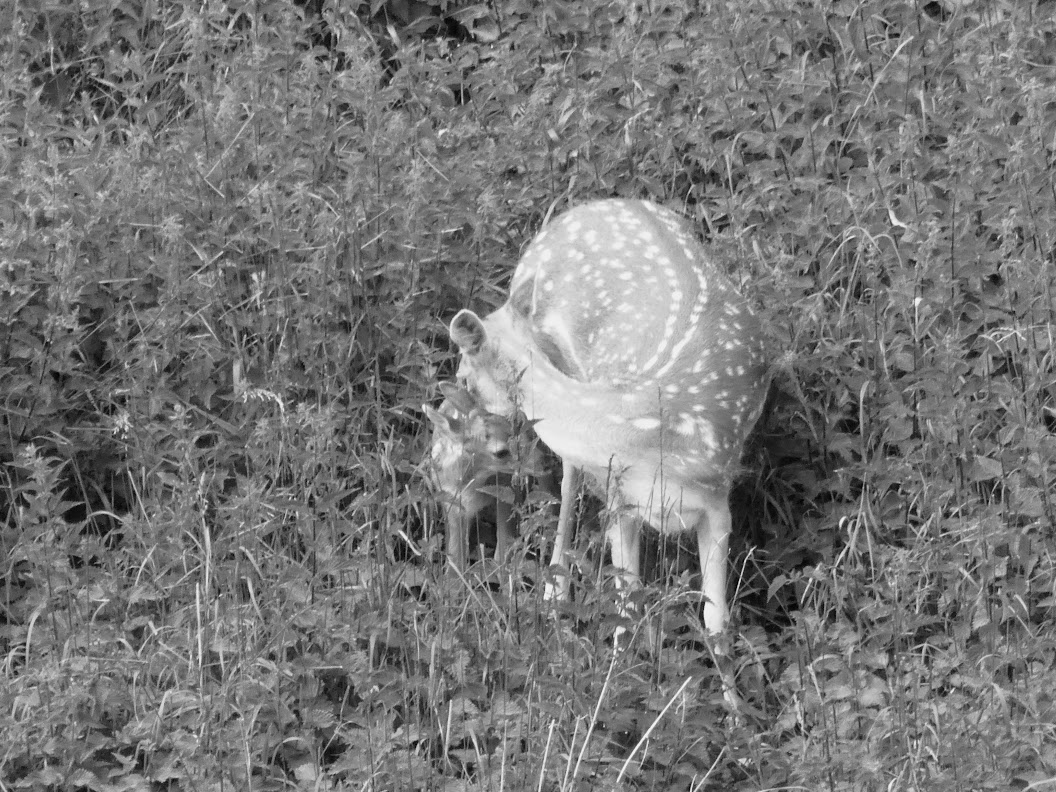
Then we had a wonderful twenty minutes or so, staring across a deep dry valley much loved by the deer because of its relative inaccessibility, and watching a young fawn gambolling through the long grass, dashing back from time to time to see its mum.
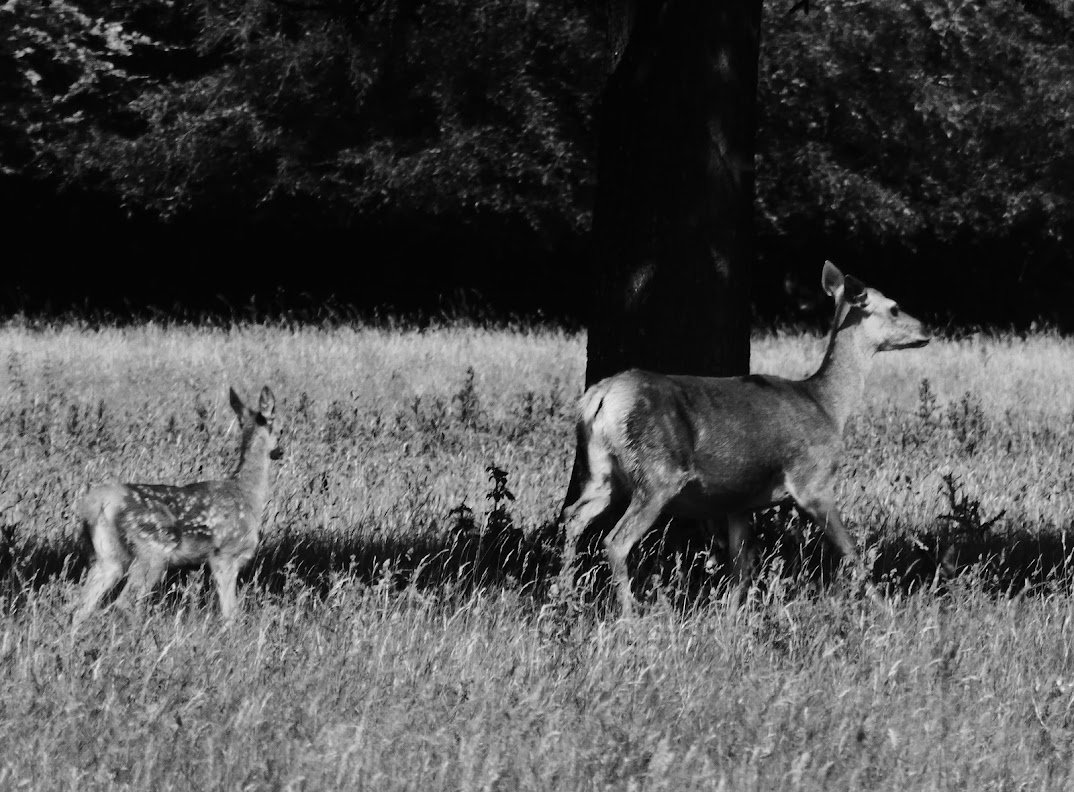
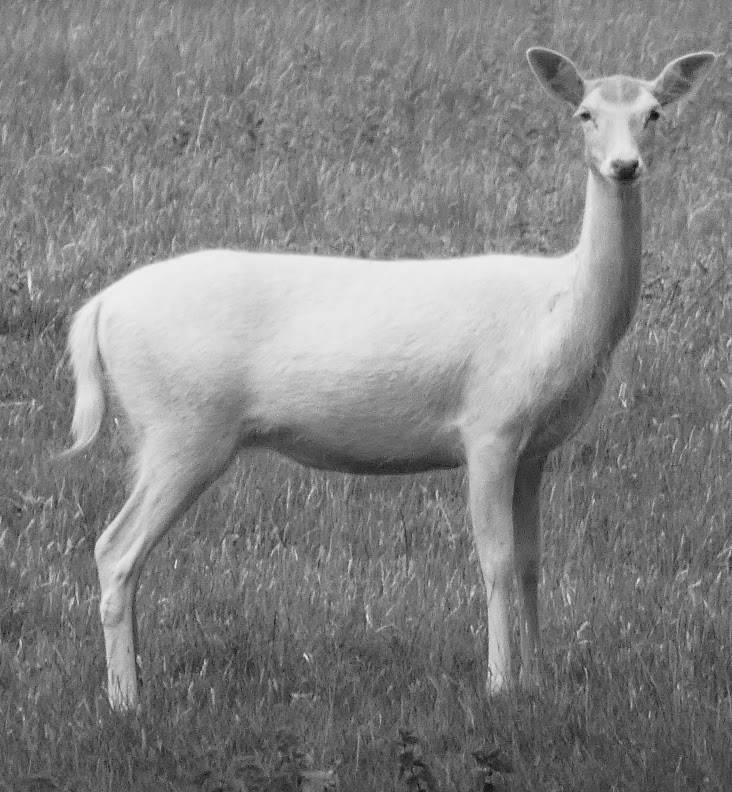
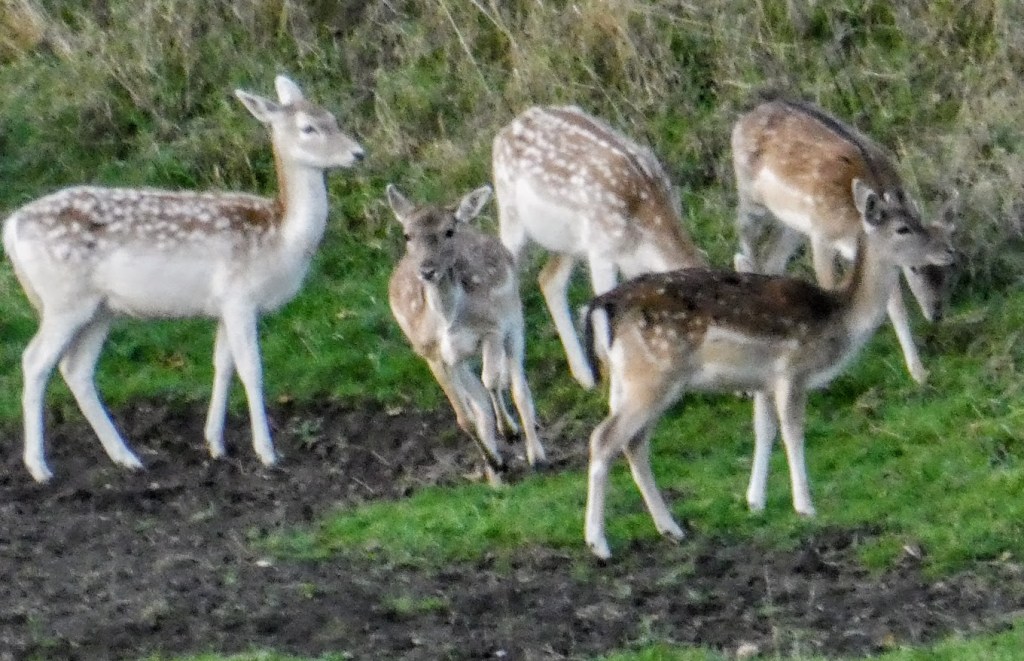
And here are two typical does: one looks ‘normal’, but the white one is too. She’s not albino, but leucistic: she has reduced pigentation in her coat: it’s a pretty common variation – as is melanistic, where the opposite is true, and over-production of melanin leads to a black coat.
But I’ll leave you with a further set of silhouettes from those utterly relaxed stags.
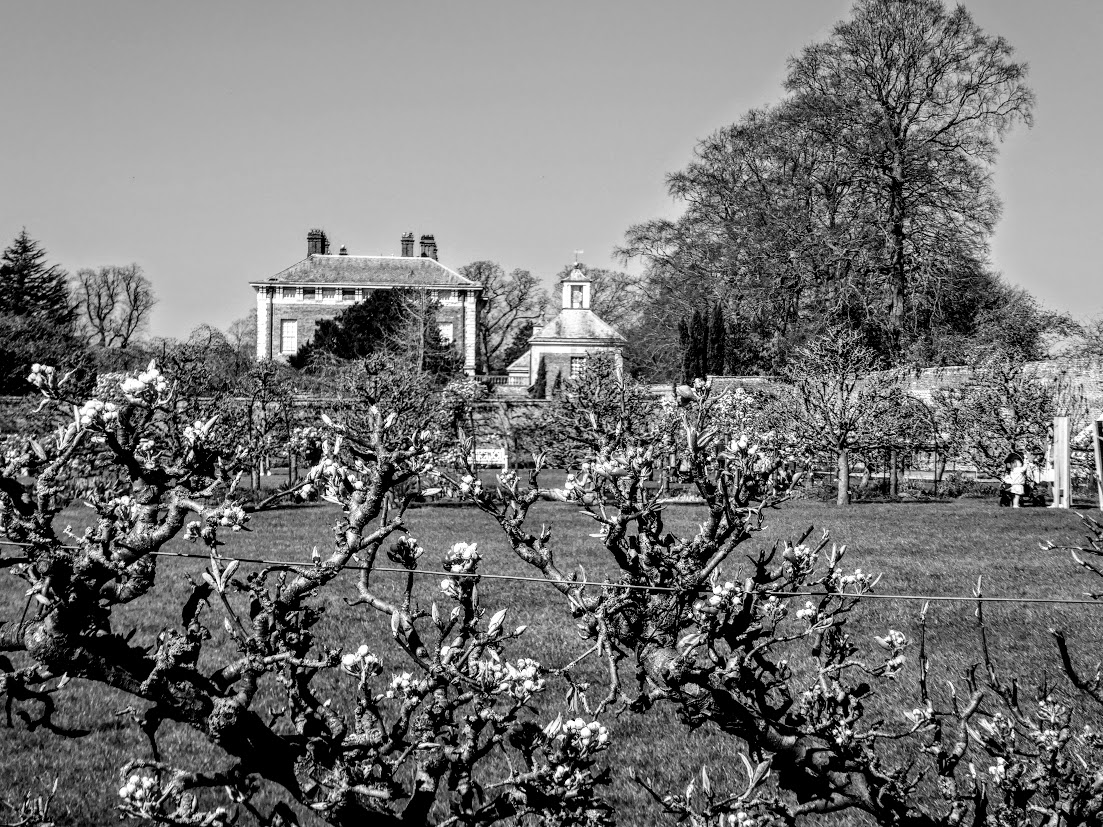
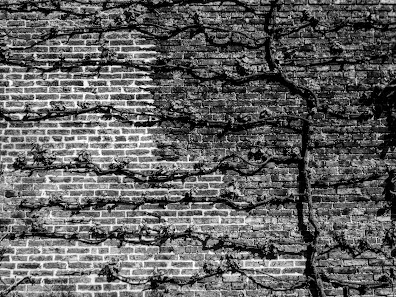
Beningbrough Hall is one of our local stately homes. An English Baroque masterpiece, its real delight lies in strolling round its gardens. Let’s do that now, for Dawn‘s turn as host of Leanne’s Monochrome Madness.
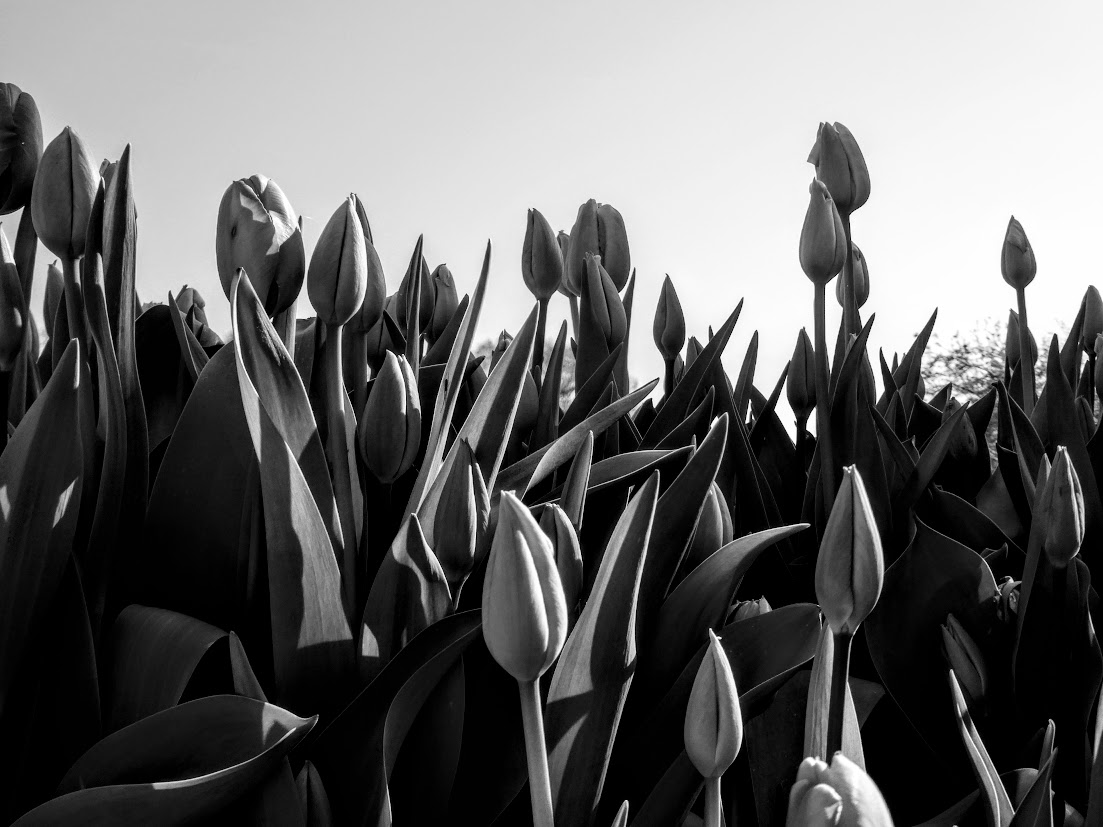
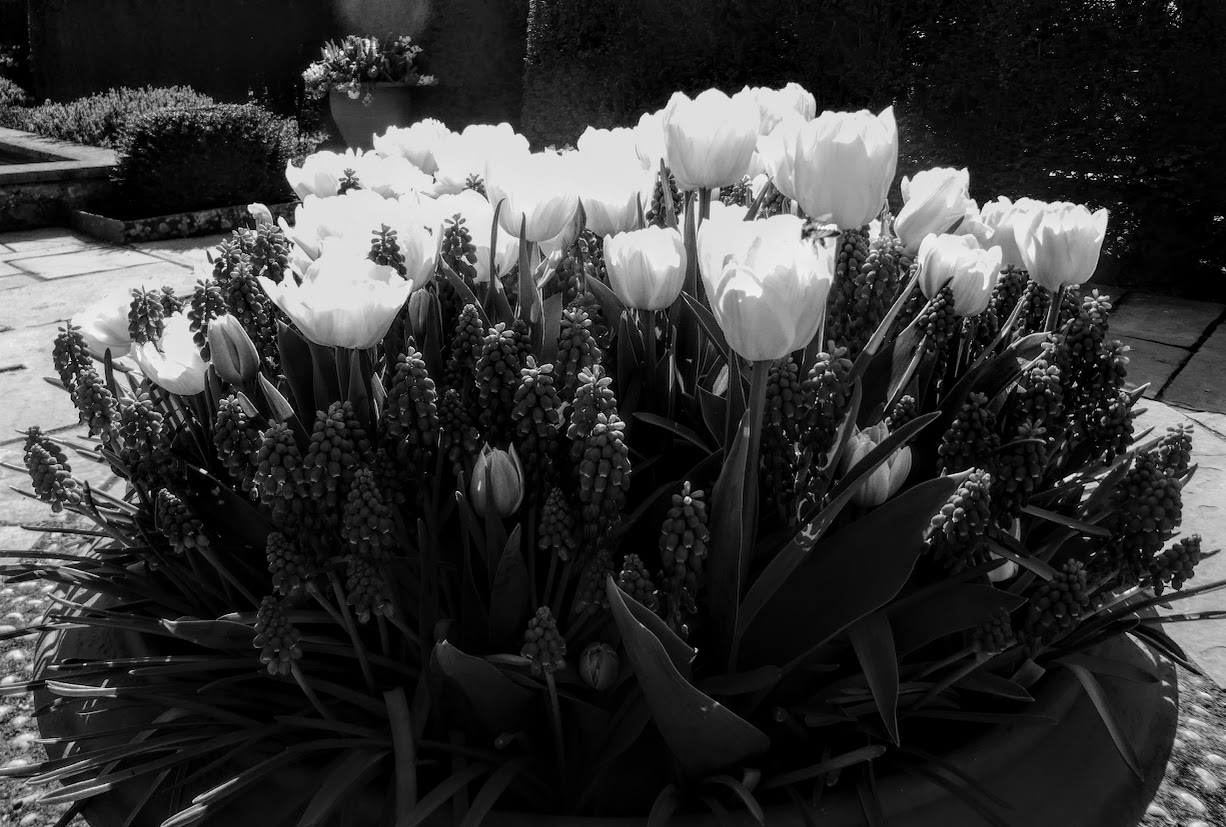
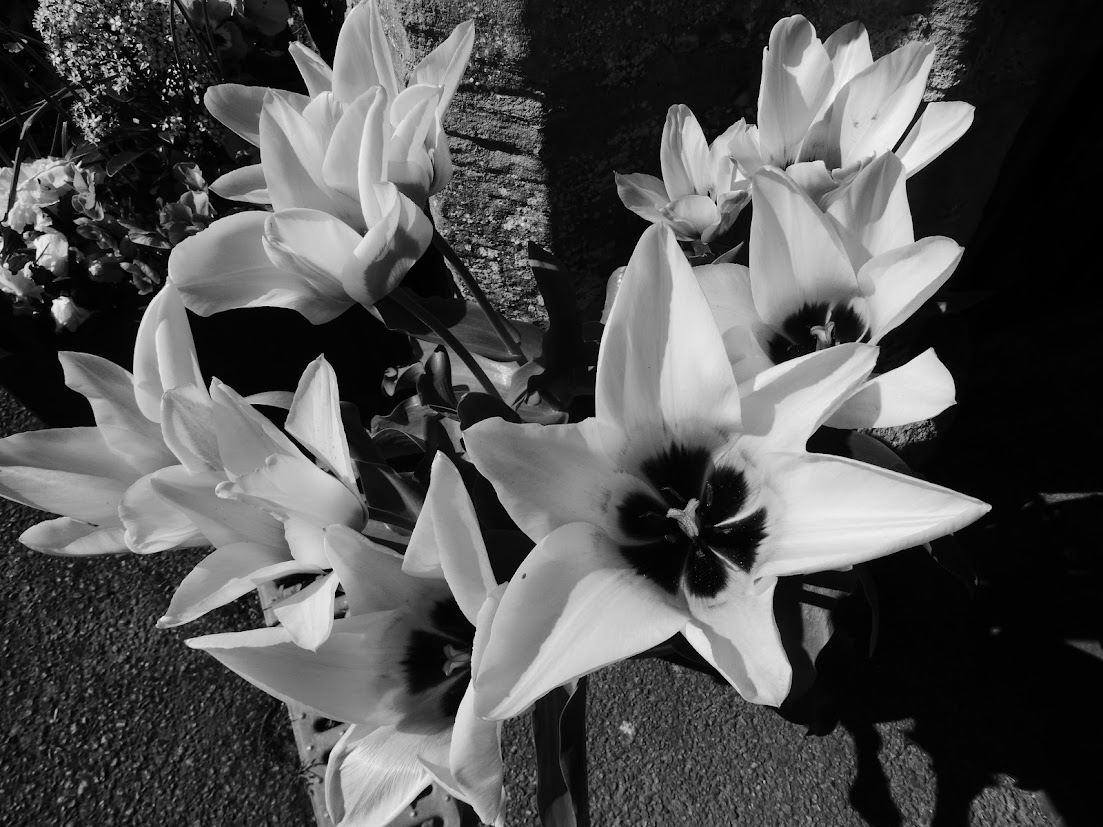
There are tulips …
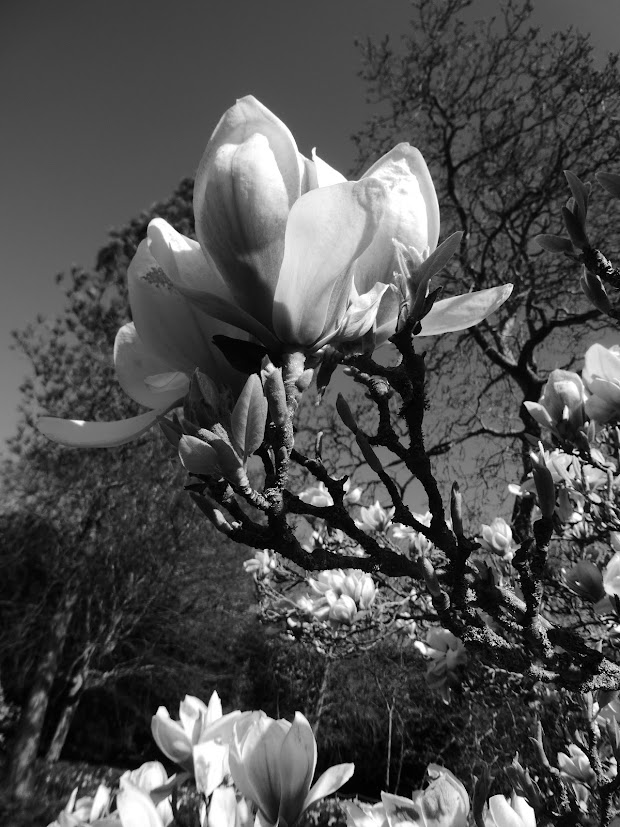
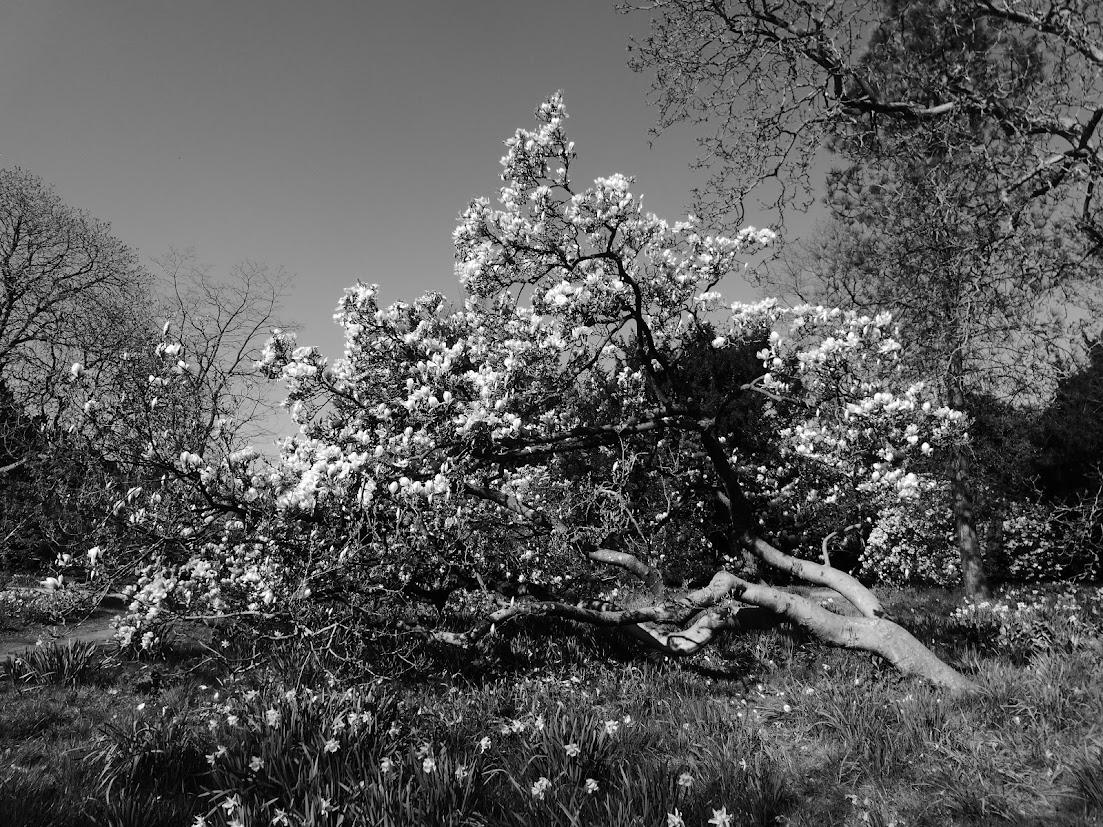
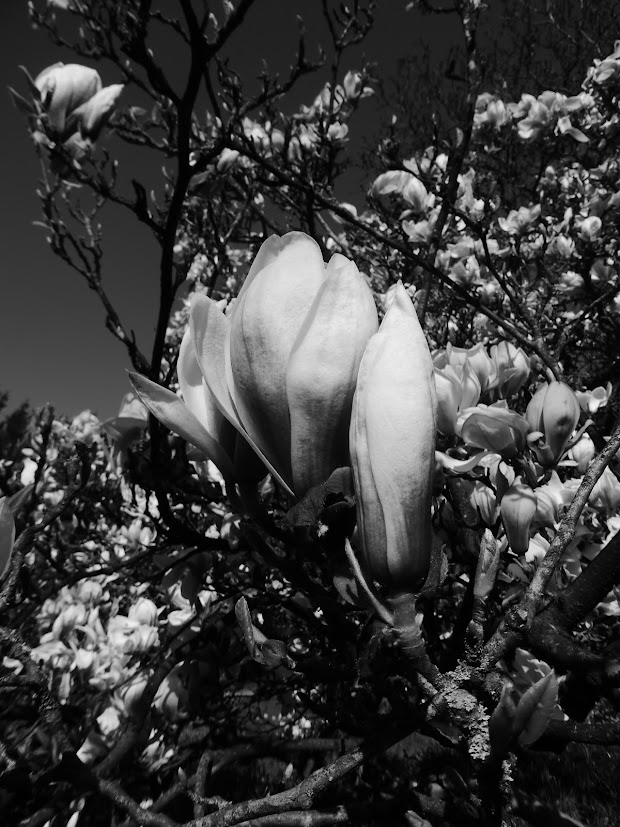
…. and magnolias …
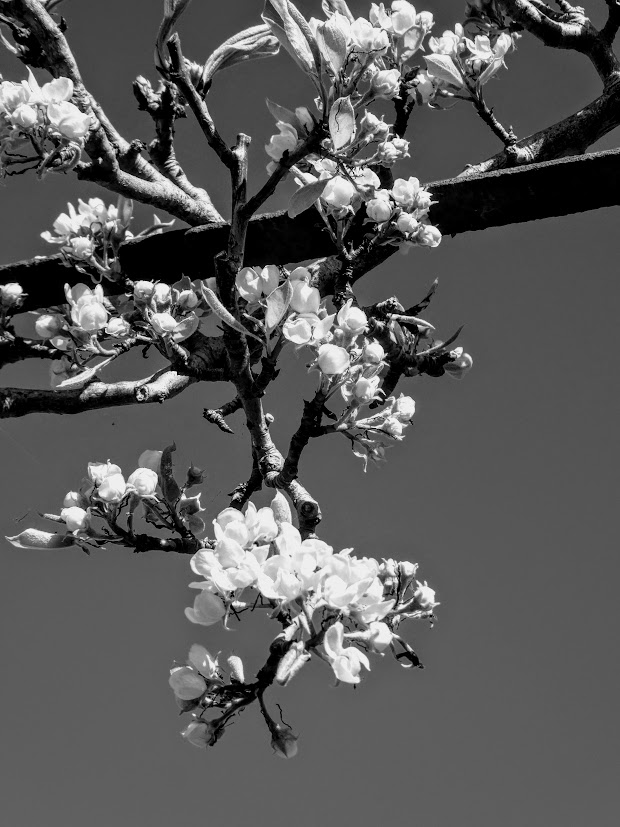
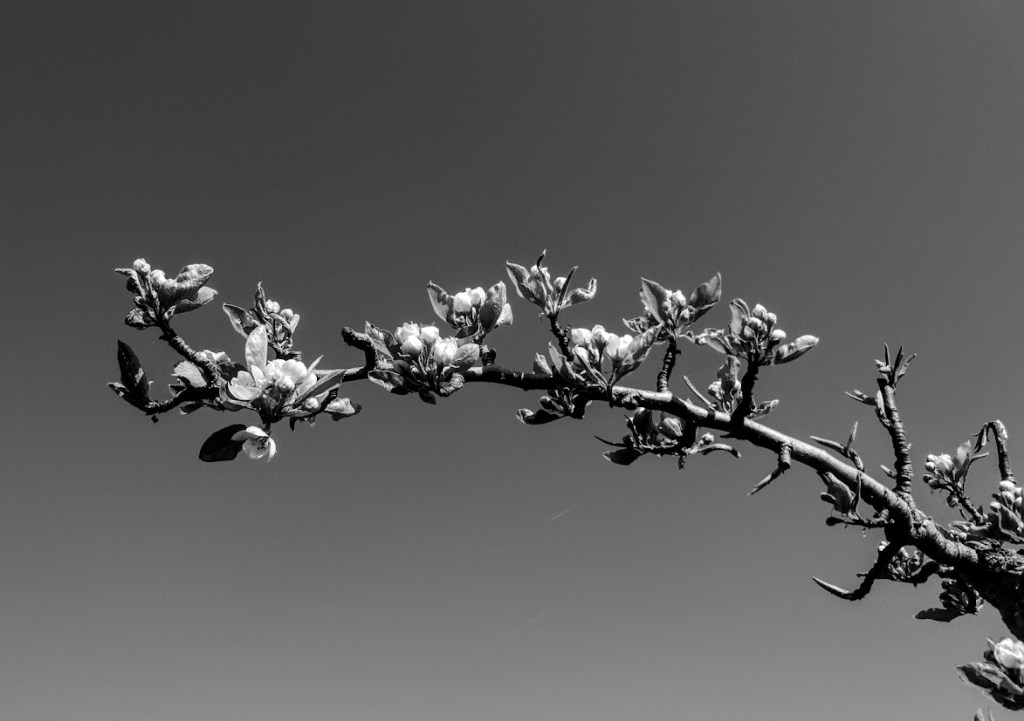
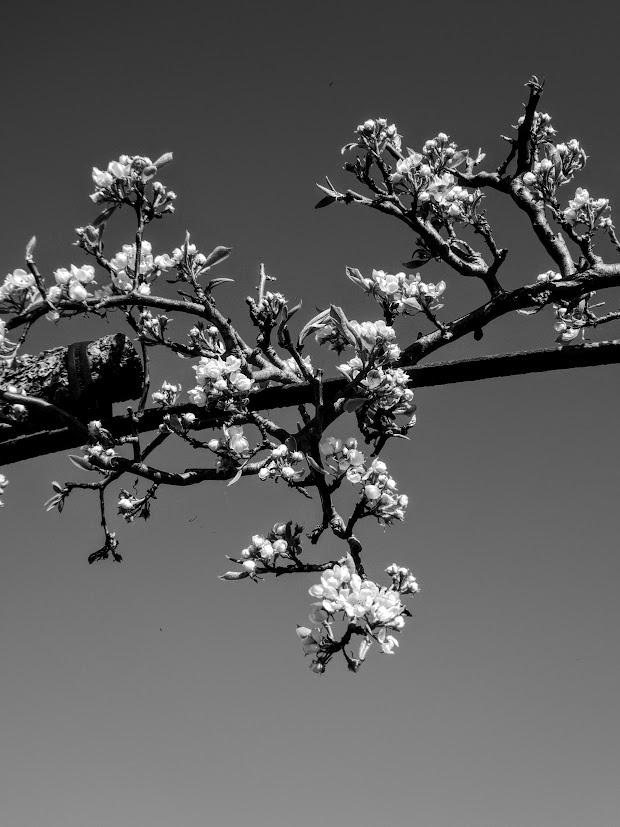
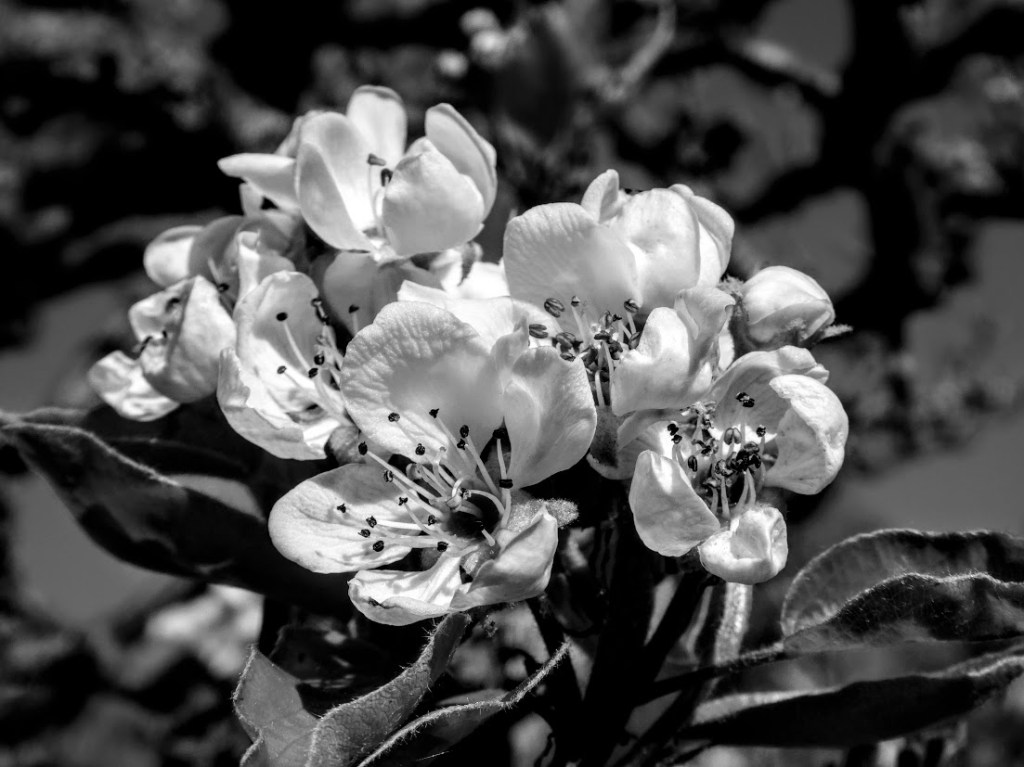
… and apple and pear blossom …
…. and so much else besides. But I’m keeping it simple today. I may take you back there another day.
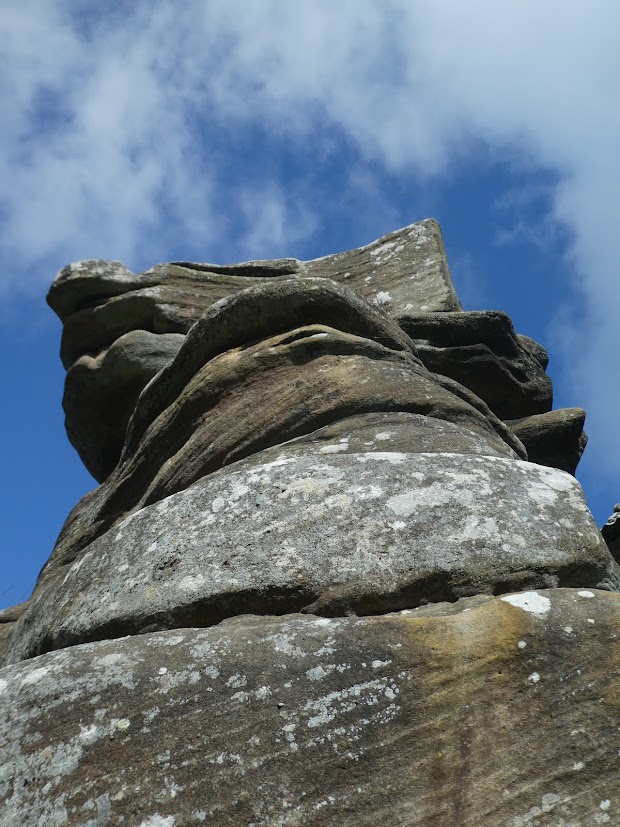
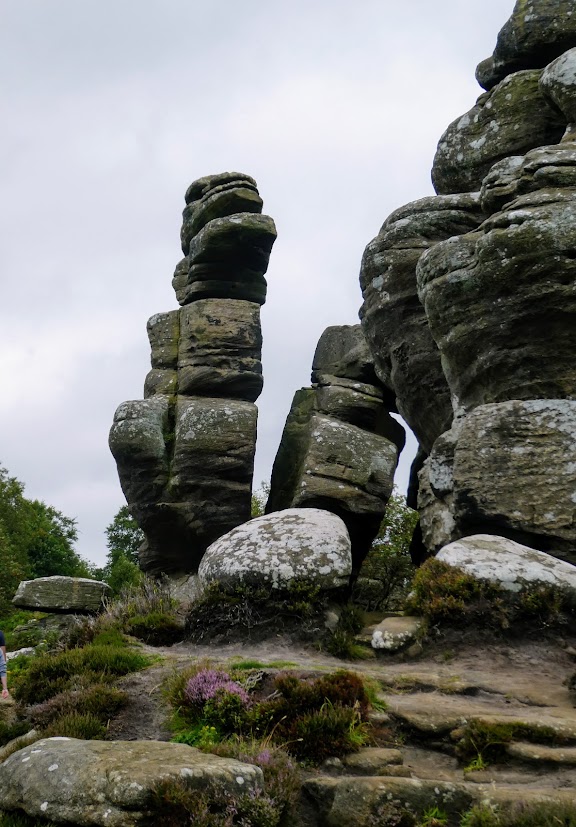
I have posted several times about Brimham Rocks – mainly about its function as a challenging and wonderful playground for the grandchildren. The other day, however, I went on my own, to explore its history.
In Victorian times, it was believed that the Druids were reponsible for carving many of the fantastical shapes dominating the landscape.
They weren’t. Blame geology instead. About 320 million years ago, this corner of the planet was dominated by an immense river, splitting into many deltas spilling over the land here, often changing course. As it travelled, it deposited layers and layers of sand and grit which over the millenia formed layers of rock we now call millstone grit. The area was eroded by water, by wind sand-blasting the rocks, by earth movements: and by the Ice Age, when – more than 10, 000 years ago – slow-moving glaciers sculpted and moved the rocks.
It’s easy to see the layers of sediment here which formed the millstone grit.
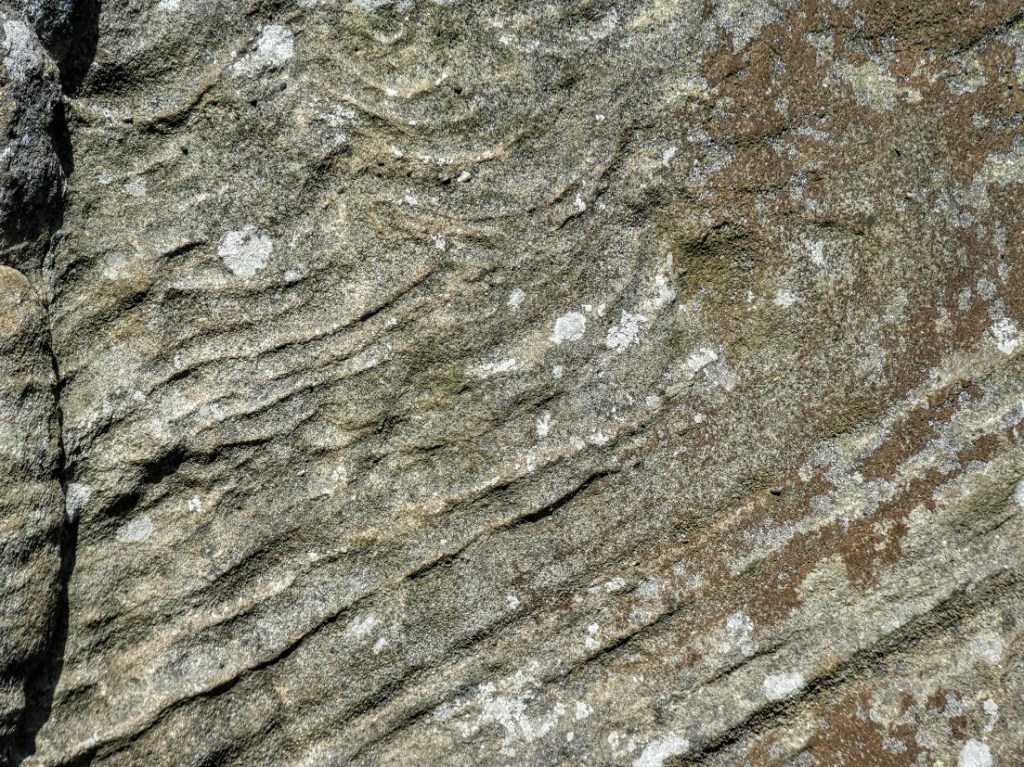
Earthquakes, millenia ago liquefied the rock, forcing boiling water upwards through the layers that had been laid down. You can see that phenomenon here.
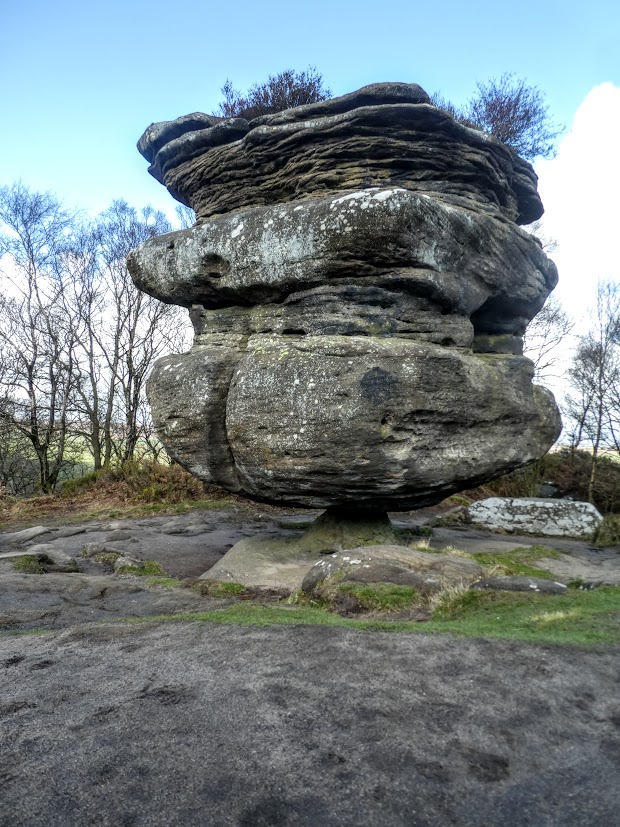
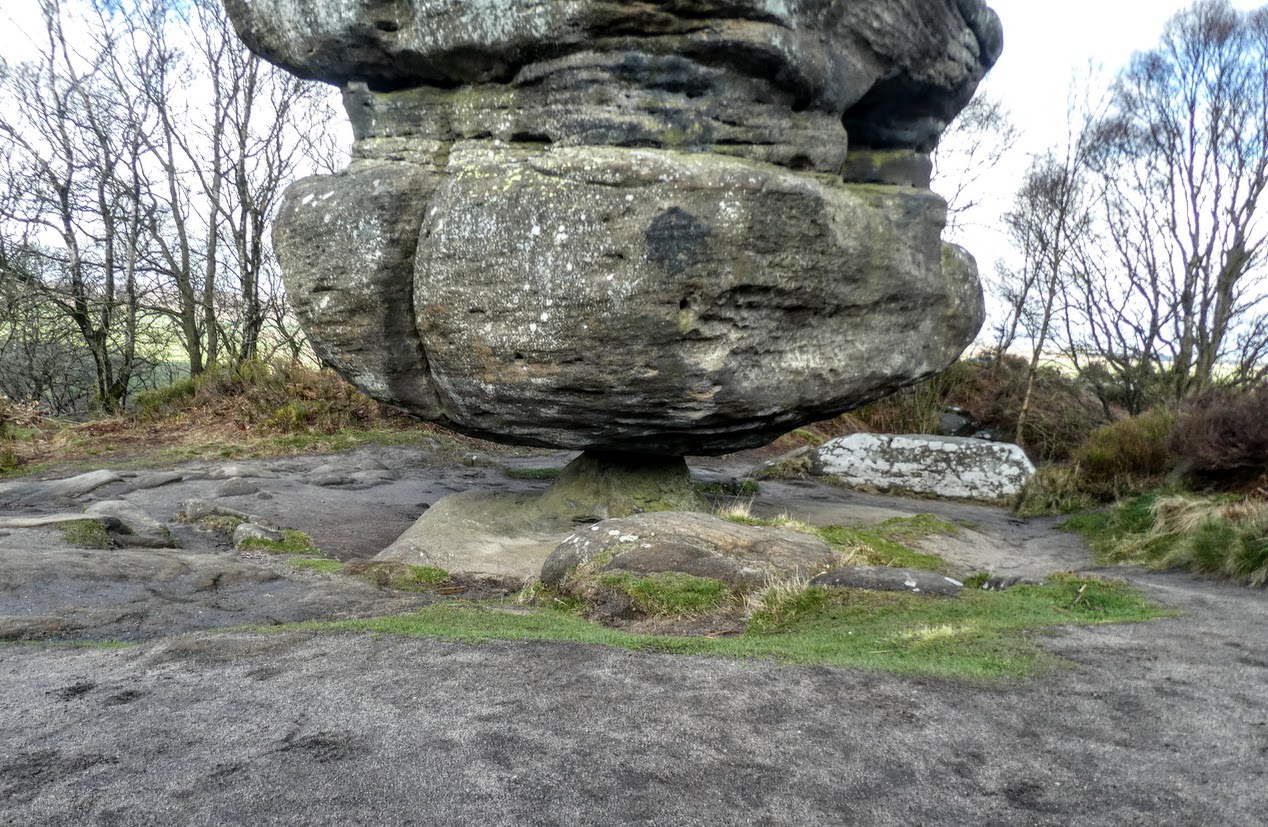
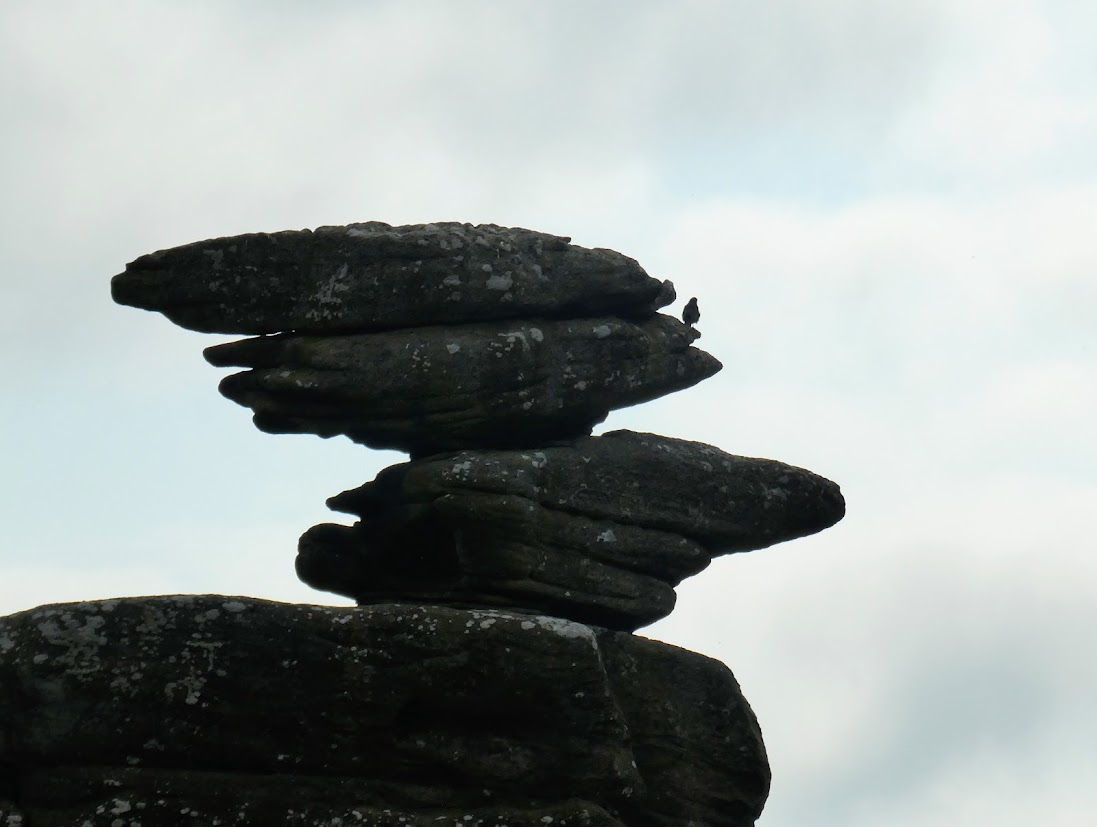
There’s one particular rock, known as The Idol (because the Druids must have carved it!) Just look:
Can you see how this inmmense rock , all 200 tons of it, is supported on the tiniest of pillars? It’s quite safe – for now.
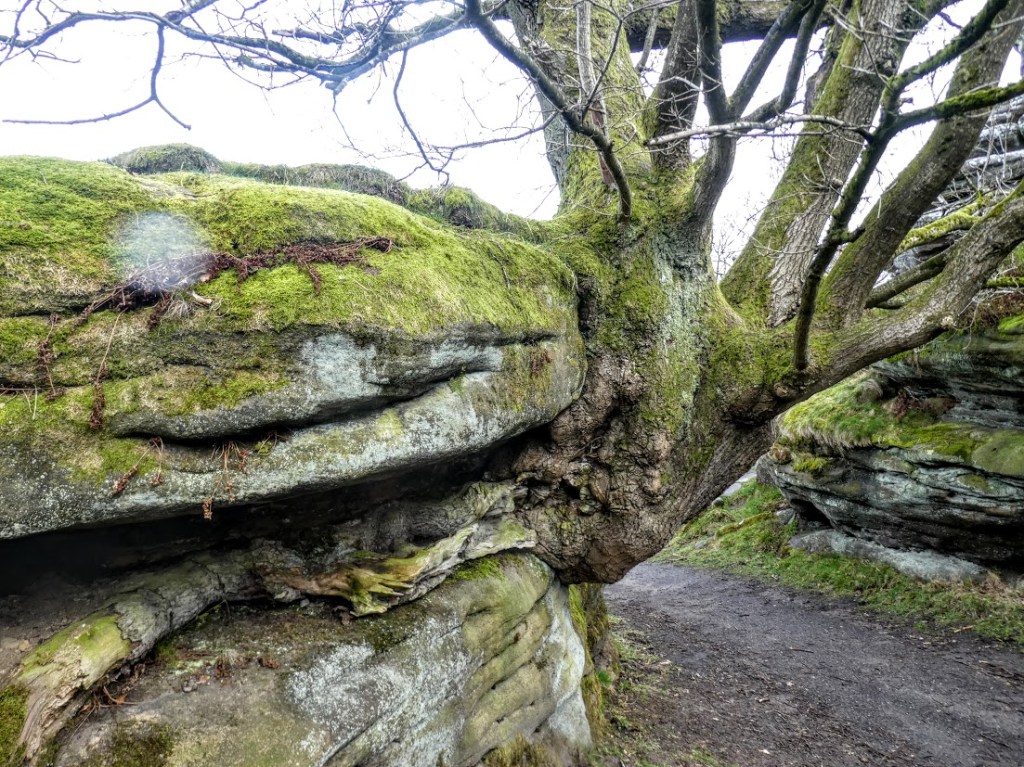
And here’s an oak tree in direct competition with another rock. It continues to grow and thrive, somehow, with a rock that declines to split any further and give it extra growing room.
All this is a rather long-winded way of saying that Brimham Rocks is the wildest place I know, and therefore a suitable candidate for Egidio’s Wild Lens-Artists Challenge
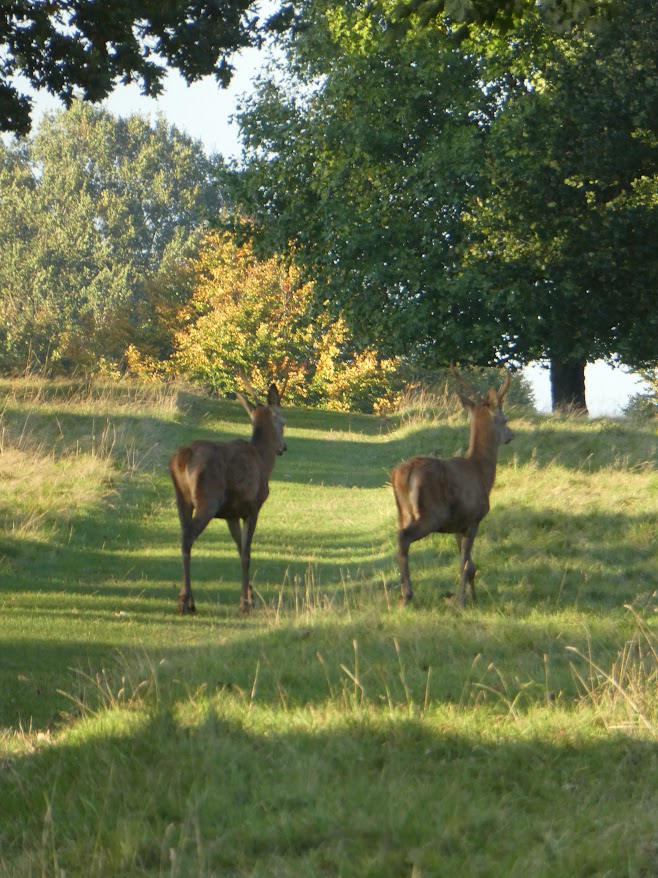
On Friday afternoon, I was back on duty in the deer park at Studley Royal. This time as a sheep dog. Two of my colleagues were leading interested members of the public on a walk round Studley Royal at a time of day when deer tend to be more active. I was there to make sure nobody got left behind: and to enjoy this particularly lovely autumn afternoon.
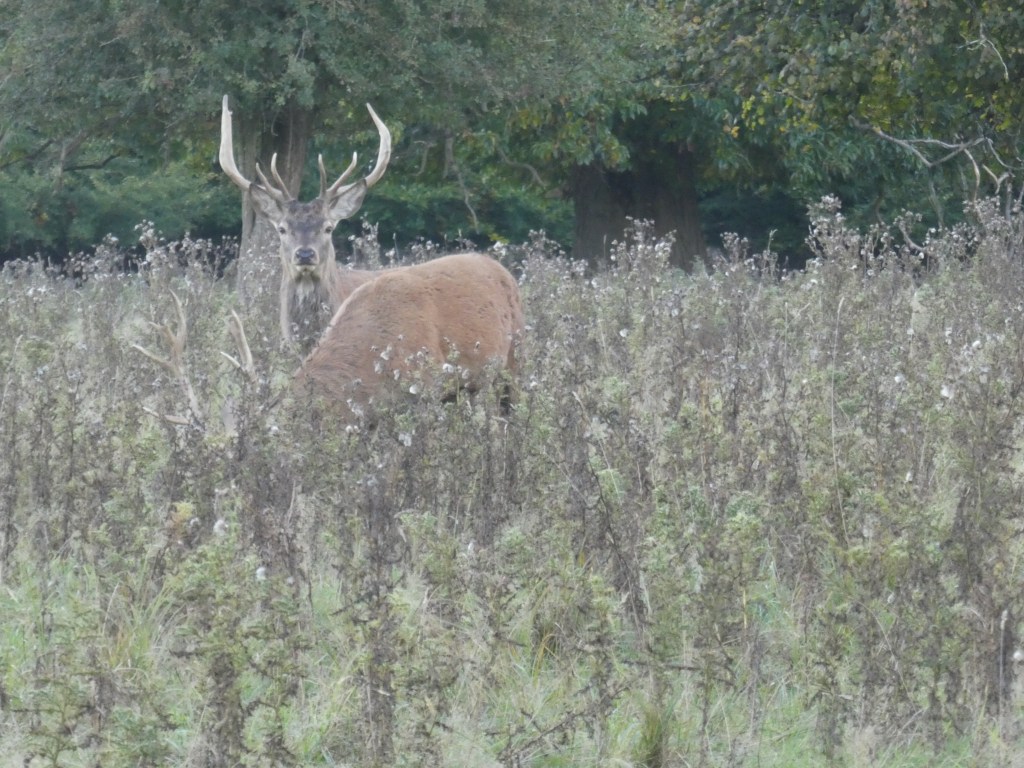
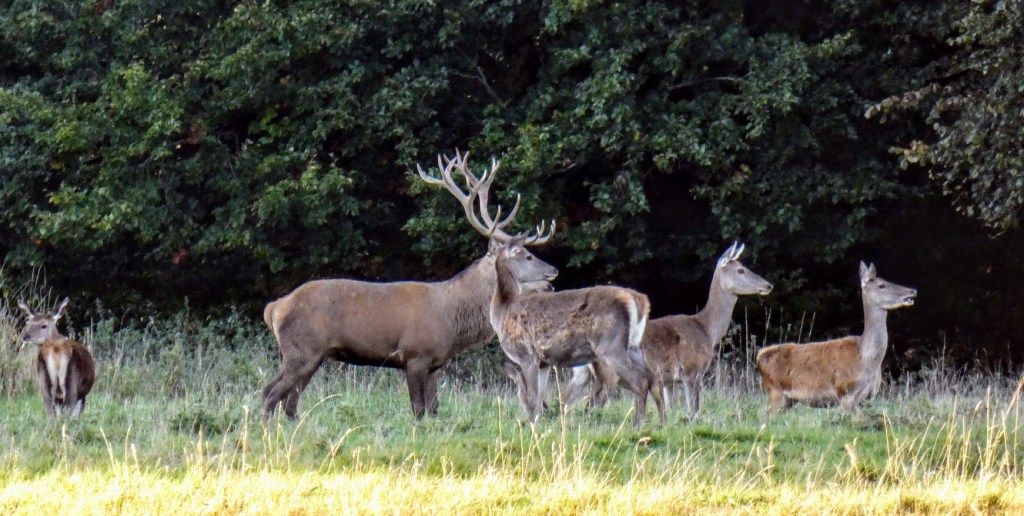
Red deer are rutting. The stags are collecting themselves a harem so they can breed the next generation. They roar loudly to attract females, and to deter other males from seducing ‘their’ does. If necessary they’ll fight – noisily – with those heavy antlers. We saw harems, which included a few males who, though they had antlers, were too young and inexperienced to have a hope of breeding ths year. It’s a hard life being Top Stag.
Top Stag has a rest.
We saw a stag chasing females on whom it had Breeding Ideas. Mainly, they lost the race, but a couple of does succumbed – briefly and reluctantly – to being impregnated. The act is so brief – no pictures. Anyway, who wants to be a voyeur?
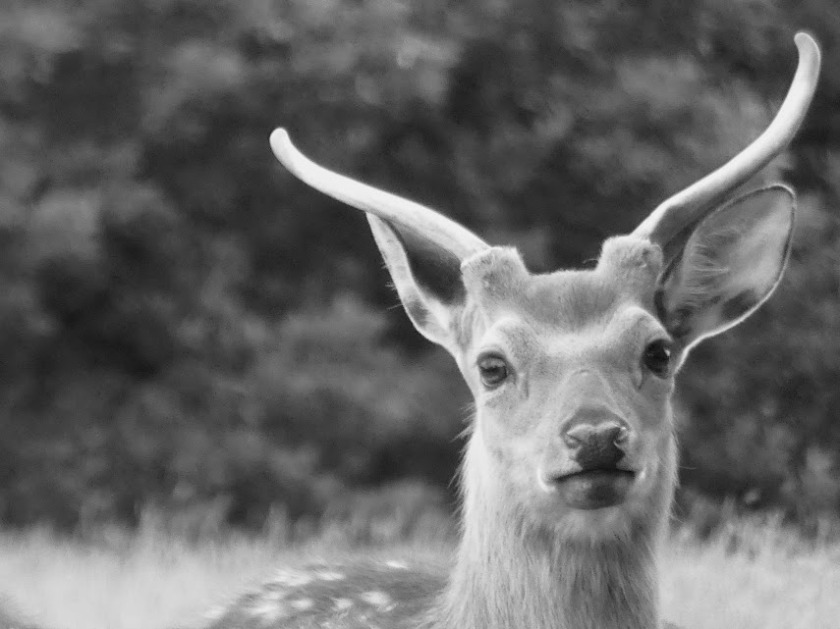
Sika deer, originally from China, are not even thinking about the rut yet. They’re handsome creatures, with simpler antlers than the red deer. We spotted them in smallish groups, but here are a couple of stags.
Sika stags grazing
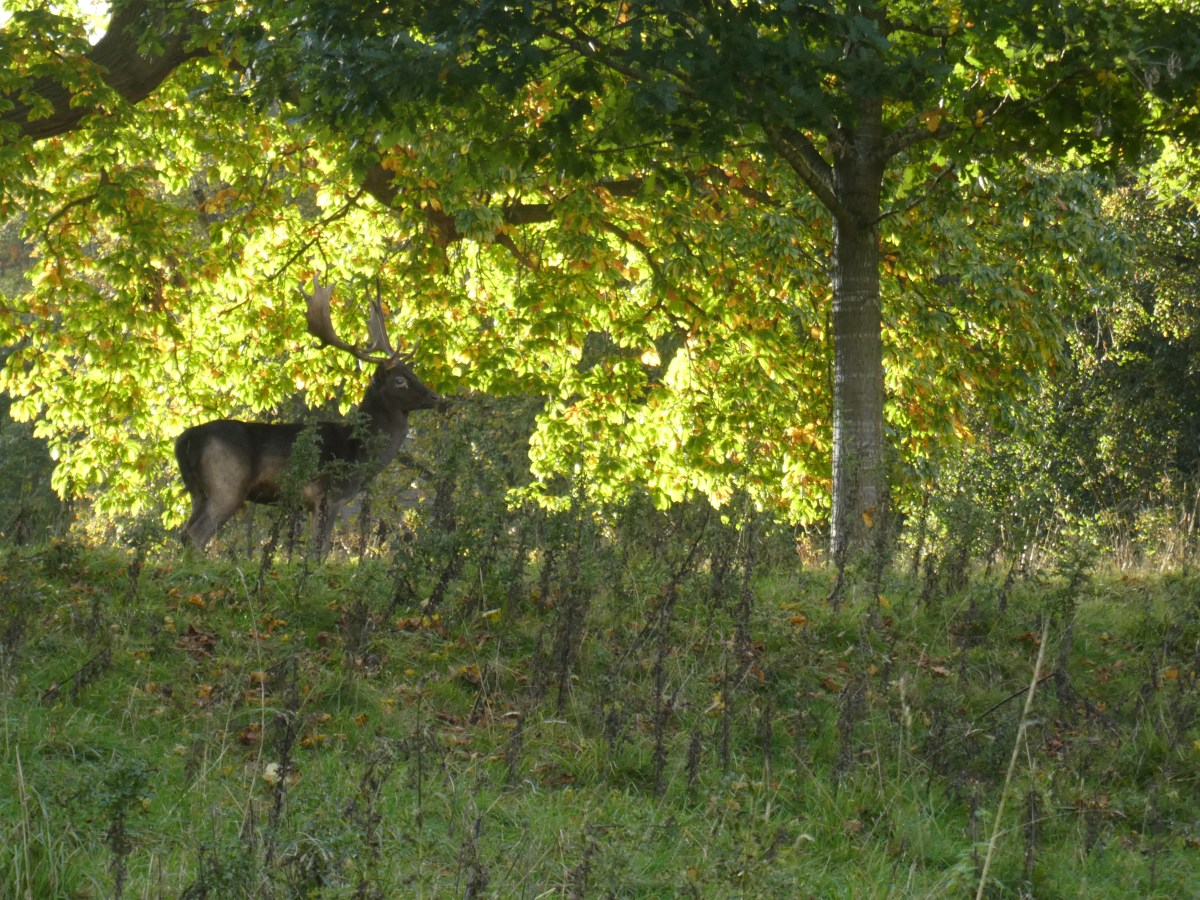
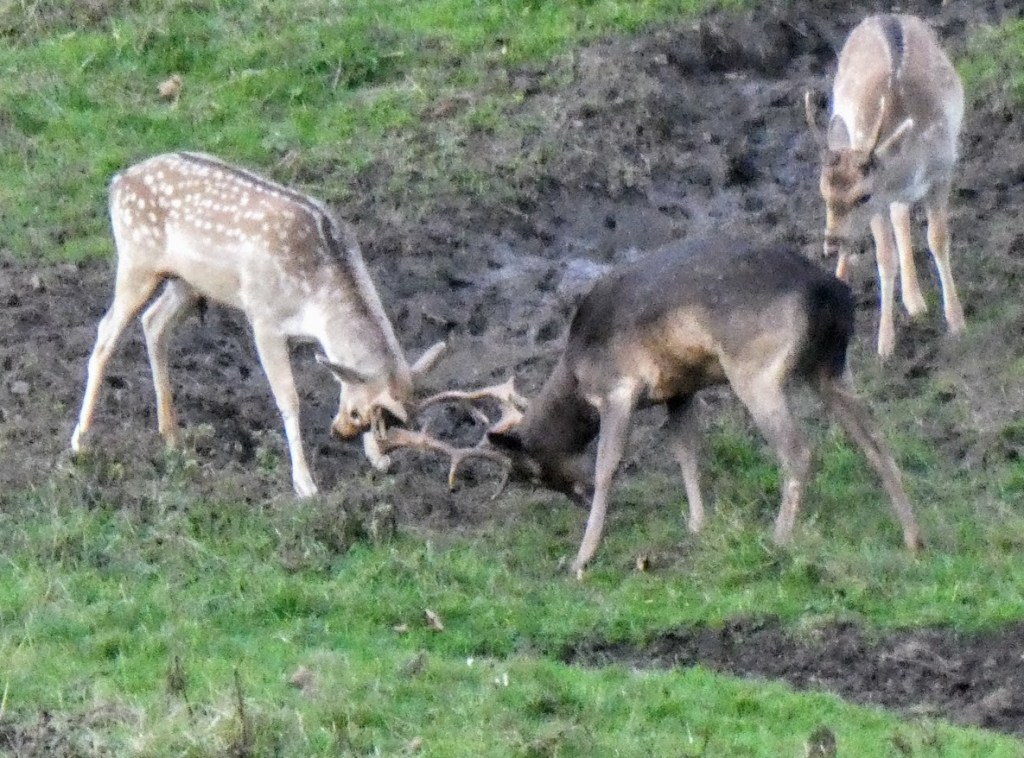
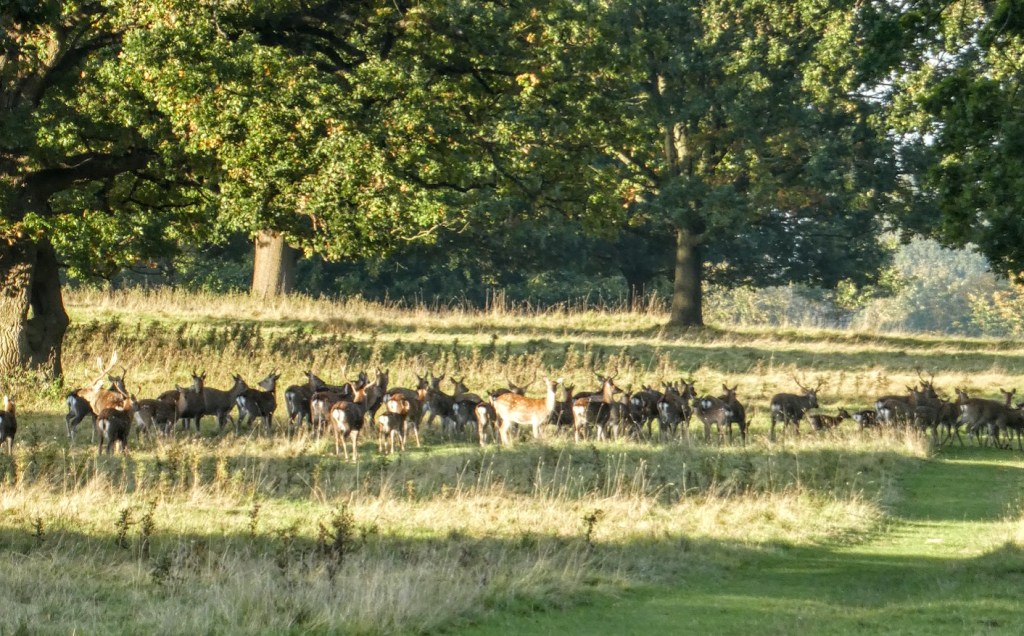
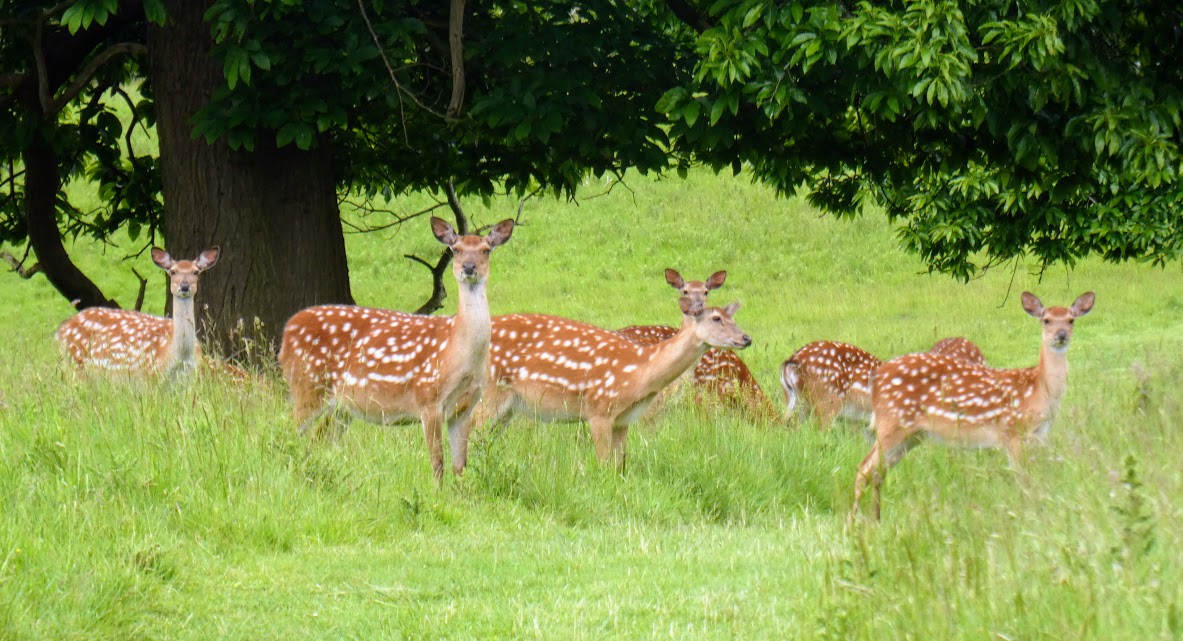
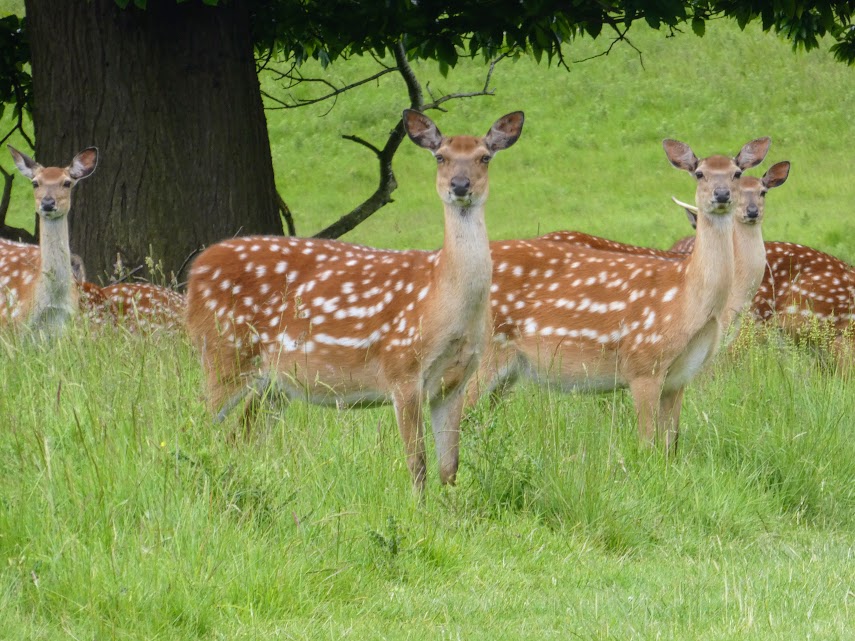
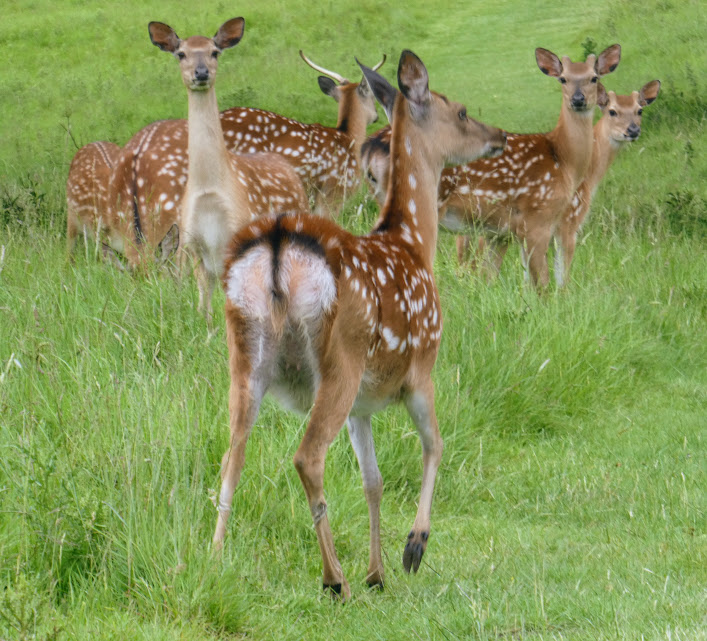
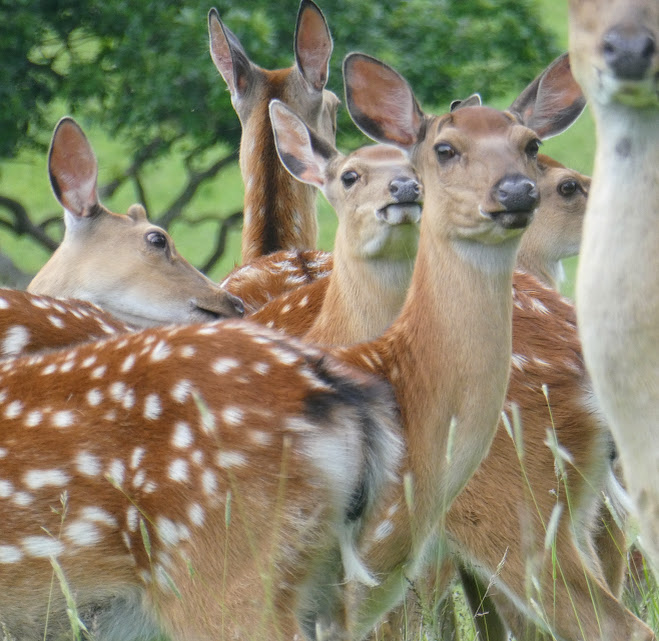
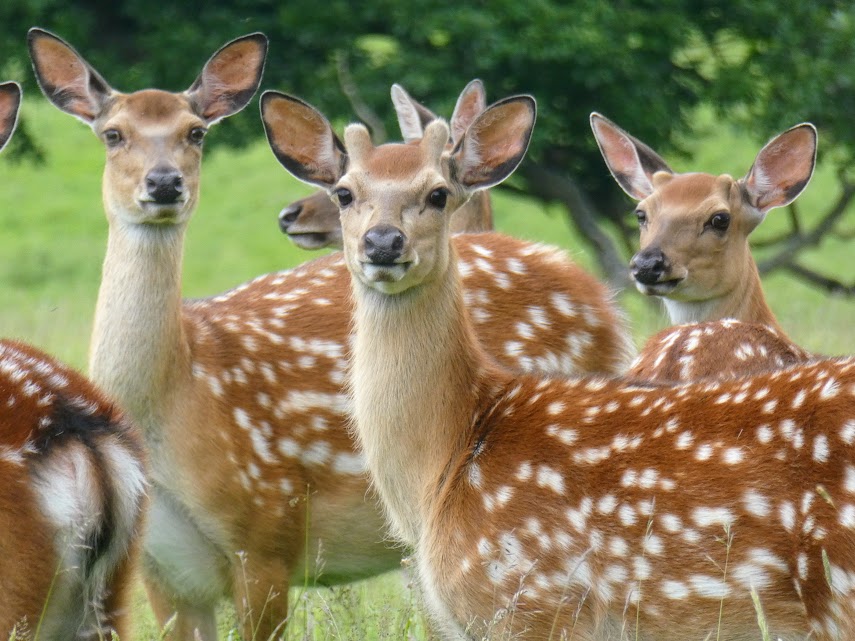
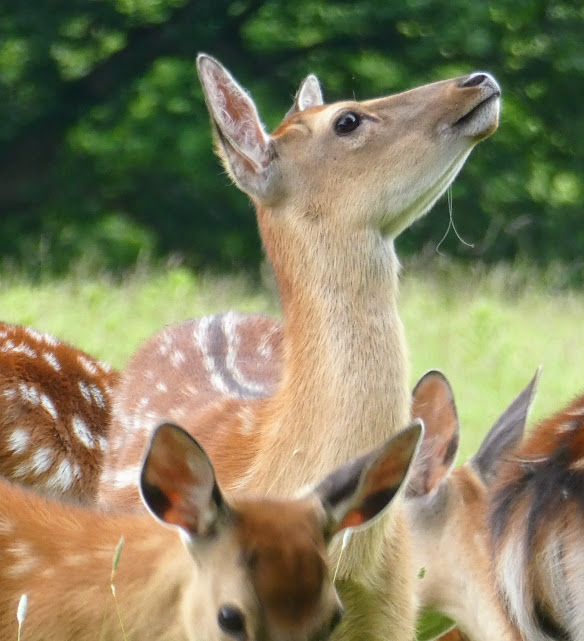
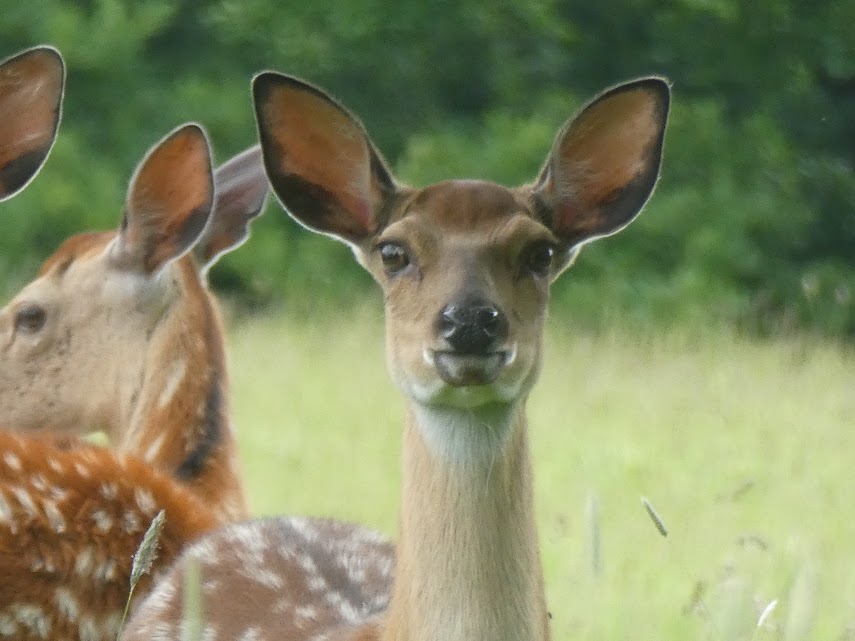
Fallow deer – living on this site since the 1600s -are only just beginning to think about the rutting season. We saw two young bucks practising: heads down, their antlers clacked and clattered noisily together. No harm done. They’ve no chace of a harem this year.
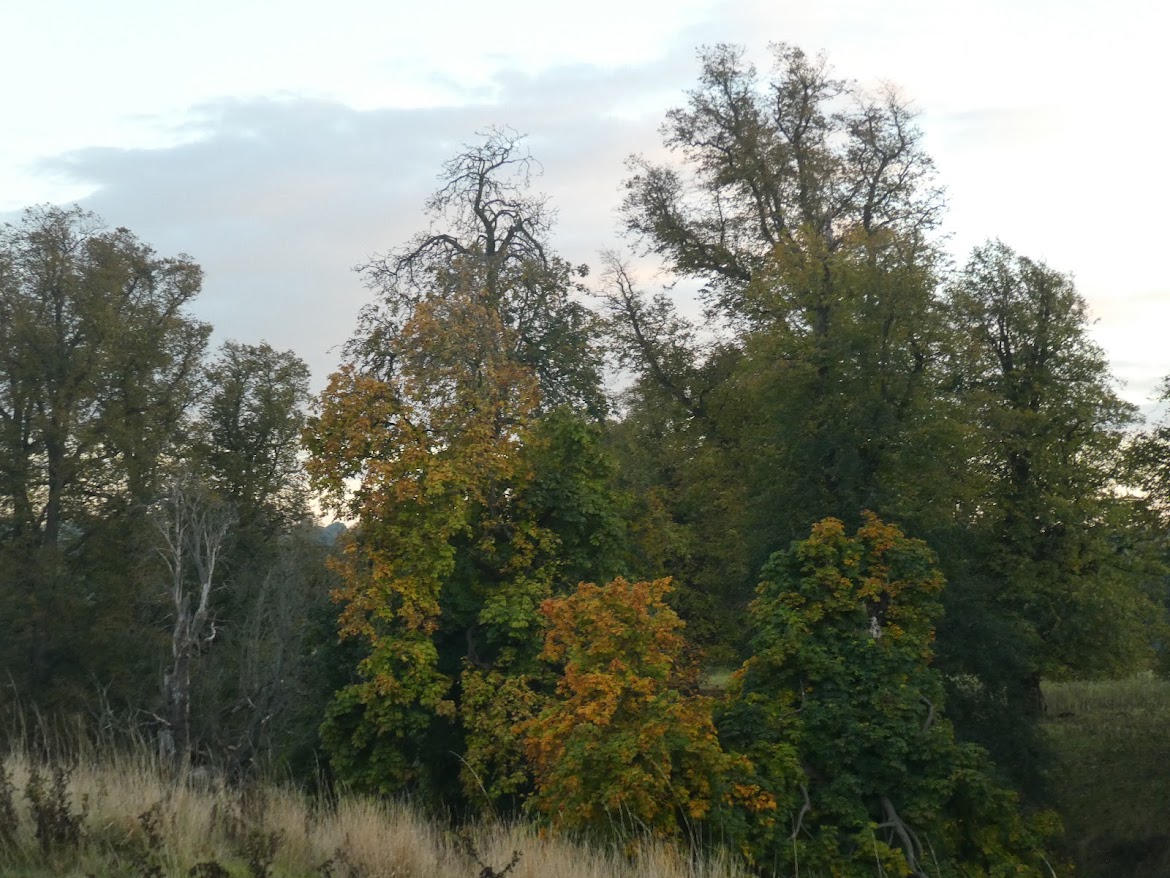
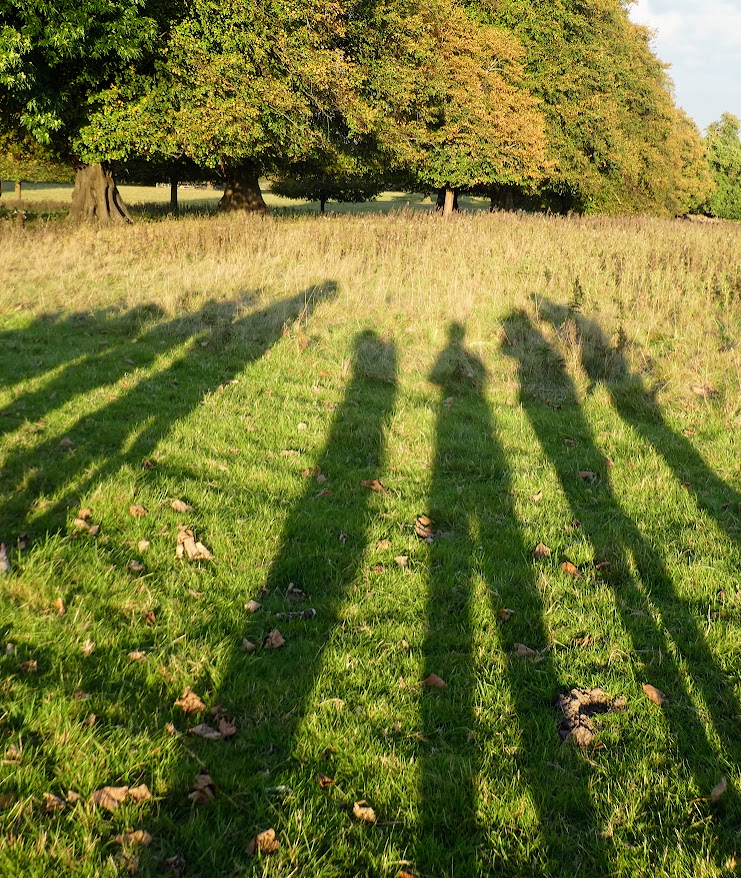
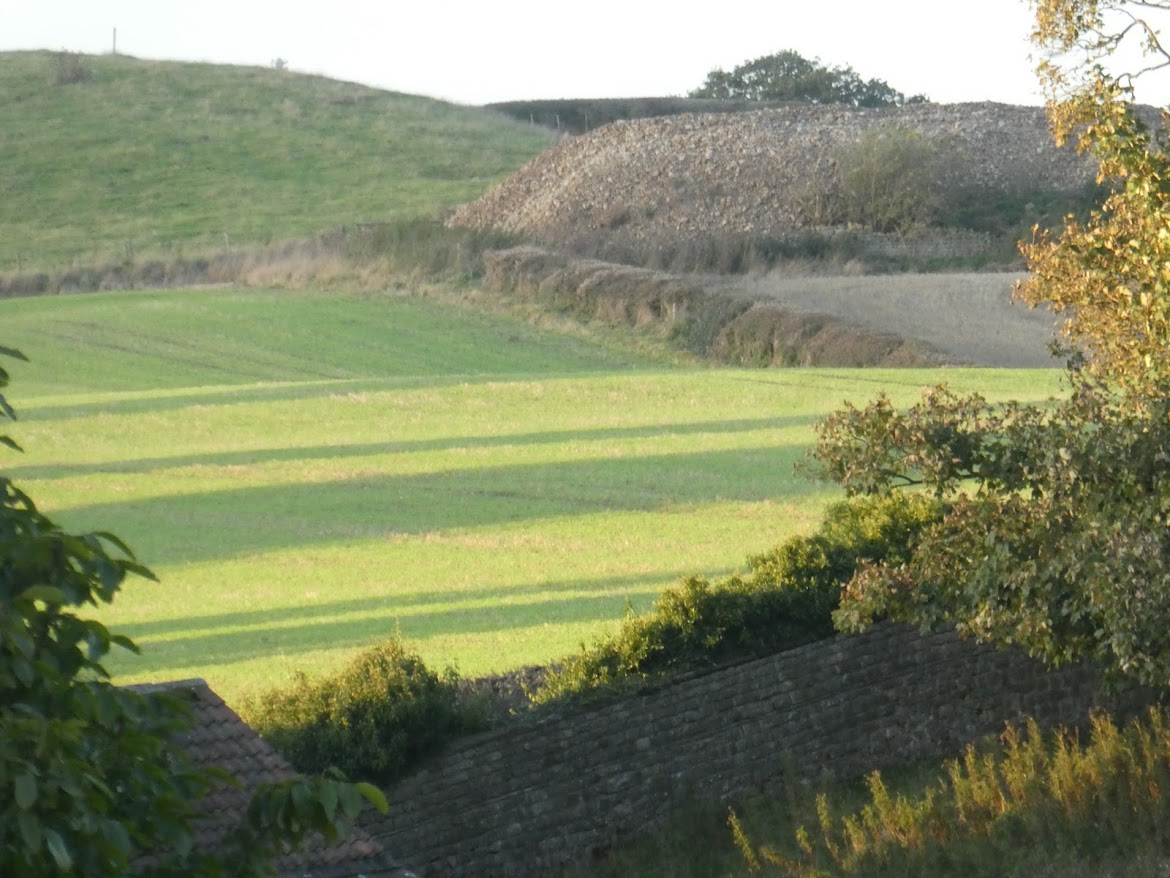
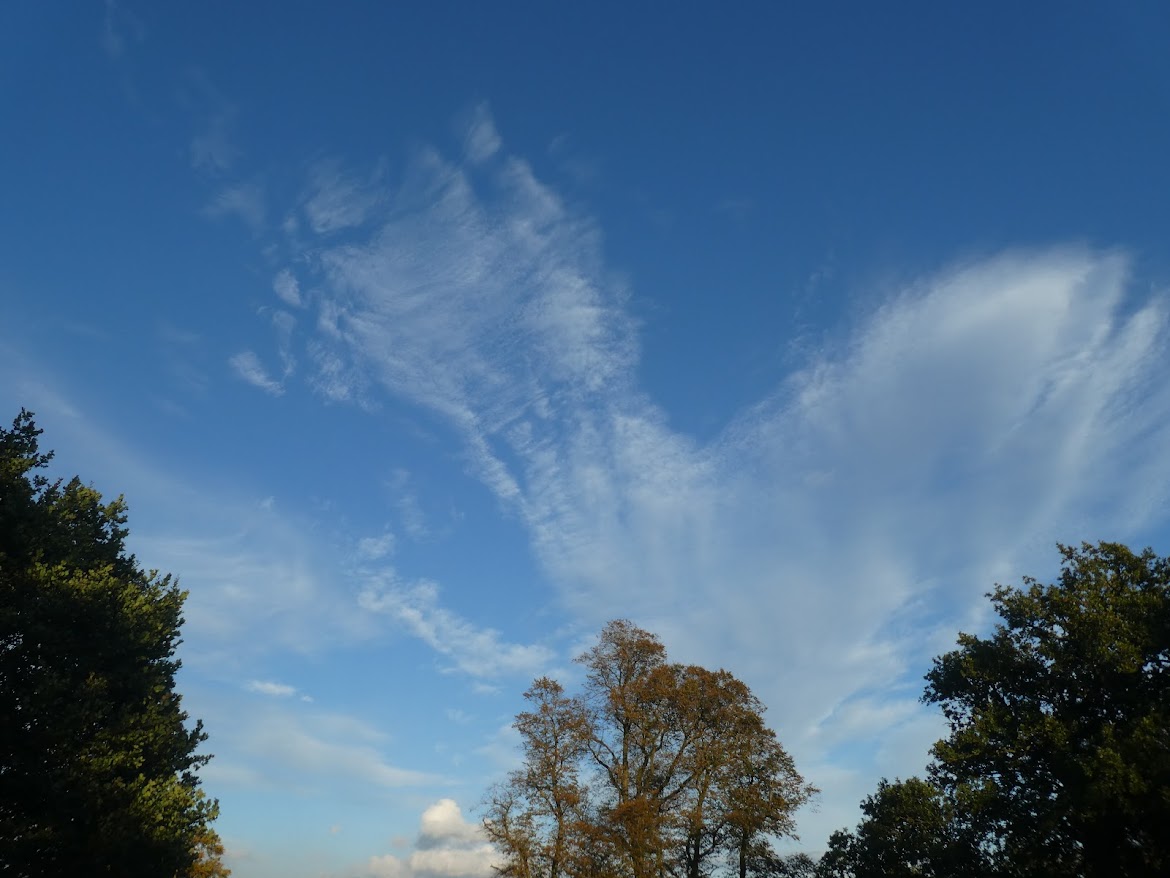
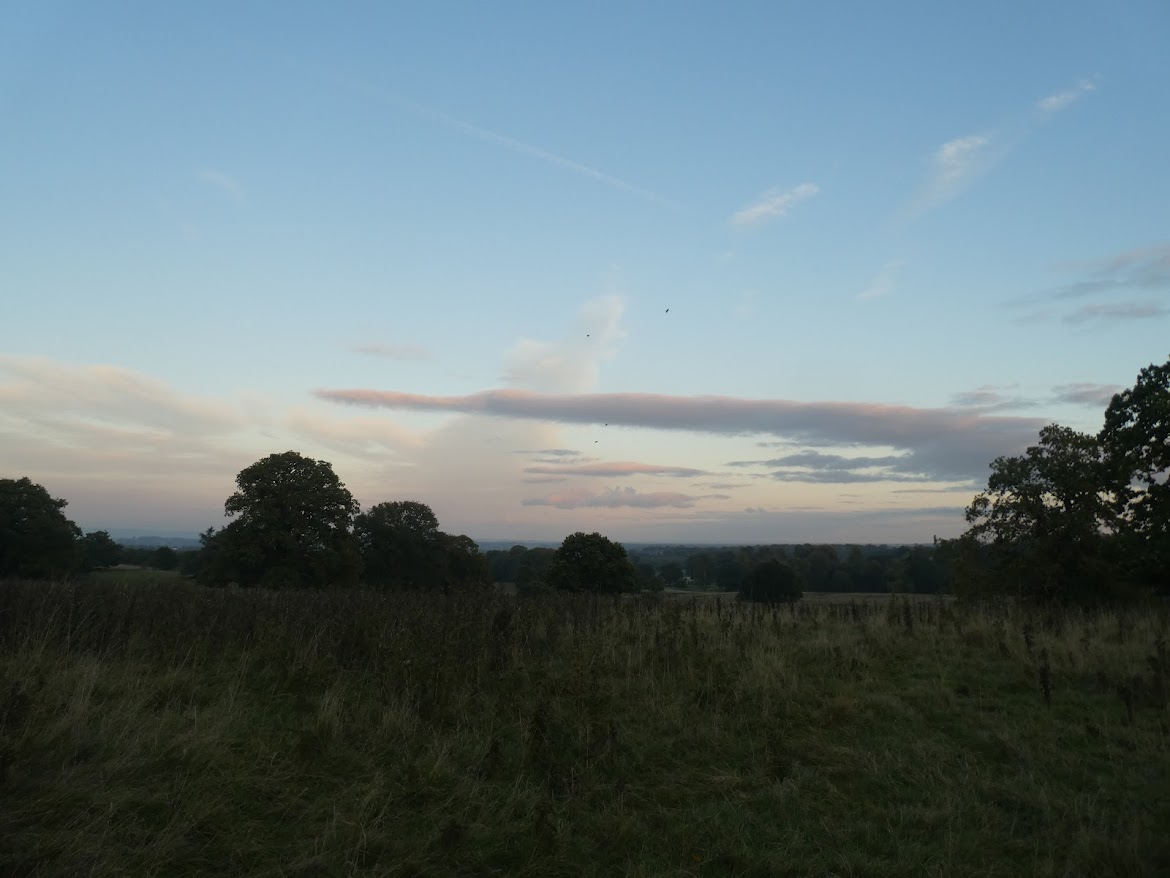
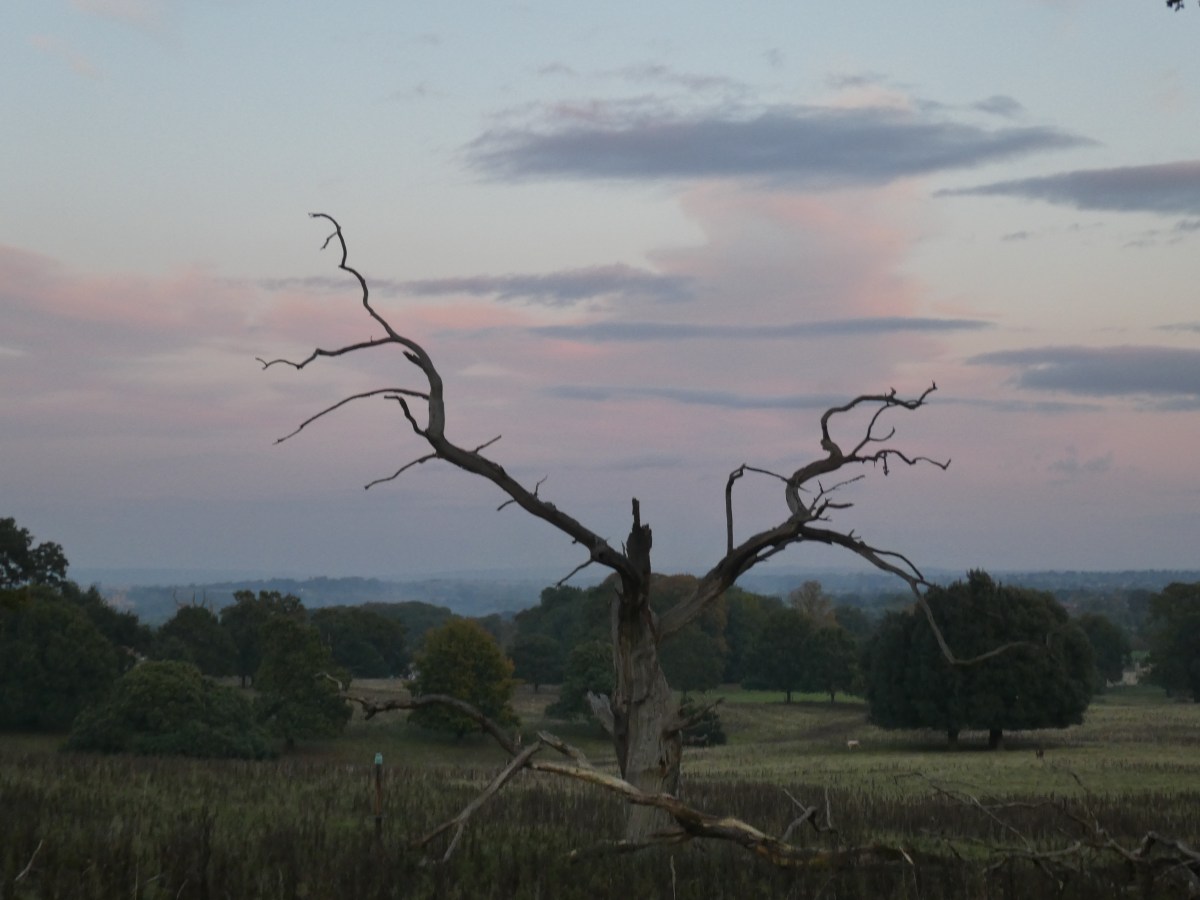
But our walk was’t just about the deer. We enjoyed the trees, just now decking themselves in autumn finery. We relished the afternoon shadows, striping the fields: and enjoyed seeing long-legged versions of ouselves as we deer-stalked. And sky too, streaked with evening colours as the sun began to set.
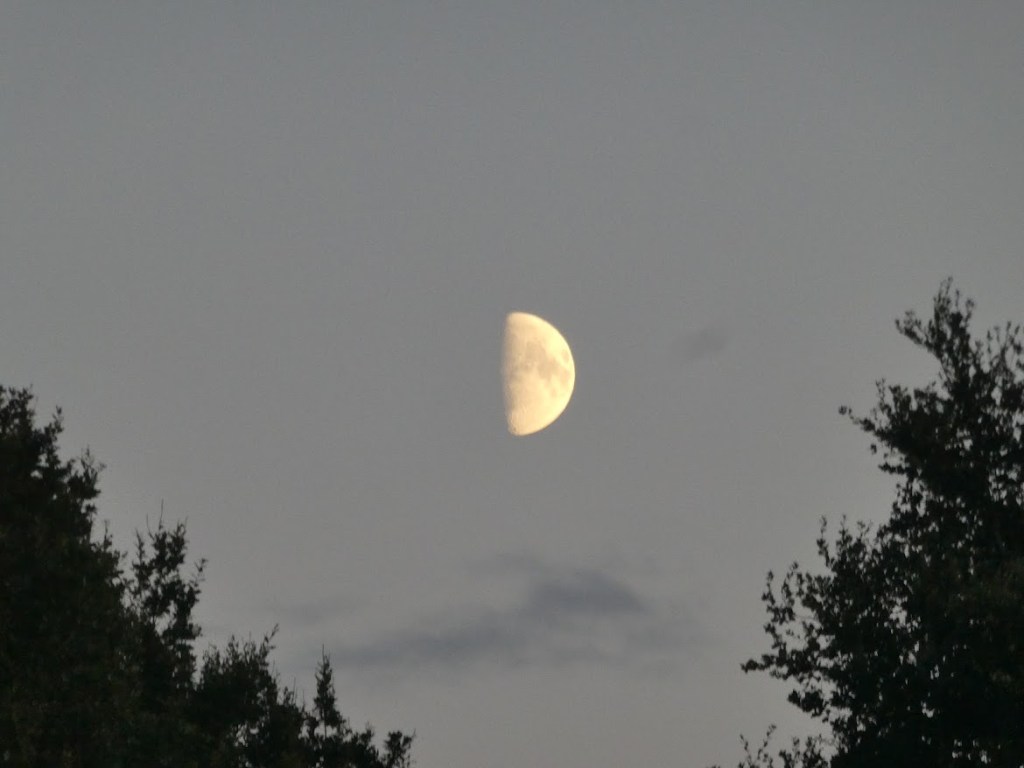
As we finished our walk, and dusk was indeed beginning to fall, the moon was rising between the trees. A fitting finish.
A few last images. The quality isn’t great, because my camera was on Zoom on a high setting. But they record memories of a happy autumn afternoon.
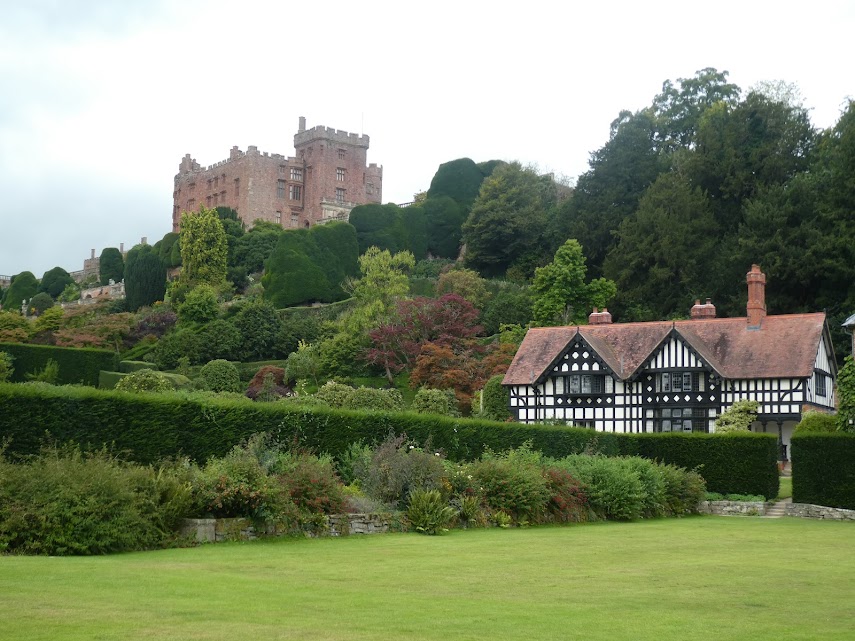
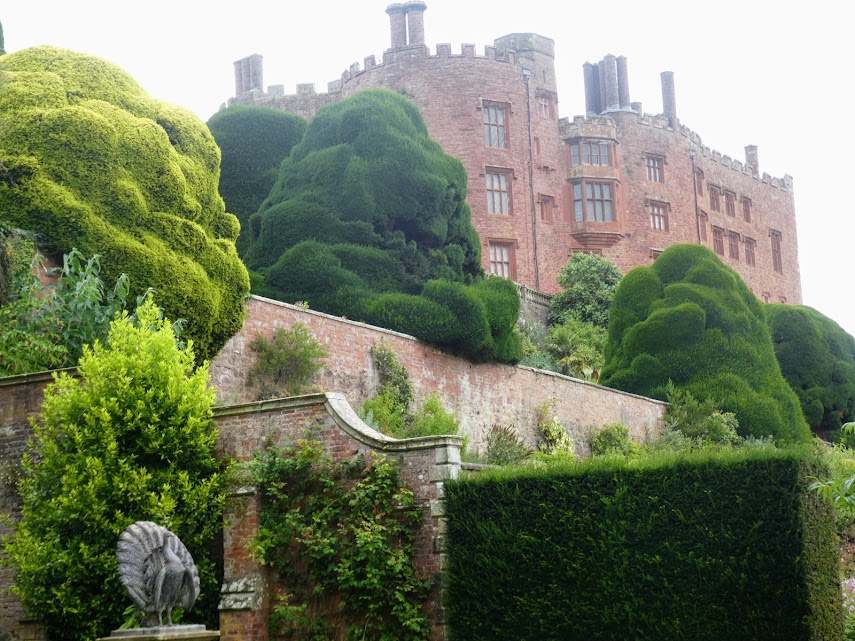
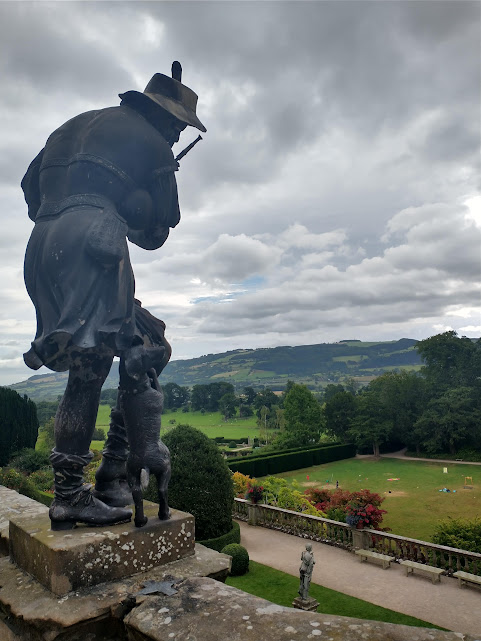
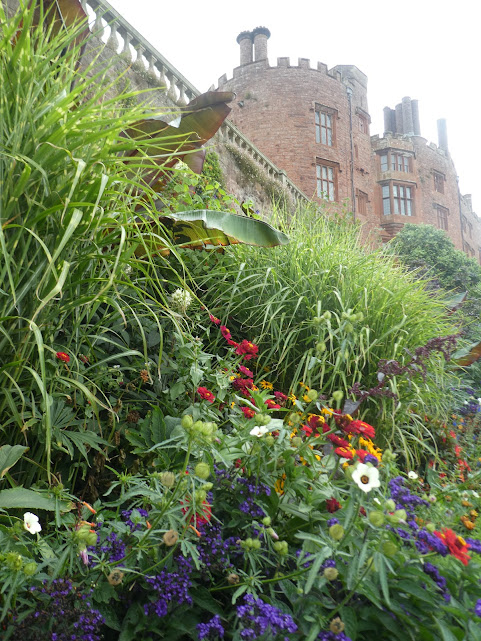
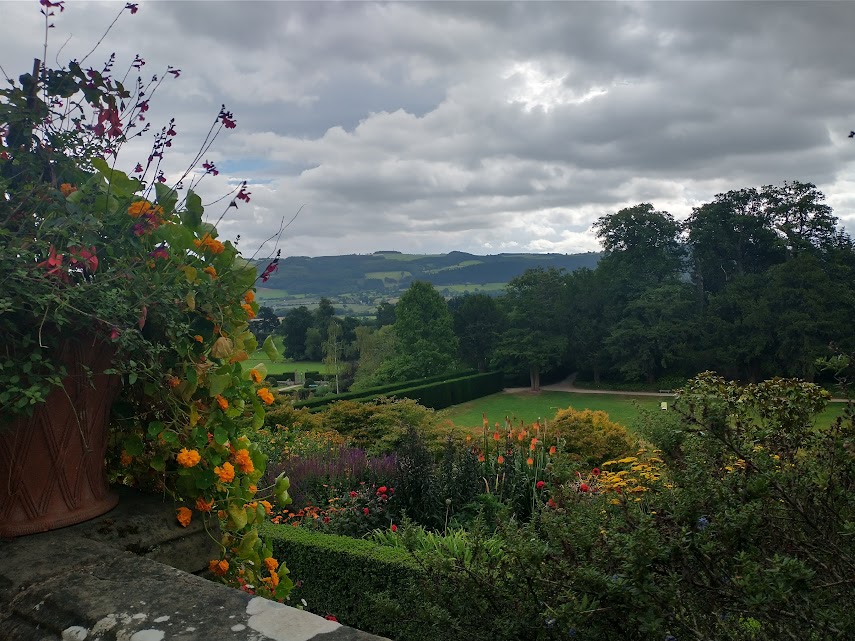
One of our last days in Shropshire saw us pop into Wales, to Powis Castle and its gardens. The castle itself was built largely in the mid thirteenth century, and modified, restyled and redecorated many times since until as recently as the 1950s. Photography was not allowed, but as we found it a somewhat gloomy place, we were happy to focus on the gardens.
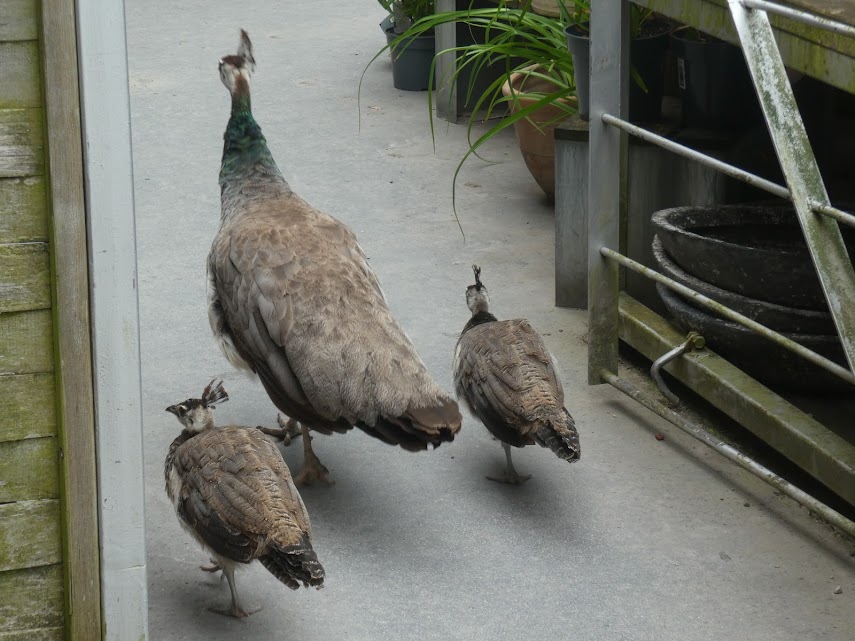
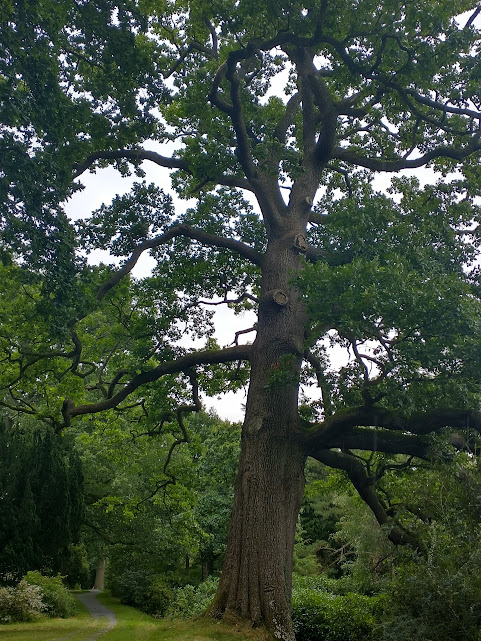
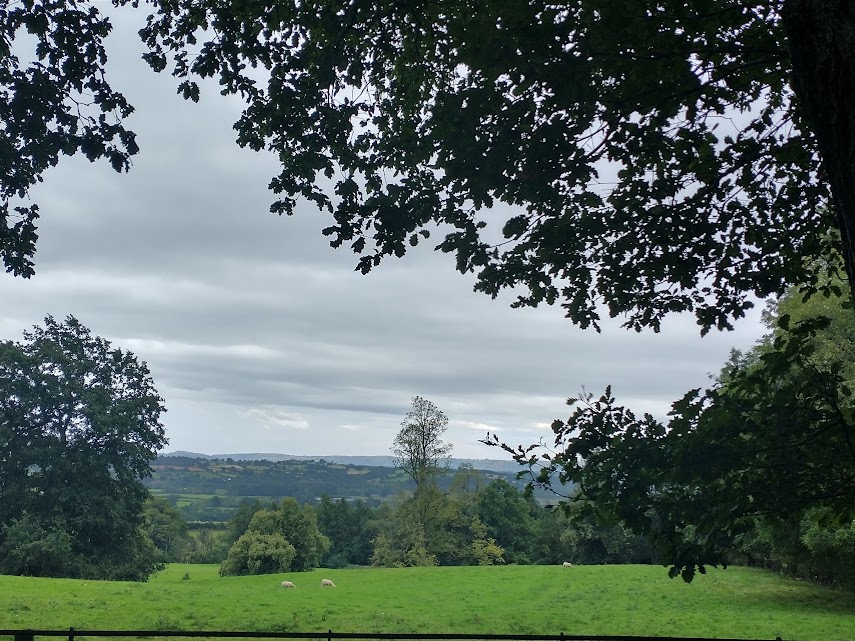
These are magnificently planted steep terraces, largely in the 17th century Italian style. There are large, rather formidable yew hedges. There is statuary. You’ll find a formal Edwardian garden with century-old apple trees, a walled garden, and beyond, carefully managed woodland inviting visitors to enjoy a gentle stroll while peeping through the trees at the landscape in one direction, the castle and gardens in the other. And peacocks and peahens, with their youngsters in tow. Here’s a small collection of postcards.
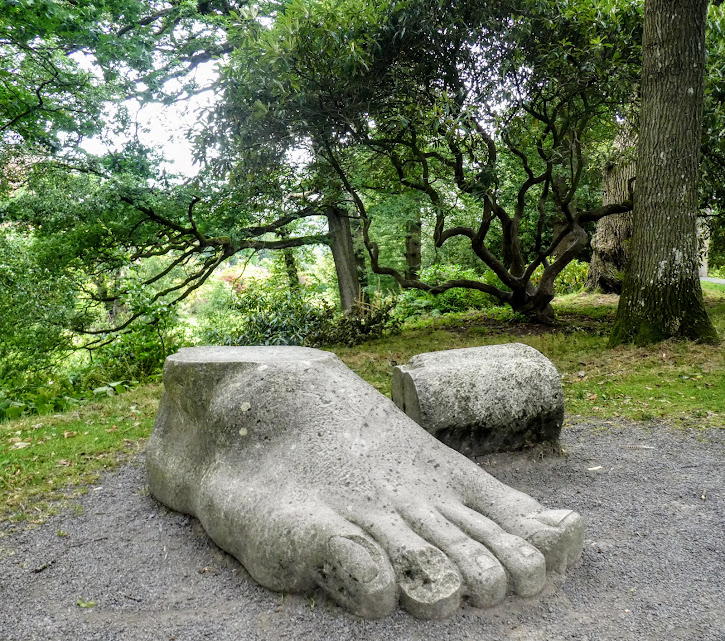
Don’t ask me about that giant foot, found in the woods. Haven’t a clue, and nobody would help me out.
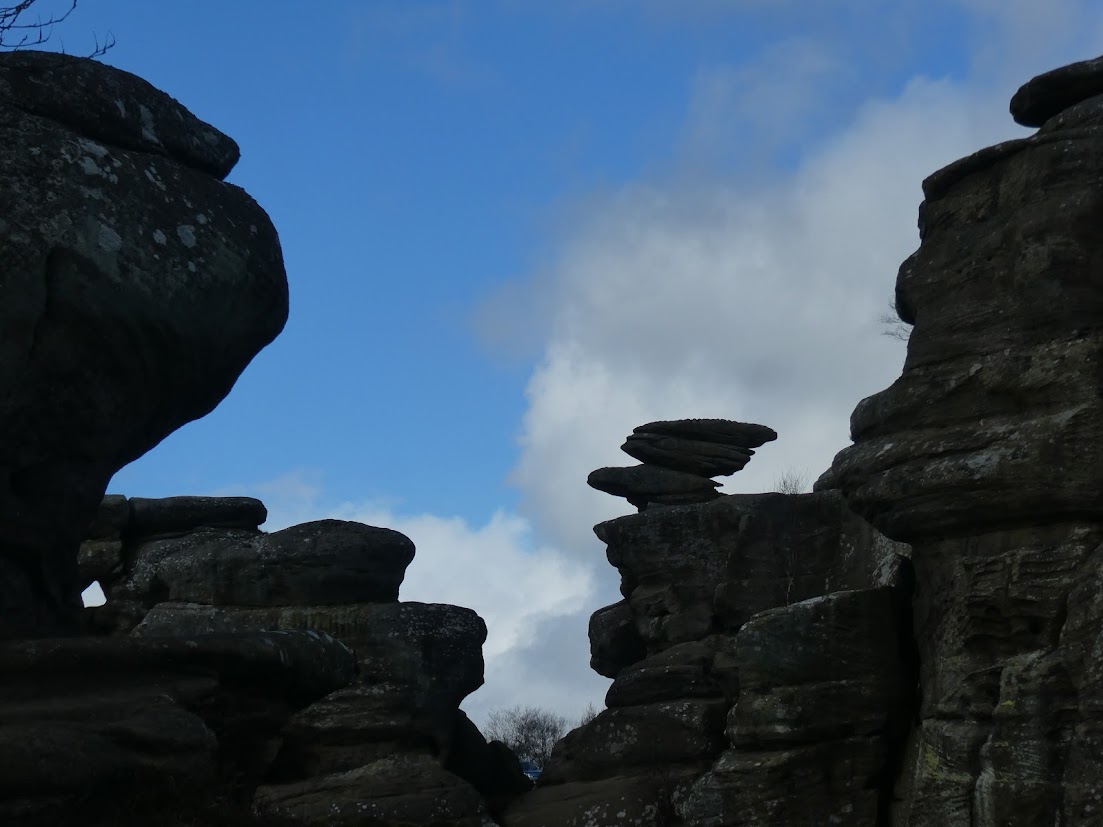
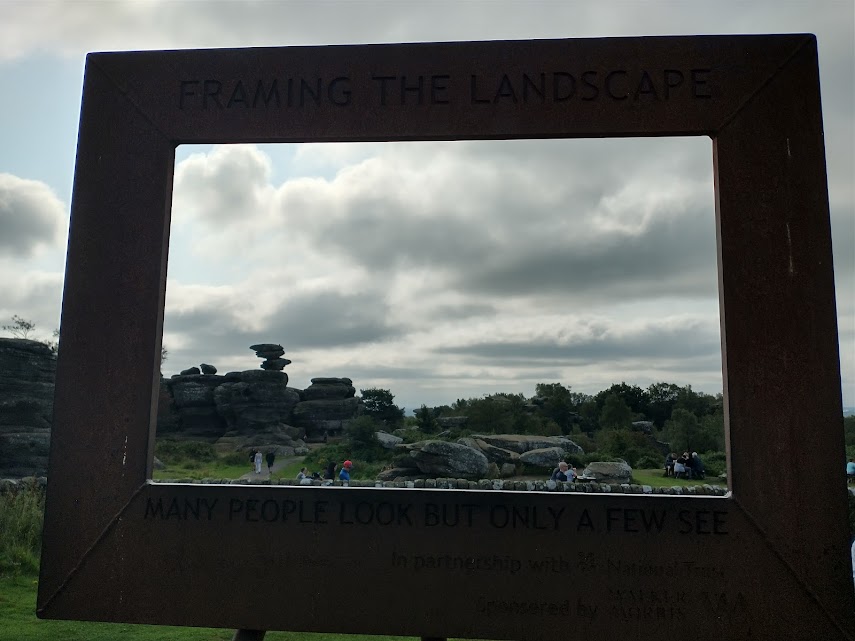
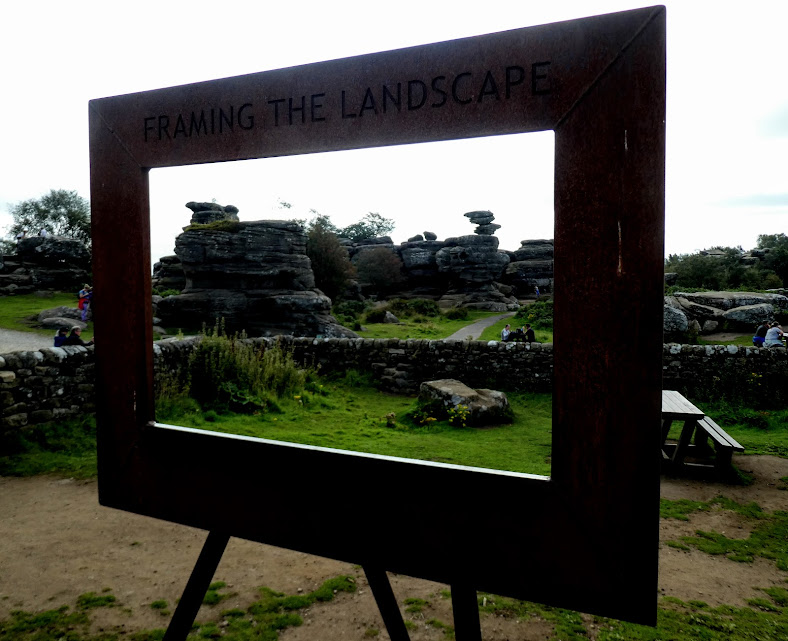
For One Word Sunday this week, Debbie asks us to provide an image, a ‘framed’ image. Luckily, at Brimham Rocks, there is a ready-made frame available for us all to use to capture that Perfect Picture Postcard.


 From Pyrenees to Pennines
You must be logged in to post a comment.