Here’s a challenge and a half. Take five words, chosen monthly by Paula of Lost in Translation, and illustrate them. Here are the words: MONASTIC; ABANDONED; CRYSTAL; ECHOING; AFFABLE.
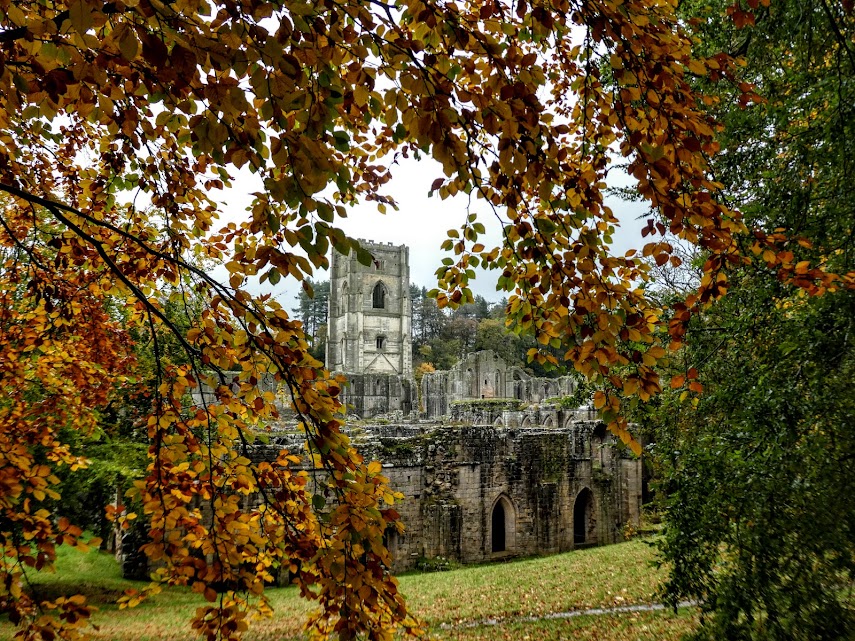
Monastic was easy. Of course I chose Fountains Abbey, a religious community from 1132 until Henry VIII caused it to be surrendered to the crown in 1539, under the Dissolution of the Monasteries. It’s where I have the privilege of volunteering, so it’s almost become my back yard. Here, in my featured photo, is the Abbey in autumn.
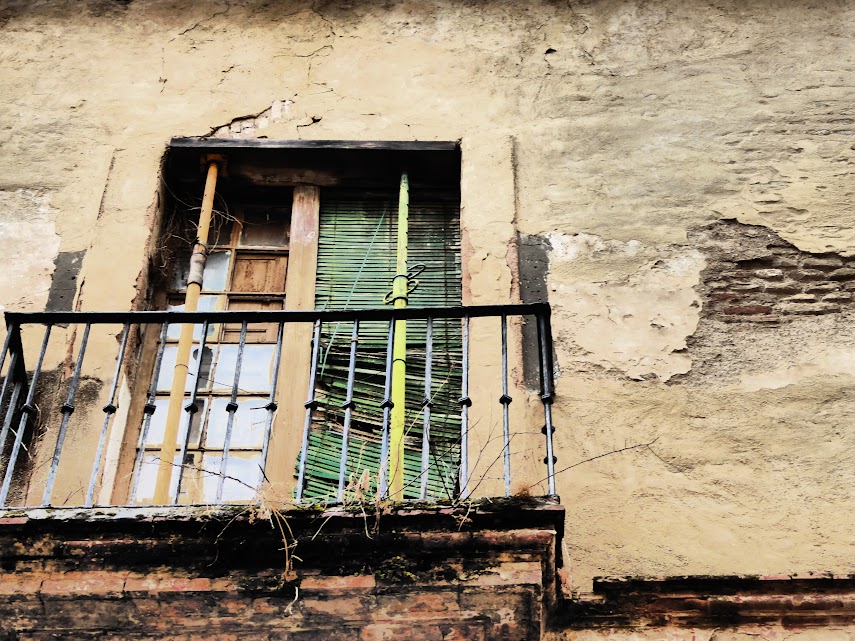
Abandoned? So much choice. I’ve picked a rather wrecked house in Seville.
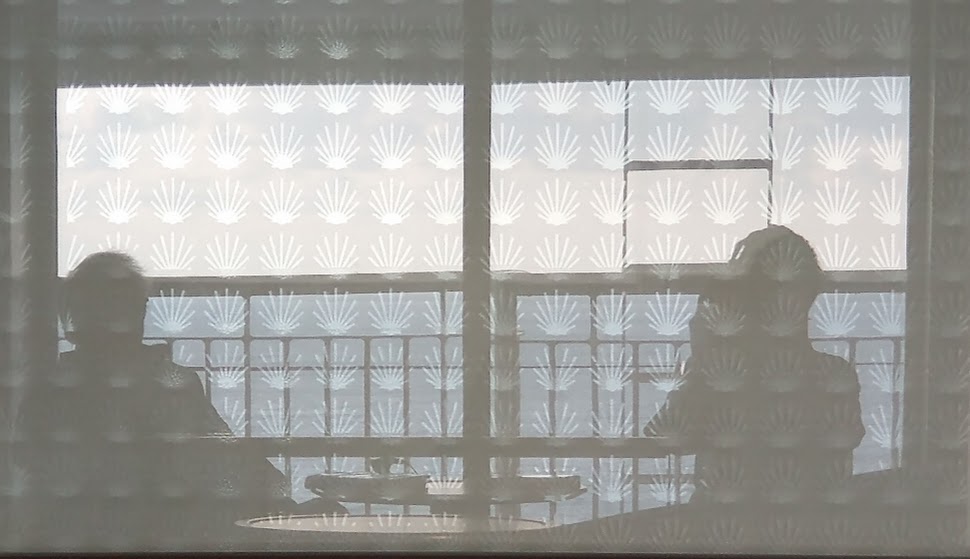
Crystal was trickier. I don’t move in the right circles. But here is a crazed plate glass window on a ferry bound for Spain which has a slightly crystal-ish look.
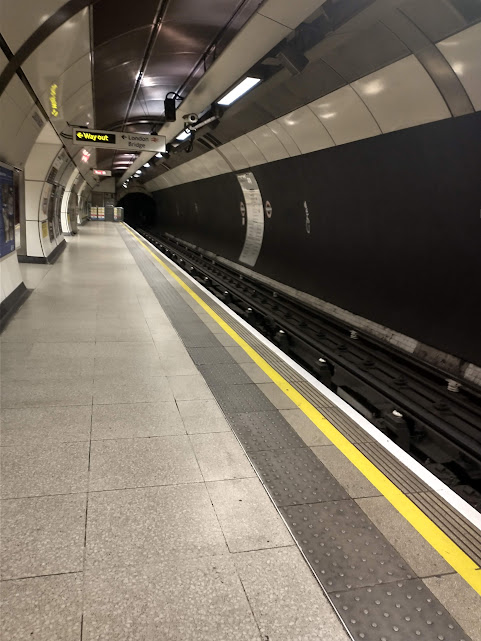
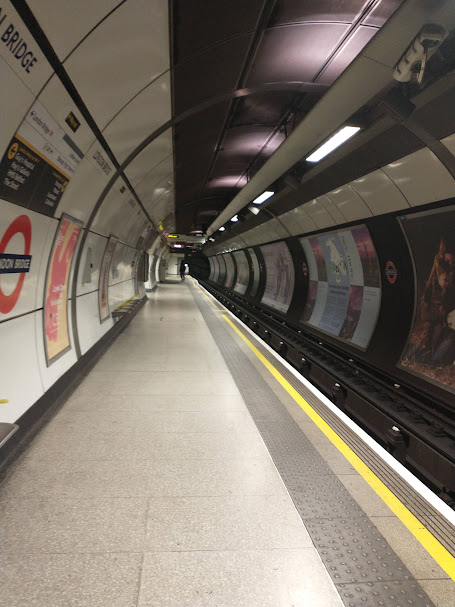
You may not think my next photo illustrates ‘echoing‘. But trust me – it does. I was among the first passengers to arrive at London Bridge Underground Station just after 5.00 a.m one morning recently. There was not another soul on my platform. Only me. It echoed.
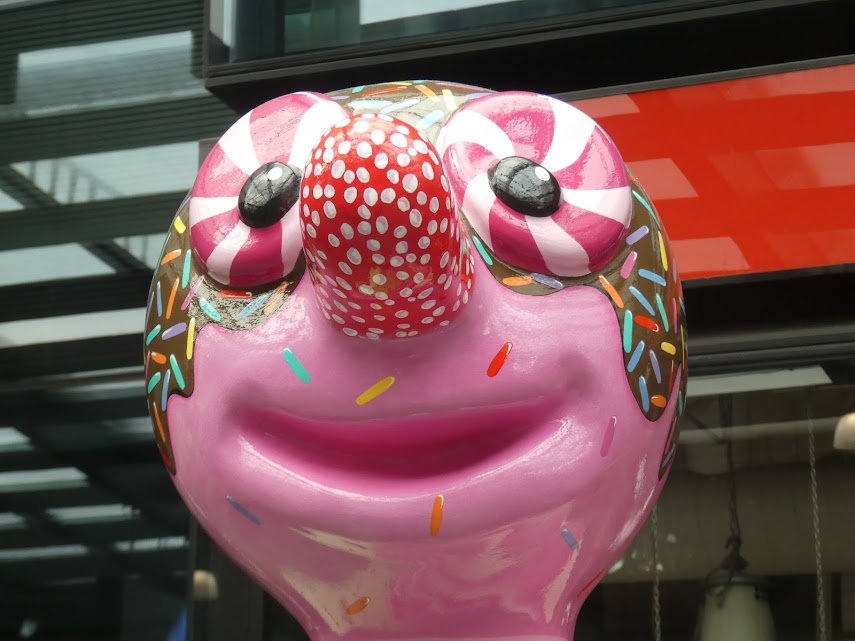
And we’ll stay in London for my last image, a cheery one. This affable chappie was snapped on a day out with Sarah of Travel with Me fame. He was part of a fun sculpture trail for children’s wheelchair charity Whizz Kidz.
So there you have it. Following the links to Paula’s and Sarah’s posts will show you very different interpretations, and perhaps you’ve seen others in blogs you follow too.
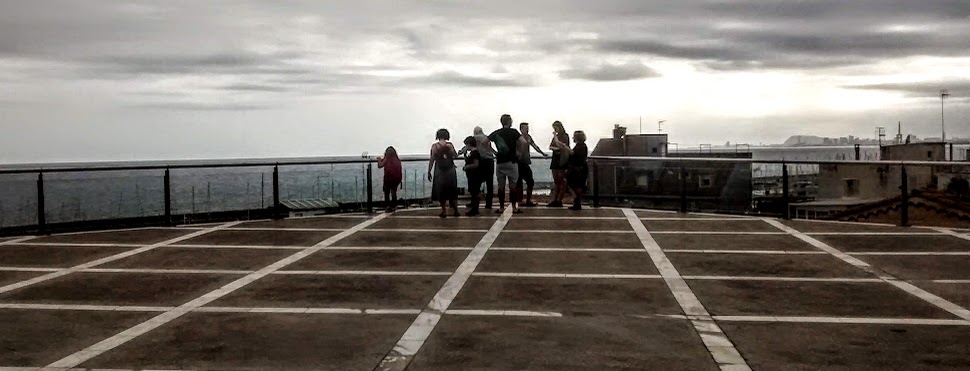
For this week’s Lens-Artists Challenge, Egidio asks us to consider compositions relying on two rectangles for their success. So I thought I’d offer a featured photo with lots of rectangles: the basic two, with sky at the top and earth at the bottom, and then, confusingly, a town square entirely tricked out in … squares. Emily and her Catalan family are looking out to sea.
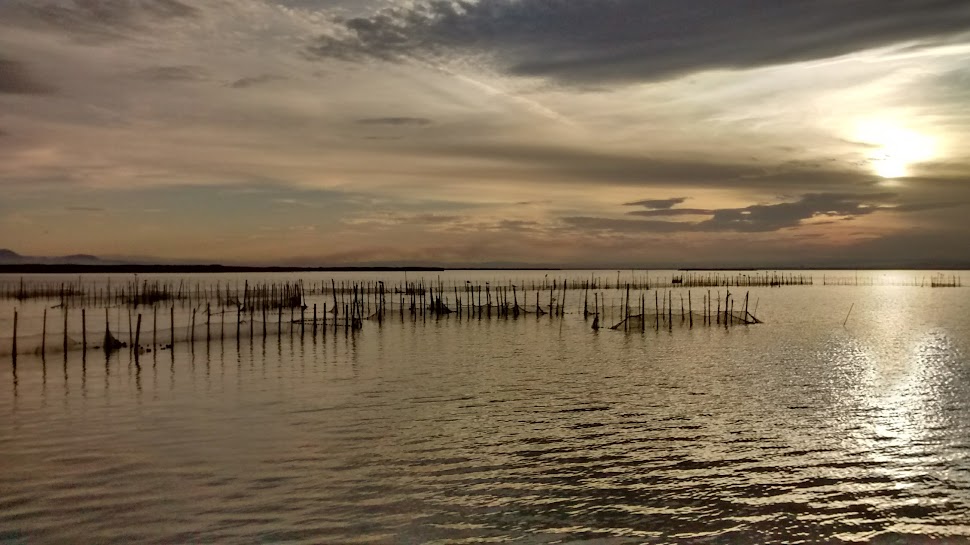
I thought I’d include a couple more using this simplest of devices. The first from my beloved l’Albufera, which I’ve written about before – here (among several others).
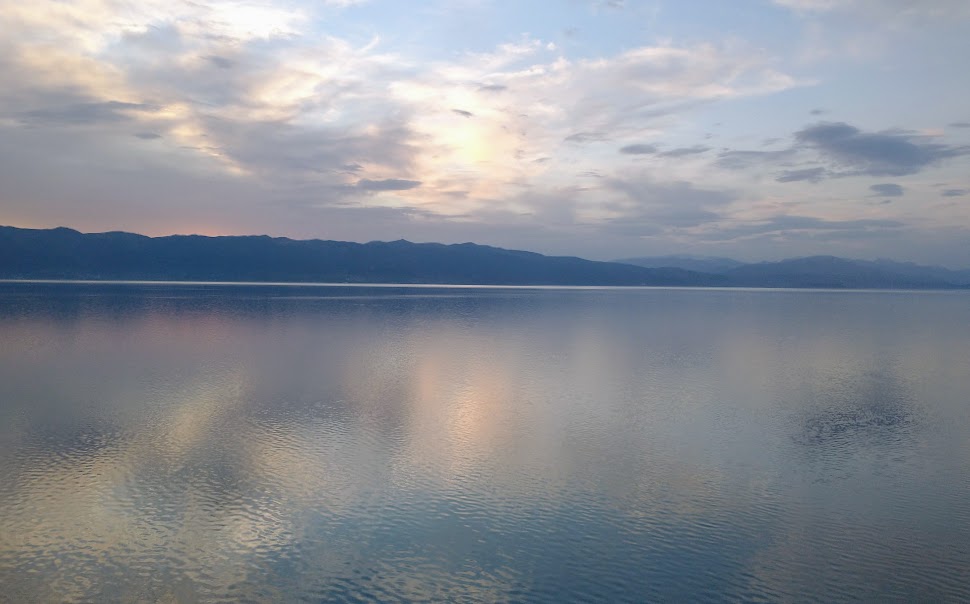
And here’s another, from Lake Prespa in Greece, where the water reflects the sky above: the lower rectangle a pleasing echo of the upper.
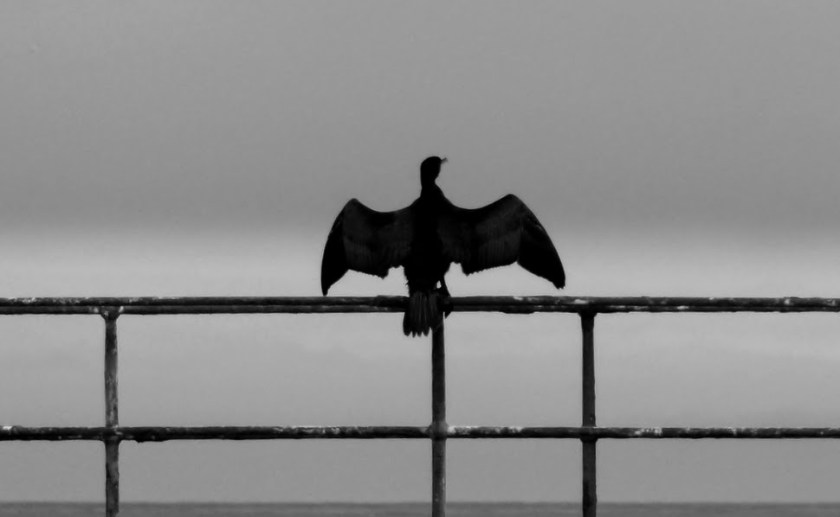
And here’s one closer to home, in Whitby, a cormorant posing at the end of the pier.
A cormorant on railings at the end of the pier, Whitby, North Yorkshire.
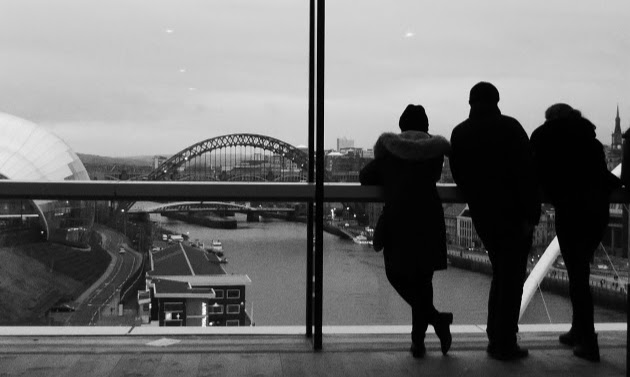
Let’s stay beside the water: one a ferry across to Spain, spying on my fellow-passengers. At the Baltic Gateshead, spying on my fellow River Tyne enthusiasts, and in London, over looking the South Bank.
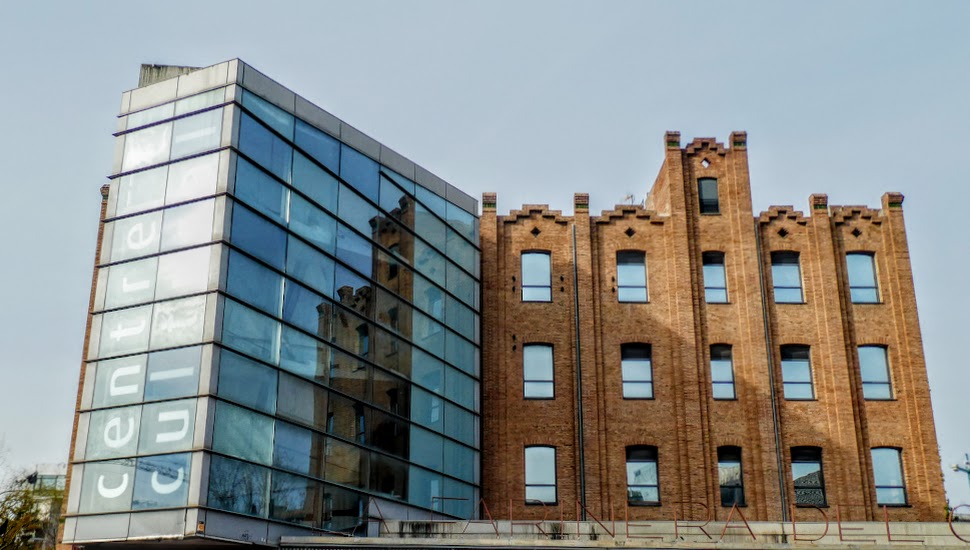
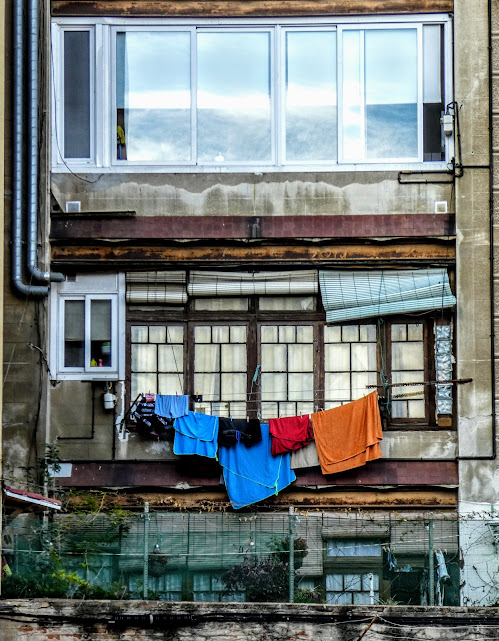
And finally we’ll whizz over to Barcelona, and wander round El Clot, and then Gràcia, where this view has two rectangles and includes any number of smaller ones, and the daily washing line.
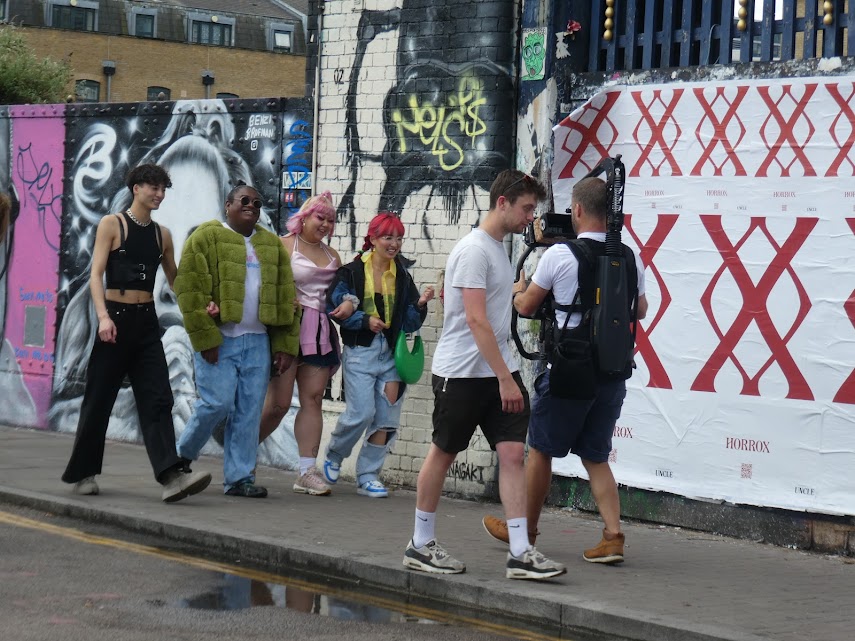
Out and about in Brick Lane London, with Sarah of Travel with Me fame, we spotted what seemed to be a film-in-the-making. The actors were moving forward for sure, but for the camera man, it was a different story.
For Becky’s #SquaresRenew Challenge, she’s inviting us to post square – only square – photos on the themes of Burgeoning; Moving Forward; Reconstruction; or Renewal
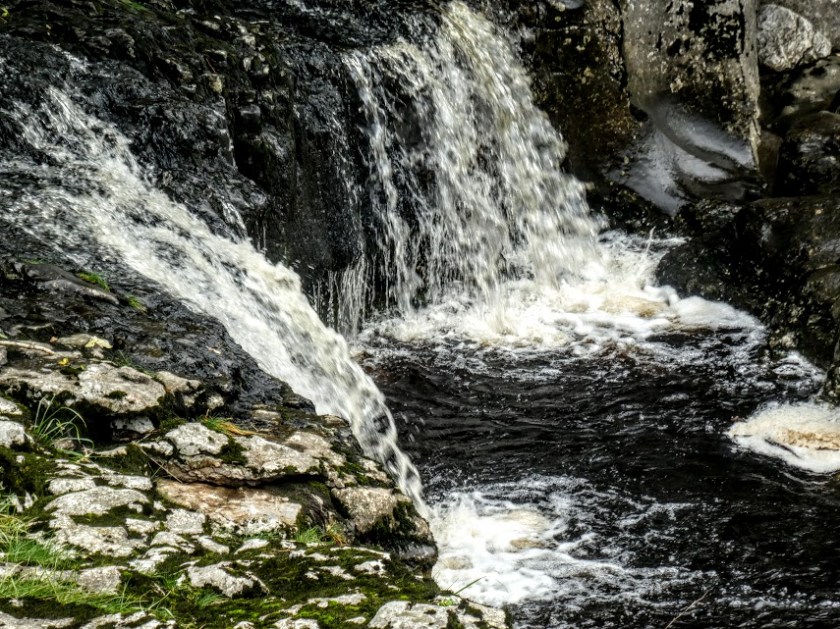
You want water in motion, Sofia, for your Lens-Artist Challenge? You’ve come to the right place. We speak of little else in England this year. Look at this.
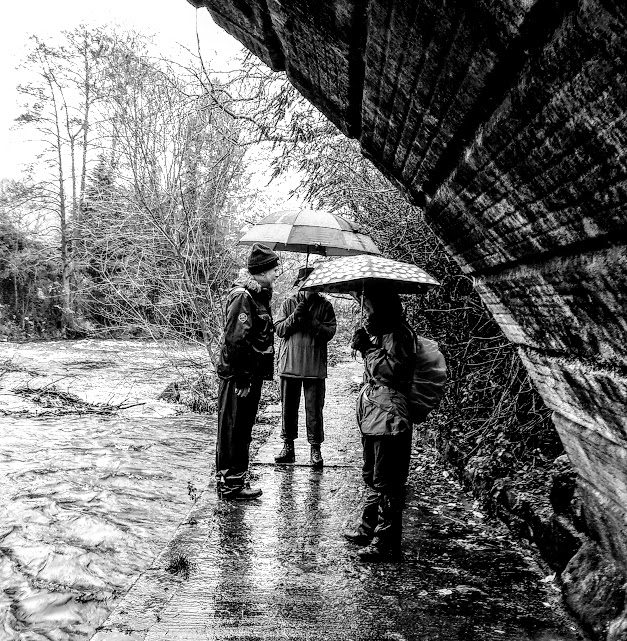
A dismal moment sheltering by the River Skell in Ripon.
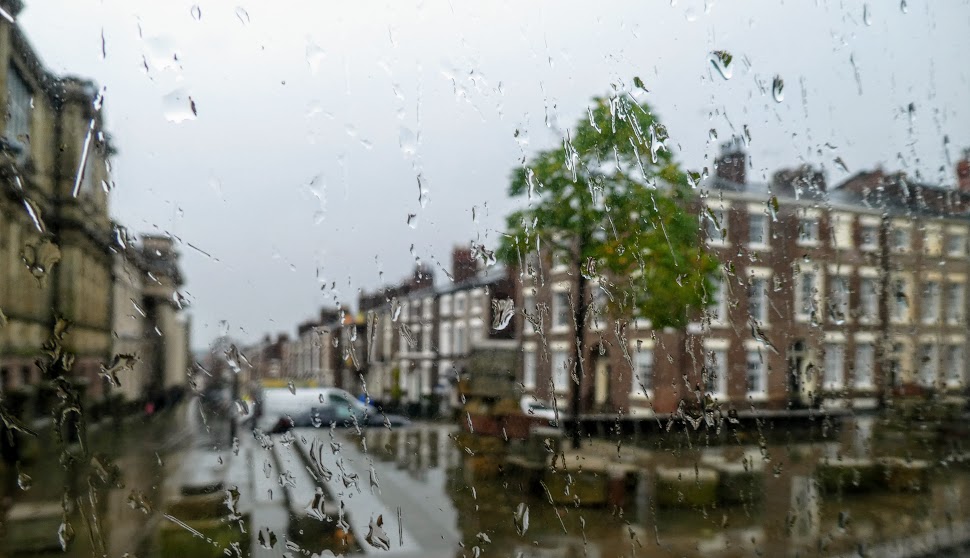
Or this, taken through the windows of Christ the King Cathedral, Liverpool.
A (typical?) view of Liverpool.
But without this rain, we wouldn’t have those glorious tumbling riverside views: these are both from Yorkshire: I’m focussing on England for this post – it seems appropriate.
The River Wharfe at Grassington
The River Ure at Redmire Force.
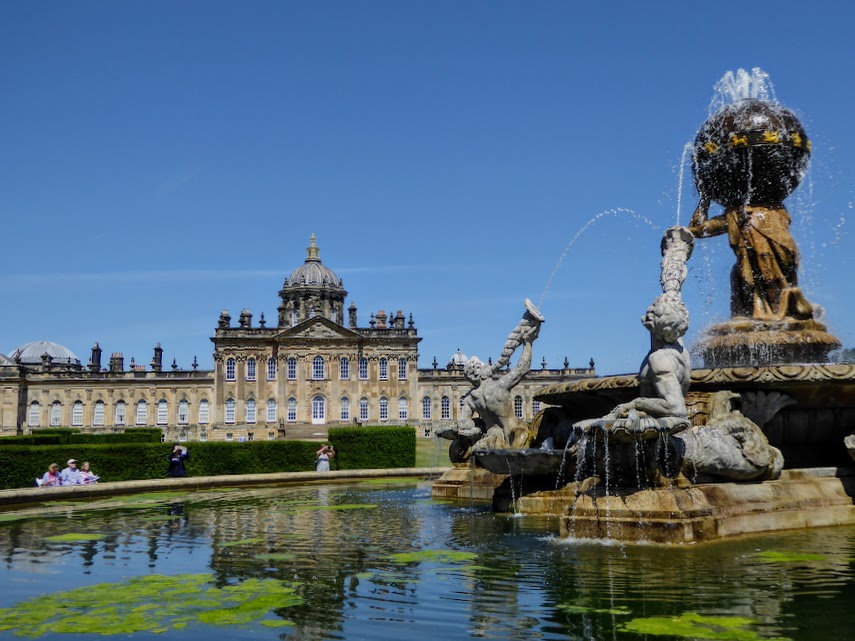
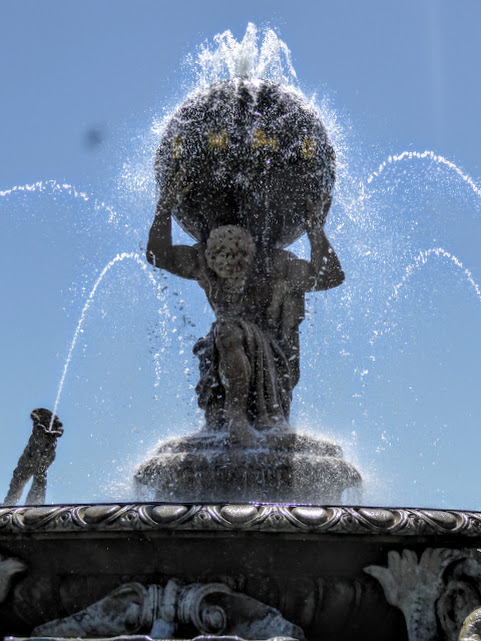
Water’s playful too: especially in the hands of a sculptor. Here’s Atlas with his sea gods at Castle Howard, Yorkshire. A fuller image is shown as the featured photo.
Atlas , Castle Howard
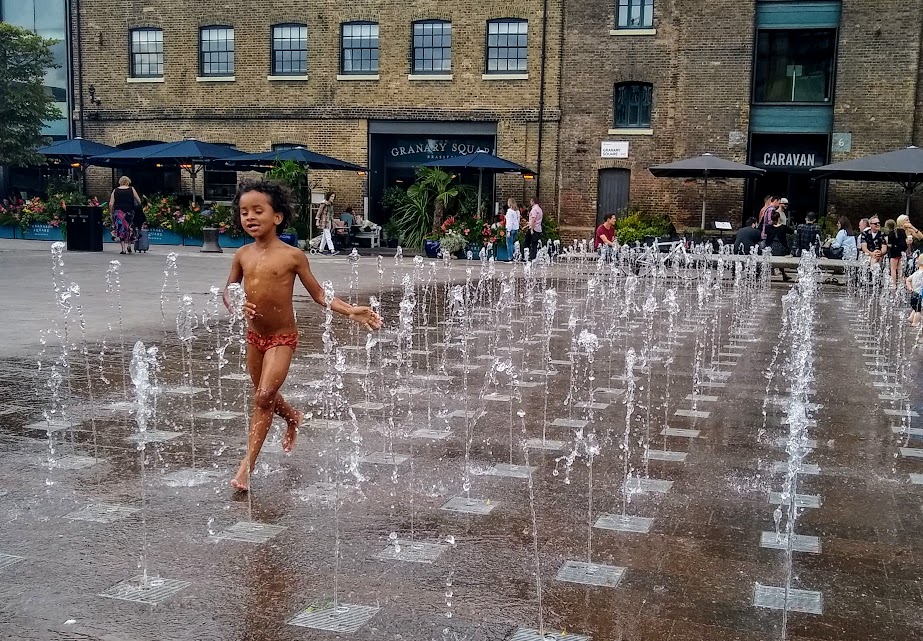
And a child in Granary Square, London is certainly having fun.
Fountain, Granary Square, Kings Cross London.
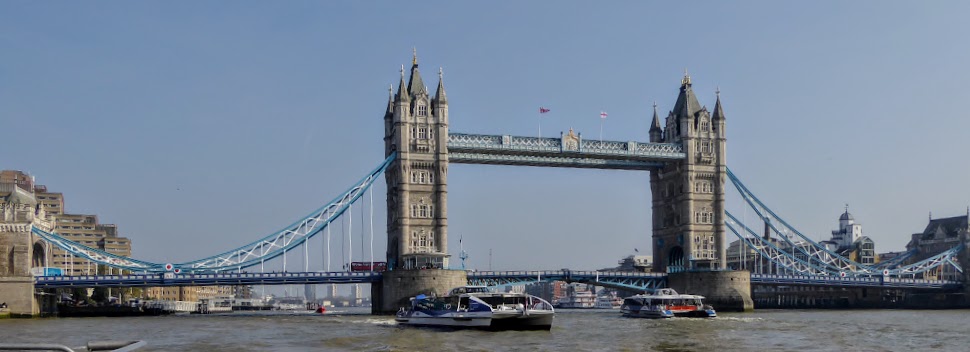
But we’ll conclude with a more typical London view, overlooking the River Thames.
When Patti proposed, for this week’s Lens-Artist Challenge, that we focus on cities, I wondered where to start. Busan? Barcelona? Bamberg? Instead, I’ve decided to return to the city where I lived between the ages of five and sixteen, and to which I often return because my son and family live there: London.
We’re going to journey up the Thames, from Woolwich where the imposing flood defences of the Thames Barrier are sited through the city as far as Tower Bridge and Saint Paul’s Cathedral. We’ll travel, as so many tourists and even daily commuters do by Thames Clipper, the city’s very own London bus of the waterways.
Here’s the Thames Barrier, its metal hoods stretched assertively across the river, protecting it from the ravages of high tides and storm. You can read all about it in another post of mine, here.
The Thames Barrier on a grey day.
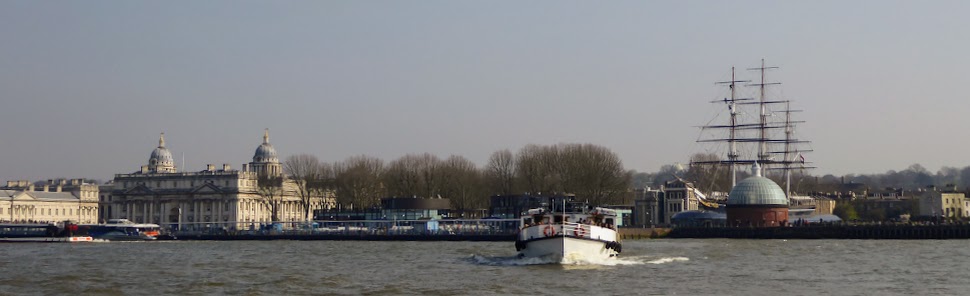
As our Thames Clipper passes through Greenwich, there’s the Old Royal Naval College, and the famous 19th century tea clipper, the Cutty Sark.
To the left, the Old Royal Naval College. To the right, the Cutty Sark.
Passing through the Docklands, we’re reminded of the city’s industrial past, when this was the area for receiving and despatching goods from all over the world.
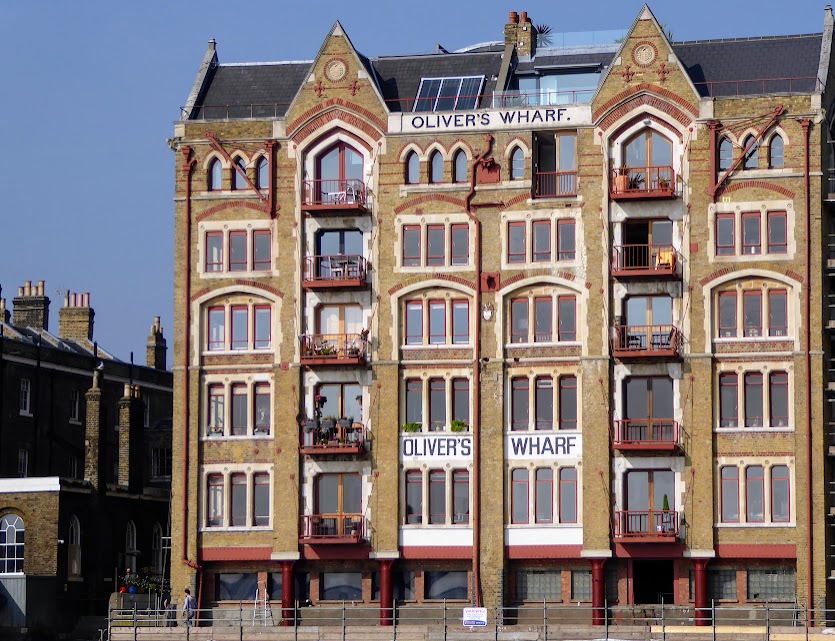
Once a busy wharfside storehouse, now elegant apartments
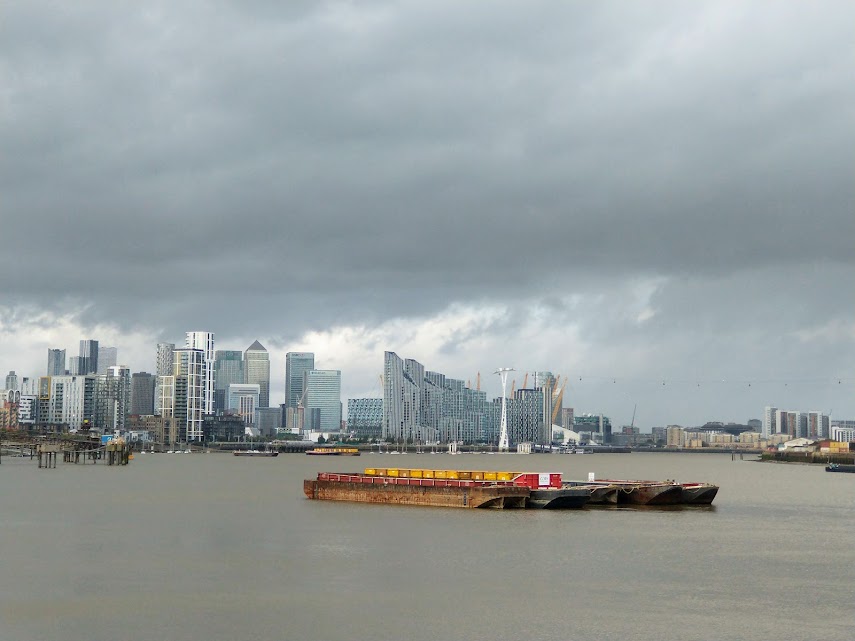
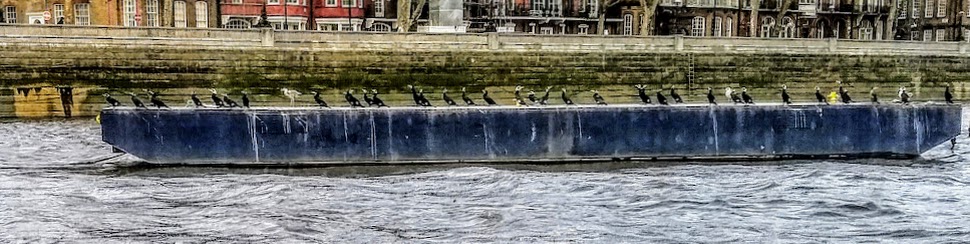
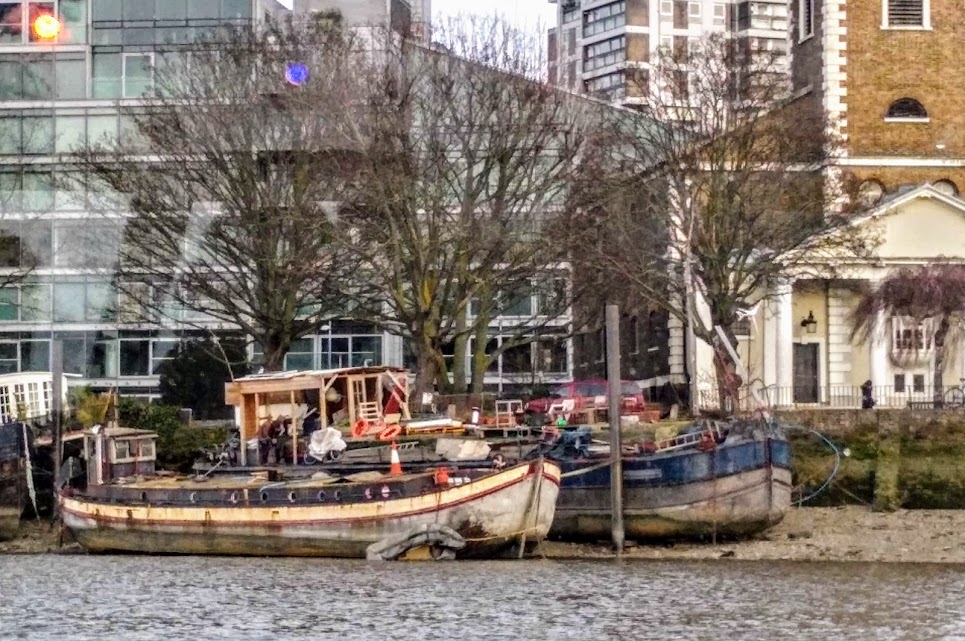
These wharves are now repurposed as sought after apartments. But even with the modern Canary Wharf behind, we shouldn’t forget the Dirty British Barges (sorry, John Masefield) that continue their work of haulage up and down this busy river.
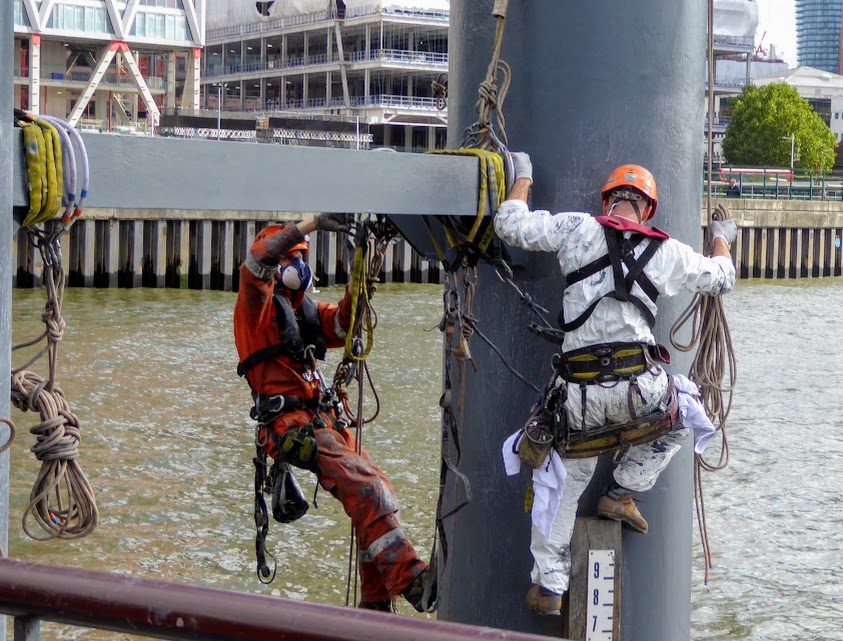
And maintenance works goes on …
Then it’s Westminster. Here’s Westminster Abbey and The Houses of Parliament, but what a shame that my most recent photo has Big Ben bundled up in tarpaulin.
Westminster Abbey, the Houses of Parliament AKA The Palace of Westminster, and a wrapped-up Big Ben
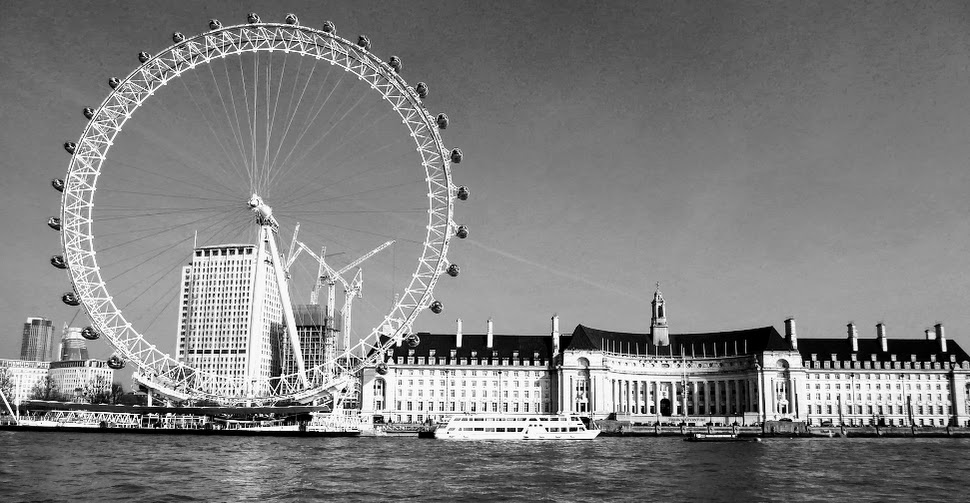
Then it’s the former County Hall, with the London Eye in front.
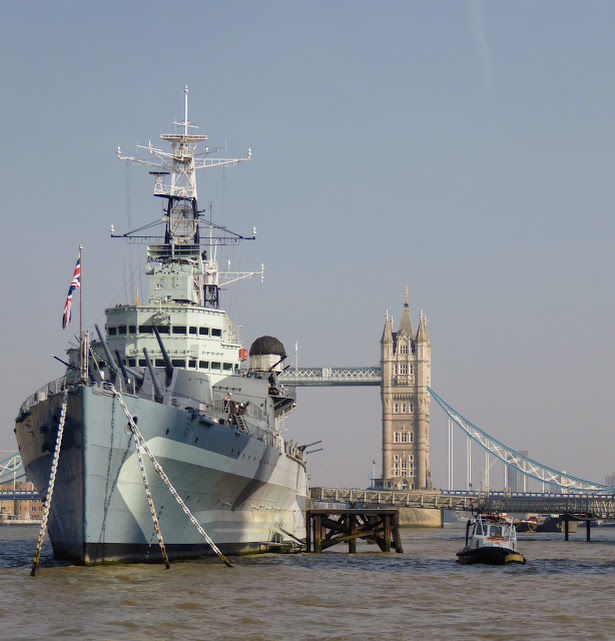
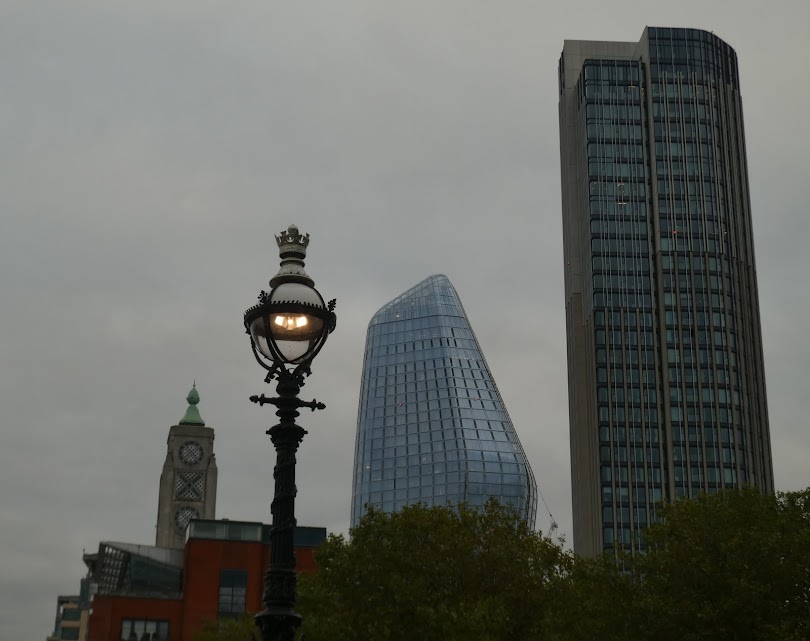
And on to the beating heart of the city: Tower Bridge, which I have never seen raised, though it still happens often enough. And here too is HMS Belfast, which saw 25 years of service during and after WWII. This most ancient part of London, site of Roman walls, and the Tower of London, is also where London’s most modern high-rises are found.
Are you getting a bit windswept and weather beaten here at Blackfriars Bridge?
It’s raining as we look through the arches of Blackfriars Bridge.
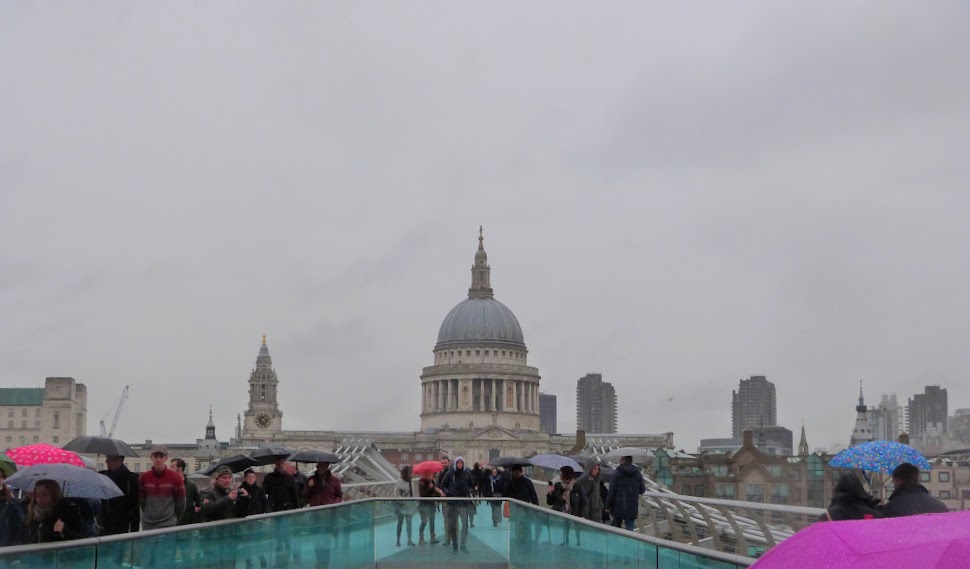
You are? Well, we’ll finish with a miscellany of photos. Enjoy the rest of your day – but just enjoy the view from the Millennium Bridge across to Saint Paul’s Cathedral first.
From the Millennium Bridge to Saint Paul’s on a rainy day.
If London -and the quirkier aspects of its history – interests you, I recommend hopping over to Steve’s blog: A London Miscellany. He’s a mine of useful, and useless-but-fascinating information.
Several readers of my blog threw up their hands in horror in reading of our horrid journey-from-London-to-Yorkshire-that-wasn’t yesterday. The frightfulness we and hundreds and hundreds of others encountered made the national news. So I thought I’d bring the story up to date.
Today was easy. The train company, LNER had announced that anybody affected yesterday could, for the next two days, catch any train that would reach their intended destination. We imagined that every one of these trains would be full to bursting, standing room only. Unless … we travelled early.
So….
5.00 a.m. Catch the first train of the day from Hither Green.
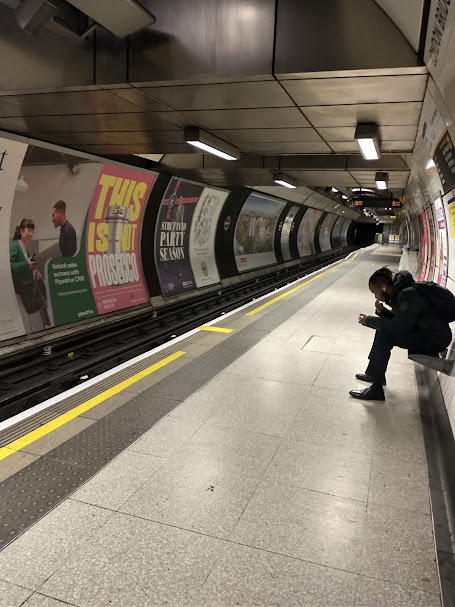
5.30 a.m. Arrive London Bridge tube station as entrance gates clatter open, and take escalator to Northern Line.
Wait on platform till 5.45 for train to Kings Cross., with just a few scuttling mice for company.
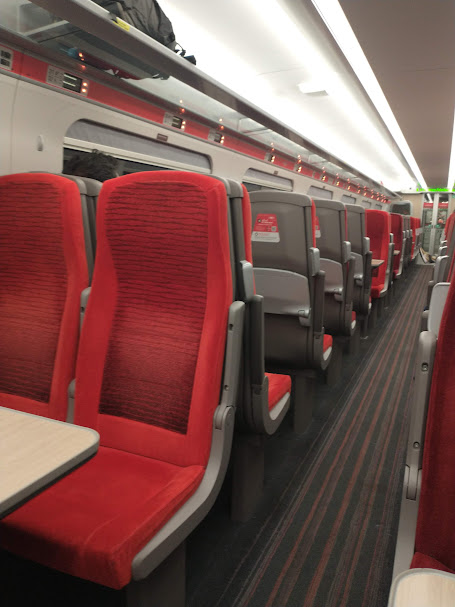
6.00 a.m. Catch train bound for Edinburgh, which takes us to the station nearest our home.
Near York, begin to understand what yesterday’s difficulties were about.
8.55 leave train to be met by a friend who arrives with his car to spirit us home - the long way round because of flooding. Nearing home, we see a rainbow ….
9.29: Arrive home.
Perhaps this proves the truth of that old saying about the early bird who catches the worm. I only wish I’d taken Before and After shots of the concourse at Kings Cross Station yesterday (maelstrom) and today (perfect peace). Two nervous little Country Mice are rather glad to have finally scuttled home.
There’s an American bird – the Passenger Pigeon – that is thought to be extinct. It turns out this isn’t true. It’s come to London. Let me explain.
We’ve had a bit of a horrid day. After our wonderful Christmas with the family (London Branch) we were due to travel home today. Kings Cross Station, when we arrived, was crammed with travellers staring at the Departures board, unable to begin their journey. We joined them. Five minutes before our train’s scheduled departure, it was cancelled. Not that we had been able to fight our way through the throng to get on it. And so it went on. Finally, we abandoned all hope. We turned round to beg another night from the London Branch.
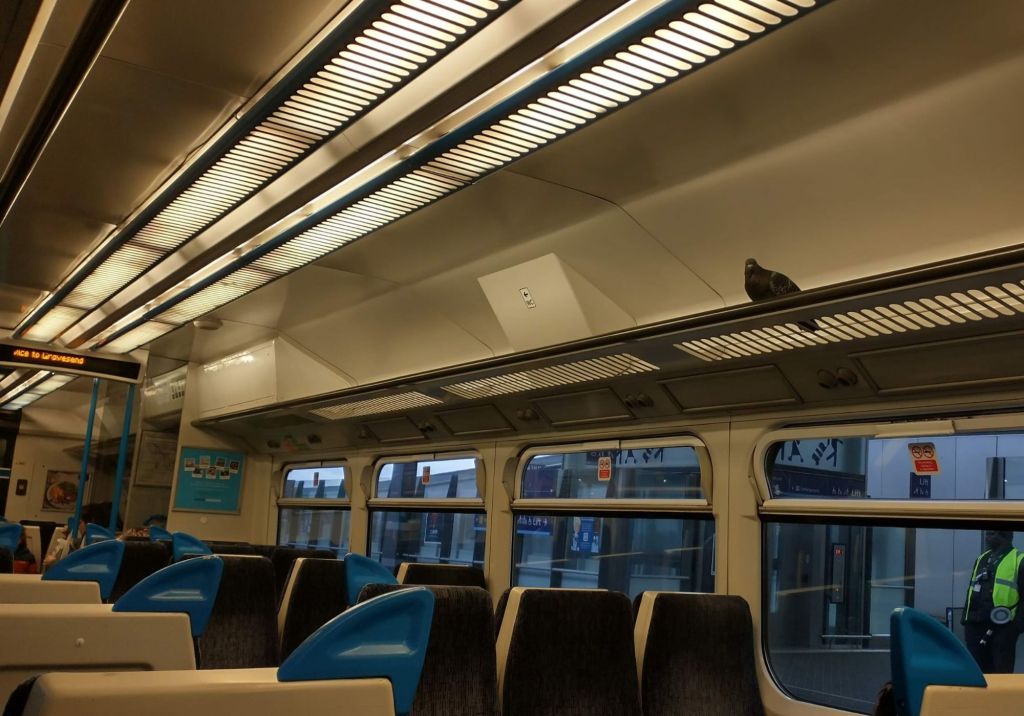
And that’s where the Passenger Pigeon comes in. As we got onto our local train, we spotted a bird – a pigeon – in the luggage rack, intent on joining us for the journey.
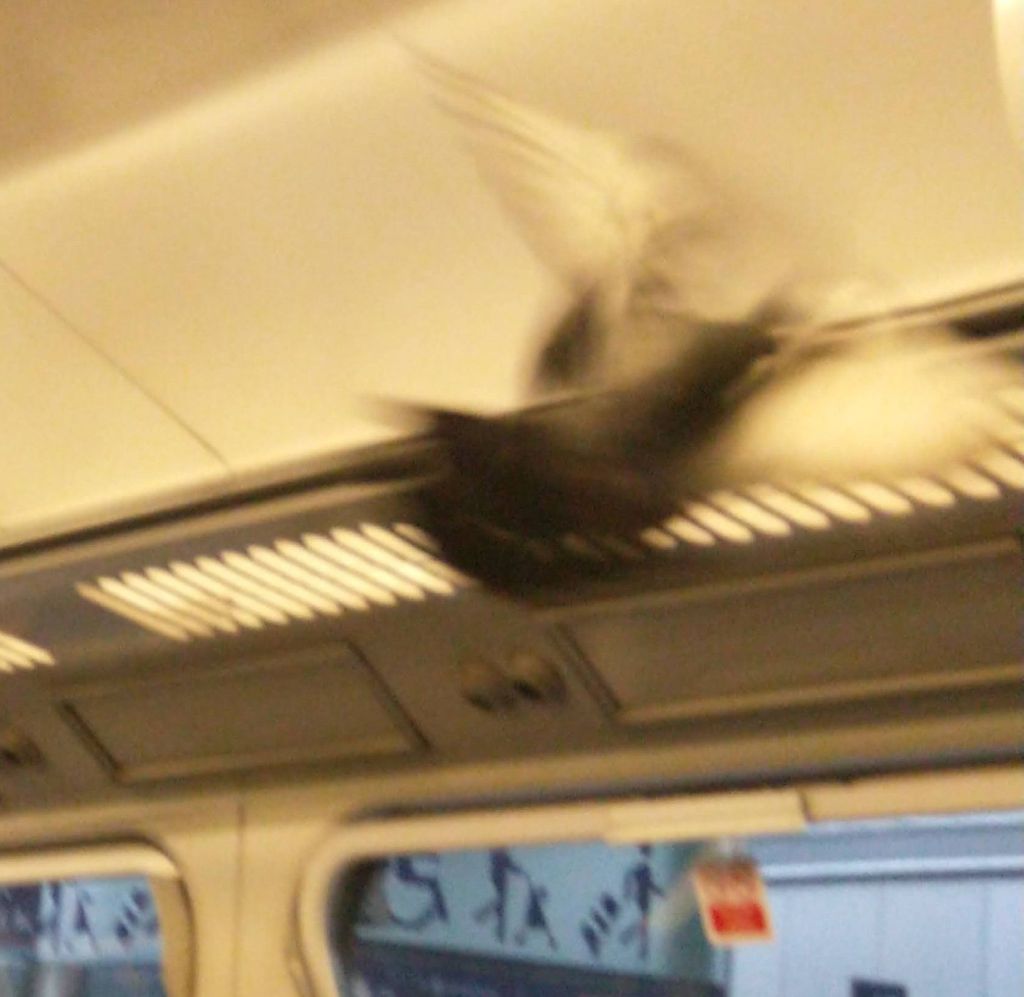
He must have realised he didn’t have a ticket. Just before the doors closed, he pulled himself energetically together … and flew off.
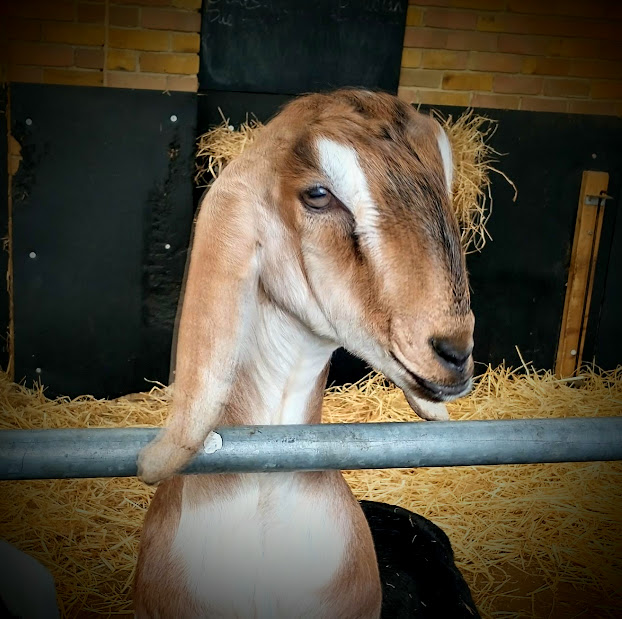
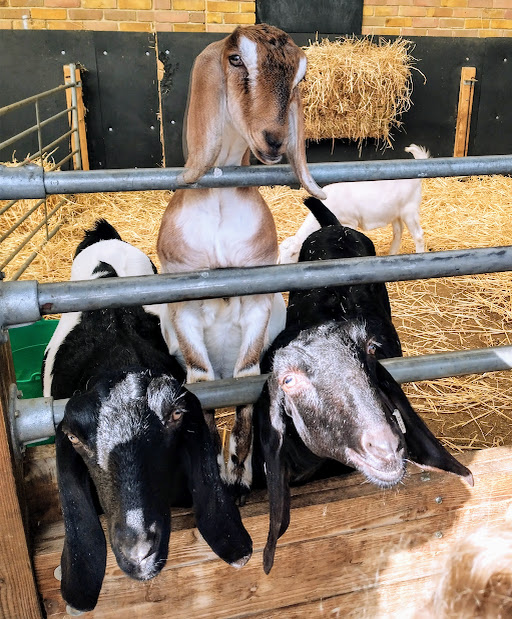
The other day I showed you the thieving squirrels of Mudchute Farm in London’s Isle of Dogs. Today it’s the turn of the thieving goats. Mind your scarves! The goats find them delicious.
Last week, I invited you to join me in Spain, and hunt for the symmetrical. This week, we’ll stay closer to home, and have a countryside wander looking for the asymmetrical for Dawn’s Lens-Artist Challenge.
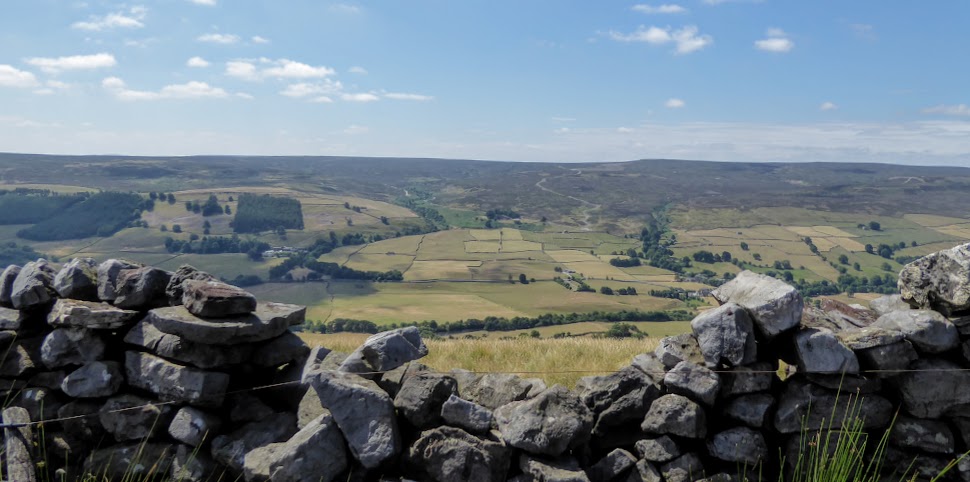
What we’ll do is start off in the Yorkshire Dales. Let’s peek over a drystone wall and look at the patchwork of small fields that has evolved over the centuries, way before agri-business and the space-gobbling demands of giant machinery.
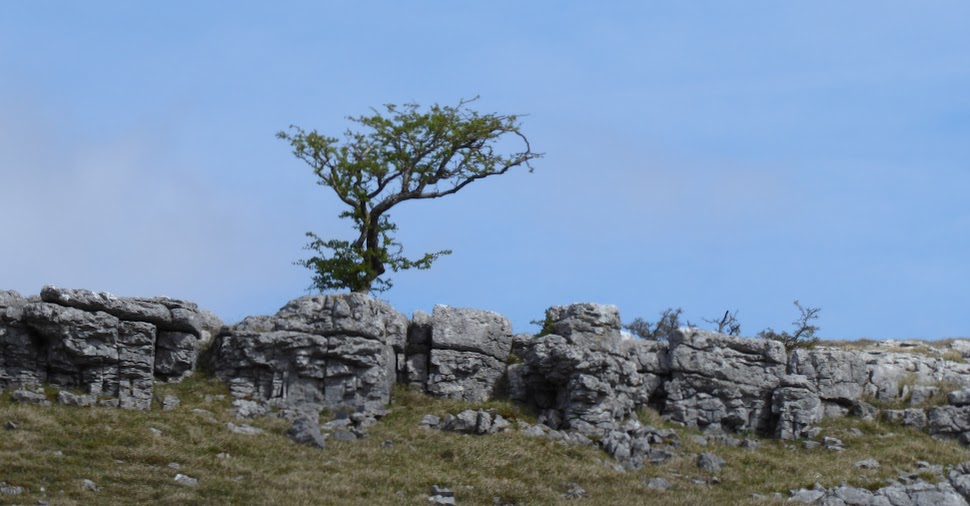
Conditions are harsh: not too many trees then. But those there are battle to reach maturity and stay upright against prevailing winds. Symmetry is the last thing on their minds.
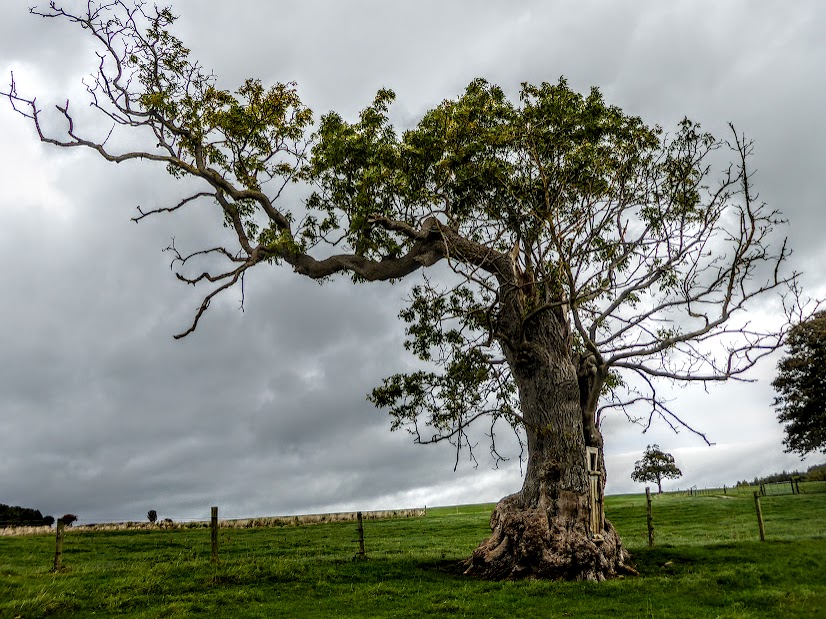
Look carefully. At the right hand side of the hollow trunk, some fond grandfather (I’m guessing) has fashioned a door to the hollow trunk, to make a very special tree-house.
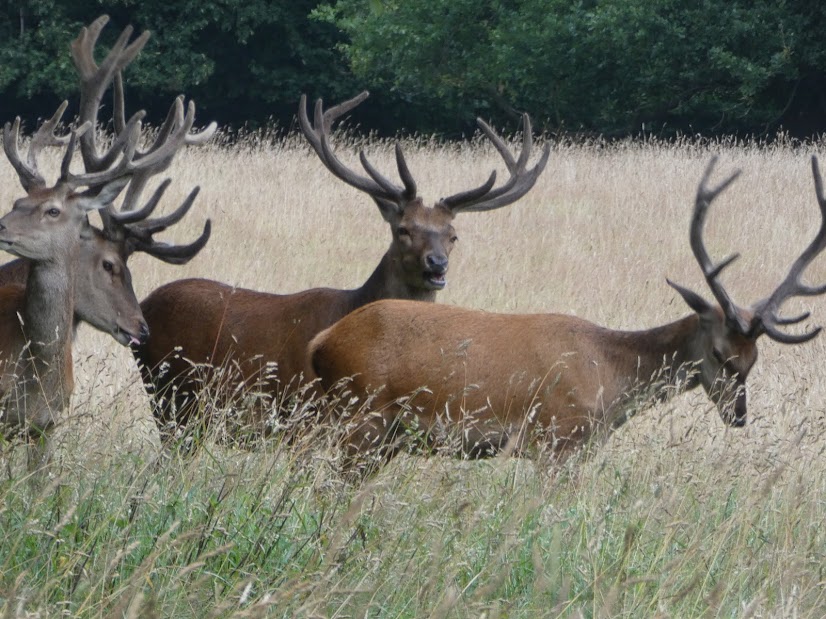
Let’s hurry back to civilisation, before darkness falls. Here in Studley Royal is a blasted tree that always reminds me of the antlers of the red deer stags who call this area home.
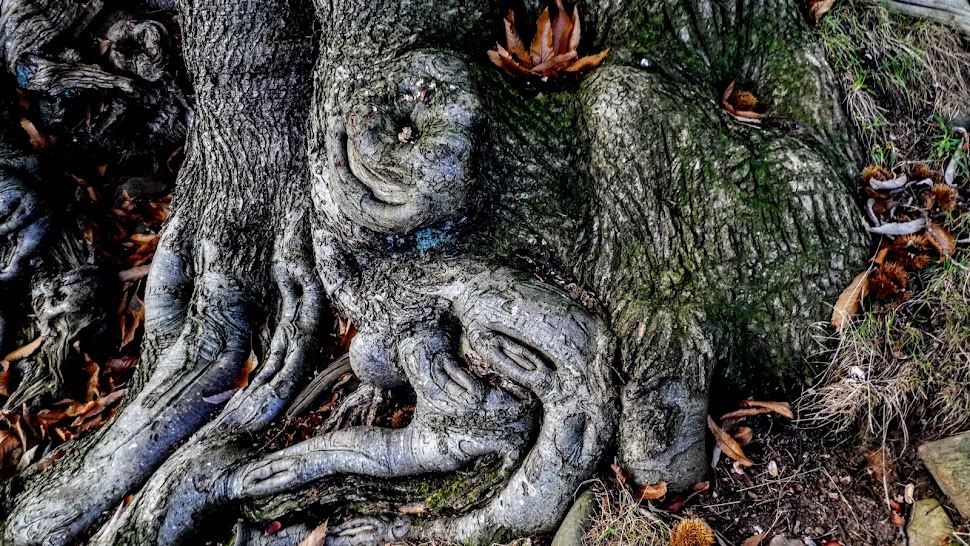
And here too are ancient tree roots, complete strangers to symmetry: some of the older stumps house fungi.
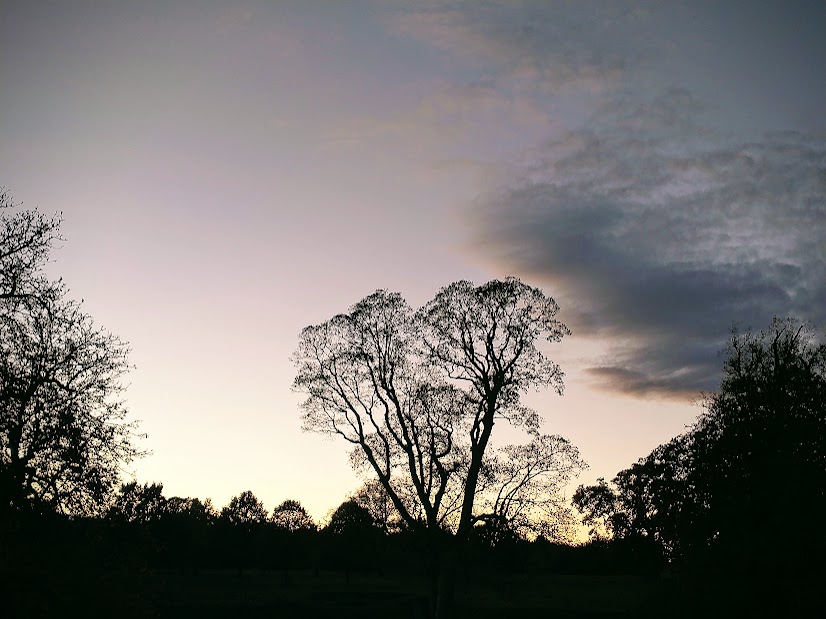
Oh look. Darkness is falling.
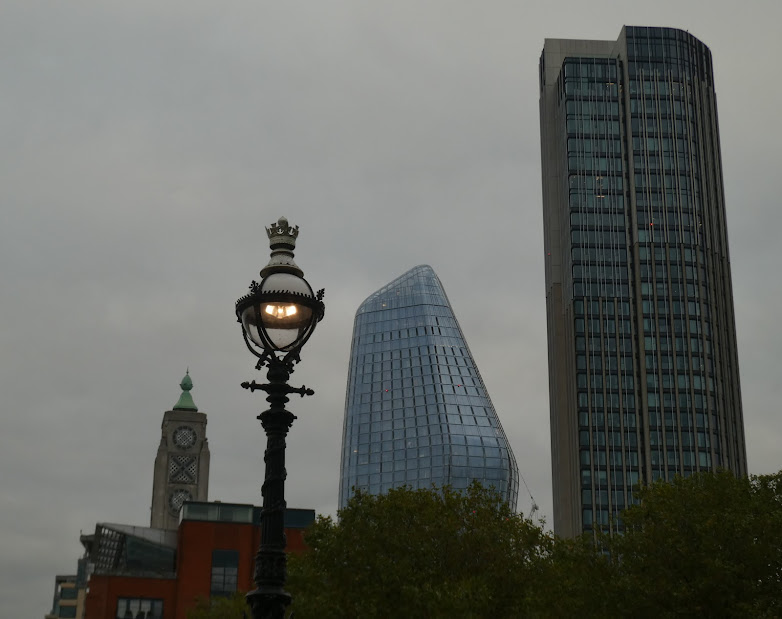
Let’s hurry into town. Bright lights, big city. Perhaps we could grab a warming mug of hot chocolate to thaw out our chilly fingers. And that’s where I’ll leave you for now. See you soon, I hope.
It’s a bit of a stretch to get from Studley Royal to London in time for the final photo-op of the day (250 miles). Photographer’s licence.
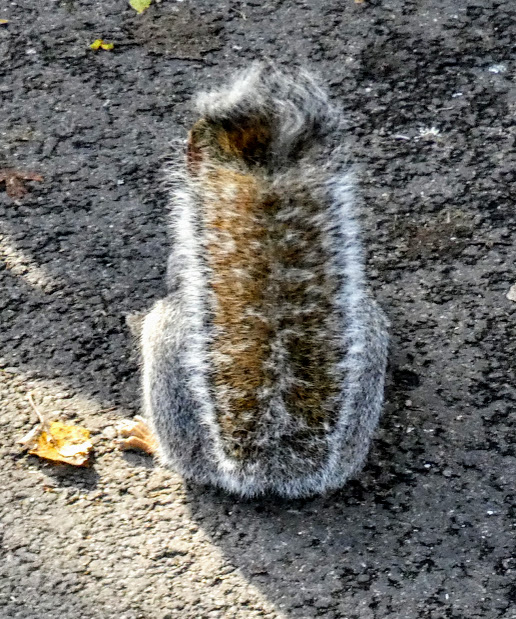
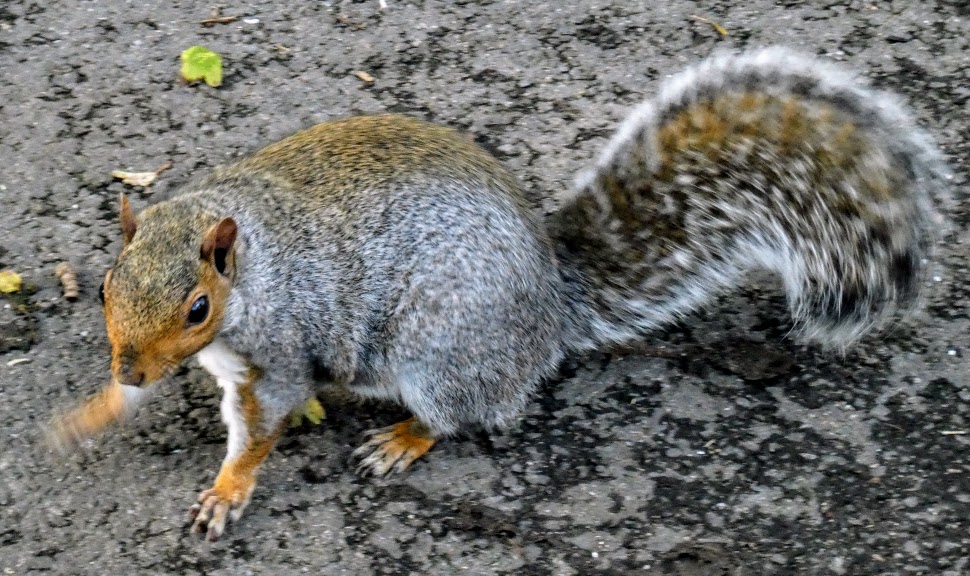
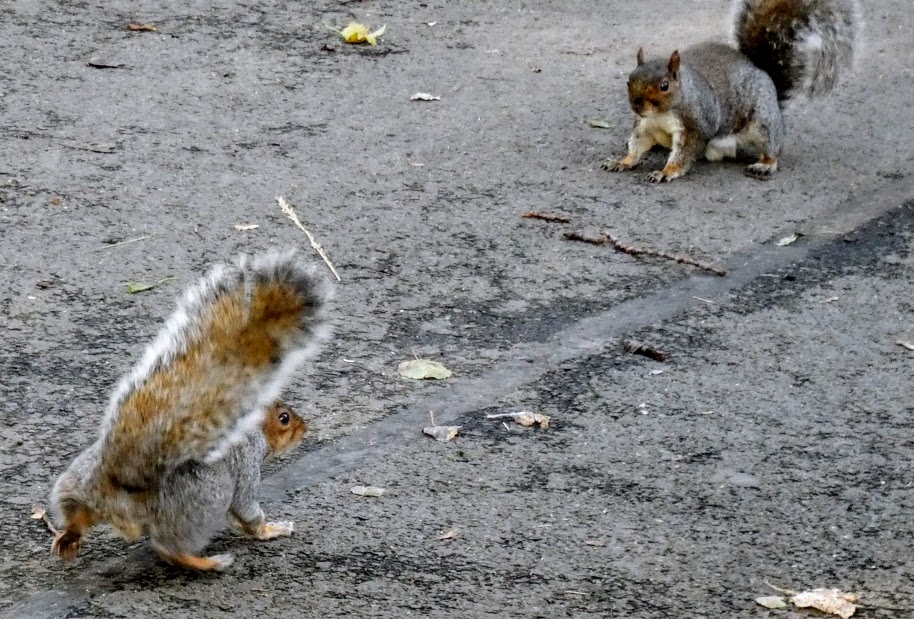
Last week – half term in London – I was on Granny Duty. And my daughter and granddaughter were over from Spain too. So one day, we went to Mudchute Farm. This is a community-based city farm that’s home to sheep and cows and ducks and geese and hens and all the usual suspects. But towards the end of the day, squirrels came centre-stage. They’re not part of the farm. But they’ve learnt that it’s a great place to hang out. All that free food. And some of it from visitors. William at one point dropped his apple core – accidentally of course: we’re not litter-louts. Before he could do anything about it, a cheeky squirrel had scuttled out and grabbed it: and retreated to a goat pen so she could eat it in peace.


















You must be logged in to post a comment.