Ten thirty on a damp Wednesday morning. The Horniman Museum was just opening its doors as William and I arrived, and we stomped downstairs to the aquarium.
We were the first arrivals. Here’s William, wholly absorbed in fish, frog and butterfly hunting. This peaceful moment didn’t last long. Within minutes one, two, then three parties of Reception age school children stormed noisily in. The fish continued their solitary swishing round their watery home.
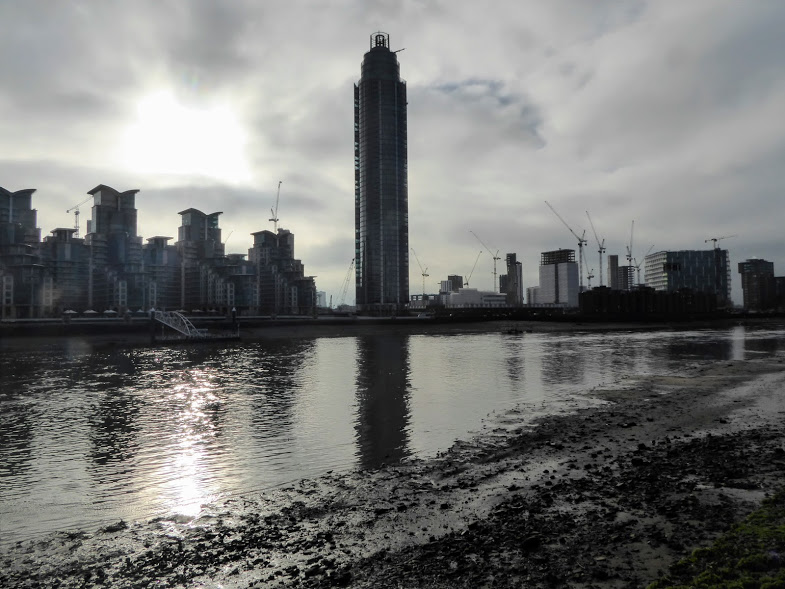
View of the Thames near Vauxhall Bridge and Tate Britain.
I was in London this week, and on Monday had a day all to myself. After a morning at the wonderful Paul Nash exhibition at the Tate Gallery, I mooched around the area where I grew up.
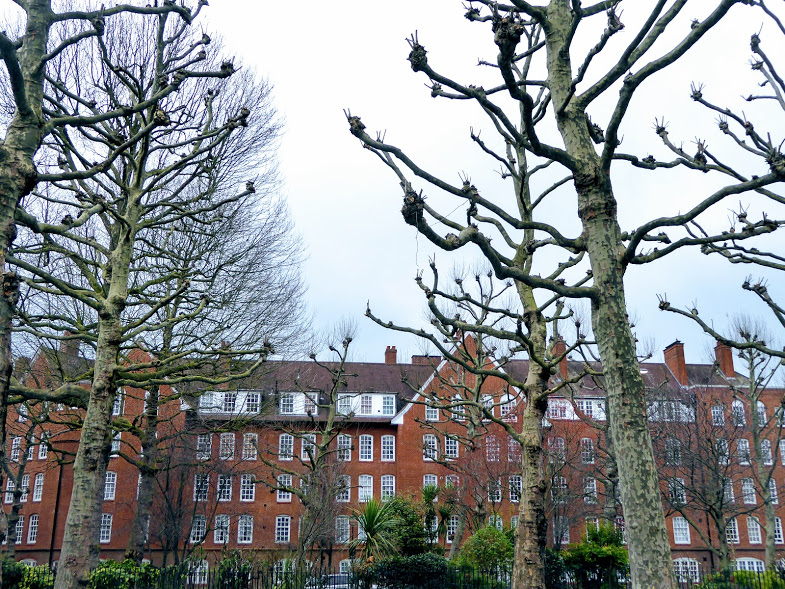
Here, just at the back of Tate Britain, is the Millbank Estate. There was a penitentiary here till 1890, and when it was cleared away, 17 blocks of flats were built as social housing between 1897 and 1902, housing 562 families. They must have seemed palaces to the former slum-dwellers who moved here. Each flat had its own kitchen and scullery, its own toilet. The streets were tree-lined, and there was a communal garden besides. Even now these barracks-like buildings have an air of quality, of being built to last. Sadly, many of these flats are now in the hands of private landlords, who charge their tenants up to four times more than those who are still in the social housing system have to pay.
Millbank Estate.
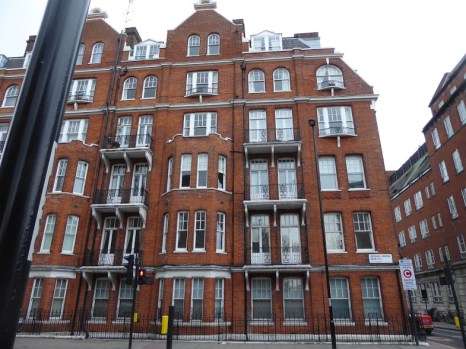
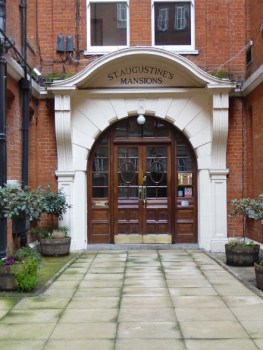
About five minutes walk away are the flats where I lived between about the ages of seven and fifteen, St. Augustine’s Mansions. Those of us who lived there were ordinary types. There was the little old Irish lady in the flat below; the man who worked at Manbre and Garton, the sugar refiners, who once a year would take us and his wife to the wharf-side where he worked to watch the Oxford and Cambridge boat race.
St. Augustine’s Mansions.
There was the Liberal Party activist, who was disappointed when my mother wouldn’t let me take the afternoon off school one day in 1958. Our activist friend hoped I would lay a wreath at the recently relocated monument to Emmeline and Christabel Pankhurst. My mother, an early beneficiary of education for girls, didn’t approve of suffragettes. But later, we’d often go to our friend’s flat on Saturday evenings to watch That Was The Week That Was. I was by then the only child in my class not to have a TV at home.
Entrance to St. Augustine’s Mansions. No handsome trees there then.
Briefly, before he made the comparative Big Time, a singer lived on the ground floor. Was it Billy Fury? I can’t remember.
These ordinary flats are now a gated community. Look on Zoopla, and you’ll find that the larger ones change hands at £1,500,000.
I wandered on to Tachbrook Street. Now, as then, there is a market. Then it sold everything you’d need in a weekly shop. Now it’s street food from every continent, sold to the large local working community at lunch time. I can recommend the sumac chicken from Lebanon.
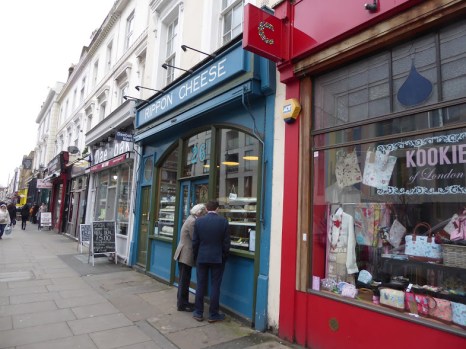
Local shops sell fine cheeses, fine antiques, and the charity shops have goods with £200 price tags.
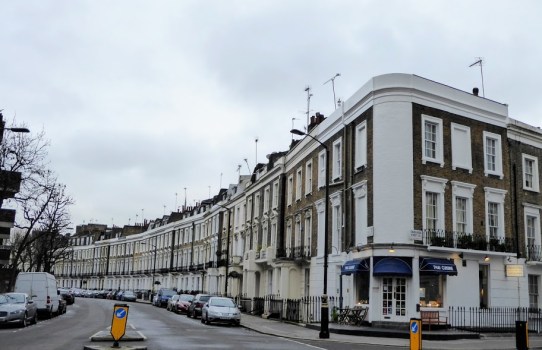
And here is a residential street. There won’t be any local working folk living in these handsome terraces any more. Zoopla again. £1,750,000.
A typical local street near Tachbrook Street.
It’s rather lucky that I neither want nor need to move back into the area.
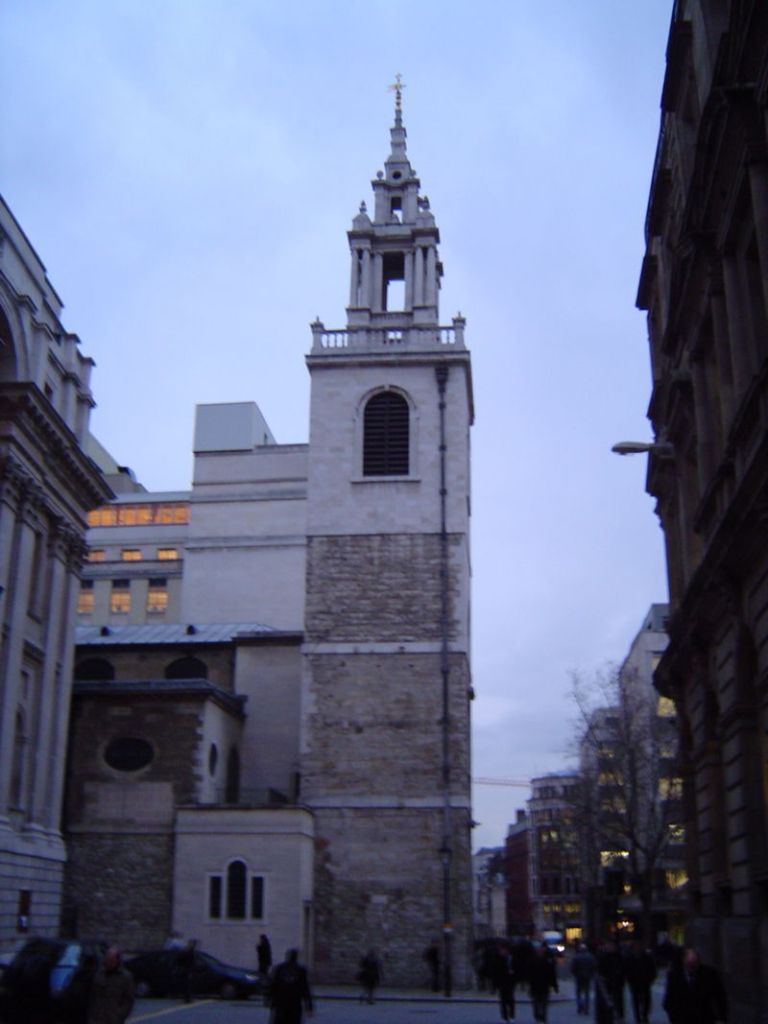
St. Stephen’s Walbrook. These days it’s huddled in between buildings ancient and modern, and hard to spot. (Wikimedia Commons)
St. Stephen’s Walbrook is built in the shadow of Saint Paul’s Cathedral, rather hidden away down the narrow street which gives it its name. After the Great Fire of London in 1666, Sir Christopher Wren designed no fewer than 51 churches to replace those that had been lost in the four-day conflagration. Saint Stephen’s was his first, and the one where he tried out ideas later realised on a grander scale in the cathedral.
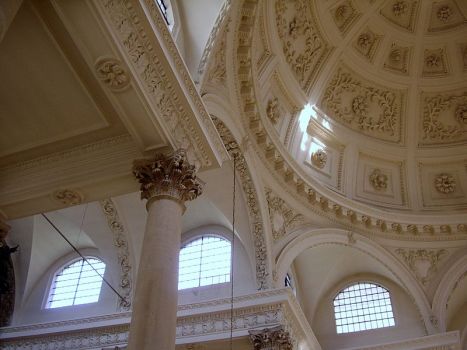
I visited it while I was in London the other week. This was Wren’s own parish church – he lived at Number 15, Walbrook. It’s the very first English church to have a domed ceiling in the Baroque style, such as Wren had seen in churches he’d visited in France and Italy, and it enhances the feeling of airiness and space.
The dome and windows of St. Stephen’s Walbrook (Wikimedia Commons)
I liked this church immediately. On a grey, cheerless day, light poured in through the immense arched windows, glazed with translucent glass as in Wren’s day. Back in those early days, he’d had oak box pews installed, and the Victorians had later replaced the plain glass with richly coloured stained glass windows, which limited the light entering the building and was contrary to Wren’s own wish to have a classical, rather than a Gothic-inspired church. Fine woodwork dates from Wren’s day. Here is the pulpit and its magnificent tester.
The pulpit and tester of St. Stephen’s Walbrook.
Then came World War II. A bomb plummeted through the roof. The church was saved from destruction because the bomb didn’t explode. But the interior was ravaged, the glass shattered. Restoration of the church proved controversial. Wren’s own desire to have plain glazing was respected, but his box pews are no more. Light-coloured wooden seating now surrounds a monumental white polished marble altar, the work of Henry Moore. It has been placed in the centre of the church, immediately beneath the dome.
Henry Moore’s altar, directly below the central dome (Wikimedia Commons)
This must now be a magnificent, as well as an intimate space in which to worship, or listen to a concert. Yet the congregation had to battle for several years against diehards who tried to vandalise both windows and altar, objecting to what they saw as a desecration of a historic church.
You can’t really see the dome from outside. Best visit the pages of Wikipedia Commons.
I got chatting to the verger, who was sweeping the floor as I arrived. He told me about the topsy-turvy lives of City of London churches. Almost nobody lives in the city these days, so Thursday is the new Sunday, with worshippers consisting of the working population, and retired folk from the suburbs who return to support the church they’d loved in earlier years.
He told me that Samaritans, the 24 hour telephone support service for the depressed, those contemplating suicide, began here when its founder Chad Varah, was minister here.
I’d popped in originally as I was exploring the part of the city my grandfather would have called home in his childhood. His house is no more – everything in his street was destroyed in the Blitz. This church is near enough to his home that he may have visited it from time to time, though his family’s own church is likely to have been All Hallows by the Tower, the oldest church in London. That will be my next port of call in search of his roots, next time I am in the city.
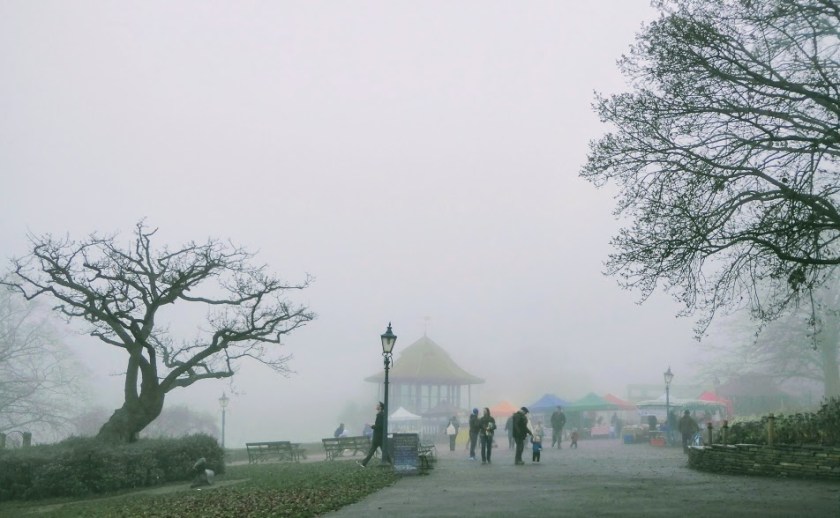
The Horniman Farmers’ Market, glimpsed through the gloom.
It’s just over a year since I first blogged about the Horniman Museum. Last Saturday we were there again. It couldn’t have been more different, even though so much was still the same. William is no longer a cheerful little bundle to be toted about in the arms of a willing aunt or granny. He’s a running, jumping talking live-wire of curiosity, demanding to be taken to see the ‘dugong’ (yes, really), or the owls, insisting on commentating, as far as he can, on everything he spots.
That’s a dugong, that is.
An owl takes centre stage at the European Wildlife Photographer of the Year Exhibition. William approves.
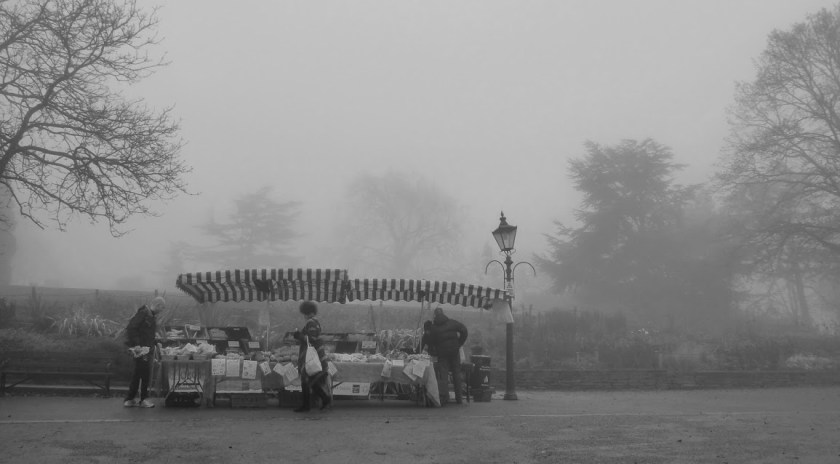
Last year, after our museum visit, we enjoyed strolling outside in crisp winter sunshine. This year there was heavy mist, obscuring the views of London. Instead of strolling round the gardens, or visiting the farmyard creatures, we settled for the small farmers’ market that’s there on Saturdays. There were stalls selling vegetables, and cheeses, or locally cured meats. There was street food. Tom and Sarah bought a goose for Christmas. We sampled spicy Iranian tit bits. And best of all, we had an early lunch. Look at this from the Smeltery. Tasty, chewy sourdough toast, topped off with melted raclette, bacon, chimichurri and some onion chutney, together with a handful of toasted walnuts. It’s perfect winter picnic fare.
A Smeltery sandwich in preparation…
… and on its way….
… here it is.
Buying winter vegetables.
But all the same, enough was enough. Next time, we’ll go when the sun is shining.
I’ve loved the Horniman Museum since I was a small child. We would make the long and slightly awkward bus journey there from our home in Victoria, over the Thames at Vauxhall Bridge, through dingy Brixton and elegant and well-heeled Dulwich to spend the day at this special place.
I can’t remember those visits in detail really. I’ve got memories of awe-inspiring and crowded cabinets of strange birds and unfamiliar animals, collected and stuffed many years before: of colourful displays of traditional costumes and artefacts from Africa. Somewhere or another I probably still have the odd sepia-and-white postcard, bought as a souvenir of our day out.
And now it’s set to be a go-to destination for new grandson William. He too will be able to enjoy the bus journey there and back, and a Grand Day Out, as we all did last Sunday.
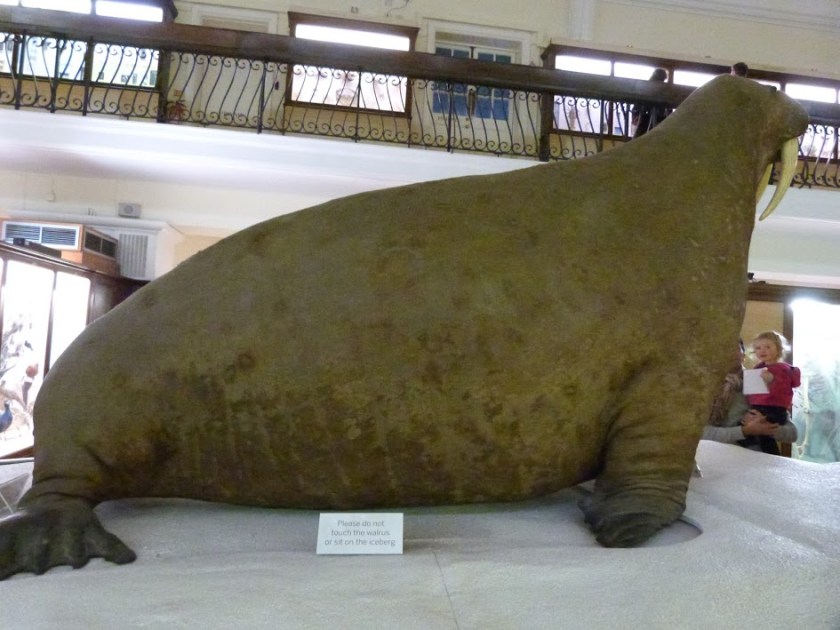
The museum is so much more than I remember from those days in the 1950s. Those collections – and more – are still there. They’re still arranged, particularly the Natural History collection, with a nod to the days when simply everything was displayed, all the better to fascinate you. There’s that wonderful walrus, stuffed by a Victorian taxidermist who hadn’t had the benefit of watching David Attenborough’s wildlife programmes. He filled out the creature full to bursting, not a wrinkle in sight. Everyone loves him.
One very generously stuffed walrus.
But the African Worlds gallery reflects more modern ideas of interpretation. You’ll find, alongside objects from traditional African cultures, more modern artefacts from countries strongly influenced by the African populations that arrived there during the years of slavery, such as Brazil and Trinidad.
Ijele: masquerade of the Igbo
We were keen to see the griffon vulture because we’d seen so many in la Rioja, in Spain.
A colourful collection of parakeets.
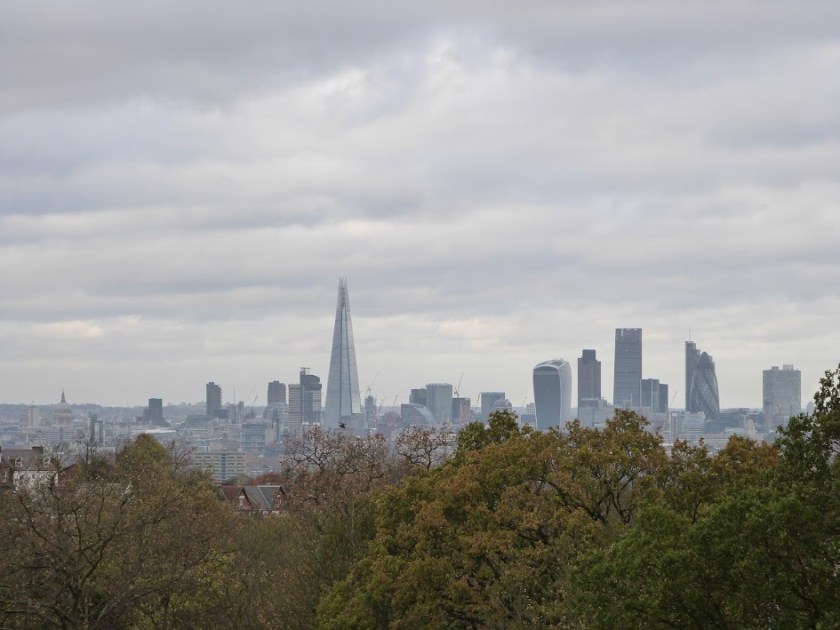
Surely that aquarium wasn’t there 50 years ago? And all those wonderful things happening in the gardens – I can’t even remember any gardens. I can’t remember the spectacular views across London. Even if I could, I wouldn’t remember this view. Look.
London skyline. If you try really hard, you can find St. Paul’s Cathedral.
I’m sure there wasn’t an Animal Walk. This is where William got the chance to come face to face with an extremely short-legged goat, a large and very industrious white rabbit, a couple of hens and an alpaca. Now there are flower beds showing plants that give us dyes for cloth. There’s an exciting space full of – are they sculptures? No, we can all go and make music there, strumming, pounding, plucking, experimenting. And so much more …. so much more. I’d happily go and explore this wonderful outdoor and indoor site every time we go and visit… and I know William will want to come too, when he’s old enough to have an opinion.
Round the back of the Horniman.
Tom makes music.
Wandering round the Horniman Gardens.
William meets a goat.
Autumn’s not a tidy season. But this is an oasis opf peace in London.
‘Even in 1215 London was an independent sort of a place: rich, well-connected and hard to govern. With nearly 15,000 residents it was already the largest city north of the Alps. Its merchants were organising a mediæval commune to protect themselves against pillaging barons and a taxing King, and its diverse trading population had strong connections to Europe and Scandinavia.
Meanwhile, bad King John was in trouble. He was retreating in France, running out of money and losing control of his Barons. Discontent was turning into open revolt and the King was very short of allies.
In 1215 the King was persuaded to issue a Royal Charter that allowed the City of London to elect its own Mayor. We presume that he gave his blessing to the commune in order to keep the City on his side, but there was an important condition. Every year the newly elected Mayor must leave the safety of the City, travel upriver to the small town of Westminster and swear loyalty to the Crown. The Lord Mayor has now made that journey for 800 years, despite plagues and fires and countless wars and pledged his (and her) loyalty to 34 kings and queens of England.’
That’s a quotation from the official site of the Lord Mayor’s Show. This is not so much a show as a procession that over the centuries recognised the Lord Mayor of London as one of the most powerful men in the country. This may no longer be the case, but in its day the procession was one of the greatest spectacles in the country, worth a mention by the likes of Shakespeare and Samuel Pepys. It’s still the occasion when the new Lord Mayor travels in a splendid coach which, were it to be built today, might cost some £2,000,000 to build.
The new Lord Mayor bravely sticks his head out into the pouring rain to wave at the crowds.
You’ll see city businesses, Livery companies, charities, the armed forces, police, Londoners from every walk of life, marching or on floats reminding us of the complex and varied history of the City of London, a small square mile area at the centre of the now enormous wider city, which is some 607 square miles in area. London has its own Mayor, an elected politician (currently Boris Johnson): please don’t confuse the two offices!
We were in London for a couple of days. Son Tom was singing in a concert with his Choral Society on Saturday evening, and for the rest of the weekend, the five of us, including four-month old William, became tourists. Four month old babies have a habit of imposing their own daily rhythms on the day, so we didn’t arrive for the start of the procession, or in time to secure a very good vantage point. But there were highlights, the last of which was the appearance of the Lord Mayor himself in that magnificent coach, accompanied by halberdiers in their ancient uniforms. Before that we’d seen horseguards, and representatives of some of the great Livery Companies. These were ancient trade and craft guilds. They existed all over Europe as Trading Standards organisations, as trade unions, as philanthropic organisations helping members in times of sickness and infirmity, but those remaining in London are unique in their survival, number and diversity.
The Royal Horse Guards wait patiently to take their place in the procession.
The Honourable Company of Air Pilots.
Not a Worshipful Company.
The Worshipful Company of World Traders.
We have no idea how Yorkshire muscled in.
A splendid coach. But not as splendid as the Lord Mayor’s.
Another splendid coach,
Haberdiers accompany the Lord Mayor.
Avery British sight. An elderly woman waits patiently for the Lord Mayor’s procession to wend its way past her again in …. oh, maybe an hour or so
These days we are charmed by the names of the more ancient Guilds: the Watermen and Lightermen; the Tallow Chandlers; the Spectacle Makers; the Painter-Stainers, the Merchant Taylors: we saw none of those, though they still exist. More recent additions are the Air Pilots, the Environmental Cleaners and so on, and we saw representatives of the Guild of Human Resources Practitioners and of the World Traders. What would Dick Whittington, the 14th century rags-to-riches thrice times Lord Mayor of London, more commonly these days seen in Pantomime have made of them, I wonder?
The City of London old and new, seen through the windows of Leon, a natural fast-food restaurant.
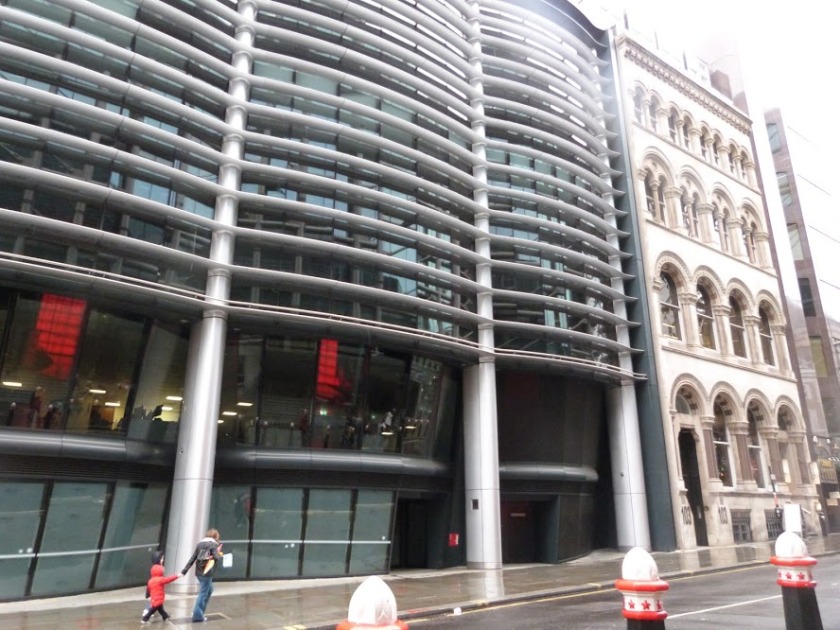
I love the City of London. Despite its being home to the Tower of London, to some 4 dozen Wren churches including St Paul’s and a host of other sites; despite its wonderful street names (‘Hanging Sword Alley’, ‘Gutter Lane’, ‘Wardrobe Terrace’), it’s a surprisingly people-free zone at the weekend. I love the dissonant notes as delicate, ancient buidings and churches butt up against stark modern constructions. I love it that these modern flights of fancy in glass and steel are obliged to squeeze themselves into street patterns established in the middle ages, and unchanged even after London’s famous Great Fire of 1666. There’s a surprise around every corner.
New city, old city.
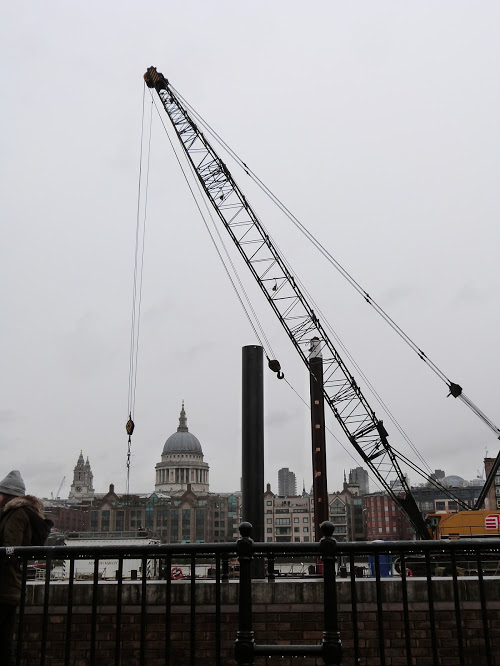
And afterwards, a stroll along the Thames, to see more evidence of London old, London new.












 From Pyrenees to Pennines
You must be logged in to post a comment.