But don’t get too excited. It’s only dear old Laroque, and little old Laroque falls between two stools. It’s not small enough to get every single person in the community involved in some way in this local festivity. Nor is it big enough, or rich enough, to throw money at it.
Miriam atop a float
So the primary school is the key. For several weeks the children have been focusing on the ‘Far West’, and making Native American costumes, cowboy outfits, totem poles and so on, and learning songs and music to fit in with the theme.
Today was the day they put it all on show. They processed round town. Tractors with floats trundled round the streets and into the grounds of the Château. The poor old cardboard cowboy on his horse the children had so painstakingly made became a sort of Guy Fawkes figure burning on a bonfire. The schoolchildren sang their songs. Grillades (a barbecue). As darkness fell, everyone moved off to the MJC (Maison de Jeunes et Culture). More grillades, more bands, dancing. A concert featuring our Music Centre. General merriment, a late night for the children. A good time had by all.
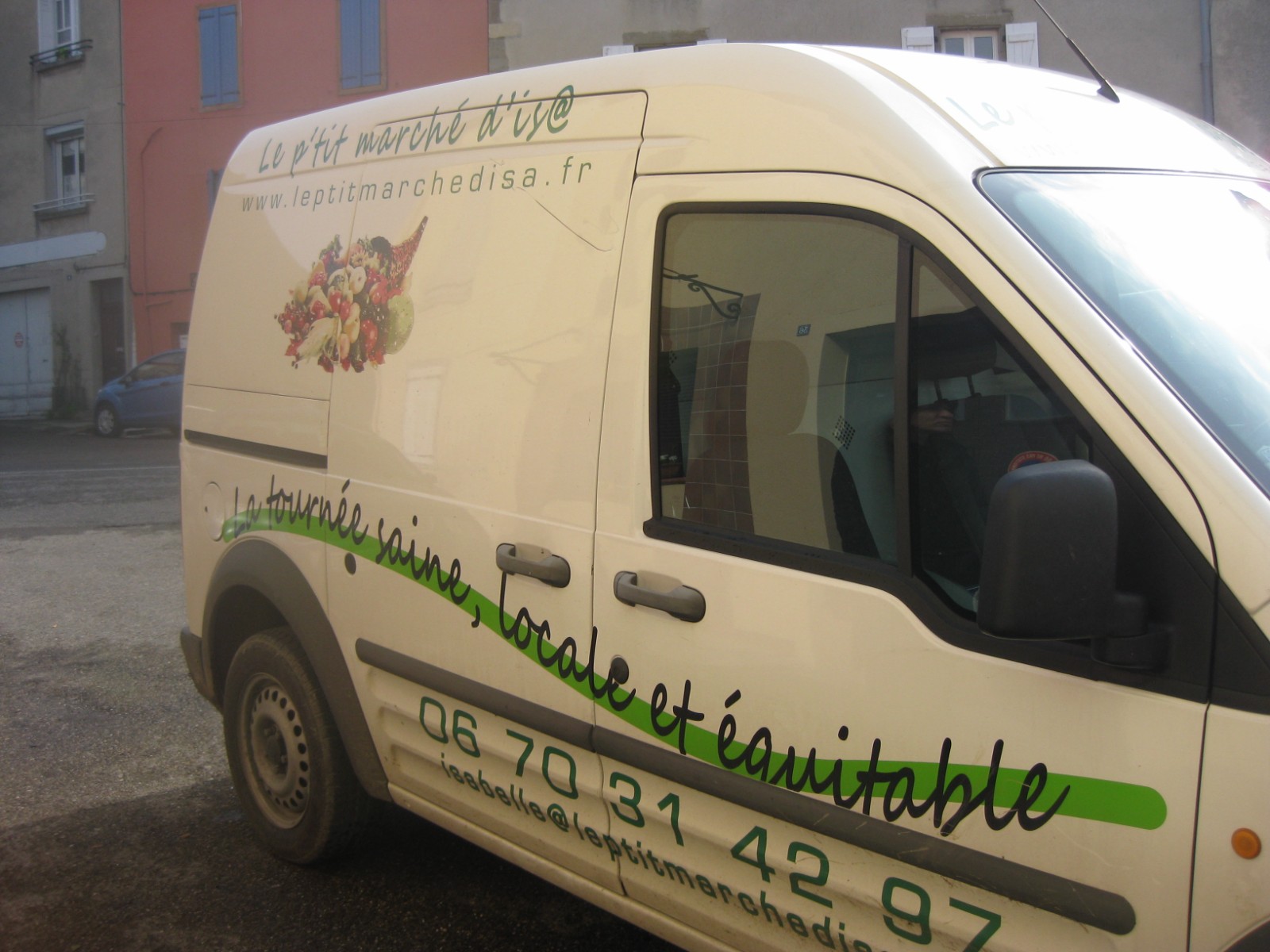
If you live within the long oval that has Mirepoix at the top, and Tarascon at the bottom, you might be lucky enough to get your fruit and veg. from Le P’tit Marché d’Is@ – Isabelle’s Little Market.
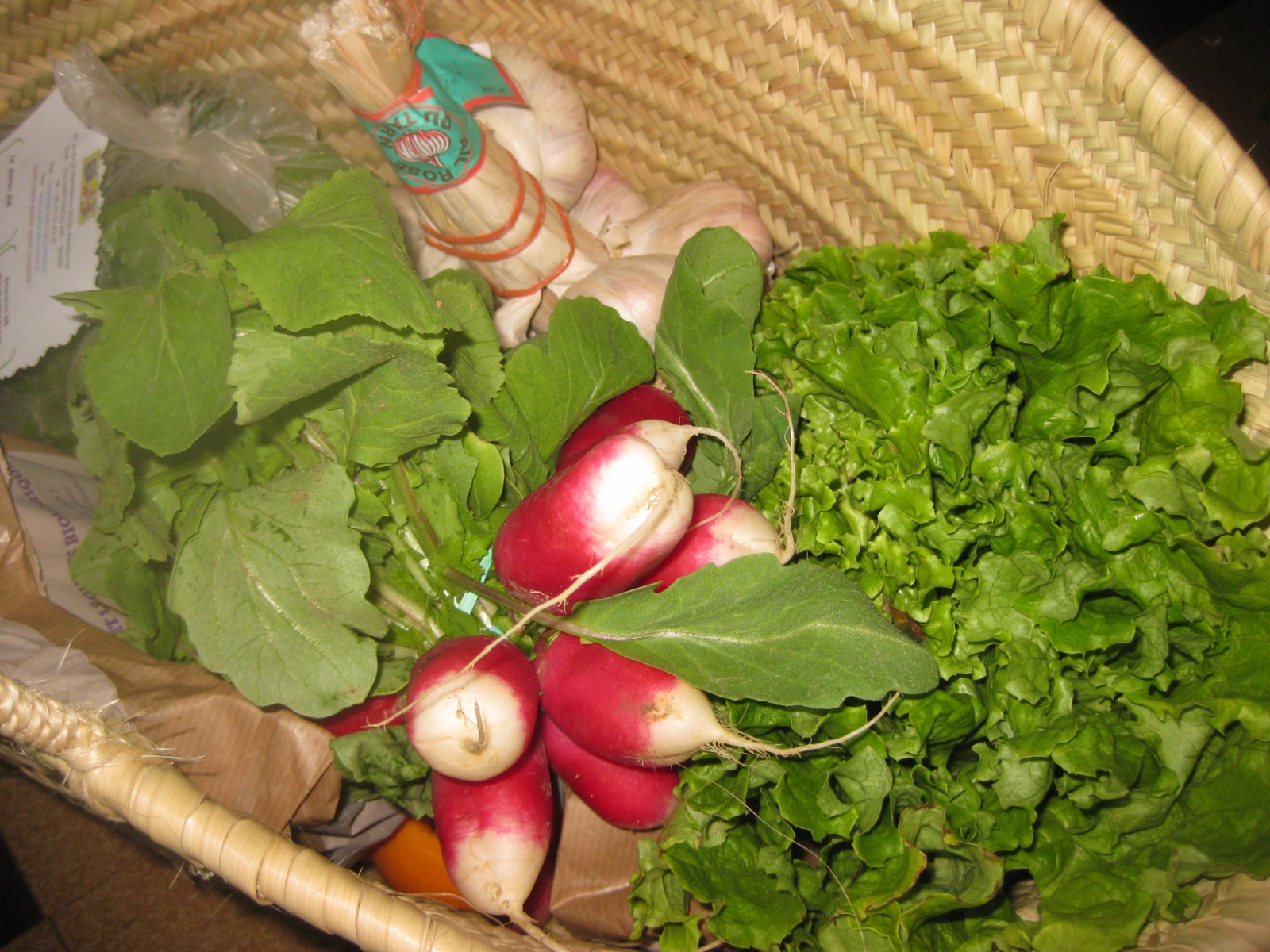
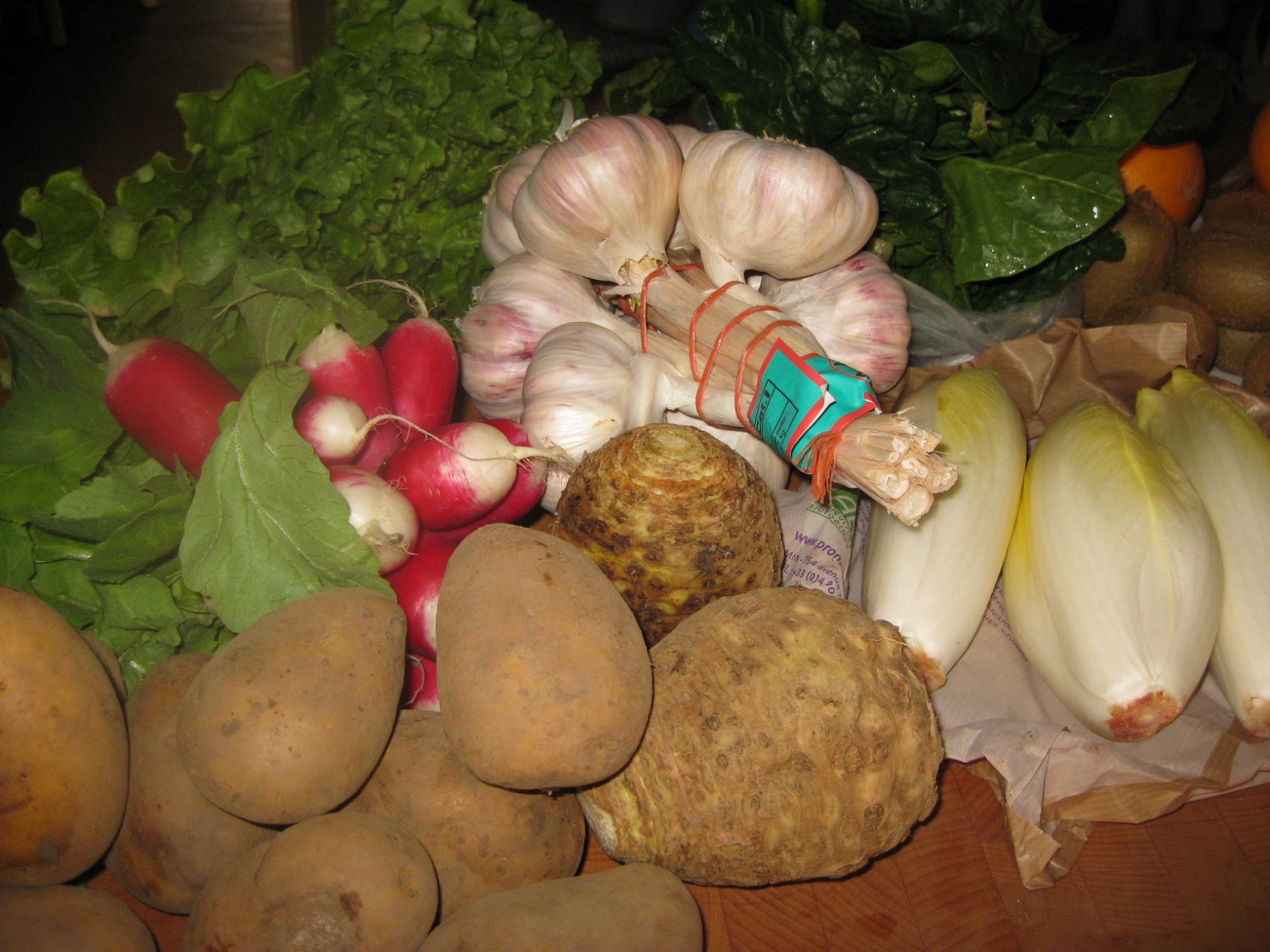
This isn’t like that. Her fruit and vegetables are organic or Agriculture Raisonnée, (limited use of drugs, fertilisers etc. permitted, within strict guidelines) all locally sourced: this week’s panier included potatoes, carrots, radish, celeriac, cabbage, spinach, chicory, lettuce, kiwi fruit, oranges and apples, all organic, and squeaky fresh. Last week’s, apart from the basics of potatoes, carrots and apples, was quite different.
Sorting out the shopping
Besides this, she’ll sell individual quantities of various fruit and veg , and she also has other lines. Poultry, pork, dairy products including various Ariégeois cheeses and yoghourts, all from farms no more than a few miles away. Groceries include wonderful organic flour from a mill near here, pasta, beers, and from slightly farther afield in the Pyrénées Orientales, oils, dried fruits, nuts,tapenades etc.
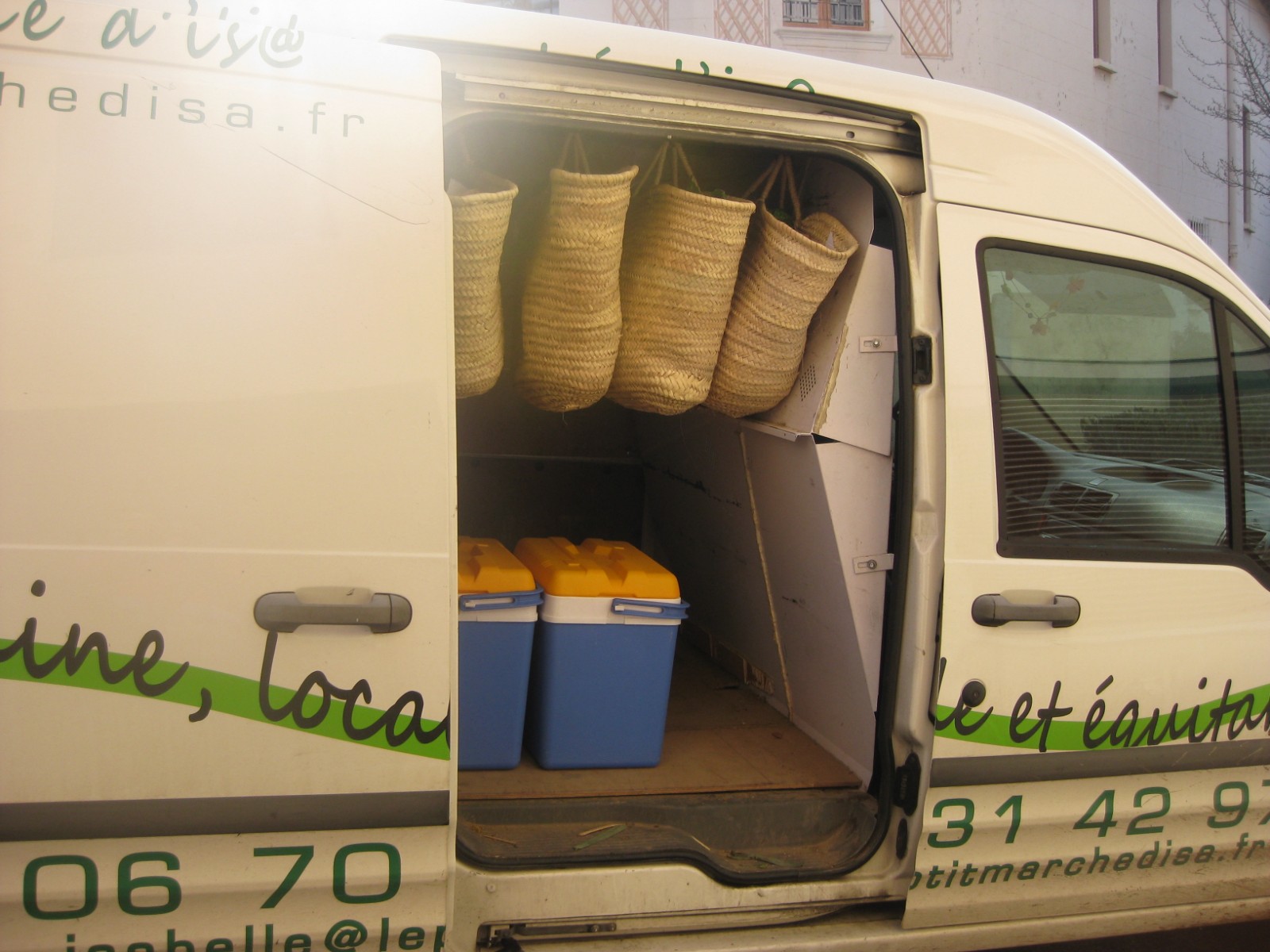
Just arrived and ready to deliver
It’s very simple: you order by Monday midday for delivery later in the week.
Now I really look forward to 11 o’clock on Thursday mornings when her little white van swings into the parking space outside our house, and she cheerily hands over her bulging panier of shopping for us to unpack and plan the menus for the next few days (she even has a recipe idea or two tucked in the bottom of the basket). It even beats market shopping. AND it’s made me feel not quite so unhappy about deciding not to grow my own vegetables this year.
At this time of year, with spring nudging the crocuses, violets and celandine into flower, and encouraging buds on trees to fatten and swell before bursting into flower, it’s time to be busy outside.
My single patch of white violets among all the purple
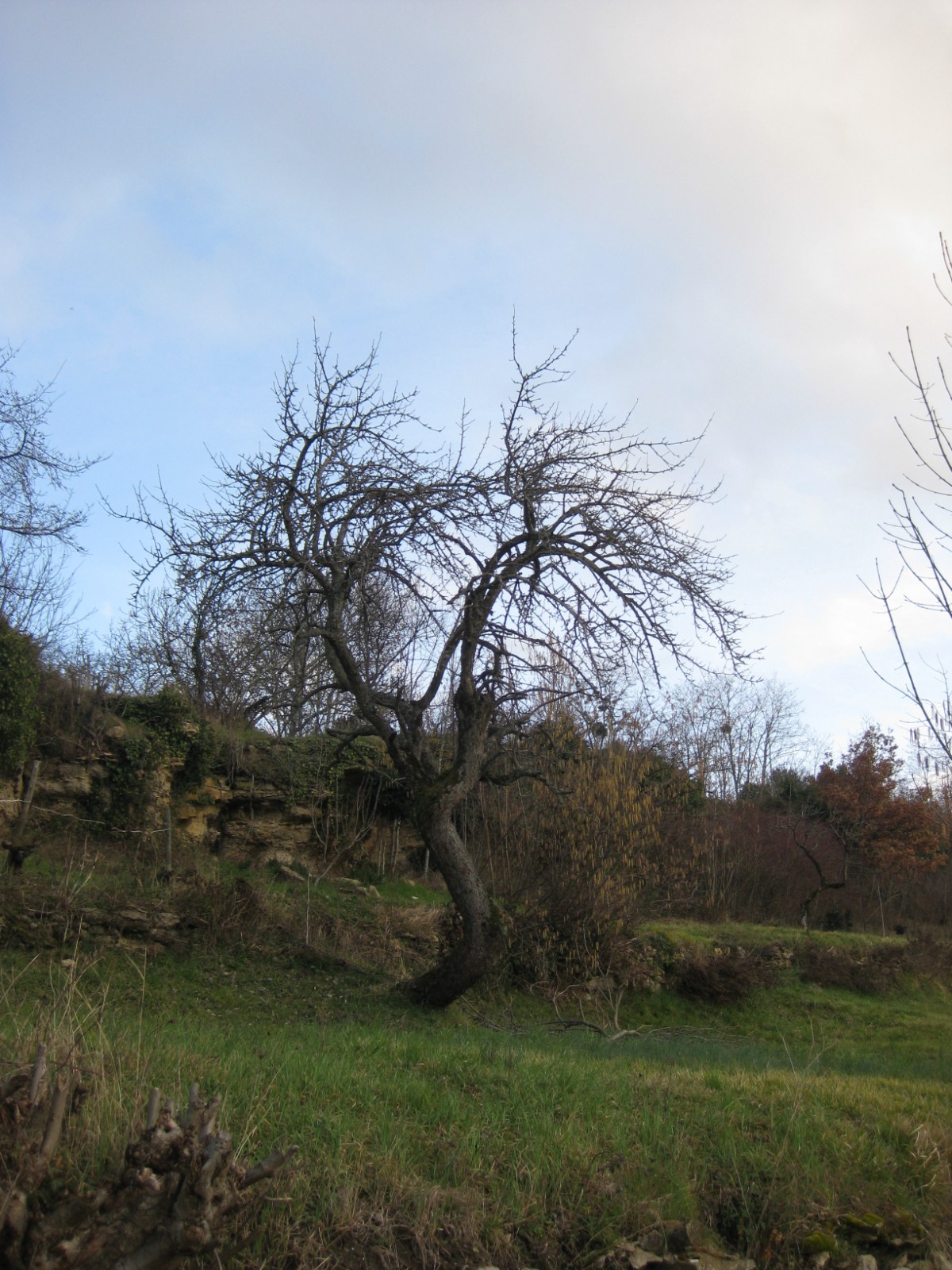
Our garden’s a minute or two’s walk from the house, and out of sight can mean out of mind. So once there (‘I’ll only be 10 minutes’….), I’ll find all kind of things to do. The grass needs strimming already. The vegetable patch is a disgrace. The fruit trees need attention: they suffered horribly in last May’s heavy snow, and they should really have had careful pruning much earlier this month. The compost heap needs a bit of TLC. Time passes while I prune our ‘vineyard’ – 6 vines. (‘Oh, sorry, have I really been two hours?’)
The pear tree: lots of character, not many pears
So I’ve taken a big decision. No vegetable patch this year. That way, the trees may get the extra attention they need: the ivy and brambles may not get the upper hand quite so readily, though I wouldn’t bet on it.
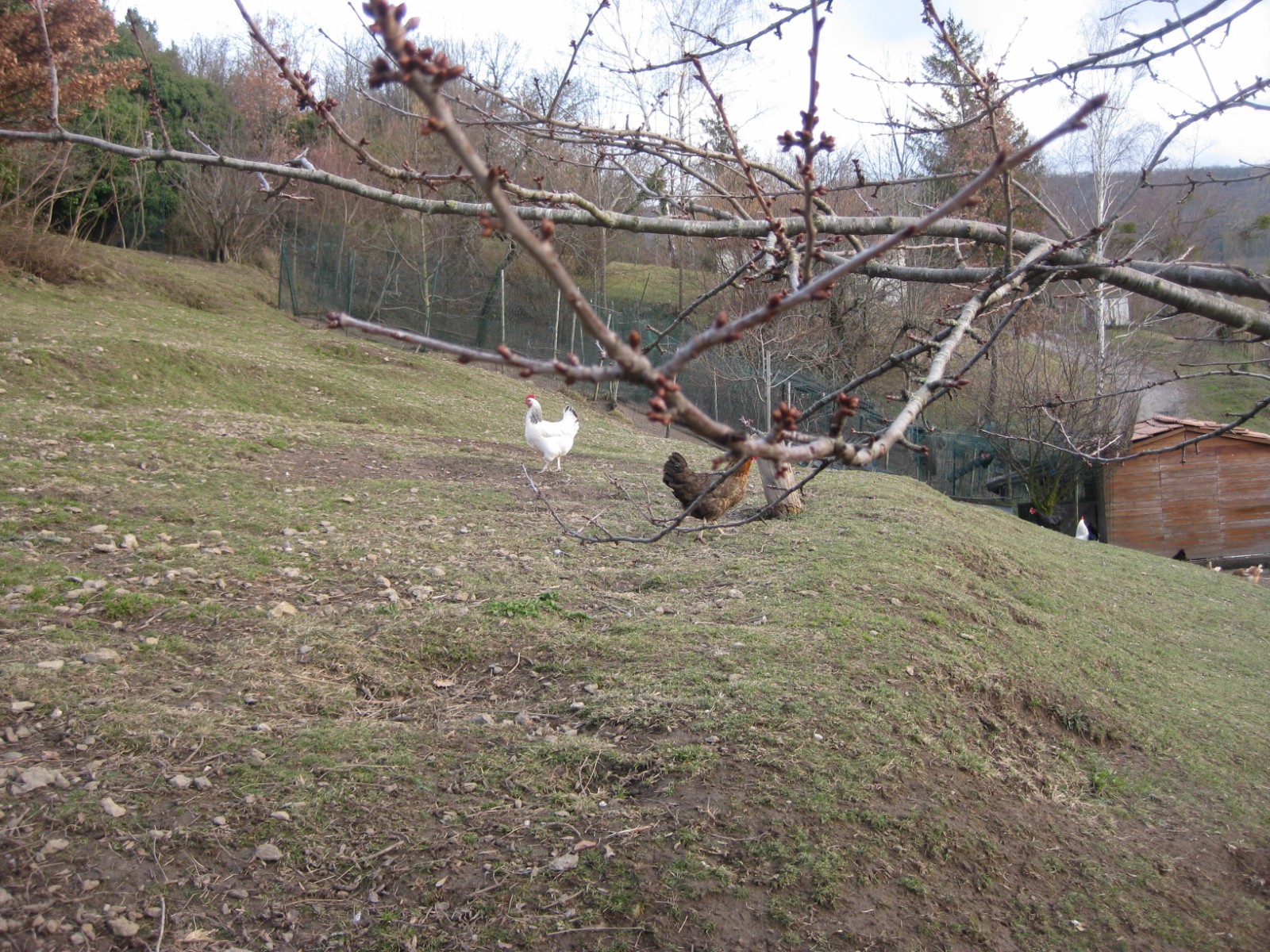
I’m not going to do it on my own though. From Easter, we’re planning new recruits to the garden: a gang of hens, whose job it will be to peck away at all the grubs, and keep the grass trimmed, whilst offering the occasional egg for breakfast.
The hens next door running free
Quite a few friends in England have re-homed ex-battery hens, and I’d love to do this too. I’ve written emails, joined internet discussions, asked around, but it doesn’t look as if I’m going to be able to find any here in France. But the search goes on as we plan the next project: build a hen house.
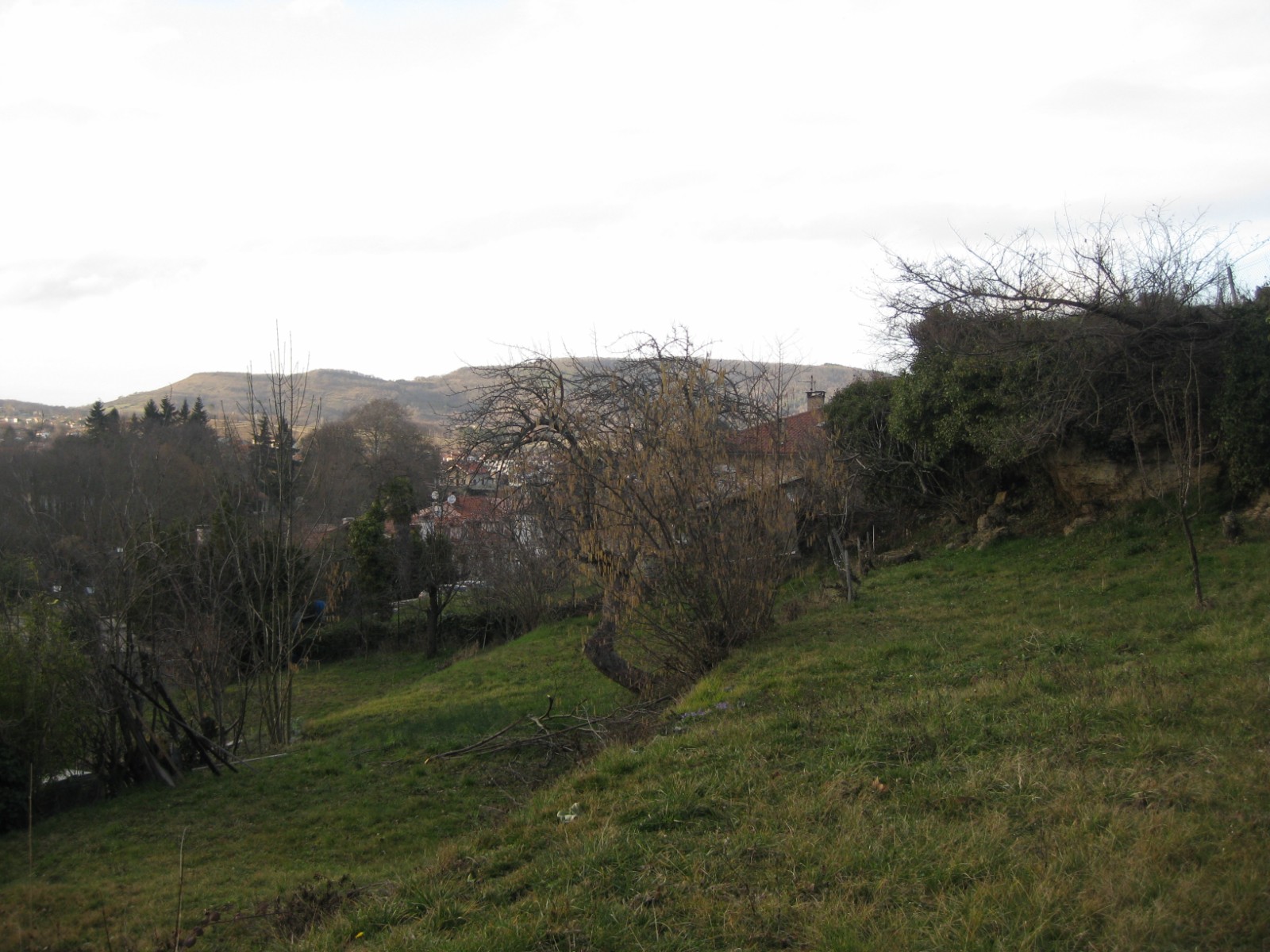
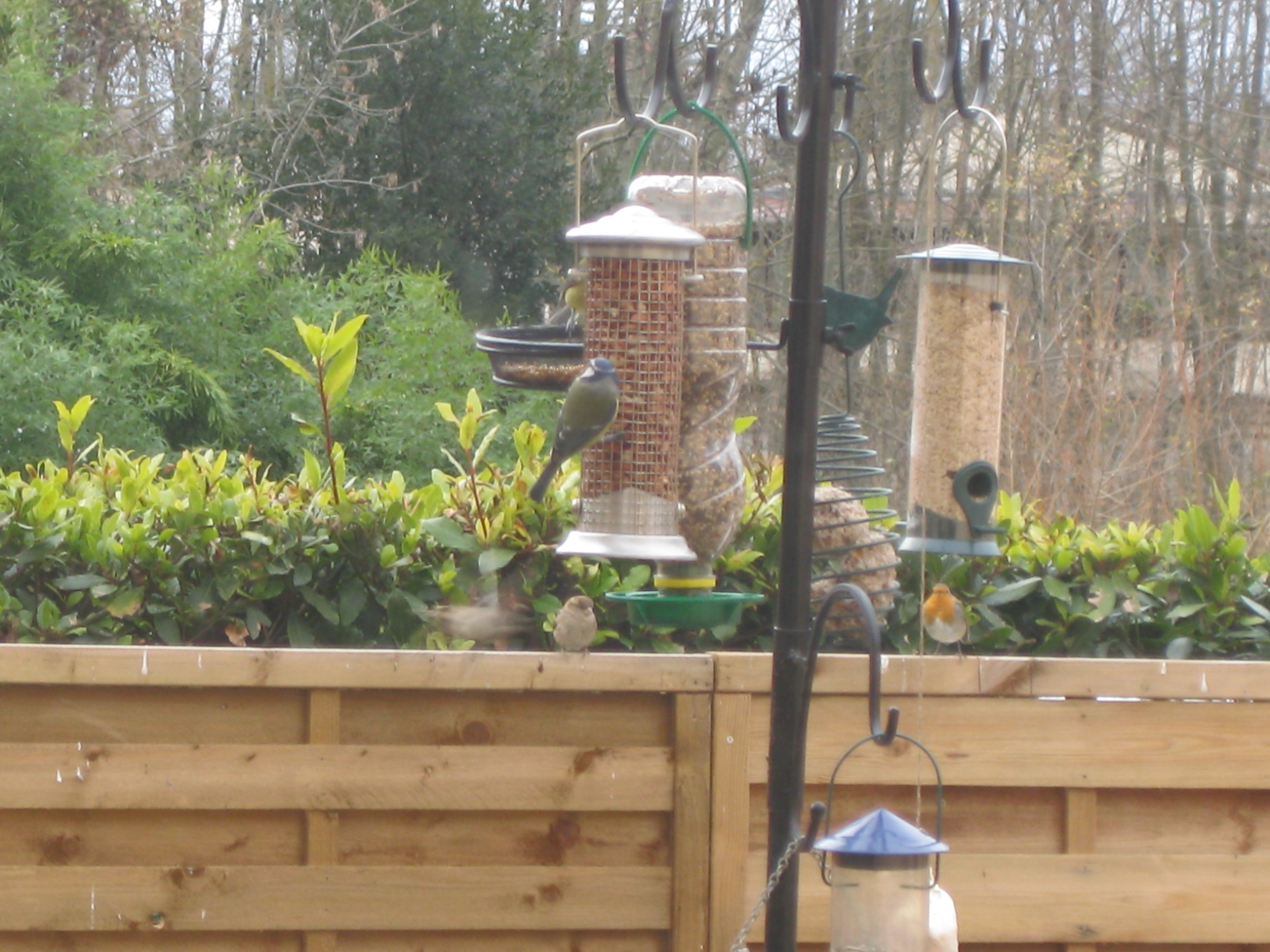
Although it’s often a lot of hard work, this garden’s a really special place for me (and I do mean me. Malcolm’s excused gardening duties so long as I’m excused DIY duties). From it, I can see Montségur, the thickly wooded long chain of hills called the Plantaurel, and the snowy peaks of the Pyrénées behind . So near to town, and away from the house, it’s where I come to get away from it all, and have a healthy workout as I dig, hack, uproot and generally try to keep Nature at bay.By the way: greenfinch update. Enough already! They’ve shown themselves to be belligerent, selfish dogs-in-the-manger, who dive-bomb, use their wings to beat off the opposition, peck, bamboozle – anything to keep any other bird away, even ones who are eating their least favourite thing on the feeding station.
Greenfinch fighting
They’re also extremely messy. I’ve told them. I’m not replenishing the feeder till they’ve eaten every scrap of the food mountain they’ve dumped on the ground beneath.
Oh, and as our lunch guests pointed out, it was a goldfinch, not greenfinch onslaught we had two years ago. We’ve seen none since. They’re all 4 miles up the road at my friend’s house in le Peyrat.
The phone rang. ‘Hi! This is Holly speaking. Your furniture, all the stuff we were going to deliver to you from England on Thursday….could the lads come now, they’re ahead of schedule?’ A quick summit meeting, and we decided that no, they really couldn’t. We simply weren’t organized enough yet. But we’d settle for Wednesday morning.
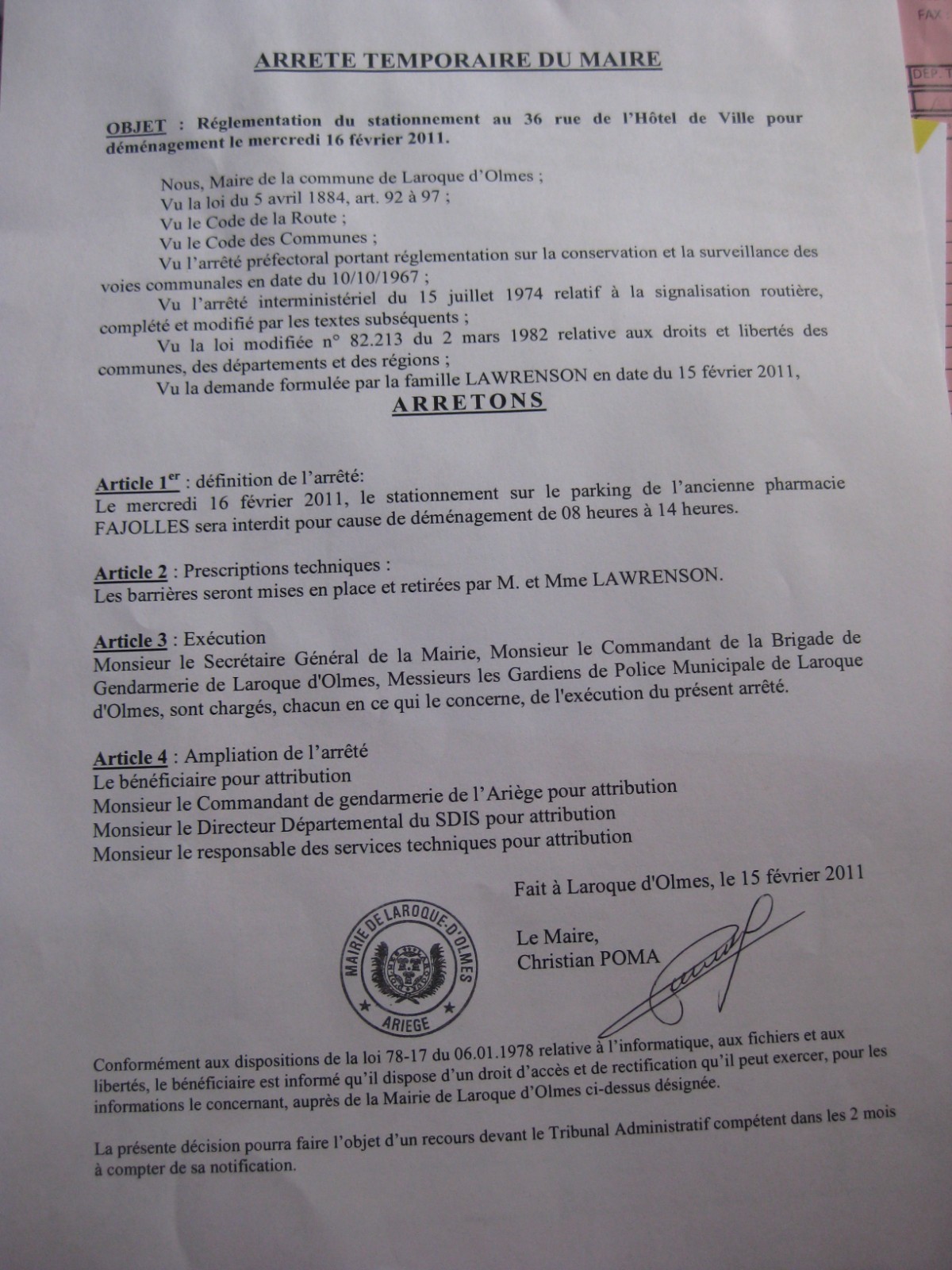
I put the phone down, and something at the back of my fuddled brain told me I really ought to tell them at the Mairie (Town Hall) that we were having a removal van the next day. So I did. Thank goodness. Not telling them would have been little short of criminal, it turned out.
For more than half an hour, they filled in documents for publication outside the Mairie itself and our house, and sent copies to the Fire Brigade, the Police and Technical Services, among others, for their information. The mayor came out of a meeting to sign the documents. Staff told me we needed to take responsibility for placing the barricades they would arrange to have delivered, so that nobody could park in our part of the street between 8.00a.m. and 2.00 p.m. We would also need to talk to all relevant neighbours and ask them not to park in the street between those hours.
I came home (we live 2 doors away from the Town Hall) and as I fished around for my door keys, I saw a council delivery lorry already putting 5 barriers at the end of the road for us to erect later. Malcolm commented that this was a tale worthy of that unmissable 1970’s children’s programme ‘Trumpton’, with its vignettes of a way of life none of us could quite believe had ever existed.
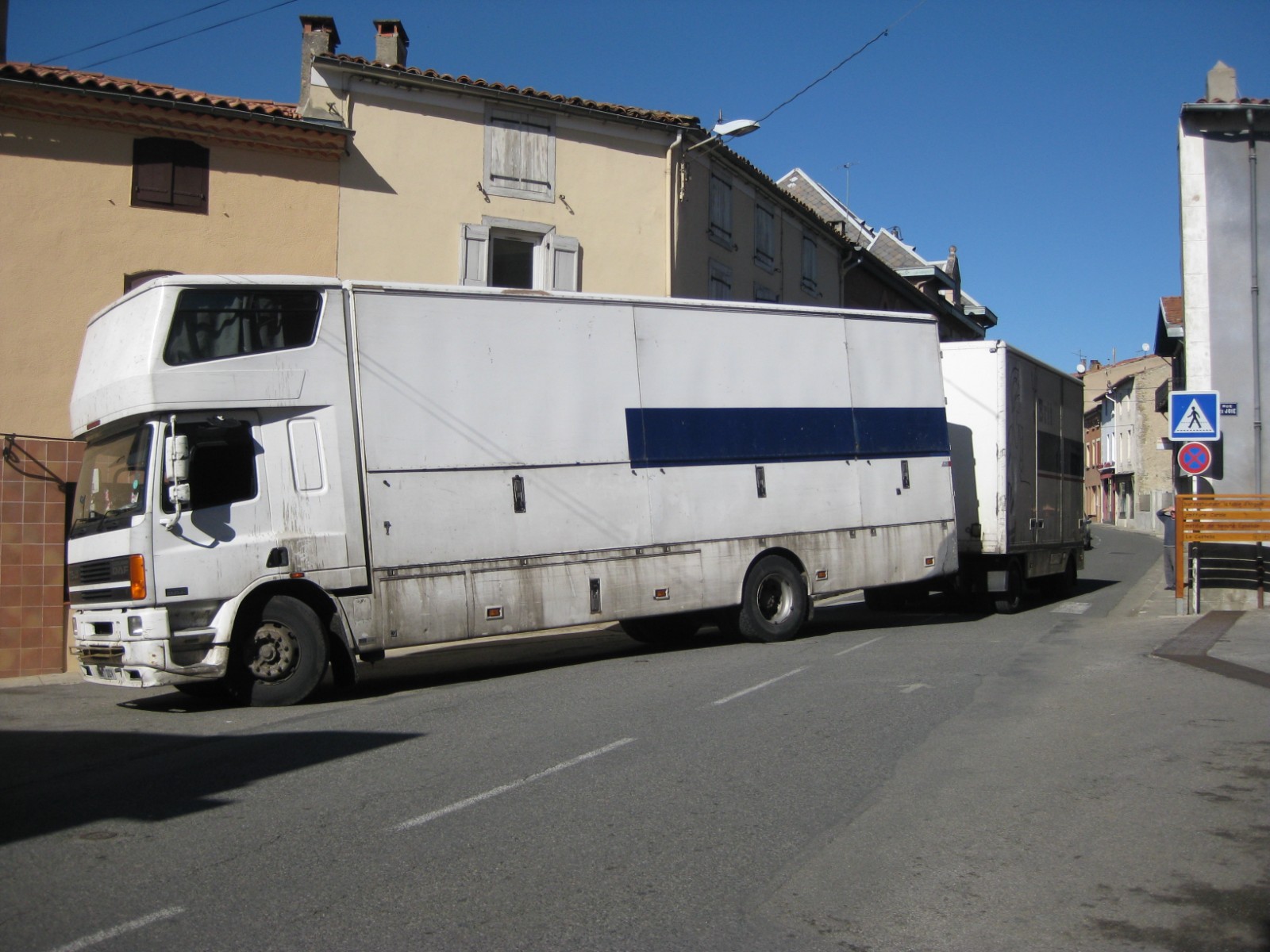
This road train's on its last trip ever. Back in the UK, it's going for scrap
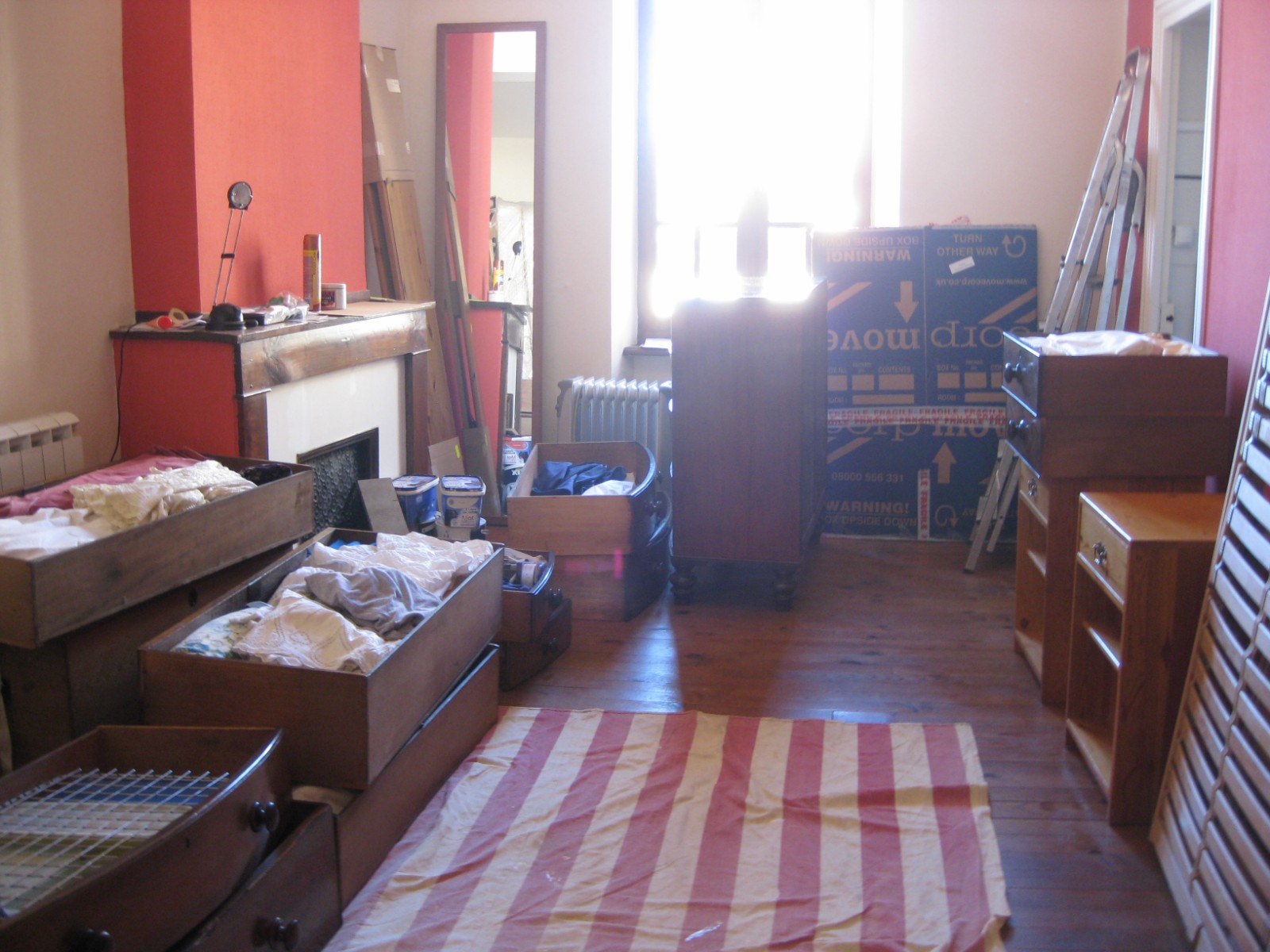
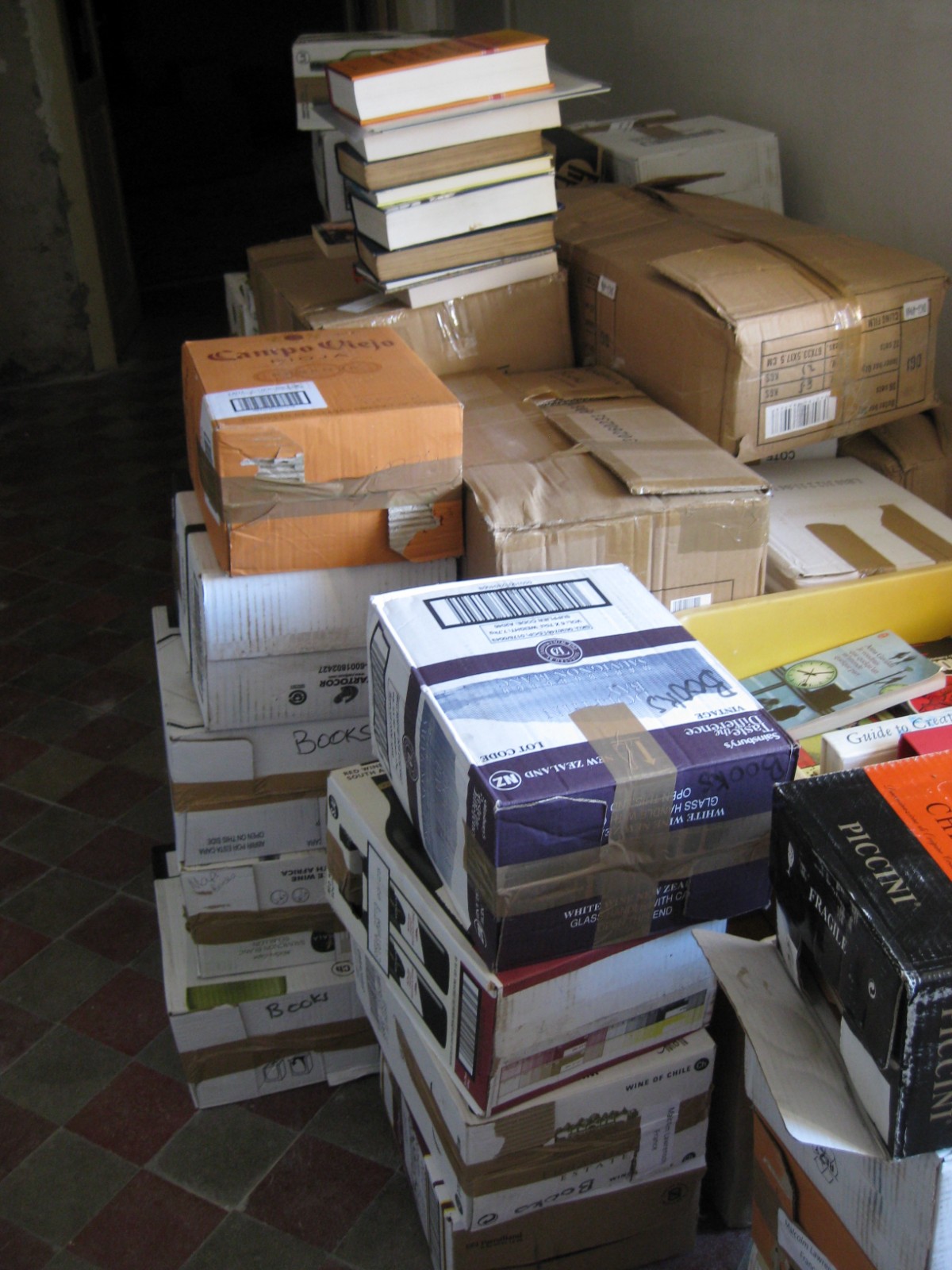
It turned out the fuss was worthwhile. When our removal van came, it was a ‘road train’, 2 waggons long, and mopped up every bit of space in our little parking area. It had left the UK nine days earlier, and spent all that time roving all over France: Alps, the coast – anywhere the English settle over here – delivering from the UK to some, and collecting for transporting to the UK for others. Paul and James, in the manner of removal men everywhere, tossed sofas, chests of drawers, huge boxes of books over their shoulders and trudged up and down our narrow stars for two hours till the wagon was almost empty. Almost, but not quite. Next stop Perpignan, before they head back at last, to be home just in time for a weekend in England.
Now all we've got to do is sort out, move round, organise......
Ooh, and by the way. They told us that removal vans sent to Europe are almost always unmarked, as ours was, because they can attract the interest of the Mafia in Italy, and even in parts of France. Paul had a close encounter himself not so long ago, and had to shift himself quick, never mind that his tachograph said he’d done his hours that day. Luckily for them, we had no such excitement here. Just a pile of paperwork for the municipal records.
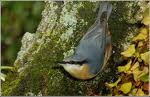
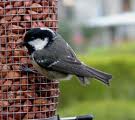
I chose these birds because, apart from the nuthatch, they can all be seen from the house. In fact the heron cruises past down onto the river to feed once, maybe twice, every day. We still get quite excited every time it happens.
But in most cases, not so very different from England, eh?
Depending on your point of view, it was either Napoleon or Adam Smith who first called England ‘a Nation of Shopkeepers’
But it was only after I came to settle here in France that I started to think of shopkeeping and market trading as skilled occupations, and realised just what is involved in keeping the customer happy.
It’s probably because it’s just so much easier, where we live in England, to nip down to the supermarket. There weren’t too many independent shops on our daily round: so much for a nation of shopkeepers. Mind you, we loved it when Emily was a Saturday girl at the French patissier who was then in Harrogate, Dumouchel. She would often be sent home with a couple of unsold petits gateaux for us to enjoy, or some slowly-fermented sourdough bread. It was small shop, and quite expensive, so she learnt quickly to value customers and to treat them well, so they’d come back. She learnt too that while most of the people she served were friendly and appreciative, customers could be curmudgeonly too.
The baker’s – busy at lunchtime
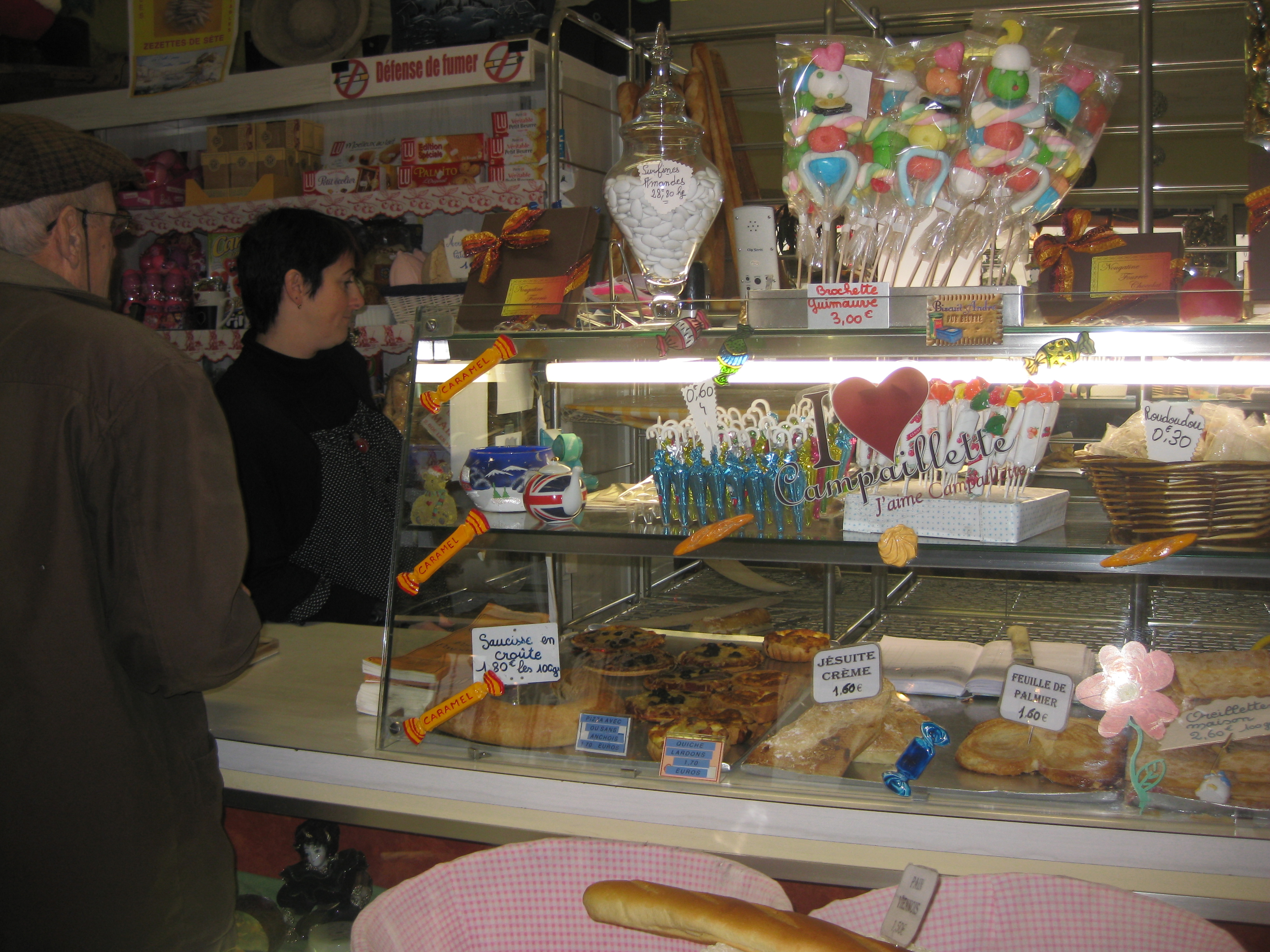
So who are the good commerçants here? Well, down at the bakers, they’ll often put aside our much-loved pain noir without being asked if I’m not in bright and early, knowing we’d be disappointed if they sold out.
Buying cheese at the market
Today at the market, madame who runs the cheese and charcuterie stall had printed off some recipes specially for me, because she knew I might enjoy trying them out.
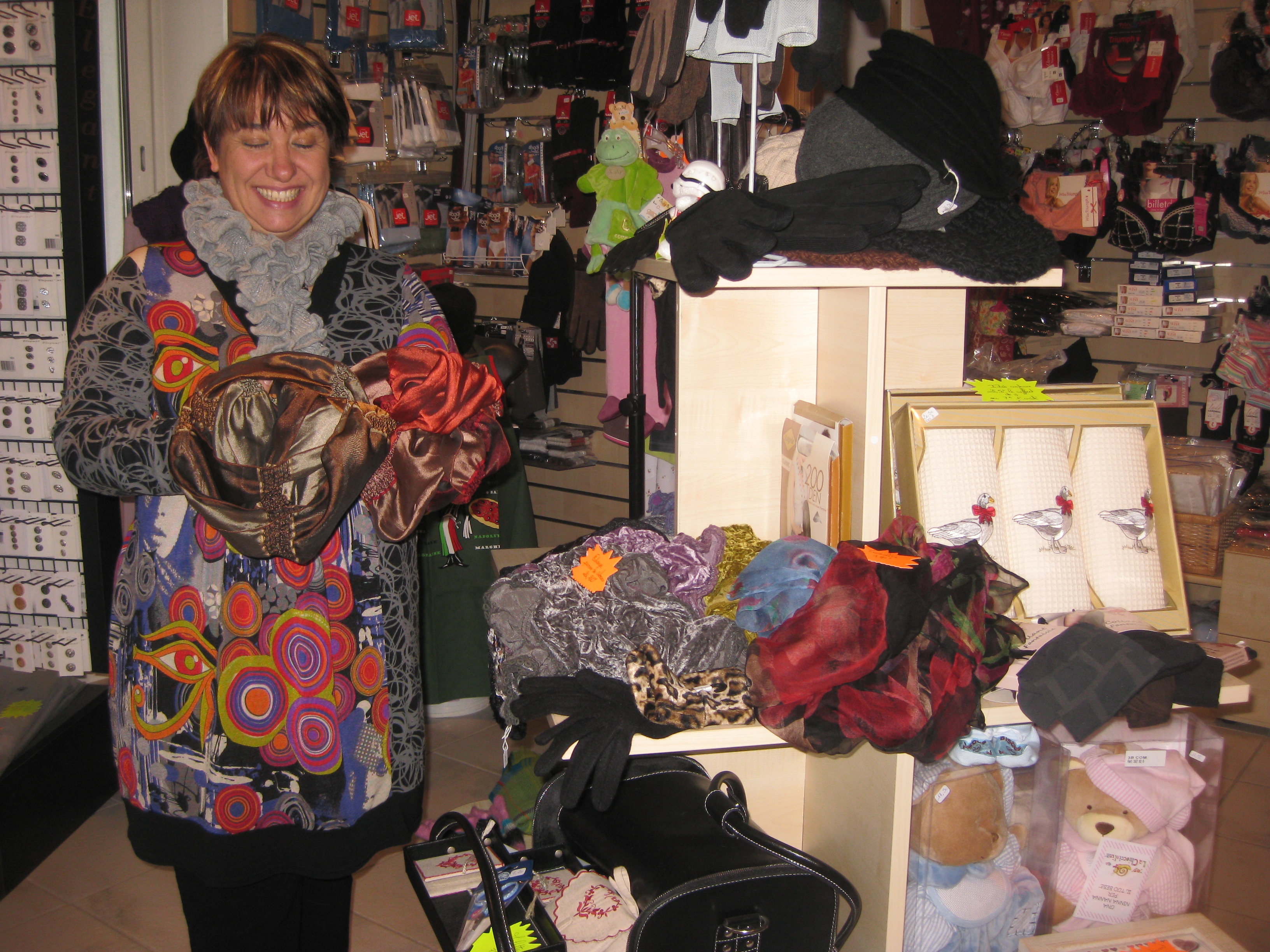
Down at Bobines et Fantaisies, she goes to Toulouse most weeks to seek out unusual scarves and accessories, so there’s always something new and worth trying at her tiny shop. ‘Let her try it on. If she doesn’t like it, bring it back!’, she’ll insist, as you dither between a bracelet, a couple of scarves and a chic but cosy winter hat. These shopkeepers remember us, our tastes, our whims and foibles. They welcome us, and chat cheerfully with us, even if we leave the shop empty-handed.
Madame at Bobines et Fantasies helps me choose a few presents
There’s just one shop here that doesn’t cut the mustard. ‘Il n’est pas commerçant’ we all grumble. Those of us outside the select band are routinely ignored, and as we feel our custom isn’t valued, some of us now go elsewhere.
But not to the supermarket. Oh no. Yesterday we DID pop into one, but as the muzak system was belting out a schmaltzy version of ‘Auld lang syne’ in what passed for English, we very soon shot out again. Small Shops Rule OK.
Back in the 1990’s and early 2000’s, British TV had a bit of a love affair with makeover programmes ( ‘makeover’, in French, is ‘relooker’). ‘Changing rooms’ made stars of Laurence Llewellyn Bowen and Linda Barker and the MDF industry. A little later gardens all over the UK started sprouting decking after their owners had watched a series or two of ‘Ground Force’, with Alan Titchmarsh and Tommy Walsh for the women, and the famously bra-less Charlie Dimmock attracting male viewers.
Since we bought this house, we’ve been busy ‘Changing Rooms’ too, but only more recently turned our attention to the back yard. And now that too has its own bit of decking, thanks to our ‘Ground Force’ of two + the demolition team back in April. It’s still a work in progress. The awful oil tank has been ripped out (it’s found a new home in Belesta) and been replaced by a young olive tree. We have to source garden soil for the raised bed that we’ll use for herbs and good timber to finish the top off as an impromptu seat. There’s a pergola to build, for shade, and the knotty question of covering the concrete still remains. It’s too deep to dig up, several builders assure us.
But we’re proud of our progress so far. Watch the slide show and see what you think.
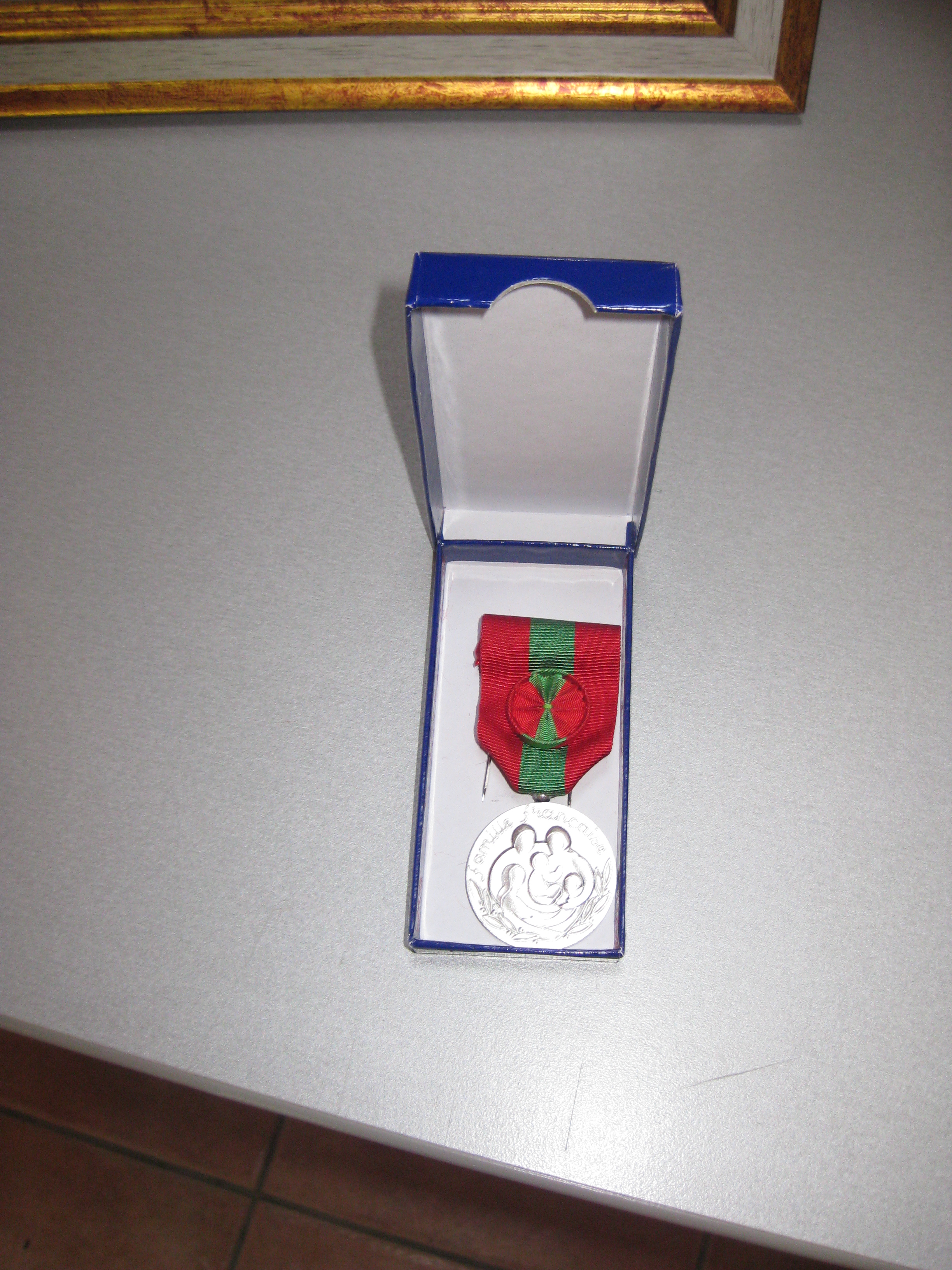
The Médaille de la Famille Française was created on 26th May 1920, following the catastrophic losses of the First World War, and can be awarded to mothers:
Bronze medal: for raising 4 or 5 children
Silver: for raising 6 or 7 children
Gold: for raising 8 or more children.
Since 1983, fathers or non-family members who have been responsible for bringing up numbers of French children can also qualify for a medal. There’s even a Catholic priest who qualified for the award, having raised his housekeeper’s children when she died.
Why the history lesson? Well, recently, we were invited to a ceremony to award such a medal. Sadly, I was in England on the day, but Our Man in Laroque, Malcolm, has submitted his report of the event
Two French friends, Martine and Francis, have a large and happy family – six children: three boys, three girls. Recently, Francis invited us to attend a ceremony to award his wife a silver Médaille de la Famille Française– not a word to Martine about this, you understand – a family event, but to be a surprise for her.
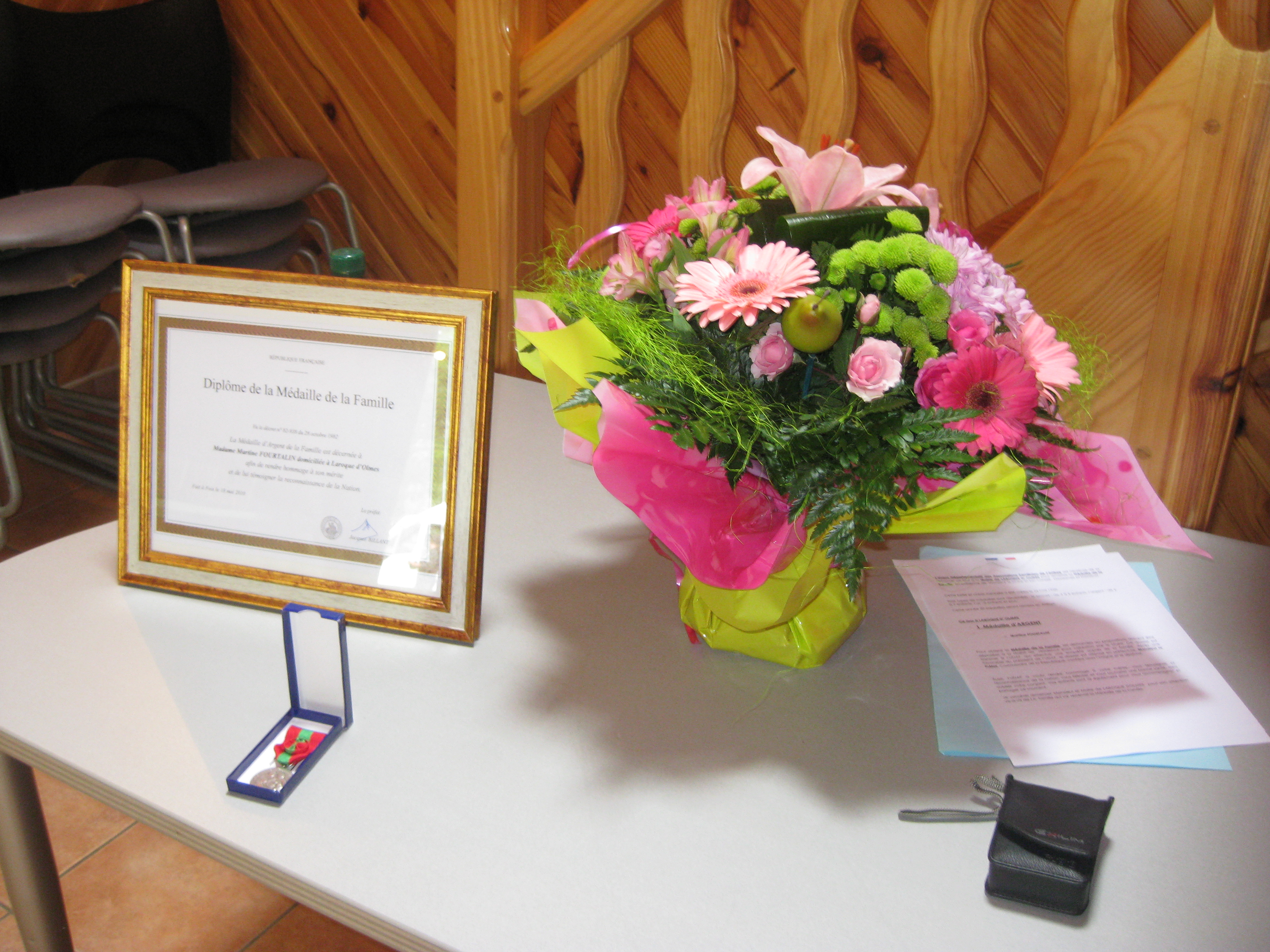
Turned up on the dot – a quaint English practice – at the appointed place. There were only six people there, and no sign of husband or wife. Nibbles were ready and waiting on tables, along with a few bottles of champagne, and there, on a separate table, stood a framed award, a small velvet-lined box containing a medal, and flowers, beautifully wrapped in presentation packaging.
And so we waited. And waited. Gradually, more of the children arrived. But not all. Then Francis, wearing a blue suit (before, we’ve only ever seen him casually dressed). And then, eventually, Martine appeared, chauffeured by one of her boys, and looking somewhat bemused. She too was wearing some finery.
And still we waited. For the sixth, and youngest, child of the family to arrive. But she didn’t. Turned out she had a football match on, and had forgotten….
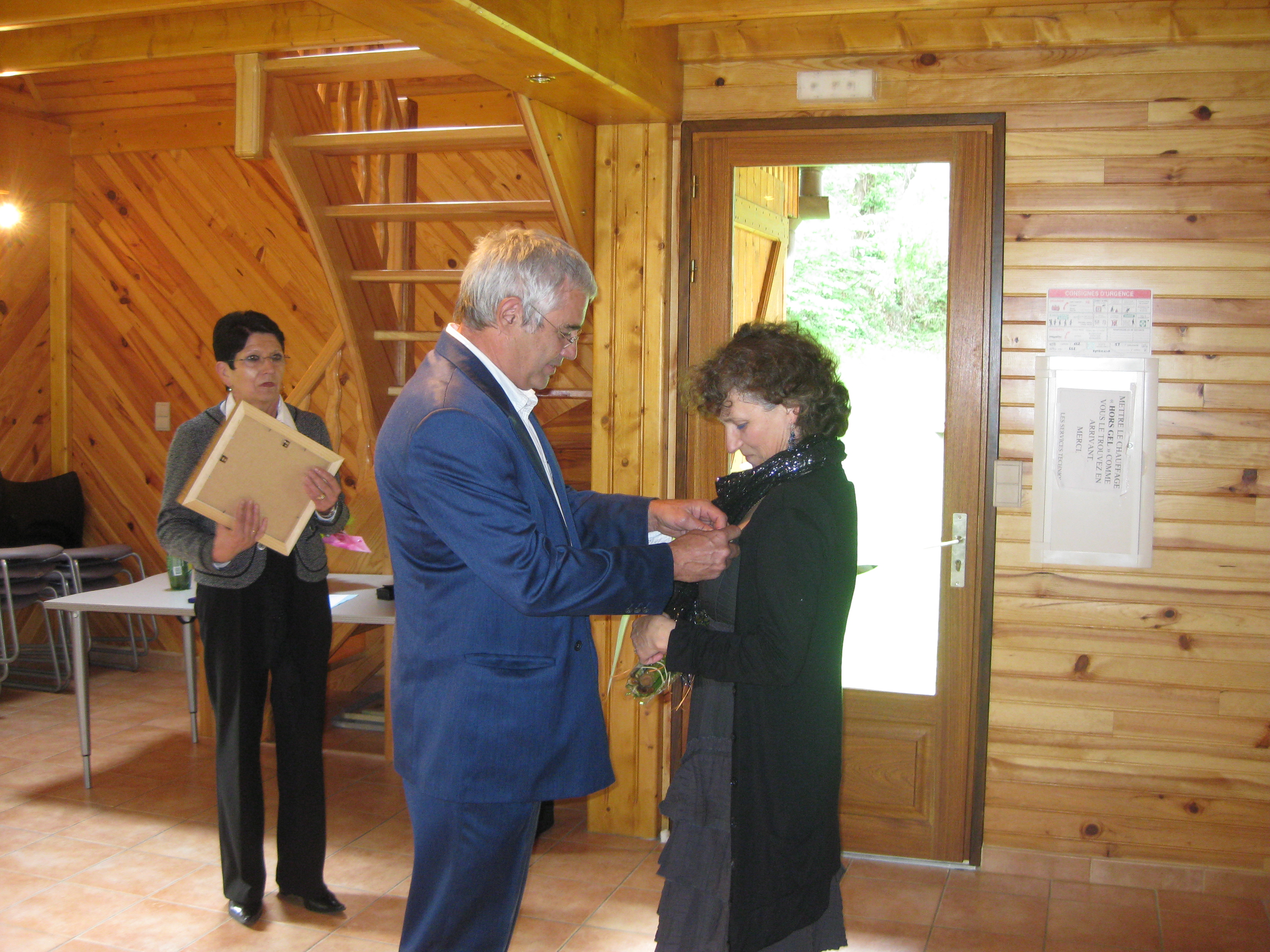
So the ceremony began without her. A smartly dressed woman of a certain age, the representative of the préfet, read a prepared speech from a sheet, Francis read another, and then presented Martine with a large bouquet of beautiful and rather exotic-looking flowers. Then came the handing over of the framed certificate, more flowers, and, most importantly, the silver medal, which was taken from its box and pinned on her.
The ceremony over, it was time for wine, nibbles, and photos.
And later? The family went back home to eat a special meal. This time, all the children were present, as the football match had ended. More posing, more photos, then an evening round the table – mother and father, their six children, a daughter-in-law, heavily pregnant, her parents, and one guest – me. I felt tremendously privileged to have been invited to this ceremony and then to their celebratory meal. Unique – I’d never been to such an event before, and doubt I’ll ever go to another like it – and moving – if integration is what we’re trying to achieve, it doesn’t come better than this.
This is the time of year when France begins to limber up for the Tour de France, which happens this year between the 3rd and 25th July. In truth, cycling never really goes away in France. Out driving the car, one of the occupational hazards is overtaking largish groups of keenies togged up in bright Lycra cycling gear, with bikes that in some cases have cost more than a decent second hand family car.
I’d forgotten that this weekend is the Ronde de l’Isard. This is a 4-day cycling event held here in the Ariège that began in the late 1970’s as a bit of a competition between local clubs. It’s since grown to have entrants from nearly as wide a range of countries as the Tour de France itself.
Free baseball cap....
So, this morning I was strolling along to the baker’s – rather late – it was almost noon. Suddenly, I could hear hooting, sirens, tannoyed announcements, and a fleet of vehicles led by smartly polished blue gendarmerie motorcycles advanced down the street towards me. Ronde de l’Isard, Advance Guard. As with the Tour de France, they had gifts, and as I was the only person on my side of the street, they made sure I got the lot: a spotted baseball cap, a key ring, and a leaflet from Tourist Information.
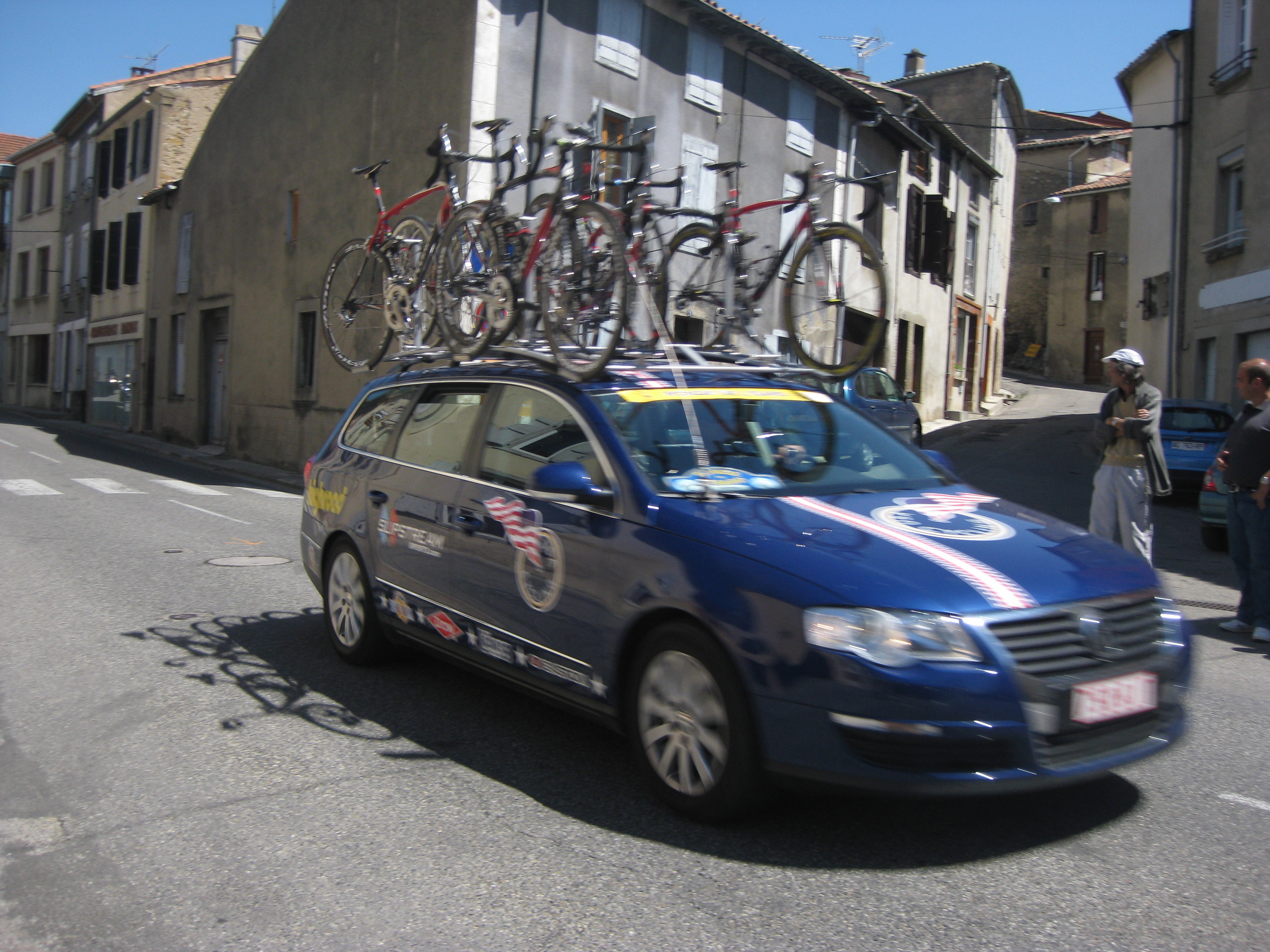
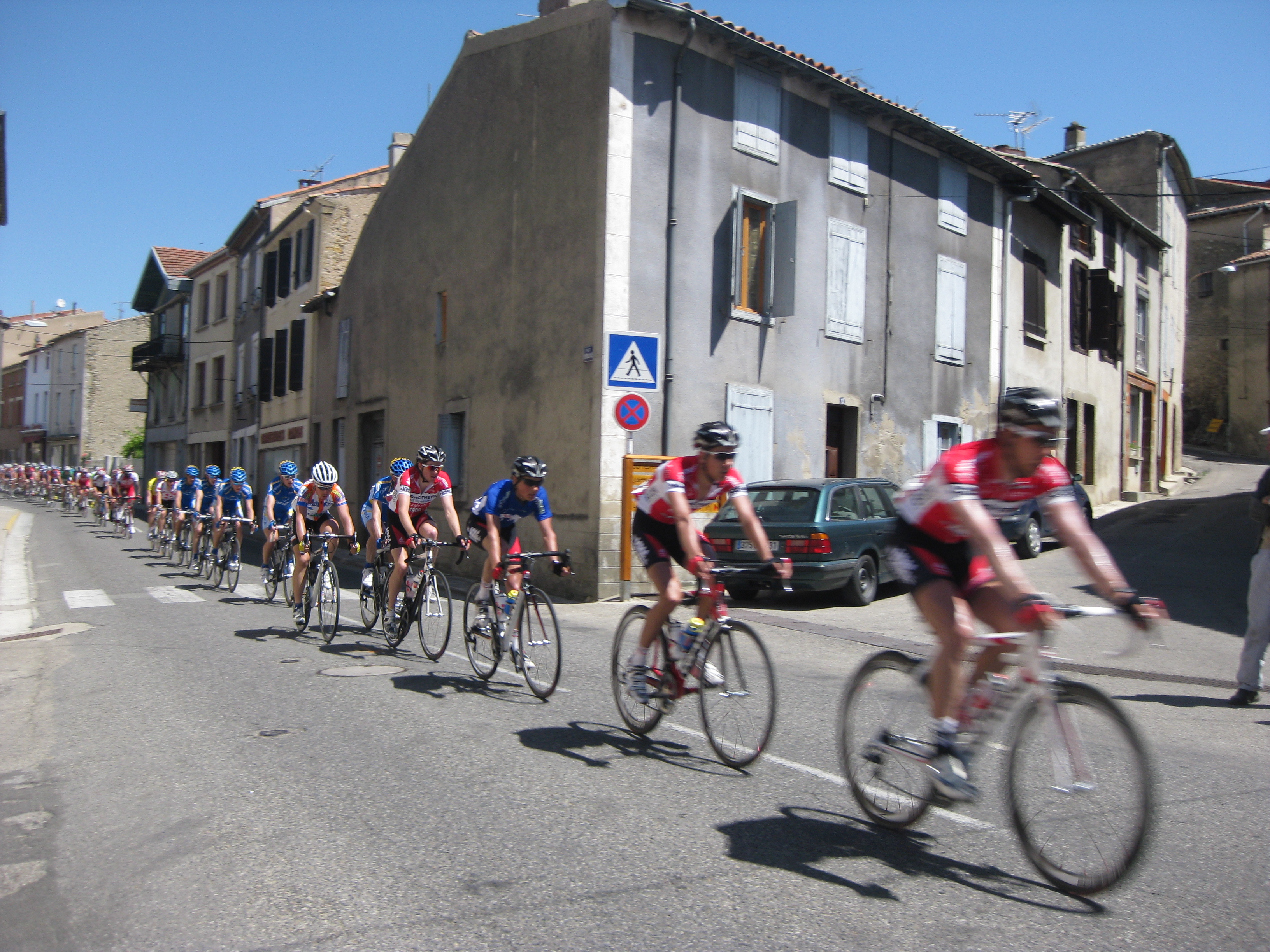
And that as it, for half an hour. At precisely 12.33, as advertised, the riders themselves tore into view. The whole of the rest of the Ariège gendarmerie were there on their motorbikes, advance vehicles of various kinds, and then – whoosh! – the cyclists, a l-o-n-g streak of them, flashed past: to be followed by support teams carrying spare bikes, ambulances, press.
Team support
Today they only had 149.1 km to do. Just now, the thermometer at the back is reading 37 degrees. Still, yesterday, just as hot, the distance was 175.5 km. The winner for the day managed it in 3 hours 55.9 seconds. Count me out
When we first understood that Laroque is twinned with Melgven in Brittany, we were nonplussed. Surely twinning arrangements are with England, Germany, Spain – or anywhere abroad. What’s the point in twinning with a town in your own country?
Well, quite a lot as it turns out. As part of the twinning arrangements, citizens from Melgven come for a long weekend here in Laroque , while Laroquais have the chance of a few days’ stay there in May. This year, we signed up for the 10 hour mini-bus trip to Finistère
Straight away, we began to see the differences. As we arrived, we were welcomed to enjoy poking round their fundraising ‘Troc et puces’ fair in the Sports hall. The Bretons are a Celtic race, and it shows in their physical appearance. Meanwhile, down here, there’s a long tradition of Spanish immigration, most recently in the Spanish Civil War, and the Second World War, so many locals here are olive-skinned and not very tall. A tannoyed announcement for M. Garcia and M. Sanchez to report to the desk in a public hall somewhere near here would have nearly half the room scurrying to reception.
And then there’s the food. Brittany, like Britain, favours butter, and unlike the rest of France, the salted variety. Out to a meal on Saturday, the lunchtime bread came with pats of butter, something that never happens down south. In the Ariège, cooking’s done in duck fat, and more recently, olive oil. No part of Finistère is very far from the sea, so fish and seafood are an important part of the diet. Down here, duck in all forms is king. But pork, lamb, game, beef are all welcome on the dinner plate. If it moves, eat it.
When we looked round a market in Concarneau on Saturday, we were struck that there was little charcuterie or cheese on sale, and what there was came from elsewhere. It seems as if every other stall in our local Ariègois markets is one selling cheese and charcuterie, much of it from just a few miles away.
Brittany – cider and beer. Southern France – wine. As part of our welcome apéro, we were served kir made with cassis and cider. After sipping it suspiciously, we accepted refills with enthusiasm.
So…what were the highlights?
The welcome. Of course. Some Laroquais have been going on these exchanges for several years, and the warmth of the relationships forged is clear to see.
A change of scene: the countryside. Our host, Albert, took us on several walks, and we were struck with how very British this part of Brittany looks: softly rolling hillsides, woodland and meadows. We traded orchid spotting in the Ariège for enjoying the swathes of bluebell glades in the woods.
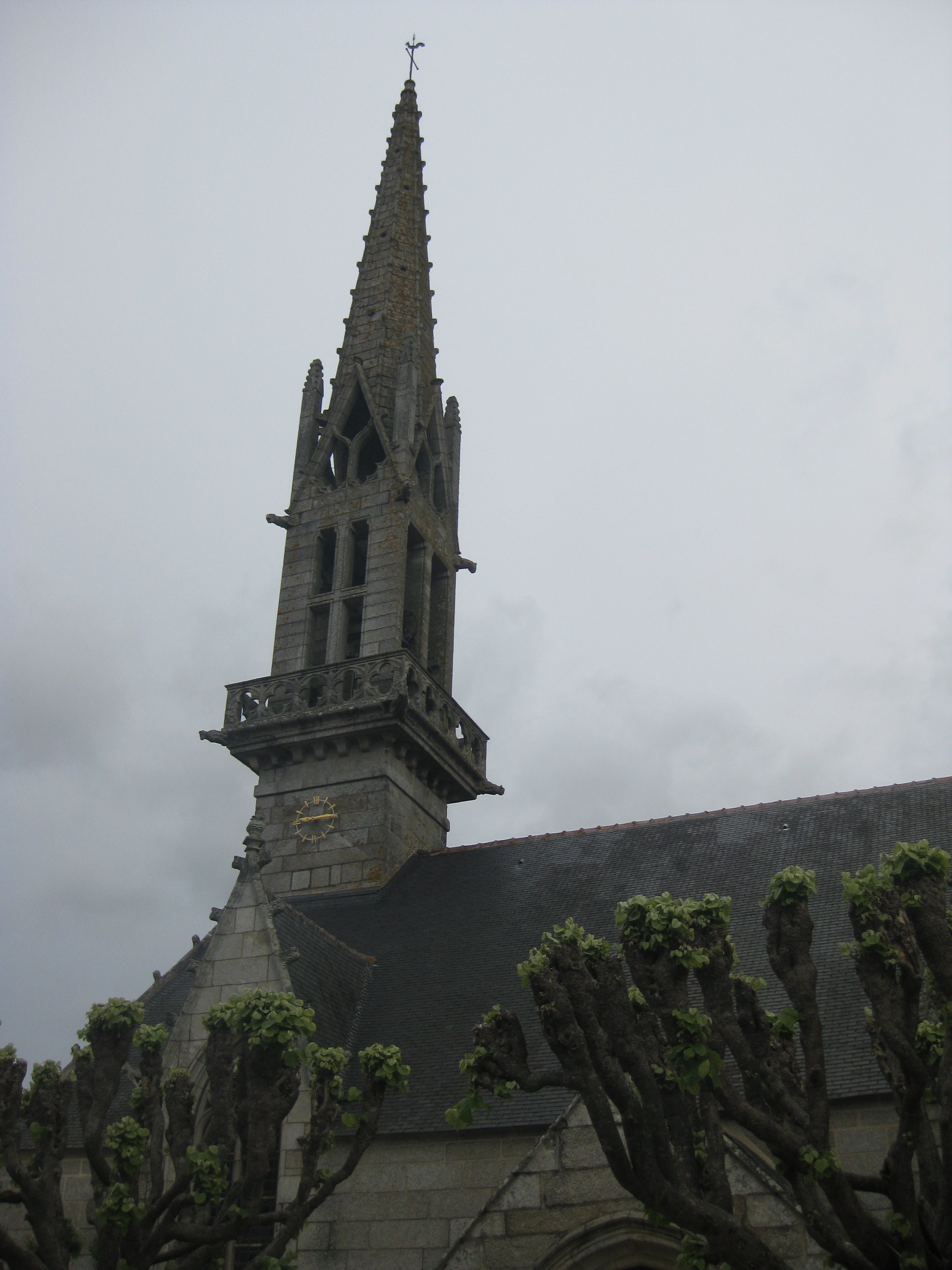
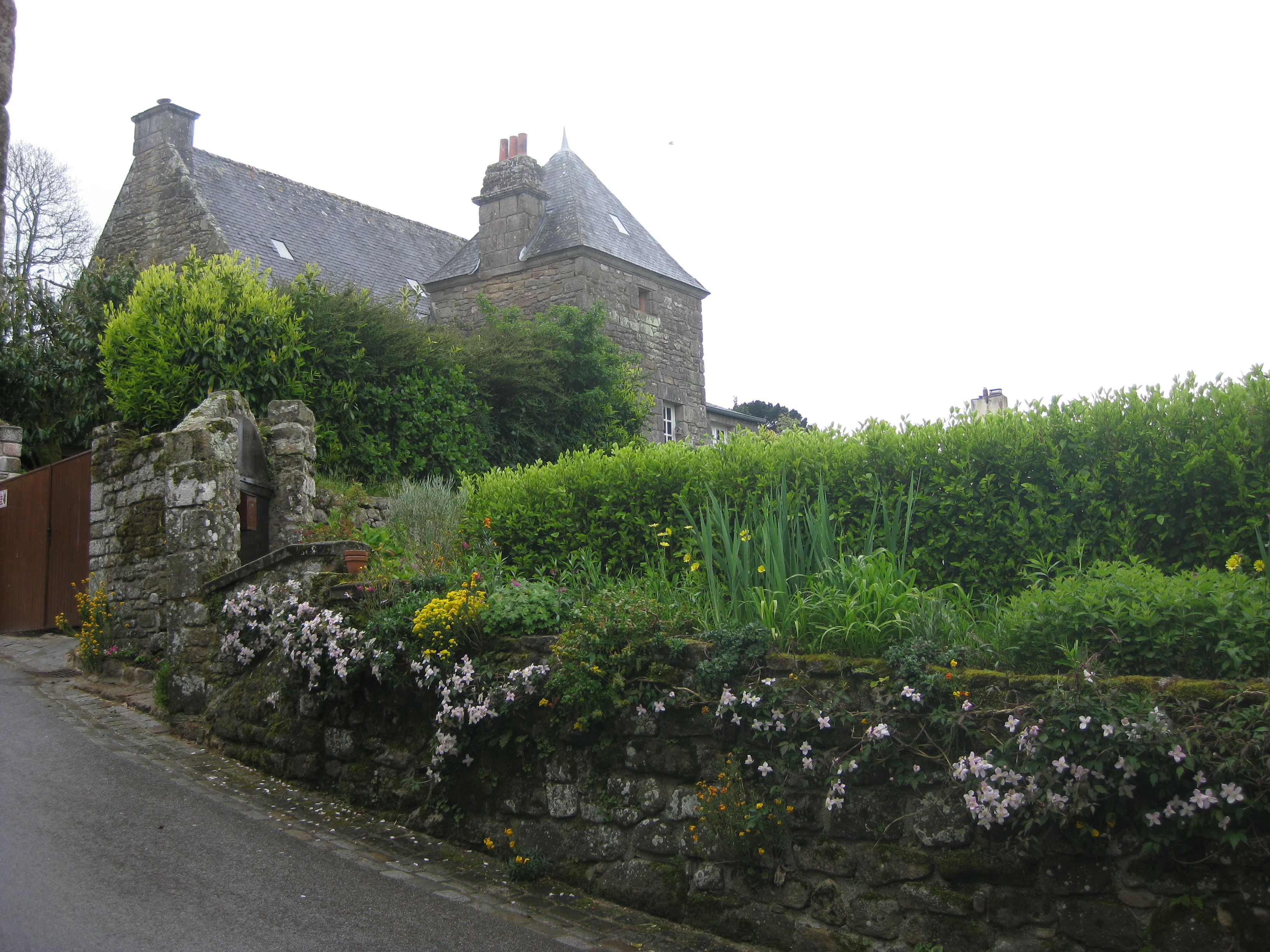
A change of scene: the town. We exchanged the shallow-roofed, unpainted or pastel coloured houses of the south for the tall white narrow pitched roofs of Brittany. Down here, we’re used to our towns and villages being shabby. Brittany’s are clean, sparklingly so, with flower boxes, neat gardens, and a general air of pride in the community. And then there are the churches. No clochers-murs in Brittany, but rather complicated steeples instead.
The seaside. Concarneau was at its sparkling best, with breezes tugging at the flags, clouds pluming across the sky, an early pre-season freshness to the narrow streets of the historic quarter. Their fishing museum there shows all too graphically just how very tough the life of the fisherman was – and is. But it’s a picturesque sight for the tourist
Sightseeing: Our first treat was to visit Locronan, a beautifully preserved granite built 16th & 17th century village, with a mighty central church, and a small chapel at the end of a charming walk.
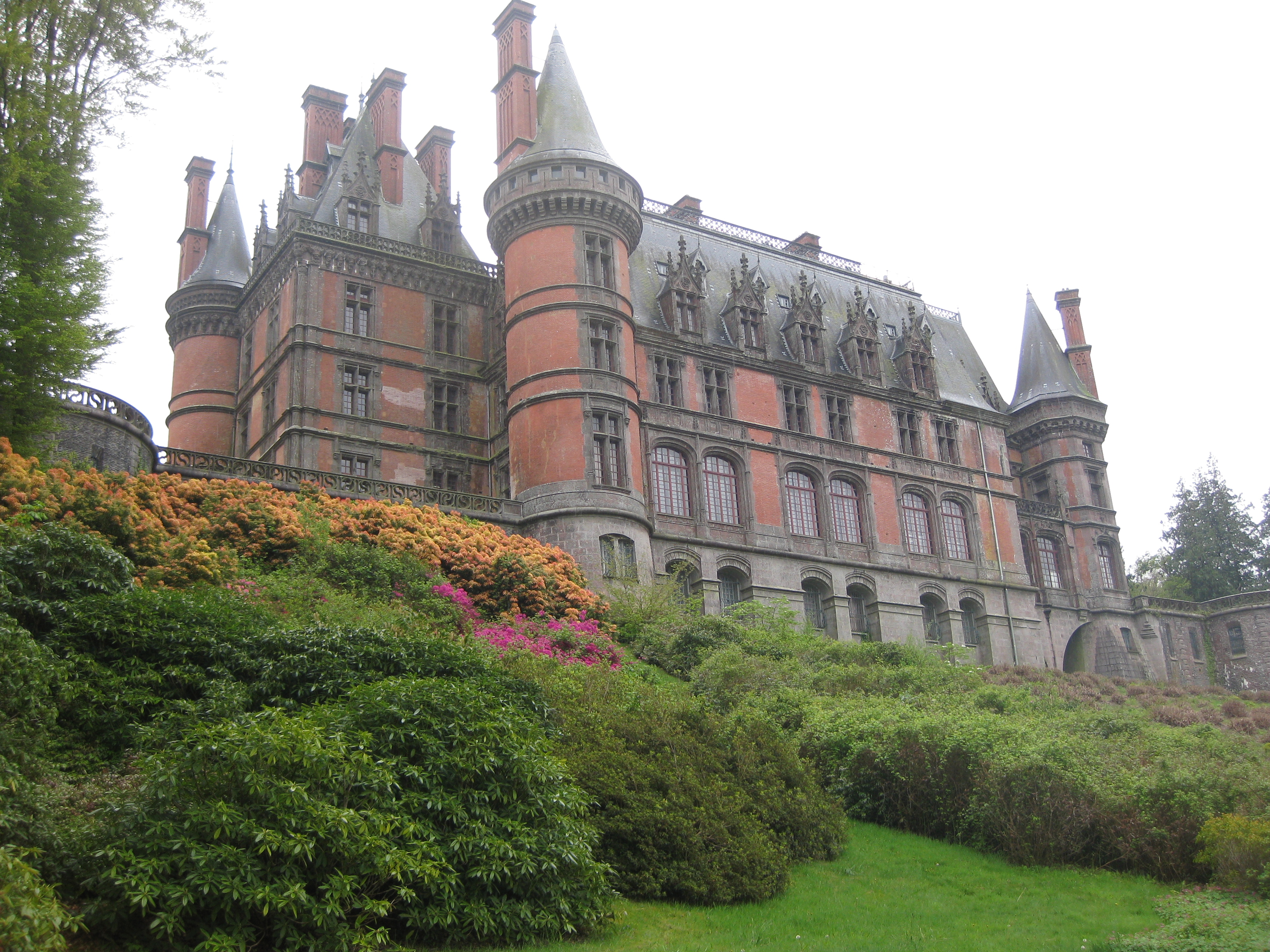
Next was Trévarez, a chateau that might look Gothic, but is in fact a 19th and 20th century construction. Its brickwork gives it the name “château rose”. We spent more time in the gardens though. Apart from a formal area near the house itself, the garden is informal in the style we’re so used to from English stately homes, and glorious at the moment with azaleas and rhododendrons
Celtic music: Friday night was concert night: the chance to listen to an hour or two of traditional Breton music. Malcolm and I particularly enjoyed hearing those favourite Welsh hymns – Land of my Fathers, Cwm Rhondda in Breton– they sounded very different, but just as good
Story telling: Such a treat. Michel Sevellec enchants audiences in Finistère and beyond with his tales drawn from many traditions. On Saturday, as part of a local festival, we joined local children to hear his interpretation of Native American and other stories. Can’t wait for him to come to Laroque in a fortnight!
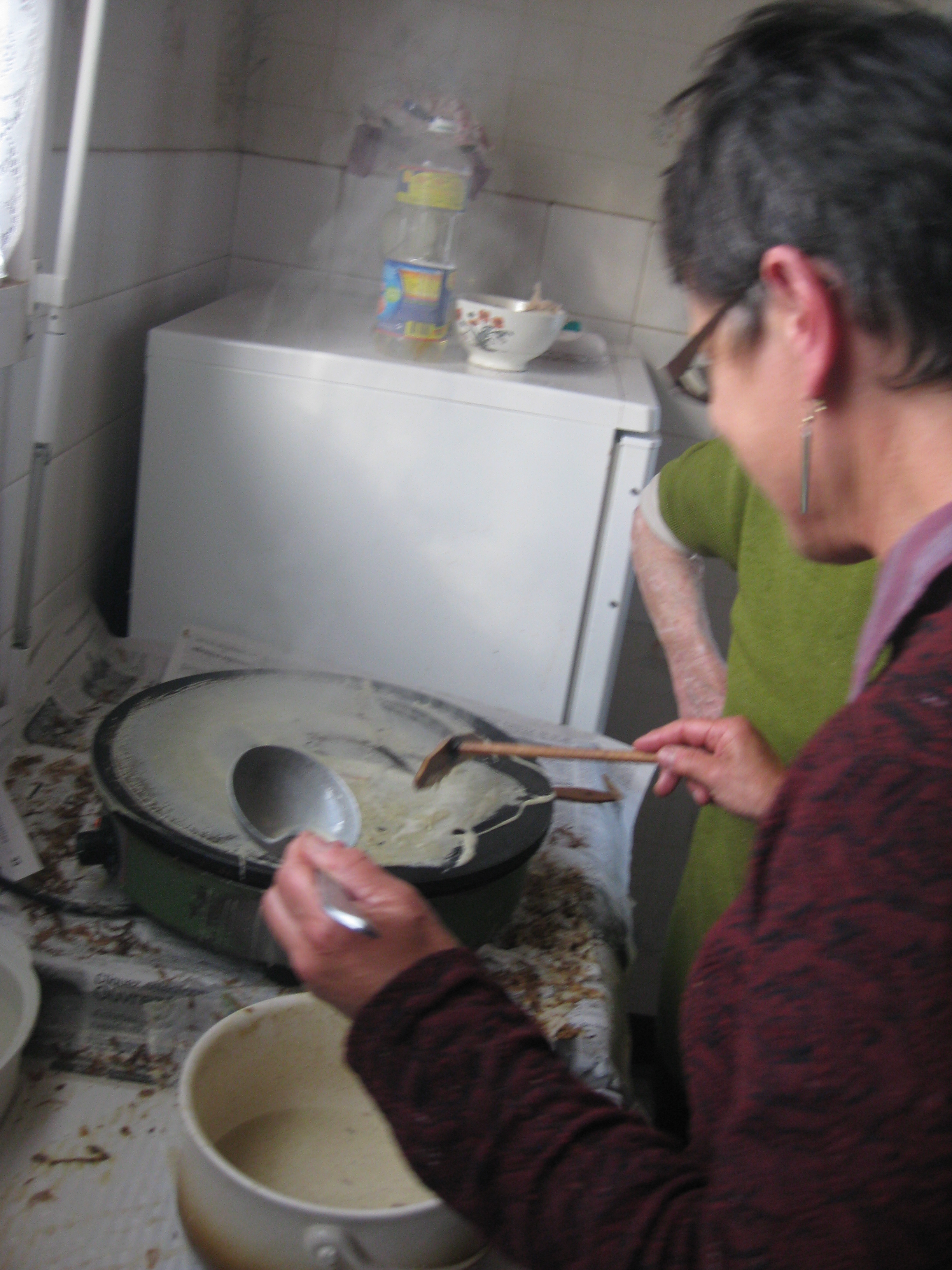
Crêpes:Everyone knows they make crêpes in Brittany. Lots of us have watched them being turned out on those special round hotplates. I always assumed it was easy-peasy. Until we went to eat crêpes at Albert’s mum’s house and she let me have a go. First, carefully pour the batter with your left hand while equally carefully drawing the batter round the plate with a special wooden spatula – not too fast & not too slow, not too thin & not too thick.
Expert at work
Then flip the delicate creation, so thin you could read a newspaper through it, over onto its other side to finish cooking. It was lucky there were hungry dogs to eat all my cast-offs. Lucky for us too perhaps: we’d still be eating them now. Malcolm and I thought 6 crêpes each ought to have been enough for anybody. Our hostess disagreed.
So….we discovered in Brittany an area very different from our own in languages, customs and appearance, and had a chance to be more than simply tourists. We now have new friends in Melgven but also in Laroque as a direct result of this weekend. A good experience.
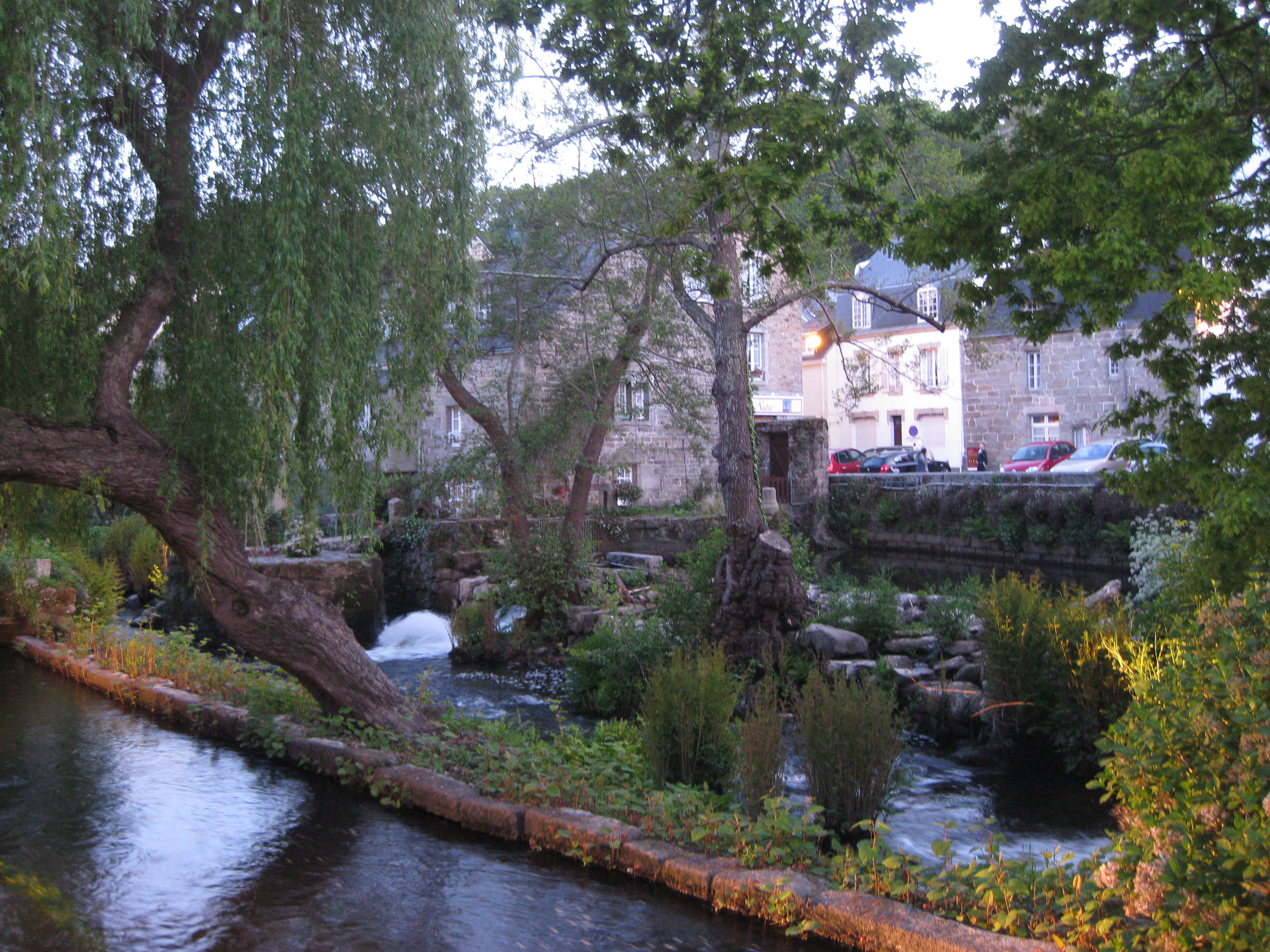
Pont Aven: I didn’t even mention this lovely little town, did I?
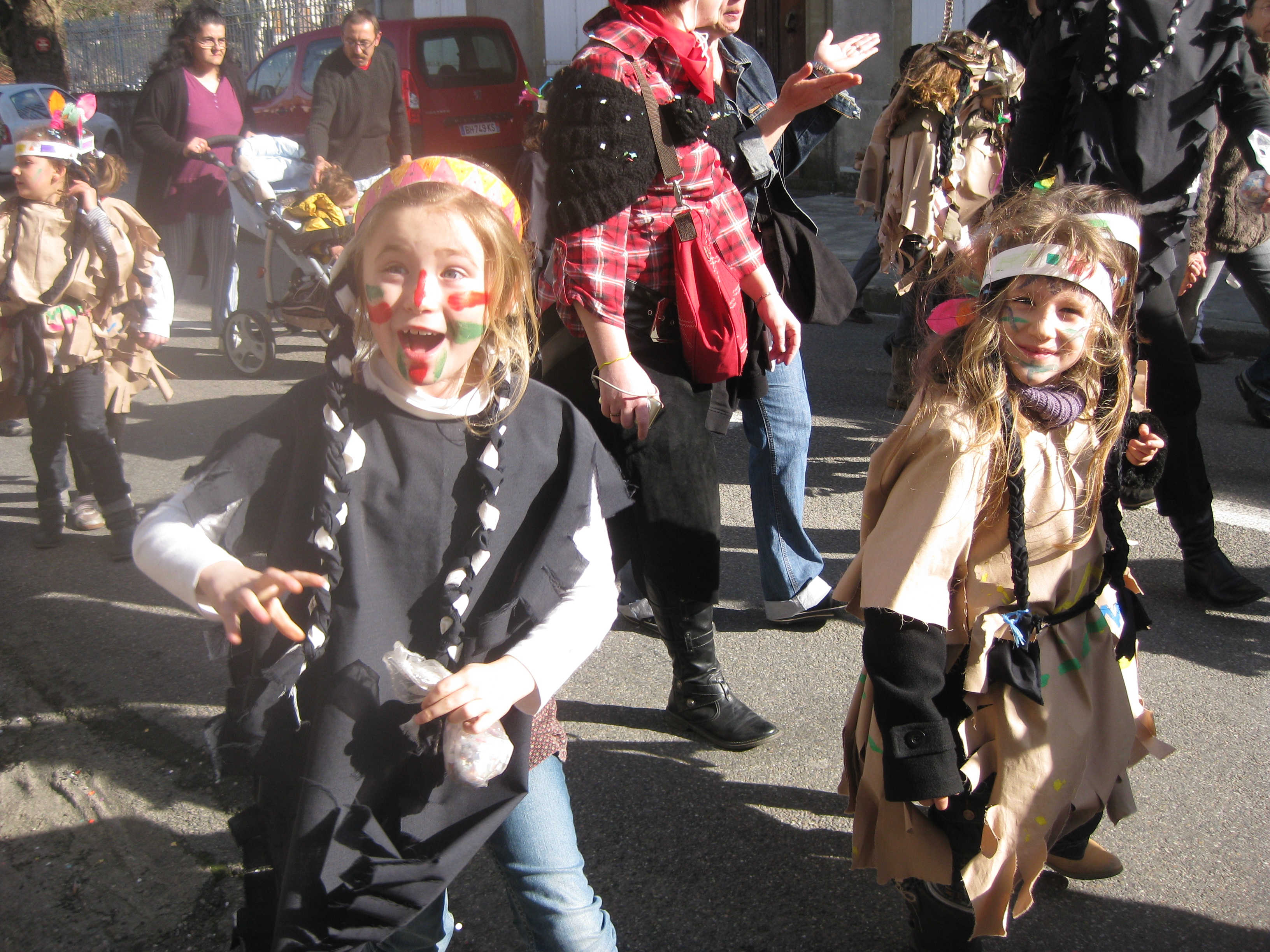
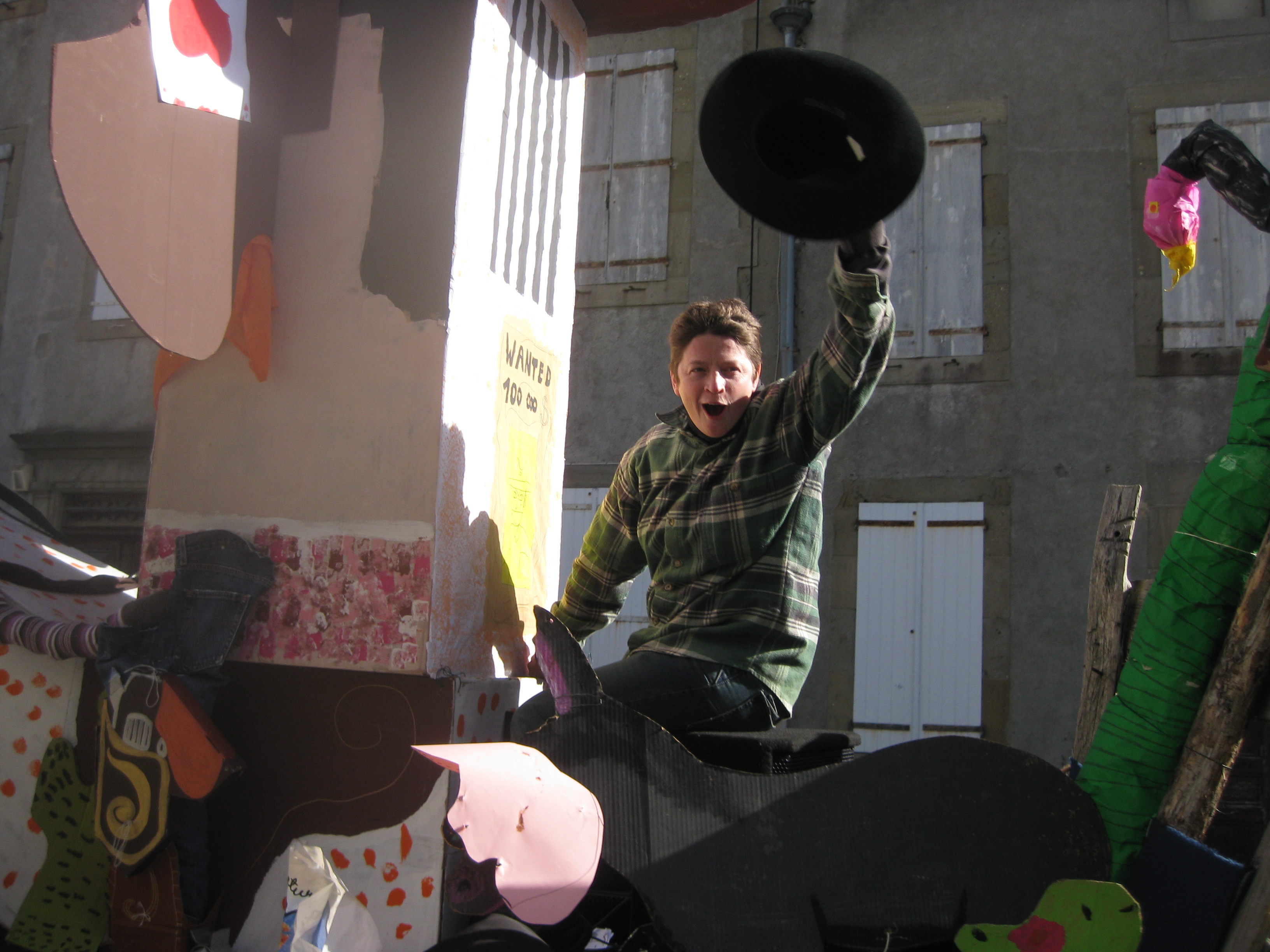
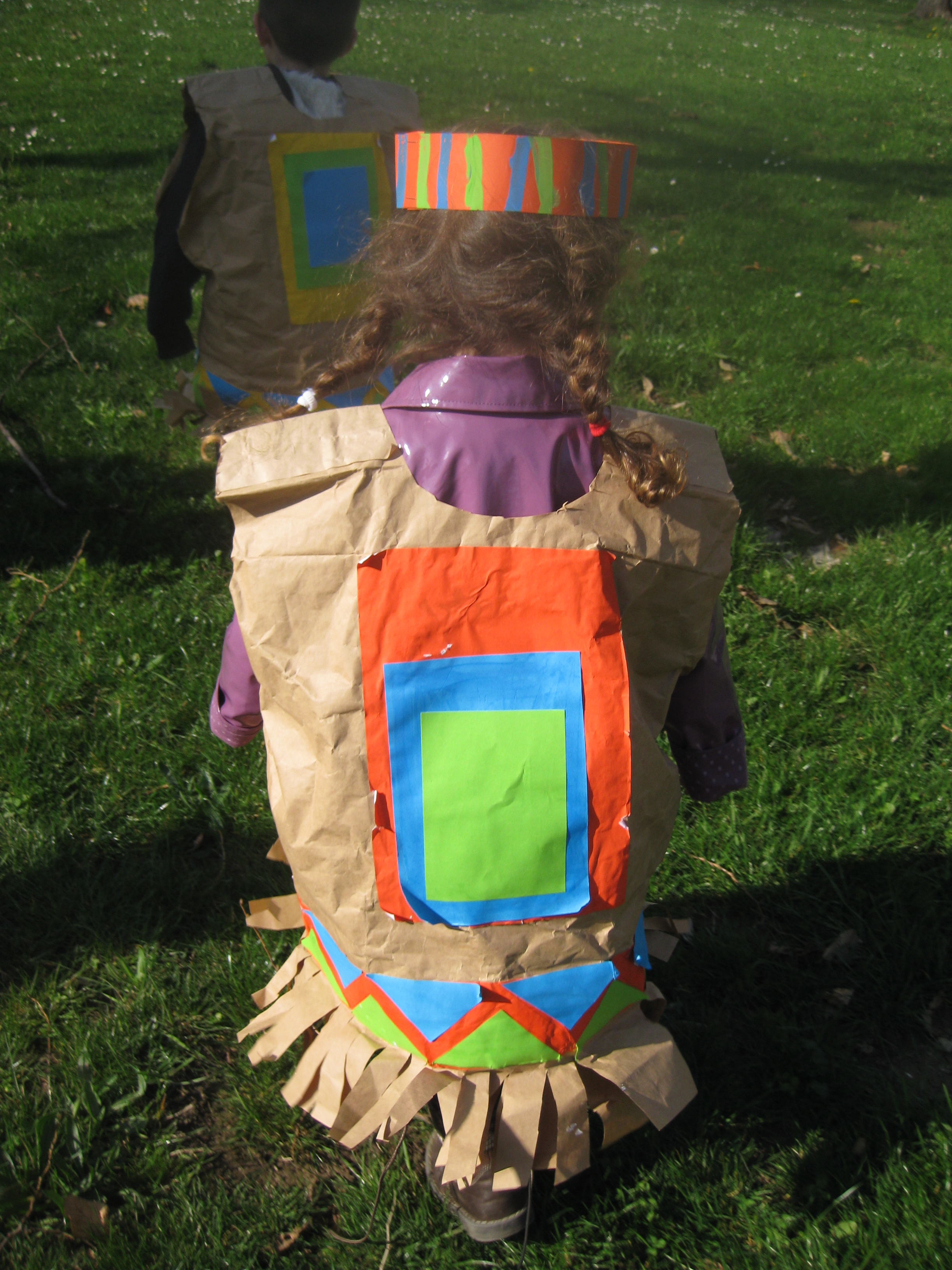 The poor old cardboard cowboy on his horse the children had so painstakingly made became a sort of Guy Fawkes figure burning on a bonfire. The schoolchildren sang their songs. Grillades (a barbecue). As darkness fell, everyone moved off to the MJC (Maison de Jeunes et Culture). More grillades, more bands, dancing. A concert featuring our Music Centre. General merriment, a late night for the children. A good time had by all.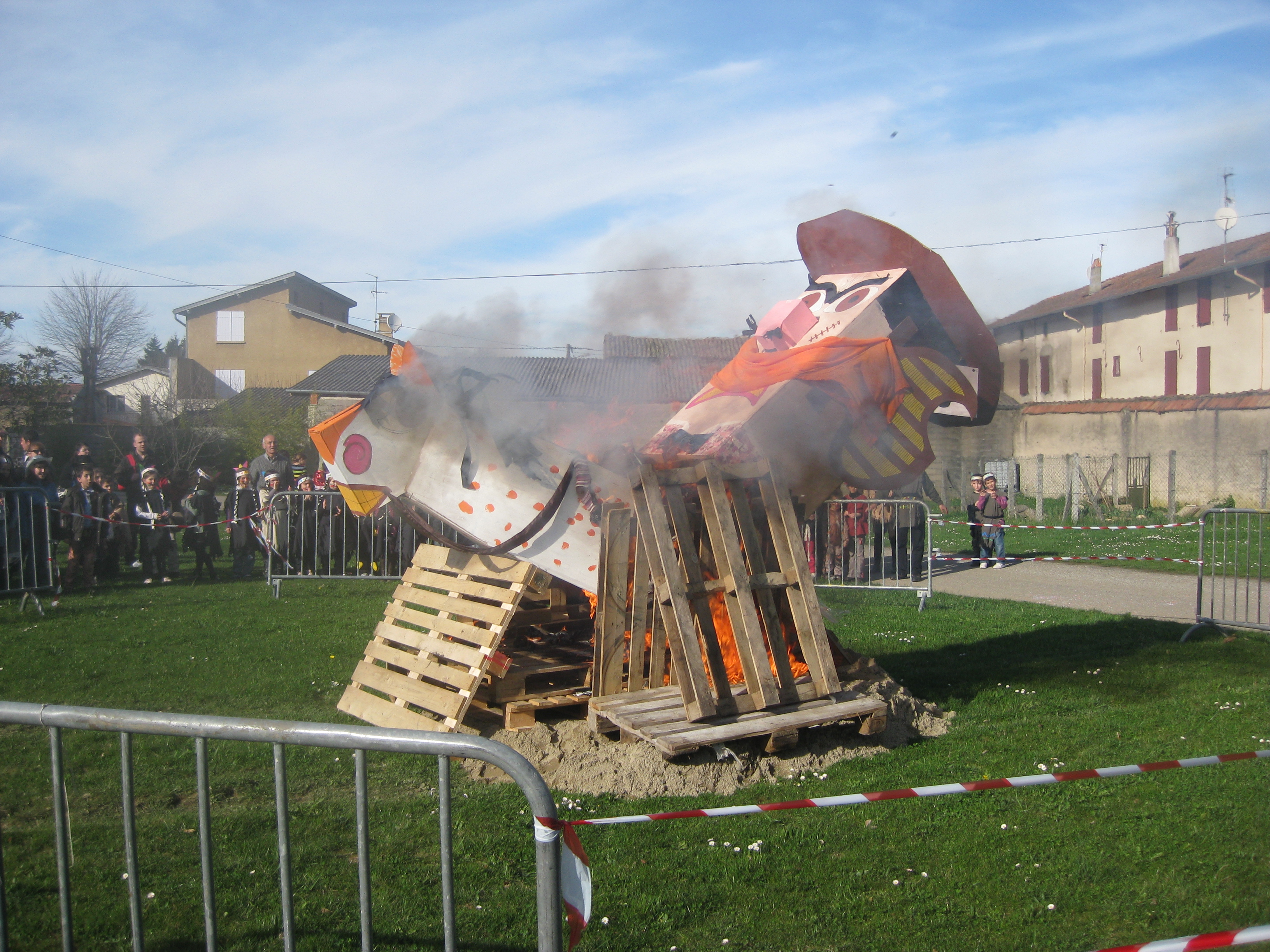















 From Pyrenees to Pennines
You must be logged in to post a comment.