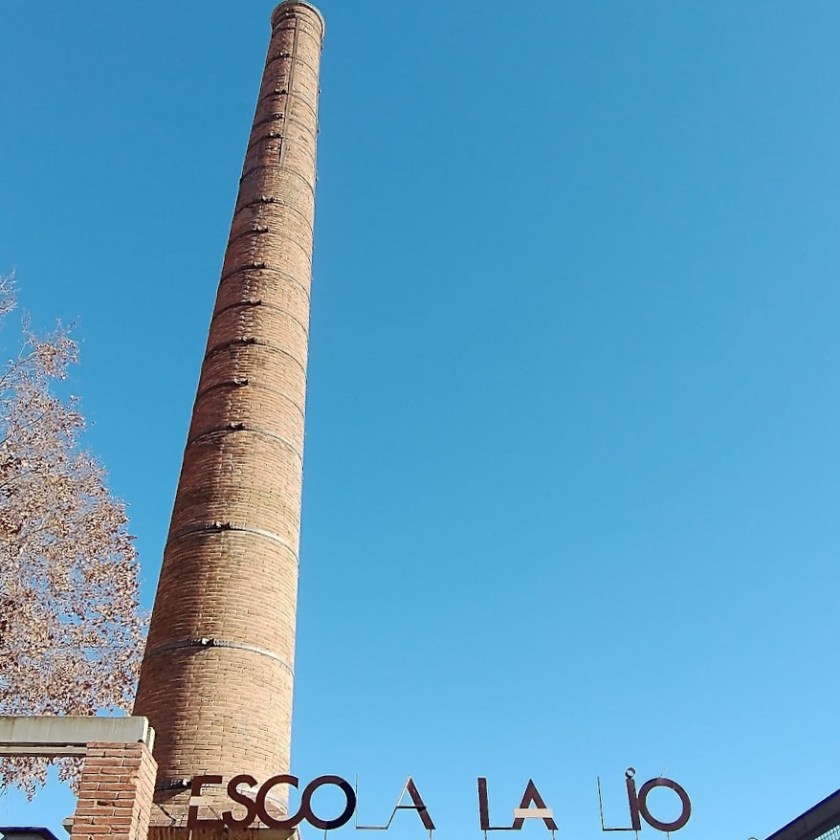
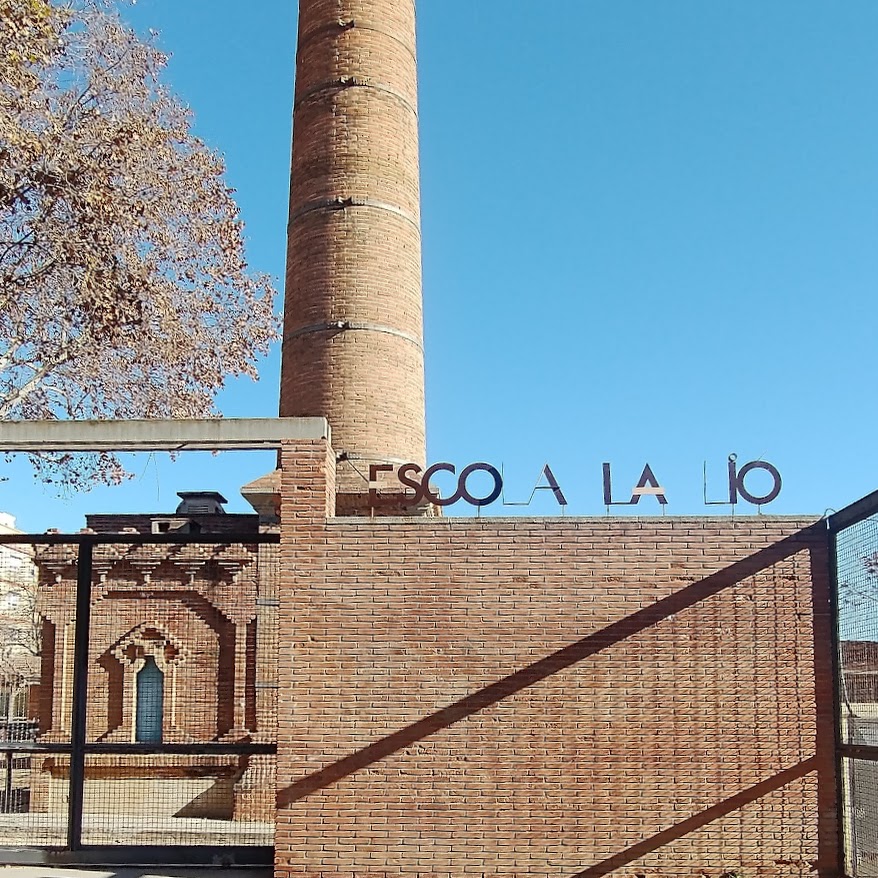
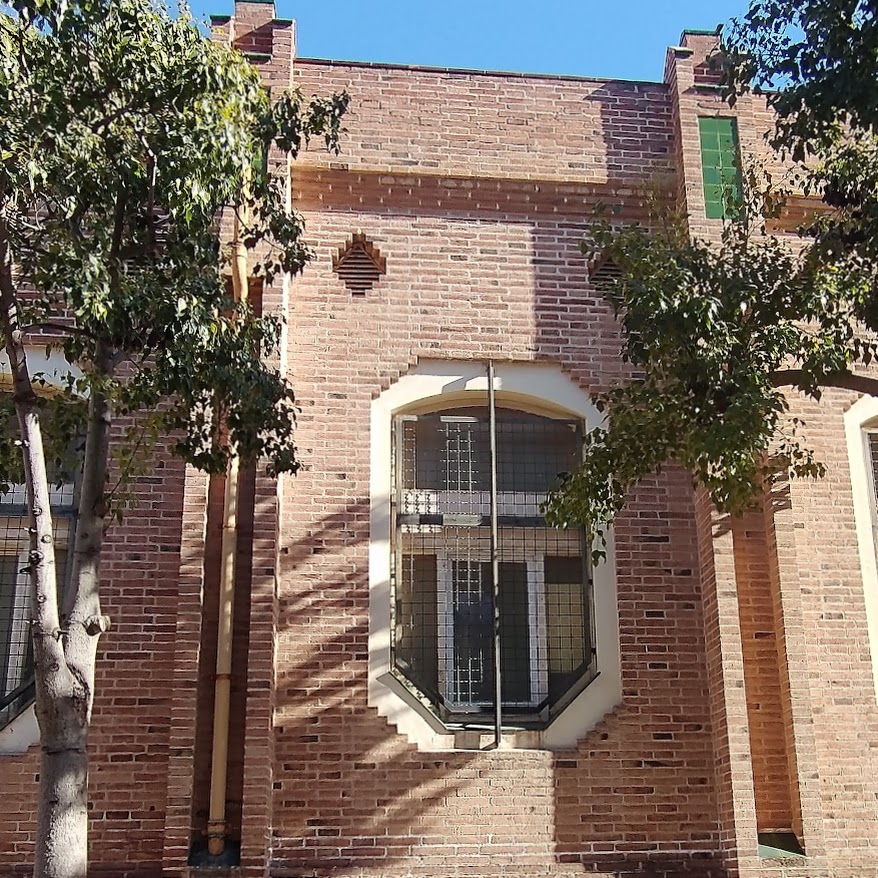
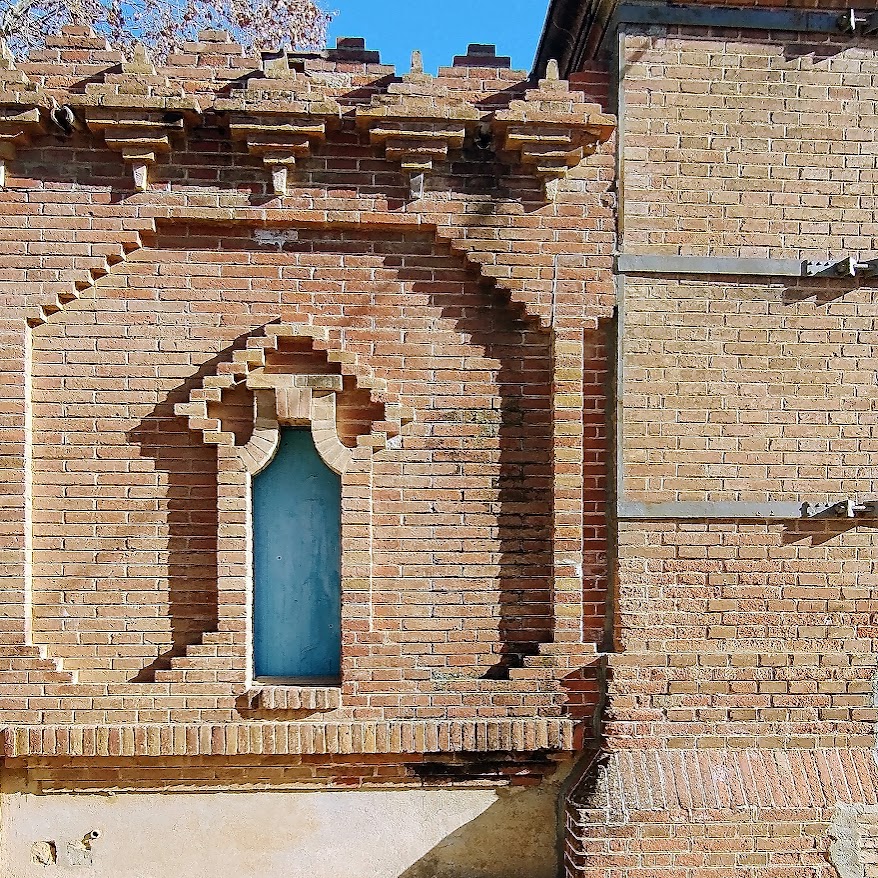
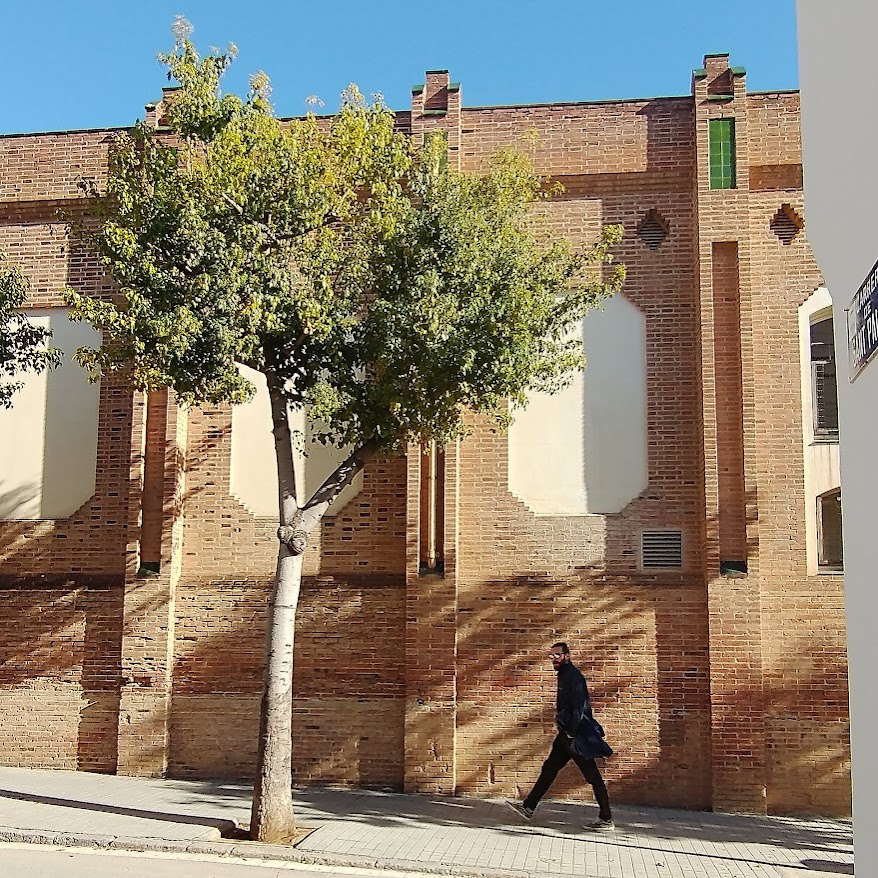
There’s a school here in Premià de Mar that I always enjoy walking past. It’s a handsome Modernista building that’s next to impossible to photograph, set as it is in narrow streets and surrounded by a high wall. It wasn’t always a school.
It was built in 1898 as a textile factory, dealing with almost every process: spinning, weaving and finishing. But here, as in England, and in the Ariège where we once lived, this once-thriving industry declined rapidly during the twentieth century. The factory closed in 1928, but re-opened in a last gasp attempt to make it work, as a silk-sceen printing works, the first of its kind in Spain. The owner was a man from Lyon, a M. Badoy, and locals came to call the factory La Lyon. The factory was forced to close its doors for good in 1979, but everyone saw that this important building must be saved, for historic and artistic reasons. So it reopened as a school in 1984. And it’s now called La Lió, and is quite the local landmark, with its tall – and entirely unused these days – factory chimney.
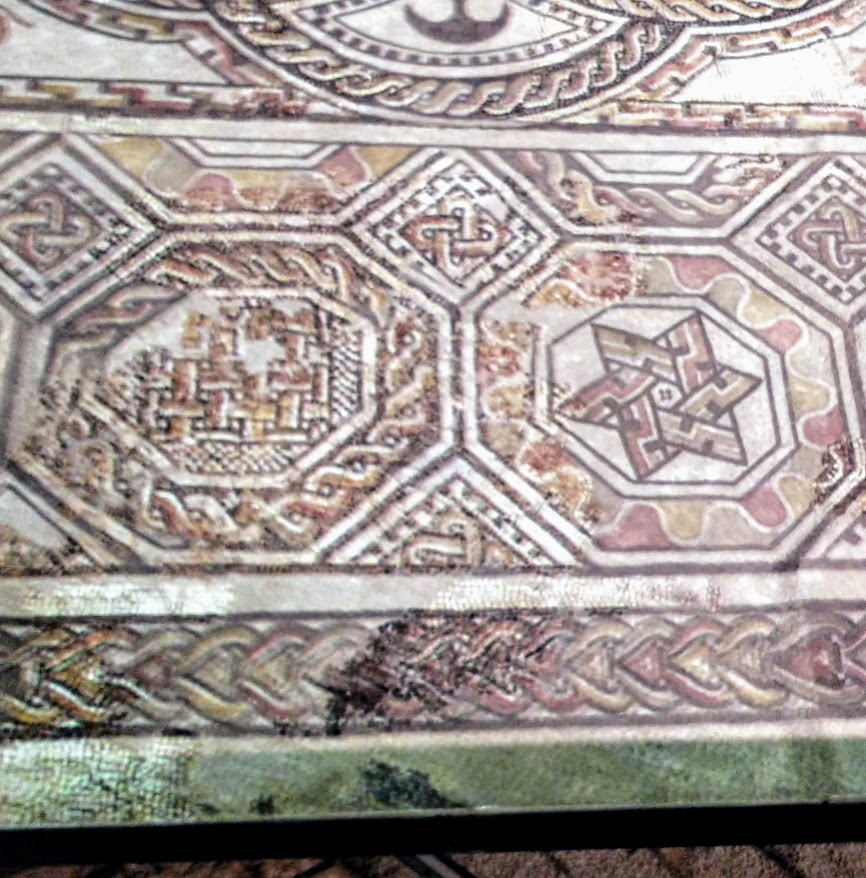
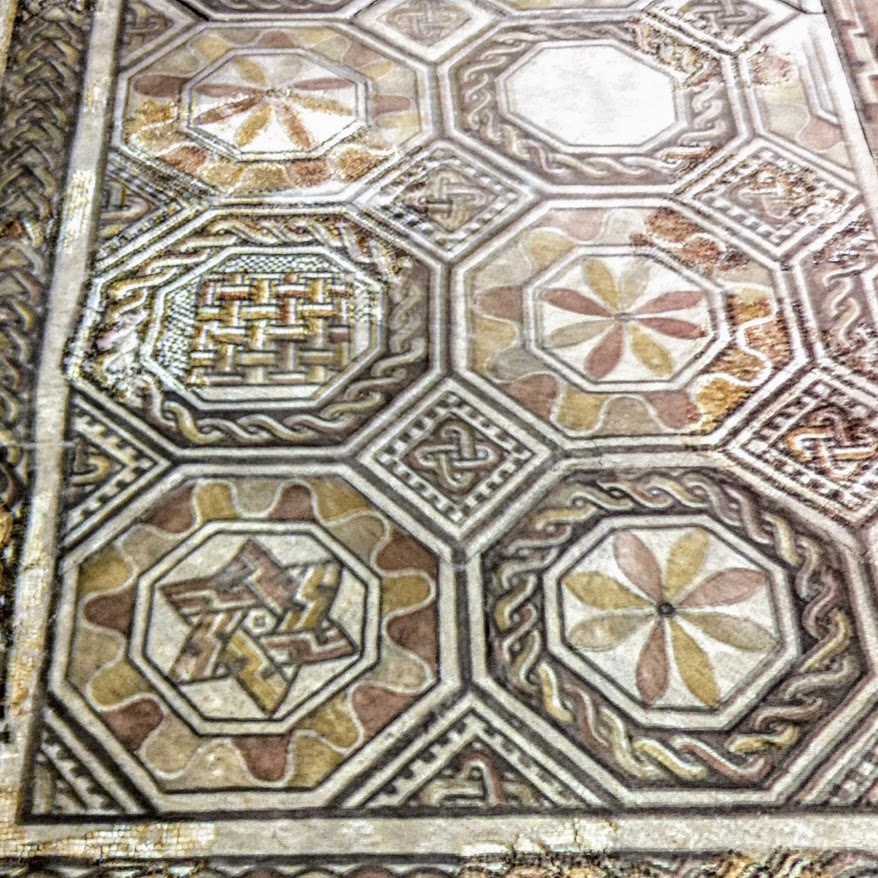
Today, Malcolm and I took ourselves off to Premià’s Museu Romà. It’s a museum brought into being because of a discovery during the development of new buildings in the 1990s of an important Roman site. It proved to have been what we might consider a conference and exhibition centre, built in the 5th century CE and an important place to promote the greatly appreciated wine grown on the estate. As the Roman Empire fell, so did the building’s fortunes. But after a few years, it re-invented itself, finding a new use as a home and wine-producing business. And later still, as a graveyard.
Star of the show is a wonderful floor mosaic, incredibly detailed and beautiful by any standards, and employing a full range of geometric idioms. It was hard to photograph satisfactorily, but here are a few shots – square of course.
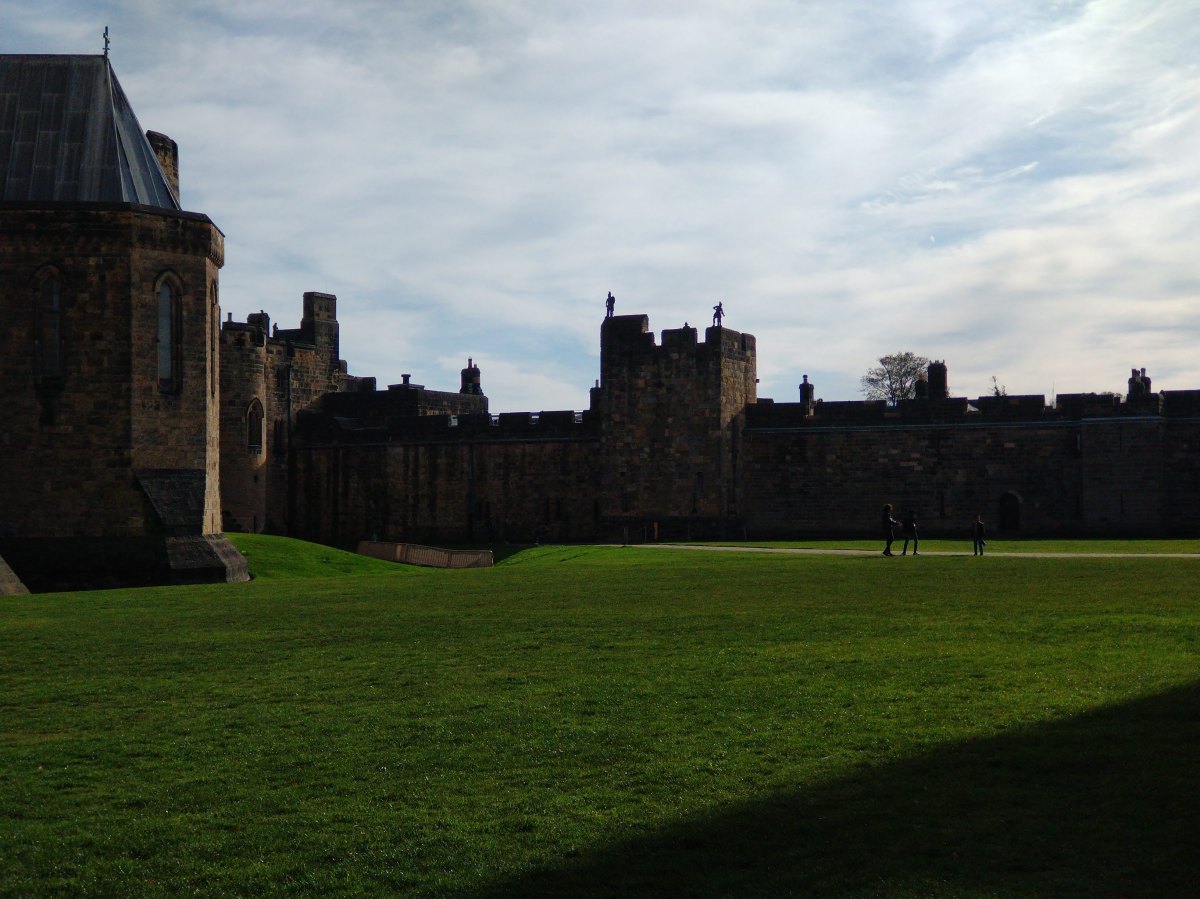
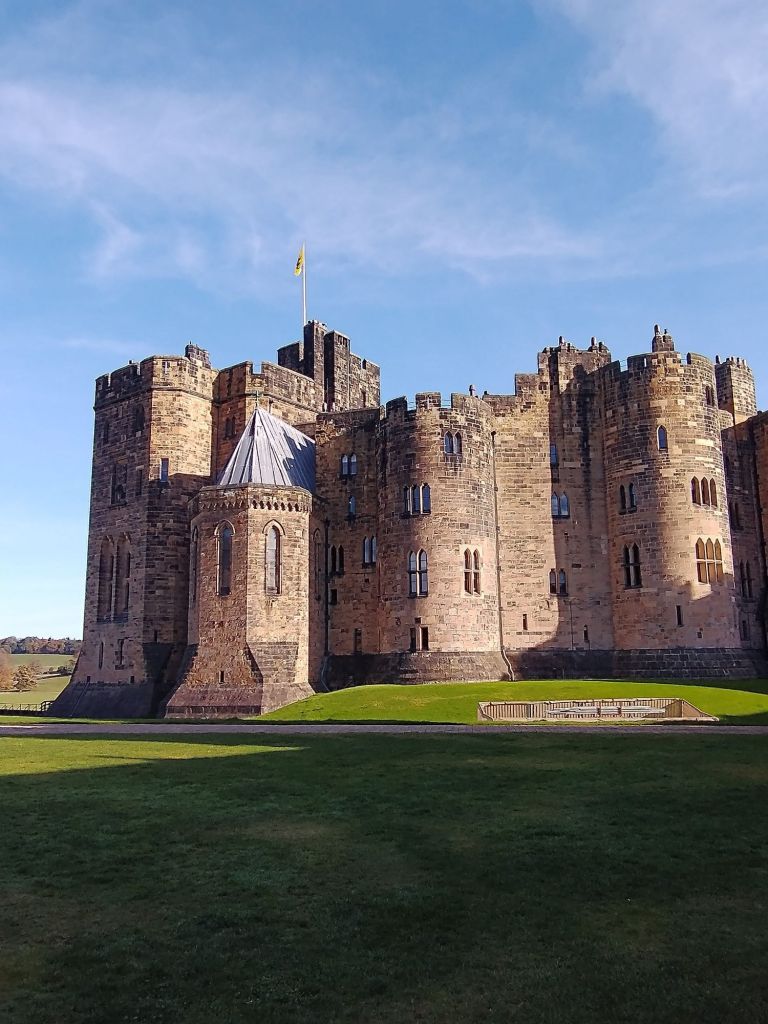
Why does anyone visit Alnwick, Northumberland? The castle, with its long history going back to the 1300s is one. Though if you’re a child, you may be more interested in the fact that scenes from Harry Potter films were shot there. In fact there was a Quidditch lesson taking place when we got there. We found the real history, and the political intrigues and bloody battles of the Wars of the Roses and after more interesting.
Alnwick Castle
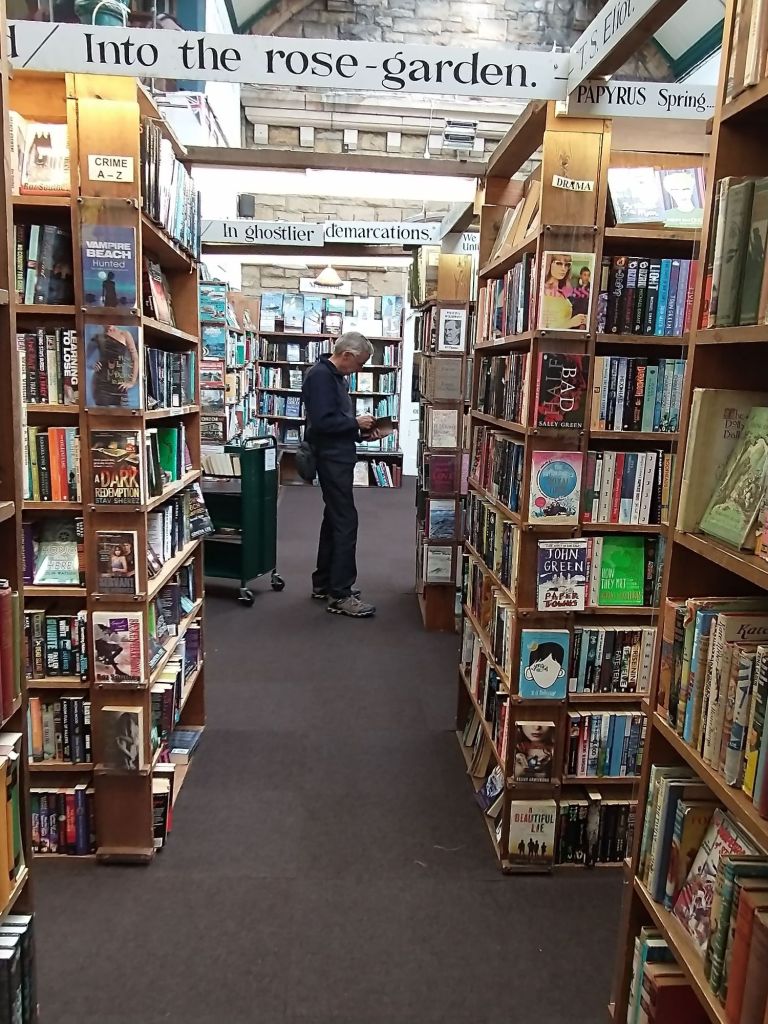
And another reason is to visit Barter Books. This emporium of second hand volumes is housed in a whole railway station. You’ll need to make use the refreshments in the waiting rooms.
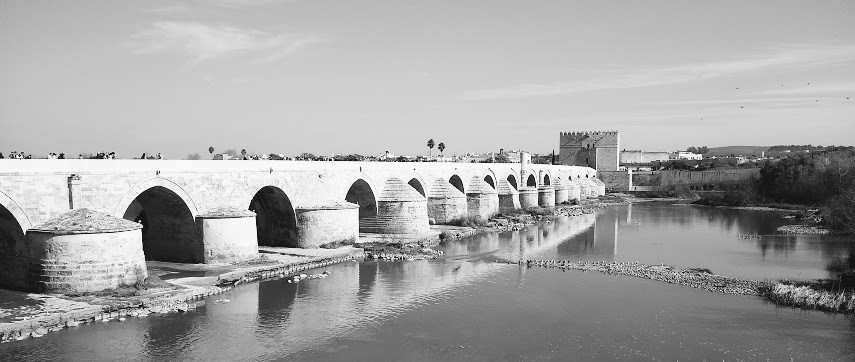
Let’s start with a Roman Bridge, in Córdoba. It’s called the Roman bridge, because it was first built during the Roman colonisation of southern Spain. But it was overhauled in the 10th century. Then in the Middle Ages. Then in the 16th and the 17th centuries, when a statue of St Raphael was added. Lights were added in the 19th century, and it was pedestrianised in 2006. It’s a wonder it can still be called the Roman Bridge. But it can. The 14th and 15 arches are still the original ones.
El Puente Romano de Córdoba.
We’ll leap forward to the Renaissance, but stay in Spain, in Valencia, and visit the Puente del Mar. Flooding in the River Túria swept away an old wooden bridge, so in 1591, it was replaced with this:
Puente del Mar, Valencia.
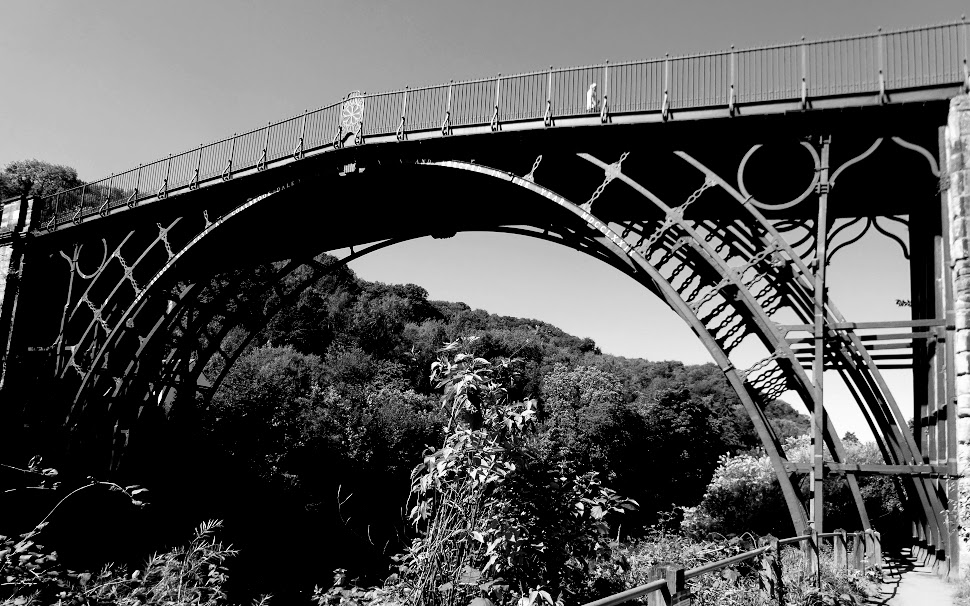
Stone, brick, wood: all these were the traditional bridge -building materials of choice down the centuries. Until the Industrial Revolution here in England, whose original epicentre was in Coalbrookdale, thanks to its wealth of natural resources all conveniently in the same area. The world’s first iron bridge was built here in 1779.
The Iron Bridge, Coalbrookdale, Shropshire.
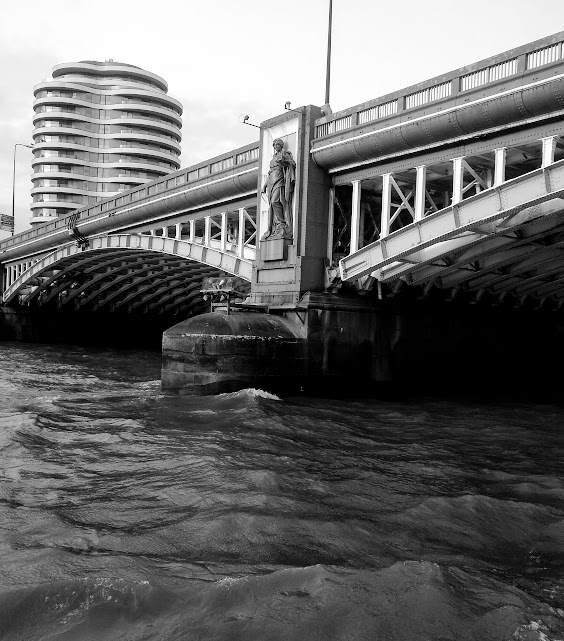
This bridge is the grandparent of almost all bridges built – in the UK at least – since then and into the 20th century. Here are three: Vauxhall Bridge, completed in 1906; the Tees Transporter Bridge, completed in 1911, and the Tyne Bridge, completed in 1928.
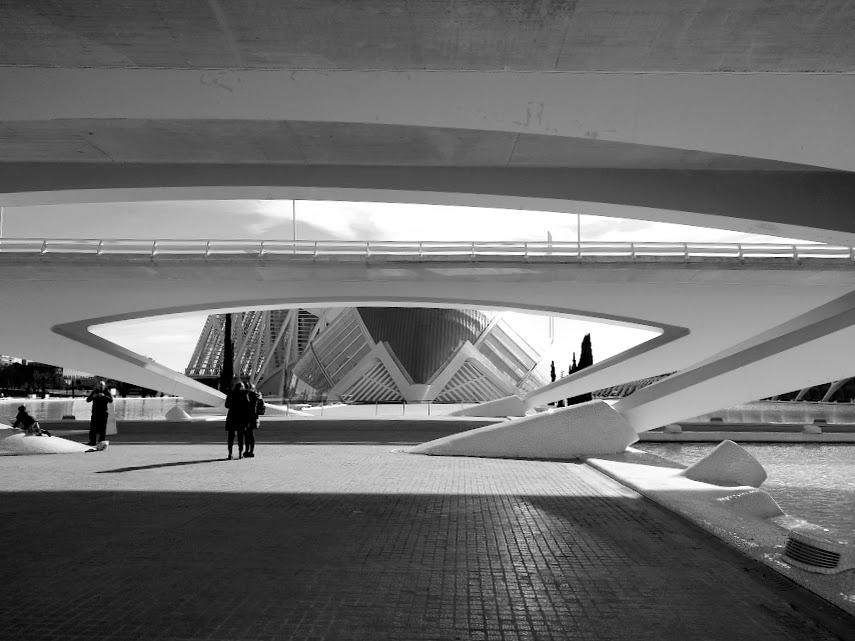
Let’s leap briefly into the 21st century, and look at one of the bridges in Valencia’s assertively future-facing Ciudad de las Artes y las Ciencias, created between 1998 and 2009.
Ciudad de las Artes y las Ciencias, Valencia.
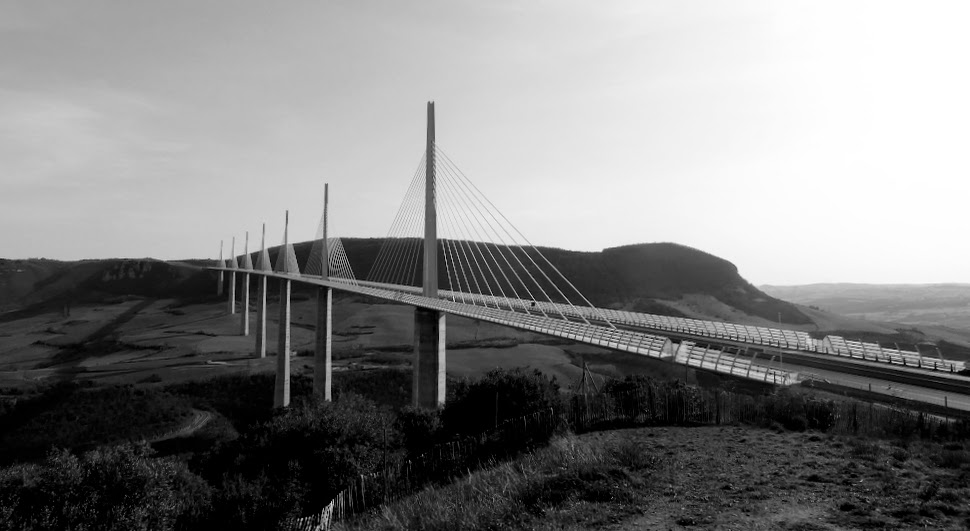
And finally, the Millau Viaduct, sweeping more than 300 metres above the Tarn in southern France, designed by Norman Foster and completed in 2004. Like Valencia’s Science Park, it’s a destination in its own right.
Millau Viaduct, Occitanie, France.
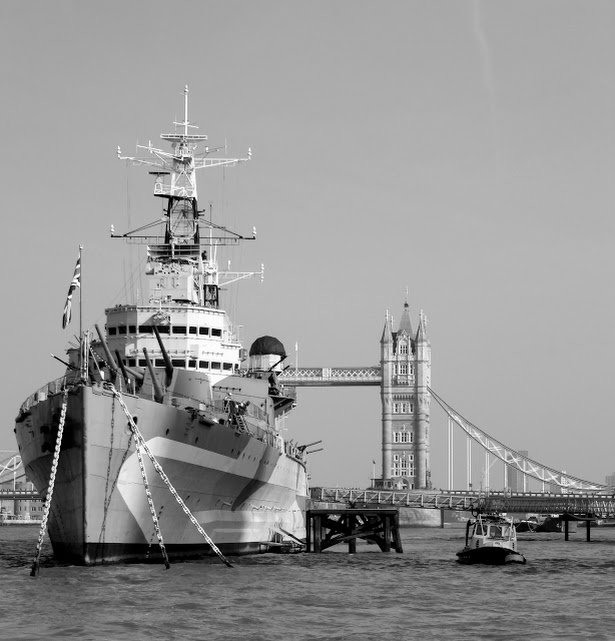
But we can’t leave without mentioning the featured photo: London’s iconic Tower Bridge, open to traffic since 1894: both road traffic, and when regularly lifted, to river traffic beneath. The photo demonstrates why the extra height is necessary: that’s HMS Belfast in the foreground.
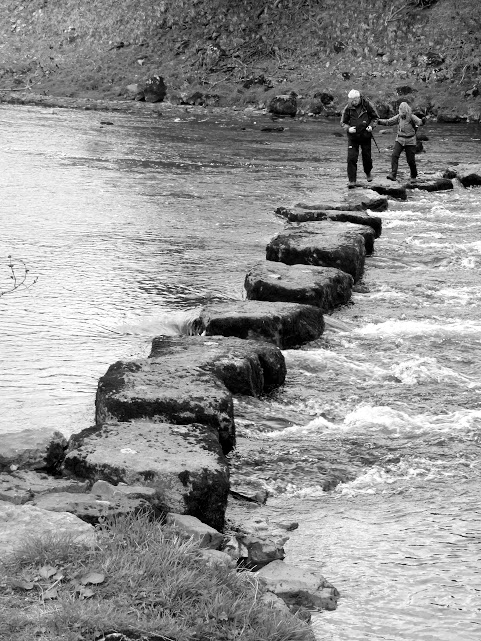
And to finish off, let’s stop at something that’s even older than bridges as a way of allowing travellers to cross water. Stepping stones. These are at Redmire Force, and are still a popular way of crossing the River Ure.
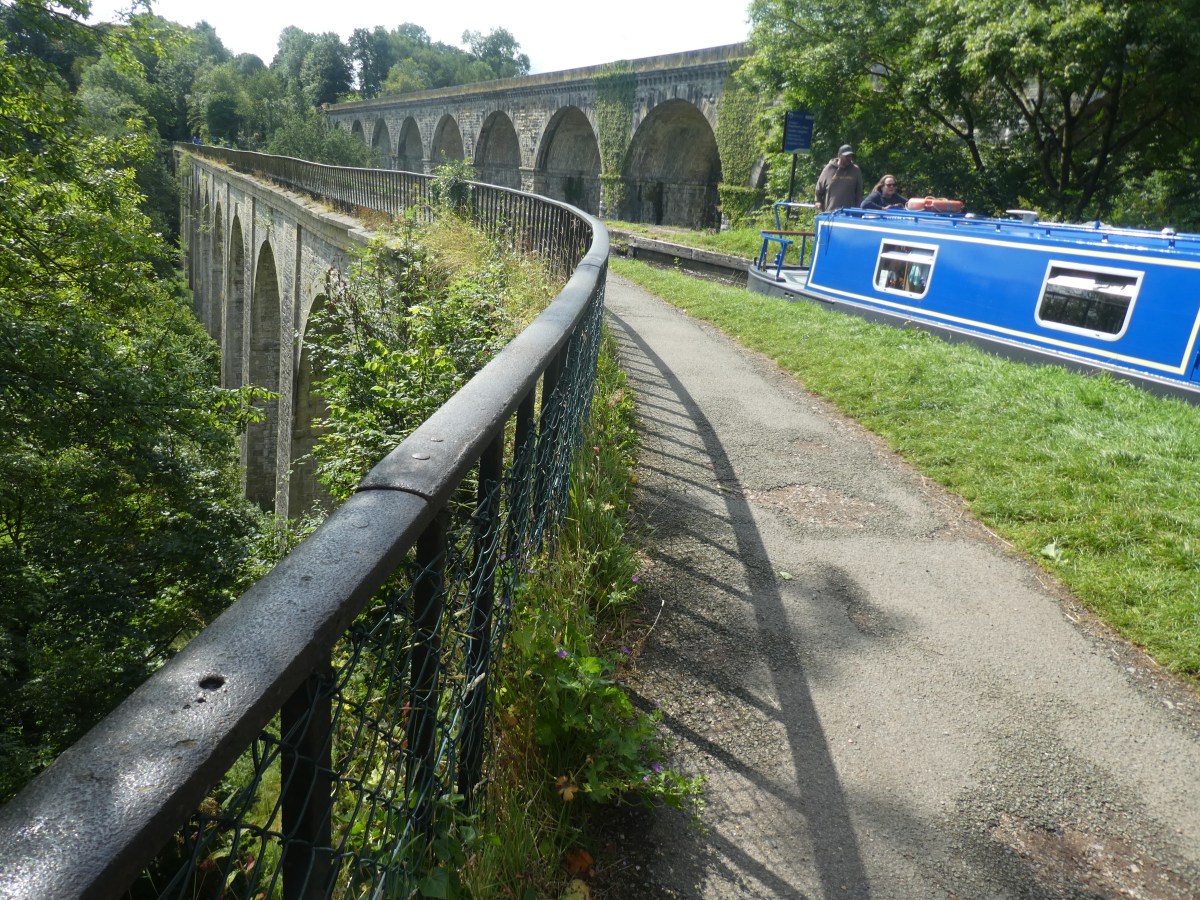
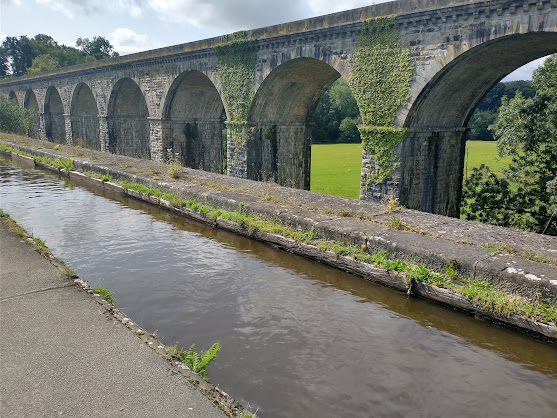
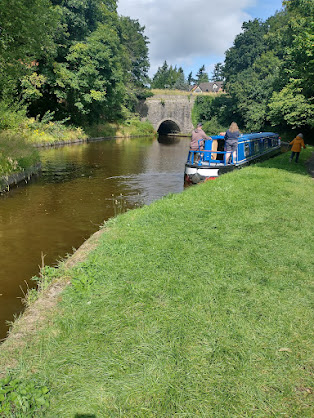
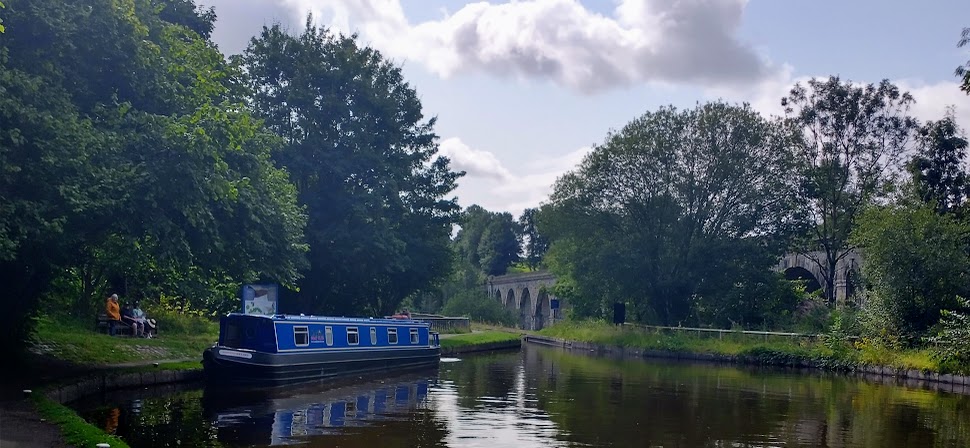
An unexpected treat yesterday. We went to Wales, to Chirk Castle, and on the way, we saw two feats of engineering in one: Chirk Aqueduct and Viaduct. Each of them has one end in England, the other in Wales. And what a sight! Completed in 1801 by William Jessop and Thomas Telford, the aqueduct is 710 foot (220 m) long and carries the canal 70 feet above the beautiful River Ceiriog across 10 circular masonry arches.
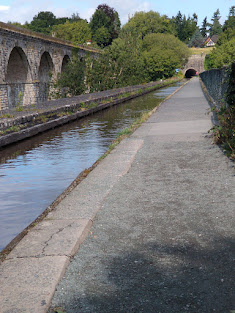
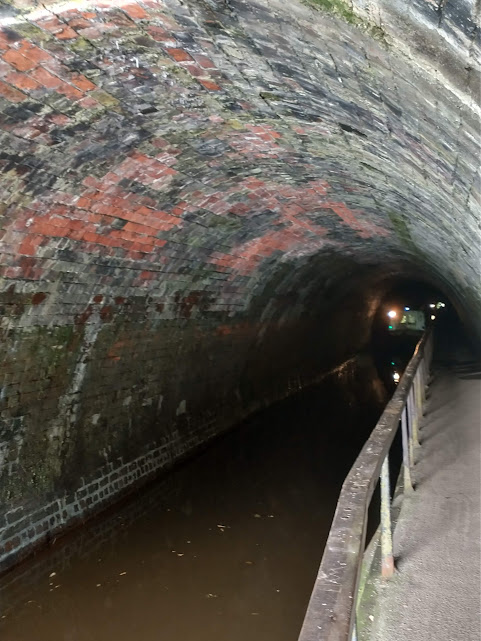
Walking along the towpath, as I did, high above the bucolic valley beneath, you can see next to it the railway viaduct opened in 1848 and designed by Scottish engineer Henry Robertson. It quite made our morning. I ventured too into the aqueduct’s tunnel – one of the first designed to have a towpath. Barges used to be manned by several men, with a horse walking up ahead on the side of the canal, attached to the barge by a rope. When the boat came to a tunnel, the horse would climb the hill and the men would lie on their backs and ‘walk’ their feet along the roof and walls of the tunnel (‘Legging it’). How grateful those men must have been to find a towpath at the disposal of their horse!
Whether you get a postcard from Chirk Castle remains to be seen. So much to do, so little time …
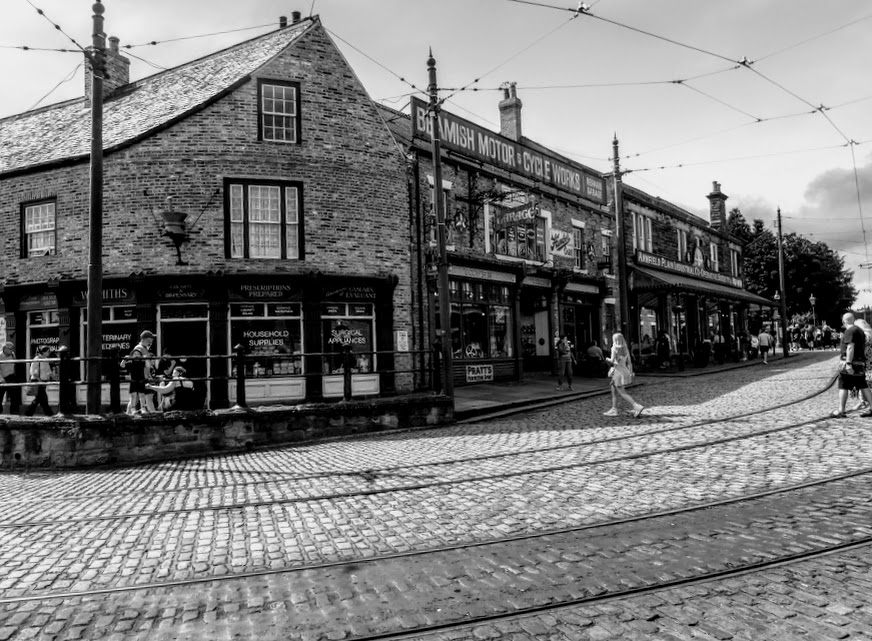
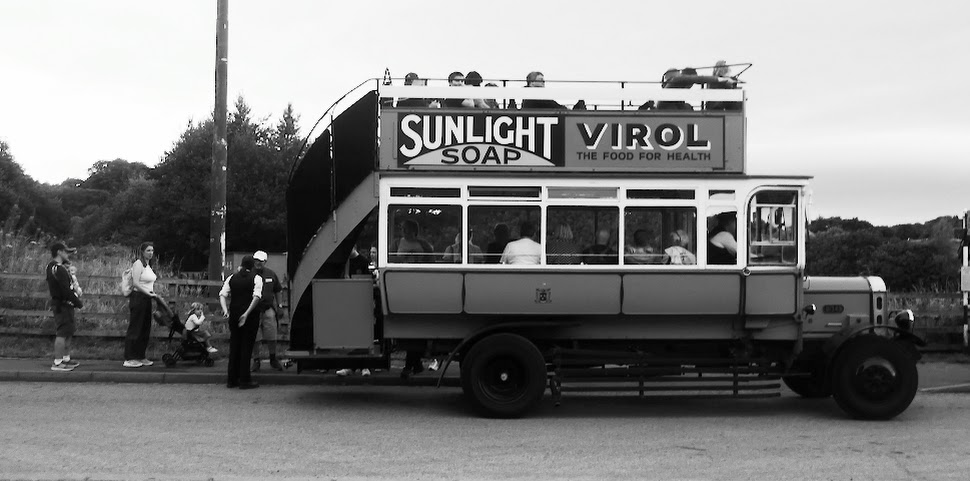
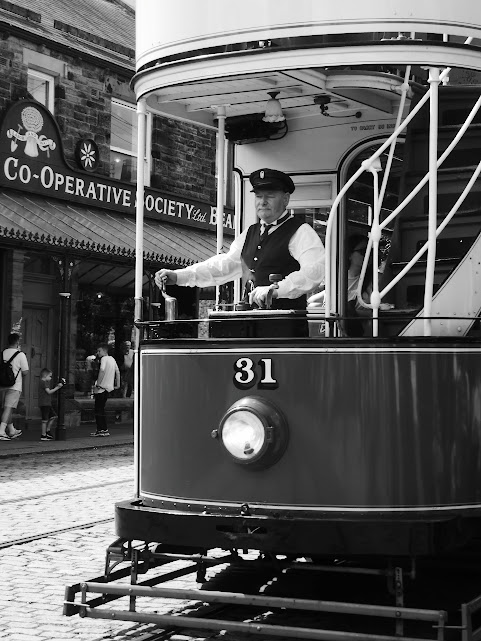
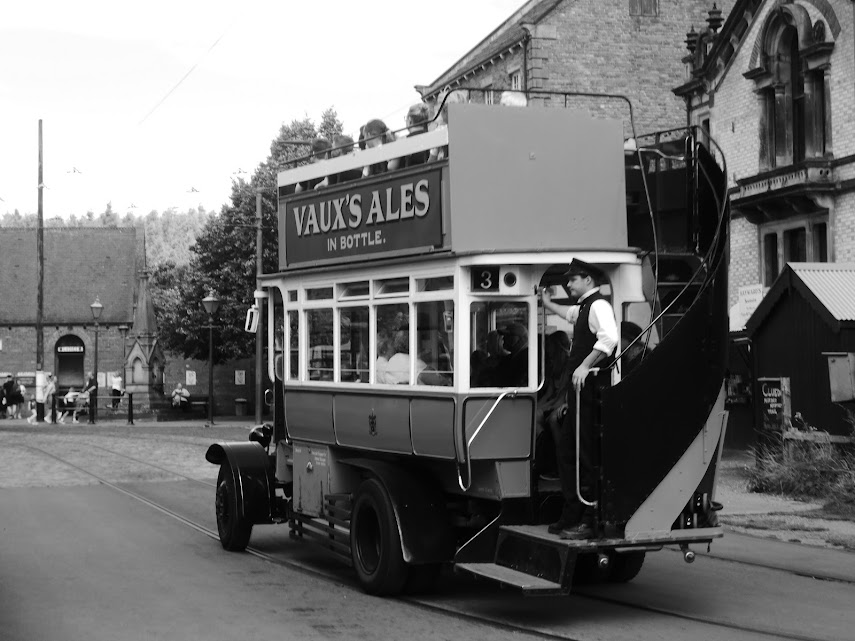
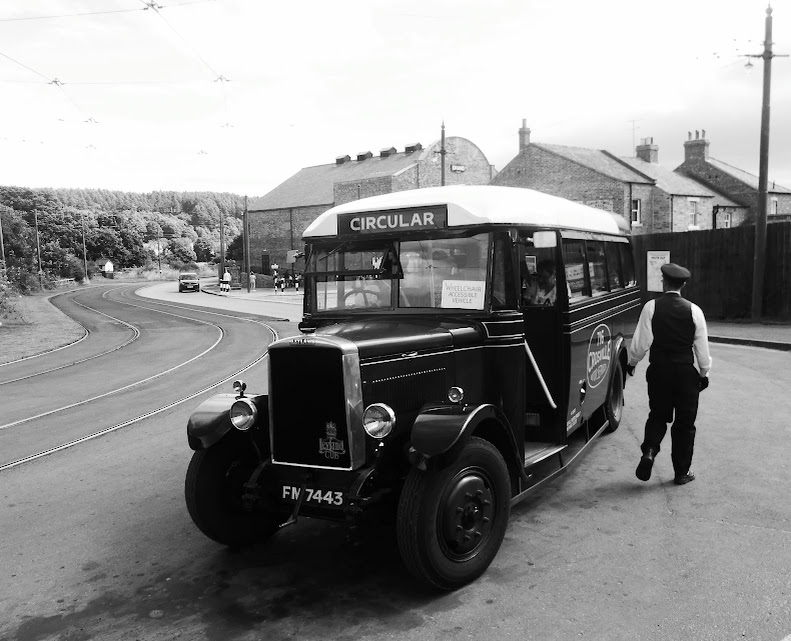
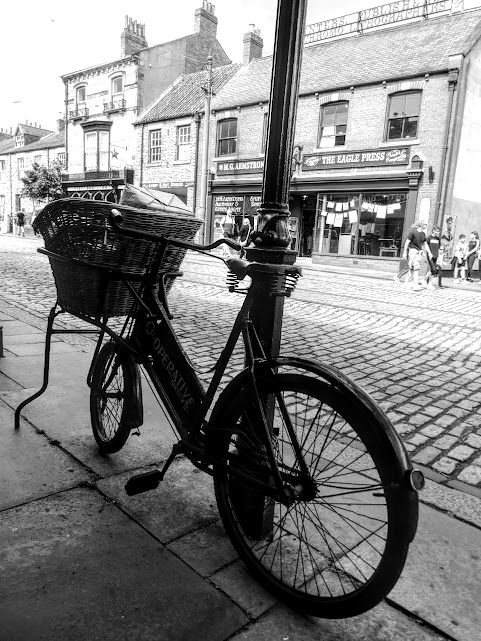
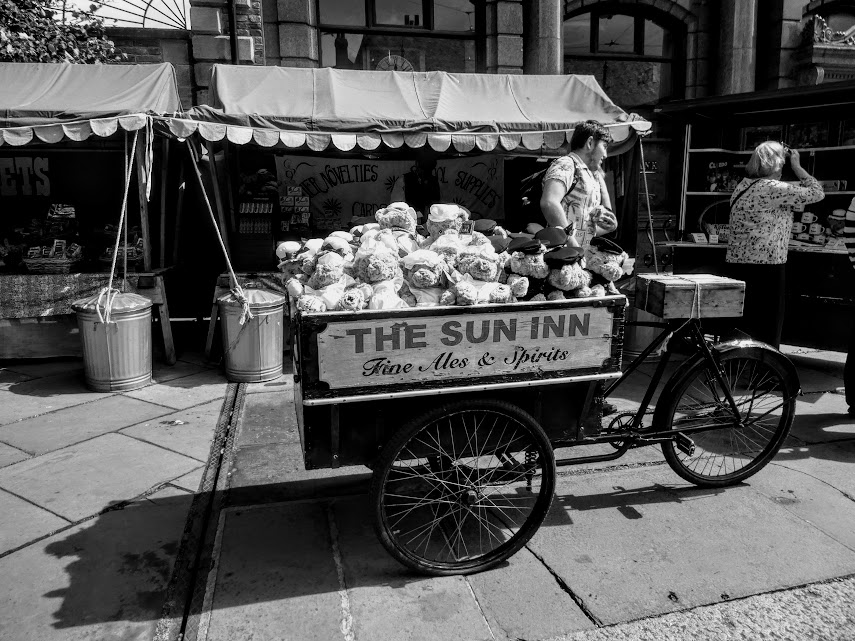
We went to Beamish the other day. The museum here is an open-air experience which brings the history of North East England from about the 1820s onwards to life. The shops, trades, homes from the different periods on show all open their doors to visitors. The longest queue was outside the sweet shop from the early days of the twentieth century … It seemed the perfect day out for the Spanish branch of the family. Life’s far too busy just now for an extensive post, but here are just a few modes of transport that we saw, and in some cases travelled on during the day. More in a later post, I’m sure.
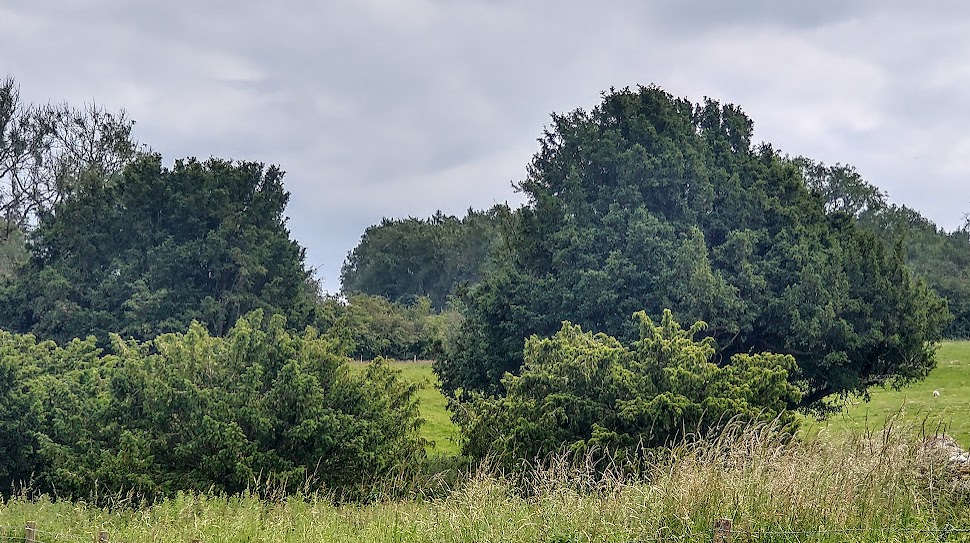
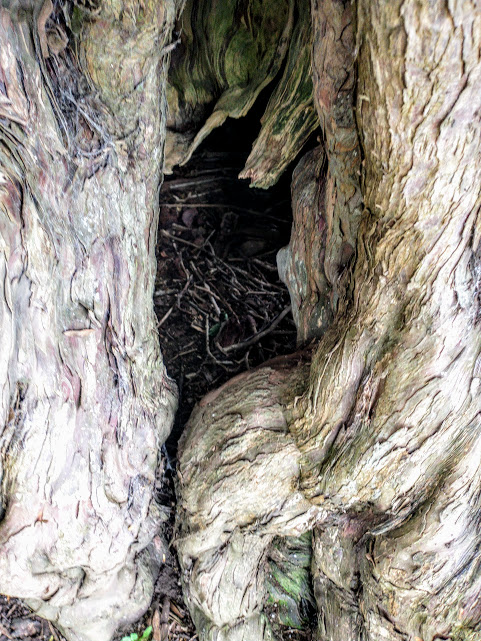
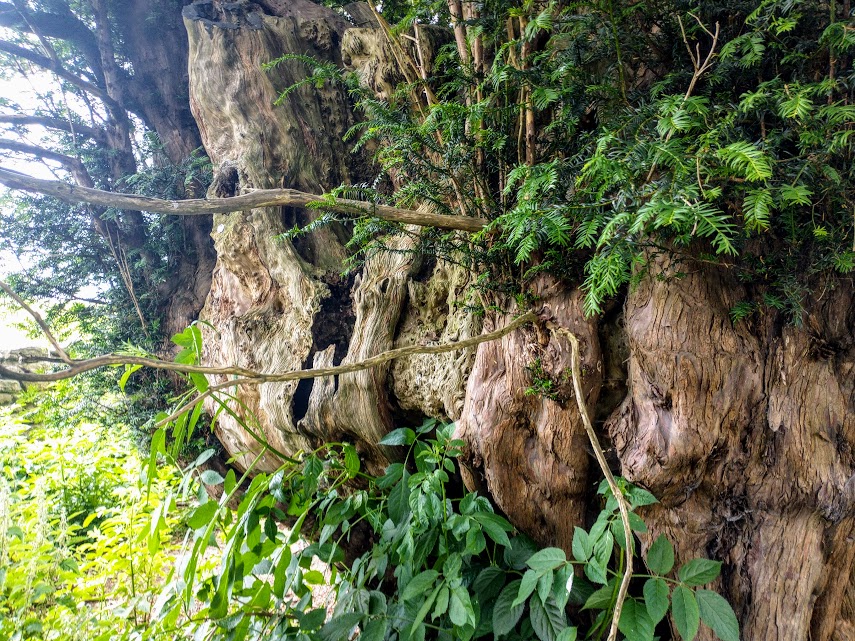
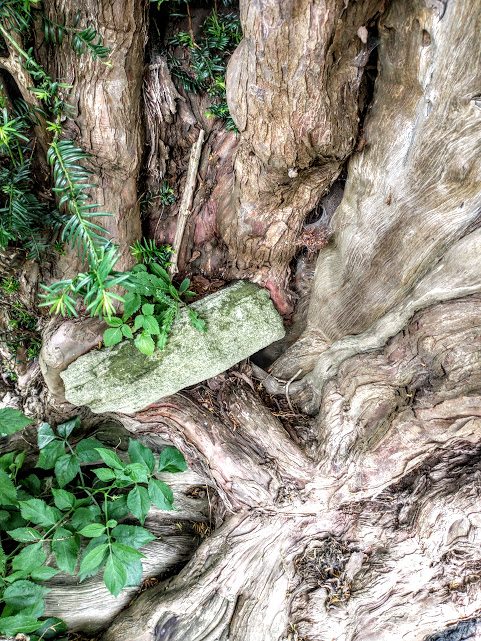
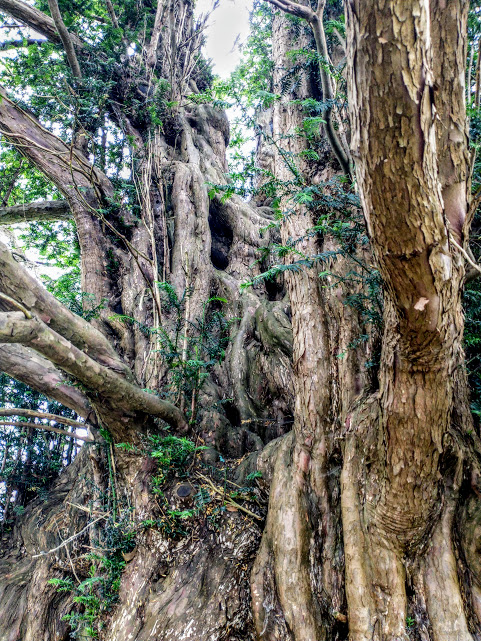
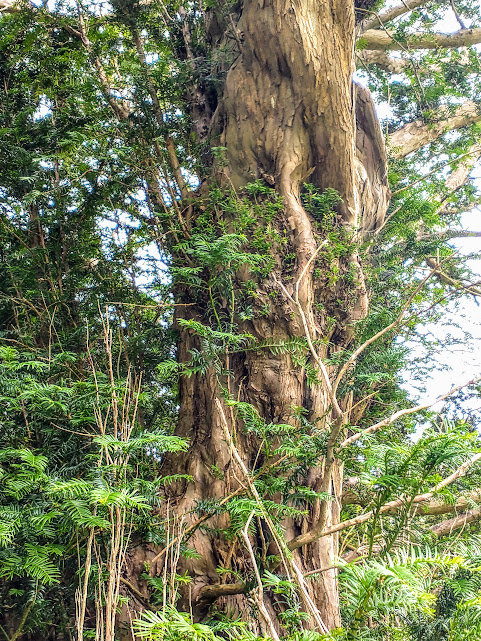
Just beyond the walls surrounding Fountains Abbey estate is a farm rented by a tenant farmer. It includes a small patch of land, untended and fenced off, because several trees got here first. They’re yew trees, and they’re thought to be about 1400 years old.
Think how long ago that was. It was only a couple of hundred years after the Romans had finally left these isles. It was several hundred years before the Norman invasion of 1066. By the time a group of monks from York had come to the site to build a Cistercian community here in 1132, those trees were already some 500 years old. This area would have been wooded, wild and interspersed with occasional farms. There would have been wolves, wild boar, lynx, otters, red and roe deer. But no rabbits. There’s no archaeological evidence for rabbit stew in any of the nation’s cooking pots from those days. They probably came with the Normans.
Those trees – once seven, now only two – would have been witness to the monastic community maturing: to the abbey and all its supporting buildings and industries developing. They would have seen the community grow, then all but collapse during the Black Death in 1248: and slowly prosper again. Until Henry VIII dissolved all the monastries, and Fountains Abbey’s roof was hauled down in 1539, leaving it pretty much the ruin it is today. By then, the trees were working towards being 1000 years old.
They’ve always been a bit out on a limb, these trees, and that’s what has made them such a rich habitat. They offer protection and nest sites for small birds, who can also eat their berries . Caterpillars feast on the leaves. These days, they’re home to eight species of bat, and a wide variety of owls. Yew trees are famously toxic to most animals – that’s why they’re fenced off – but badgers are able to eat the seeds, and deer the leaves.
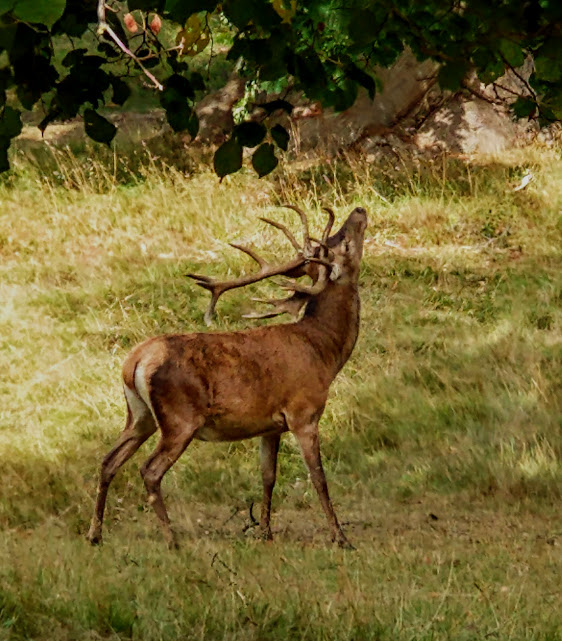
A red deer stag grazing on leaves: not yew leaves this time.
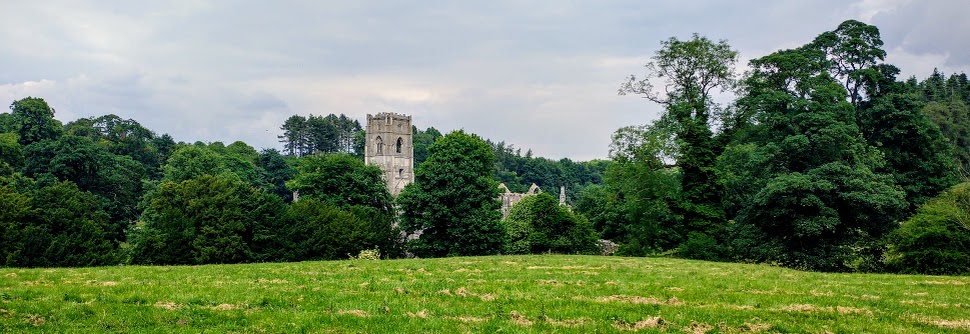
I can’t show you any of the creatures for whom these trees are their neighbourhood – apart from a grazing deer at nearby Studley Royal. Just the ancient trees themselves, the nearby Fountains Hall, built in late Elizabethan times when they were already 1000 years old, and a slightly more distant view of Fountains Abbey itself. My featured photo, the last image I took in June, is of those yew trees, looking as though they’re ready for the next 1000 years.
Fountains Hall, as seen from the yew trees.Fountains Abbey, as seen from the yew trees.
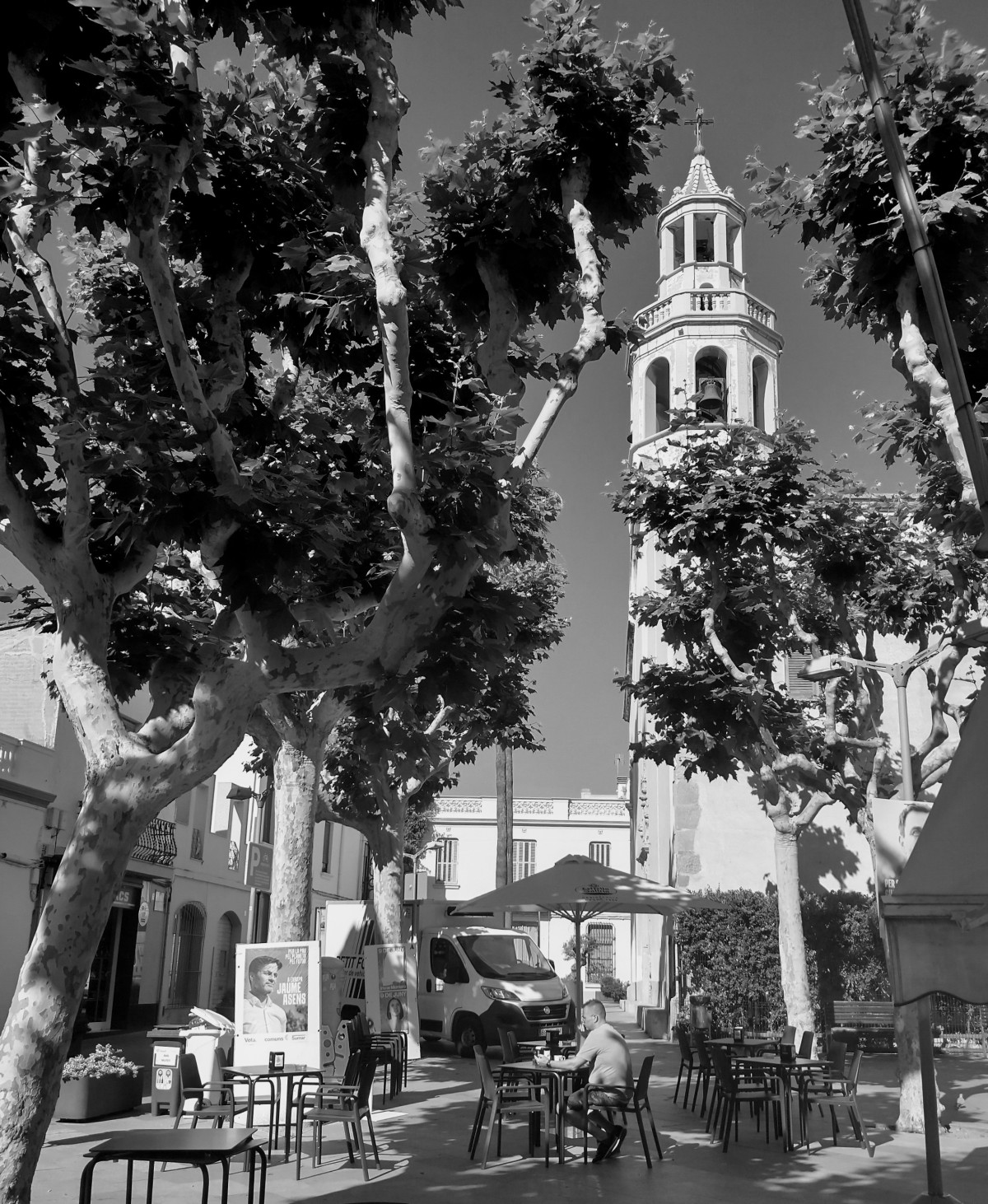
My last day in Premià for the time being, so of course I need a quick walk through my favourite square in town. The oldest church is here: though all is not as it seems. As you’ve probably guessed, it dates from the 18th century. As you probably haven’t guessed, this building is a copy of the original, which was completely destroyed by Franco’s forces during the Spanish Civil War. It’s been rebuilt: an exact copy. So here’s a single church with a double history.
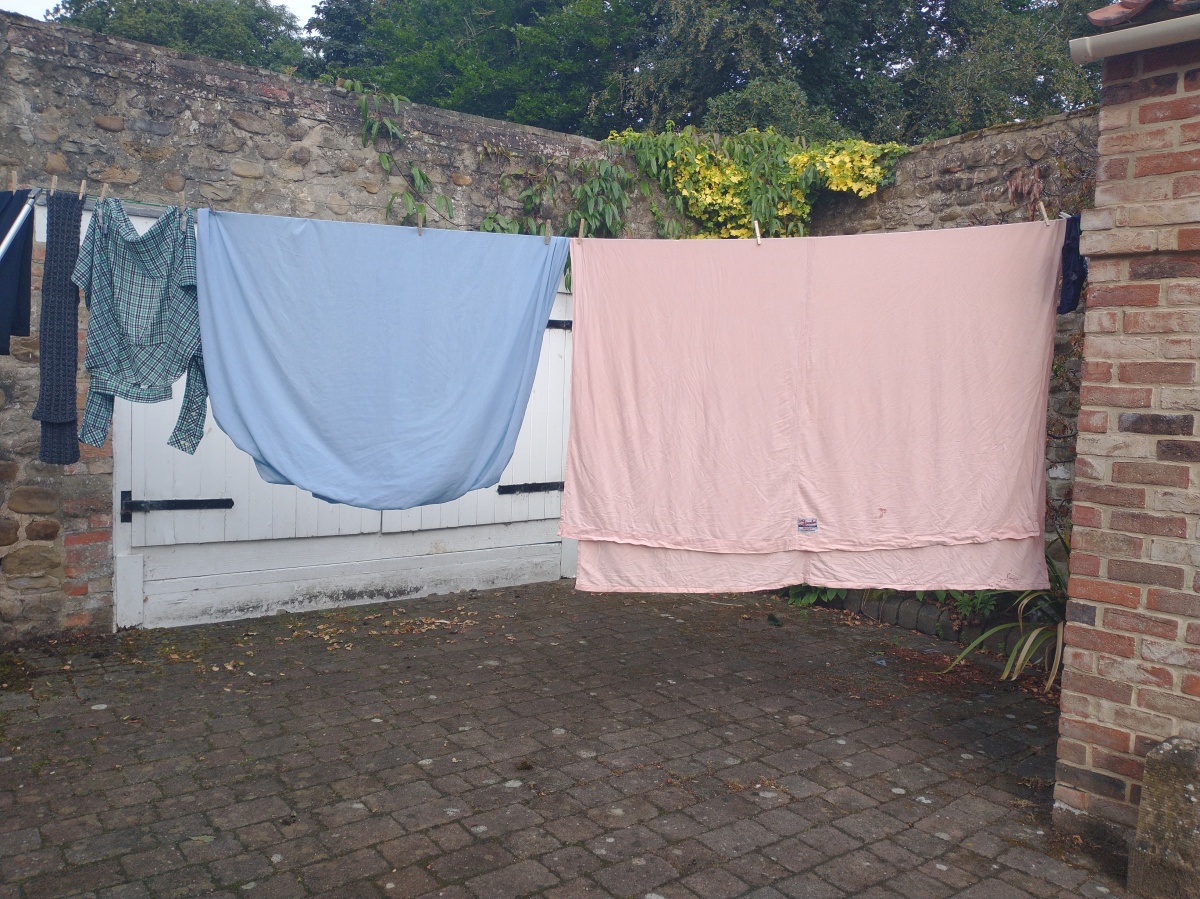
Only older readers will know what I’m talking about. The Good Old Days when worn sheets were not discarded, but cut down the middle, flipped round so the edges became the centre to be joined together, and the middles re-hemmed as edges. Reader, we still have such a sheet. Pink flannelette, and doing duty as a protective under- sheet. It was already old, already sides-to-middled when I was a small child. I reckon it’s at least 100 years old.
But I’m that make-do-and-mend generation. Only the other month, my husband asked whether we could find a seamstress in town who could turn the collar on a favourite shirt so he could get some more wear out of it. I drew the line at that one. I reckoned it would cost far more than a new shirt.
What about you? Do you make-do-and-mend? Do you buy soap ahead of needing it, so it can dry out in the airing cupboard and therefore last longer? Or maybe you have other strategies that make any Generation-Whatevers roll their eyes heavenwards. Please own up in the comments.
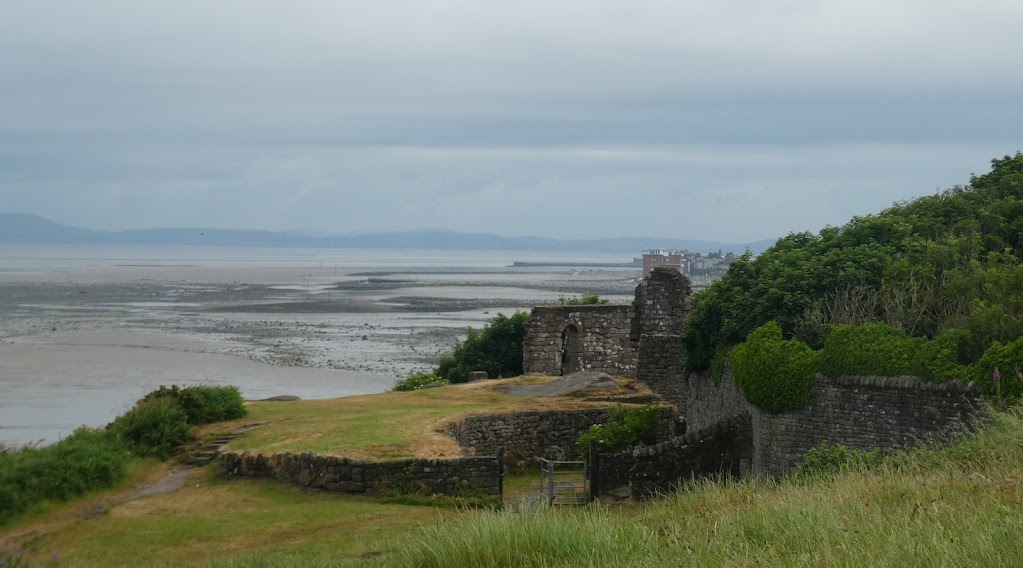
I sent a postcard from Heysham in Lancashire on Monday (pronounced Heesham, by the way, not Haysham). And I found myself drawn to this spot time and again during our short stay.
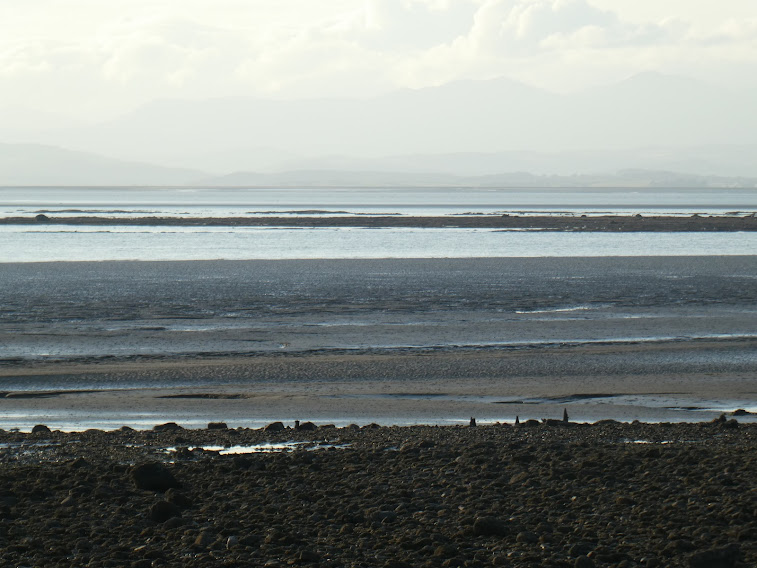
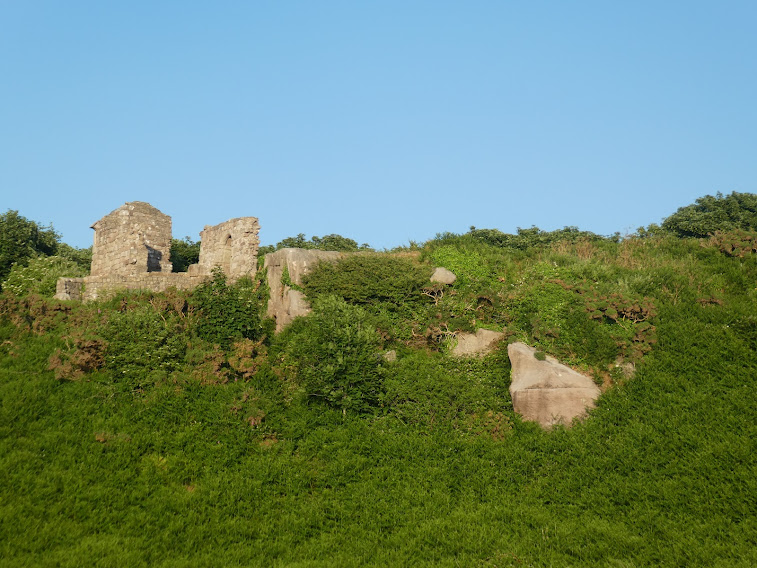
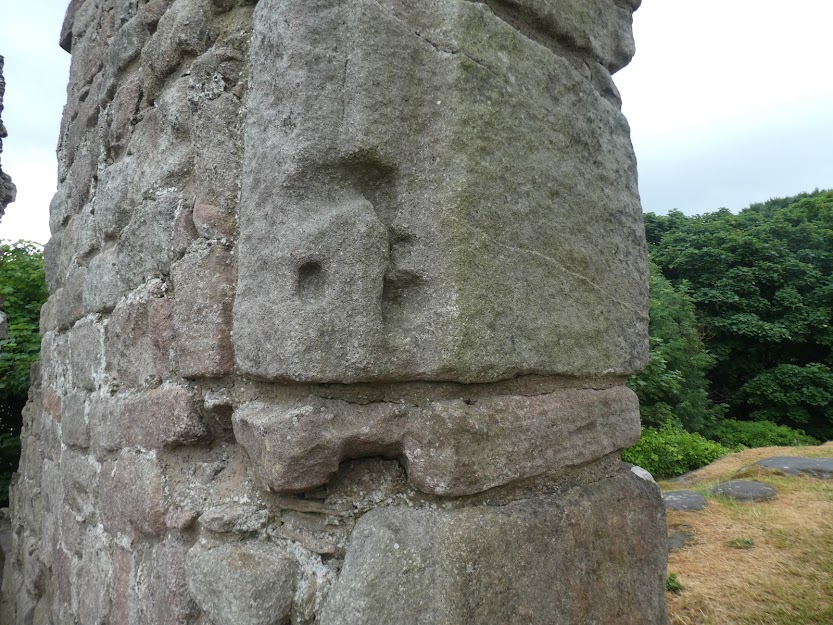
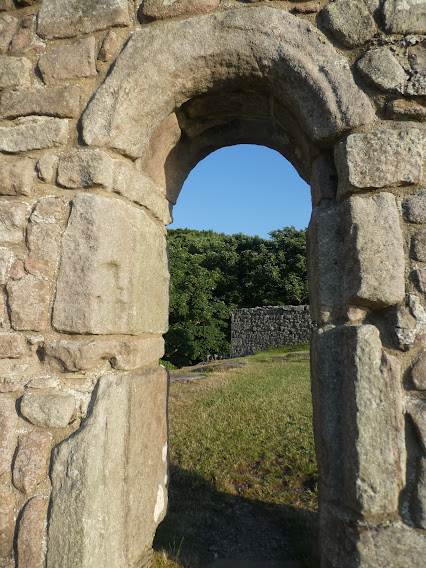
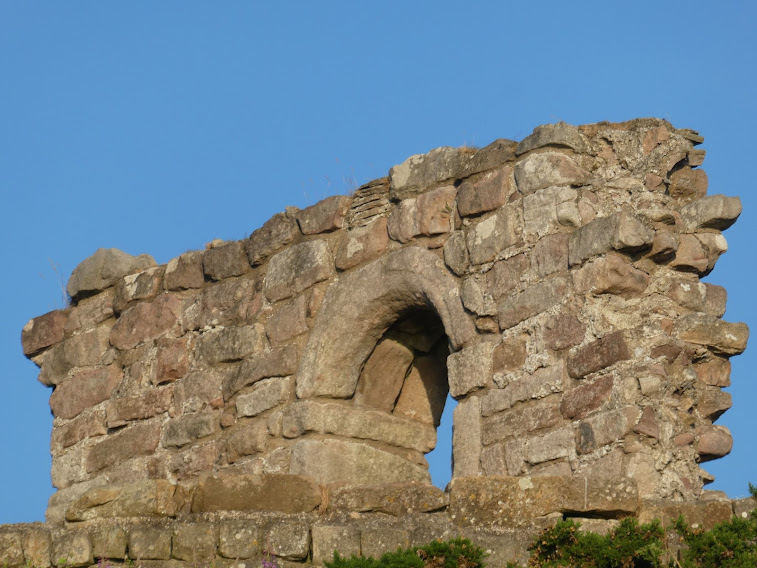
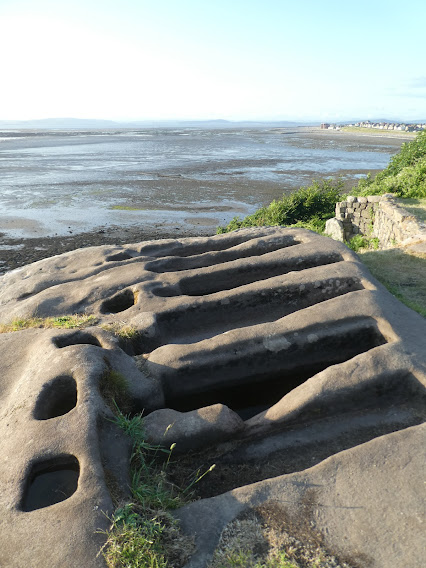
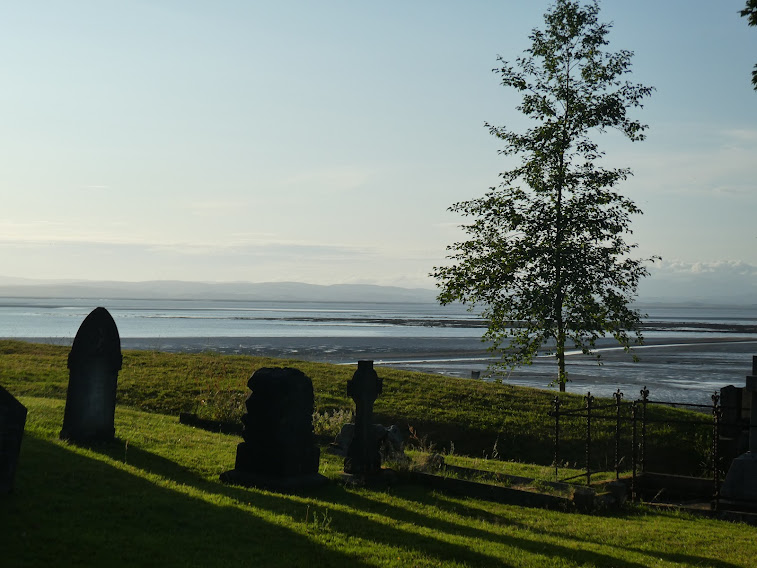
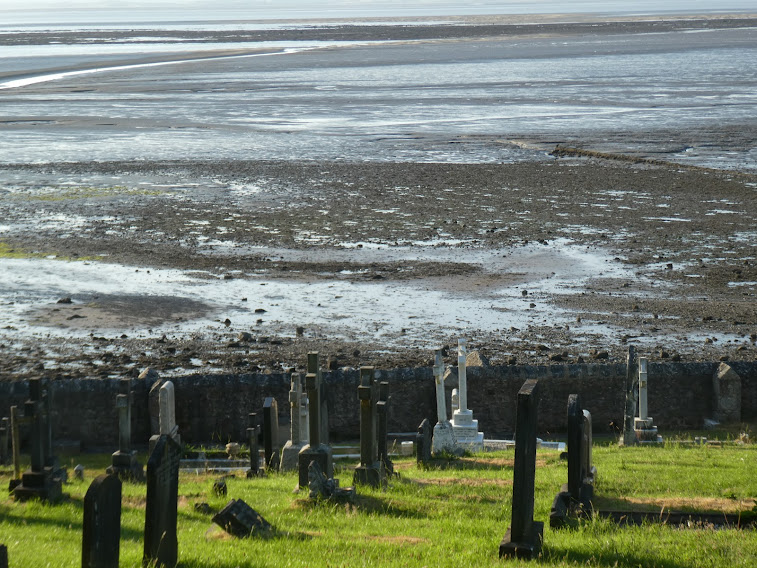
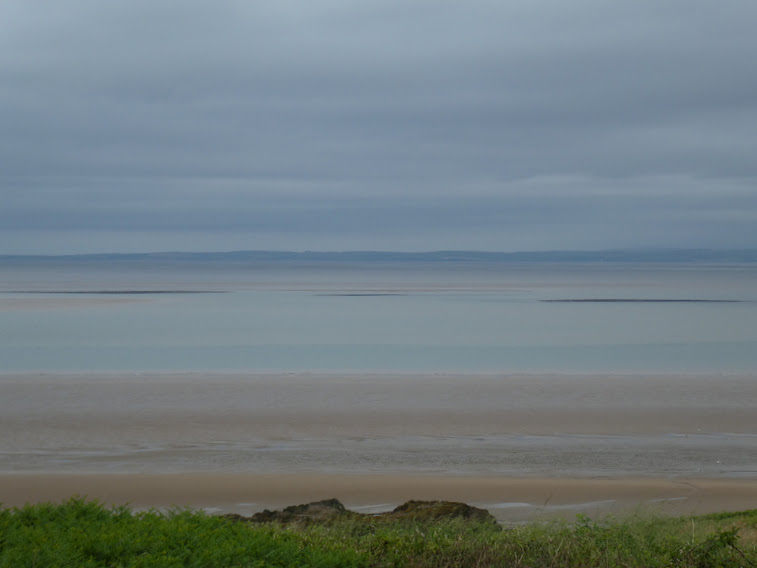
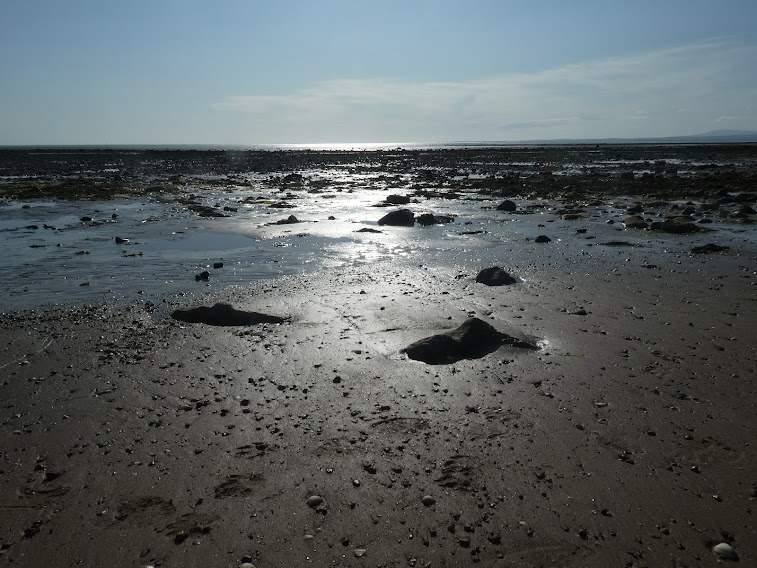
A scrub-tangled cliff-side looked across the stony, muddy shoreline of Morecambe Bay and to the mountains beyond. This was the view the Vikings had as they landed and began to make their homes here. This was the view the early English had as, in the eighth century, they built a chapel right here at the edge of the cliff, and dedicated in to Saint Patrick. Yes, THAT Saint Patrick, patron saint of Ireland. Born in Cumbria, he was captured and enslaved in Ireland. After six years, he escaped and fled on a ship bound for France. But the ship blew off course and wrecked on the English coast – here in Heysham . From here he went to France as planned to continue his religious education before returning to Ireland to convert the population there. The reason for the chapel was probably as a place of rest for those pilgrims who visited the rock-cut graves I showed you in my postcard – and now again, here. As the years went by, the chapel was enlarged and the ground around it became a burial place – over 80 bodies have been found.
And what about those rock-cut graves? Despite their human shapes, it’s thought the bones kept there were disarticulated, and may have been those of local saints and important Christians – even perhaps Saint Patrick himself? That’s why they became a place of pilgrimage. Once, they will have been topped off with heavy stone slabs, and those sockets at the head of the graves would each have held a cross
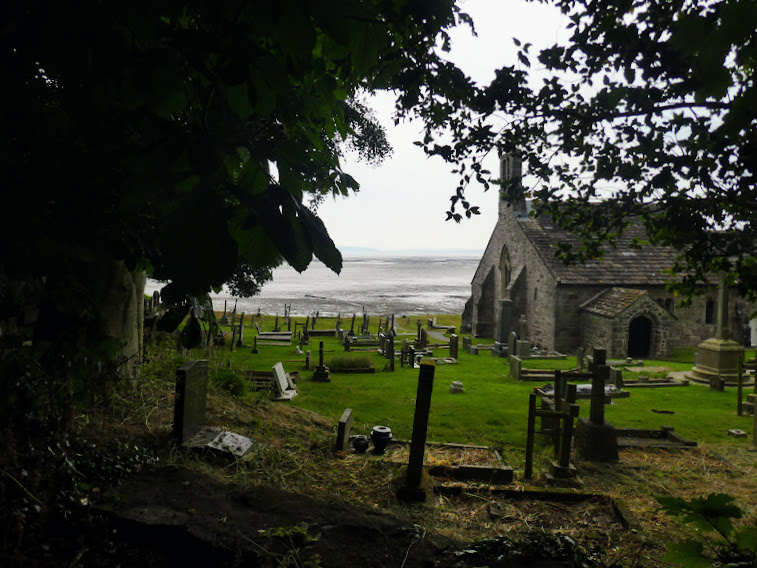
Almost next door is a church. This church, dedicated to Saint Peter also has 8th century origins. I wish we could have gone inside to explore, but we didn’t manage it. Now it’s the parish church, with a graveyard below sweeping down to the sea.
Something about the site ensnared me. Isolated, and with atmospheric light and views, it’s become my choice for Tina’s Lens-Artists Challenge #254 this week: Spiritual Sites.











 From Pyrenees to Pennines
You must be logged in to post a comment.