The view from our kitchen window this morning, 20th May 2016.


‘Now is the month of Maying’ (Thomas Morley, 1595)
The view from our kitchen window this morning, 20th May 2016.
‘Now is the month of Maying’ (Thomas Morley, 1595)
I’ve loved the Horniman Museum since I was a small child. We would make the long and slightly awkward bus journey there from our home in Victoria, over the Thames at Vauxhall Bridge, through dingy Brixton and elegant and well-heeled Dulwich to spend the day at this special place.
I can’t remember those visits in detail really. I’ve got memories of awe-inspiring and crowded cabinets of strange birds and unfamiliar animals, collected and stuffed many years before: of colourful displays of traditional costumes and artefacts from Africa. Somewhere or another I probably still have the odd sepia-and-white postcard, bought as a souvenir of our day out.
And now it’s set to be a go-to destination for new grandson William. He too will be able to enjoy the bus journey there and back, and a Grand Day Out, as we all did last Sunday.
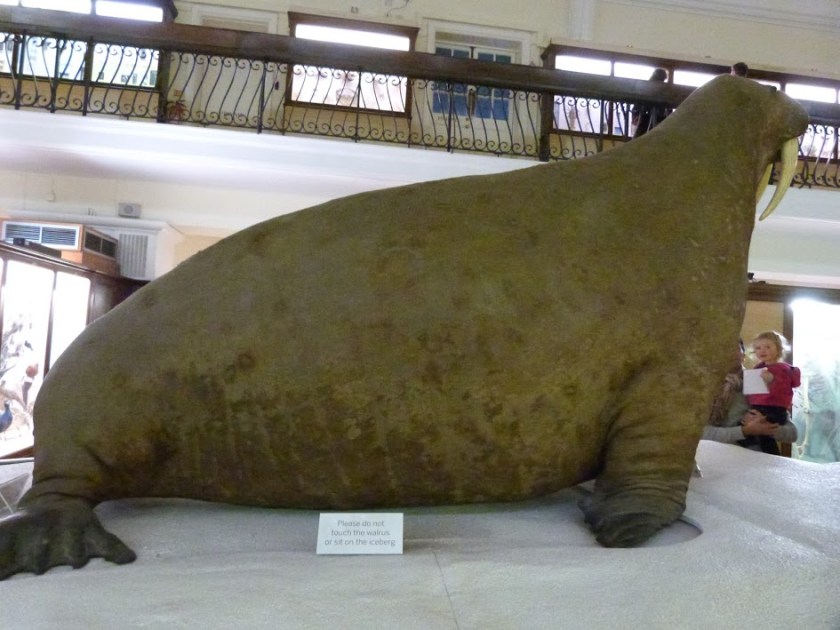
The museum is so much more than I remember from those days in the 1950s. Those collections – and more – are still there. They’re still arranged, particularly the Natural History collection, with a nod to the days when simply everything was displayed, all the better to fascinate you. There’s that wonderful walrus, stuffed by a Victorian taxidermist who hadn’t had the benefit of watching David Attenborough’s wildlife programmes. He filled out the creature full to bursting, not a wrinkle in sight. Everyone loves him.
But the African Worlds gallery reflects more modern ideas of interpretation. You’ll find, alongside objects from traditional African cultures, more modern artefacts from countries strongly influenced by the African populations that arrived there during the years of slavery, such as Brazil and Trinidad.


Surely that aquarium wasn’t there 50 years ago? And all those wonderful things happening in the gardens – I can’t even remember any gardens. I can’t remember the spectacular views across London. Even if I could, I wouldn’t remember this view. Look.

I’m sure there wasn’t an Animal Walk. This is where William got the chance to come face to face with an extremely short-legged goat, a large and very industrious white rabbit, a couple of hens and an alpaca. Now there are flower beds showing plants that give us dyes for cloth. There’s an exciting space full of – are they sculptures? No, we can all go and make music there, strumming, pounding, plucking, experimenting. And so much more …. so much more. I’d happily go and explore this wonderful outdoor and indoor site every time we go and visit… and I know William will want to come too, when he’s old enough to have an opinion.


 …. is a lovely thing.


So I thought I’d share it with you.
I’ve got some good news to share. But I plan to do so in another couple of days…. you’ll see why.
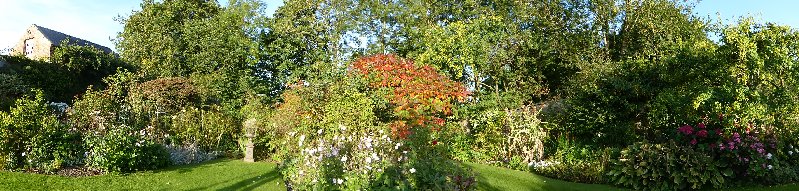
So today I’ve decided to follow American blogging friend Clay’s suggestion, and share a few pictures of an English garden in midsummer.
We are lucky. We rent a property attached to a large house. Surrounding this house is a large garden, which we’re encouraged to enjoy.
Here you are. Enjoy it with us.


If you’re English, of rather mature years, and of a rural disposition, you won’t turn down the chance to snoop round somebody else’s garden. That’s what Open Gardens is all about. And early summer is open season for Open Gardens.
The other day we chose to go to Old Sleningford Farm, only just down the road from here. We knew we’d get the chance to stroll round a country house garden, with informal parkland and rather more formal borders and flowerbeds. We knew there would be a productive kitchen garden. We knew we’d be offered afternoon tea, with far too many delicious home-made cakes to choose from.


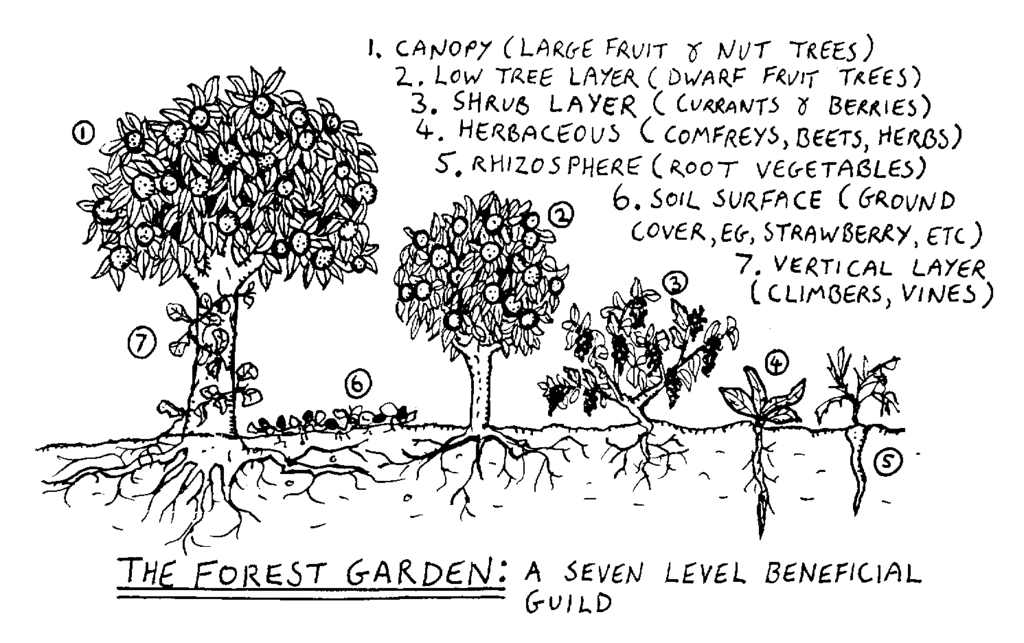
What really interested us, though, was the Forest Garden. A what?
Here’s what they say on their website:
‘A Forest Garden is a planting which mimics an immature woodland, in which everything is edible or useful. Plants are grown using every available space – under the ground, on the ground, as bushes, trees and climbers. It requires minimal maintenance once established as all the plants are perennials or self seed easily and the ground is permanently covered.’
As you approach it, it seems you’re just going to enter a patch of woodland, albeit well-gated against pesky rabbits. Simple paths mown through the undergrowth send you on a winding route that meanders through the two acre site. Gradually we realised that there were things to eat here: fruit trees, certainly – apples, plums, gages, pears and so on – but also fruit bushes growing hither and yon. Raspberries; currants red, white, pink and black; gooseberries. Strawberries extended their runners along the ground. Then we noticed herbs, and then some vegetables: chard, kale, leeks, onions…..
This is a garden that has required hours of work from everyone at Old Sleningford, from volunteers who come one Sunday every month and from wwoofers. But over time, the garden will to an extent manage itself, as the desirable, productive plants take proper hold and leave no room for any plant not prepared to earn its keep.


We didn’t have long enough to explore as much as we’d have liked. But we found a moment or two to relax in the summer-house at the forest garden’s centre. Here was a simple wooden structure, with a roof of sempervivum – house leeks – equipped with a chair or two, a book or two. Here, with only bird song for company, surrounded by productive woodland, was the perfect place to spend a summer’s afternoon.
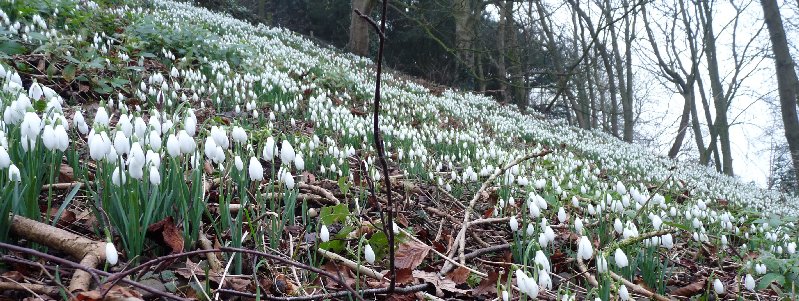
I know I’ve mentioned them already, but this year’s crop of snowdrops has been quite astonishing. Maybe they weren’t quite such a feature of our local landscape in France. Maybe when we last lived in England, because we were in town, we saw them only tucked into quiet corners of suburban gardens, or on occasional weekend sorties. Perhaps snowdrops round here are always this special. But for us, this year has been a real treat.


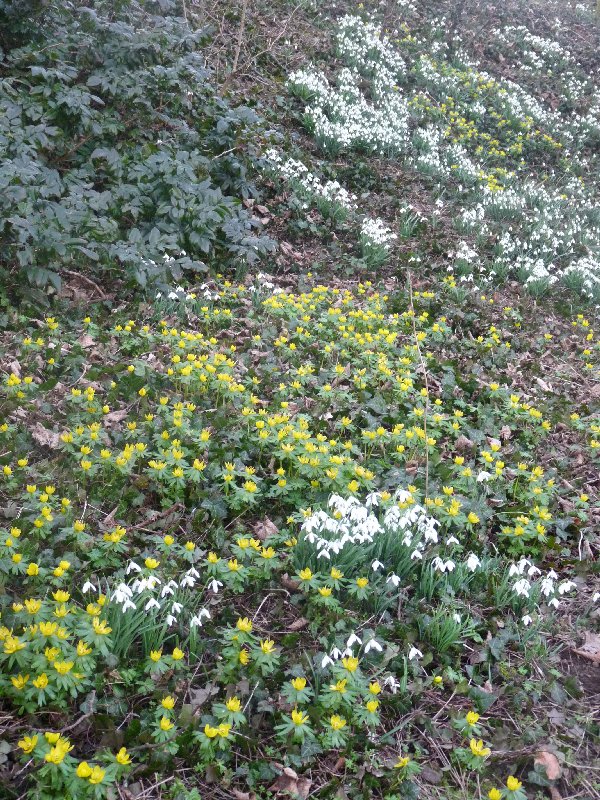
Snowdrops have been almost the first thing we see as we set foot outside the house. They’ve been in dense groves in nearby woodland. They’ve been on sheltered verges. At first slender, pointing their sheathed leaves upwards in search of light, now they’ve opened their petals into blowsy bells and flattened their leaves gently towards the ground beneath. This is the sure signal that they’re on the way out. Gardens are displaying the first of the early crocus, and even daffodils are opening in more sheltered spots. I think snowdrops prefer to be the centre of attention, prepared to share the woodland only with occasional patches of aconites. Now that spring is really on its way, and the birds are honing their voices in preparation for their courtship rituals, the snowdrops are preparing to allow their flowers and leaves to wither and die, as the bulbs enjoy their long and nourishing hibernation below ground.


I took these photos of the garden last spring and summer. Centre-stage is the magnificent copper beech, which has dominated the spot for years and years, providing homes and recreation for generations of garden birds and squirrels. It’s the very first thing we see as we glance out of the kitchen window, a statuesque barometer to the changing seasons: from bare winter branches, though to tightly furled budding springtime leaves, to the vibrant coppery russet leaves of high summer, and the burnished and tawny tones of those same leaves as they dry and fall in the Autumn .
I took this photo yesterday morning.

Our copper beech has gone.
On Friday night, the house became surrounded by an eerie moaning, and then a rushing sound that became ever louder as the wind, gathering speed, surged helter-skelter alongside the house. Thin wiry branches of wisteria and ivy scrabbled urgently at the window panes. The wind clattered down the chimney, coughing clods of oily soot from a long-extinguished fire into the hearth. It was a noisy night. So noisy that despite all the disturbance, none of us heard the moment when the mighty copper beech lost a battle and fell to the ground.
In the morning, the kitchen was unaccountably light for such a gloomy day. We could see the sky where once our copper beech had stood. I rushed down into the garden. The tree could have lunged towards the house, at best breaking several windows. It could have tumbled into the walled garden, taking with it the lovely brick wall up which clematis and old-fashioned roses scramble throughout the summer. It could have crashed into the pond, shattering the ornamental statue in its centre, and unsettling rather a lot of fish and toads. It did none of those. Instead, it fell gracefully to the back of the lawn, avoiding other trees, and several flower beds. It stacked itself up neatly, just waiting for the next stage in its long career. Once it’s seasoned, our landlords, and their son and family will have enough fuel to keep their wood-burning stoves burning brightly for several winters to come. Is that a fitting end to its long life? I don’t know. But it certainly means that it will go on being appreciated for many years.


 From Pyrenees to Pennines
You must be logged in to post a comment.