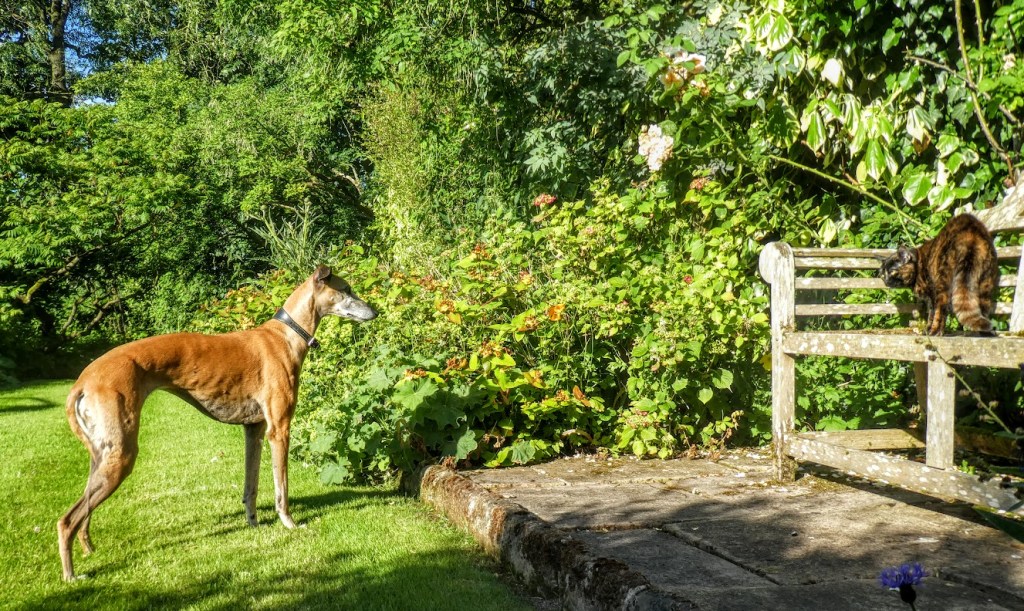
Poppy meant no harm. She was a placid and amiable dog. MiMi trusts nobody, least of all A Dog. Poppy (who sadly is no more) stood at a respectful distance, wondering what to do. MiMi took to the garden bench, arched her back, fluffed up her fur, and hissed. This scene went on for about twenty minutes, till Poppy got bored, and sloped off .
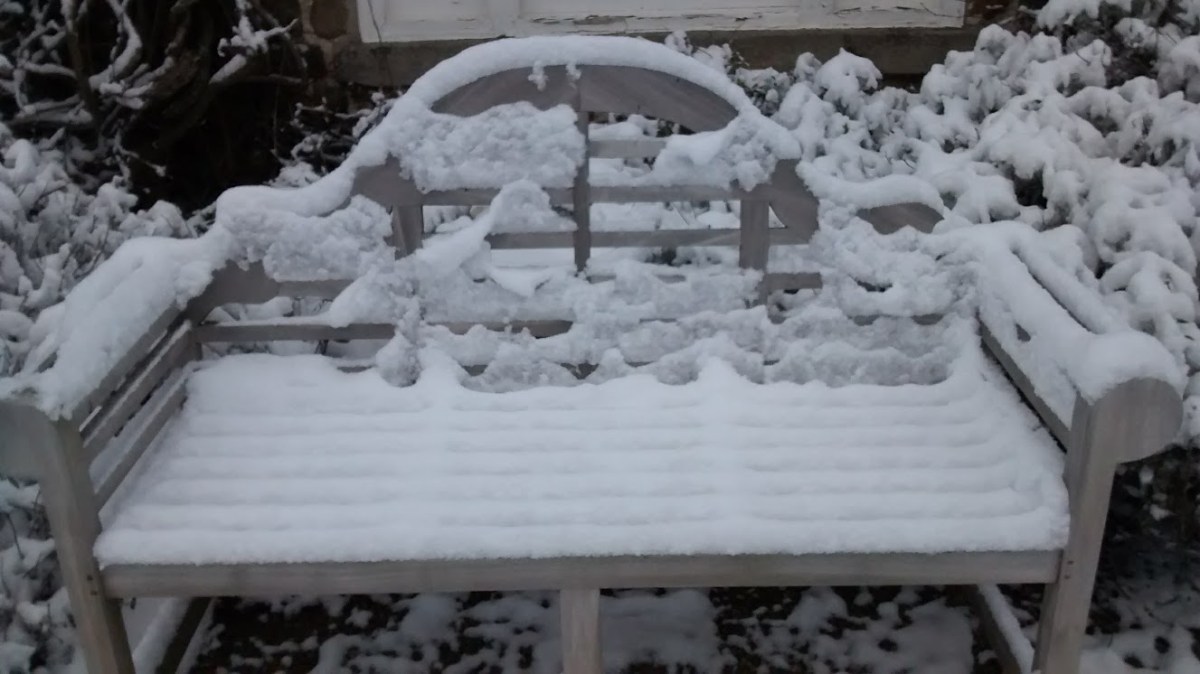
Jude, of Travel Words fame, is encouraging us to post pictures of benches on Sundays. To celebrate being back home, and while it’s still winter, I’m going for a snowy view from the window I’m currently staring through. It’s not snowing today. Just bitterly cold. I’d ventured out one crisp February (yes, February!) day to snap the featured photo.
By the way. We are going to be entirely internet-free most of this coming week. I doubt if I’ll be able to read , post, or anything else internet-related during that time.
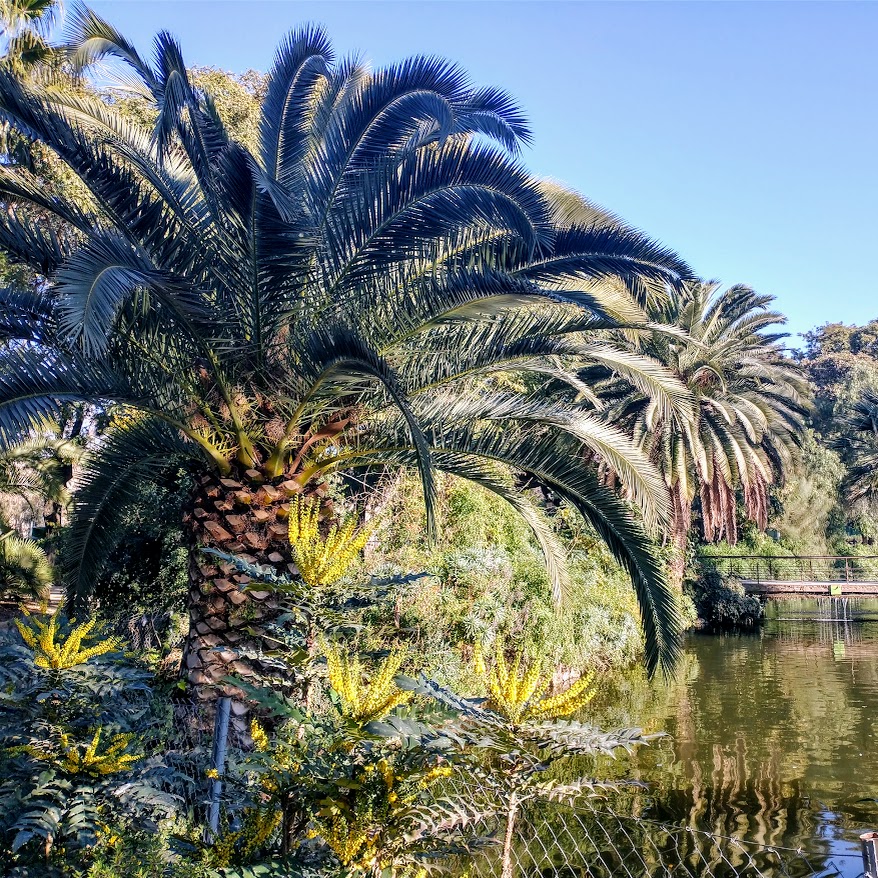
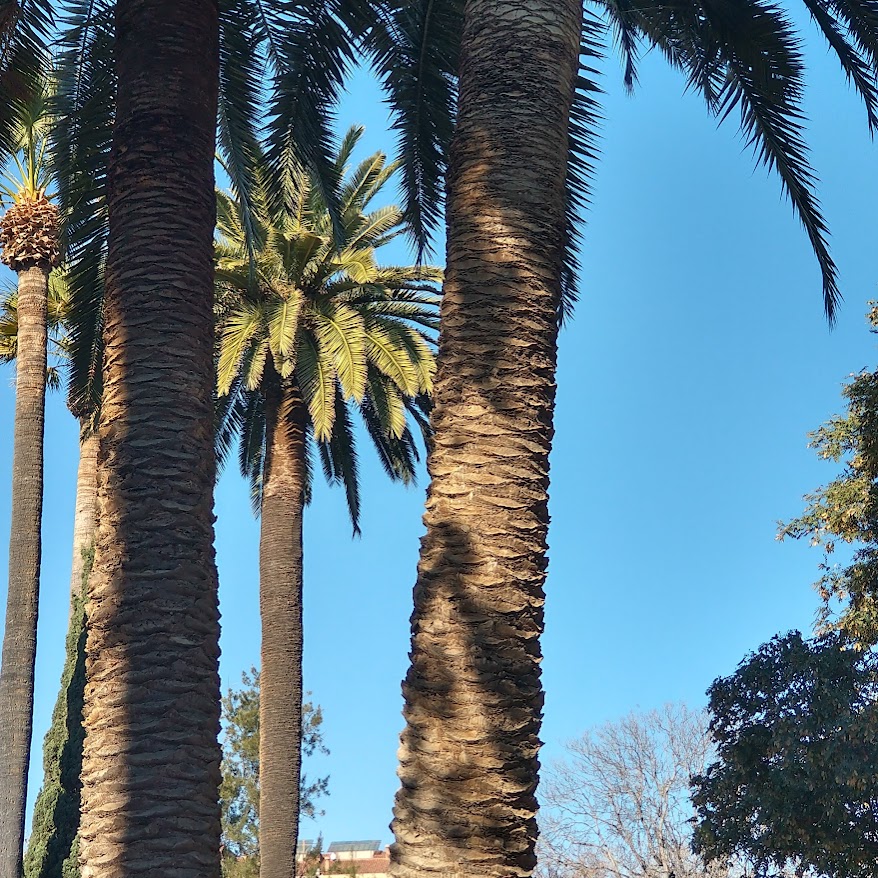
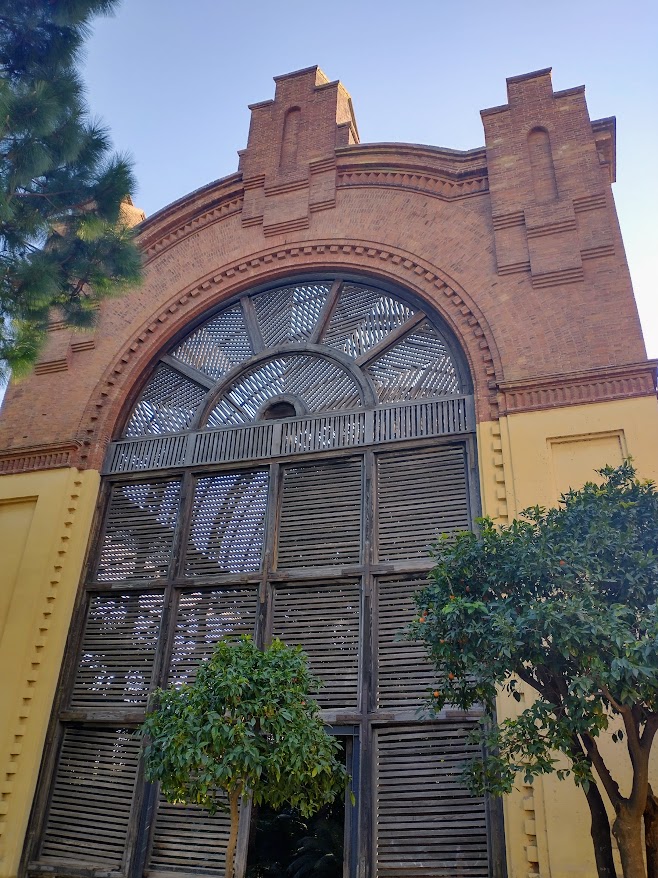
Last time I stayed with my Spanish Family, in May, I happened upon a National Treasure in Ciutadella Park. This green lung in the centre of Barcelona has a bit of everything: playgrounds, palm trees, ponds, picnic areas. It’s even home to Barcelona Zoo.
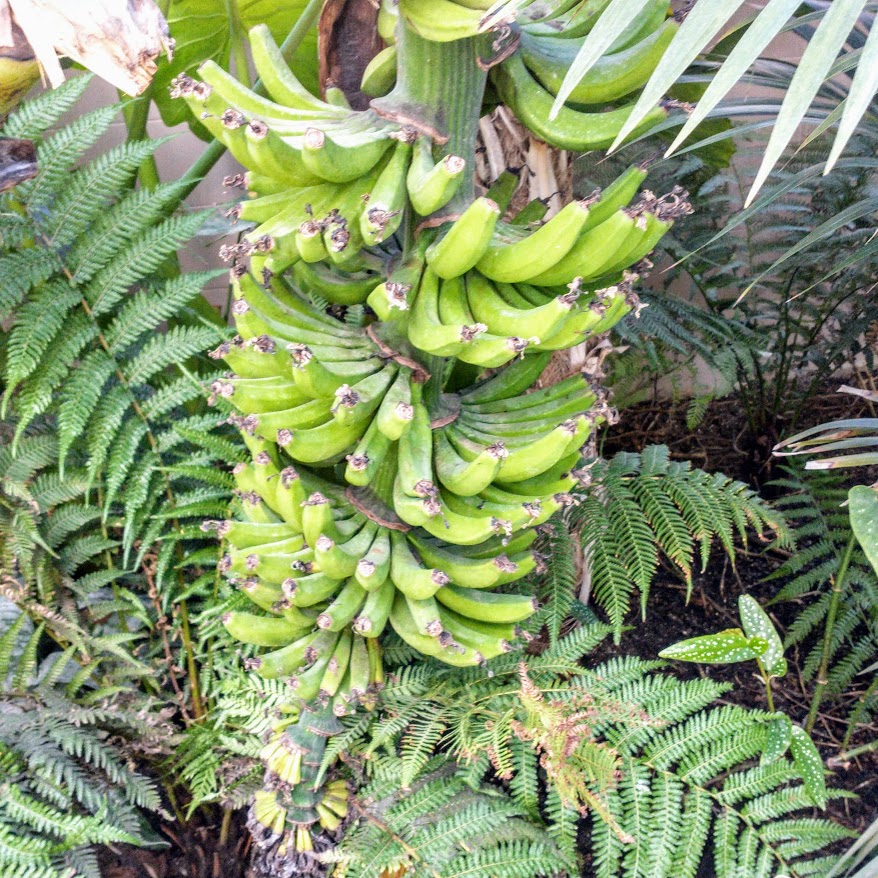
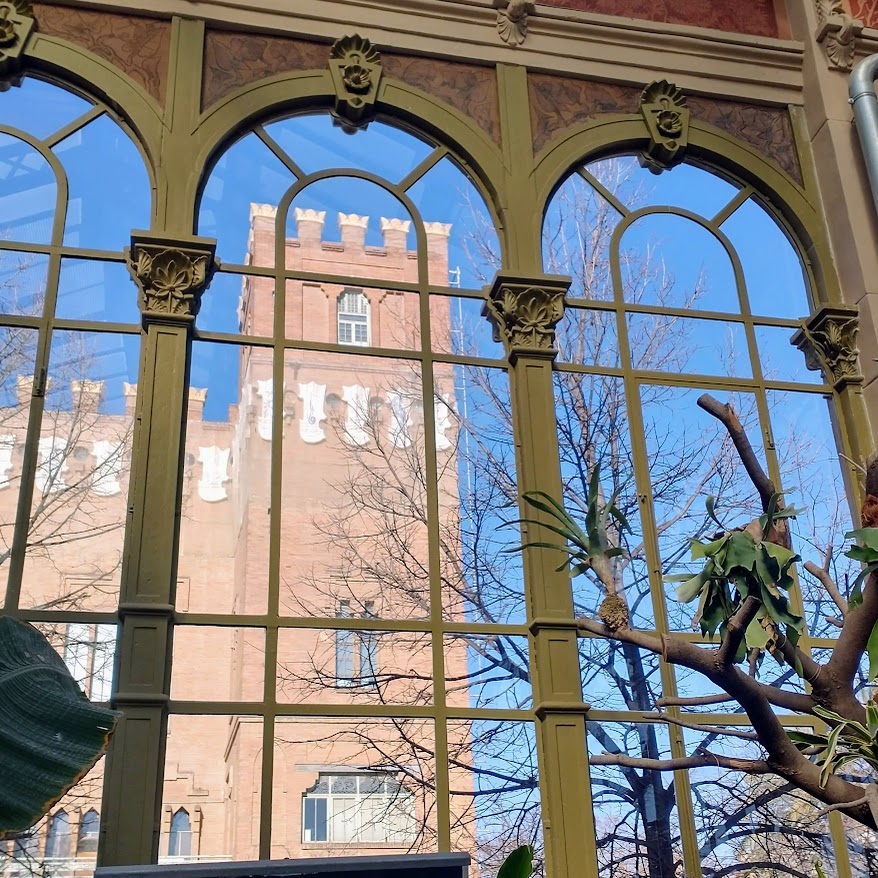
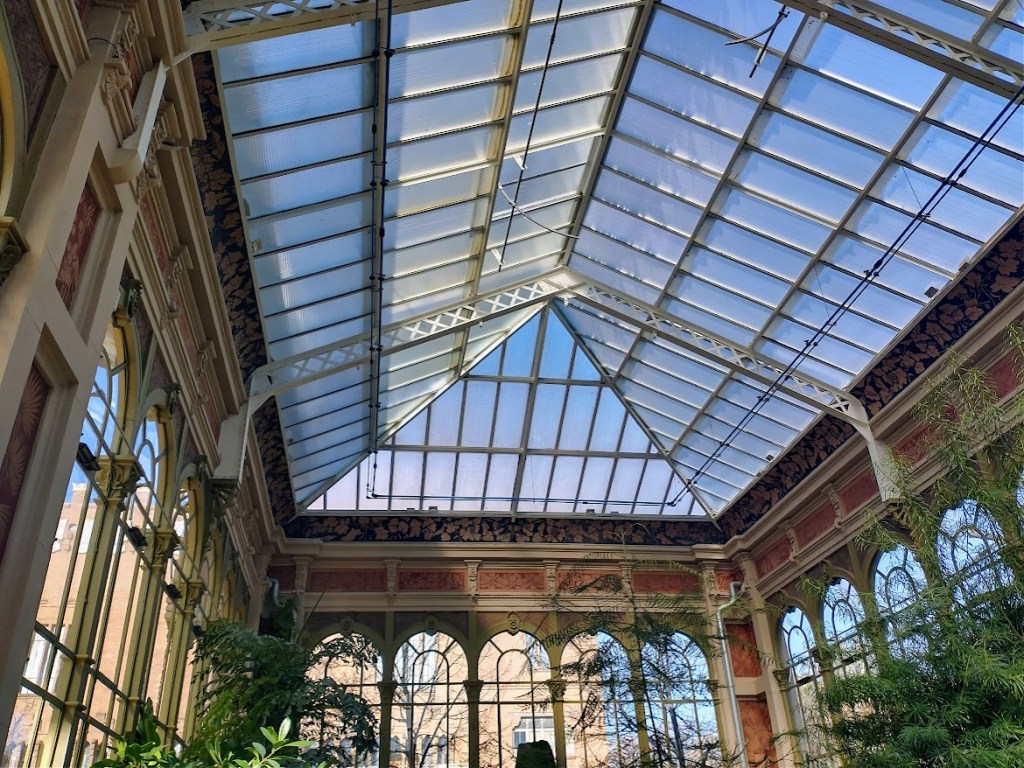
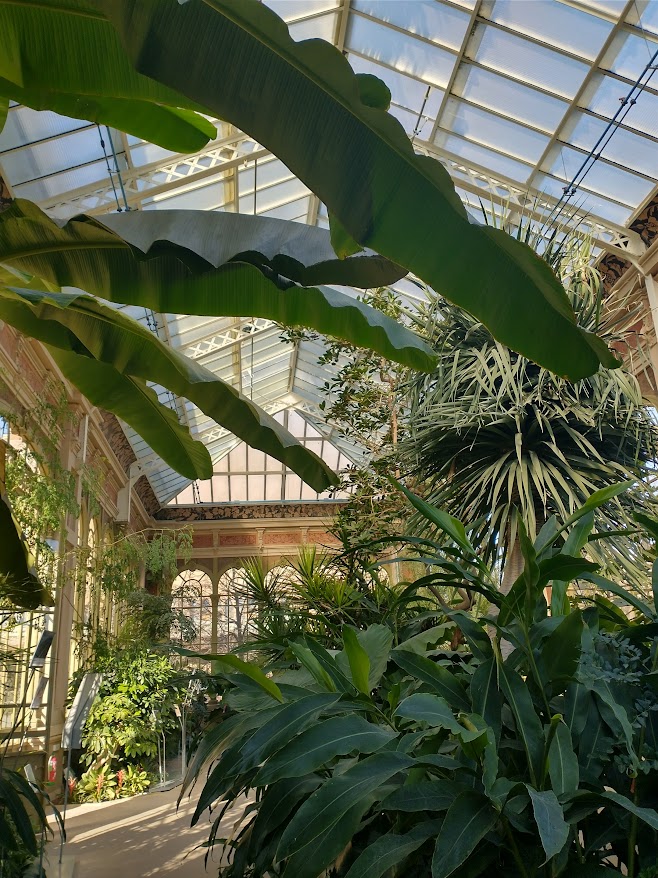
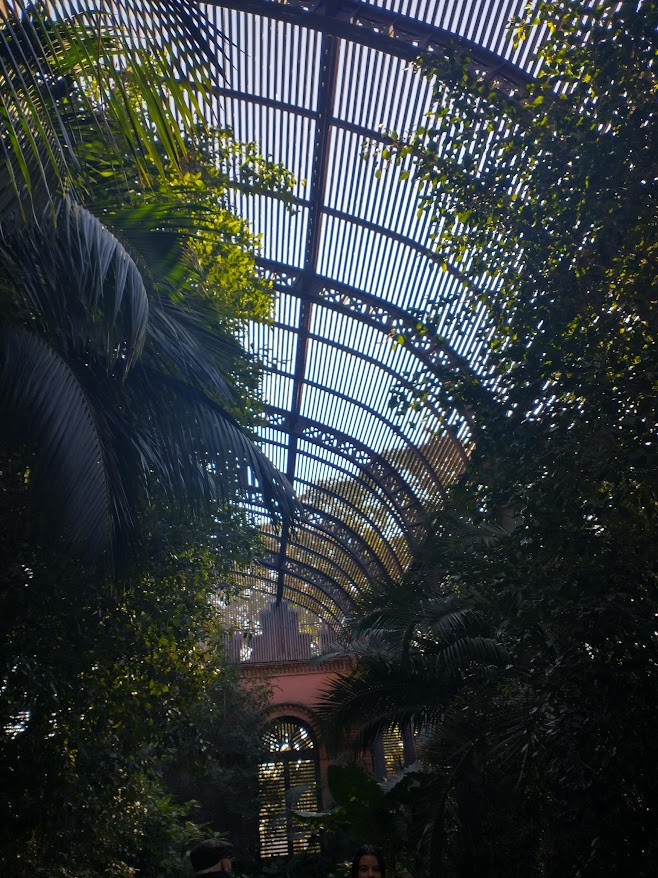
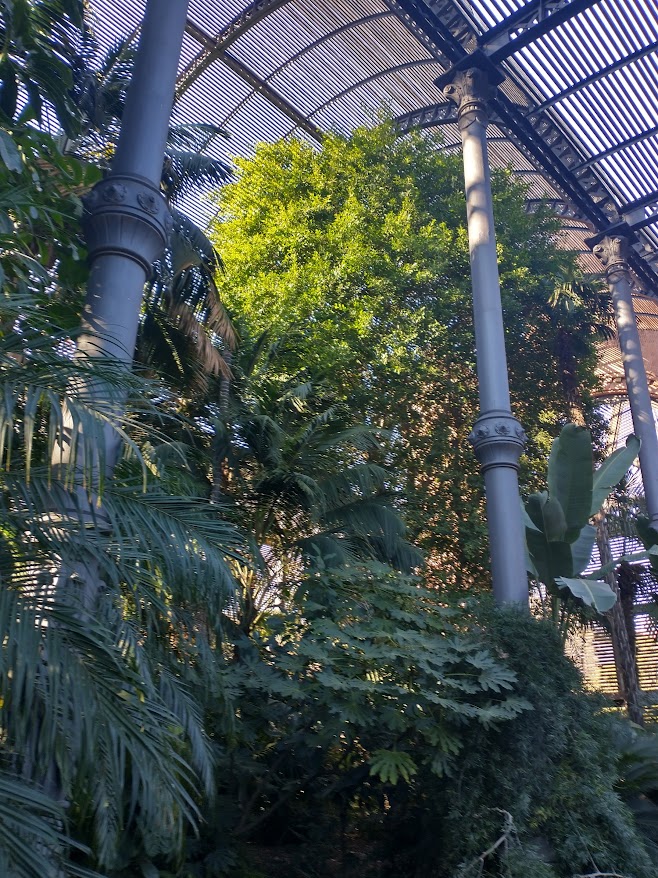
But what took my eye on that hot day were two Victorian era glasshouses, one closed for restoration. I determined that Malcolm and I would check it out to see if the work was complete. It is. And what a glorious place the Hivernacleis in which to spend a relaxing morning. This vast iron structure with glass sides was built from 1883-1887 and designed by Josep Amargós in the Modernista style. He looked to England, to Chatsworth and to Bicton, as well as other places for his inspiration. Now modern restorers have looked to The Eden Project to guide them, and the greenhouse is once more home to over 100 plants, and forms the nucleus of the park’s educational and research programmes. We simply enjoyed the calm green space, with its restrained decoration and exuberant plant life. And the geometry evident in the greenhouse itself, and in the plants which populate it.
Besides this though, there is the Umbracle – the wood and brick (and glass!) construction designed by Josep Amargós at the same time as the Hivernacle, but for large shade-loving tropical plants. Seating is dotted about so that visitors can relax as they quietly contemplate immense and unfamiliar plant life. This building needs a bit of TLC, but still had the power to impress us as we slowly toured round it.
If you go to Barcelona, don’t miss out on this oasis of calm.
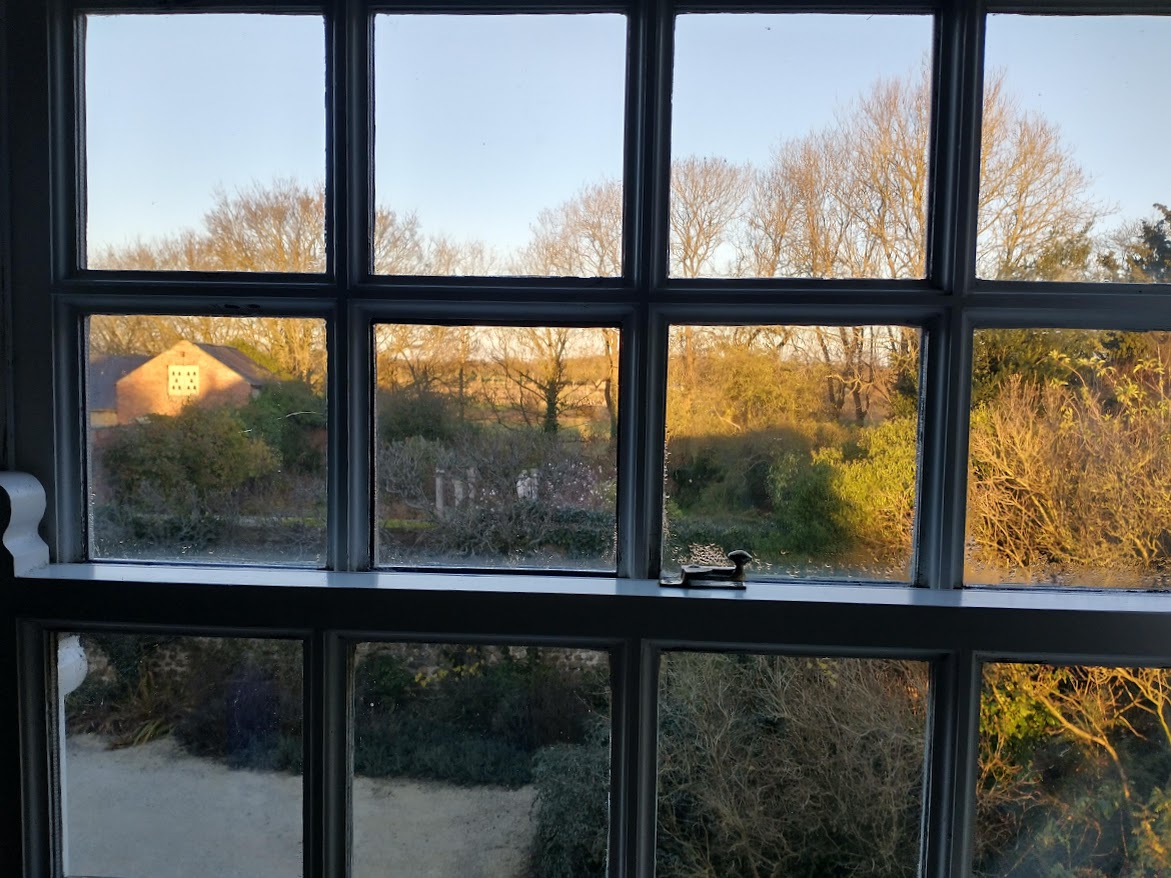
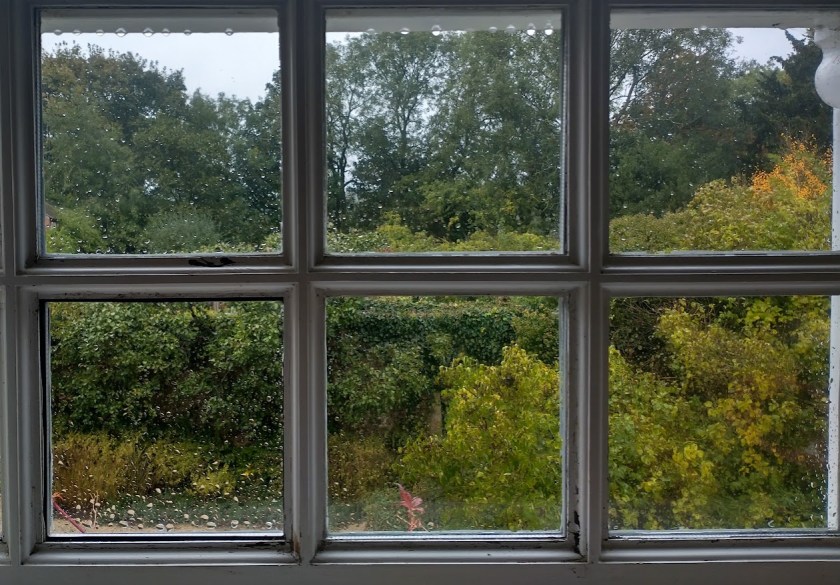
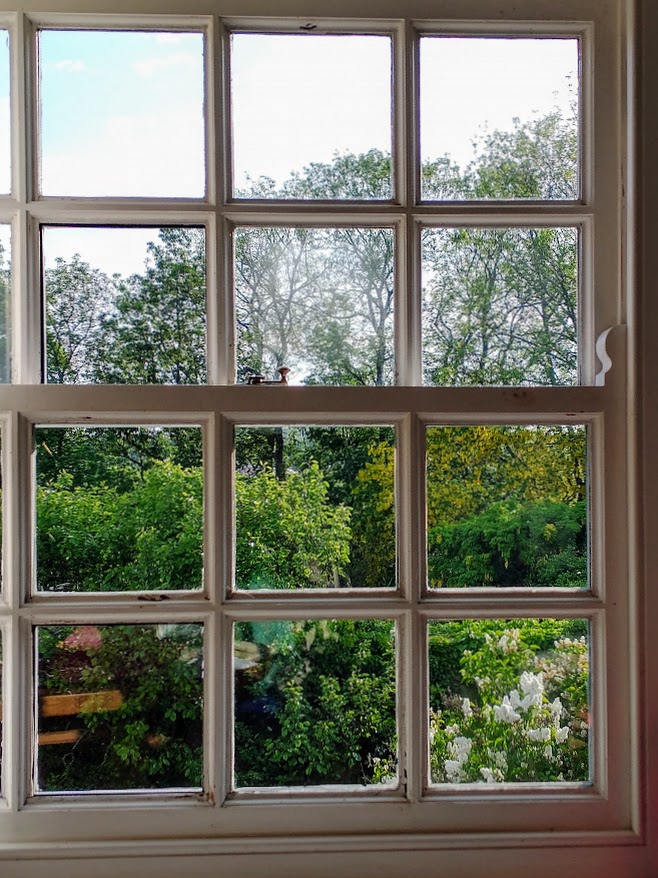
I am sitting at the kitchen table and looking out of the window. This is where I measure the changes of season; decide on what the day’s weather will bring; enjoy the fuchsia, pink and grey tones of the winter sunrise and examine the spiders’ webs that lace our small window panes at this time of year.
A frequent sight in October – or other times of year too.
In the middle distance is a line of trees. Now they’re newly stark for winter. A few weeks ago we observed them daily as the leaves turned first yellow, then tawny, chestnut and rust. Slowly the leaves started to fall. Then as November raged in, the wind snatched at them until finally last week, a storm bad-temperedly tore at the final tatters and flung them to the ground.
The view – sometimes – in January.
In Spring, it will all be reversed. At first, perhaps in earliest April, a citric haze on the trees will tell us that the buds are bursting, and will change daily, as the once-visible twigs and branches gradually leaf up, and disappear from view.
During that time though, while the branches are still visible, there’s plenty of action. Birds are home-hunting, prospecting for that perfect spot for a nest. Then there’s frenetic activity in the still-bareish trees as crows and wood pigeons flap back and forth, bringing twigs, feathers, moss, constructing untidy structures that despite their appearance are obviously sturdy enough – they’re still there now, high in the top branches. The smaller birds are more discreet, and though they build in the bushes and foliage nearer the house, we rarely see their nests. No, not even those of the sparrows, who cheep frenetically in the ivy below the window from the first moment they choose a site there, until the last fledgling has flown the nest.
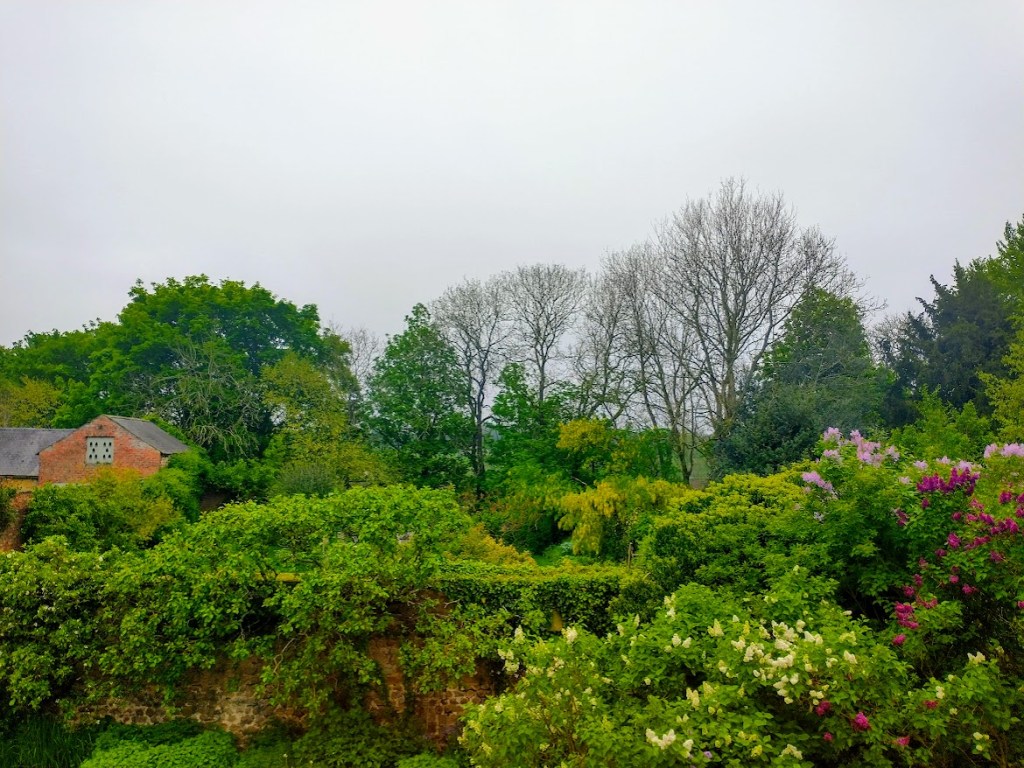
The view in May
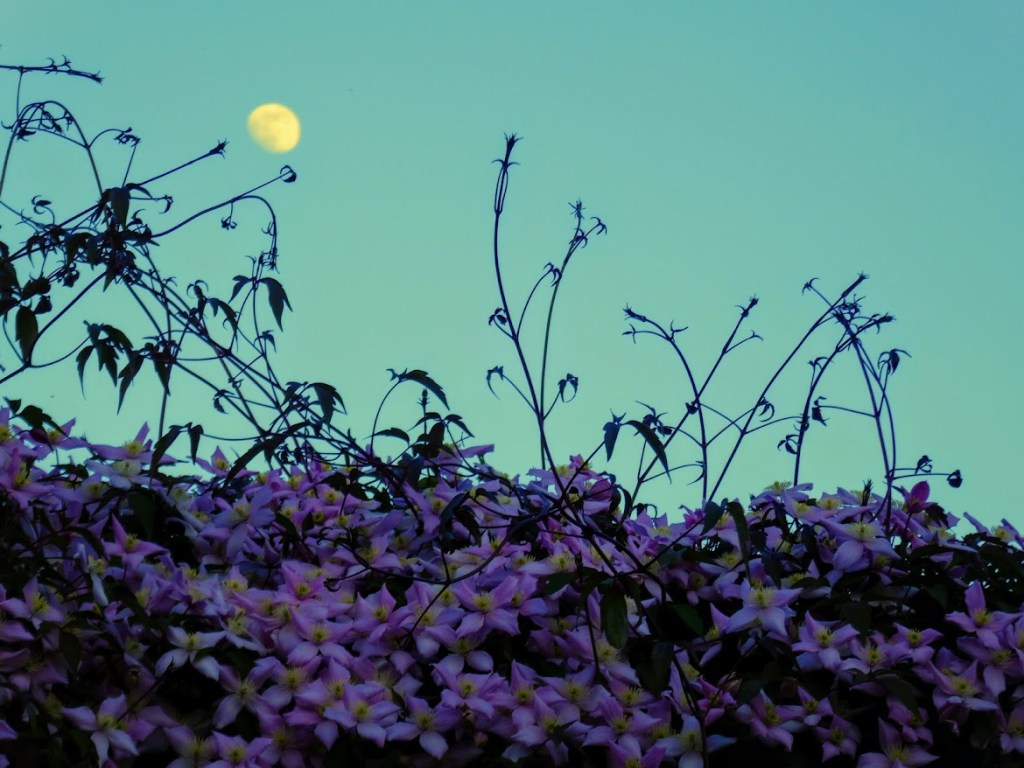
Nearer is the brick wall of our landlord’s walled garden. This is where a line of pear trees grows, with, in early summer, pink clematis scrambling through.
The clematis atop the wall one early evening in May.
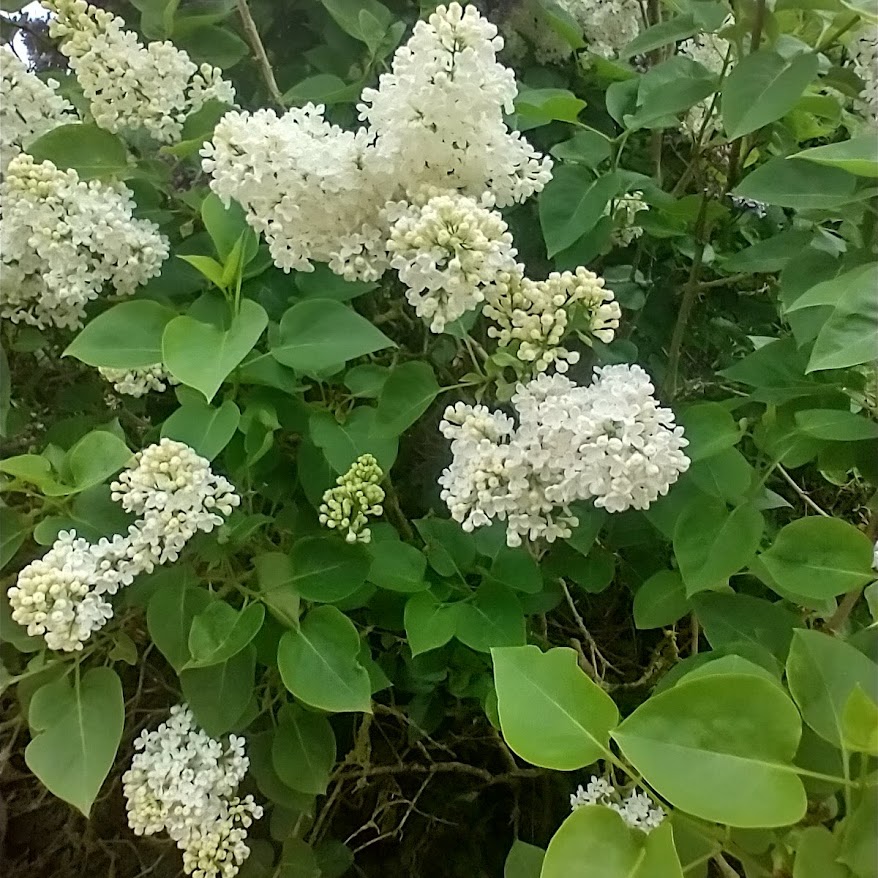
Next to them are three lilac trees. One is purple, one mauve, and the third one white. For two weeks only – in May – they flower, riotously, casting bloom after scented bloom skywards. After that they die sulkily, and look quite ugly for weeks. It doesn’t pay to be away in May and return in June.
Glancing upwards, there are often skeins of geese on flying missions between one neighbourhood lake and another, or in the summer (though less and less frequently these days), swooping and shrieking patrols of swifts.
I can show you neither geese nor swifts, but I can show you a cheeky squirrel who commandeered the window ledge one afternoon in September
So many sights and sounds to enjoy, so much action in the scenes just beyond our window panes. Never a week goes by without one of us saying to the other ‘Aren’t we lucky to be here? How could we ever move away?’
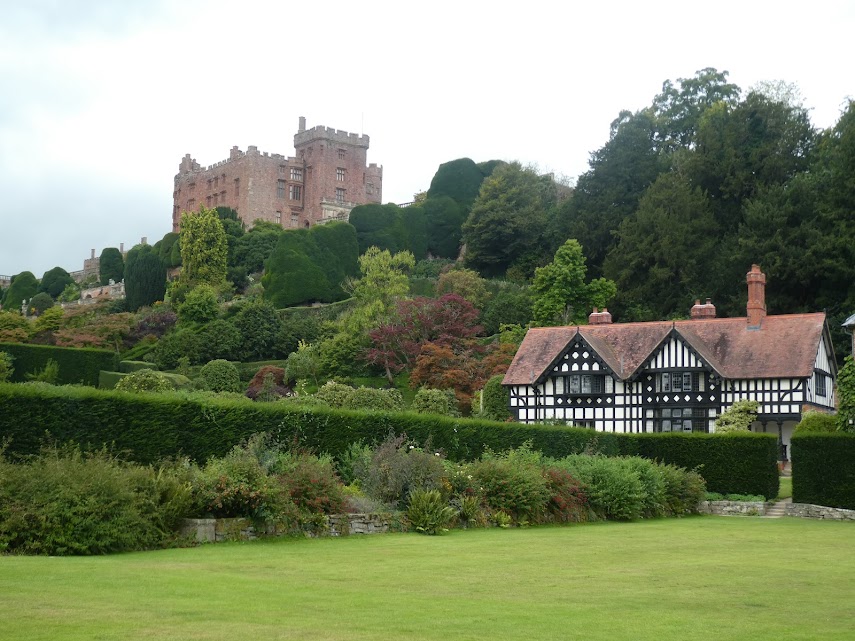
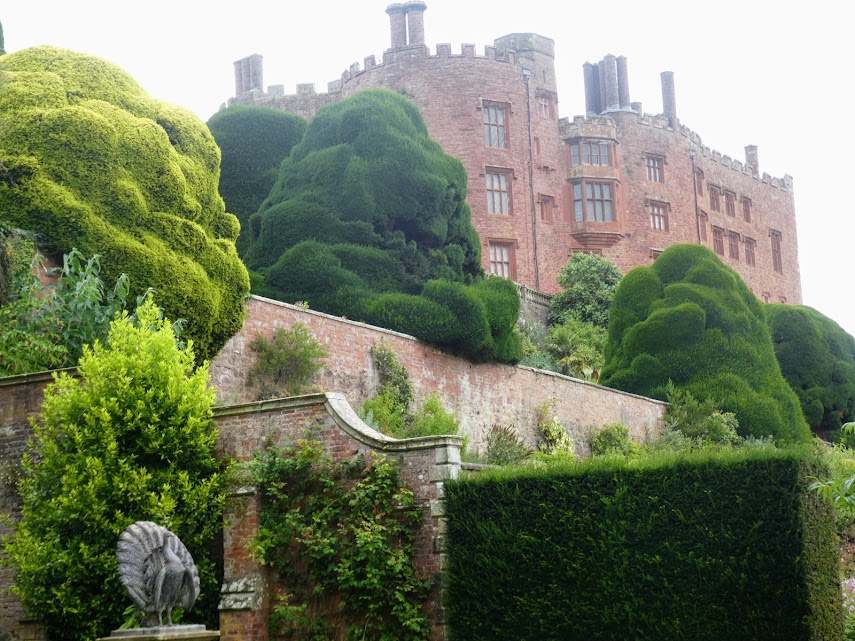
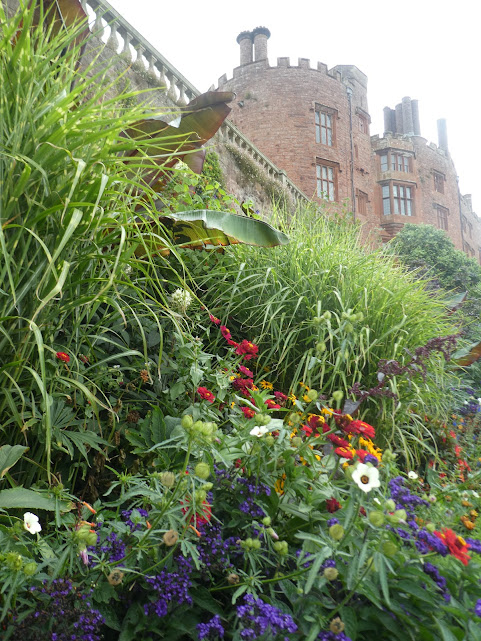
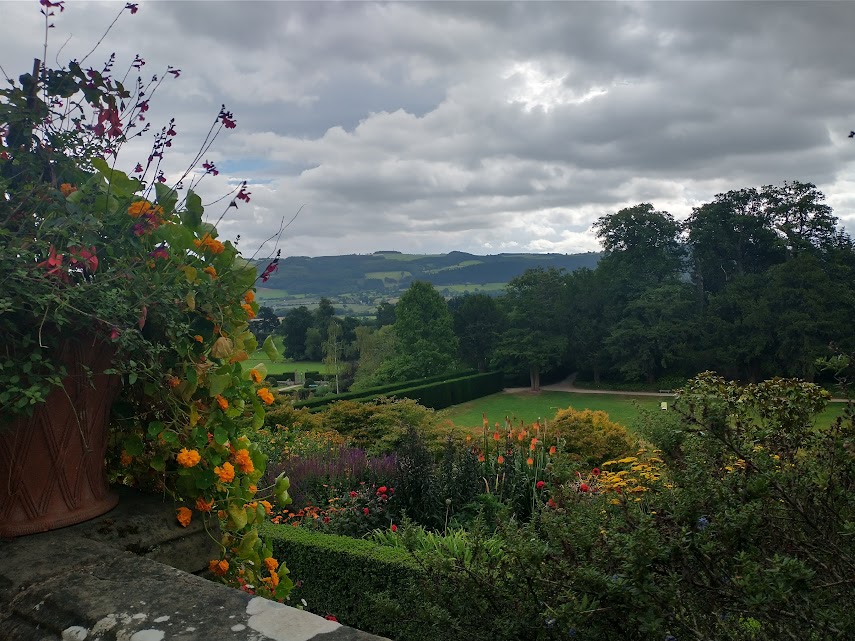
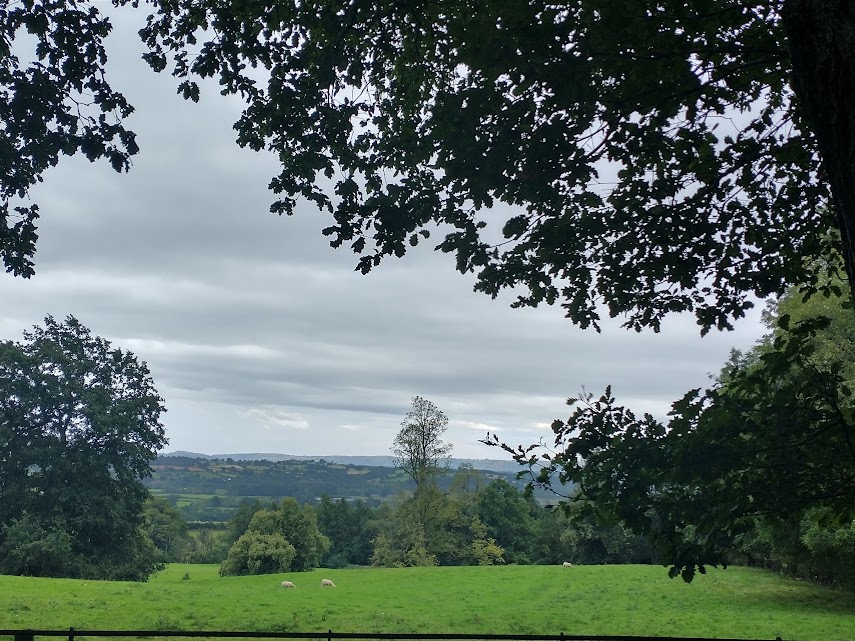
One of our last days in Shropshire saw us pop into Wales, to Powis Castle and its gardens. The castle itself was built largely in the mid thirteenth century, and modified, restyled and redecorated many times since until as recently as the 1950s. Photography was not allowed, but as we found it a somewhat gloomy place, we were happy to focus on the gardens.
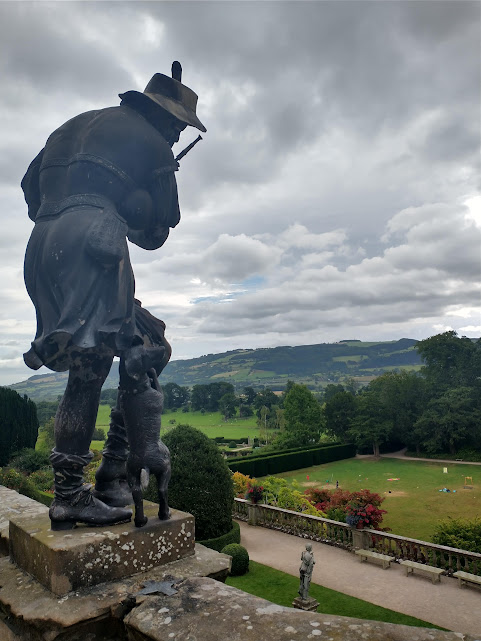
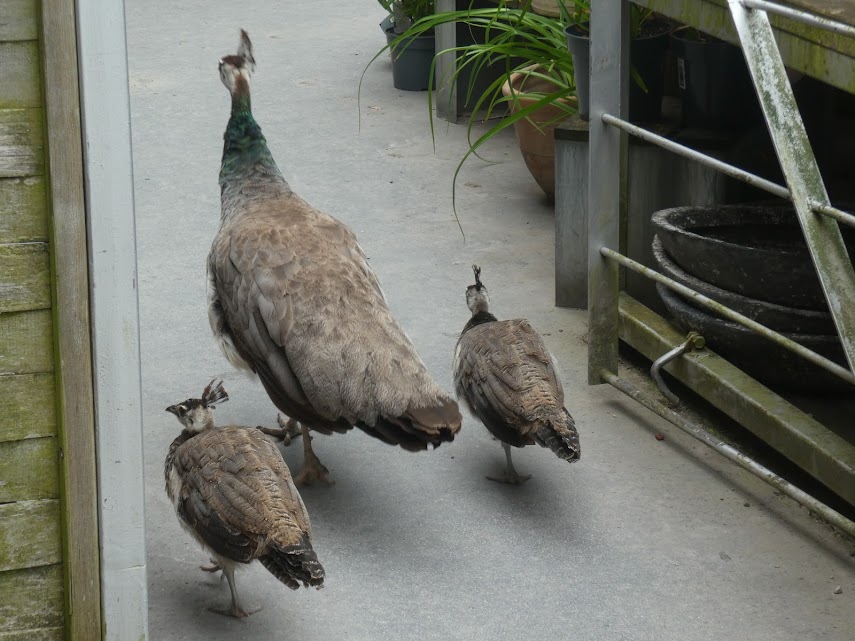
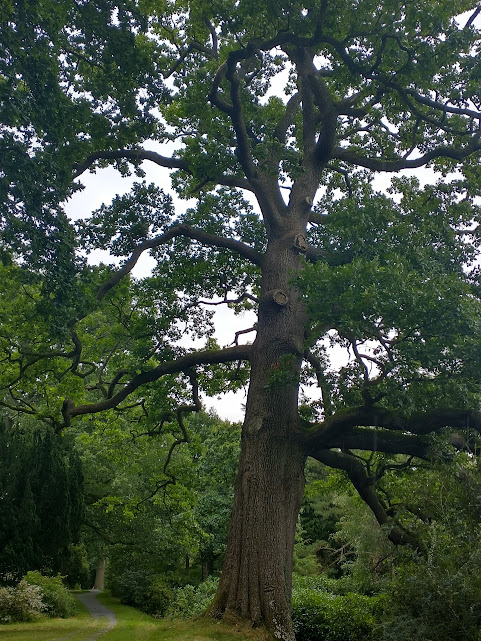
These are magnificently planted steep terraces, largely in the 17th century Italian style. There are large, rather formidable yew hedges. There is statuary. You’ll find a formal Edwardian garden with century-old apple trees, a walled garden, and beyond, carefully managed woodland inviting visitors to enjoy a gentle stroll while peeping through the trees at the landscape in one direction, the castle and gardens in the other. And peacocks and peahens, with their youngsters in tow. Here’s a small collection of postcards.
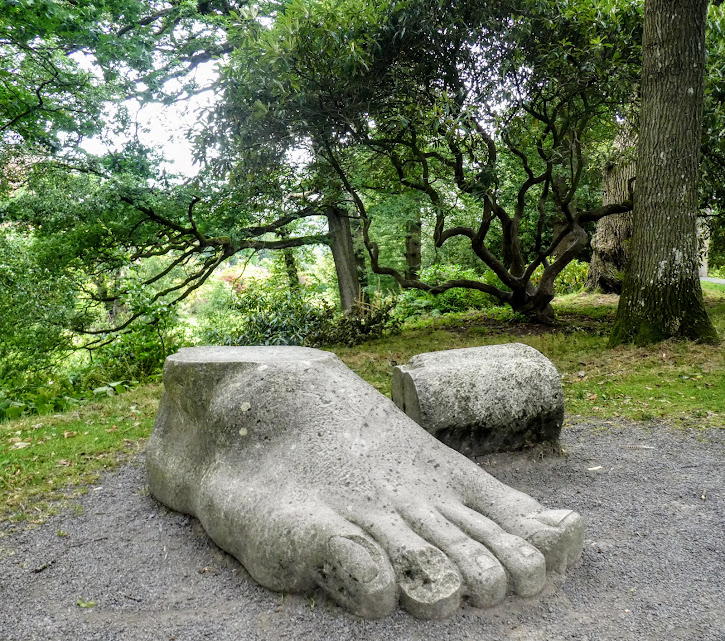
Don’t ask me about that giant foot, found in the woods. Haven’t a clue, and nobody would help me out.
This week’s Lens-Artists Challenge from Ann-Christine asks us to focus on gardens. We’re out and about travelling, so new posts are beyond me. But at this time of year, I always remember the annual garden extravaganza that took place a few miles away from where we lived in France: Le Jardin Extraordinaire. Here’s why …
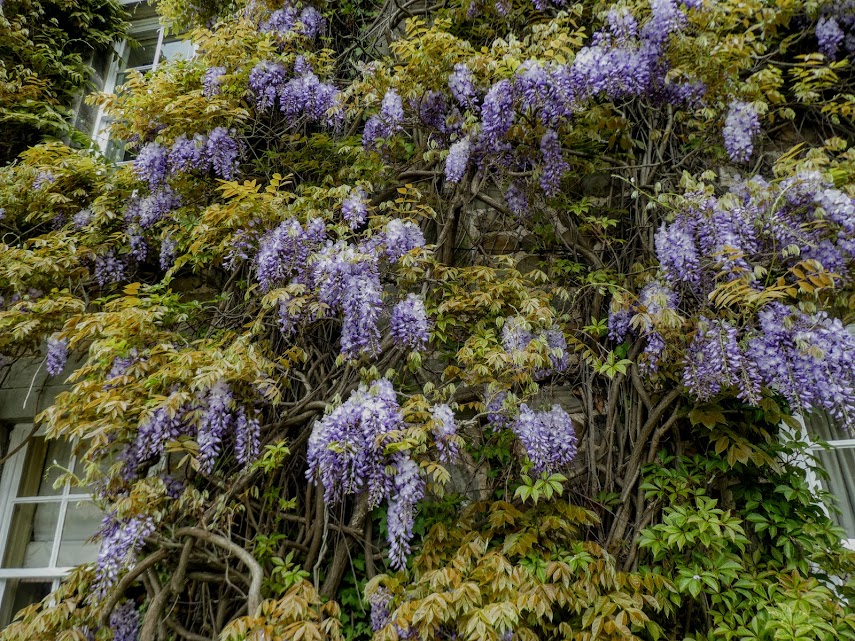
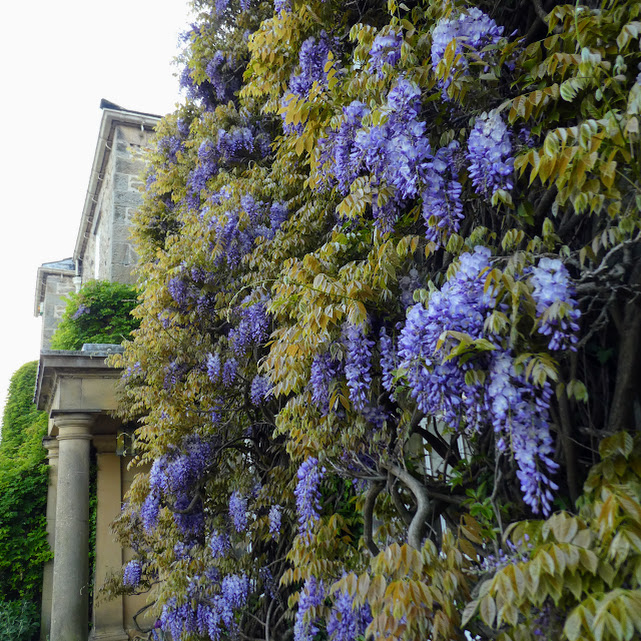
Apart from the early appearance of snowdrops – then daffodils – early in the year, there is nothing that makes me feel more that the world is being renewed, re-born than when the wisteria breaks into glorious, fragrant abundance, round about the first week in May.
The feature photo today is of a cherry tree at Studley Royal, near Ripon. It’s known to be at least 325 years old. This is extraordinary. Cherry trees aren’t long-lived. Fifteen to thirty years is usually enough.
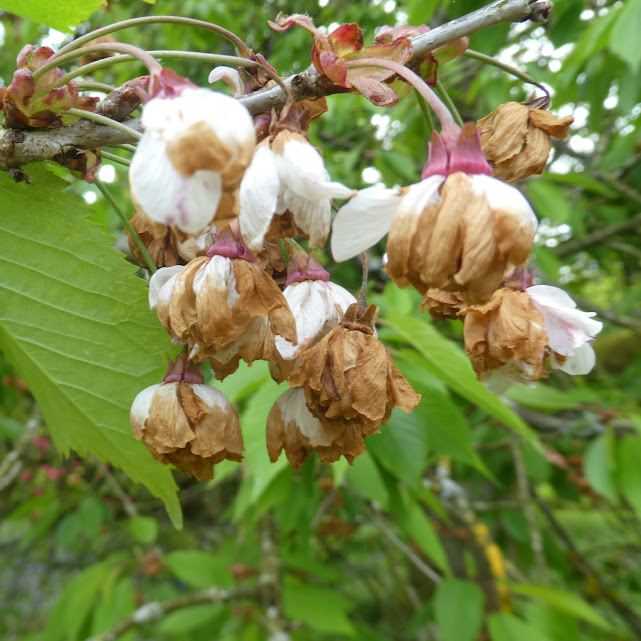
This tree though isn’t the star of today’s show. Here’s some cherry blossom from another local site, Swinton Park. It’s definitely past its best – for now. Blossom gone, and with any luck pollinated by early bees, the tree’s energy is focussed on translating the flower into this year’s fruit. It’s moving forward to the next phase. Come late June, we can perhaps enjoy some of those cherries it’s producing.
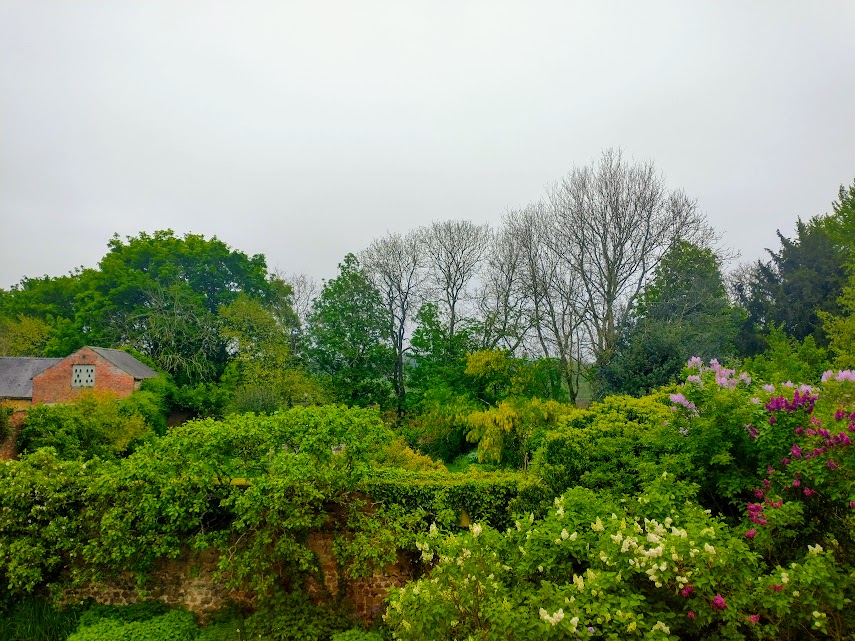
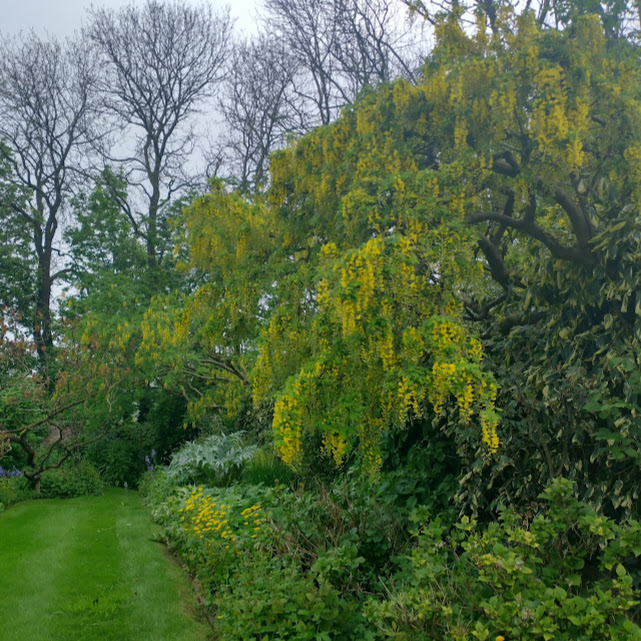
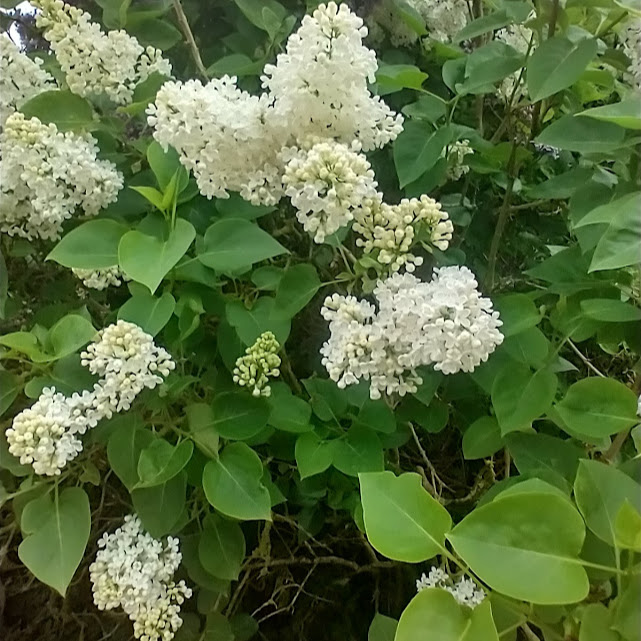
In the cold and wet of the last few weeks the lilac and laburnum flowers, like most things, has refused to do anything but remain tightly furled in tiny, hard little buds. This week, and almost overnight, they’ve all burst into ravishingly radiant and resplendent life.
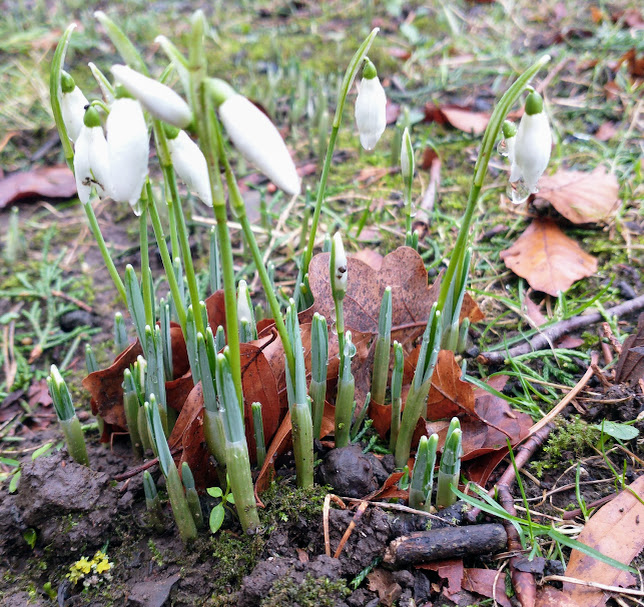
I went down to fetch the paper yesterday morning, and what should I see but … snowdrops, as shown in the featured photo.
Spring, and after that sumer is i-cumen in, as we’ve known since the 13th century at least. Our choir loves to sing about this – and no, the video below is not our band of singers.
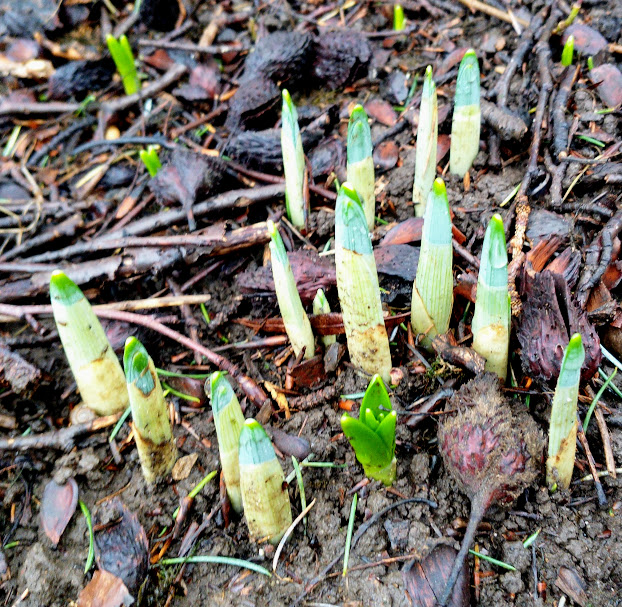
And if snowdrops are here, can daffodils be far behind?









 From Pyrenees to Pennines
You must be logged in to post a comment.