Four seasons for the price of one

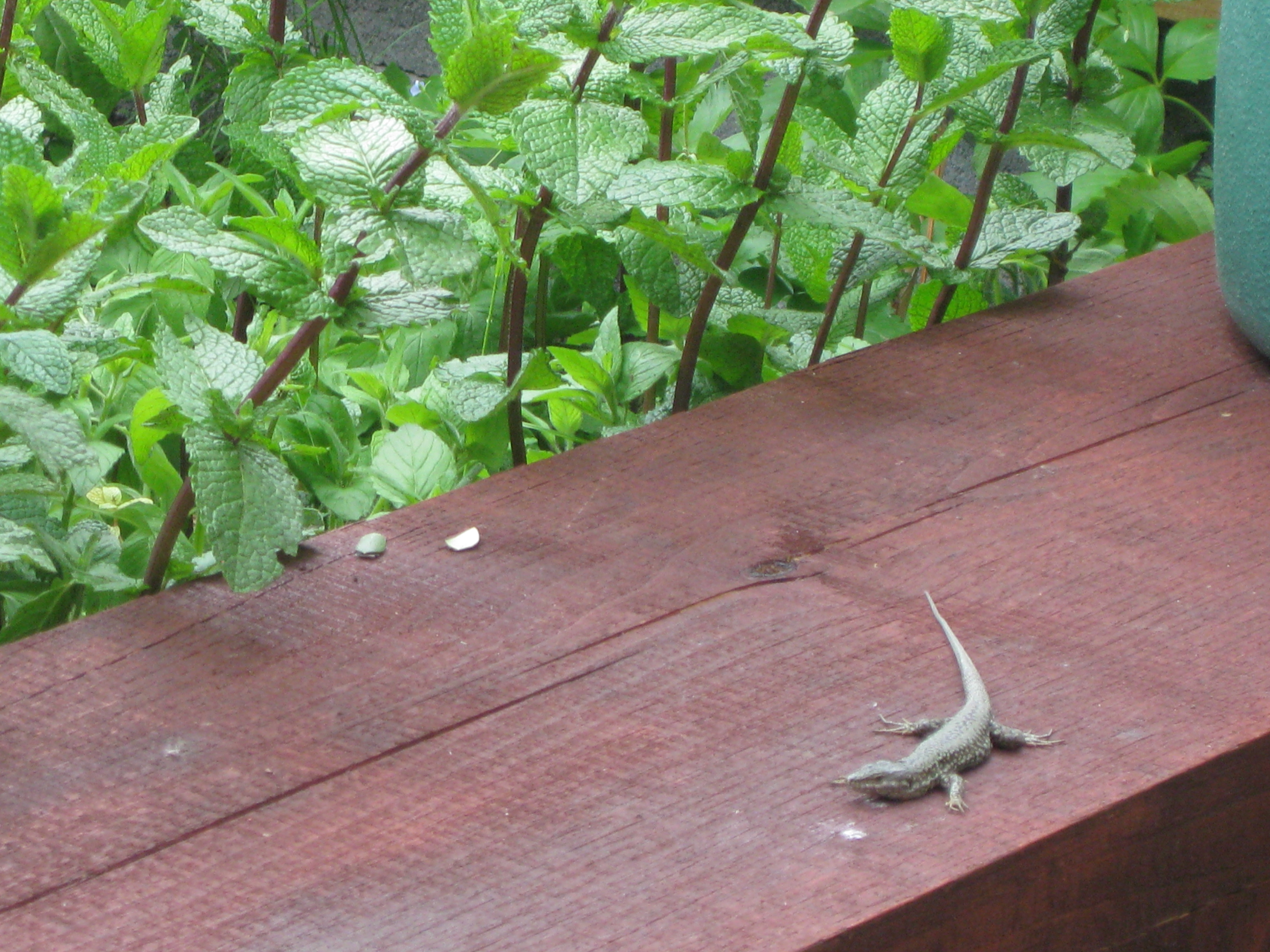
A lizard hopes summer’s on its way

I’m writing this in Laroque.  I have the feeling that whether you’re reading this in France, England, elsewhere in Europe or even in more far-flung places you’ll be sharing something of the same experience.

Get up in the morning and peek though the shutters.  Perhaps it’s raining.  Perhaps not.  But whatever: it won’t last.  We’re getting used to having all 4 seasons – several times – in the course of a single day.

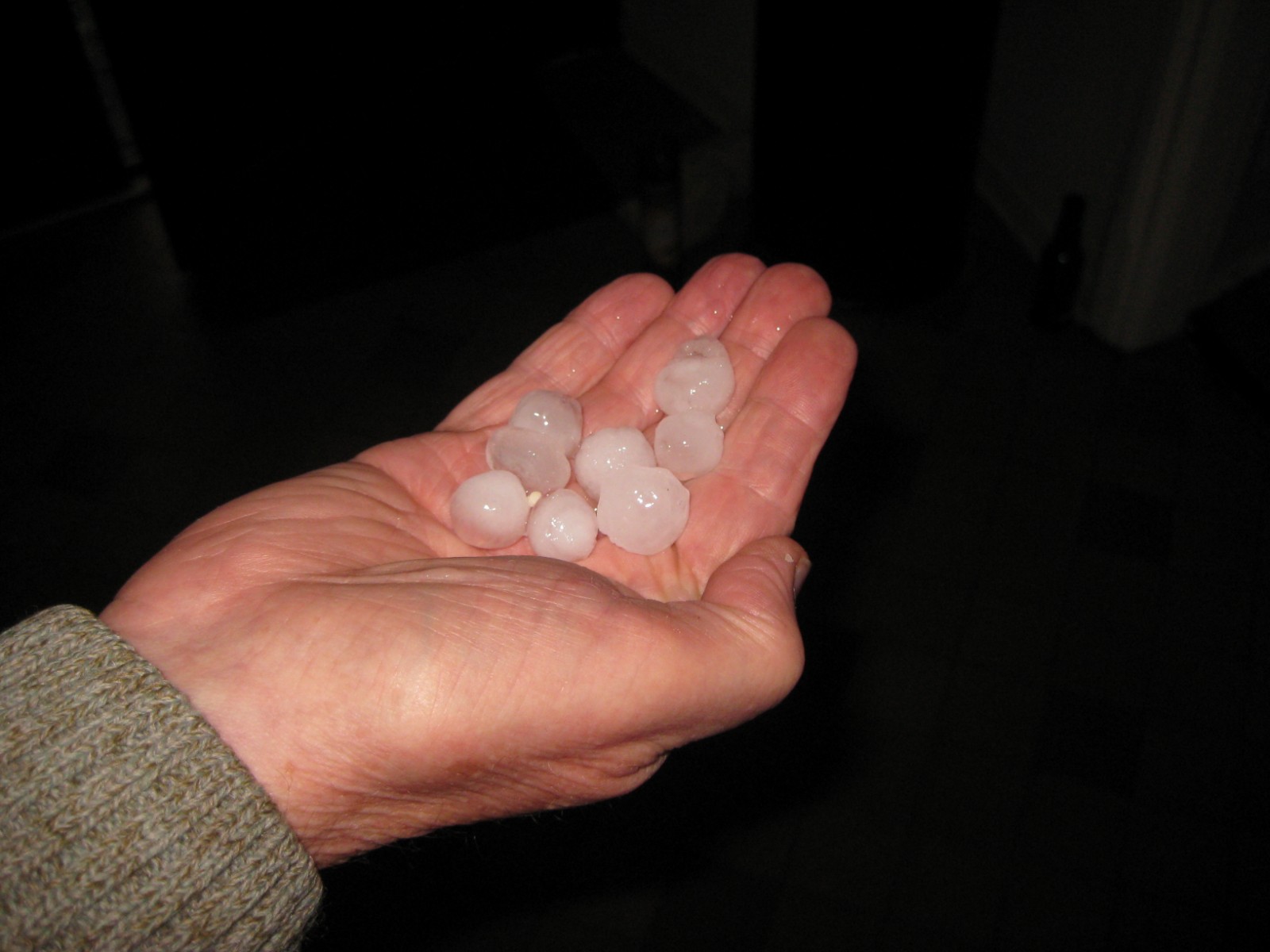
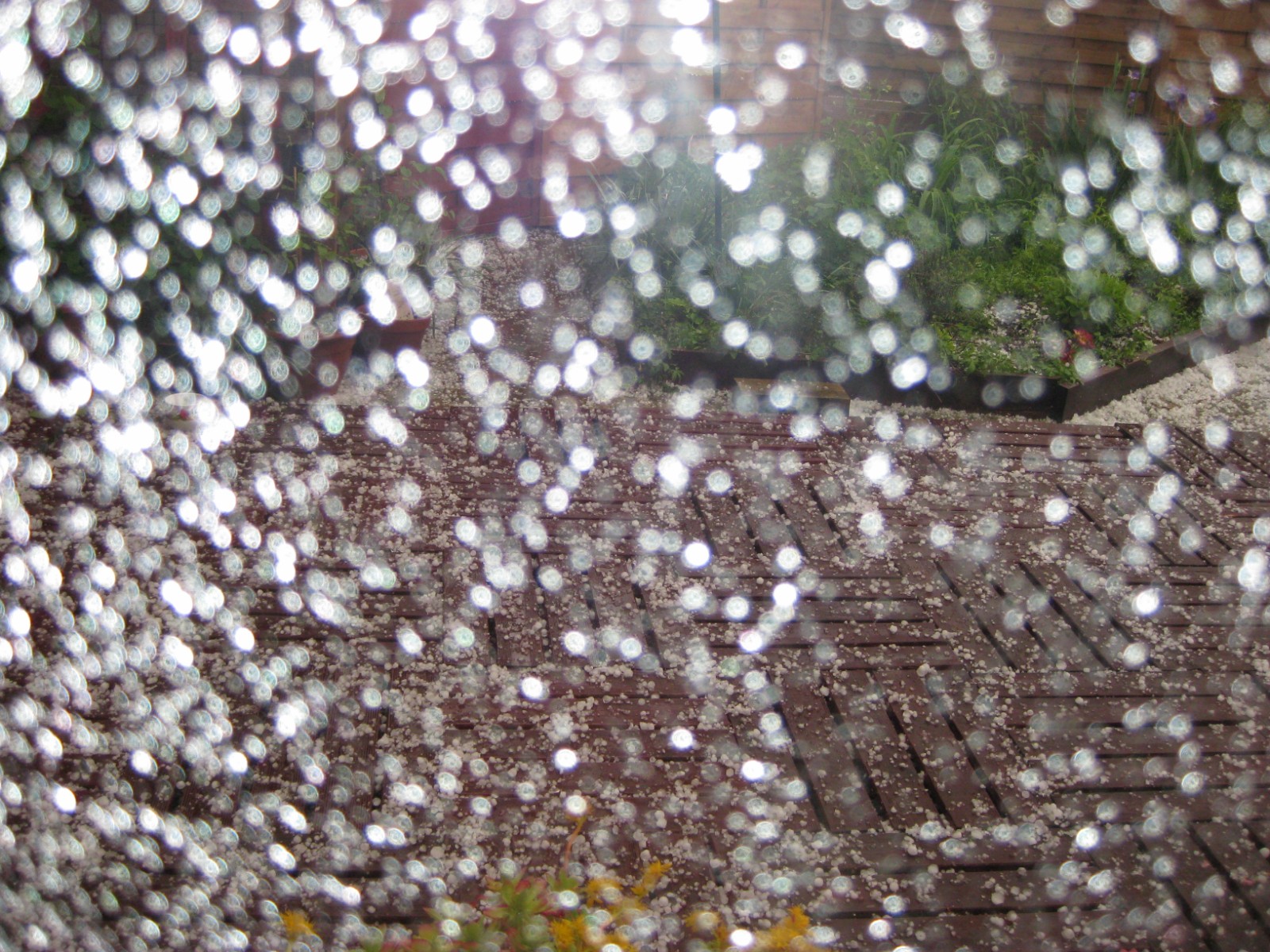
The other day, blazing sunshine and a brilliantly clear blue sky brought the lizards out and had us stripping down to our T shirts.  Minutes later we were reaching for fleece jackets and shortly after that we had to scurry indoors….a hail storm.  And what a storm! Hail stones as big as Maltesers flung themselves noisily against the shutters and scythed down young leaves and shoots in the garden.

May hailstorm

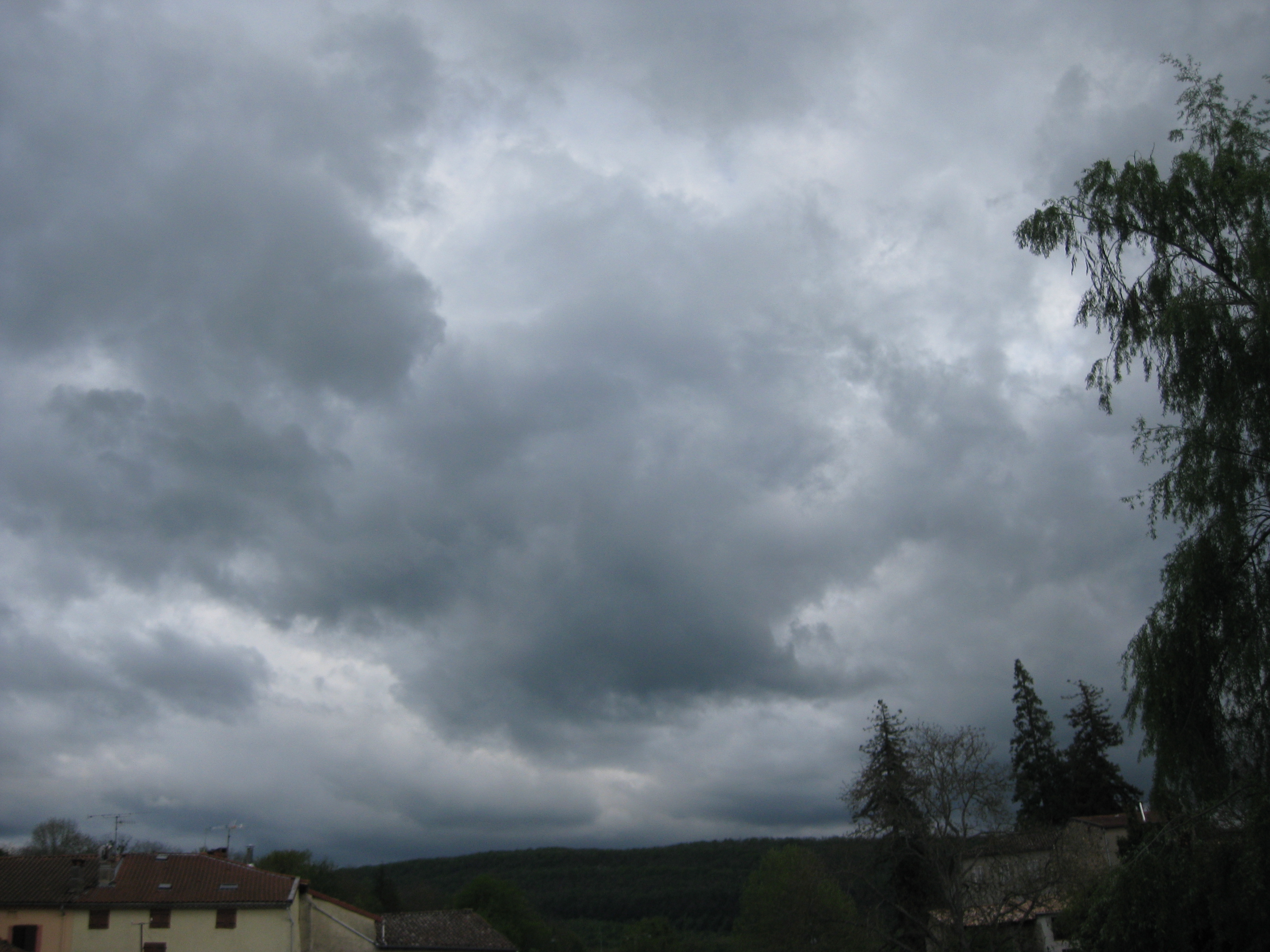
At other moments puffy white cumulus meandered across the sky and minutes later angry violent gusts of wind tugged sullen heavy grey clouds into view.  But this time two years ago, we had snow in May, lots of it.  Let’s hope summer will arrive soon, as it did that year.

Laroque cloudscape, looking southwards
Laroque cloudscape, looking northwards

Gracious aires

One of the pleasures of motorway driving in France is the chance to have a sustained break in one of the aires, or service areas.  Not the run-of-the-mill petrol station plus eatery and shop. They have those too.  As in England, they offer the chance to eat indifferent food at over-the-odds prices, and to spend a small fortune if you’ve been unlucky enough to need to tank up there.

No, in France, roughly every other service area is all but unserviced.  There are parking spaces, toilets, a telephone, and not much else: nowhere to spend money, in any case.  There may be a children’s play space set among trees, and perhaps picnic benches.  And that is their charm.  They’re generously sized areas, set well away from traffic noise, and offer a real chance to get away from the stress of a long drive with a relaxing walk in the woods or a picnic in the shade.

Perhaps my favourite is on the southbound carriageway of the A20 in the Limousin.  I first stopped by chance at L’Aire de la Coulerouze when I was driving down alone to Laroque a few years ago.

Earlier that day, I had picked up the makings of a picnic at the market at Levroux.  I’d got bread, and a young goats’ cheese.  I’d bought fresh apple juice from some nuns who had a stall, and an apricot producer had sold me a couple each of every apricot variety he grew so I could have my own personal taste-test session.

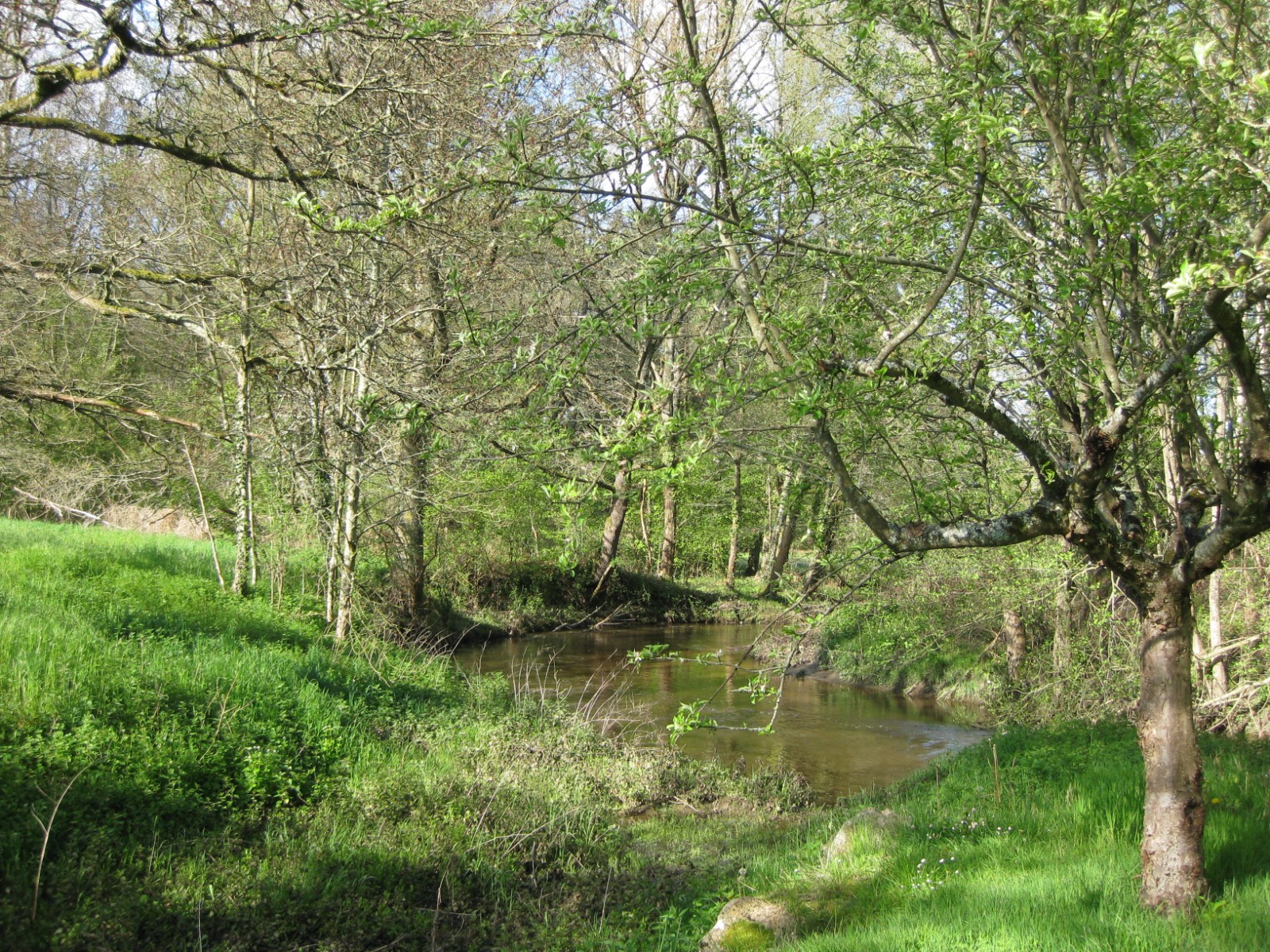
Down by the riverside at Coulerouze

At Coulerouze, I found picnic tables and was about to settle myself down when I noticed wooden steps leading downwards.  There at the bottom was a bridge over a small river all but encircling a small wooded glade, with a single bench under an apple tree.  The only sounds were the birds singing, and the river tumbling along its path.  I spread out my lunch and relaxed.   Afterwards, I found there was a path.

The signpost to the path

It took me first of all along the river, and then along fields and hedgerows.  The walk wasn’t a long one, but it was all I needed to forget the many miles I’d already driven that day, and the four or five hours driving that still awaited.

Not all these aires are quite so special.  There are some horrors near Rouen.  But find a good one, and it’ll become a treasured destination, somewhere to aim for with pleasure on a long day’s driving.

The campaign for a President

During the British General Election we were in France, and kept up to date with the campaign via the French media, with particular thanks to British pundits and MPs with a command of the French language.

During this French Presidential campaign, we’ve been in England.  After the first round of voting last Sunday, a French friend helpfully sent me the results, as she feared statistics of this kind wouldn’t be considered newsworthy in dear old Blighty.

Actually, she needn’t have worried.  I’ve been surprised at how thoroughly the French elections have so far been covered.  The broadsheets, and both radio and television could be relied on to have some slant on the campaign every day.  Much of the discussion has revolved round how the Franco-German alliance would fare if Angela Merkel has to forge a relationship with Hollande rather than Sarkozy.  Other articled focussed on how, for many voters, it was perhaps more a question of who to vote against, rather than who to vote for.
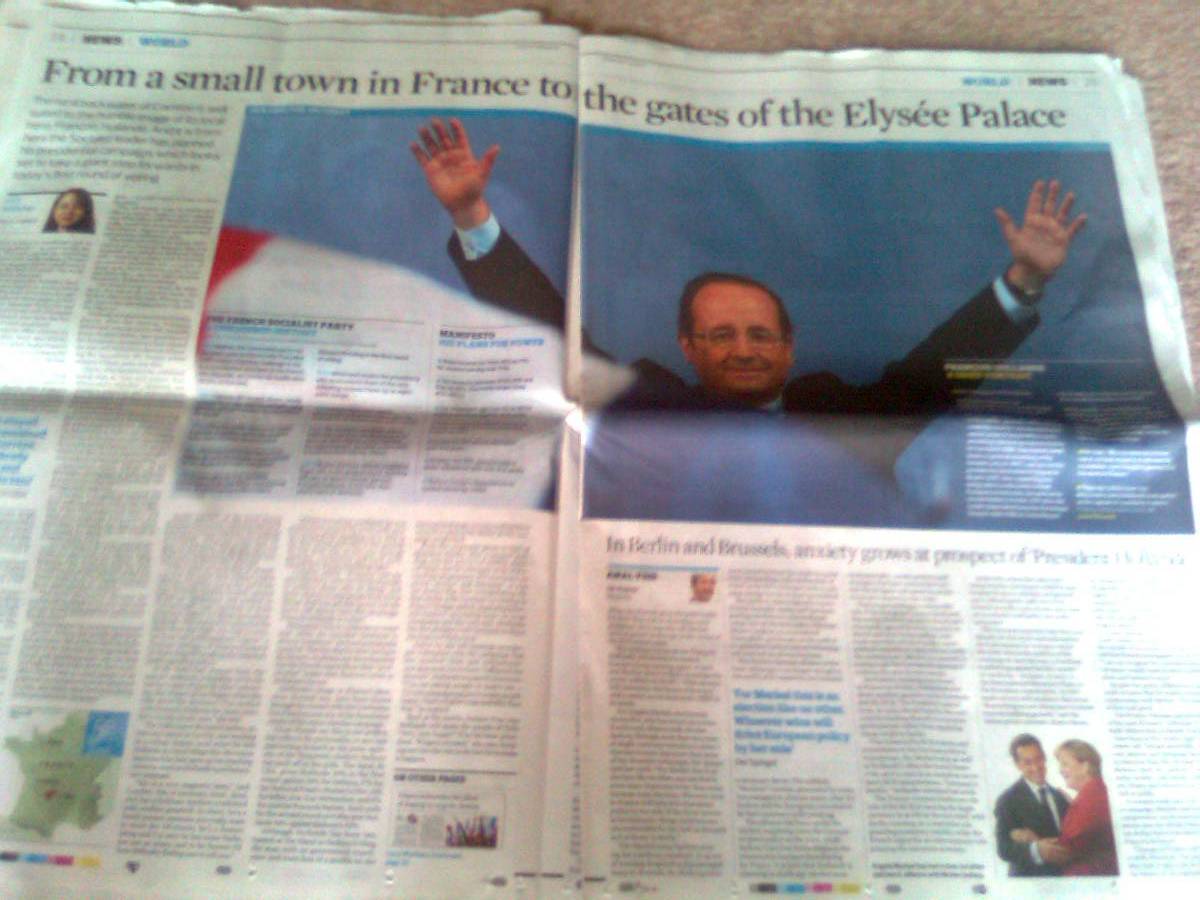
Since Sunday’s first-round vote, after which it became clear that the Front National under the leadership of Marine le Pen had mopped up getting on for a fifth of the vote, the spotlight has changed to the rise of the far right throughout Europe.  Le Pen herself has been the subject of examinations of her career to date, and Sunday’s Observer also carried a double-page spread on François Hollande, as he’s so far a pretty much unknown quantity here.

Hollande's double-page spread in Sunday's Observer

I’ve appreciated this coverage, as it’s been a little hard to get to grips with all the issues in France itself, as the media assumes a basic understanding of the major parties and alliances which we don’t necessarily have.  But we’ll be back there by the time of the second round of voting, and will have a first-hand view of France as it wakes up on May 7th either to a new Socialist president, or, as seems less likely, another dose of Sarkozy.  So far, in our left-leaning corner of France, we haven’t met anyone who’ll admit to ever having voted for him.  In fact the two main candidates of the left, socialist Hollande and far-left Mélenchon knocked Sarkozy into 3rd place in our own commune of Laroque d’Olmes

Sarko - on the way out?

M et Mme Bibendum

Bibendum himself, or Michelin Man.

We want a job.  Not any old job.  We want a job that equips us with a Michelin book of maps, a decent lunch allowance, money for petrol, and a green felt tip pen.  We don’t even expect to be paid.

What we want to do is become Michelin Inspectors.  Not of Michelin starred restaurants – though perhaps they could send us to dine in one from time to time.  No, we want to inspect all their ‘green roads’, the ones they regard as especially scenic and maybe worth a detour.  And we want to make suggestions of our own,

The D6 for instance, from just outside Mirepoix to Castelnaudary.  How could that not be a green road?  The route twists and turns, echoing the contours of the wonderful rolling hillsides, with the most majestic of the peaks that the Pyrenees can offer as a distant backdrop.

The roads round Castelnaudary, all innocent of green route status

Or the D625, which brings you back from Castelnaudary another way.  Compared with those, some of the highways in the centre of France which are rated green are rather dull.  ‘Huh! Officially pretty?’ we snort, as we drive along the endless D 976 near Romorantin.

Really, they should give the job to us.  We know a route that’s worth a detour when we see it.  And we’re both pretty handy with a green felt tip pen.

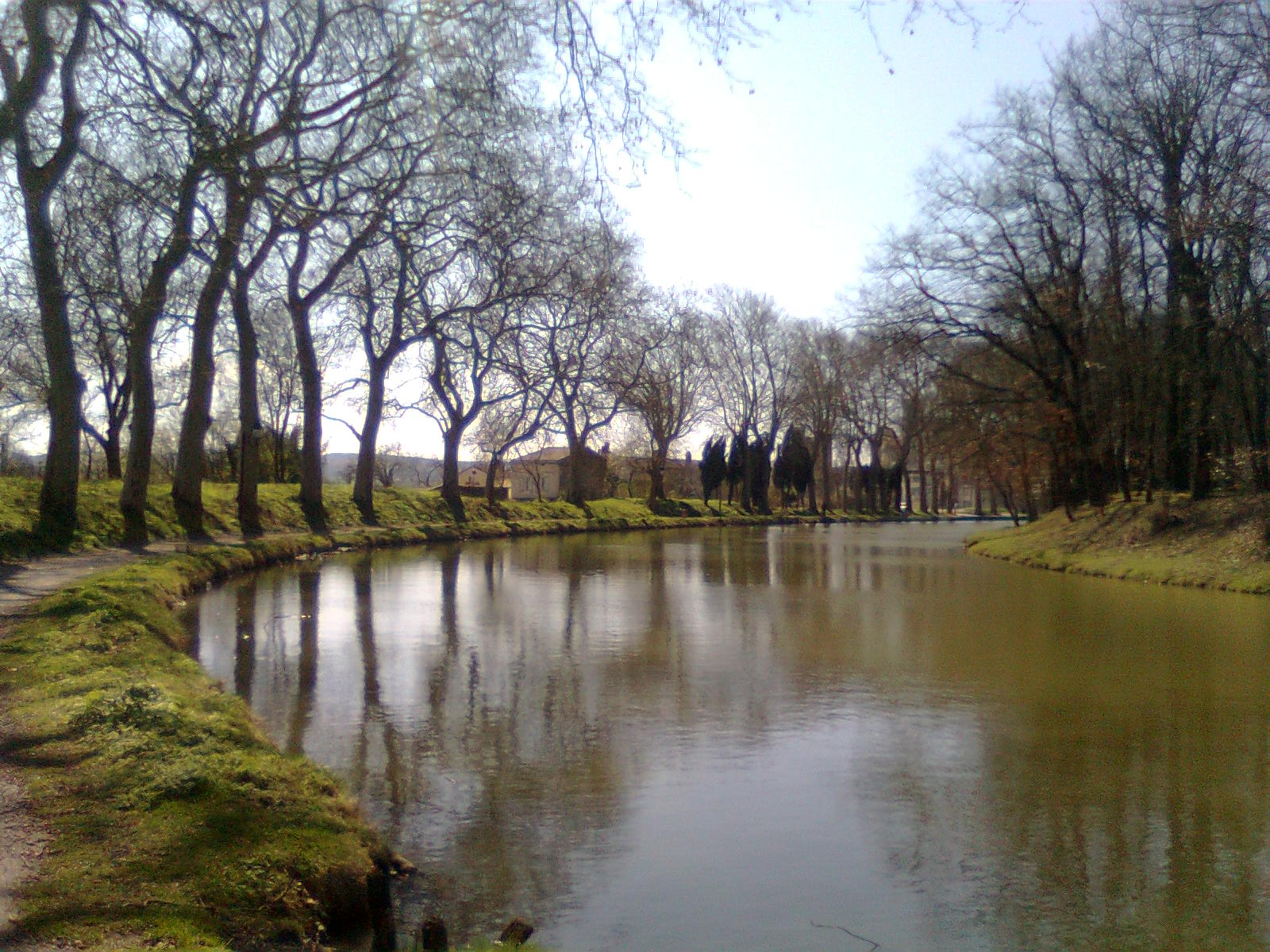
By the way, I forgot to take my camera with me on Friday when we drove along the above-mentioned D6 and the D625.  Please accept a view of the Canal du Midi in Castelnaudary itself in lieu.

Mufti *

Before I came to spend so much time in le fin fond de l’Ariège (‘back-end-of-beyond’ to you) I subscribed to the general British view that being well groomed and chic came naturally to the French.

Not so.  Frankly, looking as though you spend time studying the fashion pages forms no part of anyone’s life round here. Well, we’re a small country town here, so it’s scarcely surprising: but things don’t seem so very different in the bright lights of the department’s capital Foix (pop. 10,000), or the one Big City, Pamiers (pop. 19,000).

What’s surprised me though are the clothes worn by those people in service industries whose work brings them into contact with the general public.  In the UK, working for a bank, building society or even Marks & Spencer means that you’ll be fitted out with a uniform featuring a smart blouse or shirt at the least.  And men will be wearing ties.  School teachers don’t wear uniform of course, but their dress code requires them to be ‘smart-casual’ at the least, and yes, ties for the men.

Little of that applies here.  The only men I’ve ever seen wearing ties in France have been politicians or top businessmen making their mark on the TV evening news.  And the assistants in any pharmacy are as smart and carefully made up as the immaculately turned-out women who make me feel so inadequate as I pass the beauty counters in British department stores.  Neither of these groups represents the norm.

Calling into the electricity board recently we were greeted by a man whose T shirt indicated he might recently have been gardening.  Bank workers grab any old top and jeans before going into work.   The teacher who came with her class to the library the other day even had ripped jeans.  And of course her pupils were casually dressed too.

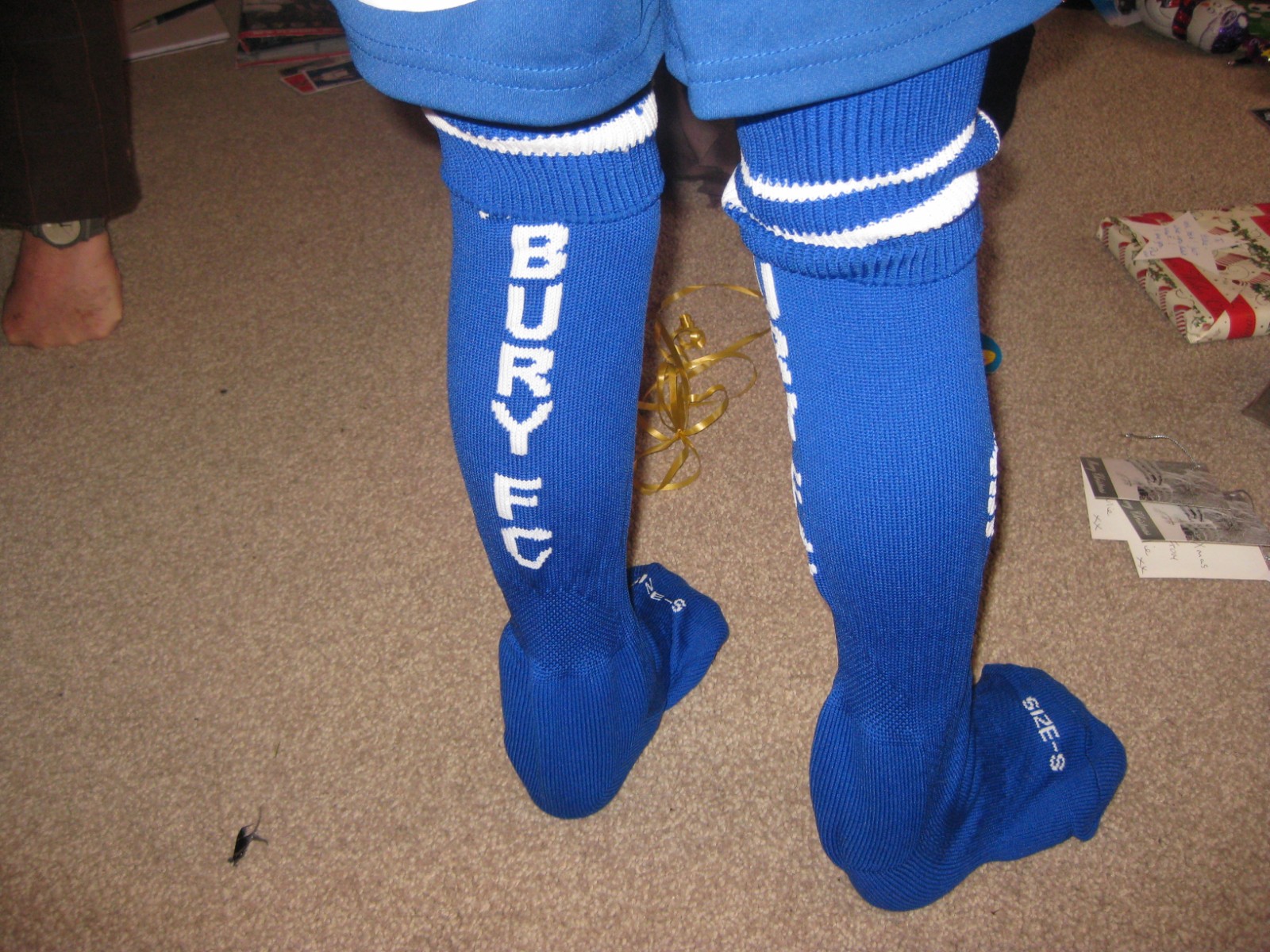
So it’s not surprising that when my friends call and spot the school photos of my grandsons, smart and smiling in their royal blue sweatshirts with neatly fastened ties beneath, they assume the boys frequent some rather posh private seat of learning.  ‘Nah’, I reply.  ‘Only the local school down the road’.  Opinions are divided then.  Some wish fervently that French children had to wear uniforms, to prevent the dreaded ‘designer-trainer syndrome’.  Others are aghast at the dreadful deprivation of liberty that forcing the children to dress alike represents.

I’m not bothered either way.  But it’s one of the things that we notice as we share our time between England and France.  Vive la difference!

Uniform, but not as we know it. Grandson Ben's football socks may take a little growing into

* Mufti, refers to ordinary clothing, especially when worn by one who normally wears, or has long worn, a military or other uniform. 

Markets in Toulouse

We went to Toulouse yesterday, to visit the markets.  This wasn’t a trip to stock up the larder though.  This was a history lesson, as offered by Elyse Rivin, long term resident of Toulouse and great enthusiast for the city.  She is a full fledged official guide and art historian, and runs Toulouse Guided Walks.  We’d booked.

Minutes after we met, we found ourselves in front of Victor Hugo market.  You’ll go here for meat or fish, but also for all the other foodstuffs that markets do so well – fruit, vegetables, bread and patisseries, drinks.  At lunchtime you might pop up to the first floor to have a convivial meal at one of the several restaurants up there, all using fresh produce bought only an hour or two before from the stalls below.  This market, like every other in Toulouse bar one, is a concrete horror story.  Back in the late 1950’s and early 1960’s, they demolished the elegant iron and glass Victorian structures: they needed car parking space of course, and somehow contrived to squeeze car-parks-with-added-market onto those old sites.

Toulouse has had markets since way before the 12th century, and most had a speciality.  Victor Hugo’s (I’m guessing it wasn’t called that then) was wood.

We wandered along to the Capitole, the splendid central square of Toulouse.  Usually it’s an an elegant place, airy and inviting.  On Wednesdays it’s inviting for a different reason:  There’s a market: a big one.  Teeming with second-hand books, brocante of every kind, traders from every corner of the world……  And on other days, there’ll be organic food stalls instead.

I remember learning in history lessons how the streets of London were often taken over by particular trades – leather sellers, poulterers, bakers and so on.  So it was in Toulouse.  Many of these trade names have been lost, but there are still streets with the old Occitan names: the cauldron makers for instance.  And some trades hang on, in an unbroken line from the 12th century.  Rue Sainte Ursule for example, then as now, housed textile merchants.  These days that means clothes shops, textile wholesalers, even small scale manufacture.  This area is still named Quartier Bourse after the Bourse des Marchands (a trade association, an antecedent of the Chamber of Commerce).  In the 19th century a fine new neo-Classical building was built, and this is the Tribunal de Commerce, where trading disputes are resolved.

On to Esquirol.  Flour was measured here in a stone basin, by volume not weight, to prevent honest shoppers being short changed.  A beady eye was kept on those who attempted to ‘cut’ their flour with chaff, dustings of rye flour and so on.  Back in the middle ages, as now, white bread was prized.  No market here now, because back in the 19th century, several long straight roads – in this case Rue de Metz – were sliced through the city, laying waste anything in their tracks.  The market hall that was here has been rebuilt piece by piece at Lourdes, so you could go and see it if you liked, unlike all those other lost structures.

Next stop: a walk down down Rue des Filatiers.  I love this narrow street with its tall, elegant houses, many dating from the 16th century.  Take a look at the pictures.  And then we were at Carmes, originally home of the Carmelites.  The order eventually won a long battle with the city to be allowed to have a monastery in Toulouse.  What clinched it was when they assured the pope that their long ministry in the area of Mount Carmel gave them a unique possibility of converting the area’s small Jewish population.  The city fathers had to give in.

Carmes, like the other markets, is now a concrete box, instead of a complement to the smart 19th century character of this historic area.  But we were here to sample cheeses, guided by a local affineur, at a shop called Sena.  What this means is that the shop buys cheeses direct from the maker, and matures and ripens them to what it considers perfection.  Our guide for the occasion wanted to share three fairly local cheeses with us.  We had a young soft goat’s cheese ‘Cathare’, fresh and light, dusted with ash: this was 10 days old.  Our cow’s cheese, yielding, tasty and with a volcanic looking grey crust was 5 weeks old.  Best known was the Ossau-Iraty cheese, made from sheep’s milk from the Basque country and the Béarn, which had the most pronounced taste of all.  He paired these with fruits: raisins, candied kiwi, and almonds.  For tasting purposes, he explained, these are better than bread. We had a glass of the most local wine to Toulouse as well, Fronton.  This was a Négrette, low in tannin and acidity.

I talked to him about English cheeses.  He sells Blue Stilton, but I was alarmed to see, among all his hand-picked artisanal cheeses, a block of shrink-wrapped orange cheddar.  He told me that people bought it for barbecues, to put on cheeseburgers.  He had, he said, little incentive to stock English cheeses, which he knew could be very good, because the French would not buy.  Presented with shrink-wrapped cheddar, are you surprised?

Still, by now it was long past midday.  Back to Carmes to hunt for a lunch-stop, where we could discuss the morning over a leisurely plat du jour.

This slideshow requires JavaScript.

Snow 2

Mid morning sun near Laroque

We Brits are famous for complaining when the Wrong Kind of Snow snarls up the networks.  The trains don’t run, schools shut, and there’s a run on store-cupboard ingredients in the shops.  The Daily Mail or some other self-styled Voice of The People is sure to announce that ‘We’re the laughing stock of Europe and America’.

A deserted field

Well, actually, life grinds to a halt when it snows in some parts of Europe too. Here for instance.  There has been no schools’ transport all week: and with many children living out in the sticks, schools have been half empty.  Markets, where we go to shop, catch up with jobs in town and to meet everyone we know, have pretty much not functioned for 10 days or more.  Clubs and walking groups, concerts lectures and meetings: all have been cancelled or postponed.  We’ve all left our cars at home and confined ourselves to doing what we can on foot.

Rabbit cross roads

Don’t we have snow ploughs here?  Well, of course we do.  In big communes like ours (there are 2000 of us you know), council workers do the job.  In more rural spots, farmers may be pressed into service.  But either way, they’ve all been to the same training school.  After they’ve done their rounds, the ploughs leave an inch of hard-packed, glossily polished snow especially for drivers to enable their cars to take up skating.  Lethal stuff.

The fast-flowing River Touyre begins to freeze

We’d hoped to drive to Barcelona this weekend to see Emily.  Reading the local government website’s travel section soon changed our minds.  We were recommended to use snow chains on several of the roads on our route.  On others we’d be required to use them.  Conditions are described as ‘very snowy’, ‘difficult’, and everyone we know says ‘Don’t go’.  So we shan’t: not till the snow goes anyway.

Pollarded plane trees by the church before sunset

As in the UK, radio TV and the local papers are filled with stories of the Big Snow.  The empty roads, the jack-knifed lorries (actually though, HGVs are kept off many of the main arteries and have either to turn back or make use of temporary lorry depots opened up for their use), the utilities failures, the heart-warming human interest stories – they’re all there.  The snow stopped some days ago, but the sub-zero temperatures remain, and so the snow’s till here.  What is different from England though, is the sky.  Through the day, we’ve enjoyed a cloudless duck-egg blue sky.  And that’s something to be relished.

Sunset viewed from la Castella at Laroque

À la Chandeleur, l’hiver cesse ou reprend vigueur

It’s La Chandeleur, Fête de la Lumière today.  You might know it as Candlemas, and if you’re English, you’ve probably not given it a thought, or even knew it existed.
Here in France, you’ll certainly know all about it.  If you’re Catholic, you’ll remember the day as the one in which the Virgin Mary was purified after giving birth, and Jesus himself was presented at the Temple.
Catholic or not, the French eat a lot of crêpes today.  Apparently,  whilst making them, it’s traditional to hold a coin in your writing hand and a pan in the other, and flip the crêpe into the air. If you manage to catch the pancake in the pan, your family will be prosperous for the rest of the year.  It’s exactly half way though the official winter season, in any case.  Pancakes perhaps look a little like the sun, so they stand in for the sun – ‘la lumière’.
Winter sunlight looking like a crêpe?
More important than eating however, is seeing what Winter is thinking. He pays the day a lot of attention. He has decisions to make.  On this day, Winter will either pack his bags and disappear till the end of Autumn, or he’ll settle in, and make his presence thoroughly felt for quite a few more weeks.  Hence the expression:
À la Chandeleur, l’hiver cesse ou reprend vigueur
At Candlemas, winter ends or strengthens.
It looks pretty much as though he’s decided though.  Today the temperatures plunge from a high of minus 3, to a low of minus 10 (and feeling like minus 16), and the ten day forecast is worse.  Tomorrow, for example, it promises to be minus 9 at 10.00 a.m. and feel like minus 16.
It’s quite nice not to have to wait till Shrove Tuesday for the first pancakes of the year though.  Even better that we can be snug indoors today and hope for Winter to knock off duty.
View from the roof terrace at 8.00 a.m. It looks as though Winter’s really made up his mind

An Everyday History of Country Folk

Yesterday afternoon was fascinating.  We went to Belesta library for a talk by Paul Garrigues, a local historian who collects old wooden artifacts. He’s such a good speaker, and gave us an insight into a way of life which only finally drew to a close about 30 years ago.  He’s pretty much my age, but his childhood was spent around ox-drawn farm machinery, distaffs and a host of things that formed no part of my rural infancy.  Now that most Ariègeois farms look pretty much like anywhere else’s, with tractors, silos and irrigation systems, it’s rather hard to believe.

Paul’s childhood was spent in the next village to here, Aigues Vives.  Later, he met and married a young woman from a tiny community in the Couserans, a part of the Département to the west of here.  He was surprised to find how different the tools in his wife’s village often were.  There too, the villagers spoke Gascon, rather than the Occitan traditional in our part of the area.

And so his interest began.  He started to collect mainly wooden artifacts: agricultural items, kitchen tools, playthings.  To him these things tell a story of rural life here as it was lived over many centuries.  Yesterday he came to Belesta Library to talk and show part of his collection.

First of all, a simple wooden torch, looking something like a charred rounders bat.  This interests him because items just like this were in use – almost daily – since man first populated the area in Stone Are times, right up until the First World War, and in a few cases, beyond.

Next, a distaff.  This item too remained unchanged almost from those early days until the early years of last century. Any female over the age of about 8 living over the last 1000 years and more, whether rich or poor, would have recognised it. Spinning would have been a constant part of her daily routine, whether she was managing a fine estate, or supervising a few sheep on the mountainside.  And do you know what?  Constantly licking your finger and thumb as you handled the wool made your mouth dry, so beside you, you might have a little wooden box, filled with snuff, to help your saliva to flow: he showed us samples.

A couple of millas stirrers

We saw long wooden balloon whisks and three-pronged forks used to stir the great vats of millas (a sort of porridge made from cornmeal) beloved of the Ariègeois, wooden spoons and forks, large wooden bowls.  He showed us wooden clogs.

Wooden clogs with metal horseshoe-style heel strengtheners

We saw wooden roof tiles.  All these things are made from unplaned wood, so the implements can follow the natural grain of the wood and be strong and sturdy.

From the Couserans he had savage long thick knives, looking like swords in their wooden or leather scabbards.  Their design was directly descended from the instruments of war the Gascons often saw in their battle-rich past, but in fact they were used to cut rough grass, crops, and the long straw required for thatching.

A yoke. For safety reasons, it can quickly be divided in two

There were other differences between that part of the area and ours.  Here, terracing was a feature of upland farms, and it was male beasts who worked the land.  There, the farmers worked directly on the steep slopes: the cows who ploughed the land (it was female animals who did the work here) had to have specially designed wooden yokes so that they weren’t strangled as one worked at a higher level than her work-mate.

But it wasn’t all hard labour.  Anyone who’s ever been to a bowling alley would recognize the bowls and skittles he showed us (made from wood, naturally).  They were a big feature of life round Biert in the Couserans, but inter-village tournaments were rare.  They all played to different rules, which tended to make contests rather difficult.  But it was over here, in nearby Le Sautel, that a game was bought to a sudden end at the end of the 19thcentury.

Wooden skittle and bowl. Confiscated from the church at le Sautel?

One Sunday, the women went obediently to Mass, and as usual, the men played with their bowls outside, getting argumentative and noisy as the morning wore on.  Eventually, the priest in church could take no more.  He stormed out through the church porch, confiscated the bowls, and hid them in the sacristy.  Evidently completely unchastened, the men simply produced other bowls when it came to their next match.

Paul’s keen that we should regard these tools and artifacts as living objects, part of a traditional way of life extending back hundreds, sometimes thousands of years.  He doesn’t want them consigned to the cemetery of history.  If you live round here in some old-style village or town house, you’re almost certain to find quite of few of the things he talked about in your outhouse or attic.  Perhaps I should have another look.

Wooden fork and spoon. A good strong shape. The short handles ensure a long and useful life.

Volunteering, French style

I’ve had a professional life working in Public Service – employers included the Probation Service and local authorities.  So there’s nothing you can tell me about politically correct, right-on in-service training.  Some of it was good – very good – some of it was bad, and some was even horrid, but over the years, there was plenty of it.

Well, I retired.  I came to France, and put that part of my life behind me.  I assumed.  Wrongly.  I’ve written before about Découverte Terres Lointaines, and now I’m a co-President.  So I thought I should join the other co-president, Sylvia, and do my bit by attending a training evening in Foix for people involved in working with volunteers.

Billed erroneously as a ‘Round Table’ it turned out to be a series of presentations to more then 100 of us packed into a hot room too small to accommodate us.  Sample subject: ‘ Financial relationships between voluntary organisations and statutory bodies’.  Between the heat, the poor sound system and the generally ungripping nature of the subject matter, and stuck in the back row unable to see much, I soon lost interest, and fell to musing instead about how I’ve perceived the differences between volunteering in France and in England.

Back in the UK, most towns of any consequence have a Council for Voluntary Organisations which is an umbrella organisation offering all kinds of support to huge numbers of charitable organisations: advice, support for those with life changing conditions and diseases or other difficulties, concerned with trees, animals, people, volunteering indoors, outdoors, by day and by night.  Would-be volunteers are offered help in matching their skills and enthusiasms with organisations who would welcome their time and effort, whether they want to roll their sleeves up and get stuck in, lend a listening ear, or take further training to enhance their skills for the voluntary sector.

Here in this part of France – and I understand things are very different in the north – there seem to be few opportunities for the would-be volunteer outside sporting and similar physical pursuits for young people.  ‘Secours Populaire’, ‘Secours Catholique’ , ‘Emmaus’, Croix Rouge  and ‘Restos du Coeur’ all offer much-needed practical help to the very poor and those at the margins of society: but despite my best efforts, I’ve not found other volunteering opportunities.  This is in part because there is a strong belief that the state should provide those essential back-up services which the UK largely relies on the voluntary sector for.  There’s a strong belief too that if you offer those services, you should expect to be paid.  There’s a lot in this of course.

But my experience of the voluntary sector in England is that it’s no longer about Lord  and Lady Bountiful doing their bit for those less fortunate than themselves, if it ever was.  It’s a two-way street in which the volunteer receives as well as gives: fellowship, new skills, new confidence, a sense of worth, even a chance to polish the CV.  Judging by the scrum at the meeting in Foix last night, perhaps this is happening in France too.