‘Let them eat cake’ revisited

It’s almost the end of the month and I haven’t yet revisited a post from our years in France. Becky introduced her readers to Flashback Friday. That’ll do me. Especially in the week of the Great British Bake-off final.

‘LET THEM EAT CAKE’ 27th November 2012

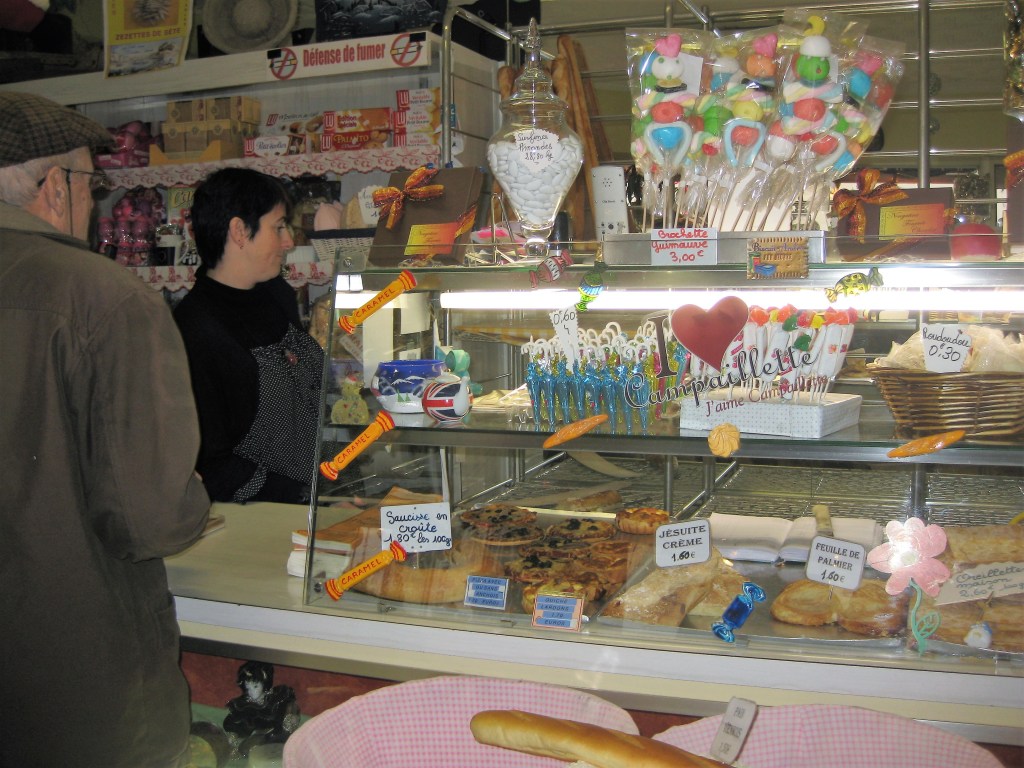
Back in the UK, I hear everyone’s gone baking mad, that the entire nation was glued to its screens to watch the final of  ‘The Great British Bake-off’.  Here in France, it’s the one branch of cookery in which the average French person will allow the average Brit some supremacy.

The French are rightly proud of their high-end patisserie, the delectable tarts and gâteaux which traditionally come to the table at the end of a family celebration or Sunday lunch: from the baker’s naturally, no shame in that.

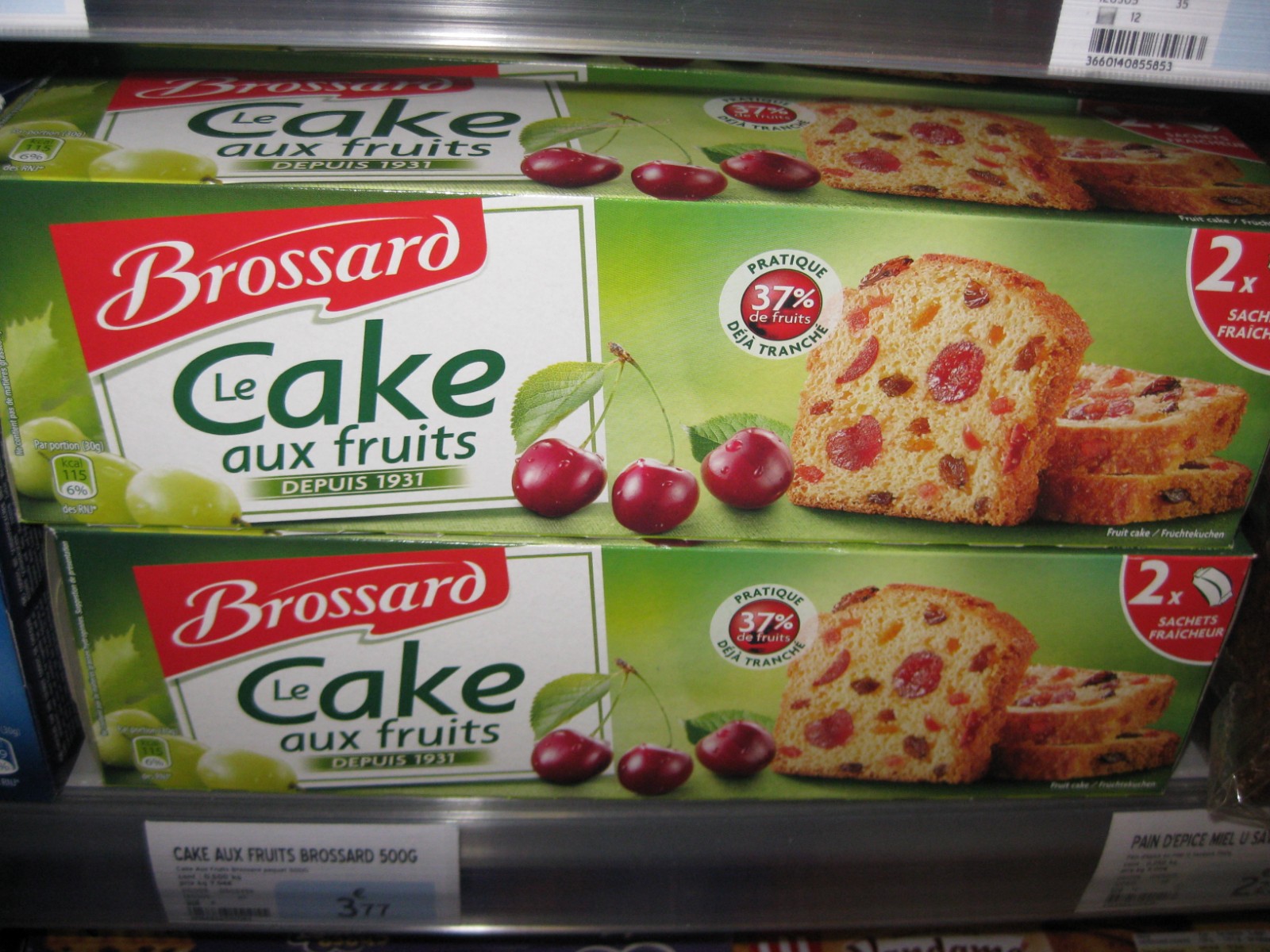
More day-to-day baking is a different matter, however.  Plainish cakes, loaf-shaped and known in France as ‘cake’, are a big disappointment, especially if they’re from the supermarket.  I find them over-dry, over-sugared, too strongly flavoured with something, such as vanilla, that should be a subtle undertone.  I never thought I’d find myself saying this, but even cakes available in any old British supermarket can be quite a treat in comparison.

McVitie’s Jamaican ginger cake, for example, dark and sticky, is just the thing with a hot cuppa after a brisk country walk in winter: it even has its own website.  And while I’m not sure that Mr. Kipling makes exceedingly good cakes, they’re – well – not too bad.

No wonder then, that when we run our cookery workshops at Découvertes Terres Lointaines, and announce that we’ll be turning our hands to British tea-time treats, the group is immediately oversubscribed .  Scones, coffee and walnut cake and a nice of cup of tea anyone?

Supermarket scene in France

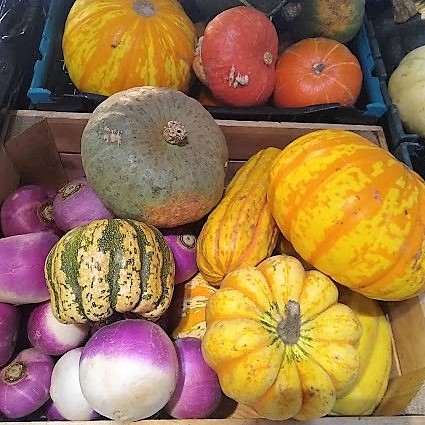
All kinds of pumpkin

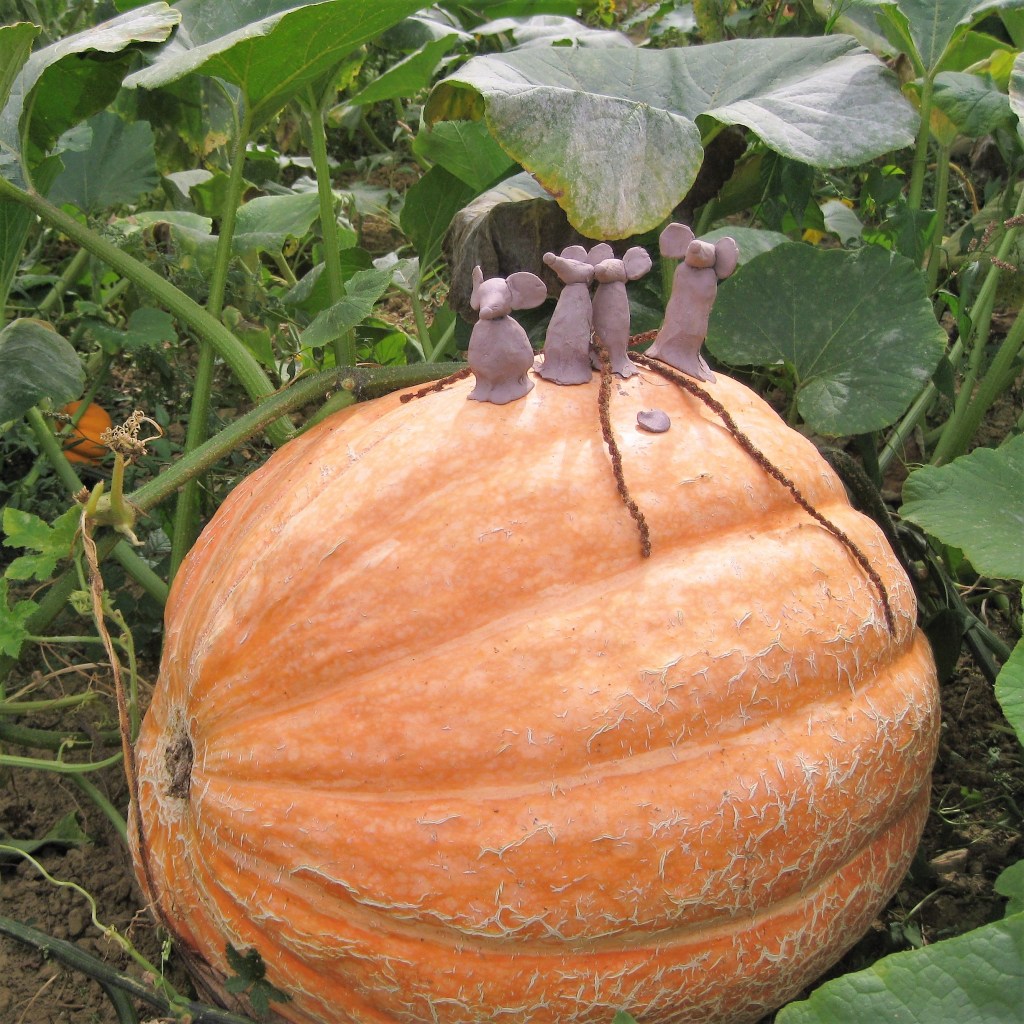
It’s Hallowe’en today. Time to carve those pumpkins into frightening faces, and then tomorrow … throw them away. What a pity. Pumpkins come in all shapes and sizes, they’re good to eat, and it’s a shame you rarely see anything but the good old bog-standard Jack o’ Lantern here. They can be large, small, yellow, red, orange, green, even bluish or black, and on mainland Europe they’re much more appreciated.

Enjoy the pumpkins on display, many of them from Le Jardin Extraordinaire in Lieurac , near where we lived in France. And then have a go at the comforting recipe I offer here because you don’t really want to scare the neighbours with an evil orange face peering out of your front window do you?

#Kinda Square. Today is the final square in Becky’s month long squares project. Thank you Becky, and thank you fellow squarers. It’s been fun. I’ve met kindness, had my interest kindled and met – virtually of course – many bloggers-of-a-kind.

When Meeting Other People Was OK

It’s that time of the month again, when I re-publish a post from our years in France. This one made me sad. It reminded me of times when people could simply be together enjoying each other’s company; where kindness and friendship were easy to demonstrate; and when an affectionate hug was nothing to fear. Kindred spirits. Ah well…

Walking for the Masses

October 10th, 2010

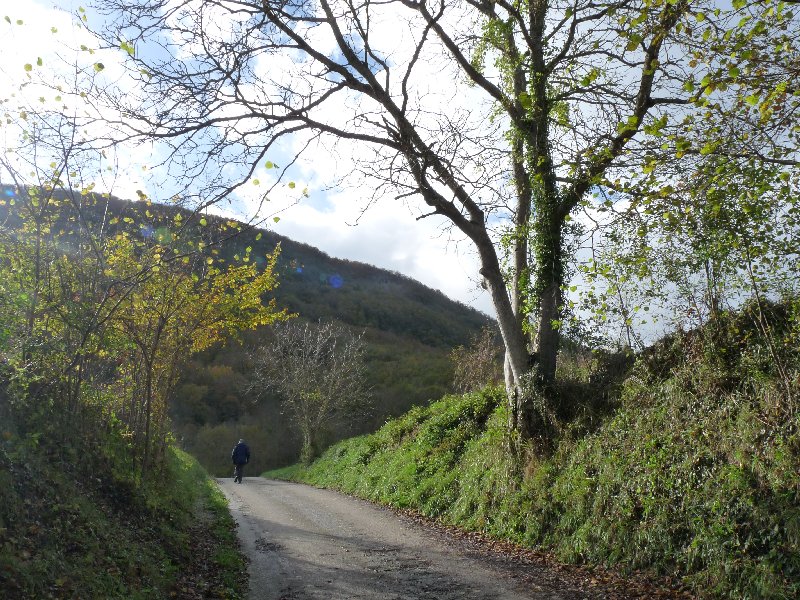
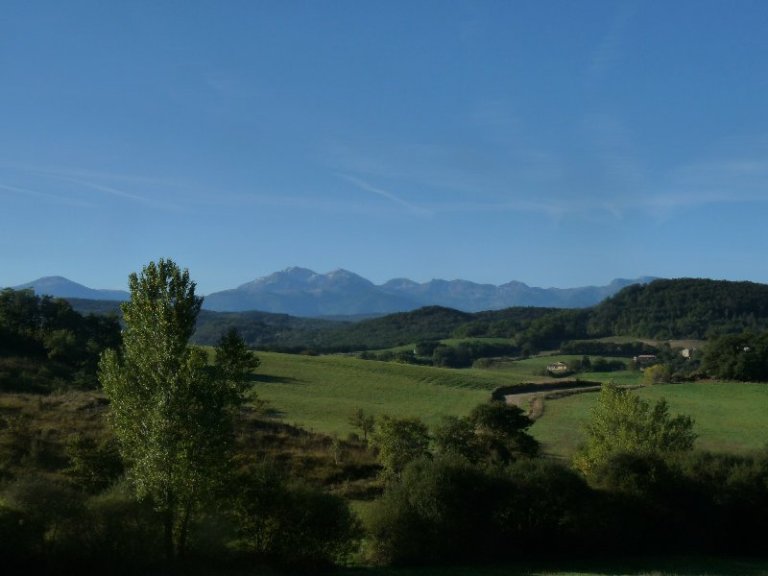
Walking near Mirepoix

The French love walking – as in hiking.  The Fédération Française de la Randonnée Pédestre is an immensely popular organisation with all age groups, and with a somewhat younger image than the British Ramblers.  The French walk alone, with friends, in groups such as ours, Les Rando del’Aubo, and …..on mega-rambles.

We first came upon the mega-ramble when our own group went along, a couple of years ago now, on a walk organised by the FF Randonnée Midi- Pyrénées group.  We and about 800 others.  It’s something of a military operation.  Breakfast is offered, refreshments along the route, which has to be signposted beforehand and cleared afterwards.  Photocopied maps are handed out, and when it’s all over, there are exhibits to mooch round, apéros to drink, trophies to award (the oldest walker, the person who’s travelled furthest to participate, that sort of thing).  There’s often a sit down meal on offer too, though not that day.

Interesting, but walking with dozens – hundreds – of others isn’t really our thing. This means we quite often sit out the Sunday walk, because these occasions happen pretty often.

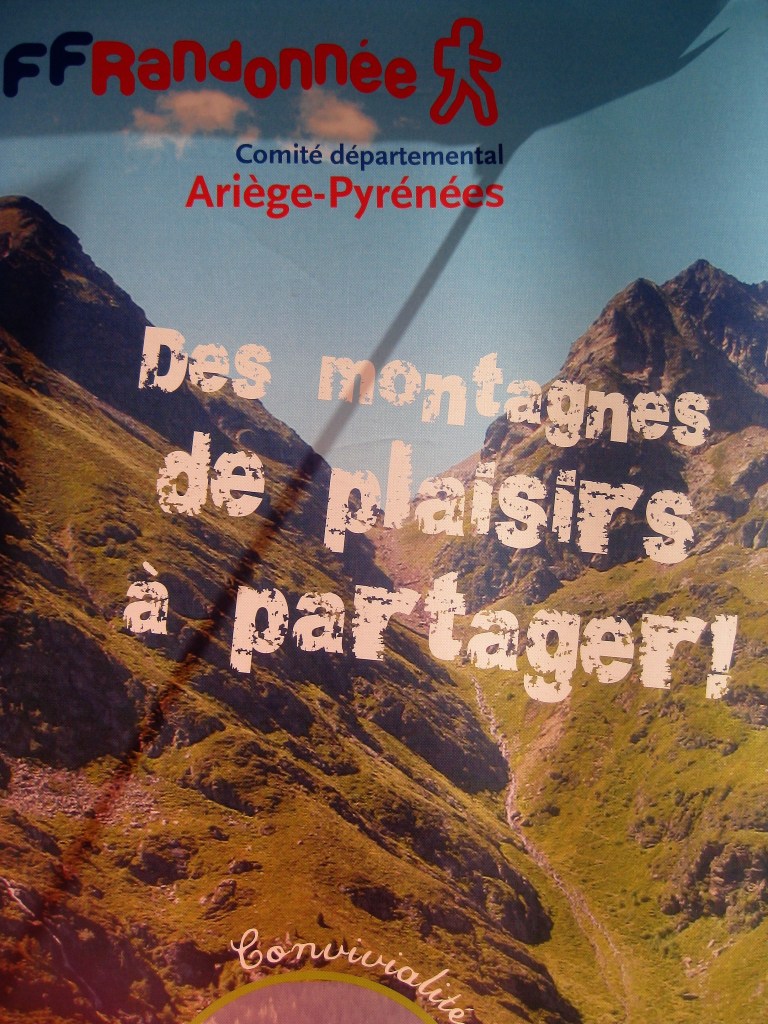
The poster advertising the day

Today, I made an exception.  In France, basic health care is free, but most people chose to top up by insuring themselves with a Mutuelle, which covers all the bits the system doesn’t pay for.  To publicise themselves, and various health charities, the Mutuelles of the Ariège organised a walk near Mirepoix today, and they needed our help.

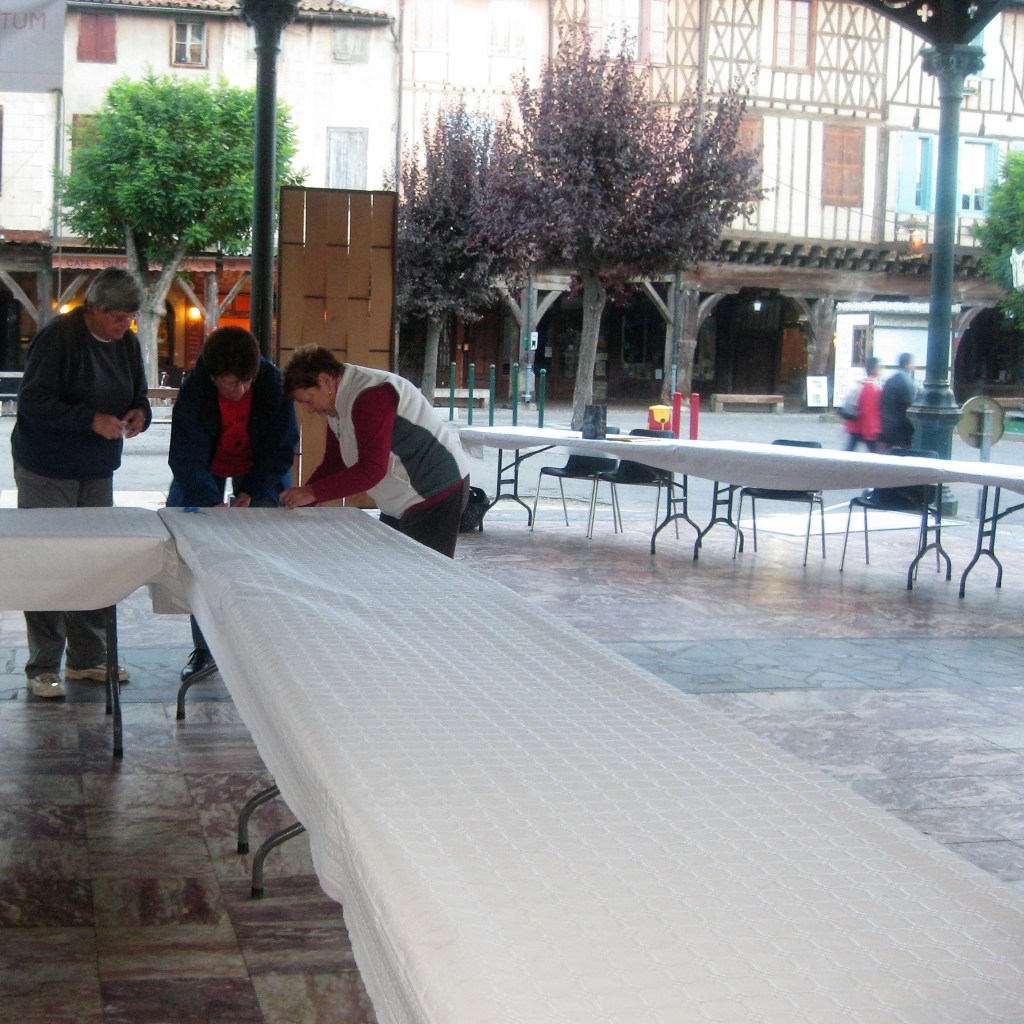
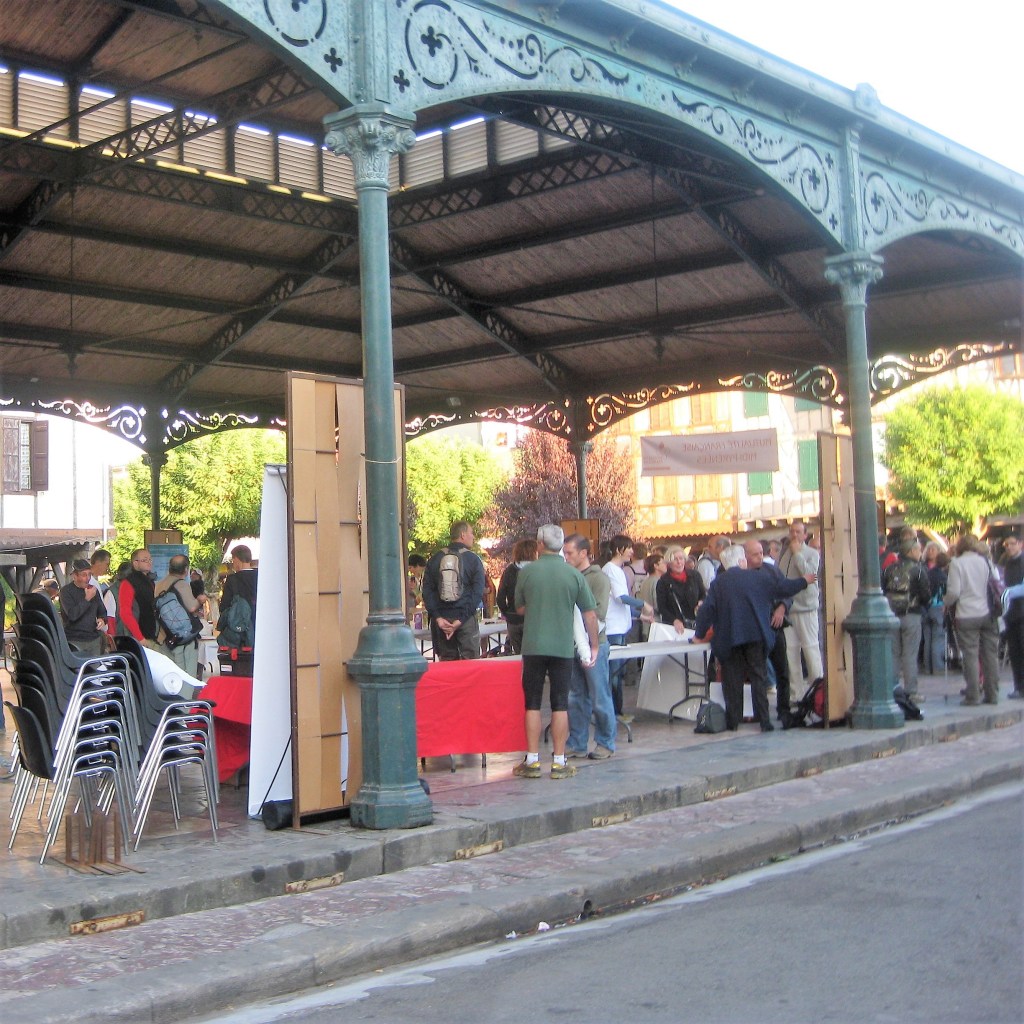
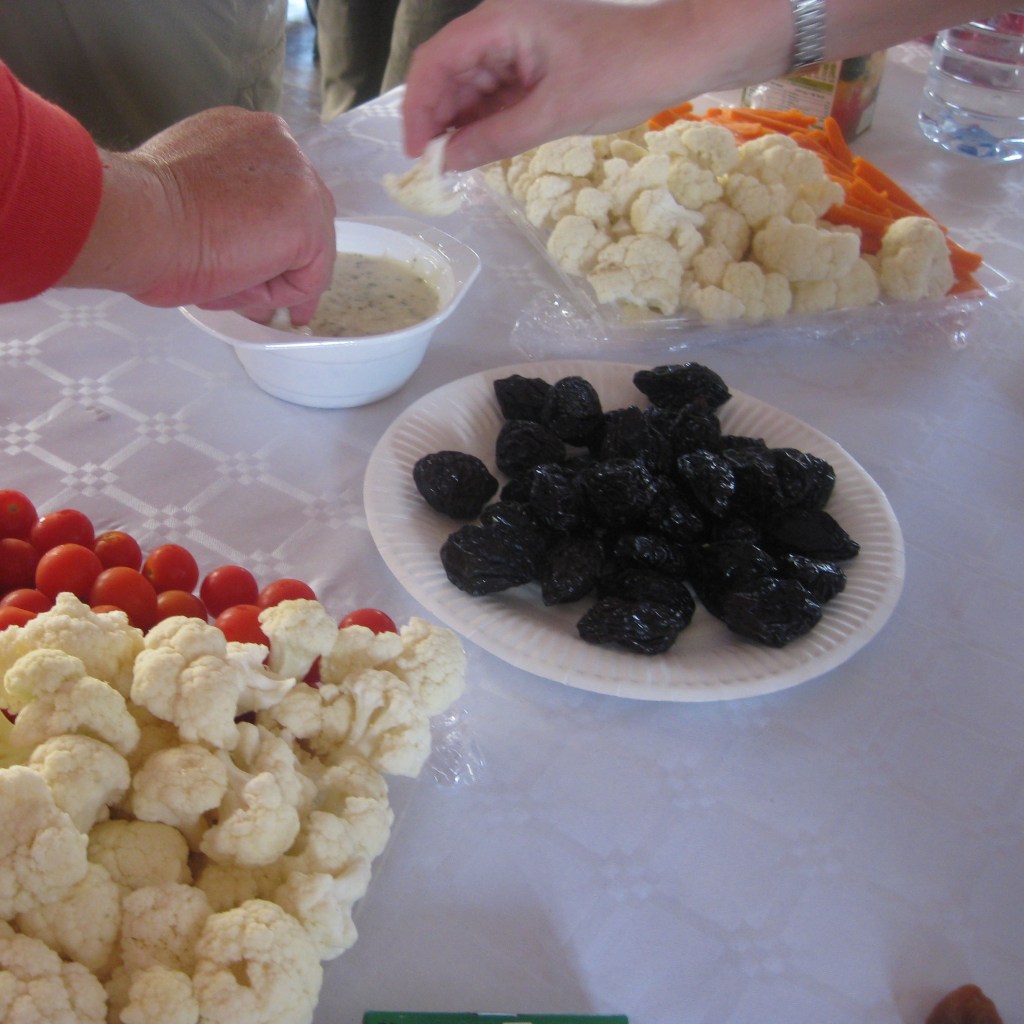
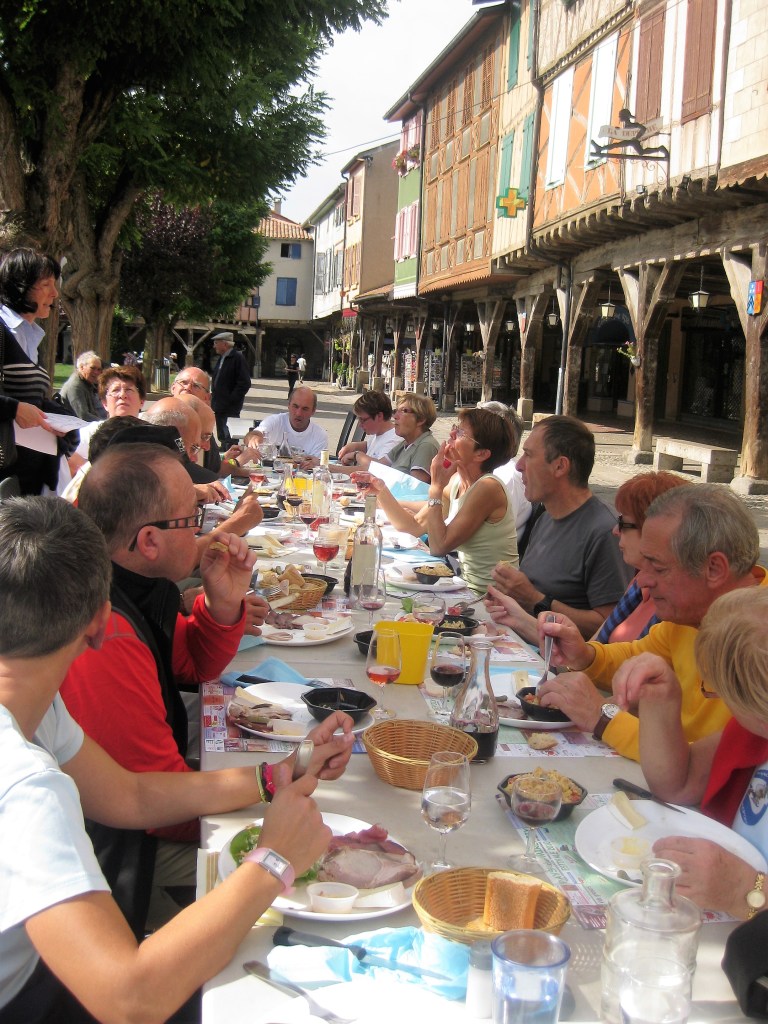
Early this morning, under the covered market hall in Mirepoix we set up tables, prepared healthy breakfasts (breads, cheese, fruit juices, dried prunes) and registered walkers.  Some people waymarked the route, others acted as marshals, and lots of us got to walk as well. Only 171 walkers today.  Why would we be so public-spirited?  Perhaps this picture tells you why.

Sitting in the main square in the sunshine, enjoying the meal we were offered as a ‘thank you’ for our work earlier. We’d have done it anyway. A good day.

Something else though.  Sitting down with everyone after it was all over, I reflected how far we’ve come.  This week, Malcolm’s been in England, so apart from exchanging English/French conversation on Tuesday for an hour, and enjoying lunch with an English friend on Friday, I’ve spent the rest of my time walking or eating with friends, shopping, singing, going to the gym and all the rest, entirely in French (well, I’ve done some hard labour at home too.  But I only had myself to talk to).  Over two years ago, when we first sat down for a communal meal, we could see people’s eyes glaze with fear as they thought they were going to be stuck with that English couple.  Could we speak French?  Well, yes actually, but both easy chit-chat, and more serious discussion were difficult for us in a noisy group situation.  Today I was happy to be the only foreigner in the group: instead of fearing me, it was ‘Is that chair next to you free?  May I sit with you?’

#Kinda Square

Six Word Saturday

School Dinners: a Labour of Love

I was casting around wondering what to post for this week’s Lens-Artists Challenge, Labour of Love.  And I remembered a wonderful experience I had when I lived in France, when I was part of a small team invited to cook an English school dinner for a local primary school.  Truly, the experience was a Labour of Love, as it was for the charismatic school cook, each and every day. My memories of this special day are entirely positive and happy.

September 26th 2012

‘School dinners, school dinners….


‘School dinners, school dinners.

Iron beans, iron beans.

Sloppy semolina, sloppy semolina –

I feel sick, get a bowl quick.’*

Do you remember this cheery ditty from your days eating school dinners?  Only if you’re British, I suppose.  And most right-thinking French men women and children would be quite prepared to believe that all English food is just like that.

Not the mayor of Villeneuve d’Olmes, where Découverte de Terres Lointaines has taken its Yorkshire exhibition this week.  Back at the planning stage, he’d told us about their school caterer, M. Feliu, who uses almost entirely organic or local ingredients, and who likes to introduce the children to the cooking of other countries every time the excuse arises.

We met M. Feliu at La Freychède.  We worked together to produce a menu (Cheap. Tempting to the young French palate. Three courses that work with the kitchen facilities to hand.  Conforming to nutritional standards).

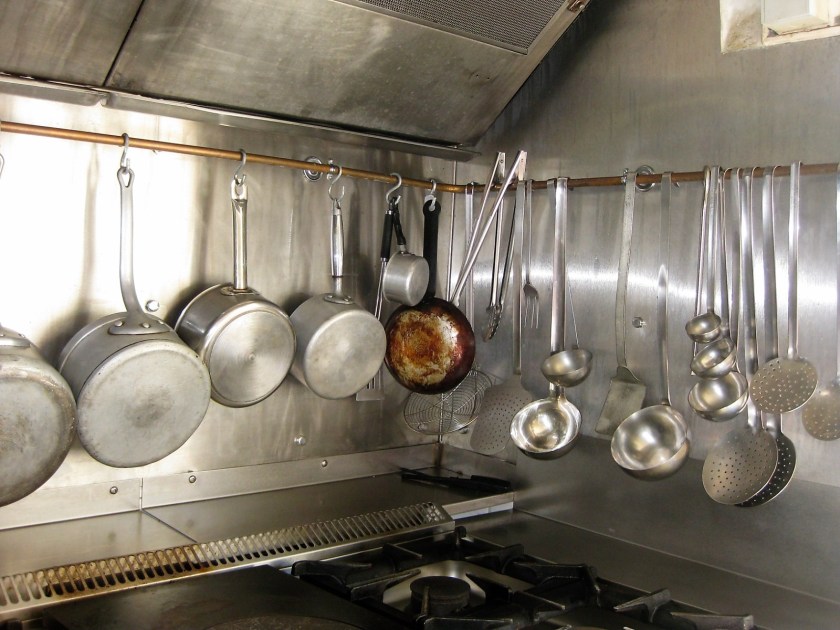
The school kitchen.

This is what we came up with:

Crudités with beetroot chutney 

Macaroni cheese with green salad

Blackberry and apple Betty with custard.

Yesterday was the day.  I turned up at 10.00 with my English friend and colleague Susie to find the work almost done.  All we had left was to churn out batons of carrot, black radish and cucumber for the first course, which was not, let’s face it, Awfully British.  But it had to fit in with other considerations as above.

11.00: The prepared and cooked food was heaved into insulated containers, and transported by van to one of the local schools.

11.30. Ditto with van number 2.  This batch was sent off to Villeneuve d’Olmes, with me following.

12.00. Children arrived at the canteen.  One of the helpers, Pascale, spoke good English.  ‘What’s your name?’ she’d say to each child in English.  When she had her reply, they could go in, and sit down at one of the circular tables, tinies in one room, and juniors in another.  I joined a table of lively 7 year olds.

One of the staff told me the rules that the children expect to follow:

  • Take turns to serve the dishes of food to everyone at table.
  • Wait till everyone’s served before beginning to eat.
  • Try everything.
  • You can have the portion size you choose.  Once it’s on your plate though, you have to eat it.

Everyone accepts this and we all sat together, eating and chatting.  The children chomped their way through all the crudités, they even enjoyed the chutney, whose sweet and sour taste is not an automatic choice round here.

Once cleared away, bread appeared on the table – this is France after all.

Two more children served the macaroni cheese and the salad.  Most of us came back for seconds.

We sang ‘Happy Birthday’ – in English – to a birthday girl.

I gave an impromptu talk on the food on offer.

The blackberry and apple Betty was served.  Yum! How could it fail?  Gently cooked fruit with a crunchy crust of soft breadcrumbs crisped in golden syrup and butter, with obligatory custard, of course.

Then the children cleared their tables, stacking dirty plates and glasses neatly for washing up, before going off to play.

I was so impressed.  The children here learn that the midday meal is so much more than a pit-stop.  The expectations, reinforced daily, are that this is a moment to spend with friends, a time to share, to think about the needs of others, and to appreciate the food on offer.  The occasion lasted well over an hour.

The view from the kitchen door.

Another view from Villeneuve.

* To the tune of Frère Jacques

Lens-Artists Photo Challenge #113: A Labour of Love

‘Comment Shoppez-Vous?’ revisited

It’s that time of the month again, when I re-blog something from our years in France.  This one’s probably an odd choice, when shopping for anything but the bare essentials of life is pretty much denied us, but … learning something new is one of those educational opportunities we’re meant to make use of during Lockdown.  Though eight-years-old fashion vocabulary may not be all that helpful.

‘Comment shoppez-vous?’

May 18th, 2012

Stuck in a waiting room with a pile of magazines between me and my appointment time, my idea of hell is a choice between fashion mags and ones about cars.

Less so in France, at least as far as the fashion ones are concerned.  It’s not that I’m more interested in being stylish and chic here.  I simply have fun reading the articles and noting the ‘English’ words and phrases on almost every line.

Are you a sophisticated lady? Cool? Relax et sexyShow-off? Perhaps you aim for le twist sporty-glam, or like le mix et le match, le style ‘street’, or le fun et le trash.

Down at the shops are you looking for un look color block, le style boyish ou girly, arty-trendy, crazy doll, grungy girl?  If you’ve any sense, you’ll have made a shopping list, to make sure you come home with le jean,  le blazer, le trench, le legging, les shoes (with kitten-heel perhaps), and perhaps one or two it pièces.  Then you could really get to show off and expect le red carpet treatment.

When it comes to make-up, I hope you don’t like le make-up too much.  Light is so much more subtle.  If you’re a beauty addict perhaps you should be looking for un effet sixties, or un twist, using liner and shadowing your eyelids en smoky or flashy to achieve le total-look of your choice.  Then you’d look a real star.

It’s pretty exhausting really.  That’s why keeping up with fashion isn’t very high on my to do list.

Le look sexy-glam as seen in Le Figaro.

A Different Perspective

This is my second response to a photo challenge this week: that’s what happens when you get a bee in your bonnet.  I’ll settle down soon, don’t worry.

This time, Patti invites us to change our perspective when taking a photo.  Don’t just stand, point, shoot, she suggests.  Crouch, squat, get above the action, take a tour round it.

The weather being what it is, I can’t get out much with my camera, so these are all from the archives.

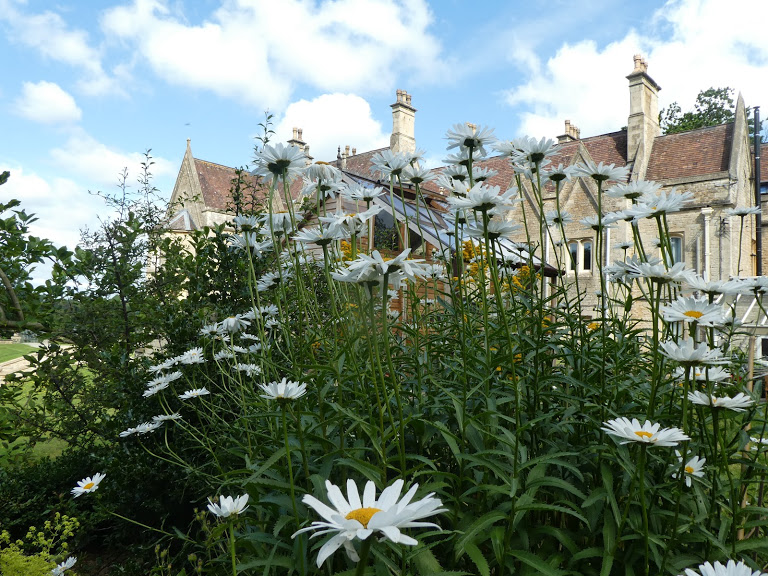
This first one is perhaps my favourite, taken in Gloucestershire.  I had to lie at the edge of a flower bed to get this shot of a house barely glimpsed through the ox-eye daisies.  Photography as exercise class.

Our friends Sue and Brian’s garden at Horton.

Here are some more shots, taken in much the same way, in gardens and fields.

And here are two more.  The back end of a festive lunch, and flags at the EU Parliament in Strasbourg.

Click on any image to view the caption, and to see it full size.

Lens-Artists Photo Challenge # 86: Change your Perspective


Sunday Rando – French style

It’s time for my monthly trip to the archives.  And an opportunity for me to remember, as I stare out at the rain sodden garden, that the grass isn’t always greener…..

November 14th 2014

Sunday Rando

7.00 a.m. Sunday.  22 Ariègeois radios were switched on for the day’s weather forecast.  ‘It’ll be an exceptionally sunny and hot day for the time of year, throughout France.  Temperatures in the south will reach 23 degrees in some places.’  22 satisfied listeners, members of the Rando del’Aubo, switched off their radios…. without bothering to listen to the end of the forecast.  Instead they turned to the more important business of packing their rucksacks for a rather heavy-duty walk an hour and a half’s drive from Mirepoix, la Forêt d’en Malo.

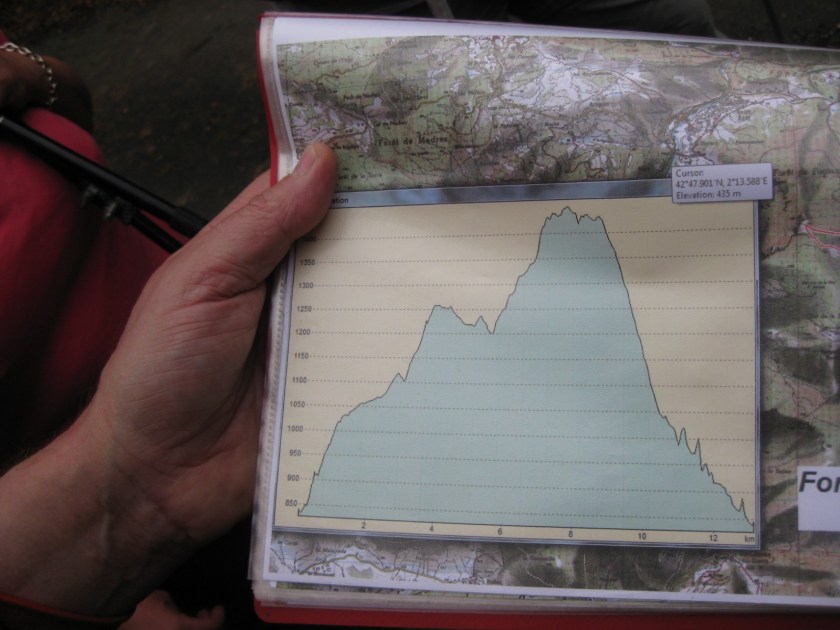
François talks us through the walk. This is it, in cross section.

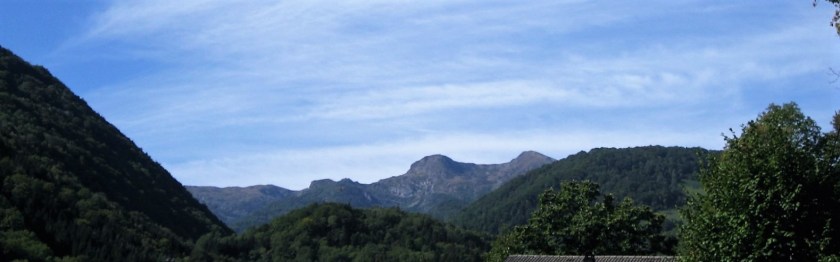
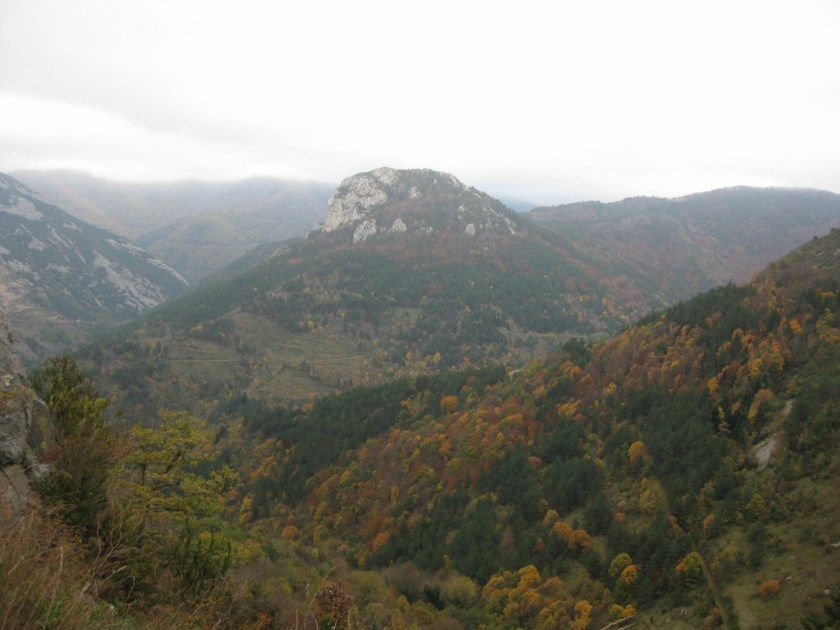
With a stiff climb of 700 metres in prospect, a 14 km. walk isn’t a stroll in the park.  But the payoff as you emerge from the forest is an extraordinary panorama of the Pyrénées, jagged teeth of rock emerging from the thickly forested mountainsides: especially lovely in autumn as the trees turn from yellow, through ochre, to magenta and crimson.

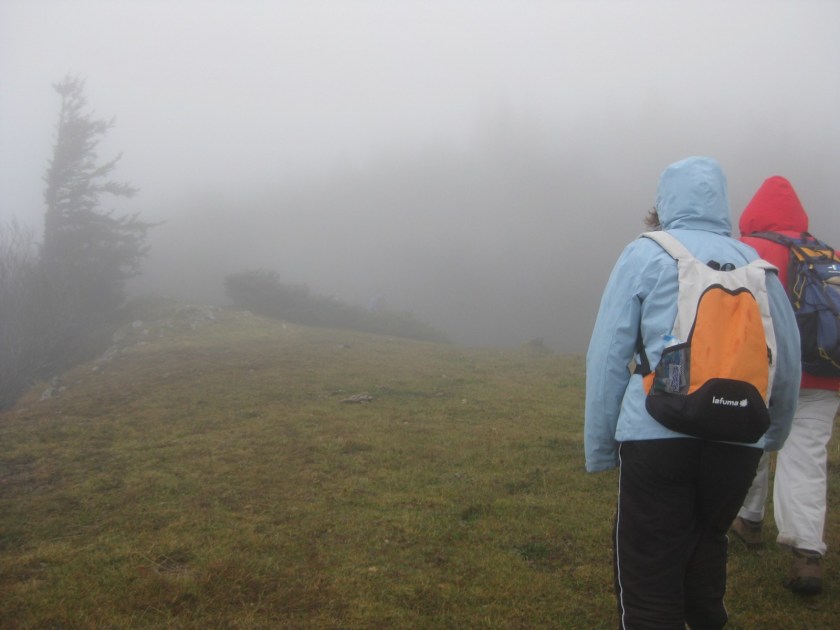
As we drove eastwards, the cloud and mist descended. We parked, we walked, we climbed, we scrambled and we struggled for three hours as the mists became ever damper and more clinging, and an unexpected cold wind whipped across the mountain side.  And at the top, this was our view.

We hadn’t listened to the end of the forecast you see.  What we should have known that our little patch of south eastern France was a little bad-weather cold spot.  There we were bang in the middle of it.

As we finished our walk, the weather lifted a bit, and gave us a small taste of what we should have enjoyed.

Later, back at home, our smug families and friends recounted how they’d spent the day in shorts and tee shirts.  Maybe they’d had a little bike ride, a gentle stroll in the sunshine, a drink on the terrace in the hot sun……


Le Jardin Extraordinaire: a late summer treat

In this most dreadful of weeks for British politics, I think we all need a distraction. Just now, this is it. Back in France, one of the regular pleasures of our late summer was a visit to Le Jardin Extraordinaire, open for just a few days every year as the holiday period drew to an end. Let’s go there now, courtesy of a post I wrote in 2013 …..

September 4th, 2013

Le Jardin Extraordinaire, 2013 version

Le Jardin Extraordinaire is always comfortingly familiar, yet always surprising. If you’ve been once, you’ll go again, on this one weekend of the year, to enjoy strolling round this very special wild, yet bewitchingly tamed garden. The members and volunteers of Artchoum have been working for months to create this space, just for your pleasure.

You’ll want to explore the riverside walk and exclaim at the enchanted place they’ve created with stones, trees and flower petals. You’ll go on to wander through the leafy tunnels and arches tumbling with gourds. Then you’ll amble off into the woods, where more fantastical experiences await you.

People come from miles around to explore, smile and wonder at this very special place. But although you won’t be alone, there’s a relaxing feeling of space and of peace too. You’ll go away refreshed, invigorated and joyful.

Click on any image to view full size.

An entry for Jo’s Monday Walk. It’s an old walk Jo. But sometimes the old ones are the best. And I hadn’t ‘met’ you then.

Tabariane: New Light on the Dark Ages revisited

Which of my posts about our time in France to re-blog this month?  In the end, it was easy.  I fell to thinking about all the wonderful trips we had learning about the history of the area we’d chosen as our home, courtesy of  Pays d’art et d’histoire des Pyrénées Cathares.  Here’s a memorable day from July six years ago…

July 13th 2013

Tabariane: new light on the Dark Ages

When I was at school (back in the Dark Ages), we learnt in history that the Romans came after the Greeks.  They left us a legacy of Romance languages, our alphabet, Roman law, neo-Classical architecture, impossibly straight roads and under floor central heating.  As the empire crumbled, so we were told, the continent descended into the Dark Ages.  Barbarians, Vandals, and unpleasantly savage descendants of Asterix the Gaul ravaged Europe, raping, pillaging and generally leaving little time for culture and a settled everyday life.

I think we all knew it was a bit less straightforward than that.  The Frankish Germanic tribes entering the late Roman empire had a very different culture from that developed by the Romans, and it’s been much harder to research systematically because there are few contemporary written records.

This week though, we went to visit a Merovingian site, Tabariane, recently excavated and interpreted near Teilhet, not far from Mirepoix.  The Merovingians were an early Frankish dynasty established by Clovis, and they ruled an area roughly equivalent to much of France and Germany from the 5th to the 8th centuries, and are the kind of tribe that was dismissed as one of those from the very heart of the Dark Ages.

It was a burial site we’d come to see.  It has first been discovered in the very early 20th century by Captain Henri Maurel, and had been partly excavated according to the fairly invasive practices of the period.  War and economic upheaval meant the site became first neglected, and then entirely forgotten about until recently.

Recent research lead by Nicolas Portet has meant that the burial ground, now carefully excavated, is now, as it almost certainly was then, a burial garden.  It’s a large site, on a hillside overlooking the site of the now disappeared Merovingian settlement  on the opposite side of the valley.  The 166 tombs seem to have been arranged in ‘clans’: loose arrangements of extended families and friends, over a long period of time.  It seems to have been a burial ground which held a place in the life of the community for many years, rather than being a cemetery developed as a result of tragedy – war or plague say.  Most of the bodies were laid with their heads to the west, their feet to the east.  Originally they were clothed, but little remained apart from metal objects: belt buckles, brooches, jewellery and, with some of the men, weapons.

This is where ideas have changed. Early 20th century archaeologists sent excavated objects to museums far and wide, even to America: modern practice which encourages an area’s ‘patrimoine’ (heritage) to remain as far as possible intact did not then exist, but you can find examples of objects found here in the Museum at Mazères, and in Saint Raymond de Toulouse.

Now as then, the tombs are planted with local flowering plants: lavenders, marguerites, herbs.  It’s thought that locals would have visited the grounds with their families, spent time there, as we might in a modern park.  So it was important to both the living and the dead to make it a pleasant, calm place to be.  The burial ground overlooked the village. The village overlooked the burial ground.  Each had an interest in the other.  Each could intercede for the other.

It’s a tranquil, special place, surrounded by meadows and hilly countryside.  A circular walk of some two and a half kilometres , starting and ending in the village of Teilhet gives you a chance to spend a peaceful  hour or two exploring scenery that may not be so very different from the way it was when the Merovingian villagers first laid out their burial ground, some 800 years ago.  Excellent information boards will help you understand a little more about those Merovingian people who made their lives in this still rural area.

While you’re there, make time to enjoy the facade of the 14th century church at Teilhet.  Here are some pictures to whet your appetite.


May Day

I find it sad that May Day isn’t really A Thing in the UK.  Even the early-in-the-month Bank Holiday is relegated to the first Monday of May, diluting its significance to that of merely a day off.

When we lived in France it was far more important.  It was a day off work of course, because it was the all important Fête du Travail. No shops (apart from bakers and neighbourhood shops, just for a few hours).  No garages. No newspapers.  Only essential workers turned up for duty.

But the streets were quite busy, because May 1st is the day when everyone offers one another a traditional token of friendship and esteem – a sprig or two of lily of the valley, prettily presented.  In every village, every town, you’ll find people on street corners, outside the bakers’, at the cross roads, selling the flowers that they probably spent the previous day gathering and tying into pretty posies.  It’s the one day of the year when anyone who wants to can sell on the streets without a licence – so long as they’re selling only lilies of the valley (muguets).

I used to ask people the origin of this tradition.  Nobody knew.  ‘It’s simply to offer bonheur’, they shrugged.  But my friend Léonce had a couple of stories to tell.  We all know that lilies of the valley have a strong and lovely perfume.  The nightingale notices and smells them coming into flower on the first day of May, and this gives him the energy he needs to get into the woods and begin courting, nest building, and singing.  And those bell shaped flowers?  Well, they apparently surround the Heavenly Gates, where they come in handy by tinkling musically to announce the arrival of another soul from earth.

Lilies of the Valley in our garden in France, one rainy May Day.

Just to prove though that at least one place in England celebrates May Day:  here are the choristers of Magdalen College Oxford greeting the day at 6.00 a.m. as they do every year on this date.  And the whole of Oxford joins in the fun.