Omelette de Pâques

Come to the Ariège on Easter Monday, and you won’t be too far from a community omelette. Communes and clubs all over the department seek out their biggest frying pan, get hold of dozens of eggs, sugar and rum, to make this sweet confection to round off, with any luck, the first barbecue of the season. Why? Nobody in our walking group could tell me, and Google wasn’t much help, but it does seem to be an ancient tradition dating back to….ooh, 1973 at least.

Anyway, the Rando del’Aubo have made this an annual event for some years now. For the last couple, it’s been rainy and cold. Not this year though. Down at the bottom of the page, you’ll find a few pictures of our walk between La Pène, an Audois hamlet on a delightful small lake, and Monthaut, which is a hill….higher up. It was a great way to work up an appetite.

Because the weather was warm, sunny and spring-like, we relaxed at the lakeside after our walk, chatting and enjoying those woodsmokey smells of a barbecue coming to life. Apéros first: Muscat, suze, pernod, whisky…all the usual French tipples, with nibbles to stem our hunger. Then grilled pork, grilled Toulouse sausage, bread (and wine of course), Coulommiers cheese, vanilla or chocolate pudding. And then we still had to find room for the all-important omelette.

Since the beginning of time, it’s been Marie-Therèse’s ‘job’ (good French word, that) to make the omelette, and of course it all ended in noisy recriminations because there were too many cooks all muscling in, breaking eggs, beating eggs, heating the pan, greasing the pan, measuring the rum. Half the raw egg mixture tipped out onto the grass, and Etienne and Danielle dashed off to every farm they could find to buy another….. 4 dozen.

Finally, it was done. Really, this omelette is scrambled egg with lots of sugar chucked in at the end, and flambéed with rum. Once a year is quite enough.

It wasn’t the end of the party though. Oh no. We couldn’t go before downing glasses of Blanquette de Limoux, an Alpine eau-de-vie, then cups of coffee (with madeleines, in case we were still hungry). And as a final touch, Easter eggs.

We came away suntanned and rather full, at the end of an Easter Monday that was one of the first really hot and sunny days of the year. A taste of things to come?


An English Interlude

We were back in England for a while, getting our house ready to market.  Those TV makeover shows have got a lot to answer for.  It’s no longer enough to do a bit of casual dusting.  We de-cluttered surfaces, touched up paint, knocked the garden into shape, and even gave one room a total makeover (‘People are so thick’, advised one chap who’d come round to give us an estimate for removal. ’Just because you’ve got that room organised as a study, they won’t be able to see it as the house second bedroom.  If you can, get rid of all those books, and set it up as a bedroom’). So we did.  We boxed up several hundred books and put them in the garage, then covered the dark green walls in restrained buttermilk paint, and popped in a spare double bed we just happen to have, a chest of drawers, a bedside light or two.  Add an artificial orchid from Habitat, et….voilà…one genuine bedroom makeover.  And then we had to live in, and keep up with, all the unaccustomed tidiness.  We hated it.

But we did love being in England.  At least I did.  Here are my 13 reasons for happiness.  Definitely NOT in rank order

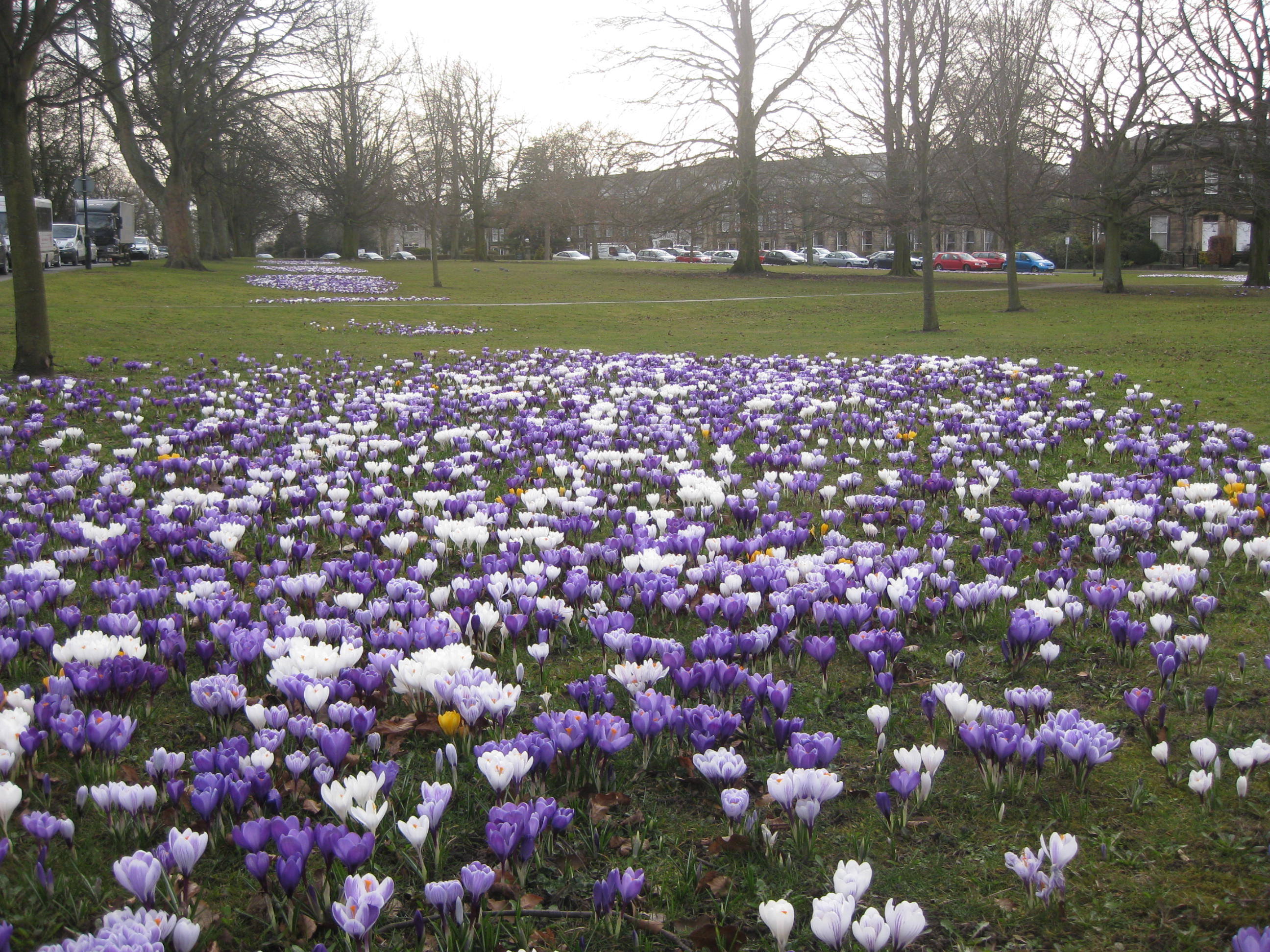
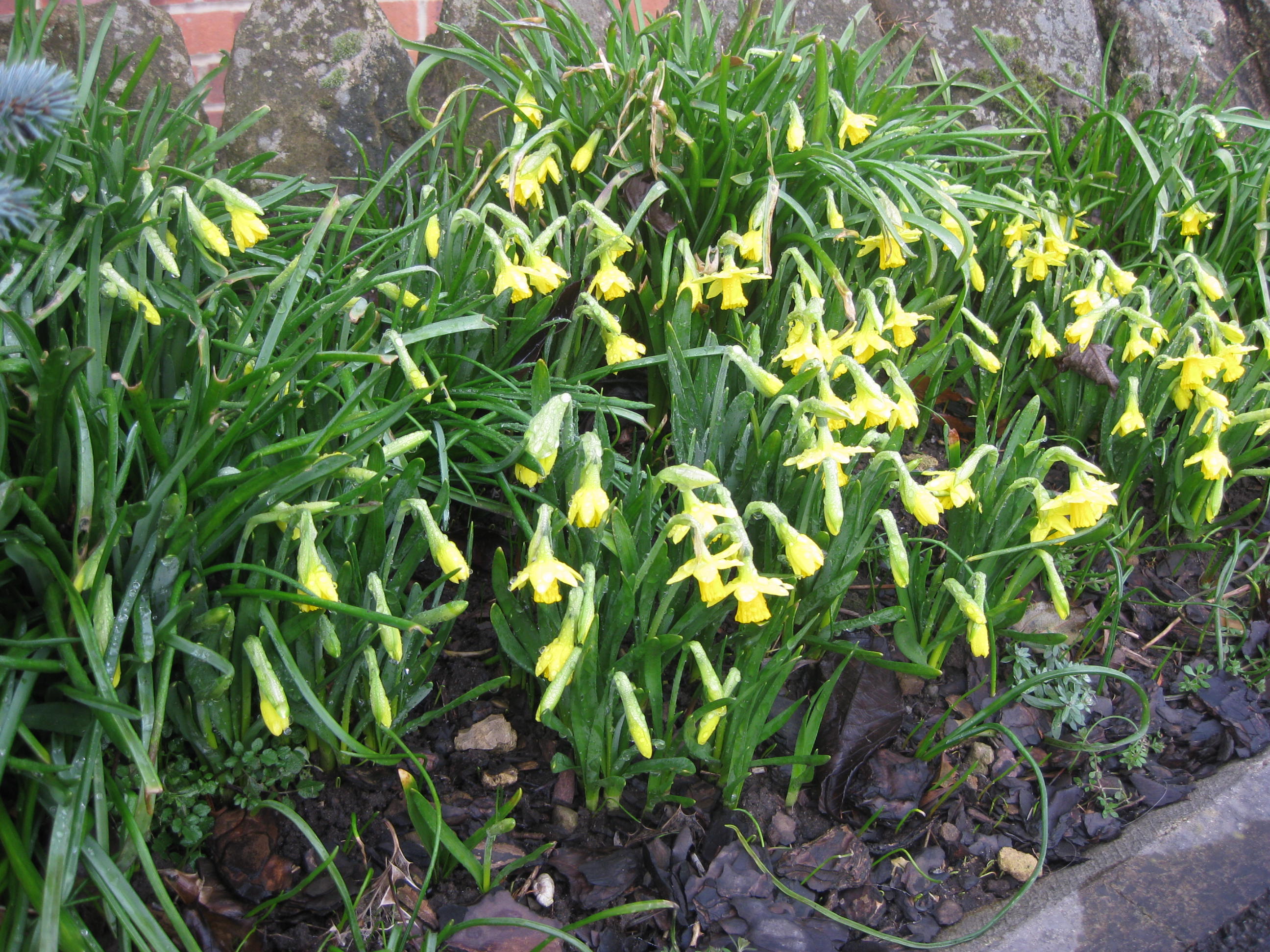
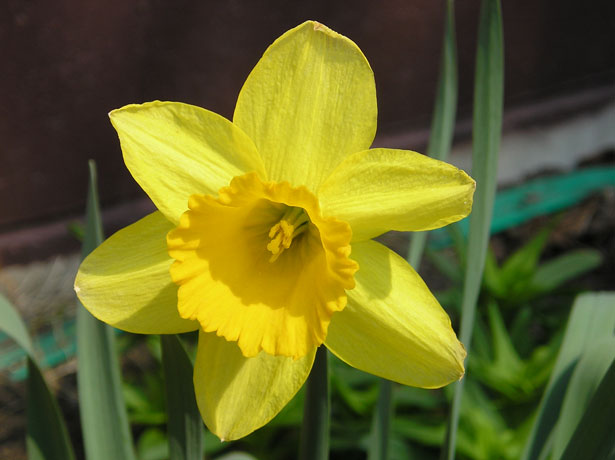
  1. Harrogate in crocus and daffodil season must be one of the loveliest urban sights in Europe.  The Stray, that splendid open parkland which girdles the southern part of the town, was all but submerged in a sea of purple white and orange crocus, gradually opening to reveal saffron coloured stamens as the sun teased the flower petals apart towards midday.  The crocus fade away to be replaced by an equally extensive display of daffodils. They were only just reaching their best as we left town, but we did at least see them.
  2. Radio 4. I had it on constantly. From Our Own Correspondent, Paul Merton on Just a Minute, Daniel Corbett’s animated and informative weather forecasts, Gardeners’ Question Time….. all to help the day go by as we scrubbed and polished
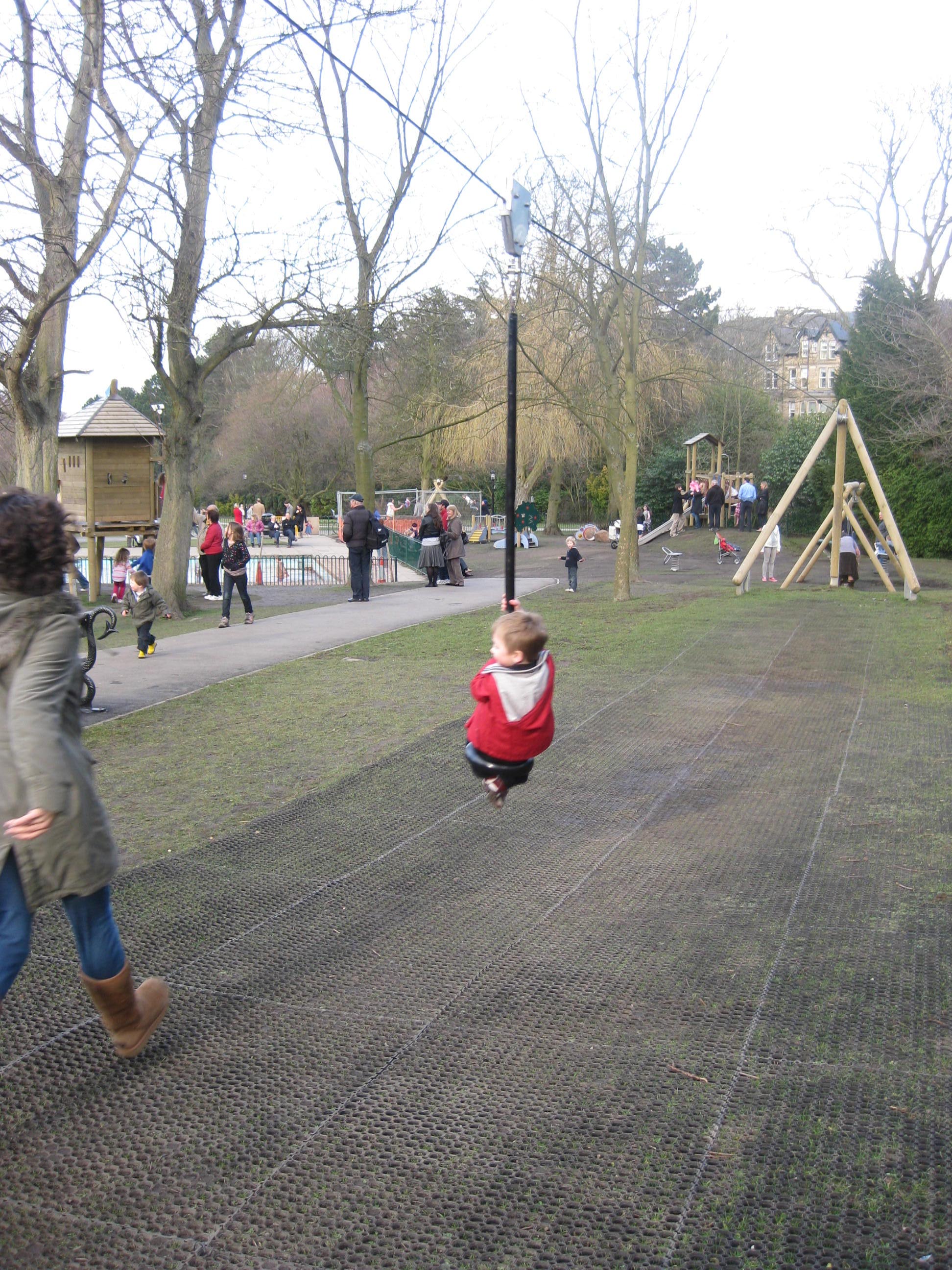
  3. Spending time with those fantastic twin boys, the grandchildren, as they discovered the new adventure playground in Harrogate’s Valley Gardens.
  4. Nidderdale LETS. What a great bunch of friends.  We’d organised a Task Force of willing members to tackle the overgrown jungle that was our garden. Naturally it rained on the day.  So everyone turned to in the house.  They scrubbed paintwork, wrapped ornaments, painted the above-mentioned bedroom, hoovered…And we all had fun, and lunch together.  How do people manage without LETS, or SEL as it’s called in France?
  5. Friends. We had little enough time to socialise, but those hours spent sharing time at our house, in Ripon, in Huby, and in various spots in and around Harrogate were all very special
  6. Charity shops. Whenever I’m in England, I spend time combing through the stock of books in all our local charity shops. With everything from the latest Man Booker winner to little-heard-of classics all going for anything from 30p. to a pound, why wouldn’t I want to stock up?  And this time, we off-loaded quite a few things too
  7. Freecycle. The amount of stuff that Harrogate Freecycle keeps out of landfill must be quite phenomenal these days.  And its members seem to be amongst the nicest people in town.  So we were glad to pass on some stuff to various happy recipients.
  8. Pontefract cakes. Nothing else quite hits the spot.  Oh, except perhaps luxury-end crunchy hand-cooked crisps from Marks and Spencer or Waitrose.  Chilli flavour.
  9. Power walking in the Valley Gardens, 8.30 a.m. Sunday morning, with Angela and Chris.  Best start to the week.  Not sure we really ought to call it power walking any longer though.  Power chatting maybe.
  10. Hot cross buns. When I was younger, Good Friday was the day of the year when we ate hot cross buns.  Maybe for a day or two after as well, but no more than that.  Freshly toasted and dripping with butter, the sugary cinnammon smells wafting through the kitchen, they were one of the food highlights of the year.  Now they’re available all the time, they don’t seem half so special.  But during this last English fortnight, Good Friday or no Good Friday, Malcolm and I made sure we got quite a few hot cross buns under our belts.
  11. Indian take-away. After hard days spent painting and cleaning, few things are more reviving than a good Indian take-away.  Hot, pungent, spicey, sour, the vivid flavours cheered us up and brightened our mood.  The French don’t know what they’re missing!
  12. Guardian and Observer. I know I could read Polly Toynbee, Nigel Slater et al on line.  But it’s really not the same, is it?
  13. Talking in English. The sheer relief of being able to chat, chunter, chew the fat, confide, discuss, digress, argue, amplify, explain, entertain, without pausing to consider whether I’ve chosen the right gender, the right word, the right ending.  Yes, perhaps this really is so precious it really needs to go right up to the top of the list at number 1.

The Broccoli Blog

There are two things I especially love about early spring.  Daffodils.  Purple sprouting broccoli.  The French don’t really do either.

Well, that’s not fair.  In the woods near here, in a few weeks, there’ll be swathes of delicate, rather pale and lovely daffodils blooming.  At weekends, people will go and pick enormous basketsful of them.  They’ll take them home and stick the flowers in vases, where they’ll last only a day or two before wilting in the indoor heat.  But the civic displays which for me are one of the glories of the UK simply hardly exist here.  No dual carriageways are planted with unreasonable quantities of brilliant yellow daffs announcing to every passing motorist ‘Spring is here!’  There are no newspaper headlines ‘Daffodils on the Stray’, featuring a couple of four year olds gambolling among the flowers.  No florists or supermarkets here have buckets of blooms ‘3 bunches for £1’.  I probably won’t buy any here if I can find them, as they’ll already be open and the joy of watching them unfurl won’t be an option.

Purple sprouting broccoli’s even more unknown.  I haven’t even found an exact translation.  Like other English here, if I want to eat it, I have to grow it myself, with seed brought over from England. For 9 months of the year, the large ungainly plants occupy more than their fair share of the vegetable plot, and really, half the time I wonder whether it’s worth it.  Well,  it is.  Today, I picked the very first handful of tightly closed purple heads, enclosed in a collar of dark frilly leaves.  And now I know that there’ll be enough and to spare for several weeks to come.

Such a special vegetable deserves to be more than a bit part, one of two veg. playing second fiddle to a plate of meat. This is the meal we cooked this evening, thanks to Nigel Slater and his newest book ‘Tender’ (Read it, even if you don’t cook much.  It’s as good as a bedtime story, though it WILL make you greedily hungry)

Pasta with Sprouting Broccoli & Cream

250g. sprouting broccoli

250 g. orechiette or fusilli

30g. butter

2 cloves garlic, thinly sliced

4 chopped anchovy fillets

250 g. crème fraîche

170 g. crumbled gorgonzola (well, we used Roquefort – you would round here)

Put 2 pans of boiling salted water on the stove.  Drop the pasta into one, and the trimmed broccoli into the other.  As soon as the broccoli’s tender – 3 or 4 minutes- drain it, wipe the pan, and return it to the heat with the butter, garlic and anchovies.  Let them cook slowly for a minute or two before adding the crème fraîche and cheese.  Bring to the boil and turn down the heat.  Add the broccoli, season with black pepper, and then add the drained pasta.

Cheap, quick, delicious, and a real celebration of early spring

Atout Fruit

I love Atout Fruit. It’s a relatively small, but very effective local organisation that exists to protect and promote our heritage of local and ancient varieties of fruit trees.  By being a member, I’ve learned such a lot at some of their monthly workshops.  I’ve for instance practised grafting (as in:

a. To unite (a shoot or bud) with a growing plant by insertion or by placing in close contact.

b. To join (a plant or plants) by such union.’,

rather than ‘hard work’ as described so effectively by Kalba in her blog Slow Living in the French Pyrénées

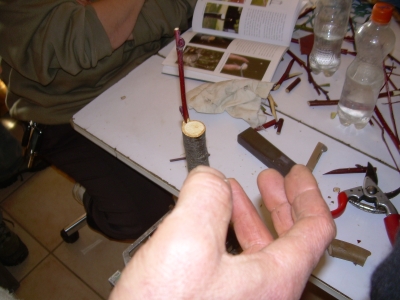
The intricacies of grafting

Actually, what I learned about grafting, when I did it last year, was that it wasn’t my thing.  It’s very steady meticulous work, demanding razor sharp knives and attention to detail, deeply unsuited to a slap-dash like me.  My painstakingly grafted specimen died within weeks.

But there have been sessions on pruning, on traditional methods of gathering and preserving fruits, using those fruits in cooking….and so on.  Later this month, the session on growing biodynamically will be held in our garden, and I just can’t wait.

I’m different from most other members.  I don’t just mean that I’m English, though there’s that too.  Most ‘adherents’ were born with more know-how than I will ever have about trees and crops, and practice their skills every day.  Nearly all the rest have this background to their lives, even if they have themselves moved away from their ‘paysan’ origins.  I hesitate to use the word ‘peasant’ in English, because of the somewhat negative picture it paints.  Not here.  Even University graduates who have returned to the land are proud to describe themselves as ‘paysan’.  It’s been great for me that everyone is keen to help me and seems pleased that I want to learn: nobody patronises my amateurishness.

Sorting those saplings

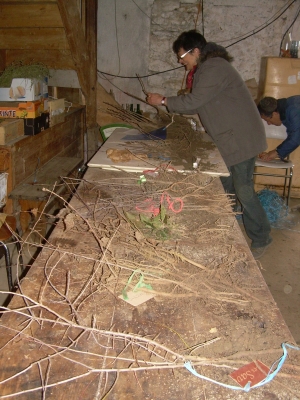
Once a year, Atout Fruit is given a range of tree seedlings to hand out free to members – mainly fruiting trees, but other indigenous and introduced species too.  Members pore over the spread sheets of offerings and make their choices, and wait for the day when we can all go and collect.  I felt greedy: I’d chosen 10, but later found that others, with larger pieces of land, had chosen 20, 40, even 100 saplings.  This year I volunteered to help sort and distribute the trees, and drove to Claude’s place (which includes a wonderfully eco-efficient house of straw), high above lake Montbel, where it was all happening.  My job was to help replace the battered identification labels with rather more legible ones, and make up orders with members as they arrived. Have you ever tried to distinguish an 18-inch high mulberry whip from a crabapple or a wild cherry?  Best leave it to the experts…..  Later, warmed by glasses of hot coffee, 4 of us made up the bundles of trees for the people who hadn’t been able to come to collect.  Here’s a picture of some hard work in a chilly barn: merci, Claude!

Later that day, I planted my seedlings in pots, or direct in the garden.  I had quite a time of it.  But that’s another story….

Give Us This Day Our Daily Bread

How could they?  I mean, what ARE they playing at?  All last week, and most of this, the baker’s shop down the road has been closed.  Instead of rising at 2.00 a.m. to get busy making baguettes, flutes, ficelles, baguettes a l’ancienne, flutes tradition, pain noir, chocolatines, croissants and so on and so on, our bakers have chosen to lie in till – ooh, 7 o’clock perhaps – and then spend the day catching up with their families – the children are on half term.

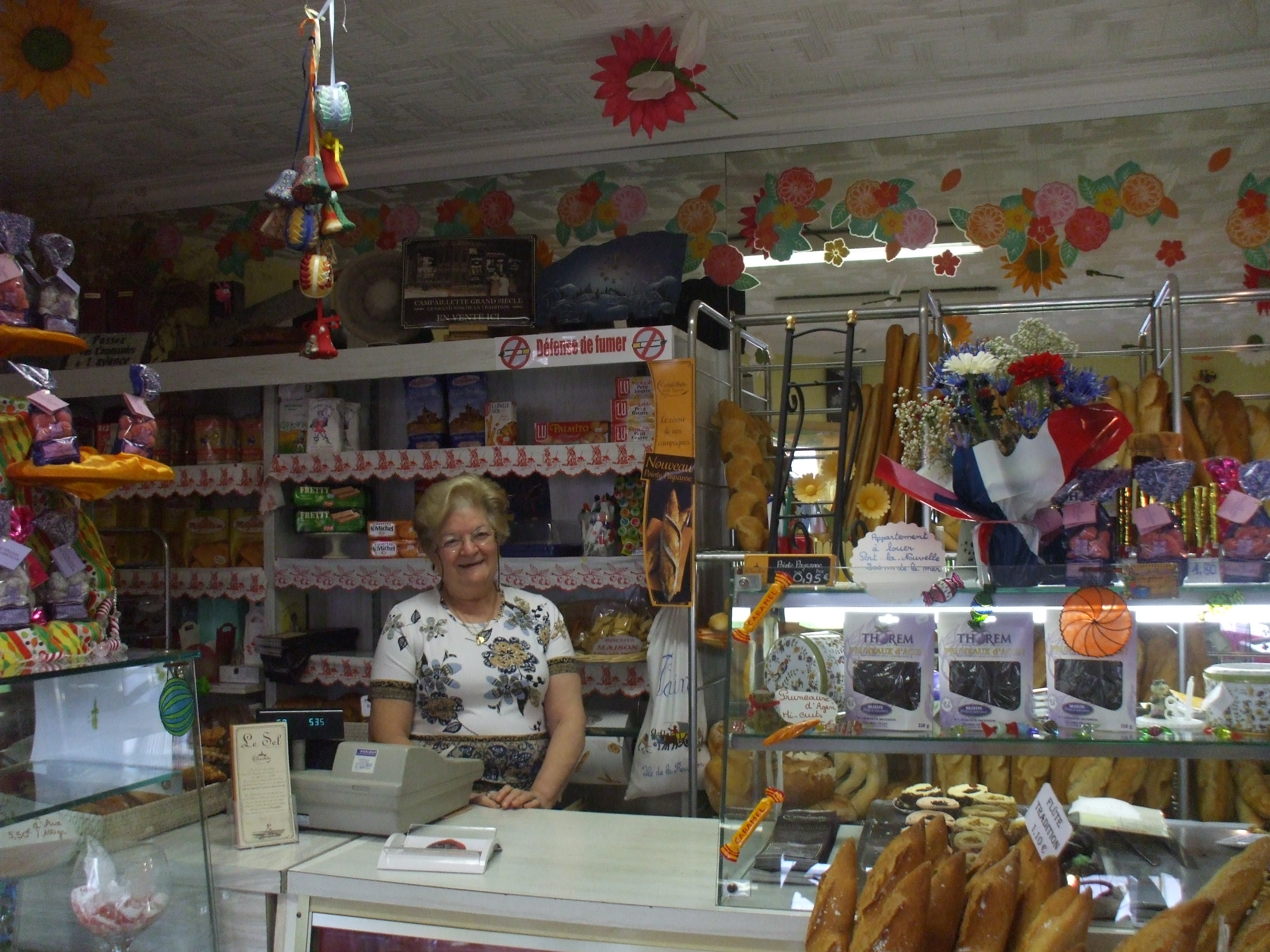
It’s a family business, our baker’s shop.  M & Mme Fonquernie owned it, and now, although officially they’ve retired, they help out all the time .M. Fonquernie is the one who drives his little white van round the local villages which have no shops, selling bread. Their two sons have now taken over the day-to-day baking.  One is responsible for all those loaves, while the other specialises in patisserie.  Their wives divide the work of running the shop between them with Mme Fonquernie Senior’s help.

Mme. Fonquernie, Mater Familias

So our morning routine has been disrupted.  First thing each day, one of us usually walks down the road to get our favourite pain noir, hot and crisp still from the oven.  The other day, the baker forgot the salt.  The bread wasn’t half so nice, but I rather liked this very human error.  It proved that our loaves are still ‘artisanale’, rather than being churned out by some computer-assisted machine.  There’s usually someone in the shop to chat to, or to walk back along the street with, and so neither of us looks on getting the bread in as a chore.

We’re lucky, I suppose, that there are three bakers in town.  Last week, we went to the shops at Castellanes to the baker there.  No pain noir at this shop, so we chose their unbleached white.  The small one’s a slender baguette shape – an Ariegeoise – but buy the larger butch version, and you must ask for an Ariegeois.

But then what happened?  A notice appeared in the shop: from Sunday, they too would be closed for a holiday. So for a few days this week, we have to patronise shop number three. Everybody moans ‘C’est pain industriel ça’.  It’s true. It comes all the way from Lavelanet, from a bakery which has three shops.  That’s mass production, and it shows.  Roll on Thursday, when the Fonquernie family re-opens its shop doors

The Butchery Business

Once upon a time – though not very long ago, Laroque,  population more or less 2000, had dozens of shops. You could live your life here without ever needing to leave town, and many people did just that.

Now we have three butchers, three bakers, and three – no, not candlestick makers – hairdressers.  We have one épicerie left, 2 tabacs, a flower shop, and a new haberdashery store. There are six bars, restaurants and take-aways, and you can still buy paint, bikes, second-hand books, even a washing machine in town.  Greater mobility and the rise of the supermarket have put paid to the habits of the old days, and we’re lucky to have as many shops as this left.  But so many are no longer open for business, and our home is one of them.

From the early years of the 20th century until about 25 years ago, our house was Paul Vergé’s butcher’s shop, as well his family’s home – people here still refer to it as ‘l’ancienne boucherie’.  Passers by, workmen who come to the house, delivery staff  – all of whom remember coming to the shop as children, or working there as part time or weekend staff –  have told us tales about the old shop, and the house itself is giving up some of its secrets…….

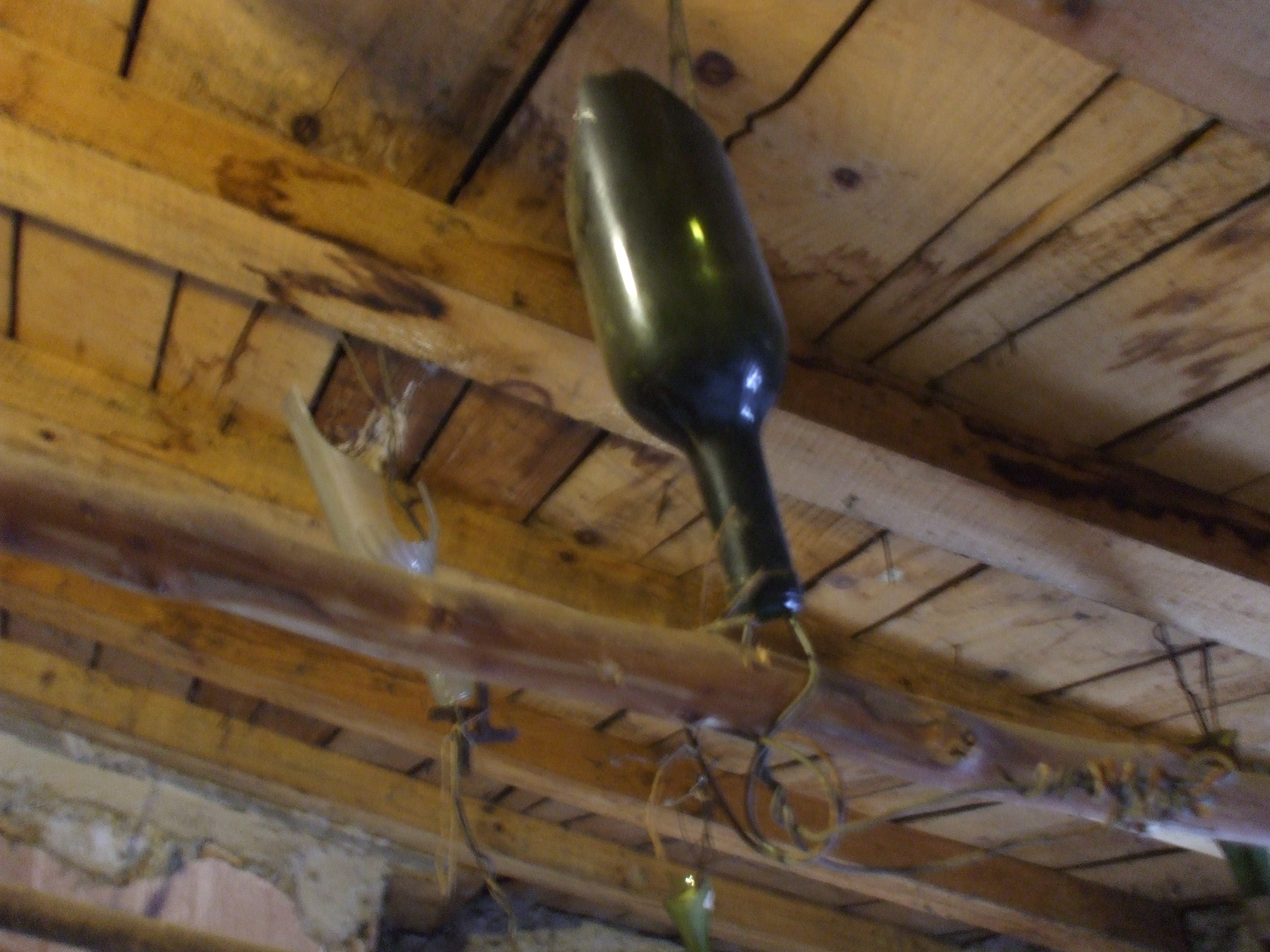
The butchery business must have been back-breakingly hard.  After we’d moved in, we soon realised that carcasses were hauled up through the house to the top (or second) floor up a now filled-in shaft, where they hung from racks like clothes on an airer.  We wondered why broken bottles were suspended above these rails, upside down.  Answer: to prevent rats and mice running down onto the meat…

Anti-mice device

This floor of the house, without insulation, was bitingly cold in winter, but suffocatingly hot on summer days.  People have told us that their memories of the shop include seeing these same carcasses, after they’d been hauled down again from the attic, hanging outside the shop door, crawling with flies, just waiting for customers to come and buy…..

The attic also has an area that was used as a smoke room for smoking cuts of meat.  Hard to imagine that the pungent smells didn’t penetrate the rest of the house.

Our garage, next to what was originally the shop, has quite a few sturdy metal rings set into the walls.  Animals were tied to these, prior to being shot and butchered by Mr. Vergé himself.  Occasionally, a terrified beast would get away, and charge up the hill to Place de la Cabanette, where with any luck it would be rounded up by the sapeurs pompiers (fire and rescue service).  An early job, when we moved here, was to line and paint the garage ceiling – to eliminate all the blood stains from this domestic abattoir.

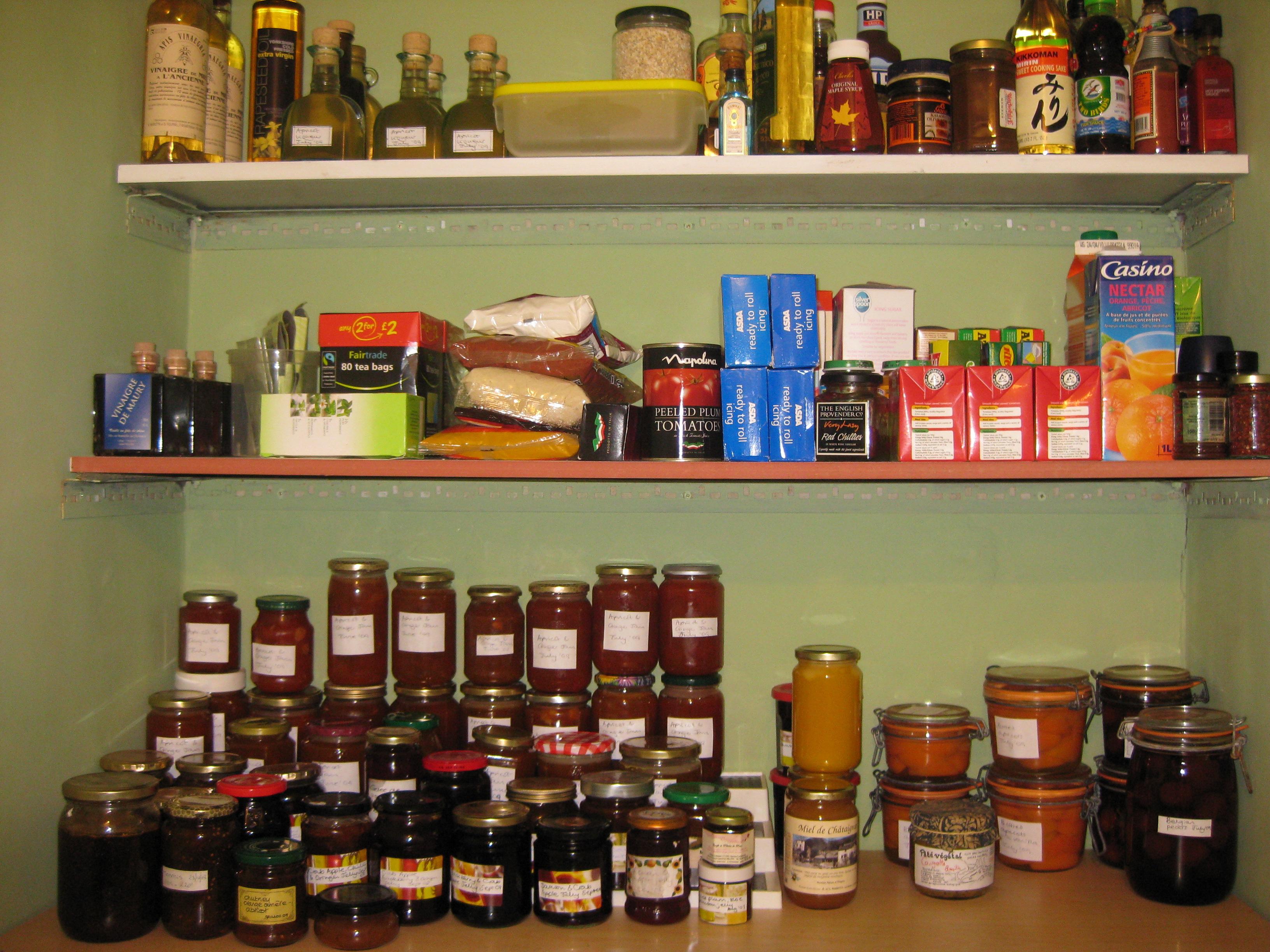
We still have 2 enormous ex-cold rooms just off the shop.  One of these is now a tool storage area, one a larder.  We haven’t parted yet with the big old scales which were part of everyday life in the shop.

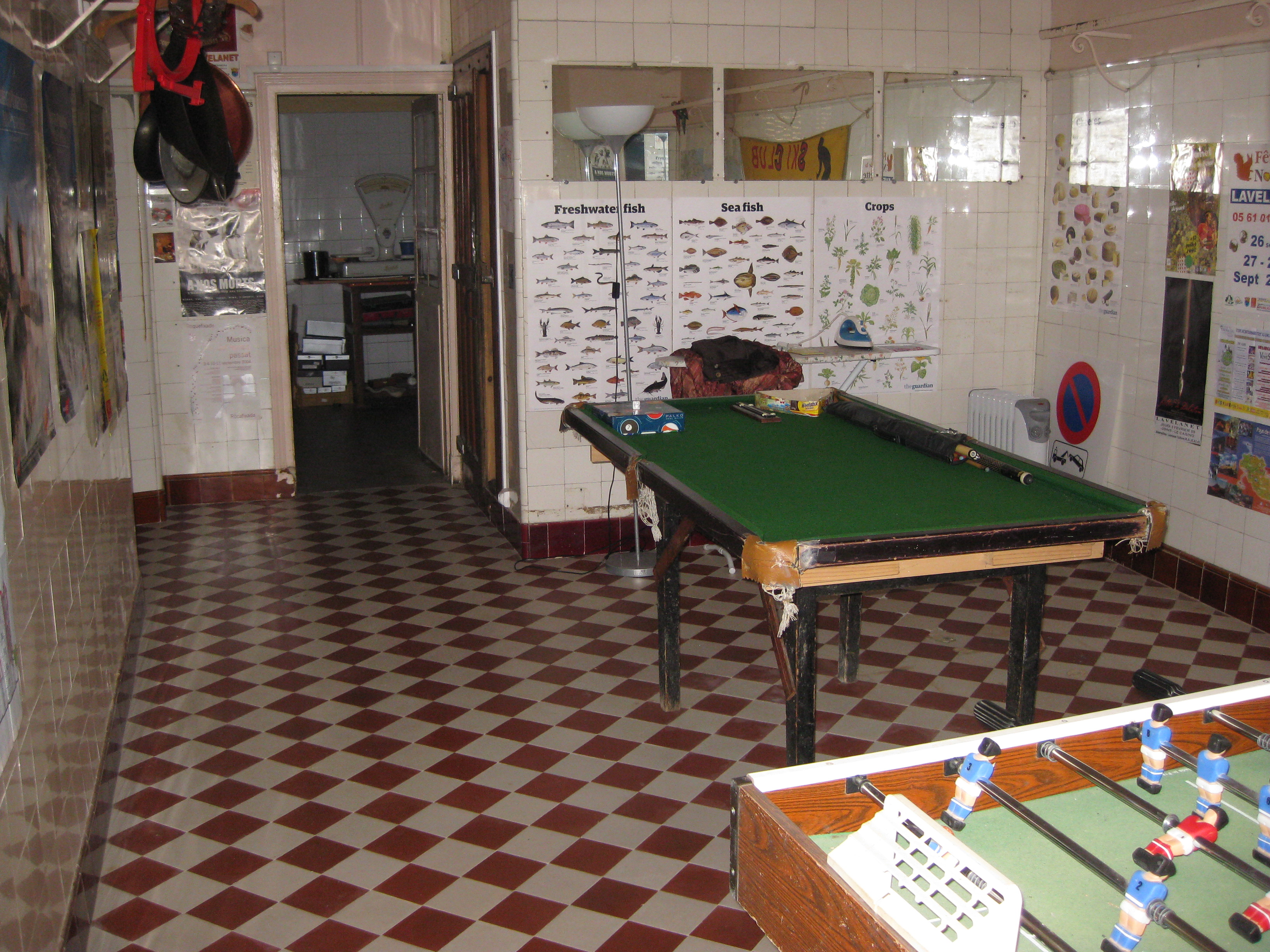
Then: butcher’s shop. Now: games room

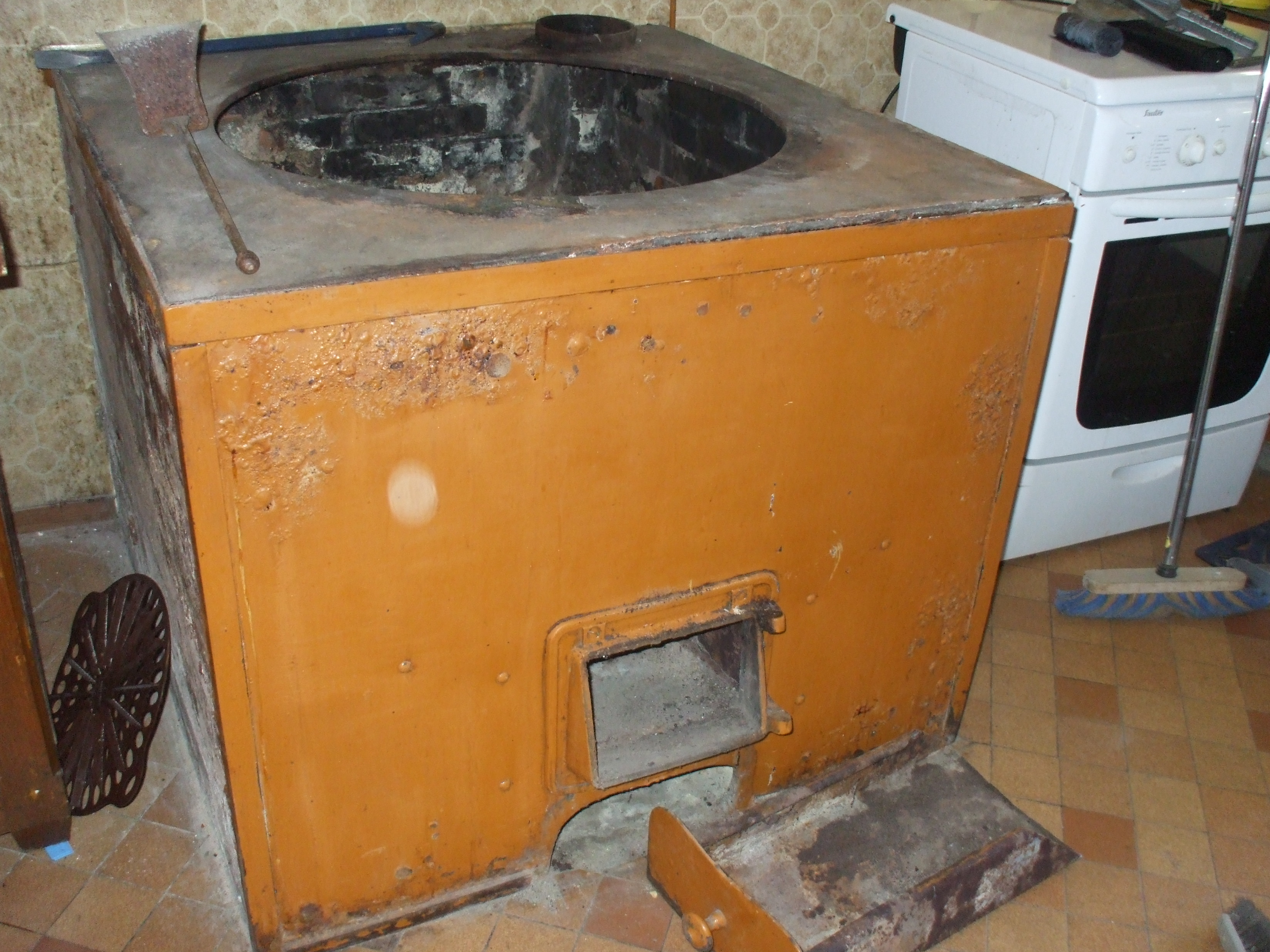
And then there’s the white-tiled shop, now a games room. The Vergés,in common with most shopkeepers, provided a few hard chairs for the comfort of those waiting or gossiping in the shop.  Mr. Vergé was convivial, a lady’s man who enjoyed chatting to his female customers.  Madame Vergé was busy in her little booth (remember those?) accepting payments and keeping the books.  Her responsibilities didn’t end there.  In the immense boiler in the kitchen, she made and canned patés of pork, duck and goose liver, rabbit, game; cassoulets; jarret de porc,  for sale in the shop, day after day after day.  We still have boxes of unused labels lurking in boxes in the workshop.

Mme. Vergé’s big old meat boiler: now defunct

Besides all this, they found time to look after the garden, 2 minutes walk from our house.  Just as they did, I grow vegetables: like them, I use the cherries, plums, apricots, figs, grapes from the trees there.  Unlike them, I can take my time to enjoy digging, planting, harvesting, bottling, preserving, cooking.  Frankly, I’m playing at it.  For them, the hard work of looking after a plot so much larger than a couple of allotments was something that had to be fitted in after they’d slaved away at the butchery business.  And they had a family….

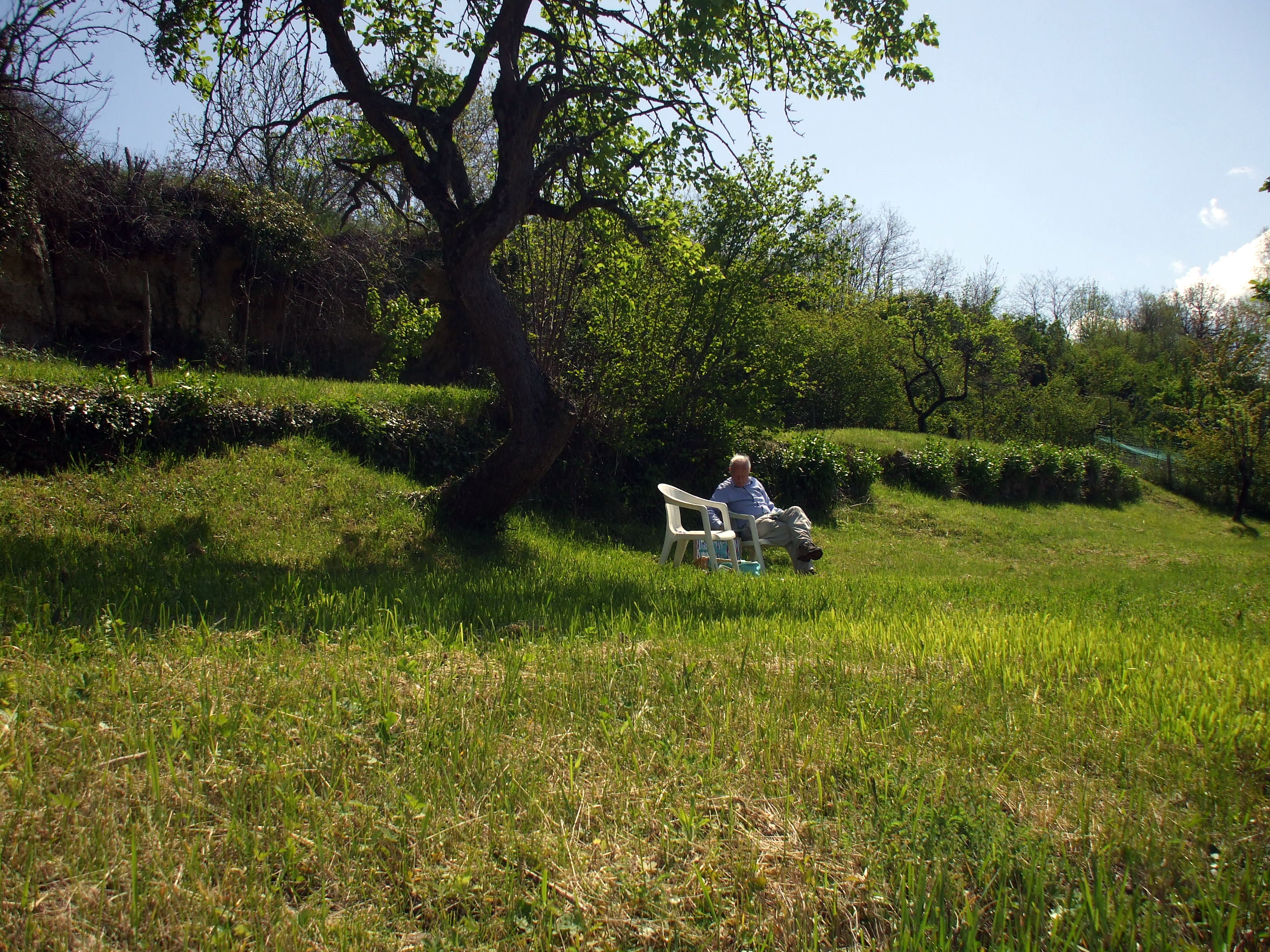
Not working hard in the garden today……

An Update: the Good and the Bad

The good and the bad.  Good news first.  The birds have discovered there’s more to be had here than yesterday’s bread.  At bird mealtimes, which are not quite the same as ours, though much more frequent, they’re here vying over the nuts, the seeds, the fat, the mealworms, though still the stale soaked bread is best of all.  It must be the fat I mix in with it.

There’s an addition they’ve not yet come to terms with.  Henri arrived the other day with a large bag filled with sheets of suety fat that he’d cadged from his butcher.   Slabs like these hang in his garden, and the birds have pecked away at them so much that they look like fine and delicate antique lace tablecloths swaying gently in the breeze.  Our birds are still sticking to what they know.  Though one or two have been eying up the new additions

The marmalade?  Well, last Friday I was in Lavelanet market with a big shopping bag so I could clear the stock of Seville oranges from the one trader who’d had then the week before.  ‘Oh, those’, he said.  ‘I couldn’t sell them, so I’m not getting any more’.  I’ve pleaded with him to bring me some, but I’m not too hopeful.  All I have is the little cache of marmalade we made last week.  Now that IS bad news.

PS.  More bad news.  I left my camera in England, so the only shots I can use here are those that friends let me use, my own recycled from last year, or royalty free photos on the net

Marmalade

This afternoon, my friend Léonce and I made marmalade.

When Malcolm and I were in England over Christmas and New Year, battling with the Infamous Snow, one of the big questions was – ‘Will we be able to get Seville oranges before we have to leave?’, because the French don’t usually sell them.

Well, I DID manage to buy them in the UK, and now we’re back……..they were in Lavelanet market last week at 2.50 euros a kilo. What are Seville oranges doing on Lavelanet market?  I’d love to know.  The French, when they make marmalade at all, tend to use ordinary oranges, and they don’t seem to have any particular tradition of using this wonderfully bitter fruit.

But my oranges travelled from Spain to Harrogate in England, and then all the way back to southern France where yesterday, we transformed them into bright jewelled pots of marmalade.

‘So’, said Léonce as she diligently chopped orange skin after orange skin into long strips, ‘we’re not going to soak the peel?  We’re using it as it is?’  Her only experiences with this fruit have involved long soakings and several changes of water to eliminate nearly all the bitterness.

Smelling the strong citrussy odours as the marmalade cooked convinced her.  She’s getting a different idea about the English and their cooking now. We sat down afterwards for a Nice Cup of Tea and a buttered slice of malt loaf (Soreen’s of course.  Why make the stuff when theirs is so good?) and she remembered how much she’s enjoyed making – and eating  – all our traditional English Christmas baking.

Our walking group’s come to look forward to some good old British baking treats too: gingernuts, melting moments, drenched lemon cake, flapjacks (although perhaps flapjacks aren’t British at all?  But we HAVE adopted them, and the French don’t have them).  And they all say, slightly surprised  ‘So you British CAN cook.  These are great!  Can I have the recipe?’

If you go down to the woods today……

Deep in the forest, somewhere near here, vanloads of dastardly Italians are despoiling the woodland floor of every single mushroom.  Some hours later, they’ve driven back across the border to sell their countless kilos of plunder on some Italian market stall.

This tale is a variation of the Great Doryphore Scandal.  Elsewhere in France, doryphores are Colorado beetles.  Here in the Ariège, Doryphores are Toulousains, who used to leave the city at dead of night to strip our fields and woodlands of anything edible, returning home before dawn to stock their own larders – or their market places.

It was our friend and near neighbour M. Baby who told me the tale of those Italians.  We have a great deal of affection and respect for M. and Mme Baby: they’re an elderly couple, very old school, and we’ll never be other than ‘Monsieur’ and ‘Madame’ to them, but they’ve always been very kind to us. Yesterday he reminisced about the secret field where, every year, he used to pick quantities of ceps.  He shook his head regretfully. ‘But I’m too old now.  I can’t get there any more’.  Was he going to tell me, his good neighbour, where to find them?  Not a chance.  His secret will go with him to his grave.

It’s all part of the great Mushroom Mystique here in France.  At this time of year, mushrooms are a hot topic.  The weather’s too dry, too wet, too hot, too cold…. It’s a poor year.  But someone’s always found some somewhere.  And they won’t tell you where. ’Ooh, over near Campredon somewhere’ is as good as it gets.

Notices appear in the papers forbidding the collection of more than 2 kilos on any one day (2 kilos?  I’d be glad of a small basketful).  Landowners have permanent notices forbidding the gathering of mushrooms on their land.

Until now, we’ve had to be content with collecting a few field mushrooms from a rough field just outside Laroque.  Yesterday morning though, Henri arrived.  ‘Get Malcolm.  He’s got to come now.  We’re going mushrooming.’  Malcolm was painting the study – he’d just got stuck in really.  But invitations like this don’t come twice, so he changed into boots and trousers that were even grottier than those he wears for painting, and off they went, baskets and mushroom knives in hand. 

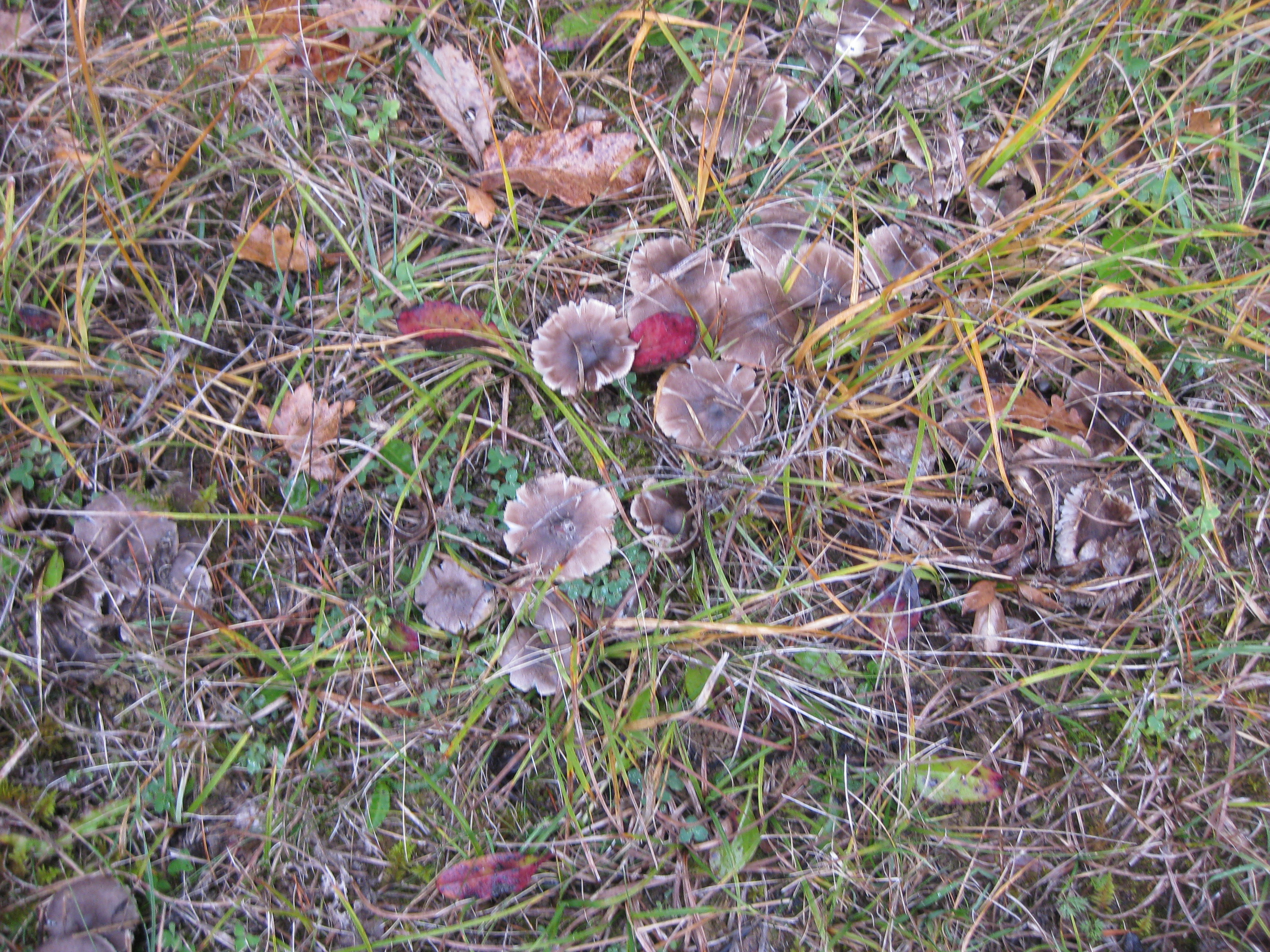
Waiting to be gathered....

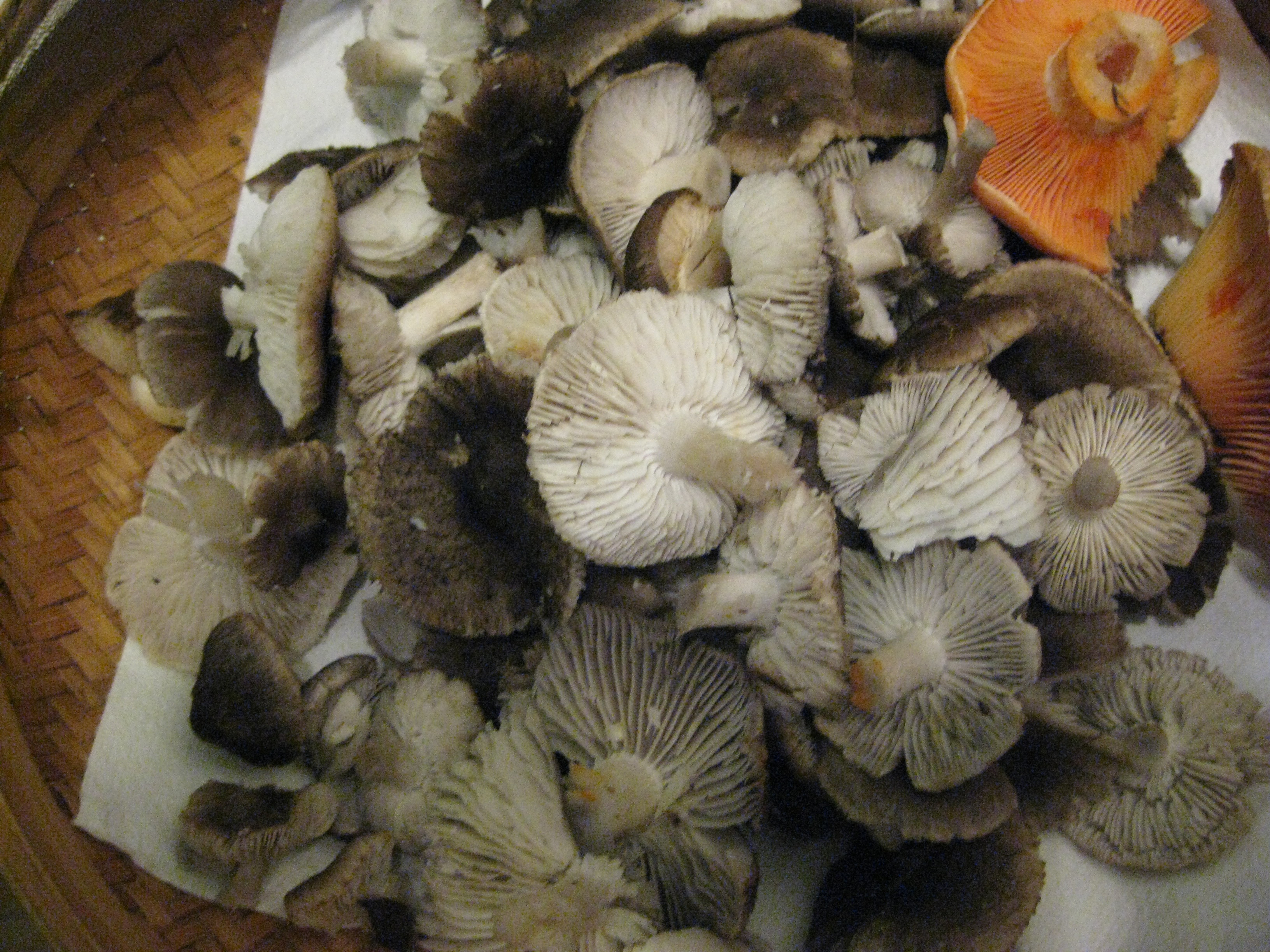
They returned, nearly 2 hours later, with a large bag of delicate ‘gris’, so fragile that they crumbled delicately as I excitedly unpacked them.  So many!  Thank goodness I remembered  Kalba’s posting on her wonderful blog  Slow Living in the French Pyrénées .  She’d had a mushroom glut too, and wrote about duxelle, made by cooking down slowly a mixture of chopped mushrooms, shallots and herbs until there’s a small amount of a sort of paste that is quite simply, essence of mushroom.  Slow cooking, but worth it.

Waiting for the pot.....

And Henri was prepared to share with Malcolm where he’d found those mushrooms?  We MUST have arrived.

Christmas Cooking

I’m not a big fan of Christmas, but ever since I was a very small girl, I’ve loved cooking for Christmas – cakes, puddings and mincemeat: those things that have to be done well ahead, and squirreled away in some cool dark spot to mature and develop complex sweet rich flavours.

First there’s the shopping and preparation.  All the vine fruits in their cellophane packages; bright crystallised cherries; whole candied peel with crunchy sugary crusts; packets of ivory coloured almonds, and smaller quantities of other fruits to add interest – warming crystallised ginger, emerald green angelica, pale rounds of candied pineapple.  Spices too – whole nutmegs and cloves, powdered cinnamon, allspice, mace and mixed spice.  Fresh butter, lemons, eggs and flour. Make sure that there’s enough dark and light muscovado sugar in the house. Line the cake tins and grease the pudding basins.  Hunt out clean jars for mincemeat.

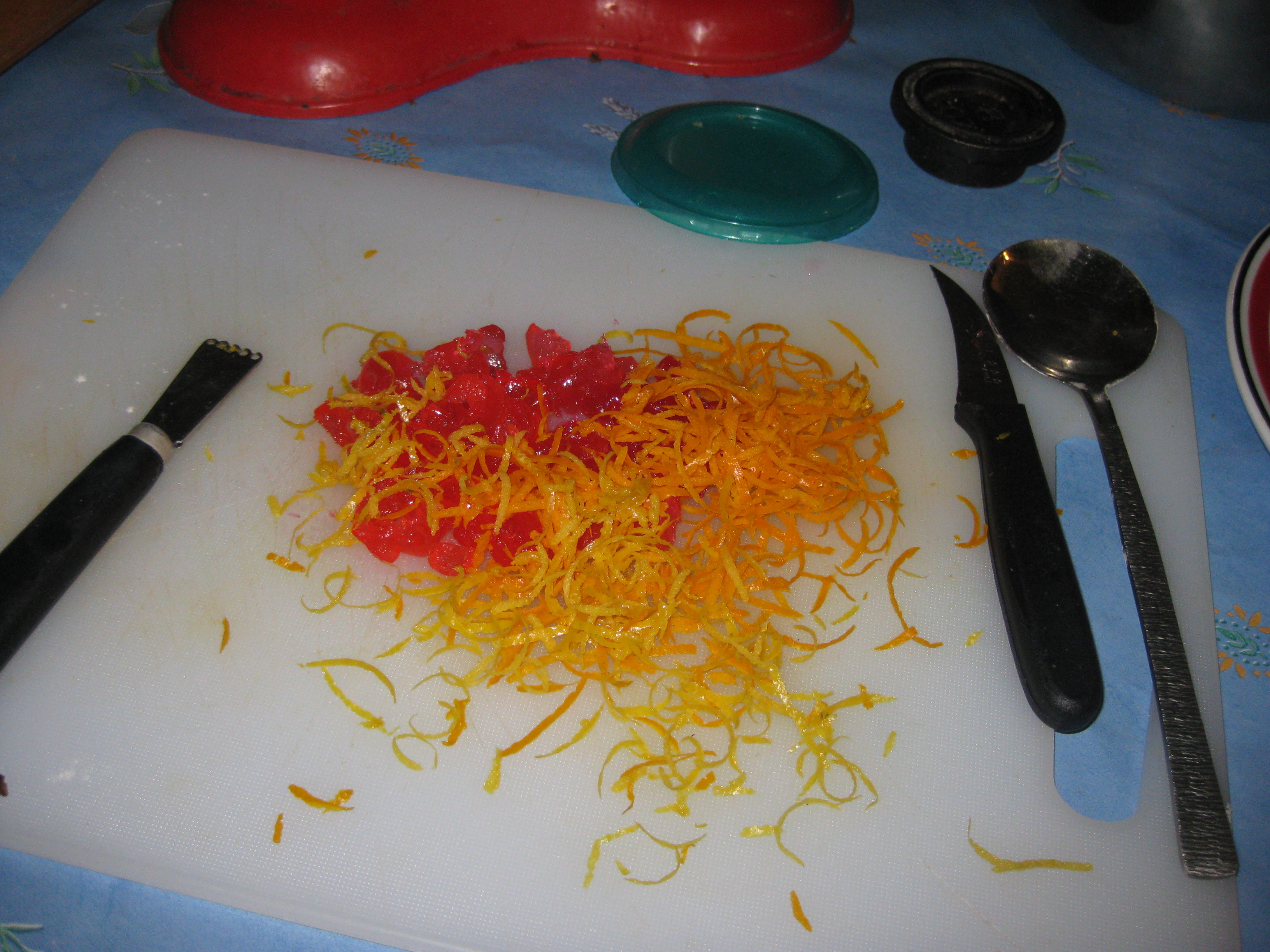
Cherries, lemon and orange zest ready for action

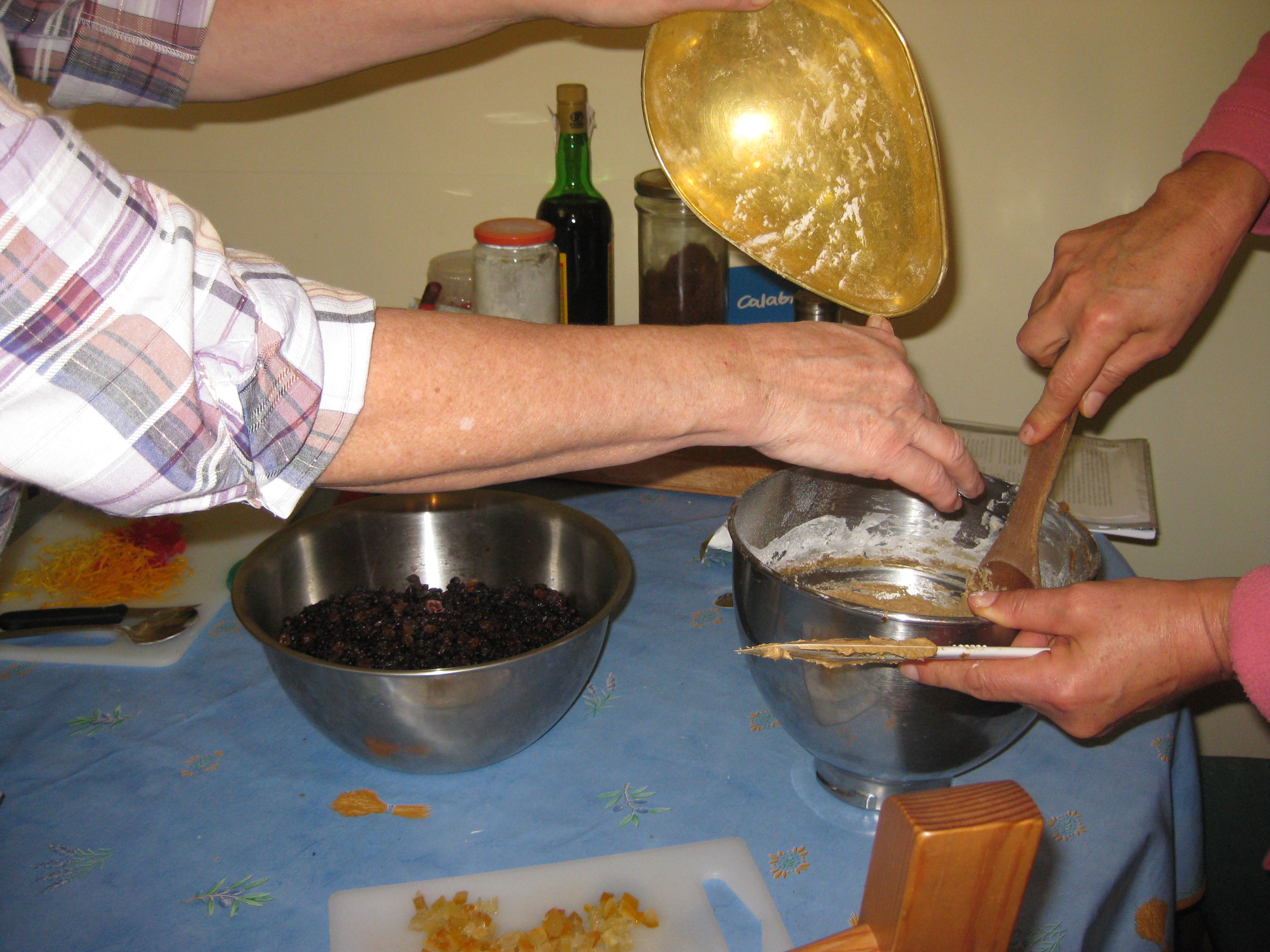
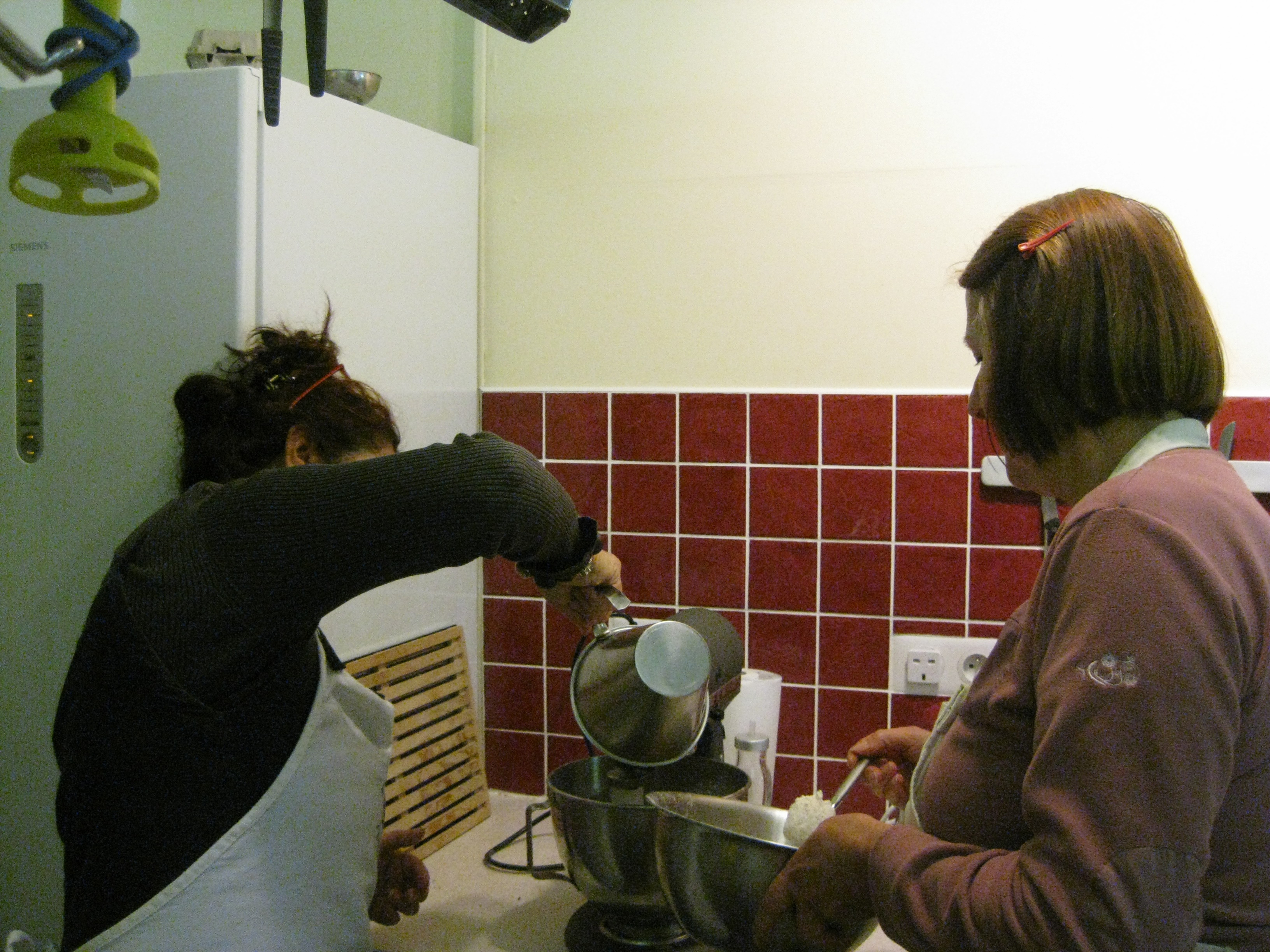
This year, I’ve rediscovered the pleasure in all this Christmas cooking by seeing it through the eyes of those French friends who’ve come and shared the job of making all these Christmas treats.

Sitting round the kitchen table with our pinnies on, we discussed the less familiar ingredients.  Suet, muscovado sugar, treacle aren’t unknown here, but they’re not on every kitchen shelf.  Cakes and puddings that need to be made well ahead, and fed with spoonsful of brandy in the weeks before Christmas – now that’s very different.  I made my friends weigh everything out in pounds and ounces too – well, it’s what I do, and here are the pictures of how we all got on.

Many hands make light work?
Brigitte and Léonce busily mixing
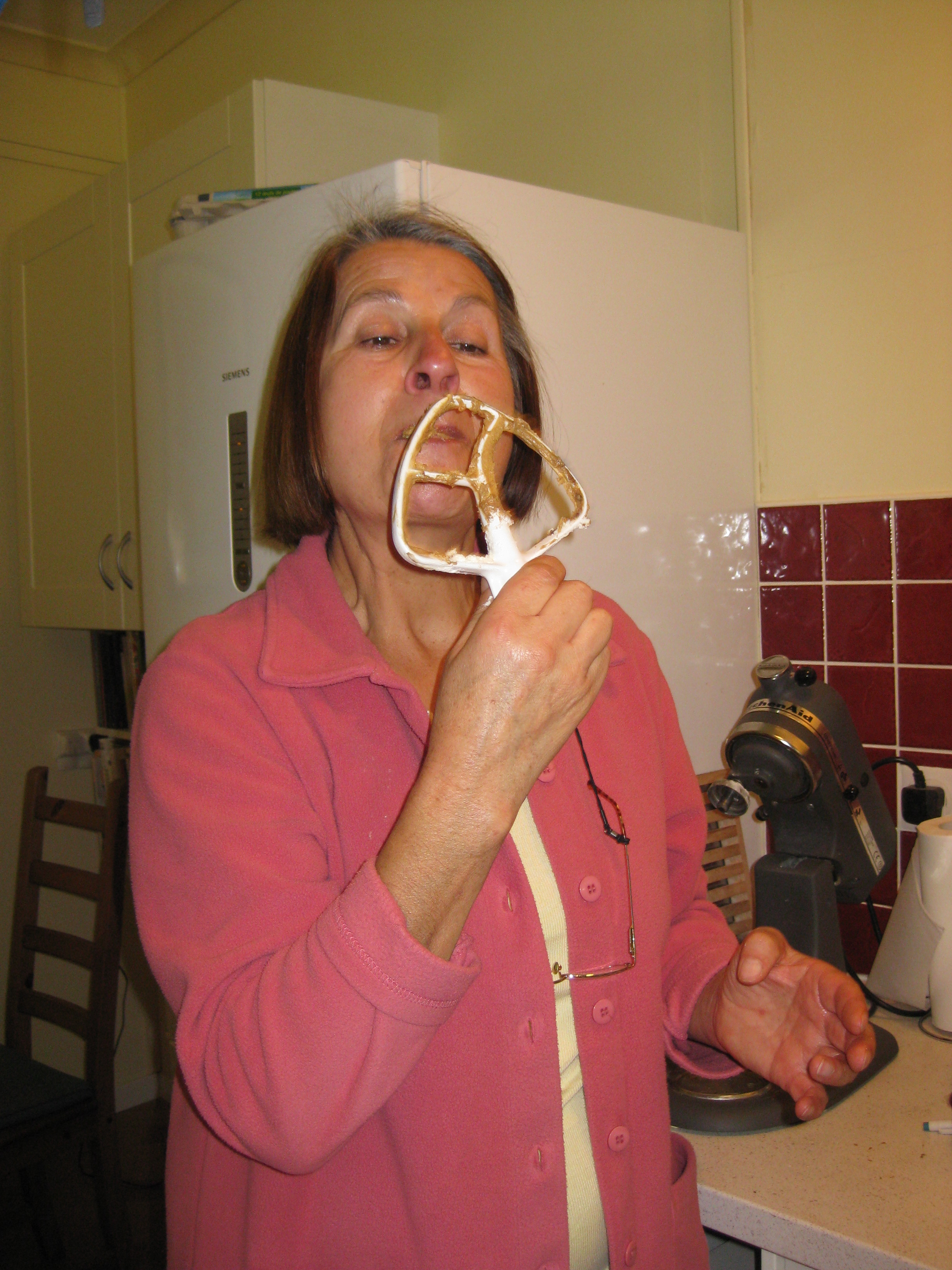
Léonce enjoys the best bit

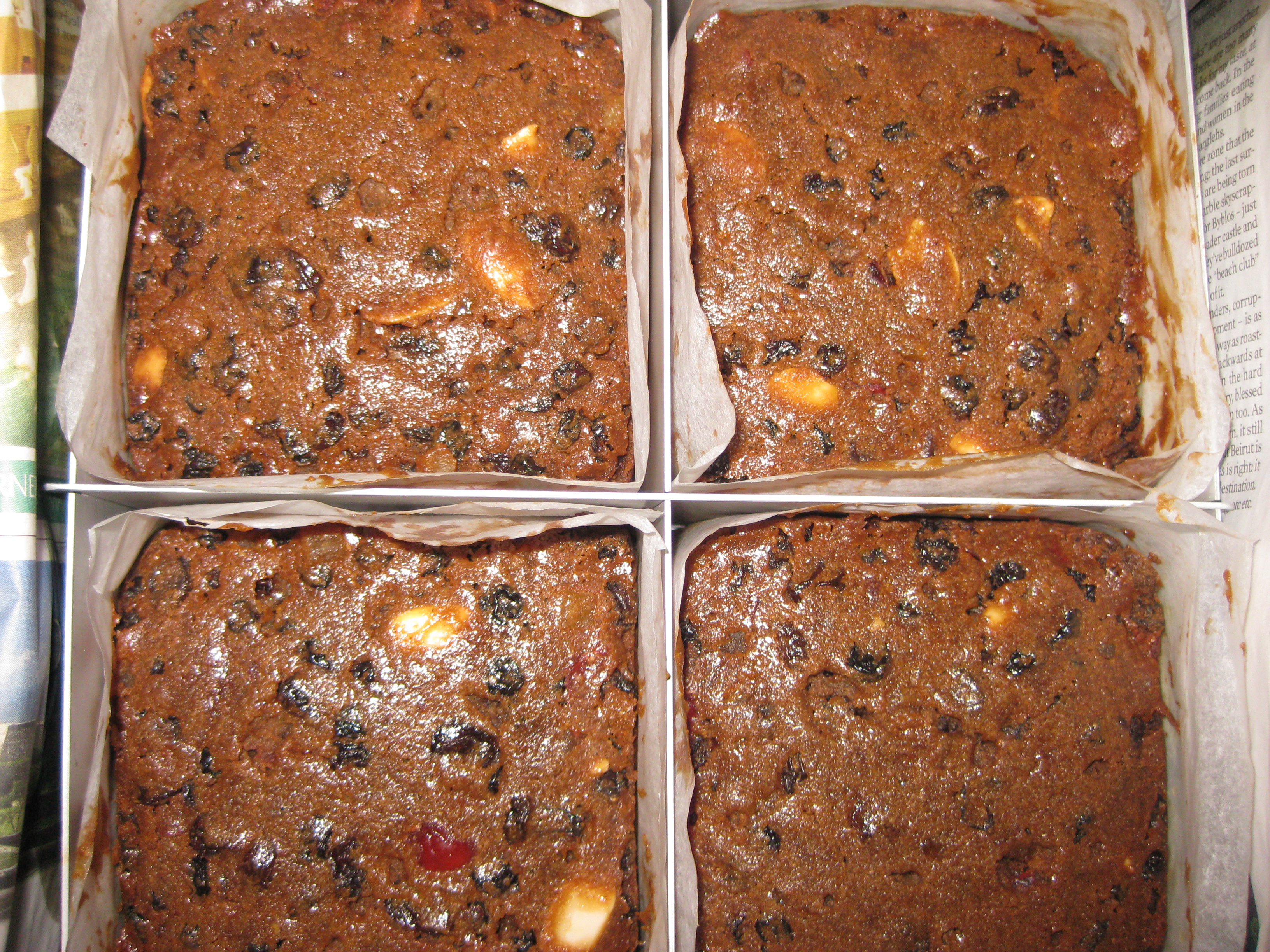
Sadly, they weren’t any longer in the house when the cakes, cooking at low temperatures over several hours, started to give off their warming Christmassy aromas.  Which is a pity, because it’s the best bit of all.

Baked and ready to be fed with spoonsful of brandy before Christmas

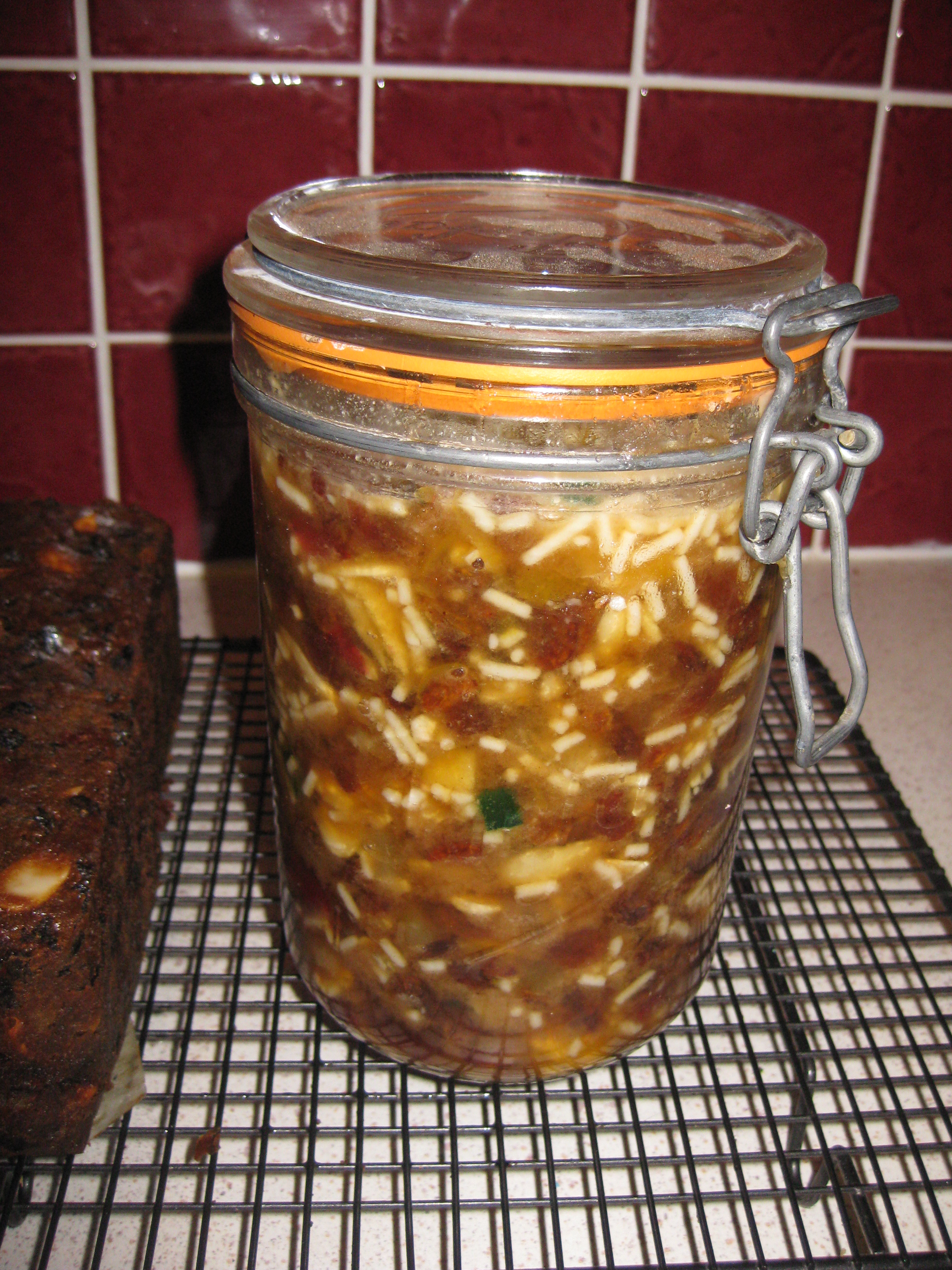
This is one of the mincemeats we made.  It’s one my mother taught me, and our favourite, with its bright lemon flavour.

Lemon mincemeat

Ingredients

6 large lemons

450g (1 lb.) sultanas

¼ pint brandy

225 g (8 oz.) mixed crystallised fruits – I always use crystallised lemons and oranges, perhaps limes too (all bought in large pieces and hand cut), and often cherries, ginger, pineapple, angelica – but it’s up to you.

75 g (2oz.)  blanched almonds

800g (1 ½ lb.) golden caster sugar

225g (8oz.)  suet

½ level tsp. each ground mace, cloves, nutmeg

Method

Peel the lemons extremely thinly, so that you have the zest, rather than the pith.

Place the lemon peels in pan & cover with cold water, bring to boil.

Drain, re-cover with cold water, & repeat twice more.

Halve & squeeze juice from lemons.

Reserve juice.

Chop blanched lemon peel finely, and mix with the other finely chopped fruits.

Mix with sugar, suet, brandy.

And mince pies in our house always go down best when they’re made with the recipe my sister-in-law Fenella shared with me.

Pastry for mince pies

Ingredients

230 g (8 oz.) plain flour

40 g (1 ½ oz.) ground almonds

85 g. (3 oz.) icing sugar

170 g. (6 oz.) butter

1 medium egg yolk (you might need 2).

Method

Sift the flour, almonds and icing sugar into a warmed bowl, and rub in the butter.  Stir in the egg yolk and work gently to form a soft dough.  Knead lightly, cover and chill for 30 minutes.

You’ll need 230 – 340 g (8 – 12 oz.)  mincemeat to make this pastry into about 12 tarts.  Bake at Gas mark 4, 180 degrees C. for 15 – 20 minutes