Transhumance in the Haut Salat

Transhumance.  It’s that time of year where here near the Pyrénées, the cattle and sheep are moved from their winter quarters down on their lowland(ish) farms up to the lush summer pastures in the mountains.  They’ll stay there till Autumn, and then be brought down again.  And each time, it’s the excuse for a party.

On Saturday, we joined in, and went over to Seix to meet friends who live there.  The Transhumance celebrations in Haut Salat last three days, but we made do with Saturday morning.  We nearly arrived late – very late – because we found ourselves behind a herd of cattle making their steady way along the road.  Overtaking’s not an option: the cows commandeered this route hundreds of years ago.  But we managed to zip down a side road and make a detour.  A whole hour later, after coffee with our friends, the herd reached the edge of Seix and passed their door….

…and finished their long walk into town.  We went too, and arrived just as the last flocks of sheep were arriving, to be corralled like the cattle, at the edge of the town square.  For a while, and probably much to their relief, they were no longer centre stage.

Instead it was jollity of the traditional kind. There were processions of large solemn plaster effigies, local bands.  Dancers from Gascony, the Basque country, the Landes made sure we all had fun, and Malcolm and I even joined in some Basque dancing.  Stars of the show for us were the shepherds from the Landes.  Theirs is flat, marshy country, and they used to keep their eyes on their roving flocks by ranging round on stilts.  But this was a day for dancing, and that’s just what they did, up high on those stilts.  Have a look at the photos.

We went off for lunch at the end of the morning.  But there was more celebrating, more meals to be shared, particularly by those farmers and country people who over the centuries have welcomed the fellowship of Transhumance as a break from the routines of an often lonely life.
This slideshow requires JavaScript.

The tale of the cherries and the peach

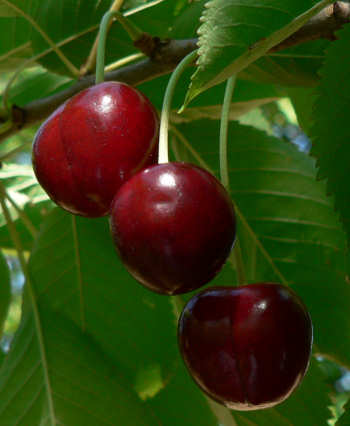
While we were in England in May, Léonce wrote and said the local cherry harvest had been and gone.  The fruit, thanks to the early heat wave, was wizened, dry, and had peaked far too early.  We wrung our hands in displeasure at having missed the offerings from the two mighty cherry trees in our garden, and tried to forget about it.

On Tuesday, when we got back to Laroque, I went to the garden.  And there were our trees, branches grazing the ground with the weight of their fruit.  I started to pick.  Five minutes later, it was raining.  Stair rods.  I scuttled home with some treasured cherries.

Wednesday morning dawned clear after a rainy night, and straight after breakfast we were up at the garden with buckets, eager to pick all that lovely fruit.  Almost every single cherry had turned mouldy overnight.  We managed to pick a few, half a bucketful.  But back at home, they didn’t stand up to close inspection and we had to discard almost all of them.  So that was that.

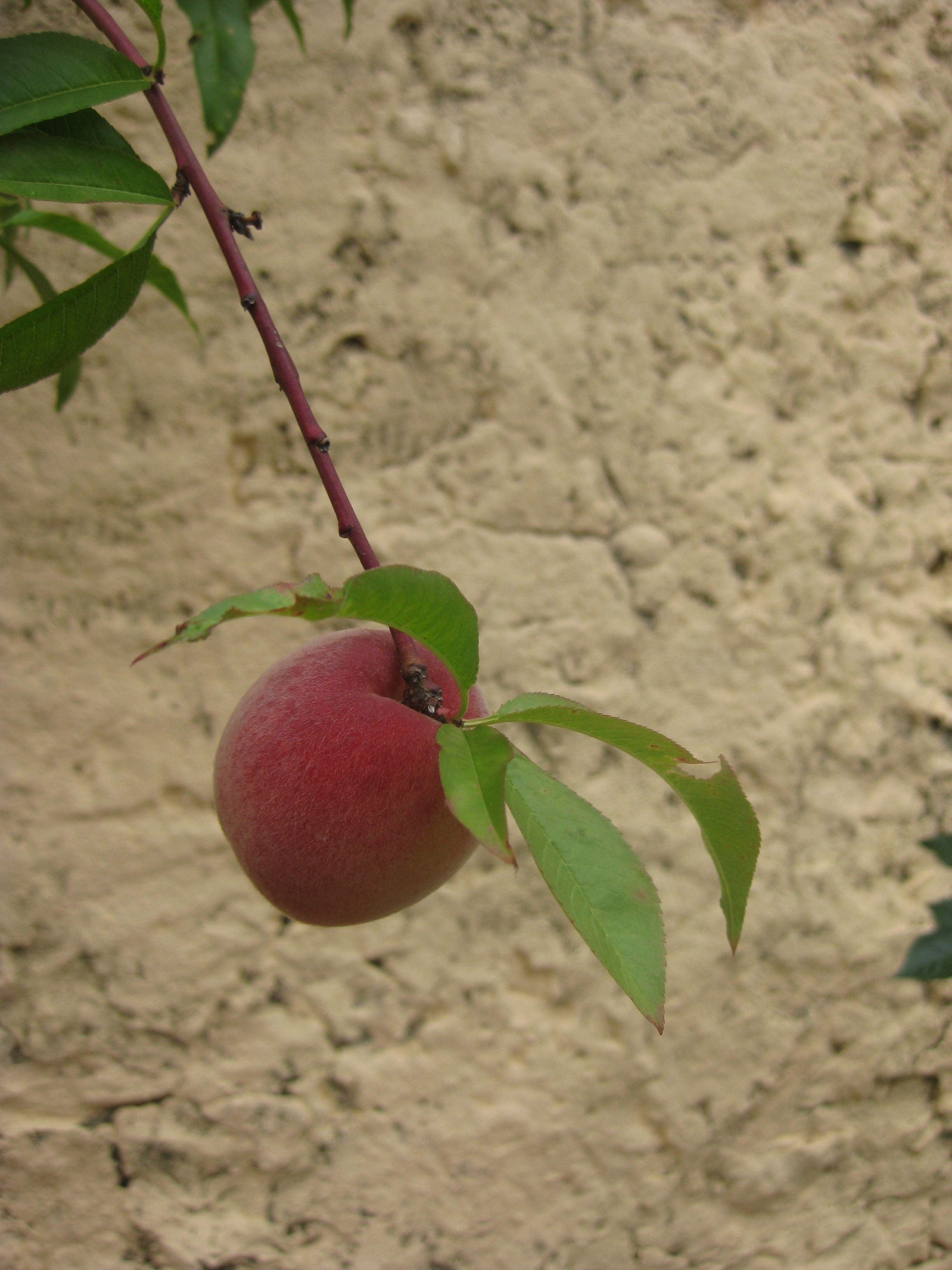
Now for the good news.  In early spring, we bought a peach tree.  We planted it. It prospered.  It flowered.  To give it the best start in life, so the tree would give its energy to putting down roots rather than nourishing its fruits, we removed every single blossom.  Or so we thought.

When we went out to see our little tree on our return, this is what we found.

We ought to pick it and throw it away I suppose, but we haven’t the heart.  Come and visit us in August, and you might get a bite of our very first home-grown peach

Three French Hens

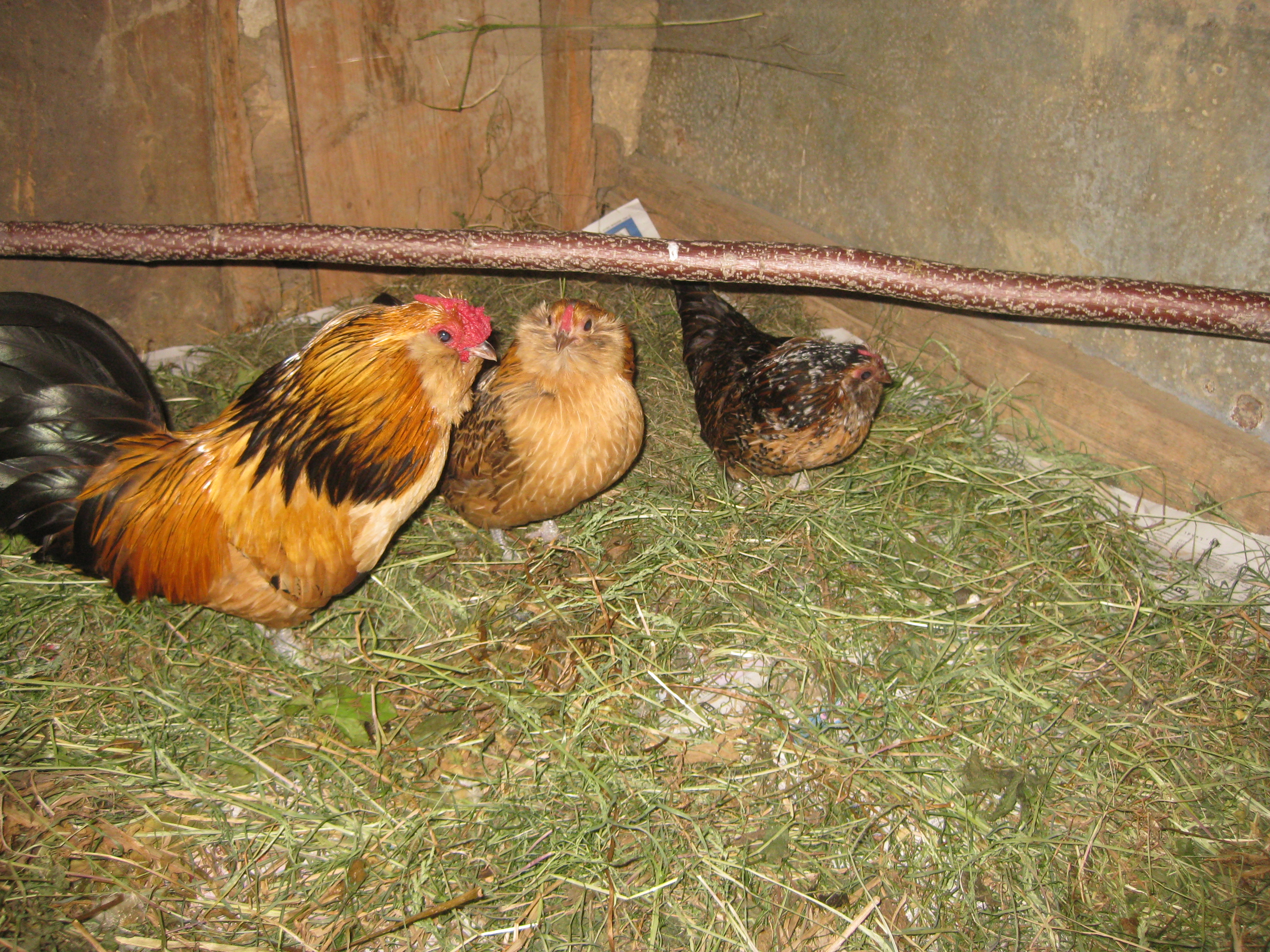
Léonce and I have long wanted hens.  But she’s beaten me to it.  A friend of Henri’s keeps quite a brood: lately, one of the cocks has been having a go at a quiet little trio – a cock and his two hens.  So Henri’s friend decided, sadly, that they’d be better off elsewhere.

We went for a tour of inspection last week.  Léonce was charmed by their pretty colours and diminutive stature and promised to buy.

She’s got the hen house finished off, and now….because of what’s happening over in the UK this week, she’s named the new additions to her family.  Let me introduce William, Kate…..and Queenie

A quick peek at Algeria

Last November, I joined L’Assocation Découverte Terres Lointaines, and wrote about it here.  This month, I’m really involved, up to the neck, because next week, at the library in Lavelenet, we’re taking over, and bringing Algeria to town. More later, then. But for now, have a look at some of our more relaxing moments during our preparations.

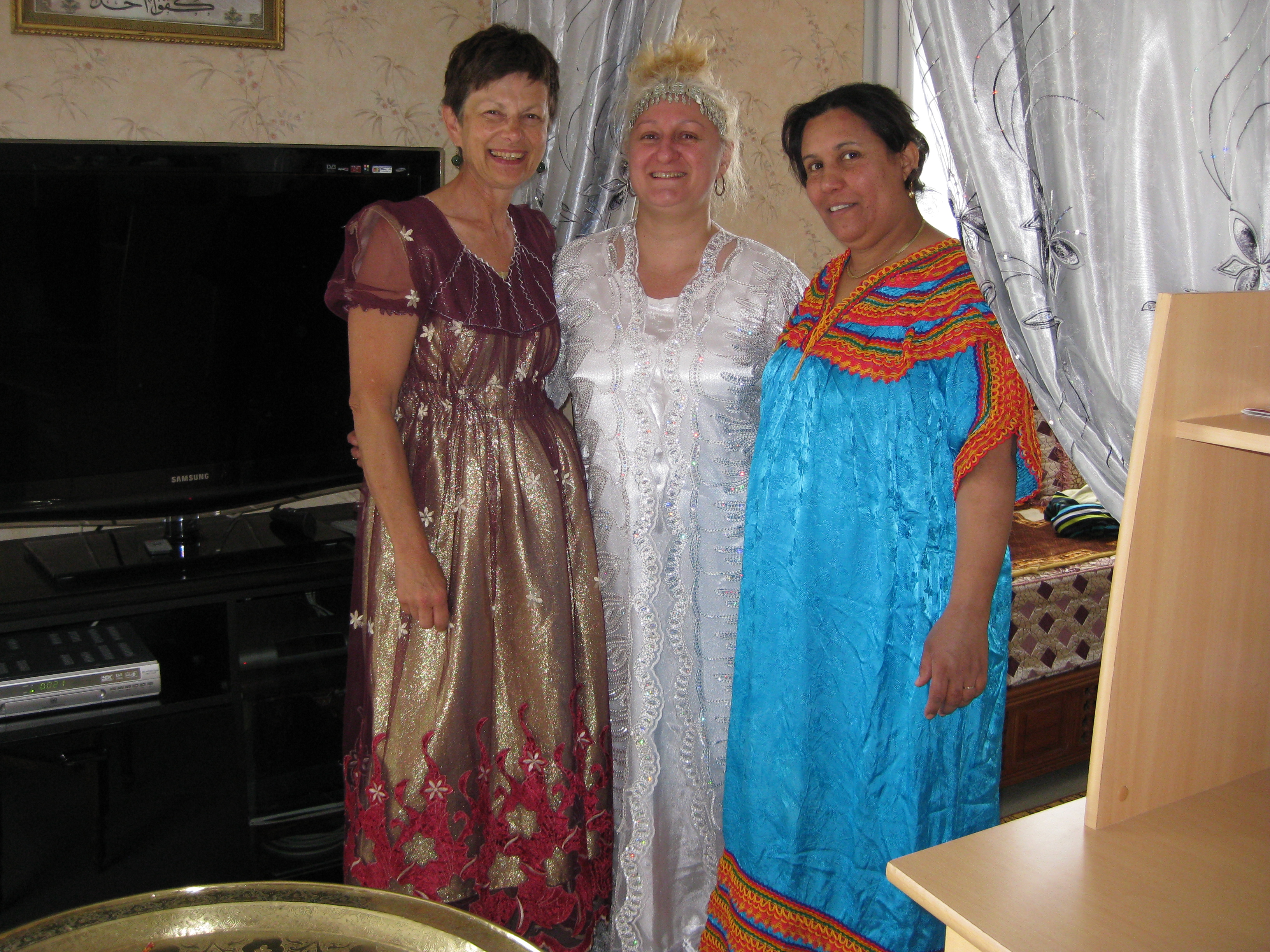
Were from England, Brazil, Algeria: but the clothes are all from Algeria

On Friday afternoon, Nadia invited us round and got out a tantalising bundle of her traditional Algerian clothes, many dating from the time of her wedding, for us to try on ahead of next week. Here’s what some of us eventually chose, after we’d struggled in and out of dresses each prettier than the last, elaborately embroidered, beaded and sequinned.  Just as well you can’t see us pirouetting around our workaday tee shirts and trousers discarded on the floor.

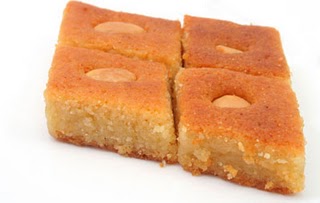
Before that, we’d been busy baking, selecting recipes to make for some of next week’s sessions.  Here’s my favourite, Basbousa.  Like most recipes from the area, quantities are expressed in volume rather than weight.

Basbousa

  • 2 cups fine semolina
  • 1 teaspoon baking powder
  • ½ teaspoon bicarbonate of soda
  • ½ cup unsalted butter
  • 1 cup sugar
  • 2 eggs
  • ½ cup water
  • about 20 blanched split almonds
  • 2 cups caster sugar
  • 1 cup water
  • Tablespoon of orange flower water or the juice of 1 lemon

Preheat the oven to 180°C, gas mark 4. Grease a rectangular cake tin, about 8” x 12”.

Sieve together the semolina, baking powder and bicarbonate of soda. Set aside.

Beat the butter and sugar together until creamy. Stir in the eggs with a little semolina to prevent curdling. Mix in ½ cup of water. Stir the sifted semolina in and beat until you have a smooth batter. Pour into the prepared cake tin. Score diagonal lines across the top of the cake creating diamond shapes. Place an almond in each diamond. Bake for about 30 minutes or until the cake is firm and golden.

Meanwhile place the caster sugar in a small saucepan with 1 cup of water. Heat gently until the sugar has dissolved then add the orange flower water or juice of the lemon and bring to the boil. Boil for about 10 minutes or until syrupy.

When the cake is removed from the oven, gently spoon the syrup over it. You may not need all the syrup: stop spooning when the cake has absorbed all it can. Allow to cool in the tin before turning out and serving sliced into diamonds.

When I tested the recipe at home, I had no orange flower water, so used lemon juice.  Nadia said it wasn’t traditional…..but she liked it anyway.  It’s sweet, simple, and keeps well.  Worth having in the cake tin.

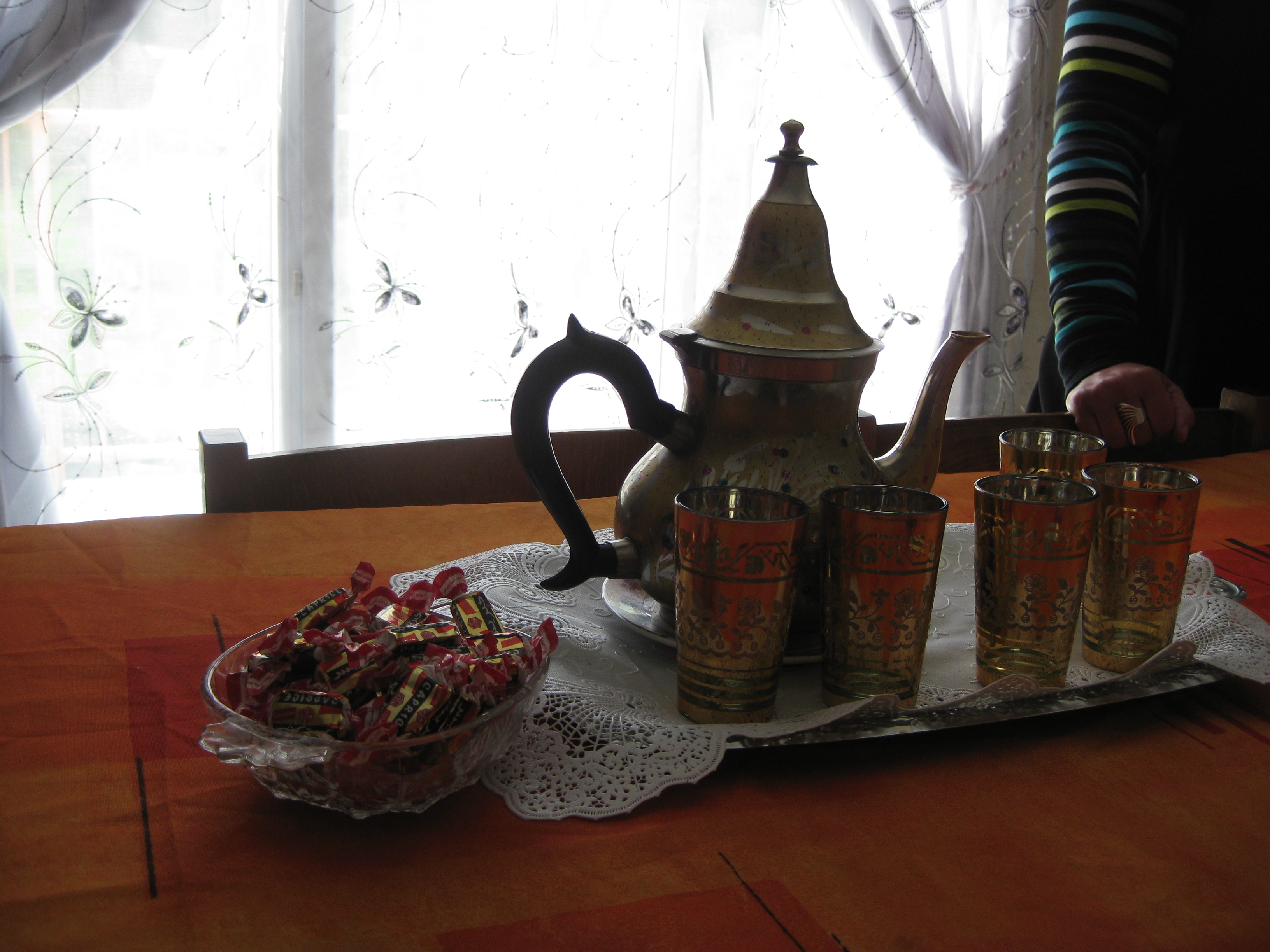
Nadia serves mint tea the traditional way, from this elegant pot in small decorated glasses

Food for free

In the UK, Richard Mabey’s the original, and still the best known proponent of foraging for good things to eat in the countryside.  Here in our patch of France, it’s Stéphane Martineau, and we spent yesterday afternoon with him, strolling down the lanes near Roquefort les Cascades, nibbling at petals, leaves and roots.

It was a free afternoon organised by Alptis, who provide us with the health insurance we need to complement the state-provided health service, and we enrolled as soon as the invitation came through the post.

Stéphane encouraged us to look carefully at each plant, at how it’s structured, what it feels like, what the crushed leaves smell like.  That afternoon, we found leaves that reminded us of mushroom, garlic, mint, cloves….

We began to understand how welcome the new spring growth must have been to villagers over the centuries.  After months and months of bland beans and turnips, the tasty bitterness of black bindweed, eaten raw or lightly cooked like asparagus must have been a real treat.  Its other name is l’asperge aux femmes battues – battered wives’ asparagus, because it’s also good at relieving bruising and swelling.

At this time of year, before many of the plants have flowered, and growth is young and fresh, there are so many tasty additions to the salad bowl.  Garlic mustard has both leaves and flowers to offer.  Hedge woundwort has nettle like leaves and a slight mushroomy odour.  Primula gives a pleasantly bitter taste so use it sparingly, and creeping Charlie  makes a lively addition to a salad, or an unusual addition to soup or lasagne.

Nettles are of course the kings of country flowers, packed with vitamins, minerals and even proteins.  They can be eaten raw (with a thick and tasty dressing) lightly cooked, or included in sauces and stews and baking.  Fermented, they make an all-round fertiliser, and gardeners dig them into the ground too, to enrich the soil.

We found plants to cure warts, substitutes for aspirin and for the cloves that we’re supposed to tuck next to a throbbing tooth.  We even learnt that horsetail, just as it first thrusts above the ground, makes a good mineral-tasting asparagus substitute. Failing that, once it’s matured, a big bunch tied together is a good pan scourer.

Just one plant was completely new to me: purple toothwort.  It’s a mauve parasitic plant, looking rather like a small clutch of rhodedendrons in bud, and modestly hidden under grasses at the foot of trees.

I’ve got pages of notes about plants I plan to look out for and try: using only a few specimens from each patch, of course, and just taking  a few of the very youngest leaves, as instructed.
Just before we all headed off home, we shared a foraged snack which Stéphane had prepared earlier.  Nettle blinis, Douglas fir cordial, various jams and jellies.  Good stuff, this food for free.

This slideshow requires JavaScript.

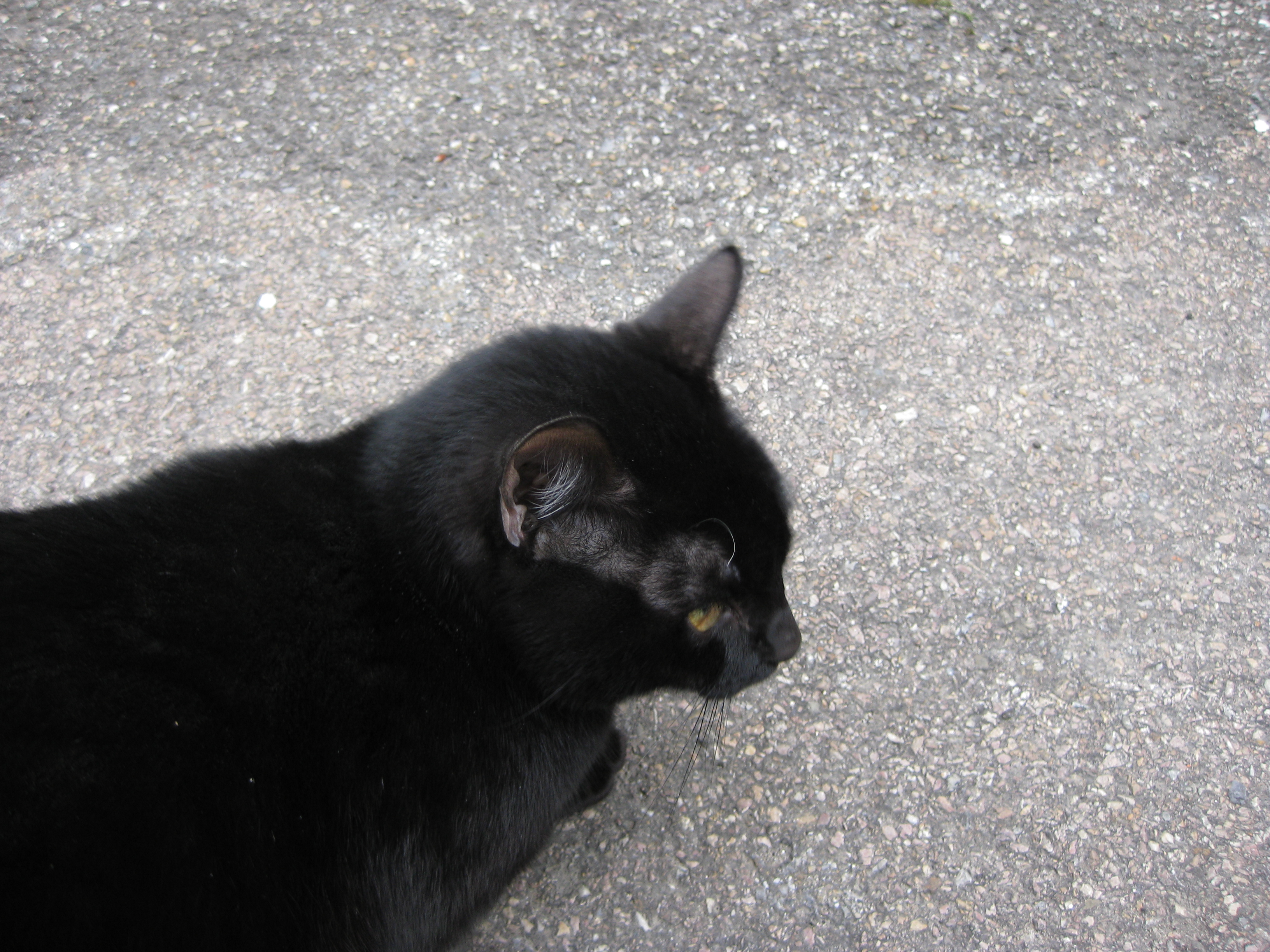
Young, handsome male cat WLTM genuine loving family for possible long term relationship

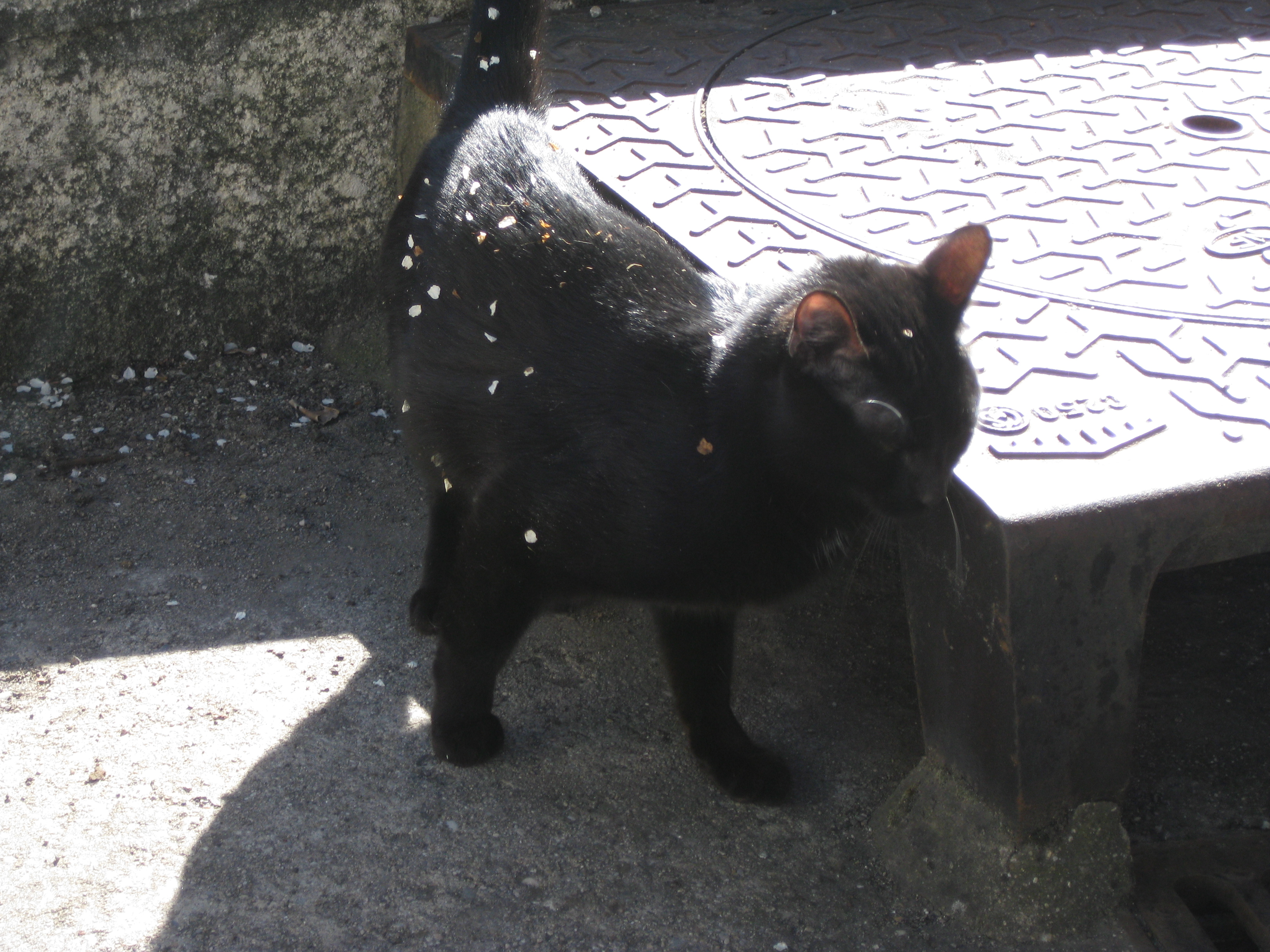
It was about 10 days  ago.  When I left the house bright and early for the bread, there he was.  A slim, handsome, very black cat.  I came back.  He was still there, cowering under a drain cover whenever anybody passed.

He soon became the talk of the street, because as the hours and then the days passed, there he still was, nervous and uncertain, hungry too.  The drain cover had become his home. He seemed to crave human company, and to fear it too.  Gradually the story emerged.  Some new people on the street had turned him out.  They didn’t want him back.

We’re away too much to take him in ourselves, though his good looks and charming character made him a tempting proposition.  I advertised him instead on the local English-speaking internet  network.…and got a reply, from a couple we slightly know who were still in Britain and not back in the area till next week.  And because they know they need to go back to the UK in the autumn, if they took him, they would need his rabies jab done now, so he could have his pet passport in time.

Their neighbours rallied round.   Today they came and collected him.  They’ll take him to the vet and foster him for a week.  I’m miffed to report that having been so nervy and reluctant with me all these days, he went straight to them, straight to their cat basket, and uncomplainingly into their car.  The day we tried to foster him till his new owners returned to France, he struggled straight out of the house and over the garden fence.

His new name is, it seems, Rocquie.  He’s from Laroque you see.

This evening, when I popped out for something, there was another unknown black cat, a female this time, sitting eating the food that friendly neighbours have been leaving for ‘our’ cat.  What next I wonder?

The cat's home by the drain

Spring has sprung

All over Europe it seems, people are shedding their woolly pullies and revelling in the  balmy air, as plants unfurl new leaves and flowers, and animals mate and give birth.

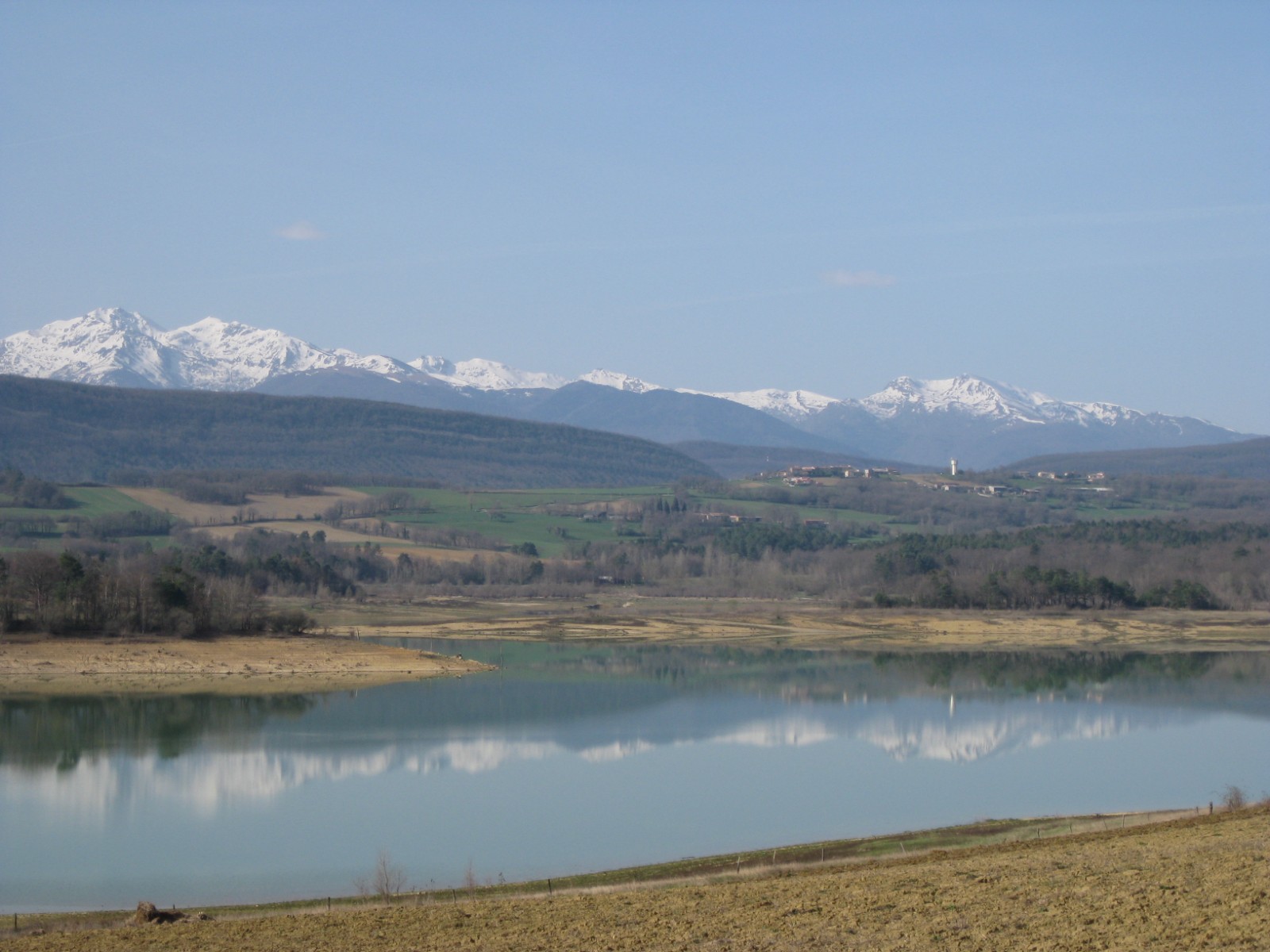
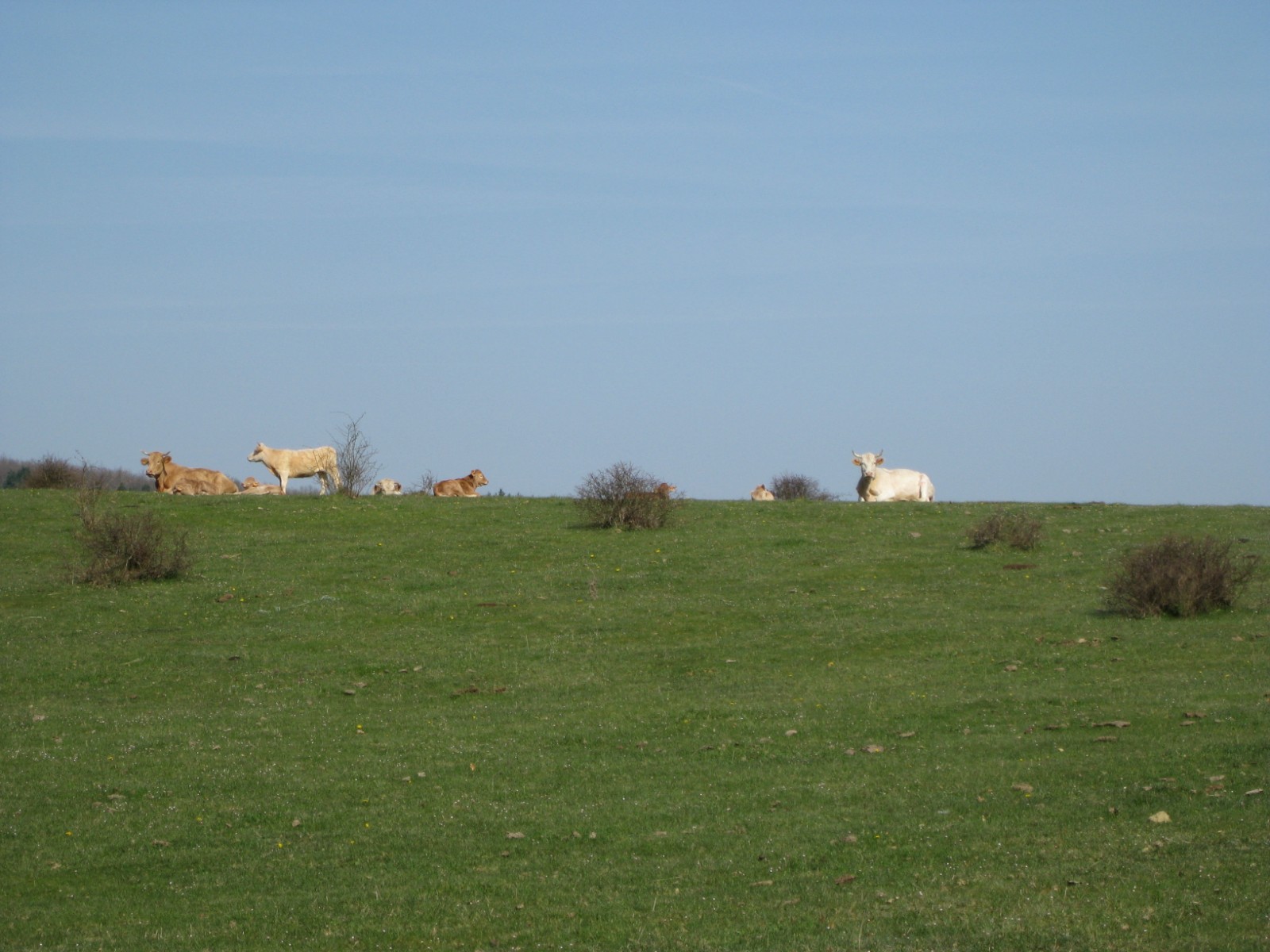
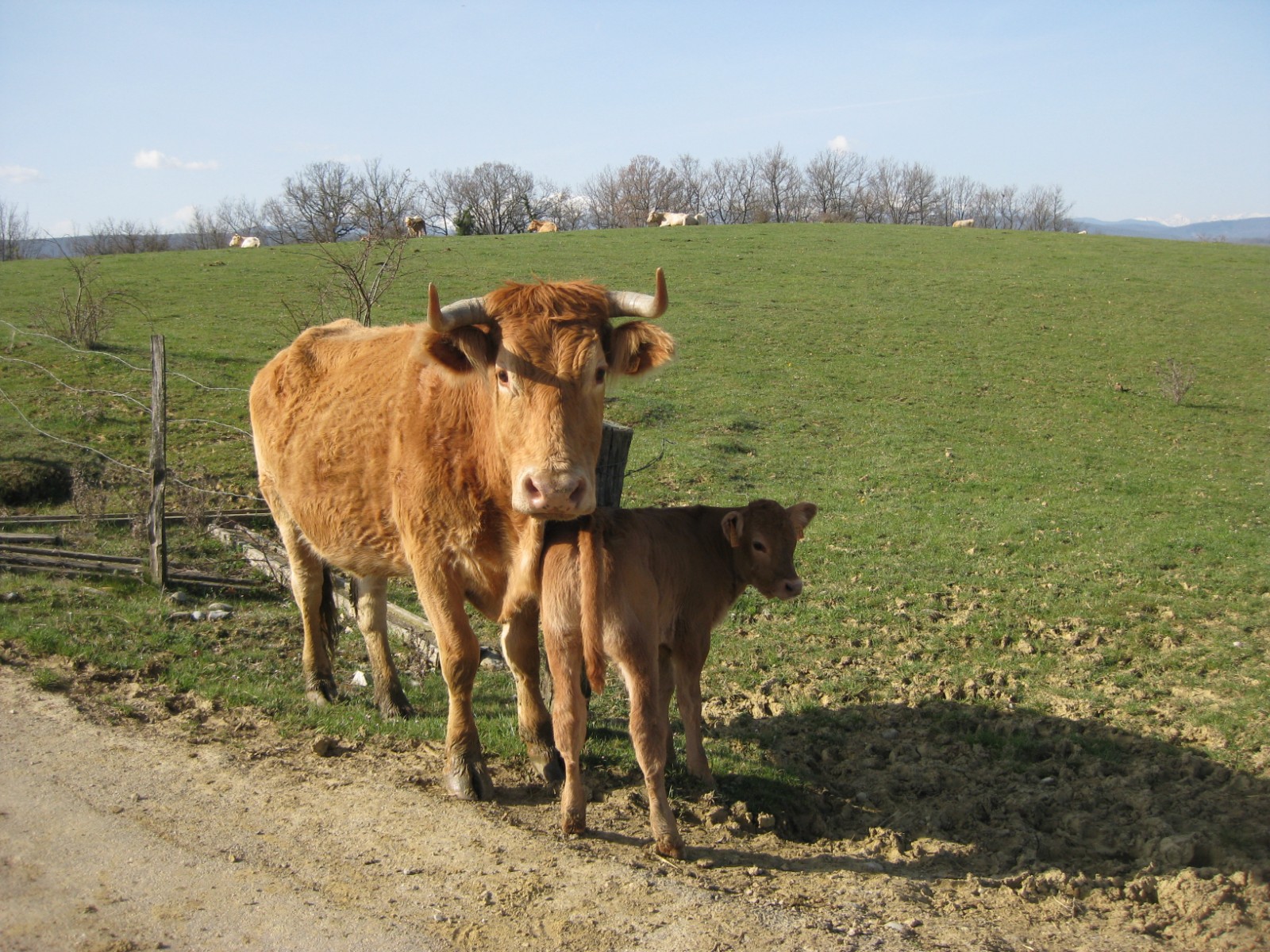
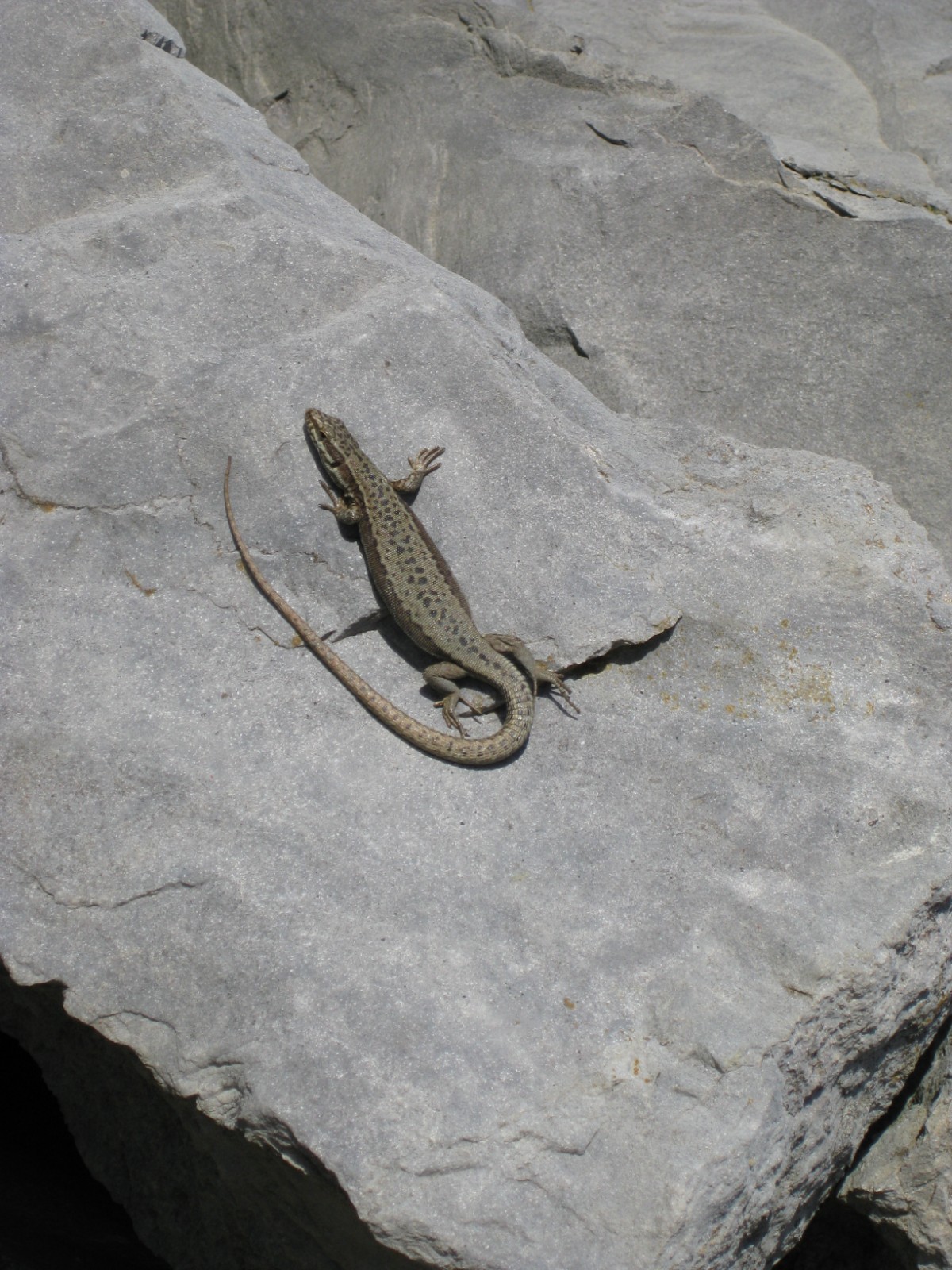
This was the lac de Montbel at the very end of last week.We enjoyed the views.  The cows enjoyed the views.Though this mother preferred to keep her calf safe at her side.Dozens of lizards sunbathed on the newly warmed rocks.  Here’s one.And here’s some sloe blossom.  I’ll be back in the Autumn for the mouth-puckeringly sour fruits  to make sloe gin or vodka.There’s only one problem.  The warm weather has brought out all the biting insects.  They soon found me.

A Walk with the Pine Processionary Caterpillars

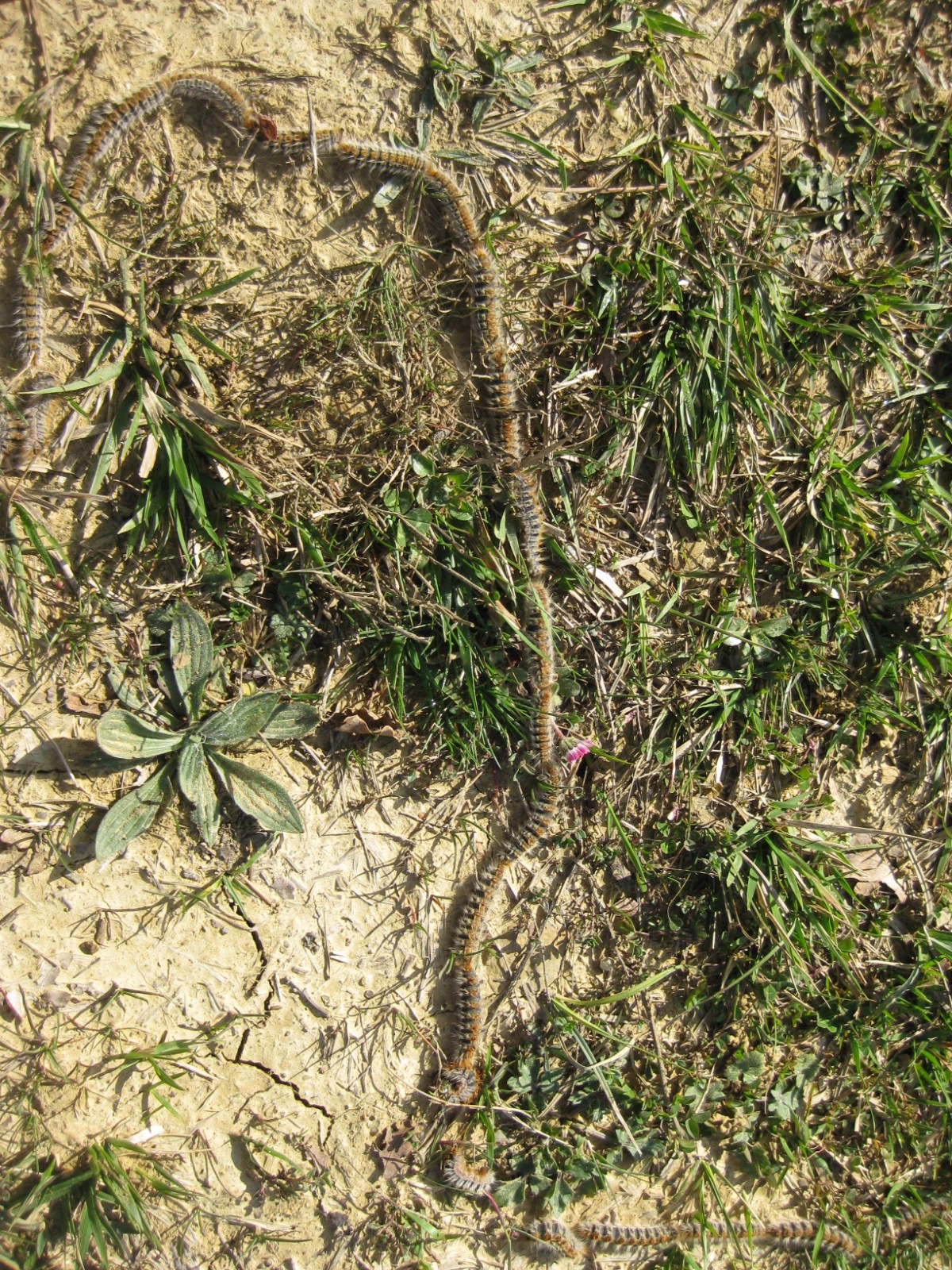
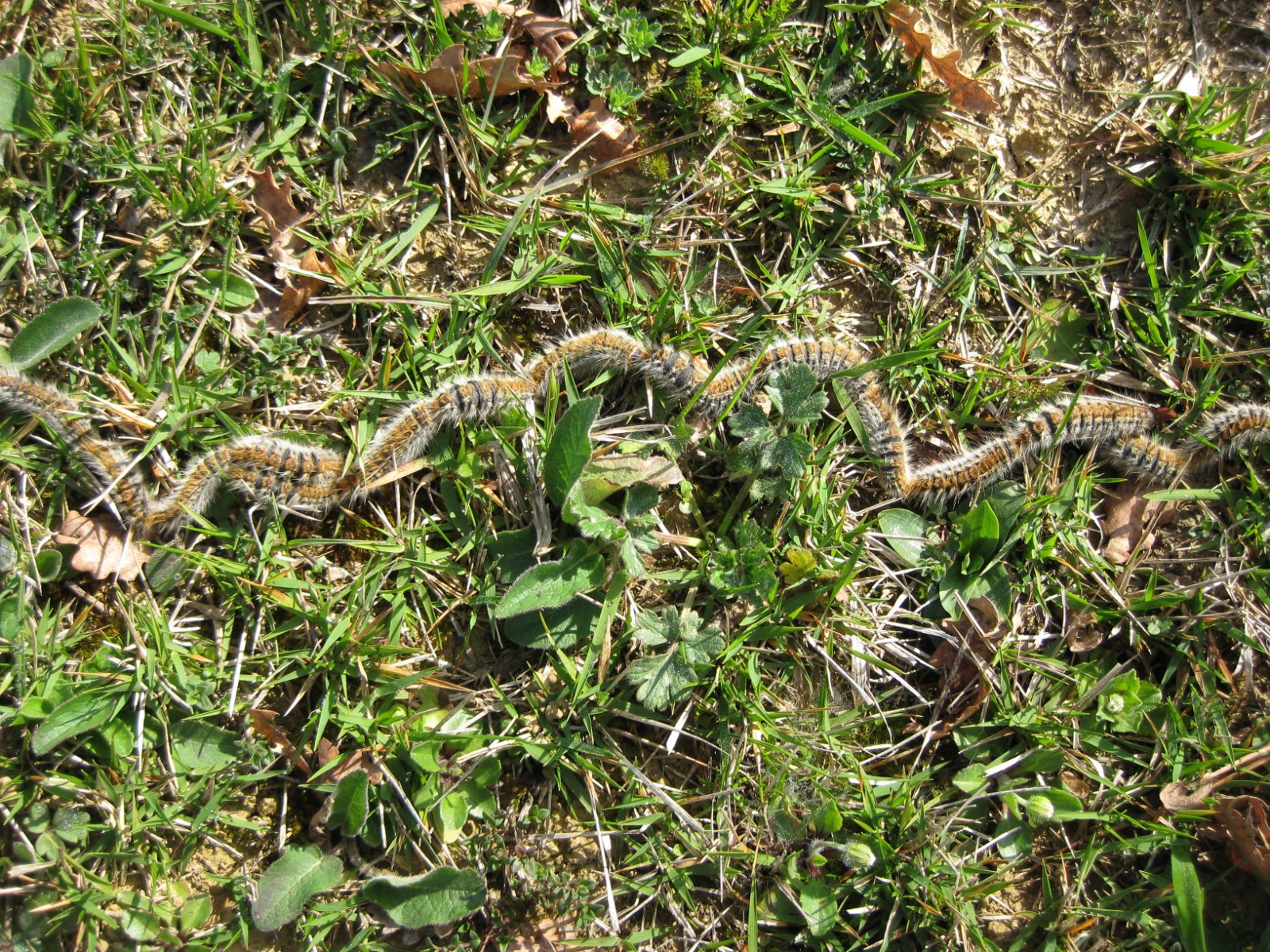
Out for a walk yesterday, we met about 600 caterpillars, also out for a walk.  Pine processionary caterpillars.  They’re extraordinary creatures, brown and hairy, that travel in long undulating lines, head to tail, looking for sandy earth to burrow into.  We saw 2 processions in as many minutes, each more than 6 metres long. It’s quite an impressive sight, and at first glance, looks exactly like a long, thin, sinuous snake.

A caterpillar that somehow becomes isolated from the one in front writhes about in agitation until it manages to absorb itself into the group again.  Something about these dependent creatures reminds me of those tragic World War One pictures of blinded soldiers advancing unsurely forward by hanging onto the shoulders of the man in front.

Don’t be seduced into thinking they’re rather sweet though.  They’re a real danger, especially if you’re a curious small child or dog.  When humans and our pets come into contact with the barbed and easily shed hairs, they can suffer reactions ranging from mild inflammation and irritation to severe anaphylactic shock.  Some victims have even died.

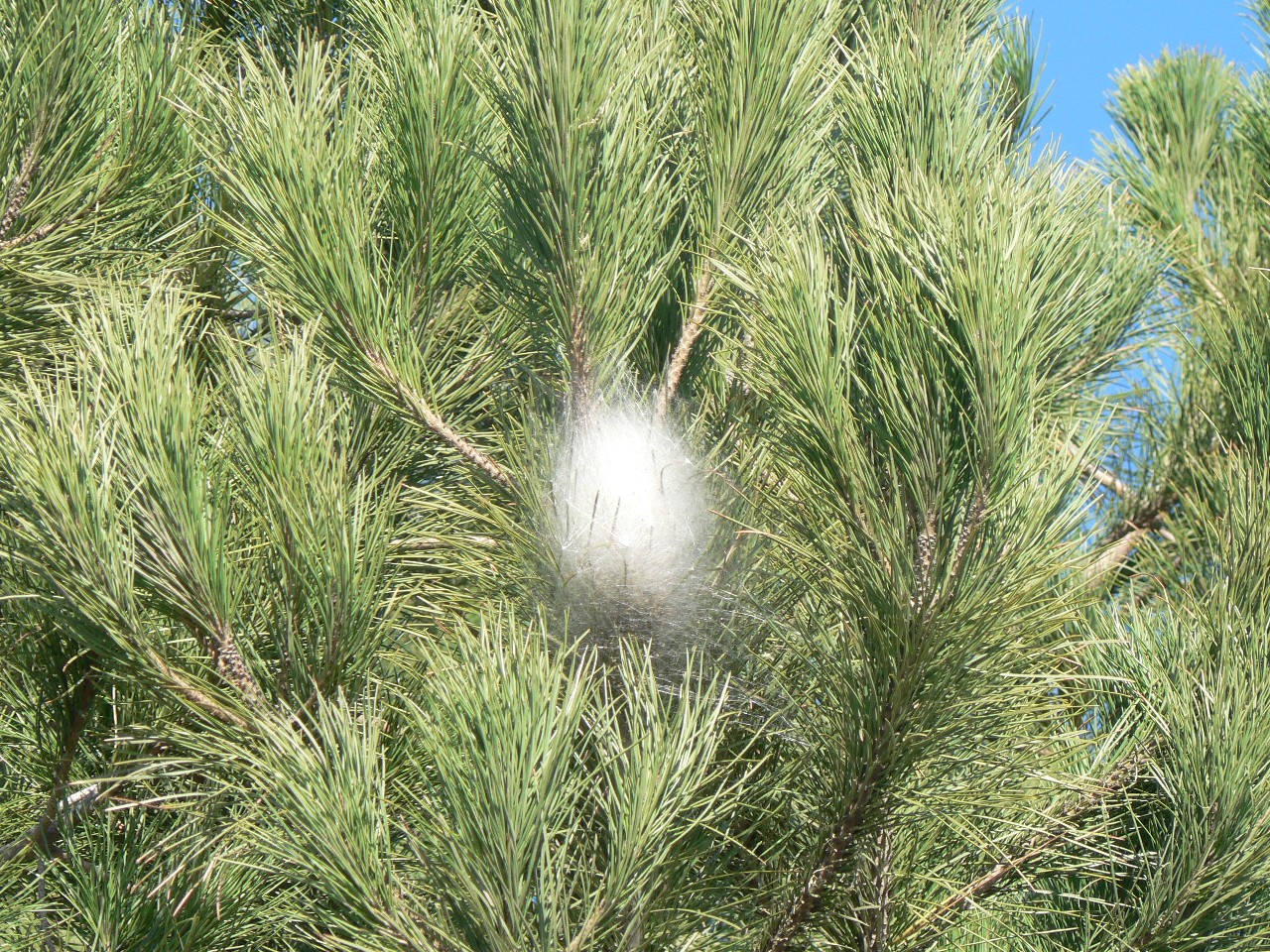
If you’ve ever walked in the countryside here, you’ve almost certainly seen them, even if you’ve never come across a procession.  Those candy-floss balls of delicate spun silk in so many pine trees round here are their nests and their original home as they developed from eggs to caterpillars.

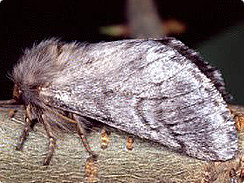
When they grow up, they’ll be harmless and rather dull moths.  You probably won’t even notice them.

Carnival at Laroque

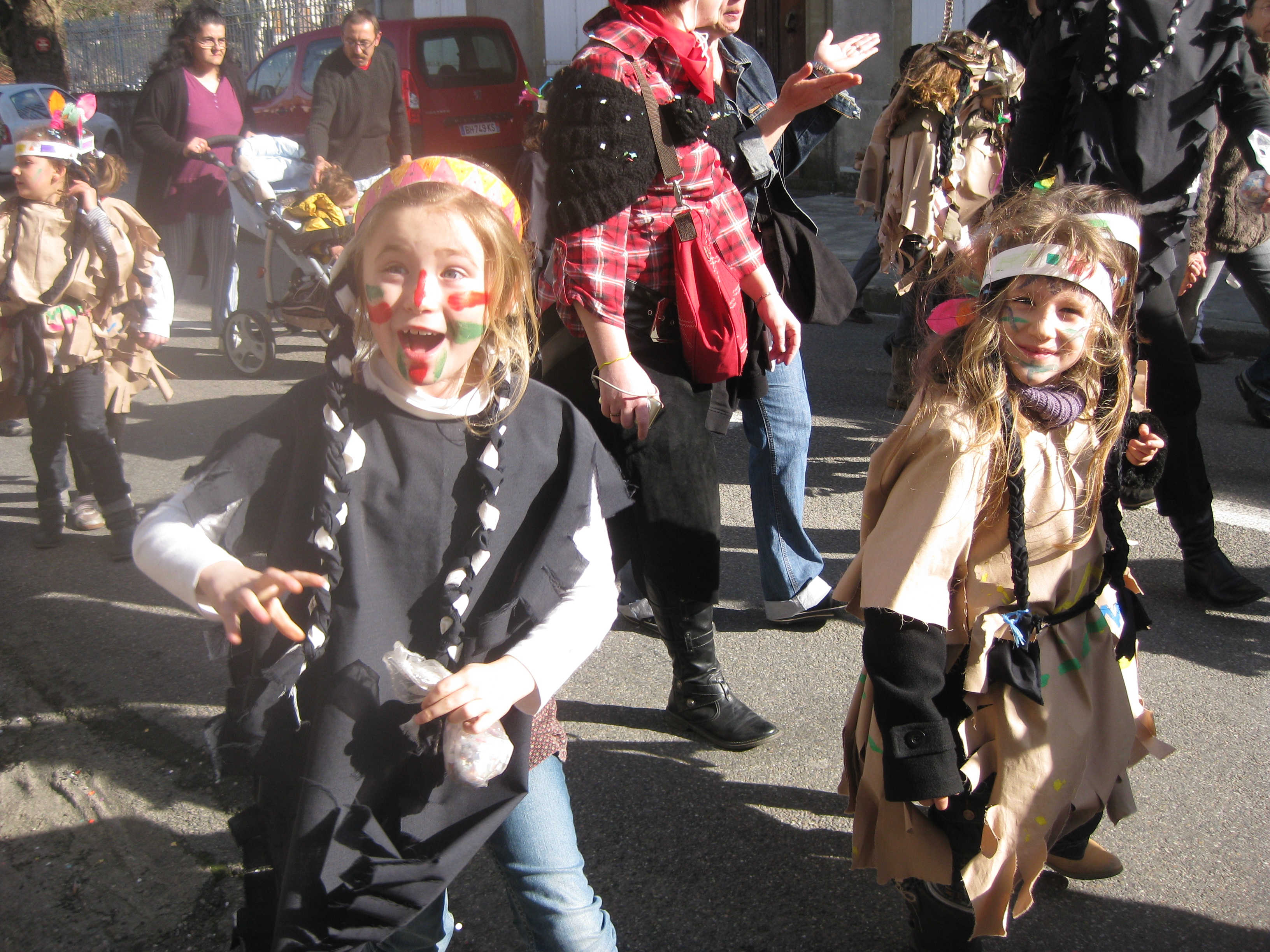
Lydia: our favourite Native American

But don’t get too excited.  It’s only dear old Laroque, and little old Laroque falls between two stools.  It’s not small enough to get every single person in the community involved in some way in this local festivity.  Nor is it big enough, or rich enough, to throw money at it.

Miriam atop a float

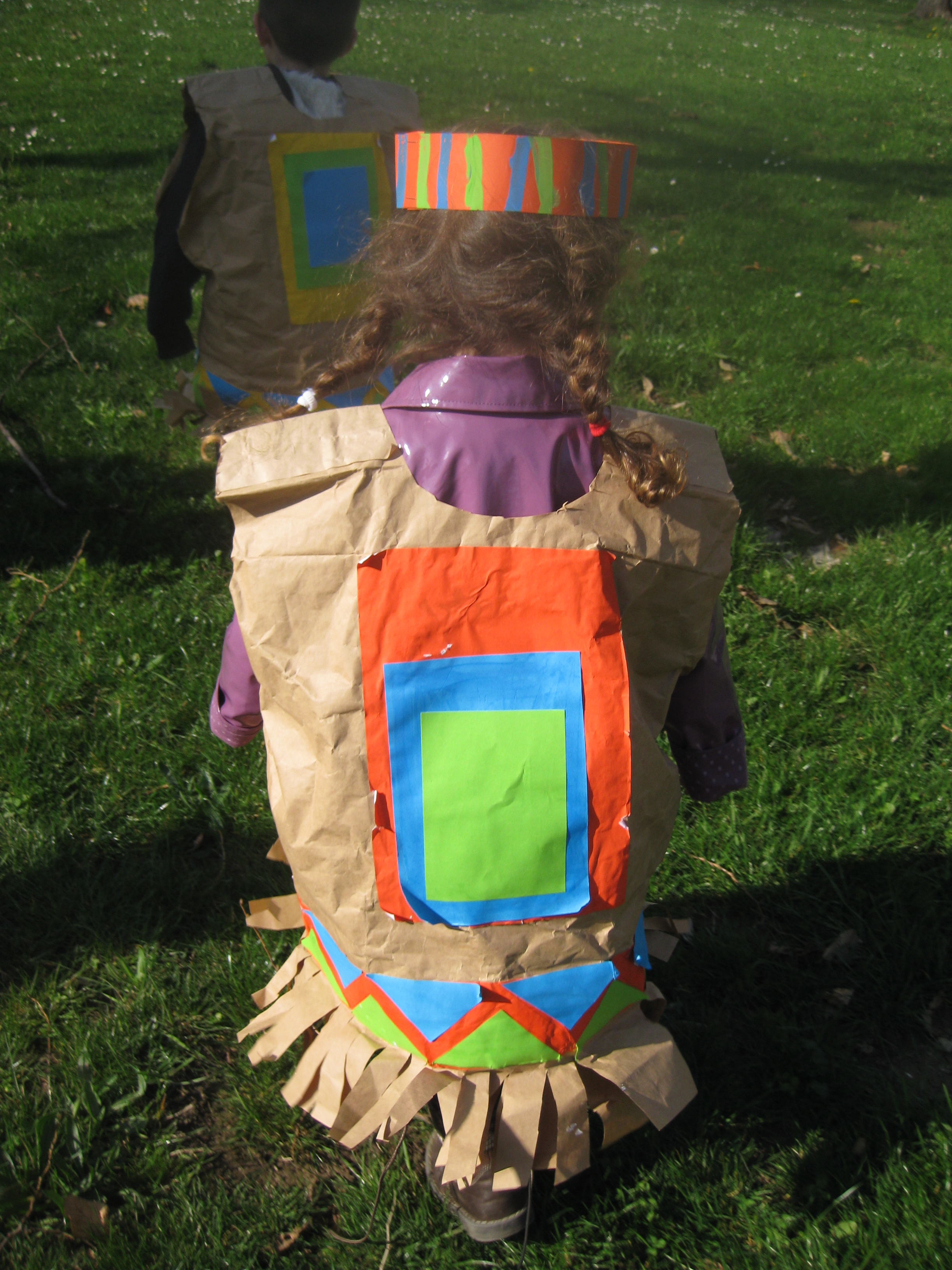
So the primary school is the key.  For several weeks the children have been focusing on the ‘Far West’, and making Native American costumes, cowboy outfits, totem poles and so on, and learning songs and music to fit in with the theme.

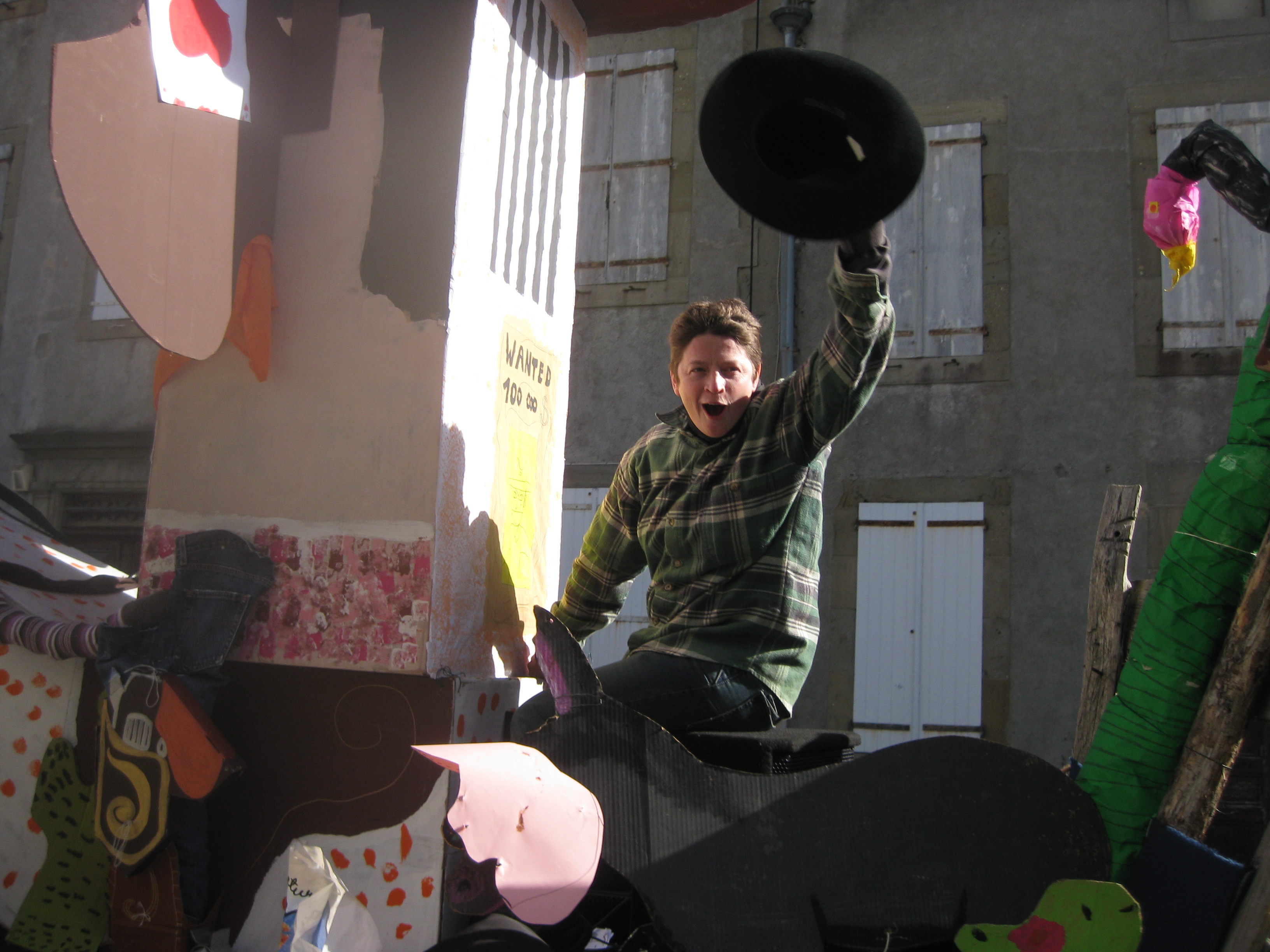
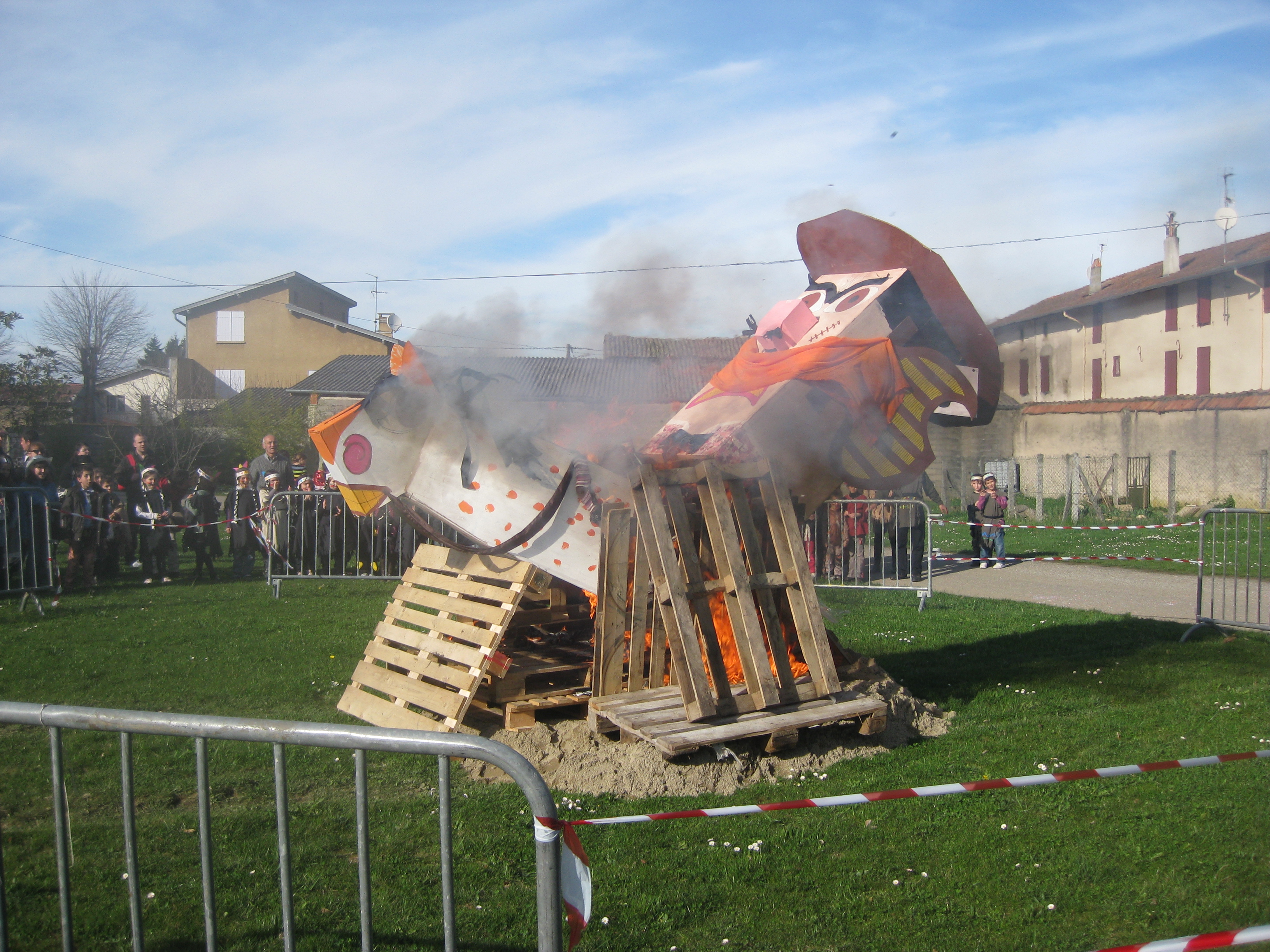
Today was the day they put it all on show.  They processed round town.  Tractors with floats trundled round the streets  and into the grounds of the Château.  The poor old cardboard cowboy on his horse the children had so painstakingly made became a sort of Guy Fawkes figure burning on a bonfire.  The schoolchildren sang their songs.  Grillades (a barbecue).  As darkness fell, everyone moved off to the MJC (Maison de Jeunes et Culture).  More grillades, more bands, dancing.  A concert featuring our Music Centre.  General merriment, a late night for the children.  A good time had by all.

The end of the road for this poor old cowboy

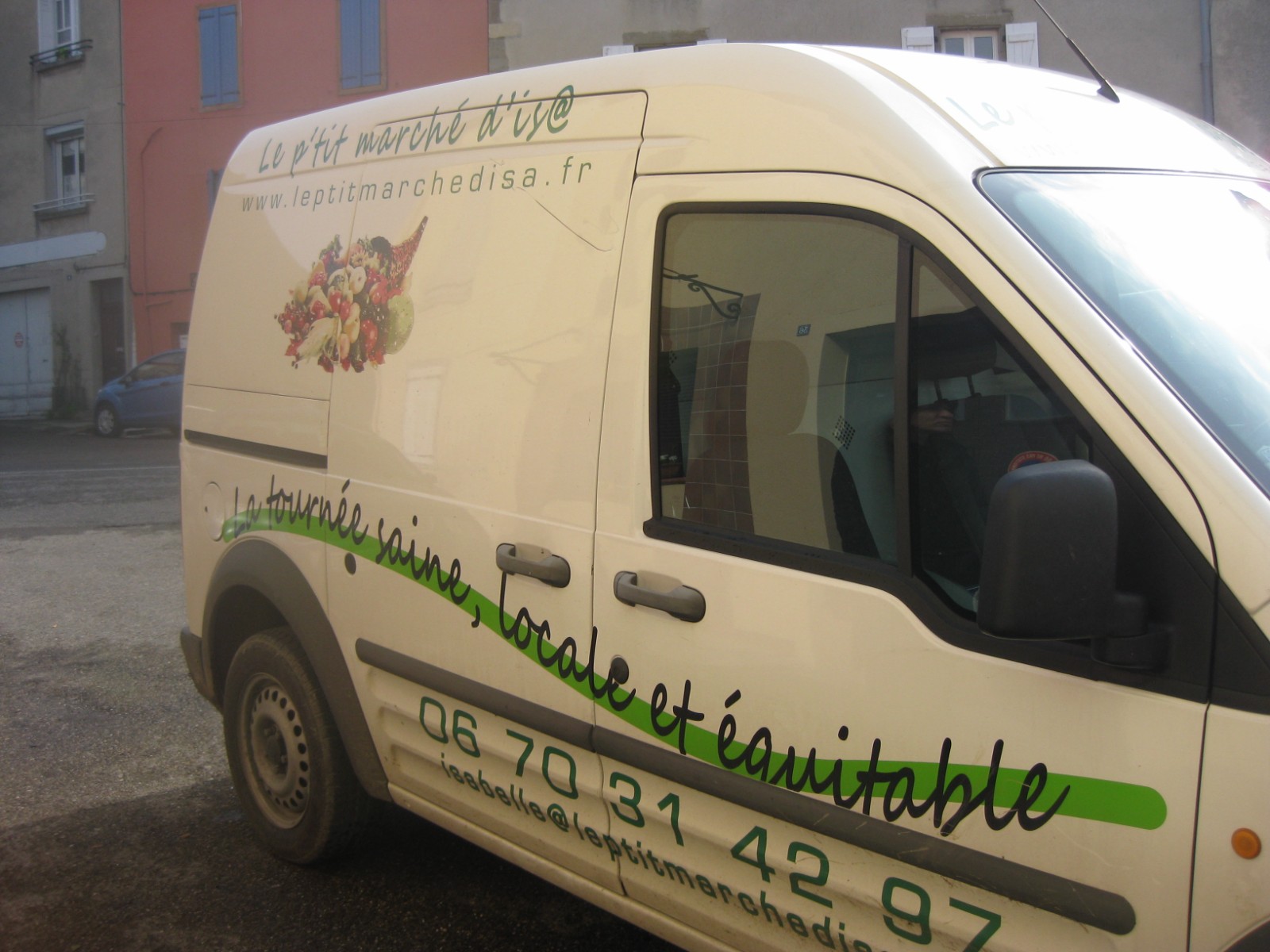
Le P’tit Marché d’Is@

If you live within the long oval that has Mirepoix at the top, and Tarascon at the bottom, you might be lucky enough to get your fruit and veg. from Le P’tit Marché d’Is@ – Isabelle’s Little Market.

Isabelle, a young woman from Montferrier, has recently started a vegbox and grocery business, and it really is ‘the business’.   My memories of veg.boxes a few years ago in England are of worthy offerings that always included rather more soil-encrusted swedes than anybody could reasonably want.

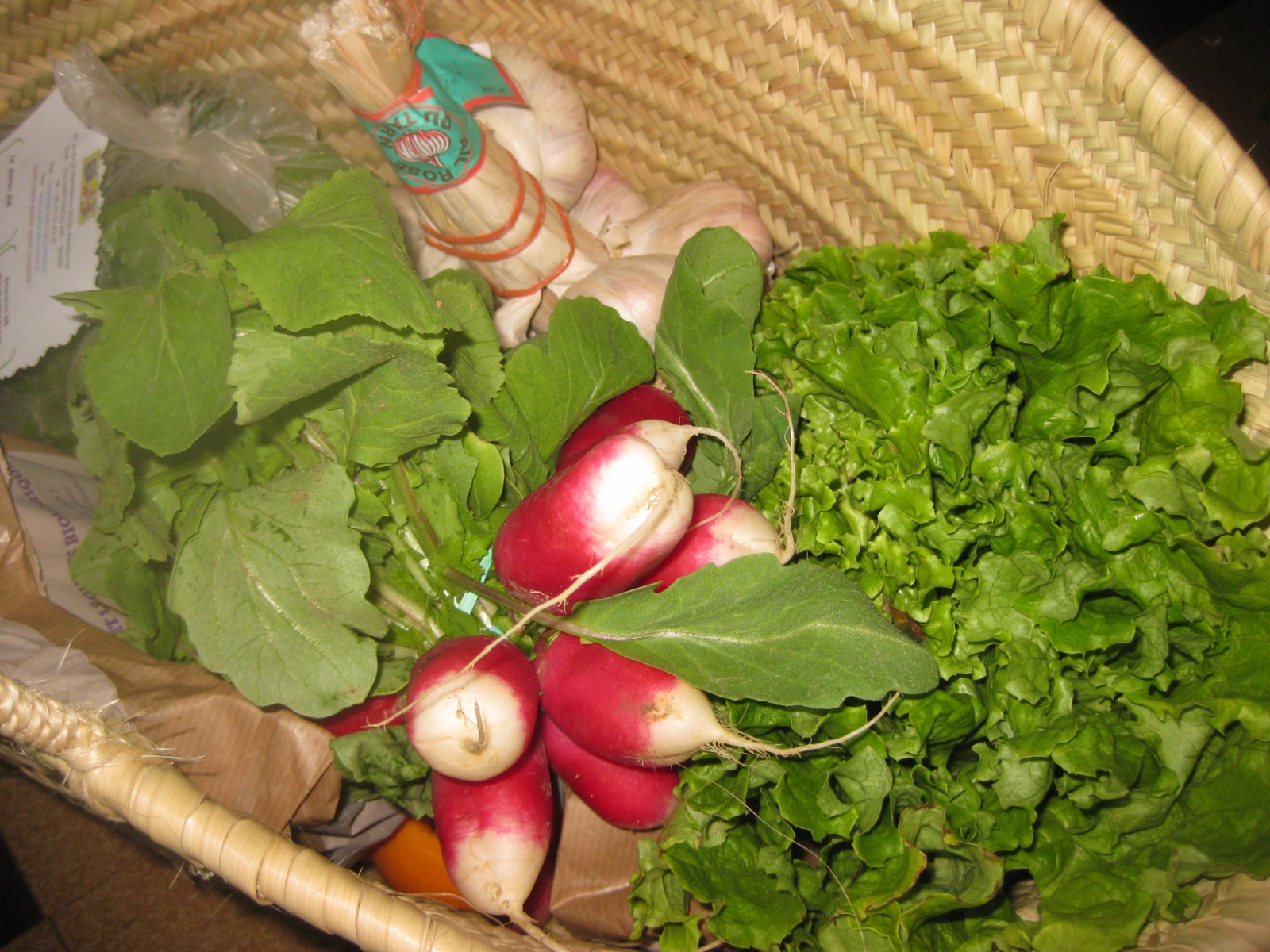
My panier, last week

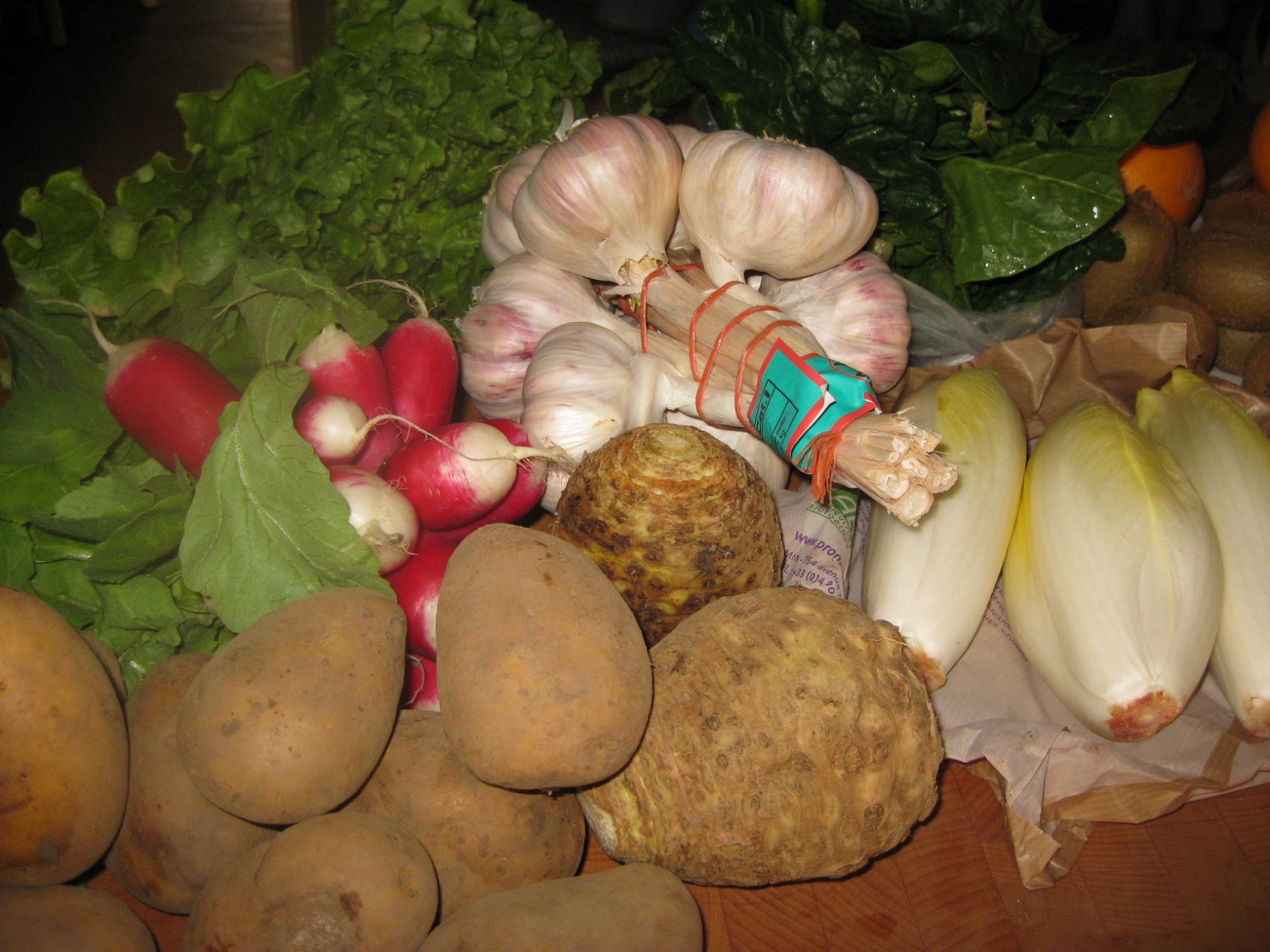
This isn’t like that. Her fruit and vegetables are organic or Agriculture Raisonnée, (limited use of drugs, fertilisers etc. permitted, within strict guidelines) all locally sourced: this week’s panier included potatoes, carrots, radish, celeriac, cabbage, spinach, chicory, lettuce, kiwi fruit, oranges and apples, all organic, and squeaky fresh. Last week’s, apart from the basics of potatoes, carrots and apples, was quite different.

Sorting out the shopping

Besides this, she’ll sell individual quantities of various fruit and veg , and she also has other lines. Poultry, pork, dairy products including various Ariégeois cheeses and yoghourts, all from farms no more than a few miles away.   Groceries include wonderful organic flour from a mill near here, pasta, beers, and from slightly farther afield in the Pyrénées Orientales, oils, dried fruits, nuts,tapenades etc.

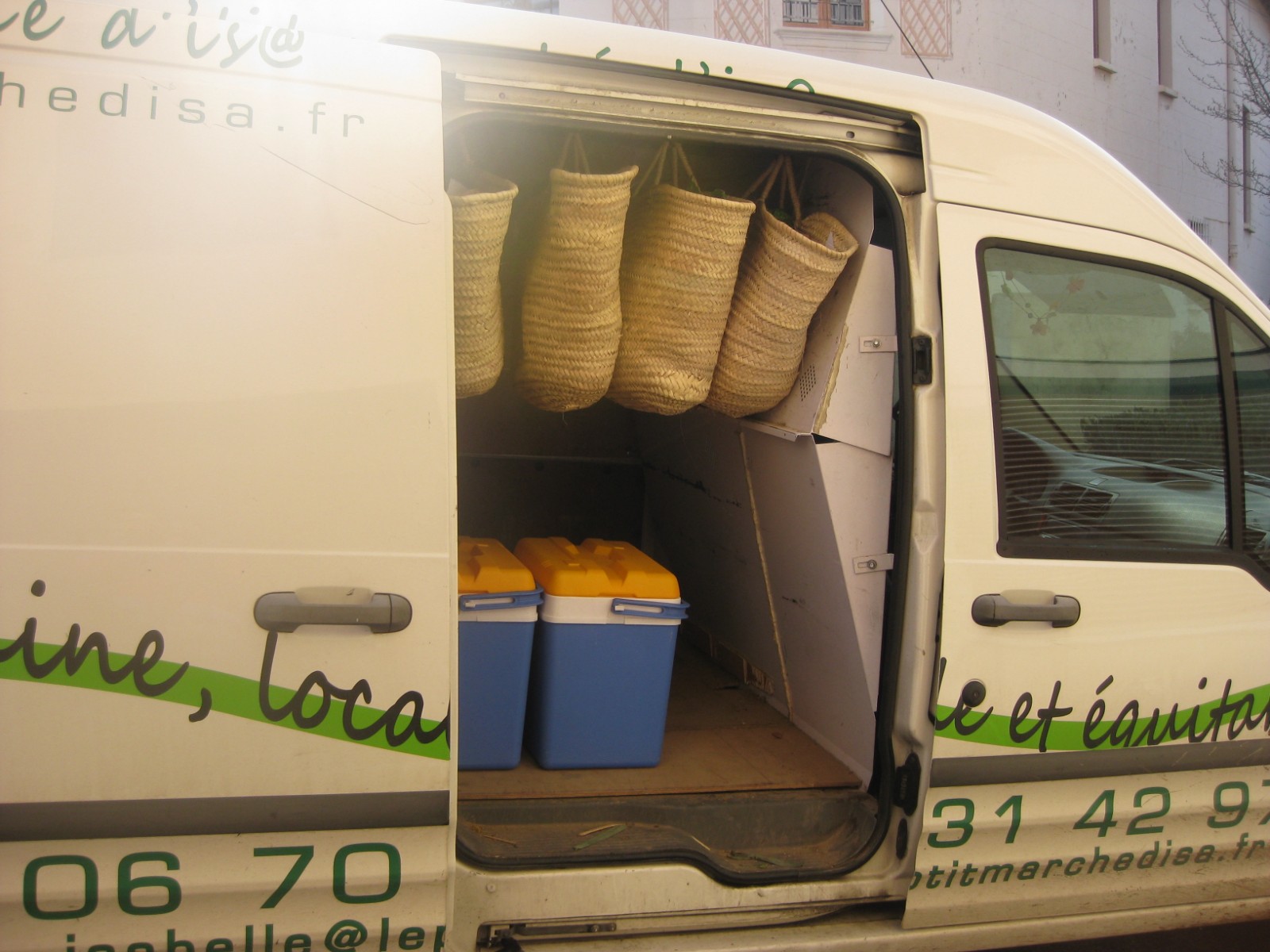
Just arrived and ready to deliver

It’s very simple: you order by Monday midday for delivery later in the week.

Now I really look forward to 11 o’clock on Thursday mornings when her little white van swings into the parking space outside our house, and she cheerily hands over her bulging panier of shopping for us to unpack and plan the menus for the next few days (she even has a recipe idea or two tucked in the bottom of the basket). It even beats market shopping.  AND it’s made me feel not quite so unhappy about deciding not to grow my own vegetables this year.

Her morning's work all lined up in the van
Isabelle's morning's work all lined up in the van