I often stop outside the local primary schools in Lavelanet and Laroque as I pass by, to read the week’s menus posted on the notice board: I think I’d really like an invitation to eat there at midday. There’s always an entrée, a main dish, a pudding and cheese or fruit, and it often sounds quite appetising stuff: roast turkey with sauce forestière, chicken wings à la dijonnais, stuffed tomatoes, velouté de legumes…..
But today I was horrified. What am I to make of the British Day they’re planning one day next month?
Betteraves* et raisins
Fish stick
Petits pois à l’anglaise
Crème anglaise
Crumble.
*beetroot
Apart from the crumble, the latest must-eat pudding in France, it all looks pretty dire. What exactly is this beetroot dish they’re starting with? Google doesn’t have a clue. No wonder the French think we English don’t have any good food.
Despondent about your DIY? Ground down by your garden? Then HelpX can help!
Its website says it’s ‘volunteer work in exchange for free accommodation and food on farms, backpacker hostels, lodges, horse stables and even sailing boats’. Or even places like ours, apparently.
For the past 10 days, we’ve been sharing our home with HelpX-ers Vicki – Australian – and her English husband Marc. It was a success from the very moment they landed outside our house with their laden motorbikes, fresh from working in Carcassonne and northern Italy.
Since they arrived they’ve rolled up their sleeves and cheerfully tiled and grouted most of our very awkward roof terrace, painted a stairwell, wrestled with brambles and ivy on the garden, solved computer problems…. and commandeered the kitchen.
Vicki and Marc travel the world, and many of their memories seem to be food related. So they’ve cooked southern Asian dishes like sang choy bow & gado gado and Vicki’s wonderfully decadent and not-at-all Asian chocolate mousse: recipes to follow in a later blog. The other evening – their final night – was the occasion for an ‘Asian tapas-Smörgåsbord’ of a dozen dishes masterminded by Marc.
Our memories of the week are of a happy, optimistic, funny and considerate couple who’ve worked hard and enthusiastically on our behalf, and whose company has been nothing but a pleasure. We miss them.
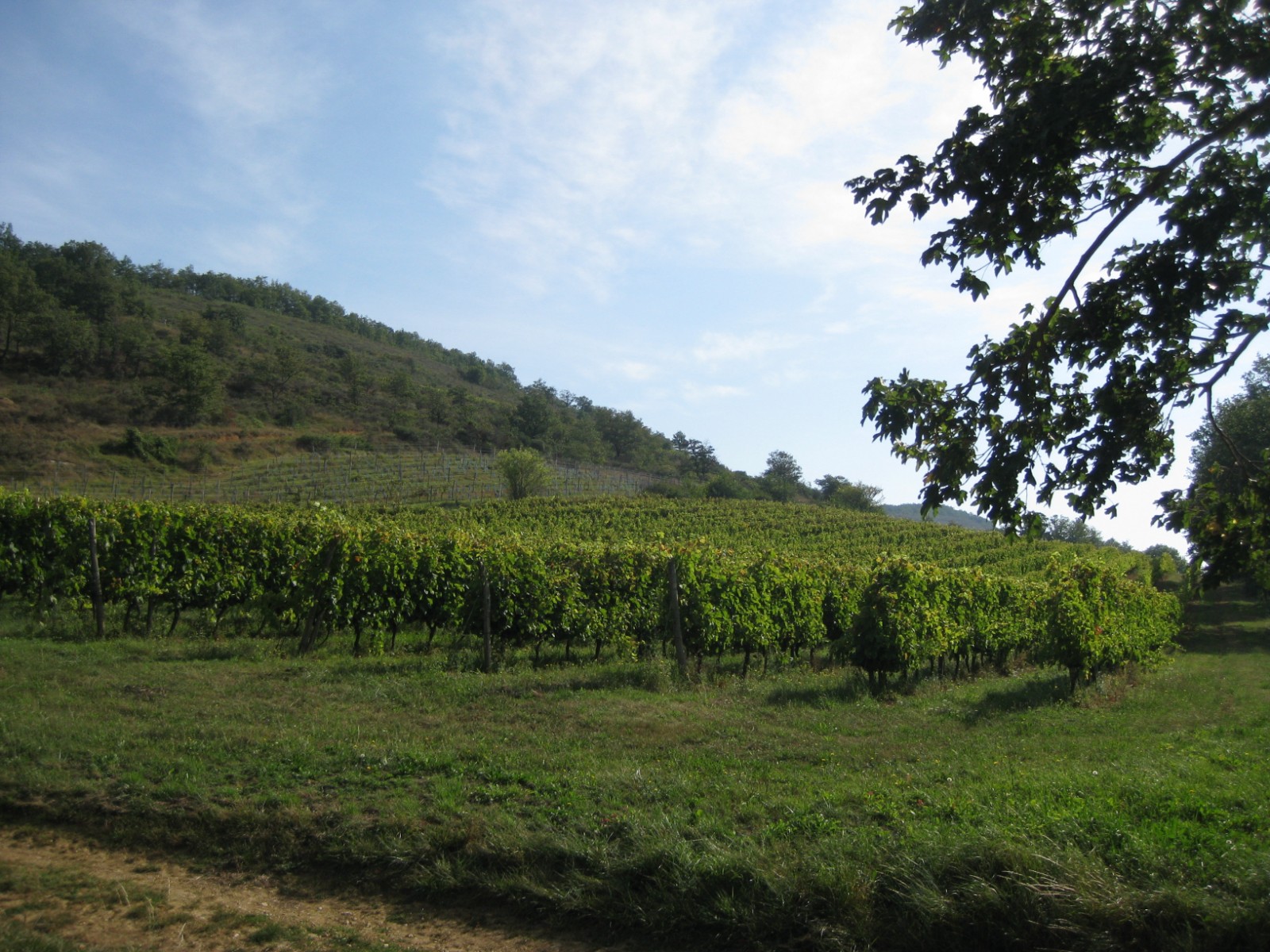
Last week, we had a morning at an organic vineyard, one of only 2 commercial vineyards in the whole of the Ariège. The vineyards at Coteaux d’Engraviès appeared on maps as long ago as 1310, and on later maps too, though eventually they disappeared. So the owner of the Domaine, Philippe Babin told us, anyway. He was the one who decided once again to cover the hillside in vines.
He introduced us to an Ariège from a time we couldn’t recognise. Now, we’re used to seeing fields of maize, sunflowers, food and fodder crops in addition to pastureland. Back in the Middle Ages, when Catharism was at its height, the area was covered in vines. Everyone produced wine for their own use. It wasn’t strong, maybe 5% or so, but it provided refreshment and nourishment for men, women and children alike. No neat rows here, the vines grew unsupported by trellising, higgledy piggledy. Over in Pamiers, from where any exportable wine was shipped, the notorious Bishop of Pamiers, later Pope, Jacques Fournier, received the taxes he imposed in the form of wine.
The Ariège was prosperous and, for the period, densely populated. Men made their living from mining and the forges, and their women and children reared stock in the high pastures. Only the Industrial Revolution, which arrived later in France than in the UK – just before the First World War in fact – put a stop to this, as the small scale of local operations were not suited to large-scale mechanisation. This, and the de-population that occurred when men failed to return from the trenches, began the Ariège’s descent into a less populated, often deprived area.
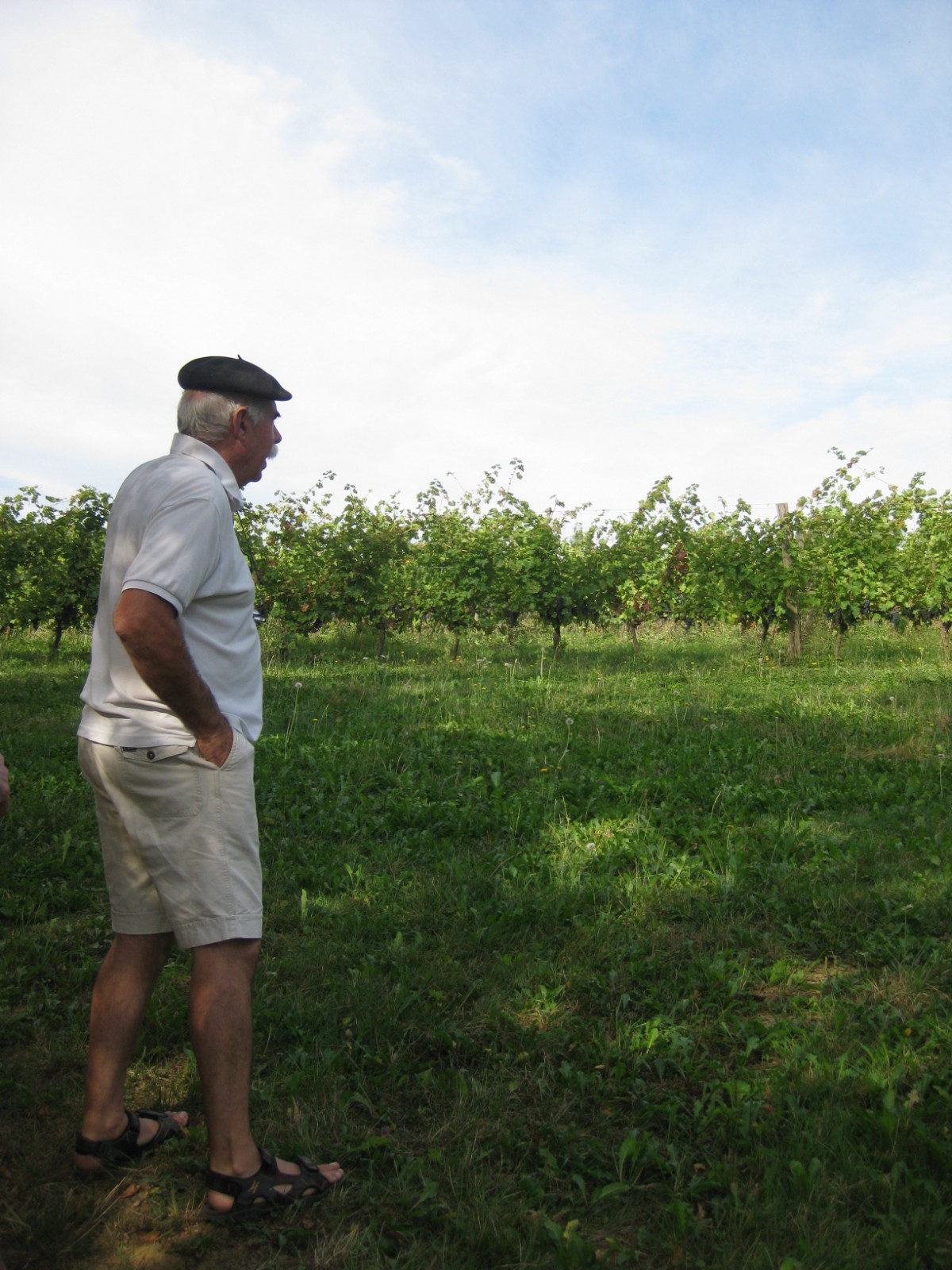
Philippe shares his expertise
Phylloxera saw the end of wine production in the Ariège. Vines, decimated in the 19th century throughout Europe, were gradually replaced elsewhere by resistant American varieties. The local domestic vines, most of which were fairly low quality, weren’t worth replacing, and people simply walked away from them, leaving them to die. Only within the last 30 years have a couple of producers recognised that parts of the area are suitable for developing once more a high-quality product, and with modern and traditional savoir-faire behind them, worked towards developing businesses of which they can be proud. Philippe Babin is one of these.
Philippe went on to tell us more about the vines themselves. They need rain, and they need sunshine for their leaves to absorb and enable the fruit to mature. Vines put roots deep down into the soil and rocky earth, particularly in the first 15 years of life. Philippe chooses to grow his vines organically, because he recognises that the particular composition of the soils and rocks beneath in the area – ‘terroir’ – inform the character of his vines: fertilisers and other products would change this balance. The vines themselves change as they mature, and those plants which are 80 – 100 years old (his are a long way from this) produce little, but what they do is very fine.
Pruning forces the vines to produce grapes, and therefore seeds. Unpruned, they grow hundreds of metres long, and see no need to seed themselves. Wild vines are therefore innocent of fruit.
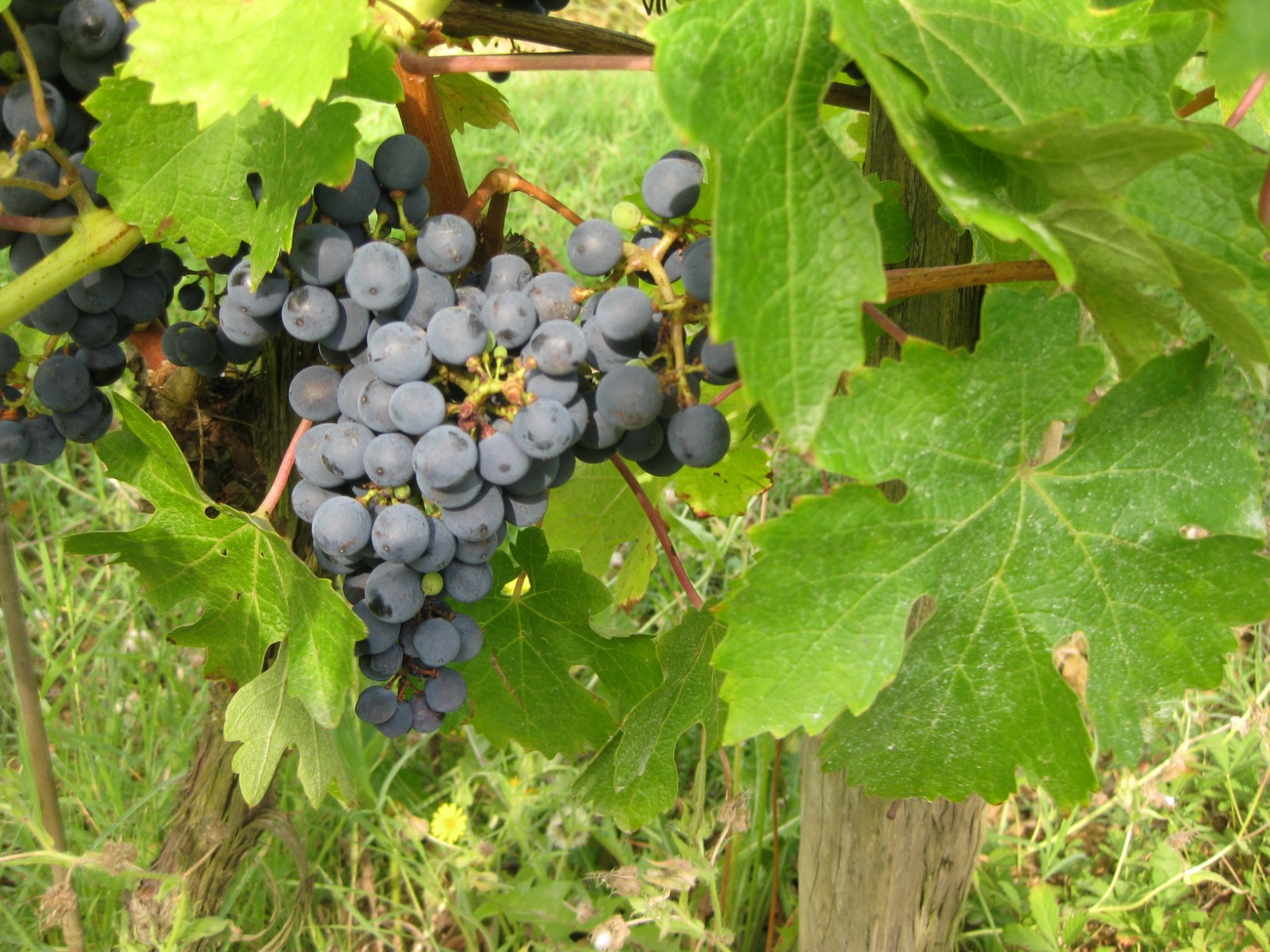
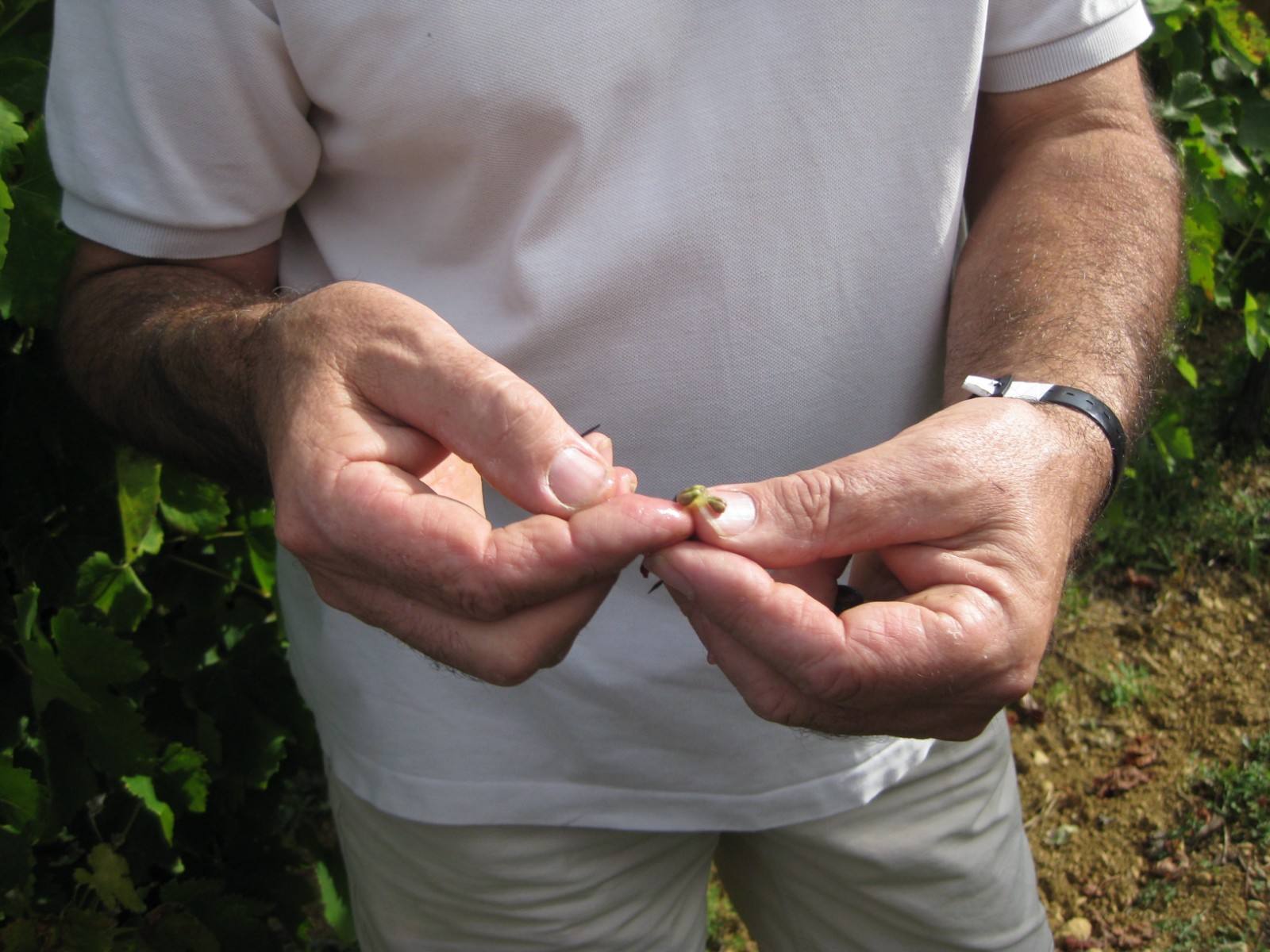
Examining grape pips for maturity
Then he showed us how to research a maturing grape. Does the skin peel easily from the fruit, and is it loosing its elasticity? If so, it’s ripening nicely. Have the seeds broken away from the ‘umbilical cord’ of the stalk and taken on a woodier appearance? Once that happens, the seeds are nearly ready to fall and have a go at germinating (they have a low germination rate). From now on, they’ll nourish themselves, like embryo chickens in an egg, from the flesh of the grape, which will wither as the seed digests it.
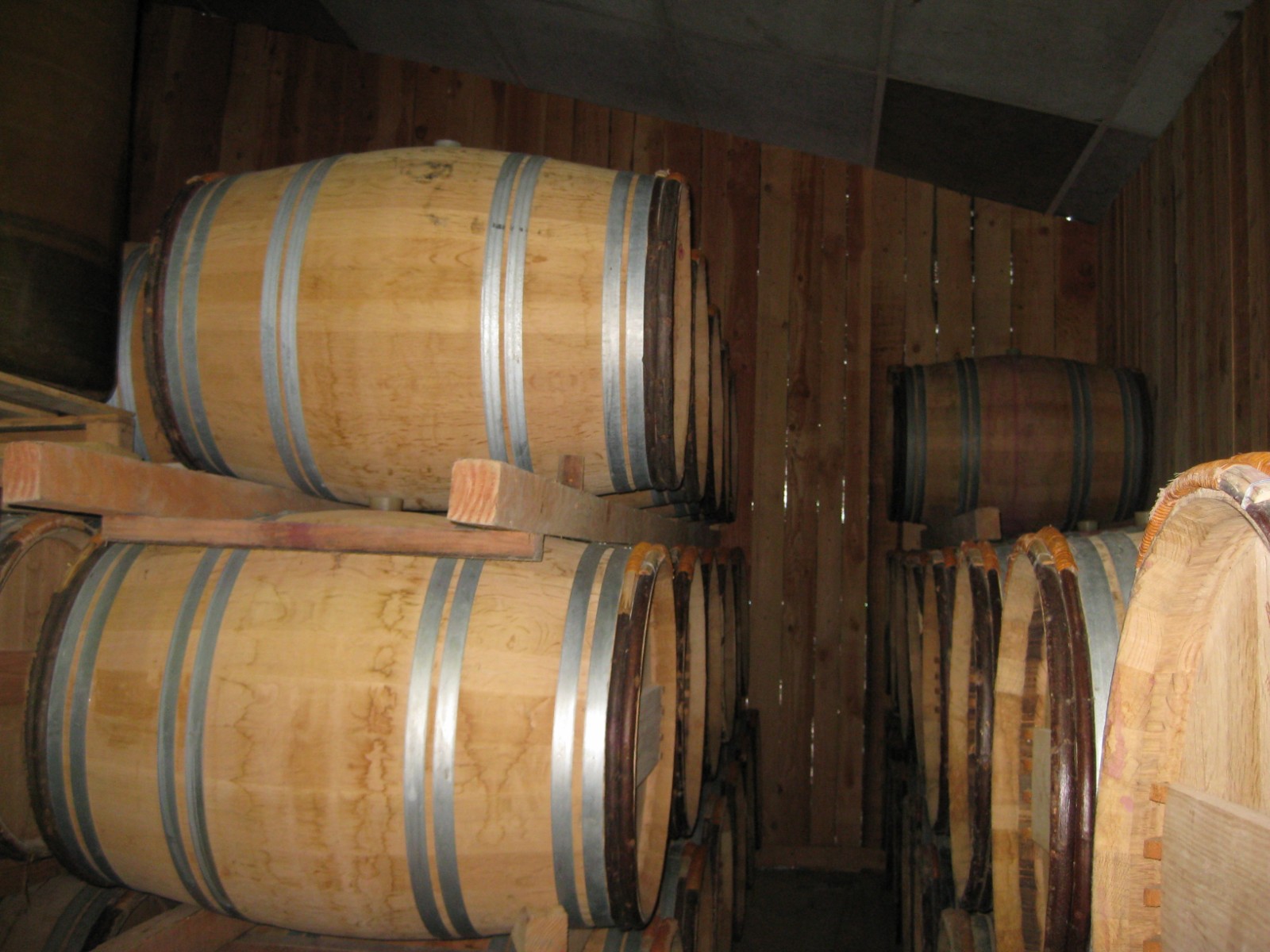
Barrels full of wine waiting to be bottled
Lesson over, we went back to the Cave. A small band of workers were working to bottle the last of the 2010 vintage to free up space for the harvest which will take place in maybe a fortnight or so. The barrels in which the wine matures must never be left empty, so this is a last minute job.
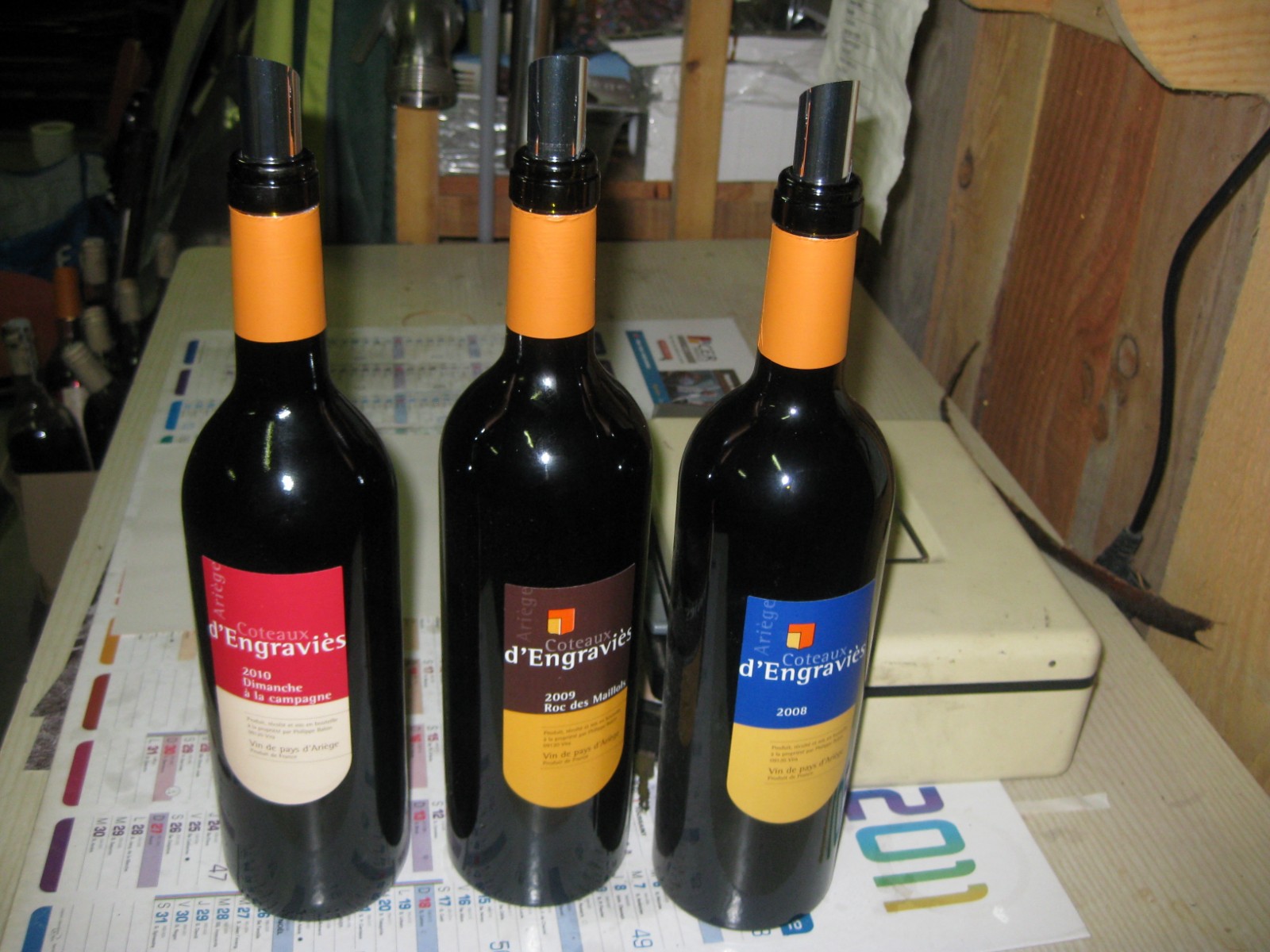
And finally….the tasting. An opportunity to compare three of the wines he produces. Every year his blends are slightly different, to arrive at a consistent product. Syrah, Merlot, Cabernet Sauvignon…all have their part to play in blending wines to make a perfect complement to an enjoyable meal, whether roasted, casseroled or preserved meats, or a plate of local cheeses.
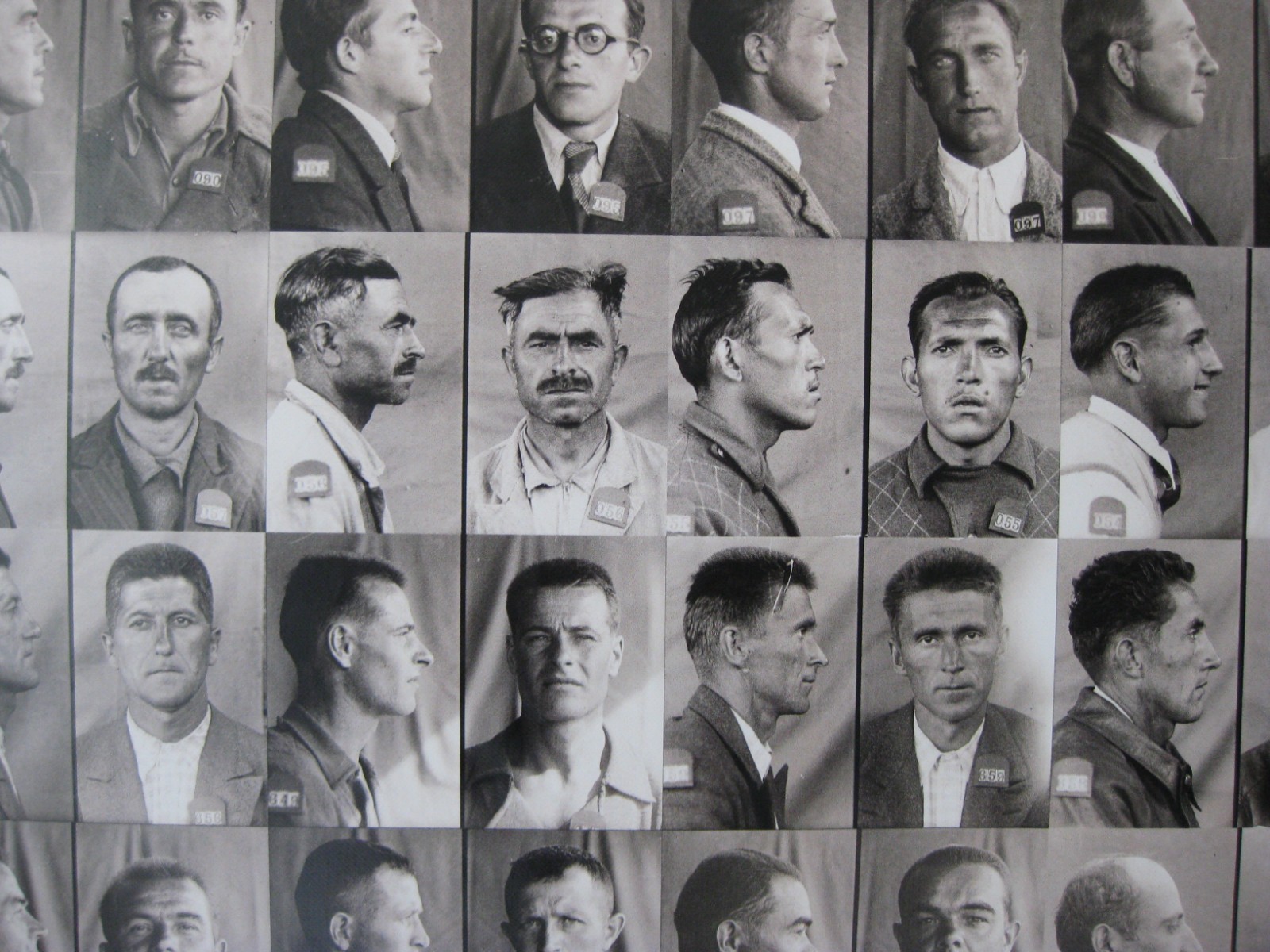
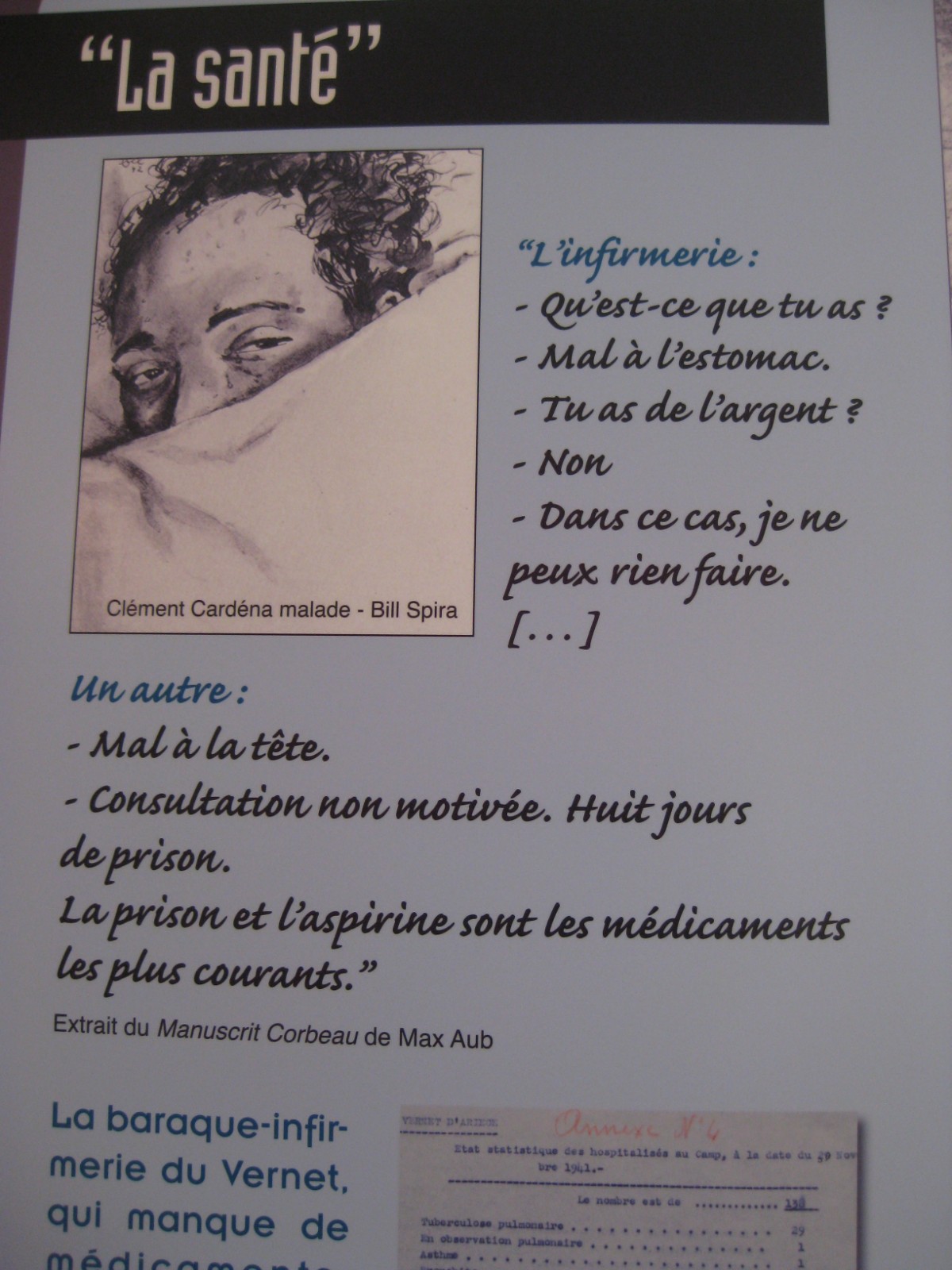
Starting in 1939, after the defeat of the Spanish Republic, the concentration camp at Le Vernet, near Pamiers, was used to detain the 12,000 Spanish combatants from the Durruti Division. At the declaration of war, ‘undesirable’ foreigners, anti-fascist intellectuals and members of the International Brigades were interned at Le Vernet under terrible conditions, described by the writer Arthur Koestler (himself interned there) in ‘Scum of the Earth’. In 1940 it became a repressive camp for interning all foreigners considered suspect or dangerous to the public order. At the time, it was known as ‘The French Dachau’.
Model showing part of the camp
From 1942 it served also as a transit camp for Jews arrested in the region. In June 1944, the last internees were evacuated and deported to Dachau in the ‘Ghost Train.’ In total about 40,000 people of 58 nationalities were interned in the camp.
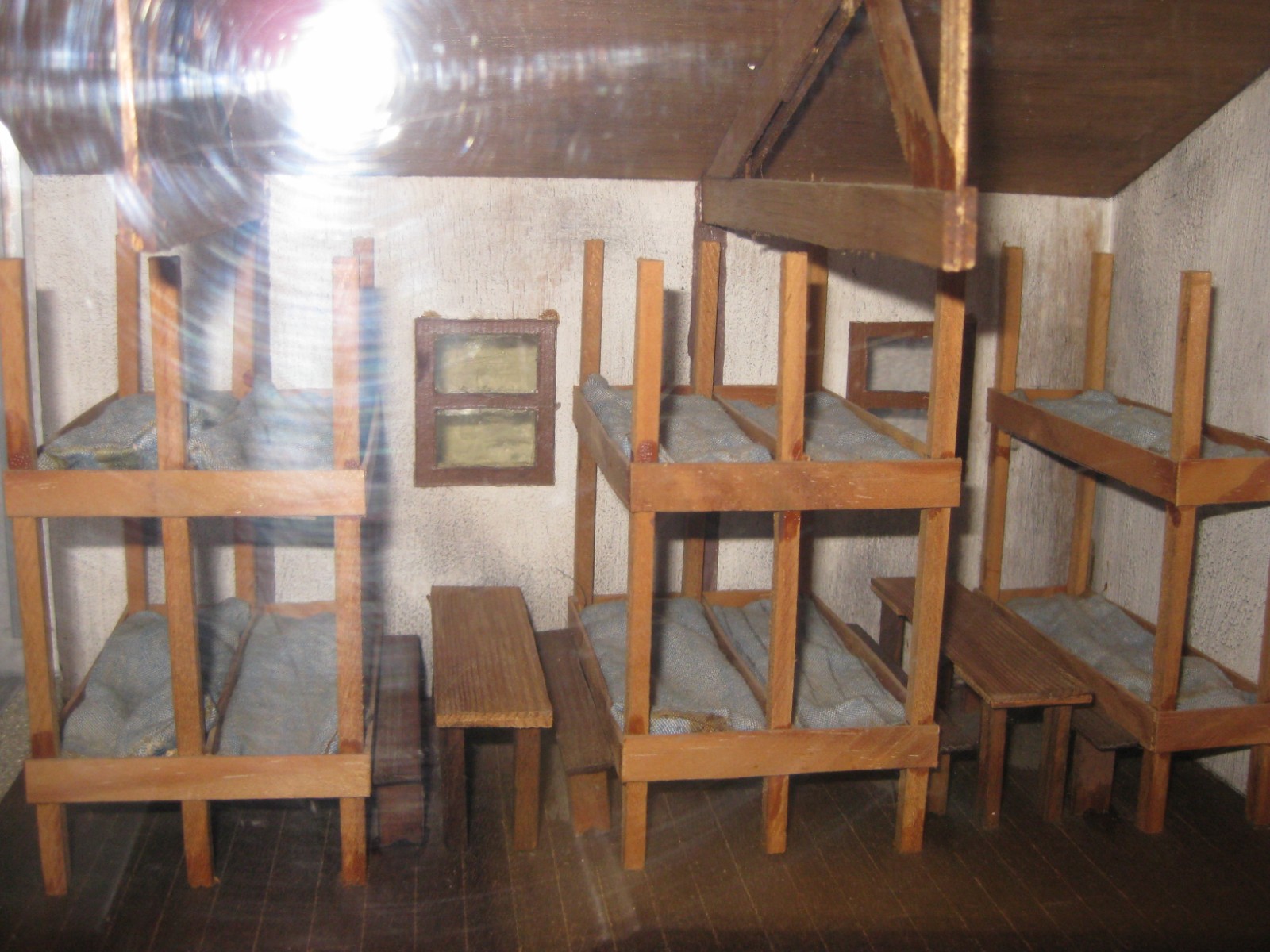
We were shown round by the Mayor of le Vernet. He has a passion for sharing this dreadful part of French history which only someone whose family has suffered its consequences could have. He showed us the models of a vast camp, now totally obliterated, and the cramped dormitories.
Model of a camp dormitory
He described the harsh conditions, when inadequately clothed and severely underfed men would have to stand outside, immobile, 4 times a day, during the extremely hard winters, for roll-call.
As a tiny baby, he was interned with his mother, a Spanish refugee, at a women’s and children’s camp, flimsily built and harshly managed, on the coast (Le Vernet was for men only). The women begged for clothing – their own was so flea-ridden it had to be burnt – and more food. The response was that they could return to Spain if they wanted. Some did, but many stayed.
As an adult, with a French wife and children, he wanted to take French nationality himself. ‘How did you arrive in France?’ ‘Via the concentration camp in Argelès.’ ‘There were no concentration camps in France, only accommodation centres.’ Such denial existed till quite recently – hence the total destruction of the site of this camp, the most repressive in France. Now however, largely because of people such as this mayor, the history of these camps, run and organized not by the Nazis, but by the French themselves, is at last being told.
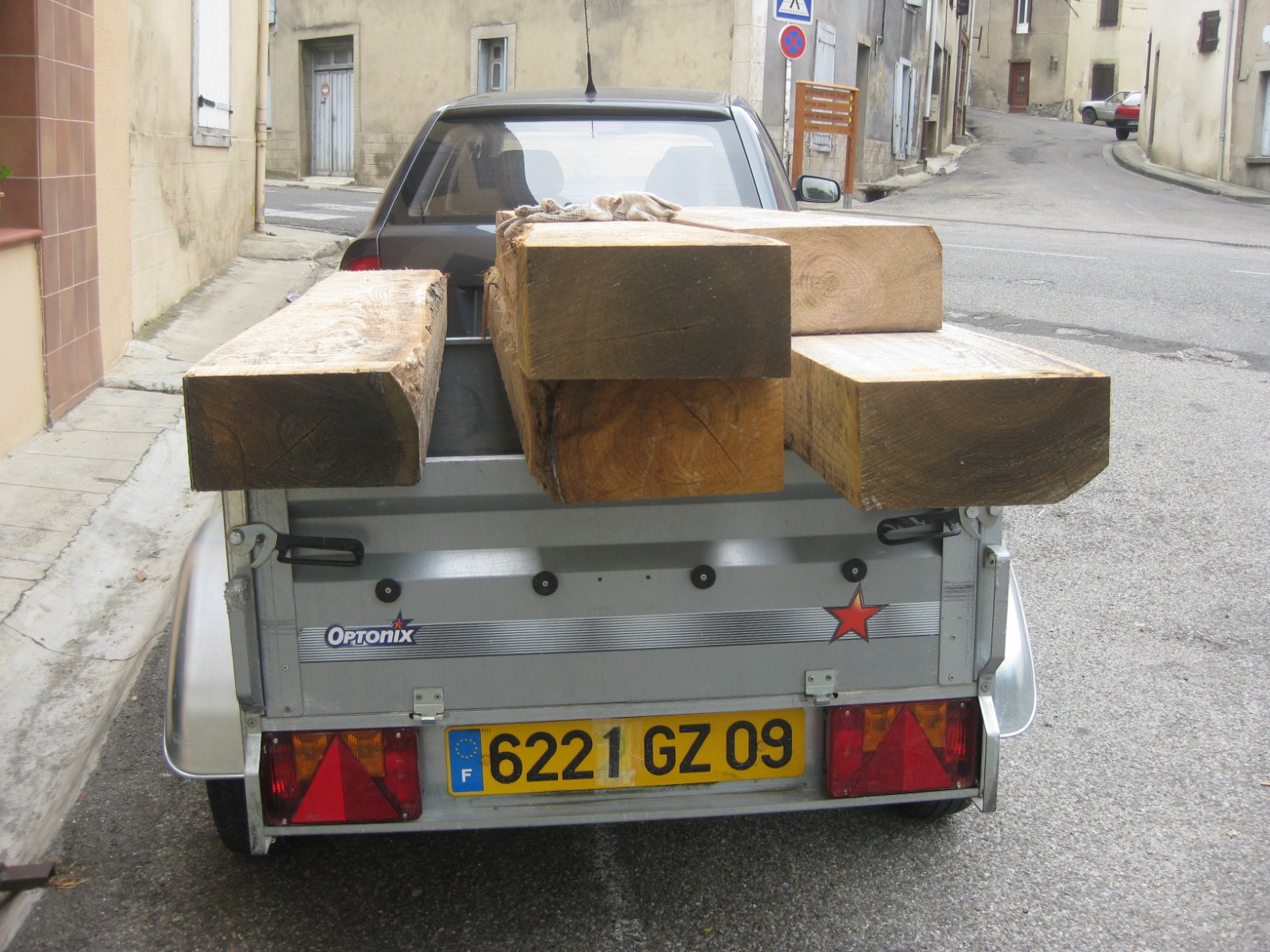
For months now, back in our thickly forested département, we’ve been looking for wood. Not to burn this time, nor for the workaday laths and planks which are the stuff of the average d-i-y project. No, we needed thick, dense lengths, something like the impressive beams you see in houses and barns throughout France. And given what a common sight these are, they’ve proved incredibly difficult to source. Kalba had the best idea. ‘Had you thought of Montcru?’. Well, no, it was so far away, beyond la Bastide de Serou, that we hadn’t even heard of it.
View from the woodyard
But it was worth a journey. We’ve never been to such a place. Miles from anywhere much except lovely Seronais scenery, Robert and his wife run an idyllic looking B&B with woodyard attached.
Buying wood here involves a detailed discussion of your needs.
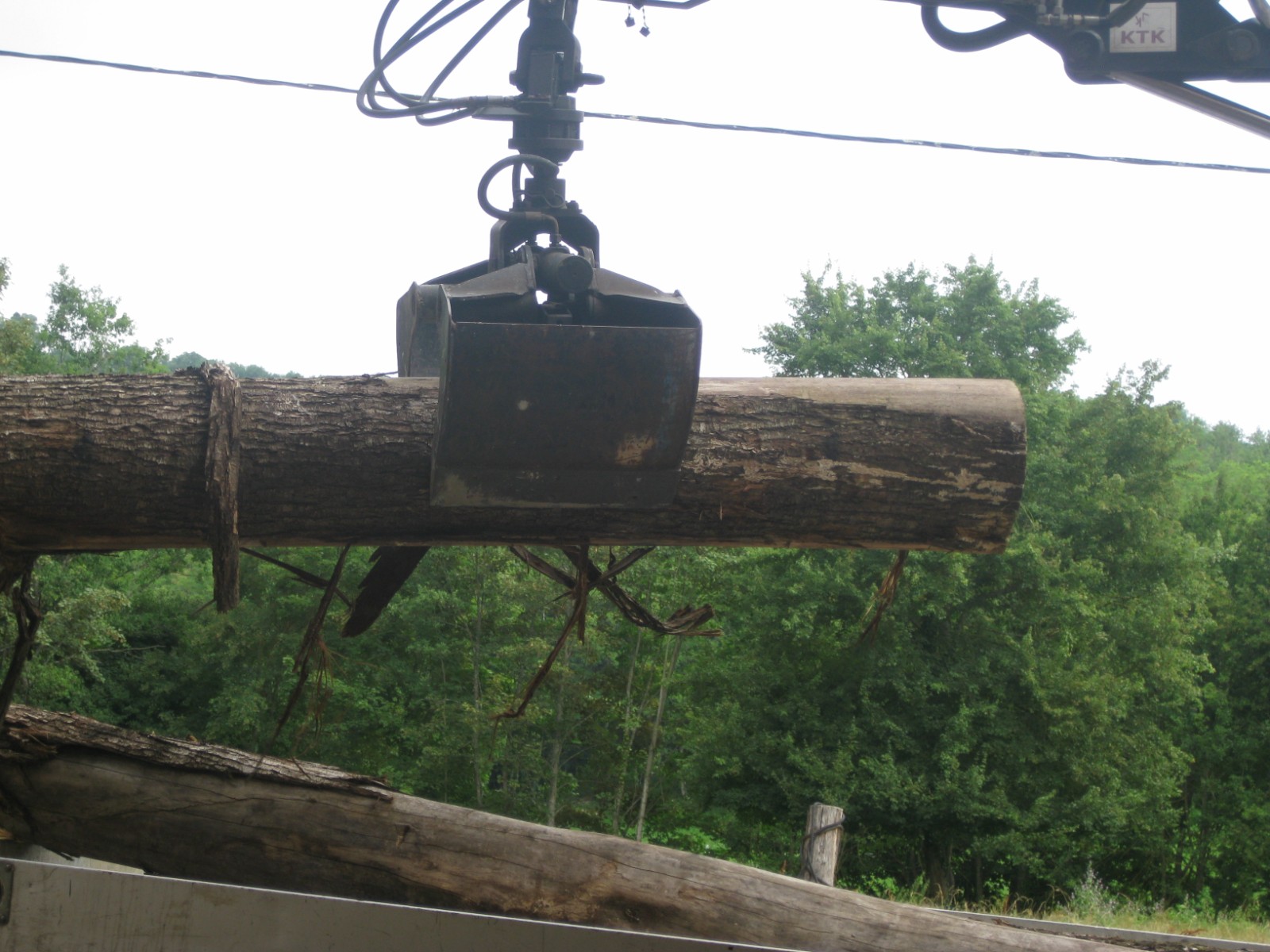
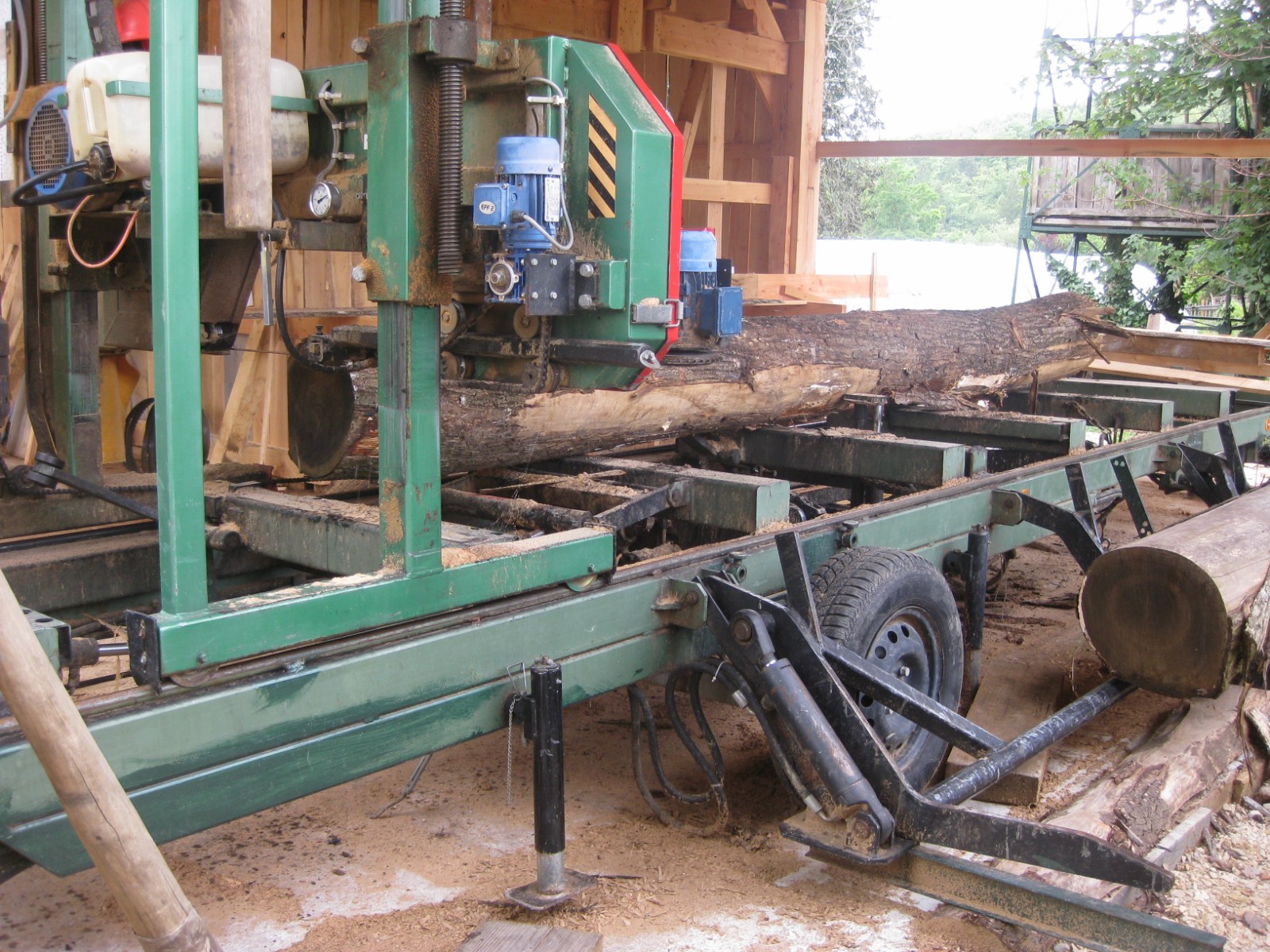
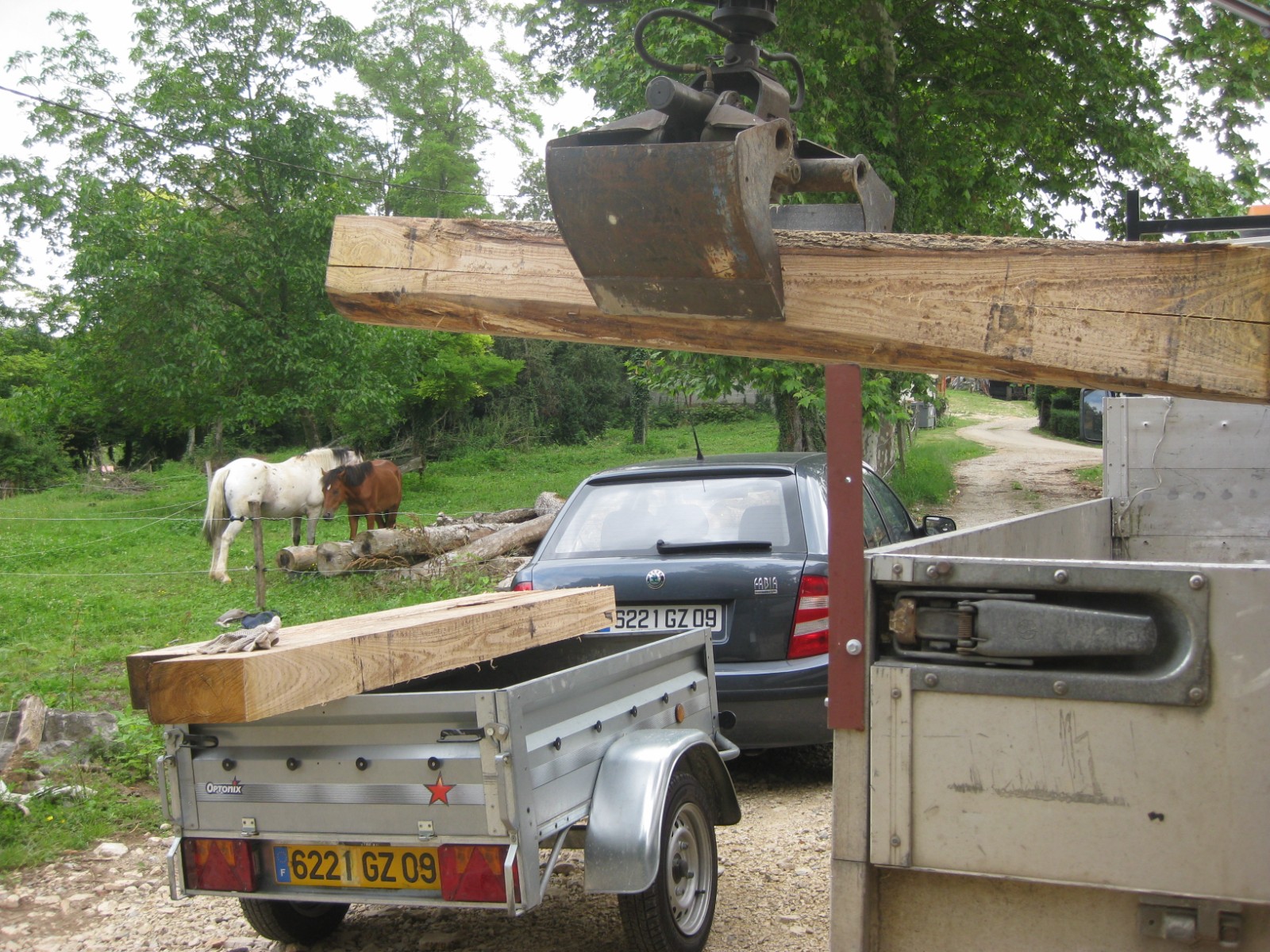
Robert trundles off with his large pick-up to select likely-looking logs while you stay and play with the cheerfully energetic dogs. Then he hoists the wood into his wonderfully large cutting machine which he somehow manoeuvred over himself from Poland, measures everything you your exact specification, cuts, trims….and hoists it onto your trailer or whatever.
The chosen log is hoisted ready to be cutLet cutting commence!Loading our trailer as the horses supervise
Two hours, a cup of coffee together as Robert worked out the bill, and we were off.
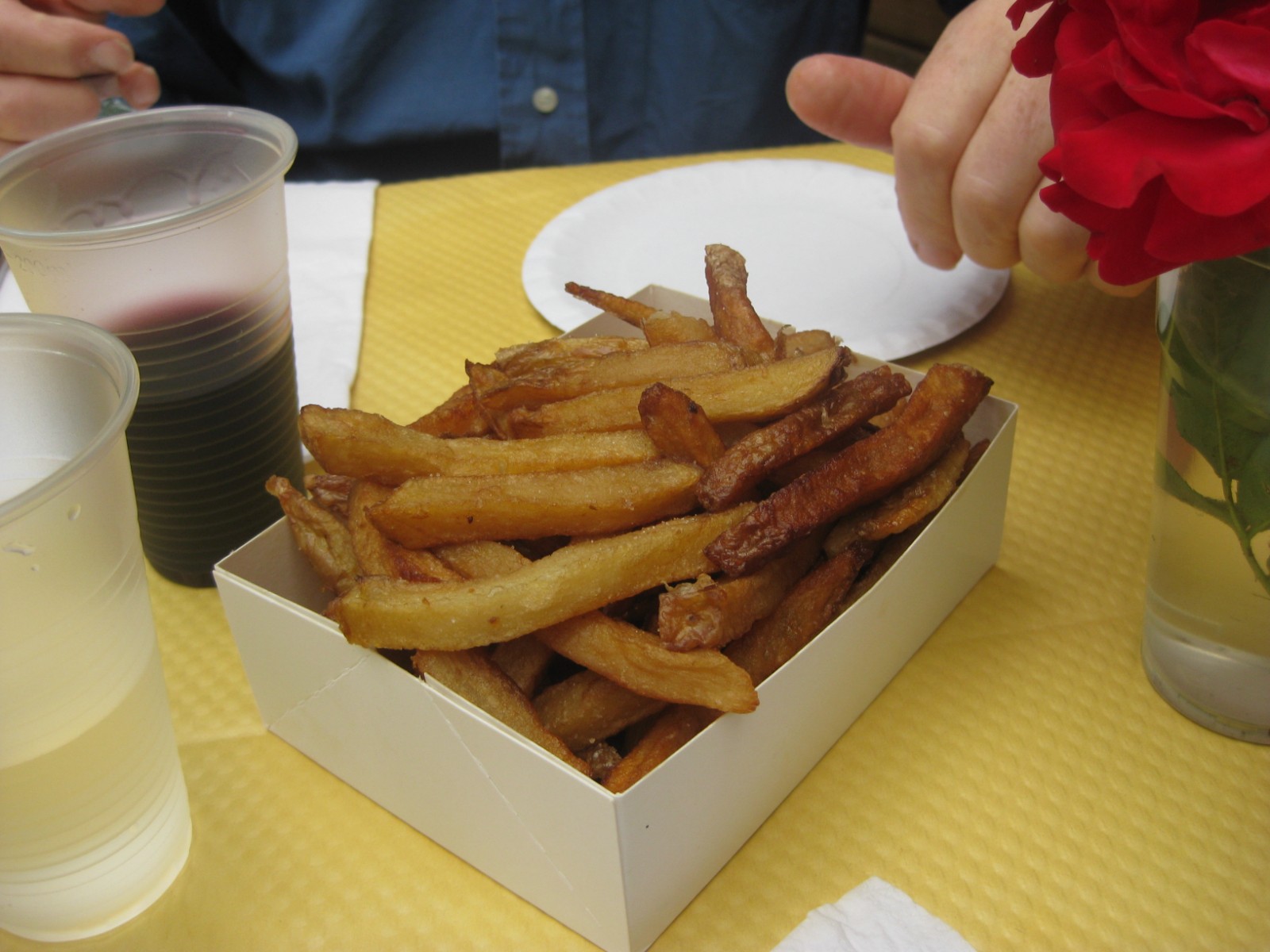
If you haven’t eaten chips cooked in duck fat, you haven’t lived. No, really
Time for lunch then though. L’Enso de Marichott. If the idea of eating in a shack in a car park doesn’t attract you, you’ve not been to l’Aire du Ségalas , near Castelnau-Durban. It’s a wooden chalet open only during the summer months, and almost the whole menu is based round duck – the ducks that the owners José and Jean-Luc raise themselves. In fact they grow much of what you eat, and almost all the rest is local, and organic at that. We had a quiet lunch, but weekend evenings are the time to go and party there, we’re told. Definitely worth a detour.
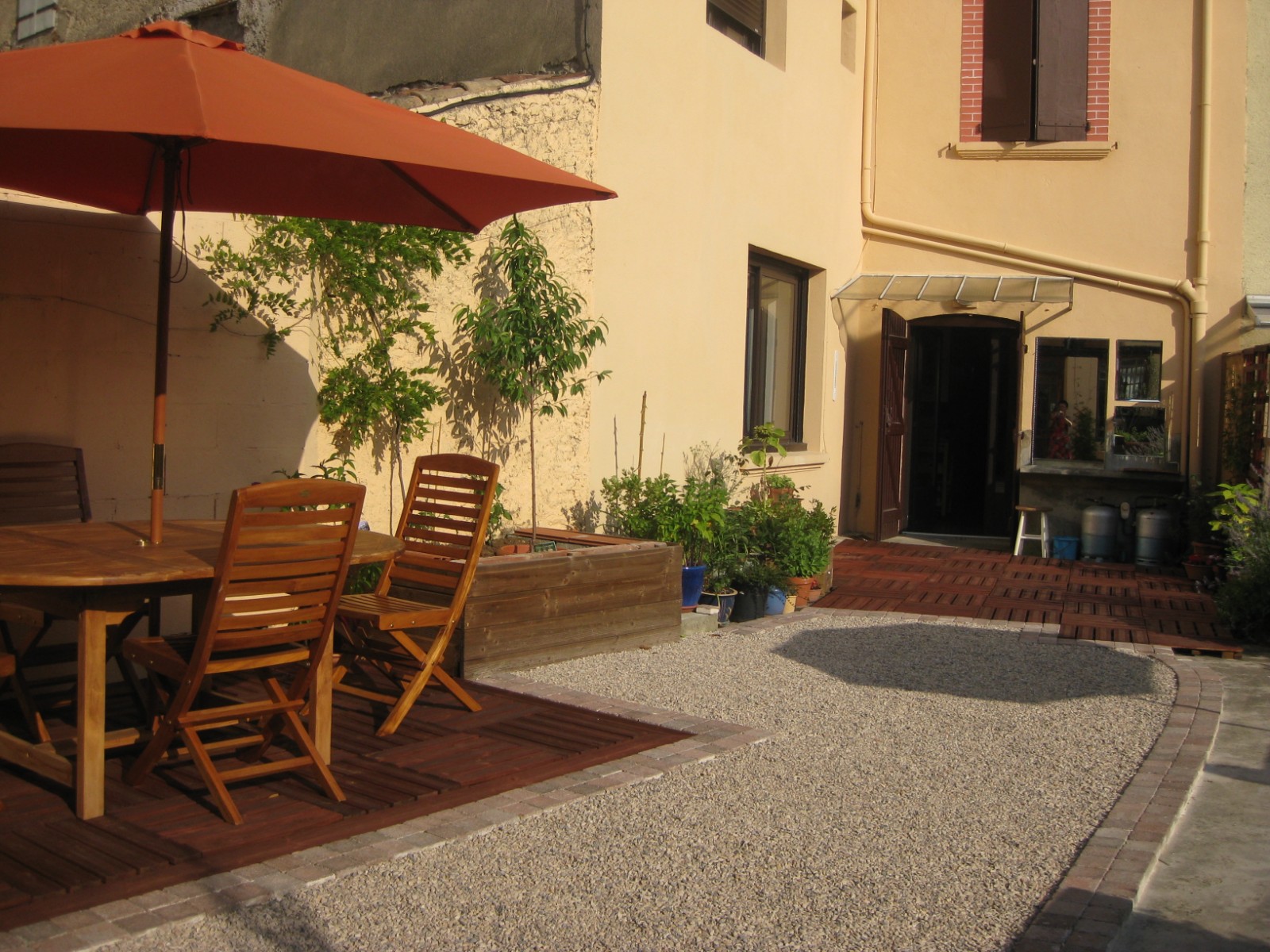
Even if you don’t normally click on links, please look at this one: It shows our house and yard both back in the Bad Old Days, and up until about a year ago. We think things have moved on again. Take a look.Over on the left is pretty much where we got up to last year.
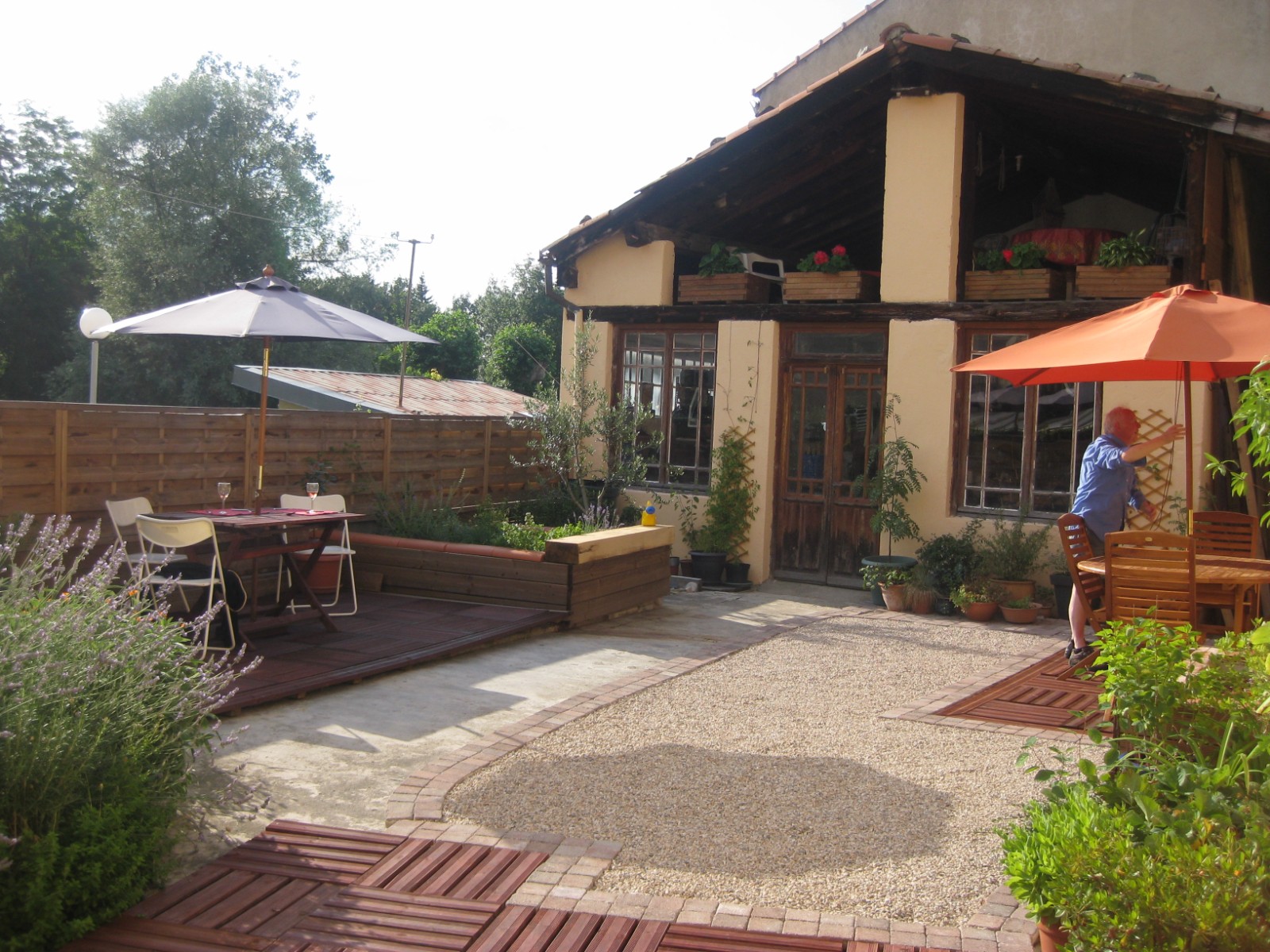
Then we added another seating area, and wood to cover the ghastly concrete that we couldn’t dig up near the house. Have you spotted that gravel from Raissac yet?
There it all is, seen from our bedroom window. There’s just one major job to do. And that’s to top off the two raised beds with large lengths of wood, so we can use them to sit on as we admire our peaceful outside space. Our day out to collect that wood is yet another story.
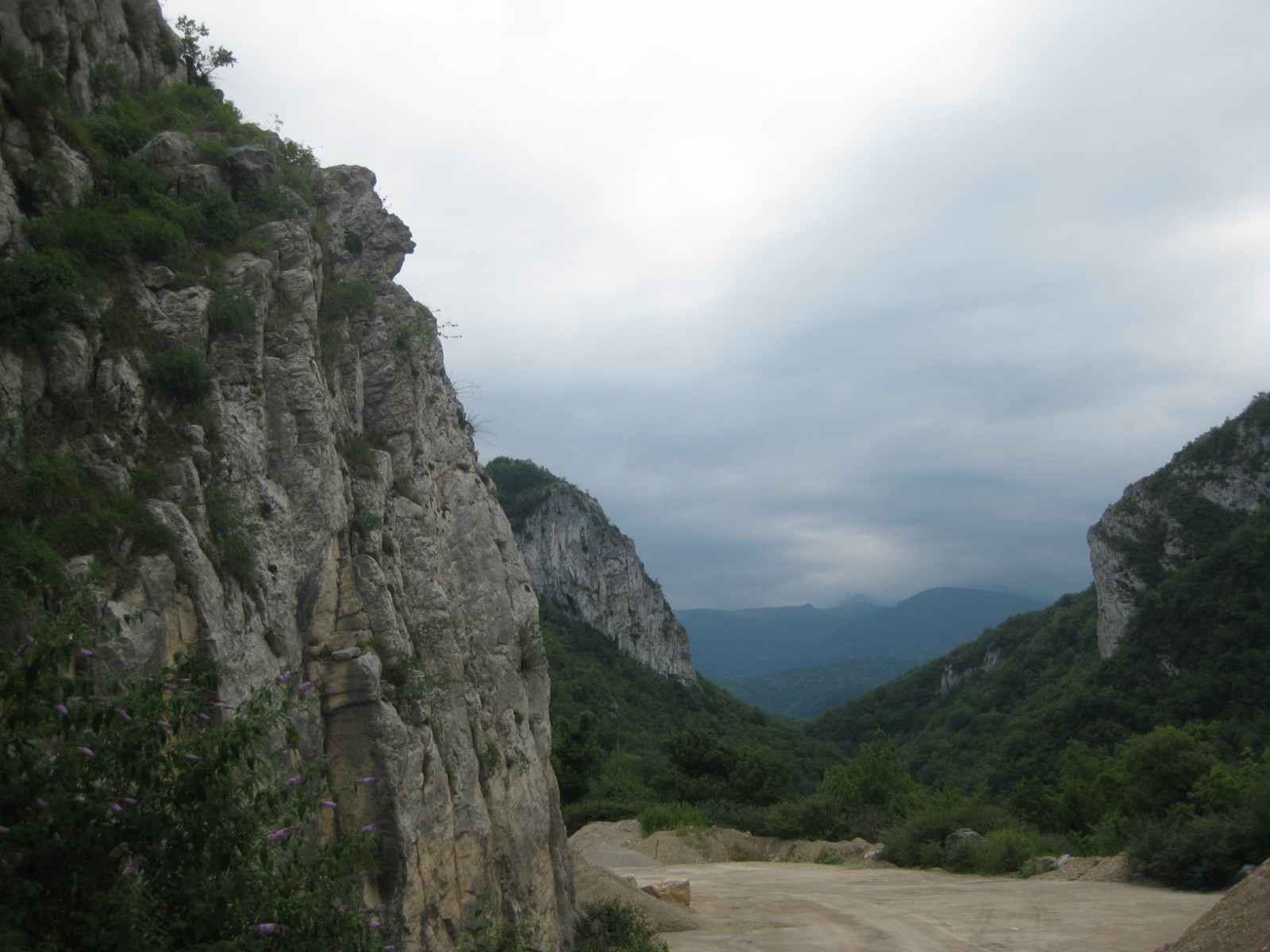
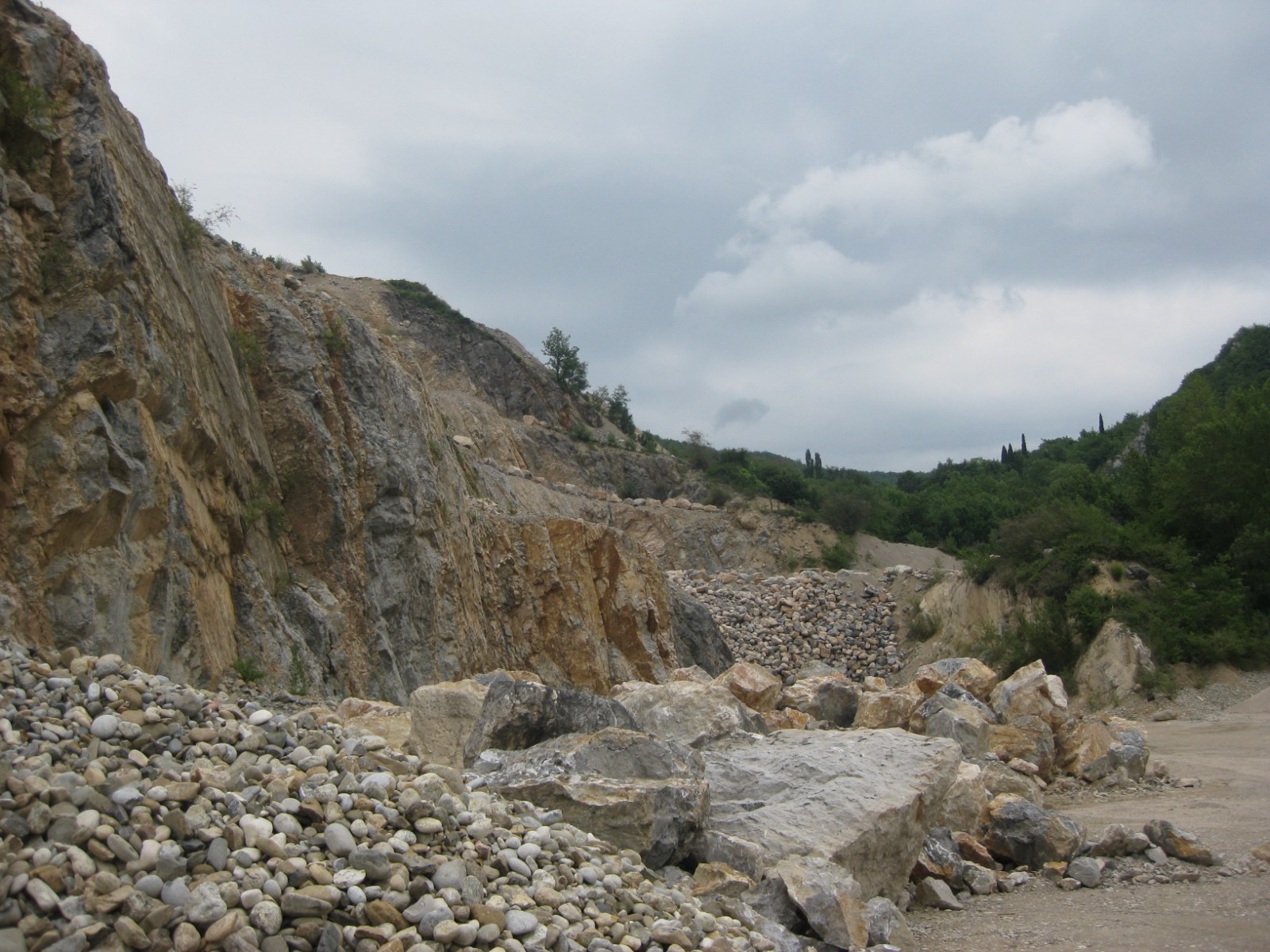
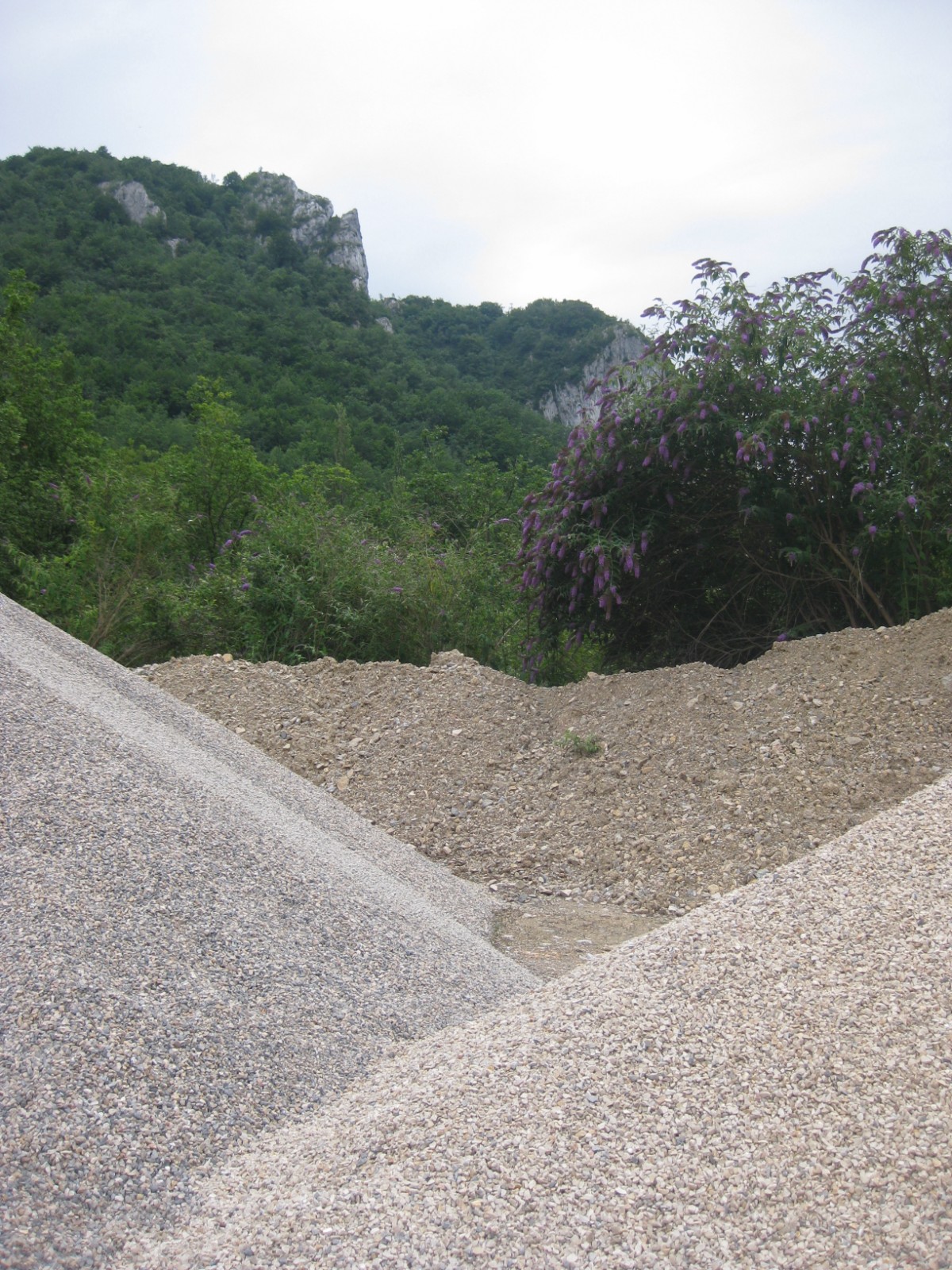
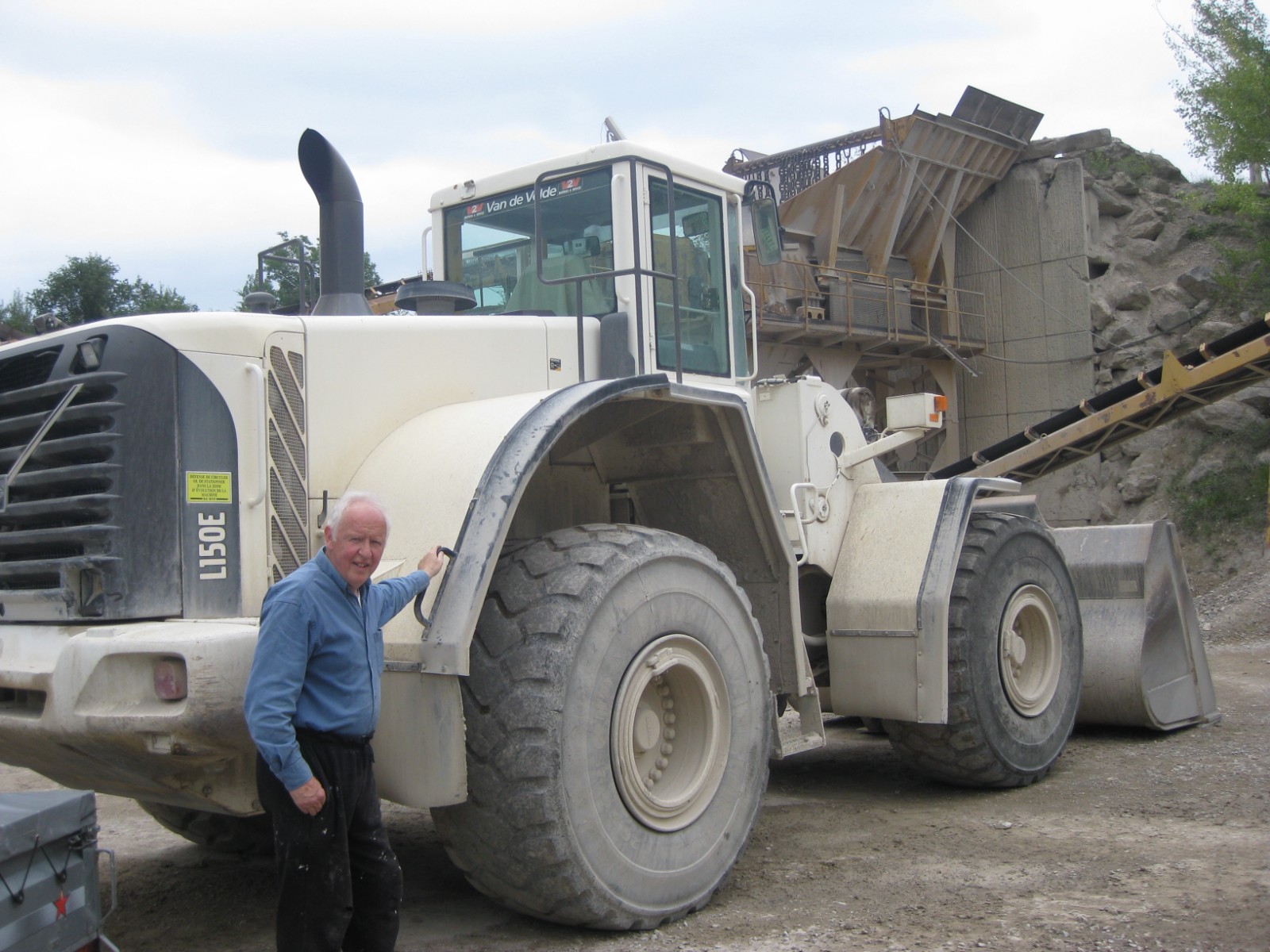
The other day, we went to RaissacThere’s a quarry there:We looked at rocks. We looked at big stones. We looked at smaller stones:We chose gravel.And a man (no, not Malcolm) with a grab scooped up the best part of 500 kilos of the stuff, and dumped it in our trailer, for us to drive cautiously home with.‘How much do we owe you?’
Gallic shrug. ‘Whatever you feel like paying.’
‘We really have no idea. Give us a clue.’
’10 euros?’
Not bad, eh, for an almost unmanageable load of gravel
What do we need it for? Well, you’ll just have to wait and see
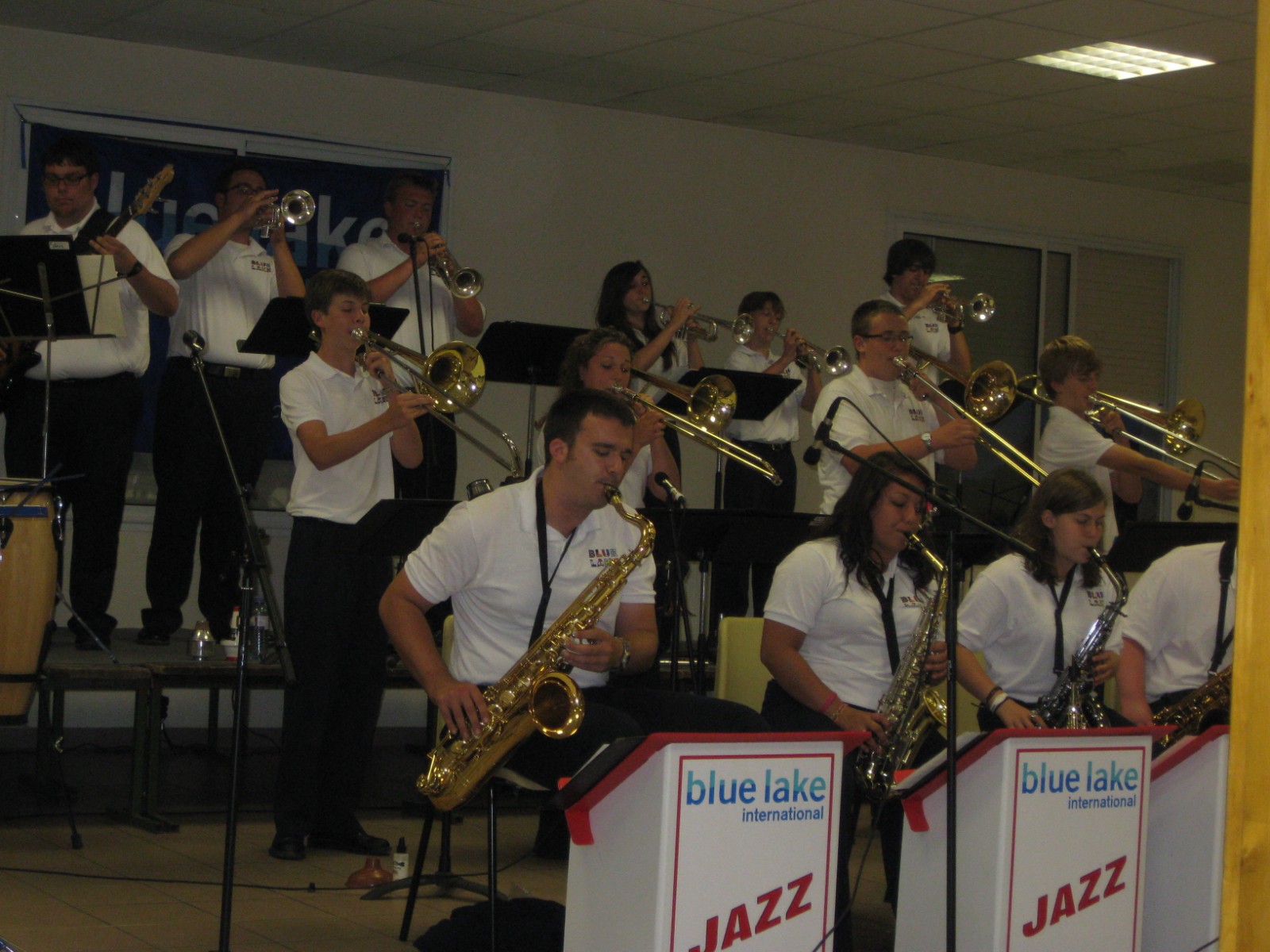
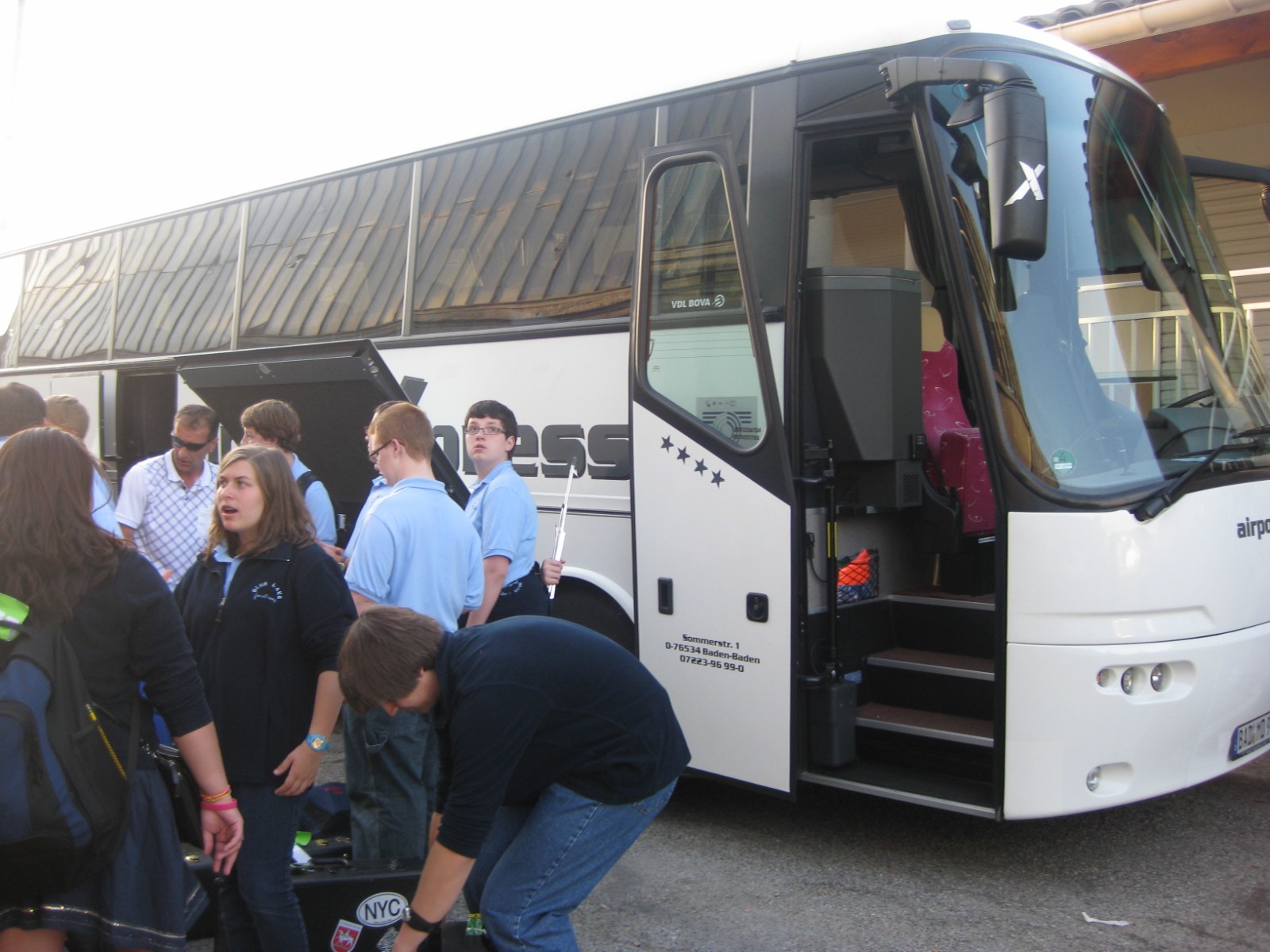
If you’re young, American, and living in Michigan, and if you like performing, you may be lucky enough to spend part of your summer at the Blue Lake Fine Arts Camp, a summer school of the arts located on a 1300 acre campus in the Manistee National Forest. If you’re really talented and work hard, you may one year be selected for one of the 8 or so ensembles that have been coming over for a European tour every year since 1969.
And if you live in Europe, you may be lucky enough to live in one of those towns that welcome these young people. Here at Laroque, we’re among those fortunate people.
The Blue Lake Jazz Ensemble first came here 2 years ago. Their director, David Jensen, and the leader of our own LDO Big Band, Michel Alvarez, hit it off. So when plans for this year were under way, both men were keen to see Laroque included in the itinerary.
But what an itinerary! The band landed in Paris on 17th June. From Elbeuf in Normandy, they passed through Belgium to reach Germany, Denmark, Germany again, then Austria. Then they travelled 1588 km to reach Laroque d’Olmes, a coach journey that took a whole 24 hours. After staying with us, they were due to travel overnight to Paris and the plane home on July 9th.
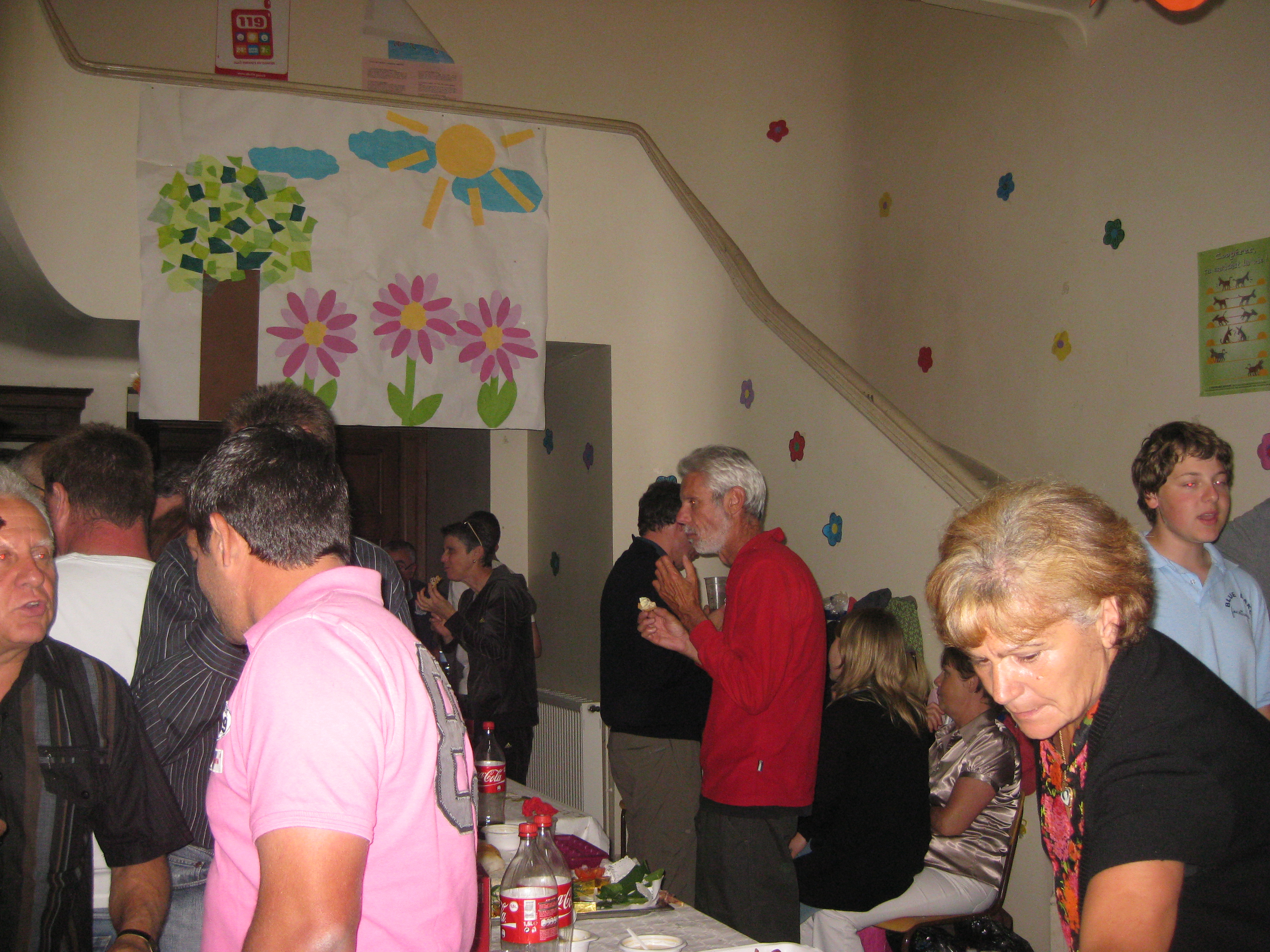
Party at the Château
They might have been tired, punch-drunk with cultural variety and new experiences, but they had to be welcomed with a party. It was here they met their host families. What would two 16 year old boys make of the fact that they got to stay with us instead of a French family? Pleased, as it happens. Grappling with unknown languages – French, German, Danish over 3 weeks or so takes its toll. At least we were a bit of a rest.
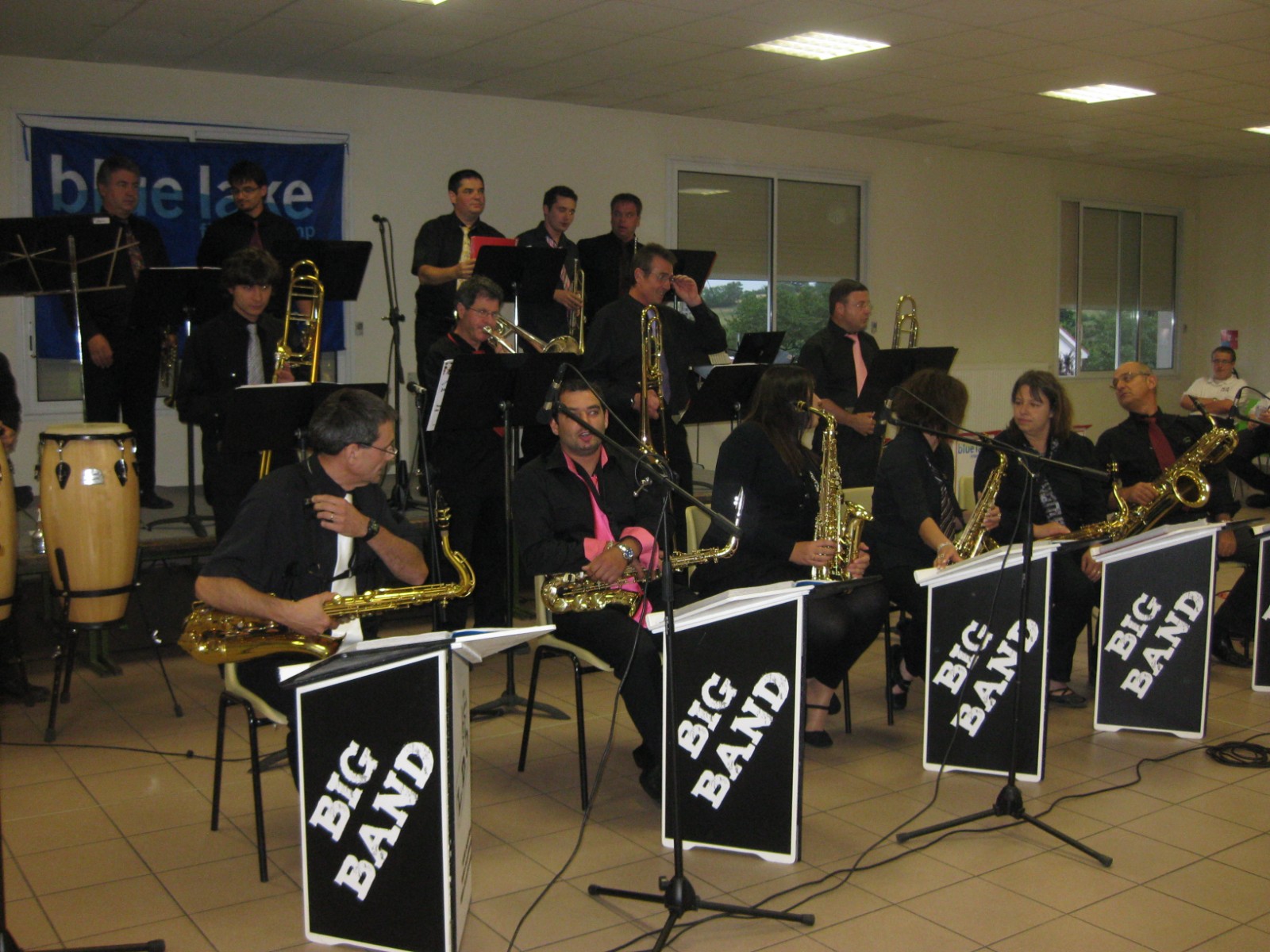
The concert on Thursday evening was what we were all looking forward to. Well, not me so much. Malcolm had provided translation and interpreting services last time, so this year, he thought it should be my turn.
LDO Big Band get ready to playTranslation services in full swing
All went well at first: I’d seen Michel’s speech in advance, and David’s response contained no surprises. But when it came to introducing the pieces….well…what IS the French for ‘Dance of denial’? Or ‘Struttin’ with some barbecue’? We decided the titles didn’t matter; I bowed out, and then discovered the remaining repertoire was quite translatable, thank you.
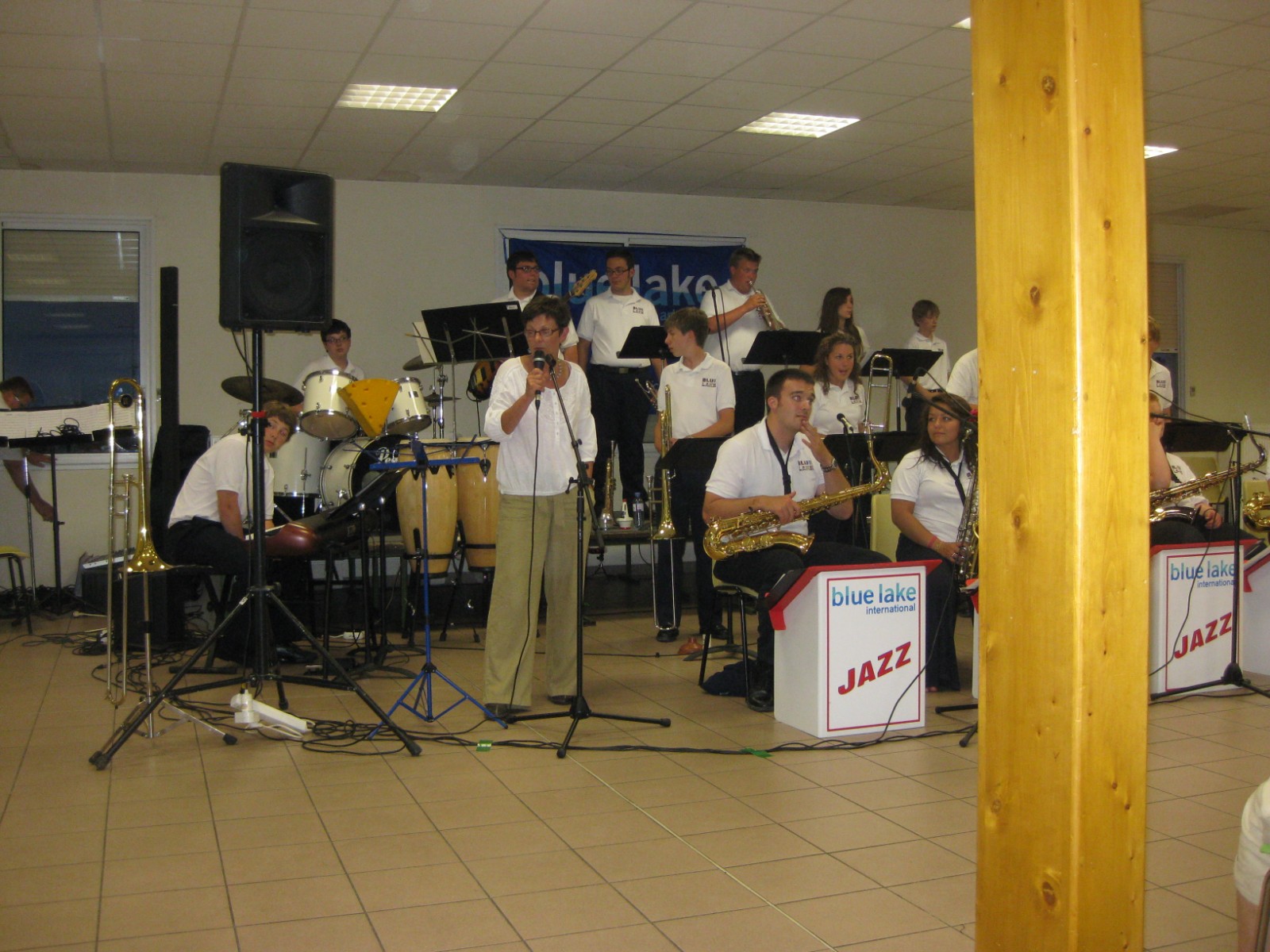
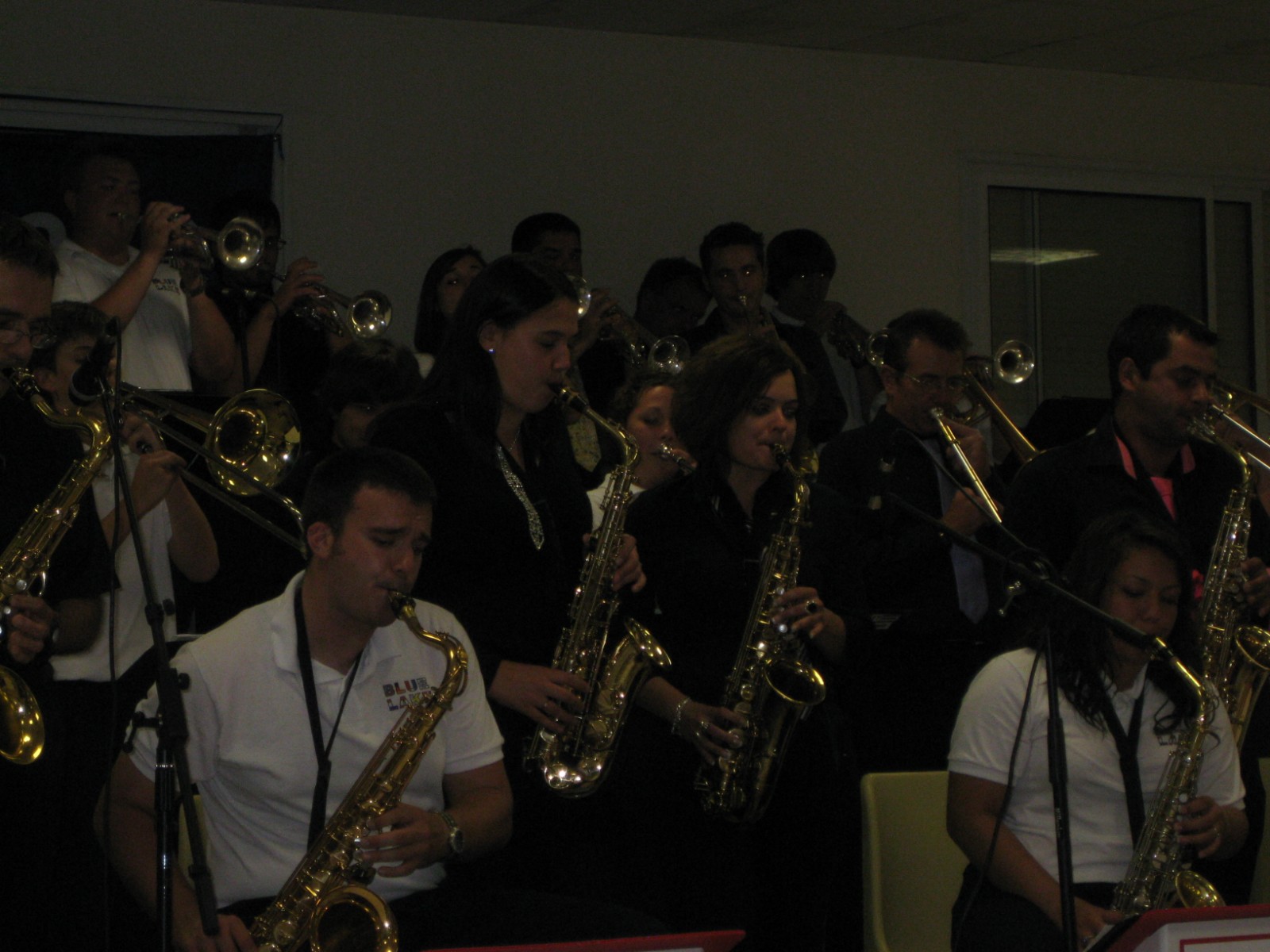
Blue Lake Jazz Band
But those Americans! The performance they turned in was exciting, exhilarating, excellent, extraordinary. Impossible to believe that some of the group were only 13, and that few had left High School. They’re so professional. LDO Big Band was on form too, so the high spot of the evening was when the two bands came together to perform. Their pleasure and pride in working together communicated itself to an already delighted audience, and the evening ended on a high for us all.
The two bands squeeze together to play
This opportunity to play together is apparently what makes little old Laroque worth the detour for the Blue Lake musicians: it’s not something they do elsewhere. They’d like to send a different band our way next year, David’s year off. It seems Laroque is now firmly on the Michigan map.
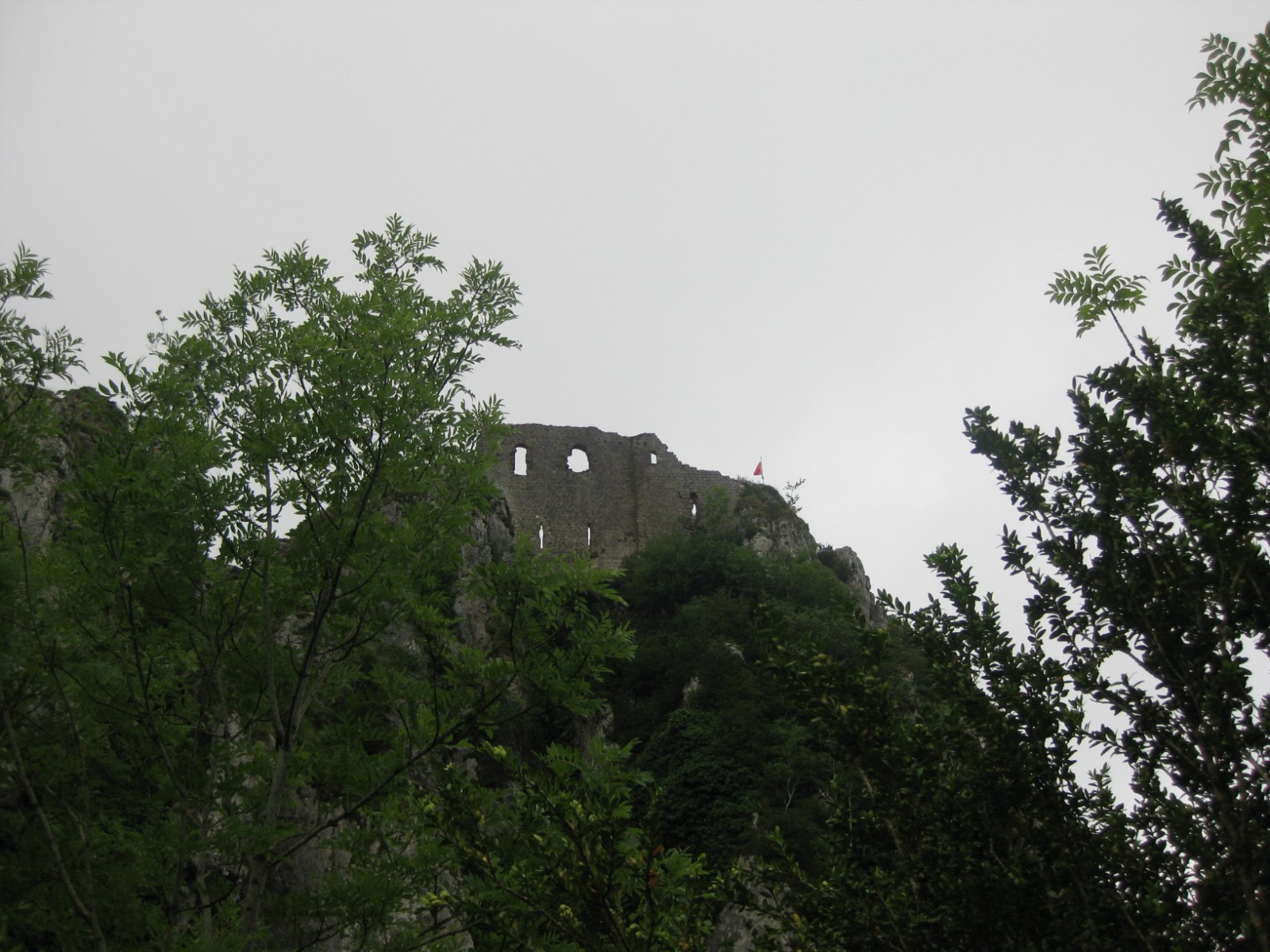
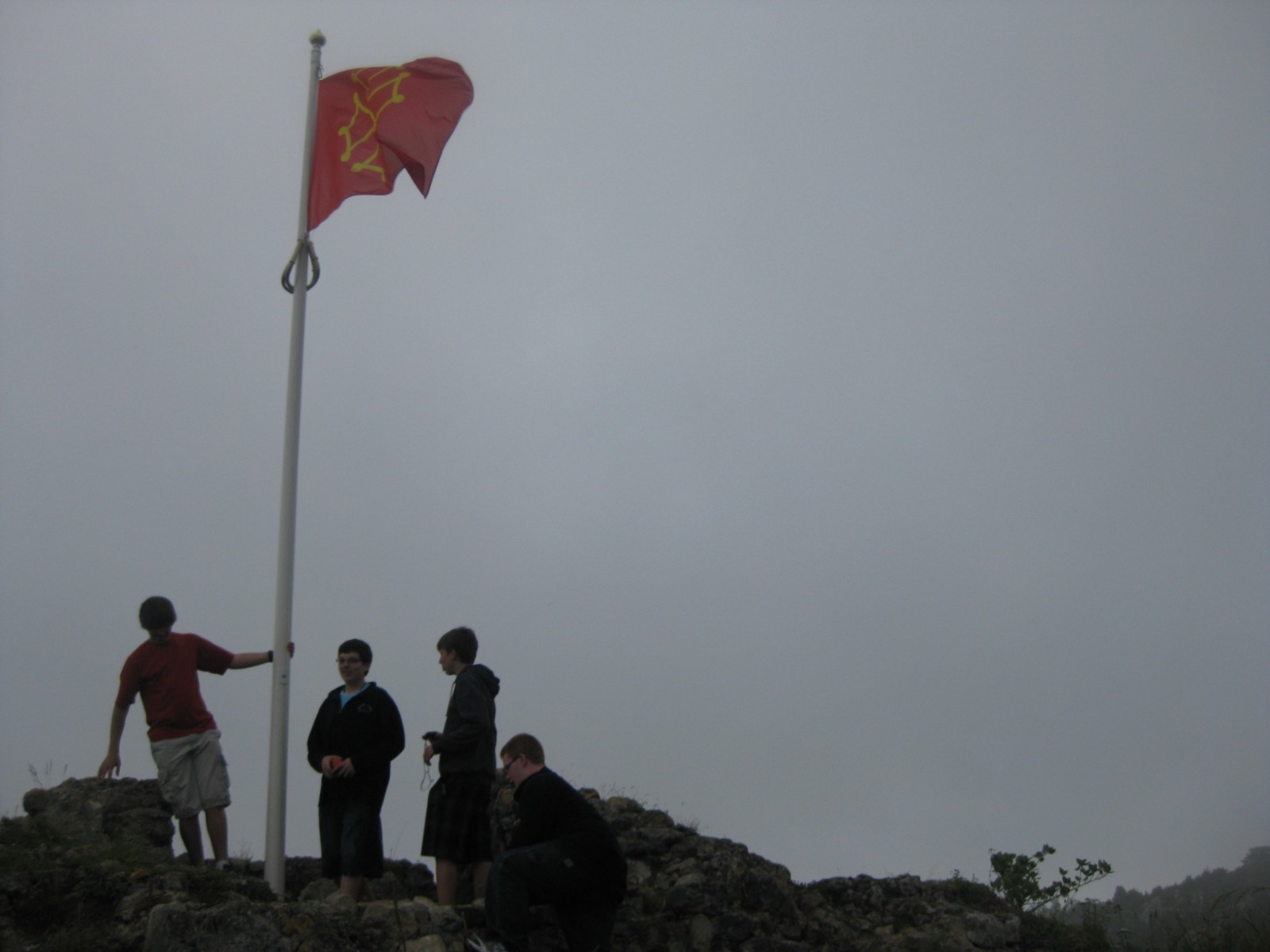
Roquefixade………. conquered by our American guests
The rest of the stay was given over to sleep, lots of it, and sightseeing, rather less of that. We climbed Roquefixade to see a ruined castle, and took in the medieval town of Mirepoix. Others had different days-of-yore experiences: Foix and Carcassonne.
The trip ended on a sad note though. One of the group had lost her passport, and despite every effort, it couldn’t be replaced in time. She’s still here.
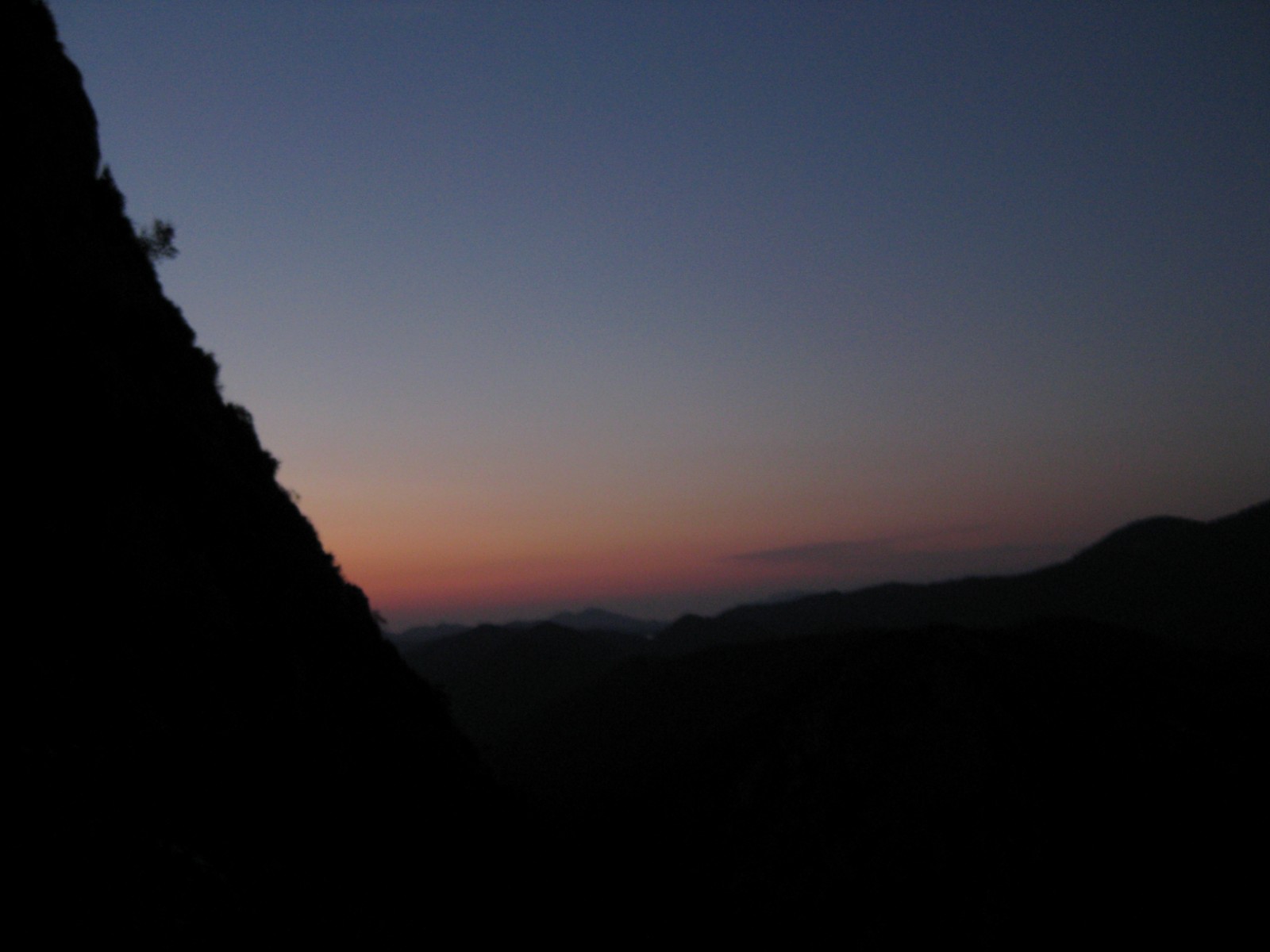
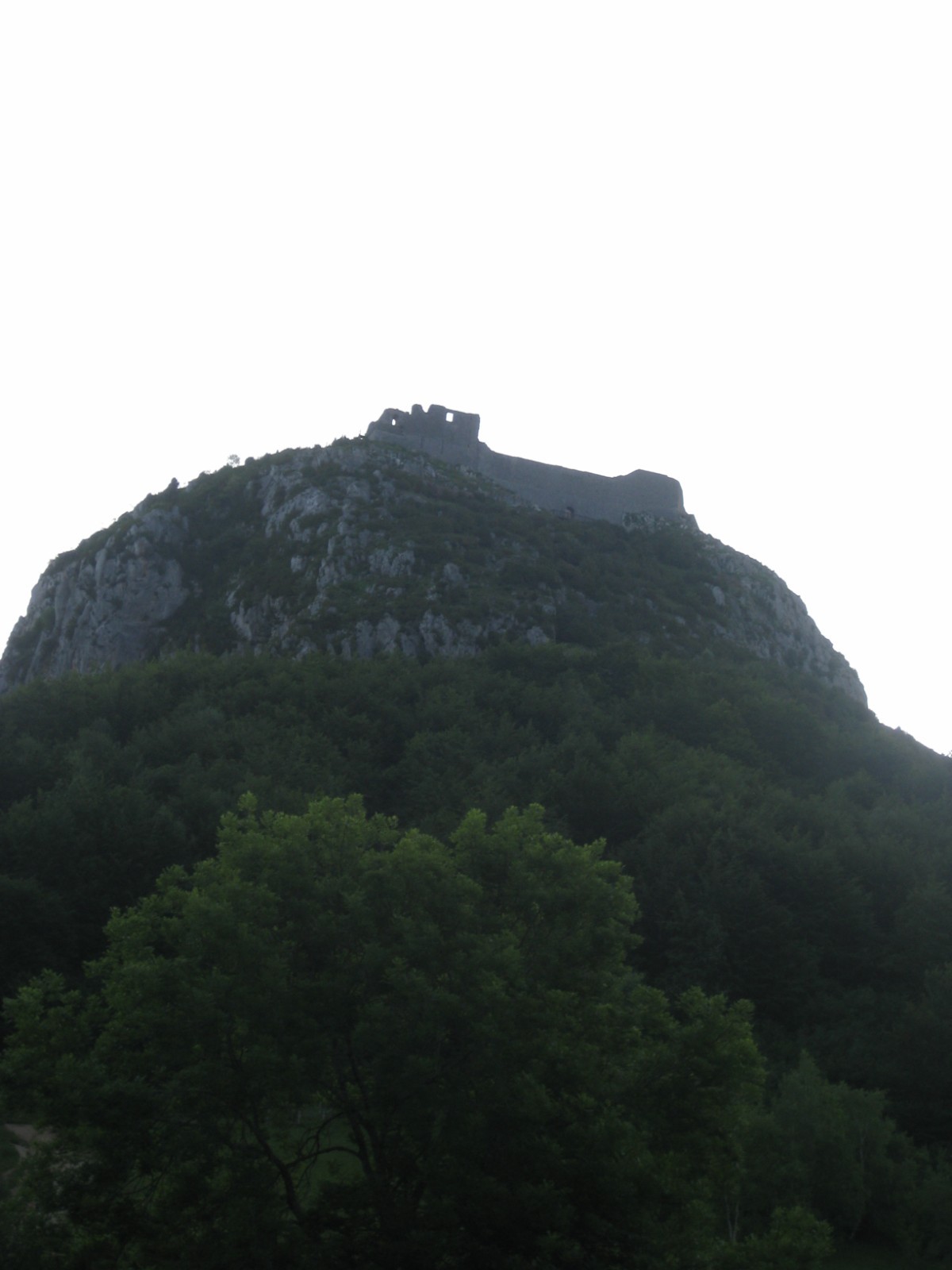
All this time we’ve been here, we’ve not seen the sunrise over Montsegur. Today, midsummer day, I decided to change all that. Me and 99 others……
I arrived at the car park just after 5 o’clock, at the same moment as a hare which had for at least two frantic minutes been trying to out-run me. And realised I was not alone. It was still dark, and quite a difficult business to trek up a steep, slippery rocky path. Other more provident people had torches, and everybody helped one another.
The route to the top. Still pretty dark
Towards the top, the night sky was slowly washed from inky blue to delicate blues, pinks and greens by the sun which was still well below the horizon.
The sun first appears. It’s just after 6 o’clock
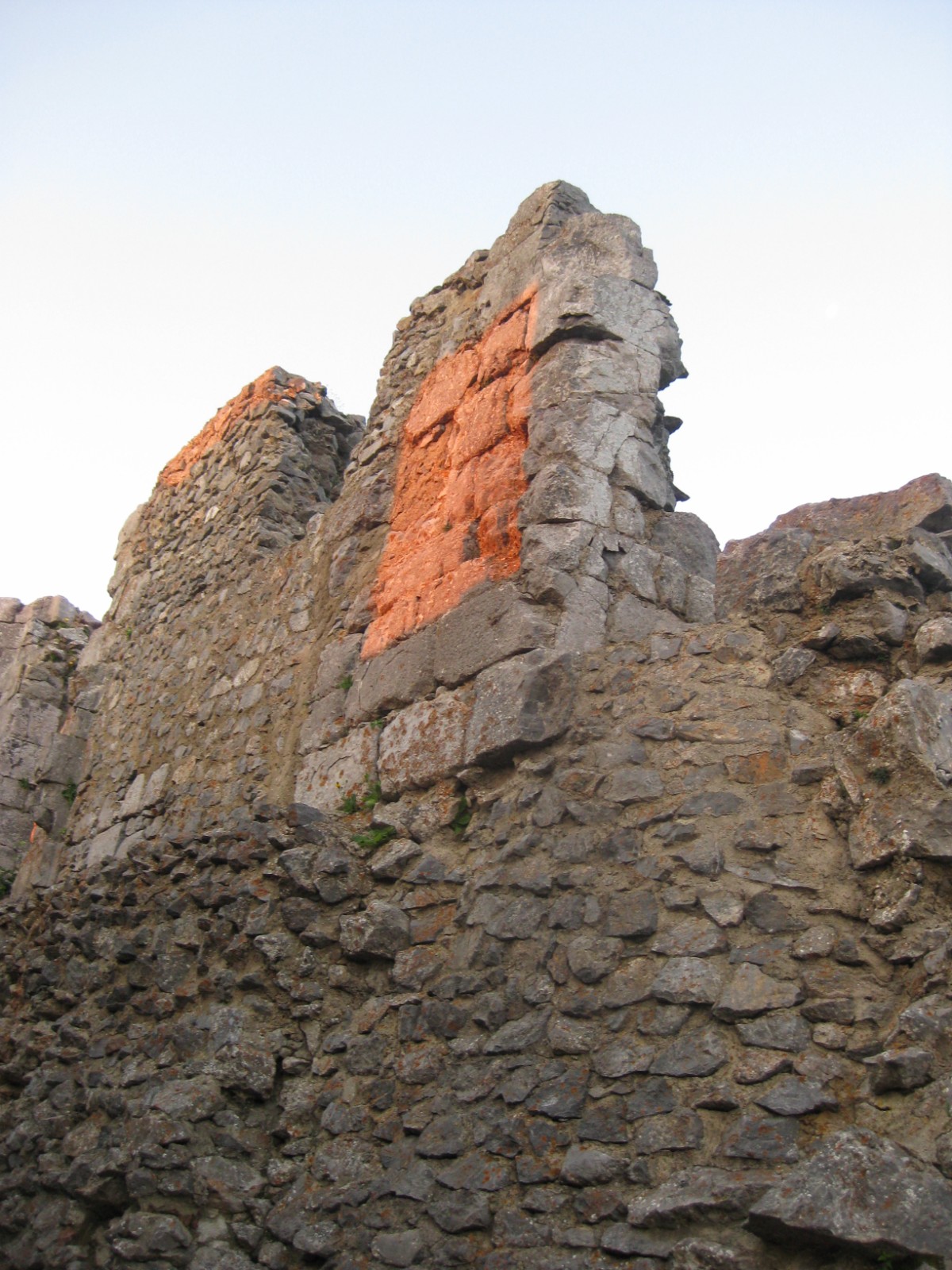
I found a couple of friends there, and a vantage point relatively distant from the crowd crammed into the castle ruins. They had come to see something special- the rays of the sun as they poured through the ruined windows. I decided it was too packed with people to feel special in there. I’ll come back another day soon, to see for myself.
And again, a very few minutes later
What I saw was quite wonderful enough: a rich copper disk slowly mounted above the line of mountains in the distance, tinting the sky ochre, rusty-red, sugar-pink, finally emerging so fiery bright I could no longer look at it. Some locals burst – quite beautifully – into song. Occitan/Ariègeois stalwarts, ‘Quand lo Boièr ven de laurar…’ and,inevitably, ‘Se Canto’.
The rising sun, shining through a ruined window, casts an image on the castle wall
Gradually the whole sky lightened and brightened, turning the entire landscape crisply clear. I strolled round the summit – it was surprisingly easy to get-away-from-it-all, before skidding and climbing my way down to the car park again….
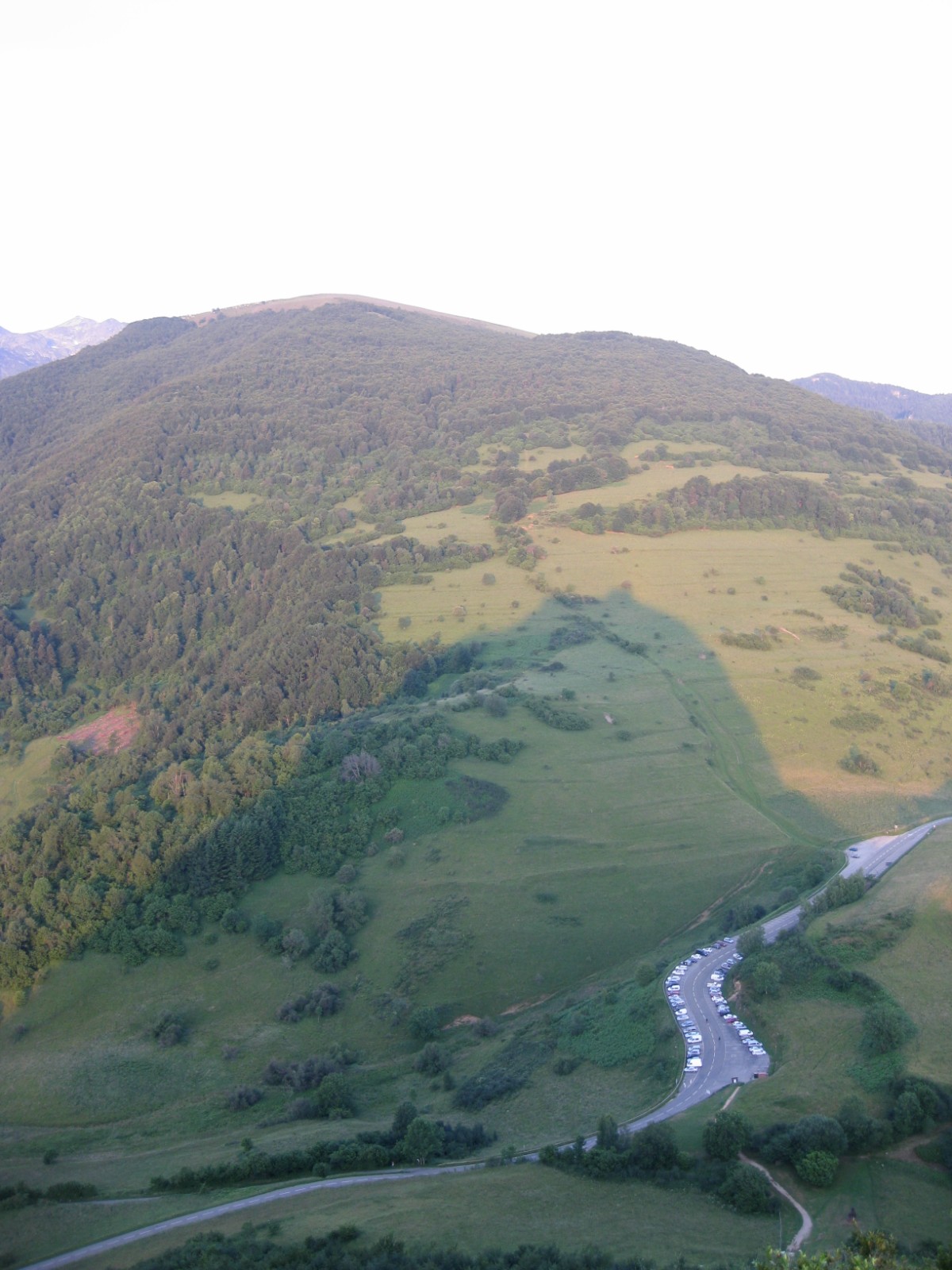
Montségur casts a shadow on the hillsides beyond. The car park’s still full.
….and there were my companions who’d provided torchlight. They were hitching, because their car had failed to start. We journeyed back to civilisation together, ready to resume normal service. It was 7.30 a.m.
Almost deserted again, Montségur in the early morning light
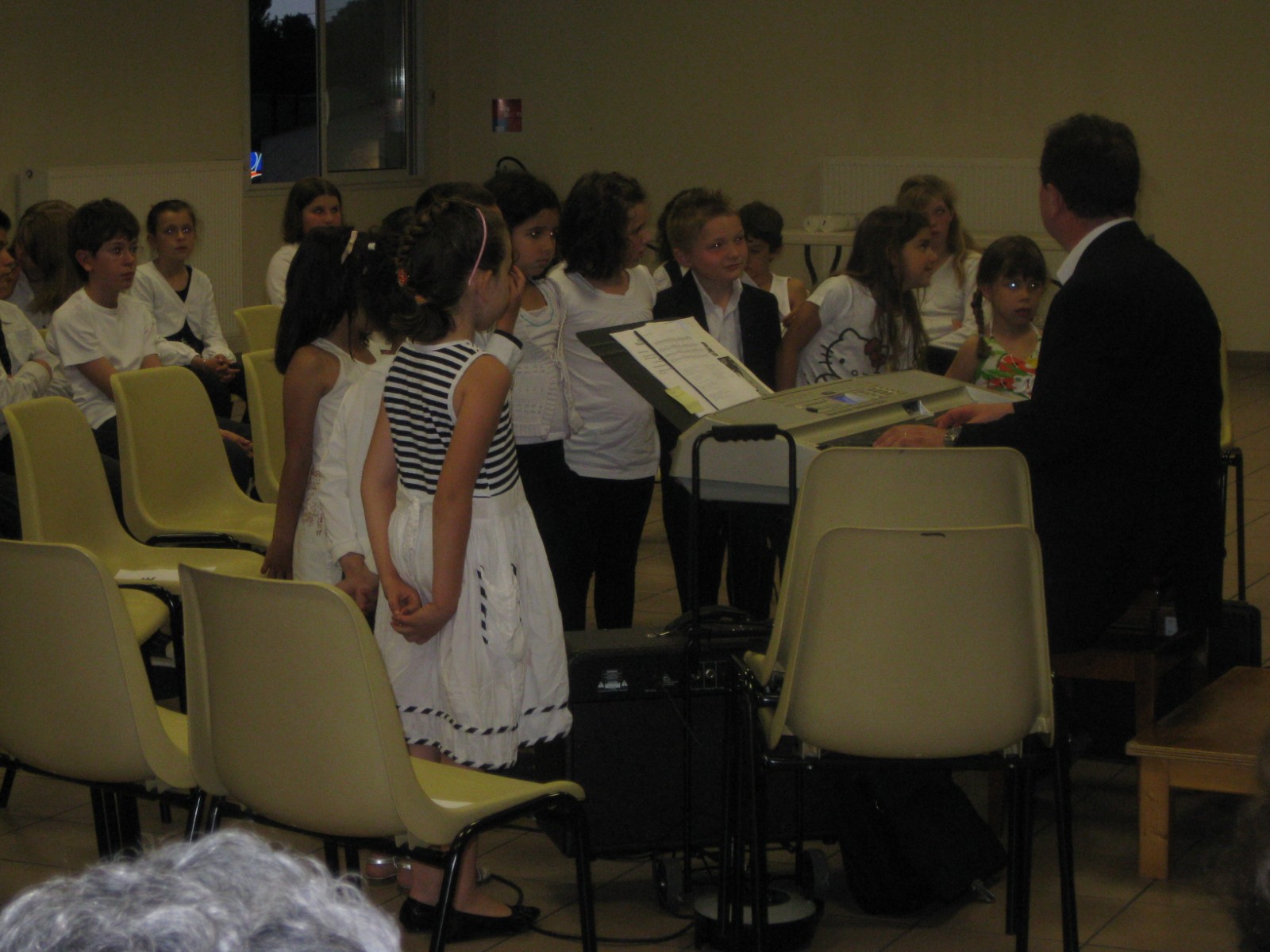
Over the decades, Laroque has enjoyed a reputation as a musical town. With hardly more than 2000 inhabitants, and horribly in debt, it still nourishes its Music Centre. Children (some adults too) come first of all to sing, then perhaps to try their hand at an instrument, before moving on to play in ensembles, the orchestra, or the regionally well-regarded LDO Big Band. Some people make a family thing of it.
The littlest children of all take centre stage
The baker, for example, is always there at rehearsals and concerts with his trumpet, and his daughters joined him some time ago: wind instruments are their preferred choice. Louis in the choir plays the sax as well as singing with us. His son’s pretty good on the piano, and now his wife’s decided it’s not too late to learn to play the organ. The Ribas family turn out singers, percussionists, and sound technicians….and so on.
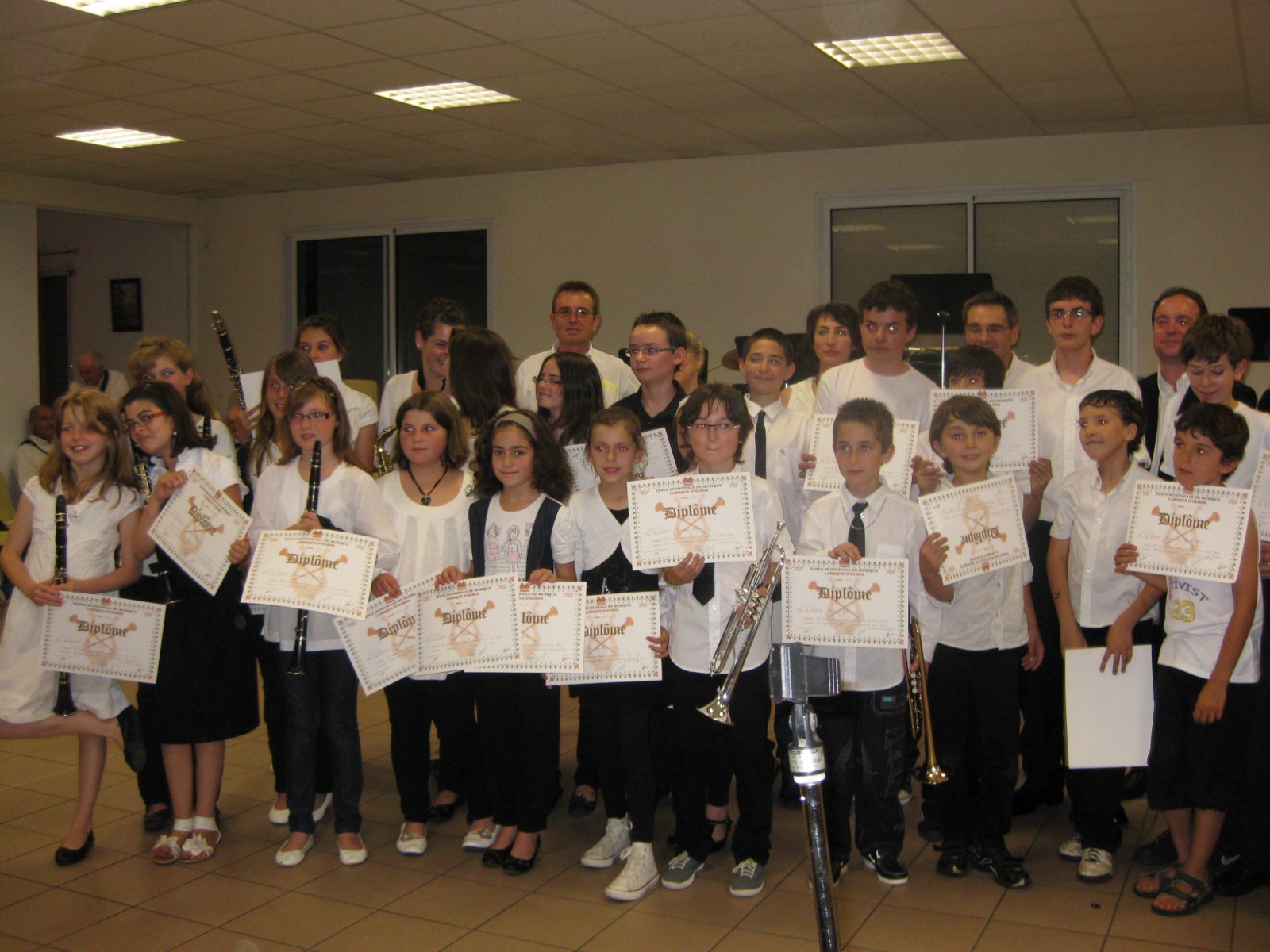
Last night was prize-giving time for the Music Centre, la Remise des Diplômes.
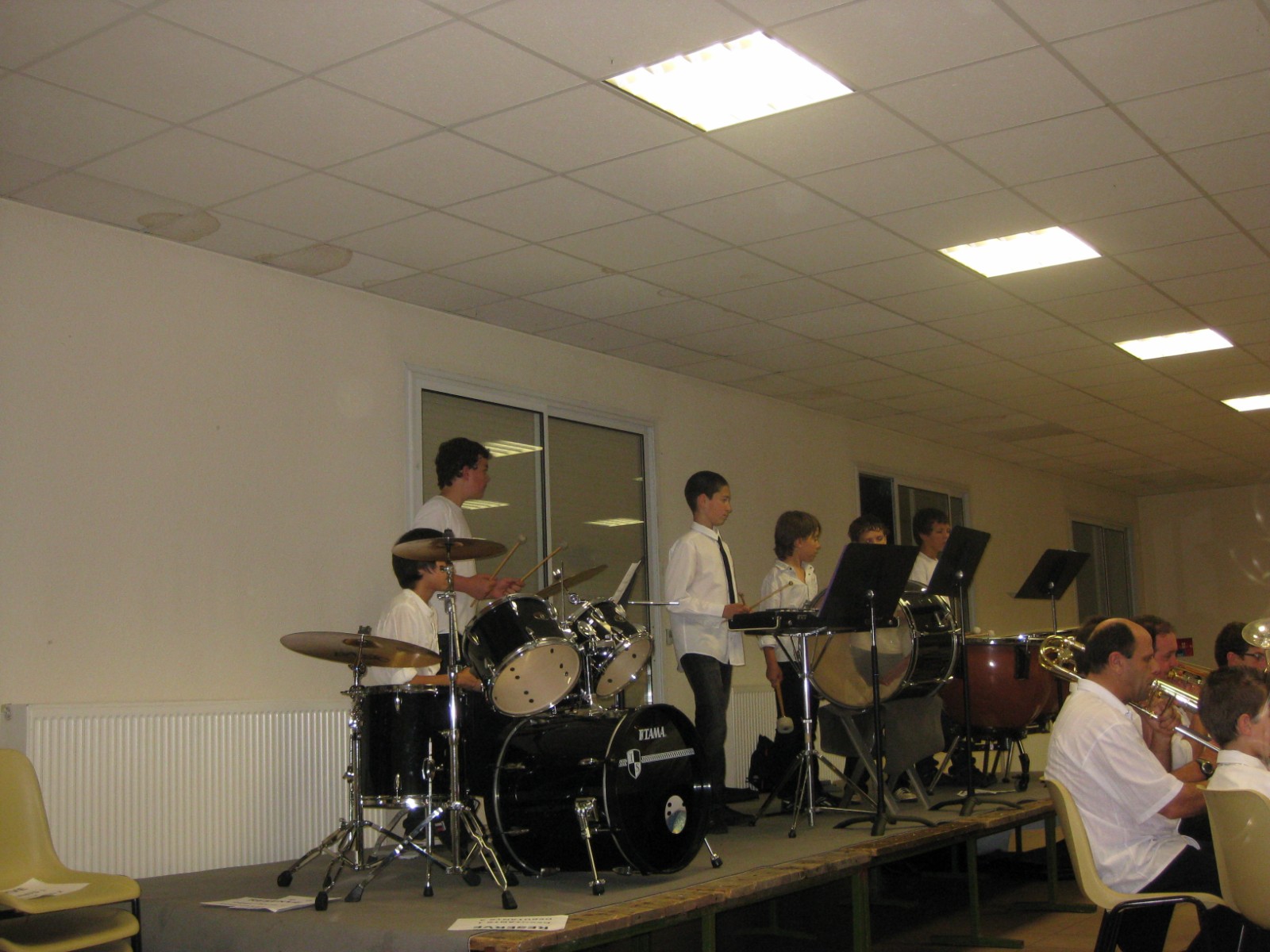
What is it about boys and percussion?
Everybody had their chance to be heard on stage: even our choir, la Chorale des Adultes, and we didn’t even get any certificates. The children, however, had endured exams, so it was only fair that they should have diplomas for their efforts. Lots of them got ‘mention bien’, ‘mention très bien’, and even ‘félicitations du jury’.
They seemed pretty happy to be there, even before they got their prized bits of paper. A good evening for Laroque









 From Pyrenees to Pennines
You must be logged in to post a comment.