On the first Saturday of every month, a book is chosen as a starting point and linked to six other books to form a chain. Readers and bloggers are invited to join in by creating their own ‘chain’ leading from the selected book.
Kate: Books are my Favourite and Best
This month’s starter book, Yesteryear, by Caro Claire Burke attracts me not at all. Here’s what Google’s AI Overview has to say about it: ‘Yesteryear is a darkly satirical thriller about Natalie Heller Mills, a high-profile ‘tradwife’ influencer who glorifies a romanticised, 19th century farm life. Behind her curated, cottagecore Instagram feed lie hidden modern appliances, paid nannies, and a crumbling, fame-obsessed marriage.’
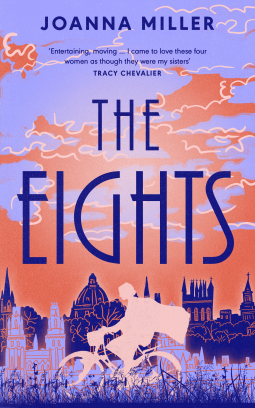
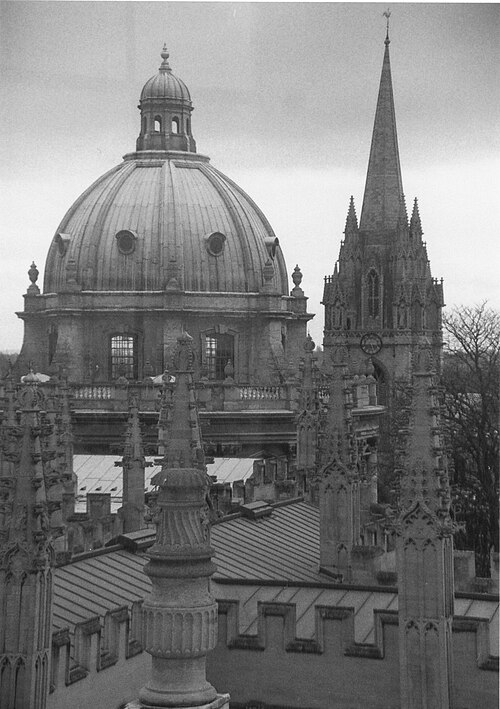
I thought I’d run away immediately to a group of women whose young lives could hardly be more different from our own Instagram-able days. The Eights, by Joanna Miller, follows the fortunes of 4 young women admitted to Oxford University in the very year – 1920 – in which they would be able to study towards a degree, a possibility until then denied to female students. They face petty and strict rules about their day-to-day lives, prejudice and family difficulties. This is their story.
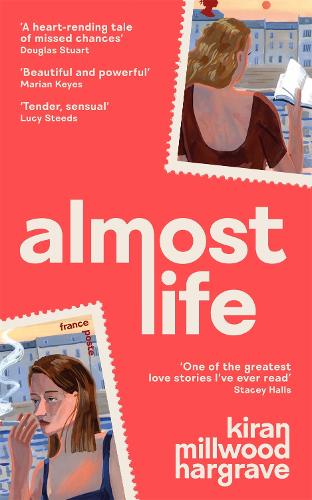
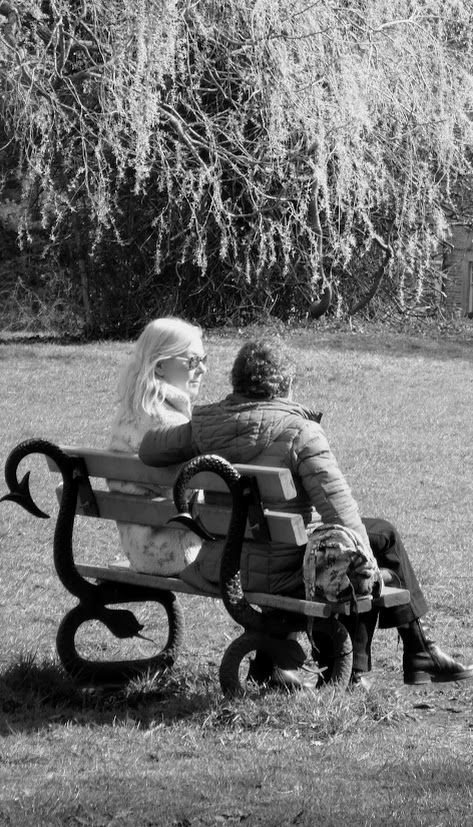
Two women , in Almost Life by Kiran Millwood Hargrave show how women’s possibilities change during the twentieth century. English (bi-sexual) Erica comes across French (lesbian) Laure one summer morning in 1978, on the steps of Sacré Coeur when Erica smiles at Laure after spotting they’re reading the same book. They become lovers then part – often. Erica is in her mid 30s as the story reaches its climax, and the social change that characterises both French and British society between the 70s and the very early 2000s is subtly yet vividly made a living part of the narrative.
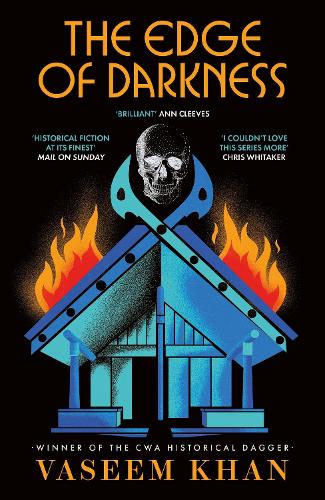
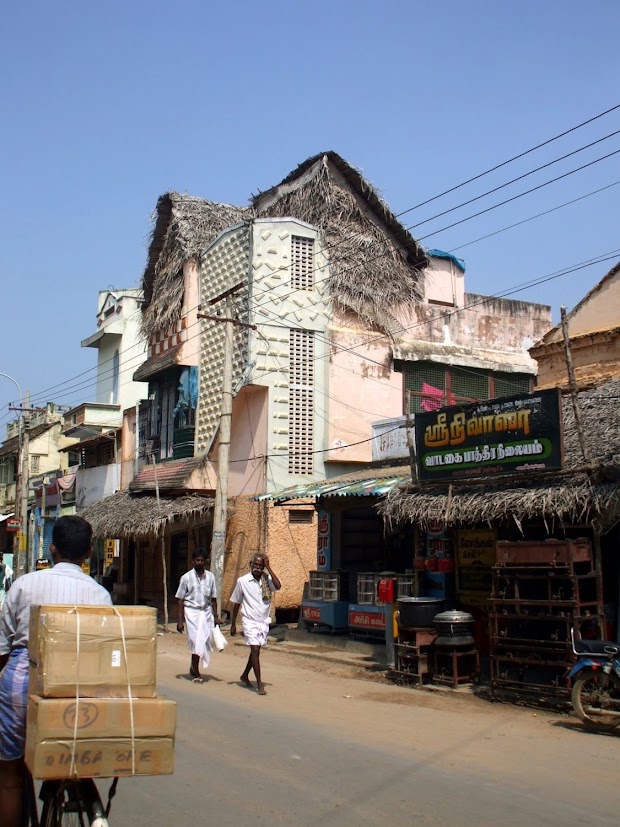
In Vaseem Khan‘s Edge of Darkness, another female is treading new paths for women. We’re in just-post-partition India, and Persis Wadia is India’s first female detective. She faces the same kind of prejudice and condescension faced by the Oxford students. Persis is determined, principled and awkward. She thinks outside the box, but has very little support, with the possible exception of her new second-in-command. Solving the murder of a prominent politican isn’t something you should leave in the hands of a mere woman. Or is it? This is the sixth book In which Persis is Our Heroine, and I’ve loved every single one of them.
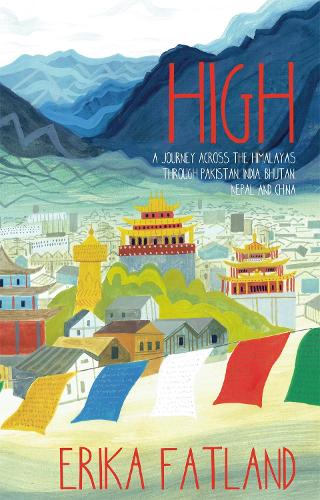
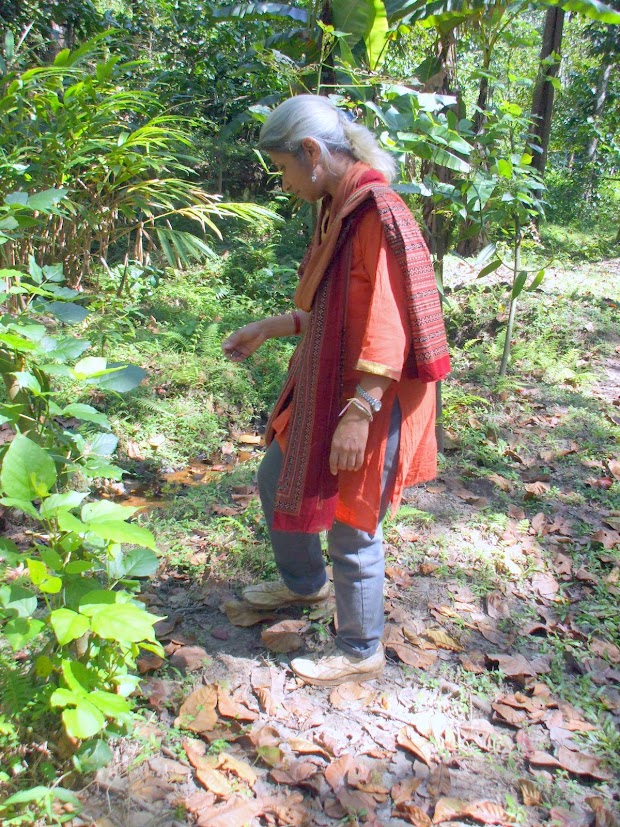
We’ll stay on the Indian sub-continent, but change the mood completely, and look at a real door-stopper: High: A Journey across the Himalayas, through Pakistan, India, Bhutan, Nepal and China: by Erika Fatland (translated by Kari Dickson). Erika Fatland is a Norwegian anthropologist. She’s undertaken here quite a journey: the one outlined in the title of her book. She observes the sights and sounds of – often very remote -cities, towns and villages on her travels, describing her meetings with locals. These can be the inhabitants of these communities, or religious leaders, nuns, bureaucrats, countryside rangers – even a king: even the dispossessed. In particular, women’s lives are still on the whole greatly impacted by tradition and custom. A big chunk of a book, this is nevertheless highly readable and accessible, and engagingly translated.
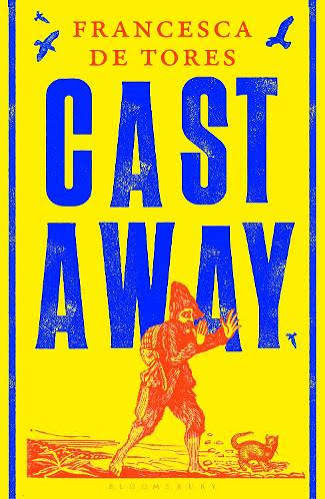
Travel in unfamiliar places always brings challenges of one kind or another. None more so than when you are deliberately abandoned on a deserted and inhospitable island in the South Pacific. This was the fate, in the early 18th century, of Alexander Selkirk. His misadvenures have already been imagined by Daniel Defoe, in Robinson Crusoe. Now Francesca de Tores has done it again, in Castaway. I’m reading it now. And it’s no swashbuckling adventure, I can tell you. Think rats, mosquitos, and not a single mod con, 18th century style, to help you along. (For ‘mod con’, read eating or drinking vessel, knife, axe, change of clothing, blanket ….). Over time, Selkirk’s back story is trickled into the story. Our task as readers is to observe this man reveal himself as he comes to understand himself better.
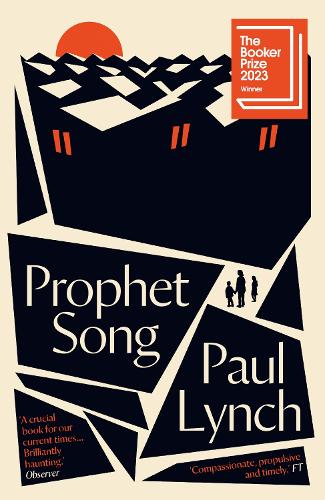
Paul Lynch greatly enjoyed Francesca de Tores‘ previous book, Saltblood, and as I got a lot from reading his Prophet Song, I’ll end my chain with it. It was one of my winning reads of 2024. It’s set in Ireland in the near future, after a fascist government has been elected to power. Long breathless paragraphs, light on punctuation, drive the story on as everyday wife, mother and daughter Eilish ‘s decision making and relationship with her children and family gradually becomes increasingly erratic, as the government increases its stranglehold on everyday life, as violence and the impossibility of everyday living increases. It’s a deeply uncomfortable read. Perhaps even more so now than when I first read it.
One way or another, I’ve wandered pretty far from the starting point this month. What will happen next month, I wonder, when our starting point is a book already on my TBR list: Maggie O’Farrell‘s Land?


What a marvellous suite of books! The only one I’ve read is Prophet Song, but I aim to remedy that.
Here’s mine: https://anzlitlovers.com/2026/07/04/six-degrees-of-separation-from-yesteryear-to/
LikeLiked by 1 person
I’ll be over in a minute LIsa. Yours is bound to be as reliably interesting as usual.
LikeLiked by 1 person
I think you’ve come full circle, from one dystopia, to another if my understanding of Yesteryear is right (haven’t read it). I loved High.
LikeLike
Fair point. I hadn’t thought of Yesteryear as dystopian, not having read it, and no intentions to do so. You put me onto High, as so many of my reading choices!
LikeLiked by 1 person
I can see it would be up your street, or mountain. I passed my copy on to my aunt who’s also travelled in that area although not quite so intrepidly!
LikeLiked by 1 person
👍
LikeLiked by 1 person
I’m interested what you think of Land, as it seems to be on everyone’s reading list at the moment, mine included.
LikeLike
I’ve yet to get hold of it, but I’ve also yet to read an O’Farrell I don’t like, so … watch this space.
LikeLike
I read The Eights last year and really enjoyed it. I would love a sequel! Of the other books in your chain, I like the sound of the Persis Wadia series.
LikeLiked by 1 person
I can recommend prickly Persis! Yes, we discussed The Eights in my book group, and several people wanted a sequel. I’m not so sure. But I’ll read it if there is one!
LikeLike
What an excellent chain! I really enjoyed The Eights as well.
Heres mine for this month: https://portobellobookblog.com/2026/07/04/6degrees-of-separation-for-july-2026-from-yesteryear-to-the-time-travelers-wife-booksky-%f0%9f%92%99%f0%9f%93%9a/
LikeLike
Thanks Joanne. I’ll be over in a minute or two!
LikeLike
I’ve often thought that High would be up my alley, and you’ve confirmed it, but why oh why does it have to be such a doorstopper!!
Love the final link in your chain too, an insider link if you like 🙂
LikeLiked by 1 person
High IS a doorstopper – dauntingly so. But I read it quickly and with enjoyment. It’s really involving and well written. Thanks for your positive comments!
LikeLiked by 1 person
Yesteryear doesn’t hold much appeal for me either. I saw a newspaper comment piece recently about the trend on Instagram/Tik Tok for young women living as if they were in the 1950s. Why, I wondered????
LikeLiked by 1 person
Why indeed? Drudgery, loneliness, boredom. What’s to like? My mother worked full time, but still had to run the home. Not man’s work, that.
LikeLike
Lovely, as usual. I just started reading Land, so… I’m looking forward to doing our chain next month.
LikeLiked by 1 person
Well done for being ahead of the game! I’m just about to find out how long a queue I’m in at the library to get at it.
LikeLiked by 1 person
By accident, I can assure you! But hey, O’Farrell… so…
LikeLike
You’ve done it again, Margaret. I want to read everything in your chain. Most of all Almost Life. I loved The Dance Tree and want to read more by Millwood-Hargrave.
LikeLiked by 1 person
I loved The Dance Tree too, and you may be as surprised as I was at how different these two books are.
LikeLiked by 1 person
I had a feeling she would have range. The way she got under Lisbet’s skin and made 16th century Strasbourg so real was wonderful.
LikeLiked by 1 person
Indeed. Well, she brings a more contemporary England and Paris to life too.
LikeLiked by 1 person
I really like the sound of the first two on your list – so much so that I’ve just downloaded the Kindle edition of The Eights!
LikeLiked by 1 person
Excellent! So pleased. The interest for me was that my mother was offered a scholarship place at Oxford only eight years later – a triumph for a Leeds lass, and couldn’t take it up when her father unexpectedly died. A story perhaps that I should tell …
LikeLiked by 2 people
Oh yes, that sounds very much like a story worth telling. And an amazing achievement by your mother!
LikeLiked by 1 person
Indeed. It was still unusual for girls to choose that path, But her father wasn’t going to put up with any of that ‘housewife’ nonsense! (though that’s what his wife was)
LikeLiked by 1 person
Yes, it is a story worth sharing. My question is: did she continue her desire to learn, or did she put that energy into encouraging her children to choose higher education?
LikeLiked by 2 people
She actually went to University in Leeds, her home town. So she did alright, but never forgave her mother (it’s a long story). I was her only child, but yes, I had high expectations placed on me.
LikeLiked by 1 person
Another interesting bundle, Margaret. Social ‘norms’ and women’s roles seem to have come so far in the timescale of these books. Yes to The Eights, I guess. And prickly Persis. Donna Leon with the boot on the other foot, so to speak? xx
LikeLike
Comparing the Persis books with those about Brunetti is inspired, Jo. I think these two would either hate or love one another, but the readers of either would enjoy the other too, I think.
LikeLiked by 1 person
Almost Life is on my list as I’ve enjoyed her other books, but someone else reviewed it recently (can’t remember who) and didn’t rate it so I downgraded it. Maybe I’ll bump it up again now!
LikeLiked by 1 person
Ah well, it depends which reviewer you trust more! Not offenfed if it’s not me.
LikeLike
I will let you know once I’ve read it!
LikeLiked by 1 person
👍
LikeLiked by 1 person
I added The Eights to my TBR — thanks! That sounds like one I would enjoy. I’m also intrigued by the stories about India’s first detective.
LikeLiked by 1 person
Both books are ones to enjoy. I think anyway!
LikeLike
Wow! Love the women’s rights links. Do you have to read the searies to enjoy Vaseem Khan‘s Edge of Darkness?
LikeLike
Forgot: I heard there is a sequel coming [now out in UK??] for The Eights. I’m anxious to read it.
LikeLiked by 1 person
I’ve followed through on that, and it doesn’t seem so – at the moment anyway. I looked at JM’s website.
LikeLiked by 1 person
Oh no! Hopeful still!
LikeLiked by 1 person
I love your pairings of photos with books!
Tried hard to resist adding more books to my own list but couldn’t resist The Eights.
LikeLiked by 1 person
Luckily, it’s a quickly read page-turner!
LikeLiked by 1 person
Yes, another collection with a lot of insights. Must read the Paul Lynch one.
LikeLiked by 1 person
Do, It’s an involving narrative.
LikeLiked by 1 person
I heard Joanna Miller speak about The Eights last year. I bought it straight away but I haven’t read it yet!
Interesting chain!
LikeLiked by 1 person
Interesting! That must have been a good event.
LikeLike
Well, don’t leave it too long. I find books I’ve bought get a Free Pass to wait till later, compared with library books, and then I go and forget about them.
LikeLike
wow, great chain!
One day, I really plan to try your last book. And now High sounds fascinating!
LikeLiked by 1 person
High is excellent. And because it’s not a novel, you can pick it up and leave it whenever you want. It’ll be ready for you again when you’re ready fotr another journey.
LikeLike
I think I’m beginning to catch up on my reading. I’ve actually read two of these.
LikeLiked by 1 person
Hooray! I’m going to go away and try to guess which two 😉
LikeLiked by 1 person
I love how you always combine the covers with your own pictures. Well done.
I haven’t read any of your books but two others by Erika Fatland. I really will have to get this one.This is my post, I chose the word Year as the combination.
LikeLiked by 1 person
It’s true! I haven’t dropped by your post yet. And as I’m dashing out, it my have to wait till later. I’ll read it – as I shall read more by Erika Fatland.
LikeLiked by 1 person
I will definitely get the book and read it. Thanks for the information.
LikeLiked by 1 person
As ever, because of my previous association with Blogger, it’s not letting me comment any other way, and I don’t want to link back to my defunct blog. But I do like the clever way you’ve dealt with making use of a book that I too have no desire to read.
LikeLike
So sorry that we can’t work out that problem, Margaret. But in any case, I always try to find some sort of connection to a book I read or use the title (which isn’t always easy, either). But this worked for me. After reading some of the other lists, I thought that I might have read it had I come across it, but it is not as interesting that I am going out of my way trying to find it.
Anyway, thanks for your comment here.
LikeLiked by 1 person
You have some really interesting links here, Margaret, and I particularly like your first one to a book that I’m sure would appeal to me. I am undecided about Yesteryear. The subject matter does interest me because I think if we are interested in what is happening in women’s lives at the moment this trend – tradwives, other influencing along lines that don’t accord with traditional feminist principles – is worthy subject matter for fiction. I’d read it if my reading group scheduled it, but otherwise I probably won’t prioritise it! My daughter really liked it, and I approved her taste (even if I don’t follow her love of fantasy!)
LikeLike
It was the apparent focus on social media that put me off reading this book. But as you say, its subject is interesting, and perhaps I shouldn’t refuse a copy that came my way. Like you, I don’t do fantasy though. Yes, give the Oxford pioneers a go! Thanks for your comment.
LikeLike
That’s interesting Margaret. For me I really want to read fiction that is confronting these real world things. I use social media a bit – after all, blogging is social media – but I manage to keep away from unpleasant stuff and most of the pure influencers,
so reading about the things we are hearing about is how I hope to understand.
LikeLiked by 1 person
That is a very fair point, actually. I hope I do try to read about things I understand poorly or feel ‘anti’ for some reason, but the premise of this one had failed to reel me in. And you’re right that blogging is a form of social media. I tend not to think of it that way.
LikeLiked by 1 person
I think blogging – or the sort we do – is probably one of the “safest” forms of social media isn’t it. People writing about reading mostly fiction don’t tend to attract much ire fortunately!
LikeLiked by 1 person
👍
LikeLike