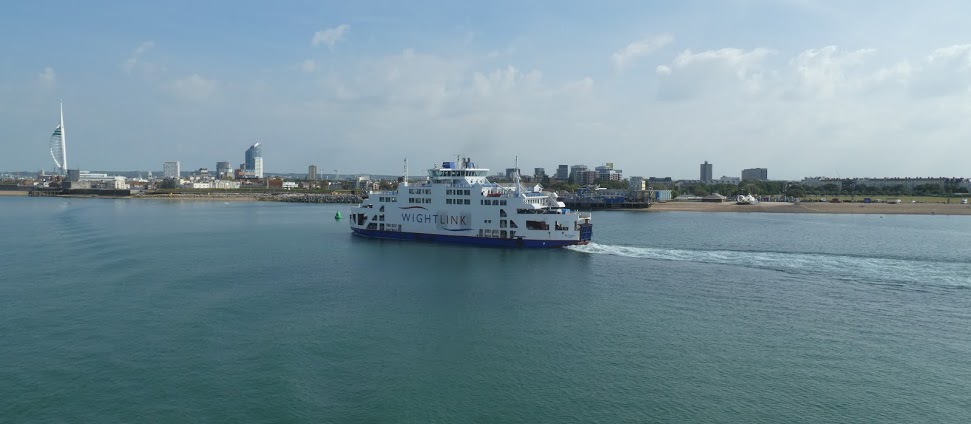
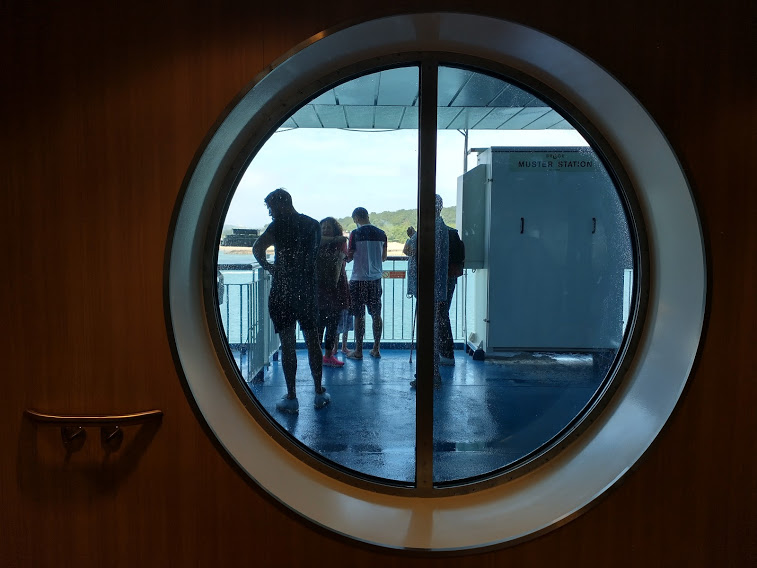
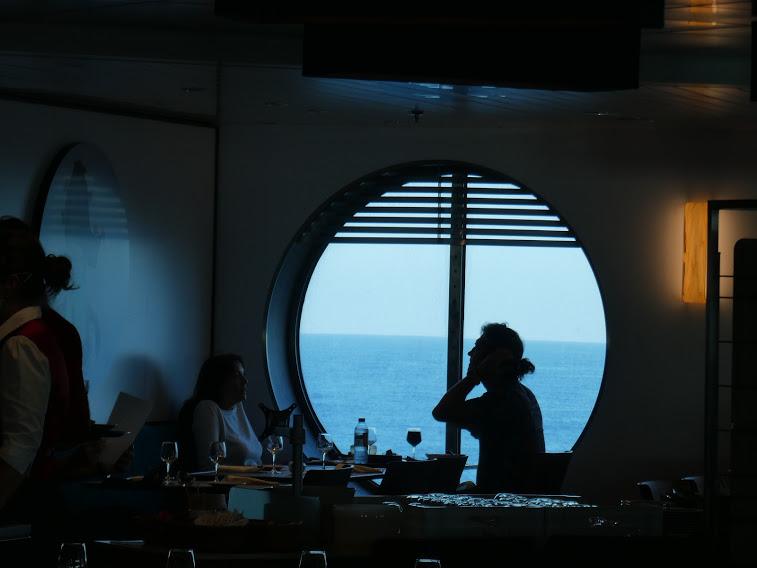
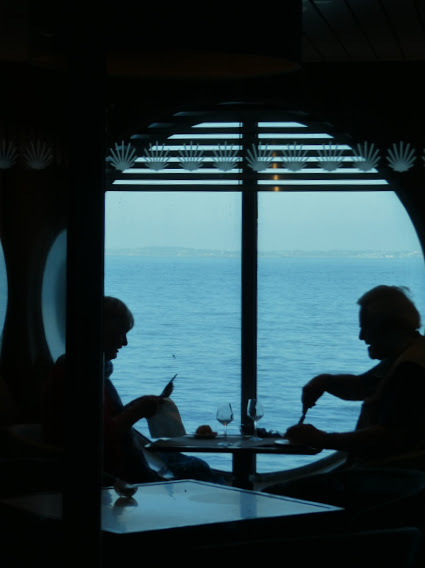
We travelled to and from Spain on the ferry from Portsmouth to Santander. Two days and a night of the English Channel, and the boundless ocean in the form of the Bay of Biscay. I spent a lot of time on deck. but inside the Galicia, there were portholes a-plenty through which to see the sea. As my fellow-passengers also knew.
‘On the first Saturday of every month, a book is chosen as a starting point and linked to six other books to form a chain. Readers and bloggers are invited to join in by creating their own ‘chain’ leading from the selected book’.
I was pretty stumped by the book starting this chain: Postcards from the Edge by Carrie Fisher. The story of a Hollywood actor’s struggle with drugs didn’t appeal to me.
I settled on Sharp Objects, by Gillian Flynn. Here is a cast list of utterly blemished characters, with the narrator, Camille Preaker, as the lead. Fresh from psychiatric hospital, this Chicago-based reporter is sent to her long-left home town to comment on a couple of nasty and unsolved murders. We meet her damaged mother, her unreliable sister, and a host of others. This is an engrossing but troubling story which in the end rather exhausted me. I was glad to turn the last page, feeling that both characters and the town in which the book is set are caricatures, rather than living entities.
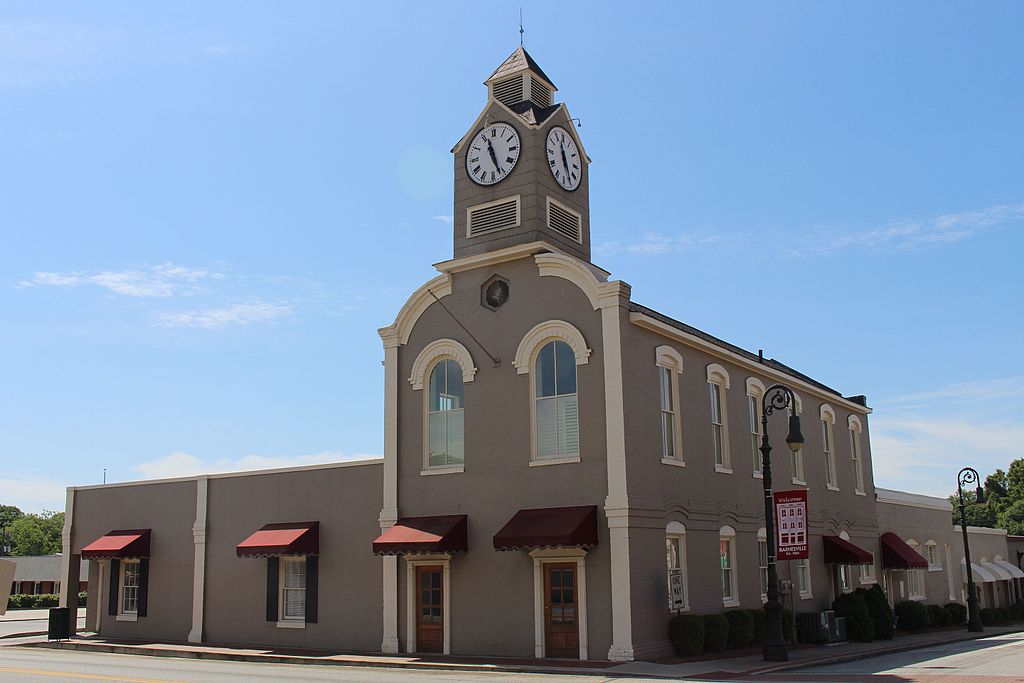
Wind Gap, the town on which the story is centred, was based on Barnesville , Georgia- here’s its City Hall ( Wikimedia Commons, Michael Rivera)
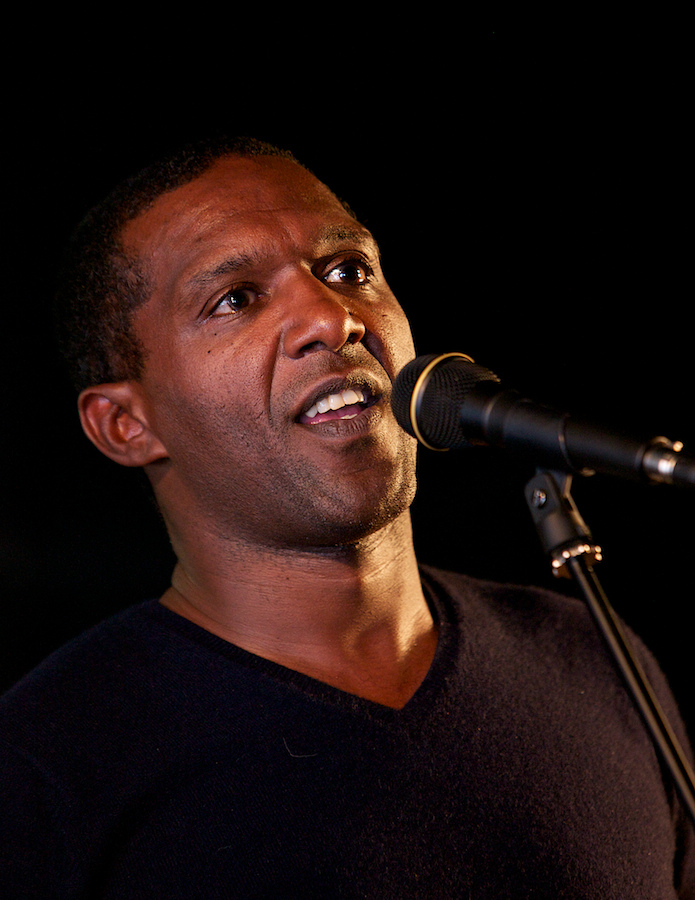
Now to an autobiography of someone who could have been damaged beyond repair, but isn’t. My Name is Why. Lemn Sissay: Chancellor of Manchester University: official poet to the London Olympics: broadcaster and advocate for the rights of children in care. A successful life. It was not always so. His Ethiopian mother, briefly in England to study, gave birth to him in a home for unmarried mothers and was forced to give him up. Initially fostered, he became estranged from his foster family. and aged twelve, began a distressing journey through several children’s homes. His descent from bright, happy and popular child to uncooperative social misfit is shown in a series of dry reports from social workers and officials with whom he had contact. The book is an indictment of the care system. That he survived such a system and has since prospered is no thanks to it.
Lemn Sissay (Philosphy Football via Wikimedia Commons)
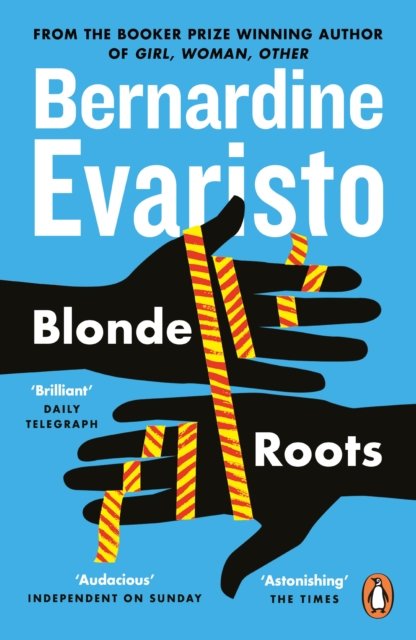
And so to Blonde Roots by Bernadine Evaristo. Here is a world turned upside down. Black people are in charge, whites are their slaves. Feudal Britain, eighteenth and nineteenth century worlds, the modern age and a dystopian future all combine in this world of toil and trouble in which Doris, kidnapped from her home into slavery, finds herself. There’s much to enjoy and admire in this early novel from Evaristo: the playful place names such as Londolo: details such as the efforts of whyte women to achieve the curly Aphro looks of their former masters. The speech patterns of the slaves, rooted in those of their black masters didn’t work for me, and overall, this was an only partially successful attempt to demonstrate that tyranny rules when we begin to regard others as inferior to ourselves.
Evaristo plays with the idea of a world in which history is up-ended (Unsplash: Ivana Cajina)
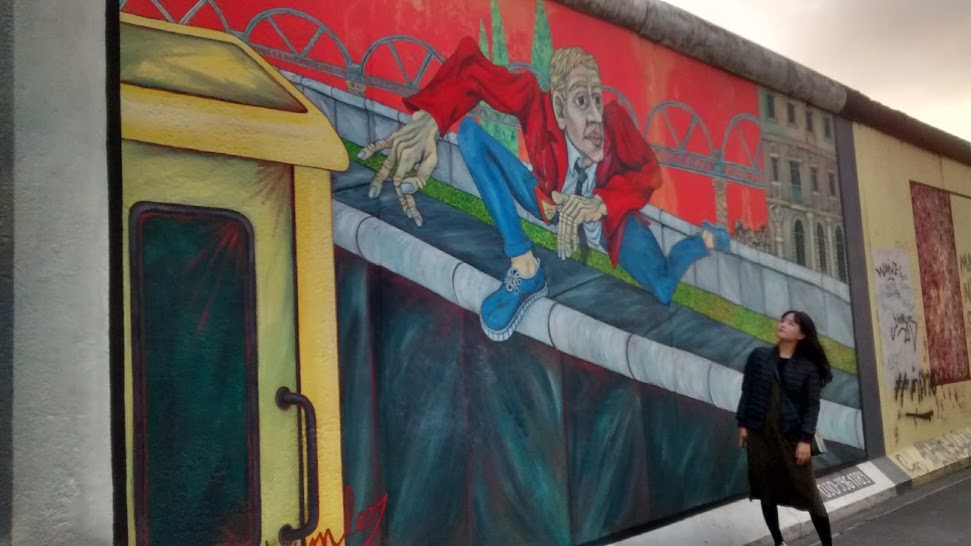
There are two contrasting worlds in my next book: The Communist’s Daughter, by Aroa Moreno Durán, Katia, the daughter of Spanish refugees from the Civil War was raised in East Berlin with all its difficulties and privations. She saw the wall go up, experienced the limitations of the life they were obliged to leave. And she left, with all the difficulties and dangers her leaving represented. But what had she gained? And what might her family have lost? A sparely written, thought provoking and unsettling book.
The Berlin Wall: but not as Katia knew it
From one social outcast to another very different one: Diary of a Somebody by Brian Bilston. This is a quirky read, to be enjoyed for the oddball poems which are at its heart. Nobody could take the fictional Bilston seriously. He’s hopeless at his job, socially inept, useless at time and money management. But he writes off-beat verses, using anything from great literature or the day’s puzzle page in a newspaper as his catalyst. A book to read when the New Normal is getting you down.
Brian Bilston ( Smithsonian Magazine: no copyright infringement is intended)
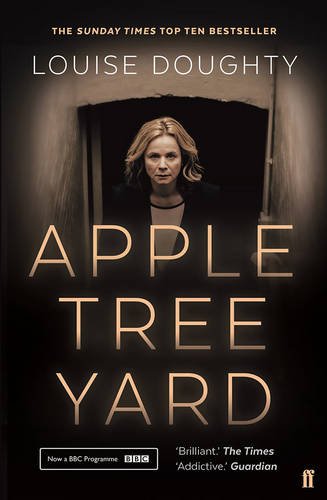
One unexpected character leads to another. Meet Dr. Yvonne Carmichael in Louise Doughty’s Apple Tree Yard. However did she, a respected and happily married academic, end up on trial for a murder she didn’t commit? And how is it that her co-accused is a man about whom she knows so very little, despite their having been lovers for months? In this book, we dodge between courtroom and back-story, learning how Yvonne allows herself to tumble into assignations with a man whose name we are told only late on in the narrative. I’m not sure I totally believed in Yvonne Carmichael, or in the beginnings of her affair. But I was sucked into the drama, had no idea how the book would end (slightly disappointingly actually, in my opinion), but it certainly fulfilled its can’t-put-it-down hype.
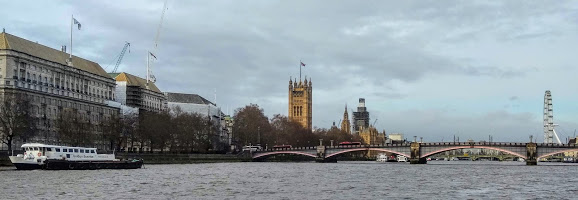
Westminster: a central character in Apple Tree Yard.
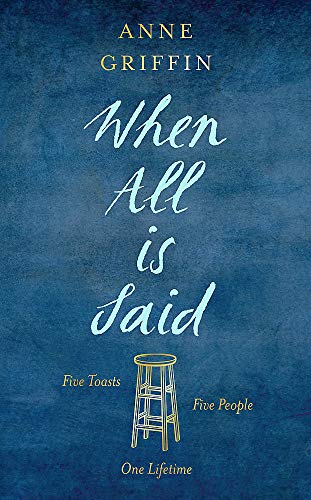
I’d like to end with a character who, though fictional, I totally believed in, encountered in Anne Griffin’s When All is Said. Maurice Hanigan, now widowed, and aged 84, sits in a bar and raises a toast, one by one, to the most influential people he’s met. We learn about his life, from his spectacularly unsuccessful school career, to his spectacularly successful career as an entrepreneur. We grow to hear about his complicated relationship with the family that first employed him while he was still at school, the Dollards. And his complicated relationship with a unique Edward VIII sovereign, which belonged to the Dollards, and which Maurice – er – found. It has a legacy, and bears a curse. This is an engaging, compassionate man, who’s well aware of his failings and of the stereotypes he lives up to. Each toast, each story is a stand-alone which weaves together into a narrative of the life of a man both wily and mean, loving and grudging for whom in the end, I felt a great deal of understanding. Best of all, you can’t help but read this story in a strong Irish accent.
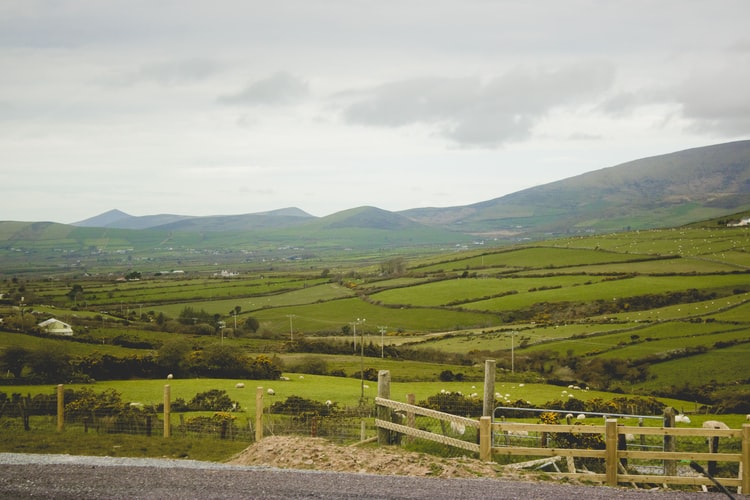
Farmland in Ireland ( Unsplash: Elisabeth Arnold)
So there we have it. Six Books. Six characters, all shaped and perhaps damaged by the environment in which they grew up.
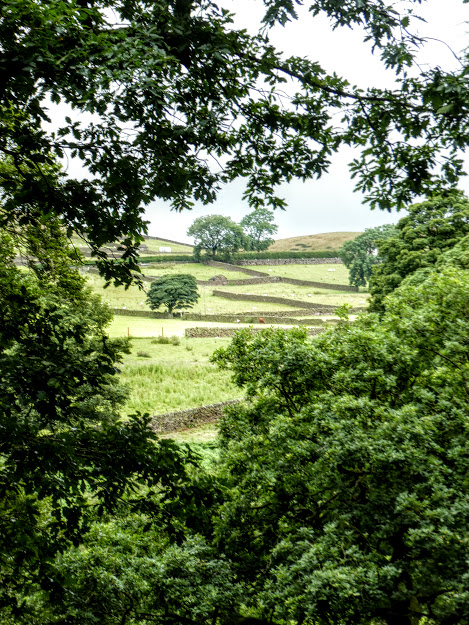
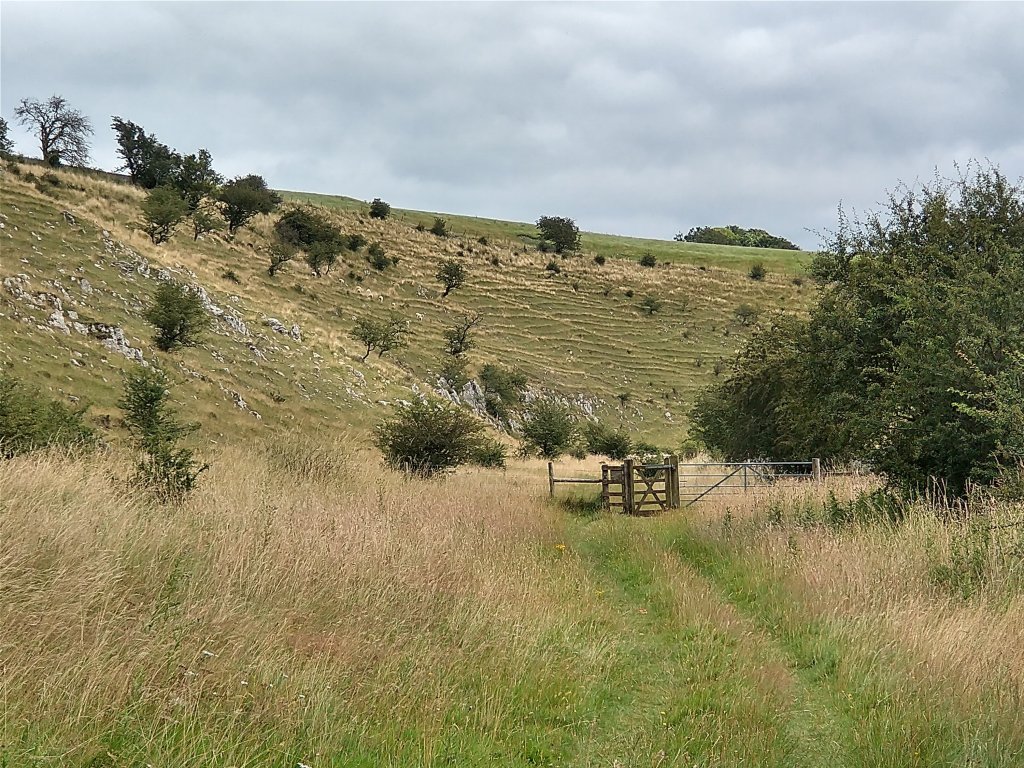
What do you think of when Derbyshire’s Peak District is mentioned? It’s a glorious area of England, part of its Pennine spine. There are old stone-built towns and villages with long histories of hard work in mining, textiles and farming. There are limestone and millstone grit uplands and escarpments, with distant forest and moorland views, and valleys and gorges cut deep into the limestone.
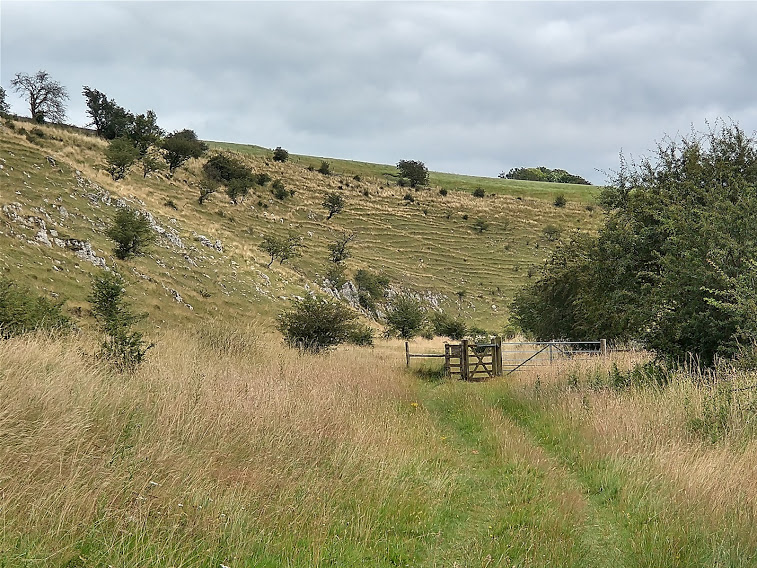
A view from Hay Dale
We were there last weekend. Not for the broad brush of those appealing landscapes, though we got those too. Instead, we were there to inspect what we could see inches, or at most feet from us, as we and a small band of like-minded people slowly wandered narrow pathways and farmers’ tracks with Mark Cocker., on a tour which he organised with Balkan Tracks.
These were the tracks of our childhood, a time when (if you’re as old as me) flowers and insects weren’t routinely eliminated from the fields by cocktails of fertilisers and insecticides. Nature Walks were the once-upon-a-time weekly staple of the village school where I began my education: a neat crocodile of children hunting curiously for leaves, berries and treasures for the Nature Table in the corner of the classroom. Our group last week formed anything but a neat crocodile, and we collected treasures through the lenses of our cameras, exchanged young eyes for our pairs of binoculars.
The places we explored with Mark often had poor thin soil. It’s not worth cultivating, but huge numbers of wild flowers seek out and colonise such spaces and it can be pasture-land too. Where there are flowers, there are insects: flying creatures of all kinds, bees of all kinds, beetles, moths, butterflies.
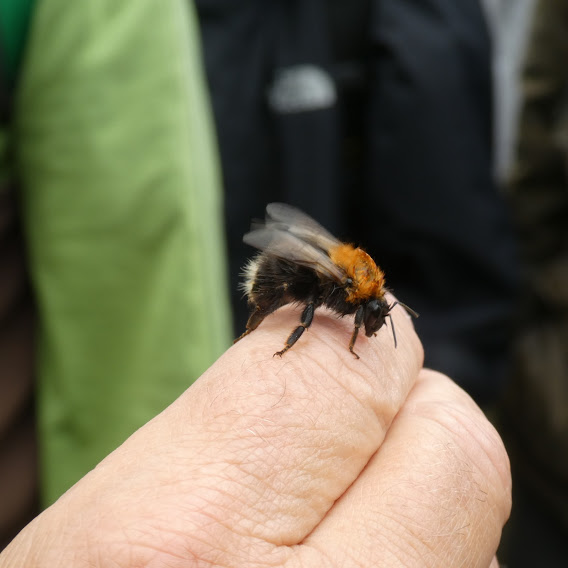
I knew there were a fair number of different bee species, though I had no idea that there were some 270 of them. But I thought a bumblebee was a bumblebee was a bumblebee. It turns out that there are getting on for twenty different kinds, and that some of those are cuckoos. Cuckoos? Well, yes. Cuckoo bumblebees are as wily as the birds they are named after. They lay their eggs in another bee’s nest and leave the workers of that nest to rear the young.
Erm… I hope this is a white-tailed bumble bee
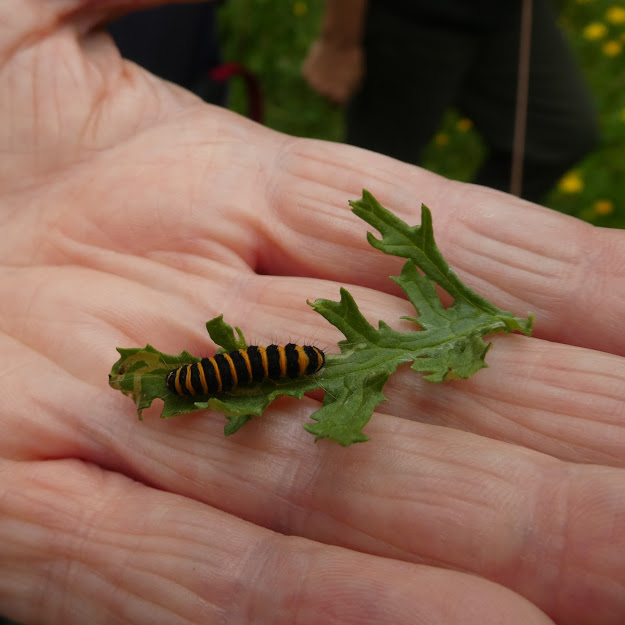
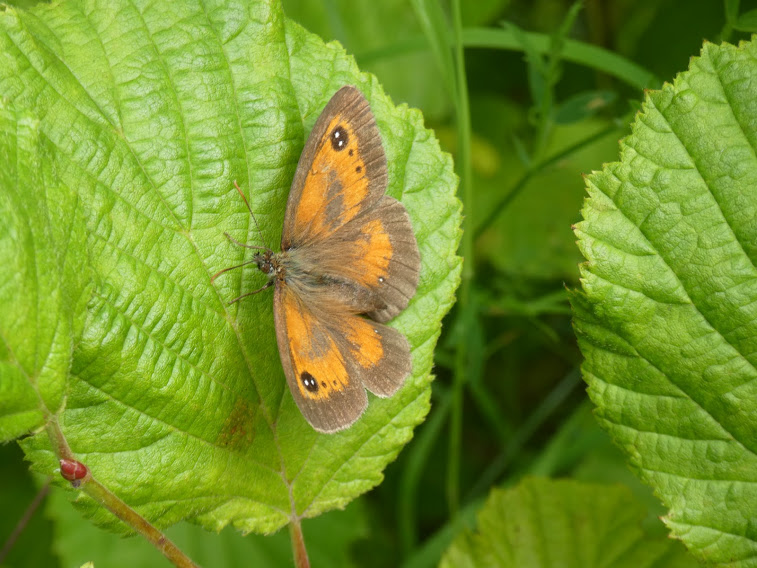
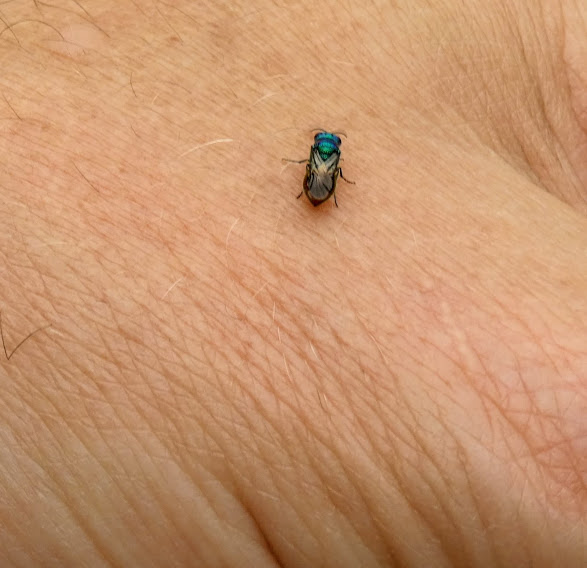
We found caterpillars, we found flying creatures and bugs, we found moths and butterflies. Mark was excited enough about one find to write it up in this week’s Guardian.
Cinnabar moth caterpillar
Gatekeeper butterfly
Ruby-tailed wasp
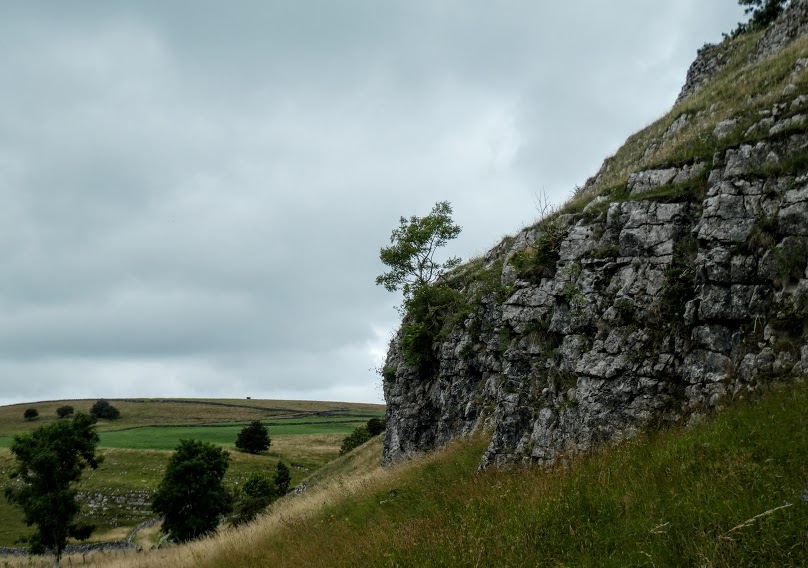
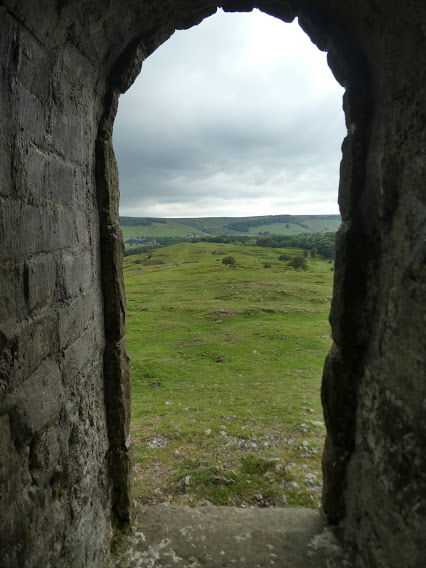
We climbed up to Solomon’s Temple. We wandered through Millers Dale, once the site of a busy railway line. We explored a now disused quarry, now colonised by a rich variety of life, including orchids, and a collection of stunted trees. Unable quickly to get the nourishment they need, they reach maturity as dwarves. We explored almost unvisited dales such as Hay Dale. All these were limestone, but we had a little time in the imposing millstone grit landscape of The Roaches, which – don’t tell anyone – is actually just in Staffordshire.
The viewfrom Solomon’s Temple
Millers Dale
This quarry just off the main trail hosted abundant flowers .. and these stunted trees
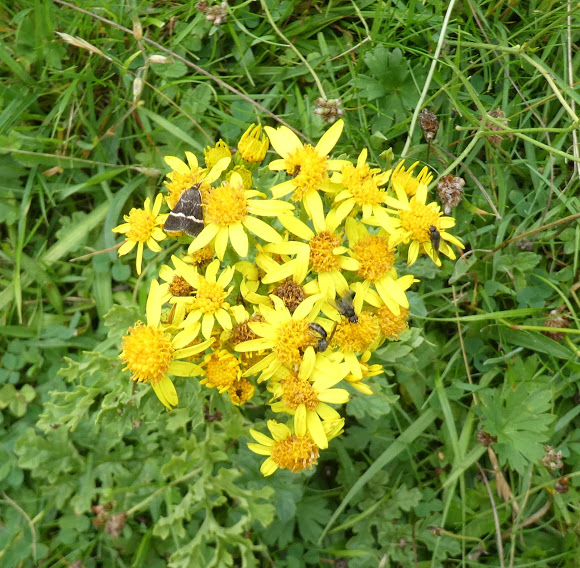
Ragwort plays host to a huge variety of insect life
Walking in little-visited Hay Dale
A view from the Roaches
Our days were far from silent. Even if it’s no longer prime bird-song season, there were spotted flycatchers, willow warblers and sightings of various finches and tits. Wheeling above us: buzzards, red kites, hobbies, while shallow rivers, busily chattering over stones and rocks were feeding stations for dippers and ducks.
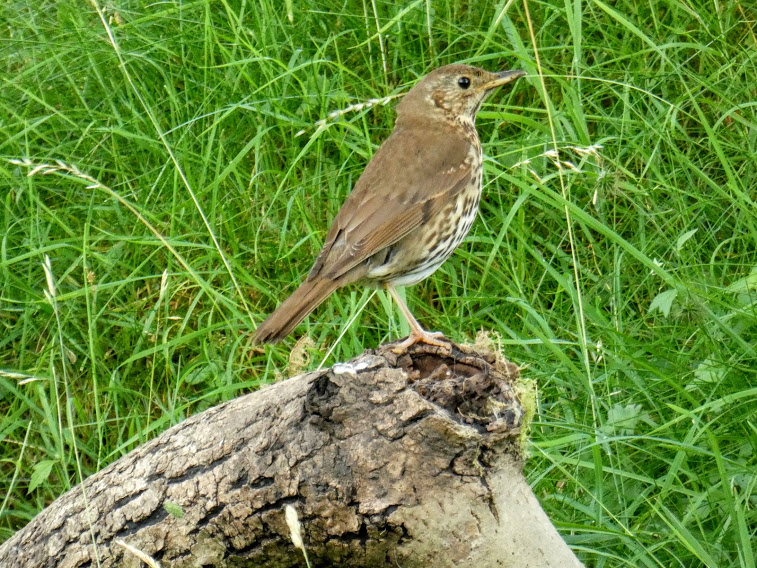
This song thrush obligingly posed for a photo
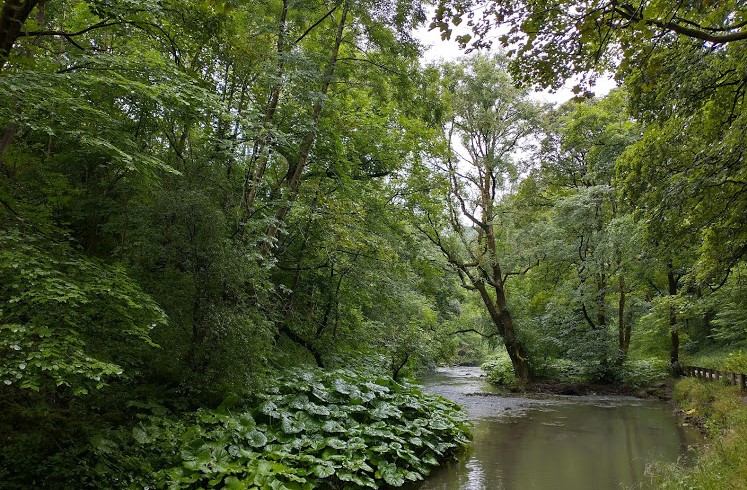
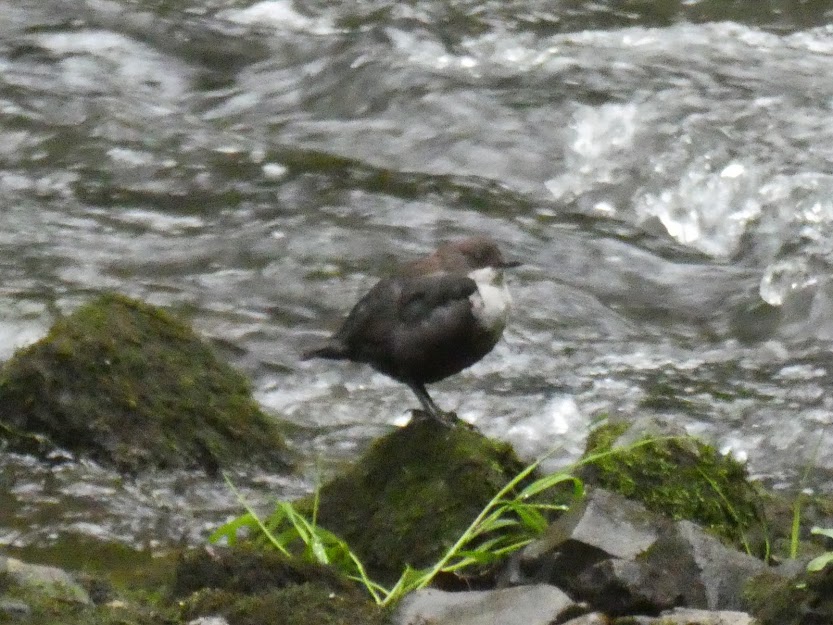
A distant dipper on the River Wye
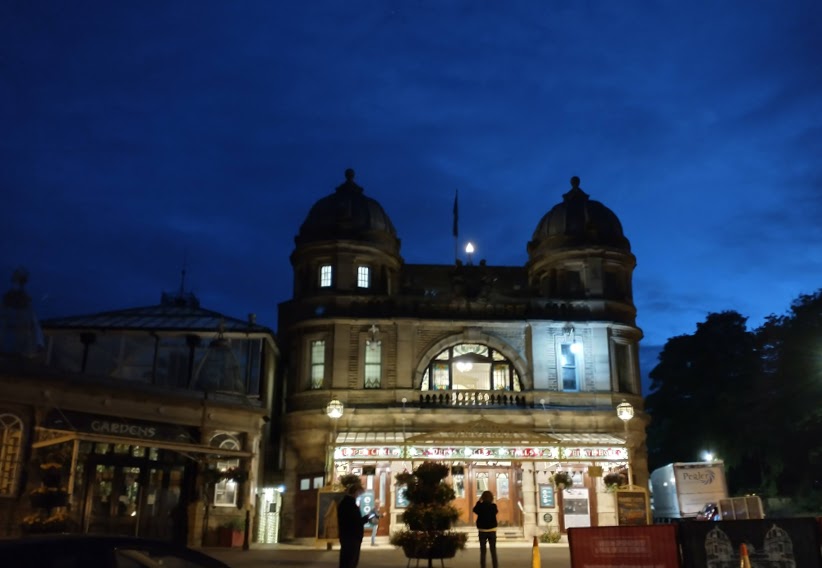
We even had a little time to explore Buxton, where we stayed, and where, each evening, we ate, talked, laughed and generally got to know each other at the (highly recommended) Brasserie.
Buxton by night
What a weekend. I’ve learnt that I still have an awful lot to learn. And our own garden is the perfect classroom.
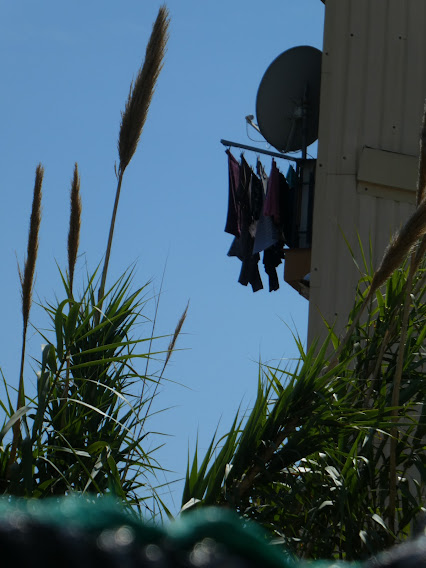
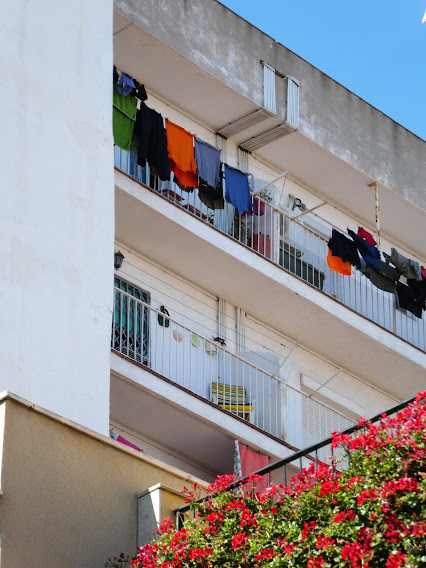
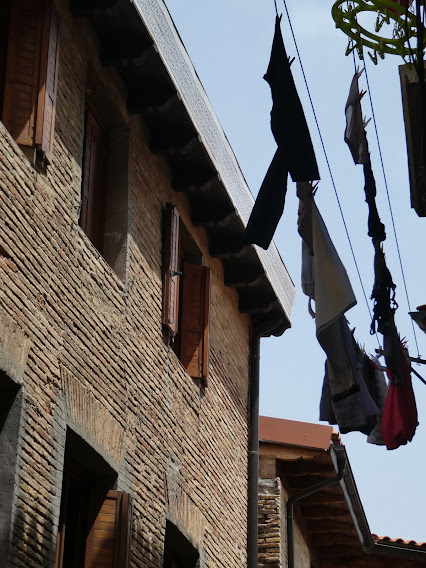
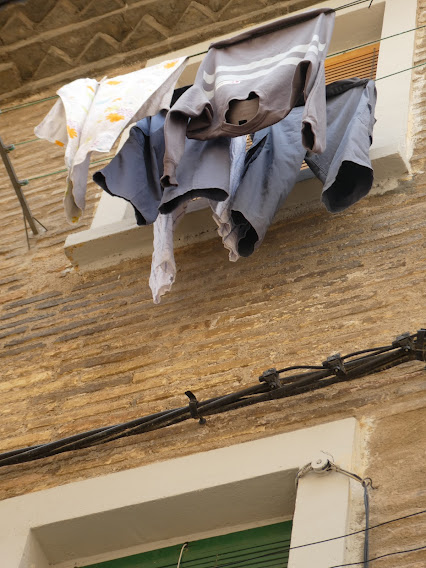
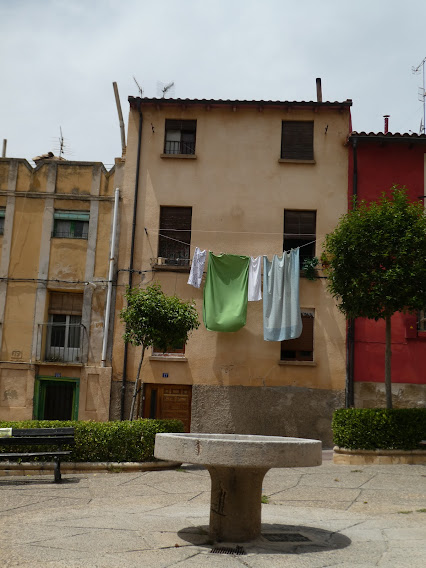
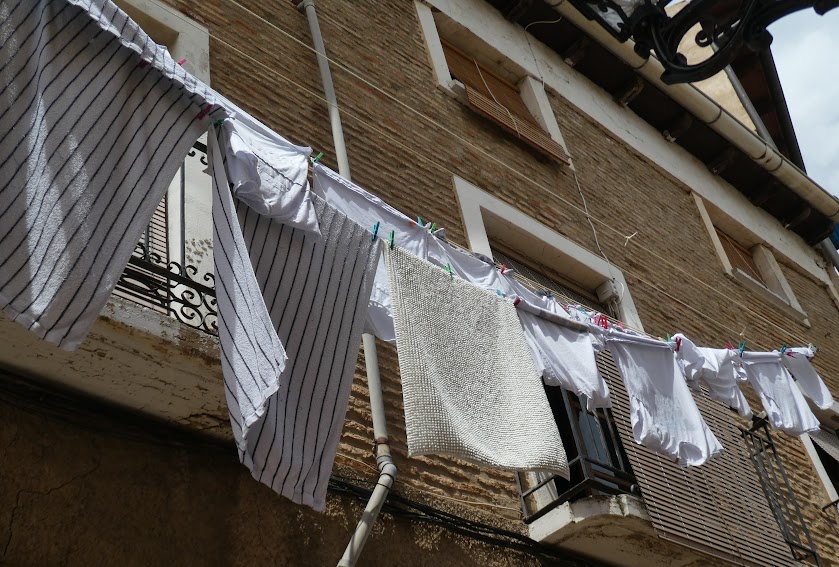
Andrew, over at Have Bag Will Travel has been inviting us to share the washing lines we’ve enjoyed seeing on our travels in his Monday Washing Line series. I ran out of offerings weeks ago, so decided we should go to Spain to put this right. While we were there we thought we might as well catch up with the family, as already showcased in Becky’s TreeSquares.
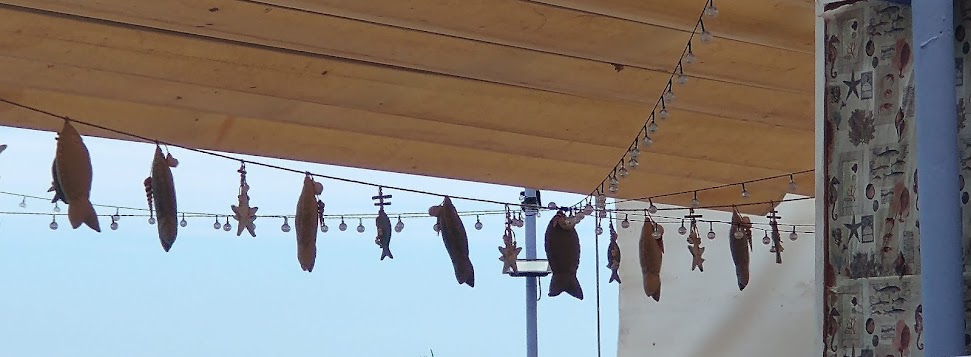
My feature photo isn’t a washing line at all. But I thought fish hanging out to dry would set the tone for a holiday selection. The rest are far more workaday.
Barcelona
Vilassar de Mar
Vilassar de Mar
Premià de Mar
Tudela
Tudela
Tudela
Thanks Andrew for a fun idea which has had lots of us happily hunting through our archives. Anything rather than get on with doing the washing.













 From Pyrenees to Pennines
You must be logged in to post a comment.